Friday, December 26, 2025
Home Blog Page 3862

‘Zarif’s Visits to Oman, Qatar Giant Step towards Promotion of Ties’

‘Zarif’s Visits to Oman, Qatar Giant Step towards Promotion of Ties’

Iran’s former representative to the Organization of Islamic Cooperation (OIC) Sabah Zangeneh has, in an article published in the Persian-language E’temad daily, weighed in on the Iranian foreign minister’s recent visits to Oman and Qatar, and the challenges which exist in Tehran’s relations with the two Arab states. The full text of the opinion piece follows.

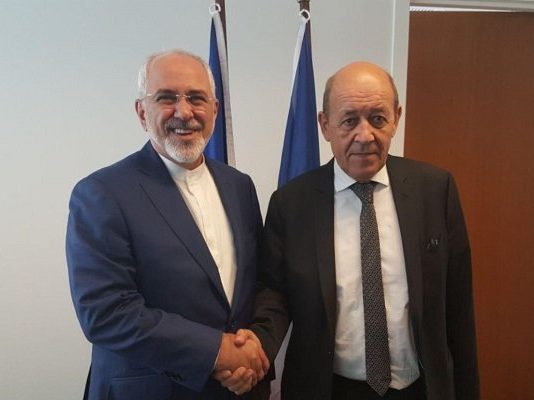
Iranian Foreign Minister Mohammad Javad Zarif’s trip to Oman and Qatar can serve as a giant step toward promoting political, economic and trade ties between Iran and its southern neighbours. However, there are challenges and obstacles to the enhancement of all-out relations with Doha and Qatar the removal of which requires serious determination and practical action by senior officials in Tehran, Doha and Muscat, so that Qatar and Oman can turn into Iran’s biggest trade and economic partners in the Persian Gulf and the Sea of Oman. Oman can definitely be a good partner for Iran, but it needs careful study to find out whether or not it can turn into a major trade partner for Iran in the future.

On the one hand, Omani authorities’ executive capabilities should be assessed. On the other, the determination and seriousness of Iranian officials should be gauged as well. One of the major and strategic issues in Iran-Oman relations is that of cooperation in the field of energy. The issue still is not settled between Iran and Oman’s Oil Ministry. Both sides should have a steely resolve to settle the issue. The president should dedicate more time to the issue; the Iranian Oil Ministry should give up some of its pedantic behaviour; Omani officials, especially the oil minister, should act based on the orders of the country’s king and take serious and practical steps toward getting Tehran-Muscat cooperation in the field of oil and gas to bear fruit.

There is much greater potential for the enhancement of Tehran-Muscat trade ties than what has been realized so far. Relations will not expand with the trade conducted by one ship in a week. The officials of both countries need more serious determination to help boost relations on all fronts. Omani ministers usually act upon orders by their king, and drag their feet when there are no orders by the king. These are realities which should be taken into account in relations with Muscat. The development of the Chabahar port in southern Iran has got nowhere for years and very few steps have been taken in that regard. The reasons behind the pause in the development of Chabahar should be identified.

It is necessary to establish a robust base in Chabahar through which Iran and Oman will be able to begin long-term cooperation with India, Japan and all other countries in South and Southeast Asia. With foot-dragging and killing time on the implementation of major projects without the provision of such mechanisms, Oman seems unlikely to be able to turn into a major trade partner for Iran. And Qatar is no exception. Tehran and Doha have been discussing the issues of water, energy and joint oil and gas fields. Cooperation between Iran and Qatar at this level can bring about a serious overhaul in the region and even across the world.
Reaching such a level of cooperation requires perseverance, rationality, farsightedness and a proper understanding of realities and developments in the region. One of the major challenges is that Iranian trade firms have not been registered in Qatar. Development of trade between Tehran and Doha without having a registered base in Qatar will look like a joke. All these dimensions should be taken into account, so that we will witness serious cooperation and, in the future, stronger unity between the regional countries in a bid to promote development, welfare, stability and security in the region. With the experiences which exist in mutual relations, I hope we will be able to weather these challenges. If the Iranian foreign minister’s recent trip to Qatar and Oman can serve as a positive step toward creating a strong determination in the officials of both countries to remove the existing obstacles, it will definitely contribute to the further cementing and development of reciprocal economic ties.

Zarif’s trips are the first visits to the two countries after a crisis emerged in relations between some members of the [Persian] Gulf Cooperation Council (GCC) and Qatar, and the blockade imposed on the country by its neighbours. Naturally, given the recent developments, especially after Saudi Arabia tried to trigger a coups d’état in Qatar and the support for such a coup by one or two members of the Al Thani family, Qatar has adopted a more serious decision than before to overhaul the formation of its foreign relations. Over the recent months, we have been witnessing that Saudi Arabia has been moving toward hatching plots and seeking to bring about a regime change in Qatar rather than going for dialogue. Naturally, such an approach would not be acceptable to Qatar or any other country.

Zarif’s trip to Qatar has several dimensions, namely bilateral and regional issues. It seems unlikely that the trip and growing relations between Iran and GCC member states will prompt Saudi Arabia to change the logic behind its relations with GCC members. Riyadh continues to bang the drum for hegemony in the region and is moving toward that end. It is a foregone conclusion that Saudi Arabia will pursue the same policies vis-à-vis other GCC members, including Kuwait, Oman, and, in the future, the United Arab Emirates, and all these countries will be at the mercy of Riyadh’s insatiable appetite for capturing countries or attacking and besieging neighbouring countries.

Naturally, bilateral issues between Iran and Qatar, namely the promotion of mutual trade, cooperation in the field of energy, and trilateral regional cooperation between Iran, Qatar and Turkey can be also on the agenda in the Iranian foreign minister’s talks. The gains made by the Iraqi military and government as well as by the Syrian army and government in fighting ISIS and other terrorist groups can also be discussed. Probably, Erbil’s position on the referendum held on the secession of the Kurdistan region from Iraq and efforts to disintegrate Iraq will also be an issue of mutual interest for bilateral talks both in Doha and Muscat.

Unity and cooperation are ideals which all countries are pursuing. These ideals have, so far, been met with negative reactions and, at times, ended in failure. However, given the numerous experiences in the region, it seems that it is time to highlight the reasons behind these failures and blows to unity and cooperation. Everyone should understand that if the contributors to failures and disruption of unity and cooperation in the region are identified, one can more easily hope that unity will emerge among regional countries and even between countries in the Middle East and those beyond the region and that such cooperation will lead to regional development and the welfare of the people in the region.

EU Begins Cooperation with Iran’s Centre for Nuclear Safety System

According to the Atomic Energy Organization of Iran (AEOI), the training course on ‘Establishing a Regulatory Framework and Assessing the Implementation of the Stress Test at a Nuclear Power Plant’ was started on October 2 in the Centre for the country’s Nuclear Safety System and will be underway for three days.

The agreement to hold these courses was reached during the negotiations to officially launch cooperation between the EU and the Centre for Nuclear Safety in July 2017. In order to implement a project to boost the technical capabilities of the country’s nuclear safety system, the two sides agreed to hold various advanced training courses in this regard.

The project is intended to assist the EU in implementing the annexes to three documents of the JCPOA which were signed in July 2015 between Iran and six countries of Britain, France, Germany, the United States, China and Russia.

The project to enhance the technical capabilities of Iran’s nuclear safety system is the first project of a special five-million-euro package for Iran, approved by the European Commission in 2016.

In a bid where Iran participated as a member of the evaluation committee, the project was delegated to a European Consortium directed by ENCO that moves along with the nuclear safety systems of Slovenia, Hungary, Czech Republic and Slovakia.

The project will take three and a half years to be carried out, and its main objective is to enhance the technical capability of Iran’s nuclear safety system in various areas, including the feasibility of establishing a nuclear safety centre.

Iran Working on Roadmap for Humanitarian Aid to Rohingya Muslims

The Tuesday meeting on Myanmar was chaired by Deputy Foreign Minister for Asia-Pacific Affairs, Ebrahim Rahimpour, who is also Iran’s accredited ambassador to the southeastern Asian country.

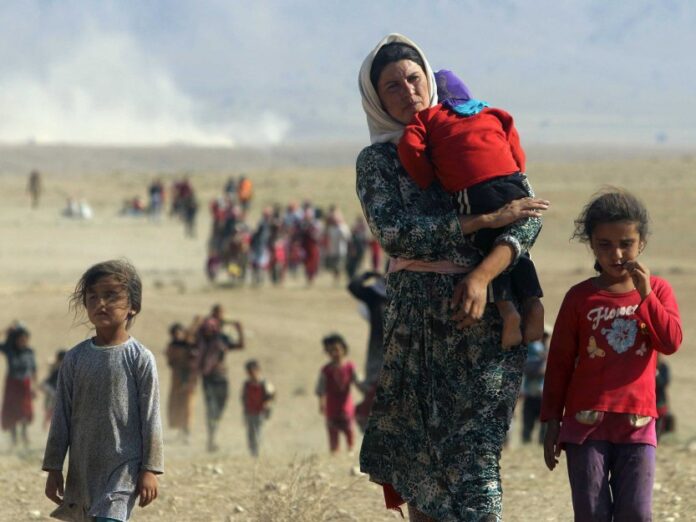
Along with a group of other foreign ministry officials, the latest developments in Myanmar were discussed and the participants exchanged views on how to create a roadmap for delivering the short and long-term humanitarian assistance of the Islamic Republic to Rohingya Muslims there.

During the meeting, the foreign ministry officials decided to send the third consignment of assistance to Muslims in Myanmar through the Bangladesh border by taking urgent and short-term measures.

It was also agreed to hold negotiations with the officials of the abovementioned countries and the Iranian Red Crescent Society authorities to send the first direct aid consignment to Myanmar.

Besides, the ministry officials called for further coordination to hold a summit to promote peace and friendship among the followers of religious sects there.

Jalal Talabani Spent His Life on Maintaining Iraq’s Integrity: Iran FM

“The demise of the former President of the brotherly country of Iraq, Mr Jalal Talabani, made me feel profoundly sad,” Zarif said in a Tuesday message.

“He was one of the influential, distinguished and well-wishing Iraqi personalities who spent his lifetime on the liberation, integrity and independence of his country and nation, as well as maintaining territorial integrity and national unity of Iraq,” the Iranian FM added.

Zarif described his death is an irreparable loss for the brotherly nations of Iran and Iraq, and extended his condolences to the government and the great nation of Iraq including all ethnic groups, tribes and religious sects.

“May God’s blessings shower upon him and the Almighty give his family patience to bear all this pain,” he added.

Jalal Talabani, a veteran Kurdish politician and founder of the Patriotic Union of Kurdistan (PUK), passed away on Tuesday, October 3, at the age of 83 in a hospital in Germany.

Rouhani Says Iran Ready to Meet Europe’s Energy Demands

“Iran could be a reliable source for the fulfillment of European countries’ needs in the energy sector,” President Rouhani said in a meeting with Denis O’Donovan, the chairperson of Seanad Eireann (the 60-member upper house of the legislature of Ireland), held in Tehran on Tuesday.

Pointing to Iran’s progress in various fields, as in the mining, petrochemical and energy industries, the president said Iran would embrace Irish investment in different projects.

The ground is prepared for closer cooperation between Tehran and Dublin in agriculture, pharmaceutical and medical equipment industry, new technologies and communication, he added.

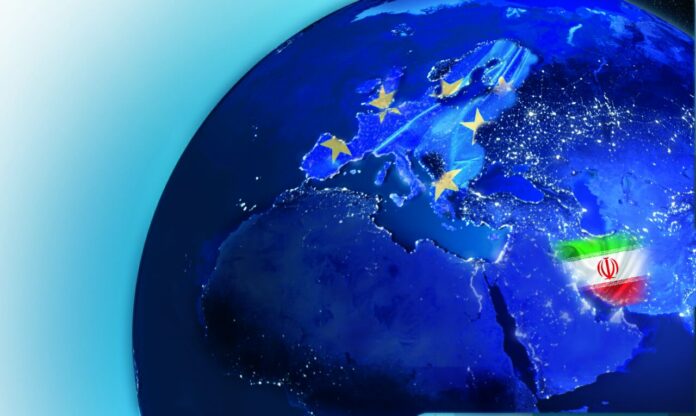
The president also said that enhancement of ties with Europe, saving and honoring the Joint Comprehensive Plan of Action (JCPOA) and cooperation with the International Atomic Energy Agency (IAEA), as well as the fight against terrorism form three main pillars of Iran’s foreign policy.

For his part, the Irish official hailed Iran as a stable and powerful country in a volatile region, stressing that such a “centerpiece of battle against terrorism” should keep playing its constructive role in ensuring regional calm and stability.

He also voiced Ireland’s willingness to expand its political and economic relations with Iran, and called for efforts to boost banking ties between the two sides to stimulate bilateral trade.

Iran, Serbia Discuss Expansion of Consular Ties

The meeting, which was held on Tuesday, was headed by Ali Chegeni, the Iranian foreign ministry’s director-general for consular affairs, and Aca Jovanovic, the Serbian assistant foreign minister for consular affairs.

During the meeting, the Iranian and Serbian consular delegations conferred on ways to expand and promote consular cooperation between Tehran and Belgrade.

They also underlined their countries’ resolve to develop bilateral relations in all fields.

Iran Sympathizes with US over Las Vegas Shooting

In a statement on Tuesday, Qassemi expressed regret over the ‘heinous’ crime in which hundreds of civilians were killed and wounded.

He also sympathized with the US nation and the relatives of the victims.

At least 59 people were killed and 527 injured in Las Vegas Sunday night when a gunman opened fire on a music festival crowd in what is now the deadliest shooting in modern US history.

The death toll from the incident could possibly go up, said Clark County Coroner John Fudenberg in a press conference Monday afternoon.

The shooter, perched on the 32nd floor of the Mandalay Bay hotel, sent more than 22,000 country music fans scrambling for their lives.

Authorities said the suspected gunman — 64-year-old Mesquite, Nevada resident Stephen Paddock — checked into the Mandalay Bay hotel Thursday and brought the numerous firearms found in his room himself.

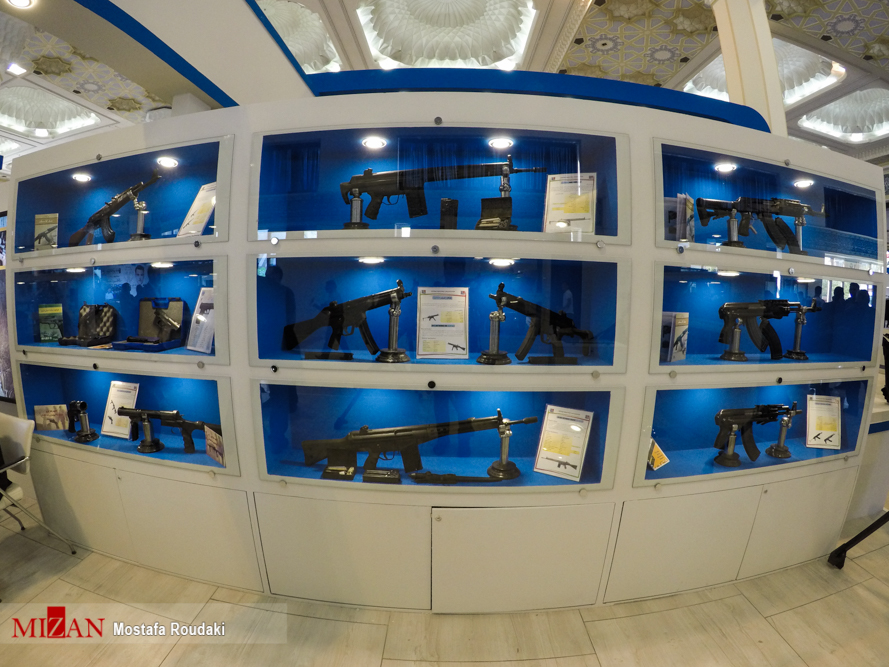
Two sources familiar with the investigation said there was a combination of rifles and handguns at the scene, and one of the sources said there were 23 weapons in the room. While he used multiple rifles in the attack, it is not yet clear whether he utilized them all, Sheriff Joseph Lombardo said in a press conference Monday afternoon, adding that some of the rifles had scope.

Iran, Qatar Discuss Promotion of Economic Ties

Iran, Qatar Discuss Promotion of Economic Ties

During the Tuesday meeting, which was also attended by Qatar’s economy minister, Zarif and the Arab country’s FM discussed bilateral ties with a focus on economic cooperation and the current situation of Persian Gulf littoral states.

Zarif voiced Tehran’s preparedness to have long-term cooperation with Qatar and turn the country into its economic partner.

Sheikh Mohammed, in turn, said he is ready to sign the agreements earlier reached between Tehran and Doha.

He also noted that Qatar plans to develop its economic cooperation with Iran along with the promotion of political ties.

Iran’s Robotic Team Ranks First in AIChE 2017

The robotic team of Amirkabir University, which departed for Barcelona on Thursday, September 29, managed to rank first in the designing section of the competition.

The competition brought together delegations from 23 countries including the US, according to a Farsi report by Mehr New Agency.

Chem-E-Car is an annual college competition for students majoring in Chemical Engineering. This year the competition has been held in two sections. The competitors were required to design and manufacture certain vehicles capable of driving through special routes.

Meanwhile, the vehicles have to carry a certain amount of water set by the organizers. The vehicles drive with a chemical but environment-friendly fuel producing no dangerous gas or liquid. On the other hand, the competitors can’t use any commercial battery in their vehicle.

Organized by the America’s Chemical Association, the event kicked off on September 30 and will last for five days.

Former Iraqi President Jalal Talabani Dies at 83

Talabani, whose health conditions had deteriorated after a stroke in 2012, died in a hospital in Germany on October 3, 2017, according to a report by Rudaw.

He served as the sixth President of Iraq from 2005 to 2014, and the President of the Governing Council of Iraq (39th Prime Minister of Iraq).

Talabani, who was the first non-Arab president of Iraq, is known as “Mam Jalal” meaning “uncle Jalal” among Kurdish people.

Talabani was the founder and secretary general of one of the main Kurdish political parties, the Patriotic Union of Kurdistan (PUK).