Saturday, April 11, 2026
Home Blog Page 3860

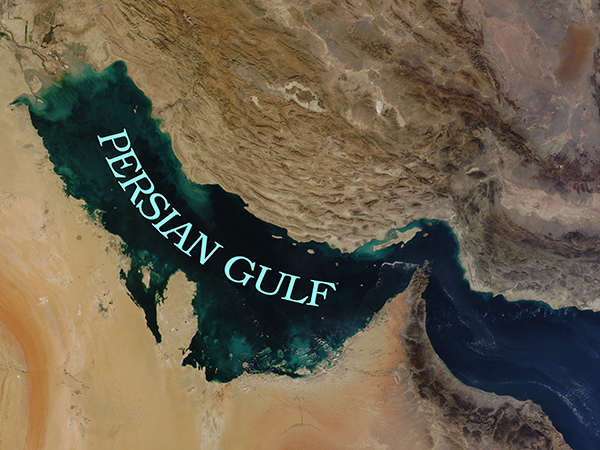
UK Says “Persian” Gulf Is Officially Correct, Never Use Other Terms

Iran Says Persian Gulf Always ‘Persian’ Gulf, not ‘Washington’ Gulf

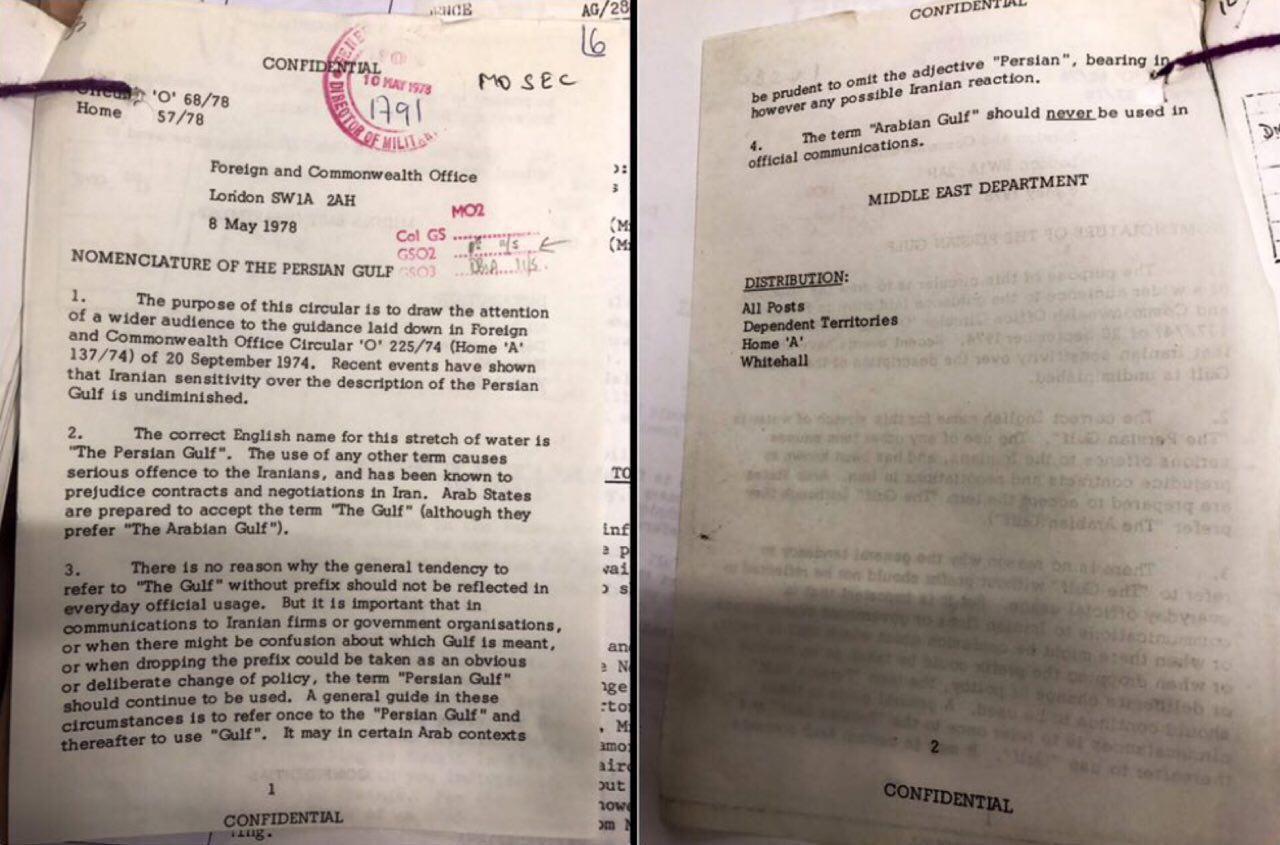
In this circular, which was released by Iranian ambassador to London Hamid Baeinejad on Thursday in a post in his Instagram page, the UK Foreign and Commonwealth Office clearly states that “the correct English name for this stretch of water is ‘Persian Gulf’.”

The confidential document further emphasize that “the term ‘Arabian Gulf’ should never be used in official communications.

UK Says “Persian” Gulf Is Officially Correct, Never Use Other TermsOn the reason for releasing this directive, the UK government has cited the Iranians’ sensitivity pver the ‘description of the Persian Gulf’, and added, “The use of any other term causes serious offence to the Iranians, and has been known to prejudice contracts and negotiations in Iran.’

Baeidinejad says the document has been taken out of the British government’s archive of classified files thanks to the efforts made by Majid Tafreshi, a senior professor of the Iranian history.

The release of the document comes a few days after Iranian people were outraged by US President Donald Trump’s use of the fake name ‘Arabian Gulf’ when referring to the body of water.

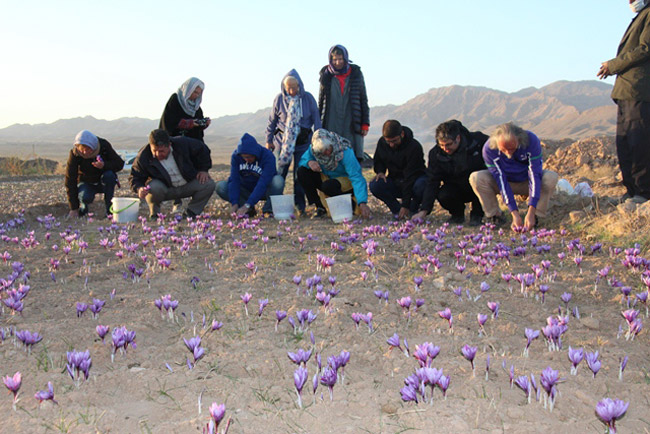
Iran Taking Tourists on Tours of Saffron Harvest

Iran Taking Tourists on Tours of Saffron Harvest

Foreign tourists visit the eastern Iranian province of South Korasan each year as the season to harvest saffron and barberry begins, and this year is no exception.

“This year, too, foreign tourists have begun visiting the province as the harvest season for saffron and barberry begins,” said Morteza Arabi, the deputy head of the provincial Cultural Heritage, Handicrafts and Tourism Department.

According to a Farsi report by Miras-e Arya news agency, he said the department has helped organize tours of tourist attractions and historical monuments in the province for foreign guests.

During the tour, he said, tourists will visit several places, including an anthropology museum, an ancient public bath, a historical school, old neighbourhoods, old houses, paddy fields, an ancient garden, a warm water spa and a historical fortress.

The tourists will also take a tour of saffron farms, he said.

‘Barzani Funneled Revenues of Kirkuk’s Oil to Personal Accounts Overseas’

Middle East expert Hassan Hanizadeh has, in an interview with the Persian-language Khabar Online news agency, weighed in on the latest developments pertaining the clashes between the Iraqi central government and the Iraqi Kurdistan region over the disputed Kirkuk province. The following are the highlights of the interview.

Given the significance of Kirkuk from an economic point of view for both the Kurdistan region and the Baghdad central government, both sides attach great importance to this strategic province. Since 2003 when former Iraqi strongman Saddam Hussein was toppled, Kurdistan Region’s President Masoud Barzani has been trying to get Kirkuk accepted as part of Kurdistan. However, the Constitution stipulates that Kirkuk should remain under the control of the central government as long as the unstable situation in the province is not settled.

Barzani has made the most profit from Kirkuk’s oil over the past 14 years. He used to export 900,000 barrels of oil per day from Kirkuk to Turkey and funnel the revenues into his personal bank accounts overseas.

Following the plebiscite on Kurdistan’s secession from Iraq, the dispute between the Kurdistan region and the central Iraqi government over Kirkuk intensified. Baghdad is trying to make the Kurdistan region accept Kirkuk as part of the federal government. Accordingly, Iraqi Prime Minister Haider al-Abadi sent Iraqi troops to Kirkuk, and the forces took control of key areas of the province. It seems like the current situation in the Kurdistan region is not very much in Barzani’s interest. The Iraqi central government has sent messages to Kurdistan for talks. Iraqi President Fuad Masum, who is an ethnic Kurd, acts as a mediator.

Barzani used to export 900,000 barrels of oil per day from Kirkuk to Turkey and funnel the revenues into his personal bank accounts overseas.

Iran is not very much involved in Iraq’s domestic issues. Even the Popular Mobilization Forces has not got involved in the issue, which shows the Kirkuk issue is a sensitive matter and may lead to a major conflict between the Kurdistan region and Iraq’s central government. Barzani seeks to get involved in a tough fight with the federal government while Masum tries to resolve the crisis through mediation.

Ankara claims PKK forces are launching operations against Turkey from Kirkuk. So, Turkey may, in the future, step in to secure control over some of the oil wells in western Kirkuk. At the moment, Turkish government forces are tied up in Idlib province.

The US and the West have claimed that they will not meddle in Kurdistan’s affairs very much. But if the situation is ripe, i.e. if the conflict is intensified to the level of killing and bloodshed, both the US and the West will get involved.

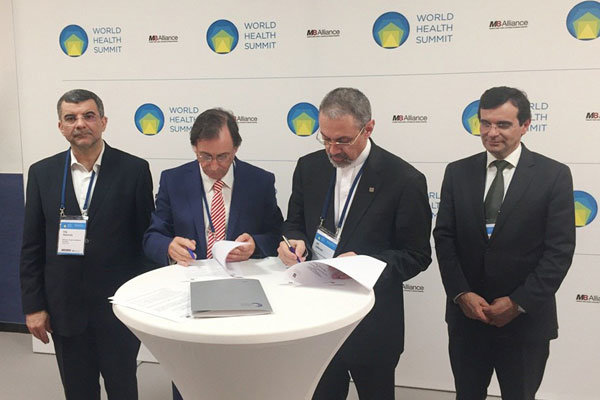
Iranian, Portuguese Universities Start Mutual Cooperation

Iranian, Portuguese Universities Start Mutual Cooperation

The partnership agreement was signed on the sidelines of the 9th World Health Summit in Berlin, Germany, between the two universities for a three-year term.

According to a Farsi report by Mehr News Agency, the agreement was signed in presence of Portugal’s Minister of Health, Adalberto Campos Fernandes, and Iran’s Deputy Minister of Health, Iraj Harirchi. Germany’s Federal Minister of Health Hermann Gröhe and some other officials also attended the ceremony.

Global health and hygiene, exchange of transplantation knowledge, joint education and research, and exchange of professors and students are among the issues agreed in the document.

The two sides will also form special working groups for the preparation and implementation of an operational plan.

The University of Coimbra is a Portuguese public university in Coimbra, Portugal. Established in 1290, it is one of the oldest universities in continuous operation in the world, the oldest university of Portugal, and one of the country’s largest higher education and research institutions.

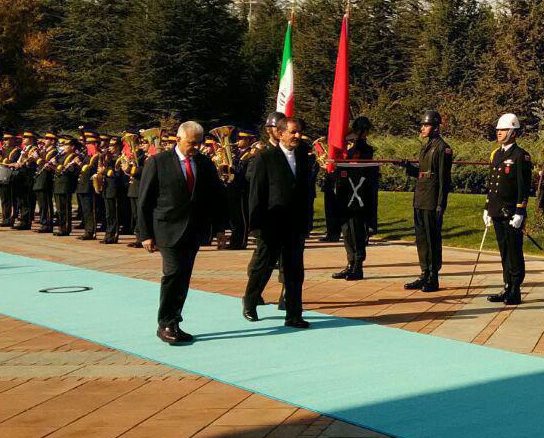
Iran’s First VP in Ankara to Attend D-8 Summit

Iran’s First VP in Ankara to Attend D-8 Summit

Jahangiri, along with the high-ranking delegation accompanying him, arrived in the Turkish capital on Thursday morning and was received by Prime Minister Binali Yıldırım.

The Iranian official will later hold talks Yıldırım before taking part in the 9th Summit of the D-8 Organization for Economic Cooperation due to be held on October 20 in Istanbul.

He is accompanied by Minister of Industry, Mine and Trade Mohammad Shariatmadari, Minister of Road and Urban Development Abbas Akhoundi, Chief of Iran’s Cultural Heritage Organisaton Ali Asghar Mounesan and Governor of Central Bank of Iran Valiollah Seif.

Iran and Turkey have ramped up efforts to boost bilateral trade since the implementation of the Joint Comprehensive Plan of Action (JCPOA), a lasting nuclear deal between Iran and the Group 5+1 (Russia, China, the US, Britain, France and Germany).

The deal took effect in January 2016, terminating all nuclear-related sanctions on Iran.


Iran’s President Calls for Enhanced Ties with Uzbekistan

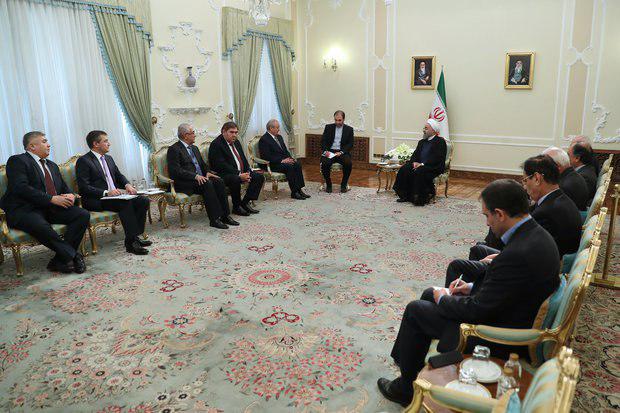
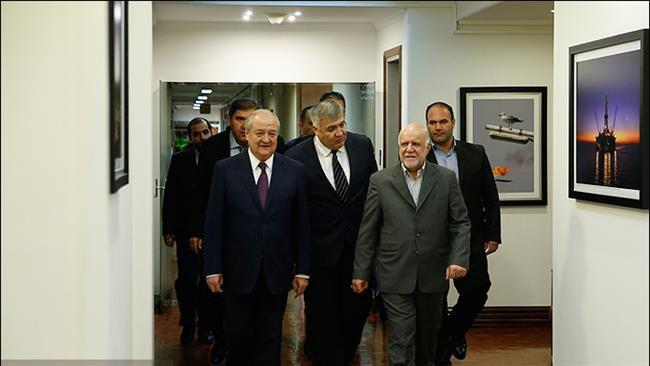
“We consider Uzbekistan as a friendly country in the past and future of our history,” said President Hassan Rouhani on Wednesday in a meeting with Uzbek Foreign Minister Abdulaziz Kamilov in Tehran.

“The historic ties, cultural commonalities, and mutual national interests have completely connected the two countries while no borderline is shared,” said the Iranian top executive, according to Mehr.

Rouhani went on to say that historic relations and the closeness between the two nations provide huge opportunities for bolstering and cementing bilateral relations between the two countries.

“Expansion of these relations will bring benefits for both nations and the region,” he added.

The Uzbek FM, for his part, voiced the firm determination of Tashkent for deepening and broadening ties with Iran in both political and cultural avenues.

“The visits made by senior officials of Uzbekistan to Iran are aligned with the objective of expanding mutual cooperation and founding strategic and long-run relations between Tehran and Tashkent,” underlined the top Uzbek diplomat.

He also called for further cooperation between Iran and Uzbekistan in areas related to strengthening security measures in the region.

“The two countries of Iran and Uzbekistan enjoy rich Islamic histories and are able to stop the spread of extremism through joint efforts,” Kamilov added.
Iran’s President Calls for Enhanced Ties with UzbekistanUzbekistan New Client of Iran’s Oil

Meanwhile, Iran says it is studying a request by Uzbekistan to export crude oil to the Central Asian country – an announcement that shows the list of Iranian oil clients is expanding as the nation pumps more crude to international markets.

Iran’s Petroleum Minister Bijan Zanganeh was quoted by the domestic media in Tehran as saying that ranking Uzbek oil officials were already discussing imports from Iran with the National Iranian Oil Company (NIOC).

“Uzbekistan’s oil production is limited. Therefore, it needs to import this strategic product,” Zanganeh was quoted as saying by IRNA.

“Given that Uzbekistan has no access to sea, exports to the country need to be carried out through land and probably by rail,” he said after meeting the visiting Uzbek FM Kamilov, Press TV reported.

The Iranian minister further emphasized that Tehran still needed to study the technicalities involved in exports of oil to Uzbekistan, stressing that the Islamic Republic supports the move as it could help strengthen relations between the countries.

Iran’s Top General Condemns Israel’s Violation of Syria’s Territorial Integrity

Iran's Top General Condemns Israel's Violation of Syria's Territorial Integrity

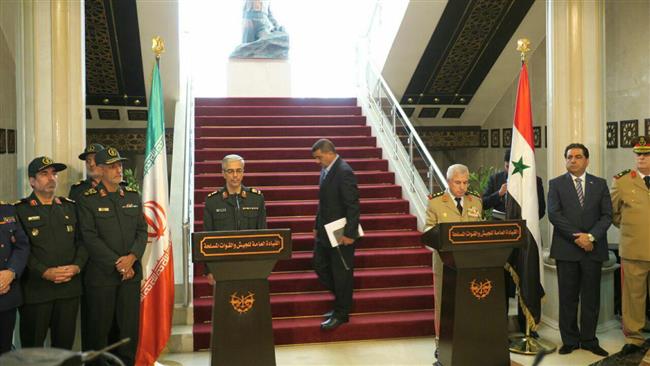
“It is not acceptable for the Zionist regime (Israel) to violate Syria via land or air whenever it pleases,” Major General Mohammad Baqeri said in the Syrian capital of Damascus on Wednesday.

He was speaking alongside Chief of the General Staff of the Syrian Arab Army General Ali Abdullah Ayyoub.

The Israeli military conducts strikes against Syria-based targets on a regular basis, most of the time claiming that it hits convoys destined for the Lebanese resistance movement of Hezbollah. Hezbollah fighters have been assisting the Syrian army in its fight against Takfiri militants.

Israel has been offering medical treatment to the extremist militants wounded on the battlefields in Syria in field hospitals in the Israeli-occupied Golan Heights.

Iran's Top General Condemns Israel's Violation of Syria's Territorial Integrity

On a request from Damascus, Iran has been offering the Syrian government advisory military support against the foreign-backed militancy that started in the country in 2011.

In his Wednesday remarks, Major General Baqeri said he was in Syria to declare that Tehran is by Damascus’ side in the fight against terror.

“The Islamic Republic considers respect for the regional countries’ territorial integrity to be a principle,” Baqeri said. “We believe that whenever a country should seek to conduct military operations inside another one, it should do so while respecting that country’s territorial integrity and at its invitation.”

‘Turkish forces unwelcome’

General Ali Abdullah Ayyoub said for his part that the contingents of Turkish forces deployed to Syria are there illegally. He said the Turkish forces are not in Syria according to a deal reached on de-escalation zones in a peace process in the Kazakh capital of Astana — unlike what Ankara has said.

He said the Turkish military presence in Syria was also against international law and norms and Syria was “entitled to confront the Turkish forces on our soil in whatever fashion [that we deem necessary].”

Iran and Russia — which is another Damascus ally — have been mediating talks between the Syrian government and opposition, alongside Turkey in the Kazakh capital since early this year.

The talks have led to the designation of four de-escalation zones across Syria. Turkish troops recently marched into the Idlib Province in northwestern Syria, where one of the zones is located.

Turkey has said the deployment is warranted under the agreements in Astana.

Ayyoub also said that the terrorist groups operating in Syria were nearing their demise and that the United States’ support would not help sustain them.

Europe Only Paying Lip Service to Iran: Top Security Official

Iran Urges Collective Cooperation to Tackle Regional Security Challenges

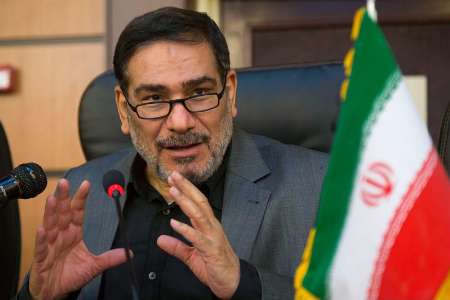
“It has always been our plan to develop our ties and relations with Europe within our values and beliefs. However, the truth is that Europe has not done the same since the nuclear deal was signed,” Shamkhani said in an exclusive interview with euronews correspondent in Tehran.

“It has mainly paid lip service, with a few exceptions. It is now stating that it is against the elimination of the nuclear deal by the US,” Admiral Shamkhani added.

He further referred to Trump’s anti-Iran rhetoric and said, “Unfortunately, Trump is a liar. The US imposes sanctions on Iran, supports the growth of terrorism in Iraq and Syria, and bombards Yemen.”

“When Trump calls Iran “The Terrorist Nation”, or distorts the 2,500 years of history the ‘Persian Gulf’ has, by calling it the ‘Arabian Gulf’, people realise that they are being targeted,” he added.

Iran Navy Commander Meets European Navy Leaders

Iran Navy Commander Meets European Navy Leaders

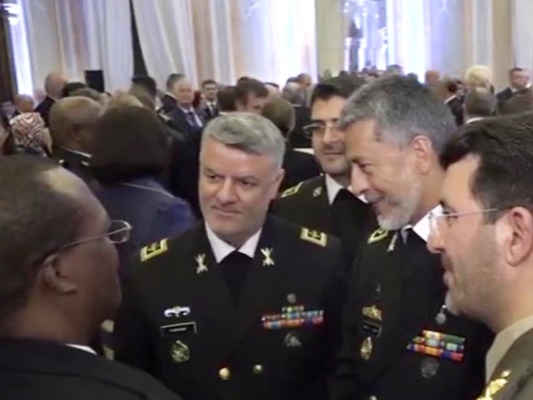
Admiral Sayyari on Tuesday night met with navy leaders of Bulgaria, Spain, Portugal, South Africa, Croatia, Algeria, and a number of navy officers from Russia and Italy.

During these talks, the sides exchanged views on development of relations between the navies of their countries and the Islamic Republic of Iran’s Navy.

Sayyari arrived in the Italian city of Venice on Tuesday morning as the special guest of the 11th edition of Regional Seapower Symposium of the Mediterranean and Black Sea Countries, commonly known as RSS.

This is one of the first visits of an Iranian military commander to a European country, and perhaps the first one to a Western state since the 1979 Revolution in Iran.

The event was kicked off Tuesday, October 17, and will be underway until October 20 in Venice.

During the Symposium, which is attended by navy commanders of 50 countries, the top admirals discuss ways to counter illegal activities, technical innovation, and reinforcement of cooperation in marine security.

The purpose of the Regional Seapower Symposium for the Mediterranean and Black Sea Countries is to create a forum where the leaders of the regional Navies can meet and discuss about their common challenges and strengthen mutual co-operation.

Trump’s Stupidity More Dangerous than His Madness: IRGC General

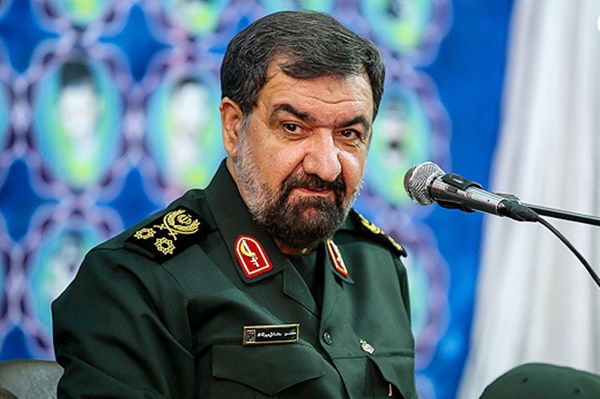
“The United States cannot manage the West Asia without understanding Islam and the relationship between the Islamic Republic and other countries,” said Major General Mohsen Rezaei in a Wednesday address to a conference in Tehran on Future Studies.

According to a Farsi report by Tasnim news agency, Rezaei warned that low level of understanding for the president of a country like the US is more dangerous than his insanity.

“In fact, scientists and politicians need future studies. A nation that fails to envisage future events is lagging behind in shaping its future,” Rezaei said.

“If we want to be a leading nation, we won’t be able to succeed in different spheres without paying attention to the future,” he added.

General Rezaei stated that the issues and events of the world are changing rapidly and foreseeing the future is very complicated.

“We need to have enough knowledge and skills in this field. Of course, in this regard we are ahead of some Western countries.”

“The most important factor in future studies is the proper understanding of the events, changes and rules governing human life. Americans have the technology, but they do not have a proper understanding of the issues,” Rezaei noted.