Monday, December 29, 2025
Home Blog Page 3856

Iran Rejects New Yorker’s Account of Zarif-Tillerson Meeting

Iran Rejects New Yorker’s Account of Zarif-Tillerson Meeting

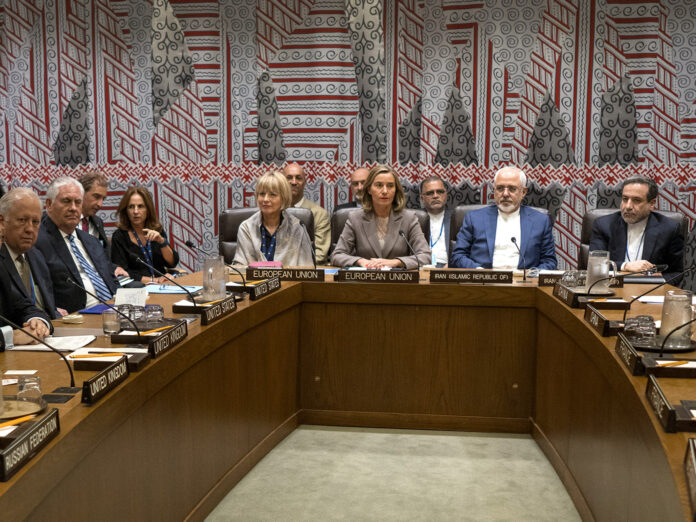
An informed Iranian source has told the Tabnak news website that “the meeting between Iran and the P5+1 group on the sidelines of the UN General Assembly was not an initiative suggested by the US, and the session was not chaired by Tillerson, so the Americans were in a weak position at this meeting and they were fully impressed by the consensus of the members and the statements of Iran’s foreign minister.

This source also added that the New Yorker’s account of the meeting is not well-defined and can be called the reversal of reality. This narrative is an attempt to make up for the US Secretary of State’s passivity at this meeting.

“While FM Zarif stated the positions of the Islamic Republic very strongly, Tillerson just read a few phrases that were written for him on a paper and then kept silent!” underlined the source.

“The report and the narrative of this American media is to promote and strengthen Tillerson’s position against Donald Tramp rather than undermining Iran’s position as in the past days, there were signs of a disagreement between Tillerson and Trump that undermined the Secretary of State’s position in the US government.”

The source also noted that the New Yorker was striving for the reinstatement of Tillerson in the US State Department.

Iranian Foreign Minister Mohammad Javad Zarif and US Secretary of State Rex Tillerson met each other for the first time during a late September meeting of the P5+1 group on the sidelines of the UN General Assembly in New York.

Following the meeting, the New Yorker magazine reported that “Tillerson let the other diplomats —representatives of Germany, France, Russia, China, the United Kingdom, the European Union, and Iran — speak first. When Zarif’s turn came, he read a list of complaints about the Trump Administration and its European partners.”

After Zarif’s remarks, the New Yorker claims, “Tillerson, peering down over his reading glasses, spoke in a deep Texas drawl that evoked a frontier sheriff about to lose his patience.”

“No one can credibly claim that Iran has positively contributed to regional peace and security,” Tillerson was quoted as saying.

New Yorker described Tillerson as “an imposing man” who “is stocky, and has a head of swept-back gray hair and a wide mouth that often droops in a scowl.”

“Turning to Zarif, he [Tillerson] went on to say that Iran had funded groups like Hezbollah, the Lebanese Islamist militia; it had backed Bashar al-Assad, the murderous Syrian dictator; and it had sent its Navy into the Persian Gulf to harass American ships. The fault for all this, Tillerson said, lay in the nuclear deal, known as the Joint Comprehensive Plan of Action, which curtailed Iran’s nuclear-weapons program but not its aggressive actions in the region.”

“For Tillerson, it was an emblem of the previous Administration’s overly lenient foreign policy, which sought to promote America’s priorities through consensus, rather than through the frank display of power. “Lifting the sanctions as required under the terms of the JCPOA has enabled Iran’s unacceptable behaviour,” he said, according to the report.

The report further quoted Tillerson as saying, “The real problem was that Iran had been attacking Americans since 1979, when Iranian students seized the US Embassy in Tehran and held fifty-two diplomats for more than a year.”

“The modern-day US-Iran relationship is now almost forty years old,” he went on to say, still looking at Zarif. “It was born out of a revolution, with our Embassy under siege—and we were very badly treated.” He accused Iran of sponsoring a number of attacks in Lebanon in the nineteen-eighties and in Iraq more recently, which together killed hundreds of American citizens. “The relationship has been defined by violence—against us,” he said, as claimed by the New Yorker.

Film Festival in Dallas Features Several Iranian Animations

Film Festival in Dallas Features Several Iranian Animations

The event was organized by ‘Sheed Film’ company and was performed in collaboration with the French DreamLab Company and Iran’s Institute for the Intellectual Development of Children and Young Adults, according to a Farsi report by Asr-e Iran news website.

At the event, which was held for one evening, animations made by Iranian directors were screened free-of-charge for the audience with the motto ‘Finding a Friend like Me’.

This was the first time that such an event was held for Iranian children in the United States, and it is said that ‘Sheed Film’ wanted to evoke sympathy and develop friendship among Iranian kids and help them get acquainted with each other.

It was also aimed at inviting children from other countries to watch Iranian animations.

The show kicked off on Sunday, October 8, in Angelika Film Centre Plano, Dallas. Films like “The Fox Who Went after the Sound” directed by Fatemeh Goodarzi, “Black or White” directed by Mohammad Ali Soleimanzadeh, “Scarecrow’s Heart” directed by Gholam-Reza Kazzazi, “Cloud Goats” directed by Hamid Karimian, and “The Kind Moon” directed by Nazanin Sobhan Sarbandi were screened at the event.

The ‘Sheed Film’ authorities have announced that they sought to support all Iranian and world-known Persian-language films by selecting valuable works in order to make the foreigners familiar with the culture and art of Iran and Persian-speaking people, and also maintain the relations and links between Iranians abroad, especially the younger generation.

Iran’s Foreign Ministry, IRGC United against Enemies: Commander

Iran’s Foreign Ministry, IRGC United against Enemies: Commander

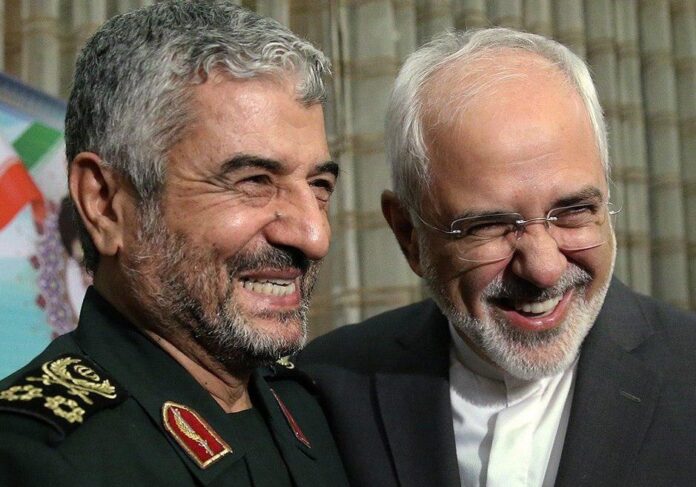
IRGC Chief-Commander Major General Mohammad Ali Jafari noted on Monday that the foreign ministry and the IRGC are coordinated in declaring their stances against enemies of the Islamic Republic even if they express the positions in different ways.

Speaking in a ceremony also attended by Iranian Foreign Minister Mohammad Javad Zarif in Tehran, General Jafari said the enemies of the Islamic Republic are well aware that all officials in Iran’s Establishment are unanimous in defending the country’s values, causes, national power, and defensive capabilities.

Zarif, for his part, referred to IRGC as an honour for the country, and a guarantee for defending Iran, survival of the 1979 Revolution, and protecting the country’s borders.

He further reiterated that Tehran will take reciprocal measures against a potential “strategic mistake” by US President Donald Trump to designate the IRGC as a terrorist organization.

“Some measures have been thought out in this regard and will be taken at the appropriate time.”

“The policy of Trump’s administration has been to deprive Iran of the JCPOA’s benefits, but through our policies, we will not allow the US to make such a move. We have been successful so far in this regard and will respond [to US actions] with proper measures in the future,” the top Iranian diplomat pointed out.

Zarif said Iran had repeatedly announced that its defensive power was not negotiable, adding that it has been even specified in the JCPOA that Iran would not negotiate on its defensive power.

Earlier on Sunday, the IRGC chief commander had noted that Iran would treat US troops like ISIS terrorists if the IRGC was designated as a terrorist organization by the US.

Iran’s reaction came a few days before the US president’s expected announcement of a final decision on his Iran strategy.

Trump is reportedly planning to “decertify” on October 15 the nuclear agreement, known as the Joint Comprehensive Plan of Action (JCPOA), reached between Iran and the P5+1 group of countries in 2015.

According to media speculations, the US president plans to declare that the nuclear deal is not in the national interest of the United States and kick the issue to a reluctant Congress. He is also expected to designate the IRGC as a terrorist organization.

Is Barzani Ready for Conditional Suspension of Kurdish Referendum?

One of Iraq’s three Vice Presidents, Osama al-Nujaifi, who has recently met in Sulaymaniyah with Masoud Barzani, said the seccessiont referendum in the Kurdistan region was a wrong decision taken unilaterally.
“Al Arabiya website quoted al-Nujaifi as saying that Barzani has voiced his readiness to suspend the referendum in return for the lifting of sanctions against the Kurdistan region and the start of negotiations,” wrote Entekhab news website in a Farsi report.
This comes as Erbil and Baghdad are still at odds amid consequences of the referendum in Kurdistan region.
Recently, Iraqi Vice Presidents Ayad Allawi and Osama al-Nujaifi met with Barzani in Sulaymaniyah and reached a four-point agreement on initiating talks and lifting sanctions on the Kurdistan region. However, Baghdad considered the agreement non-binding stressing that it would never recognize the referendum.
Under such circumstances, al-Nujaifi says that Barzani is ready to ignore the separation referendum results if the talks open, and the sanctions are removed.
Meanwhile, Hayman Hurami, the political adviser at the office of the Kurdish Region’s President, has referred to the meeting of the speaker of the Iraqi parliament with the president of the Kurdistan region and wrote on his Twitter page that Barzani has informed al-Jabouri he is ready for talks with Baghdad and the central government without any preconditions.
However, the spokesman for the Iraqi government Mohammed Saeed al-Sahhaf has called for guarantees from the Kurdish region government to adhere to maintaining unity in the country.
The Shiite coalition in Iraq, in turn, has criticized the visit of the country’s parliament speaker to Erbil and his meeting with Barzani, describing it as disappointing.
Another Iraqi Vice President, Nouri al-Maliki, has strongly rejected any dialogue and reconciliation between Baghdad and Erbil before cancelling the results of the plebiscite.

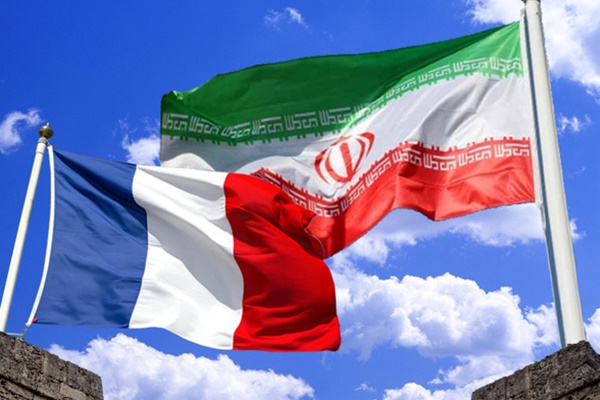
‘Iran-France Business Ties Promoted after Nuclear Deal’

“Relations between Iran and France have expanded in various fields including auto industry, aviation industry, part-making, environment, sewerage, agriculture and so on,” said Mohammad Reza Najafi-Manesh, a board member of Iran-France Chamber of Commerce.

According to a Farsi report by Tasnim, he said Iran and France have long-time relations and added given the promising opportunities created in the post-JCPOA era, the two sides hope they can take more advantages of the current economic and political capacities to expand bilateral ties in all fields.

Najafi-Manesh said France has already made huge investments in research on agriculture and animal husbandry in Iran.

He also said at present Iran is seeking to take advantage of France’s latest scientific findings in agriculture and animal husbandry.

The Iranian official noted that exchanging the latest scientific findings with other countries in the mentioned fields will lead to further productivity and income.

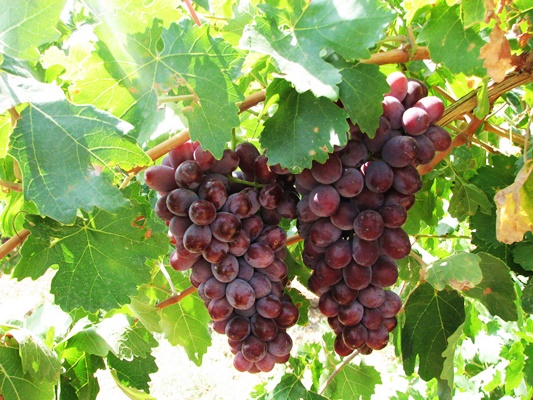
Iran’s West Azarbaijan Province Exports 20 Tonnes of Grapes

Grapes

“This year, 20 tonnes of grapes harvested in West Azarbaijan, worth $15 million, have been exported to Russia, Azerbaijan Republic, Turkmenistan, Afghanistan, Ukraine and Iraq,” head of the Agriculture Organization of the province, Esmaeil Karimzadeh, said on Monday.

According to a Farsi report by the Mehr News Agency, he said West Azarbaijan is the fifth largest producer of grapes across Iran, adding the province is ranked first in terms of the quality of its grape.

“Grape is the second major fruit of the province involving 30,000 workers directly and 30,000 other indirectly in harvesting and packaging.”

He went on saying this year 176,265 tonnes of grapes have been harvested in the province. “Out of the harvested grapes, over 20,000 tonnes are stored but the rest are sent to the domestic and foreign markets.”


38% Decrease in Grape Harvest in West Azarbaijan

Karimzadeh said about 30,000 tonnes of the harvested grapes in the province are exported to foreign markets and the rest, about 60,000 tonnes, are used in supplementary industries.

“Meanwhile, about 40,000 tonnes of grapes are turned into raisins and the rest are allocated for household consumption,” he said.

Karimzadeh referred to a 38-percent decrease in this year’s grapes harvest because of icy weather and added, “There are over 52 types of grapes in the province but the main grapes are seedless white and seedless red grapes harvested in Sardasht region.”

He called on the government to support the grape harvesters in the province and added marketing still remains one of the main challenges for the grape harvesters.

“Absence of a government representative for setting the price as well as the presence of dealers in exporting markets are the main problems in the grapes markets,” he added.

Iranian MPs Outraged by Italian Embassy’s “Impudence”

23 Iranian Lawmakers Test Positive for Coronavirus

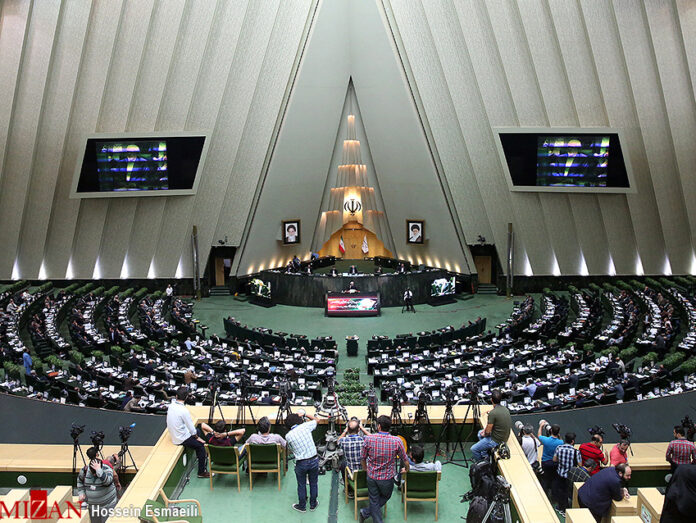
Iranian lawmaker Abolfazl Hassan Beigi says the Italian embassy’s fingerprint request is an insult to the Islamic Republic of Iran and the status of parliament membership, adding the parliament will not allow the embassy to go ahead with its insult.

“According to a plan by the Parliament’s National Security and Foreign Policy Commission to help Foreign Ministry via inspecting Iranian embassies abroad, I, along with another MP, Mohammad Javad Jamali, are expected to visit Italy. To make the arrangements, the Italian embassy in Tehran has announced that we need to be fingerprinted before the visit.”

“We consider the decision a blatant insult to the Islamic Republic of Iran and the status of Parliament membership and will not allow the embassy to insult us,” he was quoted as saying by the Khabar Online news agency.

The representative of Damghan also said the lawmakers have political passport and “this means that there is no need to fingerprinting because we have political immunity. So, the embassy’s decision amounts to an insult to us.”

The Iranian lawmaker said the chairman of the Parliament’s National Security and Foreign Policy Commission, Alaeddin Broujerdi “even suggested that the embassy fingerprints us in the parliament but they rejected the suggestion under various pretexts.”

He stressed that the Italian embassy’s decision is not “acceptable” under any condition and added “our visit to Italy has been delayed for over a month due to this issue but I would not go to Italy if they insist on their decision.”

German Ambassador to Tehran Poses with “Yes to JCPOA” Poster

German Ambassador to Tehran Poses with “Yes to JCPOA” Poster

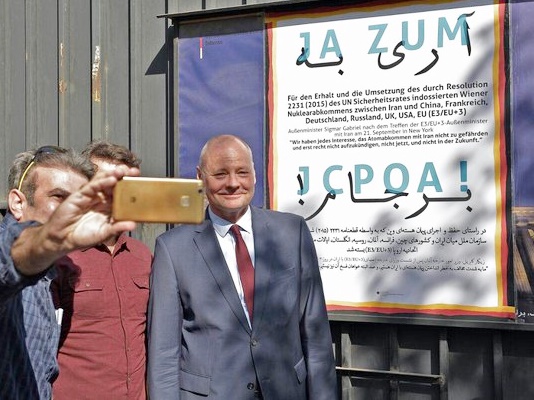
After posing with a “Yes to JCPOA” poster hung on the wall of the German embassy in Tehran, Ambassador Michael Klor-Berchtold wrote on Twitter:

“With these posters, we want to tell to the Iranian public how much Germany is trying to maintain and implement the nuclear deal.”

According to a Farsi report by Tabnak, the German diplomat emphasized in a message that Germany is one of the six countries that succeeded in ending the disputes over Iran’s nuclear program in 2015, after years of diplomatic efforts.

“This agreement is a clear example of how the complicated international issues could be resolved through negotiations peacefully. Together with France, Britain, the United States, China and Russia, we proved that diplomacy and dialogue are stronger than conflict. Despite the opposition voices heard, Germany still insists on sticking to the deal and implementing it,” said the German ambassador.

He also added that German Foreign Minister Sigmar Gabriel has always emphasized this and reiterated it at the United Nations General Assembly in New York as well.

“Germany’s ambassador to the United States, Peter Wittig, is also taking every opportunity in Washington to outline our positions, and tries to win the favour of others. That’s exactly what I’m doing in Tehran. Our posters confirm our stance and our diplomatic efforts, especially in the last few months and weeks.”

“I believe that more than ever, we need to emphasize dialogue and diplomacy. All the parties to the nuclear deal are responsible for its success and must look at it as a clear example of a peaceful settlement of conflict through dialogue,” noted Klor-Berchtold.

Based on the report, the German embassy in Tehran has produced a series of posters bearing the slogan “Yes to JCPOA”, which is the stance taken by German Foreign Minister Gabriel, ambassador Klor-Berchtold, and German ambassador to the United States Wittig.

The posters are hung on the walls of German embassy in Tehran in the heart of Iranian capital, along with pictures of Germany’s spectacular sceneries.

All the posters bear the following title: “For maintaining and implementation of the deal between Iran, the United States, China, France, Germany, Russia, the UK, and the European Union which is endorsed by the United Nations Security Council Resolution 2231 (2015)”. It also includes the following:

German Foreign Minister Sigmar Gabriel, after the meeting of the P5+1 group of countries with Iran on September 21 said in New York: “We strongly oppose ending the nuclear deal with Iran, and of course we do not want to cancel it, either today or tomorrow.”

Germany’s ambassador to Tehran, Michael Klor-Berchtold, said in Tehran on October 5, 2017: “The JCPOA is a great achievement, and Germany is committed to it. We will do anything we can, to maintain this achievement. We will continue our efforts so that the people of Iran and their families enjoy all the potentials of the deal in their everyday life.”

German Ambassador to the United States, Wittig, stated at the Atlantic Council press conference on ‘Europe and the Nuclear Accord with Iran’ on September 25, 2017 in Washington that: “We are interested and this is in fact our top priority, to see the nuclear pact with Iran is maintained…We believe there are no practical peaceful alternatives to this treaty.”

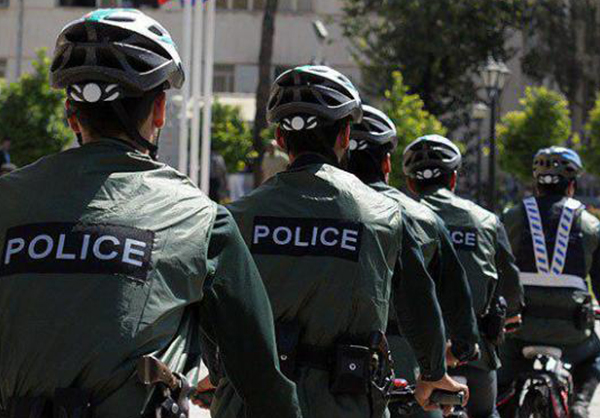
Tehran Police Forces to Use Bicycle for Daily Missions

Tehran Police Forcers to Use Bicycle for Daily Missions

Speaking to reporters on Monday, General Rahimi said that “a license must be obtained so as to use motorcycles and bicycles for police forces in Tehran.”

He also noted that Tehran police forces are pioneering in this regard, according to a Farsi report by IRNA.

“Of course, government organizations should also be pioneering in it. By the way, the cyclist police would be initially run in Tehran. In the meantime, we are planning to use hybrid cars at Tehran’s police stations.” added Rahimi.

Rahimi stated that more than 35,000 calls are received at the 110 Emergency Centre on a daily basis and the police take care of the issues in seven to eight minutes, but sometimes it takes about 20 minutes, and we are trying to shorten this time.

“The highest priority of the police is to fight against smuggling of goods and foreign currency, and our discovery rate has increased by more than 50 percent over the past six months.”

Rahimi stressed that police are present at official hubs, including customs, as well as at the places where the smugglers are covertly activating, but it is necessary that the other organizations help us in this regard.

Meanwhile, according to news agencies on Monday, police officers in the capital Tehran were also provided with new uniforms equipped with cameras.

These cameras that are installed on police uniforms are capable of capturing images during missions.

Fars News Agency has quoted a top police commander General Mohammad Sharafi as saying that the footage recorded by these cameras can be monitored online.

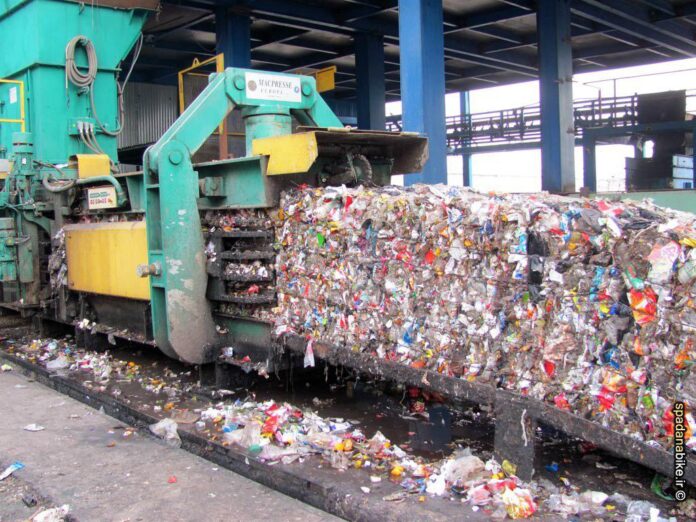
UK Firm Makes $115m Investment in Waste Recycling in Iran

UK Firm Makes $115m Investment in Waste Recycling in Iran

Zanjan Governor, Asadollah Darvish Amiri, said the investment by the UK’s Global Green Company is made in line with raising public awareness about garbage recycling across the world. “The decision is quite praiseworthy.”

He went on saying with the investment made by the Global Green in Zanjan province, the problem of waste recycling will be resolved. “The company will also take a long step in protecting the environment of the province against the garbage,” he added.

Darvish Amiri also said the province’s officials will do their best to provide the foreign company with the required facilities.

“We hope the firm would begin its operation soon,” he said on Sunday in an address to foreign investors in the province, according to a Farsi report by IRNA.

“The Build–operate–transfer (BOT) contract signed between Zanjan governor and Green Global paves the way for attracting domestic investments in the province,” he noted.

Darvish Amiri also called on the new members of the Municipality Council of the province to make the arrangements for the immediate operation of the company.

Javad Rahmati, another Iranian official, said the management of garbage in the province dates back to 30 years ago. “But today, we are going to launch a new and different project in this field.”

According to Rahmani, various projects have been offered to the province’s officials for recycling of garbage but “Global Green was the only company which offered a new project for waste cycling.”

“The company also has the capacity to recycle the garbage produced in the neighbouring cities,” he said.

Producing Electricity from Garbage

The CEO of Global Green then took the podium and said the company has always been seeking new ways to recycle garbage using the latest technologies.

He said the company has managed to adopt the latest technologies to turn the garbage into fuel and then electricity.

He went on to say that investing in Zanjan province is cost-effective for his company and added through the investment, Global Green will recruit local workers and protect the Iranian environment.

The company is set to become operational in a vast land by the next three months.

Zanjan province produces over 300 tons of garbage on a daily basis.