Saturday, December 27, 2025
Home Blog Page 3846

‘JCPOA Violation to Have Little Impact on Iran’s Economy’

Senior parliamentarian Hassan Hosseini Shahroudi has, in an article published in the Persian-language Tejarat daily, explained what effects Washington’s contravention of the Iran nuclear deal with six world powers known as the Joint Comprehensive Plan of Action (JCPOA) will have on Iran’s economy. The highlights of the analytical piece follow.

What is important is to find out whether or not Iran will be as much affected by Washington’s violation of the JCPOA as Trump and US Congress claim Iran will. First, the economic systems of the US and Europe are extremely interdependent. If the JCPOA is scuttled for whatever reason, it will affect Iran-Europe relations. Although European countries have, so far, condemned Trump and Congress’s breach of promises and have underlined the necessity of remaining committed to the Iran nuclear deal, we cannot very much trust Europe’s words if the US questions the JCPOA. The reason is that the Europeans have, on numerous occasions, obeyed the Americans in the past and reneged on their agreements with Iran.

Another point is to see how Iran’s banking relations with the world will be affected by the violation of the JCPOA. Even now, the nuclear deal has played almost no role in improving Iran’s banking relations with other countries, and if we are realistic, the JCPOA’s impact on the amelioration of Iran’s banking relations has been less than 5%. This is a reality that the governor of the central bank of Iran, the country’s economic officials and even the foreign minister have stressed. So, Trump should know that the JCPOA has had no influence on Iran’s banking and monetary ties with other countries, and Washington’s breach of commitments under the nuclear deal will have little bearing on Iran’s baking relations with the world.

Therefore, and as Leader of the Islamic Revolution Ayatollah Seyyed Ali Khamenei has underscored, Iran has been looking for a replacement because it has no trust in the US and its allies. Iran’s policy is to reach self-sufficiency and get rid of dependence in different shapes and forms. That is why Iran opted for alternative policies and strengthened its relations with such countries as Russia and China, which, under the current circumstances, are more committed to their obligations. They are not under US pressure, either. On the other hand, Iran’s trade has been shifting from transactions in dollars and other common European currencies to a barter economy.

We have tried to identify countries which need Iranian products and begun trading goods with them. Of course, there is no denying that Iran needs foreign exchange as well. Therefore, we changed our forex transactions from the greenback to the currencies of the countries with which we have trade. For instance, we have now defined a mutual monetary relationship with Turkey, India, China, Russia and other countries, and we have removed global currencies from our forex transactions with many countries. So, we can see that the removal of the JCPOA will have no bearing on Iran’s economy, and because Iran purchases goods from other countries, the removal of the nuclear deal will be more detrimental to those countries.

‘Consolidating JCPOA to Facilitate Iran-EU Talks on Other Issues’

Iranian President Hassan Rouhani has, in a telephone conversation with his French opposite number Emmanuel Macron, touched upon Washington’s possible decisions on the Iran nuclear deal known as the Joint Comprehensive Plan of Action (JCPOA).

President Rouhani highlighted the European Union and France’s unflinching support for the JCPOA and the necessity of fulfilling the provisions of the agreement by all signatories.

“The International Atomic Energy Agency (IAEA) is the only authority to corroborate Iran’s compliance with its commitments under the JCPOA, and linking multilateral and international obligations to the United States’ domestic divisions can pose a serious danger to global trust,” said the Iranian president.

He said any move by US President Donald Trump against the JCPOA constitutes a blow to a multilateral agreement.

“The JCPOA is not renegotiable, whatsoever, and all sides must live up to their commitments under the deal. The US president or the country’s Congress must not be allowed to adopt inappropriate measures against the JCPOA,” Rouhani said.

“Unfortunately, a government is in power in the US that does not want to make good on its obligations under the JCPOA as well as some other international agreements. This tactic would basically deal a serious blow to the negotiating table on the world stage,” President Rouhani noted.

Rouhani reiterated that Iran remains committed to its obligations under the JCPOA and will continue to cooperate with the IAEA.

“The JCPOA is the basis for trust between Iran and member states of the P5+1 group, and consolidating this agreement would lay the groundwork for negotiations with the EU on other issues.”

“The European Union and Iran should, through cooperation, stand up to destructive and inappropriate actions taken vis-à-vis the JCPOA,” they noted.

The French president, for his part, underscored Paris’s determination to enhance its relations with Tehran on all fronts.

Macron also touched upon Washington’s efforts against the nuclear deal, saying, “The European Union and France firmly support the JCPOA and remain committed to implementing it in its entirety. We also want Iran to continue its cooperation with the IAEA despite Washington’s attempts and continue to deliver on its commitments under the JCPOA,” Macron said.

The two sides also stressed the promotion of mutual relations in various areas, namely bilateral, regional and international issues. The French president said he would visit Iran next year heading a high-ranking delegation.

Macron further said Washington’s policies on then JCPOA emanate from the United States’ major local problems and once again called on the White House to remain committed to its obligations.

Zarif, Tillerson Had No Bilateral Meeting in New York

In a Friday statement, Foreign Ministry Spokesman Bahram Qassemi said Zarif and Rex Tillerson only met each other during the P5+1 multilateral talks on the sidelines of the UN General Assembly in New York and had no bilateral meeting.

“What Mr Tillerson says is related to his remarks and stances expressed at the Foreign Ministers’ meeting of the P5+1 on the sidelines of the UN General Assembly,” said Qassemi.

Iran’s foreign ministry spokesman stressed that there was no other meeting or talks between Foreign Minister of Iran and the US Secretary of State.


Iran to Respect Nuclear Deal as Long as Its Interests Secured: President

Speaking in a televised address on Friday, shortly after the US president’s declaration of his new hostile strategy towards Tehran, Iranian President Hassan Rouhani lashed out at his US counterpart for ‘a bunch of insults’ he uttered against the Iranian nation.

Rouhani called on US President Donald Trump to study history and geography and learn lessons from the past decades.

Trump has forgotten that the US overthrew Iran’s democratically-elected government in 1953 coup, supported Iraqi dictator Saddam Hussein’s regime in his eight-year bloody war against Iran, particularly his chemical attack on innocent people of Iran’s Sardasht, Rouhani said.

“How does a US president not know Persian Gulf,” Rouhani asked, referring to Trump’s use of a fake name for the body of water located south of Iran.

The Iranian president advised Trump to ask his navy commanders about the name mentioned for this gulf in the maps they hold in overseas operations.

Rouhani further questioned Trump’s knowledge of law, saying that the US president does not know that the Joint Comprehensive Plan of Action is not a bilateral deal between Iran and the US, so he cannot just scrap it.

Referring to the fact that Iran has remained committed to its obligations under international treaties and that it has democratic elections, Rouhani blasted Trump for calling Iran an aggressive state.

“Which one is an aggressor: Iran or the US which is the only state to use nuclear weapons for two times,” he added.

Rouhani said the US is still threatening to use its nuclear weapons against other nations, so it cannot pretend to be seeking nuclear disarmament.

He further noted that Trump’s Friday remarks against Iran only helped the Iranian nation know that they need to be more united against their enemies.

The Iranian nation will not give in to a dictator and submit to any superpower, he added.

“Trump’s remarks showed that the nuclear deal is more robust than what the US president thought during his electoral campaign,” he went on to say, stressing that not a single article will be added to the nuclear deal.

Rouhani said the entire world stood against the US on the nuclear deal, and now America under Trump is more isolated than ever.

He further referred to Trump’s allegations against the Islamic Revolution Guards Corps, and said the IRGC is fighting against terrorist groups like ISIS, which has been created by the US, as Trump mentioned in his campaign speeches.

“The IRGC has positively responded to the calls of regional nations and will do the same in the future,” he noted.

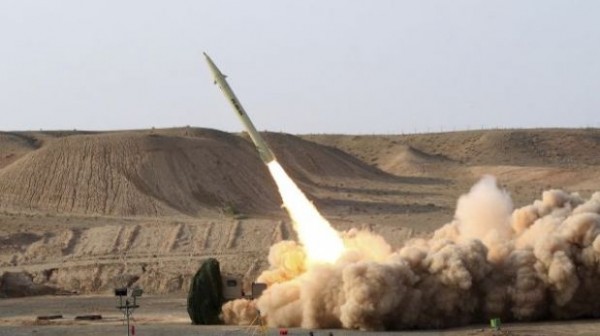
Iran’s missiles serve defensive purposes and Tehran will continue to reinforce its missile power, Rouhani said, asking Trump to be concerned about the arms his country is selling to Middle Eastern states instead of being worried about Iran’s defensive capabilities.

Rouhani also stressed that the Islamic Republic will respect the nuclear deal as long as its interests are secured and it reaps the JCPOA benefits.

Whenever Iran’s interests are not secured or the other parties start violating the nuclear deal, Tehran will not hesitate in giving appropriate response, he added.

He also noted that the US will never succeed in distancing the Iranian nation from their Leader, adding that people respect the Leader based on their Constitution.

Rouhani pointed to the ‘Death to America’ slogan chanted by Iranian people, saying the slogan does not target the US nation, but the US policies.

The US can stop its hostile policies towards Iran and then see how people would react, he added.

The Iranian nation has respected the American people and will do so in the future, Rouhani noted.

He also said that what Trump and his administration is trying to do is disrupting Iran’s economy and preventing other nations from making investment in the country.

Iranian, Russian FMs Hold Talks on JCPOA

Zarif and Lavrov

Iran’s Foreign Minister Mohammad Javad Zarif and his Russian counterpart Sergey Lavrov have stressed the need for all parties to comply with the nuclear deal between Tehran and world powers.In a phone conversation on Friday, Russia’s Lavrov reiterated Moscow’s commitment to the deal reminding that Iran must reap the economic benefits of the accord.

Iran Responds to Trump’s New Strategy

Iran Appoints Female Ambassador to Denmark

Here is the full text of Iran’s response to the United States’ new strategy:

1) The principled policy of the Islamic Republic of Iran is supporting regional peace and stability and countering destabilizing and divisive measures aimed at creating tension and conflict in the Middle East. Therefore, decisive fight against ISIS and other terrorist groups in the region has been the Islamic Republic’s major priority. This is while the United States’ policies, particularly its support for terrorist groups and repressive regimes, have been among the root causes of instability in the Middle East. The US cannot evade its responsibilities by raising accusations against others and should be held accountable for its wrong policies.

2) Within the past decades, the US policy of supporting the Zionist regime and other authoritarian and repressive governments in the region has led to constant outbreak of wars and conflicts on the one hand, and emergence of the inauspicious phenomenon of terrorism on the other hand. Washington’s regional friends and allies are the creators and main sponsors of international terrorism, to which even American citizens inside the US territory have not remained immune. The United States’ continuation of this policy is a historic strategic mistake with dire consequences for the region and the world.

3) Iran’s missile power merely serves defensive and deterrent purposes. This capability has indeed played an effective role in the path of [securing] regional peace and stability so far. Without such capability, it was not clear where the region would be led to by the immature thoughts and ambitions of certain pampered regional leaders. The Islamic Republic of Iran is serious in maintaining and developing its defensive and security capabilities, and in this path, it only pays attention to its national security considerations and the Iranian people’s interests.

4) The Armed Forces of the Islamic Republic of Iran, including the Islamic Revolution Guards Corps (IRGC), are manifestations of power and might and protectors of the country’s security. The government and the entire nation of Iran strongly support these forces. Any move against the Islamic Republic’s Armed Forces, including the IRGC, would receive Iran’s appropriate and strong response.

5) The principled and permanent policy of the Islamic Republic of Iran is countering Weapons of Mass Destruction in all parts of the world and moving towards global disarmament. This policy is the basis of the Joint Comprehensive Plan of Action (JCPOA), and Iran’s compliance [with the nuclear deal] has been confirmed for eight times by the only supervisory authority [IAEA]. On the other hand, the US non-compliance with the deal and its repeated violation of the spirit and text of the JCPOA is clear and evident, instances of which have been recorded within the past one and a half years in nine letters sent by the Iranian foreign minister to the EU foreign policy chief as the coordinator of JCPOA. In every single case [of these violations], the Islamic Republic of Iran has taken reciprocal measures based on its interests, and it will do so in the future without any consideration. Iran’s options are quite various, and if necessary, they will include putting an end to all commitments in this regard.

6) Today, the US is more isolated than ever in the international community, and the entire world has come to know that the Islamic Republic of Iran’s policies were right. The world saw within the past few weeks that most countries of the world supported the nuclear deal and the Islamic Republic and voiced their opposition to the US policies. The international community has known the Islamic Republic of Iran as a rational and wise player in the global arena which is striving for peace, and does not pay heed to the policies of players who make themselves more isolated everyday by withdrawing from a treaty or international body.

7) It is totally clear and undeniable that Iran and the US pursue different policies towards many regional and global issues. Since the 1979 Islamic Revolution in Iran, the US administrations have turned these differences into clear hostility towards the Iranian nation through their back-to-back miscalculations. Despite such hostile policies, two of whose main features have been threat and sanction, the Iranian people have proceeded with their quest for independence and justice. By relying on its domestic capabilities and popular support, the Islamic Republic of Iran today has become more powerful than ever under the wise leadership of the Leader of the Islamic Revolution. After Imam Khomeini, the Islamic Republic of Iran owes its robust and dignified progress in the contemporary era to the lofty guidelines of Ayatollah Khamenei whose anti-arrogance stances and strong opposition to the US government’s regional and global policies in different eras have been indeed the main reason for the US leaders’ hostility towards Iran’s Leader. The US policies in the Middle East and other parts of the world have yielded no result but bloodshed and misery for the people of the world. The new US leaders had better remember the lessons of the past four decades and not forget that their predecessors, who put themselves against the Iranian people by repeating similar impudent remarks about the Leader of the Islamic Revolution, were finally embarrassed and forced to take back their comments.

IRGC Blacklisting Tantamount to Declaration of War: Iran

Speaking at a meeting with a group of British analysts and media figures in London on Thursday, Salehi said that the designation of the IRGC as a terror group would be another sign of the US government’s hostile behavior toward the Iranian nation.

“Given that the army and (other) armed forces of a country are guarantors of its security, the (possible) move (by the US to designate IRGC forces as terrorists) is tantamount to a declaration of war,” he noted.

US President Donald Trump is expected on October 15 to “decertify” a landmark 2015 international deal about Iran’s nuclear program, known as the Joint Comprehensive Plan of Action (JCPOA).

Trump is also expected to designate the IRGC as a terrorist organization, as he rolls out a broader, more hawkish US strategy on Iran.

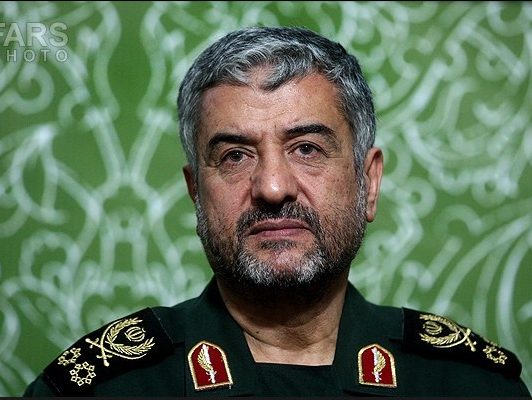
In comments on Sunday, IRGC Commander Major General Mohammad Ali Jafari said if speculations about the US administration’s “stupid decision” to designate the IRGC as a terrorist organization are true, the IRGC will, in turn, treat the US military around the world, particularly in the Middle East, as Daesh (ISIL) forces.

US Withdrawal to Kill Iran Nuclear Deal: Larijani

In a Friday meeting with Vyacheslav Volodin, the speaker of the lower house of Russia’s Parliament, Ali Larijani slammed Washington for repeatedly violating the nuclear deal since it took effect in January 2016. “If the US fails agreements on the Joint Comprehensive Plan of Action (JCPOA) on the Iranian nuclear program, nothing will remain from the deal," said Larijani. The two senior parliamentarians further discussed Iran-Russia parliamentary ties and other bilateral issues, including Washington’s hostile policies against Tehran and Moscow. The deal between Iran and the P5+1 group of countries -- the US, the UK, France, Russia, and China plus Germany -- lifted nuclear-related sanctions against Iran, which, in turn, placed certain limits on its nuclear energy program. Trump has called it an “embarrassment” to the US, and is expected to refuse to certify Iran’s commitment to the deal during a White House speech later in the day. If Trump refuses to certify the deal, the Congress will have 60 days to decide whether to restore the sanctions against the Islamic Republic that the US has agreed to waive. Larijani added, “We would like to thank Russia for its position, as well as (Foreign Minister) Sergei Lavrov, who participated in the P5+1 meeting in New York.” According to the Iranian speaker, during the group’s most recent meeting, Lavrov said "openly and transparently that the US had violated JCPOA.” The Russian speaker slammed Washington’s stance on the JCPOA, as well as the use of sanctions as a tool to advance personal agendas. He said Moscow was against the use of double standards, and understood Iran’s concerns. Trump to step back? Meanwhile, the Middle East Eye news portal quoted US officials as saying Friday that Trump will go ahead and “decertify the deal,” but will shy away from his toughest threat of killing the agreement. Besides the “decertification” of Iran’s compliance with the JCPOA, Trump is also reportedly expected to blacklist Iran’s Islamic Revolution Guards Corps (IRGC). The officials cited in the Friday report however said Trump will stop short of blacklisting the IRGC, but will rather levy limited sanctions.

In a Friday meeting with Vyacheslav Volodin, the speaker of the lower house of Russia’s Parliament, Ali Larijani slammed Washington for repeatedly violating the nuclear deal since it took effect in January 2016.

“If the US fails agreements on the Joint Comprehensive Plan of Action (JCPOA) on the Iranian nuclear program, nothing will remain from the deal,” said Larijani.

The two senior parliamentarians further discussed Iran-Russia parliamentary ties and other bilateral issues, including Washington’s hostile policies against Tehran and Moscow.

The deal between Iran and the P5+1 group of countries — the US, the UK, France, Russia, and China plus Germany — lifted nuclear-related sanctions against Iran, which, in turn, placed certain limits on its nuclear energy program.

Trump has called it an “embarrassment” to the US, and is expected to refuse to certify Iran’s commitment to the deal during a White House speech later in the day.

If Trump refuses to certify the deal, the Congress will have 60 days to decide whether to restore the sanctions against the Islamic Republic that the US has agreed to waive.

Larijani added, “We would like to thank Russia for its position, as well as (Foreign Minister) Sergei Lavrov, who participated in the P5+1 meeting in New York.”

According to the Iranian speaker, during the group’s most recent meeting, Lavrov said “openly and transparently that the US had violated JCPOA.”

The Russian speaker slammed Washington’s stance on the JCPOA, as well as the use of sanctions as a tool to advance personal agendas. He said Moscow was against the use of double standards, and understood Iran’s concerns.

Trump to step back?

Meanwhile, the Middle East Eye news portal quoted US officials as saying Friday that Trump will go ahead and “decertify the deal,” but will shy away from his toughest threat of killing the agreement.

Besides the “decertification” of Iran’s compliance with the JCPOA, Trump is also reportedly expected to blacklist Iran’s Islamic Revolution Guards Corps (IRGC).

The officials cited in the Friday report however said Trump will stop short of blacklisting the IRGC, but will rather levy limited sanctions.

World Craft Council Hails Iran’s Initiative to Call 2018 “Asian Woodcrafts Year”

World Craft Council Hails Iran’s Initiative to Call 2018 “Asian Woodcrafts Year”

“Based on this initiative the year 2018 is named the year of woodcrafts. The decision was made at the board meeting of WCC’s Asia Pacific Region which was held in Kuwait late September,” said Bahman Namvar Motlaq, the deputy head of Iran’s Cultural Heritage, Handicrafts and Tourism Organization.

“We had a good experience in dedicating each year to a handicraft in Iran, and in this way we tried to pay more attention to a special craft alongside others,” IRNA quoted him as saying in a Farsi report.

He added that since the launch of this initiative, the recent years were named as “Year of Precious Stones”, “Year of Textile” and “Year of Rush Matting” in Iran.

“For example, this year, we assured the producers that we purchase their rush matting products, and we got help from domestic creative artists to design their products,” said Namvar Motlaq.

“A large number of our craftsmen in the villages and deprived areas weave rush mats, but because they do not have the experience and knowledge to design their products, they prefer to work in a traditional manner, and as a result their products are not that much beautiful, receiving less attention these days.”

He went on to say that for that reason artists from India and China, who were more skilled in the field of rush mat designing, have been invited to train Iranian craftsmen so as to enable them to use the global knowledge to push ahead.

He emphasized that with this naming process, Iran made good progress in the sales as well as in the designing and aesthetics areas of the rush matting craft.

“When the evaluators and managers of Asia Pacific Region came to Iran, they welcomed our naming scheme and, in light of the positive feedback we received, we set this idea forth at the recent WCC Asia Pacific Region meeting in Kuwait and it was approved,” explained this Iranian official.

He further mentioned that as the meeting of Asia Pacific Region 2018 will be held in Nepal, India and Nepal requested that this year be named as “Year of Woodcrafts” and it was unanimously approved.

“Although we rank lower than Central and South Asian countries such as Pakistan, India, Malaysia, Indonesia, Thailand and China in terms of the volume of woodwork, in terms of quality, sometimes we ranked second as the Iranian artists have been successful in producing high-quality products.”

“Considering that the countries around us such as Turkmenistan, Iraq and Afghanistan are the customers of woodworks made by Iran, there is good potential for a serious activity in this field, which I hope will help to expand this important field of crafts in the country,” he concluded.

Local Women in Iran Make a Living by Carpet Weaving

The carpets made by these women are of high quality, according to carpet experts, and are exported to several countries.

Here are IRNA’s photos showing these works of art: