Saturday, December 27, 2025
Home Blog Page 3847

Beryani; Special Meal of Iran’s Isfahan Province

Beryani is considered as the most famous traditional food in Isfahan. It is the only specialty in Isfahan, which is cooked and sold in special unique restaurants, and is not usually served along with other foods. Therefore, one can say the dish is of great importance to the people of Isfahan.

According to literary and historical texts, Baryani is a special food whose history goes back to about 400 year ago.

Nowadays Isfahanis and tourists know Beryani as a dish rich in fat and a specialty for lunch made from lamb and lungs.


Beryani; Special Meal of Iran’s Isfahan ProvinceIngredients:

*250 grams of lamb shoulder

* 50 grams of tail fat

*100 grams of sheep lungs

* 2 medium-sized onions

* 1 tablespoon of cinnamon

* 1 tablespoon of brewed saffron

* Walnuts, pistachio and almond

* Dried mint, salt and pepper as much as needed


Recipe:

Pour four cups of water in a pot and add the lamb, onion, and a few tablespoons of liquid oil. Then, place it on medium heat until the meat is tender. (A bit of water must remain at the bottom of the pot)

Beryani; Special Meal of Iran’s Isfahan ProvinceChop the lungs and cook with two glasses of water, one chopped onion, a few tablespoons of oil, some salt and pepper in a pot on a medium heat. After being cooked, sauté the mixture a bit and mince it.

Then mince the cooked lamb and tail fat and mix it with brewed saffron, dried mint, salt and black pepper and then re-mince it.

Beryani; Special Meal of Iran’s Isfahan ProvinceShape the Beryani mixture like a burger and put some cinnamon powder, pistachio or almond slices on it. Then, put it in a greased pot to grill. Then let the other side be grilled as well. Splash some meat broth on bread, and put Beryani on it. Finally, design the dish with minced lungs, crushed walnuts, parsley, etc.

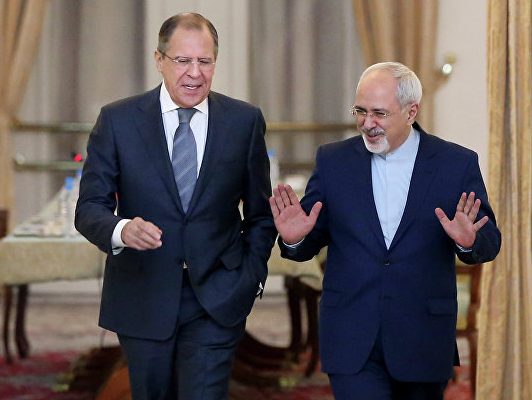
French FM: Iran Should Reap JCPOA Benefits

In a Thursday telephone conversation, Iranian Foreign Minister Mohammad Javad Zarif and Le Drian underlined the need for all parties to remain committed to the nuclear accord.

The French FM also reaffirmed that the Islamic Republic must benefit from the JCPOA’s economic gains.

Iran’s Chaleshtar Castle Leaves Tourists in Awe

Located in the city of Shahr-e Kord in southwestern Chaharmahal and Bakhtiari Province, the castle was the hub of Chaharmahi rulers, who were ruling the areas under their control by getting help from chief of the villages.

By looking at the dates carved on the columns of this structure one can say it has been constructed approximately in 1323 AH. This complex includes a stone façade, vestibule, andarouni (interior), biruni (exterior), bath, and stable, among other parts. The building has been built in two parts, with an area of approximately 12,000 square metres with an Iranian style during the Qajar era.

The Khan-neshin or khan’s quarters and the castle’s main building is composed of 38 stone pillars, a façade and balcony. It is designed with mythical, floral, animal, bird and angel paintings and stone reliefs.

The rooms of the complex have “London-style” paintings, which was a combination of Western and Iranian art of painting popular in the Qajar era. To decorate the castle, painted scenes from the Layla and Majnun love story next to floral stucco reliefs and Islamic designs such as Quranic verses and paintings showing Joseph and Zuleika story could be seen on the walls.

Currently, the museum of anthropology, the museum of stonework and the museum of regional people’s work and life are open to public in this historic complex.

Here are IRNA’s photos of the castle:

217 Iranian Villages Generating Solar Energy

An interesting point about these 217 villages is that the residents not only pay nothing to the government for their electricity, but also they sell electricity to the Power Ministry.

Some of these villages including Sichanlou in Qazvin province have been equipped with the technology since ten years ago. Sichanlou has been named as the most environmental-friendly village of Iran, a Farsi report by IANA said.

The government is now working on a plan to regularize the purchase of electricity from these villages.

The villages have been equipped with solar energy system out of failure of the government to connect them into the nation-wide electricity system due to financial considerations.

Most of these villages are far from the central provincial hub generating electricity. So, their inclusion into the hub’s network was too expensive. In some cases the costs of such connections stand 5 to 9 times higher than installing solar energy systems.

That is why the government decided to equip them with solar energy systems and now these villages have not only become self-sufficient in electricity generation but also can sell the additional electricity to the government.

300 Sunny Days in Iran

Experts say Iranians need to take seriously the issue of renewable energies like solar energy due to the country’s geographical features. According to a report by the Renewable Energies Organization, with 300 sunny days throughout a year in almost two-thirds of its lands, Iran is among the countries with a high capacity for producing solar energy. This means that the country can generate between 4.5 and 5.5 KWH/SQM on average per day.

This comes as according to officials in Iran, renewable energies have not yet opened their way into the energy basket of Iran and their share is limited to lower than one percent. As the head of the centre for development of renewable energies technology at the Science and Technology Department of the Iranian Presidential Office, Sirous Vatankhah, said the capacity to produce electricity in the country is about 70,000 MW out of which only 350 MW falls for renewable energies.

Iran says it intends to generate 7,500 MW of electricity from solar energy by 2030. This is over 7 times higher than the electricity generated in Bushehr nuclear plant. Studies show that each square meter of land in Iran can generate 220 KW of solar energy per hour. This means that allocating one percent of the whole country’s land to solar energy system will provide the Iranians with about 9 million megawatts of solar energy per hour.

Based on a report published in June 2017 on the renewable energies in the world, 39.2 percent of the world’s energy needs are met by oil, 29.2 percent by coals, 6.8 percent by hydroelectricity, 4.4 percent by nuclear energy, and 2.8 percent by renewable energies.

Though the share of renewable energies is still limited, new figures show a steady growth of the share. Today, many countries including Costa Rica, Denmark and Iceland meet most of their energy needs by relying on renewable energies. Meanwhile, China (18 percent), Japan (14 percent), Germany, and the US (13 percent) draw on solar energy to meet their energy needs. Solar energy paves the way for getting rid of the pollutions of fossil fuels.

In Iran, there is no clear report yet on the share of the renewable energies. Some experts argue that the low price of renewable energies is among the main reasons why such energies have not yet developed in the country.

They say the Iranian government needs to have short-term, middle-term and long-term programs for development of such energies; otherwise no tangible progress will be made in this field.

$3,500 for Every Single Kilowatt of Electricity

According to official figures, to generate 1 kilowatt of electricity in the southern province of Kerman, the government of Iran spends about $3,500. This is much lower than the cost of including far villages in the province into the nation-wide electricity grid. Today, more than 2,350 village households in Kerman generate 2,400 MW of solar energy per day.

The provinces of Kerman, Khuzestan and Lorestan have the highest share of solar energy generation across the country.

Iranian MPs Pass 8 Bills on Economic Cooperation with Other Countries

Iranian lawmaker Hassan Hosseini Shahroodi says the Parliament approved eight bills on agreements with different countries in various economic areas.

“In a recent meeting, several bills earlier referred to the [Economic] Commission were reviewed,” said Shahroodi, who sits on Parliament’s Economic Commission.

Among the bills passed was one on encouraging and mutually supporting investment between Iran and Luxembourg, said the MP.

Legislators also passed bills on customs cooperation with Vietnam and Finland, he said, according to a Farsi report by ICANA.

This is the first time that bills are approved on facilitating customs cooperation with Vietnam and Finland, the legislator noted.

A bill was also approved which would see Iran work with Asia-Pacific countries to run laboratory tests to confirm that goods traded between the two sides measure up to standards, he noted.

Lawmakers also gave the thumbs-up to an agreement on mutual support for investment between Iran and Iraq.

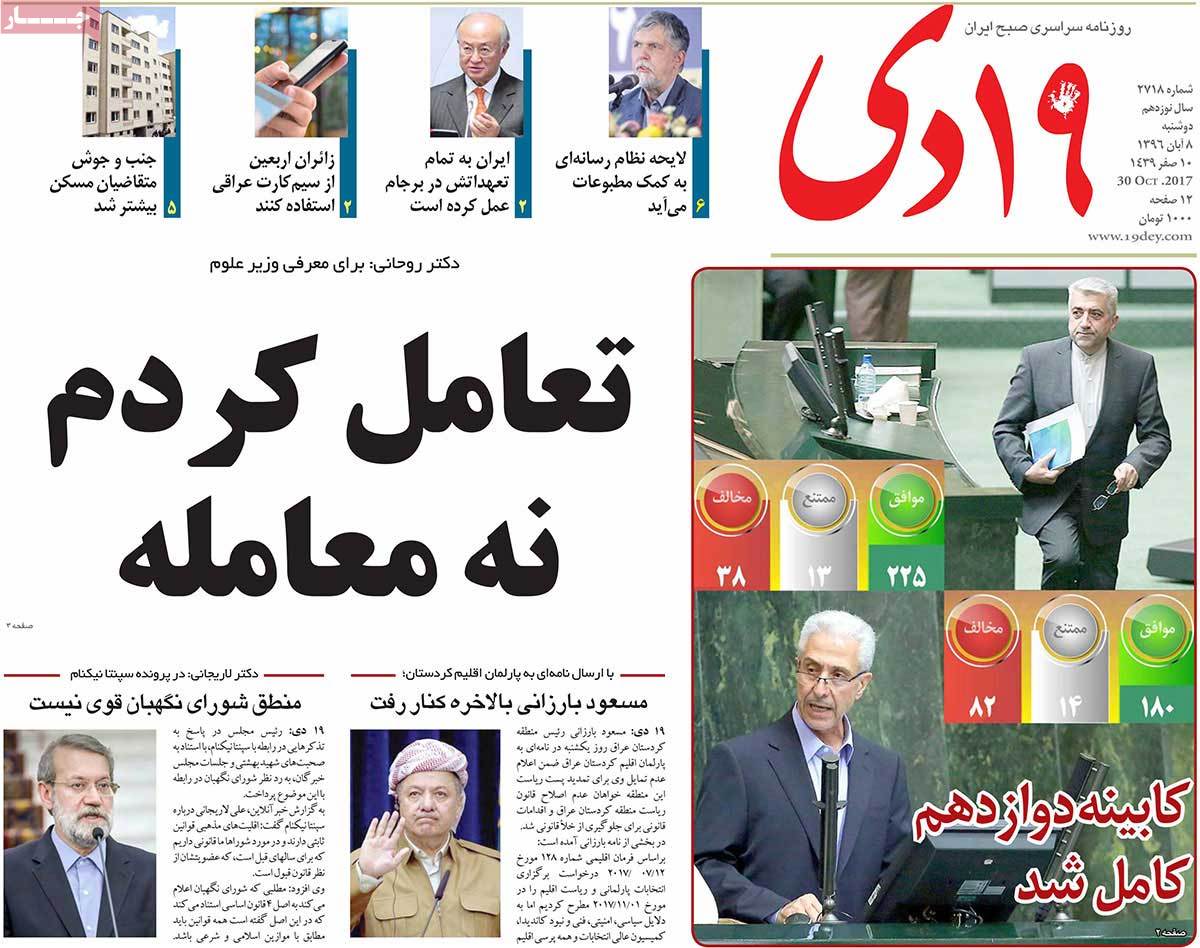
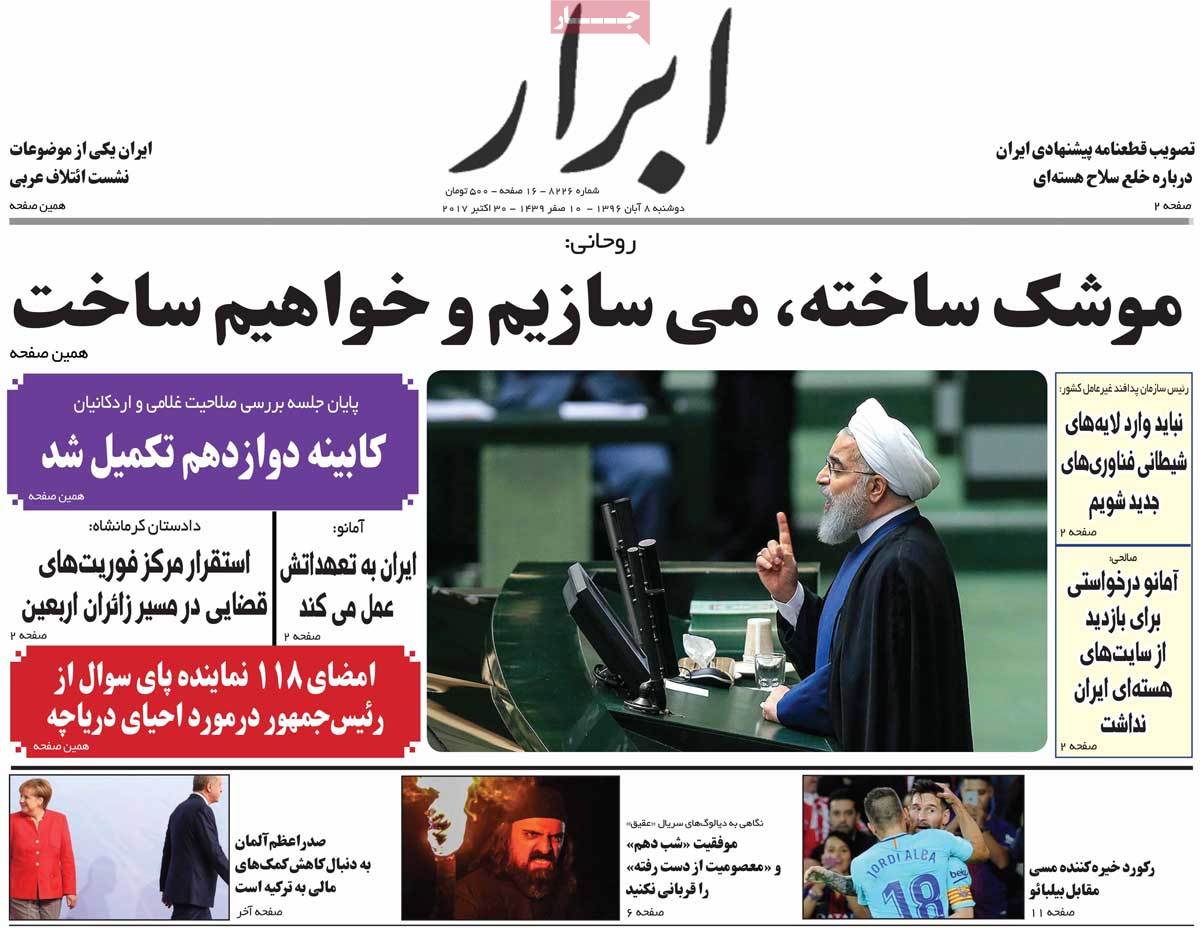
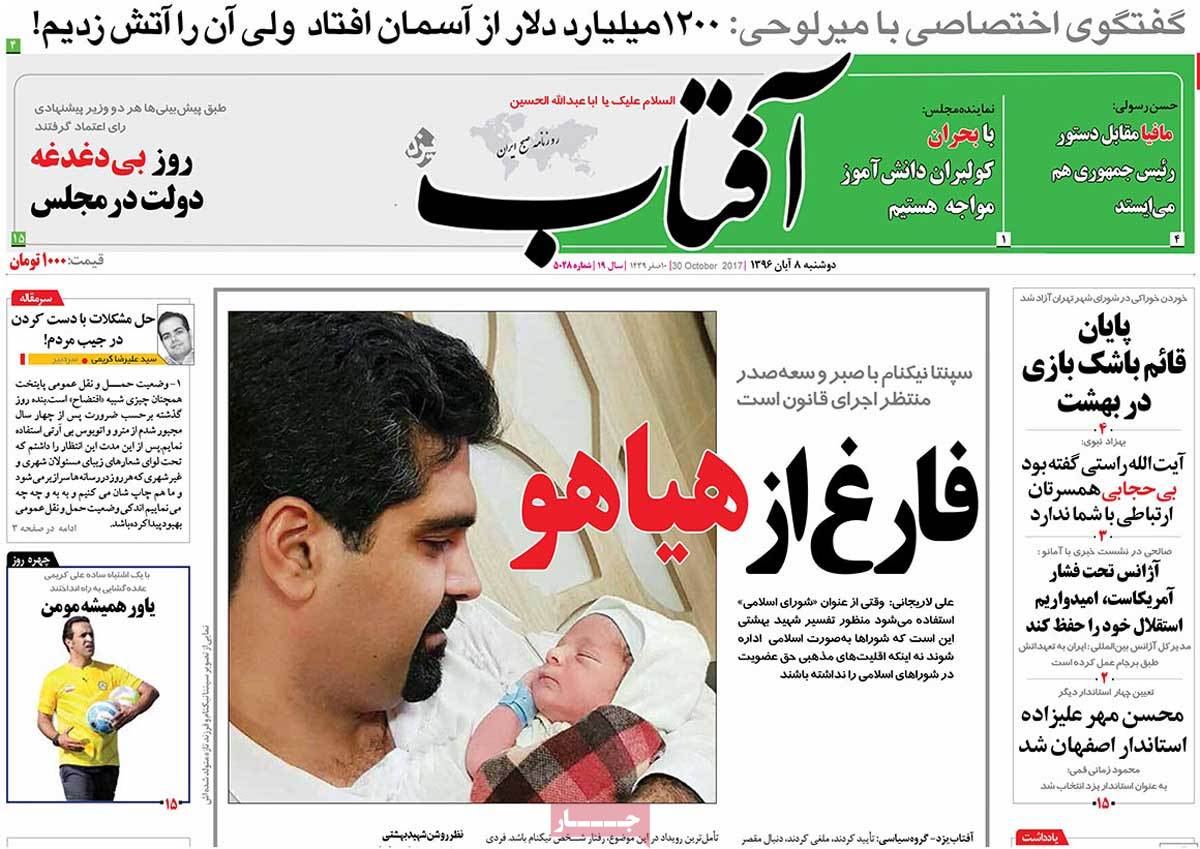
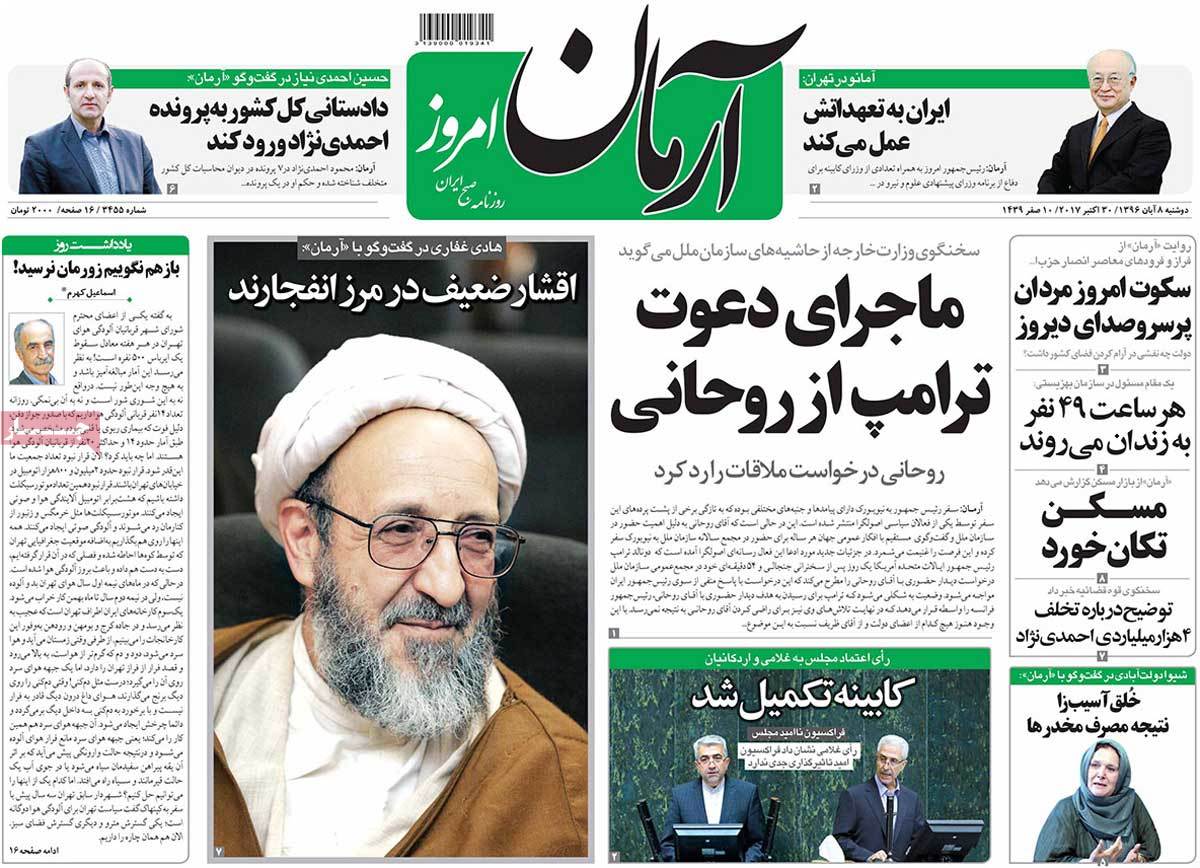
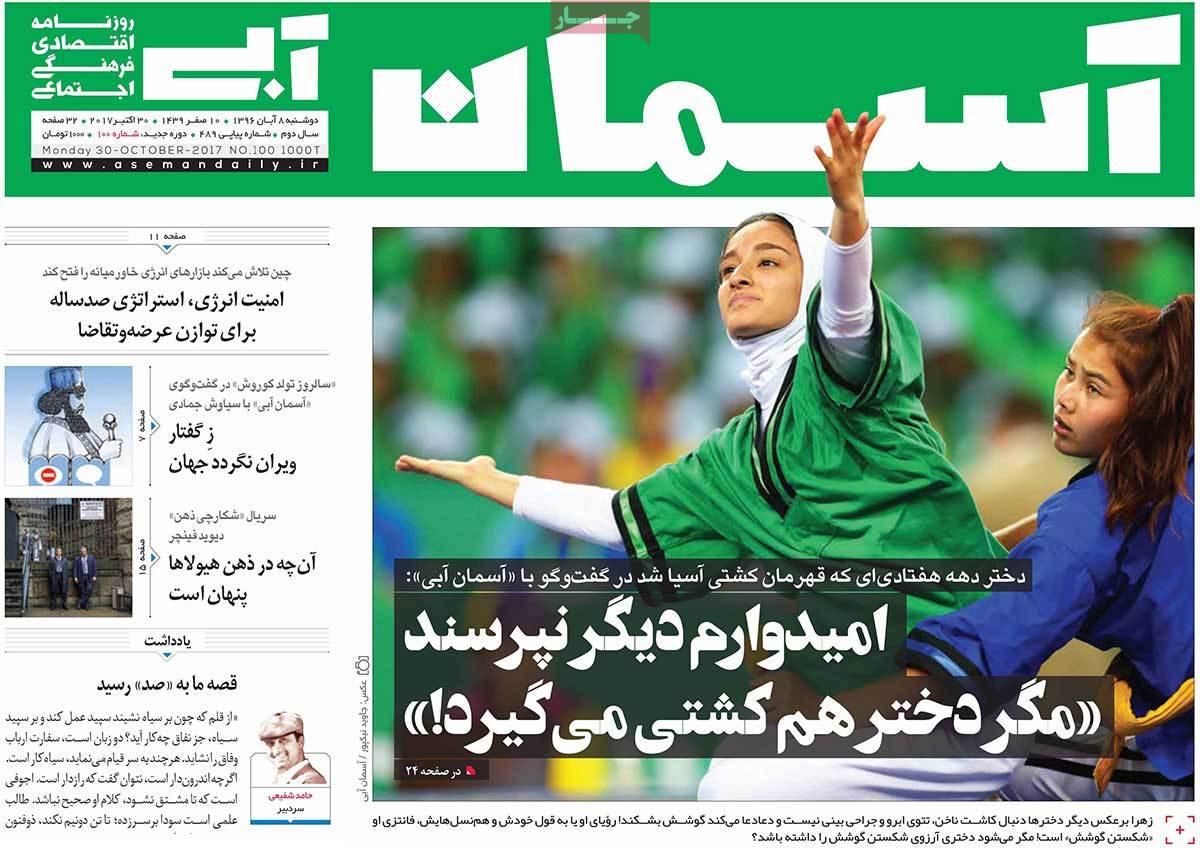
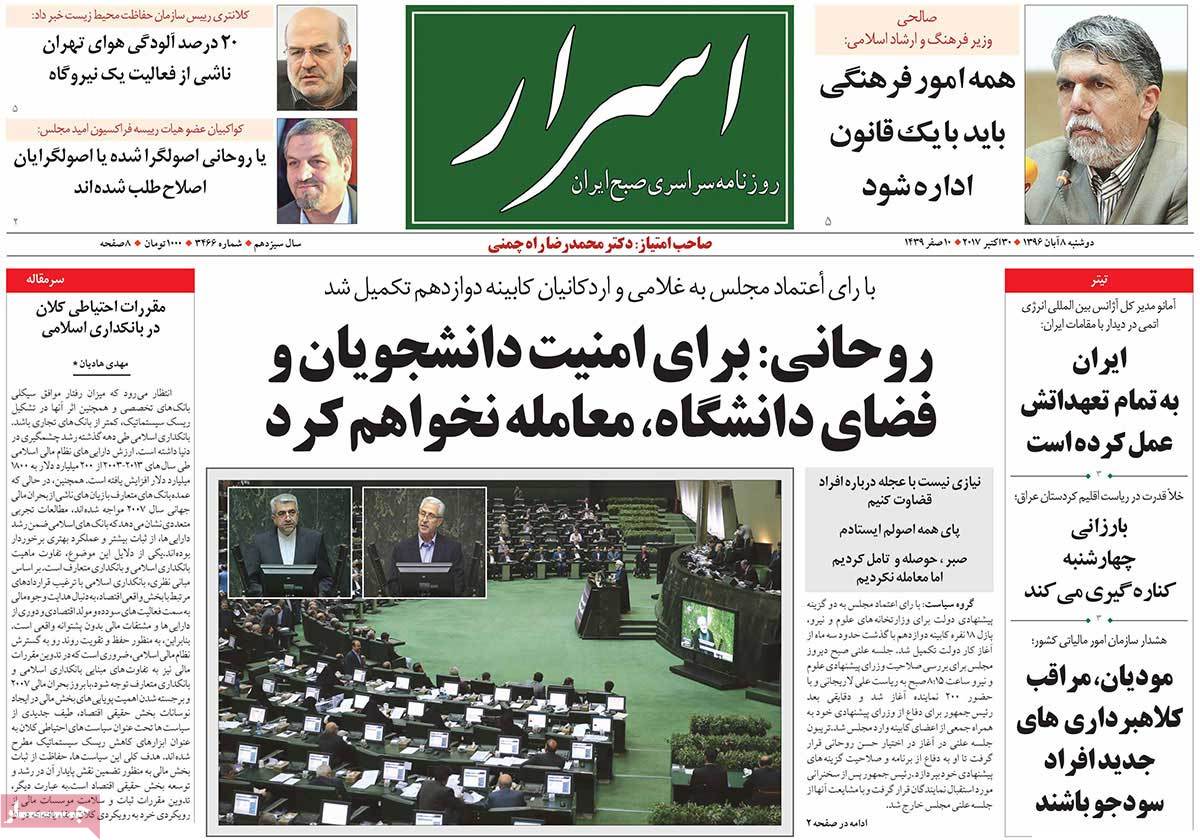
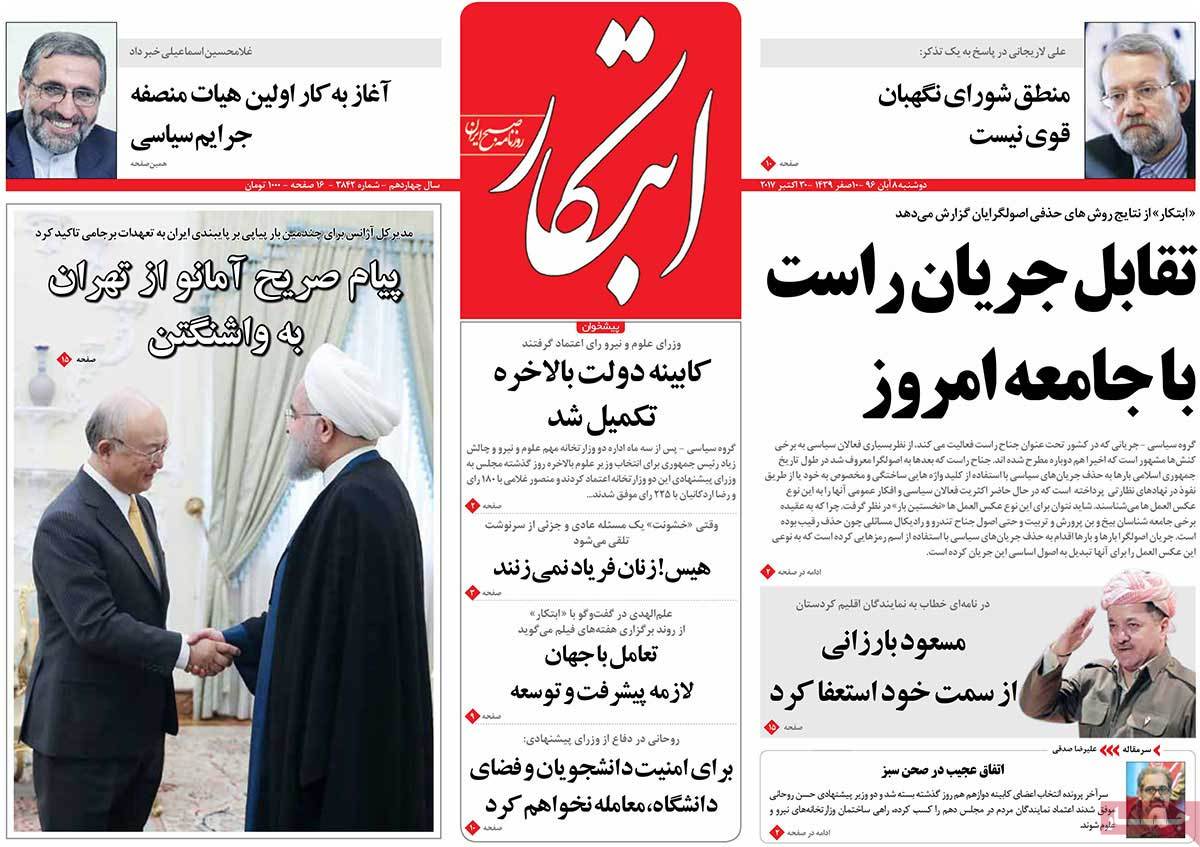
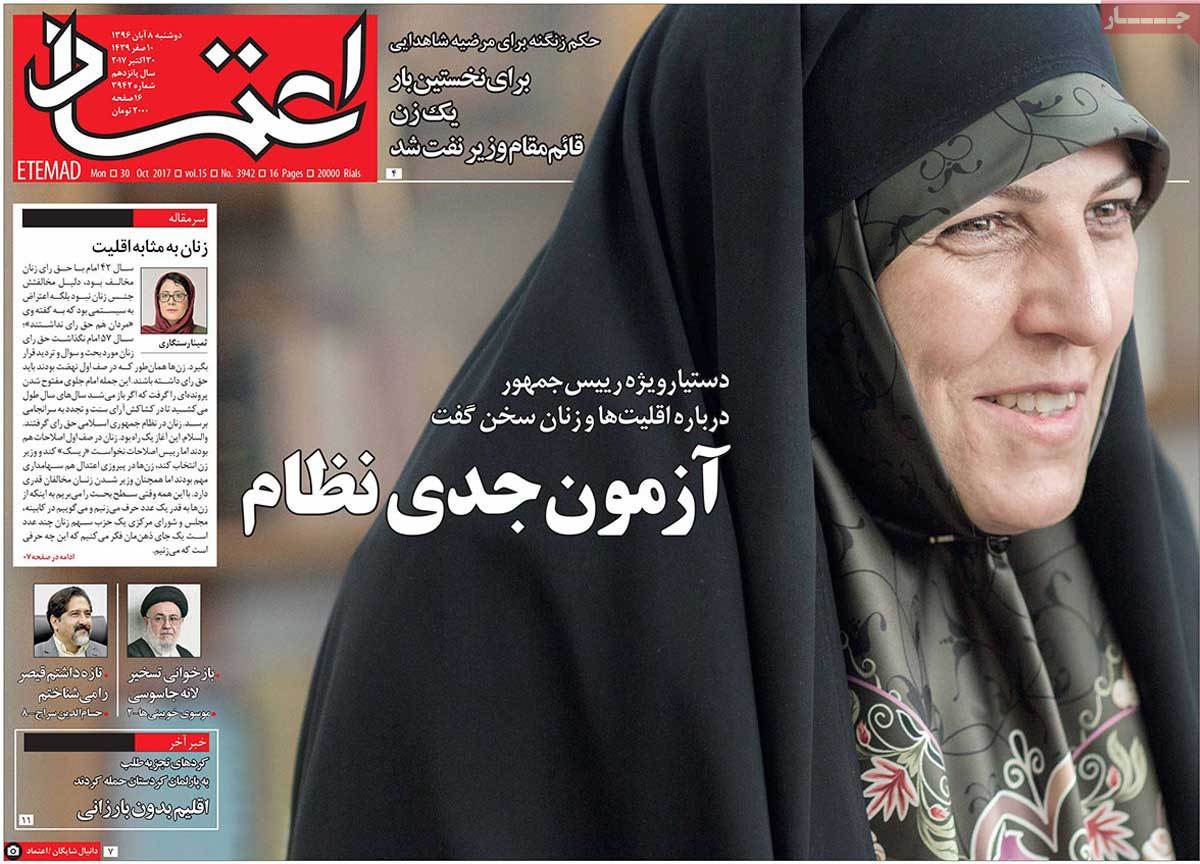
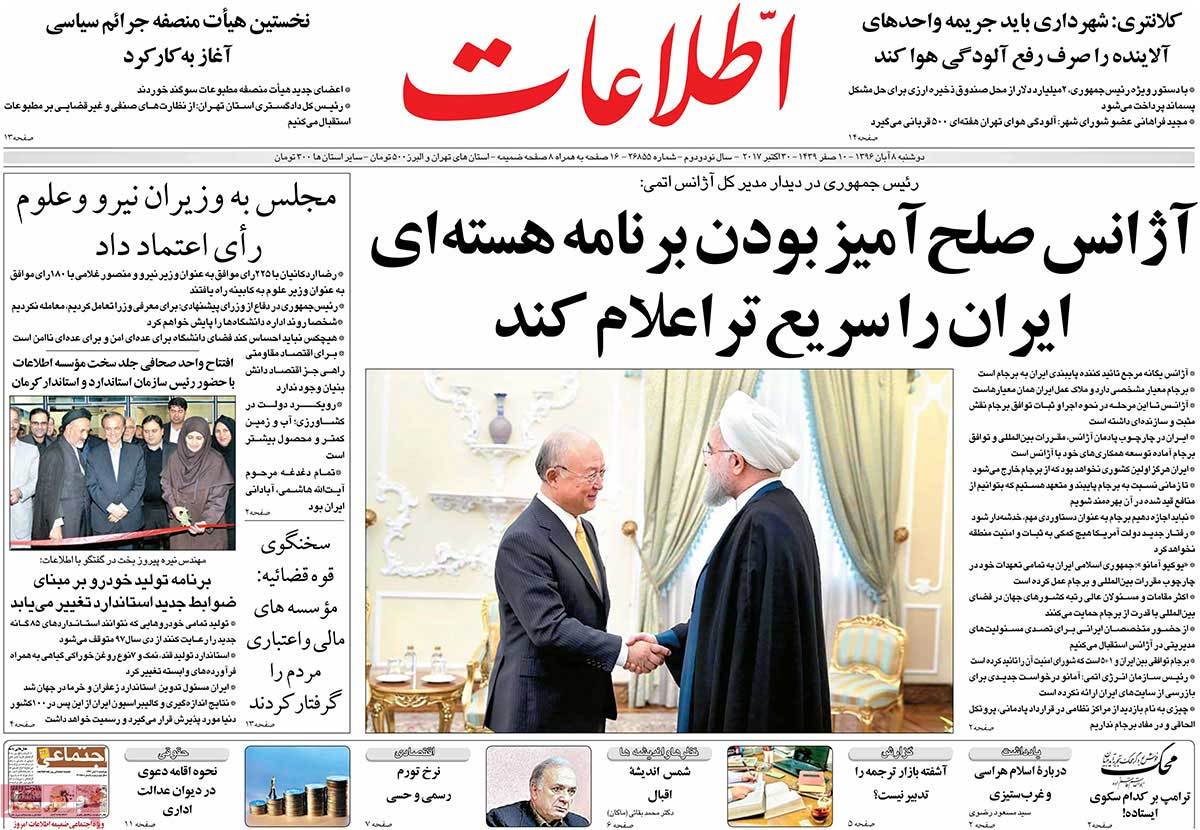
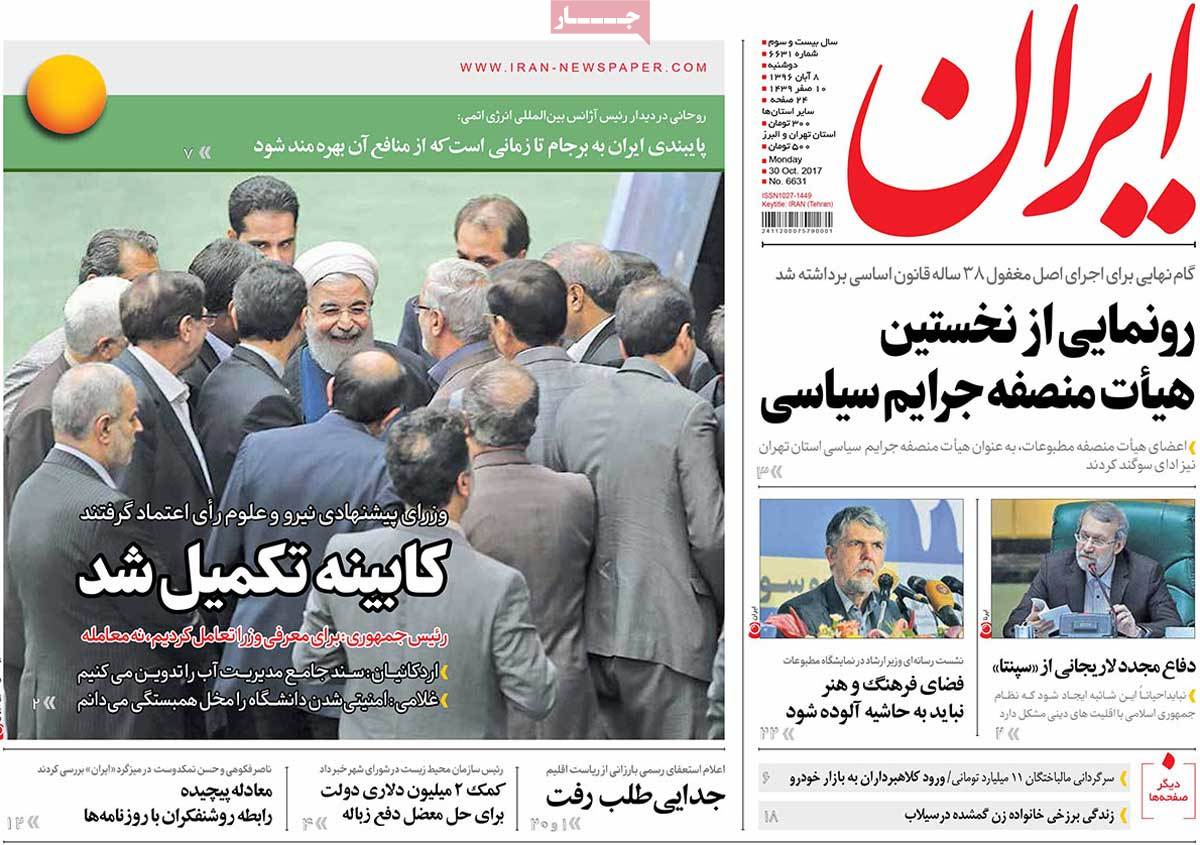
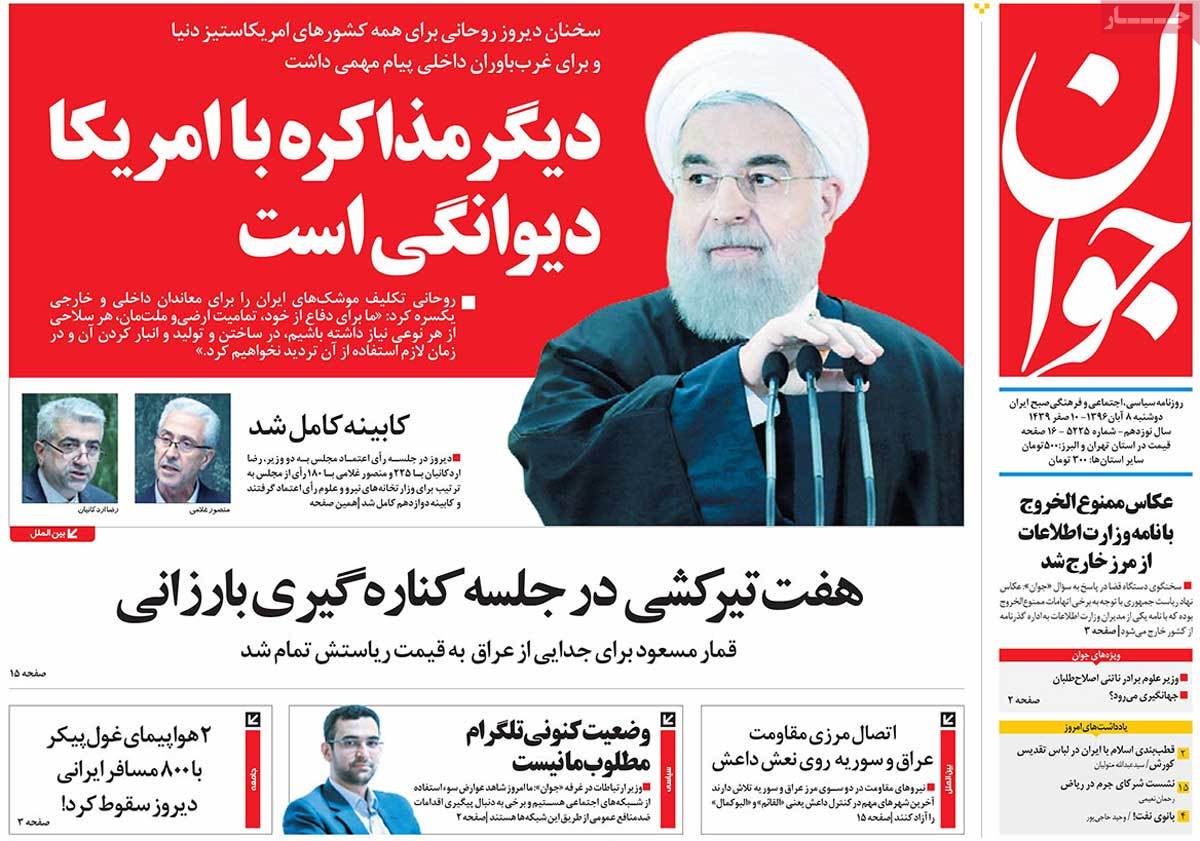
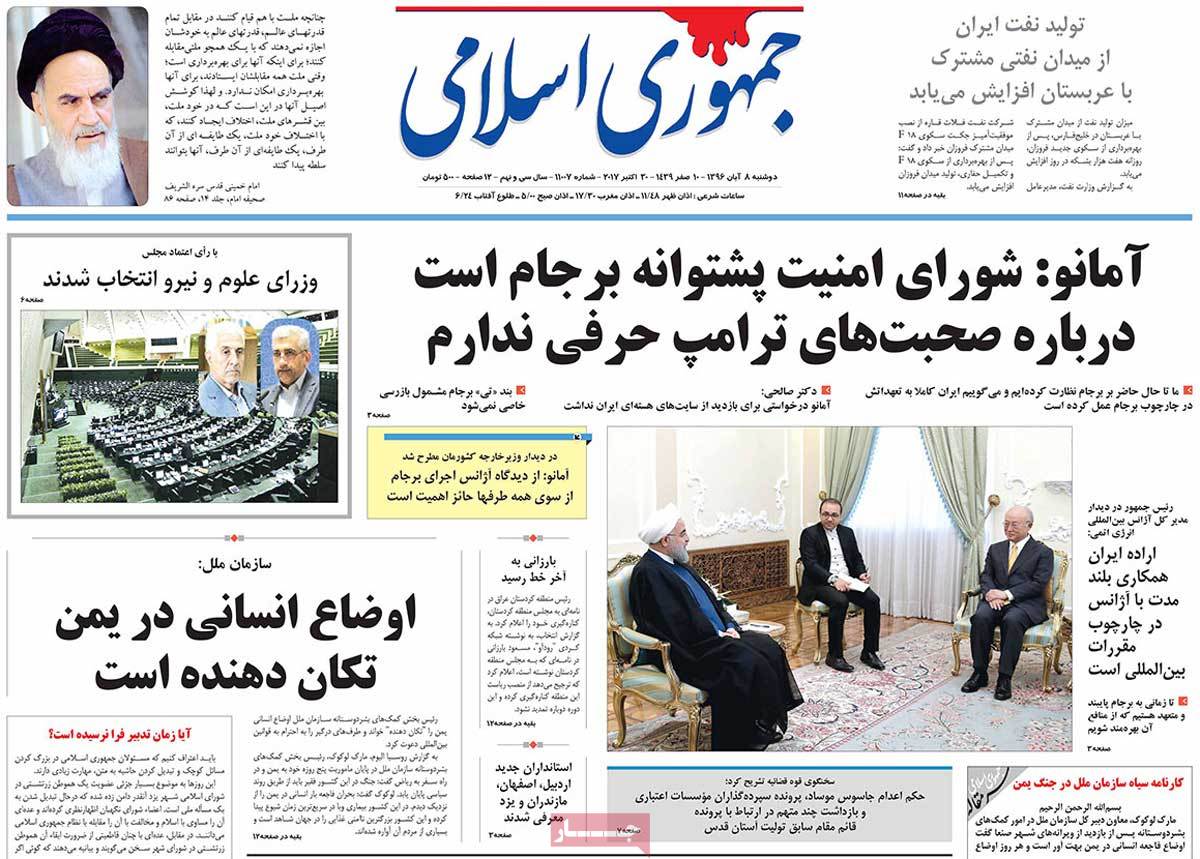
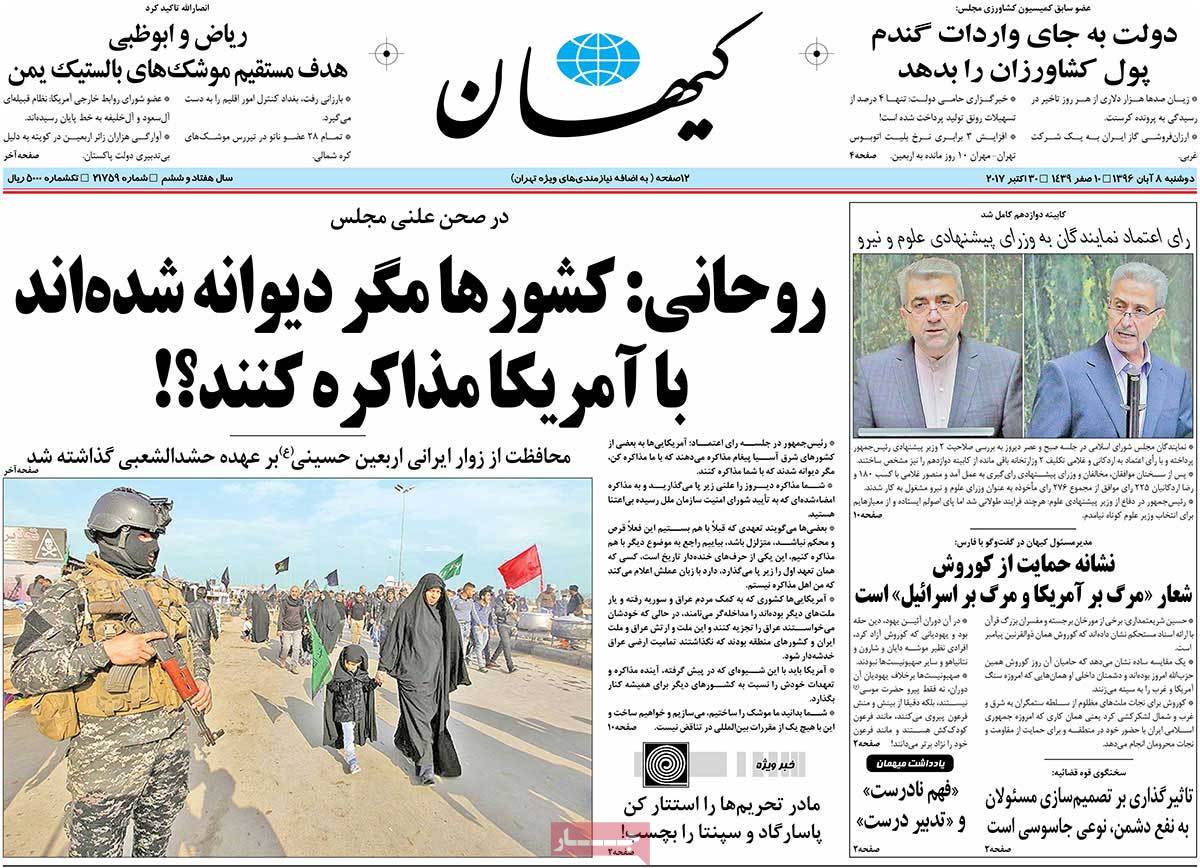
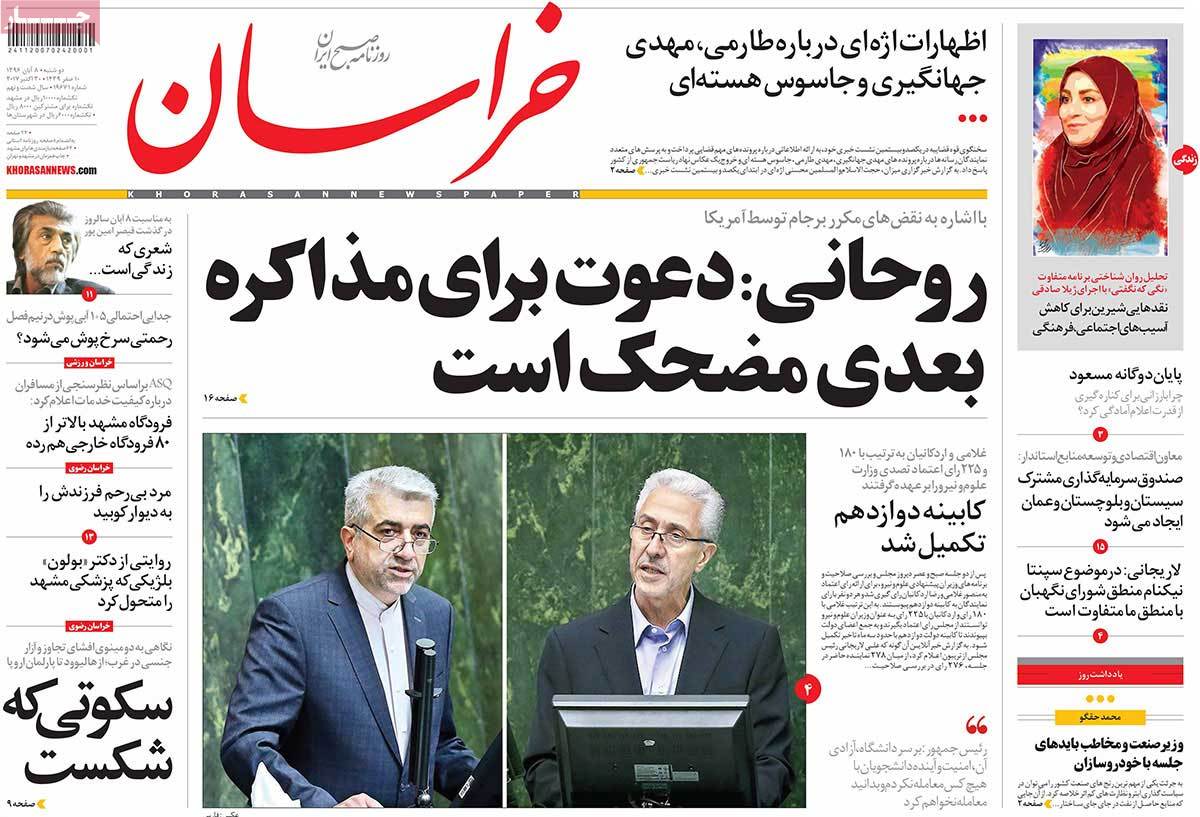
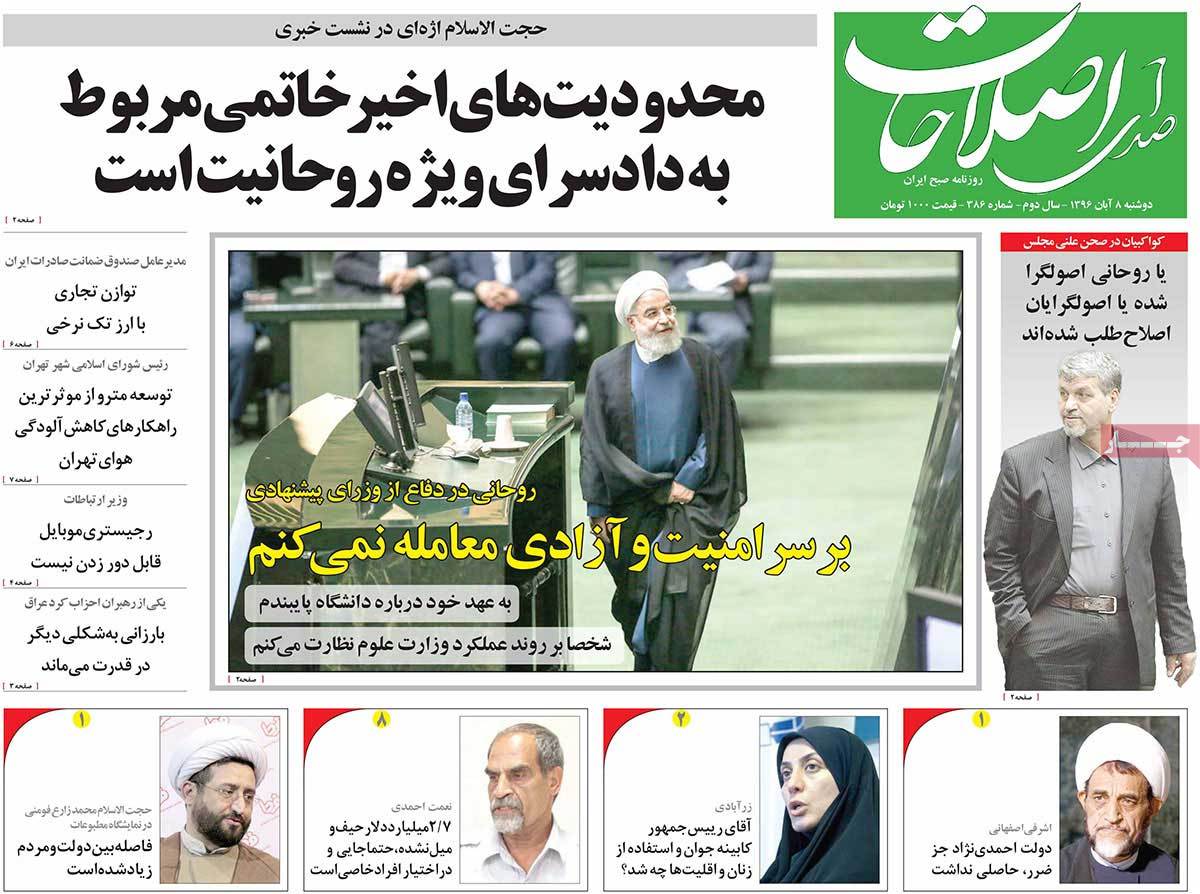
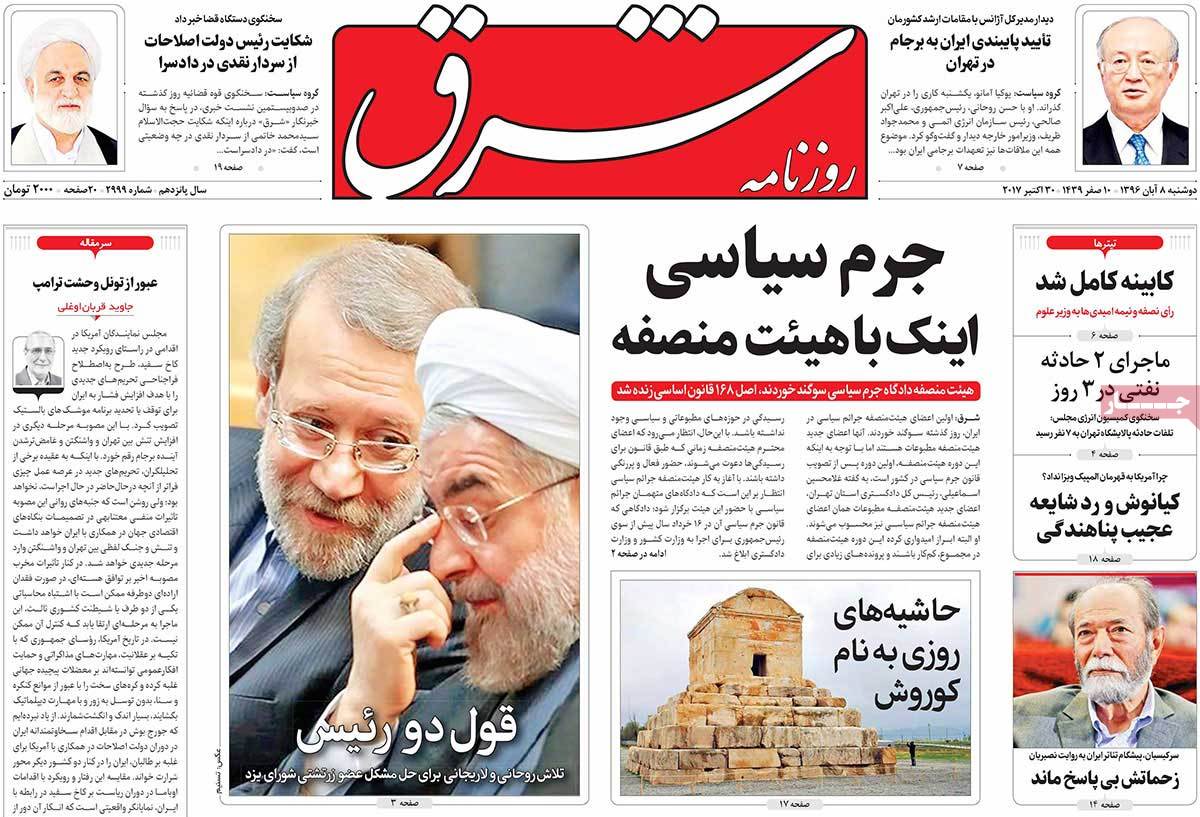
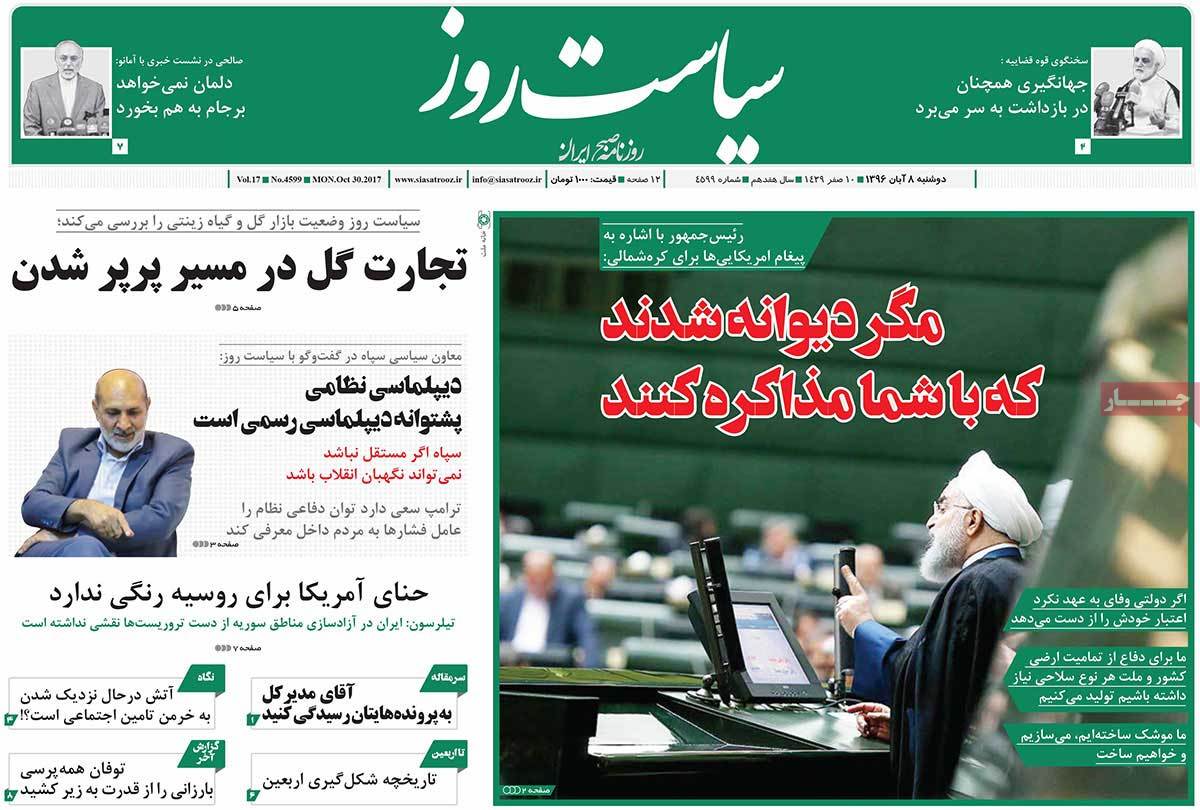
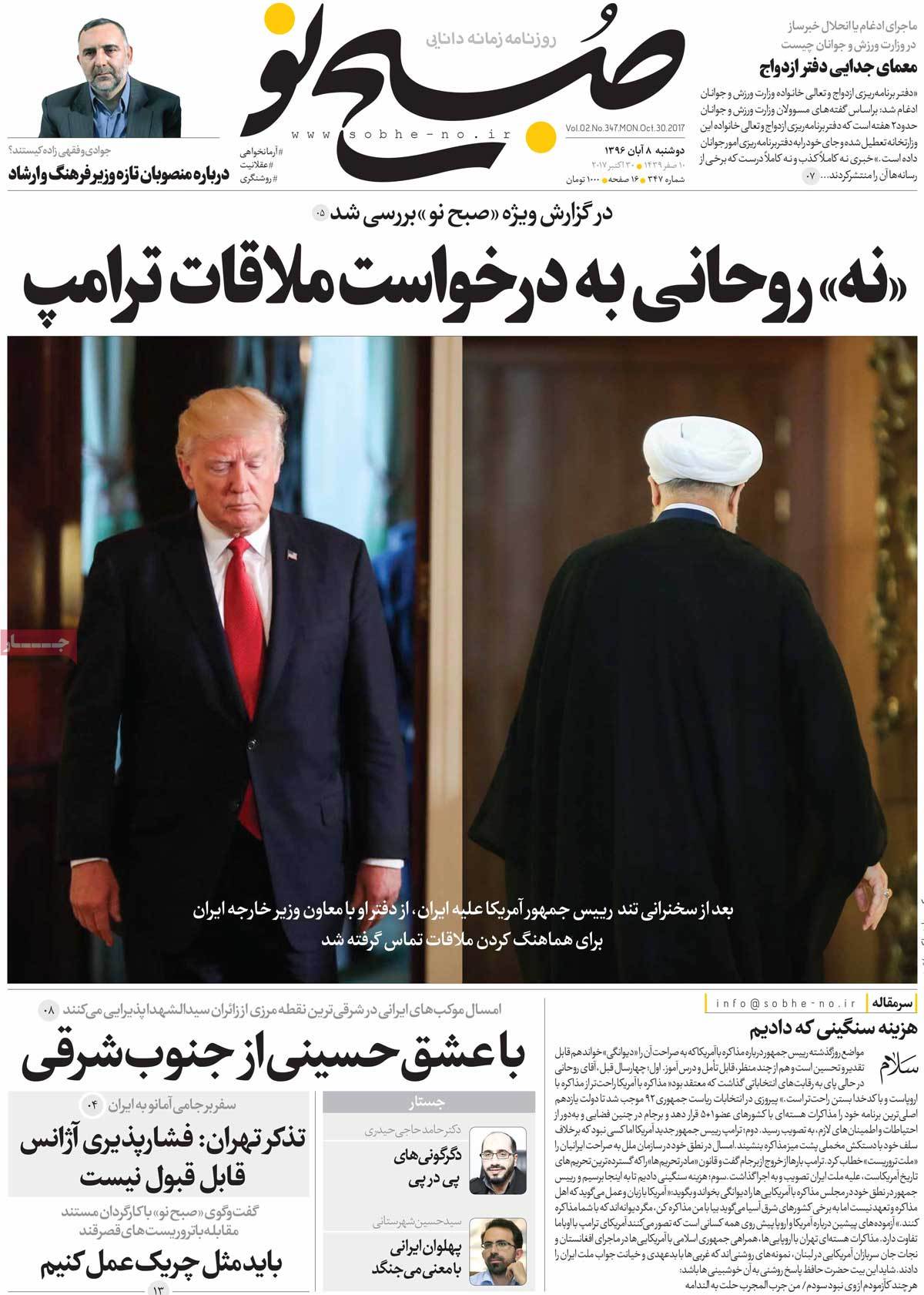
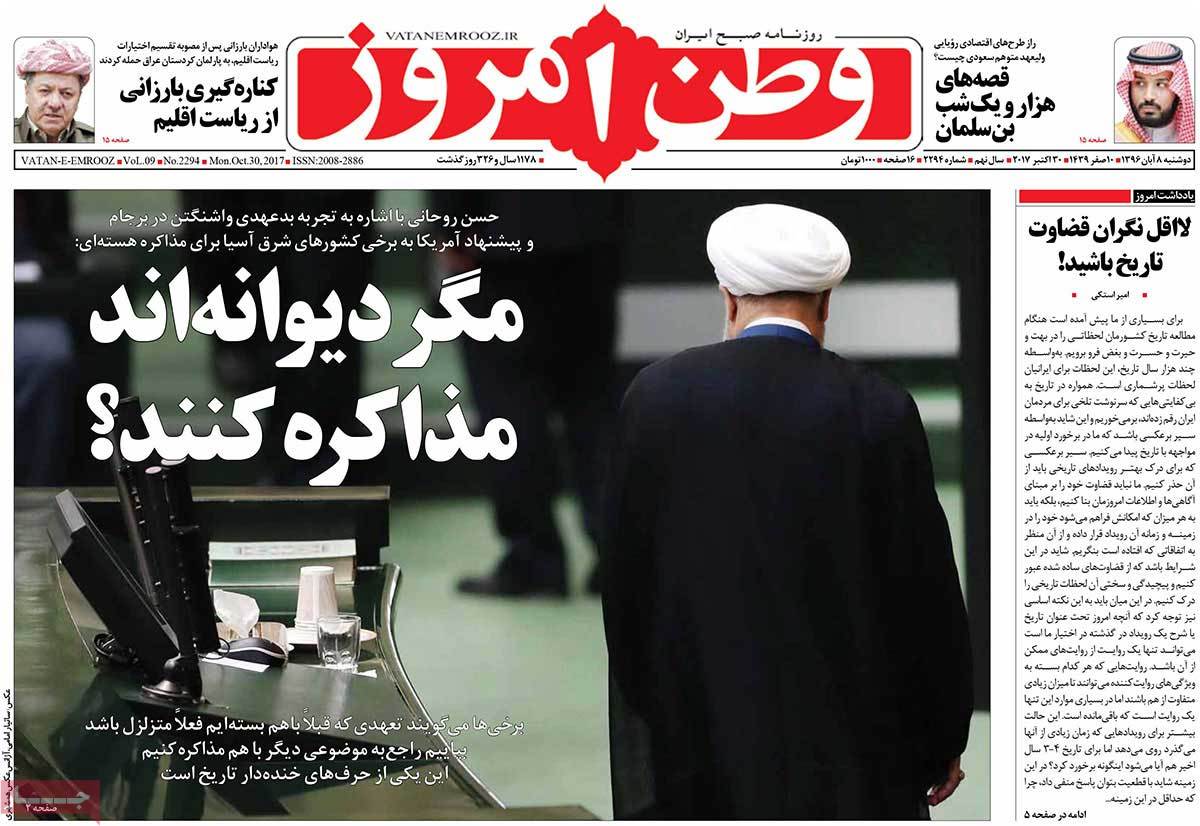
A Look at Iranian Newspaper Front Pages on October 12

The top story in today’s newspapers was US President Donald Trump’s upcoming declaration of his new Iran strategy, particularly his possible decertification of Iran nuclear deal.

Newspapers also covered President Hassan Rouhani’s support for the Islamic Revolution Guards Corps ahead of Trump’s expected designation of IRGC as a terrorist organization. Iran has warned that such move will receive crushing responses.

The latest report by the International Monetary Fund (IMF) about Iran’s economy in 2016 also received great coverage. Reformist and pro-government papers highlighted its positive aspects, including the economic growth rate of over 12% and the single-digit inflation rate, and conservative ones covered the high unemployment rate reported by the international body.

The above issues, as well as many more, are highlighted in the following headlines and top stories:

Abrar:

1- MP: Maybe Parliament Speaker Believes It’s Not Appropriate to Summon President

2- Zarif: Iran Ready to Take Any Reciprocal Measure against US JCPOA Decision

3- Iran’s Economy Big Enough Not to Be Influenced by a Foreign Dignitary’s Remarks: VP

4- Moscow: JCPOA Withdrawal from JCPOA to Worsen Mideast’s Situation

5- 95,000 People Displaced in 8 Days in Deir ez-Zor: UN

A Look at Iranian Newspaper Front Pages on October 12


Afkar:

1- IRGC Humiliated ISIS, Hence US Anger with IRGC: Rouhani

2- British Ambassador: No Major Bank Working with Iran

3- General: IRGC Has Given Good Lessons to People Crazier than Trump

A Look at Iranian Newspaper Front Pages on October 12


Aftab-e Yazd:

1- US to Declare Decision on Iran Nuclear Deal: Decisive Day for JCPOA

2- Tehran Mayor Defends His Picks: Some of Qalibaf’s Managers Were Good Ones

A Look at Iranian Newspaper Front Pages on October 12


Arman-e Emrooz:

1- MP Urges Minister to Set National Day for Commemoration of Cyrus the Great

2- Rouhani: Iran Nuclear Deal Big Test for All Governments

A Look at Iranian Newspaper Front Pages on October 12


Ebtekar:

1- Rouhani: Withdrawing from JCPOA Defeat for Them Not for Us!

2- Iranian Nation, Government, Parties, Military United against Enemy

3- Last Consultations Aimed at Saving JCPOA from Trump

4- Ifs and Buts of Parliament’s Question from President

A Look at Iranian Newspaper Front Pages on October 12


Etemad:

1- Iran’s Prosecutor General Criticizes Judiciary

2- British Foreign Secretary: London Trying to Protect Iran Nuclear Deal

A Look at Iranian Newspaper Front Pages on October 12


Ettela’at:

1- Rouhani: No Difference between Parties in Countering Enemies

2- Zarif: Trump’s Anger Caused by Iran’s Regional Power

3- Netanyahu: Israel’s Existence Declining

4- Larijani: Foreign Investment Crucial to Completing Iran’s Railway System

A Look at Iranian Newspaper Front Pages on October 12


Iran:

1- IMF 2016 Report Confirms 12.5% Economic Growth, Single-Digit Inflation Rate

2- CEO: Renault Not to Leave Iran

3- Catalonia Parliament Endorses Independence Document

A Look at Iranian Newspaper Front Pages on October 12


Jame Jam:

1- Rouhani: IRGC Popular in Iran, Middle East

A Look at Iranian Newspaper Front Pages on October 12


Javan:

1- US President to Talk about JCPOA with Iranian People

  • Promise? What Promise?

2- Moscow: Iran Has Every Right to Withdraw from JCPOA If US Imposes New Sanctions

A Look at Iranian Newspaper Front Pages on October 12


Jomhouri Eslami:

1- Germans Make $120m Investment for Construction of Solar Power Plant in Iran

2- International Community Continues Warning Trump about JCPOA

A Look at Iranian Newspaper Front Pages on October 12


Kayhan:

1- UN: Yemeni People Suffering from Worst Cholera Epidemic in History

2- According to IMF, Unemployment in Iran 10 Times Worse under Rouhani

3- Trump’s Plot, Half-Dead JCPOA, Iran’s Passivity

4- Trump, Tillerson Involved in Challenge of Who’s More Stupid!

A Look at Iranian Newspaper Front Pages on October 12


Khorasan:

1- Rouhani Expresses Full Support for IRGC, Gives Strong Warning to US

2- First Phase of Iran’s Biggest Oceanic Port Ready for Operation

A Look at Iranian Newspaper Front Pages on October 12


Afghanistan Welcomes Iran’s Help in Fight against Terror: Defence Ministry

Speaking to the Tasnim News Agency, Dawlat Waziri pointed to concerns of Afghanistan’s neighbors over the spread of terrorism in the South Asian country and said Kabul is in need of other countries’ military assistance.

However, the spokesman added, Afghanistan does not need the military presence of any country.

“Kabul will not reject unconditional cooperation with any country, including Iran, to combat terrorism,” the official said.

High-ranking officials from Iran and Afghanistan recently held the first round of talks on a “comprehensive strategic partnership” document as part of efforts to boost bilateral relations between the two neighboring countries.

The negotiations were held in Tehran on June 18 with a 35-strong delegation of Afghan deputy ministers and other high-ranking officials of the country comprising five committees.

The talks focused on closer cooperation between the two neighbors in diverse areas, including security, defense, economy, culture, and education.

Foreign Ambassadors Watch Drills of Iranian Police Forces

The exercises were held on the occasion of National Police Week to display the power of Iran’s Law Enforcement.

On the sidelines of the drills, the foreign dignitaries also met the commanders of Iran’s police forces.

Here are photos of the drills retrieved from Tasnim and IRNA:

Iranian Female Cyclist Join UAE Club

her. The two sides began their negotiations after an official invitation by Al Asil officials for talks.

After passing a number of physical tests, the club expressed its readiness to attract the Iranian female cyclist and the two sides finally signed an official contract.

Based on the agreement, Dehqan is set to accompany her new team in the upcoming world cycling competition slated for October 21 in Thailand.

Interestingly, Dehqan’s husband Hamid Khamseh, who has been her coach, also signed a contract with Al Asil.

“On the day I was undergoing the physical tests in the UAE, two cyclists from Ireland, one from the US, one from Jordan and one from Morocco were also present and at the end of the day five of us were chosen and signed the contract,” she added.

Archaeologists Find Traces of Neanderthals in Western Iran

Head of an Iranian archaeologist team involved in discovering and preserving the ancient layers of Ashkoft region of Kermanshah province, Elham Qasidian, said the main achievement of the team has been the discovery of some stoneware known as Mousterian Zagros in Ashkoft Cave.

The new discoveries reveal that Neanderthals had advanced into Eslamabad Plain in western Iran during Paleolithic era, Qasidian was quoted as saying in a Farsi report by Tasnim News Agency.

According to Qasidian, the archaeological project in Ashkoft region is part of a long-term plan to discover and reconstruct the historical lifestyle in one of the most key regions of Iran Plain. The project is supported by the Iranian government as wells as Cambridge University.

She referred to the rigorous studies conducted to discover and document the ancient places in Kermanshah province and added at least 265 caves and rocky shelters have been discovered in 6 towns in the west part of the province including 100 ancient places in Eslamabad.

The Iranian archeologist also said one of the main findings of the team is that Eslamabad-e Gharb region is located exactly between two Paleolithic poles of the country i.e. Kermanshah Plain and Khorramabad Plain.

“Eslamabad-e Gharb Plain had been used as a cultural corridor between Kermanshah and Khorramabad plains,” she noted.

Qasidian went on saying archeological studies reveal that there had been extensive cultural exchanges between the two poles through Eslamabad-e Gharb Plain.

She said the archeological team has also identified three historical phases in the region. “Studies show that Ashkoft Cave had been used during the middle and contemporary phases of the region as a contemporary center for hunting.”