Saturday, December 27, 2025
Home Blog Page 3848

Oldest University Student Receives BA at Age of 91

Ramezani, as the oldest student of the country, is 91 years old. He graduated in English language translation from Payam-e Noor University of Qarchak-Varamin and received his degree from the university’s dean.

In the ceremony, Ramezani received graduation certificate, and was honored with a memorial tablet and exquisite gifts.

Europe Not to Leave US Alone for Iran’s Sake: Analysts

According to the White House, US President Donald Trump will, this week, announce his general policy on Iran and the nuclear deal Tehran has signed with six world powers known as the Joint Comprehensive Plan of Action (JCPOA).

Speculations in political circles and media outlets suggest Trump is most probably seeking to ratchet up sanctions on Iran and effect an implicit withdrawal from the JCPOA in contravention of Washington’s commitments under the deal.

This has been a hot issue in Iranian media as well in recent days and, as a result, many articles and editorials have focused their attention on the JCPOA.

The E’temad daily, in its editorial, stressed that the JCPOA is a multilateral agreement and will remain in effect even if the US pulls out of it.

“The Islamic Republic of Iran is prepared for every eventuality and is not worried about its future at all. The reason is that the establishment and government stand ready to respond to any possible option, although they remain fully committed to their international agreements and obligations and they will never be the first party to violate agreements and commitments,” the newspaper wrote.
In an article published by the Ebtekar daily, Ali Mohaqqeq has termed Trump as eccentric and imbalanced. He highlights that the International Atomic Energy Agency (IAEA), the European Union and the UN have, time and again, confirmed that Iran has made good on its commitments under the JCPOA. He believes recent reactions by Russia, China, Britain, Germany, France, the EU Foreign Policy Chief and the UN secretary general to Washington’s possible withdrawal from the JCPOA are the signs suggesting the international community will stand by Iran and against the US if Washington withdraws from the JCPOA.

However, university professor Sadeq Zibakalam has offered a different viewpoint in an opinion piece published by the reformist Shargh newspaper and mentioned a few key points. In his idea, the “controversial and populist” president of the United States seeks to win the backing of the US public opinion by adopting contentious policies and blowing crises and foreign threats out of all proportion. Accordingly, pressurizing Iran and pretending to be making threats is the only option that Trump can use to create crises without triggering a military conflict.

This academic is opposed to the reasoning offered by some state officials and state media that believe the United States’ withdrawal from the JCPOA will lead to its isolation and bring Europe and other US partners closer to Iran. In response to them, Zibakalam writes:

“It is right to say if the US pulls out of the JCPOA, no one will trust Washington anymore, but what will we get [if that happens]? Also, the belief that ‘Europe and other major powers will not support the US’ is a temporary tranquilizer. That’s right; Europeans will not first withdraw from the JCPOA; they won’t even voice an objection; but the reality is that many countries attach great importance to their trade with the US, so much so that they will not compromise it for the sake of Iran. Exports to the US by countries such as Japan, India, South Korea, China and some European countries, plus many other countries such as Russia are so important to them that even if they, deep down, hate Trump and his withdrawing from the JCPOA, they will not continue their trade relations with Iran in the long run if the Americans boycott Iran unilaterally.

Nevertheless, conservative newspapers have focused their attention on offering practical solutions to counter US threats and also stressed that their previous criticisms of the Rouhani administration’s way of conducting the negotiations were right. The Javan newspaper has, in an analytical report, interviewed different political experts and introduced measures such as halting the implementation of the JCPOA by Iran, returning the level of Iran’s nuclear activities to that before the conclusion of the nuclear deal, or Iran’s stopping fulfilling part of its commitments under the JCPOA as proposed reactions to Washington’s possible withdrawal from the JCPOA.

The Sobh-e Now daily has also, in a report, once again reviewed “two ambiguous nuclear deals” in which President Rouhani had a role – the JCPOA and the 2003 Saadabad Agreement – and slammed his negotiation method as well as his team’s trusting the West. The Kayhan daily has predicted that Trump will, while maintaining the outward appearance of the JCPOA, slap tough sanctions on Iran and the Islamic Revolution Guards Corps (IRGC). Kayhan has proposed Iran give a harsh response to these measures.

The Jame Jam newspaper has, in an article written by former Iranian diplomat Mohammad Hassan Qadiri, preferred to underline the need to maintain domestic unity against Washington’s new threats.

“The convergence of different institutions, namely the foreign policy apparatus, the IRGC and others against plots to put one of the country’s official military powers on the terror list, is a logical and usual move because here, the conspiracy is not against a groups or party only, but against the country’s territorial integrity and deterrent military forces,” he writes.

Ban on Kurdistan Airports Causing Daily Loss of $60,000

Following a referendum on the secession of the Kurdistan region from Iraq on September 25, 2017, the federal government in Baghdad adopted a series of punitive measures against the KRG, including a halt to foreign flights at its airports.

According to a Farsi report by IRNA, one week on since the ban went into effect, head of Sulaymaniyah International Airport Tahir Abdullah has spoken of the fallout from the measure.

“We have suffered a huge loss. Income from domestic flights is not that much, even not enough to pay the staff’s salaries,” he said.

According to Abdullah, the halt to international flights has caused a loss of 50 to 60 thousand dollars a day. Before the punitive measure went into force, he added, some $10 million worth of commodities were imported into Kurdistan via air.

Iran, Ukraine to Form Joint Economic Commission

Head of Iran-Ukraine Parliamentary Friendship Group, Salman Khodadadi, says the positive presence of Iran and Ukraine in regional and international arenas can contribute to peace and stability in the region.

In a meeting with the Ukrainian Ambassador to Iran, Sergei Burdyliak, Khodadadi referred to the long-time relations between Iran and Ukraine, adding that there are huge opportunities to expand political, cultural and economic ties between the two sides which need to be tapped into.

“The friendship groups in the two sides’ parliaments can play a key role in strengthening and deepening of ties particularly parliamentary relations between Iran and Ukraine,” he was quoted as saying by ICANA in a Farsi report.

He went on saying that formation of a joint economic commission provides the two countries with a good opportunity to explore the available economic capacities.

The implementation of the signed agreements in agricultural, industrial and medical fields as well as cooperation between the chambers of commerce of Iran and Ukraine can lead to the expansion of economic trades between Iran and Ukraine, he added.

The Iranian lawmaker also called for expanded bilateral relations and further exchanges between political and parliamentarian delegations from Iran and Ukraine.

For his part, the Ukrainian ambassador to Tehran expressed his delight at the growing relations between Iran and Ukraine and said the government of Ukraine is ready for further expansion of relations with the Islamic Republic in all political, economic and cultural areas.

He went on saying there are good capacities for the two sides to increase their relations in agricultural and medical fields as well as food industry. “This requires facilitation of banking relations between two sides,” he noted.

The meeting was also attended by other Iranian members of Parliamentary Friendship Group of Iran-Ukraine. During the meeting, the participants expressed their views on the necessity of expanding bilateral relations between Iran and Ukraine.

Iran’s Economic Growth Rate Stands at 12.5 Percent: IMF

While the economic growth rate stood at 12.5 percent in 2016, the IMF predicts that it would fall to 3.5 (3.459) percent at the end of 2017.

According to a Farsi report by Fars News Agency, in the previous report, it had predicted a 3.3% growth for 2017. In addition, in its earlier report, the international body also predicted Iran’s economic growth would reach 6.6% in 2016, but in October the figure was changed to 12.5 (12.518%).

According to the report, Iran’s unemployment rate will be 12.417 percent this year, which will be slightly lower than last year’s 12.450 percent. However, the unemployment rate in 2016 was higher than 2015. Iran’s unemployment rate was estimated at 11% in 2015, the report said.

Iran’s inflation rate is predicted to be 10.529% in 2017, and the estimates of this international body for the inflation in 2016 has been modified and changed to 9.035%.

In the previous report, the inflation rate in Iran was 8.9% in 2016.

Also, it shows that Iran’s financial account balances will drop to 5.05% of GDP in 2017. The figure was 2.4% of GDP in 2015, and has reached 4.05% of GDP in 2016.

Iran DM Says IRGC at Forefront of Fight against Terrorism

“The IRGC is the most powerful anti-terror organization and is at the forefront of fighting terrorism,” General Hatami said on Thursday.

He added, “The IRGC, the (Iranian) Army, and the country’s other forces stand united and integrated in the face of the US government’s hostile and provocative policies and measures”.

Iran’s military forces will not allow Washington to jeopardize the region’s security through spreading proxy wars and terrorism, Hatami further said.

Describing the IRGC as the most powerful and popular force in the region, he said, “This revolutionary organization belongs to all nations in the region”.

The Iranian defense minister warned that designating the IRGC as a terrorist group would further destabilize the region.

US President Donald Trump is expected on October 15 to “decertify” a landmark 2015 international deal about Iran’s nuclear program, known as the Joint Comprehensive Plan of Action (JCPOA).

Trump is also expected to designate the IRGC as a terrorist organization, as he rolls out a broader, more hawkish US strategy on Iran.

In comments on Sunday, IRGC Commander Major General Mohammad Ali Jafari said if speculations about the US administration’s “stupid decision” to designate the IRGC as a terrorist organization are true, the IRGC will, in turn, treat the US military around the world, particularly in the Middle East, as Daesh (ISIL) forces.

Iran’s Leader Best Expert on Issues Related to US: Analysts

Iran’s missile program, support for resistance groups, and many other excuses Washington uses to put Iran under pressure are all signs of West’s non-commitment in the implementation of the Joint Comprehensive Plan of Action.

This comes as Iran’s Leader Ayatollah Seyyed Ali Khamenei had referred to these excuses long ago. The predictions of the Leader, which had been made a long time ago, were realized in the recent statements of the US Secretary of State, Rex Tillerson.

Basirat news website has conducted a Farsi interview with two leading Iranian international affairs experts, Dr Mohammad Jamshidi and Dr Foad Izadi, both university professors.

Here is the full text of this interview:

Q: You know that after the nuclear deal, the United States has been violating it in different ways. This as Iran’s Leader had repeatedly touched upon Washington’s unreiability. In your opinion, how did Ayatollah Khamenei come to know the US adiminstration in such an exact way? 

Jamshidi: This can be answered in two ways: First, the Leader has seen and experienced the US behaviour in different periods of time; whether in relations between Tehran and Washington, or during the war in Afghanistan, which followed the 9/11 attacks, and even during the negotiations on Iraq’s security, or after the nuclear talks where the US officials made some commitments. All these prove that the United States has a (pre-determined) pattern of behaviour. As Ayatollah Khamenei expressed, they consider themselves superior to others; therefore, they begin to ask for more after a round of negotiations. They do not make a deal to fulfil it. Their approach in negotiations is power-driven. In one step, they accept a series of issues and then start the next move. This was exactly their behaviour during the nuclear talks. The US practically wants to win more concessions, i.e. they are not pleased with what they have gained through the accord, and now they have actually started a new round of pressures.


Iran Leader has studied the US behaviours for the past 30 years. If a person studies a subject for more than three decades, he will definitely gain a deep understanding of that.


Izadi: After the 1979 Revolution, Iran’s Leader has been studying the US policies. Due to his previous responsibilities, and the responsibilities he was shouldering in the past, and also during his current position as the Leader of the Islamic Revolution of Iran, he has been in touch with issues related to the United States. If a person studies a subject for more than three decades, he will definitely gain a deep understanding of that. For that reason, if a person spends over thirty years on studying a matter, certainly he would become an expert in that field. I have mentioned it for several times that the Leader might be the best Iranian expert on the subject related to the United States. Given this background, he certainly has realized that the American side is not trustable.

Q: For how long and in which fields does the US intend to break promises? Why does Washington insist on such behaviour while knows that the Iranian people may get more pessimistic about the country?

Jamshidi: Americans have shown that they just want to exploit the Iranian people and use the Iranian society as a tool against Iran’s Establishment and government. To them, it is not important if you can provide their benefits even if their credibility is challenged. Because of this, they essentially do not change their own policies; the world’s public opinion and that of their own people is the same. They want to manage these opinions rather than developing their plans based on public opinion. The United States has a number of interests and their main plan is to restrict Iran in other areas and create strategic restrictions against Iran’s power. Their main strategy is to impose sanctions and put economic pressure on the country. It should be determined what the main plan of Iran is in this regard. Especially, when we see that the Islamic Republic’s nuclear program is so important to them. Although they have focused on the JCPOA, their main target is not the nuclear deal; they want to restrict Iran’s regional power. They focus on the deal as a means to persuade the Islamic Republic to open negotiations on its missile program. Therefore, this is the main US strategy, and the other issues like public opinion are not that much important to them.


The recent order by Trump to ban the entry of Iranians to US proves that he has problem with the Iranian people. He recently included Venezuela in the list as well, but the restriction was just for the Venezuelan officials, not its people. This proves the US is the enemy of the Iranian people.


Izadi: The United States will implement what it pursues. The US (government) is the enemy of the Iranian people. The recent order by Donald Trump to limit the entering of Iranian nationals to the United States proves that he has problem with the Iranian people. You may have heard in the news that he also included Venezuela in the list, but the restriction was just for the Venezuelan officials, not its people. Thus, in contrast to their claims, the Iranian people are targeted and they (the Iranian people) would suffer the most severe blow. This is because they have realized that it was the people who led the Revolution in the country. So, they have an old-standing grudge againt the Iranian people. The United States has been and will be an enemy of the Islamic Republic for many years, and what is not logical is to trust your enemy. The other party is seeking to interact with you while it wants to beat you and justify its violations.

Iran Condemns Somalia for Killing, Injuring Iranian Sailors

bahram qassemi

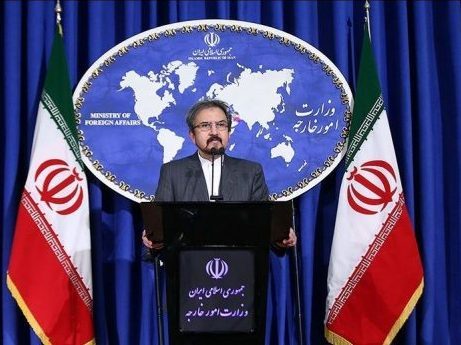
“Iran has conveyed its protest to Somalia in this regard through relevant channels,” Bahram Qassemi told ISNA on Wednesday.

He added that the Iranian Foreign Ministry was seriously following up on the issue.

Last week, Somali regional officials said the incident took place after security forces opened fire on the vessel during an operation in the Indian Ocean, according to reports.

The officials claimed the shooting took place after maritime police forces in Puntland, an autonomous region in northeastern Somalia, spotted two boats suspected to be fishing illegally Friday in Somali waters.

Colonel Mohamed Abdi Hashi of Puntland police said security forces opened fire on the boats when they ignored orders to stop and attempted to escape, adding that one boat was seized while the other fled.

According to the official, 16 other crew members were unharmed and apprehended.

He said he was not sure if Somali political leaders had made any contact with Iran about the incident.

Iran Can Share Counter-Terror Experiences with Friends: Rouhani

Iran Can Share Counter-Terror Experiences with Friends: Rouhani

Speaking at a meeting with Tanzanian Foreign Minister Augustine Mahiga in Tehran on Wednesday, President Rouhani said Iran is willing to promote bilateral relations and cooperation with Tanzania in all areas.

He further described terrorism as “a major predicament” for the world and said terrorists have been active in all regions under various names but followed the same objectives.

President Rouhani stressed the need for all countries to fight against terrorism unitedly to tackle the phenomenon.

He also said Iran is ready to share its experiences in counterterrorism with all friendly nations, including Tanzania.

Mahiga, for his part, underlined that his country is resolved to promote relations with the Islamic Republic in all areas.

Heading a high-ranking delegation, the Tanzanian foreign minister arrived in Tehran on Wednesday to hold talks with Iranian officials on issues of mutual interest.

Expansion of relations with African nations in all political, economic and cultural fields is top on the agenda of Iran’s foreign policy.

President Rouhani, who won a second term back in May, has repeatedly stressed his government’s interest in boosting relations with the African states.

Iran Keen to Hold Further Military Drills with Oman

Iran Keen to Hold Further Military Drills with Oman

“Mechanisms should be developed so that interaction and cooperation increase in fields such as holding joint ground, air and sea drills,” the second-in-command of the Iranian Army, Brigadier General Ahmad Reza Pourdastan, said on Wednesday.

He made the remarks during a meeting with an Omani delegation headed by the commander of the Royal Air Force of Oman (RAFO), Air Vice-Marshal Matar bin Ali al-Obaidani, in Tehran.

Pourdastan said Tehran and Muscat enjoyed close relations and expressed hope that the visit by the Omani delegation would pave the way for extensive and deep-rooted cooperation and interaction between the Armed Forces of Iran and Oman.

Iran and Oman have so far held several naval search and rescue drills aimed at enhancing readiness for providing relief services, conducting rescue operations and exchanging experience.

Back in April, the two countries launched joint search and rescue drills in the eastern parts of the Strait of Hormuz and the northern parts of the Indian Ocean.

Elsewhere in his remarks, the Iranian commander praised the Islamic Republic’s defense capabilities, saying the country’s military might strips enemies of the courage to launch any act of military aggression against the country.

Pourdastan stressed that Iran’s military prowess was based on the doctrine of deterrence not aggression.

He also underscored the need for countries of the region to boost cooperation for the sake of regional security.

Regional countries, without the presence of foreigners, can address and resolve their problems and differences through dialogue and interaction, and they are capable of establishing peace in the region without any foreign assistance, he noted.