Saturday, January 17, 2026
Home Blog Page 3813

Iraq Government Hails Top Shiite Cleric’s Stand on Kurdistan Referendum

Iran's President Lauds Ayatollah Sistani’s Vital Role after Controversy

According to the Iraqi media, the office of Iraqi Prime Minister Haider al-Abadi released a statement expressing the premier’s appreciation for the grand cleric’s stance after Ayatollah Sistani called on the Kurds to return to the “constitutional” path.

It thanked Ayatollah Sistani for his stances on the need for safeguarding Iraq’s national unity and constitutional rule.

The statement referred to regional and international opposition with Iraqi Kurds’ secession plans and praised the cleric’s “sense of responsibility” for releasing a “historic” statement.

Meanwhile, Head of the National Wisdom Stream Ammar al-Hakim urged the Iraqi Kurdistan Region to follow the guidelines of the religious leadership.

He asked Iraqi Kurdistan Region President Masoud Barzani to annul the results of the referendum held on September 25 in the northern Kurdish region and resume talks with Baghdad.

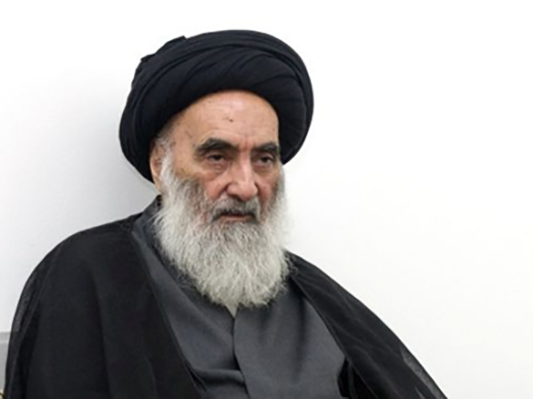
Ayatollah Ali al-Sistani in a statement on Friday said that Kurds must return to the “constitutional” path, arguing that is in the best interest of all Iraqi people, including the Kurds.

“We are calling on the officials in the region to go back to the constitutional path to solve the issues between the central government and region’s government,” the statement said.

“We also call on the Iraqi government and the political powers represented in parliament in all their decisions and steps to take into consideration the preservation of the constitutional rights of our Kurdish brothers,” it added.

The statement said that the recent development should not negatively affect the “solid relationship” between the Iraqi people, including Arabs and Kurds.

It went on to say the people of Iraq should avoid “anything that might harm the national unity of Iraq’s communities.”

The Iraqi Kurdistan Region went ahead with its plan to hold the referendum on Monday while Iraq’s neighbors and countries in the Middle East, including Iran and Turkey, had voiced opposition to such a move and supported the Baghdad central government.

According to Kurdish officials, over 90 percent of the voters said ‘Yes’ to separation from Iraq.

Pressure has been building on officials in Erbil, Kurdistan’s regional capital, over the referendum, with regional carriers, including Turkish Airlines, Egypt Air and Lebanon’s Middle East Airlines submitting to Baghdad’s request to suspend their flights serving Iraqi Kurdistan.
Iran FM Calls on Europe to Defy US in Case US Scraps Nuclear Deal

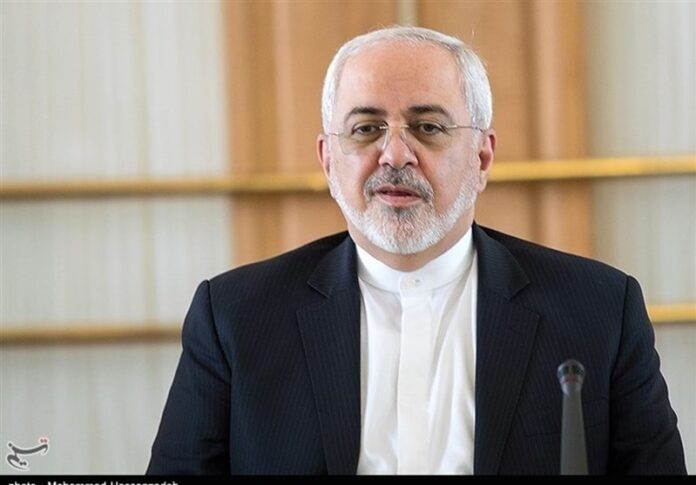
Speaking to the Guardian and the Financial Times, Zarif warned that if Europe followed Washington’s lead, the deal would collapse and Iran would emerge with more advanced nuclear technology than before the agreement was reached in Vienna in July 2015,

However, he insisted that technology would not be used to make weapons, in line with Tehran’s obligations under the Nuclear Non-Proliferation Treaty (NPT).

Zarif said the only way Iran would be persuaded to continue to observe the limits on its civil nuclear program would be if the other signatories – Russia, China, Britain, France, and Germany – all remained committed to its terms and defy any subsequent US sanctions.

“Europe should lead,” Zarif said in an interview in the Iranian UN ambassador’s residence in New York.

The Iranian foreign minister said he expected Trump to carry through his threat not to certify Iranian compliance in a state department report to Congress on October 15. Congress would then have 60 days to re-impose sanctions suspended under the deal.

“I think he has made a policy of being unpredictable, and now he’s turning that into being unreliable as well,” Zarif said. “My assumption and guess is that he will not certify and then will allow Congress to take the decision.”

Trump has said he has already made his decision but has not told anyone outside his immediate circle. He refused to tell Theresa May when she asked him at a bilateral meeting at the UN last week, despite the fact that Britain is a close ally and a fellow signatory to the agreement.

Zarif warned that US abrogation of the deal would backfire on Washington, saying that Iran would resume uranium enrichment and other elements of its nuclear program at a more advanced level than before.

“The deal allowed Iran to continue its research and development. So we have improved our technological base,” he said.

“If we decide to walk away from the deal we would be walking away with better technology. It will always be peaceful because membership of the NPT is not dependent on this deal. But we will not observe the limitations that were agreed on as part of the bargain in this deal.”

He added that “walking away” from the deal was just one option under consideration in Tehran.

“There are other options and those options will depend on how the rest of the international community deal with the United States,” he said. “If Europe and Japan and Russia and China decided to go along with the United States, then I think that will be the end of the deal.”

However, Zarif pointed out that in a previous era of high tensions between Washington and Tehran – when the US adopted sanctions legislation aimed at punishing European companies for doing business in Iran – Europe had resisted and sought to insulate its firms from US sanctions.

“In the 1990s they didn’t just ignore it,” Zarif said. “Europe, the EU, has legislation on the books that would protect EU businesses and adopt counter-measures against the US if the US went ahead with imposing restrictions. And it has been suggested by many that might be the course of action that Europe wants to take.”

A 1996 regulation adopted by the EU gave Europeans protection against the application of US sanctions at the time, including the Iran and Libya Sanctions Act passed in the same year. The law could be revived and expanded to cover any new US sanctions.

Following a ministerial meeting on the deal at the UN last week, the EU foreign policy chief, Federica Mogherini, stressed that all the signatories, including the US, had agreed that Iran was in compliance with its obligations under the terms of the agreement, and stressed that Europe would do everything possible to keep the deal alive, even in the event of US withdrawal.

In the wake of the Vienna agreement, however, Europe would have to go further than defying US sanctions. It would have to ignore UN measures as well. Under “snap-back” provisions in the agreement, the US alone could trigger the resumption of UN sanctions, as the provisions allow any participant in the deal to call a Security Council vote on a resolution on whether to continue with sanctions relief – a vote the US can veto.

The clause was designed to stop any country from shielding Iran if it broke the agreement. The negotiators did not anticipate it being used by a government to break the deal even while all other parties were in compliance.

The UN nuclear watchdog, the International Atomic Energy Agency (IAEA), has confirmed that Iran is abiding by the terms of the agreement, as have the other signatories to the deal, and the chairman of the US joint chiefs of staff, General Joseph Dunford, who warned that US abrogation would damage its long-term credibility.

Trump and his top officials have claimed that Iran is in violation of a line in the preface of the agreement that says the signatories anticipate the deal would contribute to regional peace and security. In his interview, Zarif rejected that reasoning.

“Even without being fully implemented, it has contributed because the region has one less issue to deal with. So it was already contributing to regional stability,” he said. “If anything, it has been the reaction of US allies in the region – who from the beginning didn’t like the deal and since the deal have done everything to undermine the deal – that have exacerbated tensions in the region.”

Saudi Man Arrested for Threatening to Set Women Drivers Afire

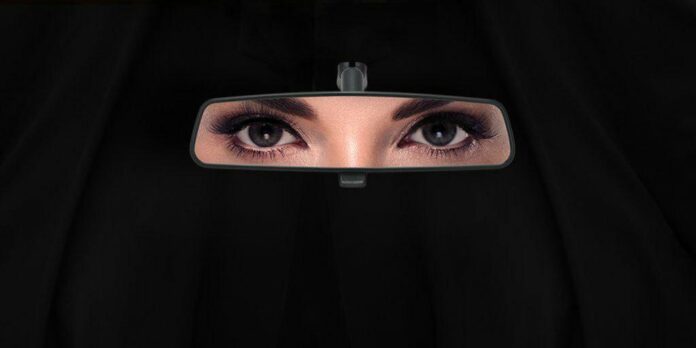
The Saudi man was apprehended for threatening to attack female drivers following a decree by Saudi King Salman to let women drive for the first time in the Arab country’s history, reports the Saudi Interior Ministry.

According to a Farsi report by IRNA, police in Eastern Province handed over the man to the country’s prosecutor general after arresting him, says the ministry, adding his identity has not been revealed yet.

The man had released a video vowing to set fire to Saudi women drivers together with their vehicles.

Saudi King Salman bin Abdulaziz Al Saud issued an official decree last Tuesday, repealing a decades-long ban on driving for women in the country.

Many Saudis welcomed the move while some became confused and furious at the annulment of the driving ban policy.

According to the ministry’s report, the revocation of the ban means Saudi women will have more opportunity to be in contact with non-relative men.

The driving ban for women in Saudi Arabia was a conservative tradition which would restrict their activities and which, according to human rights activists, was a sign of repression of women. Saudi Arabia was the only country where women were not authorized to drive.

Under the king’s order, Saudi women are allowed to drive from now on. This comes as Saudi female activists have been forbidden from making any comments in that regard.

Rights activists and politicians have also revealed on their Twitter pages that Saudi women activists had to refrain from reviewing and analyzing the issue of the lifting of the driving ban after they received threats against doing so.

Iran Raps Myanmar for Continued Violence against Rohingyas

In a statement on Friday, Foreign Ministry Spokesman Bahram Qassemi strongly criticized the Myanmar government for turning a blind eye to warnings and demands by other countries, international organizations and the world public opinion, which are calling for an end to acts of violence against the Rohingya Muslims.

“Unfortunately, every day that passes, the crisis becomes more complicated, the sufferings of the refugees increase and the responsibility of countries and international organizations becomes heavier, and more importantly, the chance to stop the crisis and make up for the ensuing damage is lost,” he noted.

“Such a complicated situation can turn the current circumstances into one of the worst human disasters of the current era,” Qassemi said.

“Despite giving awareness, warnings and demands by countries, international organizations, officials and the world public opinion, we are witnessing that the Myanmar government is disregarding the international community’s demand, which is unacceptable.”

“We believe that no action should annul the Myanmar government’s responsibility to stop the ongoing violence against the Rohingya Muslims, and no action should be used as a pretext to further aggravate the crisis and prevent the dispatch of the international community’s humanitarian aid to the crisis-hit areas in the country,” the spokesman added.

“Iran was among the first countries to react to the crisis based on its human and ideological responsibility. At least two letters sent by the Iranian foreign minister to the UN secretary general, several telephone conversations and contacts between the Iranian president and foreign minister and heads of Muslim states and their foreign ministers, bringing up the issue with the other parties in all meetings the Iranian president and foreign minister held in Tehran and New York over the past month, sending humanitarian aid provided by the Iranian nation to the refugees in Myanmar and Bangladesh as well as efforts by Iran’s local and international media to mirror the harrowing situation of Rohingya refugees in Bangladesh have been only part of the Islamic Republic’s political and diplomatic efforts to help settle the crisis and allay the sufferings of the Myanmarese refugees as soon as possible.”

From the outset of the fresh wave of crackdown on Rohingya Muslims, said Qassemi, the Myanmar government has been repeatedly asked to allow an Iranian delegation led by the deputy foreign minister along with humanitarian aid to be sent to that country; however, despite the promises made, it has not been possible to make the arrangements to that end.

Qassemi then referred to the Bangladesh government’s admitting the influx of Myanmarese refugees.

“The move by Bangladesh is invaluable from a humanitarian perspective, and the international community, including countries and international circles and all NGOs should, along with Bangladesh, act with more seriousness and better organization and make more effective efforts to stop the displacement of Rohingya Muslims and help send more aid to them and take care of their situation,” he concluded.


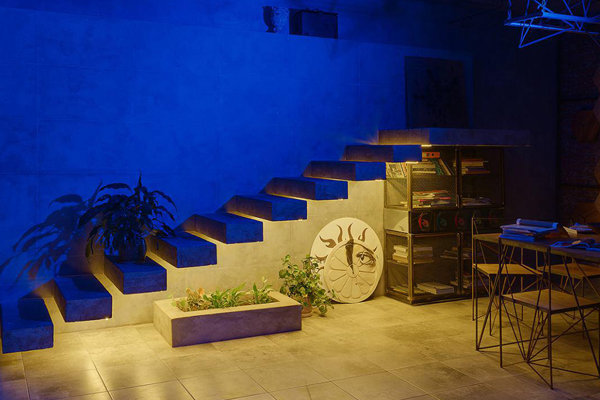
GAP Exhibition Presents Contemporary Iranian Architectural Works

The GAP was established based on an initiative by senior lecturer of the University of Melbourne, Blair Gardiner, and seeks to cultivate cross-cultural ties between Melbourne and cities around the world by organising exhibitions to show the architectural projects of various urban centres.

In the current academic year, Tehran has been selected as the eighth city to display its architectural works. Hence, the GAP has invited 7 prominent Iranian architects who have carried out prominent projects in Tehran to participate in the event.

From Iran, the Keivani Architects Studio, the Huba-Design Architectural Office, the Madjdabadi Architectural Office, the Cloot, the Shift Design Group, the Next office, and the Moj-e-No (New Wave) Architectural Office, have been invited to the exhibition.

Nima Keivani said in an interview with the Mehr News Agency that “the exhibition is a student collective activity that takes place at the Faculty of Architecture, Building and Planning of University of Melbourne, Australia. This is an excellent occasion for further introducing contemporary Iranian architecture and contemporary art to the international community. We see that the media and international organizations are paying great attention to architecture, and it proves that our country’s architectural position in the world is growing.”

At this event, seven well-known architectural offices of Tehran, who had previously carried out noticeable projects, present their works at the exhibition to the public as well as to the students of Designing and Architecture at the University of Melbourne.

On the sidelines of this exhibition, full interviews with Iranian architects will be published on the websites, publications and social pages of the university. They will also be published in the form of books and catalogues along with a full report of the exhibition.

Furthermore, a report and video footage in form of Q&A will be presented to the audience. At this session specialized questions in the field of architecture would be raised and the architects can express their concerns.

The exhibition was started at 6 pm on September 28 at Atrium of the University of Melbourne’s School of Design and will continue until October 12, 2017.

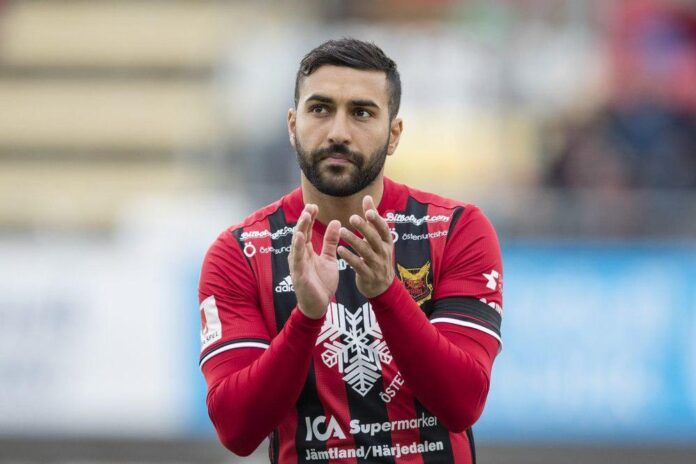
Östersund Player Chooses to Play for Iran despite Sweden Invitation

The 24-year-old midfielder, whose side Östersund FK tops the Group J of Europa League, was recently called on by Carlos Queiroz to play for Iran while he had played in two friendly matches for Sweden and scored a goal.

On 25 August 2017, Ghoddos revealed in an interview that he acquired his Iranian passport from the embassy. The following day, 26 August, he announced on his Instagram page that he would be joining Iran for their 2018 World Cup qualifiers against South Korea and Syria.

Östersund Player Chooses to Play for Iran despite Sweden InvitationGhoddos was called up for the first time for the Iran senior team training camps on 27 August 2017 by coach Queiroz for Iran’s 2018 FIFA World Cup qualifying matches against South Korea and Syria.
After Ghoddos couldn’t make his debut for Iran due to administrative issues with FIFA, he was called into Sweden’s World Cup qualification squad on 27 September for matches against Luxembourg and Netherlands.

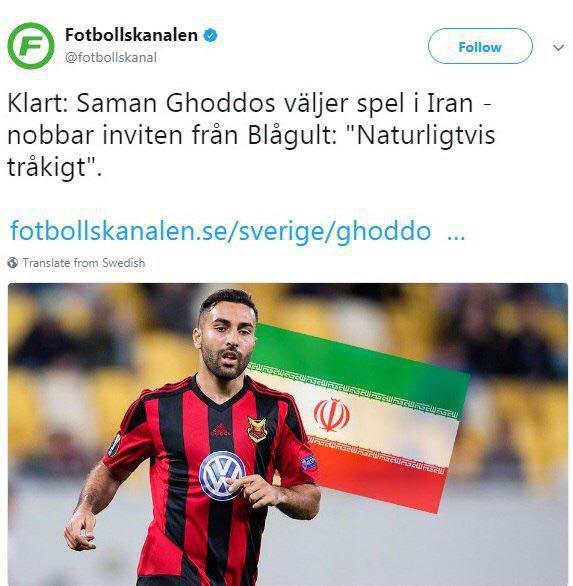
He told the Swedish side that he will make his decision by Thursday, September 28. Now, Sweden’s Fotbollskanalen says Ghoddos has finally decided to play for Iran.

He later told a Swedish website about his decision that he is grateful to Andersson, the head coach of Sweden, for giving him the extraordinary option, but he has made his final decision and he will play for Iran.

He also wished success for Sweden in the road to FIFA World Cup 2018.

Andersson also noted that he is very upset about Ghoddos’ decision, but he respects that.

Ghoddos had earlier said in an interview with SportExpressen, “I will always love Sweden. I’ve grown up here. It is an honor to live here and to represent Sweden. At the same time, my parents are Iranian. I have Persian blood in my body. I love Iran too.”

1 Killed, 2 Wounded in Army Chopper Crash in Northwestern Iran

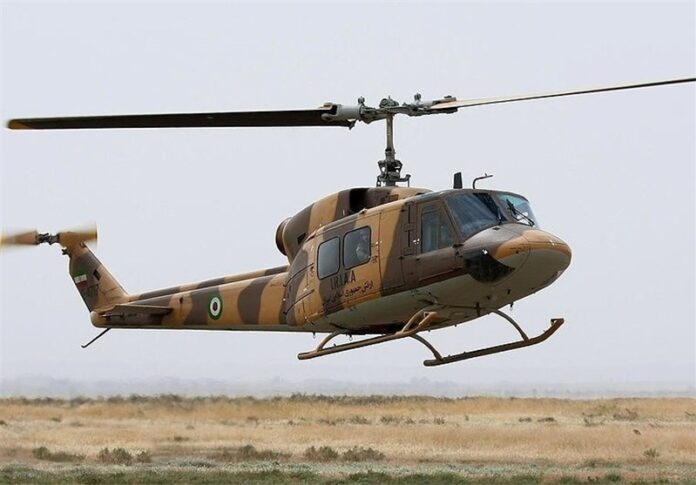
Speaking to the Tasnim News Agency, local military commander General Habib Shahsavari said the Army’s Bell-214 helicopter crashed on Thursday due to technical failure.

One person has been martyred in the incident and two others have been injured, who are expected to be discharged from the hospital within the next two days, he added.

In separate comments, Colonel Karim Hossein Nejad said the copter has crashed during a test flight.

Three servicemen were on board the doomed chopper, he explained, saying the flight technician has been martyred, while the pilot and co-pilot have suffered injuries.

‘Iran’s Rank Higher than Russia, Turkey in Tourism Security’

Isfahan -Foreign Tourists-2017

Iran’s ranking is higher than that of Russia and Turkey when it comes to tourism security, said Mohammad Moheb-Khodaei, the deputy head of the Iranian Cultural Heritage, Handicrafts and Tourism Organization for tourism affairs.

According to a Farsi report by Tasnim, he enumerated the features and standards of Iran’s tourism industry based on the figures presented by the World Tourism Organization.

“Iran currently ranks 94th in the world in the tourism industry. Iran has the 79th rank in terms of competitiveness and 86th place when it comes to tourism security, which is higher than that of Turkey and Russia.

He also said Iran’s airports have the 94th rank in the world in the airports sector, the 75th rank in the transportation and ports sector, and 38th in tourism culture.

“So, based on these statistics, we should be witnessing changes in standards of tourism in the country.”

He further noted that the tourism industry contributes to reducing unemployment, saying, “Of every 10 jobs in the world, one is related to tourism, and each job which is created in the tourism sector will create 7 jobs indirectly,”

Speaking in a ceremony marking World Tourism Day, he touched upon efforts made by those active in the field of tourism, tourism institutions, immigration police, university professors working in the field of tourism, journalists and reporters, the Foreign Ministry, the Ministry of the Interior, the Ministry of Health, Treatment and Medical Training, aid worker and ambassadors.

“World Tourism Day is very important for those active in the field of tourism,” he said, adding the tourism industry has been the focus of attention by people from all walks of life and authorities during President Hassan Rouhani’s administration.

“In the first year of the 6th National Development Plan, we have envisaged the creation of 70,000 jobs with the implementation of the ‘Resistance Economy’ strategy, which will serve as a model for us,” he said.

He then highlighted two key issues, namely supporting the private sector and paying attention to the tourism economy.

”Cultural and domestic elements as well as local values should be incorporated into the development of tourism, so that we will witness a drop in extravagance, maintenance of natural diversity, local contributions and promotion of marketing in the tourism sector,” he said.

Iran Not to Recognize Any Group’s Sovereignty over Northern Iraq

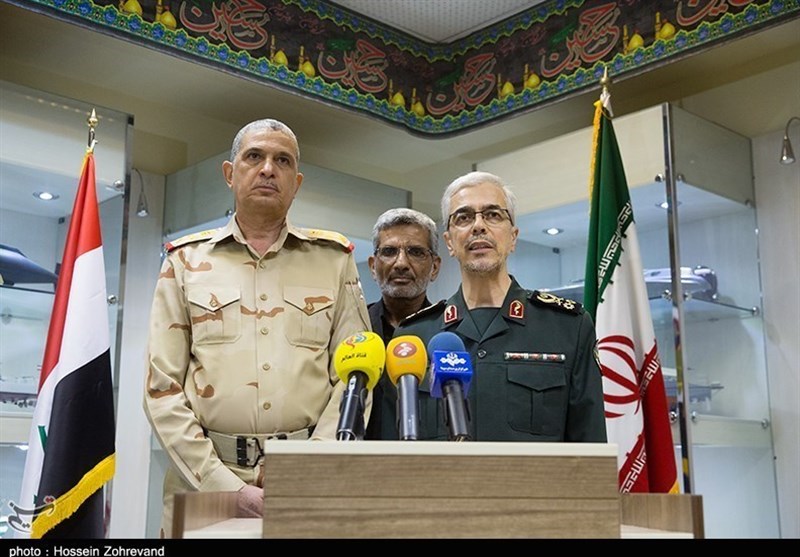
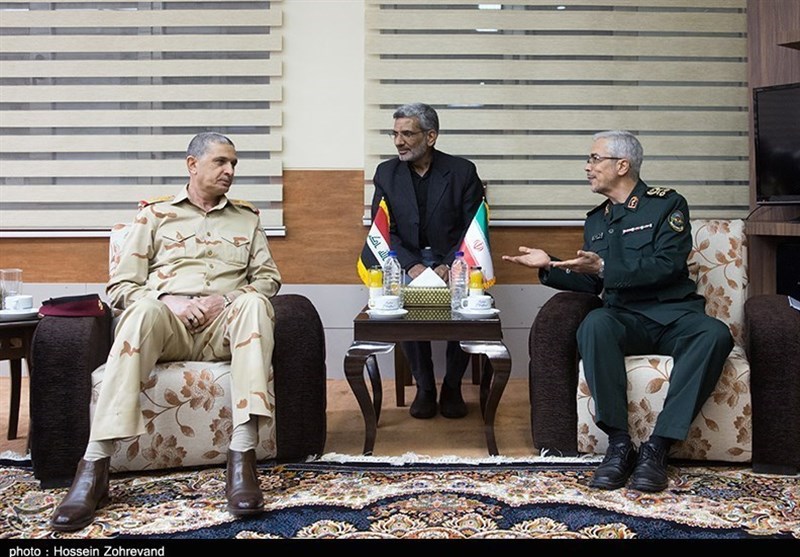
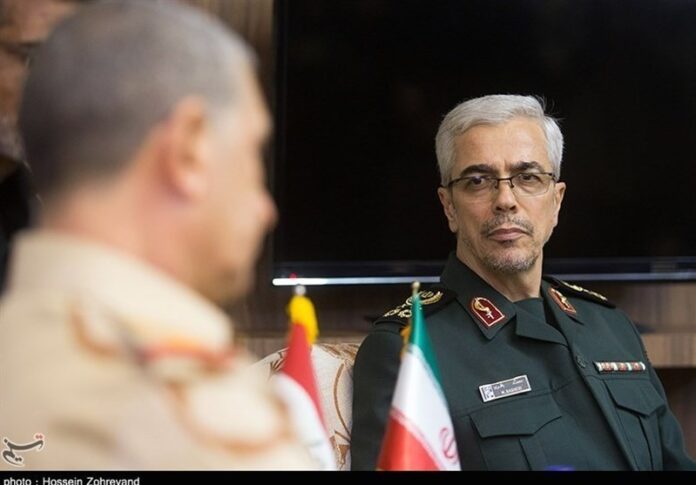
“We do not regard any sovereignty for the parties and groups in North Iraq, and this is a common belief held by the Armed Forces of the both sides (Iran and Iraq),” Major General Mohammad Hossein Baqeri said in a joint press conference with his Iraqi counterpart Major General Othman al-Ghanmi, held in Tehran on Wednesday evening.

“The Islamic Republic of Iran recognizes integrated and unified Iraq, and as the Iraqi prime minister has said, Iran’s common frontier with Iraq are the existing legal borders,” the Iranian general noted.

Iran Not to Recognize Any Group's Sovereignty over Northern Iraq

Both Tehran and Baghdad disapprove of the Iraqi Kurdistan Region’s independence referendum, Major General Baqeri added, stressing that Iran does not agree with any change in Iraq’s geography or with the secession of any region from that country.

He also noted that he has reaffirmed Iran’s commitment to supporting the Iraqi government, Army, and the Popular Mobilization Units (PMU) -also known as Hashd al-Shaabi- in the meeting with the visiting Iraqi general.

Iran Not to Recognize Any Group's Sovereignty over Northern Iraq

For his part, Major General Ghanmi said their talks have revolved around military cooperation between Tehran and Baghdad, the necessary coordination amid the current critical situation, and the efforts to ensure security along the common borders.

Separately on Wednesday, Baqeri met with senior military and political officials from Turkey, during which the two sides discussed a variety of issues, including the Kurdish referendum in Iraq.

Baqeri told reporters after the meeting that both the Iranian and Turkish sides were concerned that the Kurdish vote in Iraq could lead to tensions in the Arab country, the repercussions of which could engulf the regional countries.

While Iraq’s Kurds rushed headlong into a vote for independence on Monday, all neighbors and countries in the Middle East, including Iran and Turkey, have voiced opposition to the vote and supported the Baghdad central government.

“Iran’s Name Should Bring Nice Concepts to Mind”

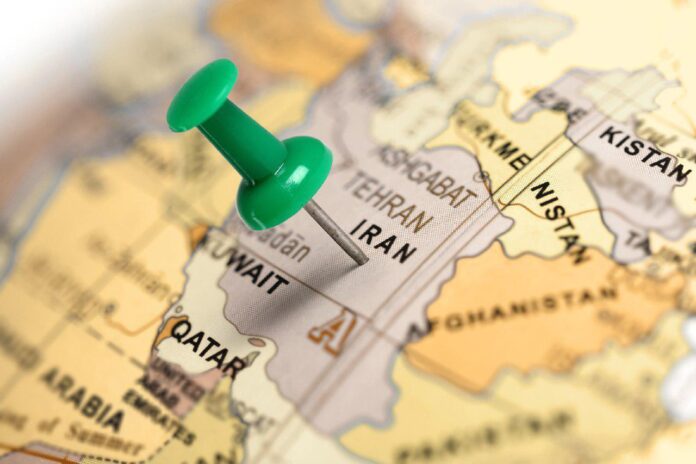
Iran

A 2015 Pew Research Center poll found that attitudes toward Iran are mostly negative worldwide. Majorities or pluralities in 31 of 40 countries surveyed hold an unfavorable opinion of the Islamic Republic. And in several Muslim-majority countries in the Middle East and Asia, ratings have declined considerably in recent years.

This has been mostly caused by the Iranophobia project pursued in Western countries, particularly the US and the UK, creating feelings and expression of hostility, hatred, discrimination, or prejudice towards Iran and its culture, and towards persons based on their association with Iran and Iranian culture.

The US has in recent years tried to link Iran’s name to terrorism and nuclear weapons, making the world afraid of the Islamic Republic.

The Asr-e Iran has, in a Farsi article, underlined the importance of promoting words and phrases that would bring the word “Iran” to mind in a positive sense.

“What should my country be known for in the world?”

In other words, “What word or words come to a foreigner’s mind when he/she hears the name of my country?”

This is the most important question that all managers in a country, especially top officials, should constantly think about and plan and act in that regard.

That is what North Korean officials have done. They have decided that the phrase “atomic bomb” come to mind when somebody hears the name of their country.

On the other hand, the name “South Korea” is associated with words such as “Samsung, LG and Hyundai” across the world.

Germany brings “Technology” and “Benz” to mind. Finland reminds one of a “superior educational system.” Brazil is associated with two words: coffee and football. The Netherlands is reminiscent of “gardens of flowers and good breeds of cattle.” France is associated with the words “culture, art, fashion and tourism.” Afghanistan brings “terrorism” and “narcotics” to mind. The United Arab Emirates reminds one of “Dubai, free trade and the Emirates airline.” Qatar brings “natural gas” to mind, and so on and so forth.

The association of these words with the names of countries is not a coincidence. Each one of these associations is the result of the performance of those countries’ officials and people.

Now the question is, “Do our country’s officials and people have any programs to promote key words which would bring the word ‘Iran’ to mind?”

Some time ago, I travelled to Bulgaria.

“Where are you from?” A middle-aged woman asked my daughter at the airport.

When she realized we were Iranians, she smiled and, with her special accent, said enthusiastically, “Oh! … Asghar Farhadi!”

I was glad to see the name of my country was associated with the name of a popular and great celebrity, and not “nuclear arms, human rights violations” and so on.

In the following days, I met a Polish man who was a mechanic. When he found out I was from Iran, he paused and asked, “I see! There is war in your country, isn’t there?!”

I explained to him that Iran was at war with Iraq three decades ago, and that the battlefield was on the border, not inside the country. I asked him to come and visit Iran.

“Maybe for the next vacations,” he answered.

Also several years ago, a Tajik driver in Dushanbe knew Iran with the word “Ahmadinejad” and praised him for standing up to the US.

In Turkey, I met an old man who, as soon as realized I was Iranian, began to criticize the situation of women in Iran.

The reason I am recounting the memories is to ask the question “What words Iran is going to be associated with, at last? Poetry and [renowned Iranian poet] Hafez? Ancient culture and civilization? Tourism? Terrorism? Arts and cinema? Violations of Human Rights? The Cylinder of Cyrus? Carpets, pistachios and rose water? War? The land of four seasons? Confrontation with the US? Wrestling? Kindness and hospitality? Missiles? Or …?”

The country’s planners as well as the people should consult one another and answer the following questions:

What words do we like our country to be associated with in the minds of people around the world?

What are the do’s and don’ts to achieve that strategic objective?

What words would annoy us if associated with the name “Iran?”

What programs should be put in place to dissociate negative concepts from the name of our country?

What responsibilities does each government body and the people have to achieve these goals?

How should this process be monitored?

Let’s not forget that today’s world is one of brands, and if the “Iran” brand is associated with nice concepts, it will protect our thousands-year-old credibility and reputation. Moreover, this targeted association of concepts can turn into power and wealth for the Iranian nation.