Tuesday, December 23, 2025
Home Blog Page 3704

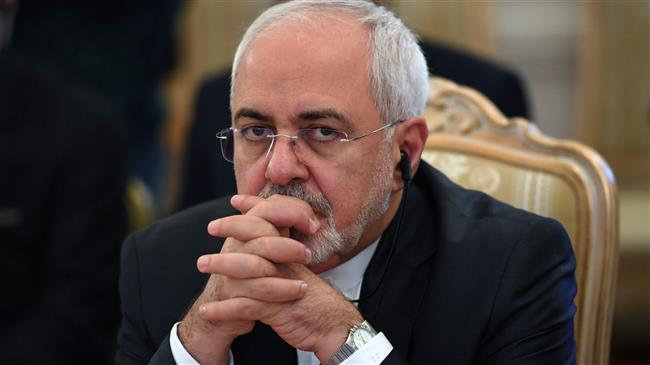
Foreign Ministers of Iran, Russia, Turkey to Meet in Astana

The sides have yet to fix the exact date and location, Abdrakhmanov told reporters, but one of the options is the Kazakh capital, Astana, which will also host a fresh round of lower-level talks on Syria between the same three parties, according to Reuters.

The eighth round of Syria peace talks, mediated by Iran, Russia and Turkey, was held in Kazakhstan’s capital of Astana, with the aim of finding a diplomatic solution to the six-year conflict in the Arab country.

In mid-September last year, the three countries, which together act as guarantor states in peace talks for Syria, agreed on the details of four “de-escalation zones” in the Arab country, including in Idlib, during peace talks in Astana.

The fifth zone is expected to reduce tension in Syria’s Afrin border region.

The de-escalation zones are aimed at separating extremist groups, including Daesh and Jabhat Fatah al-Sham — formerly known as al-Nusra Front — from other militants.

Iran Leader Pardons Over 500 Inmates

The Leader granted clemency to the convicts at the request of the country’s Judiciary Chief Ayatollah Sadeq Amoli Larijani on the occasion of the 39th anniversary of the victory of the Islamic Revolution.

Those granted clemency had been convicted in local courts of arbitration, the country’s Islamic Revolution Court, the judicial apparatus serving Iran’s Armed Forces, and the State Discretionary Punishment Organization.

On Sunday, Iran marked the 39th anniversary of the Islamic Revolution, which put an end to the monarchical rule of the US-backed Pahlavi regime.

Iranian MPs Looking into Death of Environmentalist in Jail

Kavous Seyyed-Emami

A number of MPs, including both reformists and conservatives, were shown a CCTV footage of the cell where Seyyed-Emami was kept on Monday.

In the footage, provided by the Islamic Revolution Guards Corps, Seyyed-Emami is seen apparently preparing himself for committing suicide.

According to Mohammad-Reza Aref, the leader of reformist lawmakers, the deceased academic was seen trying to put off the light by throwing something at the lamp.

“In this footage, he took off his shirt and tried to use it as a tool to hang himself,” he noted, adding that the footage was not clear enough, and the IRGC has vowed to provide a less ambiguous one if available.

Ali Motahari, the vice-speaker of the Iranian Parliament, told ISNA that Seyyed-Emami is not seen committing suicide in the footage, but he was engaged in activities for seven to eight minutes that indicated he was probably going to kill himself.

Motahari strongly criticized the prison officials for their failure to notice the suspicious moves made by Seyyed-Emami, stressing that the negligence of the CCTV operator it is totally clear.

The IRGC representatives have told the lawmakers that those working at the CCTV control room have been punished following the incident.

The Shargh newspaper reports that all lawmakers, except for one of them, agree the footage does not show Seyyed-Emami’s suicide. However, Seyyed Hossein Naqavi Hosseini says the prisoner was shown committing suicide using his shirt.

Alaeddin Boroujerdi, the chairman of the Parliament’s National Security Commission, is also sure that Seyyed-Emami has committed suicide.

“We watched the footage of him in Evin Prison. Unfortunately, Seyyed-Emami could not put up with the situation in prison for whatever reason, even though he was being kept in a special cell as he was a university professor,” he told ICANA.

Boroujerdi says even Seyyed-Emami’s family has accepted that he committed suicide, so they did not ask for a post-mortem.

However, the lawyer of Seyyed-Emami’s family, Arash Keykhosravi, has told the Shargh newspaper that the family has indeed asked for a post-mortem examination.

“Deputy Prosecutor told us the forensics will call for an autopsy as part of a routine procedure. So I don’t confirm Boroujerdi’s claim that the family has not asked for a post-mortem,” he added.

The Iranian-Canadian dual citizen Kavous Seyyed-Emami was arrested on January 24 and according to authorities committed suicide in jail.

He was arrested along with a number of other environmental activists, who are accused of espionage and giving the country’s sensitive information to foreigners, according to Tehran prosecutor.

Mohammad Reza Tabesh, the head of the Iranian Parliament’s Environment Fraction, had earlier noted that the charges against these people must be proven in court stressing that there are also ambiguities about the death of Seyyed-Emami that must be resolved.

“We are planning to hold a meeting with judicial authorities, the Prisons Organization, the IRGC, the Ministry of Intelligence and the Environment Department within the next few days,” he noted.

Leader Praises Peaceful Coexistence of Shiite, Sunni Muslims in Iran

In comments released on Tuesday, Ayatollah Khamenei said the Sunni-majority provinces of Sistan and Baluchestan in the southeast, Kurdistan in the west, and Golestan in the northeast are symbols of Muslim unity and a role model for cooperation and brotherly coexistence of Shiite and Sunni brothers in the world.

Addressing a group of people from Sistan and Baluchestan province, Ayatollah Khamenei said the martyrdom of a Sunni teenager during the eight-year war imposed by Iraq on Iran, or the martyrdom of a Sunni cleric while defending the Islamic Revolution against the counter-revolutionary forces, indicate that Shiite and Sunni brothers in the Islamic Republic come together in the most difficult situations.

The Leader further expressed his great love for the people of Sistan and Baluchestan, and described the Baluchis as a friendly, sincere, and talented people with a brilliant and unique history compared with other Iranian ethnic groups.

“Despite such abundant capacities, the people of Sistan and Baluchestan were ignored during the Qajar and Pahlavi dynasties, and this kept them from flourishing,” he added.

The Leader urged the provincial officials to seriously follow up fulfilling the people’s needs in this region, including water desalinating facilities and railway system, and asked them to tap into the potentialities of the private sector while using the resources of National Development Fund.

Sistan and Baluchestan is the second largest province in Iran (after Kerman Province), and shares borders with Pakistan and Afghanistan. The population comprises the Baluch who form a majority in the province, followed by the relatively large minority, the Sistani Persians.

Baluchis are predominantly Sunni Muslims. Sistanis, however, are predominantly Shiite Muslims.

The province today is the most underdeveloped, desolate, and poorest of Iran’s provinces. The Iranian government has been trying to reverse this situation by implementing new plans such as creating the Chabahar Free Trade-Industrial Zone.

Tehran-Based Foreign Envoys Briefed on Iran’s Human Rights Achievements

The briefing held on Monday was aimed at unveiling the latest developments and progresses made in the field of human rights in Iran.

Held in the building of the Iranian Foreign Ministry’s Centre for Political and International Studies, the meeting was attended by Masoumeh Ebtekar, the Iranian Vice-President for Women and Family Affair; Shahindokht Molaverdi, the President’s Special Assistant for Civil Rights; Justice Minister Alireza Avaei as well as a number of Iranian lawmakers and Deputy for International Affairs of the Human Rights Council of Iran’s Judiciary, Kazem Gharibabadi.

The briefing was held in two separate parts presided over by Deputy Foreign Minister for Legal and International Affairs, Gholam-Hossein Dehqani.

In the first part, Vice-President Ebtekar took the podium elaborating on the latest achievements of Iran in various fields relating to women and family affairs with a focus on empowering Iranian women.

Then, in an address to the briefing, Molaverdi discussed different aspects of Charter on Citizens’ Rights including its development and implementation. She also discussed a mechanism to exercise supervision over the implementation of the charter.

Gharibabadi was the third speaker of the first part of the meeting. During his address, he referred to the cooperation underway among the Islamic Republic of Iran and international bodies involved in human rights issues. He also criticized ‘unfair’ and ‘unbalanced’ approaches adopted by certain international bodies and states toward human rights conditions in Iran.

In the second part of the briefing, Justice Minister Avaei highlighted Iran’s achievements in children’s rights. He noted that Islam and the Iranian society attach huge importance to the children.

The Iranian official also offered some explanations on the latest developments in judiciary and legislative fields to promote children’s rights including development of a national charter for children’s rights.

Then, the representative of Assyrian and Chaldean Christians in the Iranian Parliament, Yonathan Betkolia, elaborated on the achievements of the Islamic Republic of Iran on minorities’ rights.

For his part, Head of Iranian Parliament’s Commission for Legal and Judicial Affairs, Allahyar Malekshahi, talked about the commission’s efforts as well as the policy of the Islamic Republic for fight against drug trafficking. He also referred to the reforms made to the policy and efforts to implement the new policy in fight against drug trafficking.

At the end of the meeting, the chairman of the briefing, Gholam-Hossein Dehqani, wrapped up the discussions made during the first and second part of the meeting.

“All the existing evidence indicates that the move by certain states to draft human right resolutions against Iran, and the appointment of special rapporteurs on the situation of human rights in the Islamic Republic are politically motivated and would not promote human rights situation in the country.”

He went on to say that such resolutions would only fuel the distrust of international human rights bodies and cast doubt on the legitimacy of the UN in this field,” he concluded.

During both two parts of the meeting, a number of Tehran-based foreign ambassadors and delegates expressed their views on the topic and the views expressed by the speakers.

Judiciary Chief Blasts US Claims about Iranian Missiles in Yemen

Addressing a meeting of Judiciary officials on Monday, Ayatollah Amoli Larijani took a swipe at the Trump administration for raising the “ridiculous claim” that Iran has provided Yemen with missiles, describing it as part of a new American plot against Iran.

“How could the Islamic Republic of Iran send missiles to Yemen when Yemen has been blockaded and even the delivery of medicine has been barred,” the top judge added.

The official also hailed the massive turnout in the Sunday’s nationwide rallies marking the victory anniversary of the Islamic Revolution, saying such unity has thwarted all hostile measures against Iran.

In comments on Thursday, Leader of the Islamic Revolution Ayatollah Seyed Ali Khamenei referred to the US backing for the killing of Yemeni people as a flagrant example of American cruelty, denouncing Washington’s silence on the daily bombardment of Yemen’s infrastructures by US allies that employ American weapons.

Slamming Washington’s shameless move to accuse Iran of sending missiles to Yemen by displaying a missile debris at the UN, Ayatollah Khamenei wondered how it could be possible to send missiles to Yemen when the people of the country are under blockade.

On December 14, US Ambassador to the UN Nikki Haley presented what she claimed to be “undeniable” evidence, including the allegedly recovered pieces of a Yemeni missile, saying it proved that Iran was violating international law by giving missiles to the Houthi Ansarullah movement.

With allied Yemeni army troops and tribal fighters, the Houthis have been fighting back a Saudi-led aggression since March 2015.

Iran’s Revolution Anniversary Rallies Clear Message to US: Larijani

Ali Larijani

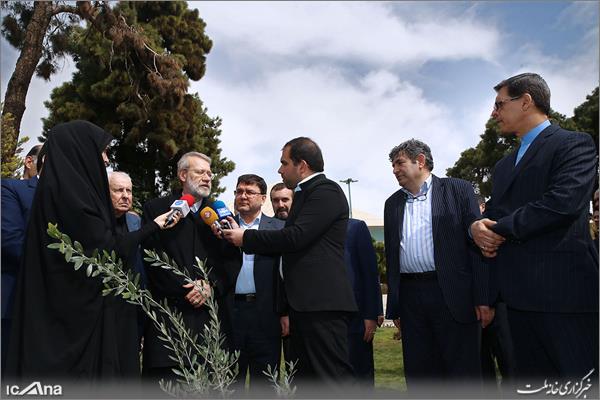
Speaking in a pre-session speech on the parliament floor on Monday, Iran’s Parliament Speaker Ali Larijani thanked Iranians for their huge turnout in nationwide rallies on February 11, marking the anniversary of the triumph of Iran’s Islamic Revolution.

The speaker referred to the mass demonstrations as a clear message to the US, adding, “The Americans must have comprehended the meaning of people’s huge turnout.”

“The [Iranian] nation gave a clear message in response to the Americans’ behaviour, approach and nonsense words, and showed that they will not allow anybody to interfere in Iran’s affairs,” he noted.

“Even if there are differences and problems, we will settle them through the Iranian nation’s will,” Larijani said, according to a Farsi report by ICANA.

He further said the Iranian nation showed off the “originality” of the Islamic Revolution to mobocrats.

“At a time when mobocrats had been investing, for weeks, in efforts to deal a blow to the Islamic Revolution to discourage people from getting a better understanding of the revolution, our civilized and deep-rooted nation showed off the originality of the revolution to them,” said the top parliamentarian.

The speaker said the huge turnout of people in the rallies amounts to a great asset to safeguard national security and spur the country’s development.

“I kindly request all political figures, parties and media outlets not to cash in on this national achievement to fuel their political wrangling and tug of war. The unity of all was the key feature of that move,” the speaker said.
He also called on officials to work toward solving the country’s economic problems.

Iran Energy Minister Welcomes IRGC’s Cooperation in Cloud Seeding

Speaking on the sidelines of a meeting with governors of Iranian provinces, he told journalists that the cloud seeding plan has been on the agenda since 20 years ago, adding that the needed equipment must be refurbished.

The energy ministry is thus trying to upgrade the seeding equipment, he noted, according to a Farsi report by the Fars News Agency.

Earlier, Commander of the IRGC Aerospace Force Amir Ali Hajizadeh had announced that the IRGC is ready to cooperate in the project to seed clouds.

The remarks came after frequent droughts and low rainfall in Iran over the past autumn forced the administration to opt for cloud seeding in the hope of squeezing more precipitation out of the atmosphere.

Cloud seeding originated in the US in the 1940s. The method generally used in the winter involves ground-based generators set at high elevations that are literally fired up to release plumes containing silver iodide crystals into storm clouds. When water vapor or droplets attach to the silver iodide crystal, latent heat is also released, and it increases cloud size and the duration of storms.

Global warming has forced many arid and semi-arid areas around the world, including Iran, to suffer from drought.

Elsewhere in his Monday remarks, the energy minister said “we are ready to develop renewable energy and purchase electricity from the private sector.”

“In addition to supplying domestic needs, we are going to export electricity to the neighbouring countries, including Afghanistan, through connected networks, by purchasing power based on the current contracts.”

Ardakanian further referred to the issue of water as an area in which Iran can develop its relations and cooperation with its neighbours, especially Afghanistan and Turkey.

“At the moment, we are exchanging electricity with Pakistan, Armenia, Azerbaijan, Turkey and Iraq. We are also planning to connect [Iran’s power network] to Europe’s electricity grid. Such a move would create a large capacity for the country’s electricity grid,” he added.

Japan to Help Cut Air Pollution in Smog-Choked Tehran

An official contract was signed on February 12, 2018, between Iran and Japan on the procurement of the equipment required to measure and analyze air pollutants in Tehran.

The four-year agreement was clinched in Tehran in a ceremony attended by Deputy Mayor of Tehran Pourseyed Aghaei and Japan’s Ambassador to Iran.

“The contract was inked to decrease air pollution in Tehran,” said the Iranian official.

He said the contractors are the Tehran Air Quality Control Company affiliated with the Tehran Municipality, and the Japan International Cooperation Agency (JICA).

This comes as cooperation between Iran and JICA goes back to 1996 when Iran’s first plan to fight air pollution was underway. It led to an improvement in the quality of gasoline, so much so that lead and CO have not existed in Tehran’s air any longer.

The state organization is also cooperating with Iran in a project to revive Lake Urmia in northwestern Iran. Under its international obligations, the organization is now going to work with Tehran on reducing air pollution in the metropolis. The project will be carried out in four years’ time.

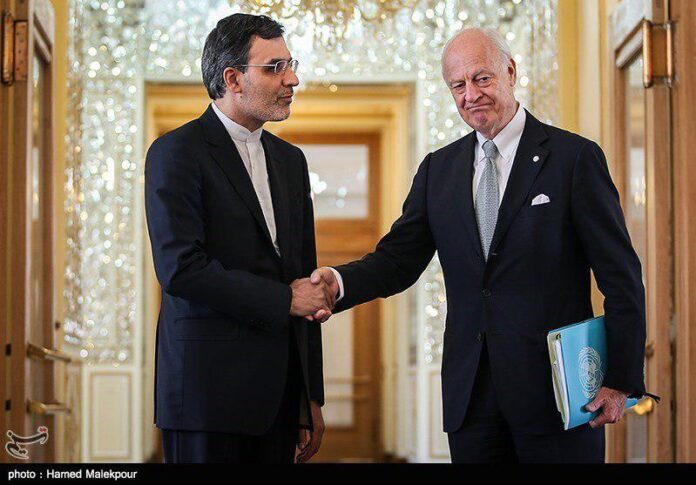
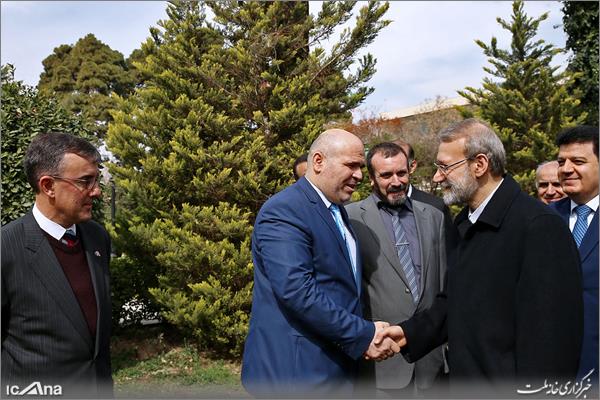
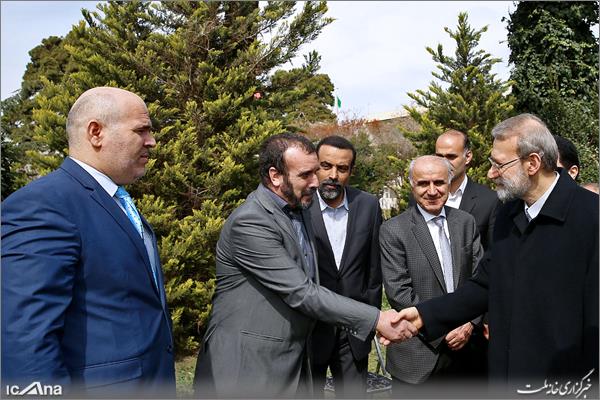
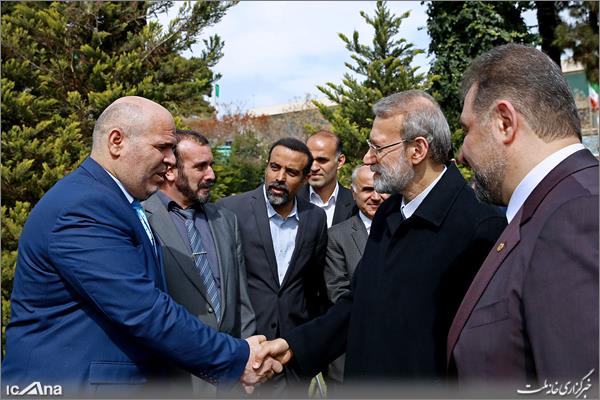
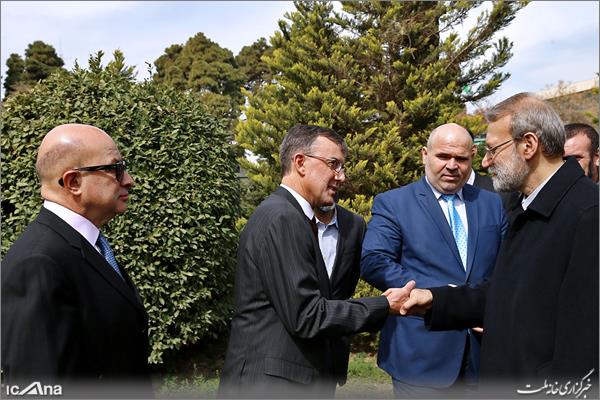
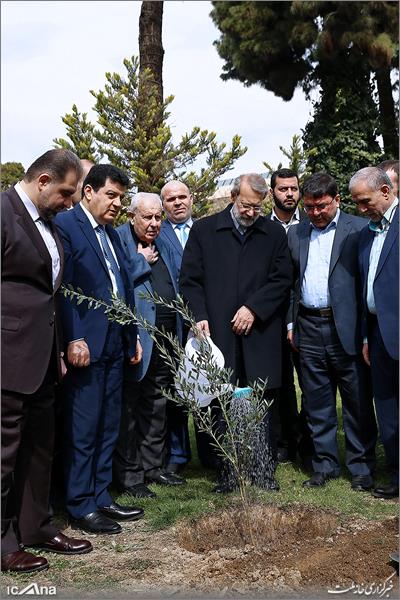
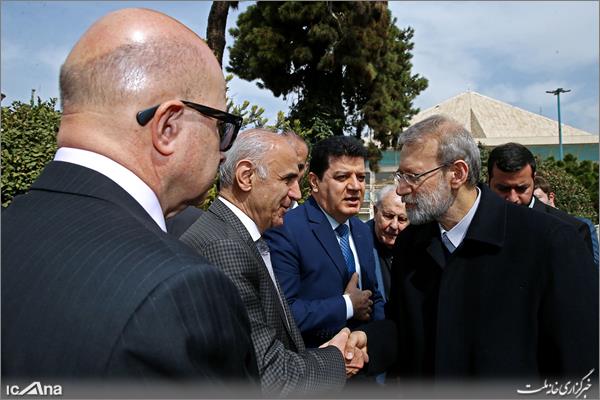
Iranian Diplomat, Houthi Spokesman Discuss Yemen Crisis in Tehran

Abdulsalam and his accompanying delegation exchanged views with the senior Iranian diplomat on Monday afternoon.

During the meeting, the two sides discussed the political ways to resolve the Yemen crisis in order to help Yemenis by ending the brutal war on the Arab country.

On Saturday, the Yemeni spokesman also met with Iran’s Foreign Minister Mohammad Javad Zarif and briefed him on the current situation in Yemen, particularly the country’s dire humanitarian conditions.

In that meeting, Zarif pointed to Iran’s four-point plan to resolve the crisis in Yemen, and underlined the need for immediate cessation of war and bombardment in the Arab country.

He also pointed to the humanitarian disaster in Yemen caused by the continued unfair airstrikes of the Saudi-led coalition against Yemeni people, and highlighted the need for immediate dispatch of humanitarian aid to the Yemenis by the international community.

Saudi Arabia has been leading a deadly campaign against Yemen from the air, land, and sea since March 2015 in an attempt to reinstate former president Abd Rabbuh Mansur Hadi, a staunch ally of Riyadh, and to undermine the Houthi Ansarullah movement. Since nearly three years ago, the Houthis have been running state affairs and defending Yemeni people against the Saudi aggression.

The UN has described the situation in Yemen as the “world’s worst humanitarian crisis.”

The war, which has so far killed at least 13,600 people, has also taken a heavy toll on the country’s infrastructure, destroying many schools and factories.