Wednesday, December 31, 2025
Home Blog Page 3667

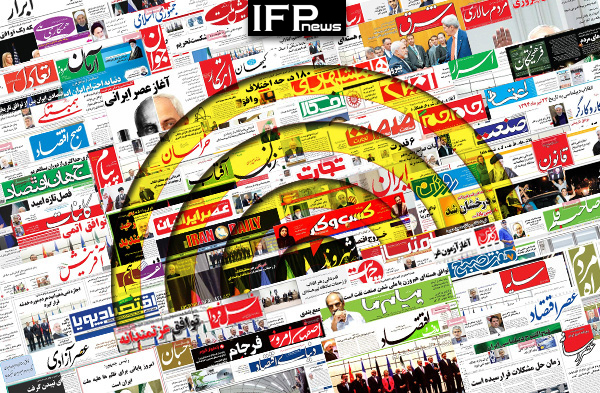
A Look at Iranian Newspaper Front Pages on January 23

A Look at Iranian Newspaper Front Pages on November 18

The top story in all Iranian newspapers was President Hassan Rouhani’s live interview with popular TV host Reza Rashidpour. The interview, which was aired on Monday night, was the first relatively challenging interview the Iranian president gave to a domestic media outlet.

Several papers also lashed out at French Foreign Minister Jean-Yves Le Drian for his remarks about Iran’s missile capabilities.

The ongoing dust pollution in the southwestern Khuzestan province as well as the recent increase in dollar rates were among other top stories today.

The above issues, as well as many more, are highlighted in the following headlines and top stories:


Aftab-e Yazd:

1- Rouhani Gives Live Interview: Different, But Not Much Interesting

2- Senior Conservative: If We Go Back, I’d Once Again Support Iran Nuclear Deal

A Look at Iranian Newspaper Front Pages on January 23


Arman-e Emrooz:

1- Late Interview

  • Analysts Believe Rouhani Should Have Given Such Interview Much Earlier

2- Central Bank Governor Warns: Don’t Buy Dollar, Its Rate Will Decrease

3- Analyst: Corruption Issue to Be Resolved If All Parties Achieve Consensus

A Look at Iranian Newspaper Front Pages on January 23


Ebtekar:

1- Europe Playing Somewhere between Iran, US

  • Rumours of Europe’s Non-JCPOA Pressure on Iran

2- Rouhani in Live Interview: We Won’t Forget People

3- Chinese Officials: Sanchi’s Oil Slick Trebled in Size in Four Days

A Look at Iranian Newspaper Front Pages on January 23


Ettela’at:

1- Rouhani: Iran’s Forex Revenues More than Its Expenses

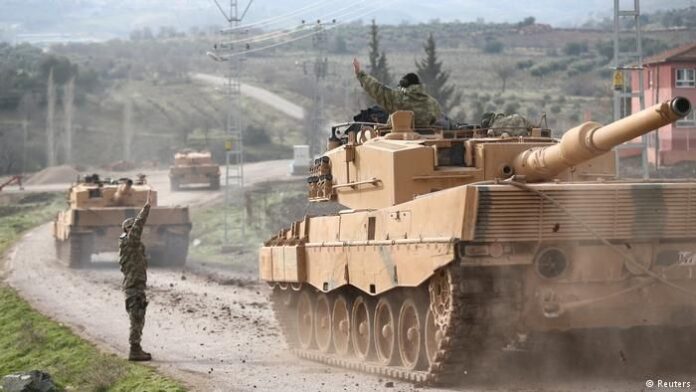
2- NATO Supports Turkey’s Invasion of Northern Syria

A Look at Iranian Newspaper Front Pages on January 23


Hamshahri:

1- Rouhani Responds to Criticisms about Forex Rates, Dust Pollution, Filtering

2- Late Order to Save Contemporary Poet Nima’s Historic House

3- Officials Must Teach People How to Optimize Water Consumption: Academic

A Look at Iranian Newspaper Front Pages on January 23


Iran:

1- Rouhani: I Keep My Campaign Promises

  • Security, Peace, Freedom, Progress, Employment, Eradication of Absolute Poverty

A Look at Iranian Newspaper Front Pages on January 23


Javan:

1- More Signs of Compromise between US, Europe

  • Europe’s Proxy Pressure on Iran to Change JCPOA

2- Photo of Trump’s VP in Fire of Quds’ Rage

A Look at Iranian Newspaper Front Pages on January 23


Jomhouri Eslami:

1- Rouhani: Budget Must Be Transparent, Because It’s People’s Money, Not Government’s

2- Army Displays Capabilities in “Muhammad, Messenger of God” Drills

3- Complicated Situation of Northern Syria after Turkey’s Afrin Offensive

A Look at Iranian Newspaper Front Pages on January 23


Kayhan:

1- Don’t Let Rude French FM Visit Iran

  • France Accuses Iran of Supporting Terror in Return for JCPOA Unilateral Concessions

2- IRIB Has Dedicated 2,500 Hours of Program to Gov’t in Past 10 Months

3- Rouhani in Live Interview: Issue of Banking Sanctions Not Resolved

4- What Conflict Mr Araqchi? Don’t Fall in Trap of US, Europe

5- Reformists’ Humiliating Prescription

  • Giving Concession to Europe Best Way to Counter US Threat!

6- Hezbollah: Iran to Win Historic Honour of Destroying Israel

A Look at Iranian Newspaper Front Pages on January 23


Khorasan:

1- Different Questions: Rouhani’s Promises

2- Government’s $350m Offer to Complete Water Transfer to Sistan & Baluchestan

A Look at Iranian Newspaper Front Pages on January 23


Shargh:

1- Major Changes to Reformism Structure

2- Rouhani: My Gov’t Has Suffered Great Pains to Keep Cyberspace Unblocked

A Look at Iranian Newspaper Front Pages on January 23


Vatan-e Emrooz:

1- Return to Zero Point

  • French FM: Iran to Be Accused of Seeking Nukes If Refuses to Cooperate on Missile Program

2- Iran Has 100 Executive Managers with Dual Nationality

3- Reasons for Tension in Iran’s Car Market

A Look at Iranian Newspaper Front Pages on January 23


“No Country Allowed to Interfere in Iran’s Missile Program”

Referring to the recent comments made by French Foreign Minister Jean-Yves Le Drian about Iran’s missile program, Nobakht said there will be no negotiations with anyone over the country’s defence capabilities.

“Certain comments might have been made by a person at a meeting, but this is not a reason to say there has been negotiation in this regard,” he added in a Farsi interview with the YJC.

Le Drian accused Iran on Monday of not respecting part of a UN Security Council resolution that calls on Tehran to refrain from working on ballistic missiles.

“We will have the opportunity of underlining our firmness on Iran’s compliance with United Nations Resolution 2231, which limits access to ballistic capacity and which Iran does not respect,” Le Drian said upon his arrival at a European foreign ministers meeting in Brussels.

Iran has repeatedly said its missile program is purely defensive.

Le Drian on Sunday said he would travel to Iran in March and that France had begun talks with Tehran to discuss its missile program and regional activities.

However, Iran’s foreign ministry spokesman on Monday dismissed the suggestion of talks on either issue.

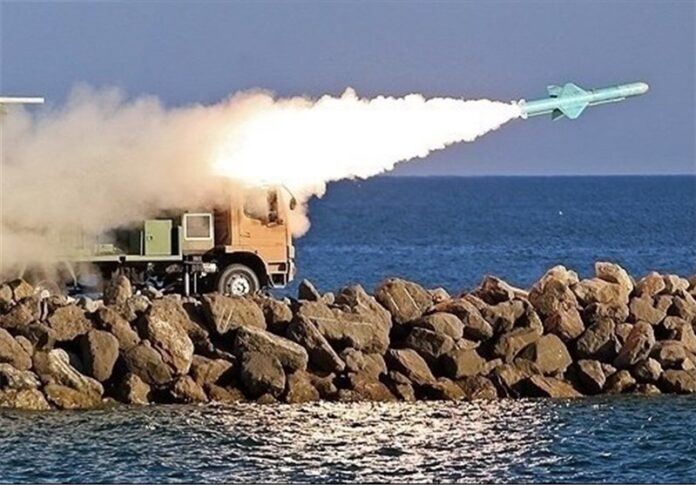
Iran Army Test-Fires Qadir Cruise Missile in Ongoing Drills

Missile

On the second say of the massive war game, codenamed Muhammad Rasulullah-5 (Muhammad, the Messenger of God), the Army forces successfully fired a ‘Nasr’ cruise missile from an onshore mobile launcher to destroy a naval target.

The Navy is also going to use long-range cruise missiles in the drill.

In comments on Tuesday, spokesperson for the war game, Rear Admiral Lower Half Mahmoud Mousavi, hailed the Navy for perfect support for the ground and aerial forces in the drill, saying the Navy commandos exercised various offense and defense tactics on Monday.

Navy troops on board Azarakhsh and Shahab rocket-launching boats detonated the hypothetical enemy’s vessels and used Ra’ad assault vessels for minelaying operation, while the coastal artillery exercised coast defense tactics, he added.

The exercises on Monday were overseen by experienced military experts and Navy commanders to assess the weak and strong points, he noted.

The purpose of the war game is to strengthen coordination among the Ground Force, Air Force, Navy and the Air Defense, the commander added.

The war game covers vast areas south of Iran, mainly the coastline stretching to the southeastern Makran region, by the sea of Oman.

The Iranian armed forces hold routine military drills throughout the year.

Unemployment Rate Down, Economic Growth Rate Up in Iran

Unemployment Rate Down, Economic Growth Rate Up in Iran

Nobakht, who is also the head of Planning and Budget Organization of Iran, noted that the unemployment rate has dropped from 12.40 percent to 11.7 percent.

Taking oil revenues, Iran’s economic growth rate in the past ten months stands at 5.6%, but excluding the oil revenues it stands at 6 percent, he added in an address to the Iranian Parliament.

According to a Farsi report by ISNA, Nobakht said that during this period the economic indices have been positive, adding that the growth in construction sphere reached 3.2% for the first time in the last few years.

He further noted that the water, electricity and gas industry’s growth in the first six months of the past Iranian year (starting on March 21) was negative, but in the first six months of this year it reached 2.7 percent, which influenced the labour market.

“In the first six months of this Iranian year, 614,000 people entered the labour market compared to the first six months of last year, and for the first time, 795,000 people were recruited,” he concluded.

According to a report by Financial Tribune, the year 2017 has come to an end with Iran’s economy having witnessed a host of developments, most of which resulted from the removal of international nuclear-related sanctions against the country a year earlier.

The World Bank had estimated a 3.6% GDP growth at constant market prices and 3.5% at constant factor prices for the Iranian economy in 2017 while the International Monetary Fund and the United Nations put the economic growth in the past year at 3.5% and 5.3% respectively.

The latest report by the Statistical Centre of Iran shows the goods and services Consumer Price Index in the 12-month period ending Dec. 21, increased by 8% compared with last year’s corresponding period. SCI put urban and rural inflation in the same period at 7.8% and 9.2% respectively. This is while the Central Bank of Iran has put the inflation for the same month at 10%.

Iran’s Foreign Exchange, Gold Reserves More than US: CIA

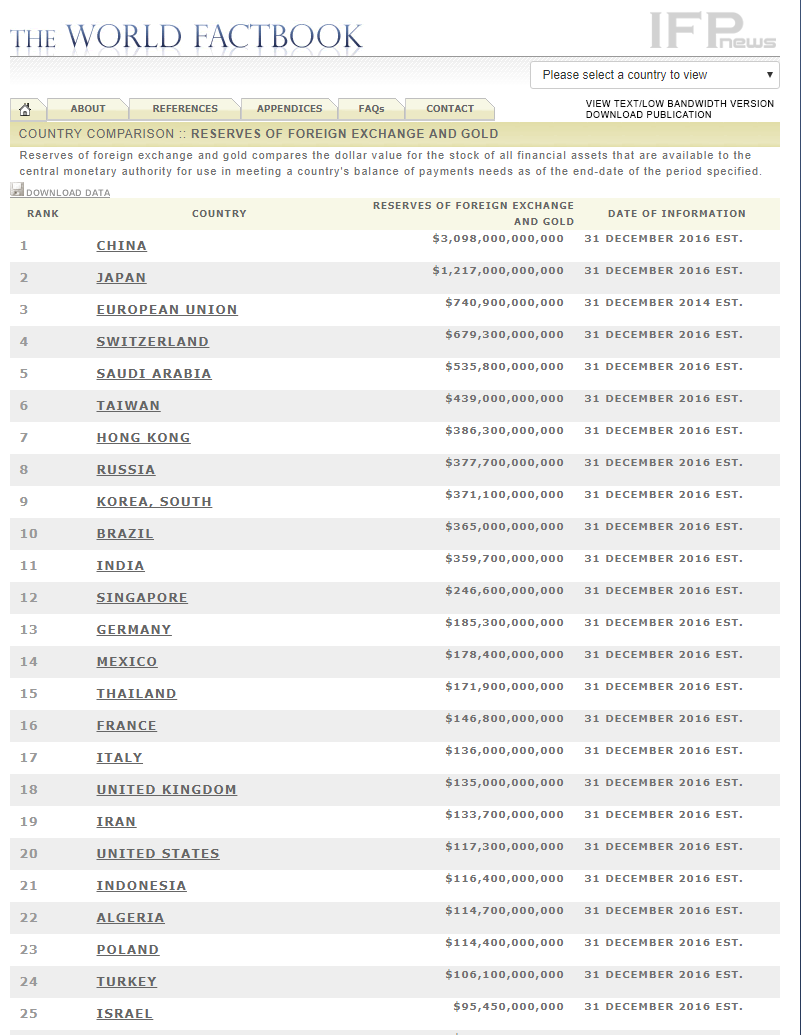
The document known as the World Factbook shows that Iran ranks 19 with $133.7 billion in forex and gold reserves until December 31, 2016. This comes as the US ranks 20 with $117.3 billion.

China tops the list with $3,098 billion worth of foreign exchange and gold reserves, followed by Japan with $1,127 billion.

Foreign-exchange reserves is money or other assets held by a central bank or other monetary authority so that it can pay if need be its liabilities, such as the currency issued by the central bank, as well as the various bank reserves deposited with the central bank by the government and other financial institutions.

Reserves are held in one or more reserve currencies, mostly the United States dollar and to a lesser extent the Japanese yen.

Iran’s Foreign Exchange, Gold Reserves More than US: CIA

Iran Starts Water Transfer to Control Dust Pollution

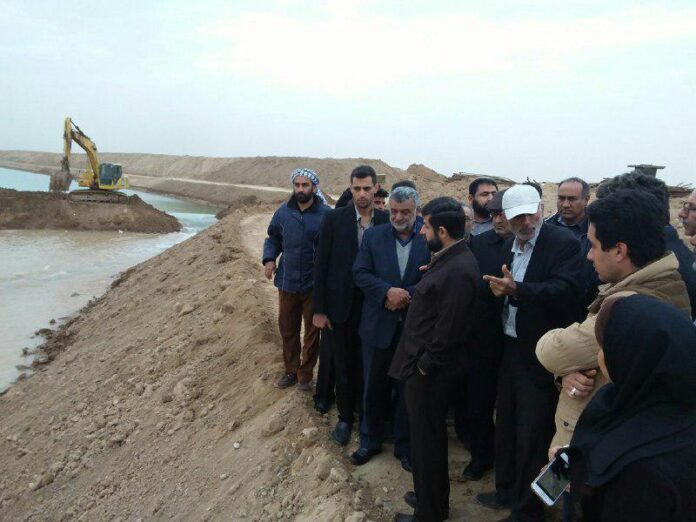
Iranian Minister of Agriculture Mahmoud Hojjati visiting the 47-km canal built to transfer Karun River's water to centres of dust pollution crisis

Iran’s Minister of Agriculture Mahmoud Hojjati made a visit to the canal which is expected to navigate water to the regions from which sand and dust storms originate. During the visit, he was accompanied by Governor General of Khuzestan province Gholam-Reza Shariati.

With a length of 47km, Poursharifi Canal established by Jahad Nasr Institute is set to navigate water from Karun River to the southeastern regions of Ahvaz which are the main origins of dust pollution in the province, a Farsi report by ISNA said on Tuesday.

The lion’s share of the canal has a width of 30m, but a 10-km part of it is 50 metres wide. It transfers 20 cubic metres of water per second from Karun to 42,000 hectares of the critical regions.

Hojjati also told ISNA that the government’s short-term plans to counter the dust pollution, including irrigation and tree planting in these areas, will be finished in two months, before the end of current Iranian calendar year.

Earlier in a TV interview on Monday night, Iranian President Hassan Rouhani said so far 5,000 trees have been planted in the critical regions and the figure will reach 30,000 by mid-March.

“The huge irrigation canal has been built to transfer Karun’s water to the critical regions by the next two days,” he said during the live interview aired by the state TV.

“Of course, it takes time for the saplings to turn into tress but we have to do something instead of sitting idle against the problem even if our efforts begin to pay off after 5 to 10 years. We already lag behind the time,” he noted.

Rouhani went on to say that the water will make the regions wet and help prevent the dust and sand storms.

He also referred to the use of mulch, besides the irrigation and tree planting, as another method of controlling the dust storms.

Iranian residents in the western and southwestern provinces, especially Khuzestan and Ilam, face a growing trend in the influx of fine particles, which are mostly generated by drought-hit marshlands in neighbouring countries and in Iran.

According to the latest data released by the Environmental Organization of Khuzestan Province, the air pollution index in Ahvaz has breached the “hazardous” level upper limit of 500, at which it stops measuring levels of PM2.5, with 53 times worse than the moderate level.

A hazardous level is an alert in which everyone may experience ill effects and are advised to stay indoors.

Nowadays, it is crucial to think of new methods to stabilize soil and control dust storm and sand movement crisis centres because of problems caused by petroleum mulch disadvantages.

To cope with such problems, new technologies have been developed for production of different kinds of biologic and polymeric mulch, which enjoy advantages like ease of use, durability, and lower costs.

According to the data released by Iran’s Vice-Presidency for Science and Technology, field testing and evaluation of the new products indicates that their operation in soil stabilization and dust control was durable and efficient.

Iran’s Forex Revenues Outstrip Expenses: President Rouhani

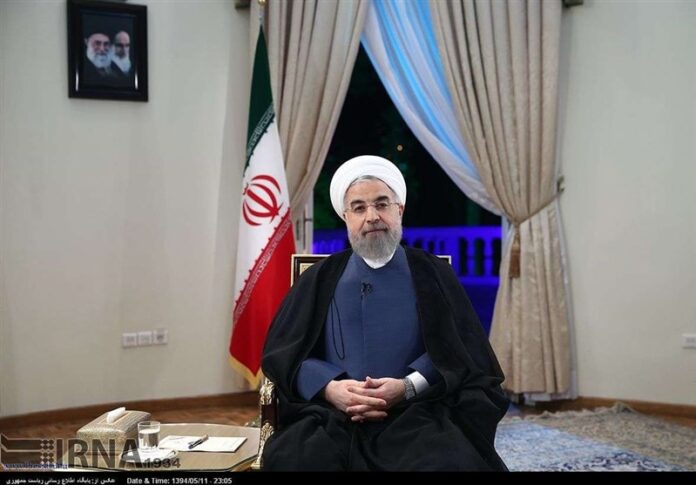
In comments at a live televised speech on Monday night, President Rouhani gave an assurance that Iran’s foreign exchange revenue greatly exceeds the total foreign exchange costs, saying such earnings will definitely grow next year.

Dismissing speculations about a shortage of forex reserves, the president said Iran will have earned $90 billion in revenue by selling oil and non-oil products at the end of the current Iranian year (March 20).

The country’s total spending stands at around $75 billion, meaning that the revenue would exceed costs, he explained.

President Rouhani also deplored the persistent obstacles to Iran’s links with the regional and international banks that remain from the era of sanctions.

He also reaffirmed the administration’s commitment to contain the fluctuation in currency rates, underlining that the administration is not in favor of rising currency prices.

Early last year, the International Monetary Fund estimated Iran’s official foreign reserves at over $130 billion, while rising oil prices have increased them since then.

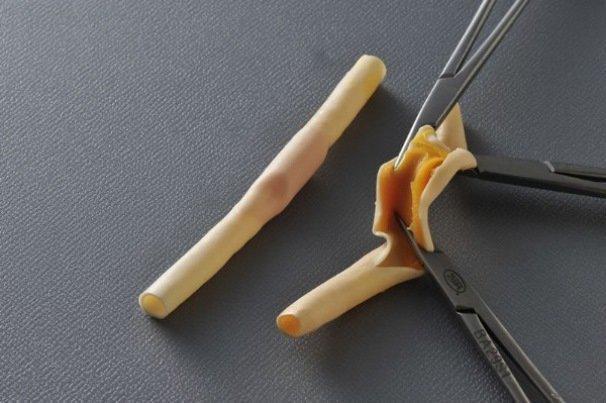
Iran Unveils Indigenous Polymer Wound Care Dressing, Artificial Vessel

The two technological developments were unveiled in a ceremony attended by the Head of Iran Polymer and Petrochemical Institute (IPPI) Mehdi Nekouhesh.

The polymer wound care dressing was invented as part of larger plan to find a treatment for a particular type of skin wounds, a Farsi report by Mehr said.

The artificial vessel was the second invention of the Institute’s scientists. The vessel, which is now at the clinical stage, used to be an imported good and is being produced for the first time by IPPI in Iran.

In addition to its medical functions in treating cardiovascular system and kidney diseases, it is also used in textile industry for producing shoes and sport jackets.

According to the data released by Iran’s Vice-Presidency for Science and Technology, the Islamic Republic’s share in scientific publications worldwide has been growing over the past two decades, from 0.07 percent in 1996 to 1.5 percent in 2015.

Likewise, its share in total regional scientific publications increased from 3.5 percent in 1996 to 28.6 percent in 2015. Joint publications by Iranian authors and foreign collaborators accounted for around 19.8 percent.

The Iranian government says a major reason for these improvements is the increasing importance given to scientific publications, research, promotion of university professors through awarding grants to them, and granting awards to the graduate students and pursuing their admissions to accredited universities.

Iranian Kurdish MPs Protest Turkish Invasion of Syria

In this letter, the lawmakers have called for the intervention of the United Nations to stop this crime.

“As you know, Turkish President Recep Tayyip Erdoğan has been bombarding and slaughtering the defenceless Kurdish people of Syria.

This comes as, the United Nations and other international organizations have remained silent about this human tragedy, and on the other hand the superpowers, who claim to be advocates of human rights, have kept silent and are just watching this humanitarian catastrophe,” reads the letter.

The Iranian MPs have also stressed that the bravery of the Syrian Kurds in fight against ISIS terrorists and the courageousness of the men and women of Afrin and Kobani in defending terrorists would never be forgotten.

The MPs also added that there is no doubt the brave people of the Syrian Kurdistan will defeat the aggressors and would turn Afrin and Kobani into a cemetery for Erdogan’s mercenaries.

On Saturday, Turkish warplanes started to bomb Kurdish positions in Afrin shortly after the country’s President Erdogan announced the launch of the military operation named Olive Branch.

The President also declared that the next target for Turkish forces would be Syria’s Manbij.

Turkey views the Kurdish YPG, which is active in northern Syria, as an extension of the Kurdistan Workers’ Party (PKK).

Iran Exporting Saffron to 56 Countries

The latest figures released by the Iranian government indicates a growth of 33.33% and 26.05% in weight and profit, respectively, compared with the similar period last year.

The UAE (23 tonnes), Hong Kong (15 tonnes), Spain (14 tonnes), Afghanistan (5 tonnes), and China (4 tonnes) sit at the top of the list of the largest importers of Iran’s saffron, a Farsi report by ISNA said on Monday.

These countries imported about 78 percent of Iran’s saffron over the past nine months.

Some countries like the US, Germany, the UK, Italy, Belgium, Sweden, Switzerland, France, Canada and the Netherlands have also increased their saffron imports from Iran over the same period.

Madagascar has begun to import saffron from Iran since 9 months ago.

A review of the saffron export figures reveal that unpacked saffron makes up most part of Iran’s saffron exports, reaching 50 tonnes over the past nine months.

On the other hand, the uncut saffron makes up for over 25 tonnes of Iran’s saffron exports. This is while the overall export of packed saffron (10 to 50-gram packages) has risen over the same period.

Experts say the relatively high volume and value of saffron exports in the past months makes it necessary for the officials in charge to take seriously the export by adopting specific measure to regulate its market in Iran.

The countries to which Iran’s saffron has been exported over the past months are as follows:

Latvia, Austria, Jordan, Spain, Australia, Slovakia, South Africa, Afghanistan, Algeria, Germany, the UAE, the UK, the US, Italy, Bahrain, Brazil, Belgium, Bosnia and Herzegovina, Pakistan, Taiwan, Turkey, Turkmenistan, the Czech Republic, South Korea, Denmark, Japan, Singapore, Sweden, Switzerland, Serbia, Iraq, Oman, France, Finland, Philippines, Kyrgyzstan, Qatar, Canada, Kuwait, Georgia, Lebanon, Poland, Madagascar, Malta, Malaysia, Hungary, Morocco, Norway, New Zealand, Vietnam, The Netherlands, India, Hong Kong and Greece.