Friday, May 1, 2026
Home Blog Page 364

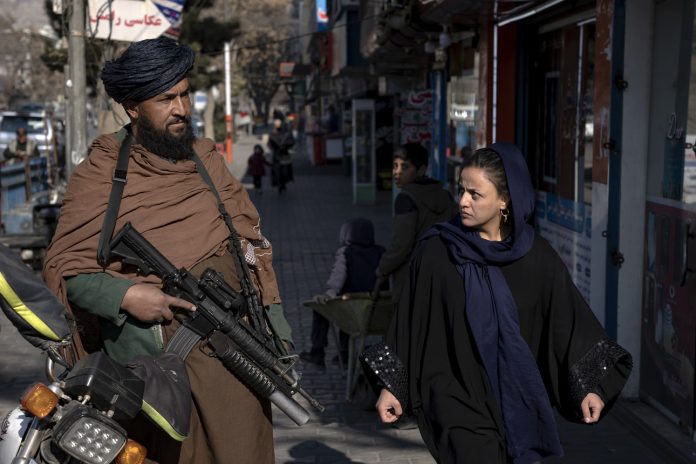
US says classifying Taliban as ‘foreign terrorist organization’ under review

Taliban Women

Rubio told the House Foreign Affairs Committee during a hearing on Capitol Hill in Washington on Wednesday, “I believe that classification is now, once again, under review.”

The response came a day after US Defense Secretary Pete Hegseth ordered a “comprehensive review” of the United States’s chaotic military withdrawal from Afghanistan in August 2021, an evacuation operation in which 13 US service members and 150 Afghans were killed at Kabul’s airport in an ISIL (ISIS) bombing.

Hegseth stated in a memo on Tuesday that after three months of assessing the withdrawal, a comprehensive review was needed to ensure accountability for this event.

“This remains an important step toward regaining faith and trust with the American people and all those who wear the uniform, and is prudent based on the number of casualties and equipment lost during the execution of this withdrawal operation,” Hegseth wrote.

Former President Joe Biden’s administration, which oversaw the pull-out, mostly blamed the resulting chaos on a lack of planning and reductions in troops by the first Donald Trump administration, following its deal with the Taliban to accelerate the withdrawal of US forces.

Trump had signed the deal with the Taliban in Doha in February 2020 aimed at ending its 18-year war in Afghanistan, beginning with the withdrawal of about 4,000 troops “within months”.

The then-Trump administration had agreed it would withdraw from the country by May 2021 if the Taliban negotiated a peace agreement with the Afghan government and promised to prevent internationally designated terrorist groups, such as al-Qaeda and ISIL, from gaining a foothold in the country.

After assuming office in January 2021, Biden said he had to respect the agreement or risk new conflicts with the Taliban, which could have required additional troops in Afghanistan.

On the 2024 campaign trail, Trump frequently criticised Biden and his administration for the withdrawal, saying that the manner in which it was done “was the most embarrassing day in the history of our country’s life.” Trump said that the withdrawal should have been done with “dignity, with strength, with power.”

Senior US military officials, including then-Defense Secretary Lloyd Austin and the then-top US general, Mark Milley, have already appeared before lawmakers to give their testimonies regarding the withdrawal.

The war in Afghanistan from 2001-2021 was the US’s longest war, surpassing Vietnam.

It remains unclear how Hegseth’s review would differ from the many previous reviews carried out by the US military, Department of State and Trump’s fellow Republicans in the House of Representatives.

US Central Command, which oversees operations in the Middle East, has also carried out an investigation into the ISIL attack on Kabul during the last few days of the withdrawal.
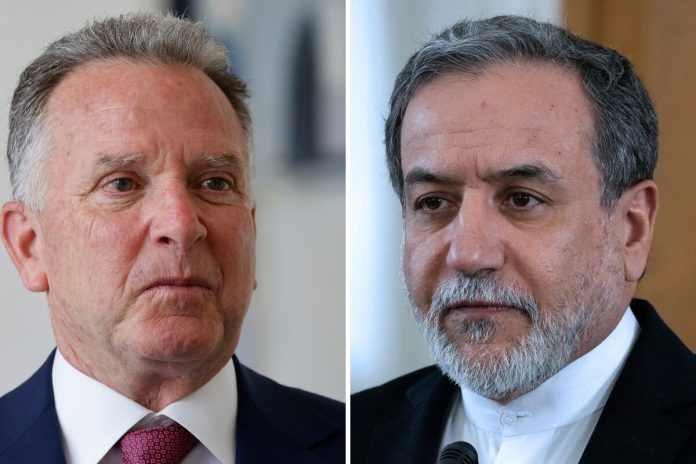
Iranian daily questions future of nuclear talks amid US hostility

Araghchi Witkoff

In an editorial published on Thursday, Kayhan noted senior officials across Iran’s government, parliament, and civil society have voiced a unified stance, asserting uranium enrichment is a national right and non-negotiable.

The daily criticized ongoing talks mediated by Oman, calling them futile in the face of American “arrogance, sabotage, and bad faith.”

It pointed out that Foreign Minister Seyed Abbas Araghchi reiterated that Iran will never agree to surrender its right to enrich uranium and has yet to decide whether to attend the next round of negotiations.

It argued that Iranian officials emphasized that both Democratic and Republican administrations in the US have shown continued hostility toward Iran. Parliamentarians also condemned the US for pressuring an independent nation and affirmed that Iran would never retreat from its nuclear rights.

Kayhan concluded that its prediction that “negotiations are futile” came true, adding, “Negotiations have now reached a point where one must ask: What justification remains for continuing this process amid the stubbornness, humiliation, and obstruction by the other side?”

Mass Ukrainian drone attack targets Moscow, multiple airports closed

Russia Ukraine War

Moscow Mayor Sergei Sobyanin said that all the drones were flying toward the Russian capital.

Due to the drone attack, all four Moscow airports — Sheremetyevo, Vnukovo, Domodedovo and Zhukovsky — as well as airports in Tambov and Vladimir were temporarily closed.

Other Ukrainian drones were also shot down over the Oryol, Kursk, Belgorod, Tula, Kaluga, Voronezh, Lipetsk, Smolensk and Bryansk oblasts, the Russian Defense Ministry said.

Tula Oblast Governor Dmitry Milyaev stated one of the drones crashed into the roof of an apartment building in Tula. The attack also damaged other residential and non-residential buildings, he added.

Russian authorities haven’t reported any other damage or reported any casualties.

Kyiv hasn’t commented on the attack.

Ukraine regularly launches drone attacks against Russian military and industrial facilities in the rear to undermine Russia’s ability to wage its all-out war.

Moscow and surrounding regions have faced a growing number of Ukrainian drone incursions in recent weeks.

A day before on May 21, Ukrainian drones struck Russia’s Bolkhov semiconductor plant in Oryol Oblast, which produces parts for Sukhoi warplanes and Iskander and Kinzhal missiles, Ukraine’s General Staff claimed.

Iran urges WHO to address refugee health amid regional crises

WHO

In a meeting with WHO Director-General Dr. Tedros Adhanom Ghebreyesus, Zafarghandi emphasized the strain this large refugee population places on Iran’s health system and urged for increased international support.

The Iranian minister praised WHO’s efforts during the COVID-19 pandemic and commended Tedros for his clear and firm stance on the humanitarian crisis in Gaza.

He expressed deep concern over the destruction of Gaza’s healthcare infrastructure and the severe shortages of food and medicine, urging broader international support for its vulnerable population, especially children.

Tedros, in response, lauded Iran’s achievements in primary healthcare and its regional leadership in health services.

He acknowledged the significant burden Iran bears in hosting Afghan refugees and expressed WHO’s readiness to assist, despite current budget constraints.

Addressing Gaza, he stressed the organization’s continued advocacy despite limited access due to the prolonged closure of the Rafah crossing.

Removal of West sanctions on Syria ‘long overdue’ but ‘positive’ step: Iran UN envoy

Amir Saeed Iravani

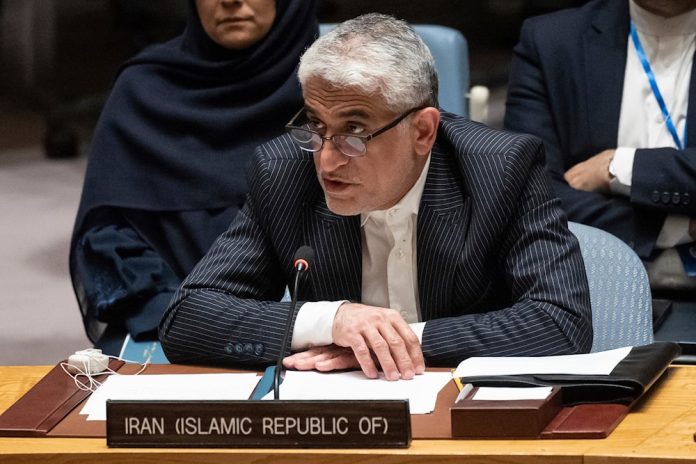
Iran’s Ambassador and Permanent Representative to the United Nations Amir Saeid Iravani made the remark before the UN Security Council session on “The situation in the Middle East: (Syria)” in New York on Wednesday.

He hailed the growing international acknowledgment that humanitarian and reconstruction aid in Syria must not be politicized, saying the suffering of the war-ravaged country’s people should not be used for political purposes.

“We call for the full and unconditional lifting of all unilateral sanctions. These illegal measures violate the UN Charter and international law,” he added.

He emphasized that any easing of sanctions must lead to real and immediate changes in the lives of more than 16 million Syrians who are currently in need of urgent help.

“It must also support the return of refugees and help rebuild Syria’s economy and infrastructure, paving the way for lasting peace and stability,” Iravani said.

On Tuesday, US President Donald Trump announced that he would lift the entirety of Washington’s sanctions against Syria after the new administration in the Arab country reportedly proposed making “peace” with the Israeli regime, the US’s closest regional ally.

The EU has also agreed to lift economic sanctions on Syria in an effort to help the war-torn country recover.

Last month, the UK also announced the partial suspension of sanctions on Syria.

The Iranian envoy reiterated Syria’s right and responsibility to maintain peace and security throughout its territory, noting that the country suffers “fragile” security given the ongoing foreign military presence and illegal occupation, especially in the northeast and south.

“The continued occupation of the Syrian Golan by Israel clearly violates international law and Security Council resolution 497 (1981),” he added.

He stressed the importance of strongly condemning Israel’s repeated attacks, including the May 2 airstrike near the presidential palace.

Israeli warplanes conducted airstrikes adjacent to the presidential palace in the Syrian capital of Damascus on May 2, amid the silence of the ruling Hay’at Tahrir al-Sham-led (HTS) administration.

Since Bashar Assad’s government collapsed in December, Syria has been hit by hundreds of Israeli airstrikes, mainly targeting military infrastructure that belonged to the former Syrian army.

“These acts threaten the region’s peace and are made possible by US support,” he said.

The diplomat once again affirmed Iran’s firm stance on the need for respecting Syria’s sovereignty and territorial integrity and withdrawing all illegal foreign forces “immediately and unconditionally.”

“It is evident that only the Israeli occupying regime stands to benefit from the fragmentation and instability in Syria,” Iravani added.

“Its persistent acts of aggression, repeated violations of international law, and continued expansion of occupation are clearly aimed at perpetuating a state of permanent instability in the country.”

Iravani emphasized the need to fight all forms of terrorism in Syria, especially the threat posed by “foreign terrorist fighters (FTFs).”

He said Iran, as a close neighbor, is deeply concerned about reports that FTFs are being relocated from Syria to other conflict areas, as the move could increase instability in the region and pose serious risks to neighboring countries.

He urged the Security Council to remain alert and respond through strong and effective measures.

US admits Russia is an aggressor, declines to label Putin war criminal

Vladimir Putin

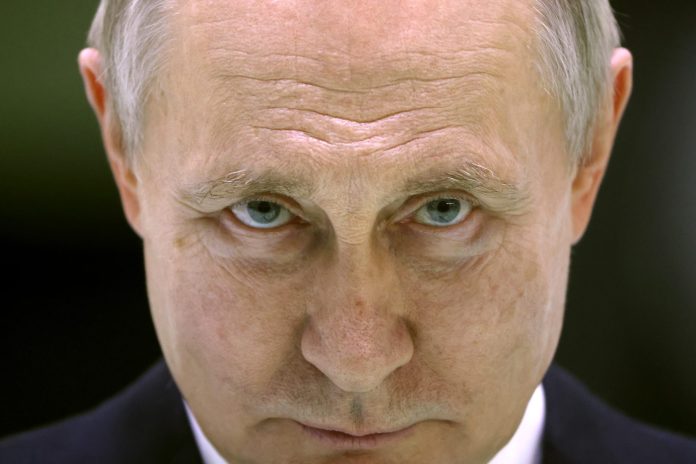
U.S. President Donald Trump held a phone call with Putin on May 19. Trump’s positive impression of the phone call shocked Ukraine’s allies in Europe as Russia continues to refuse a ceasefire.

Democratic Representative Bill Keating asked Rubio, “Is Russia the aggressor in this Ukraine war?”

“They invaded them, yes,” Rubio stated in response.

When asked by Keating if Putin is a war criminal, Rubio admitted war crimes have been committed in Ukraine, but declined to label the Russian leader as a war criminal.

“War crimes have been committed, no doubt, and who is responsible for that, there will be a time and place for that accountability, but right now the job is to end the war,” Rubio said when questioned by the U.S. House Foreign Affairs Committee.

U.S. Treasury Secretary Scott Bessent, on May 7, agreed when asked if he considered Putin a war criminal.

When asked, “Do you consider Vladimir Putin a war criminal?” by Democratic Representative Juan Vargas, Bessent replied, saying, “Yes.”

When Vargas asked, “Would you negotiate with a war criminal?” Bessent replied, noting, “I think that’s the nature of diplomacy, one must negotiate with both sides, Sir.”

The White House has previously been critical of Ukrainian leadership, including President Volodymyr Zelensky. On May 1, Bessent suggested a reset in relations between Ukraine and the U.S. following the signing of a bilateral minerals deal on April 30.

Iran-Saudi model: Zarif calls for regional cooperation in ‘post-polar world’

Javad Zarif

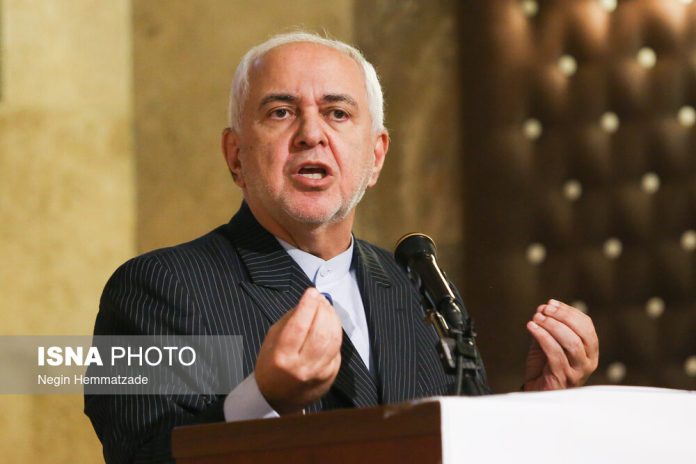
In a detailed essay published in the Tehran Dialogue Forum journal, Zarif argued that the world has entered a “post-polar” era, where traditional alliances based on Cold War logic are giving way to flexible, issue-driven partnerships.

The Iran-Saudi deal, mediated by China, is presented as a key example of how regional actors can overcome deep-seated rivalries through pragmatic diplomacy.

Zarif emphasized that the global order no longer follows a clear bipolar or unipolar structure. Instead, it is increasingly shaped by non-state actors, technological innovation, and cross-border challenges like climate change and cyber threats.

He noted that power is now dispersed among states, multinational corporations, digital platforms, and even individuals, challenging the traditional Westphalian model of state-centric international relations.

In this context, he warned that countries in West Asia –including Iran and its neighbors – must abandon outdated models rooted in confrontation and instead pursue collaborative frameworks centered on mutual interests and regional well-being.

Zarif concluded that future stability depends on embracing this post-polar reality. While state actors remain influential, they no longer hold a monopoly on power. By learning from the Iran-Saudi normalization, regional states can lead the way in forming adaptive alliances to navigate an interconnected and unpredictable world.

Iranian doctors remove 47 metal screws from man’s stomach without surgery

Iran Surgery

The procedure took place at Imam Ali Hospital in Karaj, west of Tehran, and was performed using endoscopy, a non-invasive technique.

Dr. Mohsen Rajabnia, a gastroenterology specialist and faculty member at Alborz University of Medical Sciences, led the medical team.

“In a rare and delicate operation, we were able to safely remove all 47 screws without causing any injury to the gastrointestinal or respiratory systems,” Dr. Rajabnia said in a statement.

“The entire procedure was completed in a short time, and without complications.”

The patient is currently in stable condition and is expected to be discharged soon with no lasting health issues, hospital officials confirmed.

The reasons behind the patient’s ingestion of the screws remain unclear.

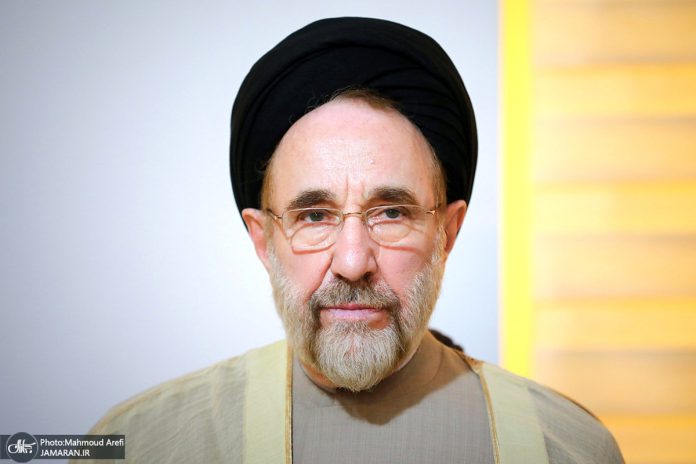
Former Iran president Khatami: Negotiation is not surrender; hope for reform must be preserved

Seyed Mohammad Khatami

“Negotiation and engagement are not signs of submission to the coercion of enemies, but actions aligned with national interests,” Khatami stated.

He noted that a significant portion of both voters and non-voters have found a glimmer of hope for reform and called for that hope to be protected, Entekhab news outlet reported.

Khatami also voiced concern about political restrictions, saying, “If house arrests and limitations are not lifted, the country’s problems will multiply.” He stressed that while opposing voices should not be silenced, it is unjust for the dominant platform to belong to those who view sanctions as a blessing.

Referring to recent political developments, Khatami warned against undermining civil order and reminded that reform is not revolution. “We must prevent the dim light of reform from being extinguished,” he said.

He urged the administration of President Pezeshkisn to remain committed to its promises, expressing hope that the president and government officials will not backtrack on their pledges to the people.

US claims ‘progress’ on ending Russia-Ukraine war

Donald Trump

On May 19, Trump held a phone call with Russian President Vladimir Putin, marking their first known conversation in two months.

“We are trying to settle Russia-Ukraine,” Trump told reporters, adding, “I spoke with President Putin for two hours the day before yesterday. I think we made a lot of progress. But that’s a bloodbath.”

Trump described the war as “a horrible thing.”

“There’s a lot of hatred, a lot of deaths,” he continued, stating, “I get satellite pictures of that field — you never saw anything like that in your life.”

The recent call between two leaders came days after largely inconclusive negotiations in Istanbul, where Russia sent a delegation of low-level officials and reiterated sweeping territorial demands, including that Ukraine accept the loss of Crimea and four other regions.

After the call, Putin reiterated Russia’s maximalist demands, denying full ceasefire agreement.

Trump has been inconsistent in his rhetoric toward the Russian leader, at times voicing frustration with the stalled peace efforts but mostly avoiding direct criticism of Putin.

Despite U.S. efforts, Putin has shown little willingness to compromise to achieve a settlement.

Trump’s approach has caused frustration and confusion among European allies, many of whom wanted him to back a joint U.S.–EU ultimatum for an unconditional ceasefire starting May 12 and tougher sanctions on Moscow. Despite Russia’s refusal, no additional U.S. sanctions have so far been imposed.

Trump has often boasted about his supposedly warm ties with the Russian leader, though the two have not met since Trump returned to office this January.

The two presidents previously held a phone call on March 18, during which Putin rejected Trump’s Kyiv-backed offer for a 30-day ceasefire but declared a pause on strikes against energy facilities, which Ukraine announced was repeatedly violated.

Trump has adopted a more critical rhetoric toward the Kremlin recently amid Moscow’s delays in peace negotiations and continued attacks on civilian areas in Ukraine.

At the same time, the new U.S. administration has also often used a scathing tone toward Ukraine, most notably during an explosive meeting between Trump and President Volodymyr Zelensky in the White House in February. The two leaders held a second meeting on the sidelines of Pope Francis’s funeral in April, which was described by both parties in more positive terms.