Saturday, December 27, 2025
Home Blog Page 3636

Iran Blasts “Shameful” Complicity of US, UK in Yemen War

“The US and UK complicity in Yemen crisis is shameful,” Iran’s Permanent Mission to the United Nations said in a press release on Tuesday.

The Iranian mission was reacting to remarks by the American and British ambassadors to the UN, Nikki Haley and Karen Pierce during a Security Council meeting on Yemen earlier in the day.

Haley claimed that Iran was interfering in the Yemeni affairs and violating the arms embargo on the impoverished state. Pierce also accused Tehran of “non-compliance with Security Council Resolution 2216.”

The Iranian mission, however, said the American and British officials had “repeated their derogatory allegations about Iran to cover up their own role in the disastrous situation created in Yemen. Iran categorically rejects those allegations as baseless propaganda.”

“The fact is that the war of aggression of Saudi Arabia in Yemen is the main underlying reason for the escalation of the crisis. It is regrettable that Saudi Arabia and its warmonger supporters, as the main party responsible for such a catastrophic humanitarian situation, are trying to cover up their shameful crimes by introducing false charges against others or trying to spread the crisis beyond Yemen’s borders,” it added.

“The US and UK are enjoying a blood business in Yemen now” by providing bombs to the Saudi warplanes that are targeting Yemeni civilians, the Iranian mission added.

Saudi Arabia and its allies launched the war in March 2015 in support of Yemen’s former Riyadh-friendly government and against the Houthi Ansarullah movement, which is currently running state affairs.

The military campaign has killed and injured over 600,000 civilians, according to the latest figures released by the Yemeni Ministry of Human Rights.

Several Western countries, the US and the UK in particular, are accused of being complicit in the aggression as they supply the Riyadh regime with advanced weapons and military equipment.

Iran Opens First Cyber Health Clinic

The clinic established by Seraj Cyber Organization was inaugurated on Tuesday in a ceremony attended by a group of experts in the relative fields.

“People who spend at least eight hours of their time per day in the Internet are deemed internet addicts and this type of addiction is more sensible among the adults,” Ahmad Reza Matinfar, Head of Seraj Organization, was quoted as saying in a Farsi report by YJC.

Meanwhile, in an address to the opening ceremony, Ahmad Qayoumi, the Deputy Director for Planning at Seraj Cyber Organization, highlighted the undeniable role of internet and cyberspace in the society and added given the high penetration of cyberspace into our daily lives, controlling and regulating it is too difficult.

He went on to say that sometimes overuse of the cyberspace has damaging effects which can be too dangerous.

“Restricting children’s access to the Internet is not a good method to deal with the issue. We rather need to provide them with good clues while using the cyberspace,” he noted.

He elaborated on the side-effects of Internet addiction on the daily life and added unfortunately some people don’t even want to admit the fact that they are addicted to the Internet.

“Though the Western societies are far ahead of us when it comes to dealing with Internet addiction, opening of this clinic is by itself a good step in the right direction,” he concluded.

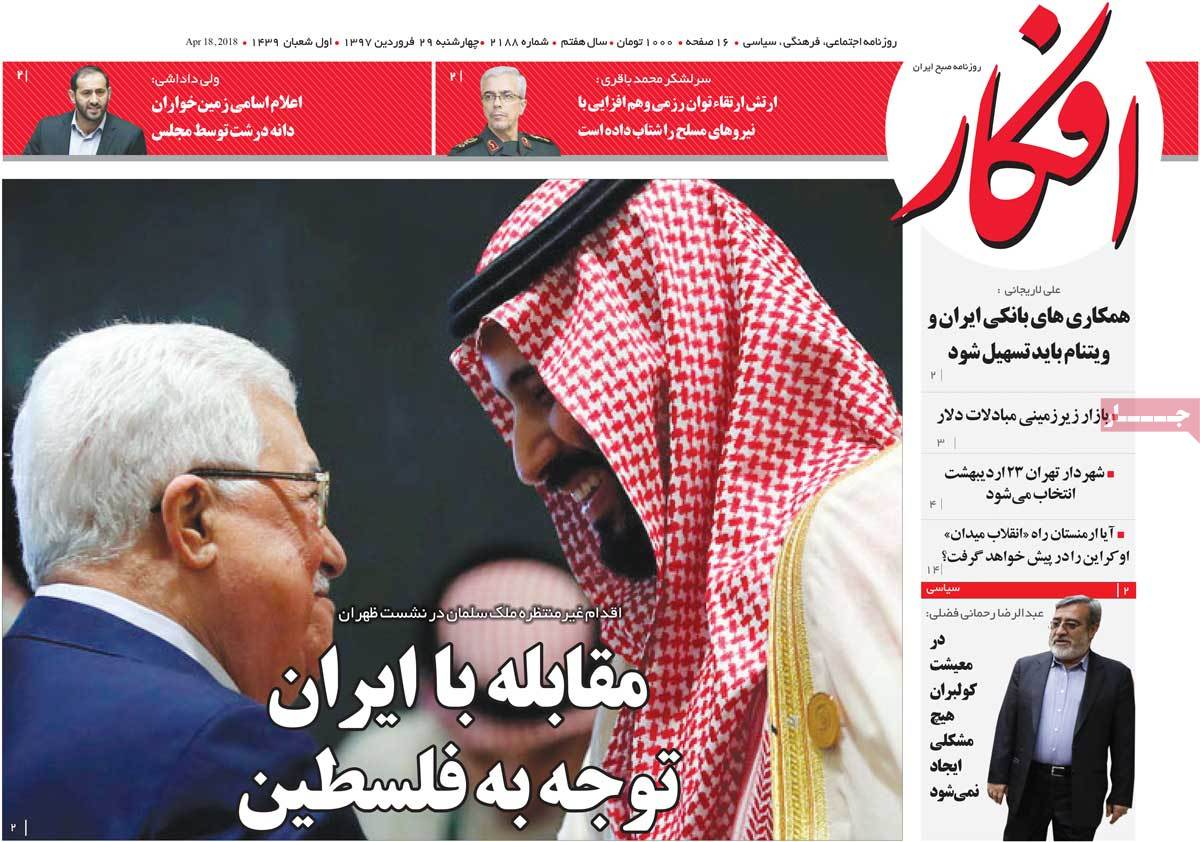
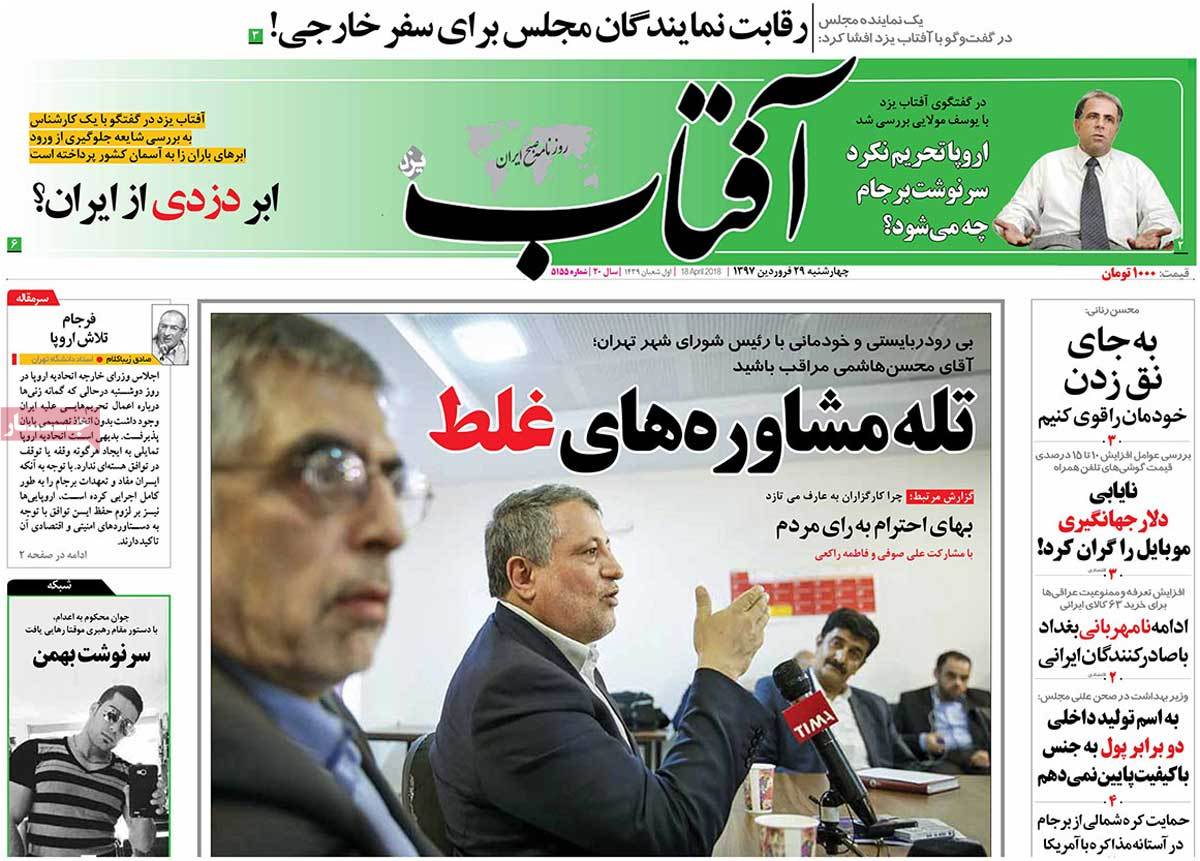
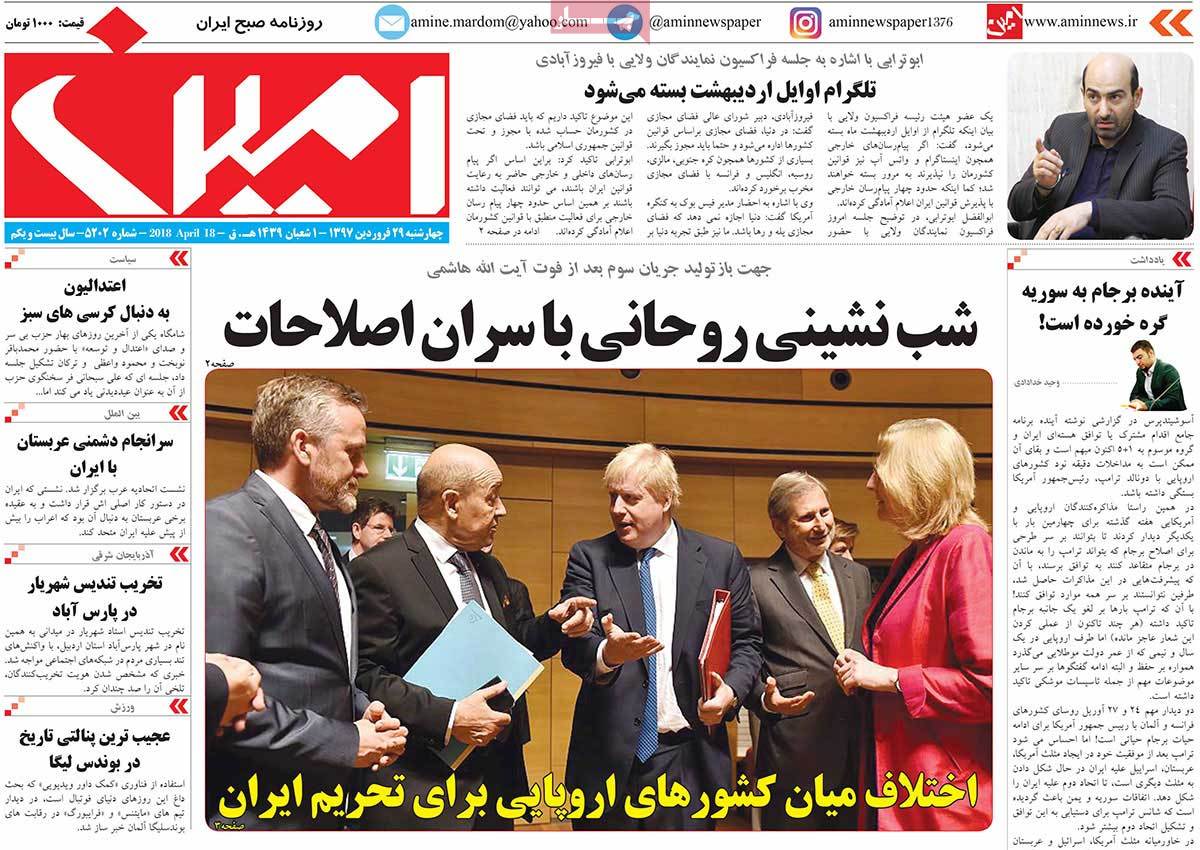
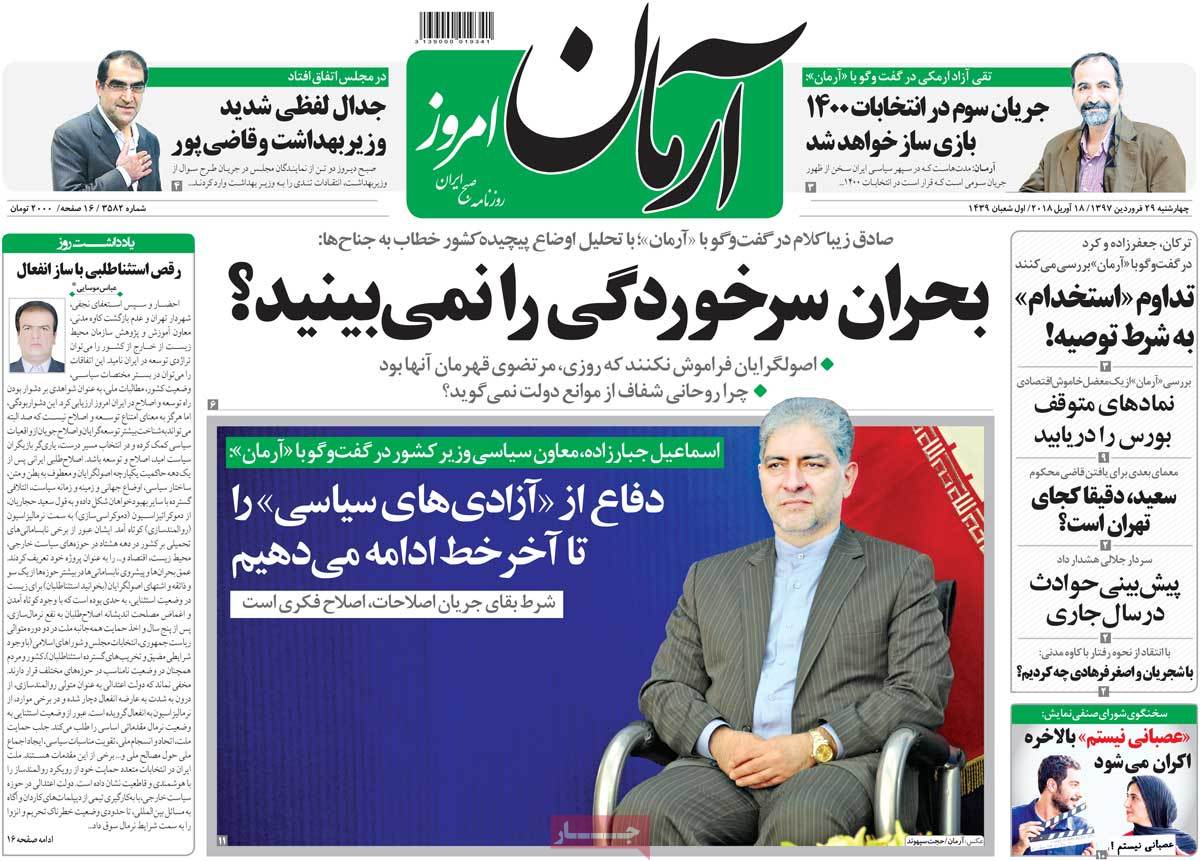
A Look at Iranian Newspaper Front Pages on April 18

A Look at Iranian Newspaper Front Pages on November 19

The recent fluctuations in Iran’s foreign exchange market and the government’s policy to control the crisis remained a top story on Wednesday.

Several papers also continued to cover the ongoing speculations and remarks about the possible blocking of Telegram messaging app, and the need to switch to domestic messengers.

Also a top story today was a report by Robert Fisk that the alleged chemical attack on Syria’s Douma was fake, and that the “UK-affiliated” White Helmets had forged evidence to claim the Syrian government was behind the attack.

The strong protests by the British and French Parliaments against their respective governments’ involvement in the Syria strikes also received great coverage today.

The above issues, as well as many more, are highlighted in the following headlines and top stories:


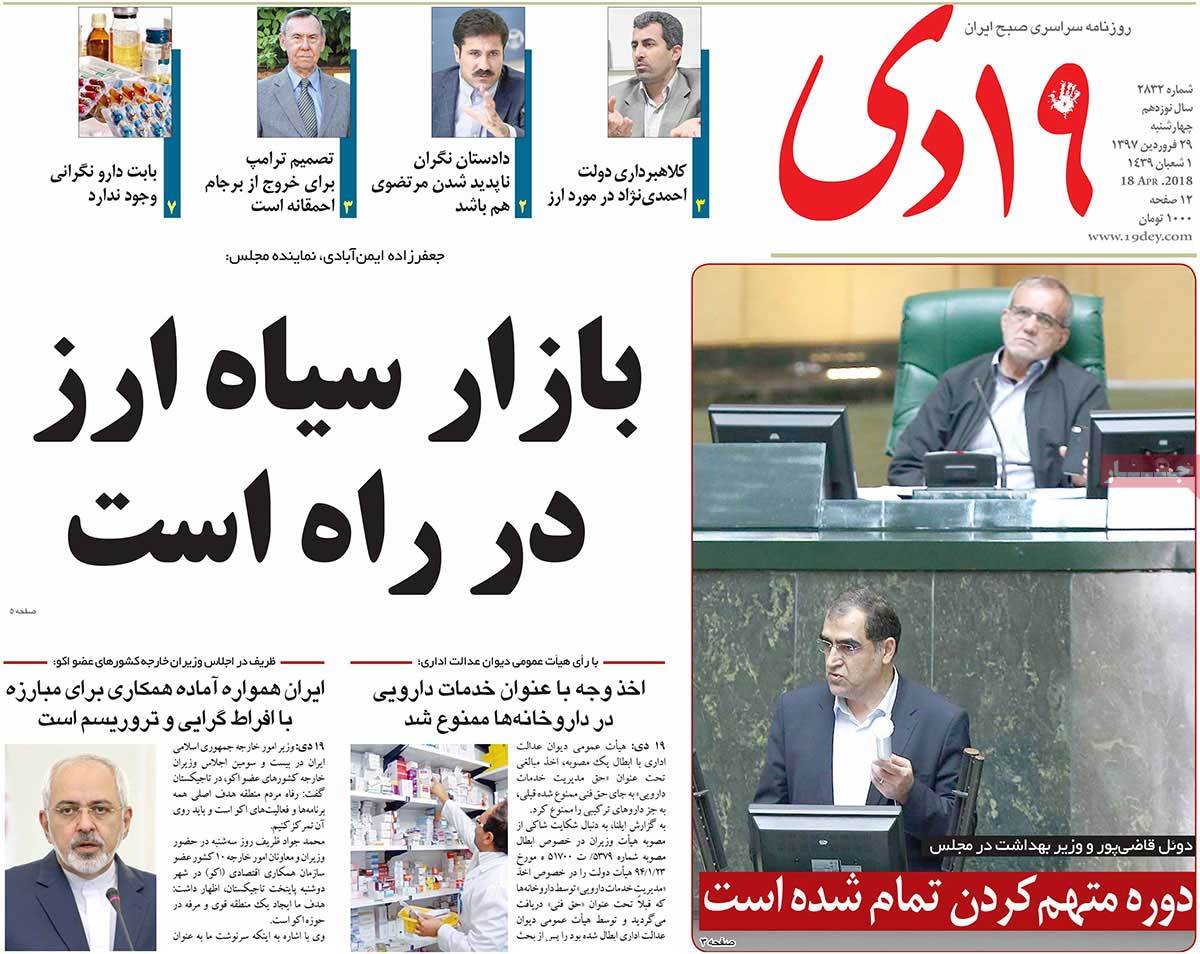
19 Dey:

  • MP Warns of Formation of Black Forex Market

A Look at Iranian Newspaper Front Pages on April 18


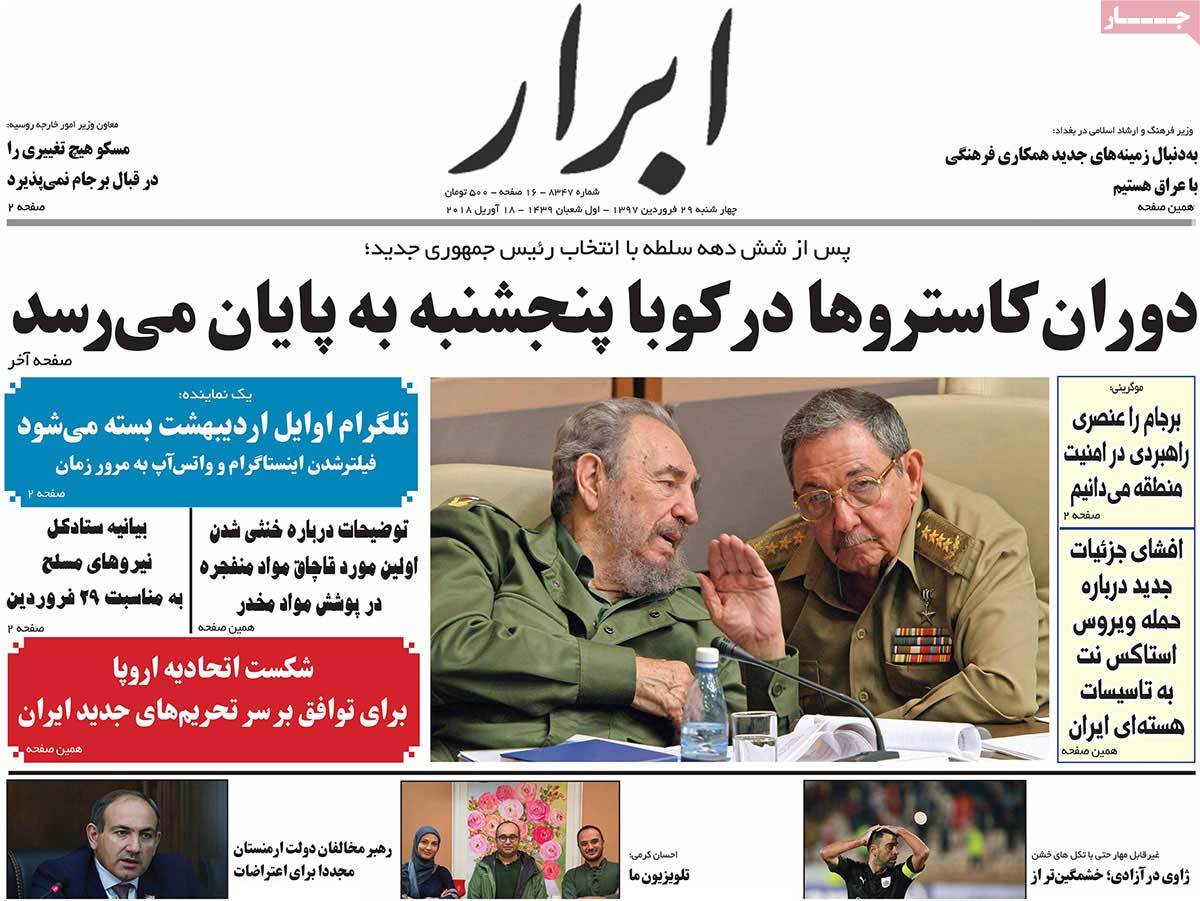
Abrar:

  • Era of Castros in Cuba Will End Thursday after Six Decades in Power
  • MP: Telegram to Be Blocked by Next Week
  • Instagram, WhatsApp Will Also Be Blocked Gradually

A Look at Iranian Newspaper Front Pages on April 18


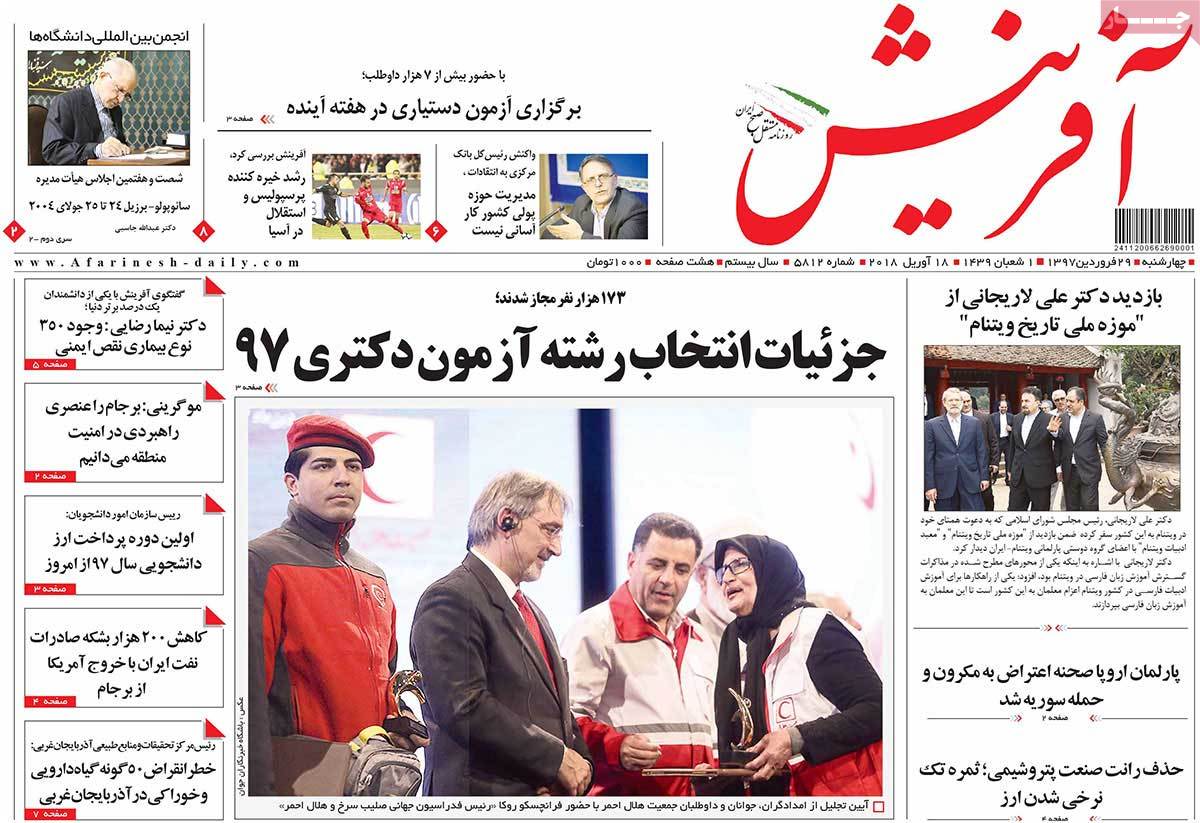
Afarinesh:

  • European Parliament Turns into Scene of Protests against Macron, Syria Attack

A Look at Iranian Newspaper Front Pages on April 18


Afkar:

  • King Salman’s Surprising Move in Dhahran Summit
  • Countering Iran, Paying Attention to Palestine
  • Larijani: Iran-Vietnam Cooperation Must Be Facilitated

A Look at Iranian Newspaper Front Pages on April 18


Aftab-e Yazd:

  • Reasons behind 15-Percent Hike in Price of Mobile Phones in Iran Market

A Look at Iranian Newspaper Front Pages on April 18


Amin:

  • European Countries Divided over Iran Sanctions

A Look at Iranian Newspaper Front Pages on April 18


Arman-e Emrooz:

  • Deputy Interior Minister: We Promise to Keep Defending Political Freedoms

A Look at Iranian Newspaper Front Pages on April 18


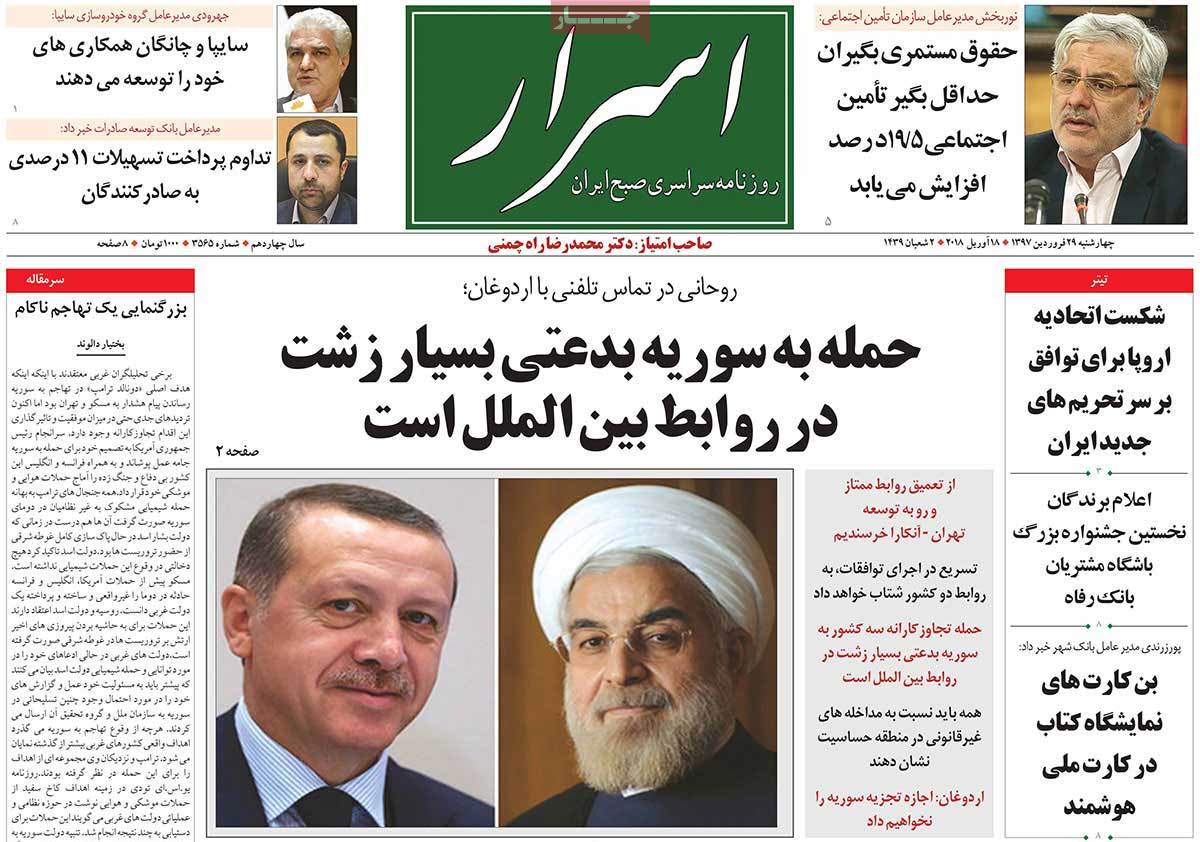
Asrar:

  • Rouhani to Erdogan: Syria Strikes Hideous Heresy in International Relations

A Look at Iranian Newspaper Front Pages on April 18


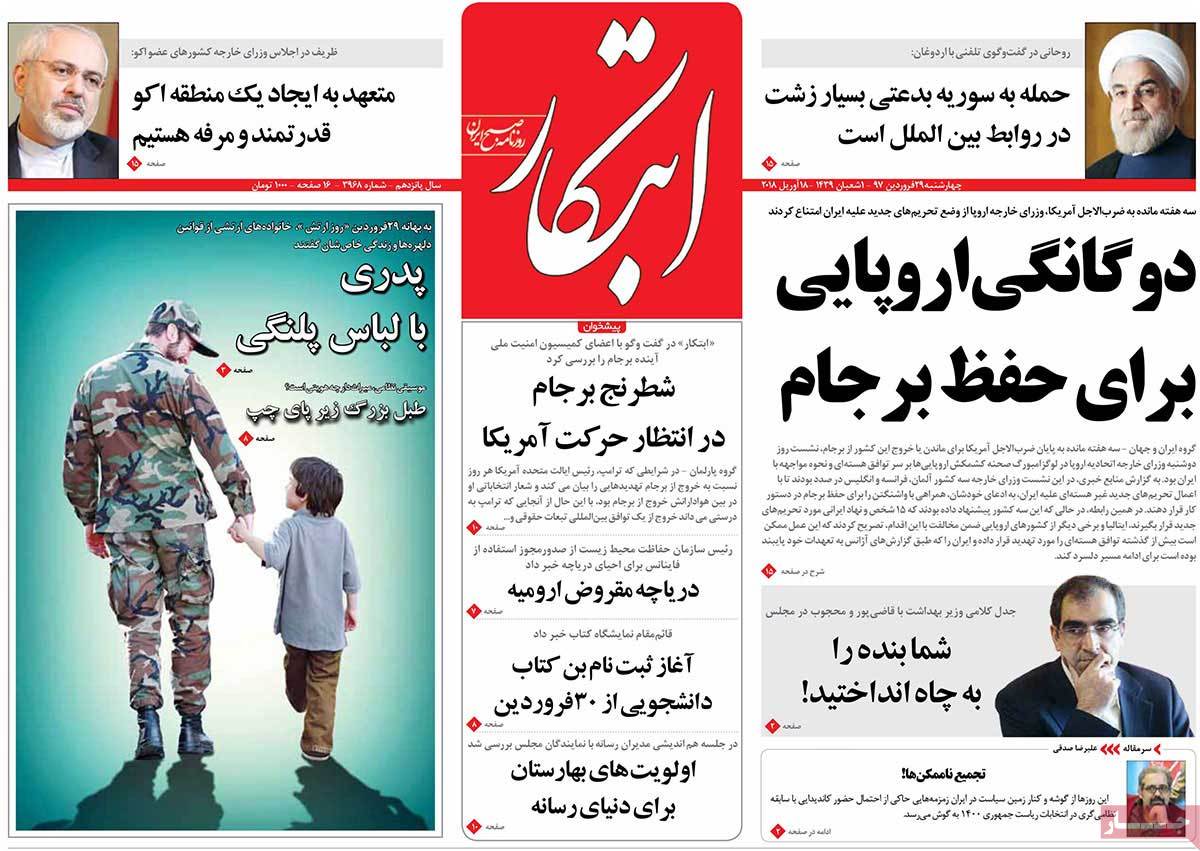
Ebtekar

  • Zarif: We’re Committed to Creating Powerful, Affluent ECO Region

A Look at Iranian Newspaper Front Pages on April 18


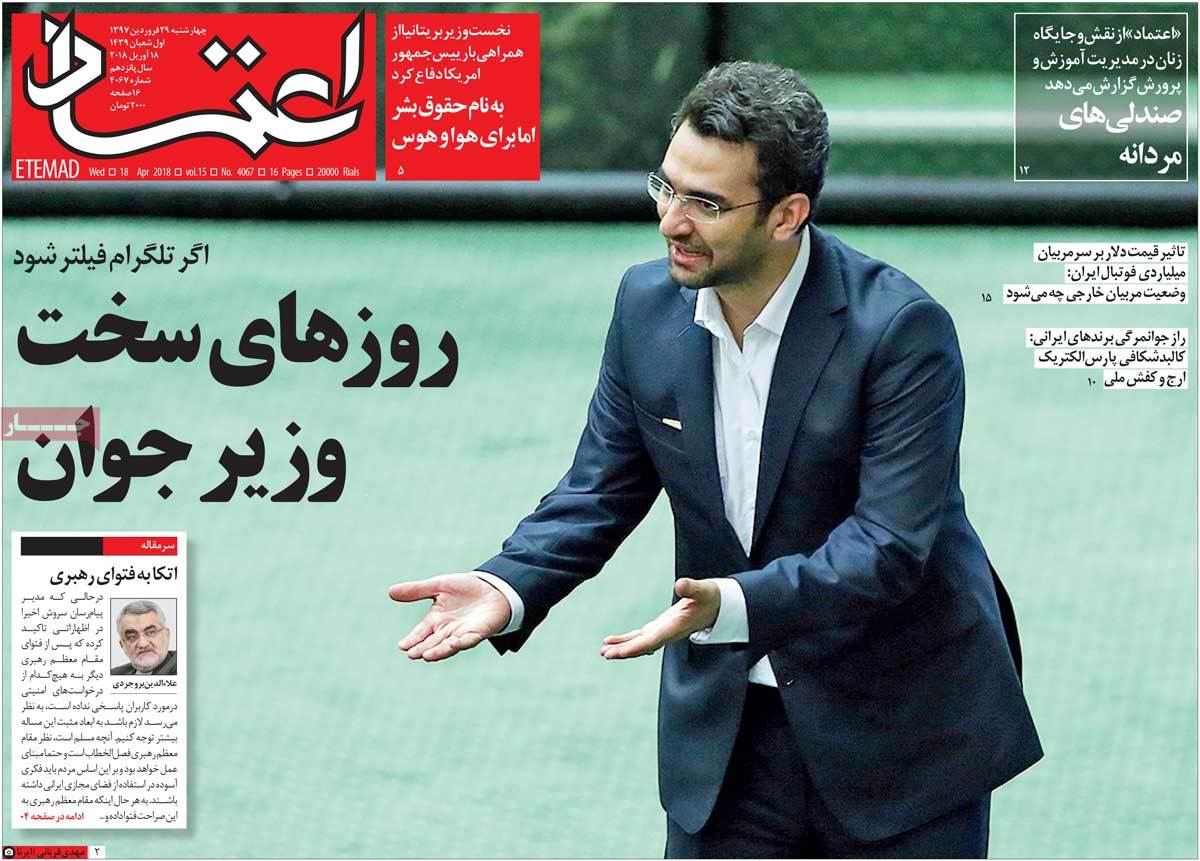
Etemad:

  • Young ICT Minister to Have Hard Days If Telegram Blocked
  • Apparently for Human Rights, Actually for Personal Desires
  • British PM Defends Accompanying US President

A Look at Iranian Newspaper Front Pages on April 18


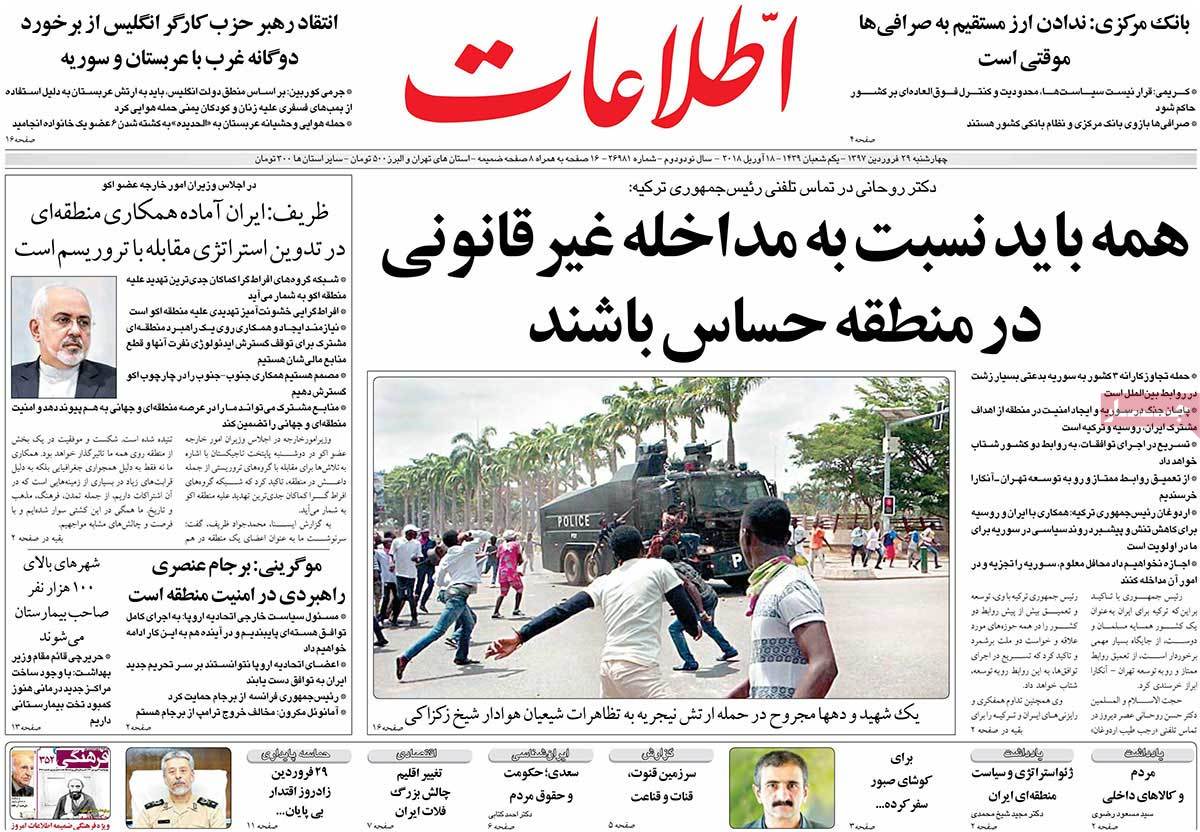
Ettela’at:

  • Rouhani: Everyone Must Be Sensitive to Illegal Interference in Region
  • Central Bank: Operation of Currency Exchange Bureaus “Temporarily” Stopped
  • Corbyn Slams West’s Double-Standard Policy towards Saudi Arabia, Syria

A Look at Iranian Newspaper Front Pages on April 18


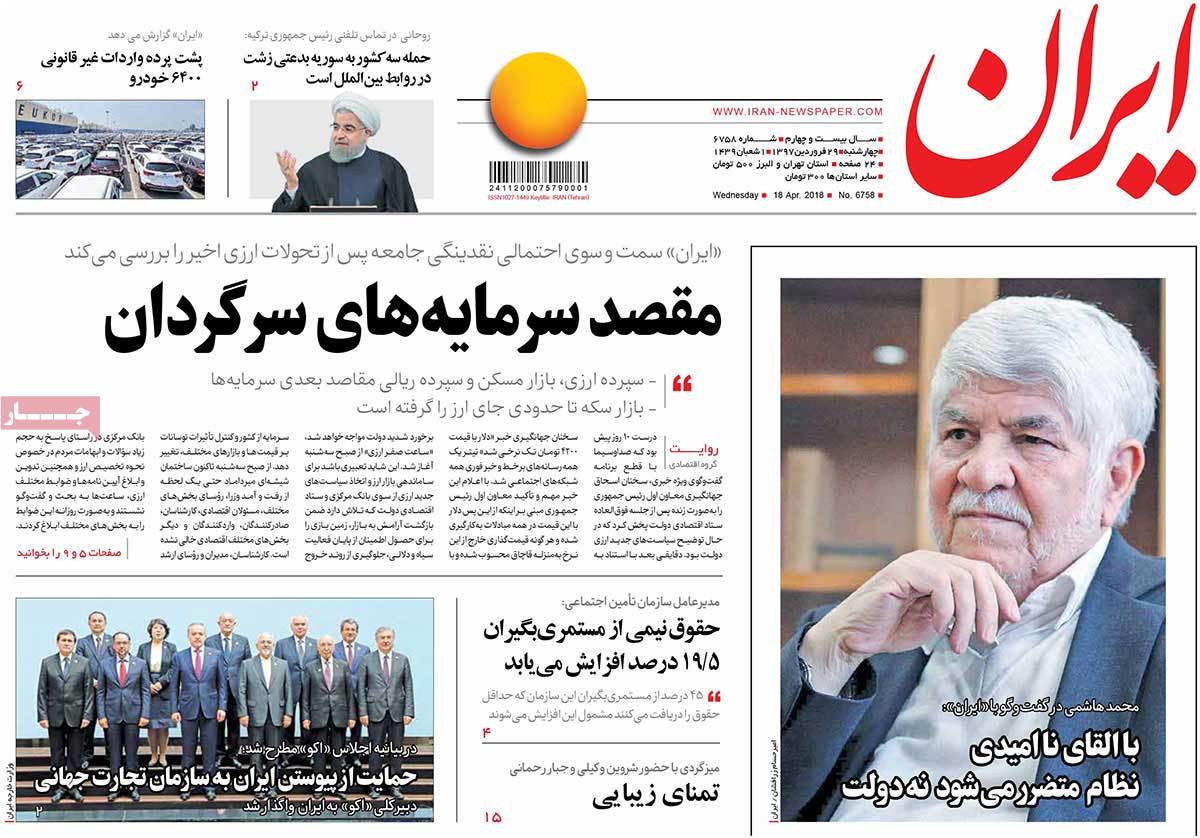
Iran:

  • Mohammad Rafsanjani: Making People Disappointed to Harm Establishment, Not Gov’t
  • Wages of Half of Pensioners to Increase by 19.5%

A Look at Iranian Newspaper Front Pages on April 18


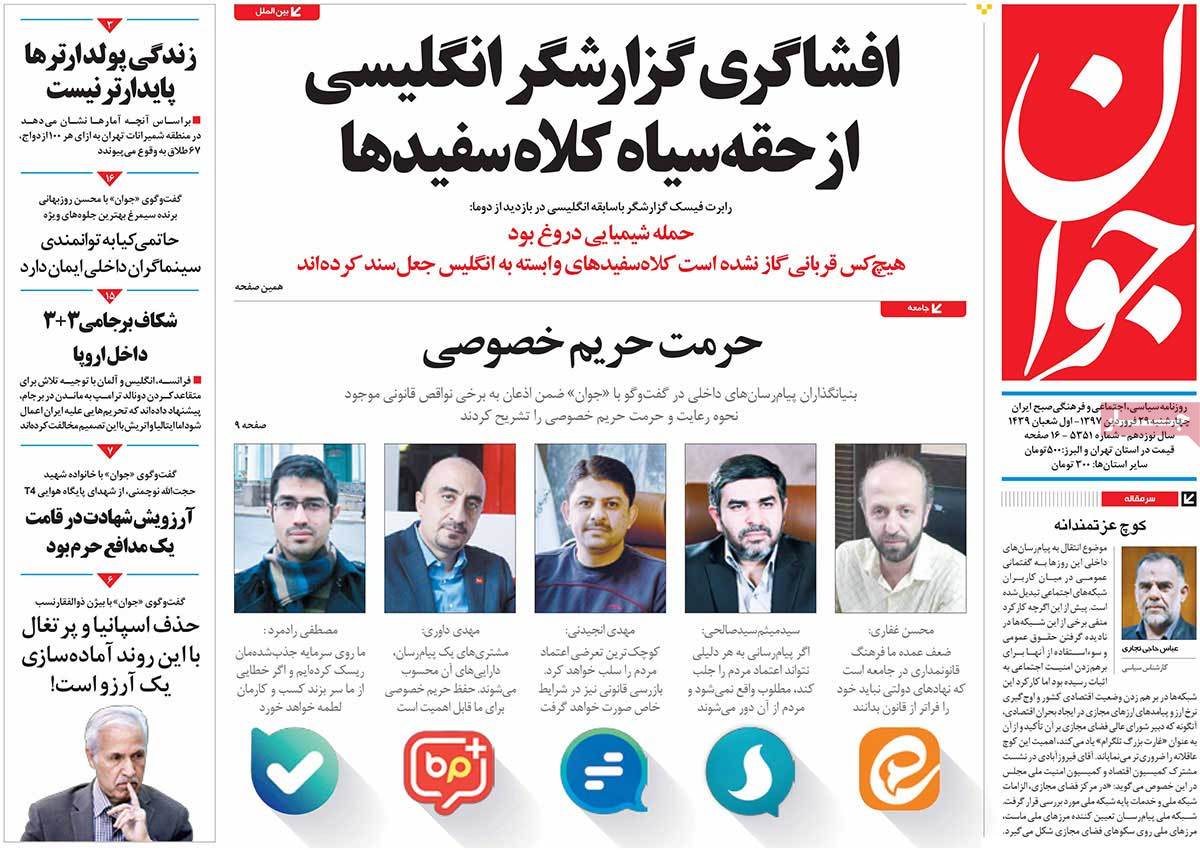
Javan:

  • British Reporter Reveals Secrets about Deceit of White Helmets
  • Chemical Attack Was a Lie, No One Has Been Affected
  • UK-Affiliated White Helmets Have Forged Evidence

A Look at Iranian Newspaper Front Pages on April 18


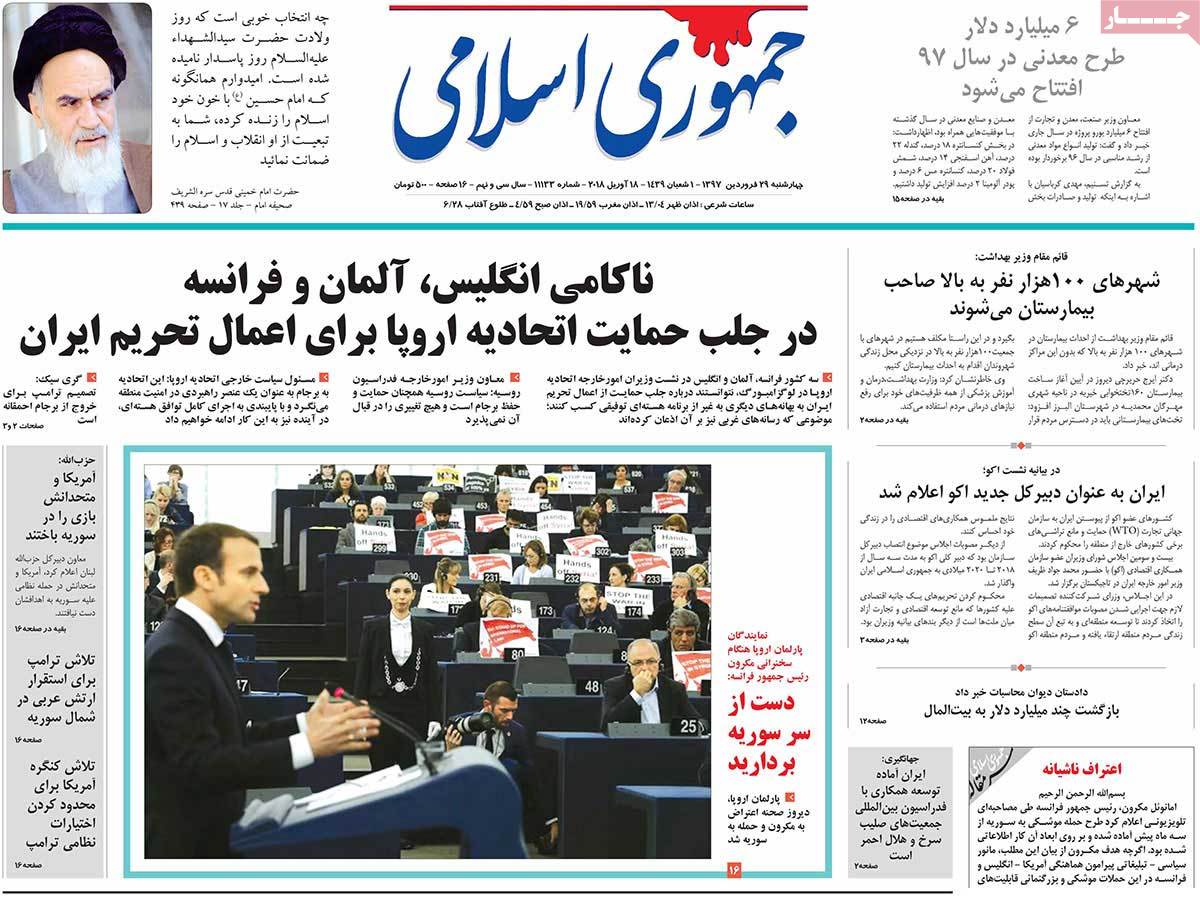
Jomhouri Eslami:

  • Britain, Germany, France Fail to Win Support of EU for Imposing New Iran Sanctions
  • European Parliamentarians during Macron’s Speech: Take Your Hands Off of Syria

A Look at Iranian Newspaper Front Pages on April 18


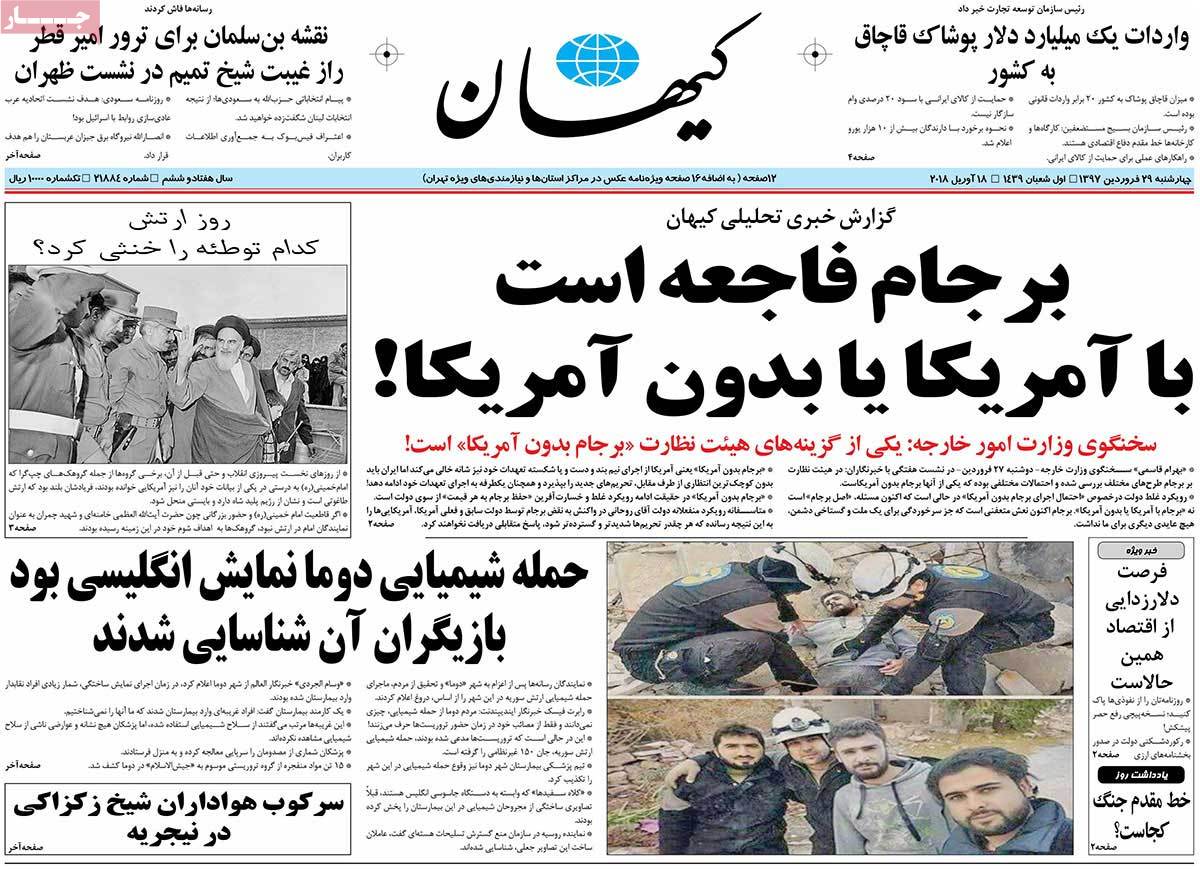
Kayhan:

  • JCPOA A Disaster with or without US!
  • Foreign Ministry: “JCPOA without US” among Iran’s Options!
  • Media Reports Reveal Bin Salman’s Plot to Assassinate Qatari Emir
  • Douma Chemical Attack A British Plot; Key Player Identified

A Look at Iranian Newspaper Front Pages on April 18


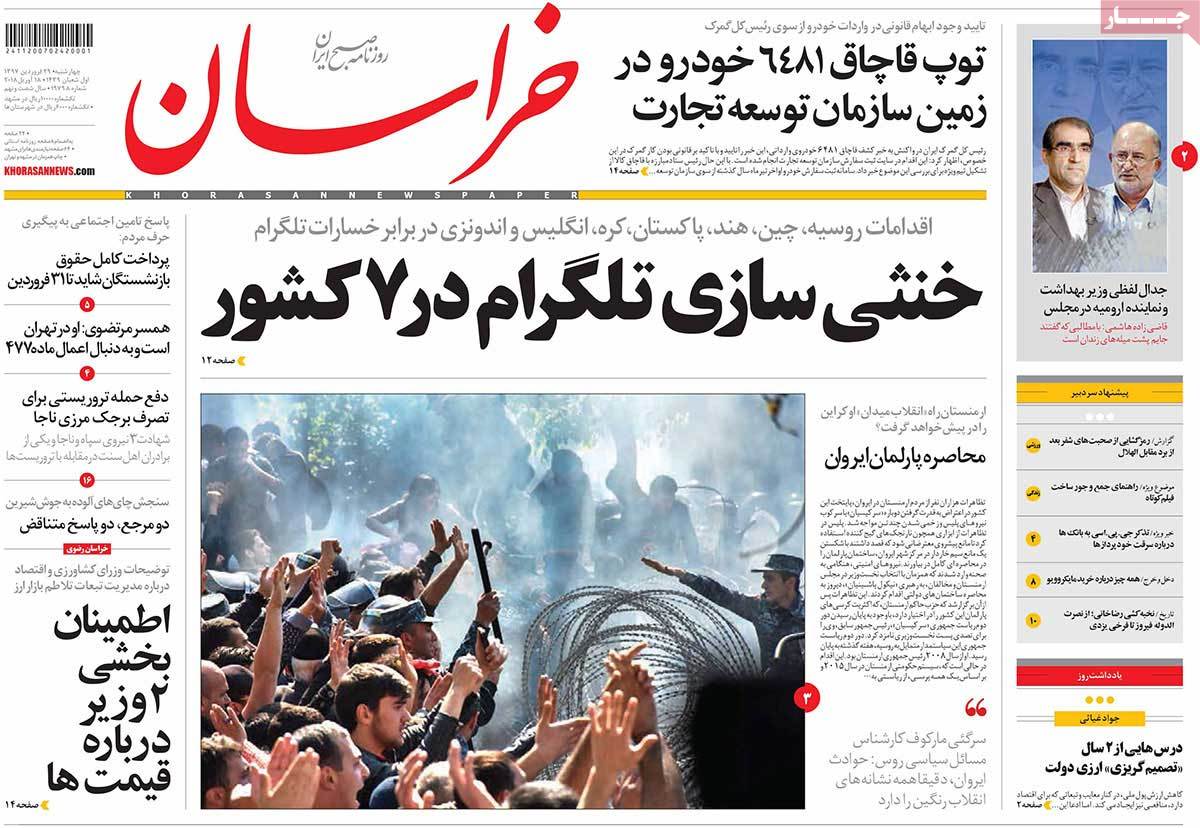
Khorasan:

  • Seven Countries to Neutralize Telegram Messaging App
  • Russia, China, India, Pakistan, Korea, UK, Indonesia against Telegram Damages

A Look at Iranian Newspaper Front Pages on April 18


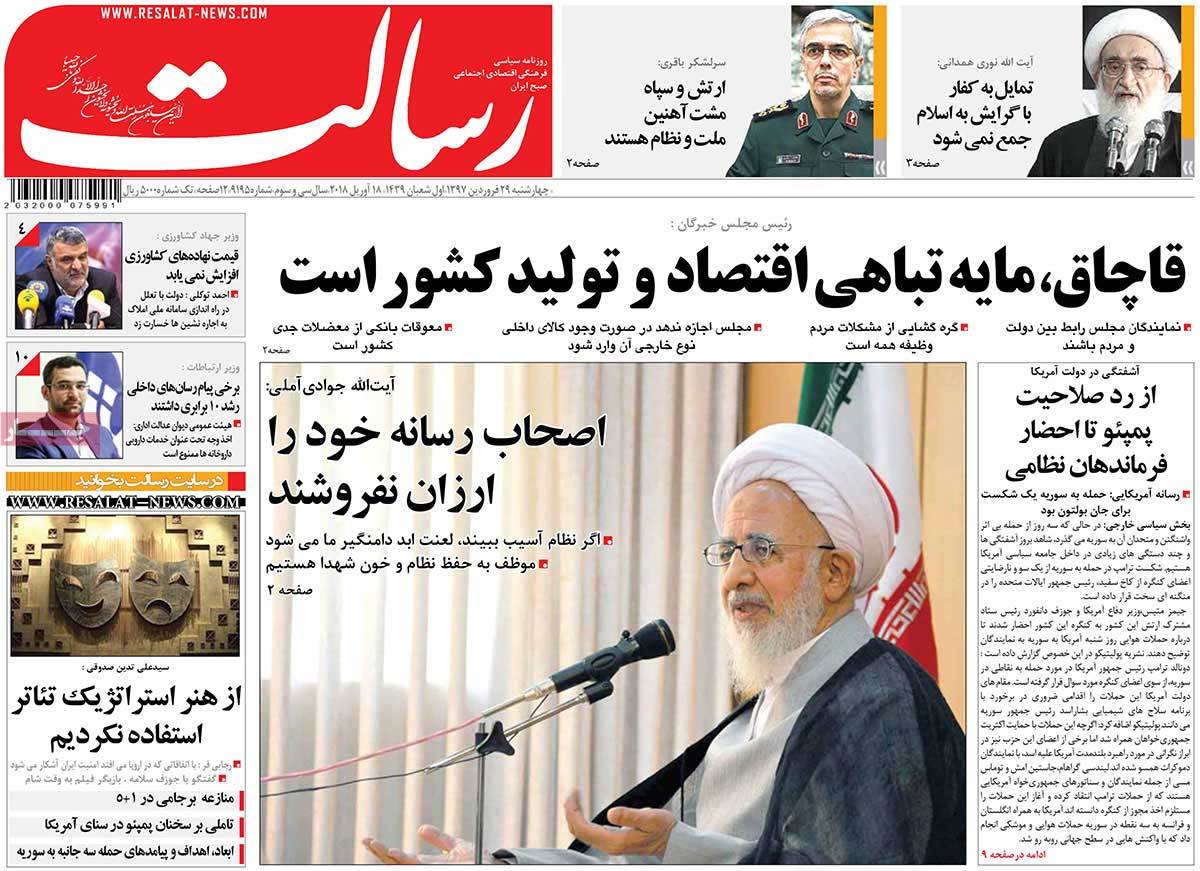
Resalat:

  • Iran Top General: Army, IRGC Iron Fists of Nation, Establishment
  • Ayatollah Javadi Amoli Urges Journalists Not to Sell Themselves Cheap

A Look at Iranian Newspaper Front Pages on April 18


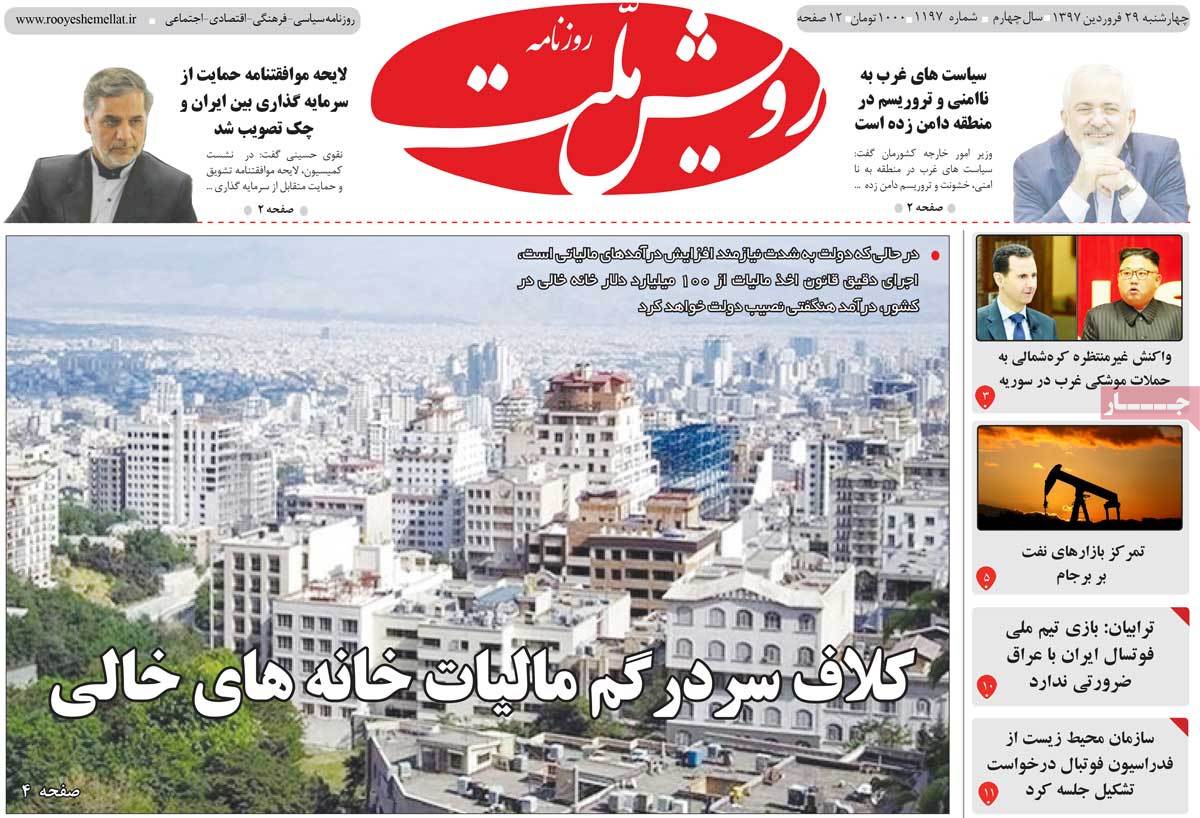
Rooyesh-e Mellat:

  • Zarif: West’s Policies Have Increased Insecurity, Terror in Region

A Look at Iranian Newspaper Front Pages on April 18


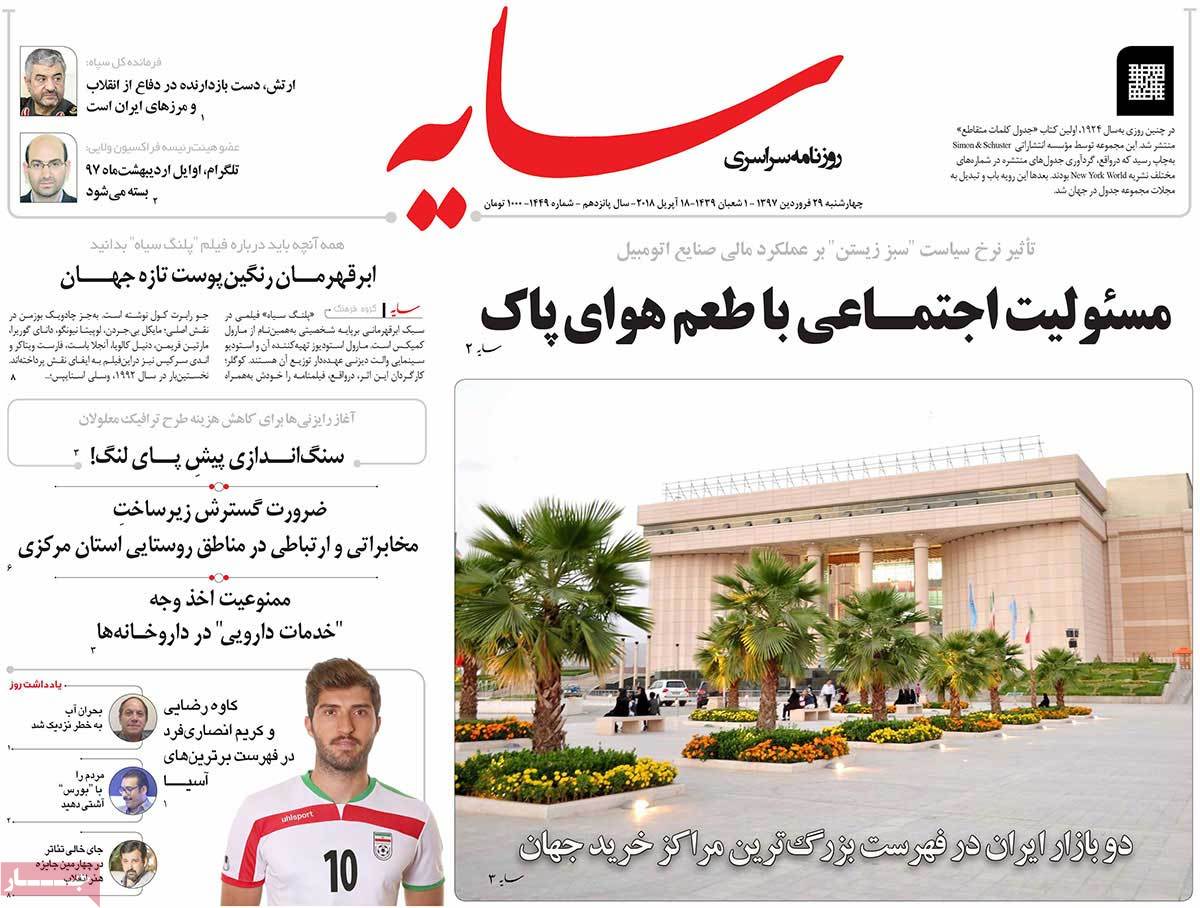
Sayeh:

  • Two Iranian Marketplaces among World’s Biggest Shopping Centres
  • IRGC Chief Hails Army as Deterring Wing in Defending Revolution, Borders

A Look at Iranian Newspaper Front Pages on April 18


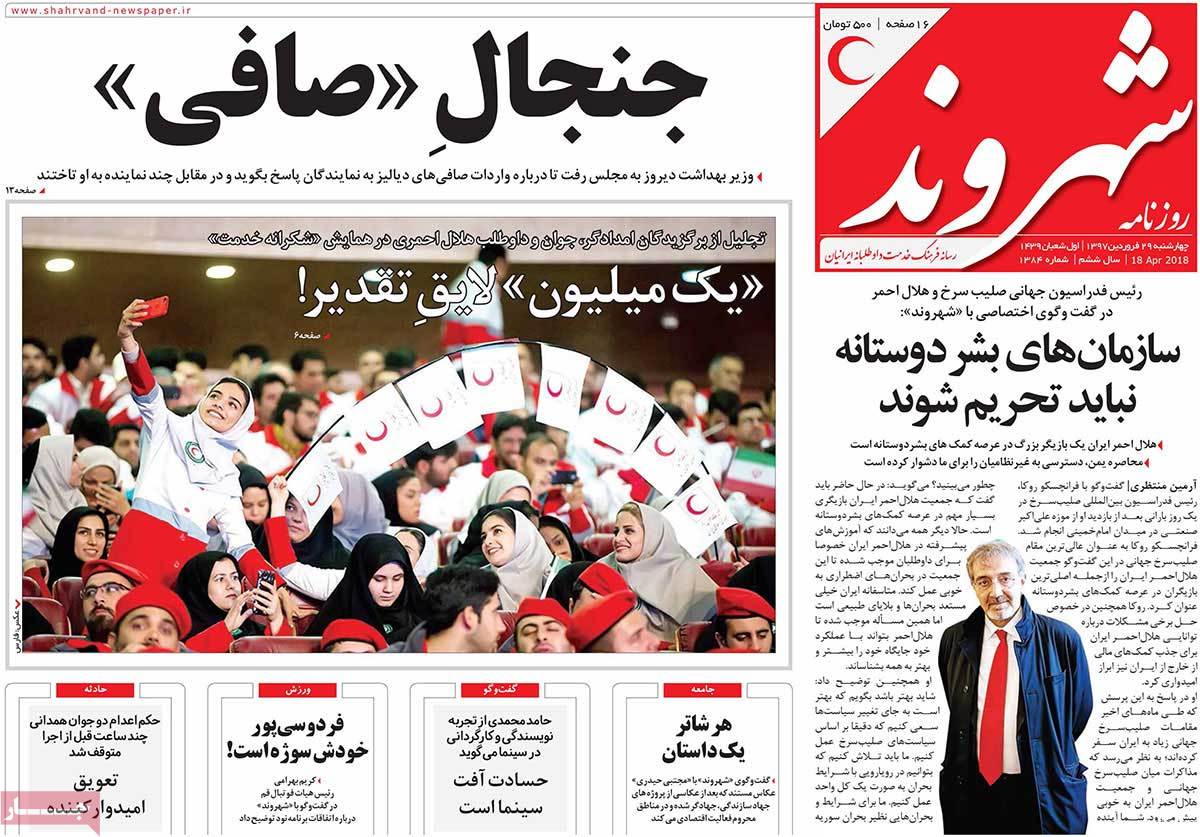
Shahrvand:

  • Humanitarian Organizations Shouldn’t Be Banned: Red Cross Chief

A Look at Iranian Newspaper Front Pages on April 18


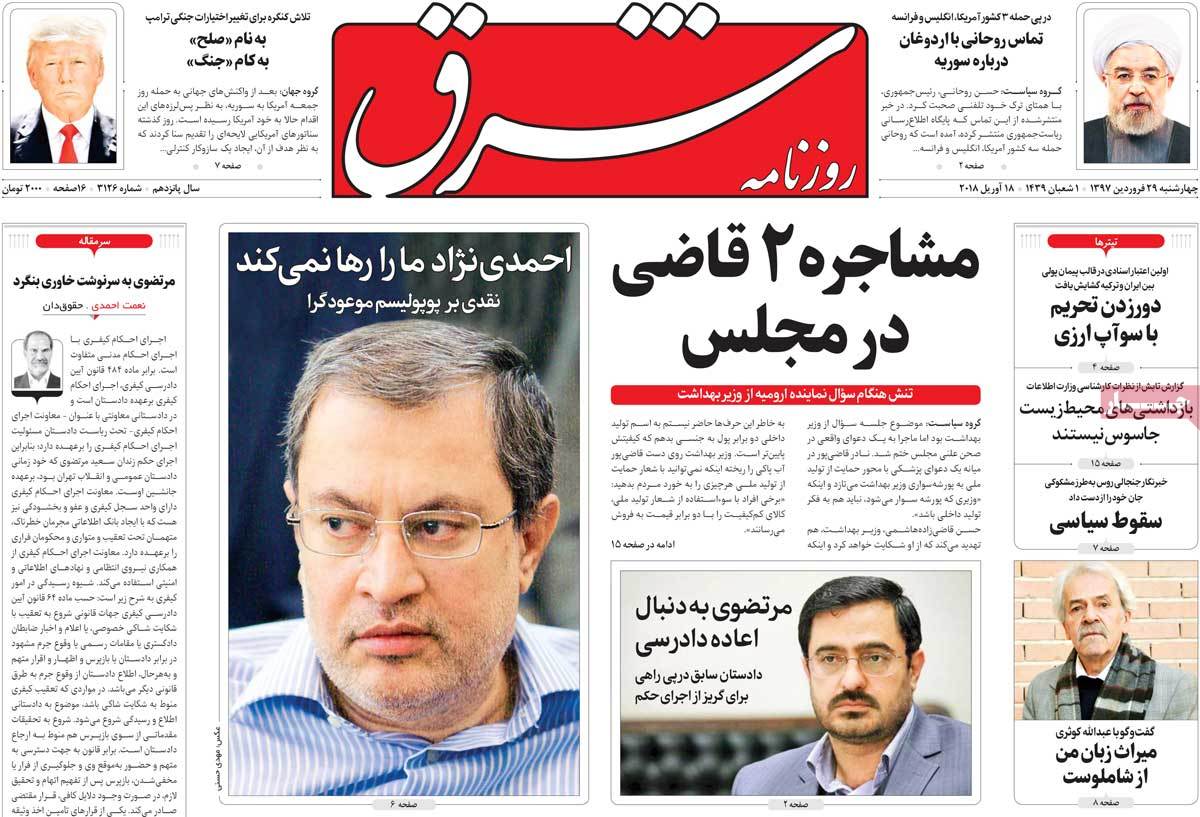
Shargh:

  • Former Prosecutor Mortazavi Looking for Ways to Evade Prison Term

A Look at Iranian Newspaper Front Pages on April 18


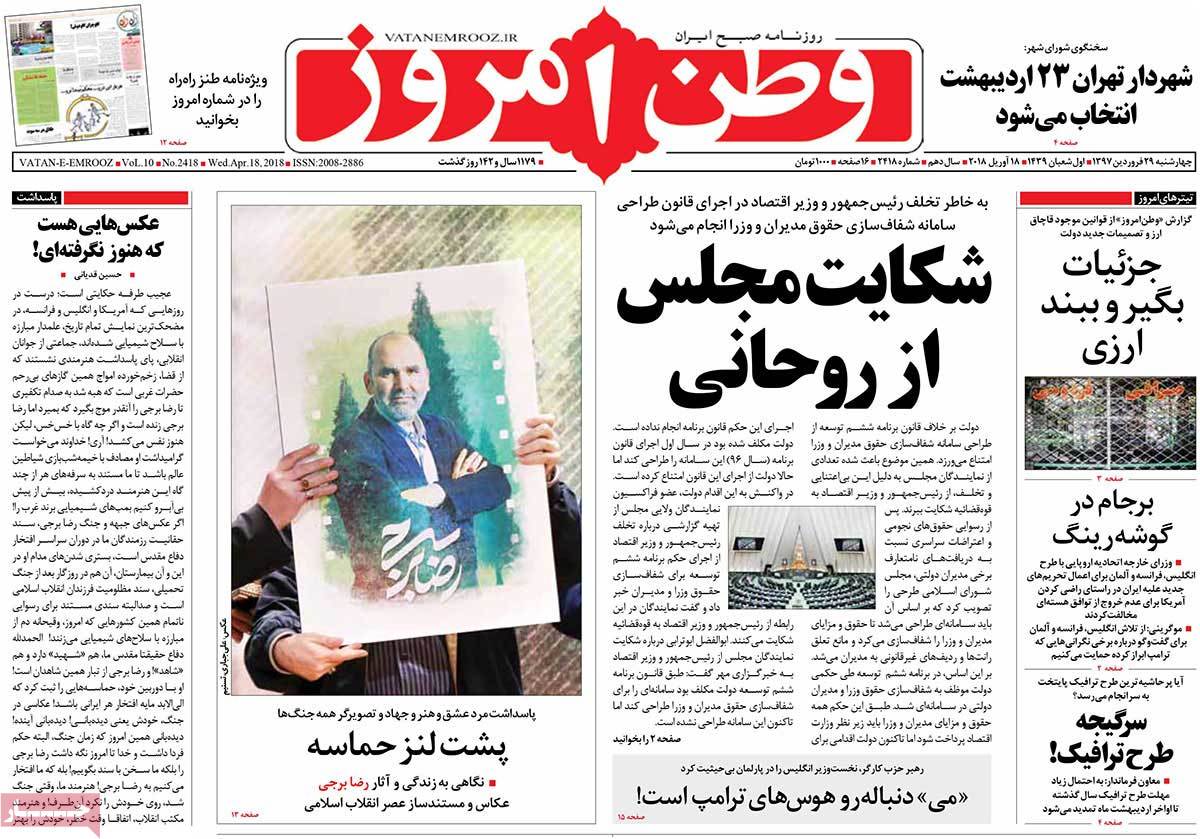
Vatan-e Emrooz:

  • Corbyn: UK PM Disgraced Parliament; May Satisfying Trump’s Desires

A Look at Iranian Newspaper Front Pages on April 18

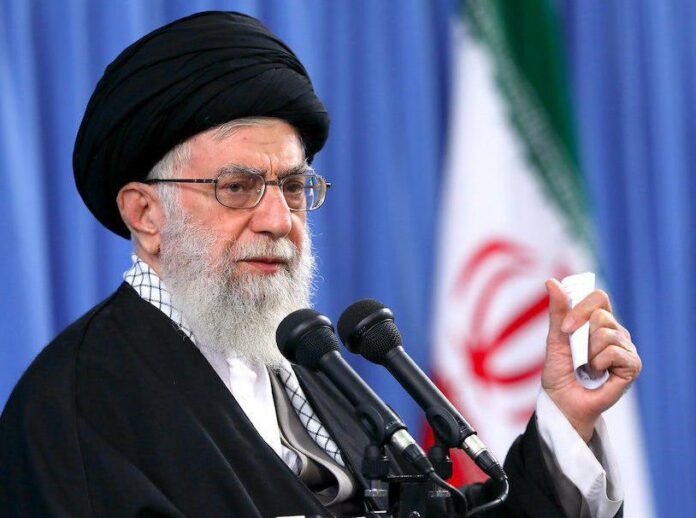
Iran Leader Urges Intelligence Forces’ Vigilance against Hostile Plots

Ayatollah Seyyed Ali Khamenei

“We are in a major battlefield … against a wide and powerful front of enemies,” the Leader said in a meeting with a group of Iranian Intelligence Ministry officials on Wednesday.

“Despite having great facilities, hostile intelligence services have failed to commit any important mistake. However, if we show negligence we will be defeated,” he said, according to a transcript of his speech posted on Leader.ir.

Ayatollah Khamenei said hostile powers employ sophisticated tactics to damage Iran, including relentless efforts to manipulate the calculations of Iranian officials, weaken religious beliefs of the Iranian people, create economic problems and foment security chaos inside the country.

The Intelligence Ministry should work harder to analyse information correctly to be able to forecast future problems and take pre-emptive measures to disrupt ploys, the Leader said.

Pointing to recent plunge in the value of rial that put great strain on Iran’s currency market, Ayatollah Khamenei said the hand of foreign intelligence services was evident in the instability.

Last week, Iranians saw a record decline in the rial’s value on the free market, with the Iranian currency losing close to half of its value since September.

The Iranian officials described the sudden plunge in the value of rial as unnatural, suggesting it could be caused by an economic plot hatched by the US and its allies.

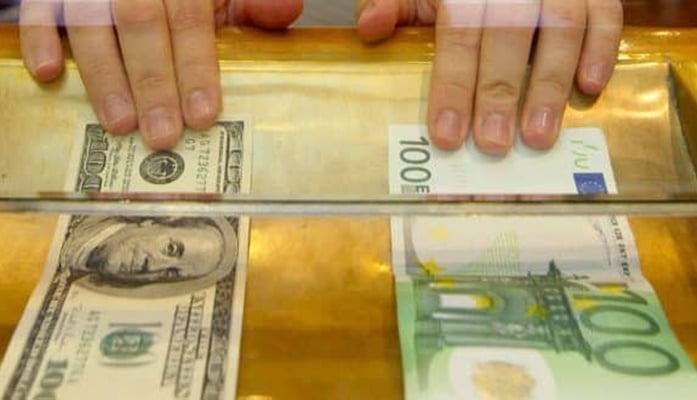
Iran Officially Replaces US Dollar with Euro in Int’l Transactions

“All ministries, governmental organizations and firms are obliged to choose euro as the main currency used in reporting and publishing statistics, information and financial data,” read a Farsi statement published on the Iranian government’s website on Wednesday.

The decision was made at a meeting of the Cabinet on Wednesday, apparently in response to what Iranian officials describe as an economic plot hatched by the US and its allies to decrease the value of the Iranian currency rial.

The currency had lost close to half of its value on the free market since September before authorities implemented a plan to unify official and free-market exchange rates for the rial in favour of a single rate set at 42,000 against the US dollar last week.

Moreover, the Central Bank of Iran clamped a 10,000-euro ($12,400) ceiling on the amount of foreign currency that citizens can hold outside banks.

Some analysts blame threats by US President Donald Trump that he will return US sanctions on Iran unless the so-called flaws of the 2015 nuclear deal are fixed.

The deadline for Trump administration to extend Iran sanctions waivers is May 12. The US refusal to keep sanctions frozen will mean the US is longer bound by the pact.

However, Iranian officials blame plots of foreign adversaries for the problem.

The bill must be approved by the Iranian parliament and the Guardian Council before going into effect.

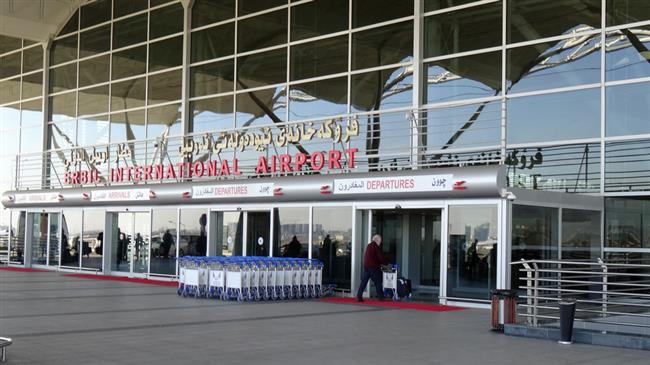
Iran to Resume Direct Flights to Erbil as of April 27

For the time being, Mahan Air will offer direct service twice a week on Tuesday and Wednesday and will try to increase it in the future, ISNA news agency quoted Iran’s consul in Erbil Morteza Ebadi as saying.

The resumption, he said, is important in increasing bilateral cooperation which could also enhance interaction among businesspersons and help tourism boom.

Iran re-opened two crossings with the Iraqi Kurdistan region in January, which it had closed at Baghdad’s request in response to the secession referendum.

The decision came on the same day as the Kurdish Regional Government offered to put their secession drive on hold and step up efforts to resolve a crisis in relations with Baghdad via dialogue rather than military means.

President Hassan Rouhani said then Iran sought to boost relations with the Iraqi Kurdish region as part of a united Iraq.

The semi-autonomous Kurdistan region’s Prime Minister Nechirvan Barzani visited Tehran after suspending the secession drive which Iran strongly opposed, during which he paid tribute to the Islamic Republic’s crucial support for Kurds at the height of Daesh’s terrorist campaign.

The Iraqi Kurdistan is one of Iran’s major trade partners, with annual transactions running to $4 billion a year.

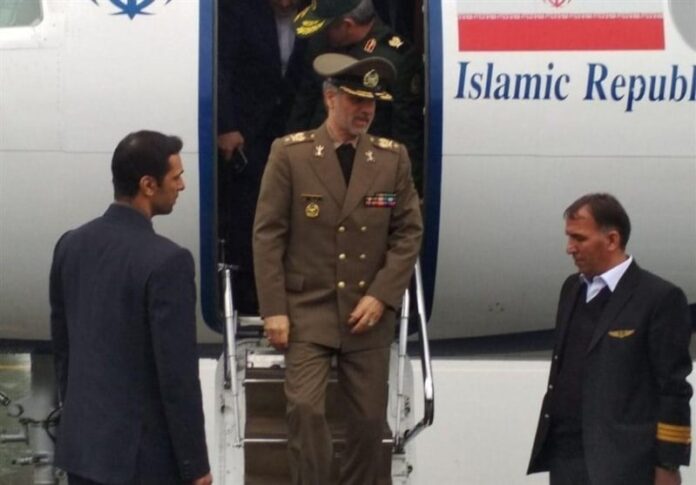
Iran DM in Iraq for High-Level Talks

Heading a high-ranking delegation, Brigadier General Hatami arrived in Baghdad on Wednesday to attend a meeting with his Iraqi counterpart about the prospect of developing the defense ties between the two countries.

Speaking to reporters upon his arrival, the defense minister said numerous topics, including the latest developments in the region, would be raised in his talks with Iraqi officials.

Hatami added that one of the trip’s main objectives is to enhance military cooperation between the two countries.

In December 2014, Iraq’s then defense minister Khalid al-Obeidi paid a visit to Iran and signed a defense cooperation agreement with the Islamic Republic.

Iraq has been facing the threat of terrorism in recent years, mainly posed by the Daesh (ISIL) terrorist group.

Amid tensions in Iraq, Iran has been known as the first country to help the Arab nation and has always voiced support for Iraq’s territorial integrity and prosperity.

Top Iranian Officials Leave Telegram Messaging App

In its last post on Telegram, the Khamenei.ir channel said it will stop using the service to help break the “monopoly of non-Iranian messengers over Iran’s cyberspace.”

The channel, one of the biggest ones in Iran with over 1.3 million followers, said it will use Iranian messengers, including Soroush.

The post also said Iran’s state institutions are to stop using Telegram.

Mahmoud Vaezi, the chief of staff of President Hassan Rouhani, announced on Wednesday that members of the Cabinet have decided to leave Telegram and switch to domestic messaging services.

Some Iranian officials were quick to follow suit, including First Vice-President Es’haq Jahangiri, who shut down his channel on Wednesday morning.

The Iranian Foreign Ministry, however, announced that it will keep updating its Telegram followers while posting the latest updates in the Iranian messaging apps.

The fate of Telegram in Iran became a hot subject in political circles late last month, when the chairman of the Parliament’s National Security Commission Alaeddin Boroujerdi said a decision has been made “at the highest levels” to permanently ban Telegram by April 20.

Boroujerdi cited “national security” concerns as the reason the messaging service will no longer be accessible.

However, shortly afterwards, President Rouhani said he opposes the filtering of Telegram and believes the government should instead work to end the monopoly of foreign services on the country’s cyberspace.

Boroujerdi later said his remarks were not correctly published, and he did not mean Telegram will be banned in Iran.

Soroush, one of the messaging apps promoted by state officials, is estimated to be used by over five million Iranians, a figure which lacks lustre when compared to Telegram’s 40 million users.

Iran Offering Incentives to Promote Domestic Production of Biopharmaceuticals

Mostafa Qanei, the Secretary of Biotechnology Development Headquarter at the Iranian Vice-Presidency for Science and Technology, says the government plans to provide knowledge-based companies with all-out support to produce biopharmaceuticals.

“We have already drafted a list of 61 biopharmaceuticals as part of a national bio-development plan. Efforts are underway to produce all the biomedicine included in the plan,” he was quoted as saying in a Farsi report by ISNA.

He went on to say that the production of at least 29 pharmaceuticals in the list has already begun.

According to him, the production of 20 drugs has been already completed but there is no project yet for producing the remaining 12 pharmaceuticals.

He went on to say that so far no knowledge-based company has expressed its readiness to produce the remaining biopharmaceuticals.

For a brief review of Iran’s achievements in various fields of science and technology, check the book “Science and Technology in Iran: A Brief Review

“So, we have decided to provide knowledge-based services with all-out support to enable them to launch projects to produce the remaining medicine,” he concluded.

Biotechnology is known as one of the state-of-the-art technologies in 21st century and is among the seven key industries which will determine the socioeconomic destiny of communities in the coming decades.

According to the data released by the Iranian Vice-Presidency for Science and Technology, Iran ranked 14th in the world in 2015 in terms of the number of articles published in the field of biotechnology in indexed journals.

Also, Iran’s share of biotechnology articles in 2015 as compared to regional countries and the world is 27.22% and 1.27%, respectively.

The Iranian government plans to use biotechnology to meet the country’s strategic demands for food, public health, environment, and energy, while exploiting the technology’s capabilities as a green industry for environmental protection and restoration.

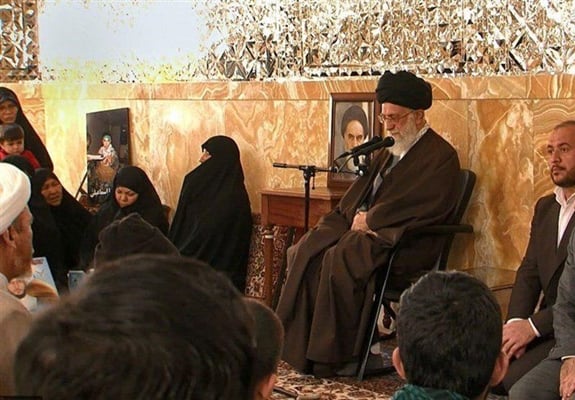
Iran Leader Hails Afghan Forces Killed in Iraq, Syria

In a recent meeting with families of Afghan martyrs in the northeastern Iranian city of Mashhad, Ayatollah Khamenei said he has always lauded Afghan nationals, particularly the Hazaras.

“I had personally seen that their seminary students felt an affinity with us, and I have known them since old times,” the Leader said.

Ayatollah Khamenei praised the Afghan troops in Syria and Iraq who fought against terrorists and were martyred while defending holy shrines there against ISIS terrorists.

“We do respect your (Afghan) martyrs, and this is among the incidents what have rarely happened in the history of Islam,” the Leader said.

He noted that Afghan forces, having a feeling of religious duty, got engaged in a tough fight against terrorists, did well, and were finally martyred.