Sunday, December 28, 2025
Home Blog Page 3635

“Iran Prepared to Mend Ties between Baghdad, Erbil”

Velayati

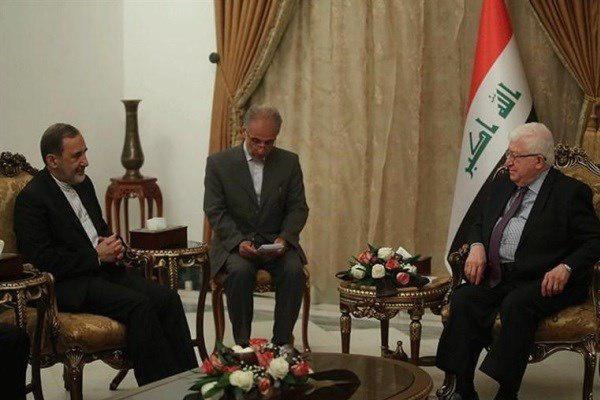
In a Sunday meeting with Iraqi President Fuad Masum in Baghdad, Ali Akbar Velayati said “the Islamic Republic of Iran will do whatever in its power to remove grudges between Iraq’s central government and the KRG and to improve their ties.”

According to a Farsi report by IRIB, Velayati then praised the late Kurdish politician and former Iraqi President, Jalal Talabani, for his “key role in the Iraqi nation’s war for independence.”

The top aide to Iran’s Leader also noted that Iraqi Kurds have always played a critical role in the preservation of Iraq’s territorial integrity and said, “Iran’s relations with the Iraqi Kurds are deep-rooted.”

Describing Iran-Iraq ties as “strategic,” Valayati said the fates of Iran and Iraq are inseparable, adding Iran has always stood by the Iraqi government and nation during the war and reconstruction eras.

For his part, the Iraqi president said Iran-Iraq relations are not “tactical” but expressed hope that the relations would remain alive and forward-looking.

He also called on the Islamic Republic of Iran to play its constructive role in strengthening of national unity among Iraqi groups particularly between Baghdad and Erbil.

During the meeting, the two officials also discussed latest regional developments and exchanged views on ways for expanding bilateral relations between Iran and Iraq.

Iran’s Health Minister Appointed as WHO Commissioner

Hashemi

Deputy Health Minister Mohsen Asadi Lari confirmed the news on Saturday, saying that non-communicable diseases are the main cause of 75 percent of deaths in Iran.

“The WHO attaches great significance to the prevention and control of non-communicable diseases,” he was quoted as saying in a Farsi report by IRIB News Agency.

“To this effect, the WHO has formed a high commission consisting of delegations from 22 member states,” he said.

According to Asadi Lari, the commission, headed by four presidents and ministers, is expected to lead joint projects to prevent and control non-communicable diseases in the world.

He noted as a pioneering country in prevention and control of non-communicable diseases, Iran has signed a leading document aimed at eradicating the diseases.

The deputy minister then said the WHO has repeatedly cited Iran as one of the leading and successful countries that have managed to significantly prevent and control non-communicable diseases.

“A report on Iran’s achievements in this field is expected to be presented to the United Nations’ General Assembly in 2018,” he concluded.

Iran Urges UN to Appoint Rapporteur on US Human Rights Violations

Iran Urges UN to Appoint Rapporteur on US Human Rights Violations

In a Sunday statement, the council warned against contemporary forms of racism and discriminations in the US and said the UN’s Human Rights Council should step into the fray and appoint a special rapporteur to investigate dire situation of human rights violations in the US.

“Though murder and violence are a chronic disease in the US (and to some extent, in other western societies), the latest mass shooting in a school in Florida reveals that a new form of terrorism has been created in the US which draws on racism and bullying,” the Farsi statement reads.

Iran’s High Council for Human Rights also said “the new form of terrorism, like many others backed or ordered by the US, knows no limitation when it comes to violence.”

The statement also held the US president and his political team accountable for the “new dangerous and nasty phenomenon,” and noted the UN cannot remain passive amid such conditions.

“So, the UN is seriously expected to build on the current international treaties and mechanisms and adopt a firm stance towards the US by holding it accountable to the international community over the human rights violations.”

The Iranian body also strongly urged the UN Human Rights Council to appoint a special rapporteur to probe into the dire human rights conditions in the US and provide a report to the UN General Assembly on the US racism and discrimination.

Resistance Front Won’t Allow NATO to Build Base in Mideast: Iran

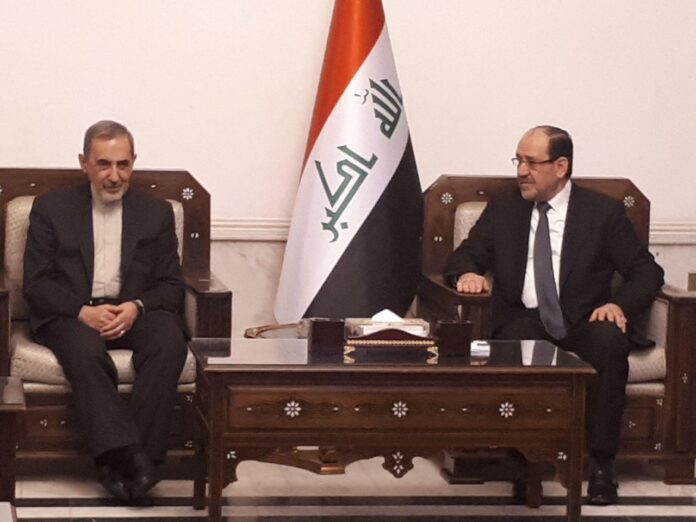
Ali Akbar Velayati, an advisor to Iran's Leader, meeting Iraqi Vice-President Nouri al-Maliki on Saturday, February 17, 2018 / Photo retrieved from IRIB

In a meeting with Iraqi Vice-President Nouri al-Maliki, Velayati emphasized that after the defeat of ISIS by the resistance movement, “we must be more watchful than before about the situation in the region.”

Referring to the separatist and divisive plots of Washington in the region, he noted that the resistance movement should prevent the gradual deployment of the US forces in eastern Euphrates, according to a Farsi report by IRIB News Agency.

The Islamic Republic of Iran stands alongside the Iraqi people and government, he said, expressing hope that the upcoming Iraqi elections would create security and stability in the country with all political groups playing an active role.

In turn, al-Maliki also presented an analysis of the future strategies of the resistance movement in the region underlining that Washington is trying to regain its foothold in Iraq.

He argued that due to Iraq’s rich Islamic culture and the presence of Islamic Marja’, the US cannot have a military presence in this country as it has in Japan and Korea.

“Although the Iraqi people live in a poor condition, they will not allow anyone to hurt their independence and sovereignty.”

He highlighted that the establishment of US military bases in Syria would create a new wave of terrorism and strengthen the Takfiri movements whose main goal is to weaken the resistance front, especially the Islamic Republic of Iran.

In the course of this meeting, the two sides also discussed the development of bilateral ties as well as the latest regional developments.

The US tends to maintain an open-ended military presence in Syria under the pretext of full defeat of ISIS claiming that it wants to help end the civil war in the Arab country.

Earlier, US Secretary of State Rex Tillerson said Donald Trump does not want to “make the same mistakes” that were made in 2011, when US forces left Iraq.

Erbil Developing New Protocol to Promote Ties with Tehran: PM

Erbil Developing New Protocol to Promote Ties with Tehran: PM

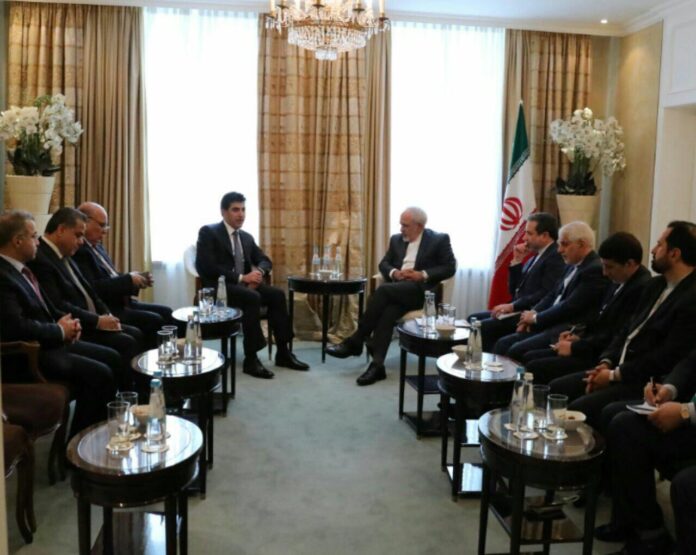
In a Sunday meeting with Iranian Foreign Minister Mohammad Javad Zarif in Munich, PM Barzani sincerely thanked the Islamic Republic for its support for the Iraqi Kurds.

He also noted that Erbil is developing a new protocol with the aim of expanding its relations and cooperation with Iran.

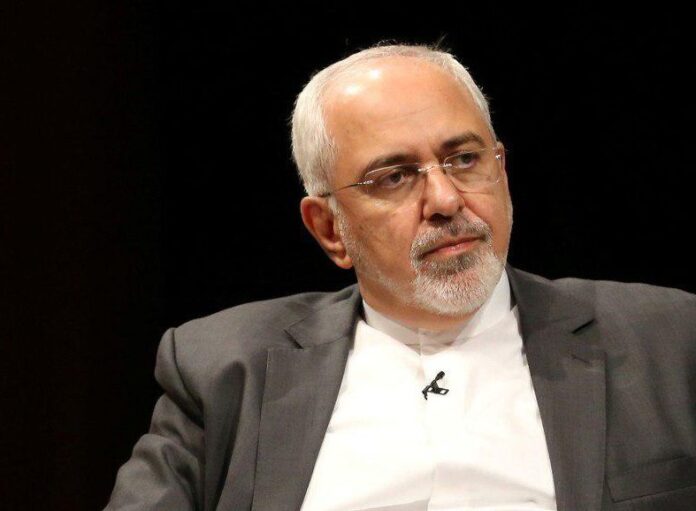
Zarif, for his part, called on the KRG officials to put harder efforts into resolving the problems that Iranian companies working in the region are struggling with and provide them with further facilities.

During the meeting held on the sidelines of the Munich Security Conference, the two sides also conferred on a number of issues including expansion of bilateral relations, especially in economic field.

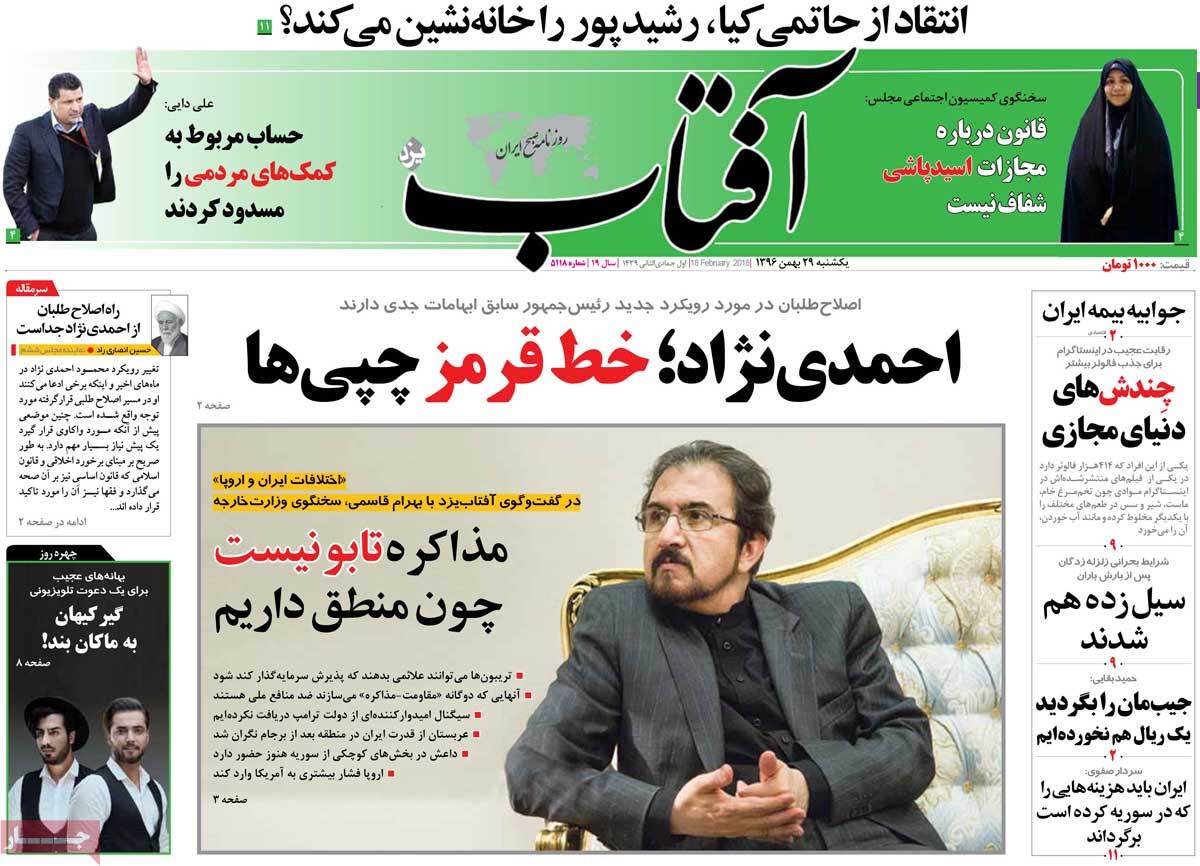
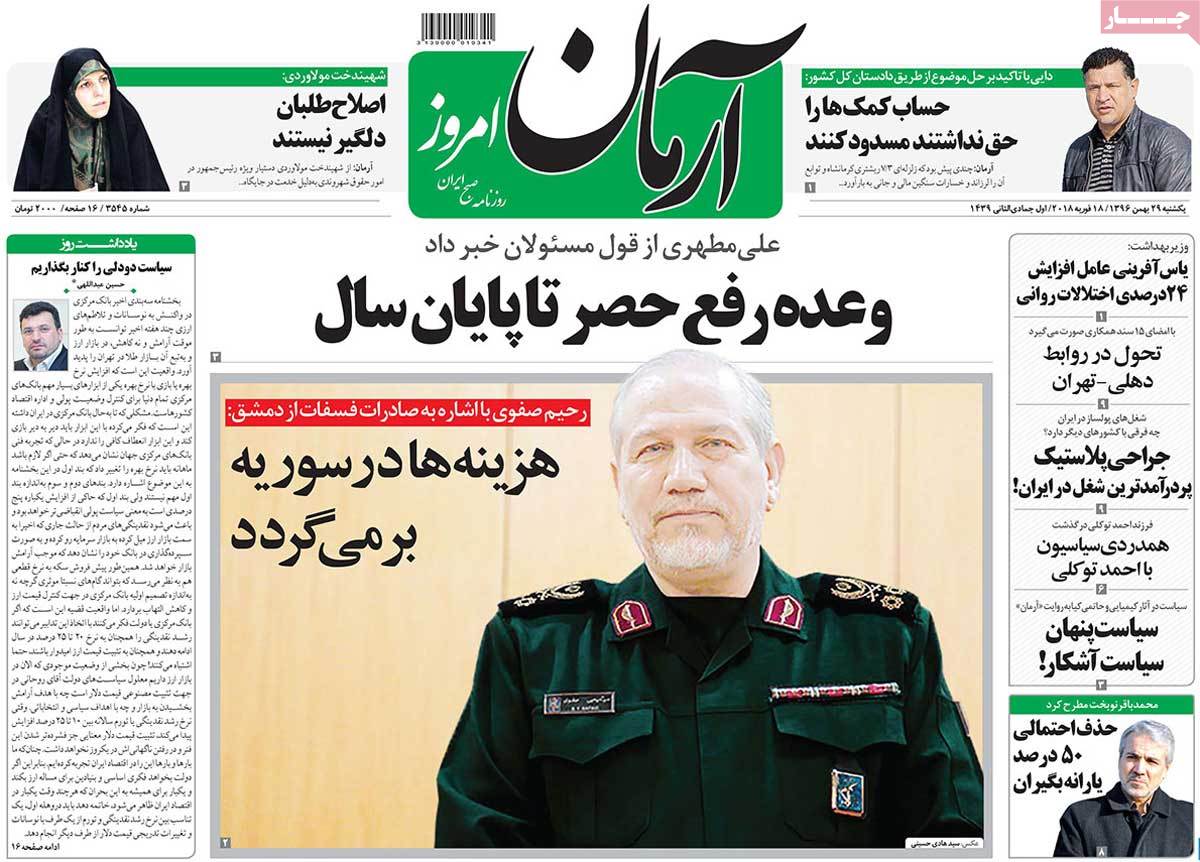
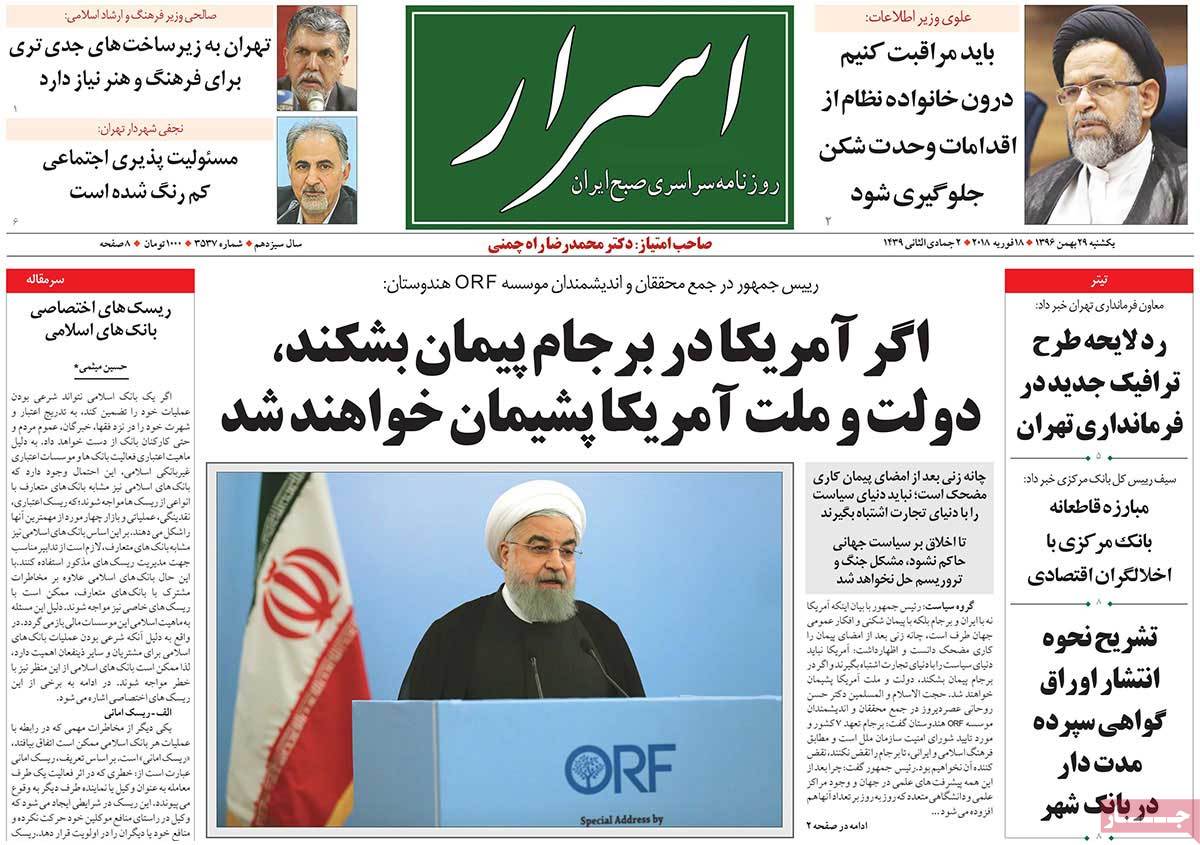
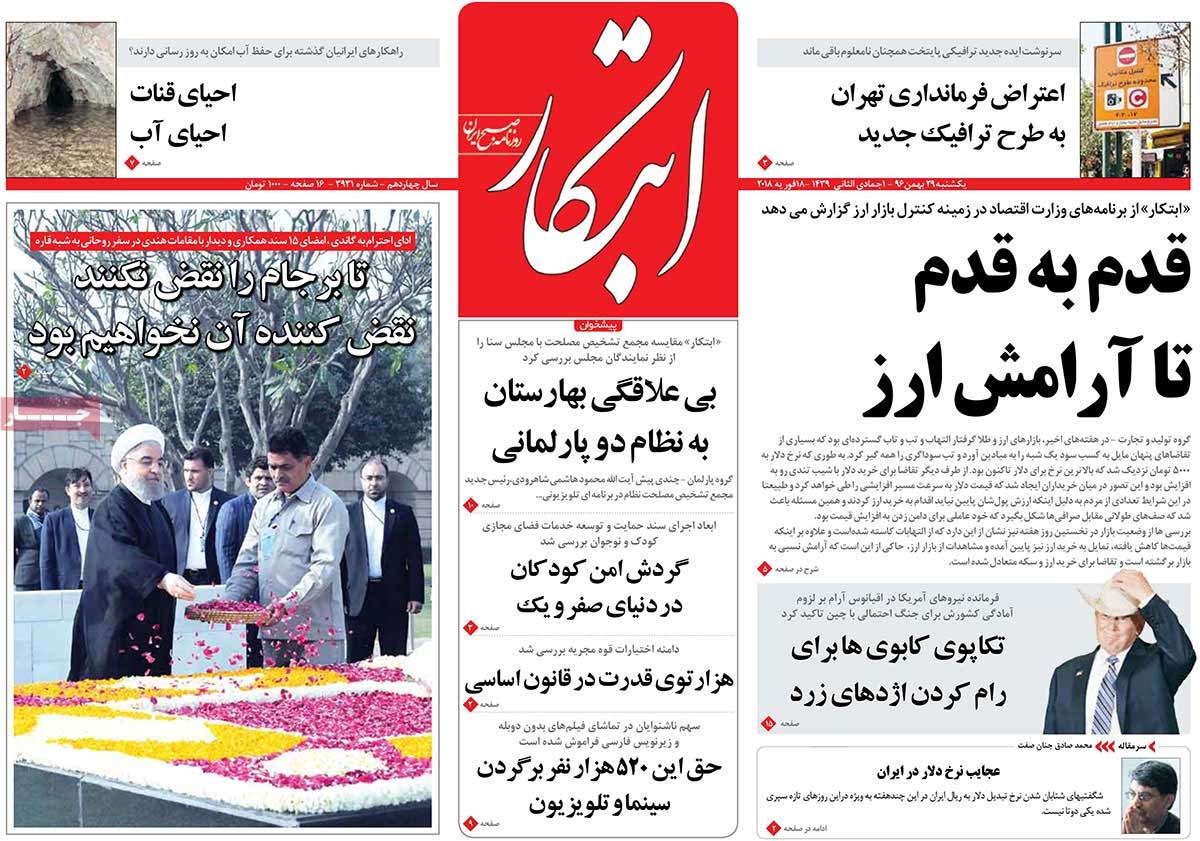
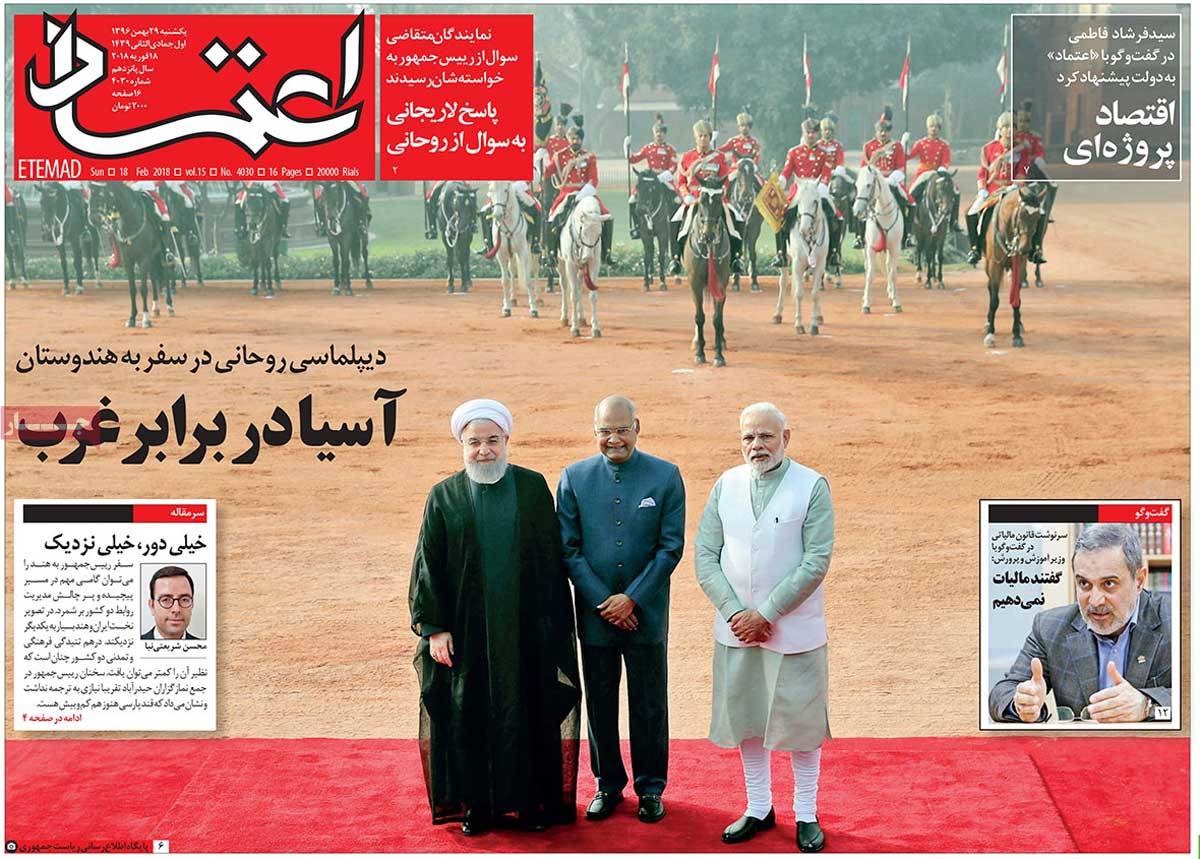
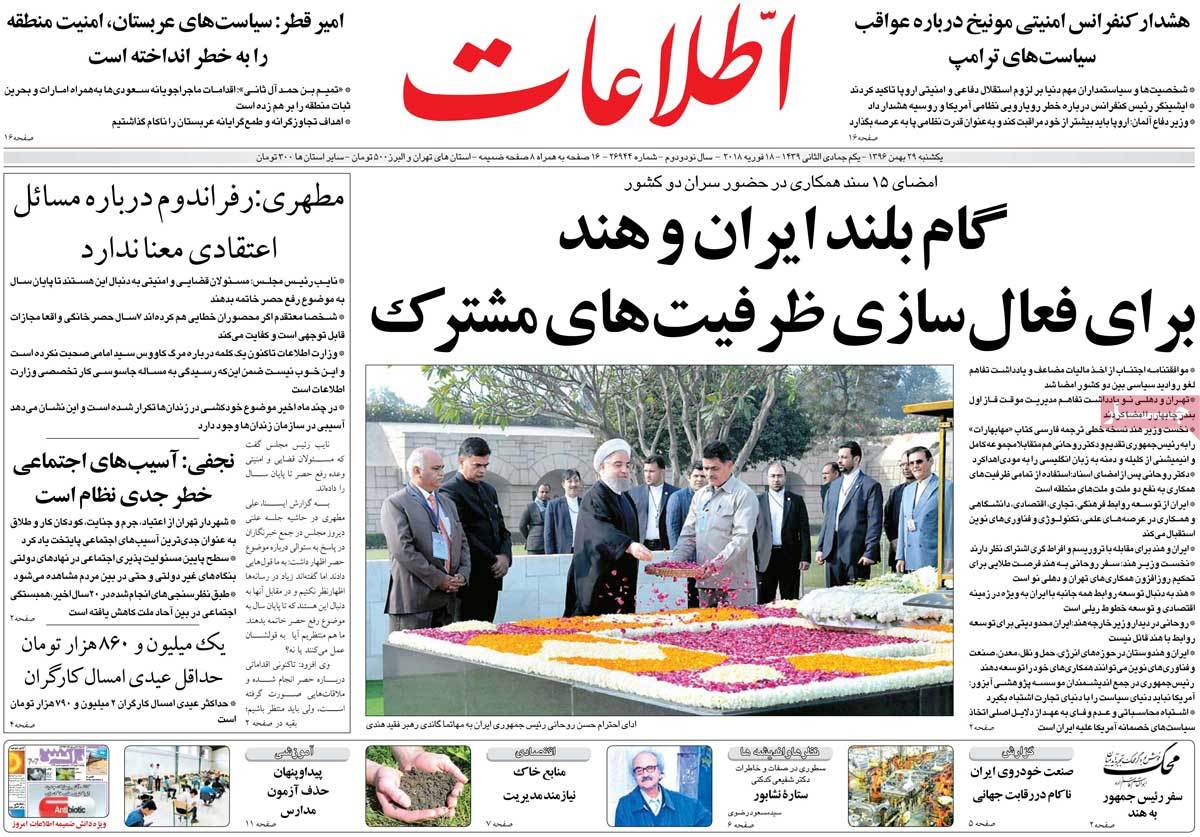
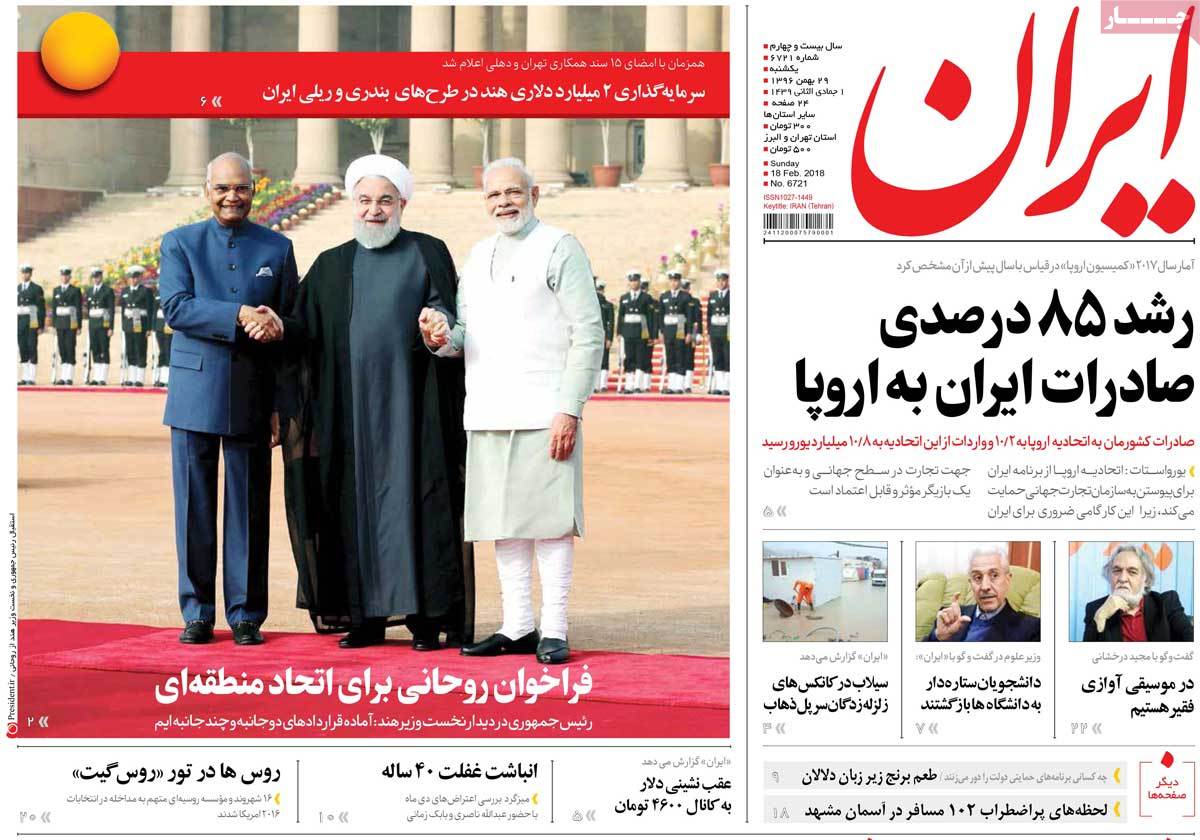
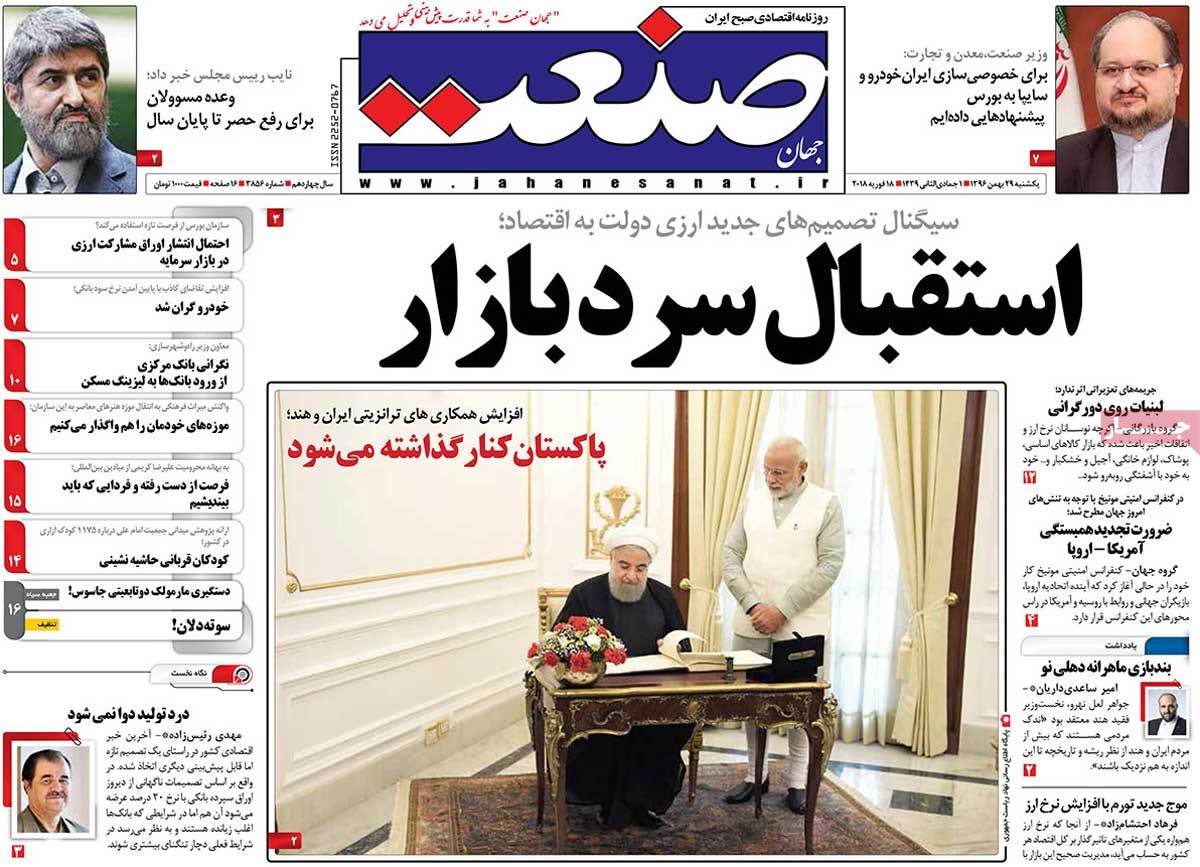
A Look at Iranian Newspaper Front Pages on February 18

A Look at Iranian Newspaper Front Pages on November 18

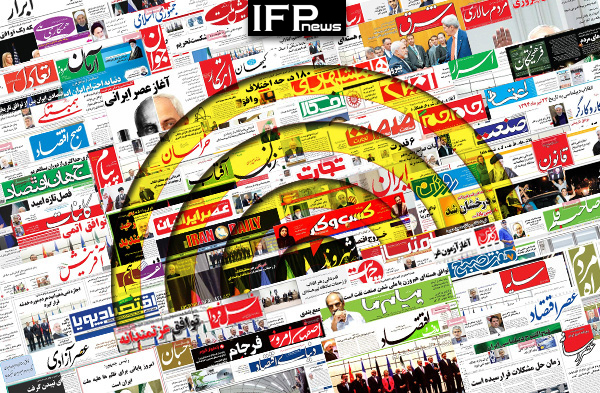
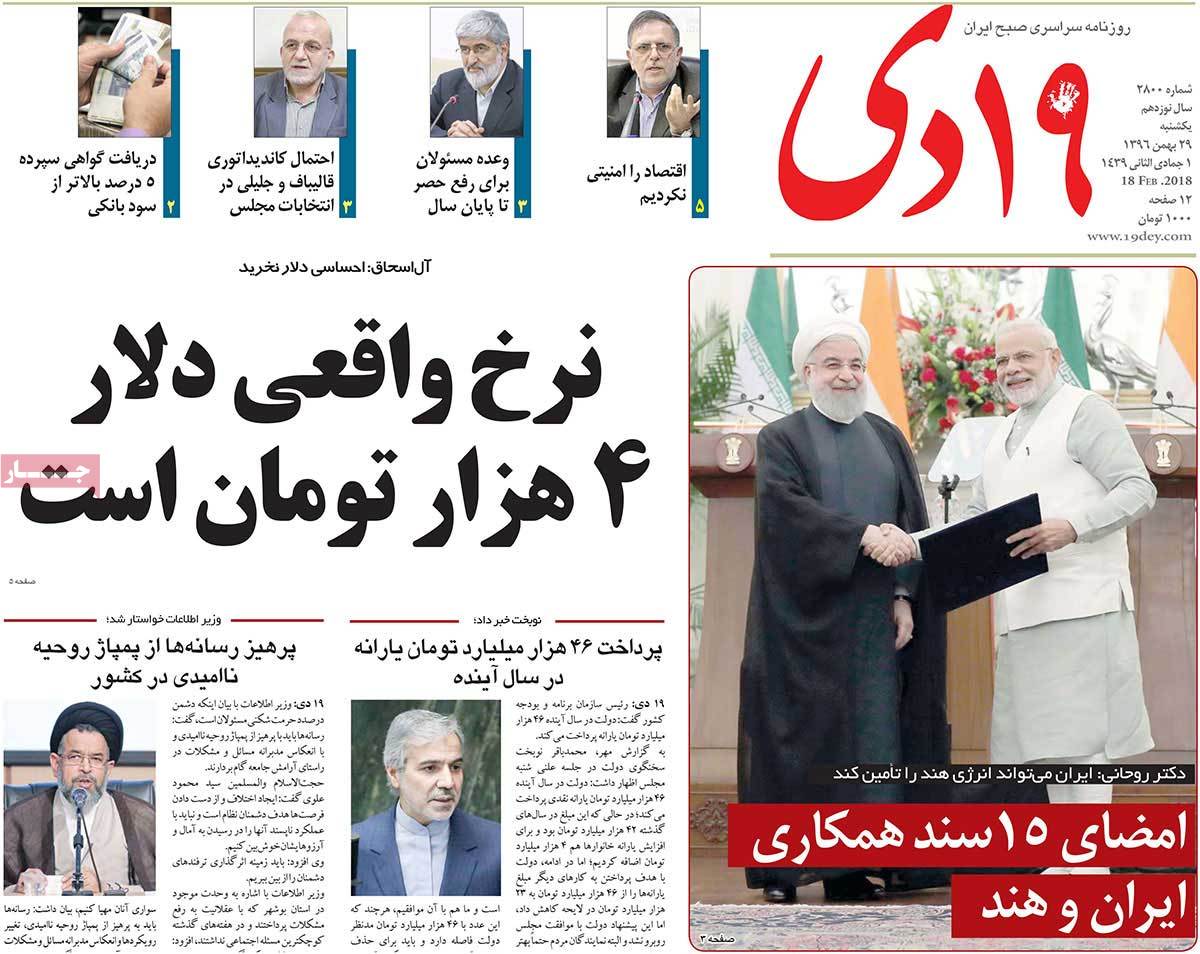
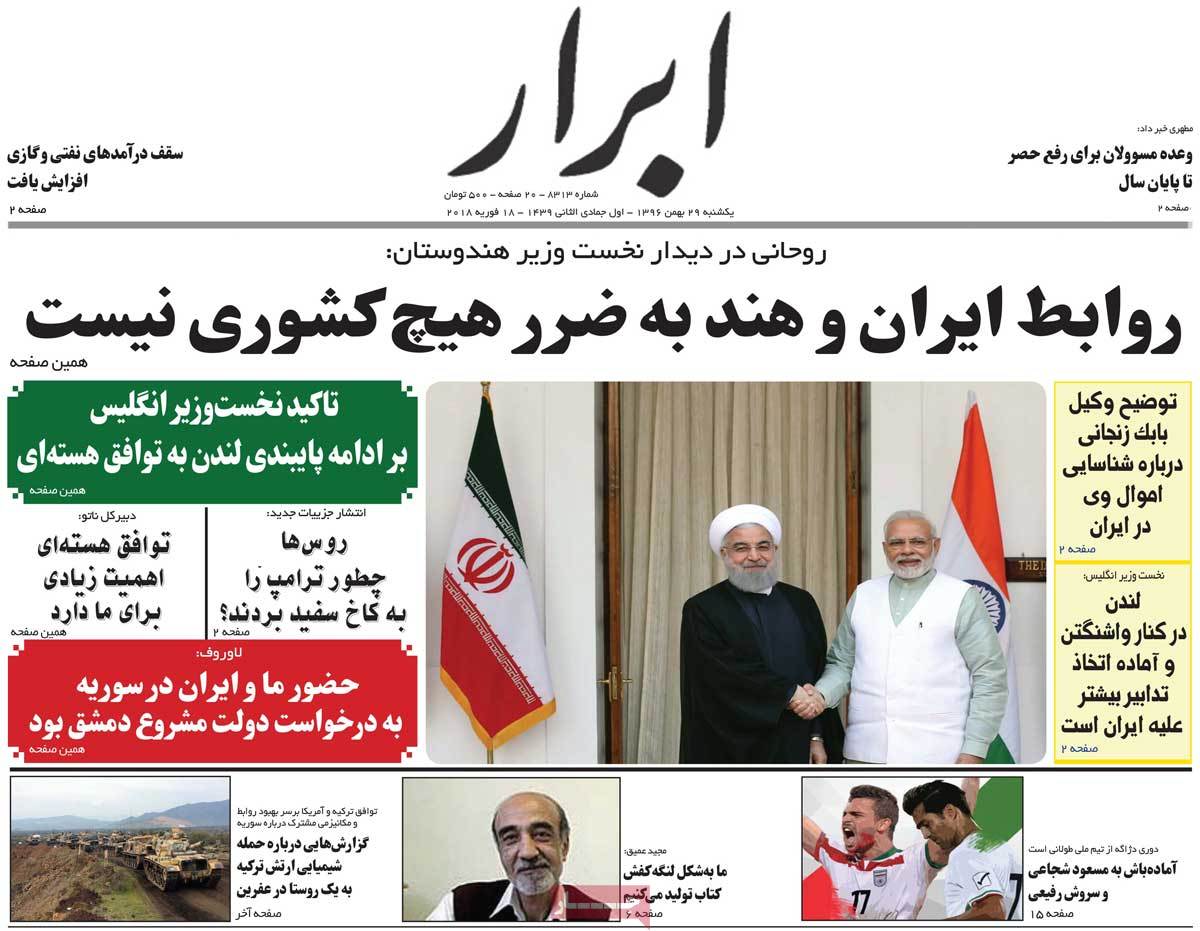
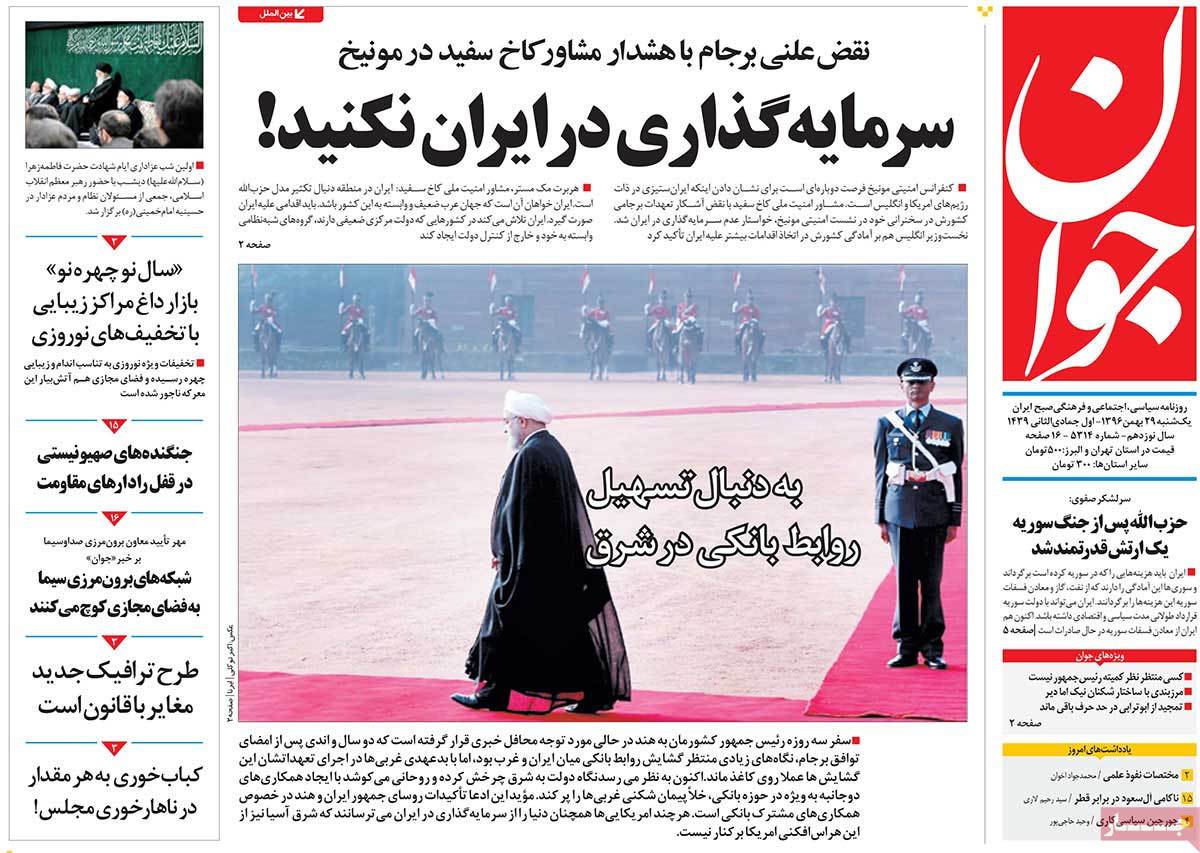
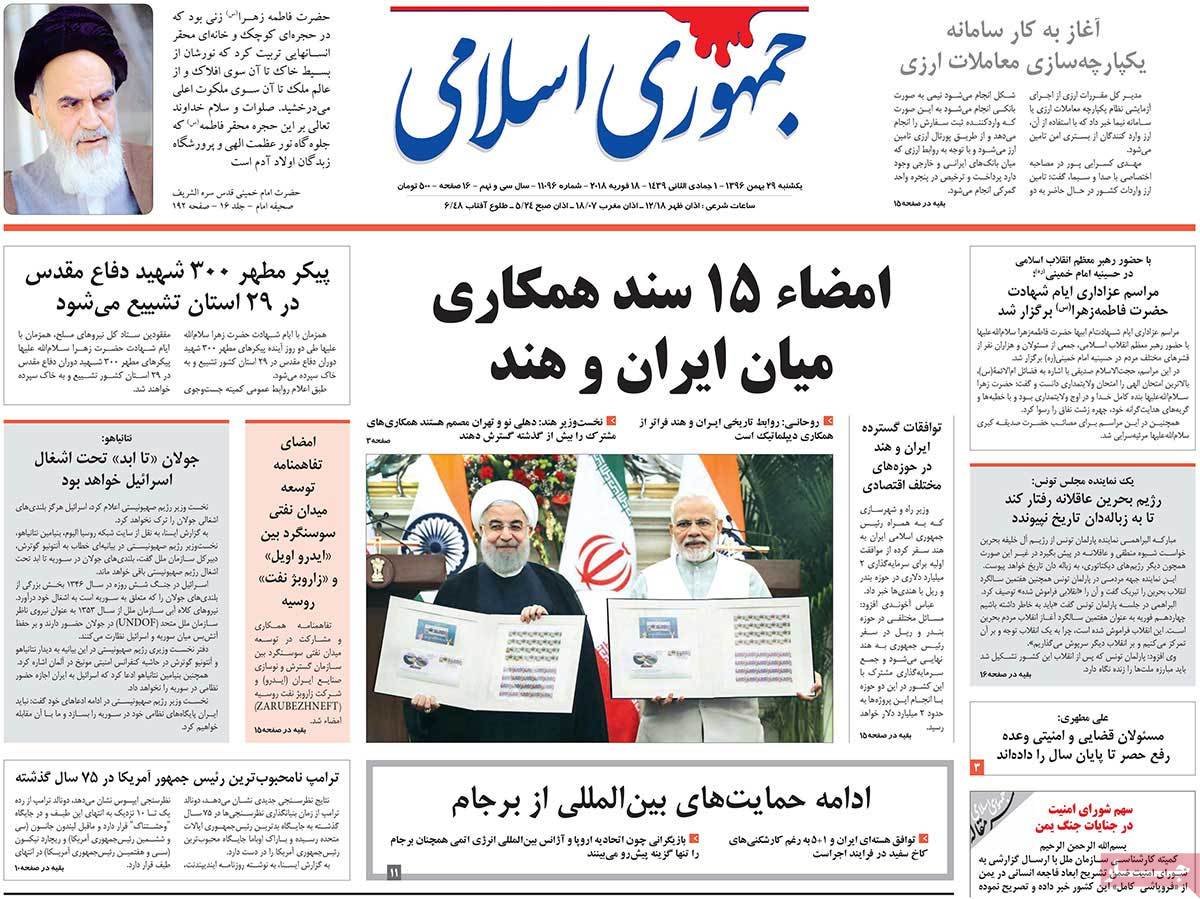
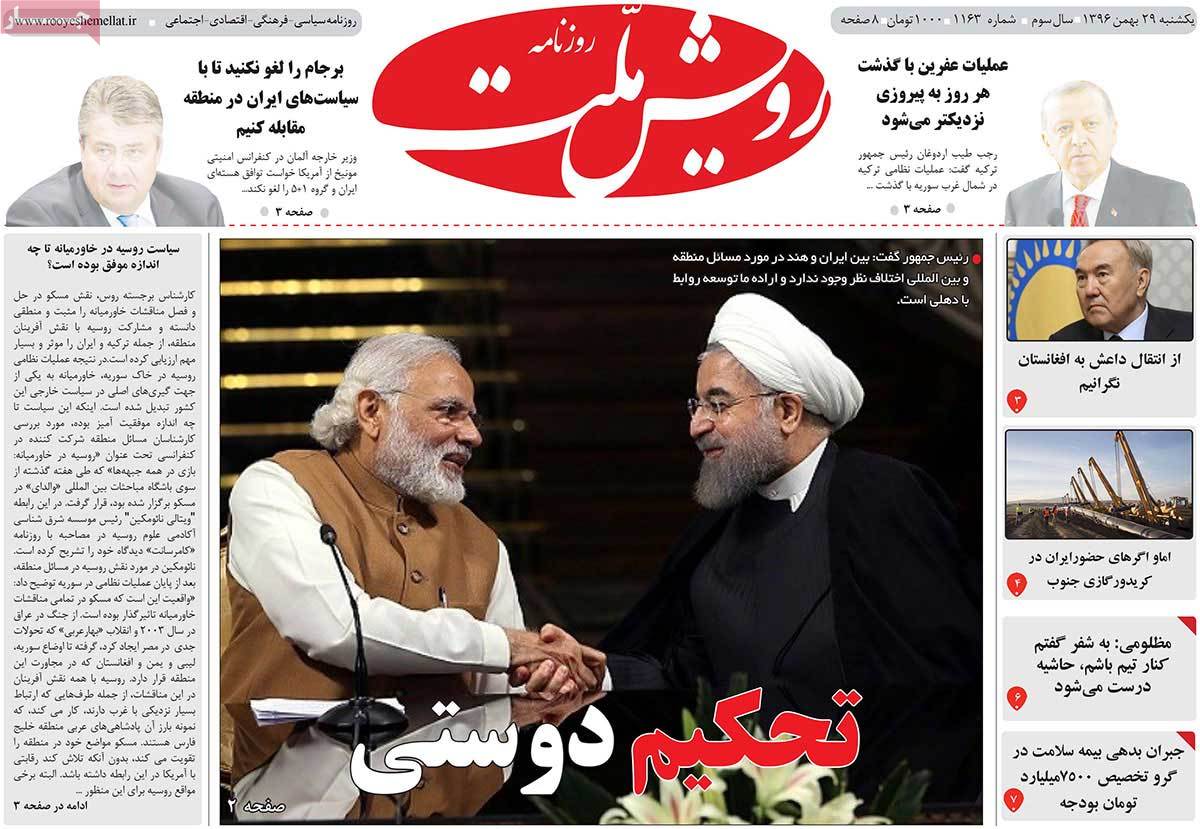
The top story in all papers today was the three-day visit of President Hassan Rouhani to India, and the agreements signed between the two sides.

The ongoing Munich Security Conference and the anti-Iran remarks made by its keynote speakers also received great coverage.

Also a top story was the remarks made by former IRGC chief-commander Major General Yahya Rahim-Safavi about the return of the money Iran spent for Syria through the economic gains Tehran will make in the future.

The above issues, as well as many more, are highlighted in the following headlines and top stories:


19 Dey:

1- Rouhani: Iran Can Meet India’s Energy Needs

  • 15 MoUs Signed between Iran and India

A Look at Iranian Newspaper Front Pages on February 18


Abrar:

1- Rouhani: Iran-India Ties Not Detrimental to Any Country

2- British PM Underlines London’s Continued Commitment to Iran Nuclear Deal

3- Lavrov: Presence of Russia, Iran in Syria at Request of Damascus’ Legitimate Gov’t

A Look at Iranian Newspaper Front Pages on February 18


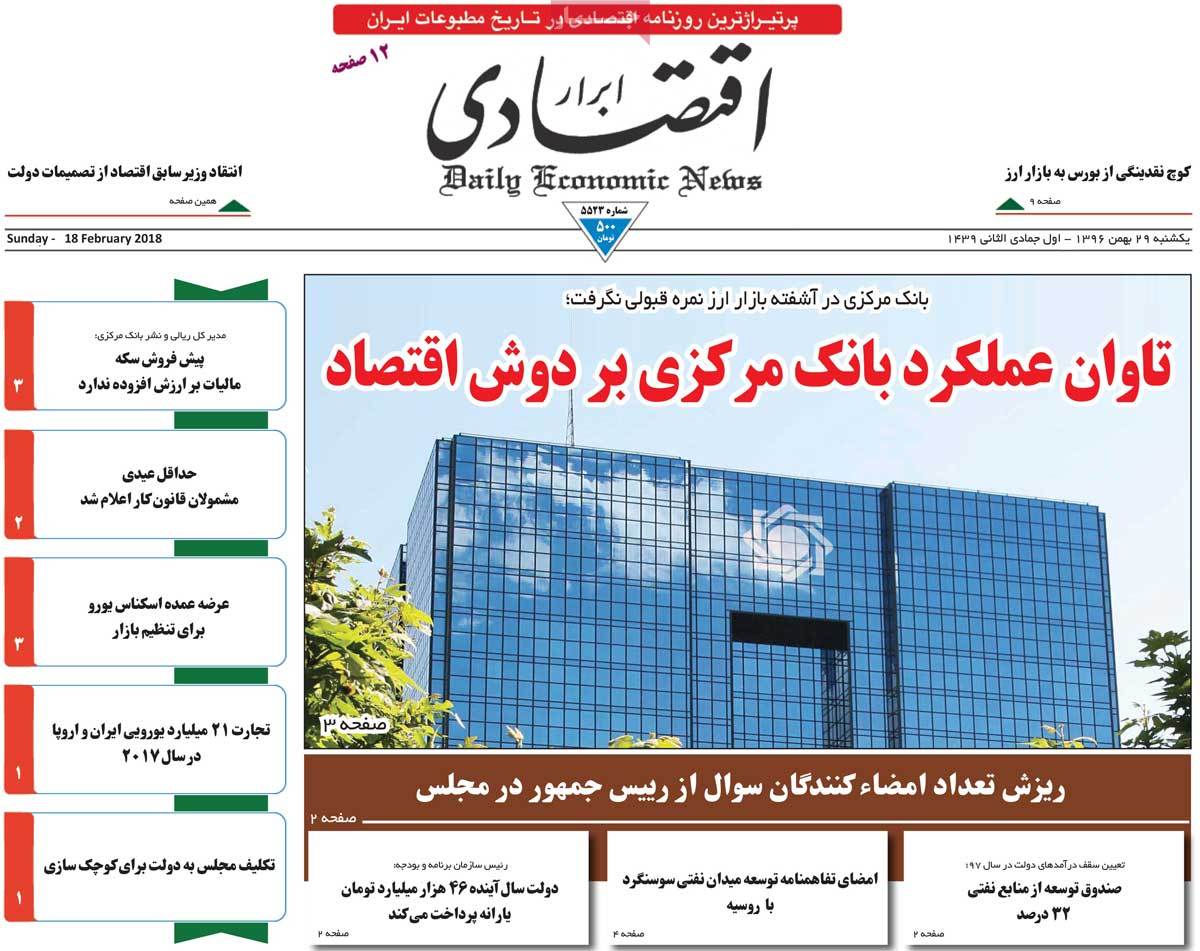
Abrar-e Eqtesadi:

1- Iran’s Economy Suffering from Central Bank’s Poor Performance

A Look at Iranian Newspaper Front Pages on February 18


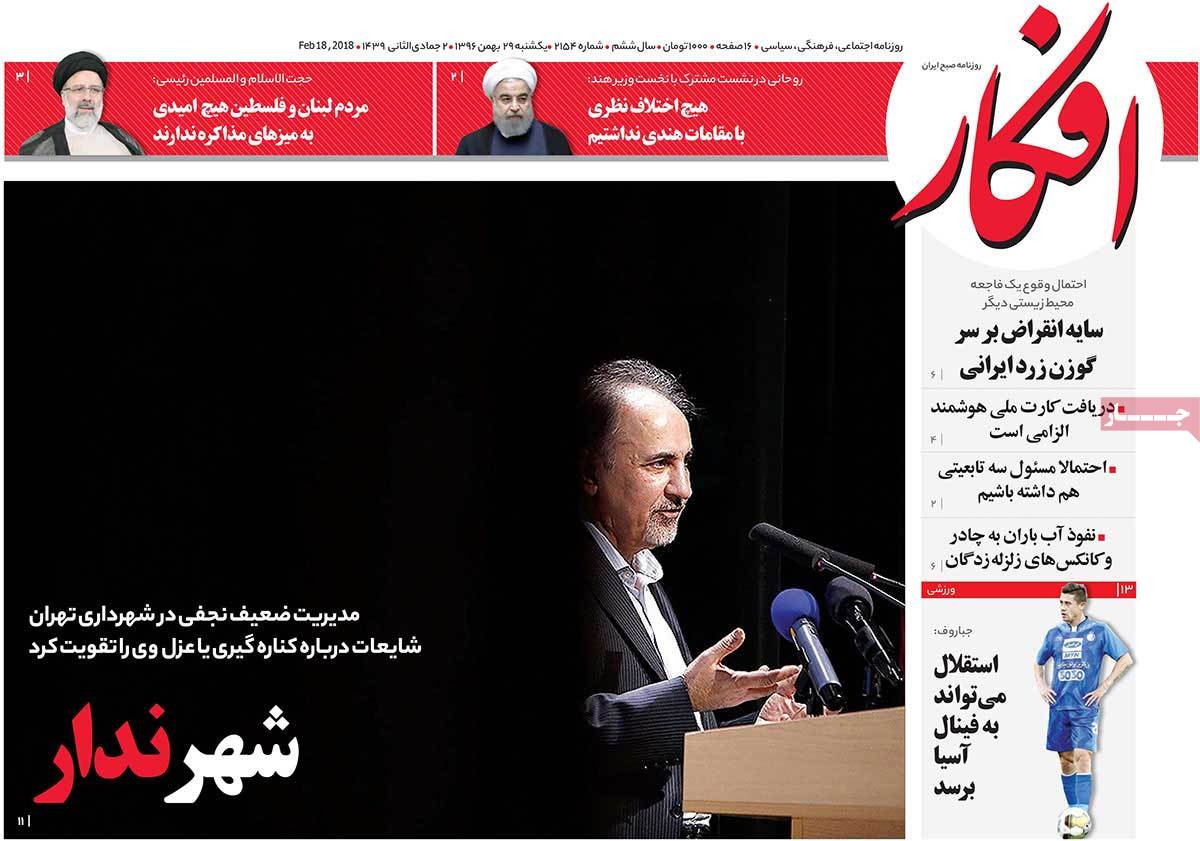
Afkar:

1- Iran’s Yellow Dear on Verge of Extinction

A Look at Iranian Newspaper Front Pages on February 18


Aftab-e Yazd:

1- Iran Foreign Ministry Spokesman: Negotiation Not a Taboo as We Are Logical

  • Qassemi Discusses Iran-EU Differences in Exclusive Interview

2- IRGC General: All the Money We Spent on Syria Must Be Returned

A Look at Iranian Newspaper Front Pages on February 18


Arman-e Emrooz:

1- Top MP: Officials Have Promised to End House Arrest of Opposition Leaders by April

2- IRGC General: Money Spent in Syria to Be Returned

  • Iran Exporting Phosphate from Damascus

3- Plastic Surgeons Earn Highest Income in Iran!

A Look at Iranian Newspaper Front Pages on February 18


Asrar:

1- Rouhani: US Nation, Gov’t to Regret If Washington Breaks JCPOA Promises

A Look at Iranian Newspaper Front Pages on February 18


Ebtekar:

1- Rouhani: Iran Not to Be First One to Violate Iran Nuclear Deal

A Look at Iranian Newspaper Front Pages on February 18


Etemad:

1- Asia vs. West: Rouhani’s Diplomacy in Trip to India

A Look at Iranian Newspaper Front Pages on February 18


Ettela’at:

1- Big Step of Iran and India for Tapping into Joint Capacities

2- Qatar’s Emir: Saudi Policies Endanger Regional Security

3- Munich Security Conference’s Warning about Repercussions of Trump’s Policies

A Look at Iranian Newspaper Front Pages on February 18


Iran:

1- India’s $2 Billion Investment in Iran’s Port, Railway Projects

2- 85% Increase in Iran’s Exports to Europe: European Commission’s 2017 Report

A Look at Iranian Newspaper Front Pages on February 18


Jahan-e San’at:

1- Increased Transit Cooperation between Iran, India

  • Pakistan to Be Put Aside

A Look at Iranian Newspaper Front Pages on February 18


Javan:

1- US National Security Advisor’s Blatant Violation of Iran Nuclear Deal

  • Don’t Make Investment in Iran

2- Iran President’s Three-Day Visit to India: Looking for Facilitation of Banking Ties

3- IRGC General: Hezbollah Turned into Powerful Army after Syria War

A Look at Iranian Newspaper Front Pages on February 18


Jomhouri Eslami:

1- Continued International Support for Iran Nuclear Deal

2- Netanyahu: Golan to Be Occupied by Israel Forever

A Look at Iranian Newspaper Front Pages on February 18


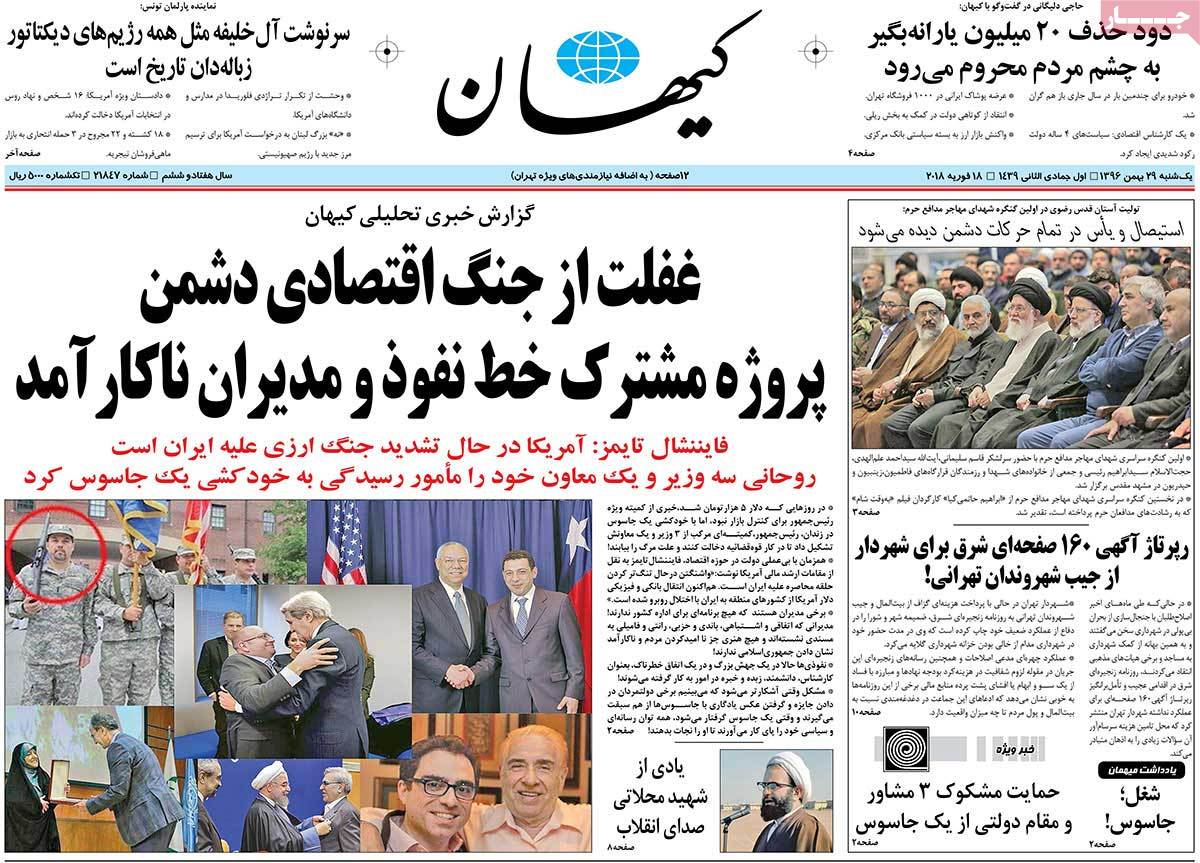
Kayhan:

1- Negligence from Enemy’s Economic War: Joint Project by Infiltrators, Incompetent Managers

  • FT: US Exacerbating Forex War on Iran
  • Rouhani Tasks 3 Ministers, One Deputy with Pursuing Suicide of a Spy

2- Tunisian MP: Al Khalifa to End up in History’s Trash Bin Like All Other Authoritarian Regimes

A Look at Iranian Newspaper Front Pages on February 18


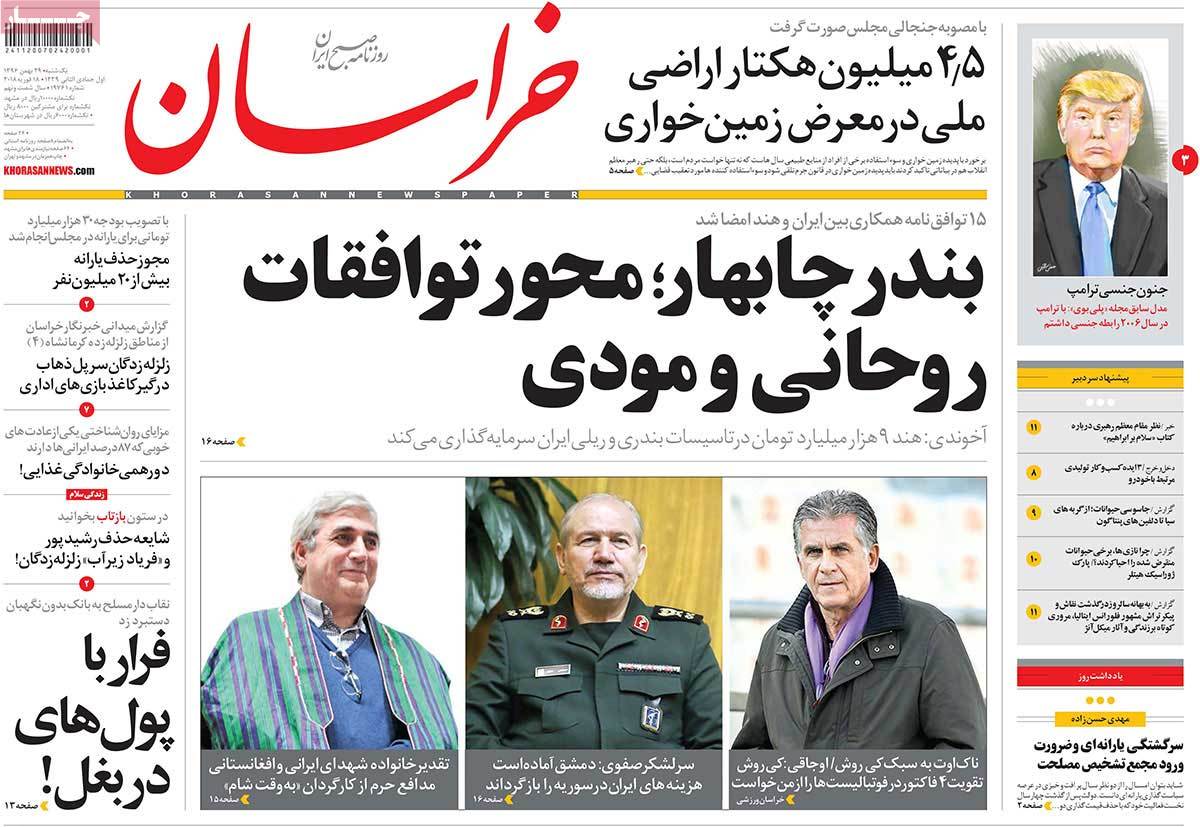
Khorasan:

1- Chabahar Port, Focus of Rouhani-Modi Agreements

A Look at Iranian Newspaper Front Pages on February 18


Rooyesh-e Mellat:

1- German FM: We’ll Counter Iran’s Regional Policies If You Don’t Annul Iran Nuclear Deal

A Look at Iranian Newspaper Front Pages on February 18


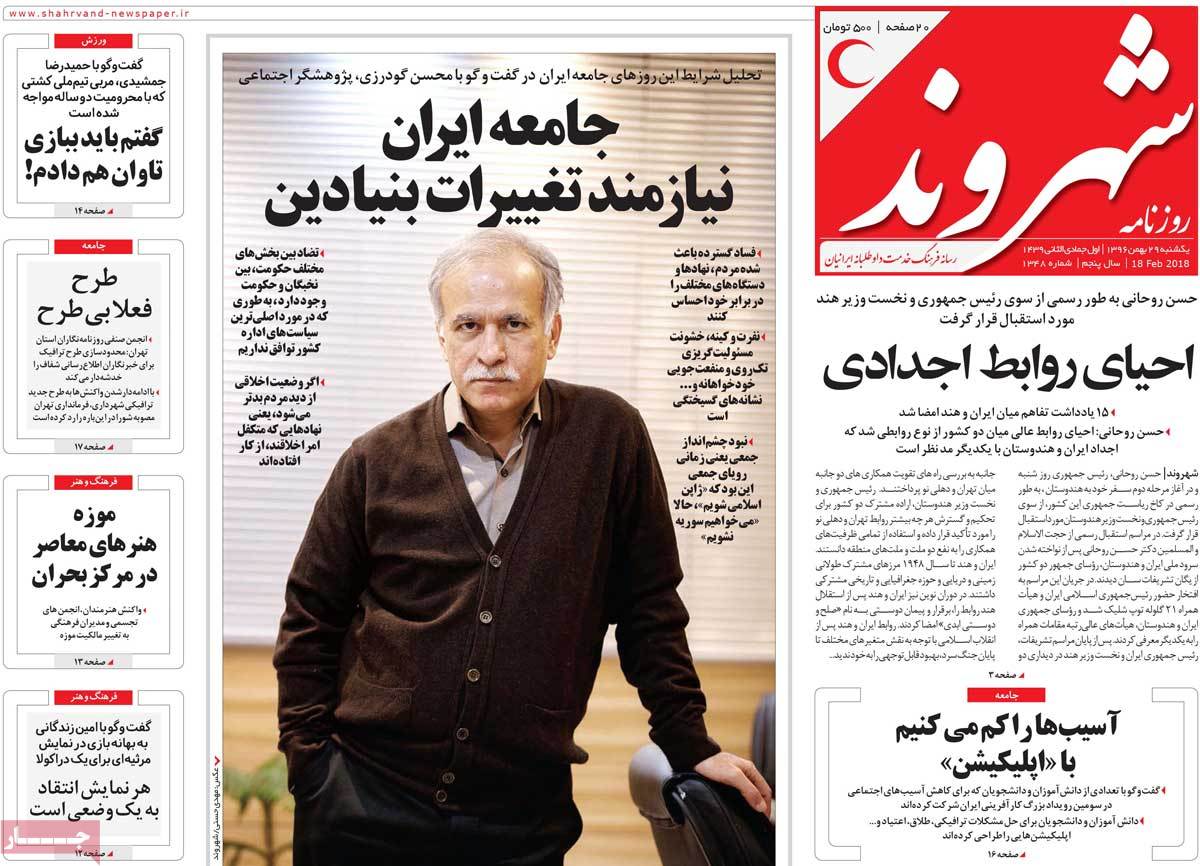
Shahrvand:

1- Iranian Society Needs Fundamental Changes: Analyst

A Look at Iranian Newspaper Front Pages on February 18


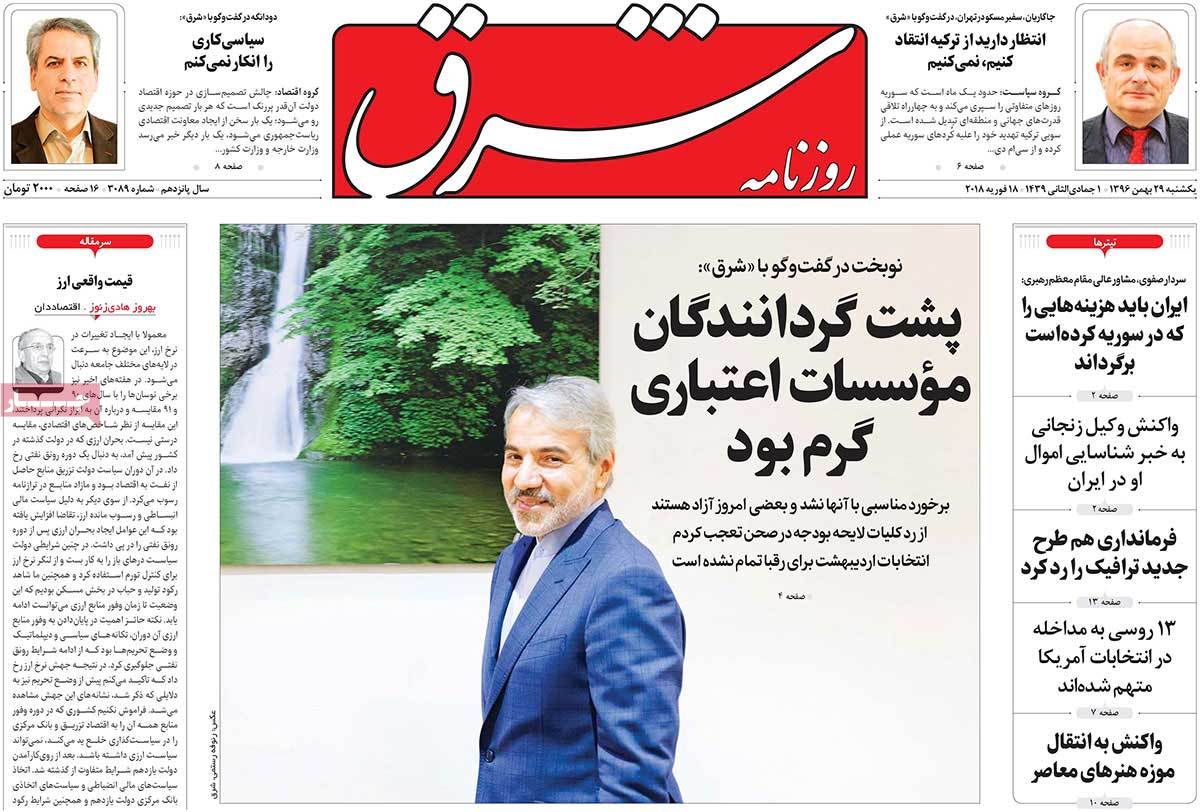
Shargh:

1- Russian Ambassador to Tehran: You Expect Us to Criticize Turkey, But We Don’t!

2- 13 Russians Accused of Interfering in US Elections

A Look at Iranian Newspaper Front Pages on February 18


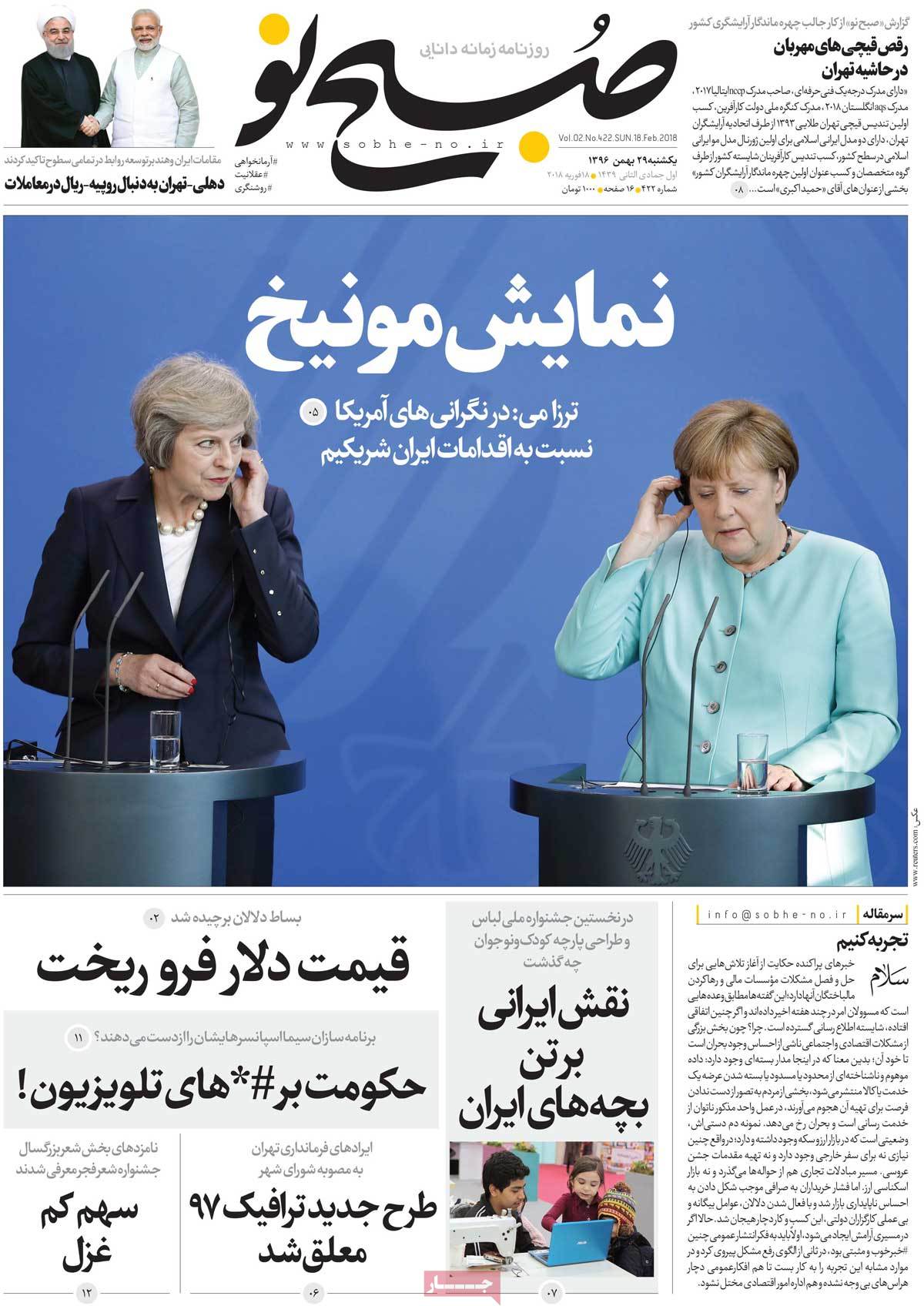
Sobh-e Now:

1- Munich Theatre

  • May: We Share US Concerns about Iran’s Measures

A Look at Iranian Newspaper Front Pages on February 18


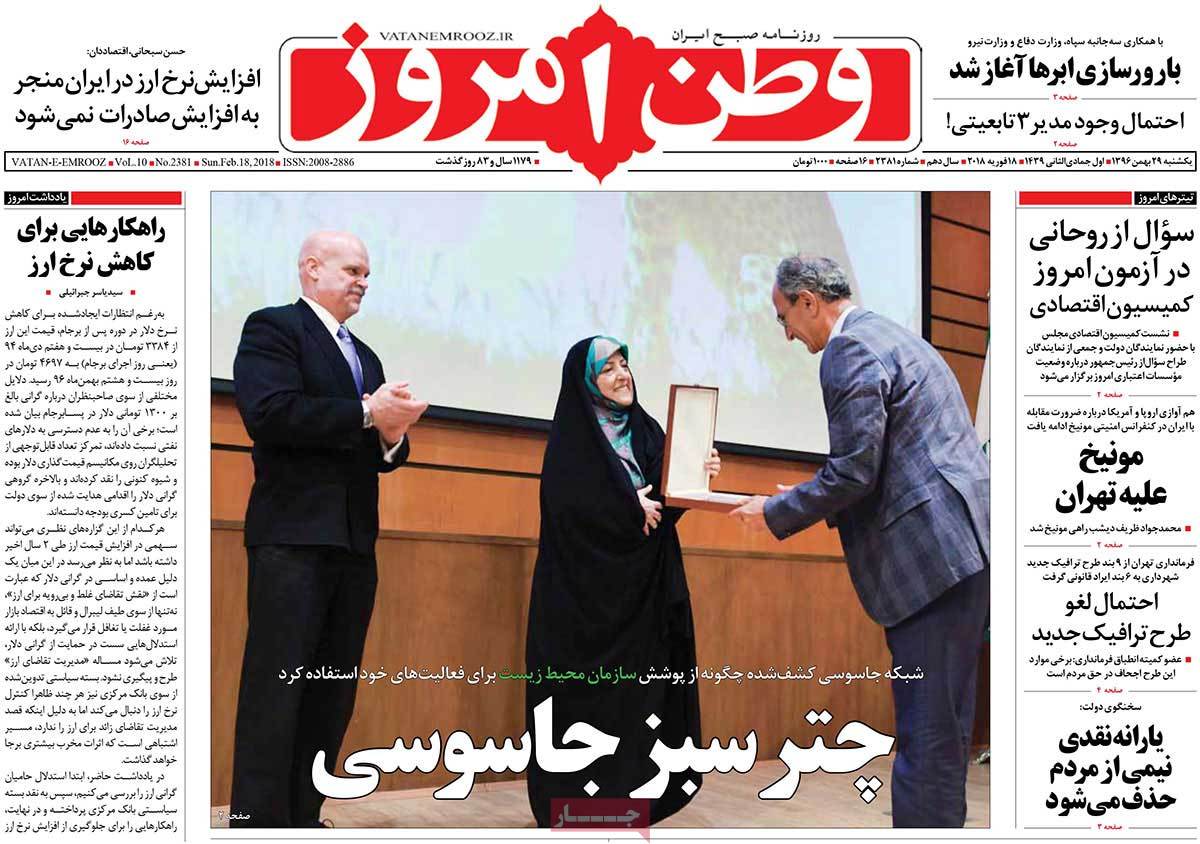
Vatan-e Emrooz:

1- IRGC, Energy Ministry, Defence Ministry Start Seed Clouding in Joint Project

2- Munich against Tehran

A Look at Iranian Newspaper Front Pages on February 18


Iran Calls for Formation of “Strong Region” through Collective Efforts

Zarif

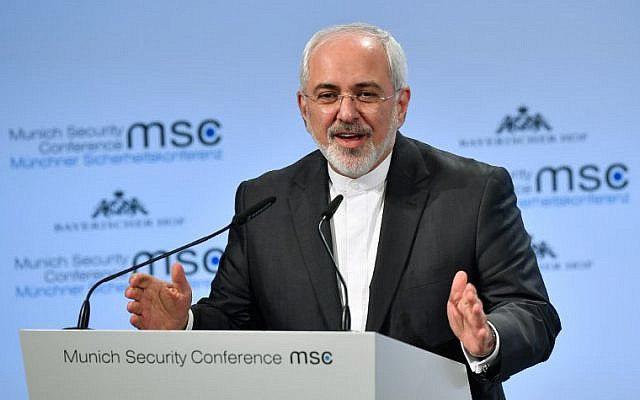
Addressing the 54th edition of the Munich Security Conference (MSC) in Germany on Sunday, Zarif said the Persian Gulf region requires a fresh regional security architecture.

“We believe in, and have proposed, creating what we call a ‘strong region’ as opposed to a ‘strong man in the region.’ A strong region where small and large nations — even those with historical rivalries — contribute to stability,” he noted.

“This is simply recognizing the need to respect the interests of all stakeholders, which by its very nature will lead to stability, while hegemonic tendencies by any regional – or global — power will, by its very nature, lead to insecurity,” the Iranian top diplomat added.

He also pointed to the arms race in the region, which according to Zarif, no country represented in the Munich Security Conference is completely innocent in perpetuating it, and described it as an example of the destructive and unnecessary rivalry that has made the neighbourhood unsafe and insecure.

“In a quest to create our “strong region”, we need to be realistic and accept our differences. We need to move from collective security and alliance formations to inclusive concepts such as security networking which can address issues that range from divergence of interests to power and size disparities,” he noted.

What follows is the full text of his speech:


Good afternoon Ladies and Gentlemen,

I am very happy to be able to make it to this final day of the Munich Security Conference, having just arrived from a historic state visit of President Rouhani to India.

Last year, I repeated before this forum Iran’s proposal for a security arrangement in the Persian Gulf, founded on dialogue, common principles and confidence building measures. Some of our neighbors used their opportunity here last year to level accusations against Iran. Some have, and others will, do the same this year. You were the audience for a cartoonish circus just this morning, which does not even deserve the dignity of a response. So let’s move to more serious issues.

I’m happy that in contrast to the approach of some, the UN Secretary General chose to endorse the forward-looking approach that I outlined here last year. I am here to expand on that, and to tell you that unless there is a collective effort to bring inclusive peace and security to the Persian Gulf region, we will be engulfed in turmoil and potentially far worse for generations to come. And our turmoil, in this interconnected world, is everyone’s turmoil, as evidenced by events in both our region and in the west since the turn of this century.

Today, the territorial defeat of ISIS has heralded the return of some sense of stability to the territory it once occupied. But the defeat of one of the world’s most evil organizations does not mean that the threat of extremism has been removed from the region and beyond. The root causes – particularly its ideology of hate and exclusion – continue and may erupt somewhere else.

For too long, military powers have had multiple strategies to win wars. And for too long, they have ignored any strategy to win the peace. For too long, major powers and their regional allies have made the wrong choices in our region and then have blamed others, particularly Iran, for the consequences of their own short-sighted and trigger-happy strategic blunders:

From supporting Saddam Hussein’s invasion of my country in 1980 to aiding and abetting his use of chemical weapons; from the wars to evict him from Kuwait and then to remove him altogether; from first supporting Al-Qaeda and the Taliban, to waging a war to remove them from Afghanistan; from supporting the same brand of extremist terrorists bringing ruin to Syria to dangerously occupying parts of Syria under the guise of fighting the groups they have armed and financed; from Israel’s invasion and subsequent aggressions on Lebanon and its illegal occupation of Palestine to its routine incursions into Syrian airspace; and from the bombing of Yemen with western supplied planes. What have these actions brought the world?

The US and its local clients in our region are suffering from the natural consequences of their own wrong choices. But they use this and other fora to revive the hysteria on Iran’s foreign policy and obscure its reality. But did Iran force them to make all those wrong choices as some of them ridiculously claim? Are we to blame because we were on the right side of history, fighting Saddam Hussein, Al-Qaeda, Taliban, ISIS, Nusra and the like, while the US and company were financing, arming and supporting them?


Distinguished participants,

As I said before this forum last year, Iran believes that our Persian Gulf region requires a fresh regional security architecture. We believe in, and have proposed, creating what we call a “strong region” as opposed to a “strong man in the region.” A strong region where small and large nations — even those with historical rivalries — contribute to stability.

This is simply recognizing the need to respect the interests of all stakeholders, which by its very nature will lead to stability, while hegemonic tendencies by any regional – or global — power will, by its very nature, lead to insecurity. The arms race in our region — and no country represented in this forum is completely innocent in perpetuating it — is an example of the destructive and unnecessary rivalry that has made our neighborhood unsafe and insecure.

In a quest to create our “strong region”, we need to be realistic and accept our differences. We need to move from collective security and alliance formations to inclusive concepts such as security networking which can address issues that range from divergence of interests to power and size disparities. Security networking is a non-zero-sum approach that accepts that security is indivisible, as opposed to alliances and blocks, which are fundamentally based on the defunct zero-sum approach of gaining security at the expense of the insecurity of others.

The nuclear deal was an example of such non-zero-sum thinking. Recognizing differences but also recognizing a common goal, and maintaining respect for the interests of all parties guided the difficult negotiations that led to the successful conclusion of the JCPOA. And that may be why those who see everything in terms of one-sided profiteering are so intrinsically opposed to it.

Immediately after the conclusion of JCPOA, Iran sought to use the same approach for the Persian Gulf and proposed to create a ‘Regional Dialogue Forum’. That proposal fell on deaf ears, but is still on the table. It is the only way out. It could become, if our neighbors join us, a forum that will be used as an instrument for helping organize and advance dialogue at all formal and informal levels in our region, and while encouraging inter-governmental and formal dialogue, it can also promote dialogue between scholars and thinkers.


Distinguished participants,

The parameters of Iran’s proposed regional architecture are simple but effective: rather than trying to ignore conflicts of interests, it will accept differences. Being premised on inclusivity, it can act as a firewall to prevent the emergence of an oligarchy among big states, and importantly, it allows smaller states to participate and have their interests protected.

Like the Helsinki process, the future security architecture in the Persian Gulf should be based on the “ticket principles” and “CBM baskets”. All countries around this strategic yet volatile waterway should be able to enter by committing to a series of common standards enshrined in the UN Charter, such as sovereign equality of states; refraining from the threat or use of force; peaceful resolution of conflicts; respect for the territorial integrity; inviolability of borders; non-intervention in the domestic affairs of states; and respect for self-determination within states.

We also recognize that we need confidence-building measures in the Persian Gulf: from joint military visits to pre-notification of military exercises; and from transparency measures in armament procurements to reducing military expenditures; all of which could eventually lead to a regional non-aggression pact. We can begin with easier to implement issues such as the promotion of tourism, joint investments, or even joint task forces on issues ranging from nuclear safety to pollution to disaster management.

At a time when we are dangerously close to escalating conflicts that will affect our children and grandchildren, I encourage my counterparts in the Persian Gulf to join Iran in making these proposals a reality.

“India’s Interest in Closer Ties with Iran Only for Economic Reasons”

As Iranian President Hassan Rouhani made a three-day trip to India to further promote Tehran-New Delhi ties, the Persian-language E’temad newspaper has conducted an interview with political analyst Mir-Mahmoud Mousavi to find out more about Iran-India relations and the circumstances surrounding them. The highlights of the interview conducted by Sara Massoumi follow:

Indian Prime Minister Narendra Modi used to be the Chief Minister of Gujarat. His successful economic policies in Gujarat turned him into a high-profile figure among top Indian leaders and become a candidate of the Bharatiya Janata Party (BJP) in the election. This success of Modi’s came as he was on the black list for killing 2,000 Muslims in 2002, and was even banned from travelling to Europe and the United States. He has focused his policies on economic development, which, in turn, is not possible without having broad relations with other countries.

One of the initiatives of Modi is to transfer the material and intellectual assets of Indian expats to India. Over $70 billion is reportedly funneled into India by Indian expats on an annual basis. The BJP led by Modi has arrived at the conclusion that there is on key to the sustenance of India’s development and protection of the party: economic development. Accordingly, Modi seeks to utilize India’s foreign relations to achieve the nation’s economic objectives.

India has not taken its ties with Iran seriously enough, and its view of Iran is not beyond the economic issues. New Delhi has not threatened Iran’s interests so far, but in some cases, its behaviour has not been in line with Tehran’s interests. There is a concern that India would serve as an ally of the US during the implementation of the Iran nuclear deal in the future.

Given the threats that the US believes are posed to it by China, certain countries are pursuing the policy of empowering Indian to counter Beijing. This is true, but it is not a new idea. In the 1990s, some renowned American politicians had raised the question how Asia could be run and growing China be controlled. Since then, opinions have focused on the idea that India could play a key role in that regard. India’s potential in that path is being realized, and New Delhi, too, is taking advantage of that chance smartly.

Economic relations are somehow intertwined with political ties as well. The Western investment in India and the promotion of extensive relations between the West and New Delhi bring with them relations which simply go beyond economic ties to include such domains as security and defense. Of course, historical conflicts in the regions could be an impediment to the implementation of programs and achievement of goals. To settle them, New Delhi needs to forge cooperation with transregional powers. War on terror, establishing security in Afghanistan and resolving the long-running dispute between India and Pakistan are on New Delhi’s agenda. India is seriously pursuing the policy of having relationship with neighbouring countries, and as the Big Brother, has plans to manage the region.


India has not taken its ties with Iran seriously enough, and its view of Iran is not beyond economic issues. New Delhi has not threatened Iran’s interests so far, but in some cases, its behaviour has not been in line with Tehran’s interests. There is a concern that India would serve as an ally of the US during the implementation of the Iran nuclear deal in the future.


Since the illegitimate entity of Israel came into being, it has been surrounded by Muslim countries, and India is Israel’s first Non-Muslim neighbour to the east. Therefore, Israeli Prime Minister Benjamin Netanyahu is seeking to expand Tel Aviv’s relations with New Delhi. On the other hand, India regards terrorism attributed to Islam as one of the most serious threats facing it. Israel shares the same concern. Tel Aviv and New Delhi began working together on fighting terrorism at least two decades ago. In the first step, the two sides implemented plans on exchanging information and news as well as training forces; in later steps, exchange of experience in the field of intelligence and relevant technologies took priority. In the third and current phase, the two sides are running joint ventures to produce military equipment and exchange intelligence and spying devices.

As a member of the Non-Aligned Movement during the Nehru and Gandhi era, India has a long history of defending Palestinians’ rights and is careful not to rapidly distance itself from that strategy and not to cause Palestinians and Arabs’ discontent. On the other hand, India’s Muslim minority contains a considerable number of people, around 200 million.

India is hungry for energy. Although the importance of West Asia as an oil hub has diminished over the past 20 years, still it is one of the most significant sources of energy in the world. Given that economic development is top of the policies of the Modi administration, meeting the country’s energy demands is one of the pillars of that approach. So, India should be present in the region to secure the energy supplies it needs.

As for Tehran-Riyadh divisions, India has not get involved in the dispute. The country has maintained its cordial relations with Saudi Arabia to be able to use the kingdom’s energy and other assets. On the other hand, India has enhanced its age-old relations with Iran. India attaches great importance to Iran’s energy and good economic market. However, India’s differences with Pakistan is a serious issue for New Delhi. Iran and Saudi Arabia have what it takes to tip the balance in favour of Pakistan, so New Delhi has but to have good relations with Tehran and Riyadh.

In order to operate in Asia, the country needs to have political and security programs. Given that the West has also become active and China’s status has been strengthened, Iran needs an overarching plan to delineate a road map for Tehran’s policies in Asia. Iran and India have good potential for cooperation.

Iran is the only possible route for India to gain access to Central Asian countries because Pakistan, given its dispute with India, does not allow it to gain access to the potential markets in the region.

Iran FM to Visit Russia to Attend Valdai Club Conference

Zarif’s trip to Moscow is aimed at meeting with his Russian counterpart Sergey Lavrov and delivering a speech at Valdai Discussion Club’s Middle East Conference.

According to a Farsi report by IRIB, this year the annual Valdai Conference’s theme is “Russia in the Middle East: Playing on All Fields.”

The annual Valdai Club Middle East Conference, to be attended by prominent politicians, diplomats, scholars and public figures from more than 30 countries, will kick off in Moscow on Monday, February 19.

Zarif and Lavrov are among the keynote speakers. The conference, jointly held by the Valdai Club and the Institute of Oriental Studies of the Russian Academy of Sciences, is widely considered one of the Club’s most successful projects, since the format of expert dialogue makes it possible to bring together representatives of the region’s countries and jointly look for common ground despite differences.

The two-day conference will include eight sessions dedicated to various Middle East-related issues, including Russia’s diplomatic, mediatory, and political role in the region as well as its perception by other parties.

In particular, experts will discuss the post-war reconstruction of Syria, the prospects of settlement of the Palestinian-Israeli conflict and the situation in Yemen, the mechanisms of providing assistance to Libya and resolving the Kurdish issue, as well as the ways to reduce tensions in Iran’s relations with its neighbours.

The Valdai Discussion Club is a Moscow-based think tank, established in 2004. It is named after Lake Valdai, which is located close to Veliky Novgorod, where the Club’s first meeting took place.

Russian President Vladimir Putin has met with the participants of the Valdai Club’s annual meetings every year since its founding.

No More Reliance on Foreigners after Nuclear Deal: Iran Leader

One of the "American Honesty" posters installed in different parts of Tehran amid the nuclear negotiations in 2013

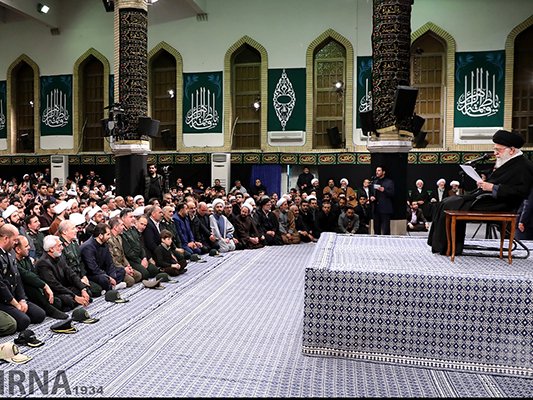
Speaking in a Sunday meeting with a group of Iranian people from East Azarbaijan province in Tehran, the Leader urged the country’s officials to avoid relying on foreigners in developing Iran’s economy.

“Prosperity of domestic economy needs good exports, import of goods as much as required, and attracting foreign investment, but Iranian managers must be in charge, and foreigners should not be relied upon in this regard.”

The Leader pointed to the “economic earthquake” and “very heavy blow” that struck certain developed countries in Eastern Asia a decade ago, and described it as a great lesson for Iran.

“The blow took these countries to poverty and misery overnight, and that was a result of relying on foreign investment,” he added.

Ayatollah Khamenei also noted that the Islamic Republic did not gain anything by trusting foreign powers in the case of the nuclear deal and the negotiations that led to the finalization of the JCPOA.

“We witnessed the result of relying on foreigners in the case of JCPOA, and achieved nothing from trusting them in nuclear negotiations.”

“However, our officials are fortunately dealing with the issue well, and our foreign minister, to whom I am grateful, is adopting very good and strong approach to the deceits of Americans and Europeans,” he noted, adding that such approach must be continued.

“We must take advantage of the foreigners, but we should not trust and rely on them, because they would dominate the country’s fate through different ways,” he added.

No More Reliance on Foreigners after Nuclear Deal: Iran Leader


Promotion of Defence Power Necessary Even If Entire World Disagrees

The Leader further pointed to the renovation of the country’s defence power, and said the enhancement of all methods, instruments, and equipment needed for defending the country today and tomorrow must be given priority.

“Without even a moment of hesitation, the country must move towards anything it needs for defence, even if the entire world is opposed,” he added.

Ayatollah Khamenei strongly criticized the enemies who threaten the human kind using their warfare, but express opposition to the country’s missile defence power.

“It is none of your business. You want the Iranian nation not to have any missile and defence equipment so that you could bully it,” he added, addressing the enemies.

“We believe nuclear bombs and Weapons of Mass Destruction are haram [prohibited based on Islamic teachings], but we will strongly pursue acquiring whatever we would need,” the Leader noted.