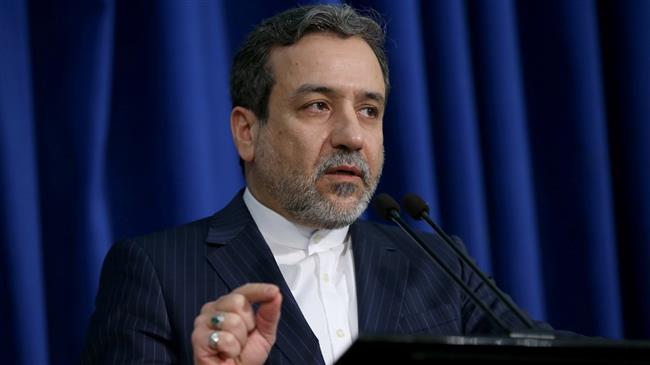
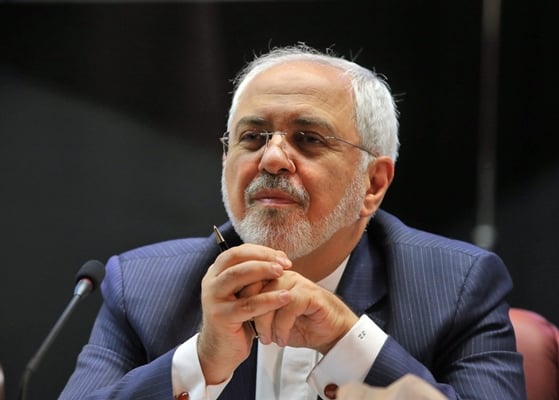
In an address to a meeting of Iran’s Chamber of Commerce on Sunday, Zarif said the US decision to withdraw from the Iran nuclear deal has tarnished the country’s image at the international arenas.
“In the past, most countries refused to cooperate with Iran because the country was portrayed as a notorious state in the world but today this is the US under Trump administration which has to pay the price of being notorious for its pullout of international treaties,” he was quoted as saying in a report by ILNA.
He underlined that though Trump’s anti-Iran threats may inflict a blow on Tehran in the short term, they would end up in the country’s interests in the long run.
He said many maintain that the US withdrawal from the JCPOA means that the nuclear accord suffers from some flaws.
“This comes as Trump has already pulled out of a number of other international treaties like the North American Free Trade Agreement (NAFTA), Paris Agreement and Asia-Pacific Ocean Economic Cooperation. Does it mean that all these international treaties were flawed?”
Elsewhere in his remarks, the Iranian top diplomat said to achieve its goals, the US doesn’t hesitate to resort to tricky measures and psychological war. “It is now seeking to force Iran to pull out of the JCPOA.”
He went on to say that except for the US and a few tiny states in the Persian Gulf, no other state in the world is following in the footsteps of the US when it comes to the JCPOA. “Even Canada says that it wants the nuclear deal to be preserved.”
According to Zarif, Iran can play a leading role in the JCPOA’s success or failure. “But we should have this point in mind that the failure of the nuclear deal is dangerous for Iran. We may decide to leave the deal in the coming stages but at present this is not our choice.”
Zarif further asked why on the earth some people inside the country should cast doubt on its achievements. “They maintain that the JCPOA has had no achievement for the Islamic Republic.”
He concluded that the enemies are seeking to inflict a heavy blow not on the Islamic establishment but the whole Iran, and thus all Iranians, from reformist and conservative to non-partisans and even opponents of the Islamic Establishment, must unite against the country’s enemies.
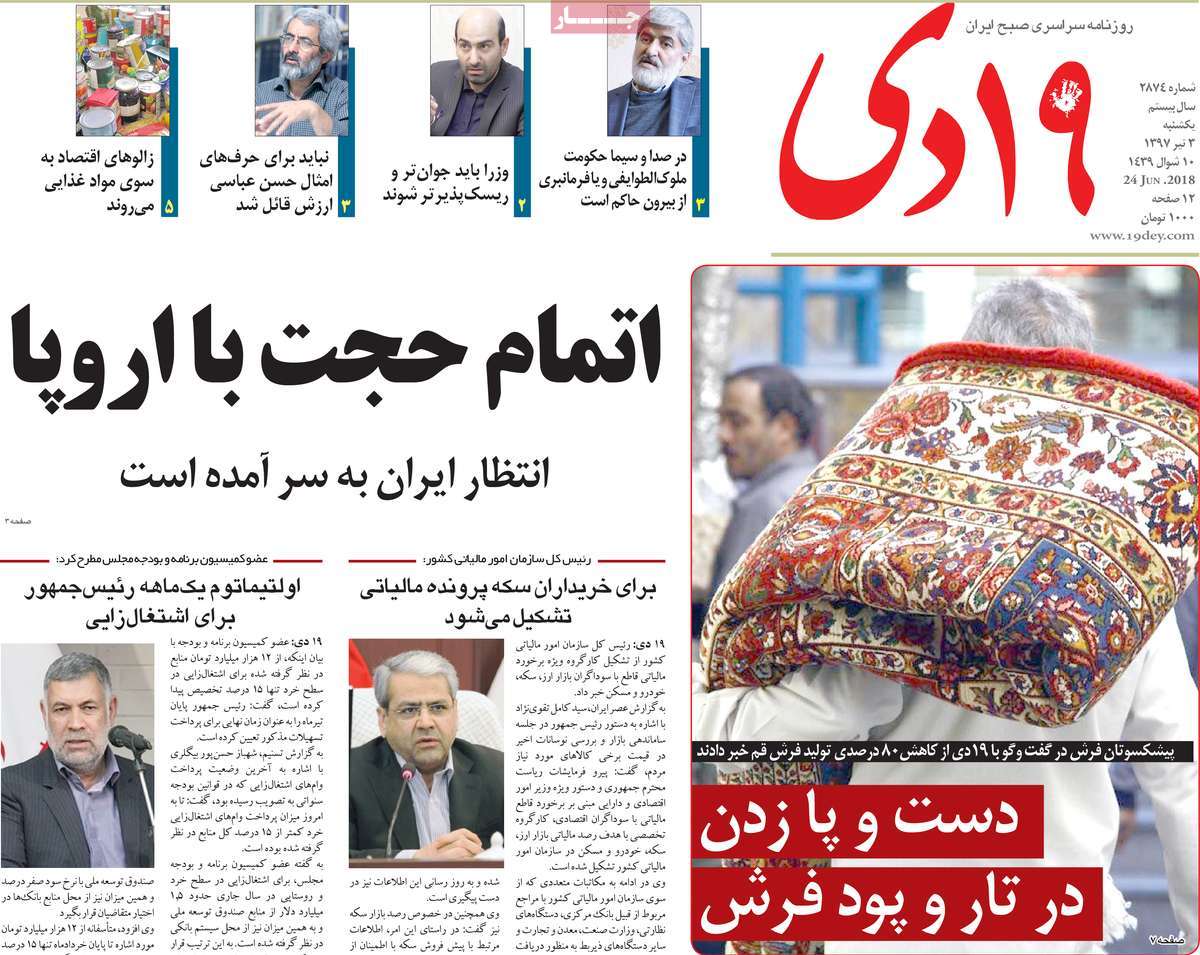
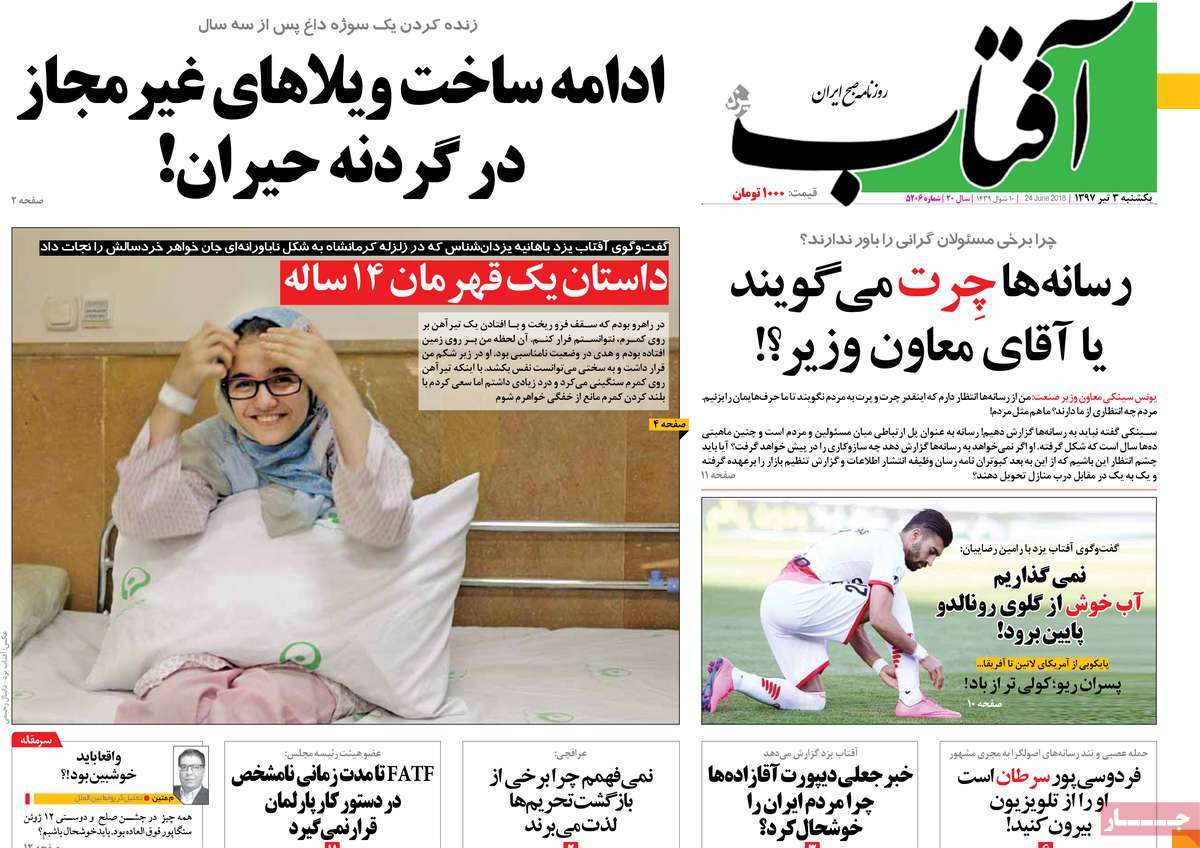
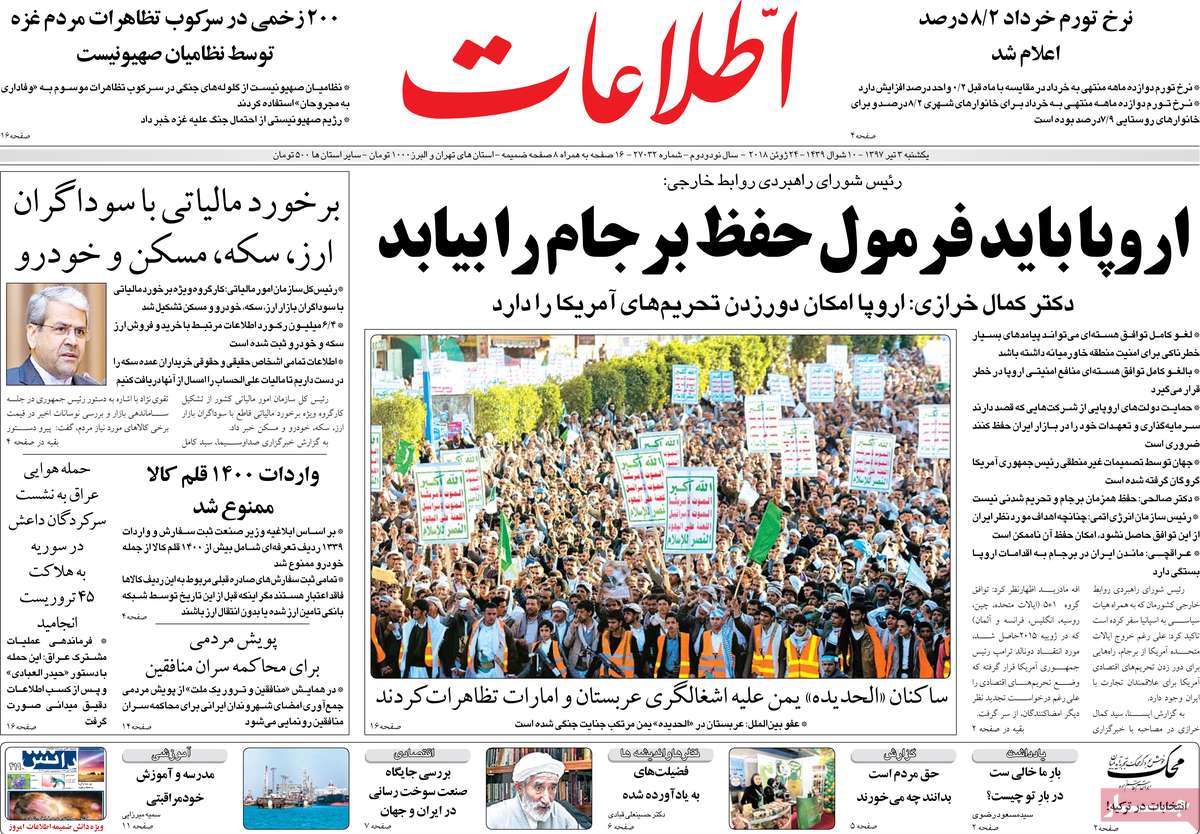
The top story in many newspapers today was the ultimatum given by Iranian officials to the European Union over the deadline for offering their plan to save the Iran nuclear deal.
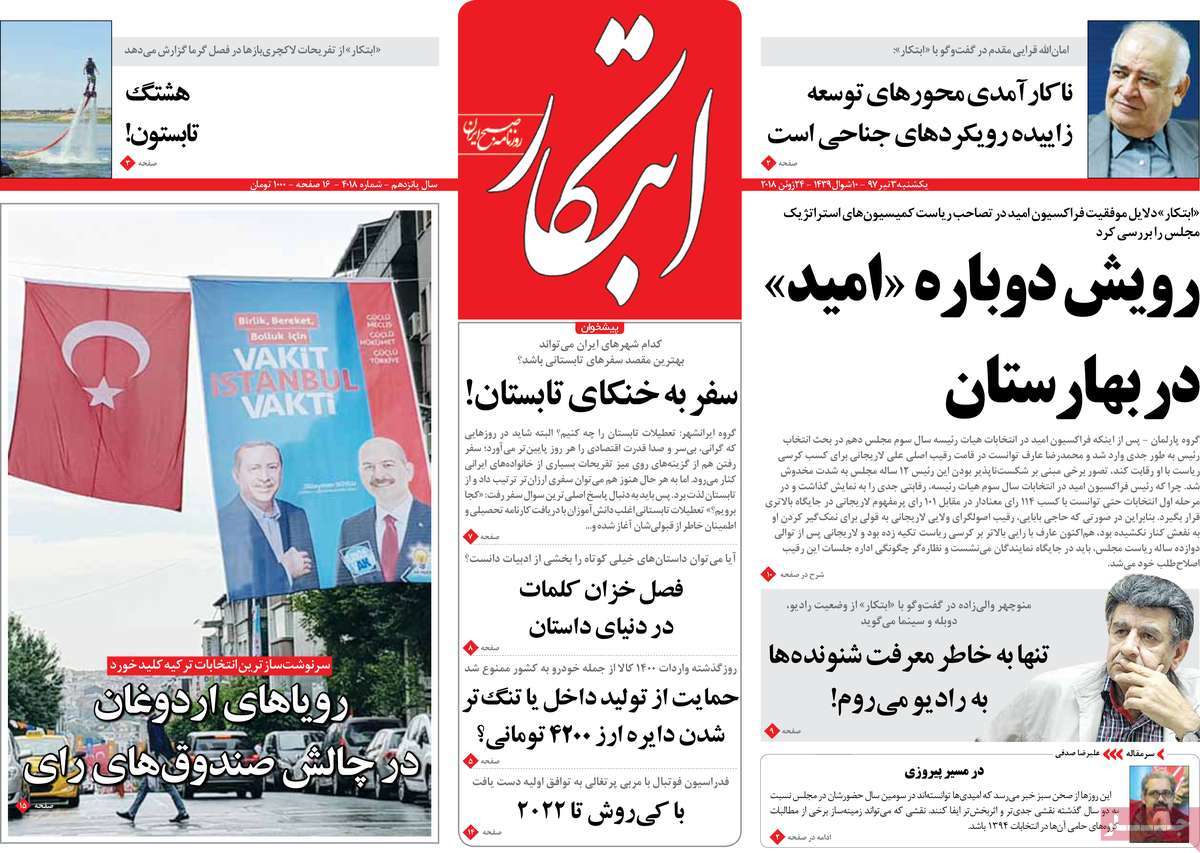
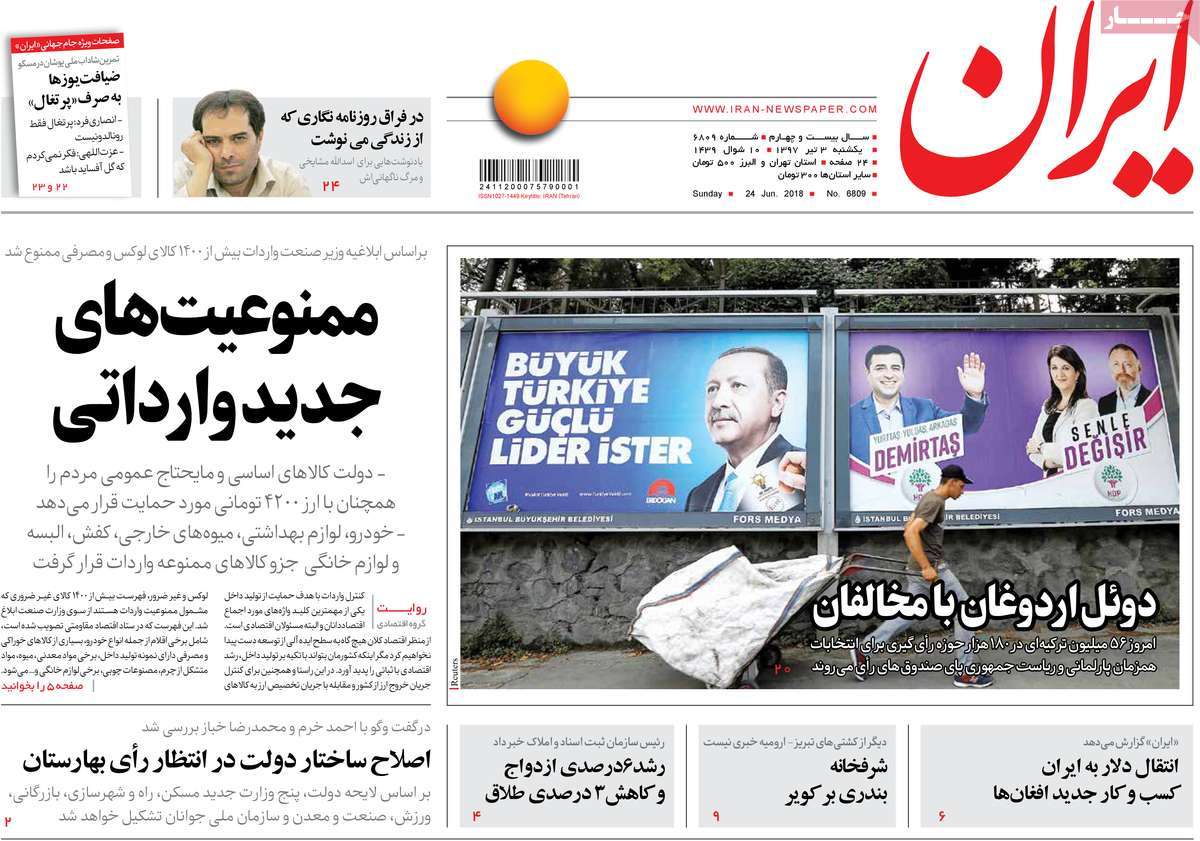
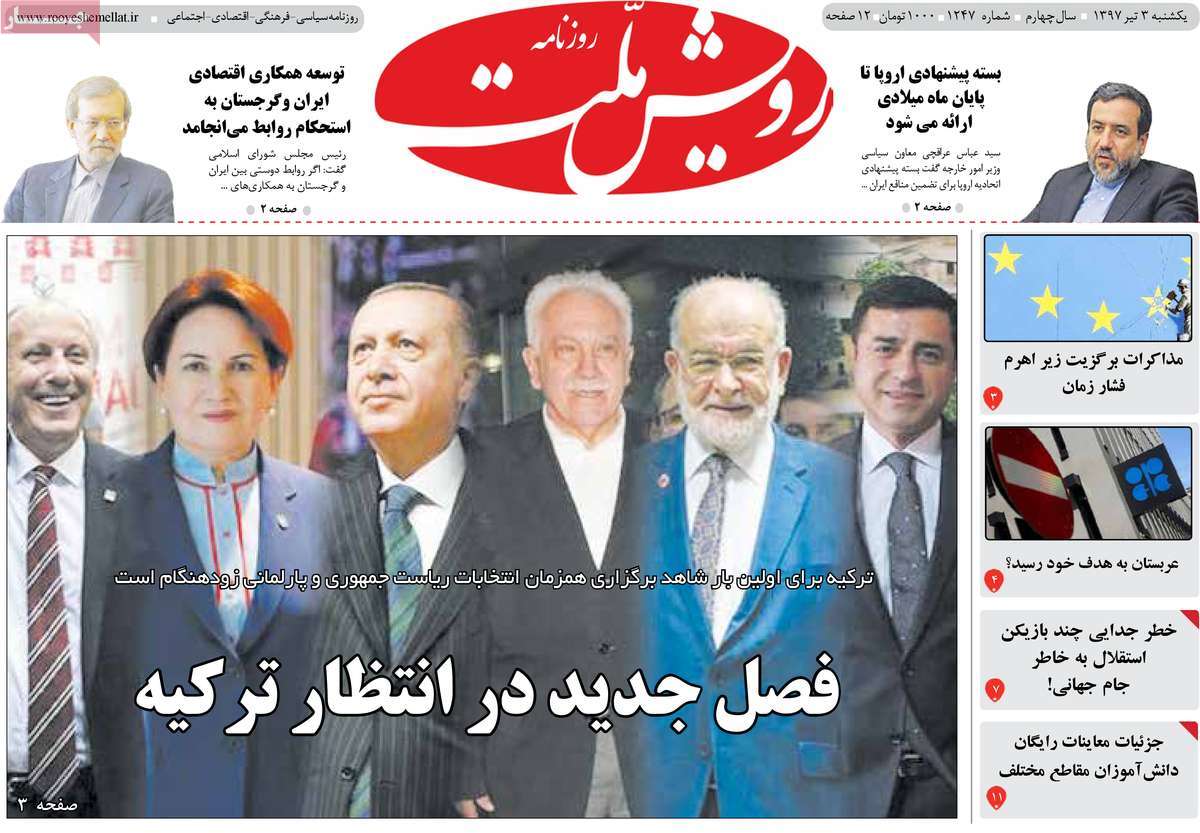
Several papers also covered the Sunday presidential and parliamentary elections held in Turkey, in which incumbent president, Recep Tayyip Erdogan, hopes to secure another re-election in the most fiercely-fought polls in the country.
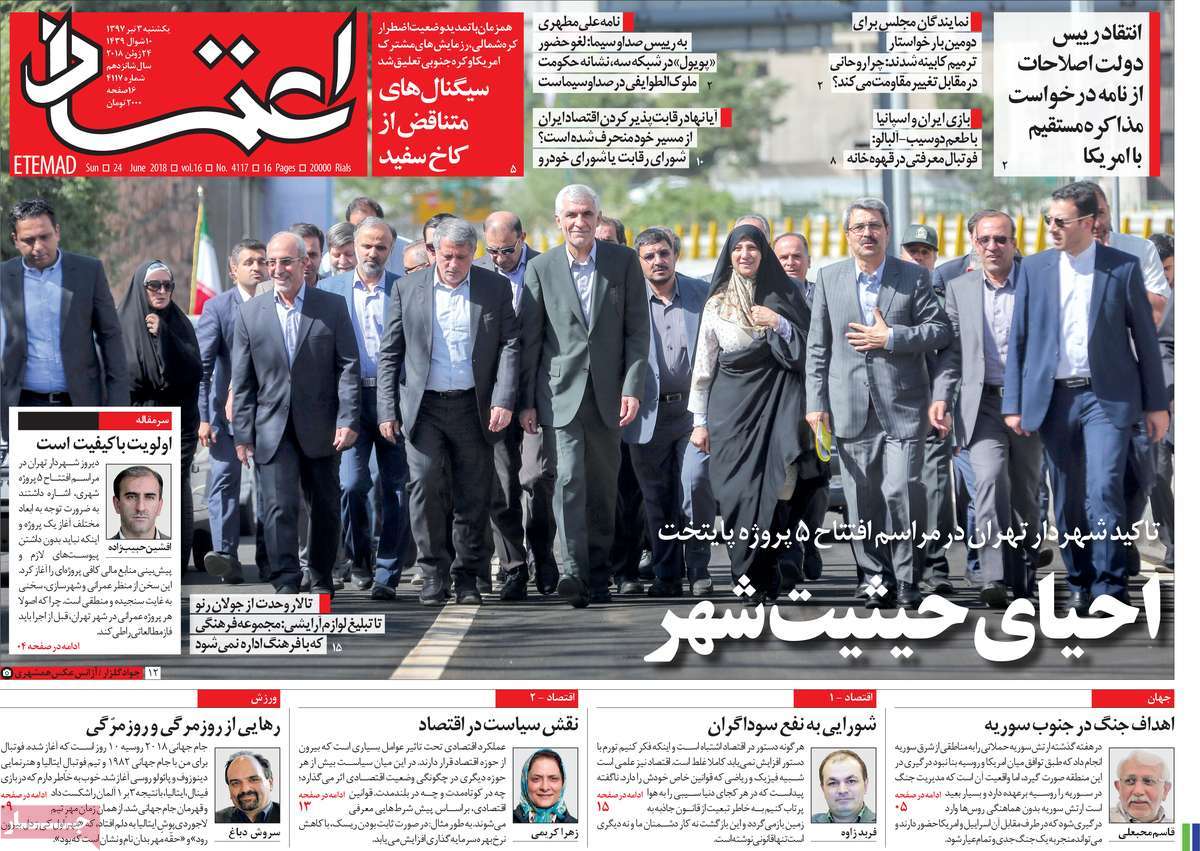
Also a top story was former president and reformist leader Seyyed Mohammad Khatami’s criticism of a letter by a group of reformist figures who called for direct and unconditional talks with the US. Khatami said such talks would be against the country’s national interests and destroy Iran’s dignity.
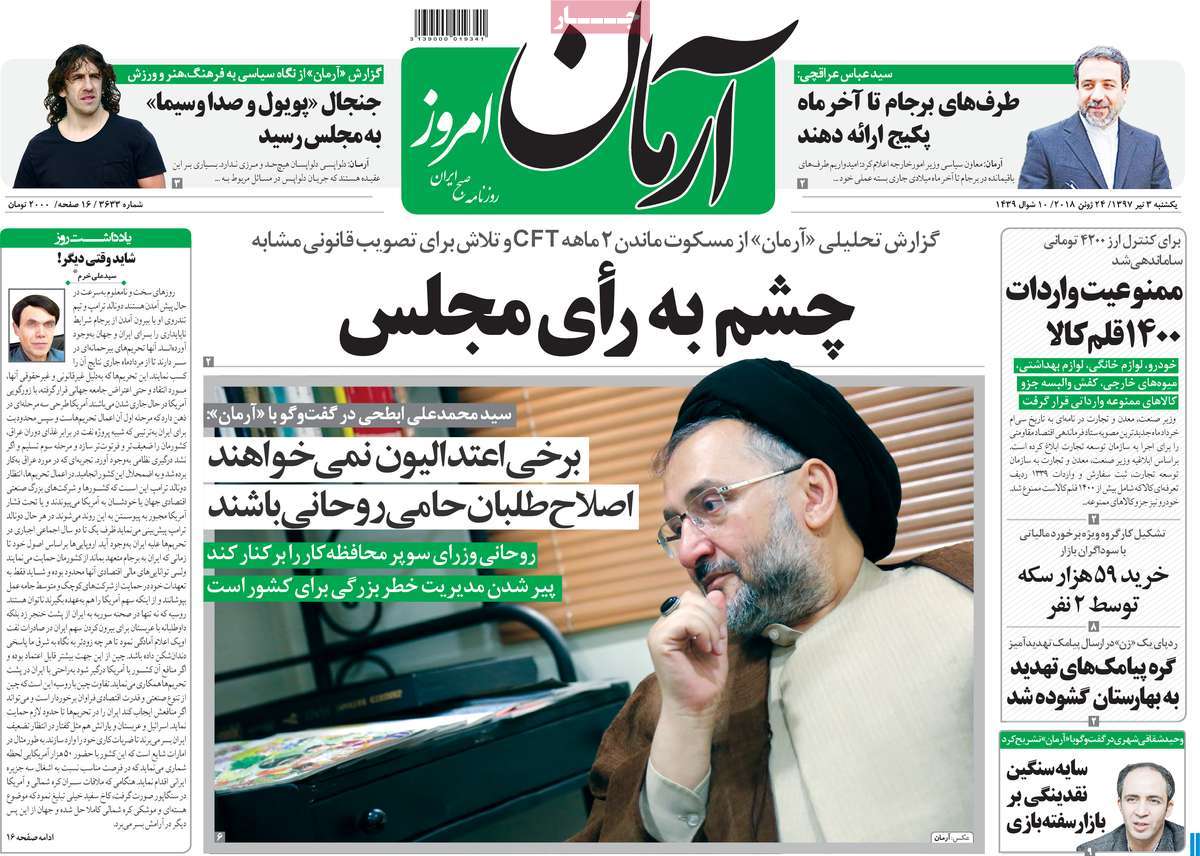
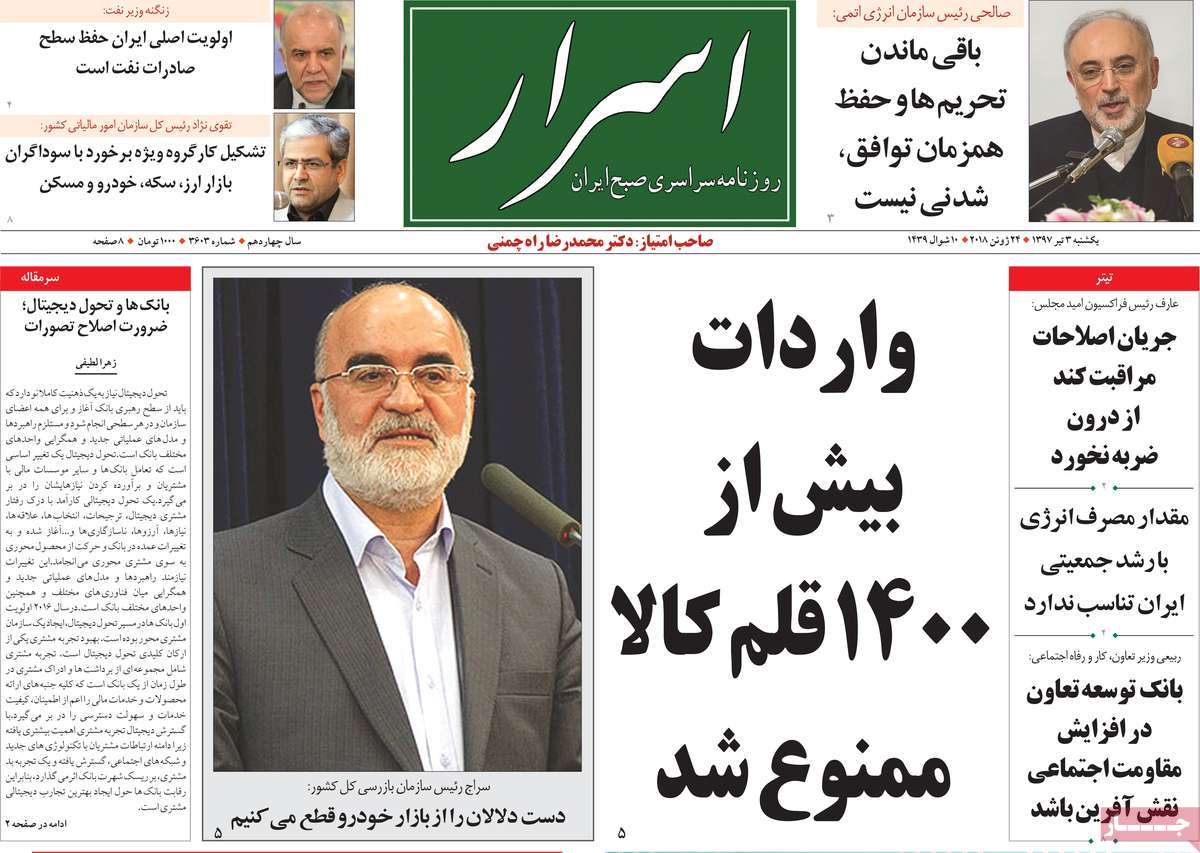
The above issues, as well as many more, are highlighted in the following headlines and top stories:
19 Dey:
1- Iran Gives Europe an Ultimatum: Tehran Cannot Wait Any Longer
2- Rouhani Must Do Something for Creating Job Opportunities in One Month
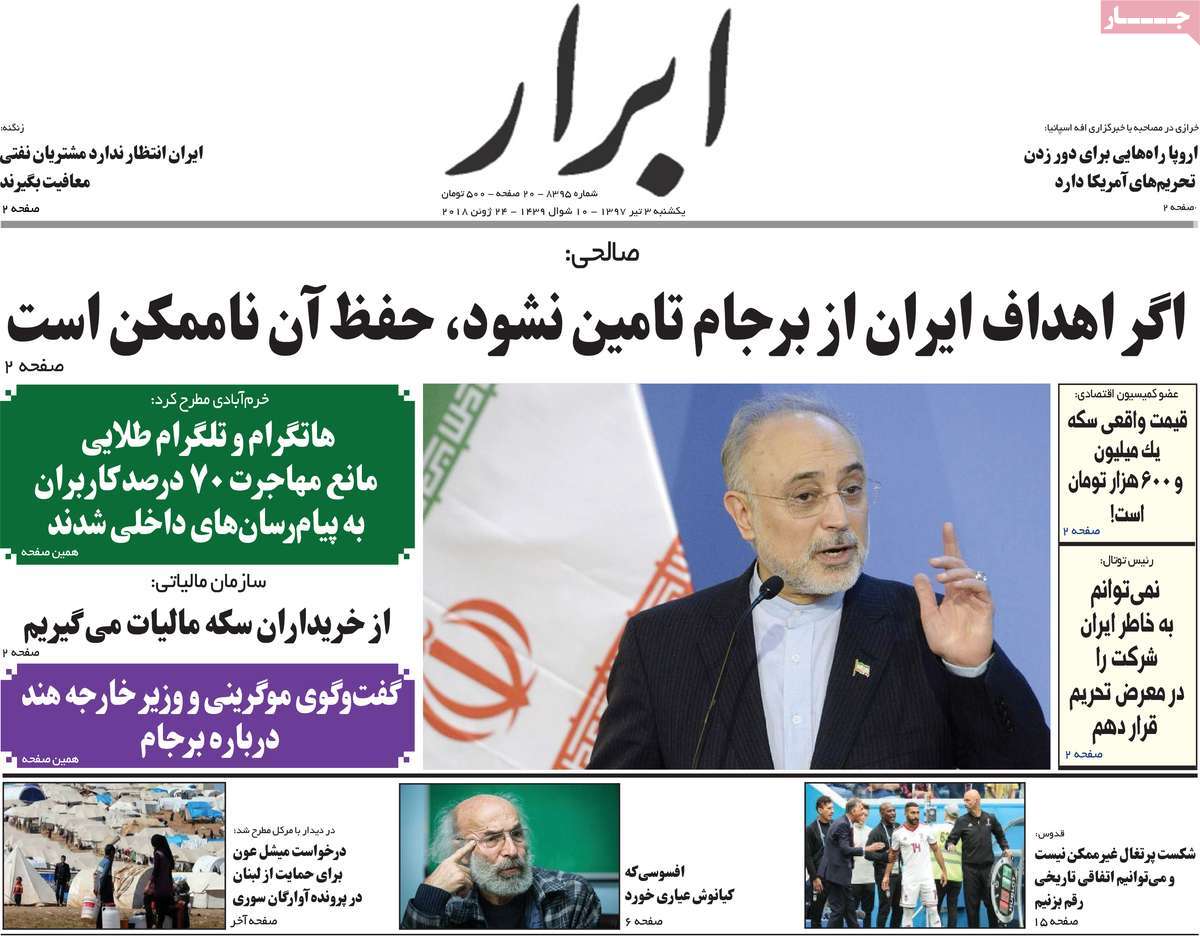
Abrar:
1- Iran Nuclear Chief: It’s Not Possible to Save JCPOA If Iran’s Interests Not Secured
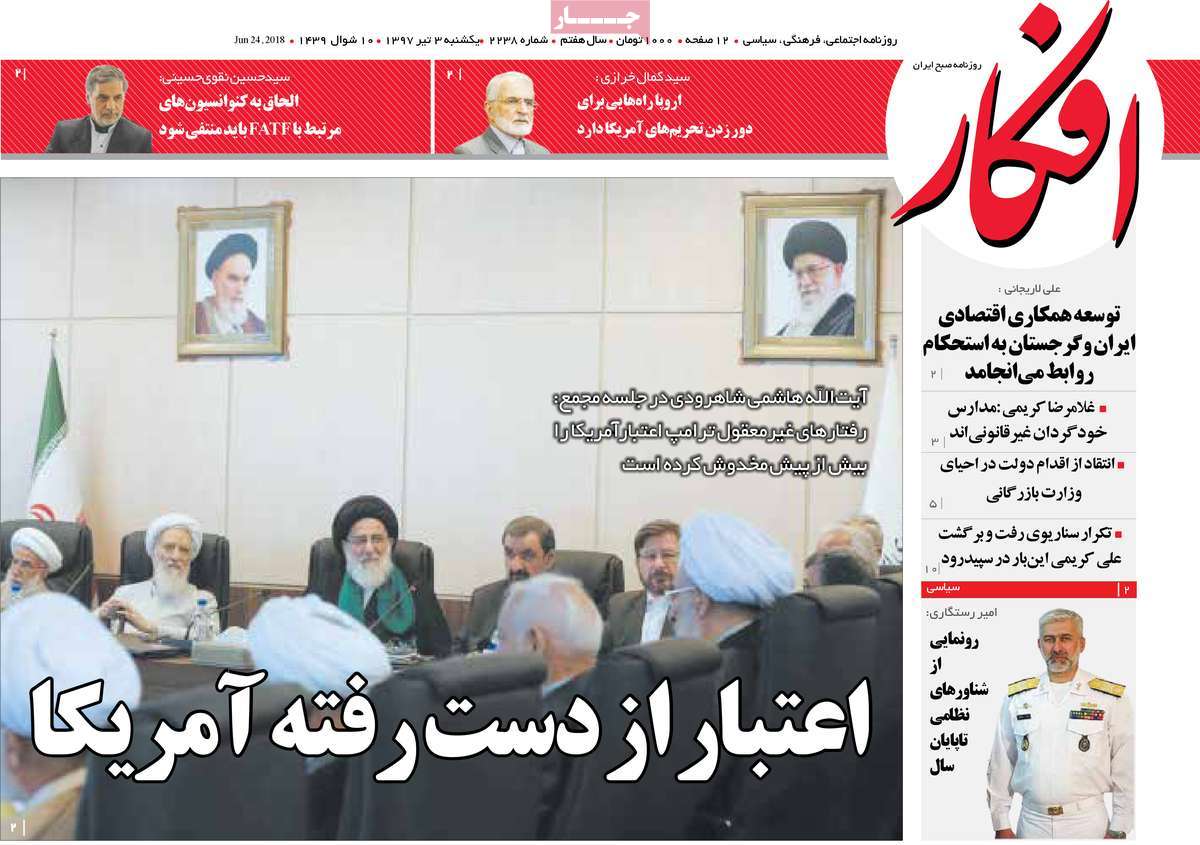
Afkar:
1- Ayatollah Hashemi Shahroudi: Trump’s Irrational Behaviours Discredited US More than Ever
Aftab-e Yazd:
1- Ramin Rezaeian: I Won’t Let Ronaldo Spend an Easy Day against Iran
Arman-e Emrooz:
1- Araqchi: JCPOA Parties Must Offer Their Package to Save the Deal by End of June
Asrar:
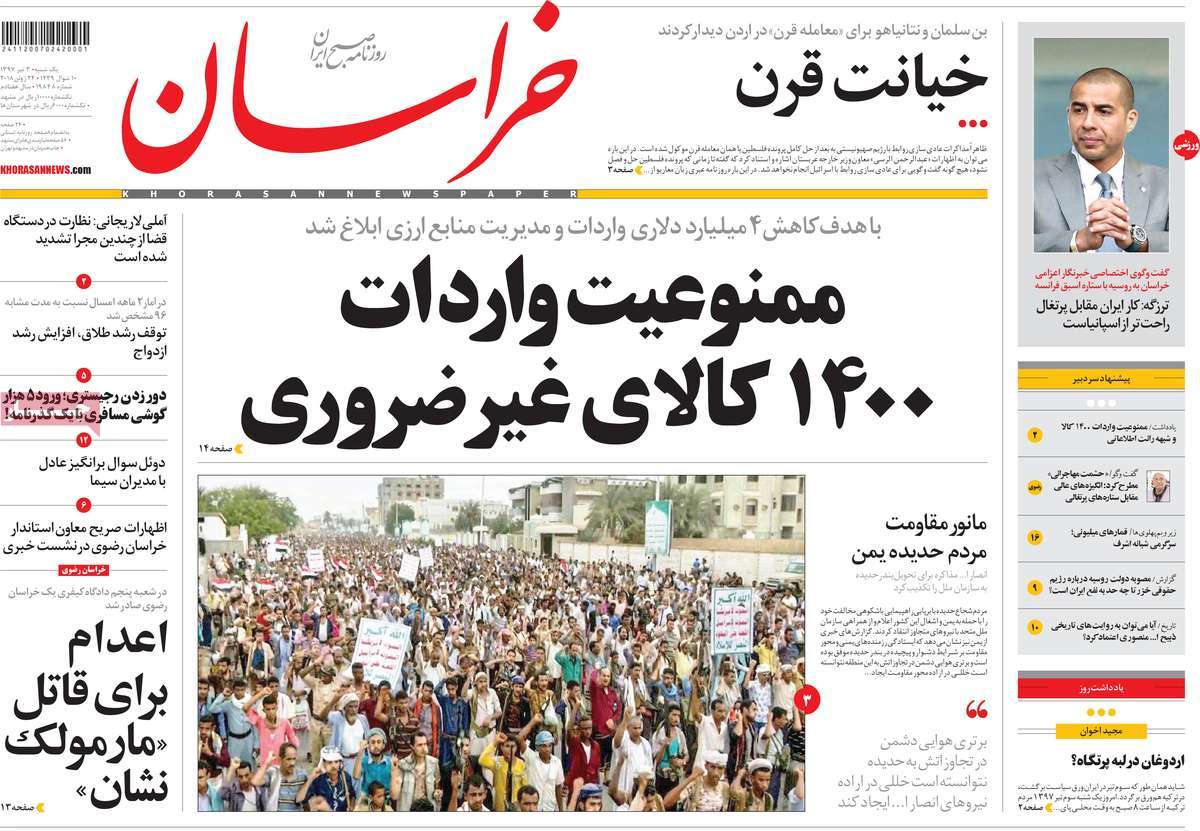
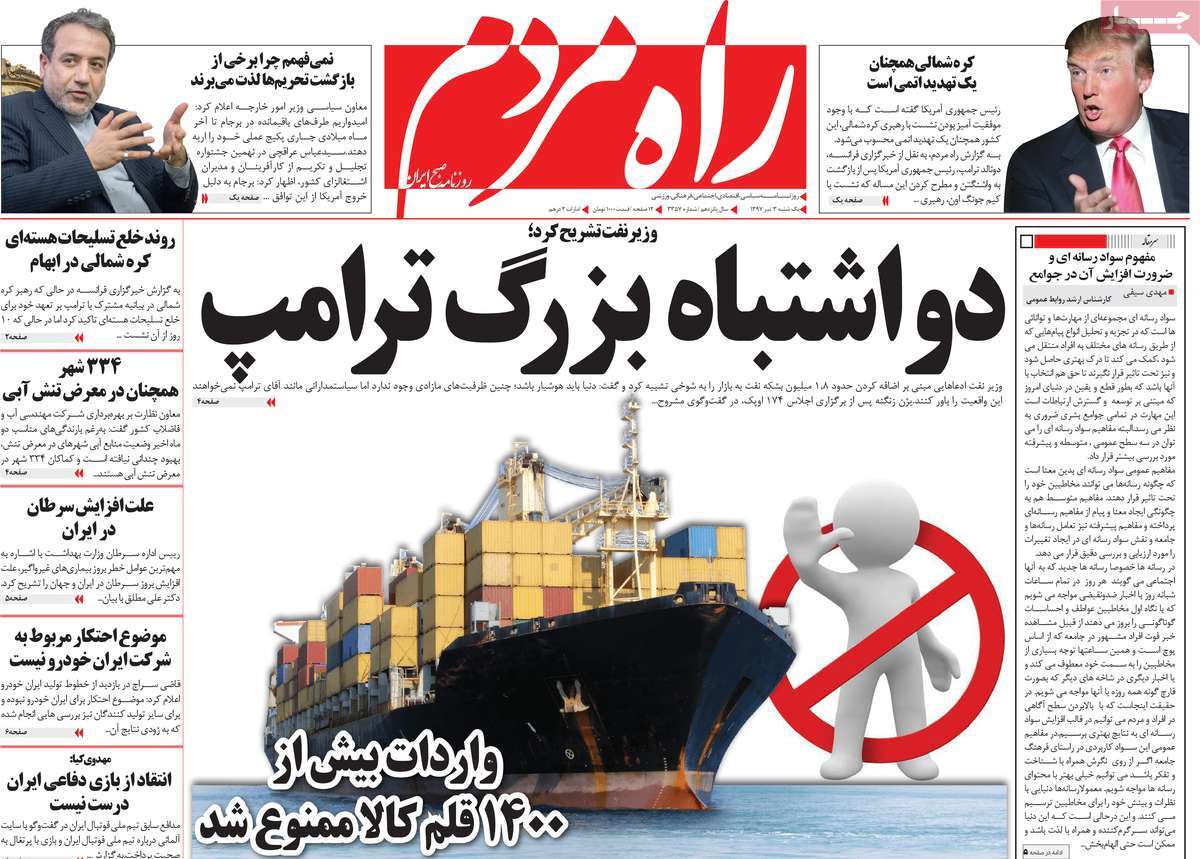
1- Iran Bans Import of over 1,400 Commodities
Ebtekar:
1- Erdogan’s Dreams vs. Challenge of Ballot Boxes: Most Decisive Turkey Elections Begin
Etemad:
1- Ex-President Khatami Criticizes Reformists’ Call for Negotiation with US
Ettela’at:
1- Europe Must Find Formula to Save JCPOA: Kharrazi
Europeans Can Bypass US Sanctions
Ghanoon:
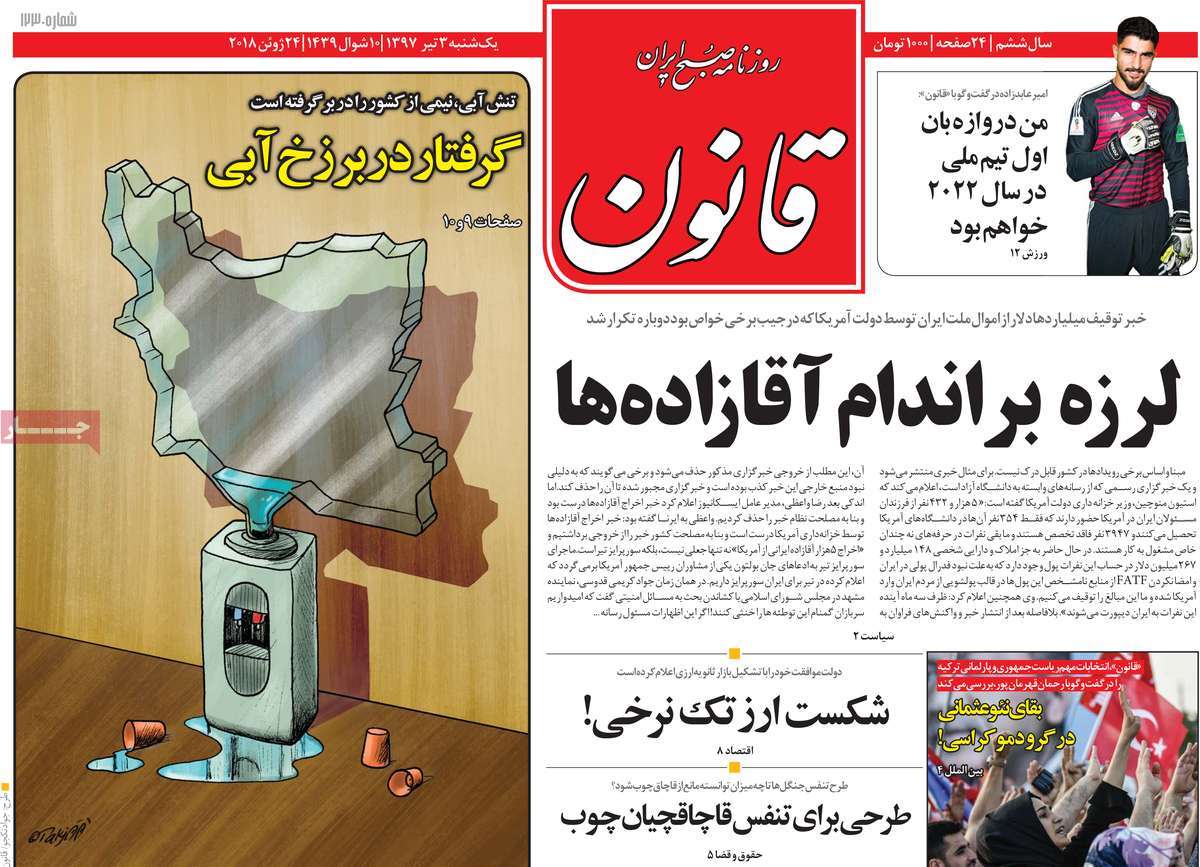
1- Half of Iran Grappling with Water Tension
Iran:
1- Erdogan’s Duel with Opponents
56 Million Turks to Go to Polls in 180,000 Stations
Jame Jam:
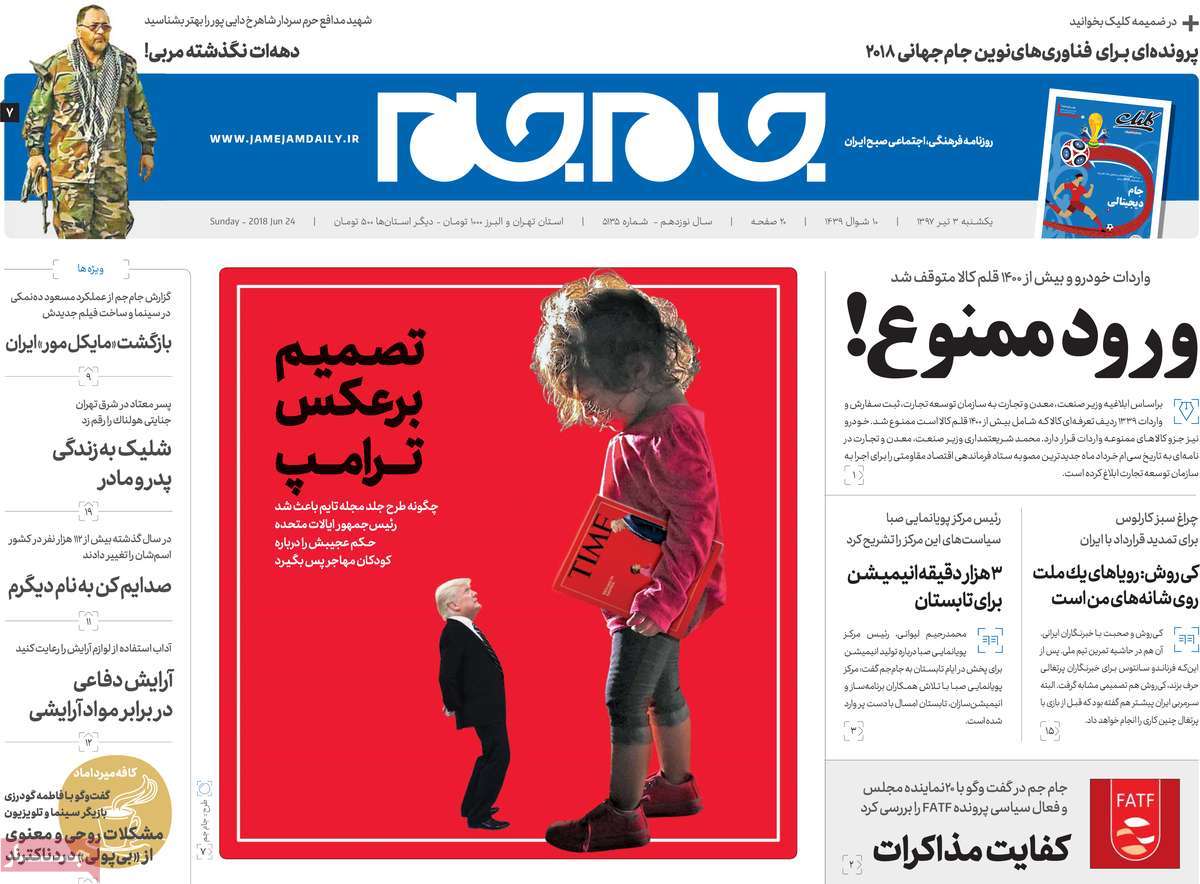
1- Trump’s Reverse Decision
TIME’s Cover Photo Makes Trump Take Back His Strange Immigration Decision
Javan:
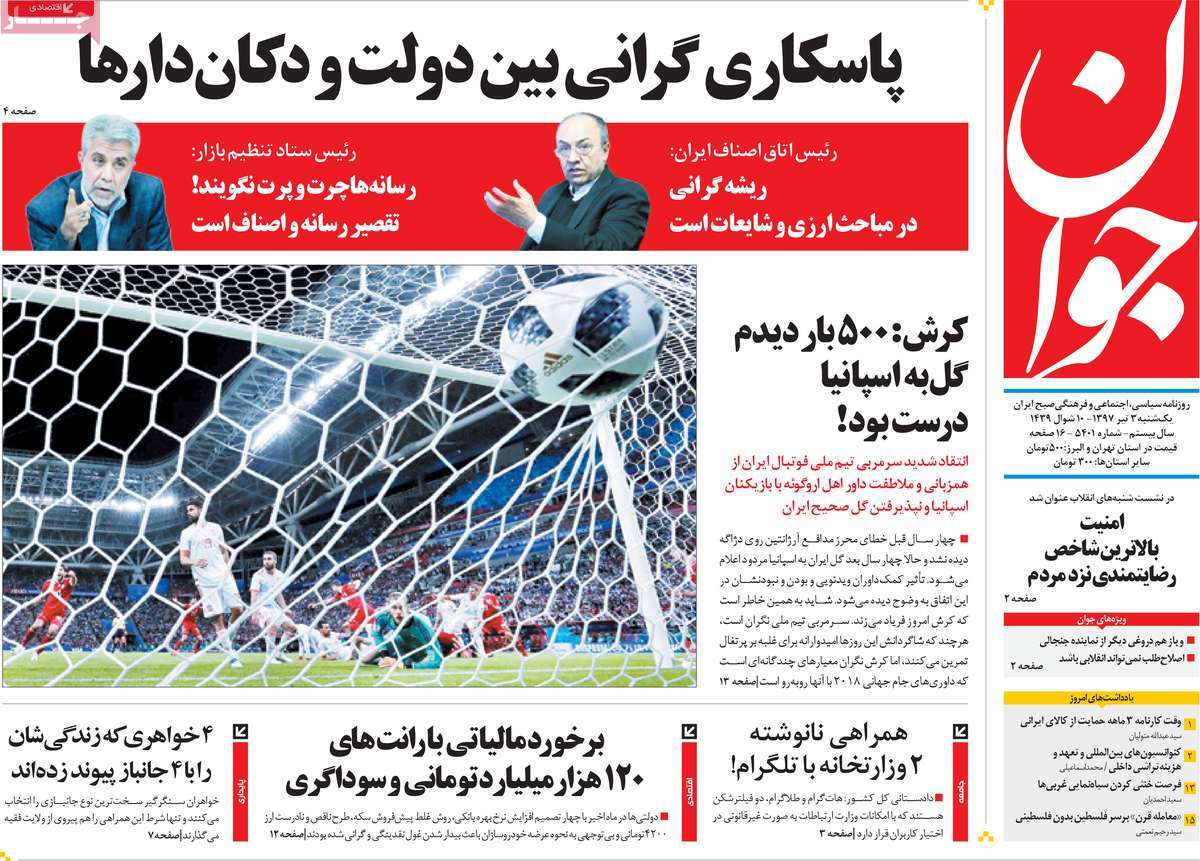
1- Queiroz: I Watched It for 500 Times, Our Goal against Spain Was Correct!
Iran’s Head Coach Strongly Blasts Uruguayan Referee’s Performance
Jomhouri Eslami:
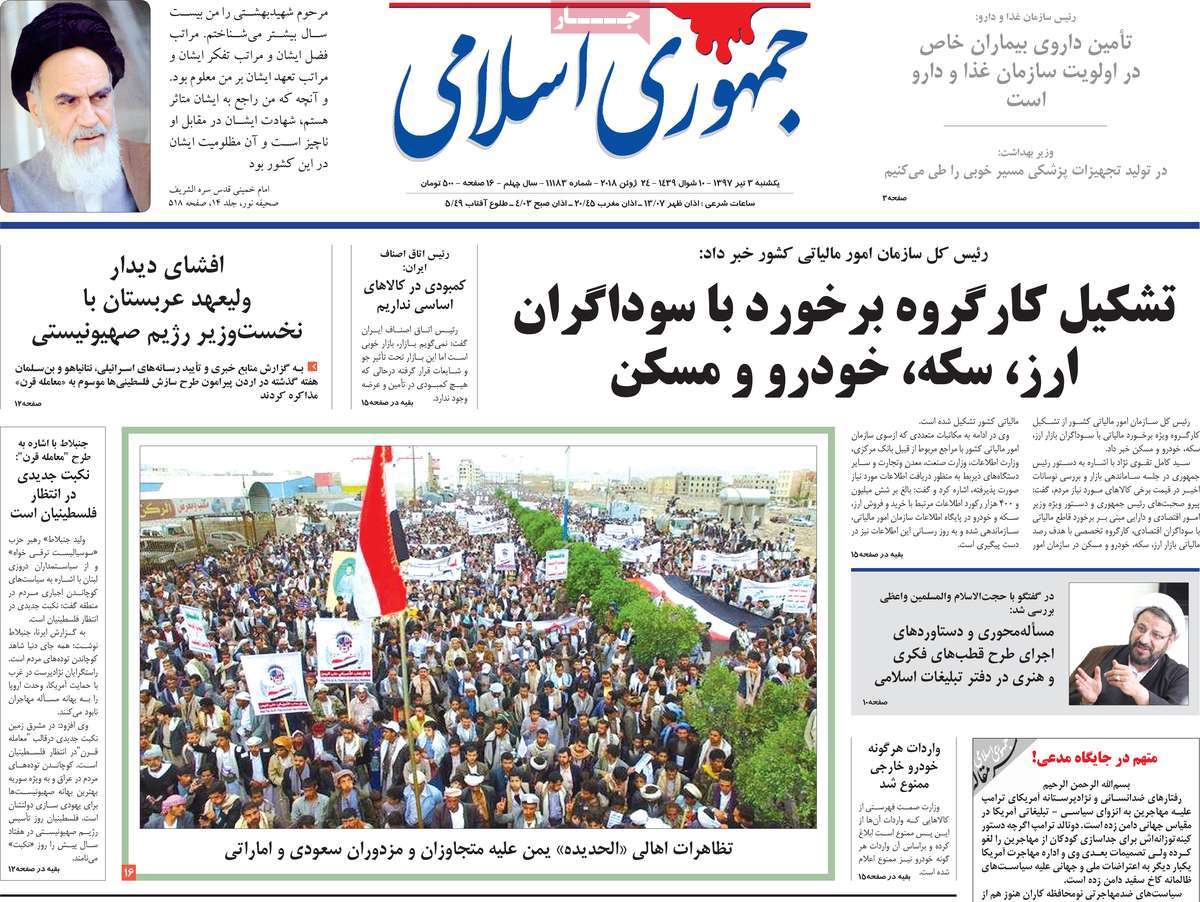
1- Special Working Group Formed to Counter Those Disrupting Forex, Gold, Car, House Markets
Kayhan:
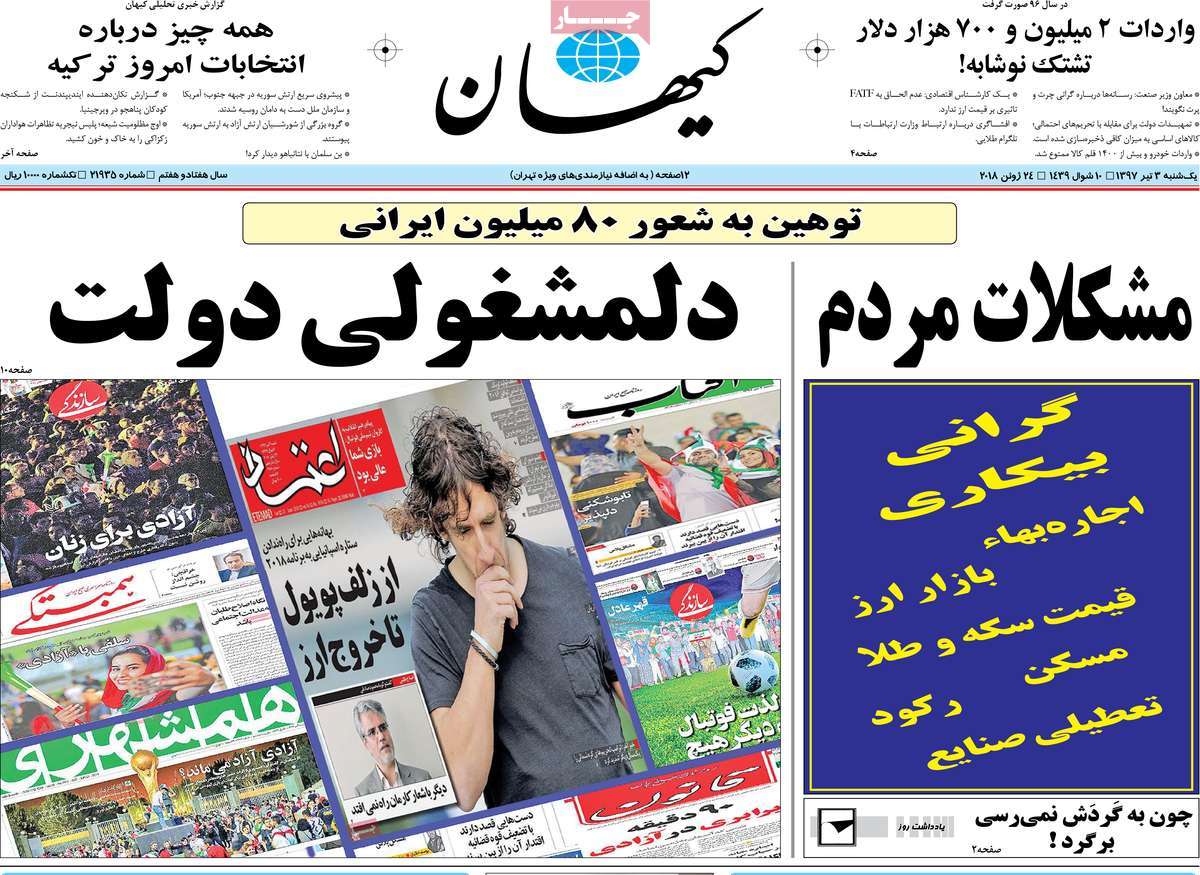
1- People’s Problems vs. Government’s Concerns!
Insulting Wisdom of 80 Million Iranians
2- $2.7 Million Bottle Caps Imported Last Year!
Khorasan:
1- Trezeguet: Iran to Have Easier Match against Portugal than It Had against Spain
Rah-e Mardom:
1- Araqchi: I Can’t Understand Why Some Enjoy Return of Sanctions
Resalat:
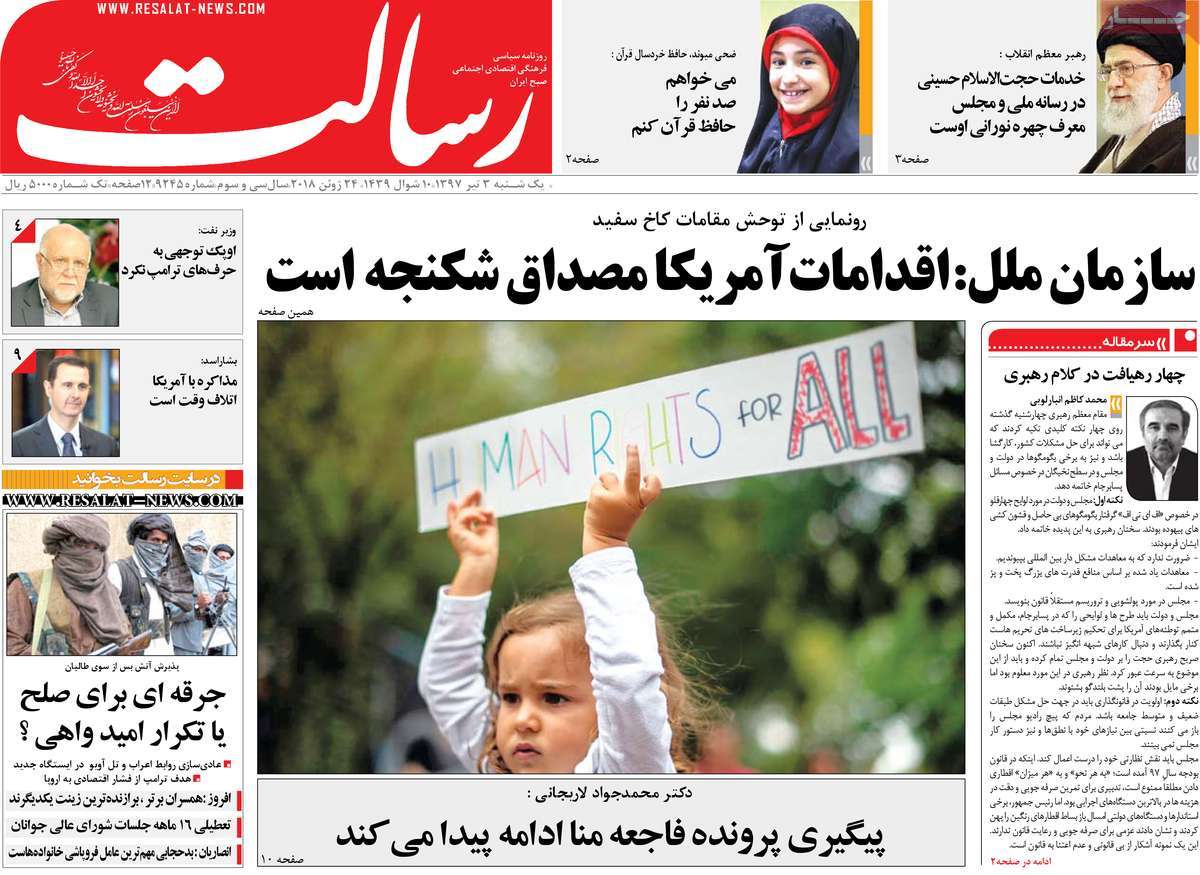
1- White House’s Brutality Unveiled: UN Says US Measures Clear Example of Torture
Rooyesh-e Mellat:
1- Parliament Speaker: Expansion of Iran-Georgia Business Cooperation to Strengthen Ties
Sayeh:
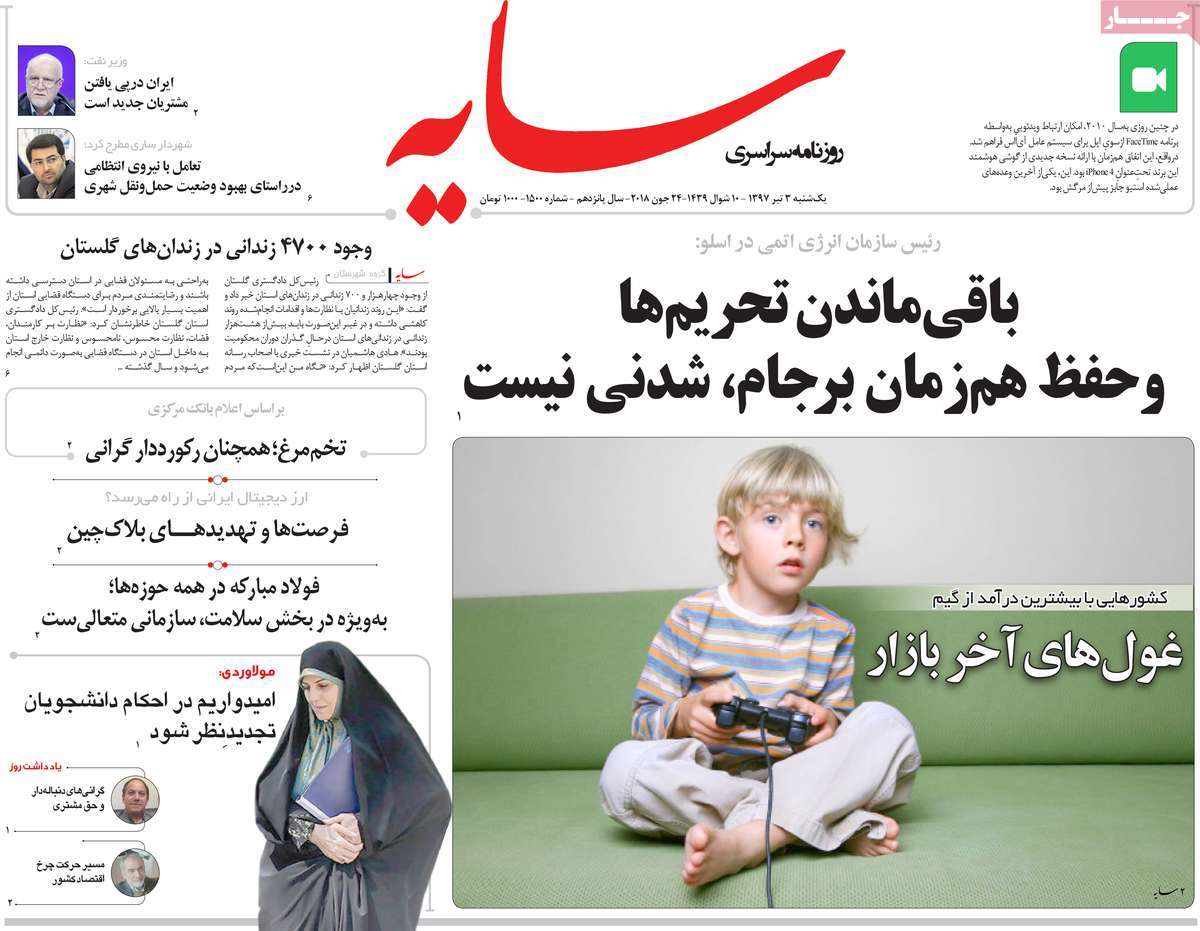
1- Iran Nuclear Chief in Oslo: It’s Not Possible to Save JCPOA While Re-Imposing Sanctions
Shahrvand:
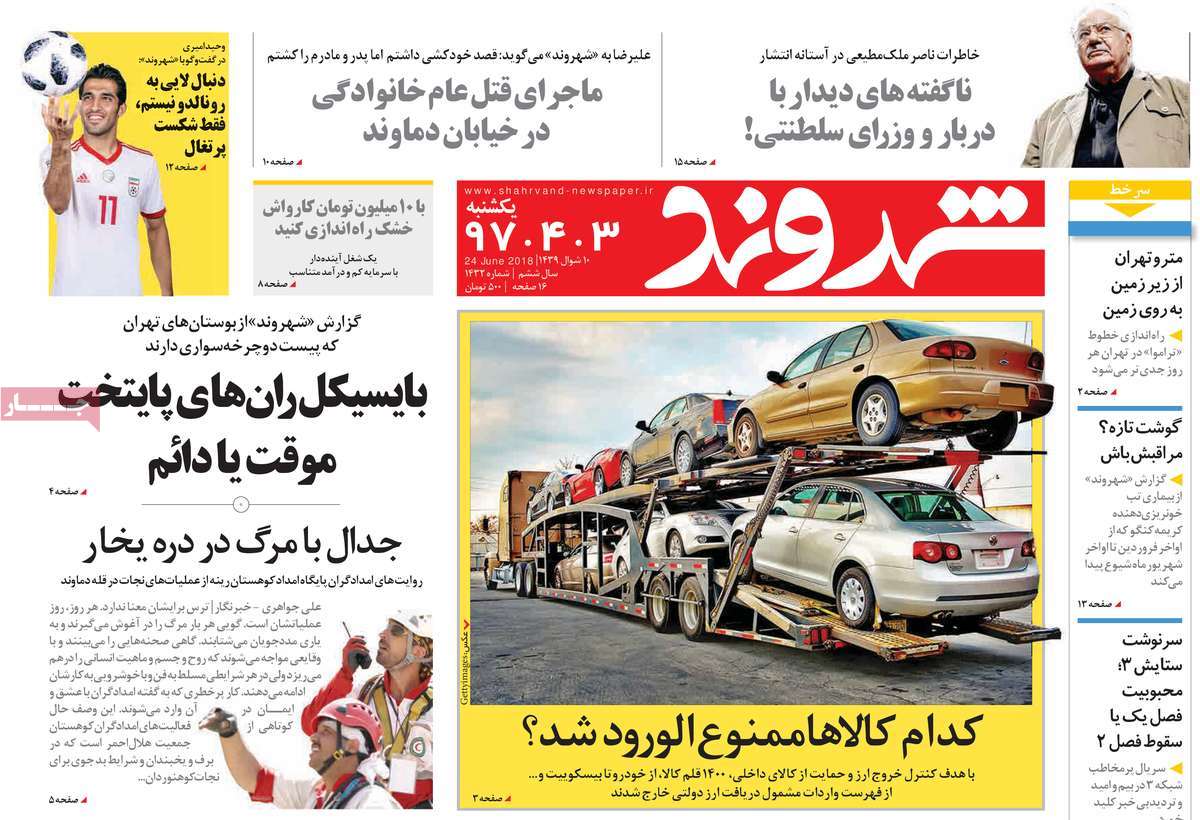
1- Vahid Amiri: I Won’t Try to Nutmeg Ronaldo; We Just Want to Defeat Portugal
Shargh:
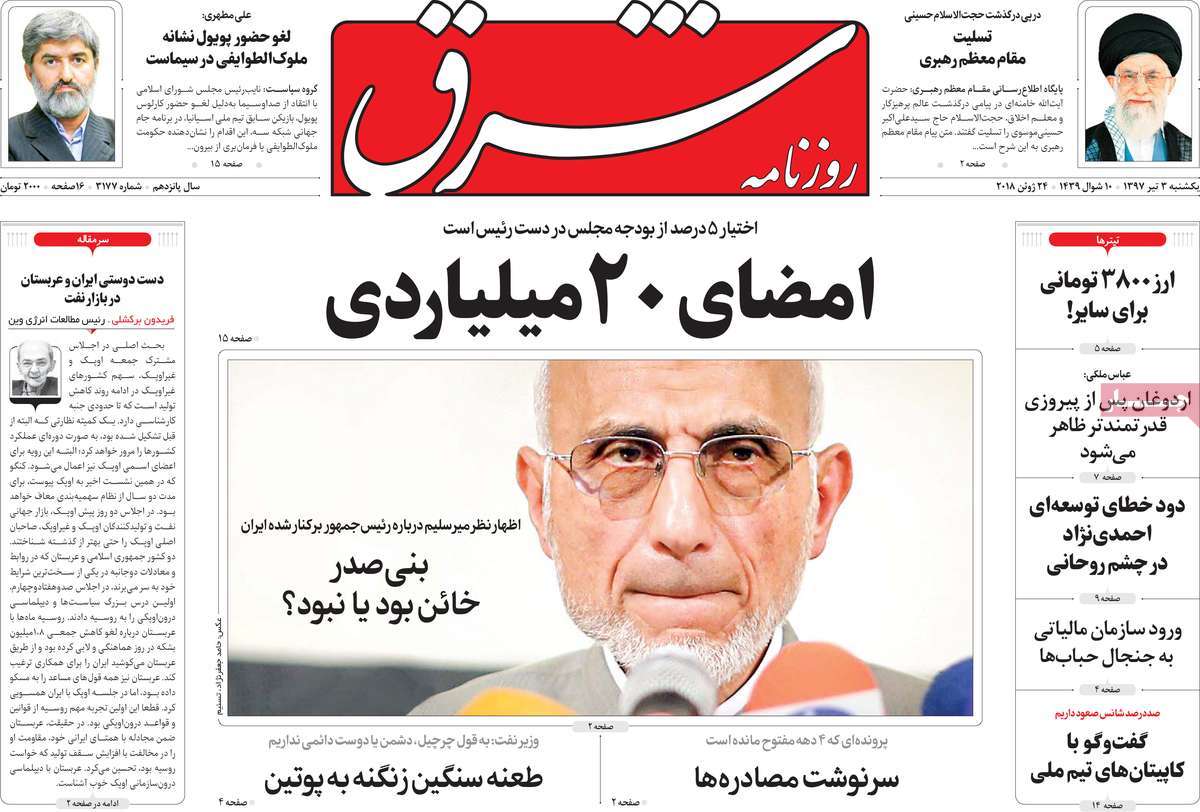
1- Speaker Controls 5% of Parliament’s Budget
Vatan-e Emrooz:
1- Maariv: Bin Salman, Netanyahu Have Secretly Met in Jordan
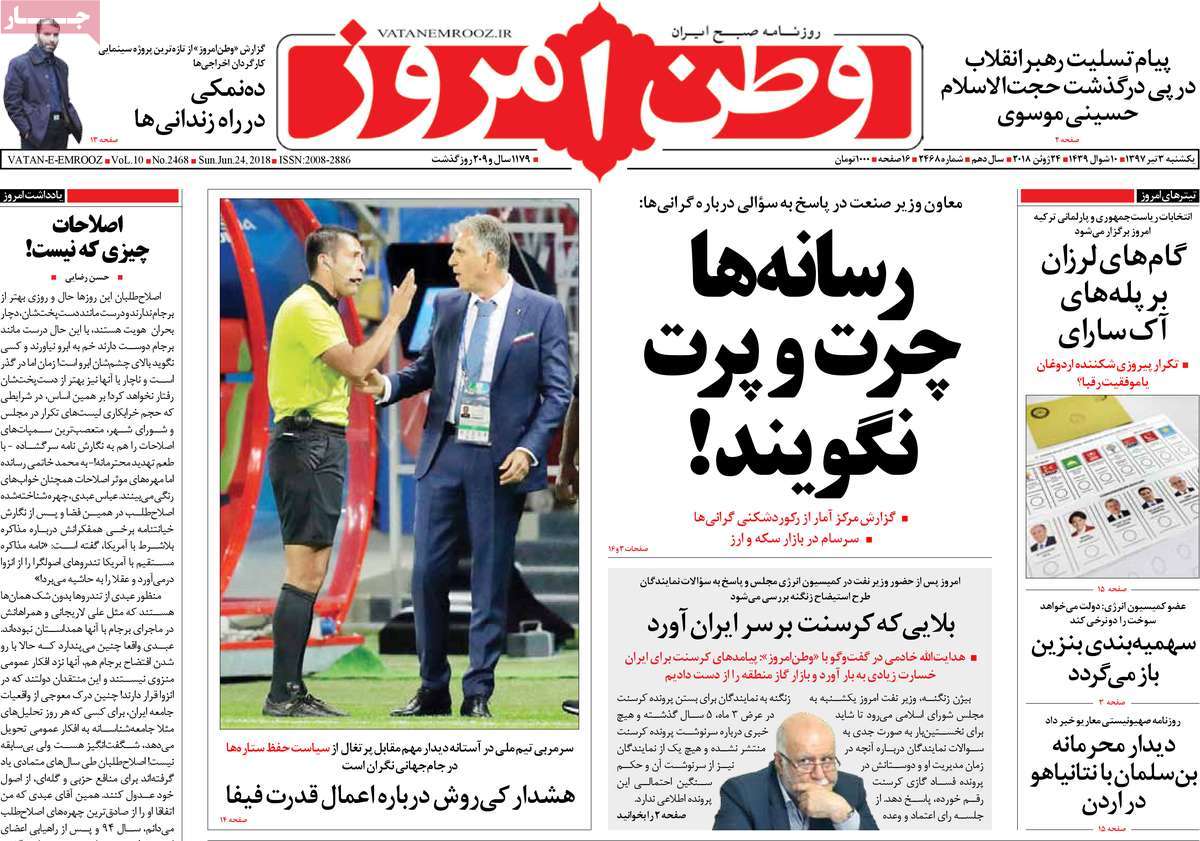
2- Queiroz Warns about FIFA’s Possible Exertion of Power
Iran Coach Worried about Policy of Keeping Stars in the World Cup ahead of Portugal Match
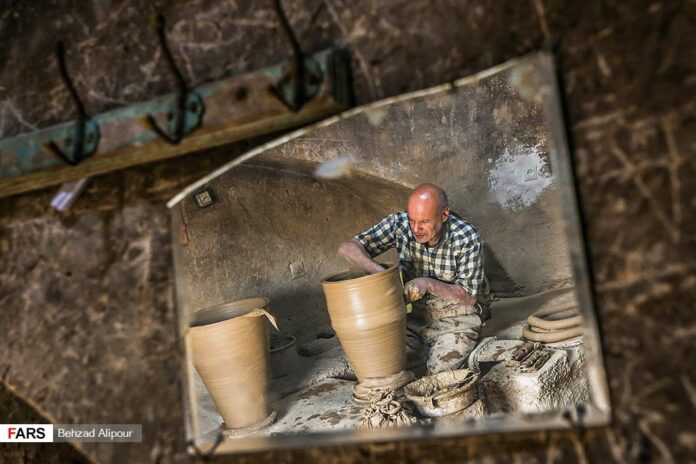
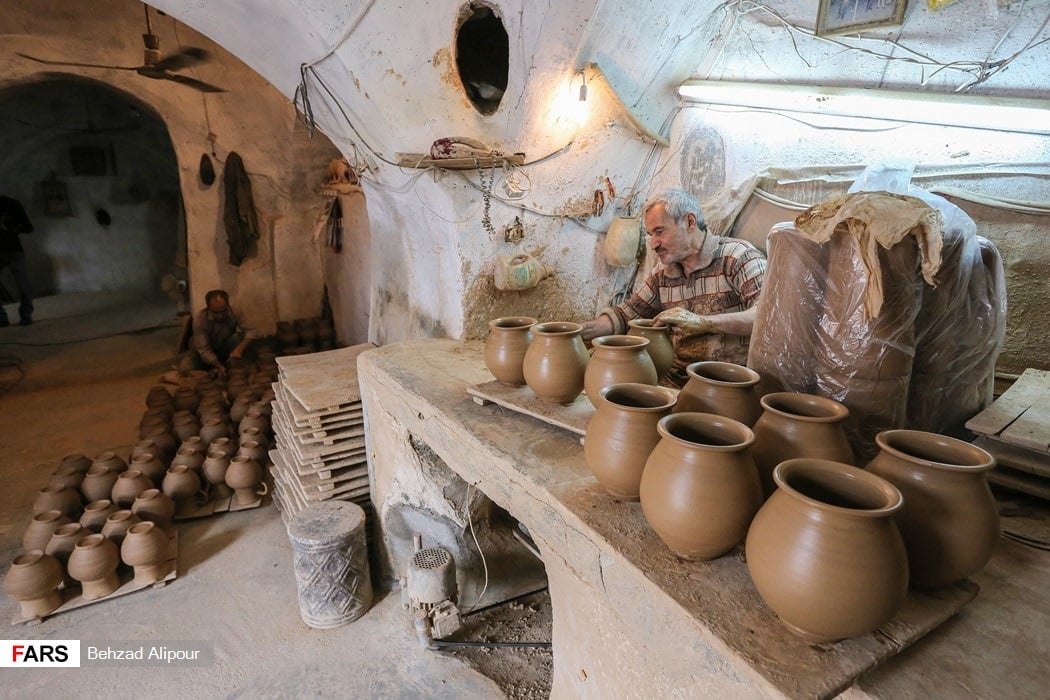
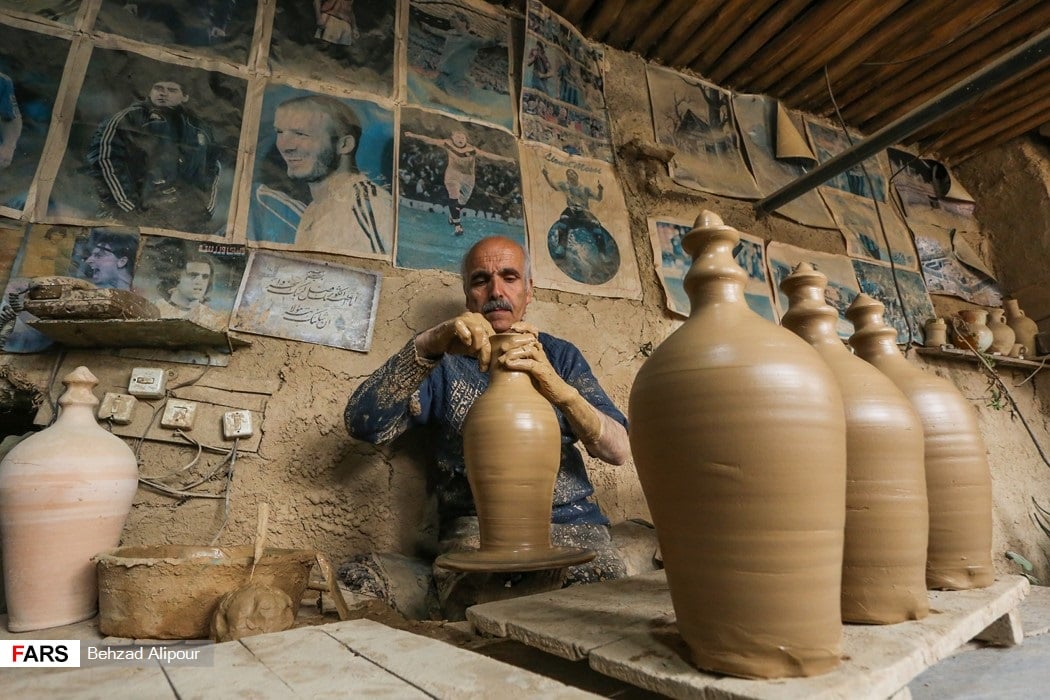
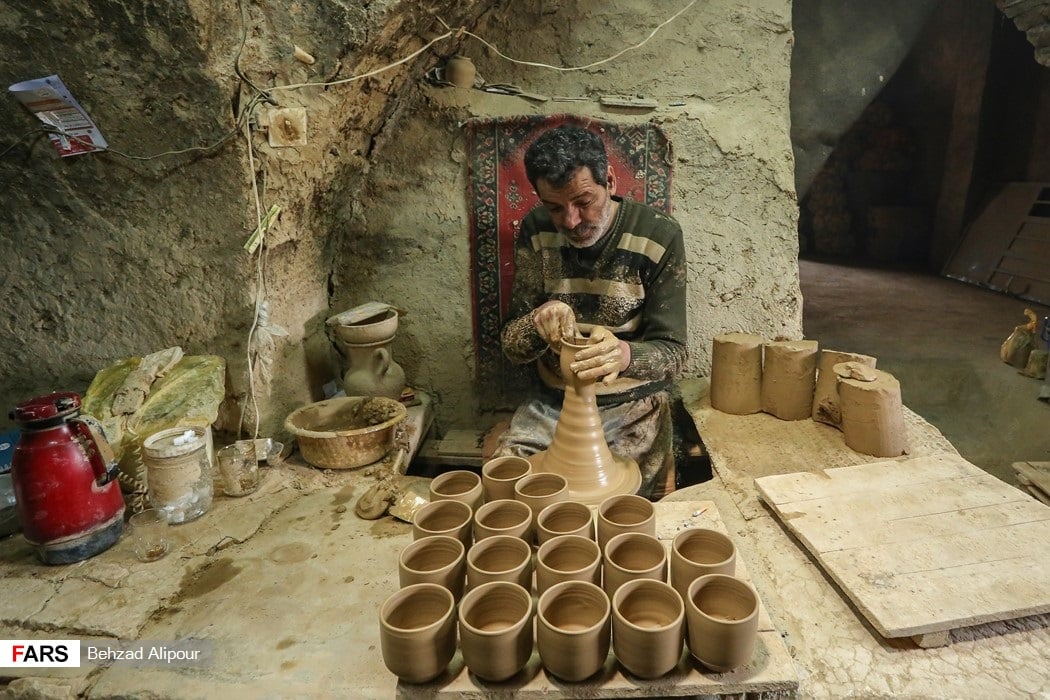
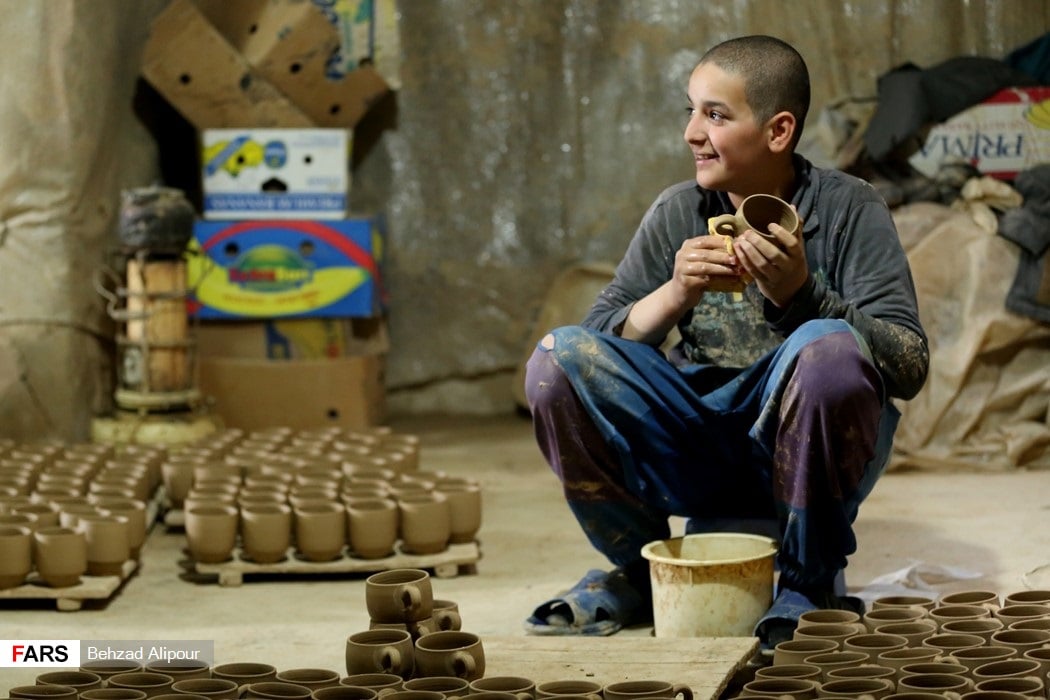
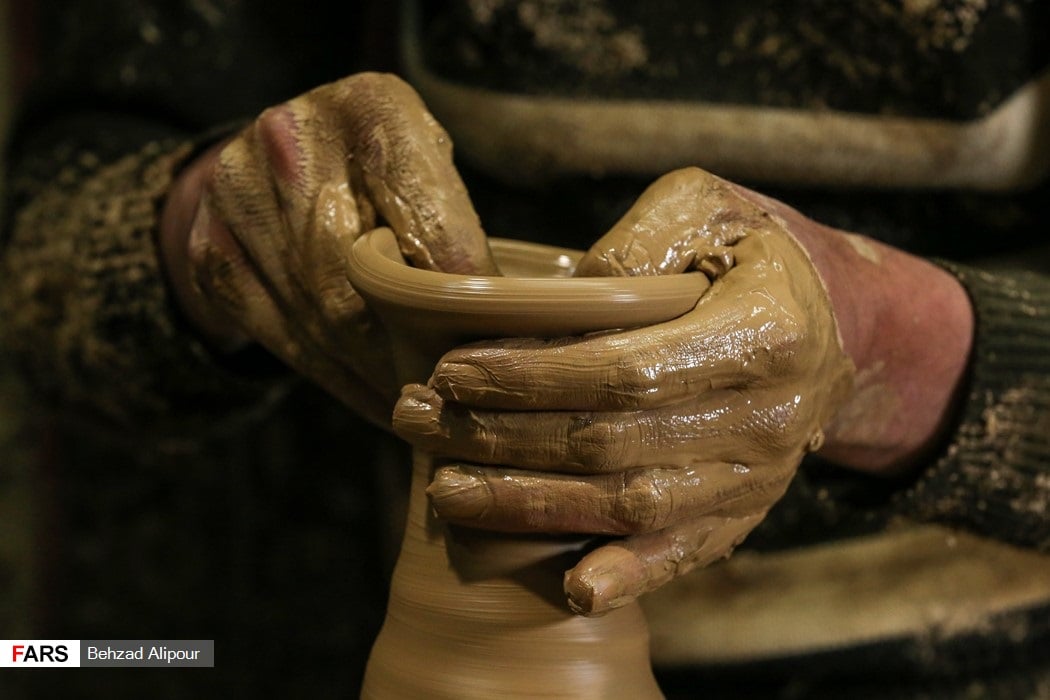
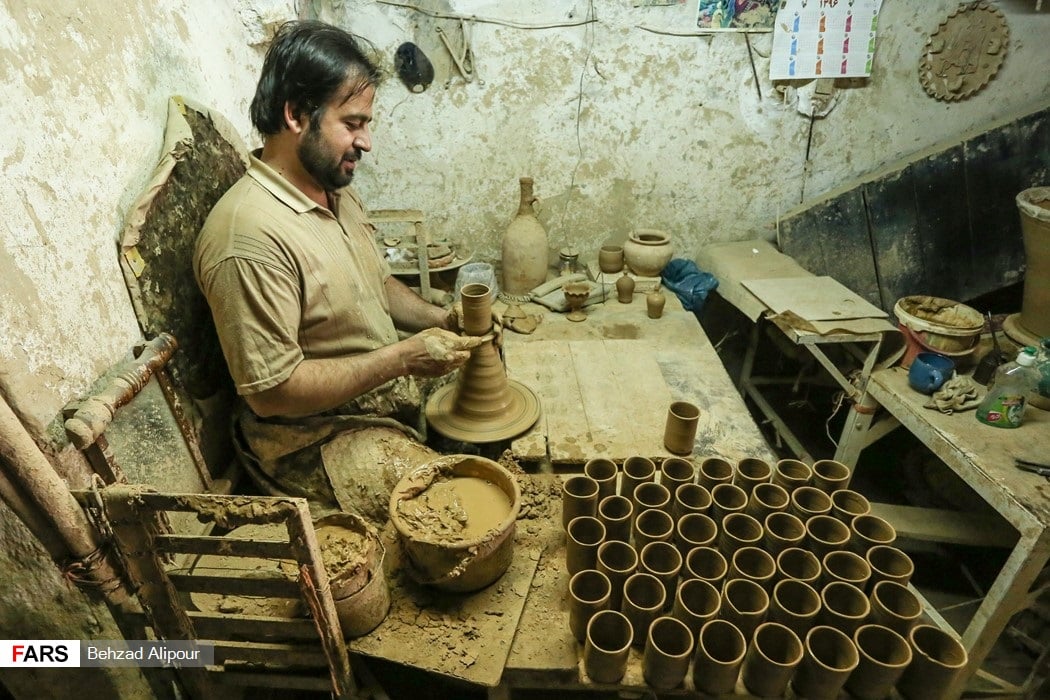
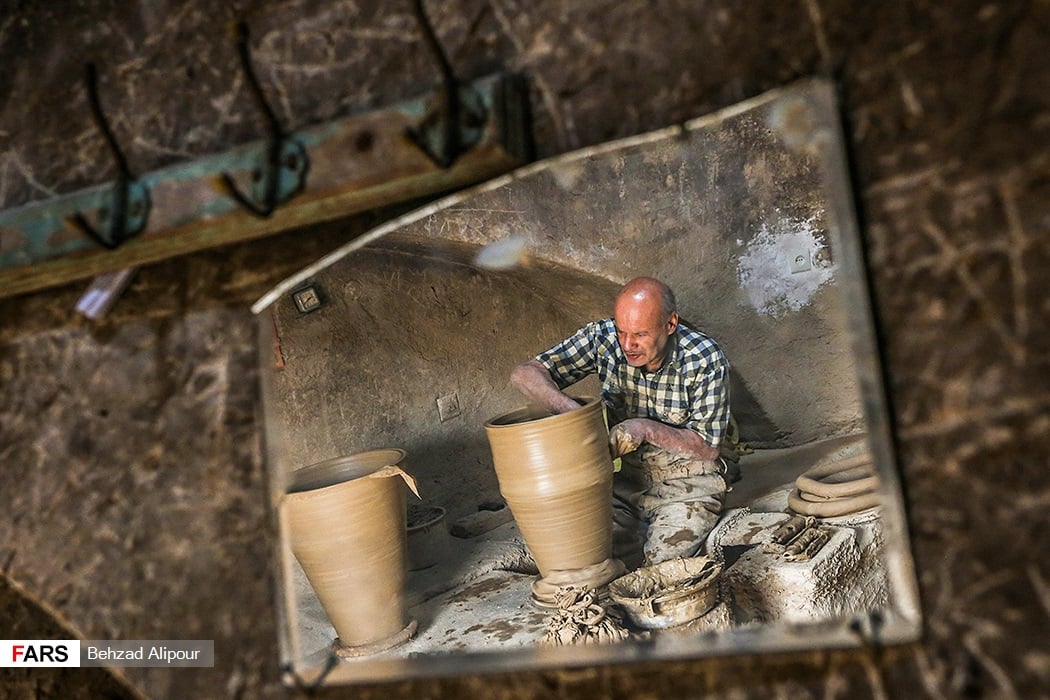
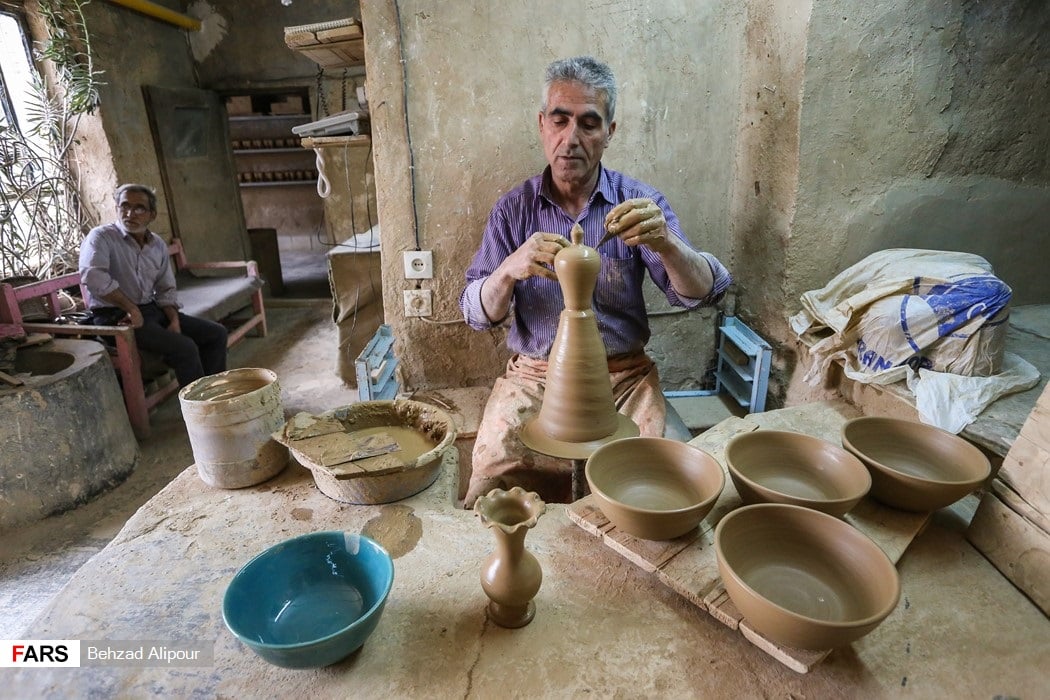
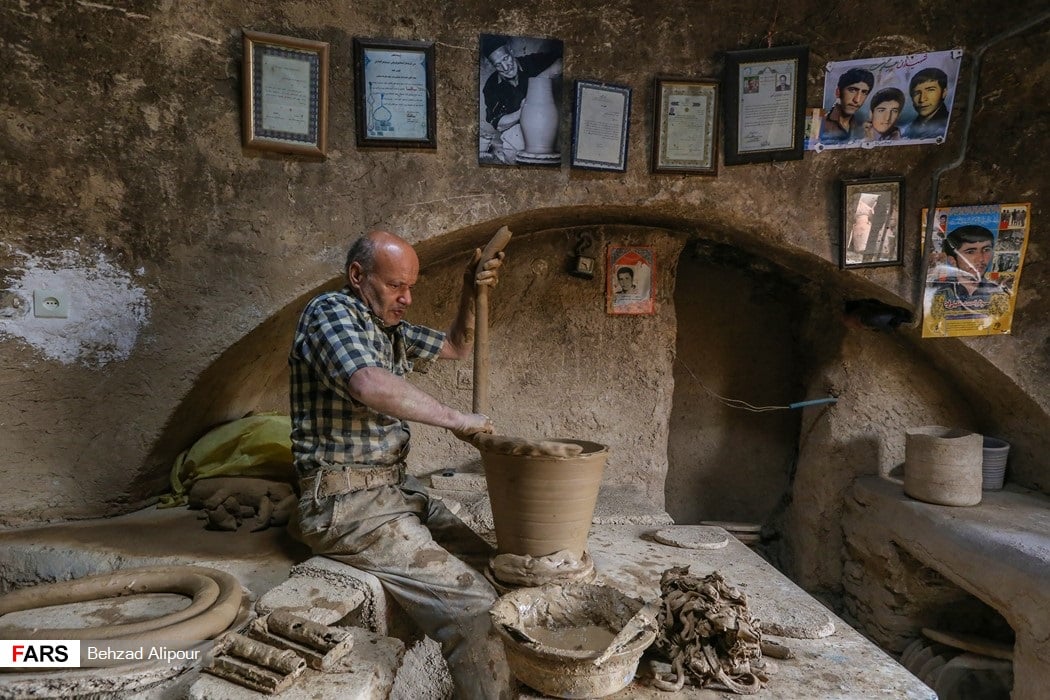
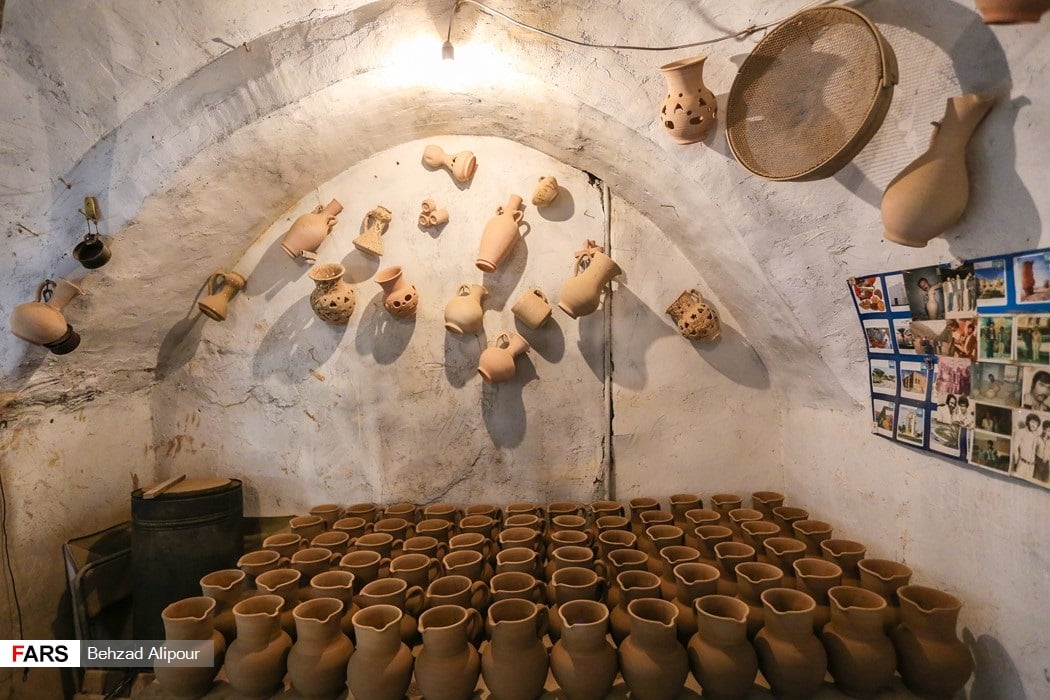
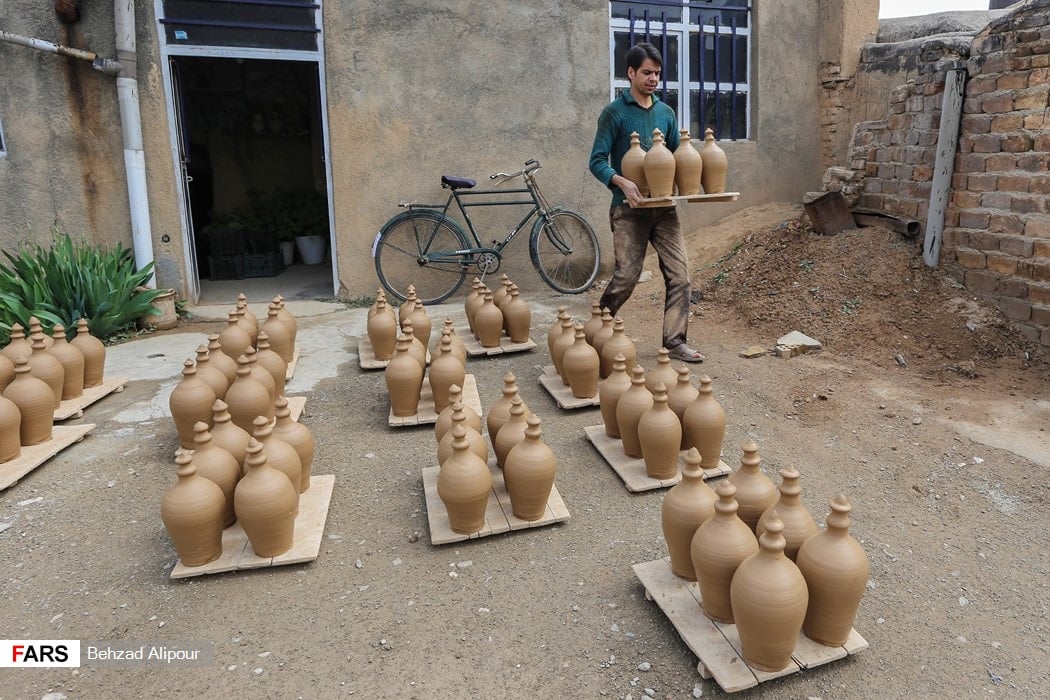
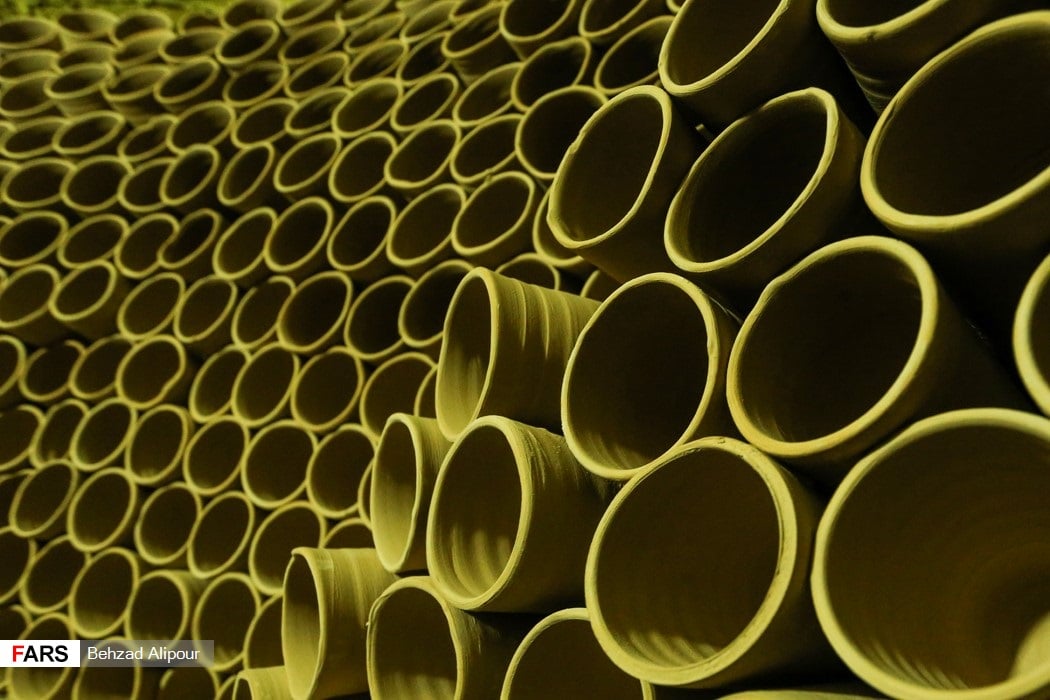
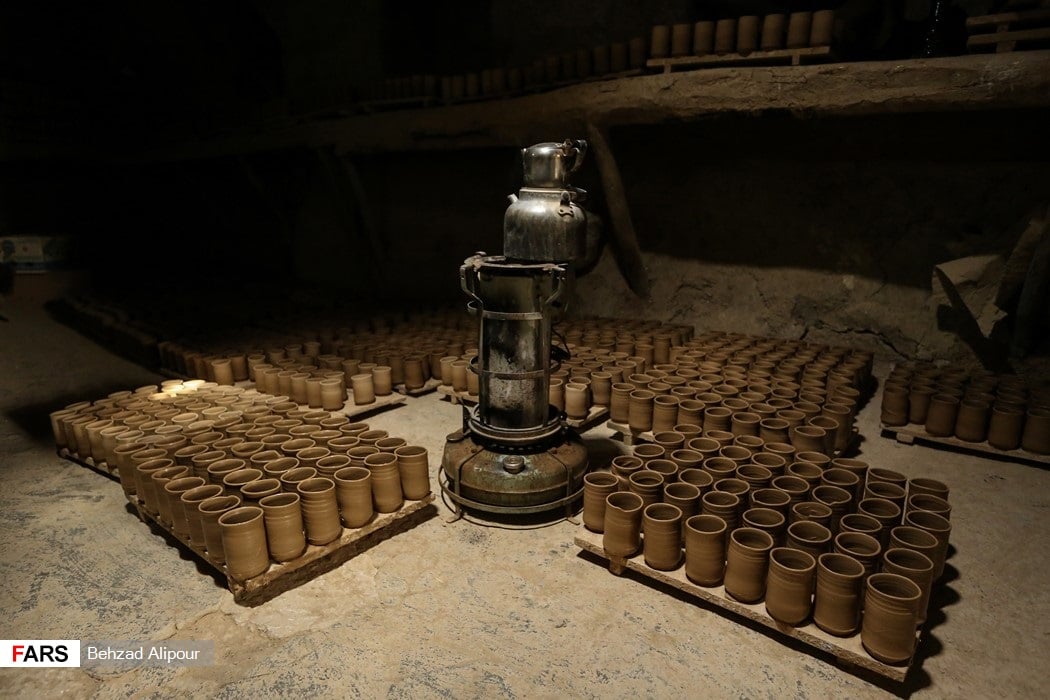
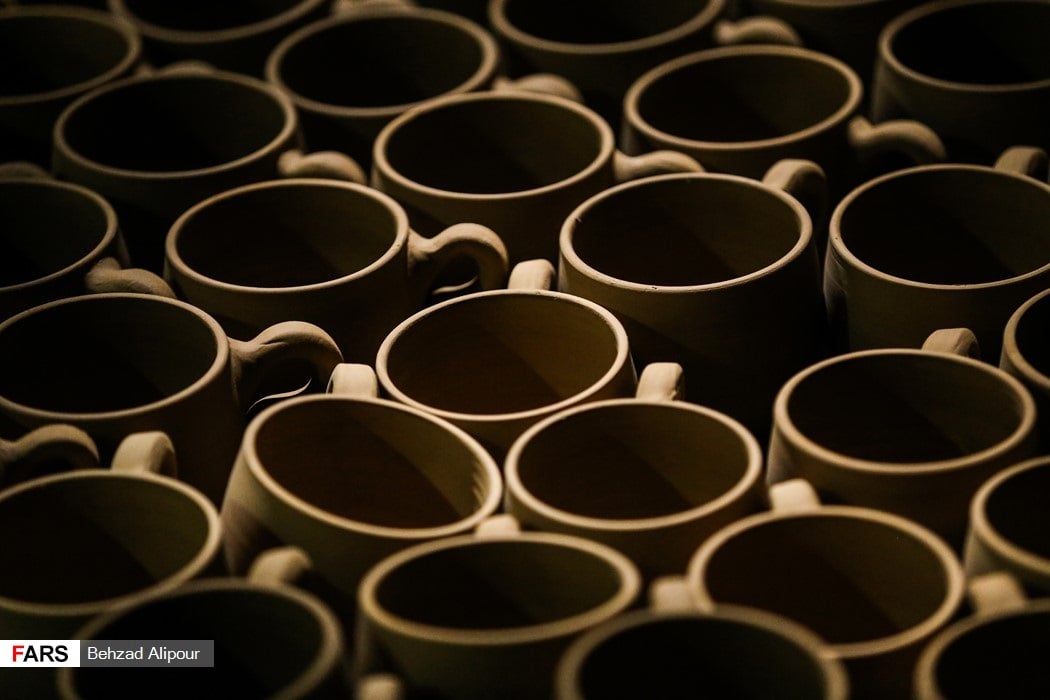
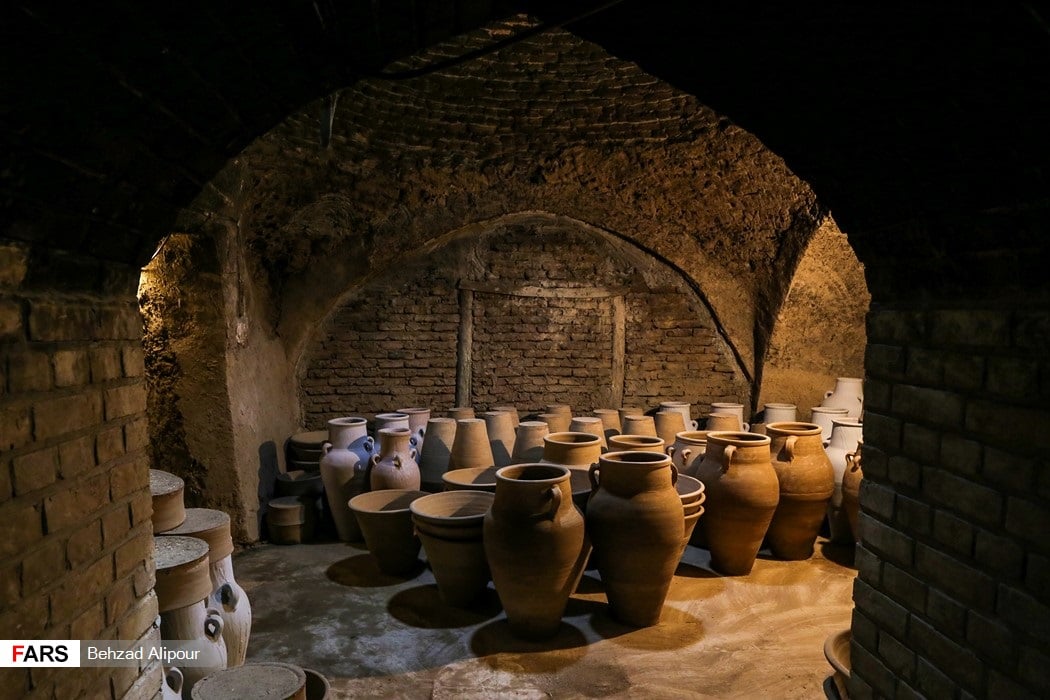
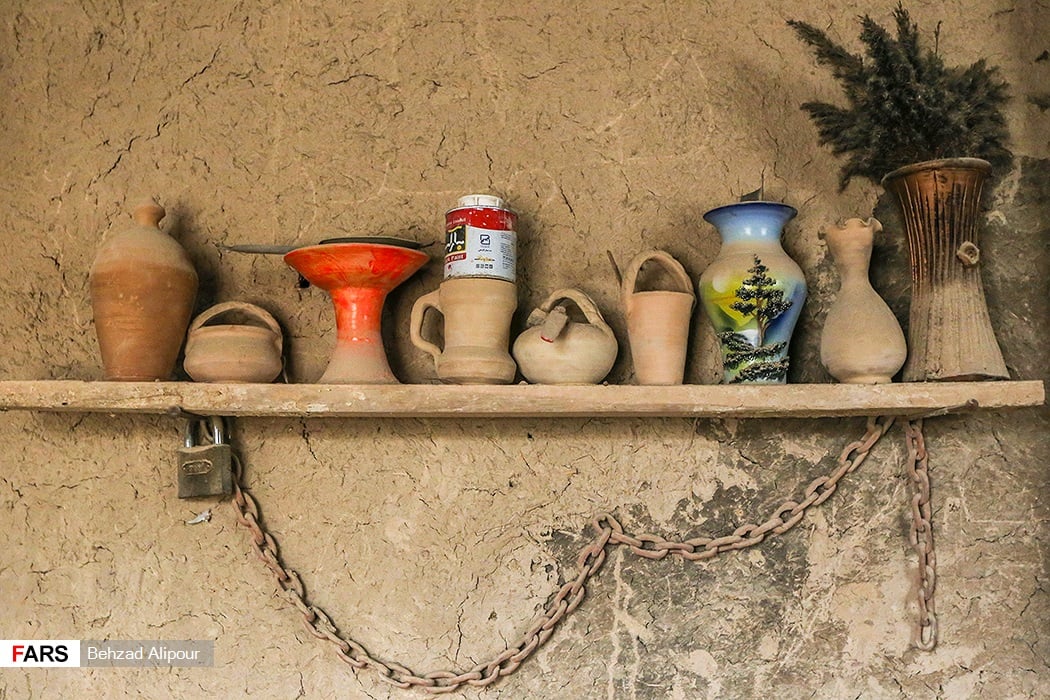
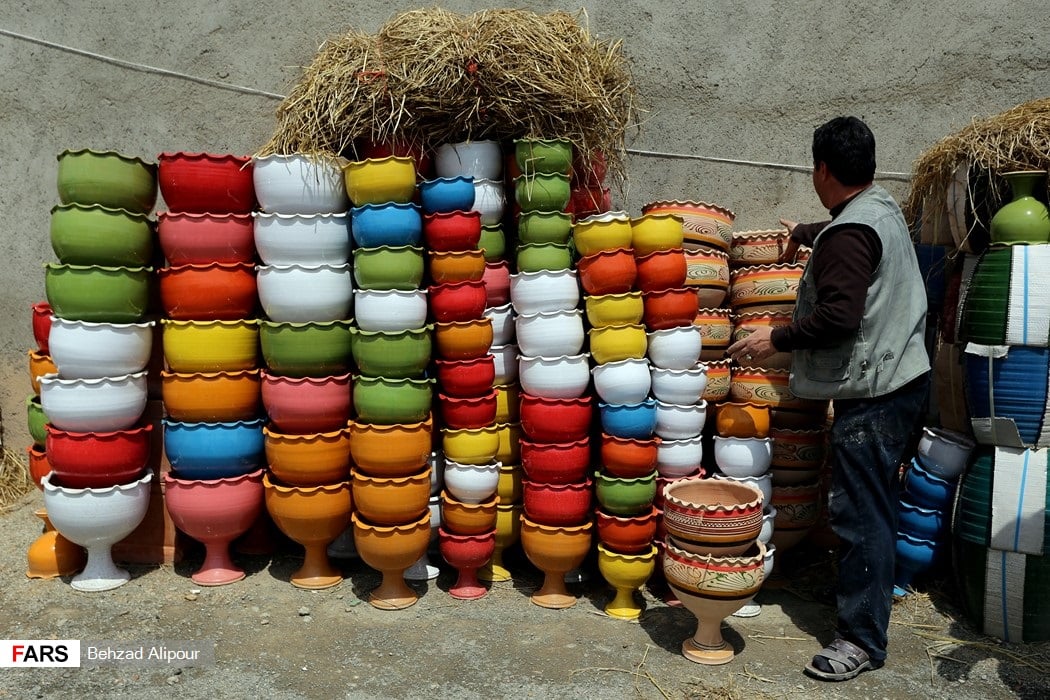
The small town of Lalejin celebrated its designation as the World Pottery Capital by the World Crafts Council in 2016.
Around 80 percent of Lalejin’s population are potters, ceramists and involved in related jobs. Undoubtedly Lalejin is one of the important centres of pottery and ceramic productions in Iran.
What follows are the photos of the historical city and its handicrafts retrieved from Fars News Agency:
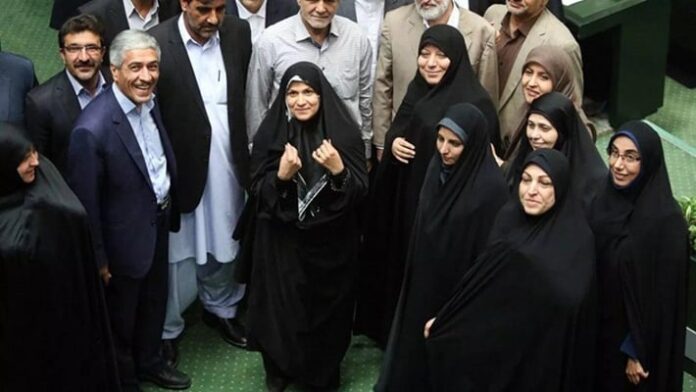
“According to a [draft] motion the faction and the parliament’s research centre are working on, we seek to allocate a quota of seats for women,” Parvaneh Salahshouri told IRNAon Saturday.
In the current parliament, women have the largest share of seats in the history of the Islamic Republic’s parliaments. The previous record belonged to the fifth parliament that had 14 women legislators.
“The victory of 17 women in the latest parliamentary elections showed the Iranian society welcomes bigger presence of women in the parliament,” she said.
The lawmaker said despite the increase in women’s presence in the current parliament, only six percent of seats are filled by women, a figure which lacks luster when compared to other countries.
For example, she said, over 20 percent of the seats in Saudi Arabia’s parliament and over 27 percent of seats in the Afghan parliament are reserved for women.
The next elections for the 290-member Parliament are scheduled for early 2020.
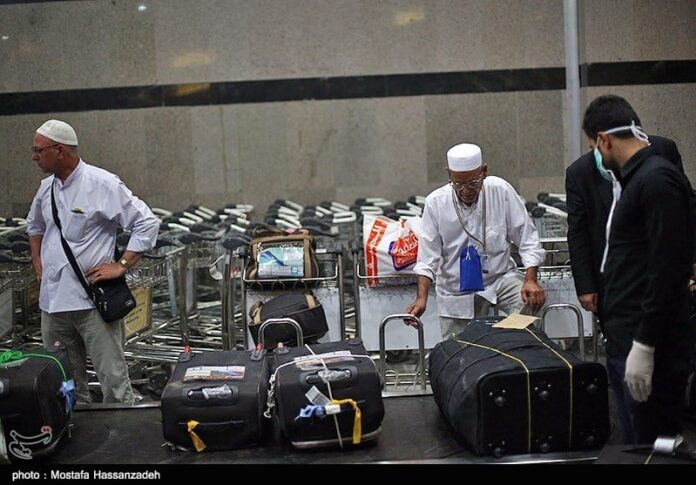
While Iran and Saudi Arabia have no diplomatic relations, they have agreed to deal with the issue of Hajj regardless of political differences, Ali Qazi-Askar, the representative of the Leader of the Islamic Revolution in Hajj and pilgrimage affairs said.
According to the official, some 85,000 Iranian will go to this year’s Hajj considering that the Saudis remained committed to the previous year’s agreement on respecting the dignity of Iranians.
Although Iran has planned to limit its pilgrims’ stay in Saudi Arabia to 28 days, some travelers may have to remain there as long as 40 days due to some problems in Saudi airports, the cleric added.
Qazi-Askar also highlighted the efforts to provide the best amenities for the Iranian Hajj pilgrims, saying Iran has made a modern catering facility in Mecca that could cook 80,000 servings.
In 2016, more than 1.8 million pilgrims attended Hajj, but Iranians stayed at home after tensions between Riyadh and Tehran boiled over following a deadly crush of people during the 2015 pilgrimage.
On September 2, 2015, thousands of people lost their lives in the deadly crush after Saudi authorities blocked a road in Mina during a ritual, forcing large crowds of pilgrims to collide.
The crush was the deadliest incident in the history of the pilgrimage. According to an Associated Press count based on official statements from the 36 countries that lost citizens in the disaster, more than 2,400 pilgrims were killed in the incident.
Saudi Arabia claims nearly 770 people were killed, but officials at Iran’s Hajj and Pilgrimage Organization say about 4,700 people, including over 460 Iranian pilgrims, lost their lives.
Abdolreza Rahmani Fazli says the number of Iranians drug addicts has decreased from 3.7 million under former president Mahmoud Ahmadinejad to 2.8 million now.
According to a report by Fars News Agency, efforts by the government and non-governmental organizations have also led many addicts to stop using highly dangerous drugs and return to using traditional substances such as opium, Rahmani Fazli said.
However, the minister said the significant growth of poppy cultivation in Afghanistan, which is currently estimated to produce over 10,000 tonnes of opium per year, is a big threat to the country and greater efforts are needed to fight addiction in Iran.
The minister said non-governmental organization could play a bigger role in curbing drug addiction in the country.
Due to its geographical location, which is next to Afghanistan, the world’s biggest producer of opium, Iran has been turned by smugglers into a major conduit for narcotics trade and trafficking to Europe and beyond.
Seizing around 500 tonnes of drugs annually from dealers on eastern borders, Iran plays an important part in efforts to slow the growth of drug addiction rate worldwide.
Nearly 4,000 Iranian police officers have lost their lives fighting dealers over the past decades.
World Cup fever is on again. As the drama of the world’s most-eagerly anticipated sports tournament unfolds in Russia, millions of people across the world have been glued to televisions watching the matches, celebrating victories and crying for those who failed to make it to the next round.
Iranians are no exception, as they are obsessed with football and see the brilliant performance of their national football team, Team Melli, in the world cup.
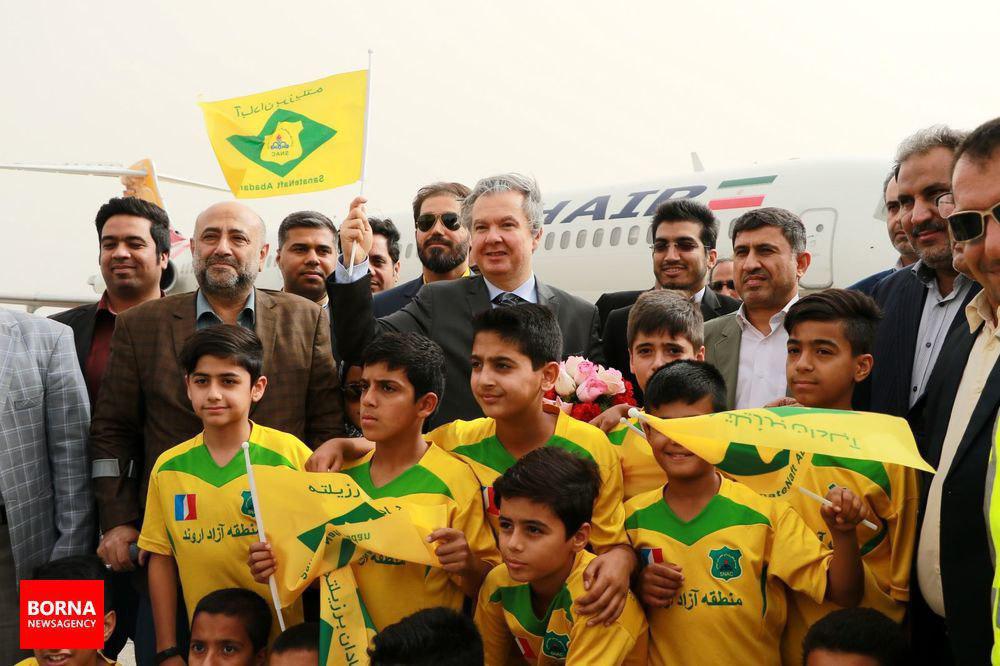
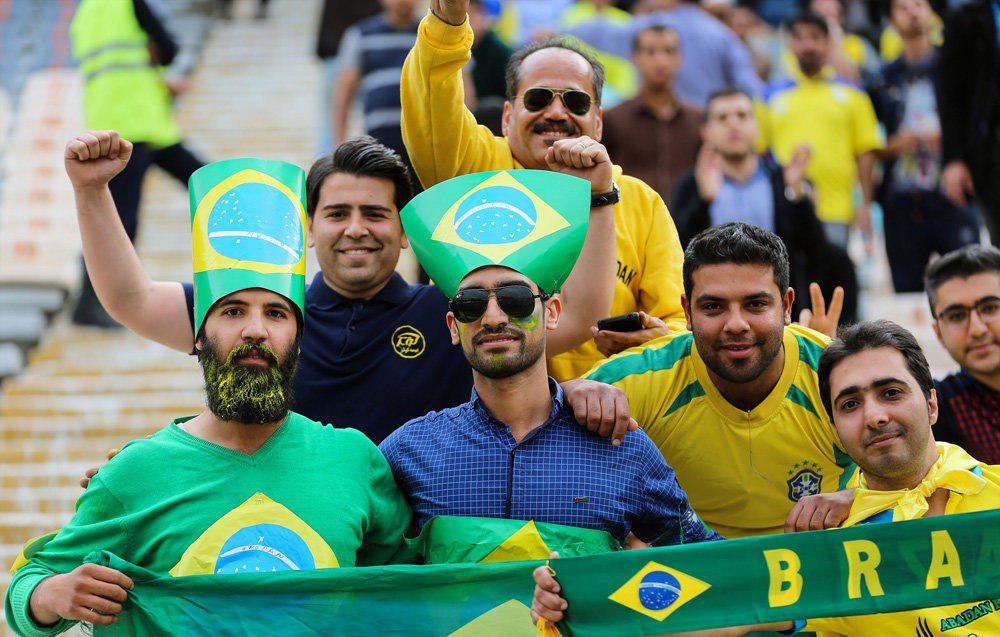
But the city of Abadan in Khuzestan province, south-western Iran, is quite different. They care about the defeats and wins of the Brazilian national team much more than they do for Iran! They often joke that Brazil is part of Abadan, and they will always remain loyal to the Seleção.
In a reportpublished earlier this week, Shahrvand daily writes that in Abadan, a city in southwestern Iran, football is a part of life, not just a hobby.
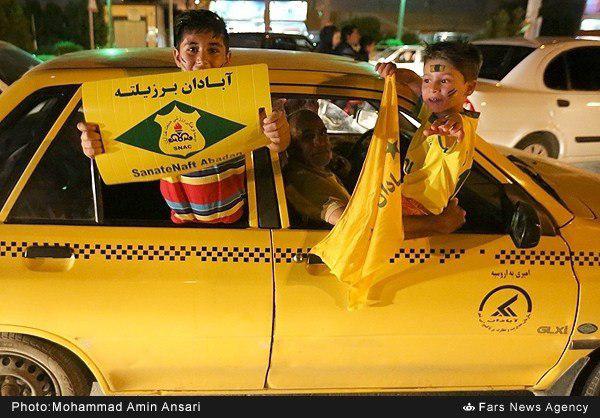
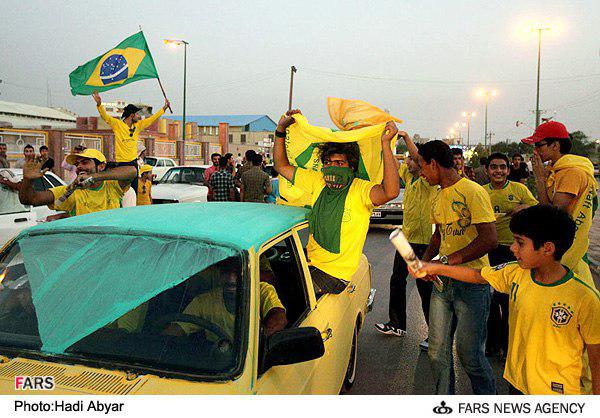
Everything stops when Brazil plays in a World Cup match, with people waiting for Brazil to win so they can go to streets and celebrate an amazing play.
Many people in the city are wearing yellow shirts; portraits of Neymar are seen on storefronts; and Brazil national flag can be seen flying on car windows.
There are also barefoot kids playing football in dusty alleys in poor neighbourhoods, trying to mimic tricks by Brazilian players they see on the television.
Brazil Is Our Love
Amir Somiri, an Abadani fan of football, says Brazilian players would be surprised to know they have such hardcore fans in Iran.
“Brazil, in Abadan, is our life, our dream, our love, everything. I love Brazil,” he said.
“Where does such a love come from,” we ask. “Abadani people find Brazilians to be like themselves,” Amir replies.
“We love them as they are warm people, just like us. They are brunette and cute, just as we are,” he said.
Amir said he holds bitter-sweet memories of watching Brazil matches in the World Cup.
Notably, he remembered the humiliation on the scale of the 7-1 defeat against Germany in 2014, which shocked the entire city.
“After the demolition, I had awful nightmares for a couple of nights. I couldn’t accept that,” he said.
Amir, who was speaking Tuesday, said he is confident this year’s cup will be different for Brazil.
Although Brazil was held 1-1 by Switzerland in their World Cup opener on Monday, Amir says Brazil is poised to win the cup.
“The result of last night game made me upset. Although we draw the match but without a doubt we will advance to the next stage as the leading team of our group,” he said,
“God willing, we will win the cup,” he said.
Brazil later managed to defeat Costa Rica 2-0 on Friday, increasing its chance to advance to the next stage.
Brazil Was Part of Abadan
The passion for Brazilian football is so great that Abadan’s main football club, Sanat Naft, has a flag and uniform similar to that of Brazil.
Inside the local stadium, fans chant “Abadan Berezilete”, literally meaning “Abadan is just like Brazil!”
Amin, another Abadani fan of football, says he is boast of supporting Brazil, as they play with passion.
“Here, people hold an extremely positive feeling towards Brazil, as they play with passion. They play for the love of the sport and for the supporters that are all around them,” he said.
He says for Abadani people, love for football has no boundaries and women and men alike love Brazil.
According to Amin, Abadani people love Brazil so much that they say the country has been part of Abadan before the earth’s continents separated millions of years ago!
“A few weeks ago, the Brazilian ambassador to Iran came to Abadan… They agreed to make Abadan the sister city of a Brazilian town. But the whole Brazilian nation are our brothers and sisters,” he said.
Brazilian ambassador to Iran visiting the city of Abadan in the south-west, where everyone is a fan of the South American football team
Sociological Factors
Mohammad Ali Alasti, a sociologist, says similarities between Abadan and Brazil may have led the Abadani people to associate the city with Brazil.
According to Alasti, poor people in underdeveloped and developing countries, including Iran and Brazil, find watching football a good way to forget about their misery and that could be a reason why both the Abadani people and Brazilians love football so much.
Abadan is an oil-refinery city hit hard by the Iraqi invasion of Iran in 1980s. The city even went under the siege of Iraqi forces, and hundreds of Iranians were martyred until the siege of the city was broken in 1981.
Abadan has not completely recovered from the war, and the effects of the war can be seen in many places of the city.
“Most of Brazilians and Abadanis live in poverty, despite the fact that their countries possess enormous wealth. They are also similar in their physical characteristics and have warm-blooded mentality. Similar living conditions and physical characteristics have caused this association,” Alasti said.
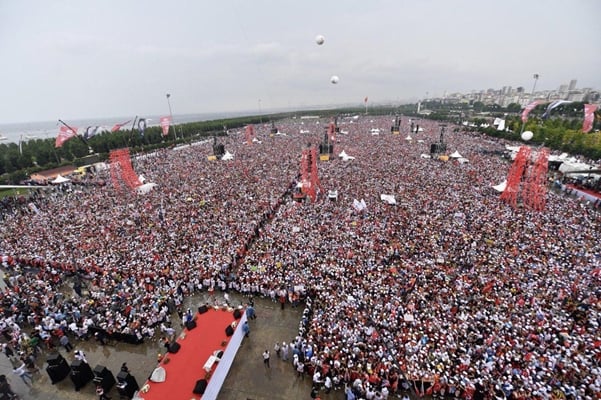
People in Maltepe, Istanbul, attending rally to support the top opposition presidential candidate Muharrem İnce
Polls opened at 08:00 (05:00 GMT) in presidential and parliamentary votes.
If Erdogan wins, he will adopt major new powers that critics say will weaken democratic rule. But he faces a major challenge from centre-left candidate Muharrem Ince of the Republican People’s Party (CHP).
Turkey remains under a state of emergency imposed in the aftermath of a failed coup in July 2016.
These elections were originally scheduled for November 2019 but were brought forward by Erdogan.
Erdogan and his main rival Muharrem Ince both held huge rallies on Saturday, their final day of campaigning – and each branded the other unfit to run Turkey.
Ince, whose fiery campaigning has revitalised Turkey’s demoralised opposition, promised to push back what he characterised as a slide into authoritarian rule under Erdogan.
“If Erdogan wins, your phones will continue to be listened to… Fear will continue to reign,” he told at least a million people gathered in Istanbul. “If Ince wins, the courts will be independent.”
Ince also said that if elected, he would lift Turkey’s state of emergency within 48 hours. Emergency rule allows the government to bypass parliament, BBCreportedon Sunday.
At his own rally, President Erdogan – who was prime minister for 11 years before becoming president in 2014 – used a violent metaphor to summarise his hoped-for result, asking supporters, “Are we going to give them an Ottoman slap [a technique for knocking someone out] tomorrow?”
He accused Ince – a former teacher and MP of 16 years – of lacking the skills to lead.
“It’s one thing to be a physics teacher, it’s another thing to run a country,” Erdogan said. “Being president needs experience.”
He told supporters he planned to push through more major infrastructure projects to boost the economy.
Never in its modern history has this crucial country felt so divided. And never has Recep Tayyip Erdogan faced such a tough election fight.
Turkey’s most powerful leader since its founding father Ataturk would become more powerful still if he wins, scrapping the post of prime minister and weakening parliament. But if he fails to reach 50% in the presidential vote, he’ll face a run-off, probably with Muharrem Ince, a fiery centre-left candidate who has electrified the campaign.
In the parliamentary poll, a united opposition is hoping to deprive Erdogan of his majority. Worshipped by his supporters, abhorred by his critics, this is President Erdogan’s judgement day. Nobody can tell which way it will go.
Two votes are being held on Sunday – one to choose Turkey’s next president, and another to pick members of parliament.
Around 60 million Turks are eligible to take part.
Six candidates are vying for the presidency, and if one of them wins more than 50% of the vote they will be elected outright.
If nobody hits that threshold, the top two will face off in a second-round vote on 8 July.
Erdogan will be hoping to win decisively, as a run-off vote could end in defeat or narrow his margin of victory.
In the parliamentary election, the president’s AK Party (AKP) will face a tough battle to keep its majority in the 600-seat assembly.
The contest pits a government-led coalition against an alliance of opposition parties.
Iranian Deputy Foreign Minister Abbas Araqchi said on Saturday that the three European signatories of the nuclear agreement, officially known as the Joint Comprehensive Plan of Action (JCPOA), and the EU had promised to offer a package of practical steps that would fulfill Iran’s demands, including on oil sales, payments for its oil and transportation.
US President Donald Trump announced on May 8 that Washington was walking away from the nuclear agreement, which was reached between Iran and the five permanent members of the UN Security Council – the United States, Britain, France, Russia and China – plus Germany in 2015.
Trump also said he would reinstate US nuclear sanctions on Iran and impose “the highest level” of economic bans on the Islamic Republic.
Under the JCPOA, Iran undertook to put limits on its nuclear program in exchange for the removal of nuclear-related sanctions imposed against Tehran.
Since the US president pulled Washington out of the historic nuclear deal, European countries have been scrambling to ensure that Iran gets enough economic benefits to persuade it to stay in the deal. The remaining parties have vowed to stay in the accord.
Head of the Atomic Energy Organization of Iran (AEOI) Ali Akbar Salehi said on Friday that the Middle East and the entire world would face a “dreadful” future if the key nuclear agreement fell apart.
“If the European Union and other countries supporting the JCPOA do not demonstrate their practical opposition to the US policies in due time, they will face a dreadful future and unprecedented insecurity in the region and the world because of the JCPOA’s collapse,” the AEOI chief said.
Araqchi further said that the nuclear accord is not in a normal state due to the US pullout from it.
Iran and the remaining signatories to the deal are seeking to keep it alive; however, Tehran would return to pre-JCPOA conditions if such efforts failed, he pointed out.
He noted that Iran had held intensive talks with the European signatories as well as China and Russia over the recent weeks at different levels.
“We have clearly announced that Iran has not made a decision yet to stay in the JCPOA or leave it, and our decision hinges on the opposite sides’ will and capabilities to fulfill our demands,” Araqchi added.
“We will make decisions based on national interests and will take the next steps on whether to remain in the JCPOA or not based on our national interests,” he said.
The Iranian negotiator emphasized that the Islamic Republic was ready for “any condition or scenario.”
In a phone call with his French counterpart, Emmanuel Macron, on June 12, Iranian President Hassan Rouhani said the Islamic Republic would quit the multilateral nuclear agreement if it did not benefit from the deal after the US pullout.
“If Iran cannot enjoy the agreement’s benefits, it will be practically impossible to stay in it,” Rouhani said.
Iranian Parliament Speaker Ali Larijani also said on June 10 that the Islamic Republic would not wait for Europe’s dateless promises, urging European countries to “explicitly and swiftly” announce their decisions about the JCPOA after the US pullout.
Larijani added that Iranian authorities were prudently following up on the nation’s demands, noting, however, that time was running out for negotiations with Europe on the nuclear deal.
Injured people lay on the ground following an explosion at a Zanu pf rally in Bulawayo, Saturday, June, 23, 2018.
In a Sunday statement, Qassemi wished full recovery for those injured in the blast and expressed the Islamic Republic’s sympathy with their families.
He then described as unacceptable any resort to violence to press ahead with one’s political goals and expressed the hope that Zimbabwe’s parliamentary elections would be held in peace and security through unity and vigilance of all the people in the African country.
Mnangagwa survived an explosion on Saturday that rocked a stadium where he was addressing a rally.
The 75-year-old president, who was accompanied by his two deputies, was unhurt and taken to safety after the blast on Saturday. Footage from Zimbabwe’s state television showed that the explosion took place near the president as he waved to supporters leaving a number of people injured.
No group has yet taken responsibility for the blast.
Zimbabwe said in late May it would choose a new president and parliament on July 30, in the country’s first electoral test since the removal of its former leader Robert Mugabe.






 Brazil Is Our Love