Thursday, December 25, 2025
Home Blog Page 3518

Iran, Turkey, Russia Discuss Syria Peace in Sochi

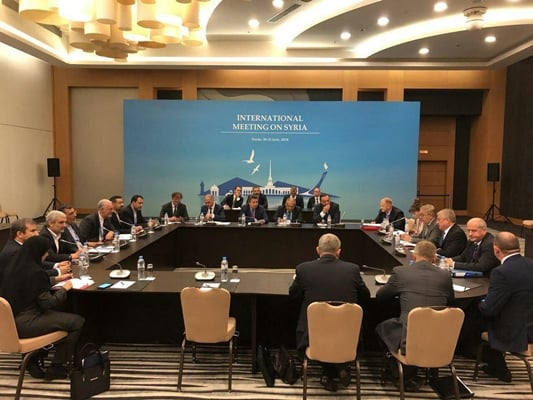
The Monday talks were attended by Senior Assistant to Iranian Foreign Minister Hossein Jaberi Ansari, Russian President’s Special Envoy for Syria Alexander Lavrentiev and Deputy Turkish Foreign Minister Sedat Onal.

The top negotiators of the three countries also discussed a draft final statement of the 10th international conference on Syria peace, which is underway in Sochi.

Jaberi Ansari also met with the Syrian delegation to Sochi talks headed by Syria’s UN envoy Bashar al-Jafari. During the talks, the two sides discussed the Constitutional Committee and the exchange of detainees. They also conferred on the final statement of the 10th Astana conference.

He also held separate talks with UN’s Special Envoy for Syria Staffan de Mistura and Turkey’s Onal.

In the meeting with de Mistura, the two diplomats exchanged view on the political settlement of the conflict, the committee tasked with drafting Syria’s Constitution, and humanitarian dimensions of the Syria crisis, particularly the return of refugees.

Jaberi Ansari and Onal also discussed the latest developments in the Syria crisis, the committee on Syrian Constitution, the return of refugees, the exchange of detainees and abductees, and the final statement the 10th round of Syria talks.

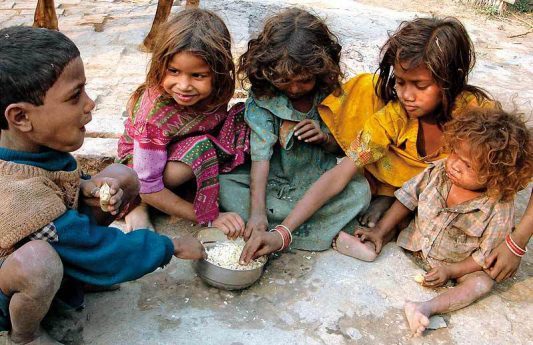
Seven Ways to Combat Poverty

Poverty

A look at this disparity of living may tempt you to believe the gap in lifestyles is too large to bridge, but there are many things that a single person can do to improve the well-being of those who live in poverty.


1. Understand the Obstacles of Poverty

Without an understanding of the challenges of poverty, it is difficult to help appropriately. For example, it often isn’t enough to provide a little bit of clothing or a meal here and there. Families and individuals stuck in a cycle of poverty are often deprived of the education that might lift them from their circumstances or adequate healthcare to ensure they are physically able to improve their situations.

People in poor communities may not have the same opportunities for employment as those in more comfortable conditions. Facing disadvantages economically, socially, and politically, entire segments of the population may be trapped in a cycle without the means to break free.


2. Recognize Talents and Value

Too often, people assume that gifts of money and goods are enough to make lasting changes in poor communities. While these donations are necessary, they don’t really address the underlying problem. One of the first things you can do as an individual is to change your perspective.

Rather than viewing these people as projects, take time to get to know individuals. As you come to know them, you’ll recognize the potential for success, while coming to love and respect individuals and groups of people. As part of these interactions, you may provide access to new job opportunities or give aid in overcoming everyday barriers.


3. Recognize Outside Influences

It is a somewhat prevalent attitude that the poor are poor because they haven’t done enough to change their situation. However, as you gain information about the issues facing impoverished communities, you’ll begin to recognize links between reproductive rights, workers’ rights, and the criminal justice system. Even in wealthy countries, there are struggles to implement government policies and programs that might alleviate poverty, lack of education, lack of healthcare, and income inequality. If you’re able to stop blaming the poor for their circumstances, you’ll be able to start affecting positive change.


4. Raise Awareness

In neighborhoods where clean water is taken for granted, it can be hard to imagine the struggle for water facing the poor in rural areas. When public education is more or less free, it is hard to believe that some children cannot afford to attend their local schools. According to the World Bank, 1 in 10 people survive on less than US$1.90 per day. That’s an issue that is easy to overlook when you’re surrounded by other affluent households.


5. Donate Money and Goods Wisely

Thoughtful financial assistance can be a boon to those in need. In the short term, those donations may provide a meal for a family or ensure another month of shelter. If you’re hoping to make a long-term difference, however, you may want to combine your efforts with others, such as charitable organizations.

Lola Karimova-Tillyaeva is one example of this type of work. She combined her efforts with UNESCO, the UN Education, Scientific, and Cultural Organization, which seeks to bring education to impoverished communities, foster unity between and appreciation for cultures, and advocates the importance of freedom of expression. Identify organizations with goals that align with yours and combine your resources with theirs to achieve lasting benefits.


6. Sponsor Fundraisers and Drives

Social media and electronic global communications have made it easier than ever to pull people together in a single effort. Communities around the world have been hit with hurricanes, earthquakes, and other natural disasters. News of those disasters traveled quickly, inspiring disaster relief donations; emergency supplies, food, money, and volunteer services arrived from all over the world. When you see a need, you could sponsor a fundraising effort online, organize a collection drive, or gather volunteers to complete needed projects, such as building a well.

Social media is a powerful tool which can be leveraged by charitable organisations and NGOs in many ways to start a fundraiser and drive attendance at charity events. For those yet to get their act together, here are three important tips to help you get started;

• Maintain your organisation’s profile clarity & consistency across platforms.
• Encourage all the members of your organization to follow and share your posts.
• Choose the right SM platforms to promote your organization and its upcoming charity events, depending on who your target audience is.


7. Get Involved in Public Policies

Pay attention to existing laws and bills and take steps to recognize their effect on society, especially on those populations living in poverty. Sponsor and support policies and laws that are aimed at reducing poverty and improving the circumstances of those who don’t have the same advantages you enjoy.

As just one person, you may not feel that you can do much to alleviate the suffering of those living in poverty. However, there are steps you can take to increase awareness, change minds, and improve the circumstances of families or individuals in your community. Whether you choose to make donations or influence public policy, your efforts are sure to serve as an example for others.

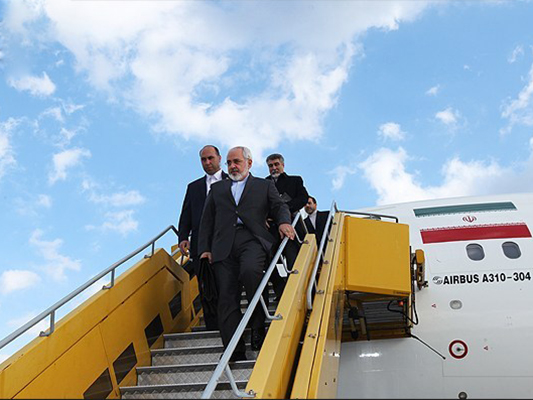
Iran’s Top Diplomat Departs for Sri Lanka

During the visit, the Iranian top diplomat is to discuss bilateral relations with senior Sri Lankan officials.

After Sri Lanka, Zarif will visit Singapore to sign documents on Iran’s accession to the Treaty of Amity and Cooperation of the Association of Southeast Asian Nations.

While in Singapore, he will also attend a ministerial meeting of the ASEAN.

“Consensus among South-east Asian countries on accepting Iran as a member of the ASEAN’s Treaty of Amity and Cooperation (TAC) indicates the importance of relations and interaction with Iran as an important and influential power in regional and international equations by all members of this Association,” said Iranian Foreign Ministry Spokesman Bahram Qassemi a few days ago.

The ministerial summit of the ASEAN member states and its partners was kicked off on Monday and will last until August 4 in Singapore.

US Secretary of State Mike Pompeo is also expected to attend the summit on August 3, fuelling speculations that there might be a bilateral meeting between top diplomats of Iran and the US after the recent escalation of war of words between Tehran and Washington.

Iran Slams Final Statement of US’ Religious Freedom Summit

In a Monday statement, Qassemi slammed the statement as an example of interference in the internal affairs of Iran, saying that it is based on inaccurate, biased, and unrealistic information.

He pointed out that these few countries have falsely called themselves representatives of the international community.

“The US and other violators of the most natural and obvious human rights are not in a position to make biased judgments about other countries with different cultures and diversities.”

Qassemi highlighted the principles of the Islamic Republic of Iran’s developed constitution and the recent resolution of the Expediency Council on the rights of religious minorities, saying that throughout the history Iran has witnessed the peaceful presence and coexistence of various religious factions.

“At the moment, all divine religions in Iran are represented in the Iranian parliament and other bodies while enjoying all citizenship rights,” underscored the Iranian spokesperson.

He also scorned the baseless remarks of US Vice President Mike Pence about religions and religious ideas at this conference, noting that throughout the history, the Iranian people lived in a peaceful atmosphere with other minorities and believers of other religions.

He further highlighted that followers of all divine religions have practised their religious rituals throughout Iran and the country’s law protects these freedoms.

“Unfortunately, fighting against other religions and ethnic groups has spread to this region from the Western side of the world leading to catastrophes at times,” stated the Iranian official.

The US State Department concluded its first-ever Ministerial Meeting to Advance Religious Freedom Thursday (July 26), with declarations claiming further efforts to reduce religious persecution.

Secretary of State Mike Pompeo pointed to an action plan, dubbed the Potomac Declaration, that lays out “concrete ways” to protect religious groups around the world.

25 countries co-signed a statement condemning abuses of religious freedom by terrorist groups, while fewer than a dozen added their names to statements condemning religious restrictions in China, Iran and Myanmar.

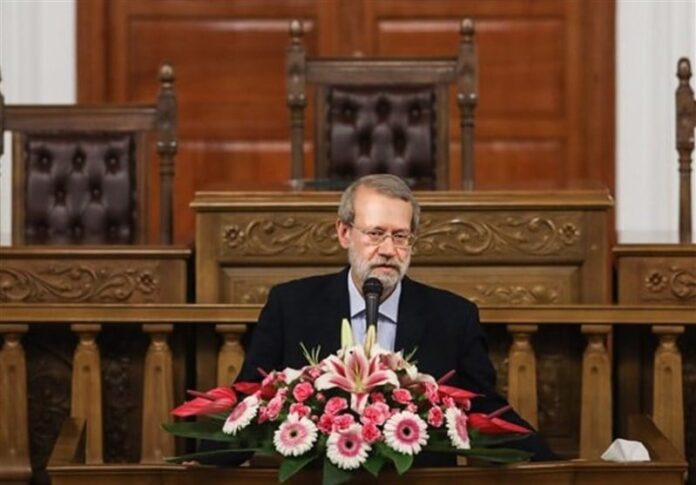
“Enemy Has Created Army of Guerillas in Suits against Tehran”

“According to the information we have received, the enemies’ intelligence services are seeking to harm (Iran’s) economy under the disguise of (other activities),” he said.

Larijani further emphasized that at any rate, it is very important to control the foreign exchange market’s situation.

“Enemies are seeking to prevent oil sales and banking transactions and, accordingly, they launched an army of guerrillas in suits to put pressure on Iran,” the parliament speaker went on to say.

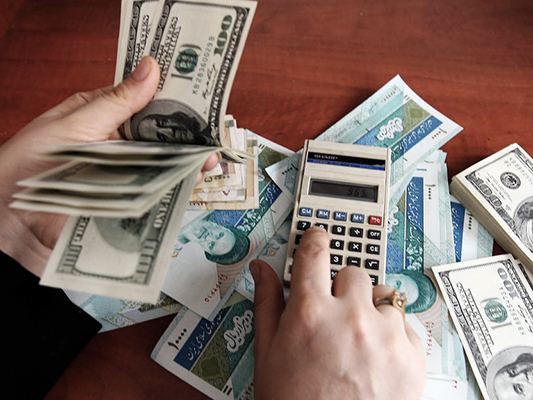
The remarks came as the Iranian money, once again, plunged to a record low against the US dollar in the unofficial market, which is being offered for as much as 110,000 rials Monday.

On May 8, the US president pulled his country out of the Joint Comprehensive Plan of Action (JCPOA), a nuclear agreement achieved in Vienna in 2015 after years of negotiations among Iran and the Group 5+1 (Russia, China, the US, Britain, France and Germany).

After US President Donald Trump withdrew his country from the deal, his administration moved to re-implement the previous sanctions against Iran.

American authorities say the new sanctions would place “unprecedented economic pressure” on Iran and are seeking to impose sanctions against the countries that do not cut imports of Iranian oil to “zero” by November 4.

“Iranian Government to Resolve Economic Crisis Soon”

New Economic Plans Needed to Counter Fallout from COVID-19 Outbreak: Iran VP

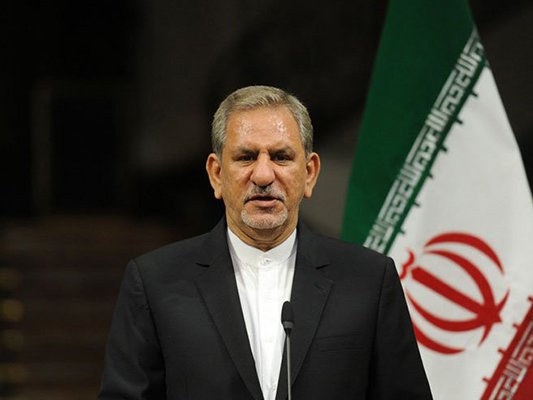
“We must take care of the lives of the people in the new circumstances facing the country and not let them, especially the poor ones, be affected,” Jahangiri said on Monday in reaction to the historic plunge in the value of Iran’s national currency.

The government’s priority is to protect the lives of people, especially the poor, against sanctions, he said, addressing a meeting of Resistance Economy Committee.

“The basic commodities, pharmaceuticals and essential needs of the people should be provided with official-rate currency and be made available to the society in abundance,” stressed Jahangiri.

He also underlined that the United States wants to impact public opinion before it imposes the sanctions and, in their own words, they want to launch an economic war against the Iranian nation.

“If we can handle this situation well and pass the country through this stage, the Iranian economy will become stable and economic indices become positive again.”

He went on to say that sanctions create problems but also provide opportunities for the country, one of which is in the industry sector.

“The central bank is seriously looking to review foreign exchange policies and present a new package for managing the foreign exchange market. Once the central bank’s package is finalised, all related organisations will be required to accompany the central bank in implementation of the proposed package,” he noted, adding that the package is expected to stop fluctuations in the foreign exchange market, and return stability to the country’s economy.

A dramatic decline in the value of the Iranian rial has increased the prices of imported consumer goods and depressed some markets in the past few months.

On Monday, one US dollar was traded for IRR 120,000 in the free market, leading the government to face a strong backlash from political and social circles for its handling of the economy.

Hoor-al-Azim Wetland at Iran-Iraq Border on Fire Again

Hoor-al-Azim

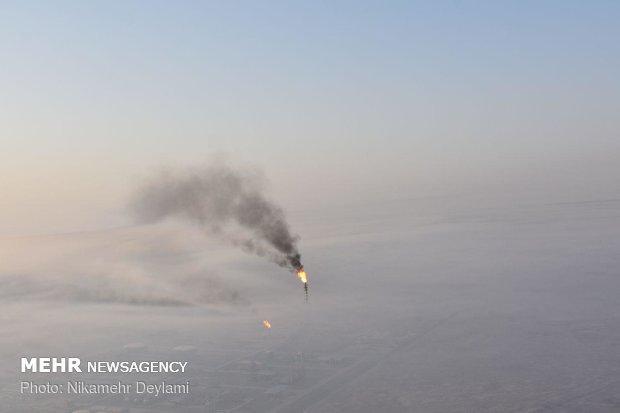
Kiomars Hajizadeh, the Director General of Khuzestan Crisis Management Department, says a huge part of the fire in the Hoor-al-Azim wetland occurred in Iraq, which is likely to be deliberate.

“Unfortunately, the situation in Iraq has made the situation difficult to deal with. This country must make special efforts to resolve this issue,” he stressed.

So far many measures have been taken to prevent fires in the wetland, but since the source of fires is not in Iran, the operations have become very difficult to carry out, he added.

The fire engulfed a region that has not undergone any clearing operations after the war imposed by Iraq, he noted.

Hajizadeh said the problem of smoke diffusion in the cities of Khuzestan province has turned into a serious one, saying that the most appropriate solution for this problem is the release of water from the Karkheh River.

“And that’s why in the early days of the incident, a committee was set up to release water,” he noted.

“Khuzestan’s water and power departments need to do some investigations to determine whether the water, which is to be transferred to Iraq, can be provided from the Karkheh River,” underlined Hajizadeh.

Khuzestan crisis management department is set to send aircraft to contain and extinguish the fire, he noted.

“A joint meeting will also be held between officials with Iran’s Khuzestan province and Iraq’s Maysan Governorate,” he added.

The first fires in Hoor-al-Azim wetland in late June lasted more than 20 days and burned over 18,000 hectares of the lagoon on the Iraqi side.

The people of the southern cities of Khuzestan struggled with the smoke of the fire and it was hard for them to breathe. Since Saturday, the wetland has been on fire for the second time.

US Sanctions to Cost Dearly for Iranian Patients: Minister

Seyyed Hassan Qazizadeh Hashemi says the Iranian foreign ministry can reveal the horrible nature of those who claim to be advocates of human rights and defenders of the people of the world, but in practice harm ordinary citizens through sanctions.

However, the Islamic Republic will not allow anyone to harm people in the field of health, he said, speaking in a meeting with Iranian ambassadors overseas.

Referring to the proper quality of pharmaceuticals and medical equipment made in the country, Qazizadeh Hashemi said, “Our goal in these two areas is to, at first, supply the country’s needs and then export Iranian products.”

Hashemi highlighted the World Health Organization’s reports on the health situation in Iran, saying that Iran is one of the 10 leading countries in the field of combating non-contagious diseases, and that the president of the Islamic Republic, in September, will report on Iran’s actions in this area at the UN.

The US pulled out of the 2015 nuclear deal with Iran early March, threatening to impose the “highest level” of bans on the Islamic Republic that would ultimately destroy its economy.

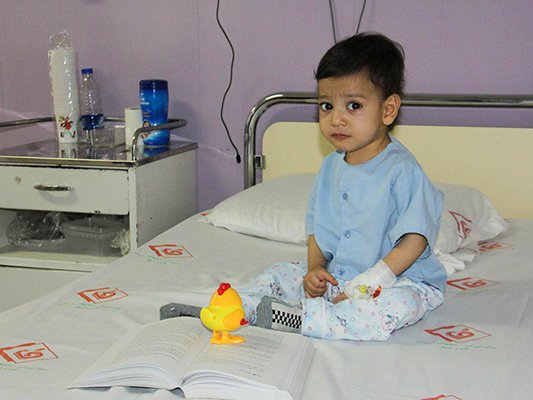
While US President Donald Trump claims he is a supporter of the Iranian nation and their rights, the sanctions imposed on the country are expected to target millions of ordinary citizens, particularly the poor and the patients.

Gov’t under Pressure to Do More to Stop Rial’s Historic Plunge

A dramatic decline in the value of the Iranian rial has increased the prices of imported consumer goods and depressed some markets in the past few months.

On Monday, one US dollar was traded for IRR 120,000 in the free market, leading the government to face a strong backlash from political and social circles for its handling of the economy.

Lawmakers, experts and figures from various political persuasions, particularly the conservative critics of the government, have pressed Rouhani to reshuffle his economic team to halt a plunge in people’s purchasing power and tamp down public discontent.

Ordinary citizens have also taken Rouhani’s administration to task on social media, highlighting the hardships they face in making ends meet amid high inflation.

Amid sharp criticism, Rouhani’s cabinet last Wednesday approved Abdolnasser Hemmati to replace Valiollah Seif as the new governor of the central bank.

Seif’s replacement, a former professor of economics, banker and insurance official, had been appointed as Iran’s ambassador to China before he was called back from Beijing for the new job.

The first senior shake-up since the beginning of forex rate problems suggested the embattled Rouhani is eventually conceding a need for change to ease criticism.

But many critics believe a long way is ahead for the government to restore public trust and it needs to get more serious about the country’s economy.

Some lawmakers, including Jalal Mirzaei, have threatened the parliament could move to impeach the government’s economic ministers if the president fails to take action.


Popular Expectations

Lawmaker Aziz Akbarian said on Sunday people expect more dismissals because of the tough economic reality facing the nation of 80 million.

“The negligence of the government’s economic team has led to raging inflation and grave economic hardships. There is no commodity whose price has not increased by 50 percent,” IRNA quoted him as saying.

The lawmaker referred to the government’s plan to unify official and free-market exchange rates, which was announced last month, and said it has failed to improve conditions and has just produced more corruption.

“Currency reserves are not allocated to basic goods … they are spent on unnecessary imports,” he said.

“I urge the government to move to reshuffle the economic team … Replacing Mr Seif is not enough. The government’s economic team is weak and ineffective,” he said, speaking in an open parliament session on Sunday.

Zabih Nikfar, another lawmaker, urged Rouhani to accelerate a shakeup in the Cabinet, as his economic team is really in need of fresh blood.

“Taking into account the conditions of the currency and [gold] coin markets, people expect the government to keep up reforming the economic team,” ISNA quoted him as saying in the parliament on Monday.


Seif’s Replacement a Show

Some other figures critical of the government’s performance have called Seif’s replacement a show, blaming at least part of the current crisis on the economic policies of the government.

These figures, who are mainly conservative, believe the exchange rate problems have their roots in the neoliberal thinking of key policy makers, which has increased liquidity, spread corruption, weakened domestic production, intensified the class conflict and brought rampant inflation.

Majid Mottaqifar, the spokesman for the conservative Resistance Front, told Fars News Agency on Monday that the dismissed official, Valiollah Seif, has been a victim of economic policies devised by others.

“Replacing Mr Seif wouldn’t do any good, as he was not the real governor of the economy,” he said.

“The central bank has no independence in policy-making and the government sees the body as a penny bank … Although Seif’s performance was mediocre, he was a victim of real economic policymakers,” he said.

Mottaqifar said the party believes the government has a naive view about Iran’s economy and it is mismanaging Iran’s monetary policy.

“According to this view, the country is kept waiting for foreign openings. Our urgent need is a change in this view,” he said.

“The real problem lies in people who keep the country waiting for a deal with the west,” he said.

Rouhani vowed during the presidential campaign for the 2013 elections that a nuclear agreement to settle Iran’s long-running dispute with the west – which was eventually reached in 2015-  would bring prosperity after prolonged isolation.

Conservatives believe this forecast has proven to be a miscalculation and Rouhani’s government has made a big mistake by pinning hopes on other countries to help Iran revitalize its economy.


Currency Coup or Economic War?

This is while some figures believe Rouhani is not to blame for the current economic hardships.

Some officials and experts have described the exchange rate problems as part of an economic war launched by the US, which has hardened its line against Tehran and is openly talking about the need for a regime change in Iran.

US pulled out of the 2015 nuclear deal early March, threatening to impose the “highest level” of economic bans on the Islamic Republic that would ultimately destroy its economy.

But speculations over the root cause of the current conditions are not limited to the government’s mismanagement and the adversaries’ economic war.

The pro-reform Arman-e Emrooz Daily has even raised the possibility that the crisis could be a “currency coup”, suggesting in an article published on Monday that the government’s political opponents could be behind the wild exchange rate fluctuations. The report says the government’s opponents seek to damage Rouhani’s reputation and kill the reformists’ chance to win the next presidential elections in 2021.

The reformist news website Entekhab also said in a Monday report that domestic elements and opponents of the Rouhani administration, rather than foreign factors and enemies, are behind the current crisis in the country’s economy.

“Economic experts unanimously believe no foreign pressure, sanction, or generally economic factor can lead to such a plunge in the value of Iran’s national currency,” the report said.

It also blasted a recent report published by the conservative newspaper Resalat which predicted the US dollar rate will even increase to IRR 250,000, and said the opponents of Rouhani are destroying the entire country in order to achieve their partisan goals.

Iran Rules Out Holding Talks with Current US Administration

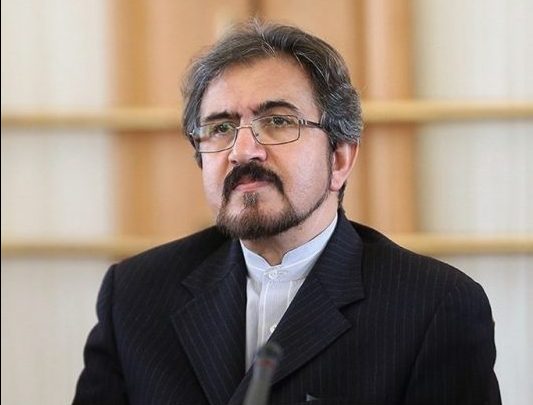
Bahram Qassemi

“With current America and these policies, there will definitely not be the possibility of dialogue and engagement, and the United States has shown that it is totally unreliable,” Foreign Ministry spokesman Bahram Qassemi said on Monday.

President Donald Trump pulled the United States out of an international nuclear deal known as the JCPOA with Tehran in May and announced his intention to impose the strictest regime of sanctions on the country.

Qassemi, speaking to reporters in Tehran during his weekly news briefing, dismissed calls for negotiations by US leaders, including by Trump who said recently that he was ready “to make a real deal” with Iran.

“Given the current circumstances and hostile actions of the United States, the country’s withdrawal from the JCPOA and continuation of hostile policies, its efforts to put economic pressure on the Iranian people and its sanctions, I think there are no conditions for such a discussion at all.”

Qassemi further brushed aside reports about a policy of regime change or collapse having been instituted by the Trump administration toward Iran, calling them “irrelevant” and a “raw dream which will never come true.”

The spokesman also said a military confrontation between Iran and the United States was out of the question, but that Tehran had prepared itself for any eventuality.

“America’s hostile policies against Iran continue, and Iran has prepared itself for this behavior, doing what it takes to thwart these conspiracies and hostile policies,” he said, adding that “Iran and its brave people will be victorious in this battle.”

Qassemi further shrugged off reports that the Trump administration was quietly pushing ahead with a bid to create an “Arab NATO” with the participation of six Persian Gulf Arab states, Egypt and Jordan to counter Iran.

“What we have seen from the overall inter-Arab relations, and the current situation and the lack of coherence and consensus and the gap that exists among these countries, this issue should be viewed as no more than a slogan,” he said.

The spokesman, however, acknowledged that Trump was taking advantage of the weakness of Muslim and Arab states to use their oil revenues to his own benefit through various machinations.

“Over the past four decades, the Islamic Republic has shown how it has been able to stand alongside the people and with the support and resistance of the great people of Iran resist foreign conspiracies and pressures,” he said.

“We will certainly pass through this stage as well, and these reports and allegations are not worthy of attention,” Qassemi added.

The official also pointed to ongoing talks between the Islamic Republic and European countries, saying Tehran has asked the European signatories to the nuclear deal to give it assurances about the deal’s continued existence.

“Constant communication with the European parties continues and this is a reason for optimism,” Qassemi said, stressing that the overall situation is positive.