Sunday, December 21, 2025
Home Blog Page 3457

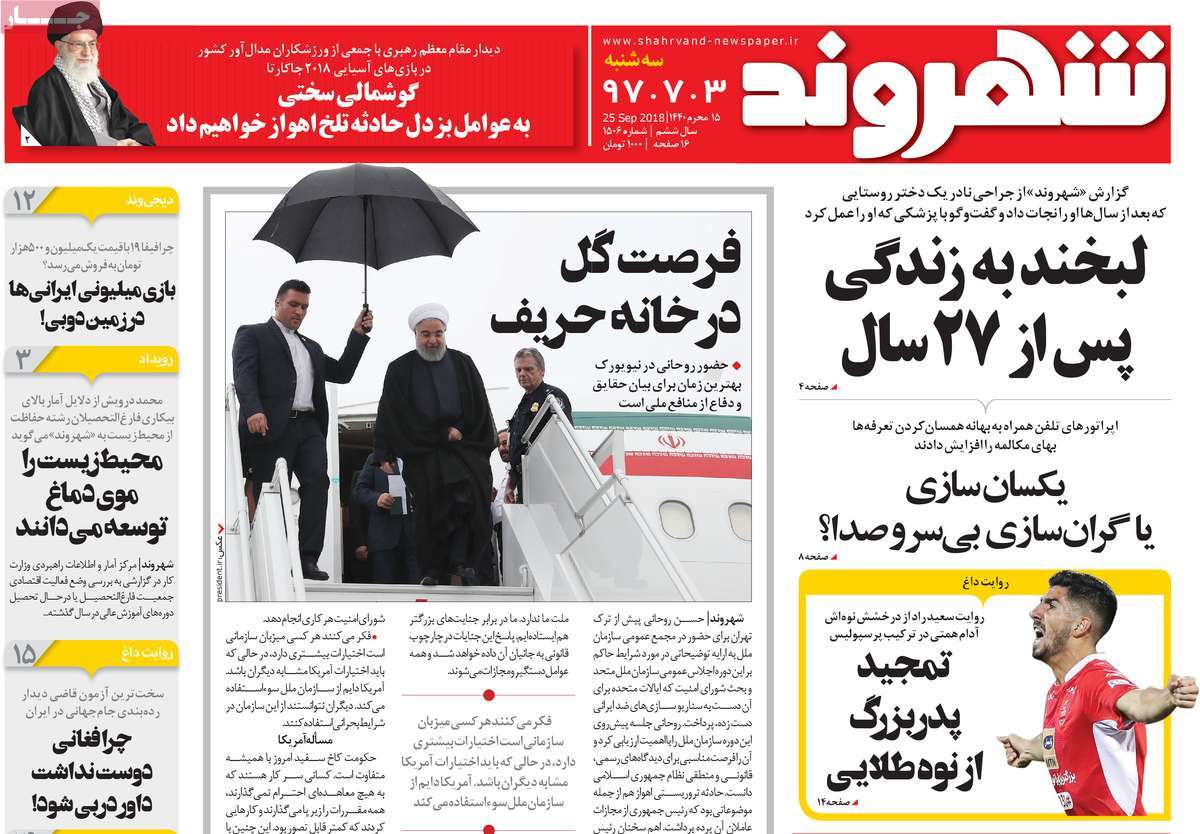
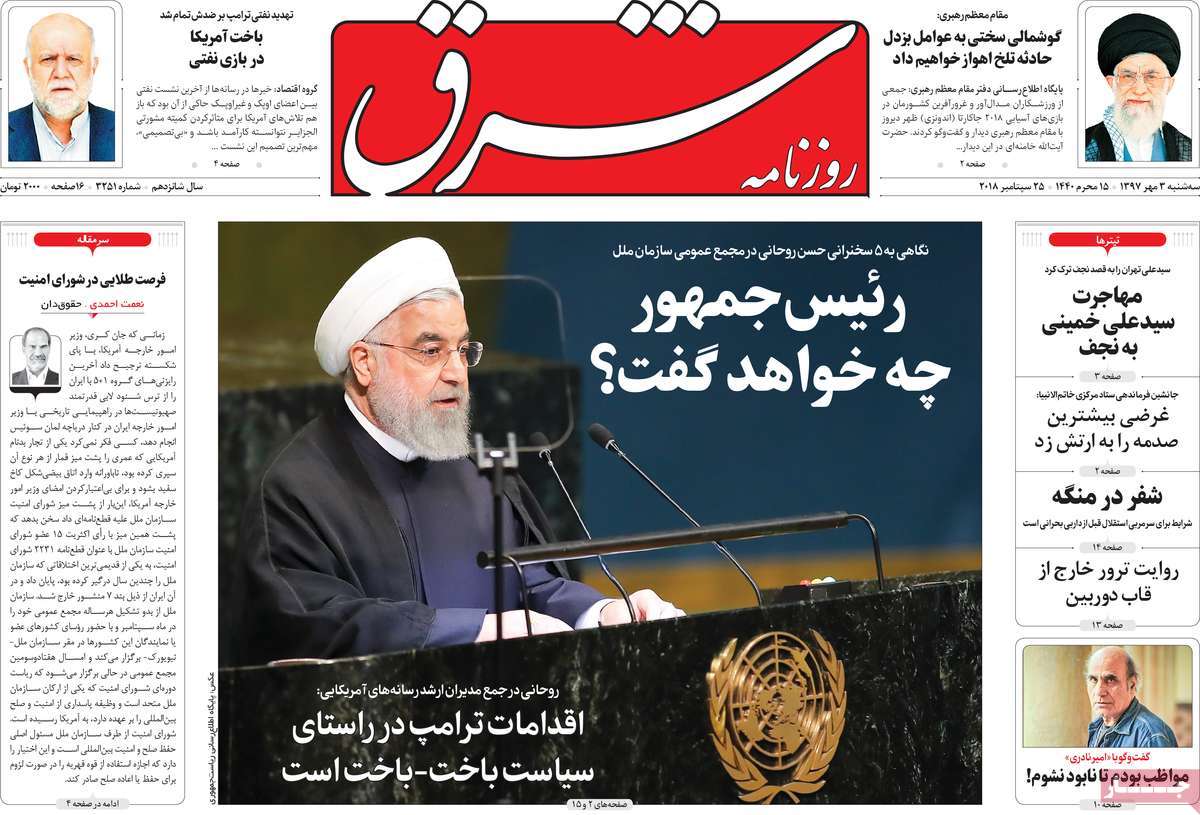
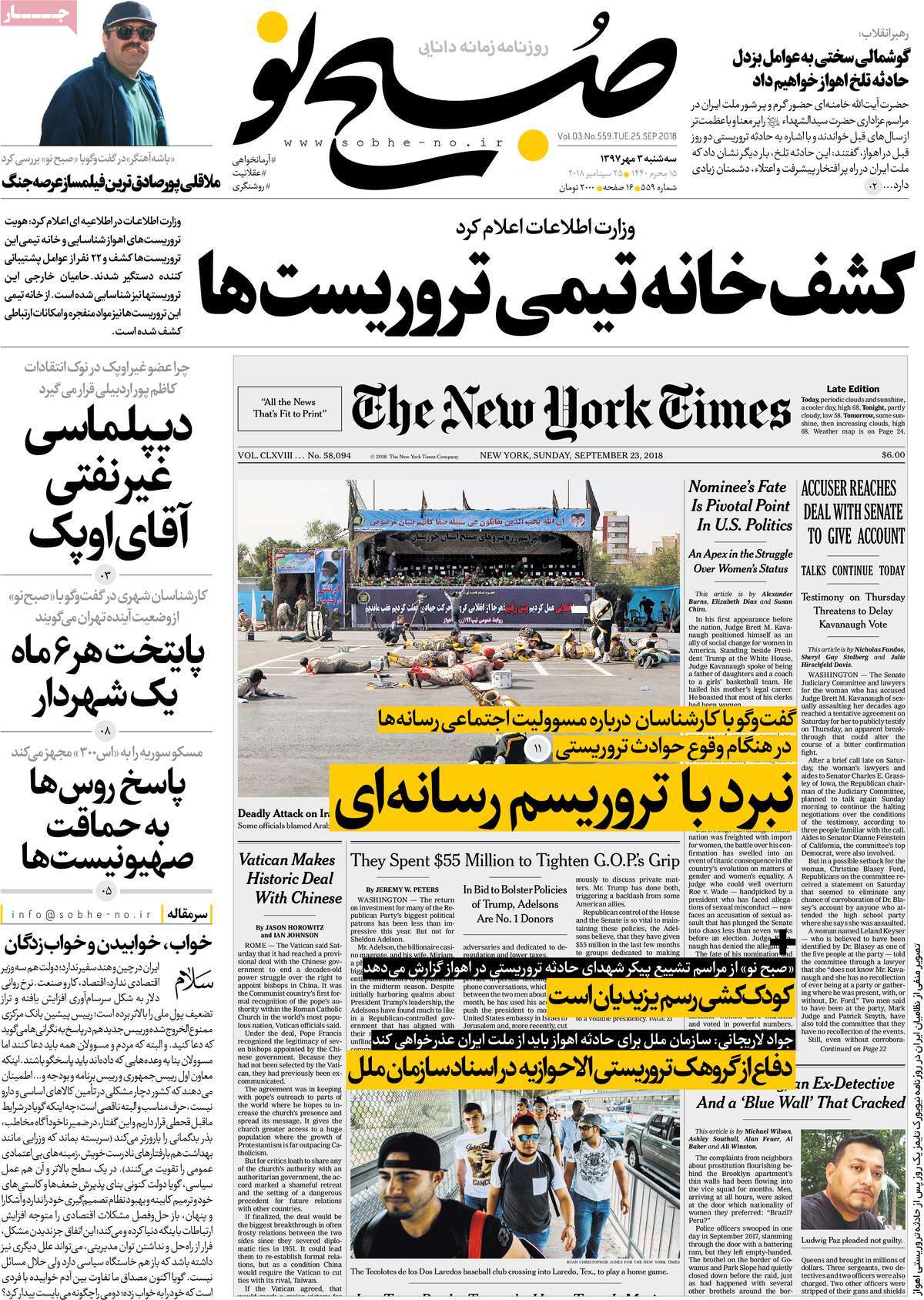
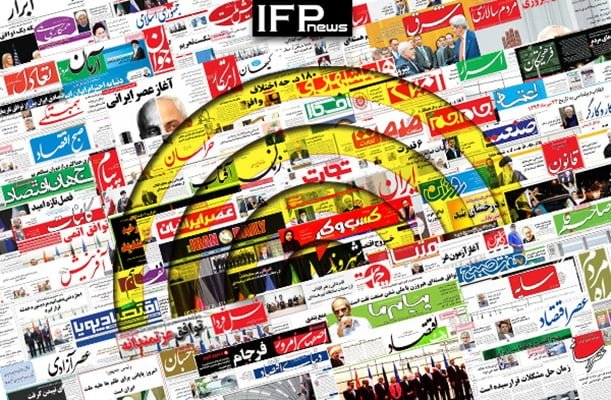
A Look at Iranian Newspaper Front Pages on September 25

A Look at Iranian Newspaper Front Pages on November 19

The top story in all papers today was the ongoing visit of Iranian President Hassan Rouhani to New York, where he will attend and address the UN General Assembly.

Several papers focused on the possibility of a meeting between Rouhani and his American counterpart Donald Trump, at least during the UN Security Council on Wednesday. Reformist papers mostly called for Rouhani’s participation in the meeting, but conservatives expressed strong opposition to the meeting.

Also a top story was the recent meeting of the Organization of Petroleum Exporting Countries (OPEC) in Algeria, during which the member states rejected Trump’s call for an increase in the body’s output.

The above issues, as well as many more, are highlighted in the following headlines and top stories:


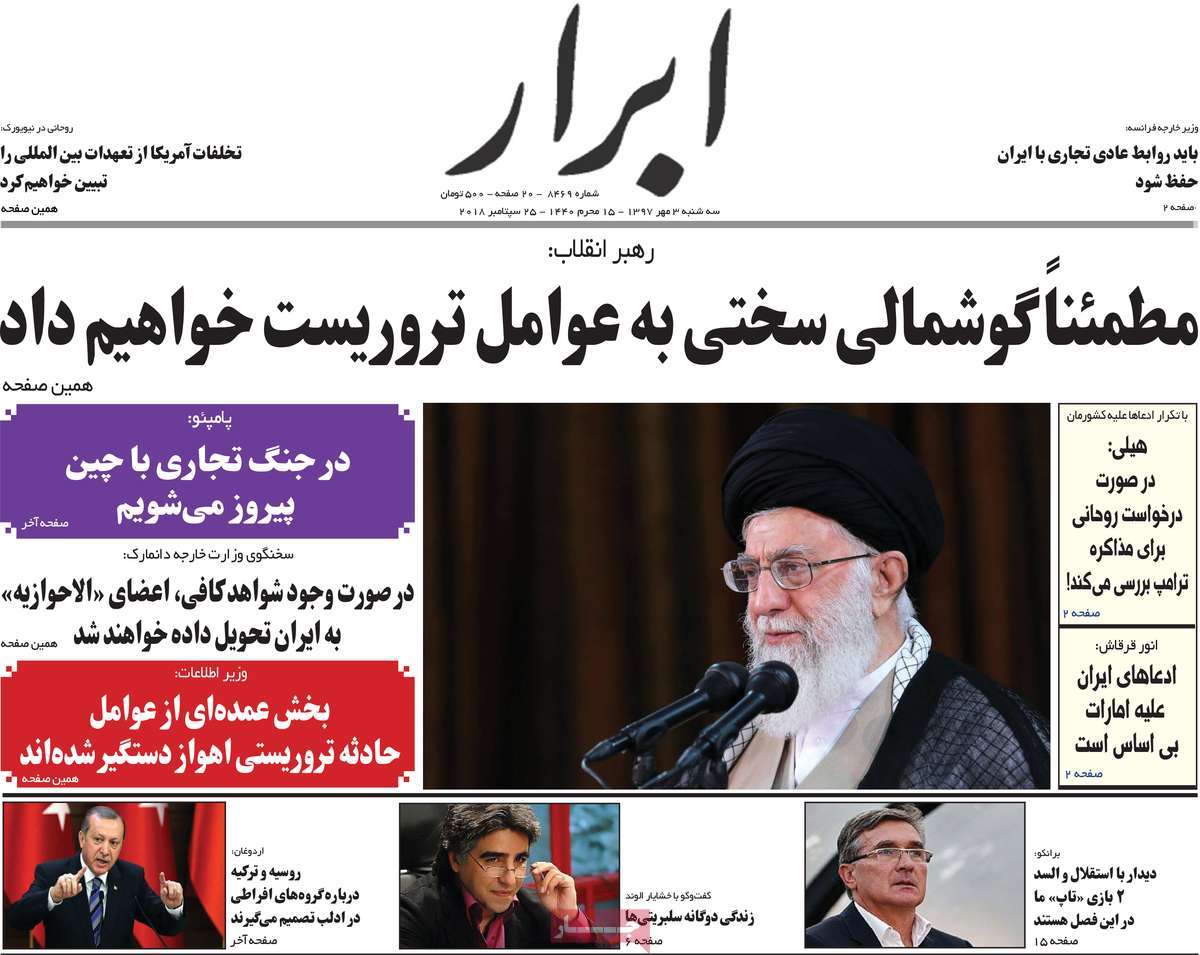
Abrar:

1- Qarqash: Iran’s Accusations against UAE Baseless

2- French FM: Normal Trade Ties with Iran Must Be Maintained

3- Pompeo: We’ll Win Trade War with China

A Look at Iranian Newspaper Front Pages on September 25


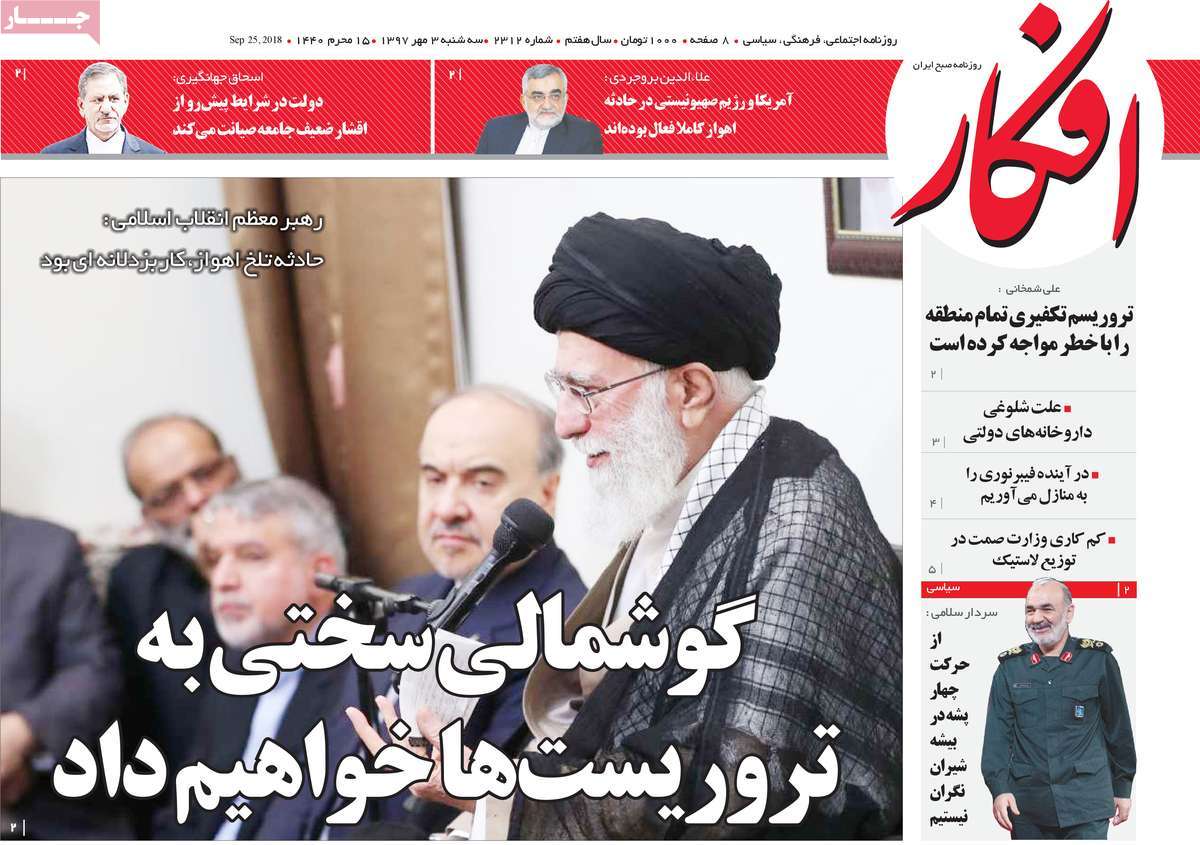
Afkar:

1- Takfiri Terrorism Endangered Entire Region: Shamkhani

2- US, Zionist Regime Totally Active in Ahvaz Incident: Senior MP

A Look at Iranian Newspaper Front Pages on September 25


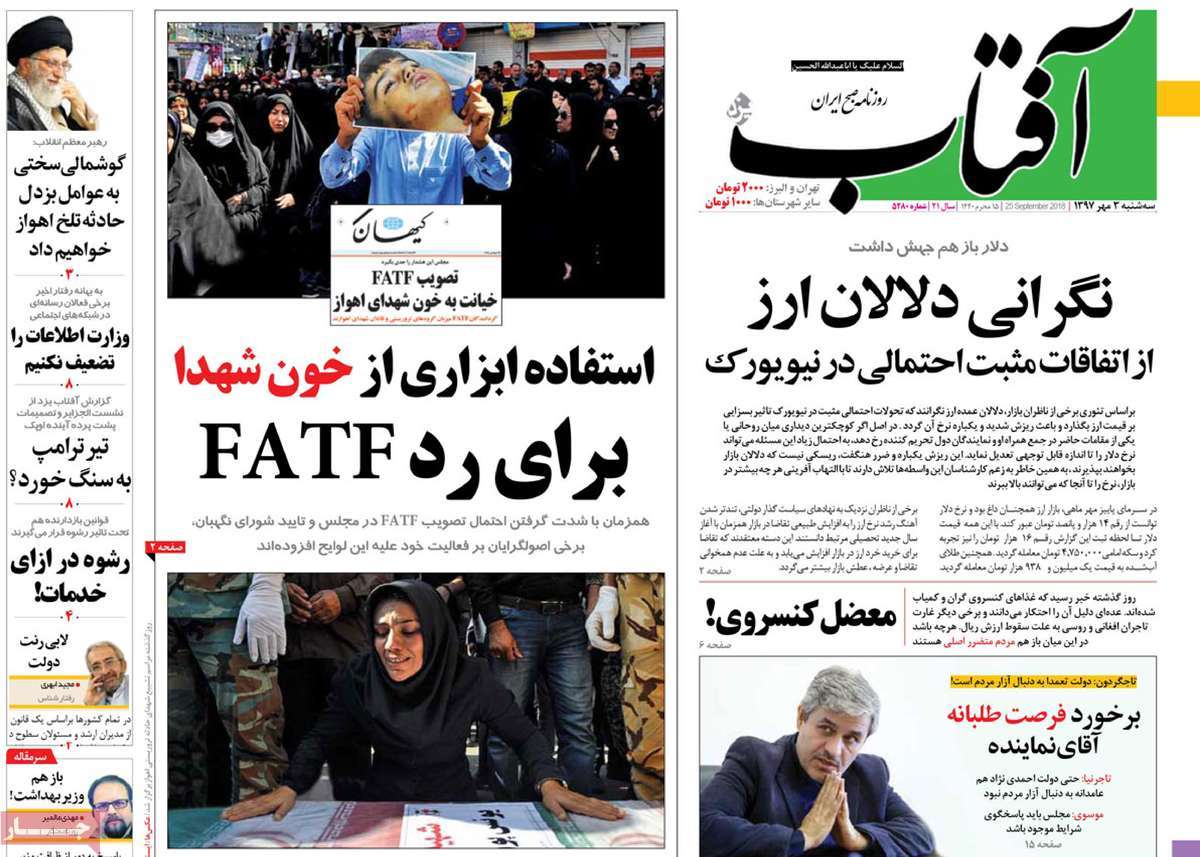
Aftab-e Yazd:

1- Forex Dealers Worried about Possible Positive Developments in New York

2- Instrumental Use of Martyrs’ Blood to Reject FATF

  • Intensified Opposition amid Increased Possibility of Approving Iran’s Adoption of FATF Standards

A Look at Iranian Newspaper Front Pages on September 25


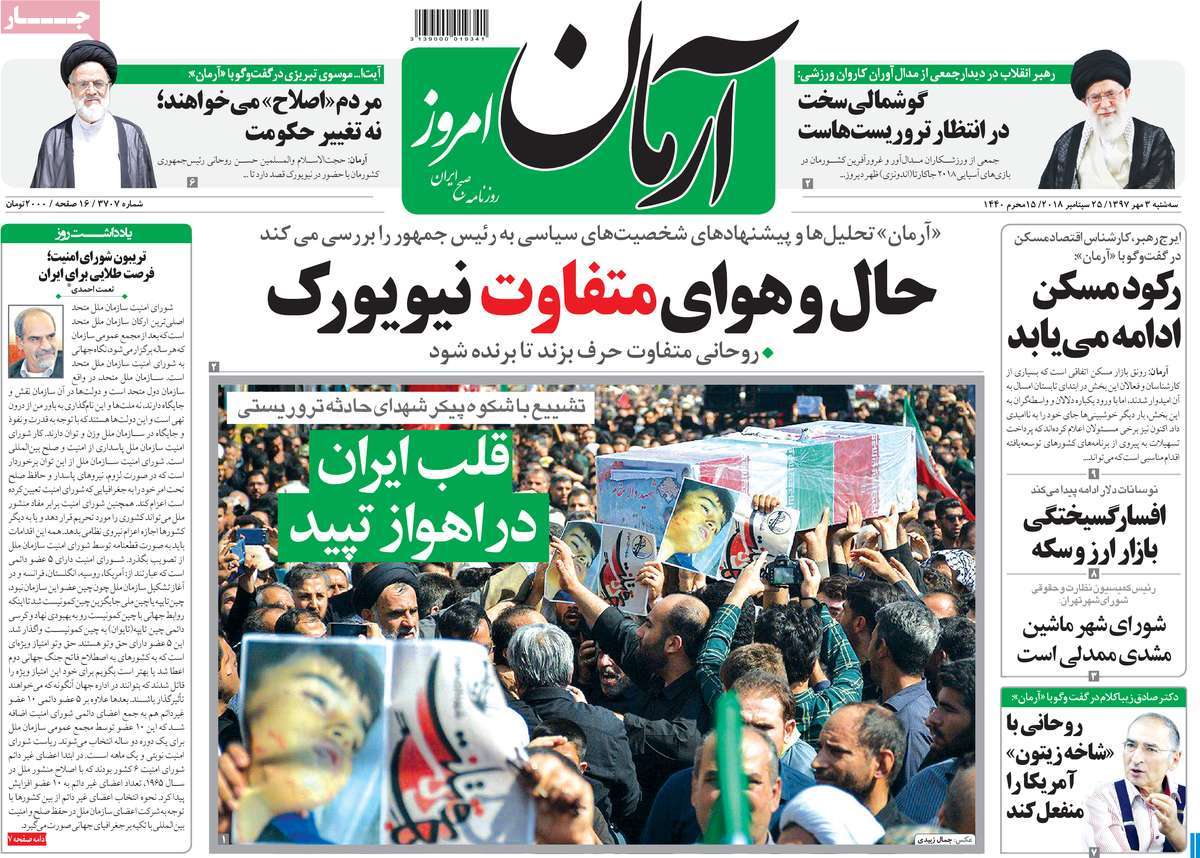
Arman-e Emrooz:

1- Different Atmosphere of New York

  • Rouhani Must Speak Differently to Emerge Victorious

2- UN Security Council’s Tribune, Golden Chance for Iran [Editorial]

3- Rouhani Can Make US Passive by Offering Olive Branch: Academic

A Look at Iranian Newspaper Front Pages on September 25


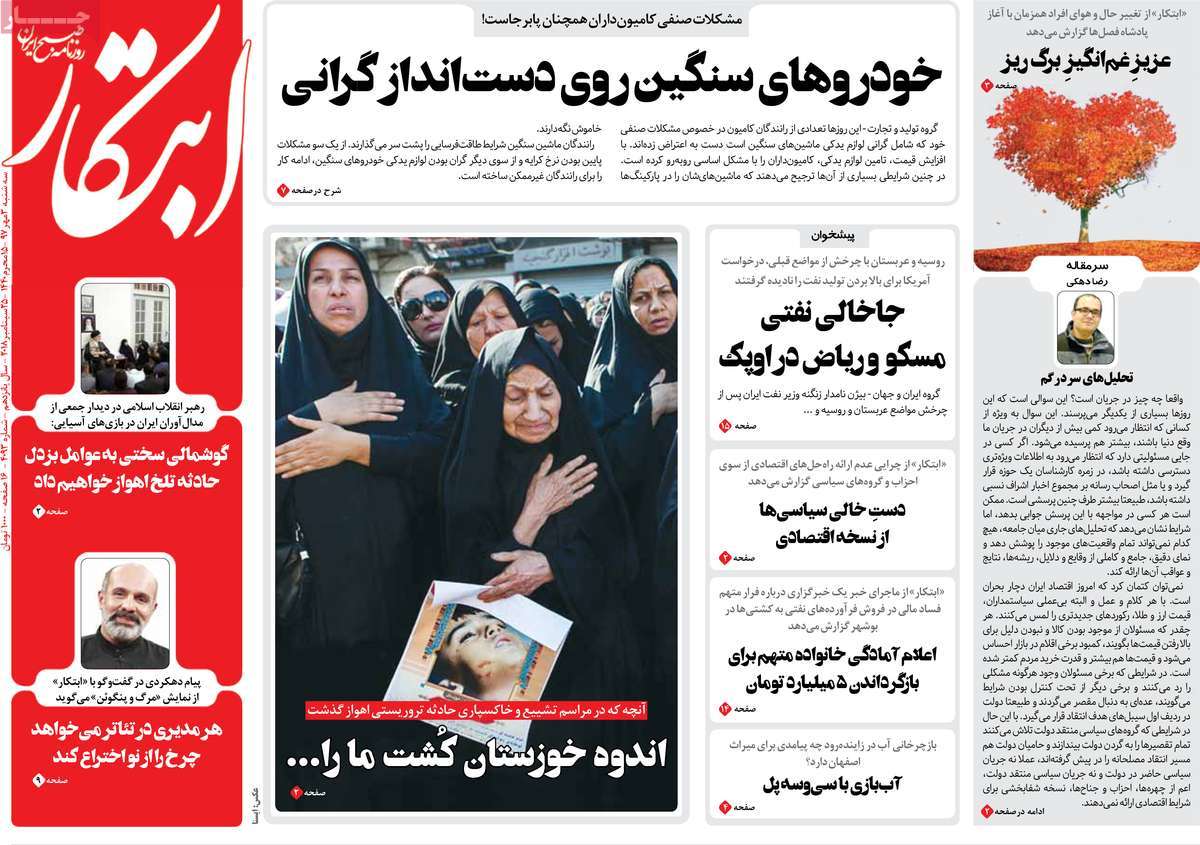
Ebtekar:

1- Moscow, Riyadh Change Their Opinion in OPEC, Reject US Call for Increasing Oil Output

A Look at Iranian Newspaper Front Pages on September 25


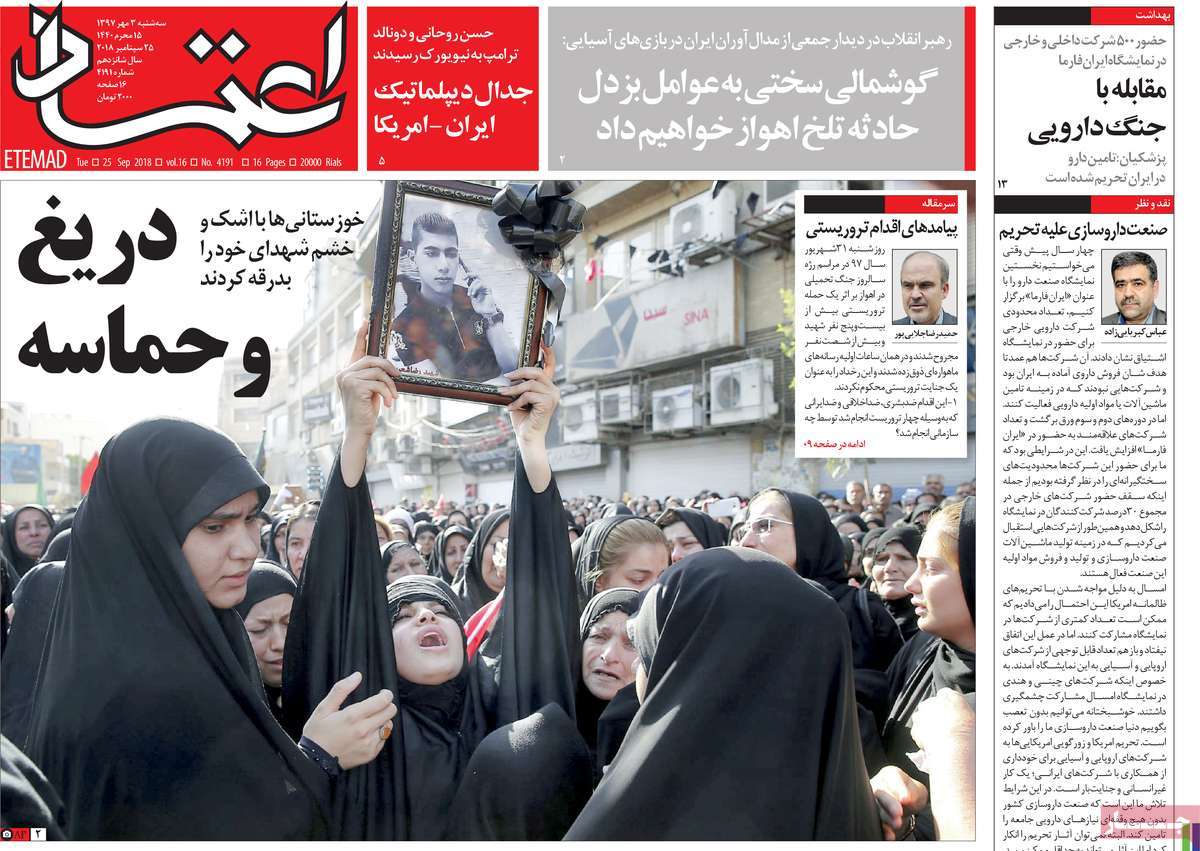
Etemad:

1- Iran-US Diplomatic Conflict

2- Opposition to Pharmaceutical War: 500 Iranian, Foreign Firms in Iran Pharma Exhibition

3- Consequence of Terrorist Attack [Editorial]

A Look at Iranian Newspaper Front Pages on September 25


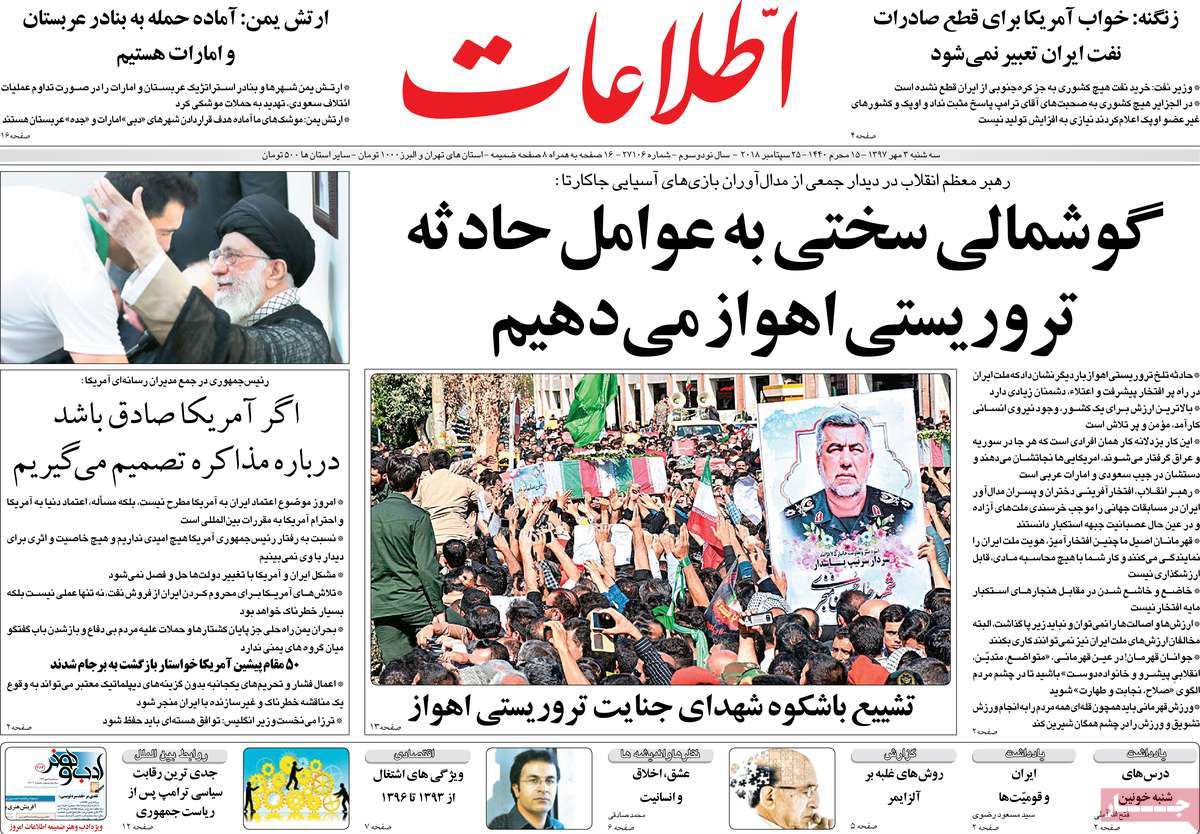
Ettela’at:

1- Rouhani: We May Consider Negotiation with US If Washington Shows Honesty

2- Oil Minister: US’ Dream of Cutting Iran’s Oil Exports Down to Zero Won’t Come True

3- Glorious Funeral Held for Those Martyred in Ahvaz Terrorist Attack

A Look at Iranian Newspaper Front Pages on September 25


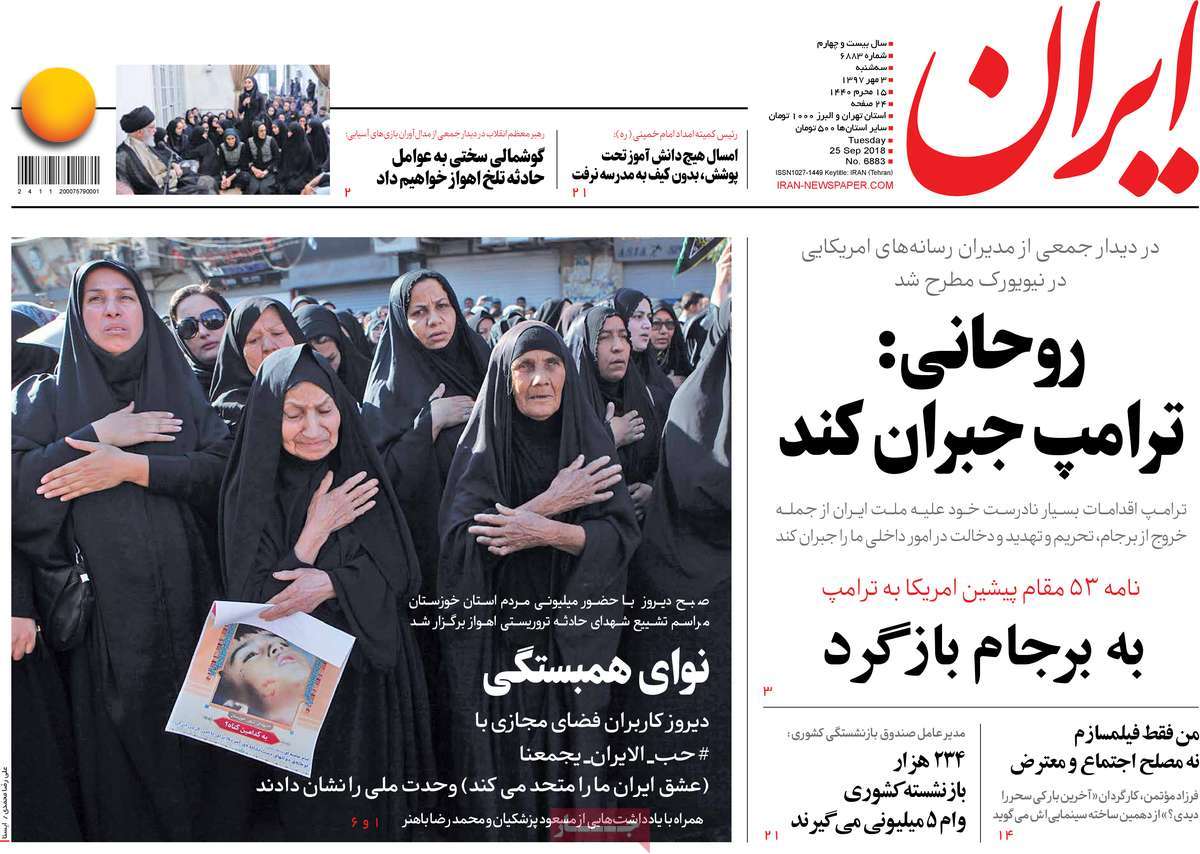
Iran:

1- Rouhani Urges Trump to Compensate

A Look at Iranian Newspaper Front Pages on September 25


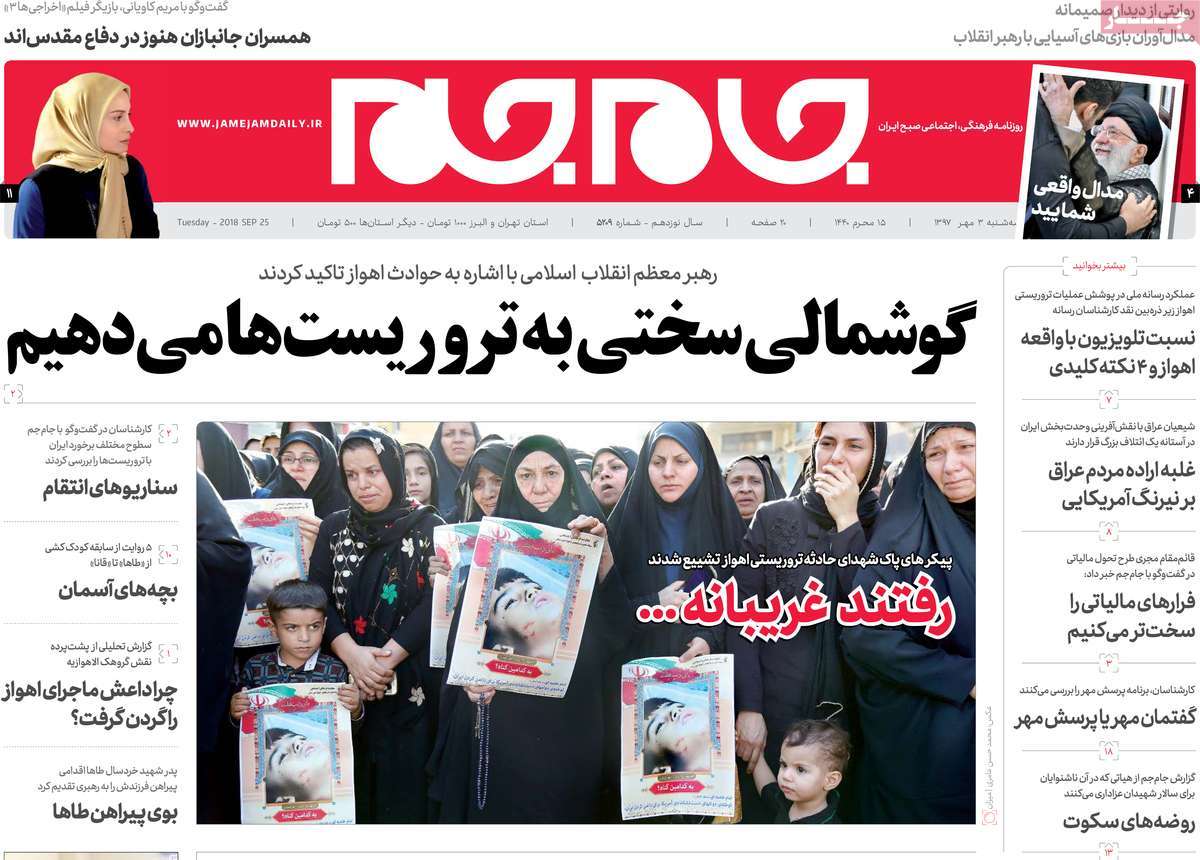
Jame Jam:

1- Iran Leader: We’ll Give Crushing Response to Terrorists

2- Why Did ISIS Claim Responsibility for Ahvaz Attack?

3- Iraqi People’s Resolve Overcomes American Deceit

  • Iraqi Shiites, Thanks to Iran’s Unifying Role, Are on Verge of Great Coalition

A Look at Iranian Newspaper Front Pages on September 25


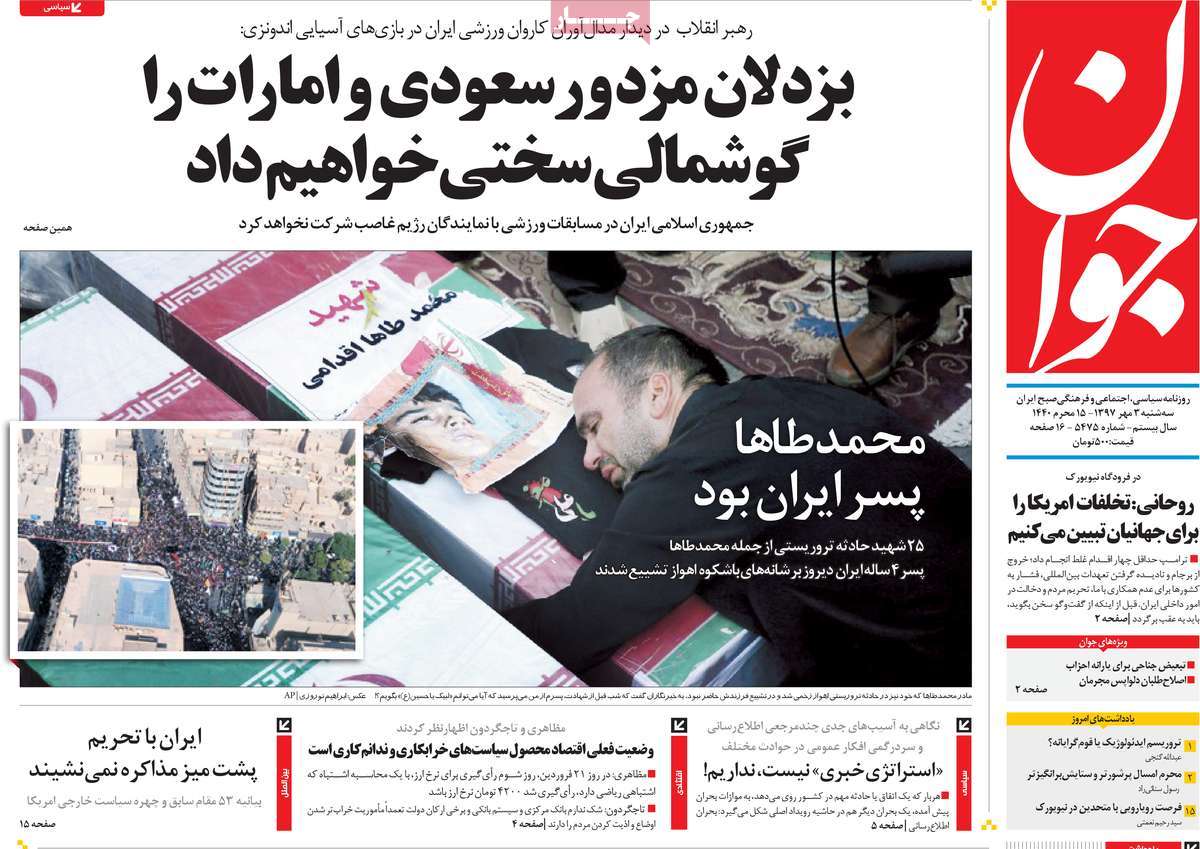
Javan:

1- Iran Not to Sit at Negotiating Table When Sanctions Are in Place

  • 53 Former American Officials, Diplomats Issue Statement against Trump’s Iran Policy

2- We’ll Tell the World about US’ Violation of Its Commitments: Rouhani

A Look at Iranian Newspaper Front Pages on September 25


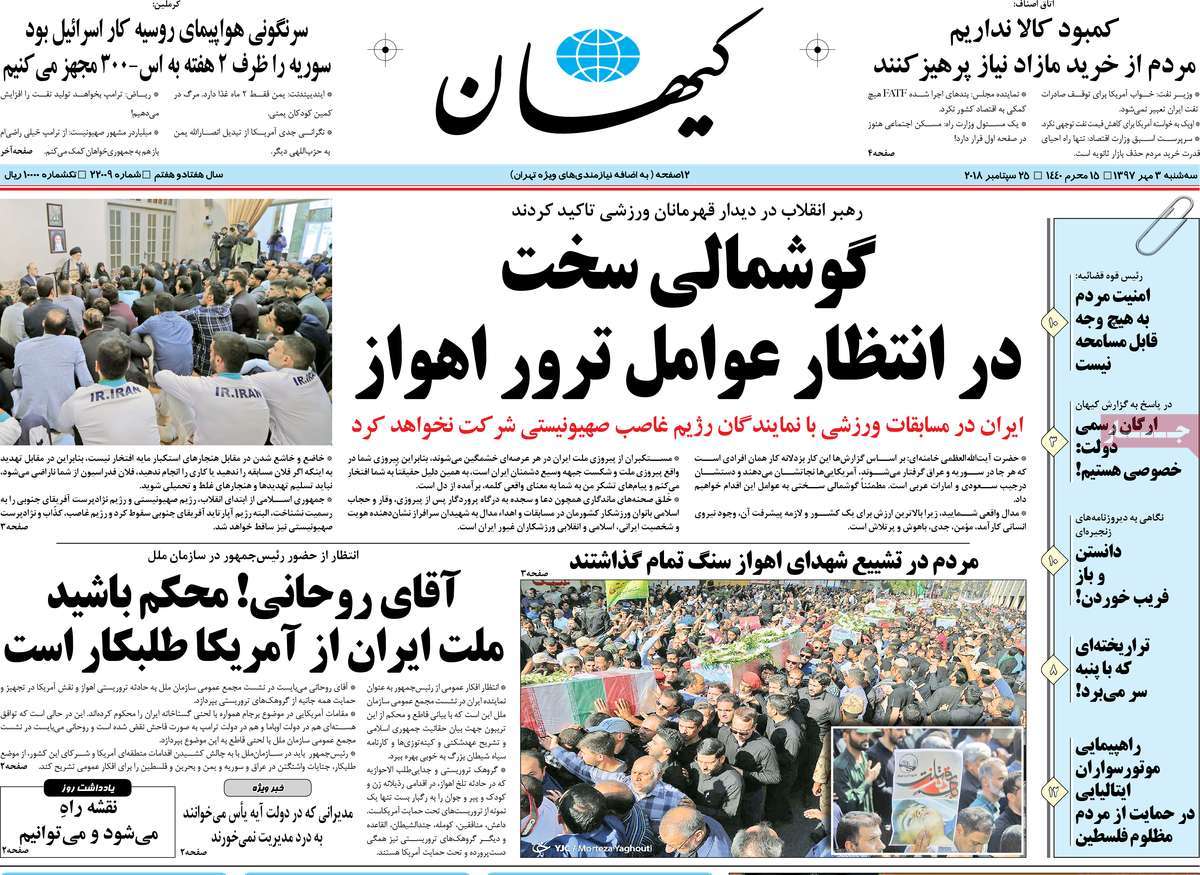
Kayhan:

1- Expectation from Rouhani’s Presence in UN: Mr Rouhani! Stand Firm, US Indebted to Iranians

2- Italian Motorcyclists Hold March in Support of Innocent Palestinians

A Look at Iranian Newspaper Front Pages on September 25


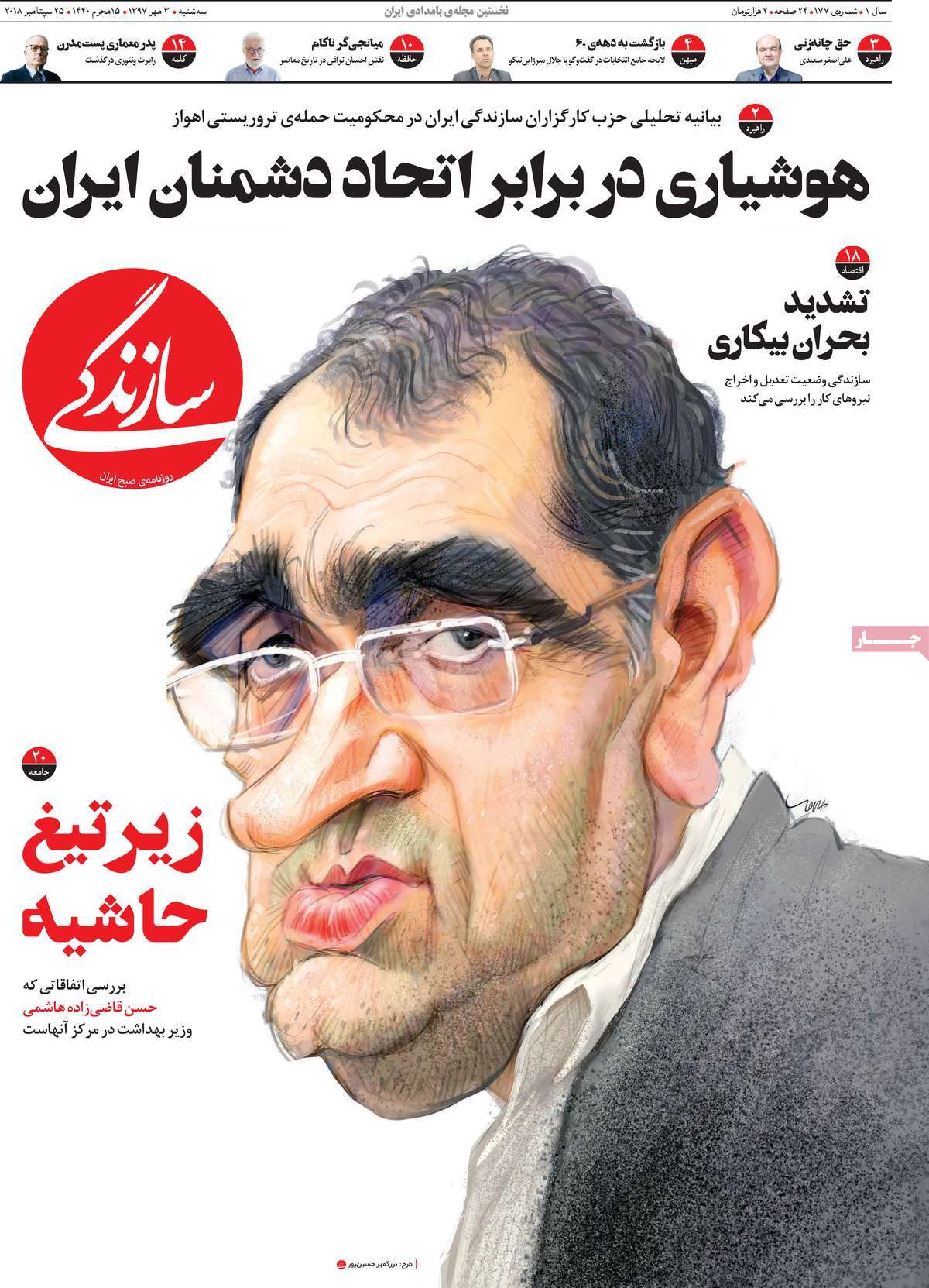
Sazandegi:

1- Reformist Party Calls for Vigilance against Unity of Iran’s Enemies

2- Intensified Unemployment Crisis

A Look at Iranian Newspaper Front Pages on September 25


Shahrvand:

1- Iran Can Score Away Goal in UN

  • Rouhani’s New York Visit Best Chance to Defend National Interests

A Look at Iranian Newspaper Front Pages on September 25


Shargh:

1- Rouhani: Trump’s Moves in Line with Lose-Lose Policy

2- US’ Defeat in Oil Game

3- Golden Chance in UN Security Council [Editorial]

A Look at Iranian Newspaper Front Pages on September 25


Sobh-e Now:

1- Intelligence Minister: Ahvaz Terrorists’ Hideout Found

2- Battle against Media Terrorism

  • Analysts Discuss Media’s Social Responsibility after Terrorist Incidents

A Look at Iranian Newspaper Front Pages on September 25

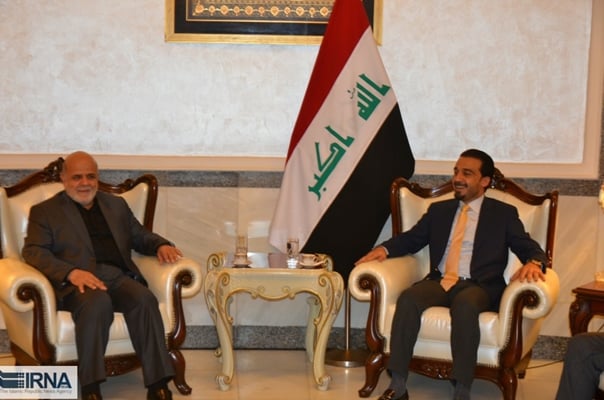
Iraqi Speaker Thanks Iran for Supporting Its Territorial Integrity

In a Monday meeting with Iran’s ambassador to Iraq Iraj Masjedi, the Iraqi official called for strengthening of cooperation between Tehran and Baghdad in the parliamentarian area.

During the talks, al-Halbousi described Iran’s regional support for Iraq in the reconstruction projects, the services it offered in war-hit areas retaken from the terrorists as well as its active cooperation to restore stability and living standards to the destroyed areas as highly important, a report by Fars News Agency said.

“Iraq is hopeful that the two sides’ cooperation could expand further in all areas in the future,” he noted.

The Iranian ambassador, for his part, congratulated al-Halbousi on his election as Iraq’s parliament speaker and wished success for the new parliament.

He also underlined the need for expansion of economic ties between the two sides.

During the talks, the two officials also exchanged views on deepening of parliamentarian relations as well as the ways to tackle the current water crisis between the two states,

Meanwhile, Masjedi delivered a letter by Iranian Parliament Speaker Ali Larijani, in which he invited his Iraqi counterpart to visit Tehran.

Al-Halbousi thanked for the invitation and expressed hope he would visit Iran in the near future.

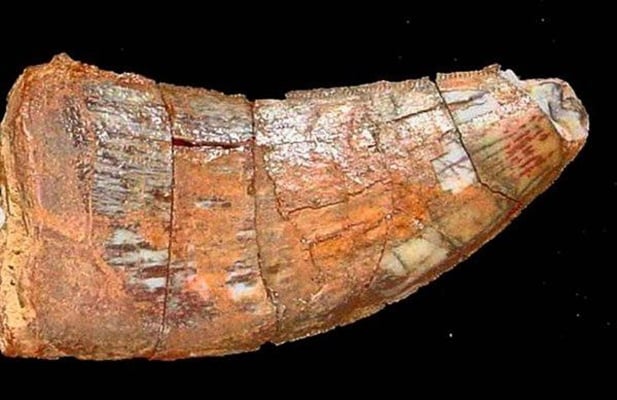
What Happened to Iranian Dinosaur Tooth Fossil in Brazil?

Director General of Museums and Cultural Properties at Iran’s Cultural Heritage, Handcraft and Tourism Organisation says Tehran is ready to follow up the fate of the Iranian dinosaur tooth held at the National Museum of Brazil.

Mohammad-Reza Karegar said the dinosaur tooth fossil belongs to the Ab Bid region of Iran’s Kerman province.

He underlined that since the fire at the Brazilian National Museum in early September, the lovers of cultural heritage and historical monuments have been worried about the fate of this fossil.

In an interview with Miras-e Arya, he emphasised that the transfer of the historical fossil is not what the Iranian Cultural Heritage Organisation could do, as it falls within the responsibility of the Iranian Department of Environment.

“However, the Cultural Heritage Organisation is ready to pursue the issue in order to protect historical monuments and assets of the country,” he said, noting that the Organisation has already started its follow-ups.

The invaluable dinosaur tooth were discovered in 2002 in the Ab Bid region of Kerman Province in south-eastern Iran. It was delivered to the Brazilian National Museum with the permission of the head of Research Institute for Earth Sciences at that time, Manouchehr Qoreishi.

A joint research project was to take place between the Brazilian Museum and the Geological Survey & Mineral Explorations of Iran (GSI) and that was reportedly the reason why the fossil was lent to Brazil.

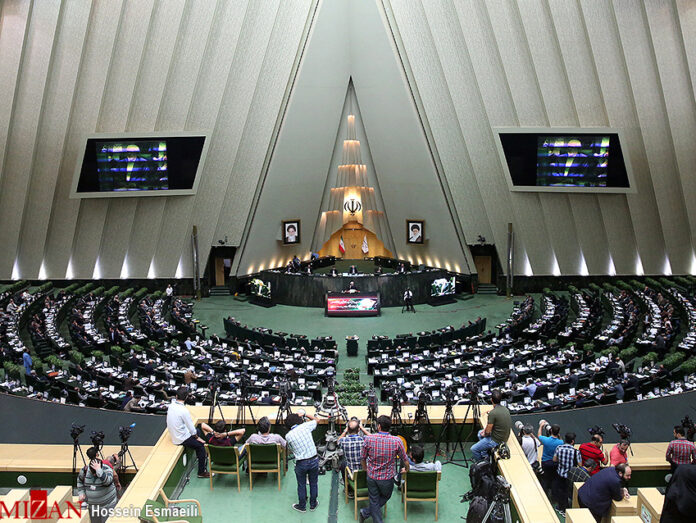
Iran Parliament Passes FATF Bills; Expediency Council to Make Final Call

23 Iranian Lawmakers Test Positive for Coronavirus

Speaking in an open session Tuesday, Larijani said a bill on accession to the United Nations Convention against Transnational Organized Crime, also known as Palermo Convention, and another bill amending anti-money laundering law of the Islamic Republic will be discussed in the expediency council in the near future.

The two bills are part of four plans proposed by the government as part of measures to meet conditions set by the Financial Action Task Force for Iran’s getting out of the body’s black list.

The two bills had been earlier approved by the parliament, but rejected by the legislation watchdog, the Guardian Council.

After the parliament refused to change the bill, they are now referred to the Expediency Council, which is entrusted with acting as an arbiter between the two bodies.

A bill on Iran’s accession to Combating the Financing of Terrorism (CFT) was discussed in the parliament back in June, but lawmakers have so far shelved the bill.

Meanwhile, the fourth bill, an amendment to the country’s law against financing terrorism, was approved by the Parliament and the Guardian Council, and signed into law by President Hassan Rouhani last month.

Iran has for many years found itself in a blacklist of countries not doing enough to combat money laundering and terrorism financing by the G7-created FATF.

Iran entered into talks with the FATF to join the body following the 2016 implementation of the JCPOA.

But Iran’s accession to FATF has slowed down in recent months, over concerns among some officials that the move could endanger Iran’s national security interests.

In its last meeting held on June 29, the FATF gave Iran until October to implement necessary reforms.

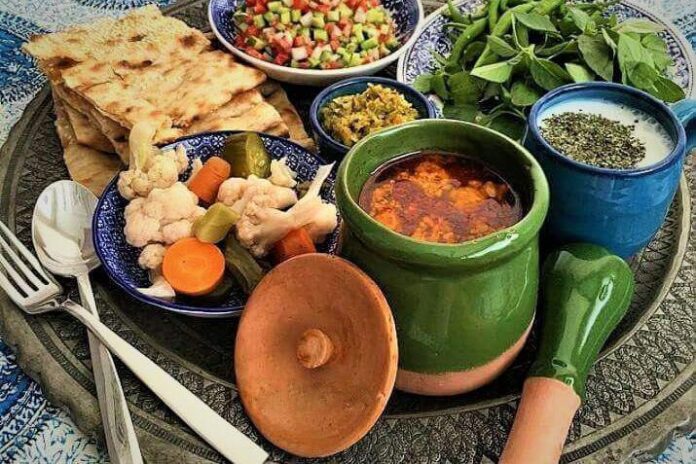
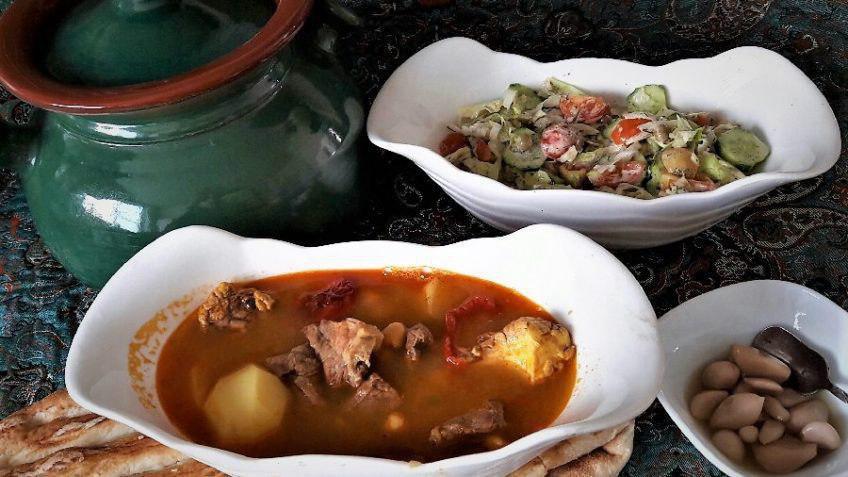
Quince & Walnut Broth: A Yummy Traditional Iranian Food

The broth has a high calorie, contains a decent amount of Omega 3 and has enough fibre and vitamins for the body.

The broth also known as Shoorba or Piti is one of the traditional Iranian foods. As it takes a rather long time to cook, the broth is specifically cooked in urban or rural areas and is a heritage of Iranians’ descendants.

In the past, broths would be cooked in a dish called Dizi. The Dizi makes it possible for the broth to be cooked through gradually over a long period of time, and, hence, the food will take on a good taste and flavor.

There are different types of broth. Different kinds of broths are cooked differently in different cities. The quince and walnut broth is one of the traditional broths of Marzaki province.


Ingredients:

Small Onion: one onion

Average-sized Quince: one quince

Broth Beef: 500gr

White Beans: 3 cupfuls

Mashed Walnut: 5 spoonfuls

Salt: as much as needed

Pepper: as much as needed

Turmeric: as much as needed

Tomato paste: as much as needed

  Quince & Walnut Broth: A Yummy Traditional Iranian Food

Recipe:

Put the beef attached to bone on the flame along with chopped onions, white beans and some water. Allow it to be cooked through. After two hours, add turmeric, pepper and tomato paste. At the end, add the quince with shredded skin. Finally, add salt after the beef is cooked and becomes soft. Put the casserole on low heat until the ingredients are mixed well and cooked through. It takes between 3 to 4 hours. Note that the broth made with fruit tastes differently from other foods. It tastes sweet-sour. Still, you may add other ingredients to change the taste of the broth to your liking.

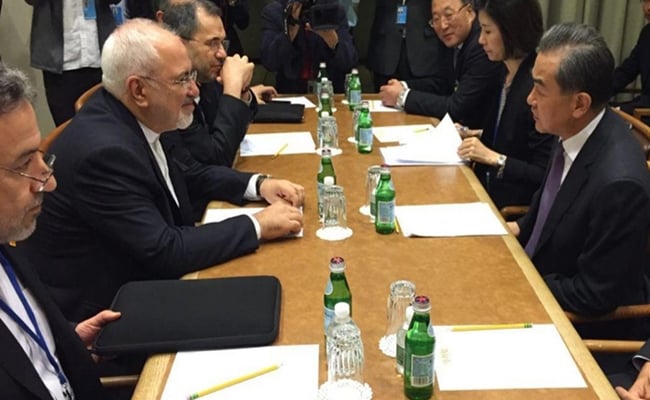
China Vows to Continue Normal Business Ties with Iran

He made the remarks in a Monday meeting with Iranian Foreign Minister Mohammad Javad Zarif on the sidelines of the UN General Assembly in New York.

During the talks, the two sides conferred on bilateral relations, particularly in the economic field, and issues related to the Iran nuclear deal.

The Chinese top diplomat reiterated his country’s opposition to the US’ pressures, and stressed Beijing’s commitment to maintain the Joint Comprehensive Plan of Action.

“China will continue its normal economic relations with Iran,” he added.

At the beginning of the meeting, the Chinese foreign minister once again offered condolences to the Iranian side on the recent terrorist attack in Ahvaz, which killed and wounded dozens of people.

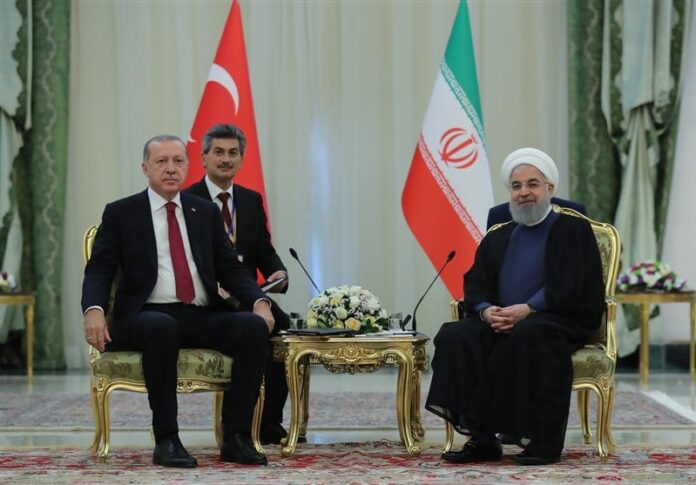
Rouhani, Erdogan Discuss Fight against Terror, US Sanctions

In the meeting, held in New York on Monday evening, Rouhani stressed the necessity to speed up the implementation of agreements reached between Tehran and Ankara.

He said Iran welcomes the active presence of Turkish investors and companies in the Islamic Republic’s development projects.

He also underlined the importance of mutual cooperation between the two countries in efforts to resolve the Syrian issue and said Tehran is ready to help the issue of Syria’s Idlib within the framework of trilateral talks between Iran, Turkey, and Russia.

Erdogan, for his part, called for closer ties between the two countries in the era of US sanctions on Iran and said Ankara will side with Tehran to counter the embargoes.

Heading a high-ranking delegation, Rouhani arrived in New York on Sunday evening to participate in the annual meeting of the United Nations General Assembly.

Speaking to reporters at John F. Kennedy International Airport upon his arrival, Rouhani said he will have sideline meetings and interviews during the trip.

Citing the “different atmosphere” of this year’s General Assembly meeting, the president said, “Americans have unfortunately reneged on many of their commitments across the world, including their commitments under the JCPOA.”

The president also said that the UNGA provides an opportunity for a better explication of the US breach of international regulations.

On May 8, US President Donald Trump pulled his country out of the Joint Comprehensive Plan of Action (JCPOA), which was achieved in Vienna in 2015 after years of negotiations among Iran and the Group 5+1 (Russia, China, the US, Britain, France and Germany).

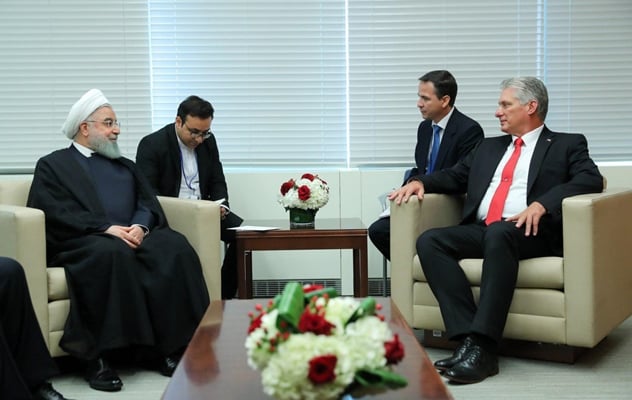
Iran, Cuba Condemn US’ Unilateralism, Violation of Int’l Treaties

Iranian President Hassan Rouhani meeting with his Cuban counterpart Miguel Díaz-Canel in New York on September 24, 2018 / Photo by president.ir

Speaking in a Monday meeting with Díaz-Canel in New York, Rouhani said the Iranian and Cuban people’s resistance against the United States reflects the fact that the two great nations pursue the same ideals.

“Cuba has always been a revolutionary and important country for the Iranian nation, and the two nations have always fought imperialism and unilateralism.”

The US government has violated its agreements with Cuba in recent years just like what it did to other treaties including the Iran nuclear deal, said Rouhani, who is in New York to attend the annual UN General Assembly.

He further noted that terrorist groups these days are unfortunately backed by countries that claim to be fighting terrorism.

Rouhani stressed that the fight against terrorism is one of the most important and common goals of Tehran and Havana.

He emphasised that the Islamic Republic of Iran is looking for more developed and closer relations with Cuba, highlighting that there is good cooperation between the two countries in various sectors, including pharmaceutical technologies and vaccine production, but the ties still need to be expanded.

“There are many capacities in the economic, scientific and technological fields in Iran and Cuba that must be exploited to further the welfare and expand Tehran-Havana ties,” stated Rouhani.

He also congratulated Díaz-Canel on his election as the Cuban president, and appreciated the sympathy offered by the Cuban nation and government to the Iranian people regarding Ahvaz terrorist attack.

For his part, Díaz-Canel extended the condolences and sympathy of the Cuban government and people over the Ahvaz terrorist attack, emphasising the need for development of Tehran-Havana’s all-inclusive relations.

“Expanding ties with the Islamic Republic of Iran is one of the most important principles of Cuba in foreign policy which was highlighted by the late leader of the country, Fidel Castro.”

He further praised the intelligence and decisiveness of the Iranian government in talks with the P5+1 saying that the United States’ withdrawal is a great danger to international treaties and regional security.

Stressing the need to fight the unilateralism of the US government, the president of Cuba said “we must strive more than ever to develop mutual ties and cooperation, especially in the economic, health and technological sectors.”

Iran, Cuba Condemn US’ Unilateralism, Violation of Int’l Treaties
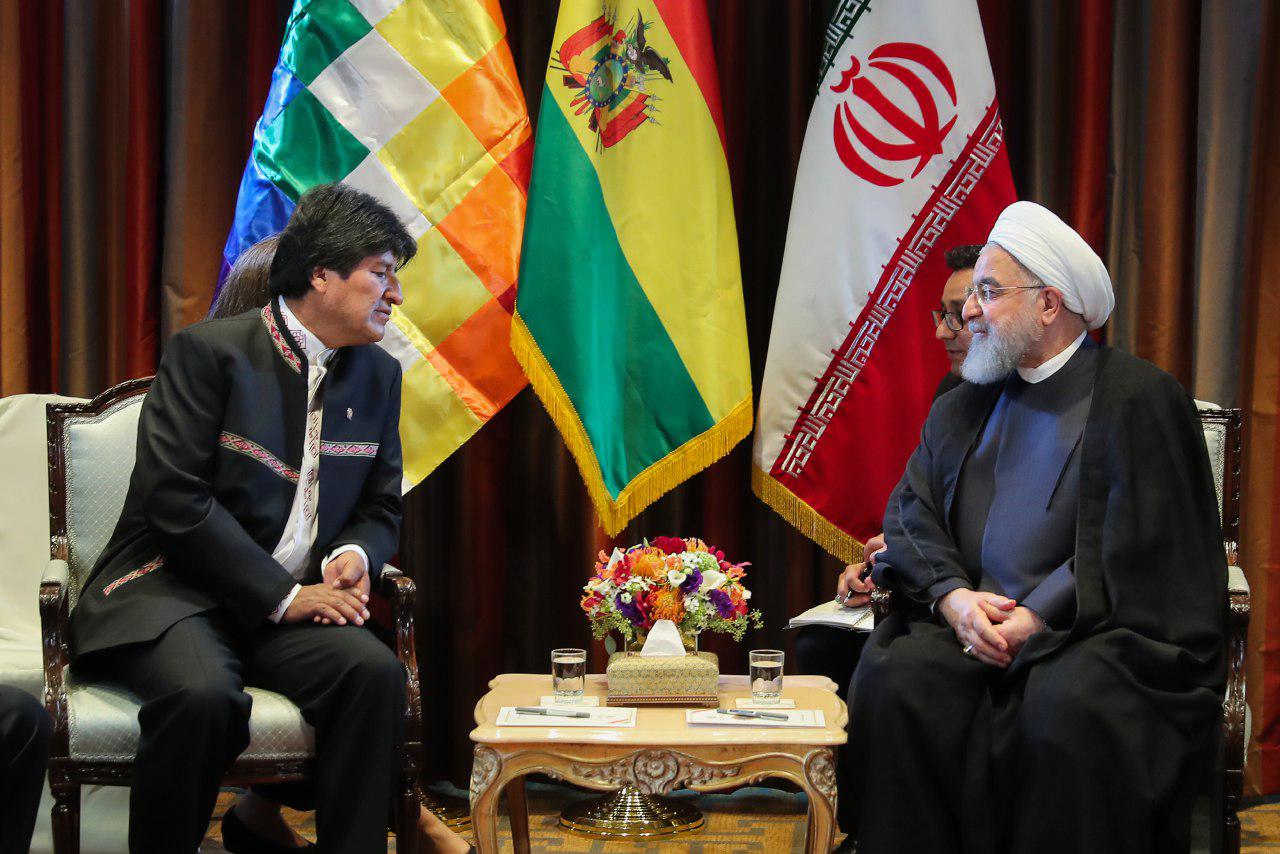
Iranian President Hassan Rouhani meeting with his Bolivian counterpart Evo Morales in New York on September 24, 2018 / Photo by president.ir

World Must Stand against US Violation of Int’l Law

Also in a meeting with his Bolivian counterpart Evo Morales, Rouhani  called on the global community to stand up to Washington’s violations of international agreements and regulations.

Rouhani emphasized the need for both the Iranian and Bolivian nations to put up resistance to American interventionism and unilateralism.

Touching on the US unilateral and illegal withdrawal from the 2015 nuclear deal, Rouhani said, “The international community must stand firmly against the Americans’ violation of this agreement.”

“Today, the international community, with the exception of a few countries, has adopted a decisive stance on the US move, and we should try to show that those who breach international laws will never have the approval of the world’s public opinion,” he added.

Iran, Cuba Condemn US’ Unilateralism, Violation of Int’l Treaties
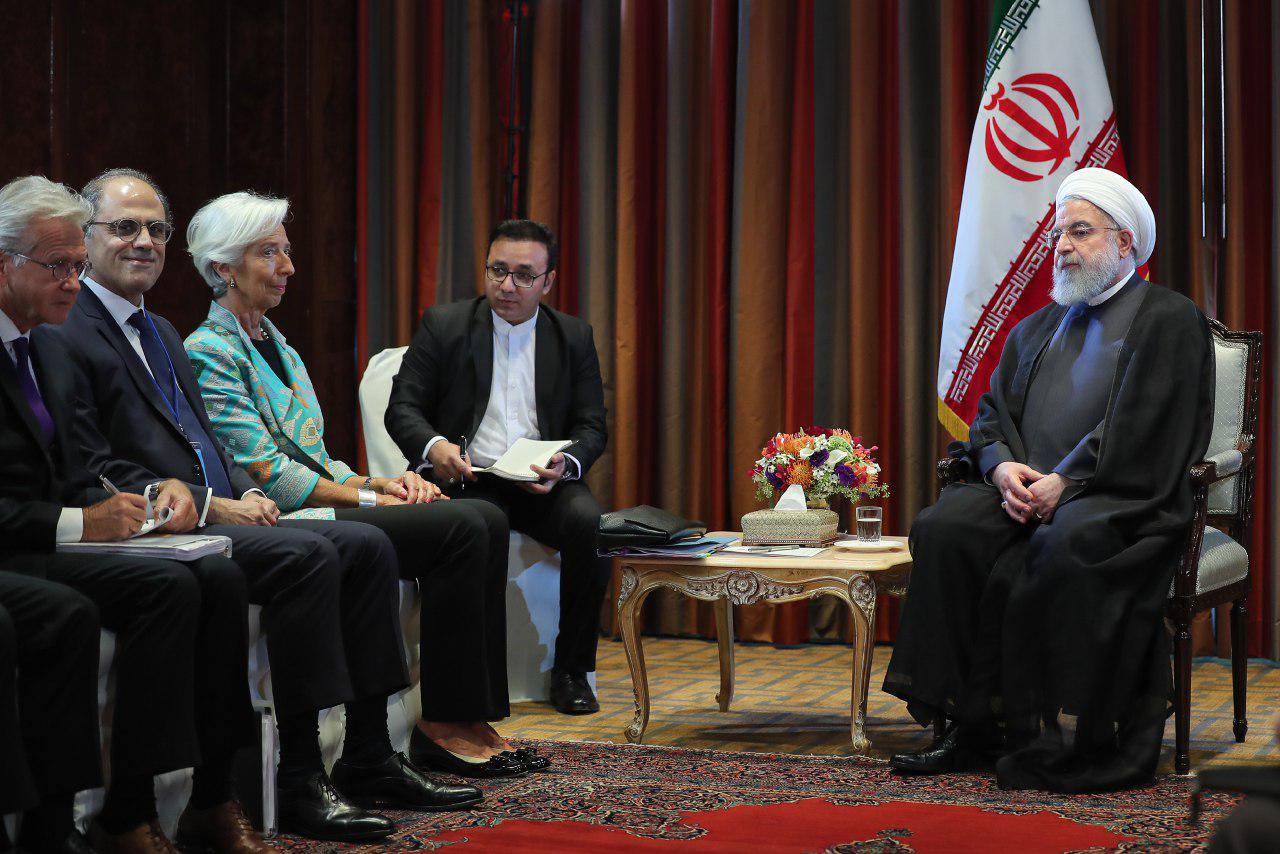
Iranian President Hassan Rouhani meeting with chairwoman of International Monetary Fund (IMF) Christine Lagarde in New York on September 24, 2018 / Photo by president.ir

‘IMF Must Protect Members’

In a meeting with Christine Lagarde, managing director and chairwoman of the International Monetary Fund (IMF), Rouhani stressed that the organization’s main responsibility is to protect its members against banking and monetary sanctions.

“The IMF should demonstrate that it can play a role in [protecting] the economic stability of a member, and I hope that it can take a positive step in this regard,” he said.

Lagarde, for her part, gave assurances that the IMF would continue its cooperation with Iran.

Iran, Cuba Condemn US’ Unilateralism, Violation of Int’l Treaties
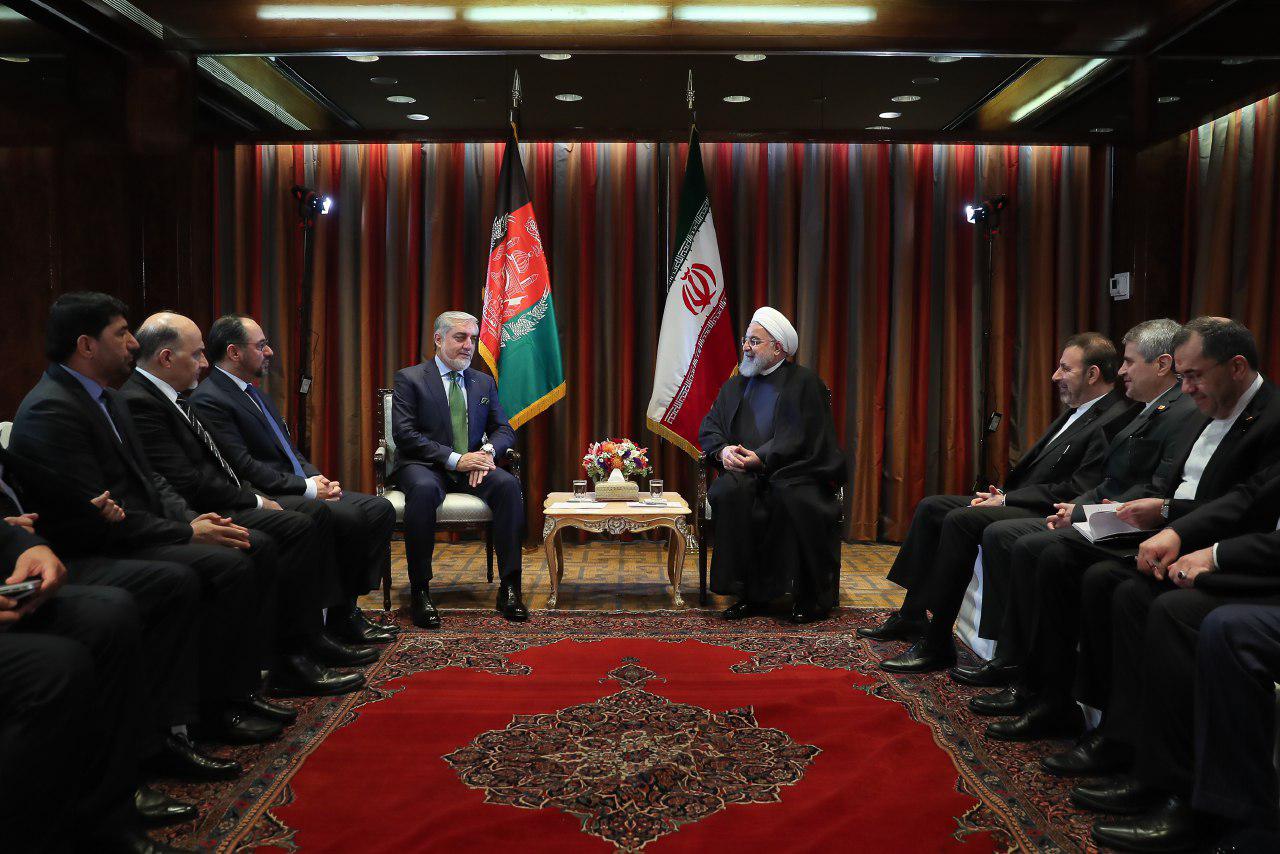
Iranian President Hassan Rouhani meeting with Afghan Chief Executive Abdullah Abdullah in New York on September 24, 2018 / Photo by president.ir

Iran-Afghanistan Joint Fight against Terrorism

Rouhani also stressed the necessity of fighting terrorism in a meeting with Afghanistan’s Chief Executive Abdullah Abdullah.

He referred to the recent deadly terrorist attack in the Iranian city of Ahvaz, saying the incident underlined the need for unity in the fight against terrorism.

“Many terrorist groups in the region have either been created by or have the support of America,” he said.

Rouhani lashed out at certain Western countries for their double standards in dealing with terrorism, saying, “After the Islamic Revolution, terrorist activities in Iran were carried out by those who are now present in these Western states and enjoy the backing of certain regional countries.”

“As and when these countries themselves fall victim to terrorist attacks, they voice concerns about terrorism and [highlight the need] to fight it, but they keep supporting the terrorists in our region.”

Rouhani left Tehran for New York on Sunday to attend the 73rd UN General Assembly. He will address the United Nations General Assembly on Tuesday.

Foreign Ministry Explains Why Iran Needs to Adopt FATF Standards

Foreign Ministry Condemns FATF’s Blacklisting of Iran

What follows are these questions and answers which mainly revolve around the necessity of adopting the FATF standards, and the concerns over the possible abuse of the country’s banking information:


  1. Is the nature of the Financial Action Task Force (FATF) operational or one that aims to build standards?

The Financial Action Task Force is an intergovernmental institution established in 1989. Its function is to exchange views and set standards through the participation of all governments (by holding rotating general meetings as well as meetings of pertinent regional groups) mainly to counter money laundering and financing terrorism as crimes that threaten the soundness of the financial system. This group seeks to promote the enforcement of these standards in the country and urge international cooperation to counter efforts aimed at cashing in on economic enterprises and the financial system in a bid to commit the above-said crimes. Most activities are discussed in general meetings held three times a year as well in the meetings of regional groups. The network working with this institution is comprised of 205 countries and regional organizations.

  1. Are governments obliged to observe these standards?

The FATF’s standards are drawn up within the framework of recommendations and principles aimed at combating financial crimes in countries and based on international cooperation between them. Financial and legal experts of all relevant countries have a say in this process and are duty-bound to abide by these requirements. Failure to respect these requirements, especially countries’ lack of a legal and statutory foundation to deal with financial offenses, are conducive to restrictions for interaction with those countries, which, in the most severe case, will result in taking counteractions against the country in question. As this situation will lead to serious harm to the international financial and banking transactions of the country in question, all governments will try their utmost to observe these requirements as much as they can in order to preserve their financial and banking transactions.

  1. Hs the United Nations Security Council made the FATF’s recommendations legally binding?

Since 2005 and with the issuance of UN Security Council Resolution 1617, governments have been obliged to observe these standards based on Article 7 of the UN Charter. The same issue is constantly repeated in other binding resolutions of the UN Security Council, namely UN Security Council 2368 in 2017. As for sponsoring terrorism, the commitments under UNSC Resolution 1373 in 2001, which has led to the formation of a regime at the UN to fight terrorism, are similar to the FATF’s requirements.

  1. Does compliance with these standards mean all countries will enact similar laws?

The FATF seeks to observe these standards in its bylaws in any form or shape deemed advisable. The most basic request is that these countries have comprehensive laws and regulations on fighting money laundering and sponsoring terrorism within their legal systems. In our country, these two crimes fall under the Law on Fighting Money Laundering (approved in 2007) and the Law on Fighting the Sponsoring of Terrorism (approved in 2015).

  1. Why should the Islamic Republic of Iran engage with the FATF?

Almost all governments are interacting with this institution in order to maintain their banking and financial links with the world, and all parties believe they need interaction when it comes to the requirements of the fight against financial crimes within the framework of the FATF. The Islamic Republic of Iran has always been one of the countries playing an active role in regional and international institutions with regards to all key issues. A prerequisite to international banking and financial transactions is to comply with the FATF’s requirements, and no restrictions are acceptable in this regard. On the other hand, the Supreme Council on Fighting Money Laundering, which is comprised of representatives from supervisory and financial policy-making organizations as well as all institutions tasked with combating corruption, is of the conviction that abidance by the requirements of this institution within the framework of bylaws is a necessary tool in the fight against corruption and financial offenses. Banks in neighbouring countries as well as banks in countries which are the main trade partners such as China, India and Russia, all raise questions about compliance with the FATF’s standards as a precondition.

  1. Do all countries really observe these requirements?

No country overtly supports money laundering or sponsoring terrorism. This, in the first place, is known by the numerous laws which these governments have and which conform to everyday needs. All countries seek to take the lead when it comes to making laws and establishing leading monitoring systems. To what extent these regulations are observed is the second issue and is considered during periodical evaluations. The first step in having interaction with the FATF is to enjoy efficient national laws, and, fortunately, ground is mostly prepared for this in our country.

  1. How was Iran placed on the institution’s black list?

The Islamic Republic of Iran began serious cooperation in the early 1980s. The Law on Fighting Money Laundering was ratified in 2007, the Supreme Council on Fighting Money Laundering was founded, and a financial information institution was formed as the centre for the consistent monitoring of financial activities. Directives had also been issued by high-level state institutions that obliged all government bodies to cooperate in observing the recommendations of the FATF. The drawing up and ratification of the Law on Fighting the Sponsoring of terrorism was repeatedly delayed and interactions with the FATF came to a halt. At the end of the day, the circumstances at the time saw Iran placed on the list of non-cooperative governments (black list) in 2009, and has remained on the list ever since. Restrictive counteractions were also taken against Iran.

  1. Was this move (putting Iran on the black list) politically motivated?

Definitely there is a political side to all bilateral and multilateral activities of governments. However, the politicization of an issue needs justification. Hostile governments and enemies seek to put shortcomings under the microscope and build a consensus on them. Technical and legal flaws existed then, which served as a pretext to impose restrictive measures against Iran during the time when the country was under the most severe international sanctions. All governments try to overtake one another when it comes to making laws and creating monitoring systems and announcing them publicly. A lack of enough attention to this issue together with unwarranted procrastinations in making and reforming laws in accordance with the viewpoints of relevant experts in the country led to Iran being placed on the black list.

  1. Have other countries also been on the institution’s supervisory lists?

Yes. The list of countries under the supervision of this institution as well as the list of non-cooperative countries has included many countries, and it has been shortlisted gradually. Countries such as Russia, Cuba and even Iraq and Syria could prudently keep their opponents, especially the US government, from using this as a pretext. Now, Russia, for example, is one of the key players in the meetings and mechanisms of this institution. Russia plays an important role in the regional group, Eurasia. In mid-2017, Iraq was removed from the list of countries monitored by this institution. Syria, too, is on the verge of being removed from the list.

  1. What measures has the government adopted in recent years in order to rectify this flaw?

Since around 2001, Iran has adopted measures to adapt itself to the regulations of this institution. However, specifically in early 2016, a fresh round of engagement with the institution began after an existing flaw, i.e. a lack of a national law on fighting the sponsoring of terrorism, was removed. In accordance with the AFTF’s standard operating procedure, the finance minister or an official at the same level or higher should offer a letter of political commitment in order to implement the action plan. Therefore, the then economy minister undertook to implement the provisions stipulated in the action plan in cooperation with all pertinent institutions within the framework of the Constitution. Afterwards, the AFTF suspended counteractions against Iran and conditioned the definitive removal of Iran from the list to the full implementation of the action plan. During the 18 months allocated to the implementation of the action plan, the government’s technical teams adopted all necessary measures within the framework of the Supreme Council on Fighting Money Laundering. The Iranian parliament put on its agenda bills on reforming the Law on Fighting Money Laundering and the Law on Fighting the Sponsoring of Terrorism together with bills on joining a convention on fighting ultra-national organized crime known as Palermo and the convention on fighting the sponsoring of terrorism. During an almost eight-month period from early 2018 onward, all bills except the one on reforming the Law on Fighting the Sponsoring of Terrorism still remain on the legislature’s agenda, and they are expected to be finalized soon.

  1. Do you think as a result of Iran’s cooperation in implementing the FATF’s standards, the banking information of Iranian individuals and institutions might be revealed to foreign parties and be subject to abuse?

The FATF is an institution which sets standards in cooperation with governments and publishes them in the form of recommendations and guidelines. This institution is not a non-governmental international authority and does not have the capacity to control information on countries’ financial transactions. It is simply a consultative authority to set standards and monitor their implementation. The institution basically does not have a centralized secretariat, and only a limited number of experts (17 people) are responsible for arranging and holding the FATF’s seasonal meetings in Paris and in other member states. Governments conclude memoranda of understanding between their financial information centres in accordance with their considerations and domestic rules and regulations, so that they will be able to cooperate and exchange information if need be in order to counter financial offenses. Governments can also work together within the framework of multilateral legal mechanisms such as the UN convention on fighting corruption.

  1. What mechanisms can countries employ to identify cases of terrorism?

Every country has a national terror list, and updates the list monthly or annually by introducing the individuals and groups it considers as terrorists. Iran, too, should determine and announce its own list in accordance with law and with the approval of the Supreme National Security Council. The preliminary arrangements for that are underway. There is an international terror list on which there is consensus. Terrorists are clearly categorized on that list and include three main groups of terrorists: The Taliban, al-Qaeda and ISIS as well as those affiliated with these groups. Under a Chapter Seven resolution of the UN Security Council, all countries are duty-bound to abide by the list. Respecting the national list of other countries is a state matter which depends on the viewpoint of the country in question as well as the mechanisms of cooperation between countries. From Iran’s perspective, the United States and a handful of its allies’ policy of putting the “terrorist” stigma on the resistance front lacks any legal value. The Islamic Republic of Iran has always objected to Washington and its allies’ support for terrorist groups and individuals who are adversaries of the Iranian nation.

  1. Why didn’t counteractions end, and what does extending the suspension of counteractions for two four-month periods mean?

The process of studying and finalizing the legal bills presented by the government has been going on in parliament. There is a standards operating procedure at parliament for reviewing bills, which should be observed according to the law. During the plenary sessions of the FATF in Paris in early and mid-2018, the representatives of the member states of the institution were informed of the continuation of the legal procedure at the legislature. Representatives of the Trump administration and a handful of governments which have aligned themselves with the US have aggrandized the failure to complete the legal procedure in order to prevent the normalization of the situation in our country. Finally, with the pressure of governments backing the Islamic Republic of Iran, Iran was given more time. Now, the deadline for the second four-month term is about to end.

  1. What is the timing of the upcoming meetings where the issue of Iran is to be discussed by member states?

Based on the announced schedule, the answers to some written questions were sent last week by the Secretariat of the Supreme Council on Fighting Money Laundering. An expert meeting will also be held in late September to review the answers and the latest status of the implementation of the action plan, namely the progress made in finalizing the remaining bills. Also, the main session of the FATF will be held in Paris on October 15, 2018 to make decisions on our country.

  1. How is it that a radical person who has a high rank at the US Treasury and has obvious anti-Iran stances has been chosen as the head of the FATF?

This institution is chaired periodically on an annual basis. The country which holds the presidency of the institution introduces an individual as the chairperson. After the US, China will take over the FATF’s rotating presidency next year. China’s representative is currently the vice chairperson. The chair is responsible for running the meetings, and the decisions made should be confirmed by the members that make decisions.

  1. What will happen if Iran fails to take all the actions it is supposed to take?

Being aware of the situation and issues inside Iran, US officials are making every effort to create the impression that the Islamic Republic of Iran is basically not willing to take all the actions it is supposed to, and, hence, the countermeasures suspended for two years now should be reinstated against Iran. On the other hand, the governments which have the most trade and economic transactions with Iran are trying in different ways to keep this from happening. The normalization of banking relations is an objective pursued by the government and all pertinent institutions while observing the country’s rules and interests. It is hoped that this goal will be achieved through the cooperation of the legislature.

EU Vows to Create Payment Channels to Maintain Trade with Iran

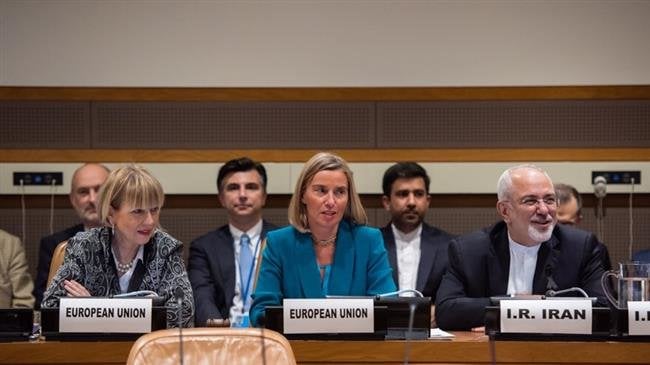
A Ministerial Meeting of the E3/EU+2 (China, France, Germany, the Russian Federation and the United Kingdom, with the High Representative of the European Union for Foreign Affairs and Security Policy) and the Islamic Republic of Iran, the participants of the Joint Comprehensive Plan of Action, was held on 24 September 2018 in New York on the sidelines of the UN General Assembly.

The meeting, which was particularly important before the US’ attempt to make instrumental use of the UN Security Council and perform a show against Iran, clearly indicated the support of EU, China, and Russia for Iran and the JCPOA as well as the US isolation.

At the end of the meeting, which was chaired by EU Foreign Policy Chief Federica Mogherini, the foreign ministers of Iran and the P4+1 issued a joint statement which includes important and considerable points.

In this statement, which was read out by Iranian Foreign Minister Mohammad Javad Zarif and EU’s Mogherini, the participants reconfirmed their commitment to the full and effective implementation of the JCPOA in good faith and in a constructive atmosphere, especially in removal of sanctions.

​​The participants recognised that the lifting of sanctions, including the economic dividends arising from it, constitutes an essential part of the JCPOA.

The foreign ministers expressed their deep regret over the US’ withdrawal from the nuclear deal, and in a clear opposition to Washington’s unilateral sanctions, they reaffirmed their continued commitment to the objectives mentioned in the statement of the Ministerial Session of the Joint Commission of the JCPOA on 6 July 2018, in particular to pursue concrete and effective measures to secure payment channels with Iran, and the continuation of Iran’s export of oil and gas condensate, petroleum products and petrochemicals.

They also reaffirmed their commitment to maintain and develop payment channels to keep trade with the Islamic Republic in the face of the US sanctions.

Mindful of the urgency and the need for tangible results, the participants welcomed practical proposals to maintain and develop payment channels, notably the initiative to establish a Special Purpose Vehicle, to facilitate payments related to Iran’s exports (including oil) and imports, which will assist and reassure economic operators pursuing legitimate business with Iran. The participants reaffirmed their strong will to support further work aimed at the operationalisation of such a Special Purpose Vehicle as well as continued engagement with regional and international partners.

The statement also encouraged other countries to adopt similar policies and establish similar mechanisms in their economic ties with Iran, highlighting efforts to maintain and improve bilateral economic relations, and the mobilisation of considerable resources by all, including with third countries interested in supporting the JCPOA and in pursuing, in a timely and effective manner, the normalisation of trade and economic relations with Iran.

The statement indicated the parties’ strong resolve to maintain the nuclear deal and their opposition to the US’ determination to destroy the JCPOA and re-impose its sanctions on Tehran.