Monday, December 22, 2025
Home Blog Page 3449

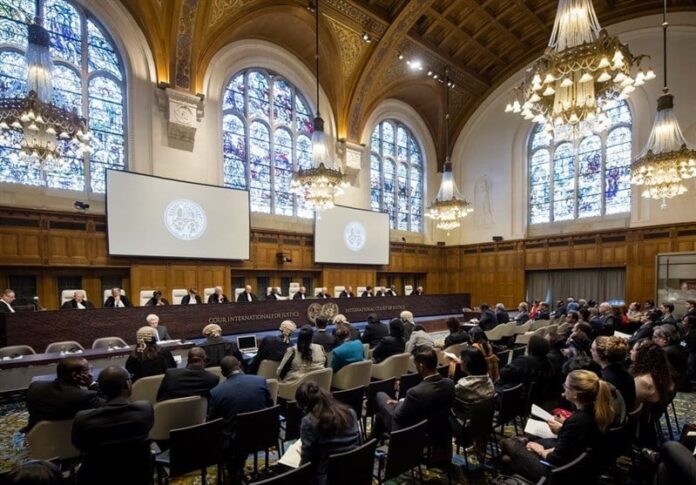
ICJ Orders US Not to Hamper Investment in Iran

In a verdict on Wednesday, the UN court said the US is ordered to refrain from taking measures that damage Iran’s aviation, drug, food and agriculture industries and issue necessary licenses for sending humanitarian aid and goods related to these industries to Iran.

The ICJ also ordered the two sides to refrain from taking measures that escalate tensions and make it more difficult to solve the Iran-US conflict, Iranian media reported.

The US pulled out of the 2015 nuclear deal early May and is restoring sanctions suspended under the accord afterwards.

In July, Iran filed a lawsuit with the ICJ claiming the US return of sanctions violates the 1955 Treaty of Amity, Economic Relations and Consular Rights between the two countries.

In its Wednesday ruling, the ICJ said the US must also keep honouring the treaty.

The ICJ, which is based in The Hague and is also known as the World Court, is the United Nations tribunal for resolving international disputes.

Although the ICJ’s decisions are binding, it has no power to enforce them, and countries, including the US, have occasionally ignored them.

A senior Iranian diplomat said last month Iran’s lawsuit against the return of US sanctions is aimed at placing pressure on Washington, as Tehran is not hopeful the US will abide by the verdict.

The temporary orders are valid until the court issues its final verdict.

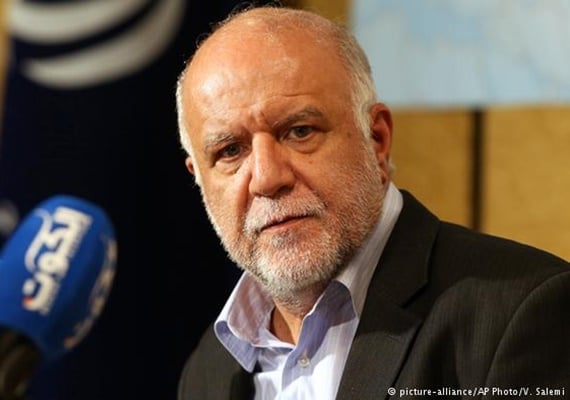
“Drop in Oil Prices Hinges on Removal of US Sanctions on Iran”

Speaking after a meeting with the parliament’s Energy Commission on Wednesday, Bijan Zanganeh said OPEC is producing oil at the maximum capacity.

“Trump wants oil prices not to rise and expects OPEC to boost production, but this organization has no power to increase production,” he added.

Trump, who has for a while been accusing OPEC of pushing oil prices too high, said last week that he wants the group to decrease prices.

“OPEC and OPEC nations, are, as usual, ripping off the rest of the world, and I don’t like it. We want them to stop raising prices,” Trump said in an address to the United Nations General Assembly in New York on September 25.

Zanganeh said the psychological effect of political tensions caused by the US is behind the surge in global oil prices, with China, Japan and Europeans being the main losers.

The oil market cannot tolerate Iran’s supply of oil-related products to be cut and prices will certainly rise even more in the future, Zanganeh warned.

“OPEC is not responsible for the oil price increase. He himself is responsible for the current conditions. For the prices to drop, he needs to forget about Iran sanctions,” Zanganeh said.

The US reinstated parts of anti-Iran sanctions suspended under the nuclear accord weeks ago and is set to restore sanctions on oil and transactions with the central bank of Iran in November.

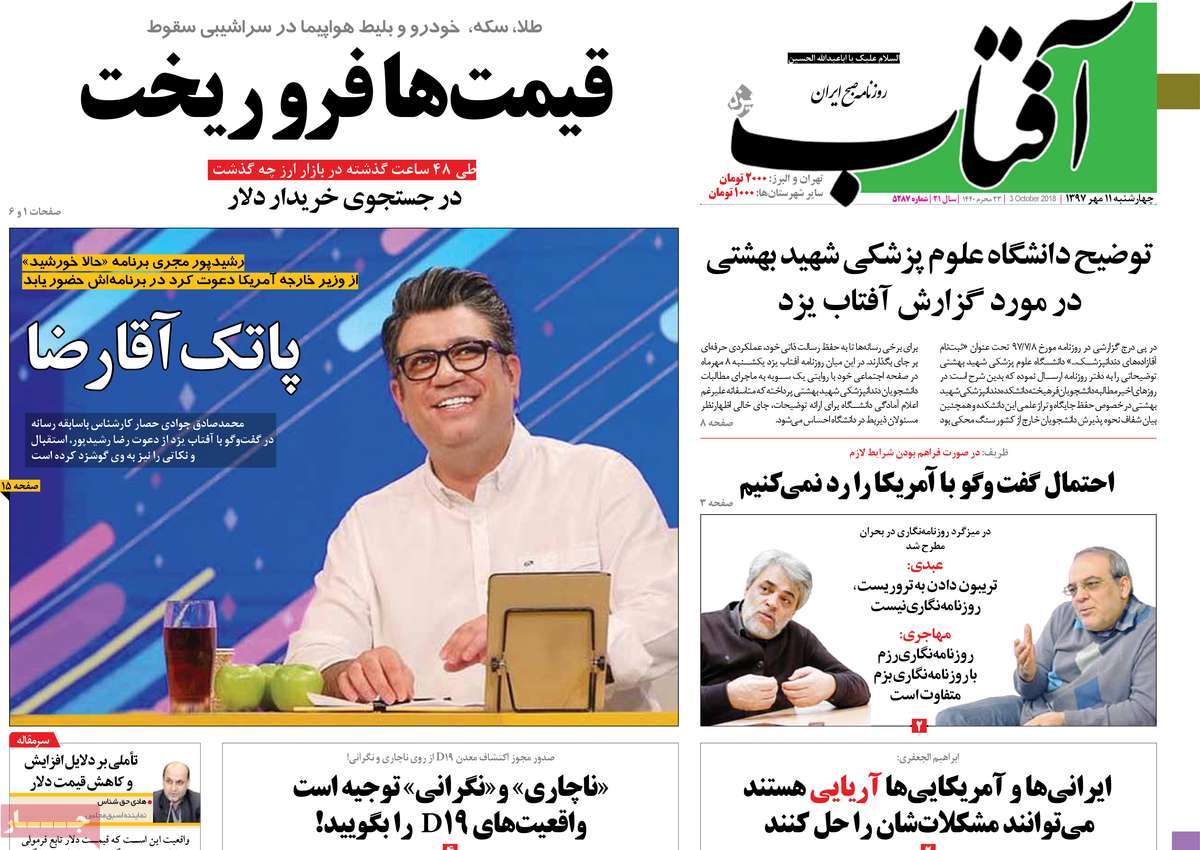
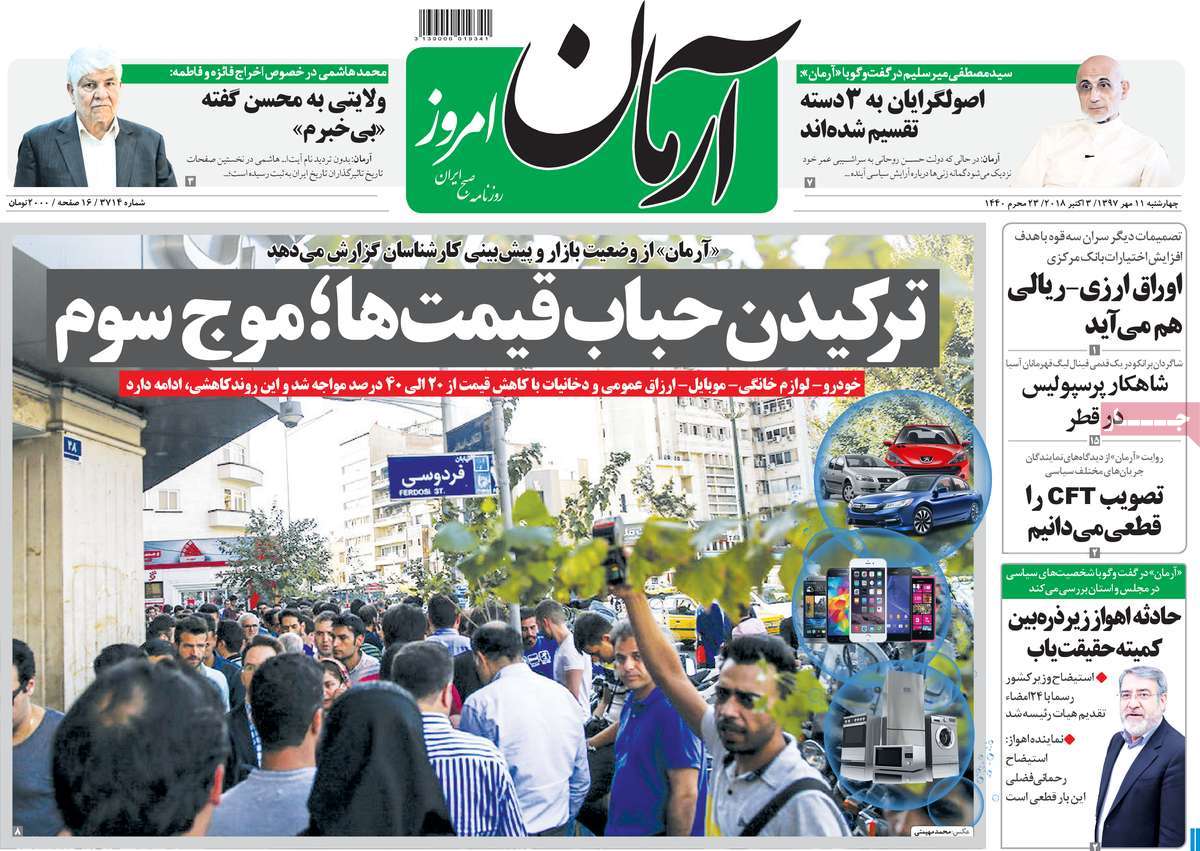
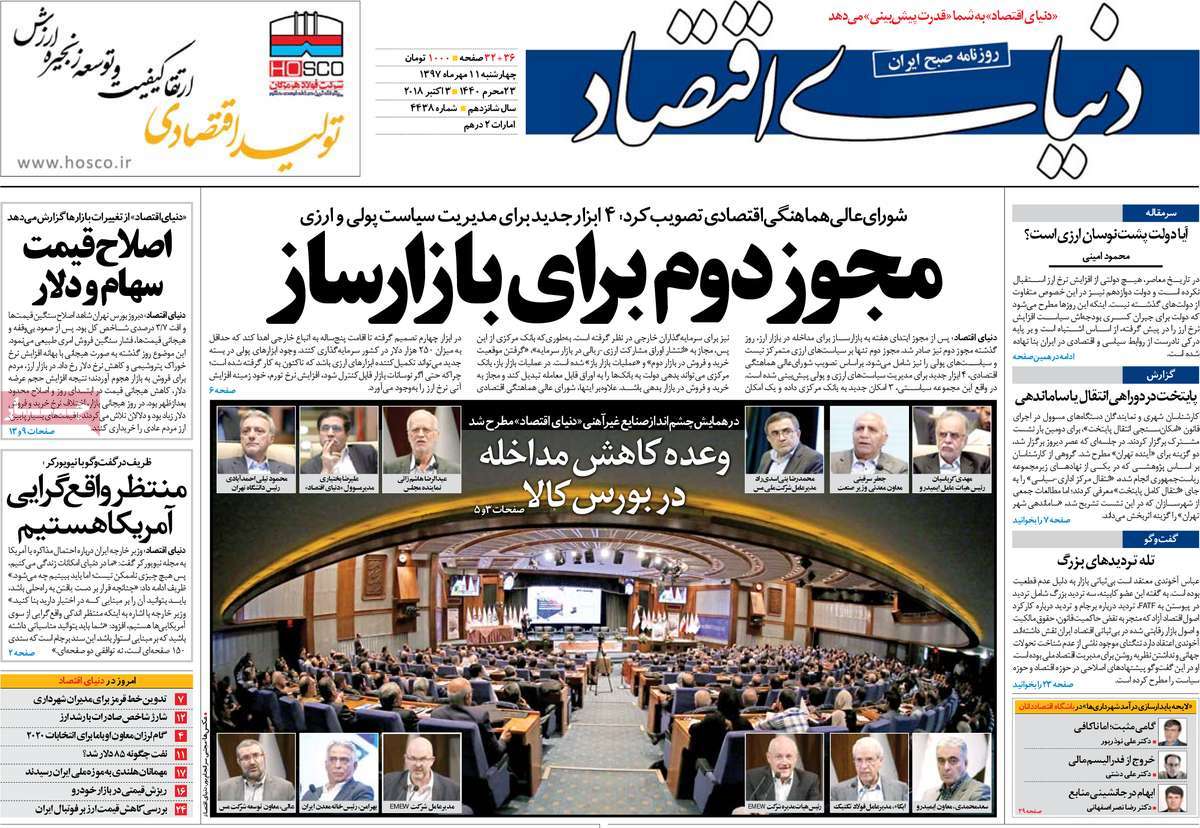
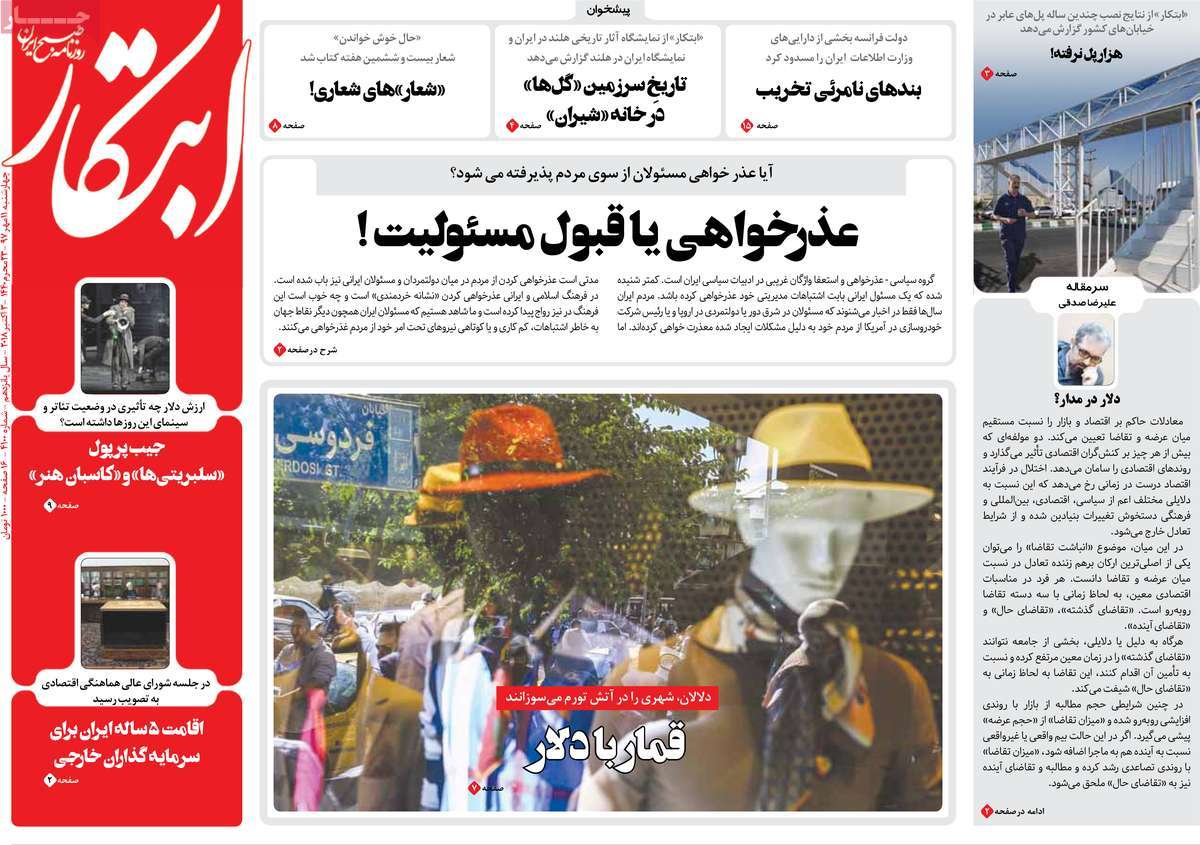
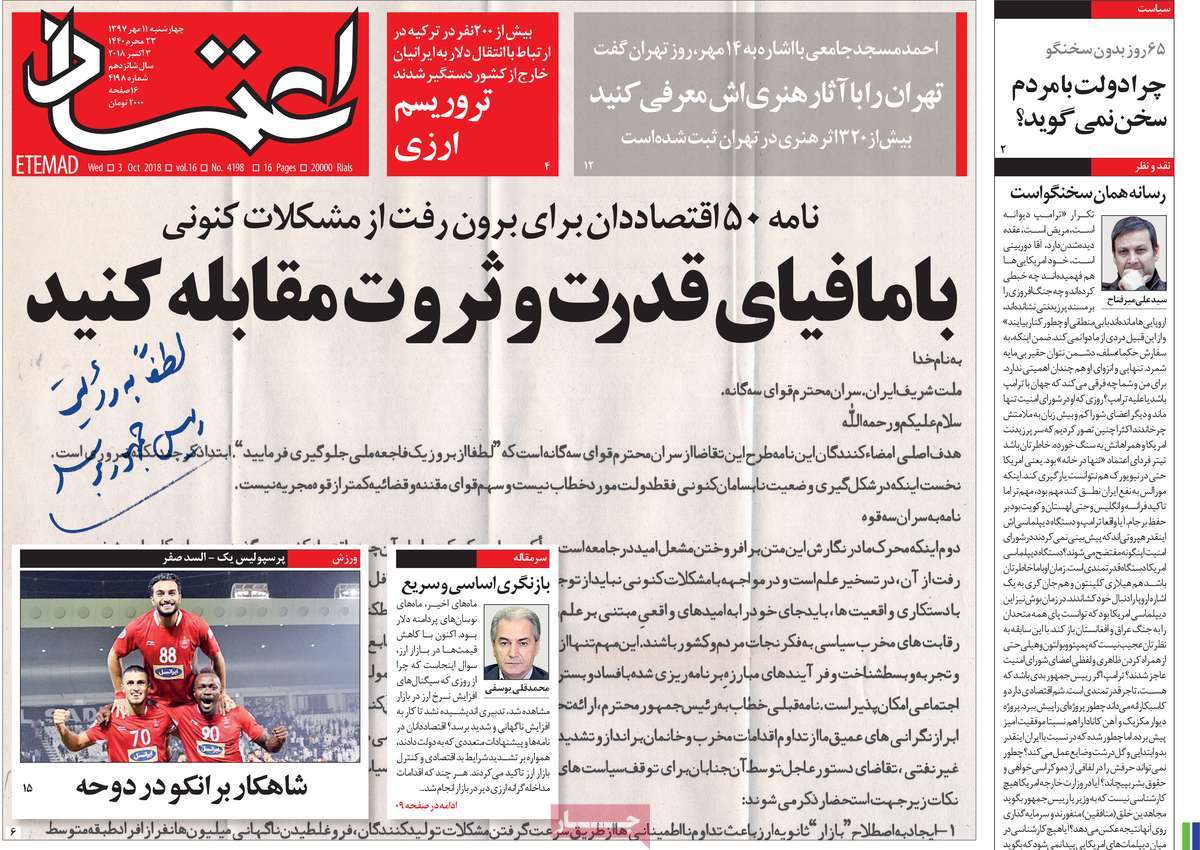
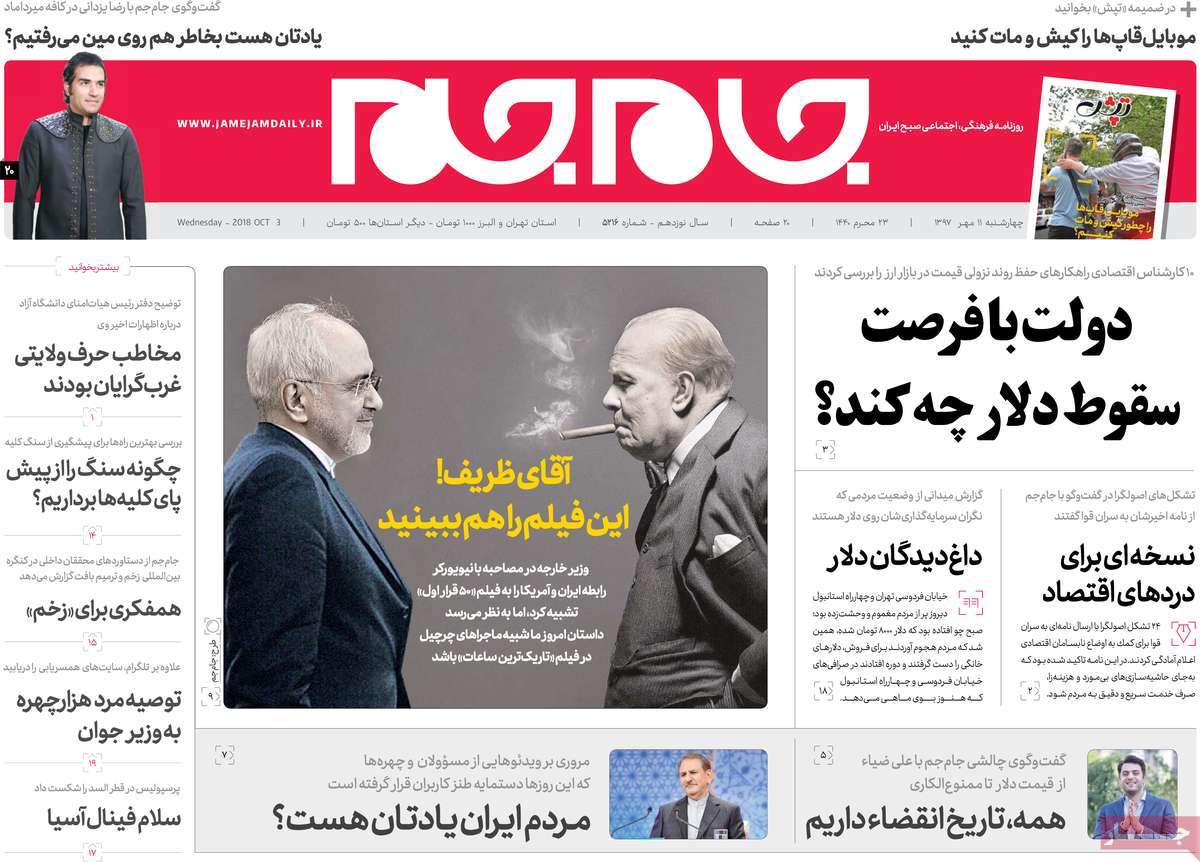
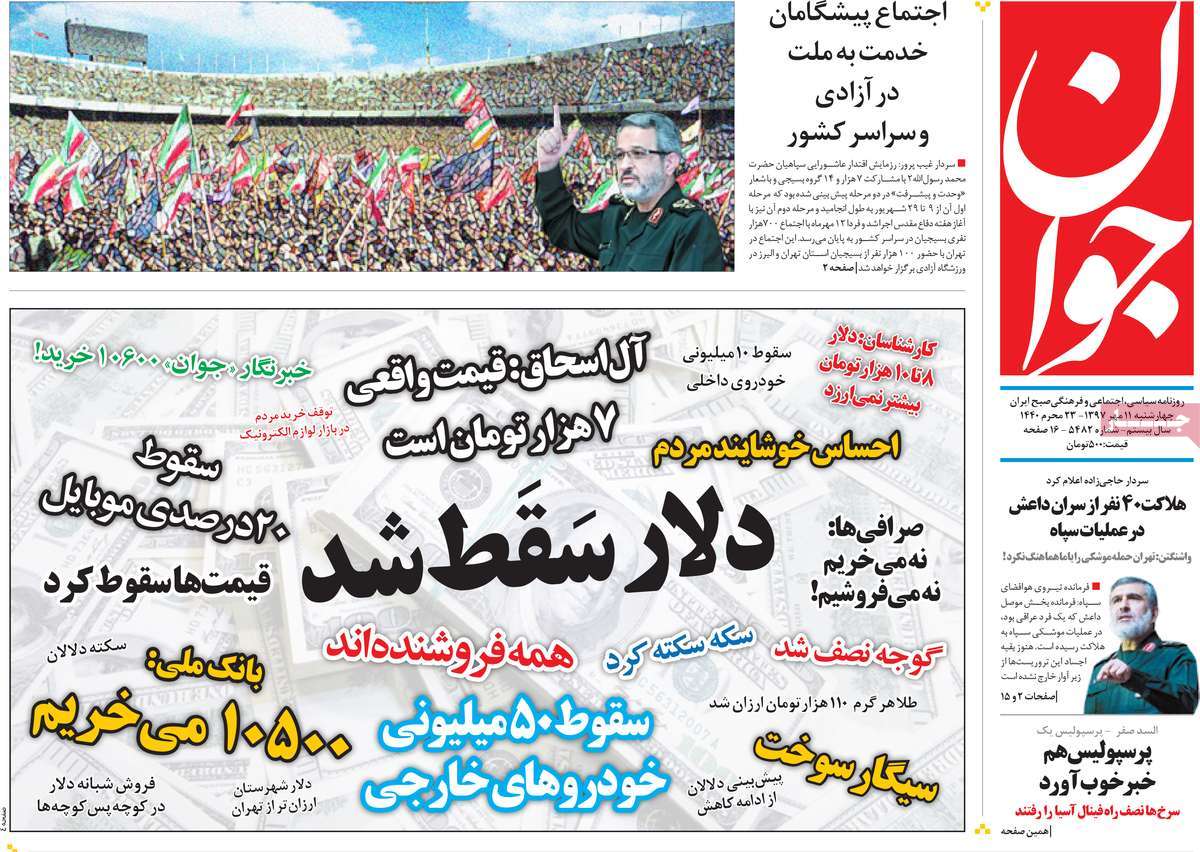
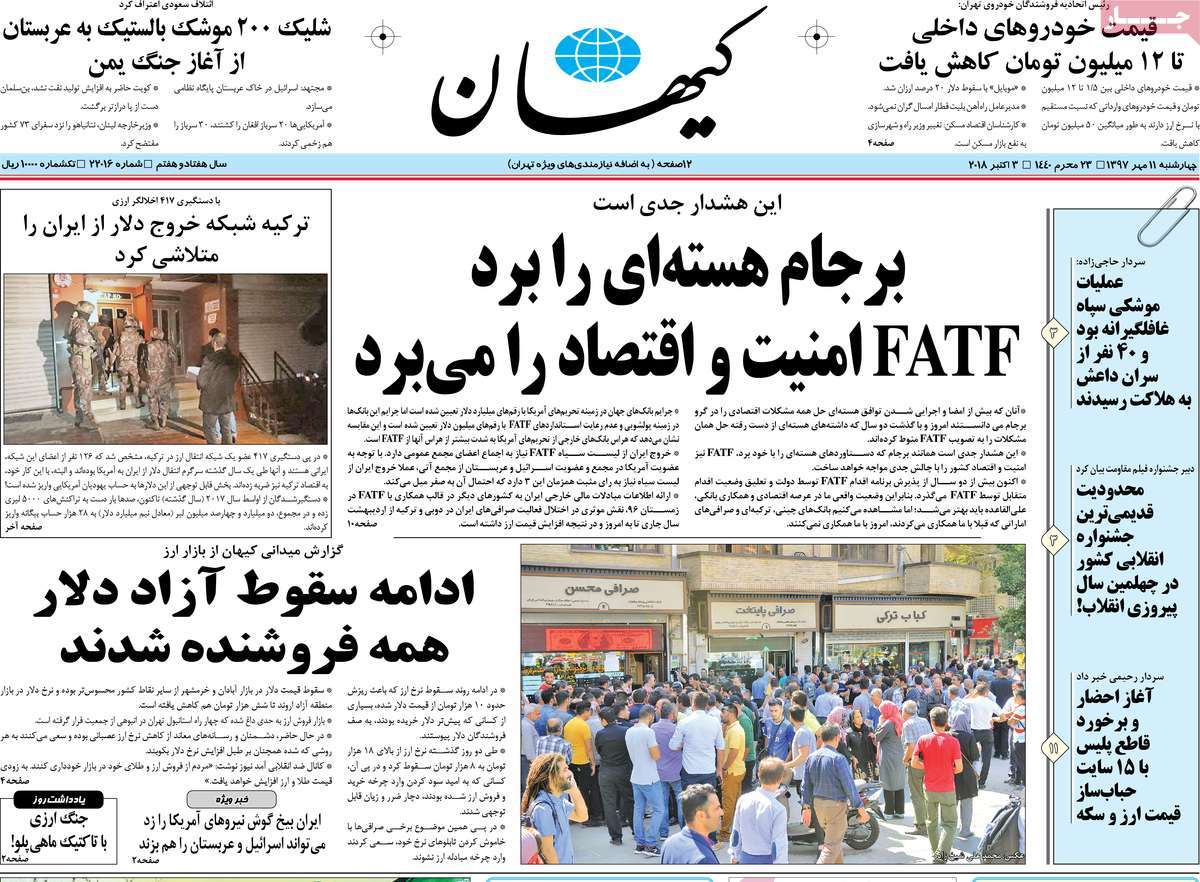
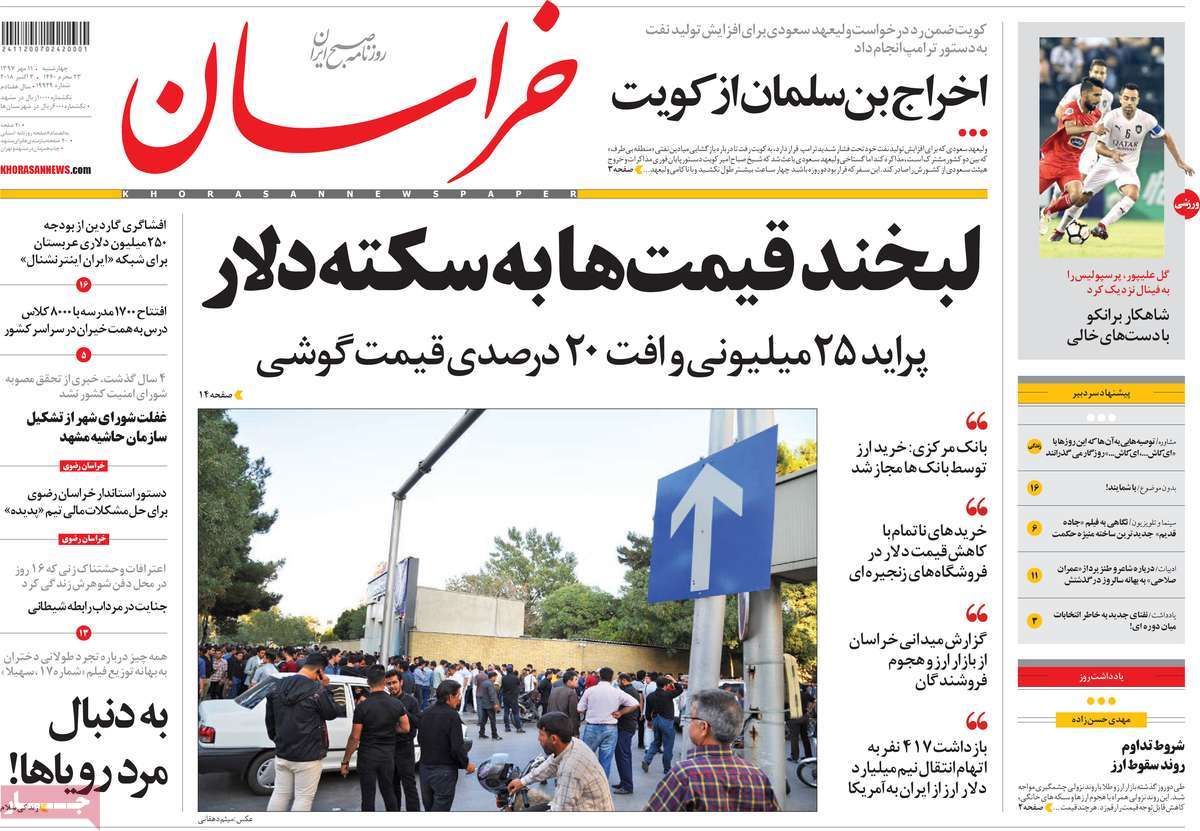
A Look at Iranian Newspaper Front Pages on October 3

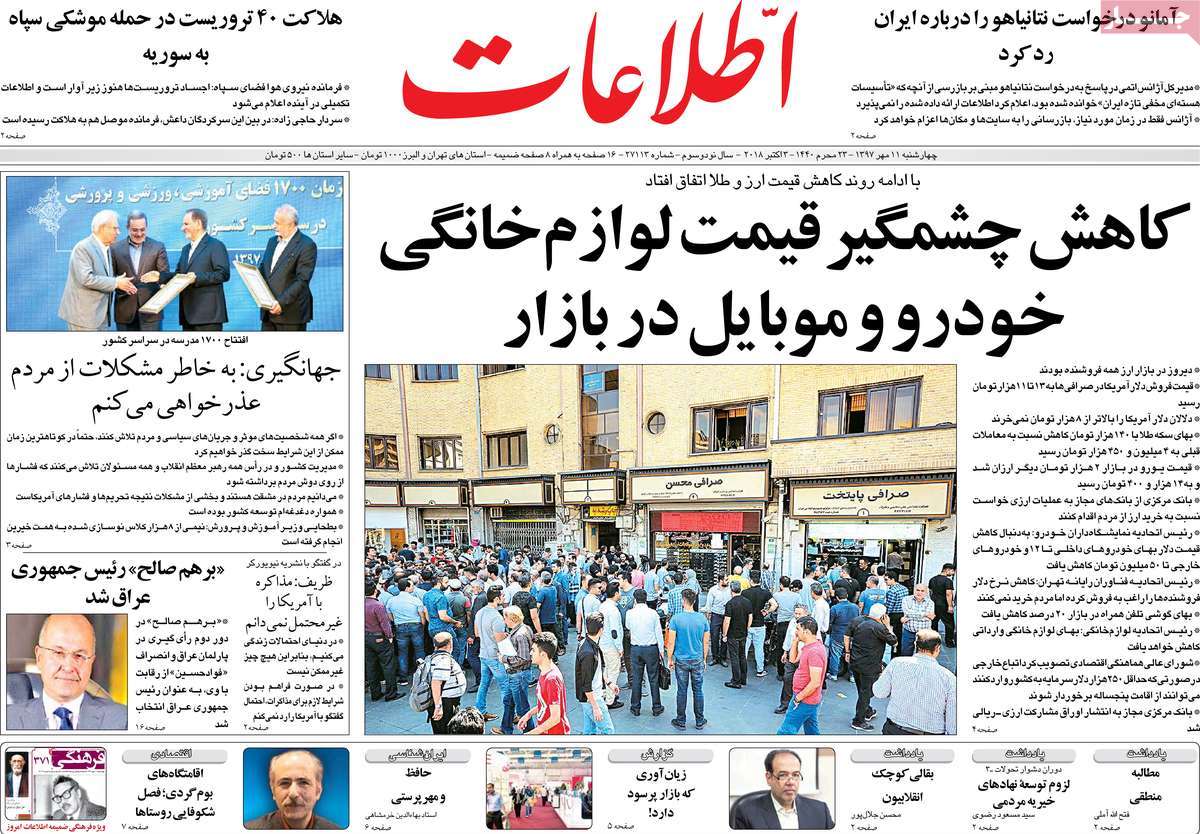
A Look at Iranian Newspaper Front Pages on November 19

The surprising decrease in the US dollar rate, which started on Monday, continued to make headlines in Iran on Wednesday.

Several papers also highlighted the deaths of 40 ISIS ringleaders in the IRGC’s recent missile attack on their positions in Syria, which were 3 miles away from US forces.

The Iranian Parliament’s upcoming vote on a bill on Combating the Financing of Terrorism (CFT) also remained a top story, with many conservative papers expressing strong opposition to a possible yea vote.

The above issues, as well as many more, are highlighted in the following headlines and top stories:


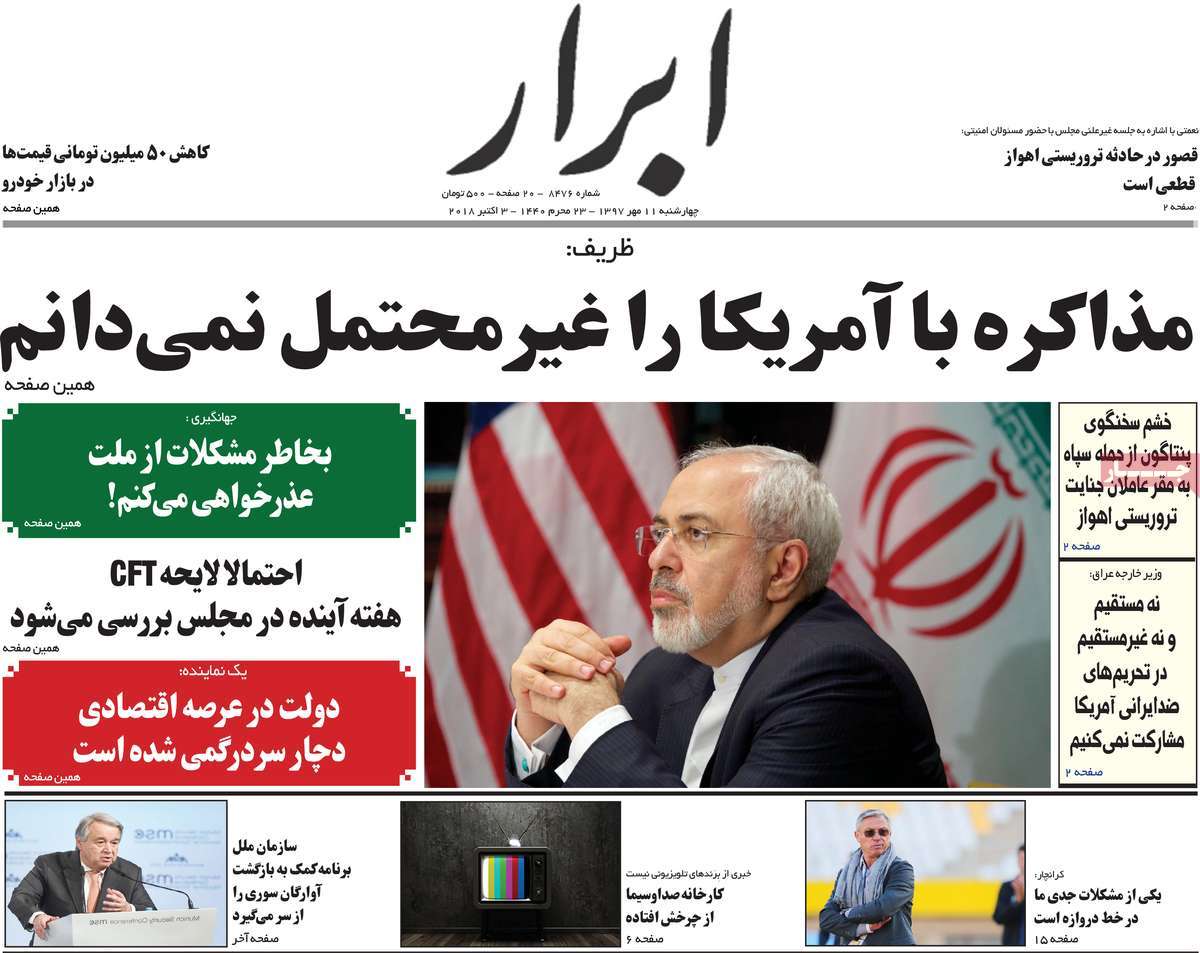
Abrar:

1- Pentagon Outraged by IRGC’s Attack on Terrorists’ Positions in Syria

2- Iraqi FM: We Won’t Cooperate with US Sanctions on Iran Either Directly or Indirectly

3- Araqchi: No Talks of Suspension of Sanctions

4- UN to Resume Plan on Return of Syrian Refugees

A Look at Iranian Newspaper Front Pages on October 3


Aftab-e Yazd:

1- Zarif: I Don’t Rule Out Possibility of Talks with US If Conditions Are Provided

2- Prices Go Down

A Look at Iranian Newspaper Front Pages on October 3


Arman-e Emrooz:

1- Third Wave: Price Bubbles Burst

2- CFT Bill Will Definitely Be Passed

A Look at Iranian Newspaper Front Pages on October 3


Donya-ye Eqtesad:

1- Zarif to New Yorker: We’re Waiting for US’ Realism

A Look at Iranian Newspaper Front Pages on October 3


Ebtekar:

1- Foreign Investors Can Receive 5-Year Residence in Iran

A Look at Iranian Newspaper Front Pages on October 3


Etemad:

1- Fight against Mafia of Power, Wealth: 50 Economists

A Look at Iranian Newspaper Front Pages on October 3


Ettela’at:

1- 40 Terrorists Killed in IRGC’s Attack on Syria

2- Barham Salih Elected as Iraqi President

3- IAEA Chief Rejects Netanyahu’s Call to Inspect Iran Site

A Look at Iranian Newspaper Front Pages on October 3


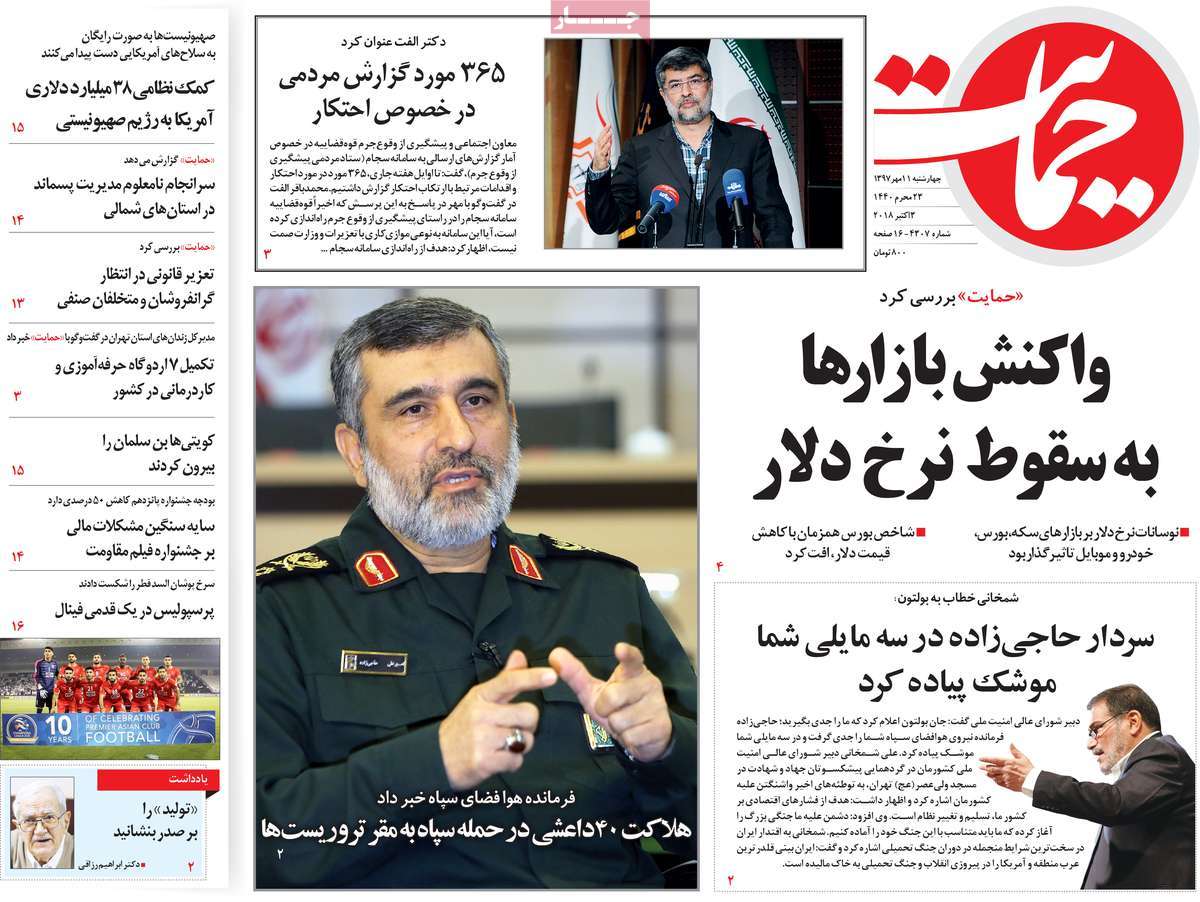
Hemayat:

1- Shamkhani to Bolton: IRGC Missiles Landed 3 Miles Away from You!

2- US Provides Israel with $38 Billion in Military Aid

A Look at Iranian Newspaper Front Pages on October 3


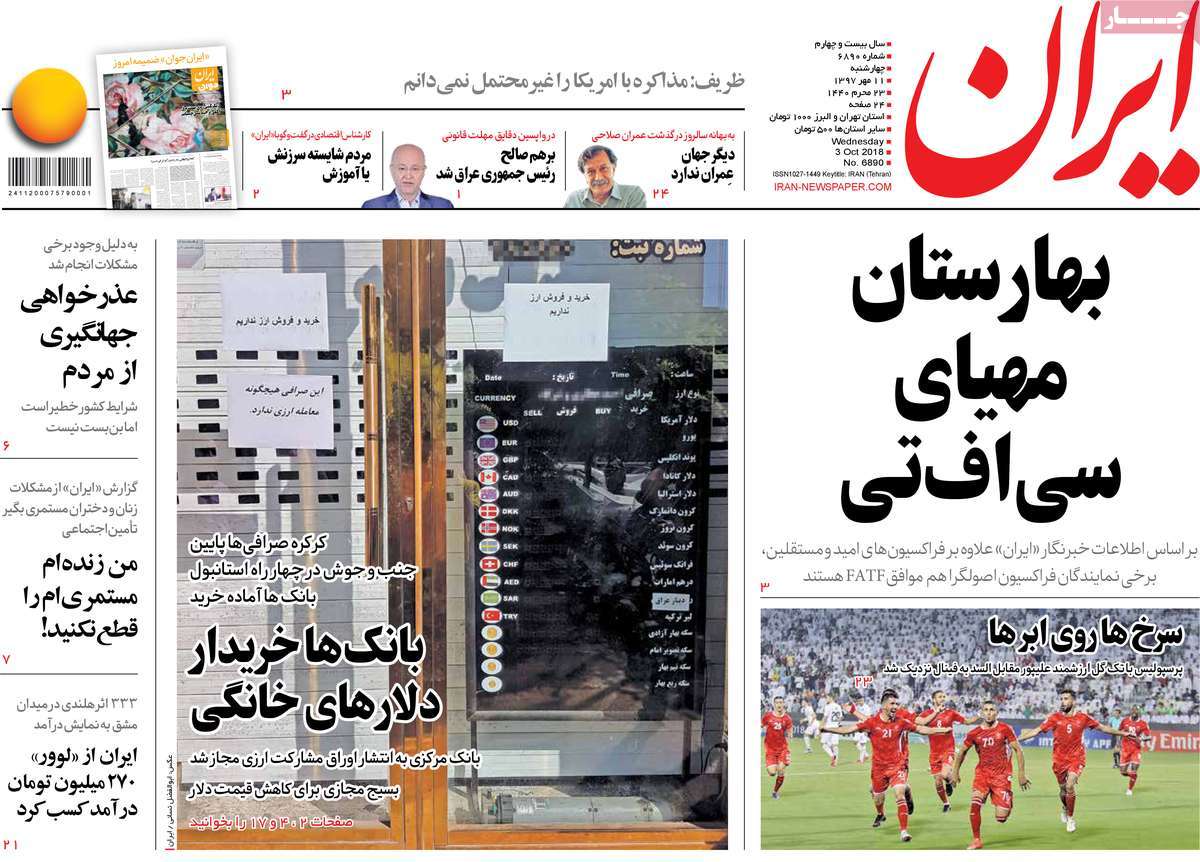
Iran:

1- First VP Jahangiri Apologizes to Iranian People

A Look at Iranian Newspaper Front Pages on October 3


Jame Jam:

1- Mr Zarif! You Should Watch “Darkest Hours” as Well

  • Zarif Compares Iran-US Ties to “50 First Dates” Movie in New Yorker Interview

2- What Should Government Do with Opportunity of Decreased Dollar Rates

A Look at Iranian Newspaper Front Pages on October 3


Javan:

1- 40 ISIS Ringleaders Killed in IRGC’s Operation

2- US Dollar Rate Plunges: Business Official Says Real Rate Is IRR 70,000

A Look at Iranian Newspaper Front Pages on October 3


Kayhan:

1- JCPOA Took Away Nuclear Energy from Iran, FATF Will Take Away Security, Economy

A Look at Iranian Newspaper Front Pages on October 3


Khorasan:

1- Bin Salman Expelled from Kuwait

2- 417 Arrested in Turkey on Charge of Transferring $500m from Iran to US

A Look at Iranian Newspaper Front Pages on October 3


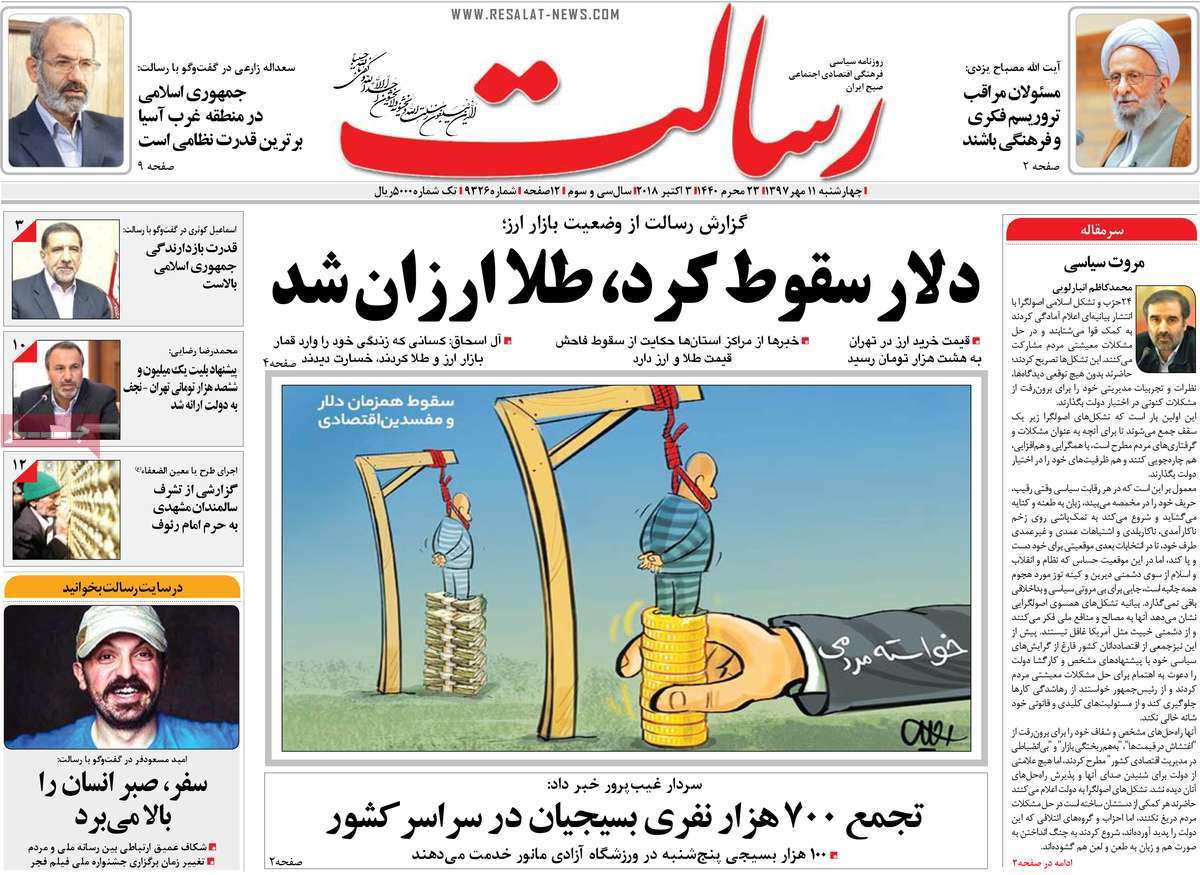
Resalat:

1- US Dollar Plunges, Gold Prices Go Down

2- Islamic Republic Top Military Power in Western Asia: Analyst

A Look at Iranian Newspaper Front Pages on October 3


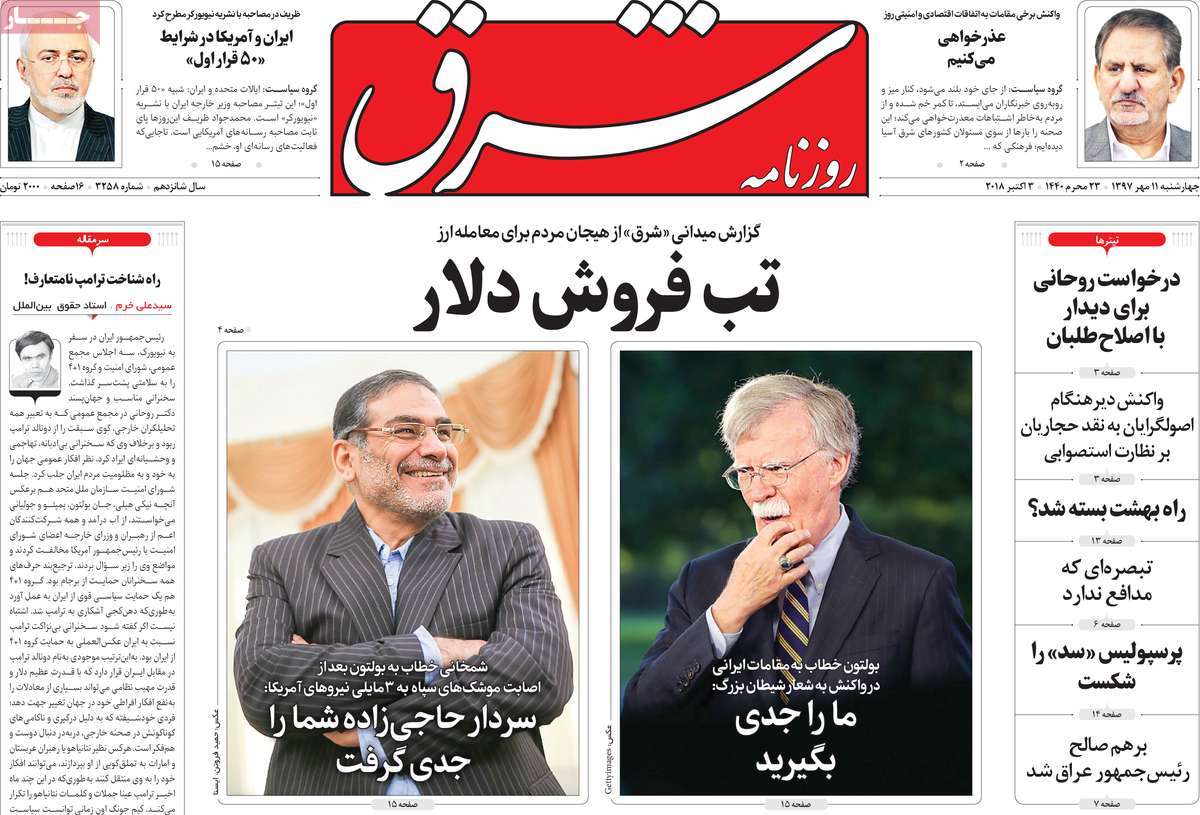
Shargh:

1- Best Way to Know the Unusual Character of Trump [Editorial]

2- Rouhani Invites Reformists for a Meeting

A Look at Iranian Newspaper Front Pages on October 3

“What’s ISIS Doing within Three Miles of US Forces in Syria,” Iran Asks

Extension of UN Arms Embargo to Sound Death Knell for JCPOA: Iran

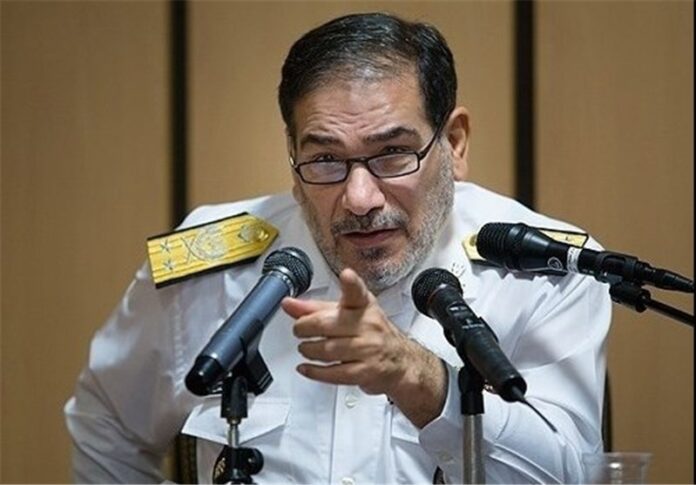
“What are ISIS and other terrorist groups doing within three miles of you?” Secretary of Supreme National Security Council Ali Shamkhani asked on Tuesday.

His comments came in reaction to a US defence official who told CNN that Iranian missiles that targeted Syria on Monday came within three miles of US troops in the country.

Pentagon spokesman Cmdr. Sean Robertson also said in a statement sent to VOA on Monday that “given the complex nature of the battle space, such strikes potentially jeopardize the forces who are actively fighting ISIS in Syria.”

The region, which lies east of the Euphrates River, is one of the last strongholds of ISIS in Syria.

The US says its presence in Syria is aimed at fighting ISIS, but Tehran says Washington is in fact using terrorists as a tool to advance its agenda.


Iran Wins Economic War

Shamkhani said Iran is capable of winning the intensive economic war imposed by the US and its allies.

“Iran enjoys unique opportunity in managing political, defence, security and economic threats and turning them into opportunities,” Shamkhani said.

The US, which is reinstating anti-Iran sanctions, has in recent months been pushing the world to cut trade with Iran and stop purchasing the country’s oil.

“I do not say sanctions have no effect, but our national capacity is so [high] that we can defeat them,” Shamkhani said.

The SNSC secretary said Trump’s repeated offers for talks are deceptions and Iran will not engage in talks until it strengthens its economy and pushes hostile forces back.

“We should stand against them with the revolutionary morale and we have no doubt we will defeat Trump just like his predecessors,” he said.

IAEA Rejects Netanyahu’s Call to Inspect Iranian Site

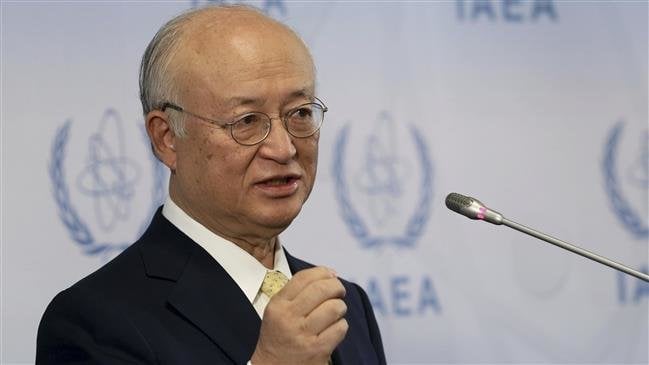
“The Agency uses all safeguards relevant information available to it but it does not take any information at face value,” IAEA Director General Yukiya Amano said in a statement released on Tuesday.

Although Amano did not make an explicit reference to Israeli Prime Minister Benjamin Netanyahu’s claim against Iran but it is his first public pronouncement since the premier’s speech.

“It should be noted that under the existing verification framework, the Agency sends inspectors to sites and locations only when needed,” he added.

During his speech on Thursday at the 73rd annual session of the UN General Assembly in New York, Netanyahu once again took the stage to bring out fresh theatrics against Iran, repeating his threadbare allegation that the country is working to develop nuclear weapons at a “secret” site and urged the IAEA to inspect it.

“In May, we exposed the site of Iran’s secret atomic archive. Today, I’m revealing the site of a second facility; Iran’s secret atomic warehouse,” claimed the Israeli PM, who added, “Iran has not abandoned its goal to develop nuclear weapons.”

Amano further emphasized that the IAEA’s work related to nuclear verification “must always be impartial, factual, and professional,” saying, “In order to maintain credibility, the Agency’s independence in relation to the implementation of verification activities is of paramount importance.”

The IAEA chief added that the agency is conducting verification and monitoring of Iran’s nuclear-related commitments under the 2015 nuclear agreement, officially known as the Joint Comprehensive Plan of Action (JCPOA), Iran signed with major world powers.

“These activities will continue to be carried out within the parameters of the relevant decisions and resolutions of the IAEA Board of Governors and the UN Security Council as appropriate,” he pointed out.

Pointing to his reports to the IAEA Board of Governors, Amano noted that the agency would continue its evaluations regarding the absence of “undeclared nuclear material and activities for Iran.”

“The Agency continues to evaluate Iran’s declarations under the Additional Protocol, and has conducted complementary accesses under the Additional Protocol to all the sites and locations in Iran which it needed to visit,” the head of the UN nuclear agency said.

In his introductory statement to the Board of Governors in Vienna on September 10, Amano said Iran is living up to all its commitments under the 2015 nuclear deal.

He added that the IAEA would continue to verify the non-diversion of nuclear material declared by Iran under its Safeguards Agreement.

Later in his opening address to the IAEA’s 62nd General Conference in Vienna on September 17, the IAEA director general reaffirmed that Iran is in compliance with the nuclear agreement.

Iran’s Persepolis Defeats Qatar’s Al Sadd in ACL Semis

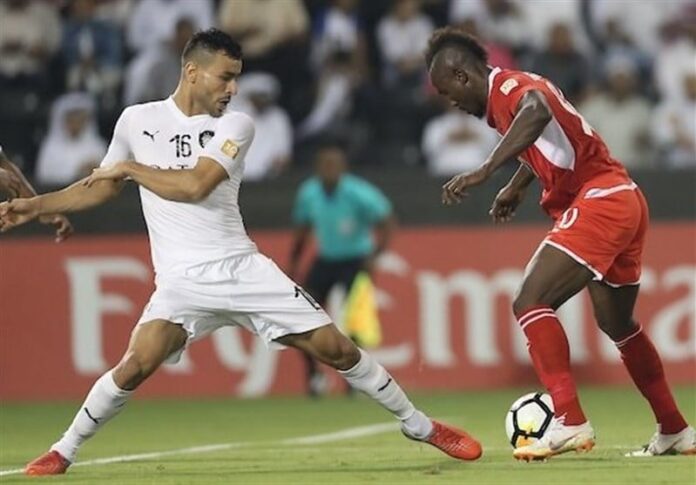
Ali Alipour’s late penalty gave Persepolis an important 1-0 win over host Al Sadd in Doha’s Jassim Bin Hamad Stadium.

The game got off to a cautious start from both sides and it took until the 16th minute for the first dangerous chance of the game. Al Sadd forward Akram Afif got into the box and had a go at goal but Persepolis goalkeeper Alireza Beiranvand was on hand to safely gather the ball.

Two minutes later, Persepolis wasted a golden opportunity to take the lead. After Bashar Resan crossed the ball in from the left, Godwin Mensha somehow skied the ball over the crossbar.

In the second half, Al Sadd came out of the tunnel looking to finally open the scoring in front of their fans but Persepolis were determined to make it difficult for them.

The visitors managed to frustrate the Al Sadd forwards, with tournament top scorer Baghdad Bounedjah kept silent by a resolute backline marshalled by captain Jalal Hosseini.

The status quo remained as it was until the 86th minute, when Persepolis finally broke the deadlock against the run of play. After a quick counter attack, Al Sadd custodian Saad Al Sheeb brought down Alipour in the box. The striker stepped up to take the penalty himself and made no mistake.

Afif had the ball in the net deep into added time but the effort was ruled out by the referee for a foul, confirming a narrow win for Persepolis.

The two sides will now lock horns again on October 23 at the Azadi Stadium in Tehran for the second leg, which will decide who gets to play in the final of the AFC Champions League.

Iran Welcomes Election of Salih as Iraq’s New President

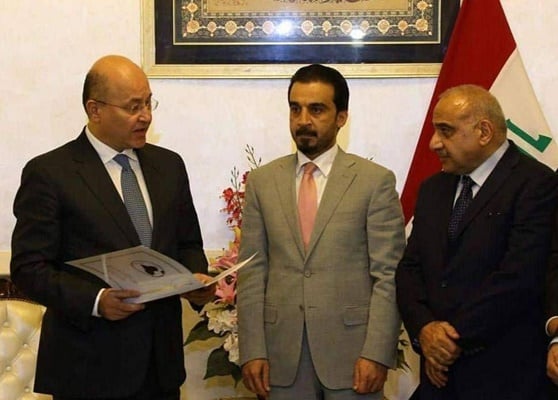
Barham Salih, the new president of Iraq (left), introducing Adil Abdul-Mahdi (right) as the country's prime minister-designate

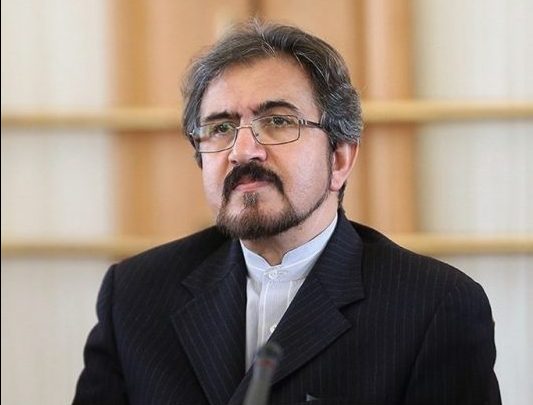
In a Tuesday statement, Bahram Qassemi welcomed the election and expressed hope that age-old, strong and brotherly relations between Tehran and Baghdad will further expand during Saleh’s tenure.

He also wished that the election would lead to more economic welfare for, and the strengthening of friendship between the two nations as well as the promotion of mutual cooperation at the regional and international level.

Iraqi lawmakers on Tuesday picked Salih as Iraq’s new president after a dispute between the two main Kurdish parties delayed the vote on Monday. The two largest Kurdish parties each put forward a candidate for lawmakers to choose.

Salih from the Patriotic Union of Kurdistan (PUK) party was declared as the next president after he defeated Fuad Hussein from the Kurdistan Democratic Party (KDP) following two rounds of voting. Salih won a large majority in the second round.

The vote went to a second round where Hussein withdrew his candidacy twice which was rejected on both occasions. For the first time, the two largest Kurdish parties each put forward a candidate.

Iran Warns against Plots Aimed at Straining Tehran-Paris Ties

Qassemi gave the warning in reaction to a statement by three ministers of the French government in which they accused an Iranian diplomat of being involved in an act of sabotage planned in a gathering of terrorists in Paris, leading to the diplomat’s arrest.

“Once again, we reject the accusations and allegations [levelled against the diplomat], and express the Islamic Republic of Iran’s strong objection to the apprehension of the Iranian diplomat,” said Qassemi, calling for his immediate release

The spokesman said the whole scenario is a conspiracy aimed at tarnishing the good and growing relations between Iran and Europe, and is in line with the objectives of the US and Israeli regime and managed by a terrorist group residing in France.

The spokesman then touched upon Iran’s fundamental policy of condemning any terrorist activity.

“The existing documents reveal the clear role of dissidents, ill-wishers and saboteurs in this farcical show. So, we ask French authorities to be realistic toward the Islamic Republic of Iran, and once again warn about the evil hands of ill-wishers that aim to ruin the age-old ties between Iran and France and other influential European countries,” he noted.

Qassemi’s reaction came after an Iranian diplomat was arrested over accusations by some French authorities that he had been involved in planning an act of sabotage along with terrorists in Paris.

Farangis; Untold Story of Women’s Role in Iran-Iraq War

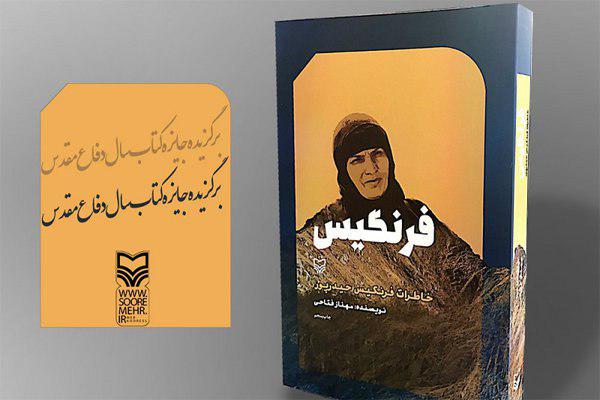
Farangis is one of the books depicting women’s influential role during the Holy Defense era. It recounts the memories of Farangis Heidarpour, a lady resident of the western Iranian city of Guilangharb. The book is authored by Mahnaz Fattahi.

The book contains 12 chapters. The first chapter features her childhood when there is no war, but the scourge of poverty and deprivation has gripped the area where Farangis and her family live.

In the second chapter, she gets married to a man named Alimardan. The next chapter shows the couple begin a rather happy life, but later on, as explained in chapter four, the early period of their married life coincides with the beginning of the Iraqi imposed war on Iran when Iraqi troops soon cross the border and close in on their village.

A group of men from the village who go to the frontline to fight the enemy as well as another group who go after them to find them are all killed.

The remaining men and women in the village take refuge in surrounding mountains. That is the way the harrowing story of the resistance of brave men and women, namely Farangis and her family, during the war unfolds.

She recounts stories which are among the real events of the war at the time, namely incessant bombardments of villages around Guilangharb, the attack on the western city of Eslamabad-Gharb by members of the terrorist Mojahedin-e-Khalq Organization (MKO), the Mersad operation by Iranian troops against Iraqi forces and other events which are among the unforgettable happenings of the time.

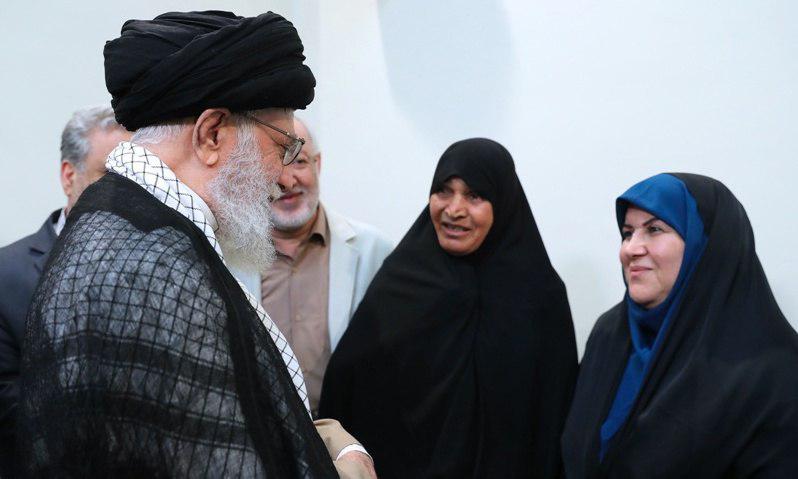
Leader of the Islamic Revolution Ayatollah Seyyed Ali Khamenei has also written an epigram on the sixth impression of the book. He even held a meeting with Ms Heidarpour and her family and the author on September 30, 2018, in Tehran.
Farangis; Untold Story of Women’s Role in Iran-Iraq War

Meanwhile, the Javan daily has conducted an interview with the writer of the book.

Javan: The book Farangis is the story of Ms. Farangis Heidarpour. To begin with, could you tell us about how you got to know the subject of the book?

Author: Ms. Heidarpour is a woman living on the border and manages to kill an Iraqi soldier and take another captive in 1980. A statue of her as a symbol of resistance has been installed in a park in the city of Kermanshah. I had seen that statue several times. Then I asked whose statue it was, and finally found out what a great person she is. Of course, before the publication of this book, only a few short interviews with Farangis Heidarpour had been published.

When I told her that I wanted to write her memoirs, she said, “What’s the use of it? What is a book good for?”

Javan: Why didn’t she like her memoirs to be published?

Author: She said she hadn’t done anything important. She said whoever were in her place, would have done the same thing. When she found out that I had experienced the war, too, and my father used to serve near where Farangis lived, she accepted my offer.

Javan: Now, let’s turn to the Leader writing an epigram on the book. When did you realize that the book had drawn the attention of Ayatollah Khamenei?

Author: I was present at the Leader’s meeting with writers on February 1, 2018. I asked him whether he would write a note on my book. He knew the book and said, “Farangis is the same woman who killed an Iraqi soldier with an axe and a statue of her has been built.”

“I haven’t read the book yet,” the Leader added.

The I insisted that I liked him to write a note on my book.

“If I’m touched by a book, I will definitely write about it,” said Ayatollah Khamenei.

And I said I hoped he would be touched by the book.

I was informed around two weeks ago that the Leader had written an epigram on the book.

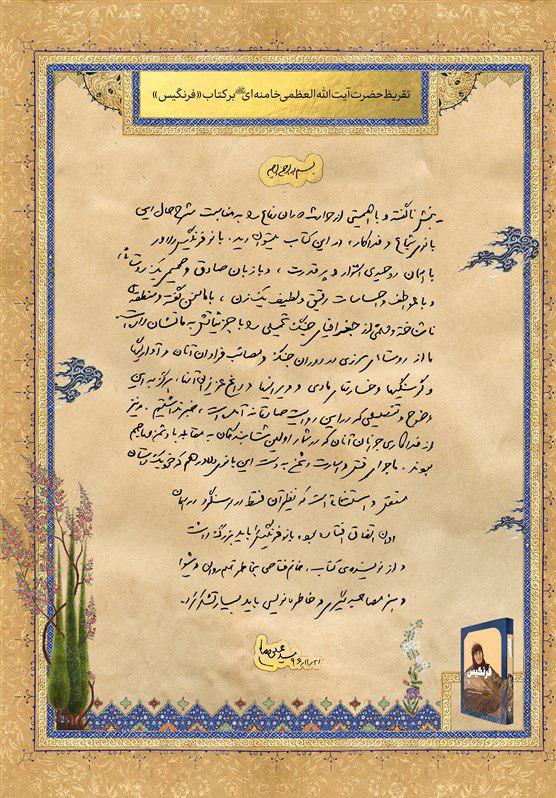
The text of the Leader’s epigram follows:

In the Name of God, the Compassionate, the Merciful

The book contains an important and untold story of the events of the Holy Defense era associated with this brave and devoted lady. Brave Farangis talks to us with the same firm and strong spirit and with the honest and friendly language of a villager, with delicate feelings of a woman, and shows us an unknown and significant logic, with details, of a geographical area where war was going on.

We had not heard, in such a detailed and clear manner recounted honestly in this book, about border villages during the war and the many problems, displacement, hunger, material damage, destruction, and bereavement they suffered; also, about the sacrifice of their youth, who were among the first people who confronted the enemy. The story of this lady killing and taking captive Iraqi soldiers, too, is and independent and exceptional account in its own right the likes of which only happened in Soosangerd in the early period of the war. Lady Farangis should be commemorated, and the author of the book, Ms. Fattahi, should be thanked for her eloquent style and her art of conducting interviews and writing memoirs.

Farangis; Untold Story of Women’s Role in Iran-Iraq War

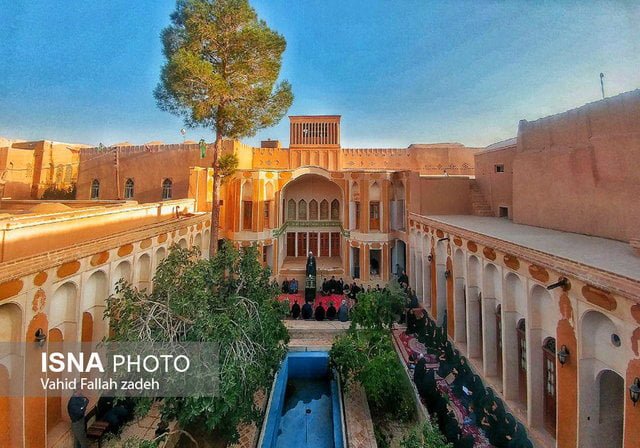
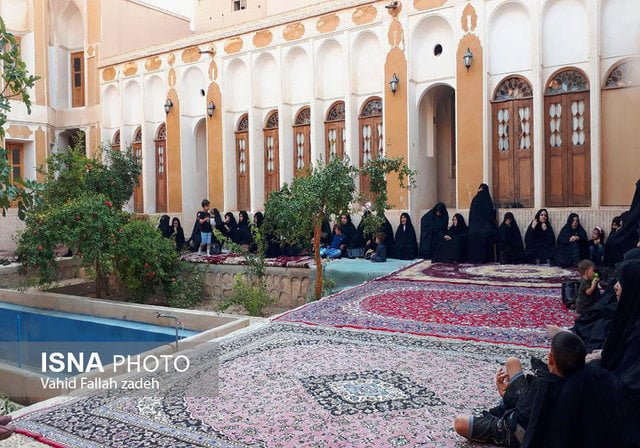
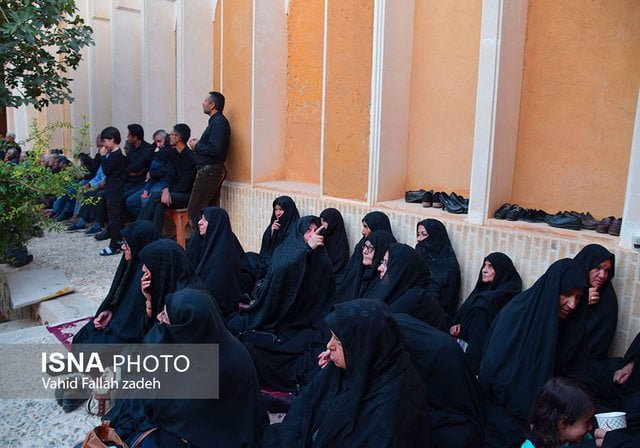
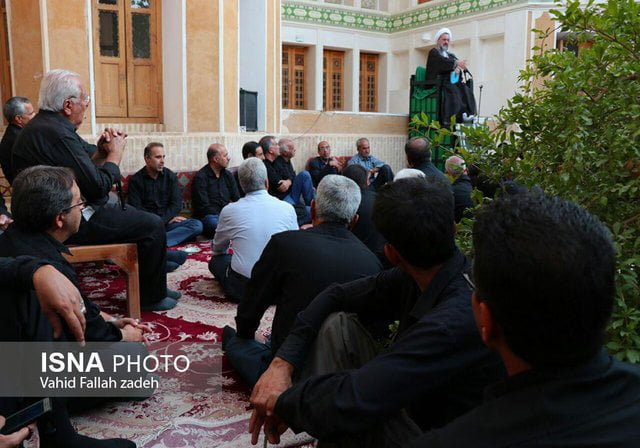
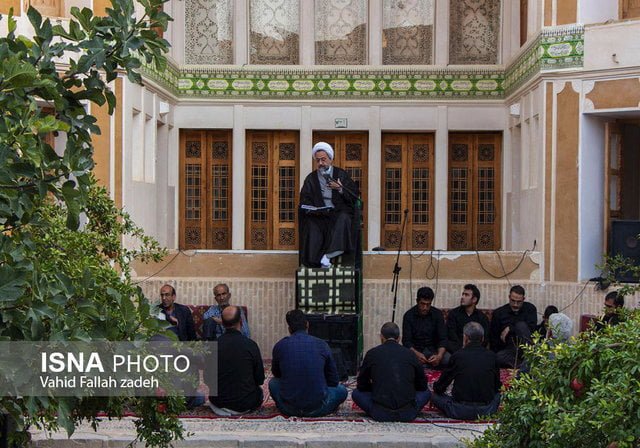
Iran’s Abarkuh Hosts Historical Public Lamentations for Imam Hussein

This public lamentation is held to commemorate the anniversary of the tragic martyrdom of Imam Hussein and his family and companions on Ashura, the tenth day of Muharram.

During the ritual, which is held to restore the mourning traditions of the past and to develop the historical part of the city and tourism, all the traditional Rawda Khani rites are observed for three days.

The mourning ceremonies of the month of Muharram in Abarkuh have long been accompanied by special rituals, most of which are exceptional and unique ones in Iran.

Before the month of Muharram, the coming of this month is announced by an ancient ritual called “Pooshzani”.

In this ritual, the largest covers are hoisted in the biggest house of each neighbourhood, and the house gets prepared for Rawda Khani.

Another tradition is “Chavoshi Khani”. When the month of Muharram is approaching, the mourners of each city gather in different houses and neighbourhoods, or they collectively sing eulogies for Imam Hussein on the roof of congregation halls, Tekyehs, and holy shrines. In this way, the people of the city and village are informed about the coming of the month of Muharram and get prepared for the mourning for Imam Hussein.

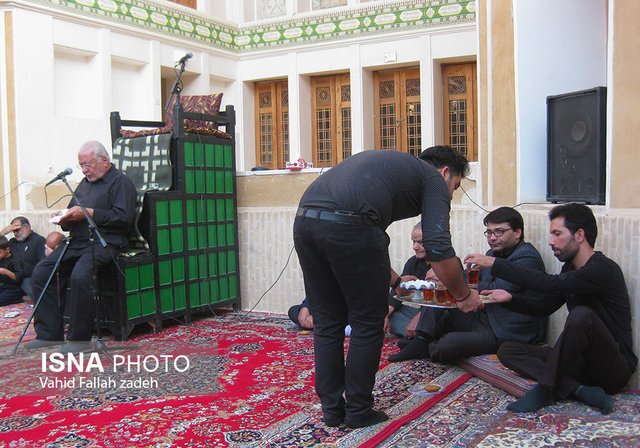
The “Pamenbari” ritual is also among the customs observed during the holy month. In this ritual, during the interval between the speeches of two clerics from the pulpit, people who are often familiar with Rawda Khani start lamentation while hitting their hands on their knees.

From the sixth night of the month, the congregation of mourners is formed in a more serious way, and various mourning groups enter the Rawda Khani ceremonies with drums.

As the mourning groups arrive at the congregation they start to hit their drums with a faster beat, and at that time, the lamentation is stopped to pay respect to the mourners. Then, the mourners hit themselves with chains in a rite called Zanjirzani. As the Chavoshi Khani is started, the music of the drums is stopped and the mourners take a short rest. Again, with the drums playing, Zanjirzani is resumed.

After 30 minutes of mourning by the group, the chains are put aside and the mourners join those who were hitting their chests for the martyrdom of Imam Hussein and his followers. At the end, when the group is leaving the congregation, public lamentation starts again.

During the mourning ceremony, the host receives the mourners by offering them tea.