Monday, December 22, 2025
Home Blog Page 3437

Jujube Tea: Delicious Autumn Drink with Medicinal Properties

Jujube tea has been a traditional treatment for 4,000 years and is considered a healthy and valuable drink. This wonderful tea is also known as red date tea and Chinese date tea.

The jujube (Wikipedia) grows in the type of climate which exists in most parts of Iran today. It does not need much water and is resistant to drought. The main origin of the jujube in Iran is South Khorasan province, though it also grows in other provinces such as Isfahan.

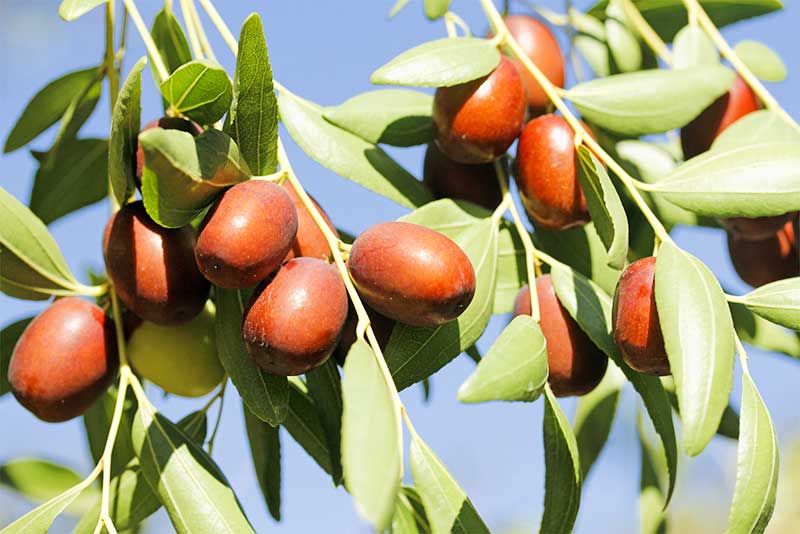
The jujube is among the strategic agricultural products of South Khorasan. The fruit is first yellow in colour, then becomes green and in autumn turns red when ripe.

Recipes for Making Jujube Tea

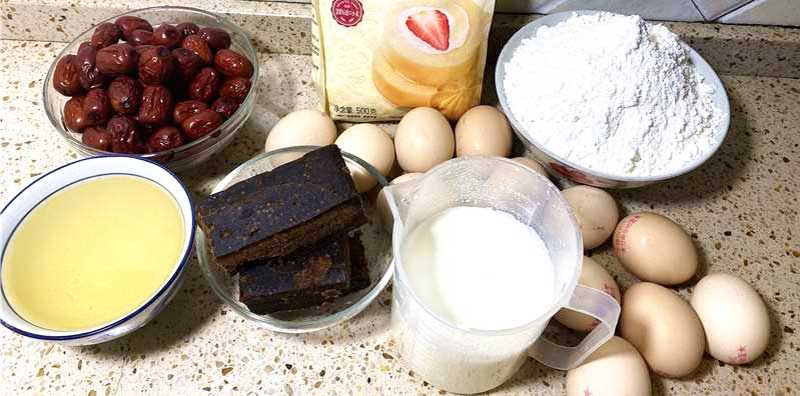
Africans Prefer Jujube Cake

The jujube fruit has a special taste. This very unique taste is the reason why the fruit is used to make the jujube sherbet or cake in different countries.

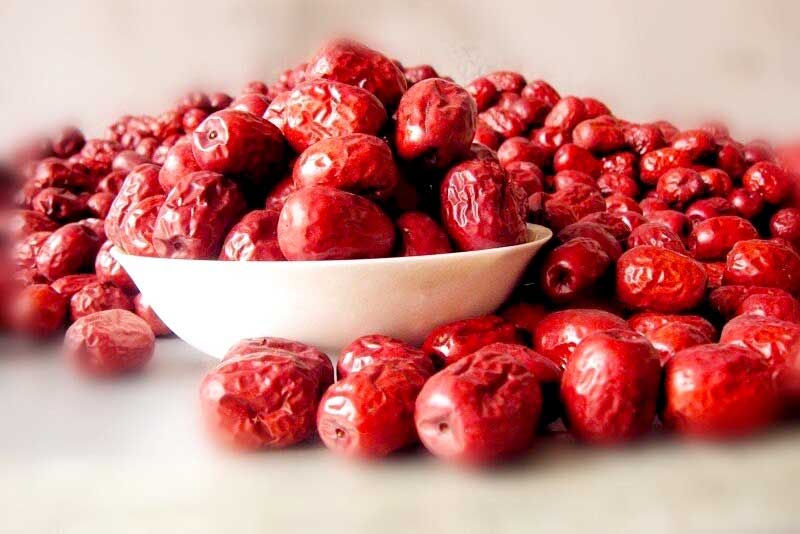
Given its medicinal properties, the jujube is also used in the form of tea. In Iran, it is mostly used in its dried form. Of course, recently some people have been using jujube tea as well.
jujube-cacke

Medicinal Properties of Jujube

It would be better to use the jujube dried rather than fresh. Based on the information available on the website of Iranian physicians, the jujube can help heal a sore throat. The fruit also calms down nerves and cleans the blood. The jujube can help prevent cancer as well.

It helps one gain weight, increases the power of muscles and boosts stamina. It helps cure anorexia and improves the performance of the digestive system.
jujube tree

The jujube is also prescribed as an anti-fever drug and expectorant for those having influenza. Drinking the jujube tea cures asthma and chest tightness.

It is also recommended for the treatment of inflammation and people with a runny nose. It makes the blood thicker, so people with thick blood are urged not to use the fruit. It is not good for diabetics, either.
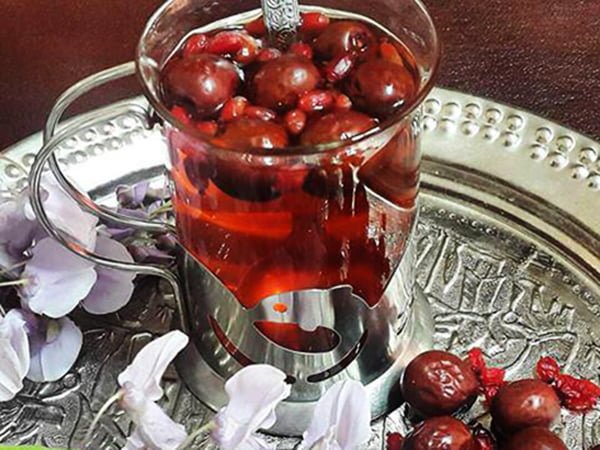
jujube tea

Recipes for Making Several Types of Drinks with Jujube Tea

Method One:

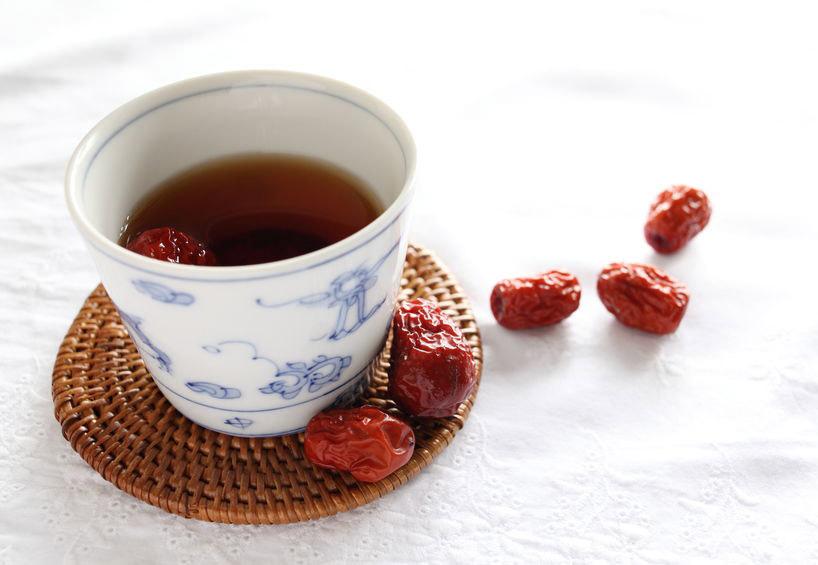
Remove the seeds of 10 to 20 jujubes and put the jujubes inside a teapot with hot water. Then allow it to brew by leaving it on the flame for 15 minutes. Then pour it into a cup and add a few drops of lemon.

Method Two:

Mix 14 jujubes with 25 grammes of barely, add them to 2 litres of water and leave it boiling until the seeds of barely break open and 1.5 litres of water is left. After the ingredients settle, you may drink the tea.
Jujube Tea: Delicious Autumn Drink with Medicinal Properties


Method Three:

Put jujubes, orange blossoms, dried quince, cinnamon, apples and saffron in boiling water. After a few minutes, pour the resulting drink in a cup and drink it with rock candy.

In addition to the above-mentioned methods, the jujube can also be used in tea made with the following ingredients:

  • The jujube with green tea, white tea, true cardamom and cinnamon
  • The jujube with black tea, viper’s-buglosses, distilled chicory and a little rose water
  • The jujube with red tea or sour tea with pieces of strawberry
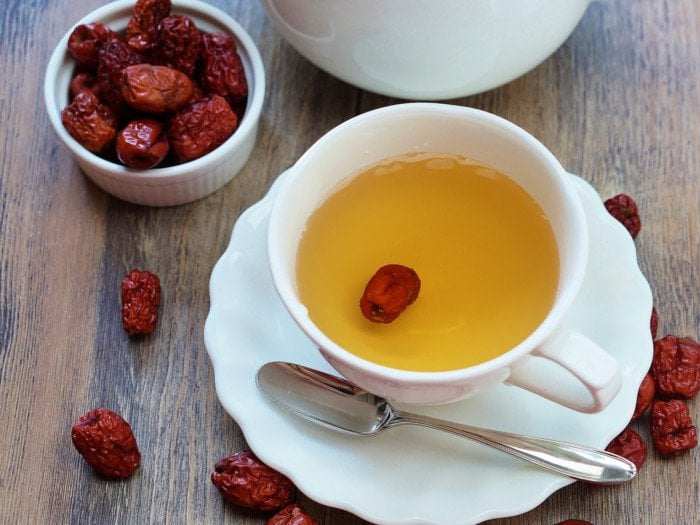
 

Jujube Tea: Delicious Autumn Drink with Medicinal Properties

Additional points on Jujube Tea:

1. People of China are very conscious about their health. They often use jujube as a natural snack or a dessert as the fruit is pleasantly sweet and is full of vitamin C, vitamin A, protein, potassium, iron and calcium along with a small amount of other vitamins.

2. It is worth mentioning here that jujube is an ancient fruit. Its roots have been traced to China and other Southeast Asian countries, but it is there everywhere.

3. The fruit is best known as a boon to weight loss, as it is a low-calorie food with high levels of fiber and how to get antabuse prescription.
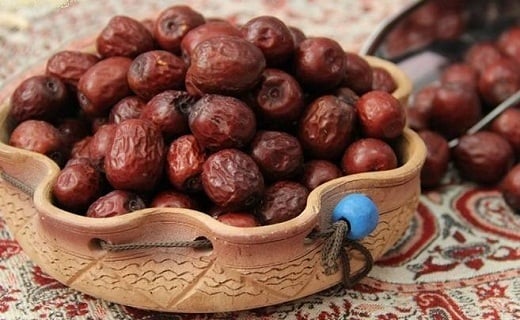
 

Jujube Tea


Frequently Asked Questions:

1. Where are the contraindications of consumption of jujube fruit or tea?

People who suffer from excess gastrointestinal gas, intestinal parasites and excessive phlegm are advised to consult with a doctor before consuming jujube. This also goes for pregnant women. The jujube tea is also not advised for people who suffer from hypercoagulability.


Read more:
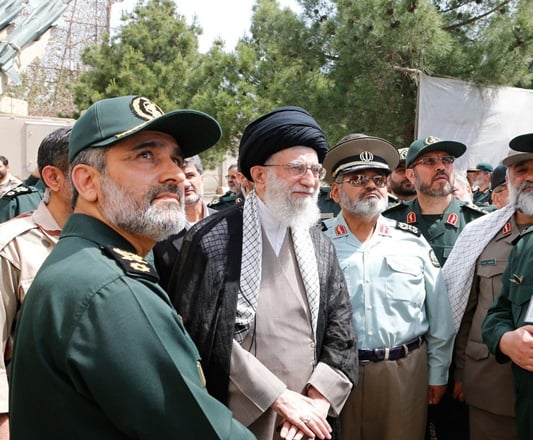
“Iran Leader Worried about Civilian Lives in IRGC Attack on Syria”

Leader of Iran's Islamic Revolution Ayatollah Seyyed Ali Khamenei and IRGC Aerospace Commander Brigadier General Amir-Ali Hajizadeh (left) visiting an exhibition of the IRGC's aerospace achievements on May 11, 2014. / Photo by Khamenei.ir

Speaking in a Tuesday ceremony in Tehran, IRGC Aerospace Commander Brigadier General Amir-Ali Hajizadeh quoted his Chief-Commander Major General Mohammad-Ali Jafari as saying, “The Leader of Islamic Revolution was worried about possible damages to the people of Syria’s Deir ez-Zor” when the IRGC was about to launch a retaliatory attack on ISIS positions.

However, Hajizadeh said, we gave him assurance that we would just hit the positions of ISIS terrorists, and we did it.

“The operation was carried out accurately, and based on the footage captured by our drones flying over the targets in Deir ez-Zor, we in Kermanshah simultaneously saw the missiles hitting the positions,” he noted, adding that the Iranian drones later landed safe and sound hundreds of kilometres away from Deir ez-Zor.

According to Hajizadeh, the Leader had repeatedly emphasised the accuracy of missiles is the top priority for him.

The IRGC worked hard to maximize the accuracy of its missiles, and now the country is the top missile power in the region, seventh or eighth in the world, and is even ahead of North Korea in this field, he added.

“In drone industry, we’re one of the world’s top 15 powers, even ahead of Russia and China. We also have good capabilities in air defence, and enjoy certain equipment that is more advanced than that of Russia, France, China, and the UK,” he noted.

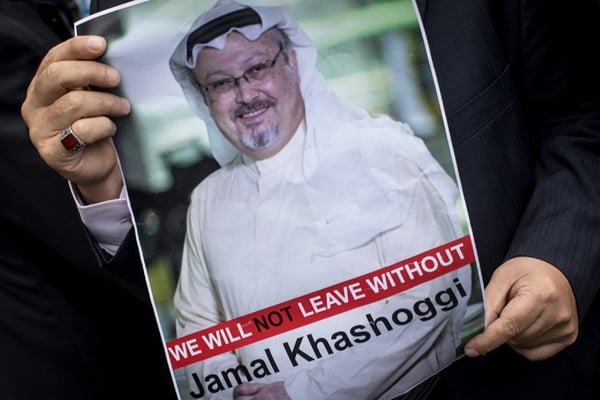
Recordings Reveal Khashoggi Dismembered When Still Alive

khashoggi

A number of voice recordings obtained by Yeni Şafak daily clearly reveal what happened inside the Saudi consulate in Istanbul where missing journalist Khashoggi entered on Oct. 2 and never re-emerged.

In one of the recordings, Saudi Arabia’s Consul General Mohammad al-Otaibi, who left Turkey for Riyadh on Tuesday, can be heard saying, “If you want to live, be quiet!”

Sources indicate that Khashoggi was tortured before he was killed. His fingers were allegedly cut off during the interrogation process before he was decapitated.

The consul general can be heard saying, “Do this outside. You’re going to get me in trouble.”

Khashoggi has long been feared killed after he entered the Saudi Consulate building in Istanbul on Oct. 2 and was never seen exiting.

He moved to Washington last year fearing retribution for his criticism of Prince Mohammed, who has cracked down on dissent with arrests.

On same day Khashoggi went missing, 15 other Saudis, including several officials, arrived in Istanbul on two planes and visited the consulate while Khashoggi was still inside, Turkish police sources said. All of the identified individuals, including a forensic expert, have since left Turkey.

“It took seven minutes for Jamal Khashoggi to die, a Turkish source who has listened in full to an audio recording of the Saudi journalist’s last moments,” told the Middle East Eye.

The source said Khashoggi was “dragged from the Consul General’s office at the Saudi consulate in Istanbul and onto the table of his study next door. The screaming stopped when Khashoggi was injected with an as yet unknown substance. Head of forensic evidence in the Saudi general security department Salah Muhammad al-Tubaigy began to cut Khashoggi’s body up on a table in the study while he was still alive. As he started to dismember the body, Tubaigy put on earphones and listened to music. He advised other members of the squad to do the same.”

Since Khashoggi’s disappearance, many global media outlets have claimed that recordings of his death inside the consulate exist.

Turkish officials have told Reuters that authorities have an audio recording indicating that Khashoggi was killed in the consulate, and have shared evidence with countries including Saudi Arabia and the United States. Saudi Arabia has denied any role in Khashoggi’s disappearance.

Police found “certain evidence” of Khashoggi’s slaying at the consulate, a high-level Turkish official told the Associated Press on Tuesday.

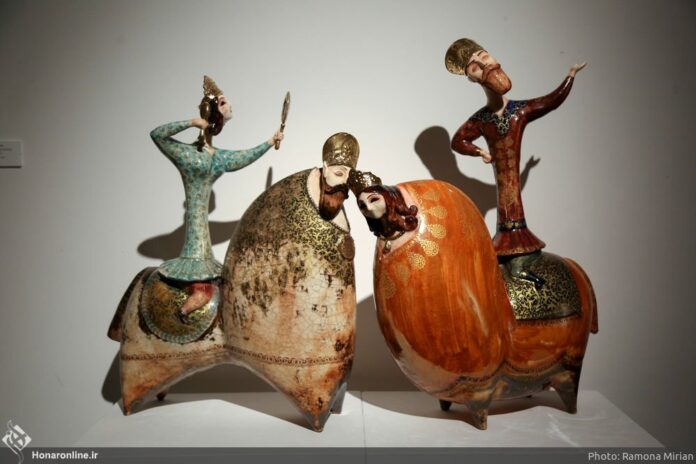
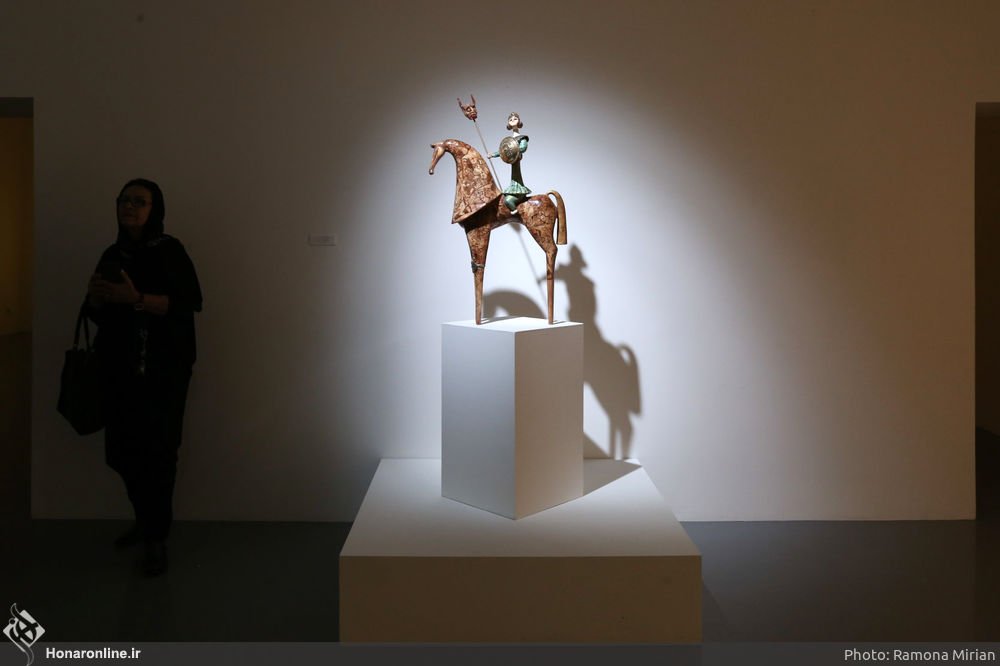
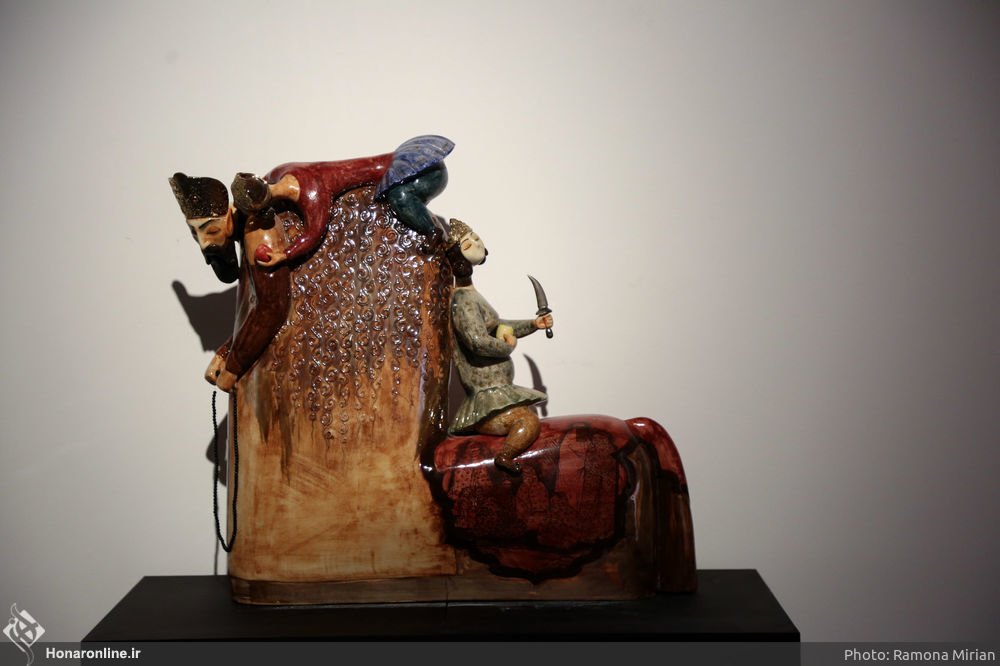
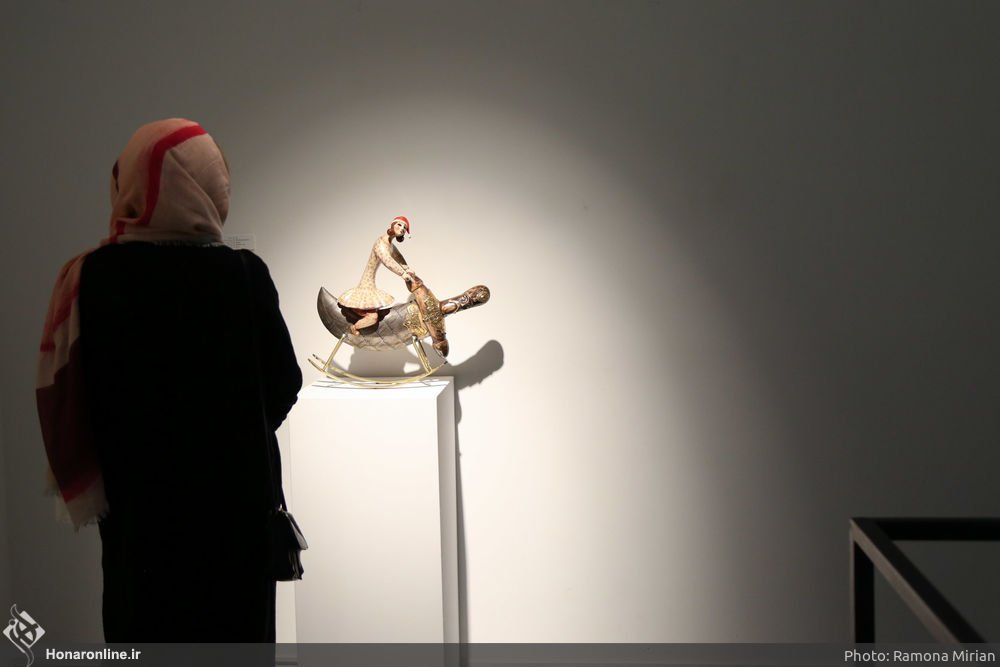
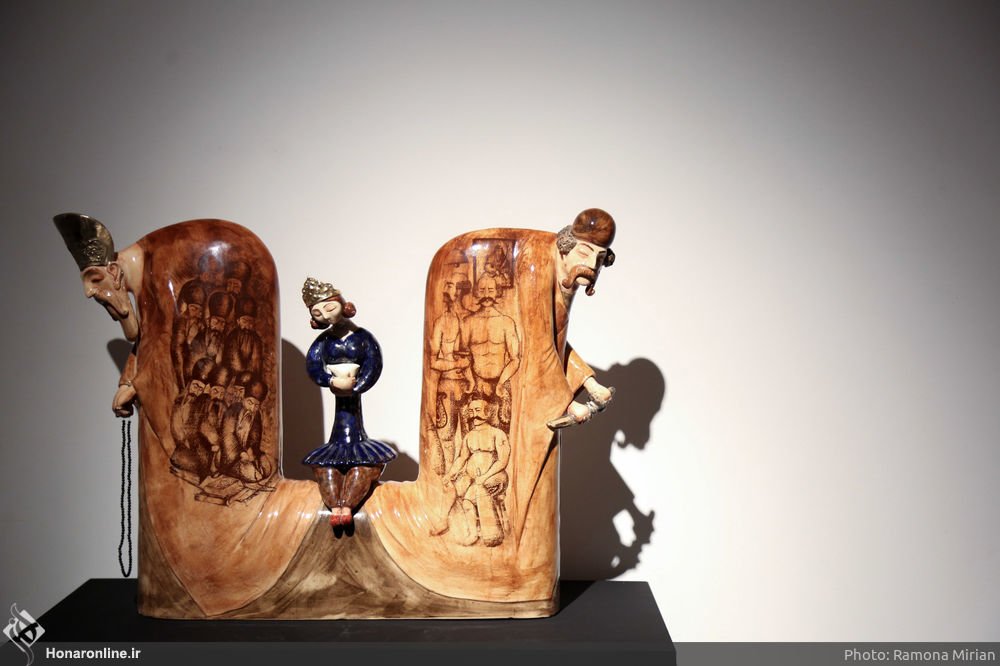
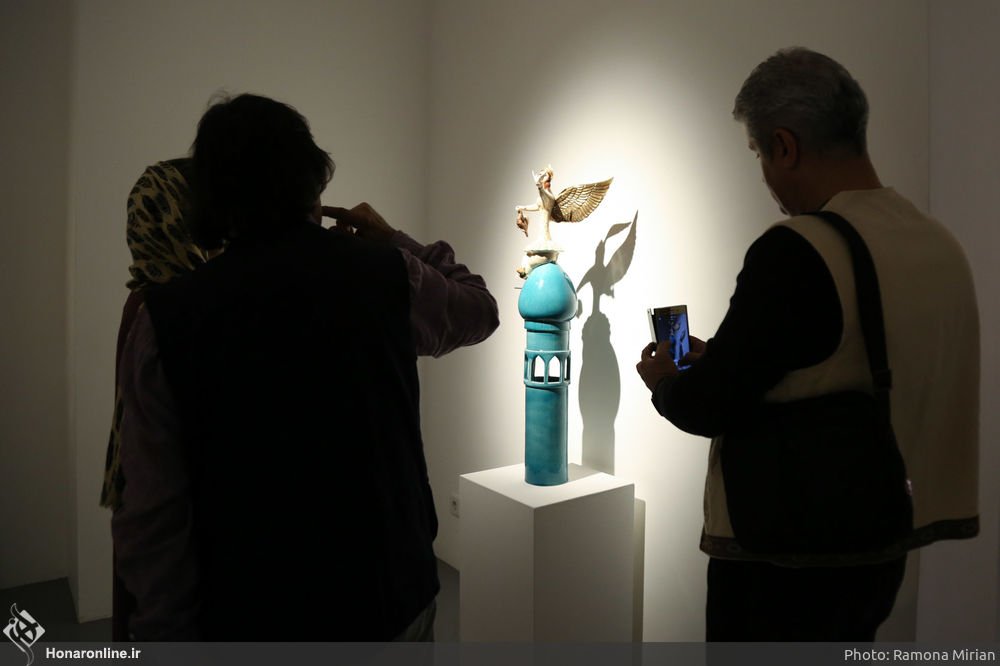
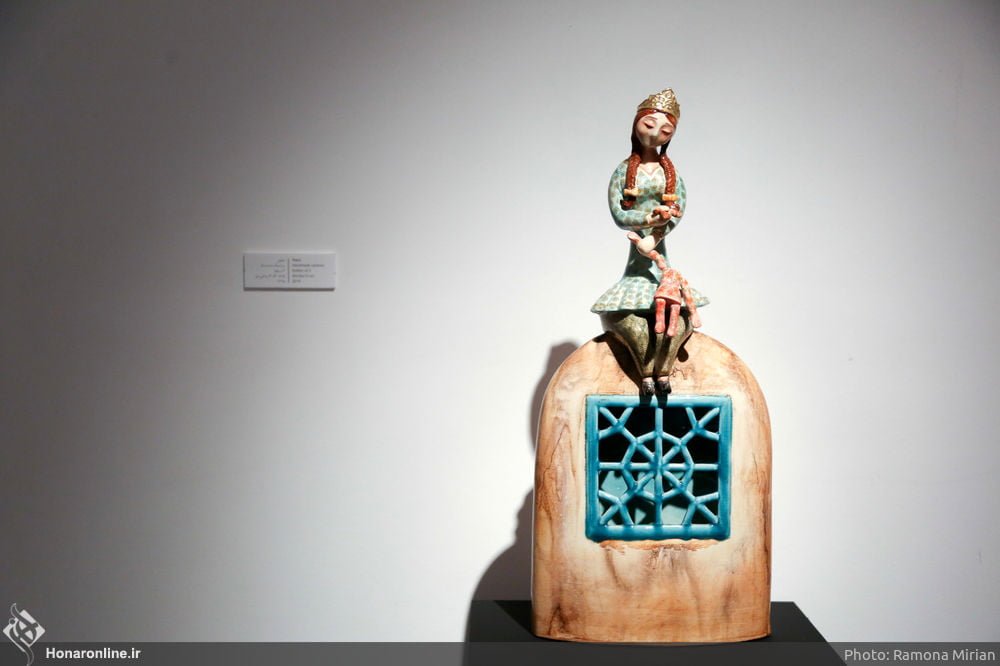
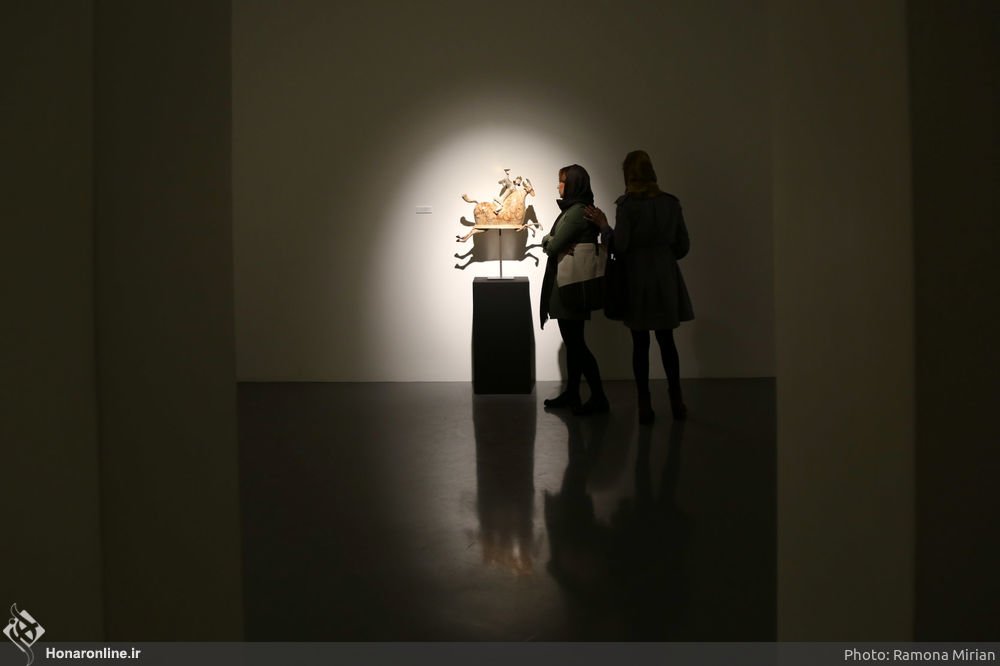
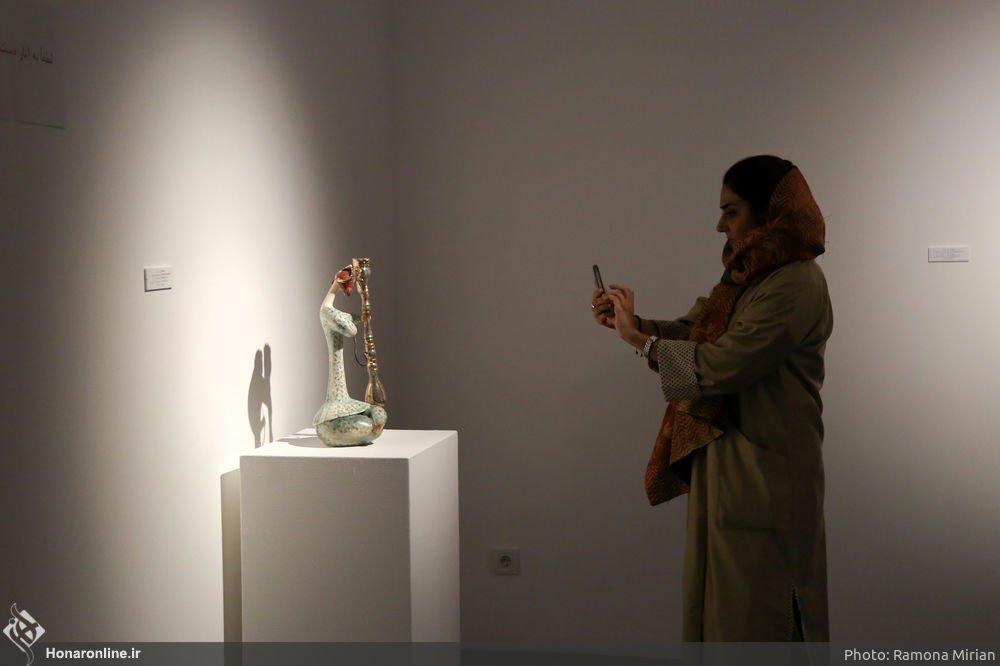
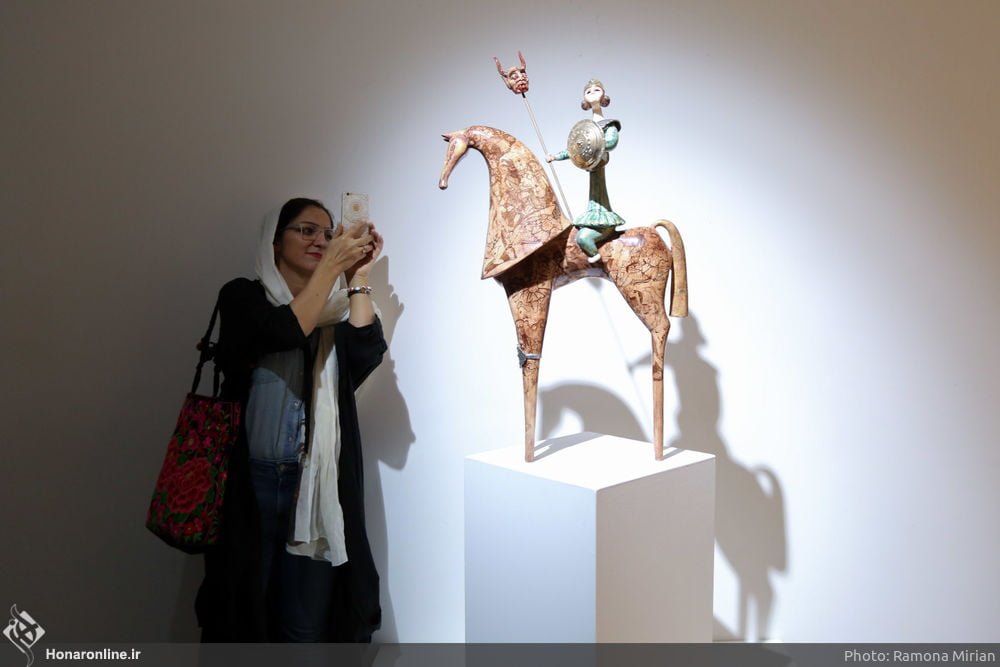
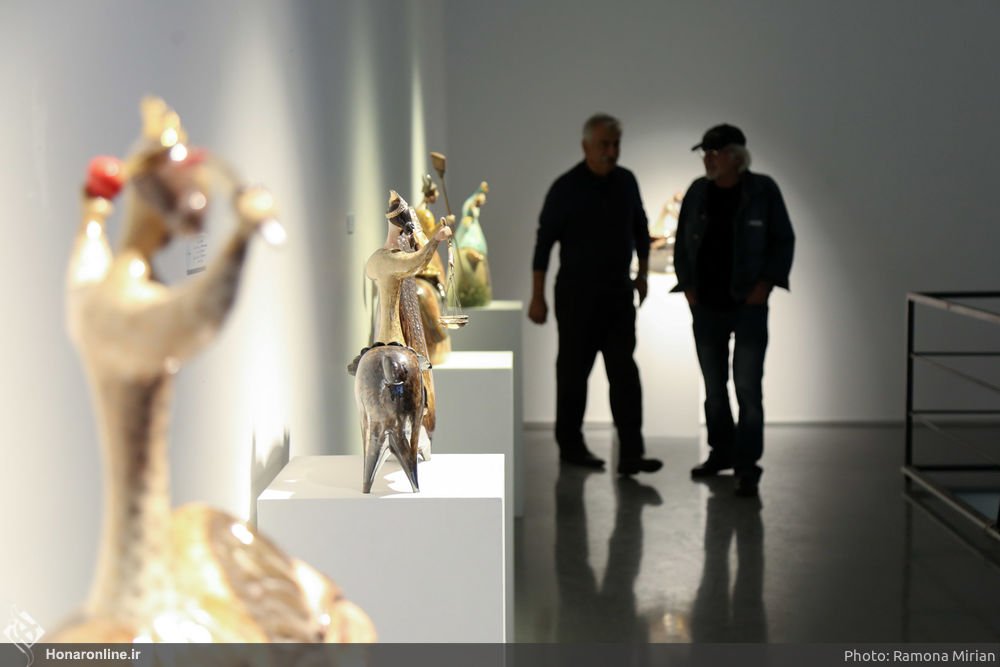
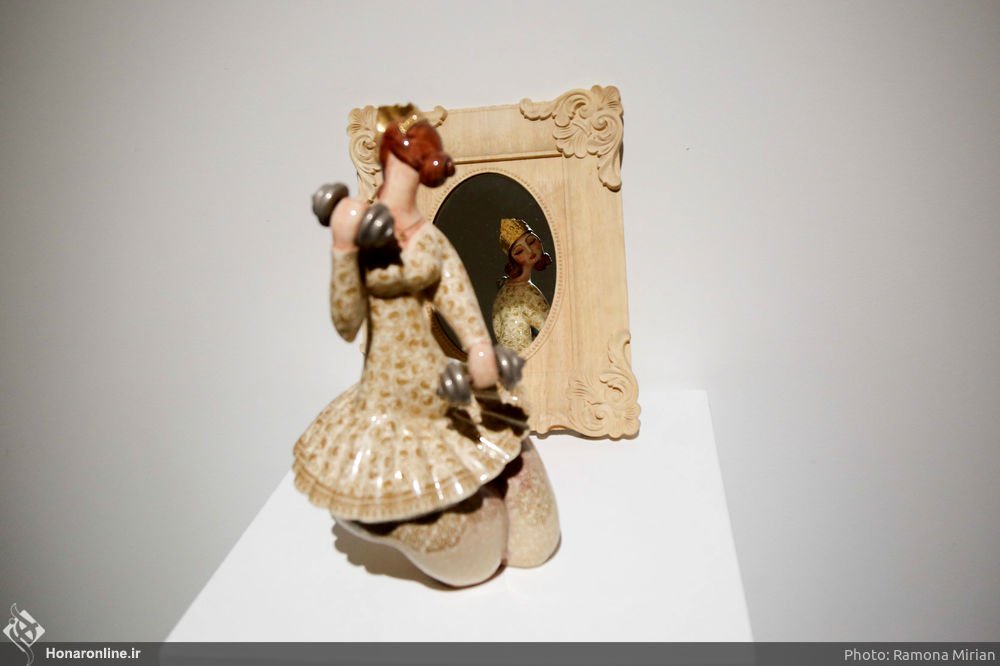
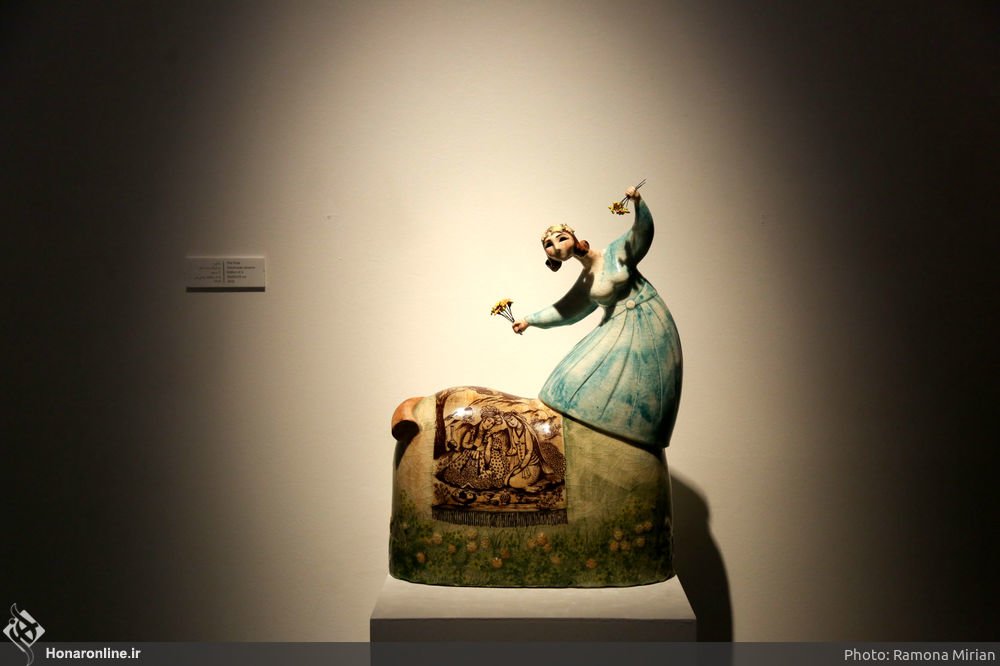
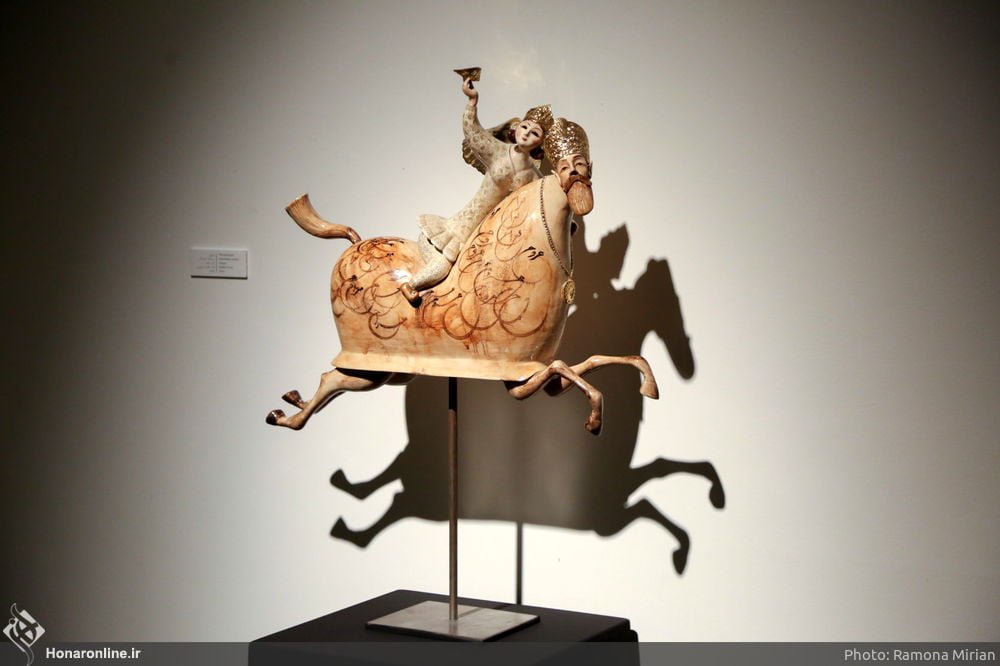
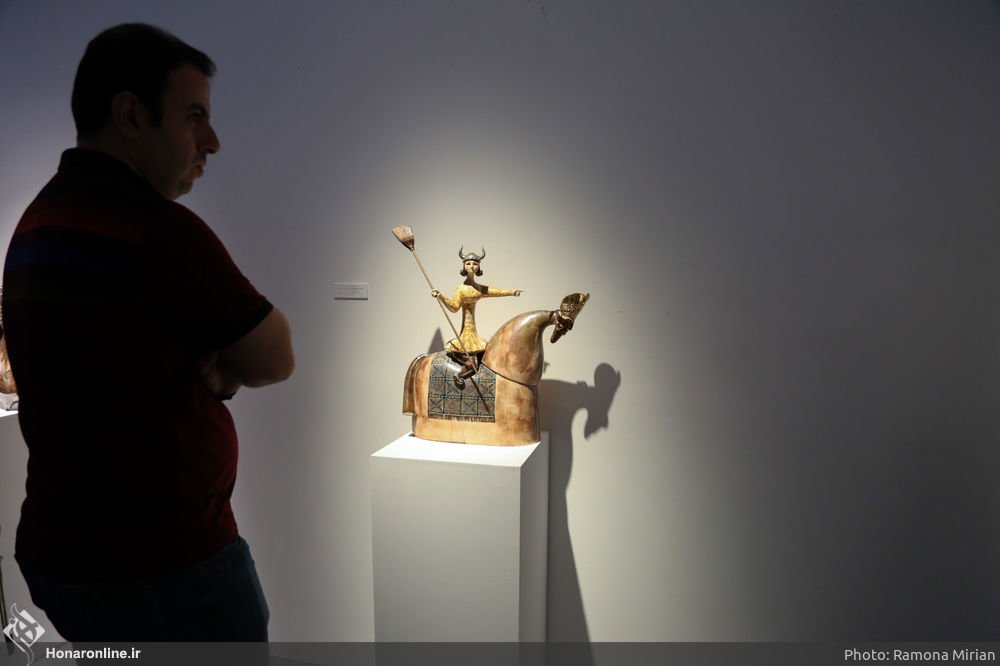
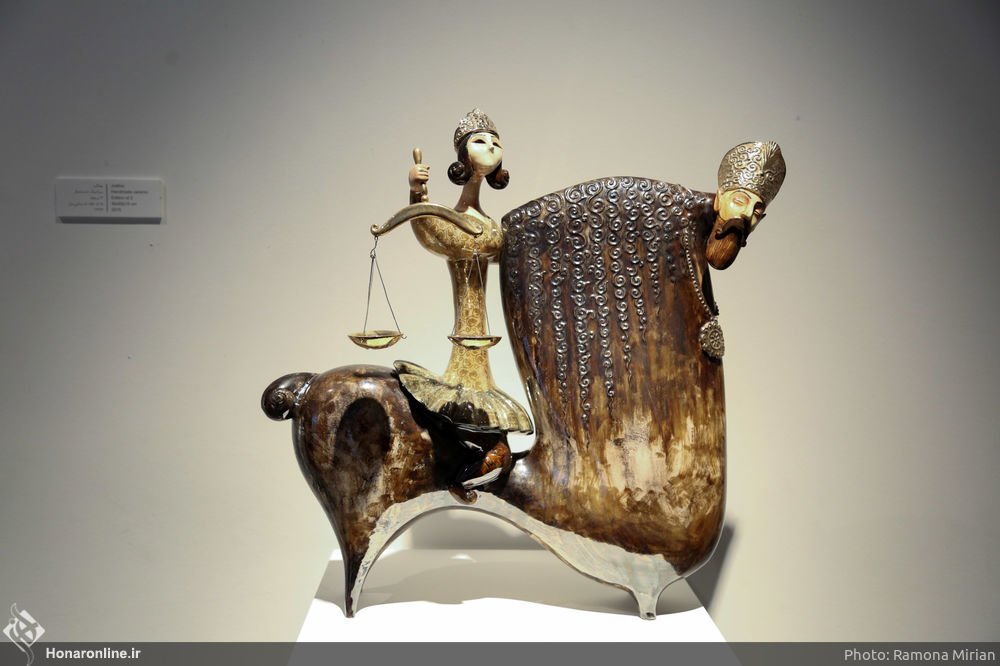
Sculpture Exhibit Depicts Iranian Women’s Transition to Modernity

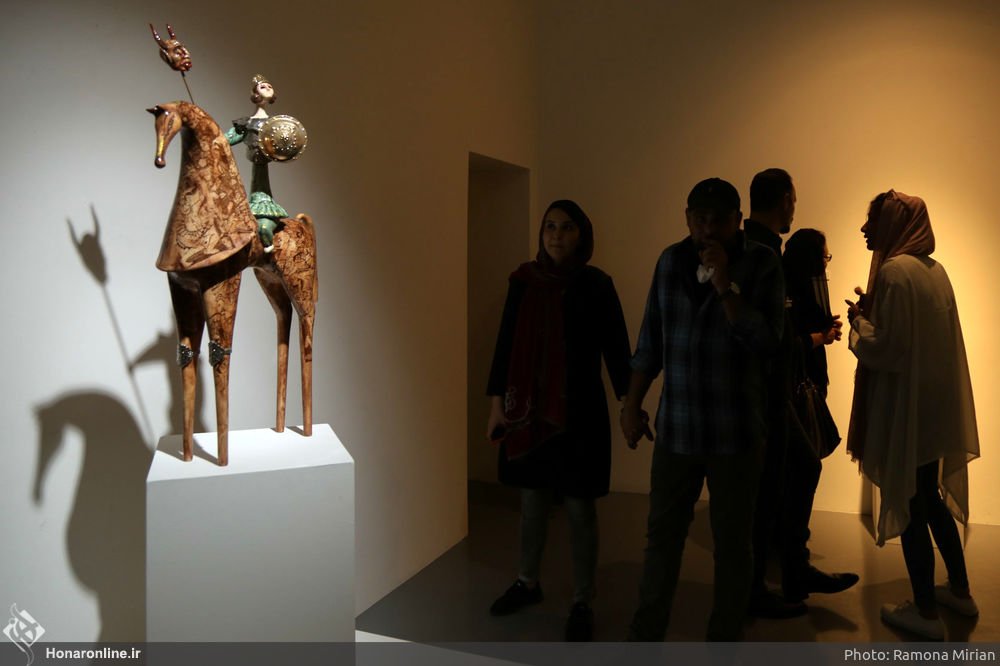
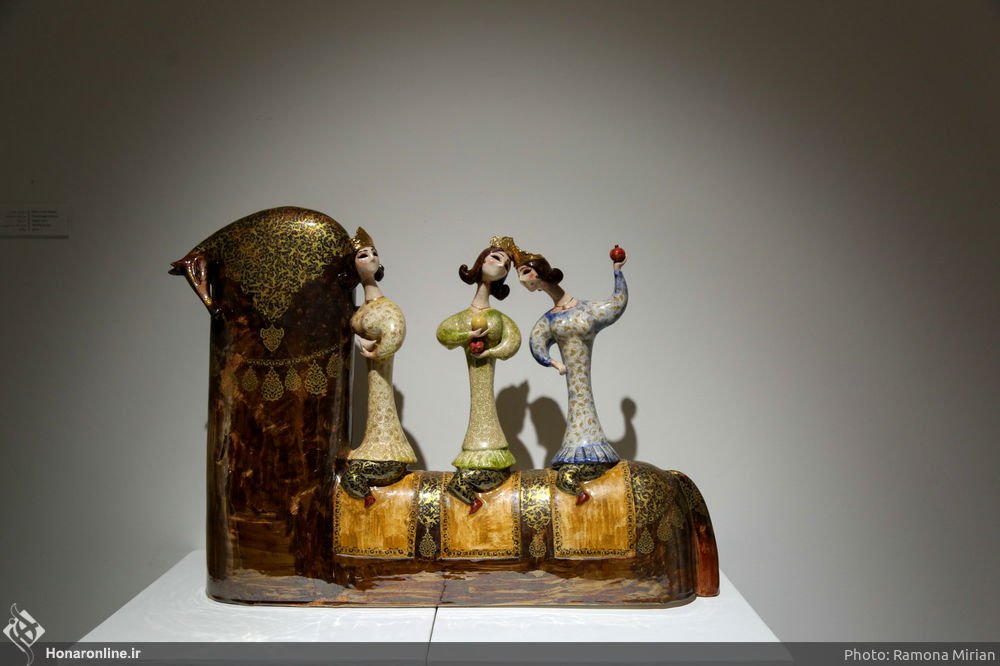
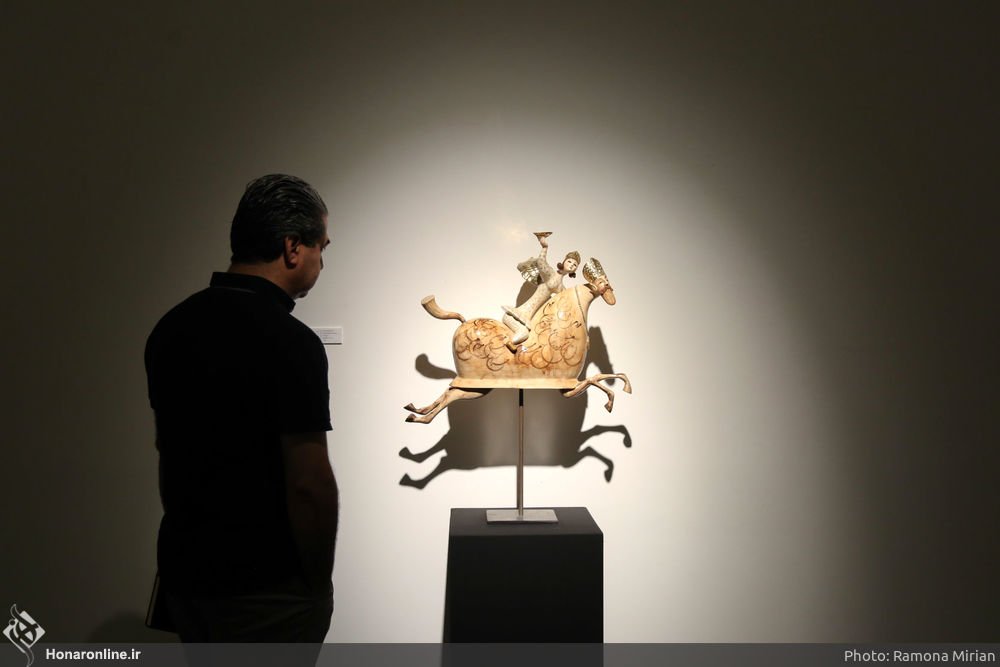
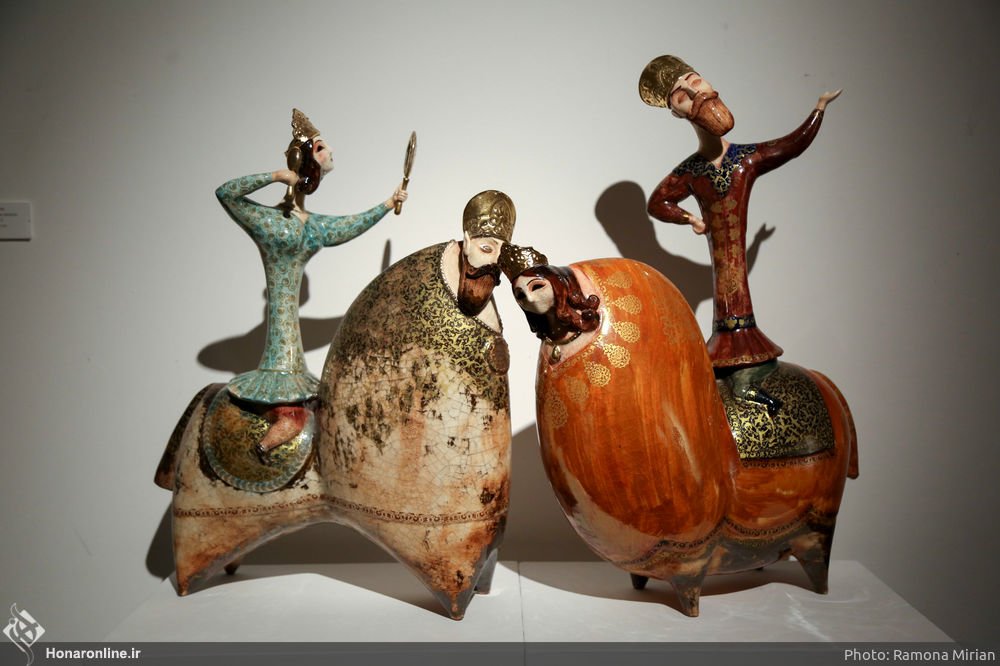
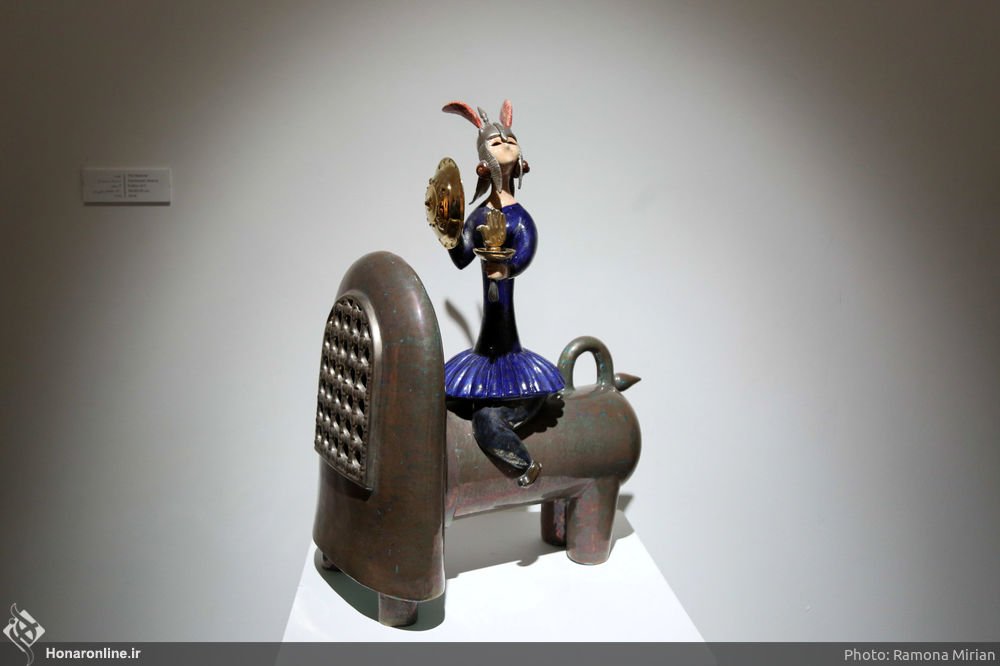
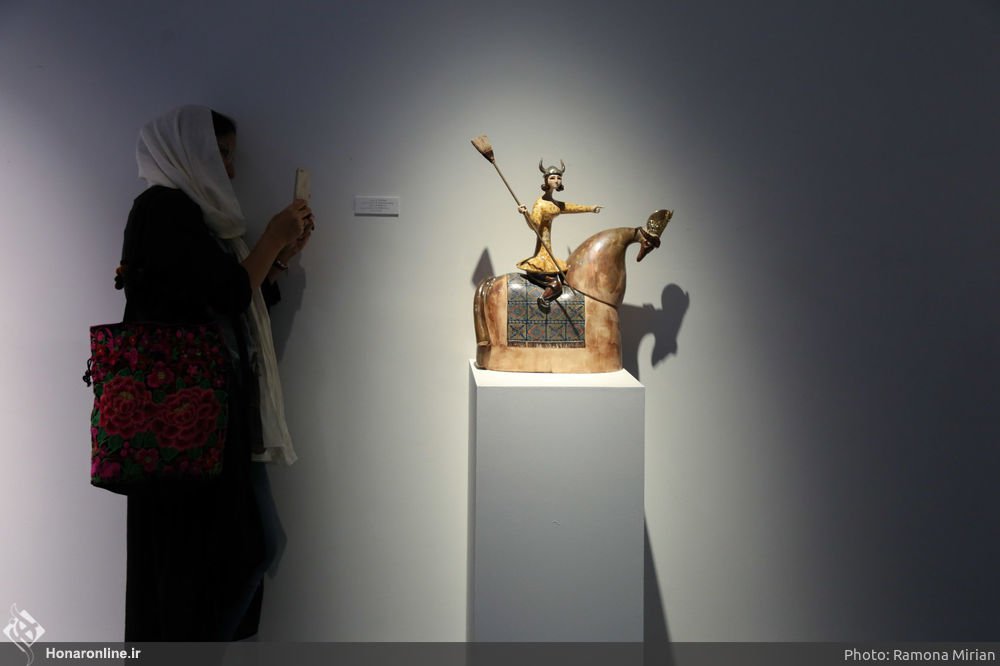
The works of art depict the Iranian woman from old times to the modern era, highlight different issues with regards to women, and review and analyze them.

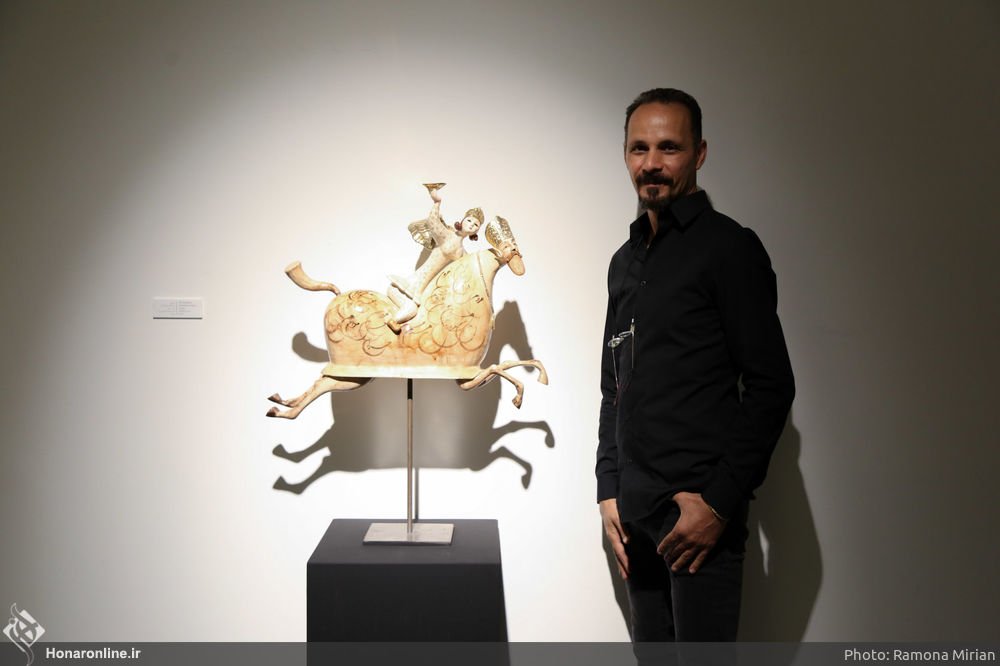
“The works on display include 17 sculptures portraying the Iranian woman during the current era and in the past. My objective was to show how the Iranian woman went through the traditional period all the way to modernism,” says Ajdari, the sculptor who created the works of art.

“The exhibition is titled ‘From … To …’ to show where the Iranian woman was and what her status is today, and the sculptures in this exhibit are based on challenges facing, and victories secured by the Iranian woman,” he adds.

He says the event focuses on issues which face the Iranian woman and which have sociological, statutory, and psychological roots.

“These works depict the relations between the Iranian woman and today’s world; in other words, different issues regarding the situation of the Iranian woman are attended to in this exhibition,” he says.

“News, information and evidence in the society prompted me to decide to work on this issue,” he says.

“Today, we are witnessing good events with regards to the victory of Iranian women on scientific, arts and sports fronts, and that they have secured achievements at national and international levels, which has created a paradox when juxtaposed with issues such as the highest rate of cosmetics consumption in the world, the first rank in the world in terms of cosmetic surgeries, and civil rights,” he notes.

“This paradox, on the one hand, pushes the Iranian woman toward exaltation, and, on the other, leads to her fall in certain fields whose forms she tries to change because she tries to establish certain traditions or extract some from the heart of history and turn them into fashion. This feature prompted me to want to explain that paradox to the audience,” he said.

He says his works of art are for the general public.

“Paying attention to such issues is necessary for the balance of society. This is while some believe the contemporary art revolves around the elite and is supposed to get in touch with a tiny number of the [population in] society who are either arts critics, or artists or intellectuals. It seems the connection between contemporary artists and the body of society is cut off,” he says.

“I believe by creating these works and displaying them to the general public, who are facing the challenges mentioned above, I expose these issues to criticism and review. So, I think even if I have only 20 people who are prompted by these works to review their thoughts and deeds, I have achieved my goal,” he says.

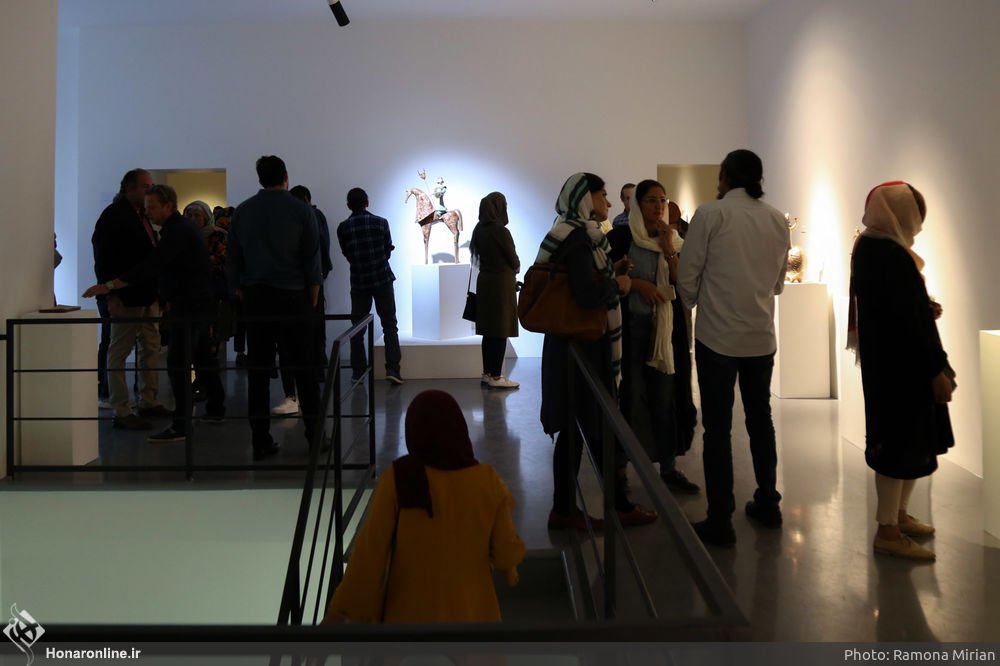
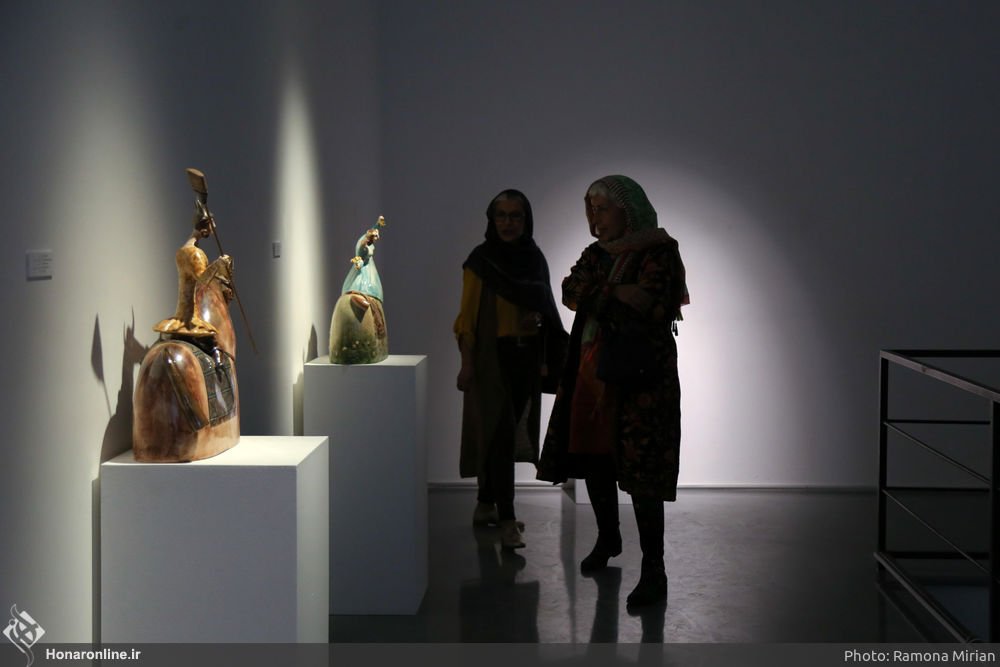
What follows are Honar Online’s photos of the exhibition, which will be open to visitors until October 23:

Iran Builds Machine to Purify Wastewater Using Nanotechnology

The device was unveiled on the sidelines of the 11th International Nanotechnology Exhibition, during a ceremony attended by Iranian Vice-President for Science and Technology Sorena Sattari.

The water purifier has been designed and built on several stages of filtration and ultrafiltration. The machine has several nanoscale ceramic membranes with different pore diameters.

Aliakbar Babaloo, the Managing Director of Nano Industry Researchers Company and a faculty member at Sahand University of Tabriz, has talked about the performance of the device.

“Due to the high precision of the pore size of the membranes, this device can purify graywater and turn it into microorganism-free water. In the future, it can even be used to produce drinking water.”

Regarding the domestic and foreign samples of this machine, he further added that “For the time being, some European companies are producing ceramic membranes, but according to the country’s economic conditions, our product will be much more cost-effective than its foreign counterparts.”

For a brief review of Iran’s achievements in various fields of science and technology, check the book “Science and Technology in Iran: A Brief Review

“Given the fact that the raw material required to produce these membranes and its technical know-how is available in the country, producing such devices seems very cost-effective due to the critical conditions of water in the country. It can reduce the severity of this crisis. This device is currently being developed in a carwash, and is being developed in three other places.”

Referring to the commercialisation of the product, Babaloo said, “In the coming months, with the help of investors, the company’s products would increase, and we will be ready to provide services to residential complexes soon.”

According to Babaloo, the price of the device for a residential complex of about 30 units would be about 300 to 400 million rials (2,000 to 2,600 USD). Furthermore, as the filters used on this device are washable, there is no need for annual or monthly replacement of filters; therefore, it is very cost-effective to purify graywater.

Read more:
Kitchen and laundry wastewater, carwash and carpet wastewaters are sullage samples that can be used for irrigation of greeneries, farming, and even filling flash-tanks.

Iran Urges Pakistan to Do All It Can to Free Iranian Abductees

Several Iranian border guards and voluntary forces were abducted by a terrorist group in Mirjaveh region of Sistan and Baluchestan province, south-eastern Iran, and were transferred to Pakistan on Tuesday.

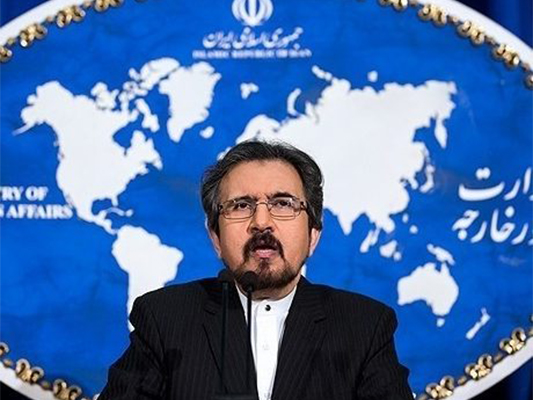
In reaction, Bahram Qassemi condemned the move and said the ministry has asked Pakistan to take necessary measures.

“This afternoon, the foreign minister’s assistant on West Asia affairs asked the Pakistani ambassador that the country’s government immediately takes all measures to set free Iranian border forces and arrest the wicked terrorists,” he noted.

Qassemi said Islamabad is expected to do all it can within the framework of bilateral ties, the principle of good neighbourliness and commitments resulting from bilateral agreement and international law.

He said the Pakistani ambassador has been asked to relay the message to Islamabad and inform the Iranian foreign ministry of the response.

“The Pakistani ambassador expressed deep regret over the incident and stressed he will inform Islamabad of the issue and report back the outcome of the Pakistani government’s measures,” he said.

The spokesman said Iran’s ambassador in Islamabad has also met local officials and “called for serious action by the Pakistani government to free Iranian border guards and deal with Takfiri and terrorist groups who attack Iran’s border areas from Pakistan and carry out subversive actions, abduction, murder and crime.”

Mehregan, Zoroastrians’ Love, Thanksgiving Festival

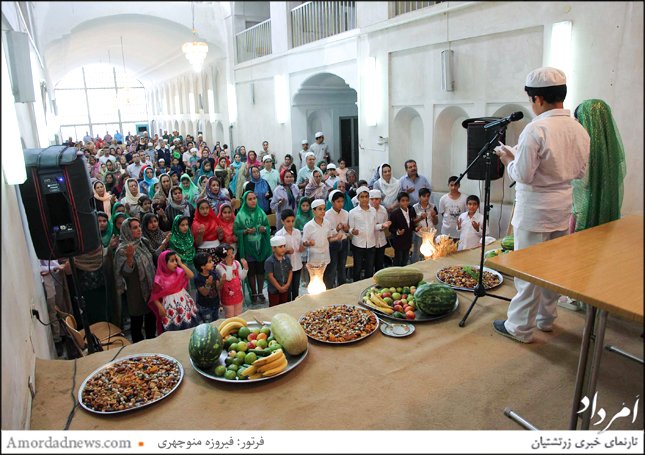
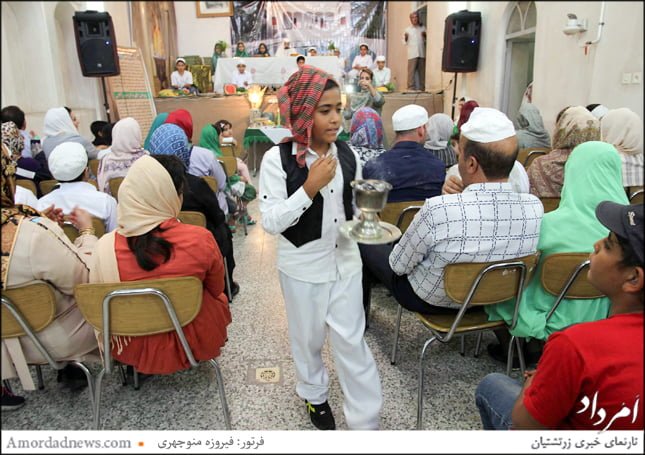
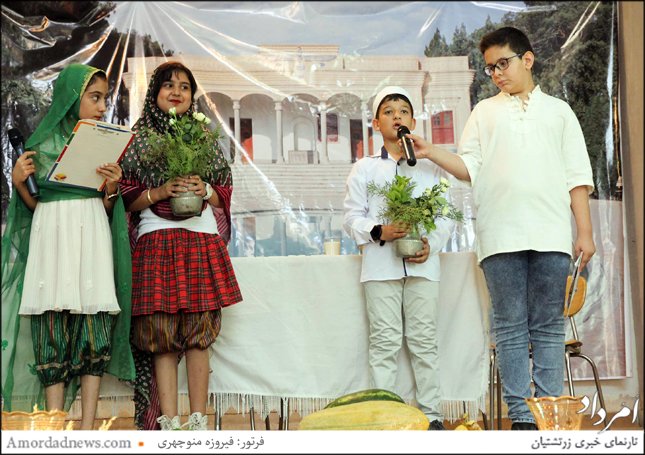
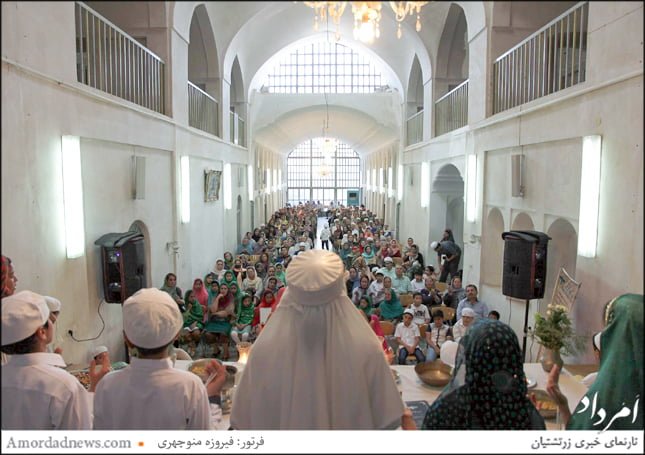
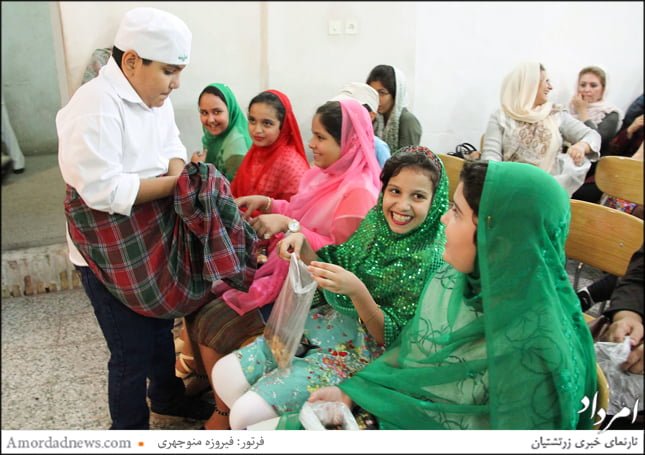
Zoroastrians in Iran Mark Mehregan Thanksgiving Festival

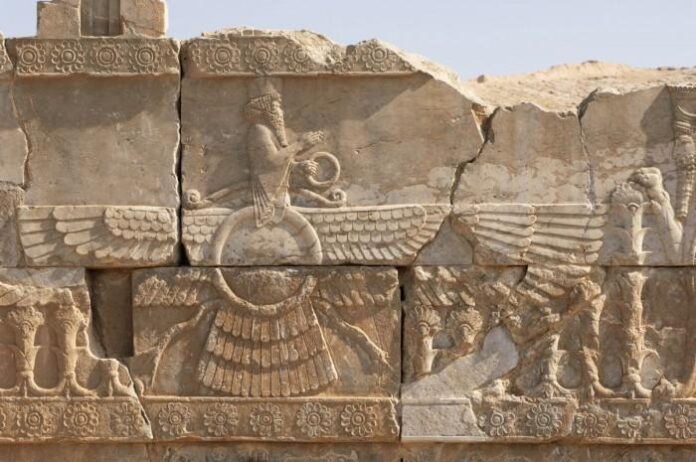
Mehregan festival is named after the first Persian month of autumn, Mehr. In the ancient times, particularly during the Achaemenid dynasty, Iranians celebrated the arrival of autumn as magnificently as the Persian New Year.

Mehregan included a series of special rituals held by ancient Iranians to pay gratitude to God (Ahura Mazda) for his generosity and mercifulness towards his creatures. To most historians, Mehregan reveals Iranians felt duty-bound to express affection to each other.

Esfandyar Ekhtiari, the representative of Zoroastrians in the Iranian Parliament, calls Mehregan one of the greatest Iranian festivals. He says Iranian and Zoroastrian cultures have merged together throughout history; and the Zoroastrians have every reason to be proud for celebrating the festival annually through history even under harsh conditions.

Mehregan Festival carries multiple meanings. It is the festival of friendship, affection and covenant, a series of concepts which take meaning only when viewed together. The most important message of Mehregan is the victory of good over evil.

Mehregan Rituals

The rituals of Mehregan have gone through various changes over the past thousands of years; and been held differently in different regions of Iran.

In ancient era, people came together during Mehregan in purple clothes. Each of them held a felicitation letter (or greeting card, as it is called today) in hand as a gift to present to others.

The felicitation letters had a sweet smell and were wrapped up in a nice way. During the festival, a tablecloth full of autumn foods and drinks was unfolded. People played music and performed group dances after eating and drinking. They sang songs and danced together. They also added some flammable plants like saffron into the fireplace to make the fire more blazing.

At the end of ceremony, the Iranians made a circle by taking each other’s hands as a sign of reaffirming pledges together.

Visiting each other (based on an Iranian culture, it is the younger ones who pay visit to the elders) is another part of Mehregan rituals. They also named the babies born during the month with the word Mehr as a prefix coming before their first name; like Mehryar, Mehrshid, Mehrnoush, Mehrpad, Mehrdad, Mehrban and so on.

Today, Mehregan Festival is not marked in the ancient form described in historical books of fourth, fifth and sixth centuries. Neither is it celebrated by the government or private and unofficial entities.

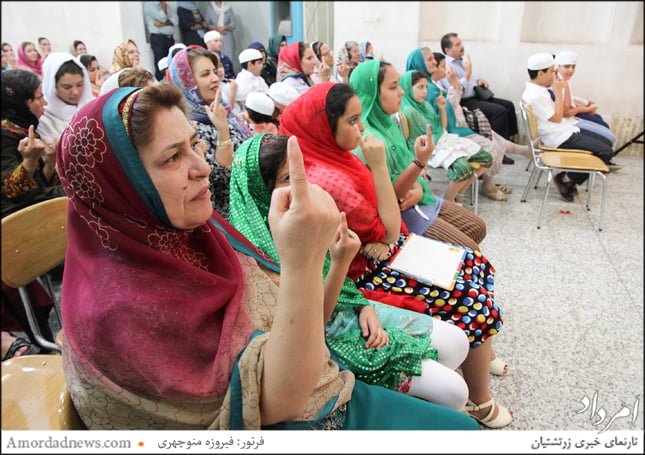
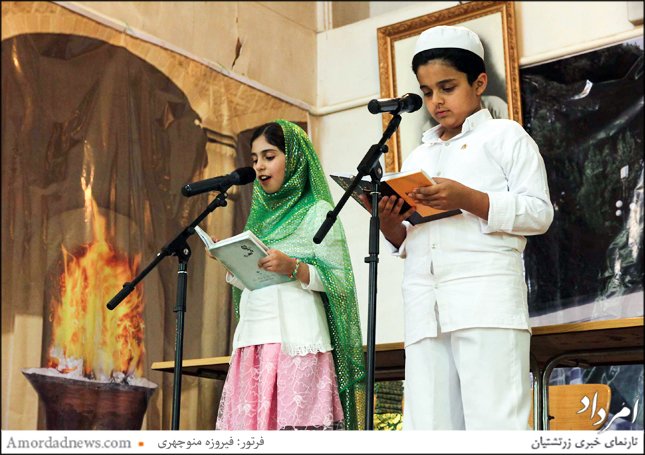
These days, the festive is held only as a family festival among Zoroastrians in the southern provinces of Yazd and Kerman. In some Zoroastrian-populated villages of Yazd, people sacrifice a ship for Mithra. They also hold gatherings in public places singing songs and saying prayers. Mehregan tablecloth is unfolded as in the past; and people reaffirm pledges of friendship to each other at the end of the ceremony.

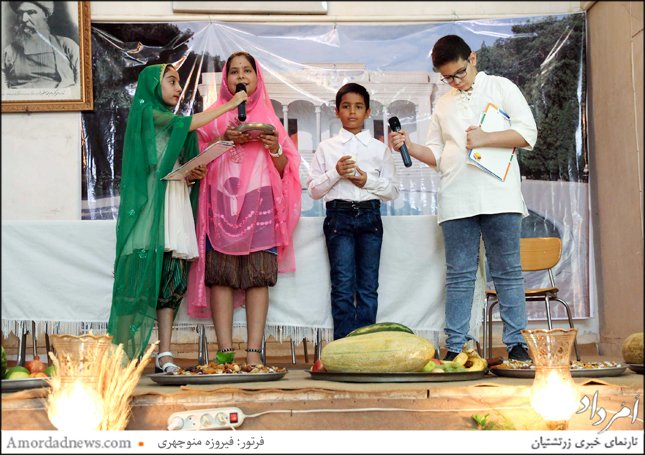
Zoroastrians in Iran Mark Mehregan Thanksgiving FestivalMehregan Tablecloth

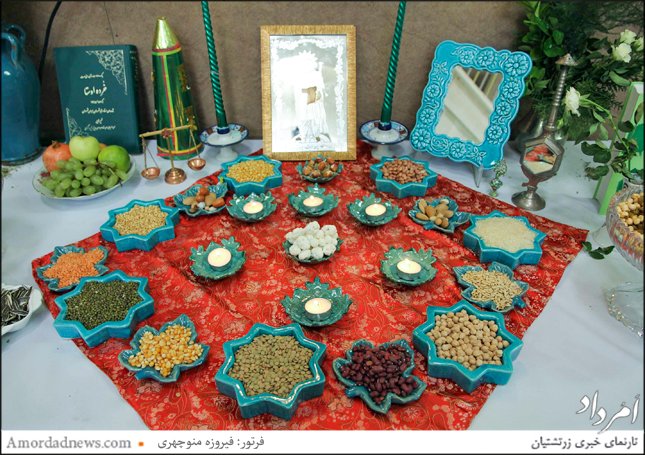
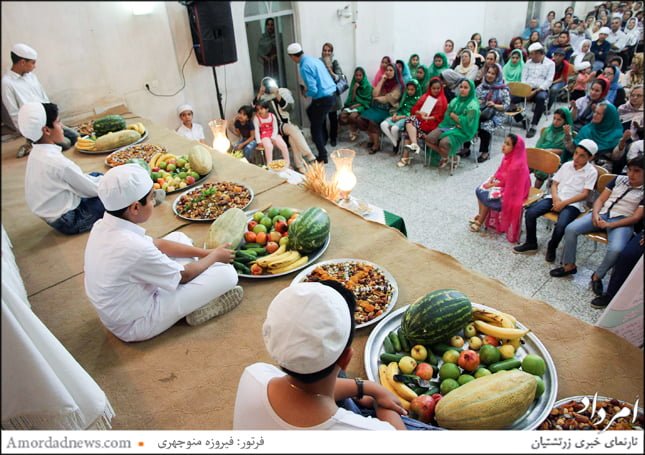
Like Haft-Seen (of Nowruz) and other Iranian tablecloths, Mehregan tablecloth includes a collection of fruits and dishes decorated with various types of flowers. There is also a special drink made of Hom juice (a holy drink used by Zoroastrian believers on special occasions). The juice is diluted with milk and drank with a certain type of bread put on purple cloth around the fireplace.

Apple, pomegranate, bergamot, Russian olive, quince, white grape, fig, jujube, hawthorn, medlar, and persimmon are the main fruits in the Mehregan tablecloth. It also includes a special trail mix of seven main dried nuts like walnut, pistachios, hazelnut, almond, sunflower seed, dried white mulberry, dried fig, chickpea, and so on.

Seven-cereal soap made of wheat, barley, lentil, rice and other cereals is also among the main dishes of the tablecloth. It also has a bowl full of water and rose water, some coins as well as some pieces of violets and basil and a mirror.

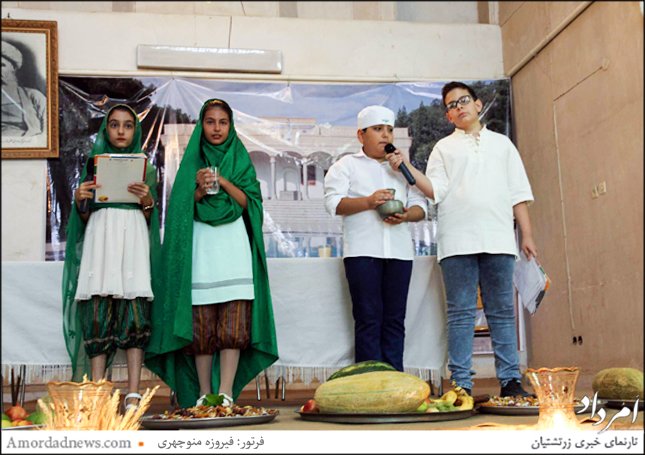
Over the past two years, given the coincidence of Mehregan Festival and Muharram month in the lunar calendar year, during which the martyrdom of the third Shiite Imam is mourned, most Zoroastrians have decided to mark the Mehregan Festival only in the schools of Yazd and Kerman as a sign of respect to their Muslim brothers.

Below, you can see photos of Mehregan Festival, as well as Mehregan tablecloths, from ceremonies held in Yazd. The photos have been retrieved from Amordad News:

Renowned Iranian-Armenian Composer Talks of His Life in Iran

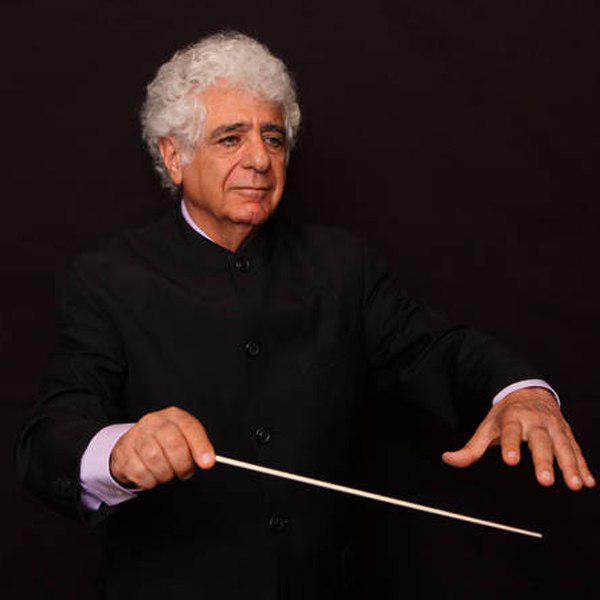
Tjeknavorian is one of the most renowned cultural figures in Iran and Armenia. Born in the western city of Boroujerd to immigrant Armenian parents in 1937, Loris left Iran on his 17th birthday for Austria to take up his academic studies in music.

Having graduated from Mozarteum University of Music and Dramatic Arts in Salzburg, he returned to Iran. Later on, he also managed to graduate from Michigan University as a conductor.

Loris’s record as a musician is honourable in terms of the number as well as quality of his compositions. He has left a considerable orchestral collection so far.

In the following interview with IRNA, he has talked about his 81-year life.

Q: If you could get back in your life, which parts seemed more important to you?

A: I basically try not to think about the past. To me, the past is like a bird which has broken its cage and will never come back. So, thinking about the past is of no use. It goes without saying that our lives are riddled with good deeds, mistakes, moments of happiness and sadness. All these make up our experiences in life. We have to take steps forward one by one. Looking back will only stop our progress.

I’ve had many wishes in my life and did my best to achieve them. Fortunately, I’ve fulfilled most of them and there are many others which if God helps I’m determined to achieve. I have a good feeling after accomplishing a composition. Performing it makes me much happier and when I see the audiences like it, the happiness reaches its climax.

Renowned Iranian-Armenian Composer Talks of His Life in Iran

Q: The collection of compositions that you have written and performed is too big to be neglected. What is your plan for the future?

A: Like many others, I’ve had a lot of plans in my life which as I said most of them have been accomplished. Meanwhile, if God helps, I like to see the world and get familiar with people from various cultures. Looking at my collection, I feel good and thank God. It is not a bad collection. Of course, it could be better but it is not disappointing at all for an 81-year-old man like me.

If God helps, I would create new compositions. I love to see people from different regions. I like to visit the places I’ve not yet travelled to and get in touch with their people and become familiar with their cultures, rituals and customs.

One day, we would come to this conclusion that we all are the sons and daughters of the same parents. I think love is the only need of our world. We should be able to fall in love with each other once again. We should like each other regardless of colour, race and geography to make the world more beautiful. We should keep love alive.


Q: You have never left Iran forever and it seems Iran is your only choice for life. Why?

Renowned Iranian-Armenian Composer Talks of His Life in IranA: Iran is my homeland. My ancestors have lived in this land. I’ve been born in Iran and will be buried here. I’m emotionally and culturally attached to every inch of this country and feel at home in nowhere except for Iran. As I said, I love visiting people from various parts of the world but Iran is the centre of my gravity.

I’ve studied and thought music in America and a number of other countries. I’ve performed in many countries in which I could have a good condition for work and living but Iran remains my first and last choice for life. I’m wholeheartedly happy to be an Iranian and creating my compositions in Iran during my direct and face-to-face touch with my fellow countrymen reflecting their happiness and sadness.

I deeply appreciate it that you remembered my birthday anniversary and give me a chance to talk about my life. I have something here which may not be with me with the same quality in any other part of the world.

Iran, Oman Discuss Yemen Crisis in Muscat

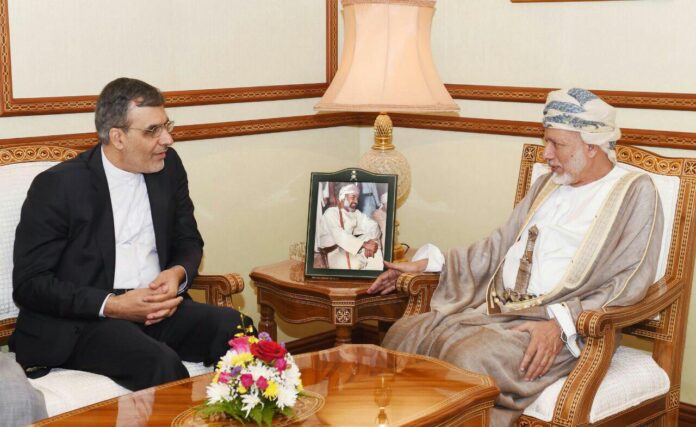
Iranian diplomat Hossein Jaberi Ansari meeting Omani top diplomat Yusuf bin Alawi in Muscat on October 16, 2018. / Photo by Jaberi Ansari's Telegram channel

Jaberi Ansari and his entourage arrived in Muscat on Monday night to discuss regional issues with Omani officials. His meeting with bin Alawi was held on Tuesday.

Later in the day, the Iranian diplomat will also hold separate meetings with representatives of various Yemeni groups to discuss diplomatic efforts to end the war imposed on the impoverished country.

Yemen is facing the biggest humanitarian crisis in the world. Over 22 million people are in need of humanitarian assistance, the country is on the brink of the worst famine in 100 years, and a million people have suffered from the worst cholera outbreak in modern history.

Since 2015, Yemen has been in the grip of a brutal war. A Saudi-led coalition has been attempting to regain control of the Arab country by launching thousands of airstrikes, many of which have hit homes and public areas such as schools, health facilities and markets.

Thousands of civilians have been killed and tens of thousands injured as a result.

Iran World’s Second Largest Producer of Nano-Catalysts

Developing the technical knowledge and the knowhow for production of catalysts eliminates dependence on foreign countries.

It also keeps the hard currency inside the country, and creates more jobs and further capacity for domestic production.

Nano Pars Spadana group started its operation in 2001 with the aim of eliminating the country’s dependence on imported nanoparticles and nano-catalysts.

With a team of researchers including experts of chemistry, polymer, metallurgy, fluid mechanics, etc., the group began extensive research on nanotechnology and achieved excellent results in this field. Finally, the group managed to synthesize nanoparticles through a method called “Shoj”.

In addition to production of oxide nanoparticles, the method can also be used to produce multiphase mixed nanoparticles, which cannot be produced otherwise.

The company has been able to successfully develop from a laboratory group to a semi-industrial and industrial group within 6 years.

For a brief review of Iran’s achievements in various fields of science and technology, check the book “Science and Technology in Iran: A Brief Review

Enjoying the capability of producing nanoparticles and nano-catalysts, Nano Pars Spadana started to design, manufacture and install equipment and production lines on an industrial scale.

The company was also able to set up the first nanoparticles and nano-catalysts manufacturing unit and managed to sign a contract with the National Iranian Oil Refining and Distribution Company for the production of catalysts.

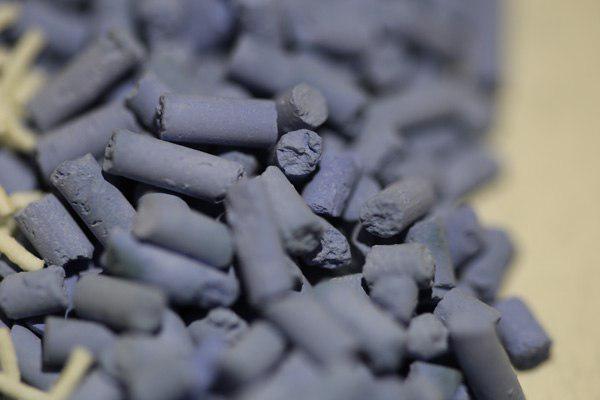
The latest achievement of the company is the production of Benzene chlorination catalyst. This is the eighth chlorination catalyst produced by the company. The catalyst is used by Arvand Petrochemicals Company to remove Benzene from PVC.

Germany was the only manufacturer of this kind of chemical in the world, and now Iran is the second largest country in the world that produces this type of catalyst.

Nano Pars Spadana is one of the leading companies participating in the 2018 International Nanotechnology Exhibition, which is underway in Tehran.