Saturday, January 3, 2026
Home Blog Page 3410

Alluring Beauty of Autumn in Iran’s Rudbar

Rudbar means the land of rivers, and the name refers to the plenty of rivers flowing in the region.

The city is also widely known for its rich olive gardens and high-quality olive. It’s interesting to know that it is sometimes known as the Olive Rudbar to distinguish it from Alamut Rudbar in Qazvin province.

Rubar, located along Tehran-Rasht highway, is about 268 kilometres away from Tehran and 60 kilometres away from Rasht.

The following photos from ILNA depict the beauty of Rudbar in autumn:

‘Freedom of Information Key to Fight against Corruption in Iran’

“Money laundering, rent-seeking, administrative corruption, economic corruption, bribery, lack of supervision, etc. all have a common remedy: Accurate implementation of the Law on Free Dissemination of and Access to Information,” Hossein Entezami, a deputy minister of culture, said in a tweet on Sunday.

“The result of [implementing] the law is transparency, justice, and equality,” he added.

In an effort to increase transparency and promote Freedom of Information in the Islamic Republic, the Iranian government officially launched a portal in July 2017 that provides people with free access to the information of state institutions.

The law on dissemination of and free access to information was announced in 2009, and its executive directives were drawn up five years later in 2014.

Organizations and institutions are obliged to provide the information that people need in maximum 10 days via the system.

Entezami, who is also the secretary of the Commission for Publishing and Providing Free Access to Information, was recently re-elected for the eighth time by Iranian press managers as their representative at the High Press Supervision Board, which oversees the Iranian press and news agencies.

Iran Calls on Paris to Show Restraint in Handling Protests

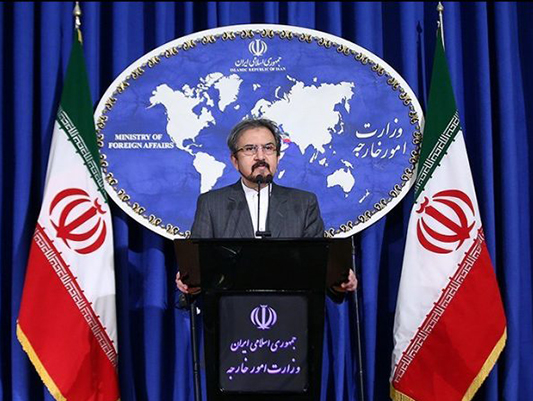
Bahram Qassemi

Asked in his weekly press conference in Tehran on Monday about Iran’s reaction to recent violent protests in France, Qassemi said, “The French government cannot continue violence against its people.”

“Our recommendation to the French government and police is to show restraint,” he said, adding, “It should also be said to the people on the streets that ultimately, the conditions may become more complicated by hostile and violent acts.”

The spokesman further expressed hope that the problem would be resolved by the French government’s wise and positive measures.

A third weekend of nationwide protests by the “Yellow Vests” protest movement, largely made up of working-class people angry about a planned increase in fuel taxes and their dwindling purchasing power, left burned cars and smashed store windows in several of the wealthiest neighborhoods of Paris.

The movement is named for the high-visibility safety vests that motorists are supposed to wear when they have roadside breakdowns.

Broken glass and empty tear gas canisters fired by the police littered the city, where hundreds of vandals joined the ranks of the protesters. One person died in the unrest this weekend outside Paris, bringing to three the number of casualties on the margins of the demonstrations over the last three weekends of protests.

US’ Call for Talks Not Sincere: Iranian Speaker

Asked about the US president’s expression of readiness for talks with Iran without preconditions, Larijani said at a press conference in Tehran on Monday that Donald Trump makes paradoxical comments about Iran.

The US president has insulted the Iranian nation and made inglorious remarks about Iran, Larijani deplored, adding that Trump has at the same time voiced readiness for negotiations with Tehran.

“Haven’t we already negotiated? When a country breaches an international agreement (the JCPOA)… how would it demand negotiations?” the Iranian speaker said, describing the US call for talks as a tactic that lacks genuineness.

Asked about Iran’s stance on fresh talks with the US, Larijani said the situation is not currently prepared for negotiations, adding that the US seeks to entertain the world but Iran is not seeking “masquerade diplomacy.”

If the US is really after negotiations, it should make up for what it has violated by withdrawing from the JCPOA and show goodwill, the Iranian speaker underlined.

As regards Europe’s commitment to the nuclear deal and whether or not Iran would remain in the JCPOA, Larijani said, “The Europeans were insisting that Iran should not withdraw from the deal and made commitments, but did not honor their commitments.”

He said Iranian diplomats are still negotiating with Europe on the fate of the JCPOA.

On May 8, Trump pulled his country out of the JCPOA, which was achieved in 2015 after years of negotiations among Iran and the Group 5+1 (Russia, China, the US, Britain, France and Germany).

Following the US exit, Iran and the remaining parties launched talks to save the accord.

In comments in August, Leader of the Islamic Revolution Ayatollah Seyed Ali Khamenei roundly dismissed the idea of negotiations with the US, saying dialogue with a bullying regime that uses talks as a tool for pursuing its hostile policies is forbidden and would be detrimental to Iran.

‘Birth of Infants with Down Syndrome Almost Stopped in Iran’

“Over the past few years, only one baby was born with Down syndrome in 700 to 1,000 births in Iran,” Mahmoud Tavallaei said, noting that the syndrome has been completely controlled in the country.

He described it as a great success, and said it has been achieved by promoting public awareness, pre-natal diagnostic tests, and the use of scientific accomplishments.

Down syndrome affects the child’s learning abilities in addition to causing problems for growth, he noted.

“The probability of this syndrome in boys is greater than in girls. The most important factor is the age of mothers. It means the older the mother is, the greater is the risk.”

The International Day of Persons with Disabilities is annually observed on December 3. It is an international observance promoted by the UN since 1992. It aims to promote an understanding of disability issues and mobilise support for the dignity, rights and well-being of persons with disabilities.

Building on many decades of UN’s work in the field of disability, the Convention on the Rights of Persons with Disabilities, adopted in 2006, has further advanced the rights and well-being of persons with disabilities.

‘Iranian Kasparov’ Making History in Junior Chess Contests

The world-class chess genius knows well how to move his pieces in a few seconds to checkmate his opponent. Parham’s ingenuity and regular practice have won him the first place in the world in his age group.

He gained fame in the World Junior Chess Championship with nine wins, one draw and one defeat. The success was praised by many world champions such as Garry Kasparov.

In an interview with Shahrvand daily, Maghsoodloo has explained how he achieved so much success. Following you can find the text of his interview:

Q: How old were you when you started to play chess?

A: I was about 9 when I first played chess with my dad at home. I liked this game, and at the same time I enrolled in chess classes. After about three months, I won first place in our city championships and then I won the title at provincial tournament to reach national competitions.

Q: What was the first international event that you participated in?

A: It was a tournament in Slovenia. At that time, I was 11.

Q: The number of tournaments you attended is far more than your age. Therefore, you’ve spent most of your time and your life on chess. Despite all these tournaments, how did you go to school?

A: As I was participating in several tournaments during a year, my teacher was coming to our home to teach privately. In this way, I could catch up.

Q: How many hours a day do you spend on chess?

A: Depending on the situation, sometimes I may play chess for about 15 hours a day. The minimum that I need to spend on chess is 8 hours a day.

Q: They call you “Master Bishop”?

A: Honestly, I do not know where this nickname came from, and I don’t like it at all. In fact, my favourite piece is the knight. Because in the first international tournament I took part, a foreigner told me that whenever you want win, you have to keep one of your knights. This made me feel very positive about this chess piece. It’s really an important piece, and we can often checkmate the opponent using a knight at the very last moments of the game.

Q: Do you have any offers from foreign clubs?

A: Yes, I have played in the Turkish league, and now I have an offer from the French league. I also had an offer from the German league, but the payment was very low, so I did not sign a contract. I myself like to play in professional leagues like the Bundesliga (Germany), but the offers are not good enough.

Q: – What is your highest rating in international competitions?

A: My best rating in an official tournament was 2,859. Kasparov’s rating is 2852, and mine is higher than him. However still there is a long way ahead to reach him at the adult level. I’m sure that one day I will grab the title, and instead of giving me the titles of others, they must only call me Parham Maghsoodloo.

Disabled Iranians Making Handicrafts to Make Ends Meet

The charity’s move is aimed at empowering the disabled, which is what they need to increase their self-confidence and get more engaged in the society. Moreover, creating and selling pieces of art by the disabled raises their morale on the one hand and creates more jobs in these areas on the other hand.

There are many disabled people who have not yet managed to achieve the goals set by the United Nations. But there are also many others who have closed their eyes to the restrictions imposed on them by the society and gone beyond the UN-set goals for the disabled.

The UN declared December 3 as the International Day of Disabled Persons in 1992. The annual observance of the day aims to promote an understanding of disability issues and mobilize support for the dignity, rights and well-being of persons with disabilities.

It also seeks to increase awareness of gains to be derived from the integration of persons with disabilities in every aspect of political, social, economic and cultural life.

Below you can see ISNA’s photos of the Iranian disabled artists making a living by making various handicrafts, under the coverage of Ali Akbar Charity in Brijand:

Hamas Asks Iran to Condemn US Resolution at UNGA

Palestinian demonstrators clash with Israeli forces after a protest against Israeli land seizures for Jewish settlements, on November 30, 2018 in the village of Mughir, north of Ramallah. / Photo by AFP

Haniyeh made the call in a Monday phone conversation with Iranian Foreign Minister Mohammad Javad Zarif.

During the talks, the Hamas chief referred to the US attempts to introduce the draft resolution at the United Nations General Assembly to condemn the Palestinian resistance movement, and called on the Islamic Republic of Iran to express its opposition to the move.

For his part, the Iranian top diplomat underlined Tehran’s support for the rights of the Palestinians.

He also expressed regret that the policies adopted by certain regional states have emboldened the US to not only violate the international rights by moving its embassy from Tel Aviv to Jerusalem al-Quds, but also to introduce a draft resolution against Palestine’s Islamic resistance at the United Nations General Assembly.

Zarif assured Haniyeh that the Islamic Republic will do its best to unite other Islamic and progressive states at the General Assembly to prevent the ratification of the US-drafted resolution, which stands in contradiction with the UN Charter.

The UN General Assembly is set to vote Tuesday on the draft resolution that would reportedly condemn the resistance movement “for repeatedly firing rockets into Israel and for inciting violence.”

US diplomats held talks with their EU counterparts in the assembly to win their backing for the draft resolution.

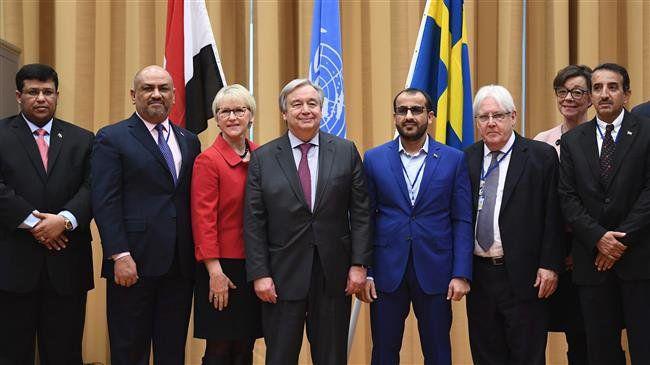
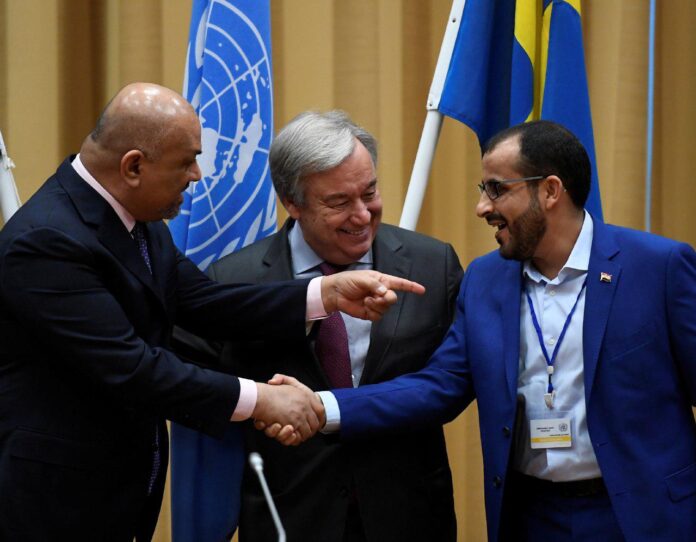
Iran Backs Upcoming Yemeni-Yemeni Talks in Stockholm

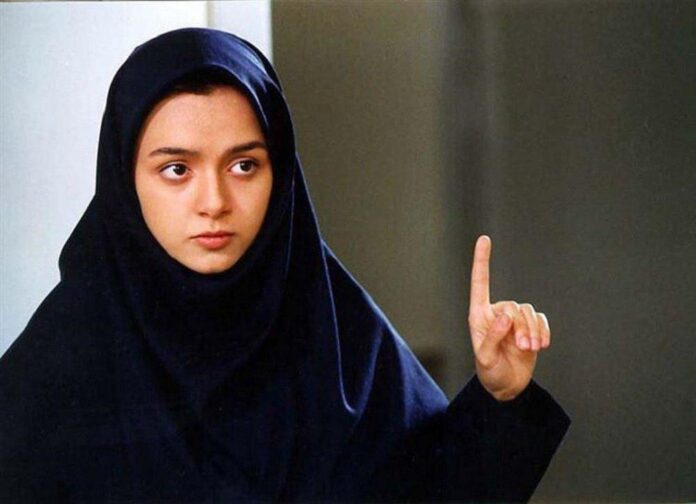
Iran Appoints Female Ambassador to Denmark

The full text of the Iranian Foreign Ministry’s statement on Yemeni-Yemeni talks in Stockholm is as follows:

Ahead of the Yemeni-Yemeni talks to be held in Sweden under the supervision of the United Nations, the Iranian Foreign Ministry welcomes and offers its support for the talks and calls on all Yemeni sides to have constructive and responsible participation in the talks. The Ministry also wants all the Yemeni sides to take trust-building measures, preparing the ground for achieving a comprehensive agreement to put an end to the suffering of Yemenis and the brutal blockage on them.

At the onset of the conflict and the brutal aggression on Yemen, the Islamic Republic of Iran proposed a comprehensive approach to resolve the crisis as a four-point peace plan, which included an immediate cessation of war, delivery of humanitarian aid, beginning of Yemeni-Yemeni talks, and establishment of an all-inclusive government in Yemen.

Iran now once again stresses that there is no way out of the Yemen crisis other than a political solution based on Yemeni-Yemeni talks. The Iranian Foreign Ministry calls on the international community to play a key and serious role, including by exerting pressure on the exporters of arms to the aggressors to facilitate the peace process in Yemen and let the Yemeni people decide their country’s fate free from the outsiders’ interference.

The warmongers have not achieved any of their political and hegemonic goals after four years of bitter war and destructive aggression against Yemeni people. The campaign has only led to the collapse of economic resources and infrastructures of Yemen, deaths of thousands of women and children and other oppressed but resilient people of Yemen and a total humanitarian catastrophe in the country.

The Islamic Republic of Iran’s Foreign Ministry seizes the opportunity here to express its readiness to establish cooperation with the international community to immediately resolve the Yemen crisis.

It also underlines the necessity of facilitating the process of delivering humanitarian aid to Yemen, and maintains that it is the world’s historic responsibility today to make efforts to end humanitarian crisis and catastrophe in the Arab country.

Iranian Children Must Be Protected against Sanctions: UN

Philip D. Jaffé, a member of the United Nations Committee on the Rights of the Child, has expressed regret over the impact of US sanctions on supplying medicines, especially for children, saying that the interests of children in Iran should be protected against sanctions.

“I am sorry for the impact of these sanctions on supplying medicines to the Iranian people, especially children and patients suffering from special diseases,” said Jaffé, who is also the director of the Interfaculty Centre for the Rights of the Child at the University of Geneva.

In response to a question about Iran’s actions in this regard, Jaffé said “I think Iran, like any other country, is aware of the importance of this issue, and the country’s officials will do anything necessary. This issue is internationally important, and any country that does not care should be punished with heavy penalties.”

“I hope that with international cooperation, inequalities would be overcome and children’s rights be protected through formulating new plans.”

Iranian Children Must Be Protected against Sanctions: UN
Philip D. Jaffé, a member of the United Nations Committee on the Rights of the Child, addressing a meeting in Tehran in late November, 2018 / Photo by ILNA

Earlier, President of the Academy of Medical Sciences of Iran Alireza Marandi said the US has endangered the lives of many Iranian patients by imposing “unjust” food and medicine sanctions against Tehran.

The US reinstated sanctions against Iran’s oil and banking industry on Monday, following its withdrawal from the 2015 nuclear deal and pledges that Washington will place maximum pressure on Iran.

Humanitarian supplies are formally exempted from sanctions, but the banking sanctions practically deter any kind of trade with Iran.

In 2011, the last time the US was tightening anti-Iran sanctions, Washington’s pressure led to severe shortages of life-saving medicines and food staples, as foreign banks and companies were avoiding transactions with Iran for fear of being penalized.