Friday, January 2, 2026
Home Blog Page 341

Russia says Putin’s helicopter was caught in Ukrainian drone swarm

Putin traveled to Russia’s Kursk Region on Tuesday for the first time since it was fully liberated from Ukrainian forces in April.

In an interview with the channel Russia 1 aired on Sunday, Dashkin revealed that Putin’s helicopter had found itself “in the epicenter of an operation to repel a massive drone attack by the enemy” in Kursk Region.

Kiev launched an “unprecedented” UAV assault on the region when the president was there, with Russian air defenses destroying 46 incoming fixed-wing UAVs, according to Dashkin.

“I would like to stress the fact that the intensity of the attacks during the flight of the Supreme Commander-in-Chief’s aircraft over the territory of Kursk Region increased significantly,” he added.

The air defense units in the area had to “simultaneously conduct anti-aircraft combat and ensure the safety of the president’s helicopter in the air. The task was accomplished. The attack of the enemy drones was repelled, with all aerial targets being hit,” Dashkin stated.

Ukraine significantly intensified its drone strikes inside Russia this past week.

Israeli military controls 77% of Gaza: Report

Israel Army

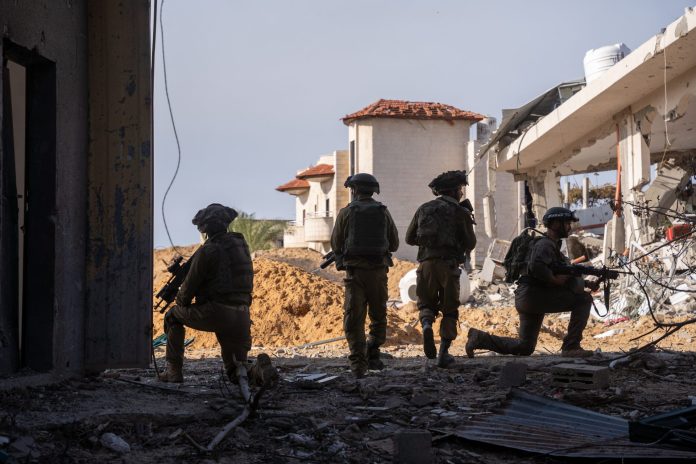
“Field data and verified analysis indicate that the Israeli occupation forces now effectively control approximately 77% of Gaza’s total geographic area,” Gaza’s government media office said in a statement.

The Israeli army gained control through “direct ground offensives, the deployment of its forces in residential and civilian areas, or preventing Palestinians from accessing their areas, lands, and properties via intensified fire, or forced evacuation,” it added.

The office strongly condemned the Israeli plans of mass displacement, ethnic cleansing, systematic genocide, and settler colonialism by force, “under the cover of a siege and an open war targeting both people and infrastructure.”

It held Israel and its supporters, including the US, UK, Germany, and France, fully responsible for the crime of genocide in Gaza.

On Thursday, Israel Hayom newspaper said that the army plans to control 70-75% of Gaza within nearly three months as part of an expanded military campaign in the enclave.

Rejecting international calls for a ceasefire, the Israeli army has pursued a brutal offensive against Gaza since October 2023, killing more than 53,900 Palestinians, most of them women and children.

Last November, the International Criminal Court issued arrest warrants for Israeli Prime Minister Benjamin Netanyahu and his former Defense Minister Yoav Gallant for war crimes and crimes against humanity in Gaza.

Israel also faces a genocide case at the International Court of Justice for its war crimes against defenseless civilians in the enclave.

FM Araghchi: Iran to negotiate with patience, without enrichment compromise

Abbas Araghchi

Speaking after a meeting with members of the Iranian Parliament’s National Security and Foreign Policy Commission, Araghchi reaffirmed that Iran will not abandon its core positions. “We’re not in a hurry, but we’re also not causing delays. Every hour that sanctions are lifted sooner matters to us, and we’ll pursue it. But not at the cost of the Iranian people’s rights,” he said.

Araghchi also dismissed recent media speculation suggesting that negotiations may continue into the summer. “These are just speculations,” he said, adding, “the outcome of the talks will only be determined once the rights of the Iranian people are fully secured.”

Regarding enrichment, Araghchi stated unequivocally, “Our position is clear. Enrichment is a core pillar of our nuclear industry, and we will not compromise.”

Meanwhile, Foreign Ministry Spokesman Esmail Baqaei separately denied rumors about the next round of Iran–U.S. indirect talks, calling media reports speculative and affirming that “no date has been set yet.”

He also rejected as “fabricated” a tweet allegedly issued by the Omani Foreign Ministry regarding the talks.

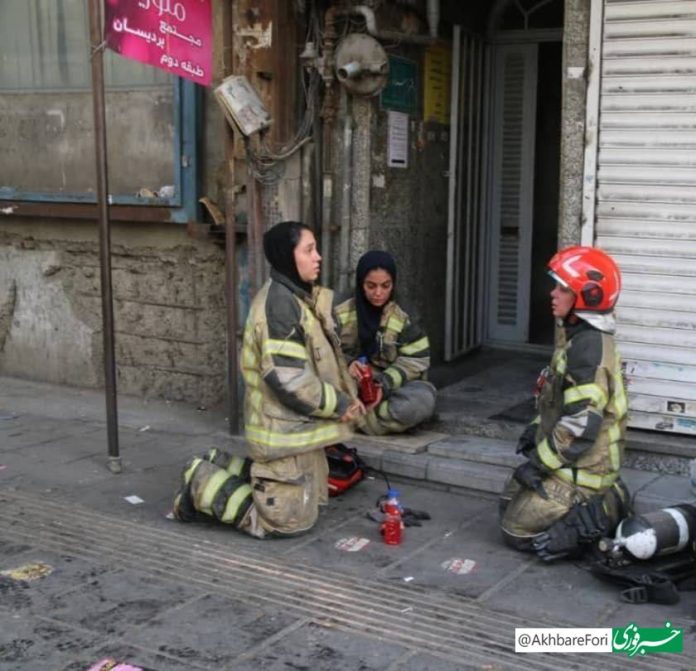
Photo of Iranian female firefighters battling blaze goes viral

The fire broke out at 5:52 AM in a multi-story commercial-administrative building on Sattarkhan Street.

According to the spokesperson for the Tehran Fire Department, Jalal Maleki, four fire stations were immediately dispatched to the scene, equipped with a hydraulic ladder and breathing apparatus.

The viral image shows Iranian women firefighters in full gear working alongside their male colleagues, an increasingly visible sign of gender integration in emergency services in Iran.

Only 2% of Iran’s vast mineral wealth discovered, says geological survey chief

Coal Miners in Iran's Golestan Province

Speaking on Sunday, Esmaeili stated that Iran holds an estimated $27.3 trillion in natural and mineral wealth, with around $1.4 trillion attributed specifically to mining. However, only $29 billion of these reserves have been discovered to date.

He expressed hope that under the current administration and with strong backing from the Ministry of Industry, Mine and Trade (MIMT), exploration activities will accelerate.

Esmaeili emphasized the importance of mineral processing, suggesting that if Iran reaches global standards in this field, it could generate over $10 trillion in added value.

Criticizing the country’s reliance on raw mineral exports, he stressed the urgent need for private sector involvement in both exploration and processing to achieve sustainable development.

Referring to untapped regions like Sistan and Baluchestan, he noted that serious exploration was long absent, but new administration attention now targets developing what could become the Middle East’s largest copper mine.

Europe considering buying US arms for Ukraine: Bloomberg

Weapons Arms Russia Ukraine War

US President Donald Trump reiterated earlier this week that Washington could “walk away” from the Ukraine conflict if the American-brokered talks between Moscow and Kiev do not deliver any meaningful results.

“This is a European situation. It should have remained a European situation,” he said.

A proposal to buy arms from the US for Ukraine so that it could continue fighting Russia is currently “gaining more credence” in the EU and UK amid concerns that American deliveries would cease in summer, Bloomberg reports.

“The idea is that if Trump refuses to send US weapons to Ukraine, Europe will,” people familiar with the matter explained to the agency.

The heads of the European NATO member-states believe that if they will also be able to persuade Trump to continue providing intelligence to Kiev then “Vladimir Zelensky may be able to hang on,” the sources added.

In March 2024, then-Vice President of the European Commission Josep Borrell described the strain on the EU’s weapons stockpiles, noting that after two years of military support to Kiev, “existing stocks are depleted and the conflict has evolved from a war of stocks to a war of production.” He also pointed out that the European defense industry meets only around 40% of its own needs, meaning that member states import the majority of their military equipment.

Since returning to office in January 2025, President Trump has not announced any new US-funded military aid packages to Ukraine.

Moscow has repeatedly warned that Western arms deliveries to Ukraine will not stop its military objectives but will prolong the conflict and raise the risk of NATO confrontation.

Twelve people killed after Russia’s biggest air attack of war against Ukraine

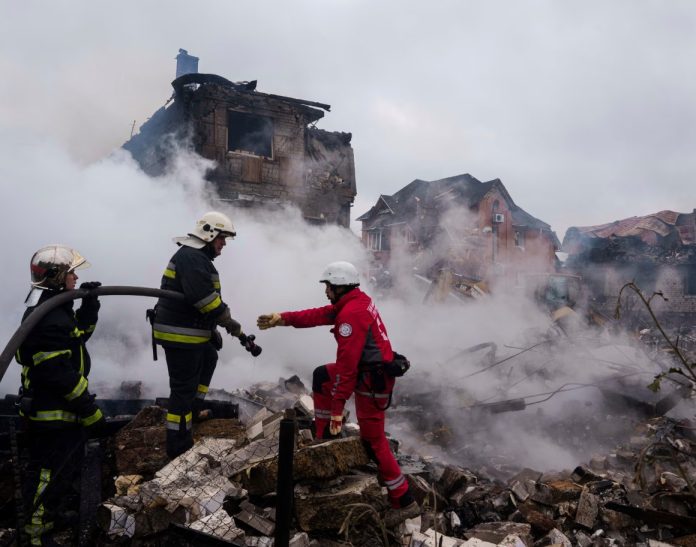
Across the country at least 12 people were killed, according to officials, including three children in the Kyiv region, and dozens more injured, as officials released the first assessment of casualties and damage on Sunday morning.

Ukrainian officials later confirmed that Russia had launched 298 drones and 69 missiles in multiple waves. Russia’s defence ministry said its air defences had shot down 110 Ukrainian drones overnight.

President Volodymyr Zelensky called on the US to speak out against the Russian attacks.

“The silence of America, the silence of others in the world only encourages Putin,” Ukraine’s president wrote on Telegram.

“Every such terrorist Russian strike is reason enough for new sanctions against Russia.”

The huge scale of the latest attack, and its civilian victims, prompted the European Union’s top diplomat, Kaja Kallas, to call for “the strongest international pressure” on Russia to stop this war”.

“Last night’s attacks again show Russia bent on more suffering and the annihilation of Ukraine. Devastating to see children among innocent victims harmed and killed… We need the strongest international pressure on Russia to stop this war,” Kallas wrote on X.

Russian strikes hit locations across Ukraine on Saturday night into Sunday, from the southern coast and east to the west. Four people were reported dead in the western Khmelnytskyi region, four in the Kyiv region, and one in Mykolaiv in the south.

Serhiy Tyurin, the deputy head of the Khmelnytskyi military administration, said in a Telegram post: “Last night, the Khmelnytskyi region came under hostile Russian fire, which resulted in the destruction of civilian infrastructure … Unfortunately, four people were killed.”

Emergency services announced four people had been killed and 16 injured in the Kyiv region, including three children in the “massive night attack”.

They were later identified as siblings: Stanislav, Roman and Tamara Martyniuk, who died when their family home in Zhytomyr region was struck.

Kyiv’s mayor, Vitali Klitschko, stated that by 3am on Sunday there were “already 10 injured” in the capital, adding that a student dormitory in Holosiivskyi district had been hit by a drone and one of its outside walls was on fire.

The intensity and frequency of this weekend’s strikes contrasted sharply with Donald Trump’s claim that Vladimir Putin was interested in peace. The US president, who has been talking up his peace efforts, has not yet commented on the weekend’s heavy strikes.

The attacks meant Kyiv Day – celebrated on the last Sunday in May – began with exhausted people sheltered in bunkers, metro stations and basements.

Odesa, Dnipro, Mykolaiv, Sumy, Konotop, Chernihiv, Ternopil and Kharkiv were also hit, according to local media reports.

With waves of drones beginning at about midnight on Saturday, accompanied by warnings of ballistic missile launches as the night wore on, a Guardian reporter in Kyiv heard three drones reach the centre of the city, despite action by air defences, and the sound of loud detonations.

Russian authorities reported that a dozen drones flying towards Moscow had been shot down.

The attack on Kyiv began with Tymur Tkachenko, the head of the city’s military administration, warning “the night will not be easy” as residents tracked waves of launches on air raid warning apps.

At one point Tkachenko reported more than a dozen Russian drones were flying around the capital.

“Some of the drones over Kyiv and the surrounding area have already been dealt with. But the new ones are still entering the capital,” he posted.

Ukraine and its European allies have sought to push Moscow into signing a 30-day ceasefire as a first step to negotiating an end to the war.

In a blow to their efforts, Trump this week declined to place further sanctions on Moscow for not agreeing to an immediate pause in fighting, as Kyiv had wanted.

Zelenskyy’s chief of staff, Andriy Yermak, wrote on Telegram: “Without pressure, nothing will change and Russia and its allies will only build up forces for such murders in Western countries.

“Moscow will fight as long as it has the ability to produce weapons.”

Iran unveils homemade air traffic radar

Iranian President Masoud Pezeshkian used a video link on Saturday to order the deployment of the MSSR-Mode S radar system at Abadan airport in the southwest of the country.

Authorities from the Iranian transportation ministry said the advanced radar system would strengthen the air traffic control network in the region.

CEO of Iran Airports and Air Navigation Company said that the monopulse secondary surveillance radar system has been entirely designed and built by domestic companies.

Mohammad Amirani said that scientists from Isfahan University of Technology, located in central Iran, had contributed to the project, adding that the system will be capable of monitoring domestic and international flights within a radius of 450 kilometers.

Amirani said that the government had spent some 6.9 million euros ($7.84 million) on the project, cutting back nearly 1 million euros from its imports bill.

“Launching this radar is viewed as a major step on the path to reach self-sufficiency and progress in the country’s aviation industry,” he said.

The deployment of the radar is part of Iran’s increasing homegrown efforts to maintain and develop its aviation sector.

The efforts have intensified in recent years amid US sanctions that have restricted Iran’s access to foreign technology and investment.

Reports show domestic firms have repaired more than a dozen planes grounded because of the sanctions.

The same reports show that Iranian companies have been offering overhaul and inspection services to foreign airlines.

Iranian aviation authorities said in late 2024 that the country had mastered the technology needed to manufacture spare parts for the engines of Boeing and Airbus jets.

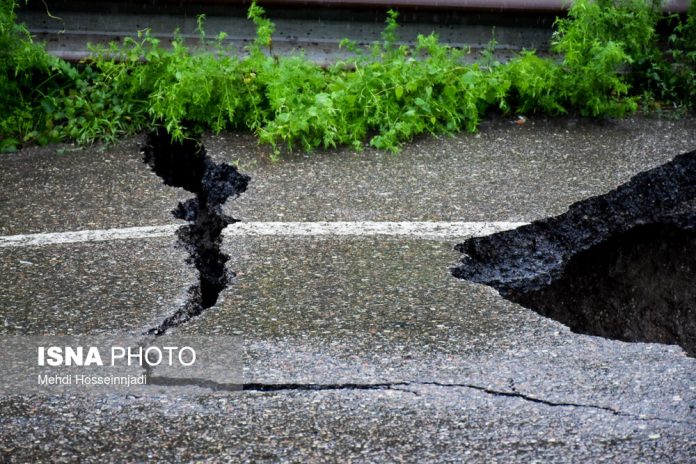
Land subsidence reaches 10 meters from Naqsh-e Rostam, 300 meters from Persepolis

Iran Flood

Experts warn that excessive groundwater extraction for agriculture has brought the phenomenon dangerously close, just 10 meters from Naqsh-e Rostam, the burial site of Achaemenid kings, and 300 meters from Persepolis.

In a conference on climate change and cultural heritage held at the Research Institute of Cultural Heritage and Tourism, Dr. Mehdi Zare, a leading seismologist, highlighted the severity of the crisis in Fars Province.

He noted that subsidence in the Marvdasht plain now reaches 20-30 cm annually due to unsustainable farming practices, including water-intensive rice and corn cultivation.

Officials also expressed concern about Tehran, where subsidence has caused ground levels to drop by up to 12 meters in some areas over recent decades, raising the risk of triggering nearby fault lines.

According to Masoumeh Amigh-Pey from the National Cartographic Center, more than 800 cities and 16 metropolises in Iran are affected. She emphasized the need for urgent groundwater regulation and proposed creating a nationwide atlas to identify high-risk heritage zones.

Gaza child dies of malnutrition as siege-induced famine deepens

Gaza War

Civil Defense spokesperson Mahmoud Basal said in a video statement: “Mohammed Yassin died from hunger, a direct result of the occupation’s prevention of food and medical aid from entering Gaza.”

“Mohammed was not the first child, and the fear has become a certainty that he won’t be the last, as the Zionist starvation war continues,” Basal added.

In a recorded video, Basal appears carrying the body of young Yassin, who died of malnutrition in Gaza City.

Earlier on Saturday, the Government Media Office in Gaza reported that during 80 days of the Israeli blockade, 58 people died due to malnutrition, and 242 others due to a lack of food and medicine, most of them elderly.

On Wednesday, Israel allowed the entry of 87 aid trucks for various international and local organizations for the first time in 81 days of strict closure, according to the Media Office, which emphasized that the Strip requires at least 500 trucks per day.

Rejecting international calls for a ceasefire, the Israeli army has pursued a brutal offensive against Gaza since October 2023, killing more than 53,900 Palestinians, most of them women and children.

Last November, the International Criminal Court issued arrest warrants for Israeli Prime Minister Benjamin Netanyahu and his former Defense Minister Yoav Gallant for war crimes and crimes against humanity in Gaza.​​​​​​​

Israel also faces a genocide case at the International Court of Justice for its war crimes against defenseless civilians in the enclave.