Thursday, April 9, 2026
Home Blog Page 3311

Sohan Asali; Special Persian Sweet for Nowruz

The Asali version of these sweets is cooked more by Tehrani women.

Ingredients:

Almond slices 150 g

Sugar 150 g

Hard honey 150 g

Oil 100 g

Saffron 1 tsp

Directions:

Slice the almonds and put them in a sifter. Then, grease the bottom of the tray. Afterwards, pour sugar and honey and oil into a small bowl and put it on the stove; the heat should be medium. Sometimes spin the mixture. Add the almonds and let them turn golden.

When it is completely golden, melt the saffron in a little bit of water and pour it. Lower the heat so that the Honey Sohan only stays warm. With a small spoon, put a bit of the mixture in the tray and immediately place two or three pistachios on it. After cooling we remove them with a knife and keep them in a capped container.

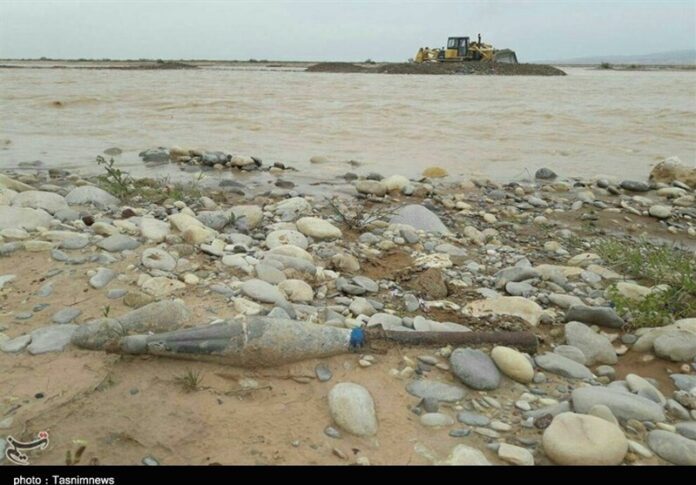
Unexploded Ordnance Threatening Iranian Lives in Flood-Hit Areas

The floods in Iran’s western provinces have once again brought to the forefront earlier concerns about the risk posed by the unexploded ordnance remaining from the Iran-Iraq war.

The vast area where the landmines have been sown and the explosives’ relocations over the past decades have made it highly difficult to find and disarm them, a report by Fars news agency said.

Today, most of the landmines have been relocated by the geological developments over the past decades. This, in turn, highlights the necessity of raising public awareness about the dangers of the unexploded mines.

Over the past years, coordinated efforts have been underway by related governmental and non-governmental bodies to prevent any casualties by clearing the remaining landmines but unfortunately the dangers are too significant and there is still a long way to go.

The report highly warned people against moving along unknown areas. “If, in emergency cases, you have no way but to travel to unknown areas, take cautionary measures seriously. To this end, run and walk only along asphalted roads or take roads used by the locals of the areas. Meanwhile, avoid moving along rivers’ banks and camping in unknown areas.”

The report also directly called on mountaineers and tourists to avoid camping anywhere near an area which used to be a military base. It also warned children against getting close to barb wired areas. “Meanwhile, never touch suspicious things on the ground.”

Most of unexploded mines are not visible easily and remain dangerous for years to come, the report noted.

It also referred to the April 4 as the UN International Day for Mine Awareness and Assistance in Mine Action and called on related organizations to develop new programs to raise Iranian children’s awareness about the dangers of explosives and landmines.

The United Nations’ International Day for Mine Awareness and Assistance in Mine Action aims to raise awareness about landmines and progress toward their eradication. Mine Awareness Day aims to raise awareness about the dangers of landmines.

A large number of landmines were planted by Iraqi army forces in the 1980s during the war against Iran. And despite efforts by Iranian demining teams, dozens of people are still maimed or killed along the country’s western border every year.

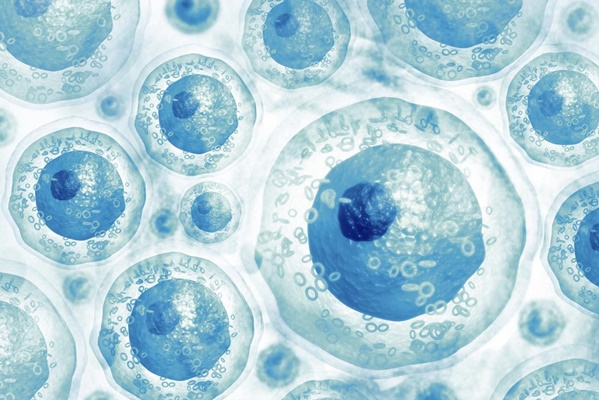
Stem Cell Technology in Iran Turning into New Industry: Official

Amir Ali Hamidieh says the efforts made in the field of stem cell technology over the past years have borne fruit.

“Today, stem cell studies are going through a transitional period, turning into a new industry,” he was quoted as saying in a report by Fars news agency.

Hamidieh also referred to the progress made in the area by academic centers and added the council for stem cell sciences and technologies has established several centers involved in medical areas.

“Firms involved in stem cells studies have gained deep experiences in the area. Back in 2015, the number of firms involved in the area was less than 10 but it rose significantly over the past years reaching 80,” he noted.

Hamidieh then referred to the unveiling of at least 10 related products last year in a ceremony attended by Iranian First Vice President and said during the event, the Iranian firms gained access to new foreign markets.

For a brief review of Iran’s achievements in various fields of science and technology, check the book “Science and Technology in Iran: A Brief Review

“So far, four stem cell centers have become operational in Iran,” he said.

He went on to say that stem cell exports will rise in the current Persian year and added “we are after branding our knowledge-based firms working in stem cell area.”

The US National Library of Medicine defines stem cell technology as a rapidly developing field that combines the efforts of cell biologists, geneticists, and clinicians and offers hope of effective treatment for a variety of malignant and non-malignant diseases.

Stem cells are also defined as totipotent progenitor cells capable of self-renewal and multi-lineage differentiation. Stem cells survive well and show stable division in culture, making them ideal targets for in vitro manipulation.

Iran FM Rejects Pompeo’s ‘Demagogic’ Flood Remarks

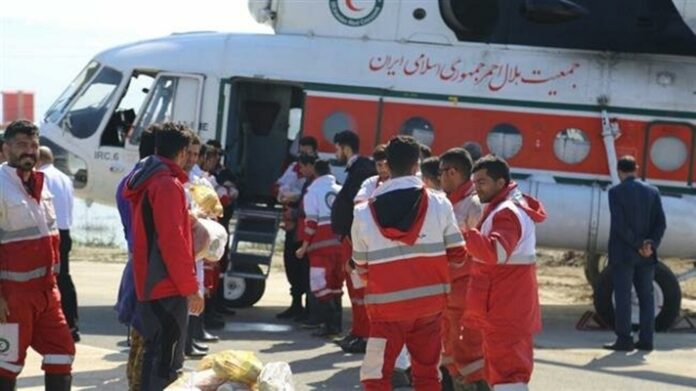
This file photo shows personnel of Iran's Red Crescent Society preparing to distribute aid packages among flood victims in Iran's northern Golestan Province. (Photo by Mehr News Agency)

Since March 19, most of Iran — 24 out of its 31 provinces — has been affected by flash floods triggered by the heaviest downpours in the country in at least a decade.

Over 60 people have so far been killed in the natural disaster, which has also forced tens of thousands of people, mostly in villages, to evacuate their homes and move to emergency shelters. Hundreds of people have also been airlifted from the affected regions.

Rescue workers — backed by the Iranian Armed Forces and locals — have been busy providing relief aid to the flood-hit areas under the supervision of Leader of the Islamic Revolution Ayatollah Seyyed Ali Khamenei and President Hassan Rouhani.

Iran FM Rejects Pompeo's 'Demagogic' Flood Remarks
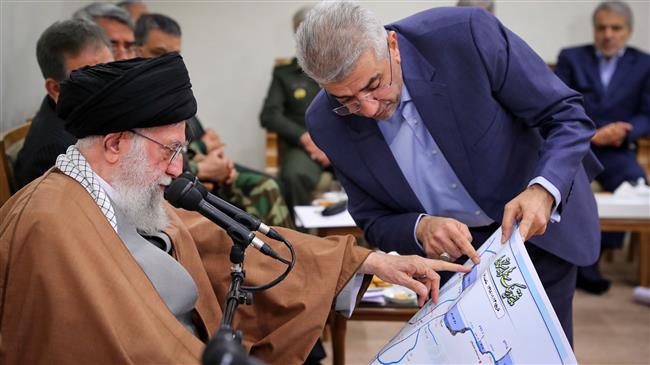
Ayatollah Khamenei (L) looks at a map during a meeting with government and military officials on rescue operations in flood-hit areas, Tehran, April 3, 2019. (Photo by khamenei.ir)

However, US Secretary of State Mike Pompeo on Tuesday exploited the national emergency in Iran to once again attack the Islamic Republic, claiming that Tehran’s response to the floods showed the level of what he called as “mismanagement in urban planning and in emergency preparedness.”

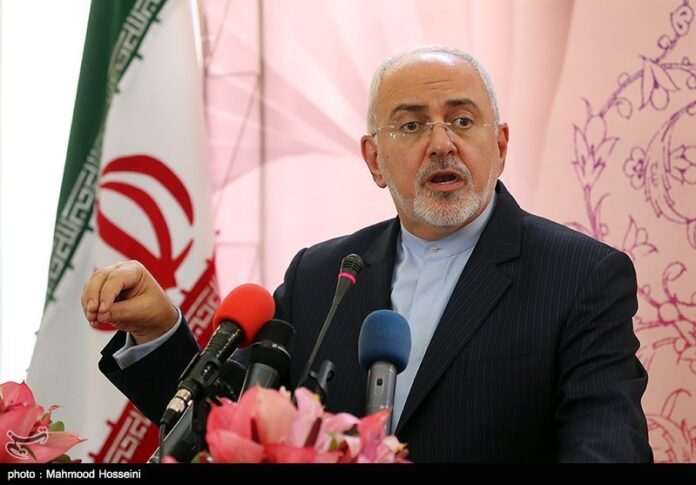
Iranian Foreign Minister Mohammad Javad Zarif, however, fired back at Pompeo in a statement, which was also posted on his official Twitter page, on Thursday.

“It seems that the U.S. Secretary of State is unaware of the mismanagement of natural disasters in the US over the past two years, and hence opines—in an unprofessional, interventionist and demagogic manner—on Iran’s management of the horrific and unprecedented floods which simultaneously afflicted 24 provinces,” said Zarif.

He advised Washington to mind its own business and address “the calamities of disaster-struck Americans who have been suffering from natural disasters for months,” instead of attempting to make political gains from the sufferings of flood-stricken people of Iran.

Iran FM Rejects Pompeo's 'Demagogic' Flood Remarks
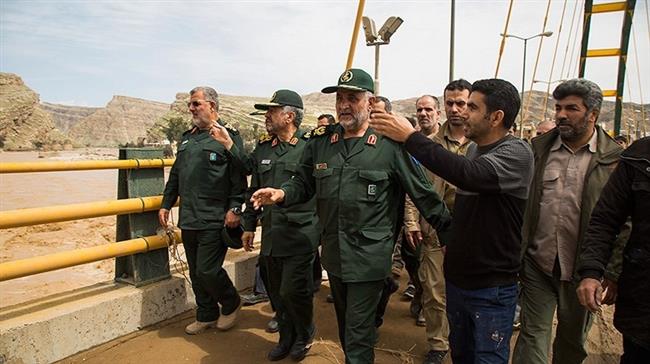
Major General Mohammad Ali Jafari, the top commander of the Islamic Revolution Guards Corps (2nd-L), along with other officials of the Iranian elite force and locals, visits flood-hit areas in Khorramabad, Lorestan Province, April 4, 2019. (Photo by Tasnim)

Zarif further said, “Apparently Mr. Pompeo has forgotten that the US federal government itself has shown to be incapable of providing sufficient relief in many regions affected by natural disasters, which have claimed the lives of thousands of Americans, cut off electricity and other services in affected areas for days and even weeks, and forced hundreds of thousands to flee their homes.

On Tuesday evening, Ayatollah Khamenei held a special meeting with senior government and military officials as well as heads of the country’s relief organizations for talks on the relief and rescue operations underway in the Iranian provinces hit by flash floods.

He urged the country’s aid bodies, military forces and people to join forces and help speed up the relief efforts.

A day later, the Leader also hailed the nationwide display of solidarity with the flood victims and assured the nation that the flood damage will be entirely compensated once the rescue efforts are completed.

PressTV-'Fake News: US wants to help flood-hit Iranians'

Zarif further said in the statement that the Iranian people will successfully overcome the destructive impacts of the floods and will use the lessons they have learned in their response to this natural disaster to avoid future catastrophes.

“The great people of Iran will, with unity, empathy and with their coordinated efforts alongside their government, armed forces, and all public, nongovernmental and private organizations, and with the help of God, soon prevail over the impact of the recent natural disaster—building a better future using lessons learned to avoid repetition of catastrophes that have hit the lives and livelihoods of our cherished citizens,” he added.

Zarif: Iran to Keep Pressure on EU to Honour Their Commitments

In an interview with Khamenei.ir on Wednesday, Zarif underlined that Tehran will be keeping pressure on the European parties to the Joint Comprehensive Plan of Action (JCPOA) to honor their commitments.

“Europe must know that it could not shirk its responsibilities with only a number of comments or a few unimplemented plans,” the top Iranian diplomat noted.

Zarif said while the Foreign Ministry continues to warn Europe and pressurize it to carry out its undertakings, Iran will never pin its hopes on Europe.

“Europeans considered the JCPOA as an achievement from the beginning, but maybe they are not prepared, and definitely lacking enough power, to stand against the US sanctions (on Iran),” he added.

Citing Leader of the Islamic Revolution Ayatollah Seyed Ali Khamenei’s comments about Europe’s insufficient efforts for saving the JCPOA, Zarif said Europe was not prepared to pay the price for something with strategic importance, as they claim themselves.

The minister also noted that Iran has made a great deal of efforts to boost ties with the neighbors and old allies, such as Russia, China, Turkey, and Iraq.

In May 2018, US President Donald Trump pulled his country out of the JCPOA, which was achieved in Vienna in 2015 after years of negotiations among Iran and the Group 5+1 (Russia, China, the US, Britain, France and Germany).

Following the US exit, Iran and the remaining parties launched talks to save the accord, but none of the European initiatives to maintain trade with Iran and foil the US sanctions has had practical results.

In an address in Mashhad on the first day of the current Iranian year on March 21, Ayatollah Khamenei said Europe has left the JCPOA in practice.

“Recently, it is constantly being said that they (European) have created a financial channel. Well, it sounds more like a joke! Of course, it is a bitter joke. This financial channel does not make any sense. There is a world of difference between what constitutes their duties and what they are saying in the present time. On our last international issue, the Europeans stabbed us in the back, just like what they did in the past. They betrayed us. They cannot be expected to do anything. We cannot have any expectations of them,” the Leader underlined.

Shapour A.; From a Homeless Junkie to a High-Profile Writer

Shapour experienced his first smoking at early childhood. Since then, he developed a heavy drug addiction and lived with it for the next 45 years. He used to be a cardboard box sleeper but in a decisive moment, he decided to put an end to his addiction. Since then, he has written 200 books and established an advisory institute to save the lives of hundreds of people from across the country.

Shapour Ebrahim also known as Shapour A. was only four when he experienced smoking cigarette. After a while, he put a saucer greased with opium on his ears to alleviate its pain but it was the beginning of a long career as an opium addict.

His father was a criminal, thief and alcohol addict. Shapour’s mother raised him and his siblings with hard work. During school years, he faced lots of problems to meet his education costs. He went to school in the morning and worked at nights. It was during these years that he became addicted to cigarette and alcohol.

His employer was a kind man. He sent Shapour to high school and provided him with his educational costs. So, he continued his education at a boarding school in Tehran. After the employer died, Shapour quitted high school and never took his diploma. Later he began his career as  a facility worker. After a while, he married with a girl he had never seen or liked. But the girl turned into his champion of life later.
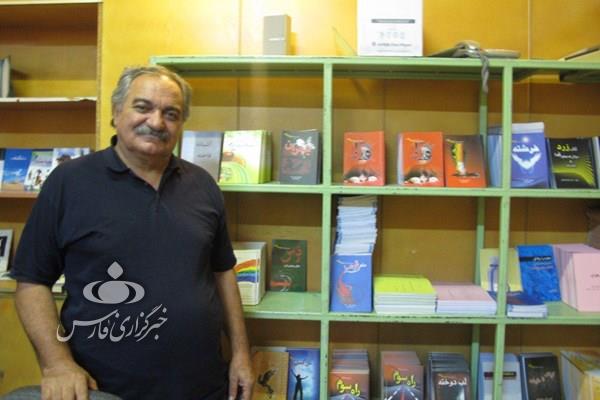
Shapour A.; From a Homeless Junkie to a High-Profile WriterTwo daughters and two sons have been the fruits of the marriage. Shapour had a relatively good financial life so much so that he didn’t know how to spend his earned money. He turned to Hashish and indulged himself in the addiction. After a while, he began to suffer from nervous tics. To alleviate his tics, he turned to opium and ended up in heavy opium addiction. He sacrificed all his wealth for opium.

Some years on, his family and relatives were fed up with his career. Finally, he was left alone and became a cardboard box sleeper. Then he began to beg on the streets to pay for his drugs.

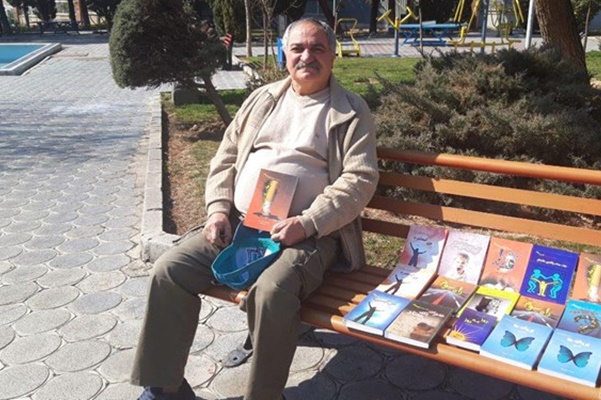
Shapour who used to be a champion of Kyokushin began to become weaker and weaker day by day. But all of a sudden he reawakened. He was sleeping on a bench in a park before being awakened by a park garden who poured a bucket of cold water on him. At 43, the incident had a deep impact on him.

He decided to get rid of the drug. He went back home and began to stop smoking opium. During the process, he found out that he was suffering from bone cancer. Doctors told him that he won’t survive more than six months. Shapour thought by himself now that his life is set to come to an end in six months, he should commit suicide after killing his wife and children. To fulfill his decision, he decided to pour rat poison into the dish of his family members. Interestingly enough, no one was poisoned. Then with the six-month deadline, he decided resolutely to quit drugs. He translated his will into practice and with hard personal efforts finally fulfilled it.
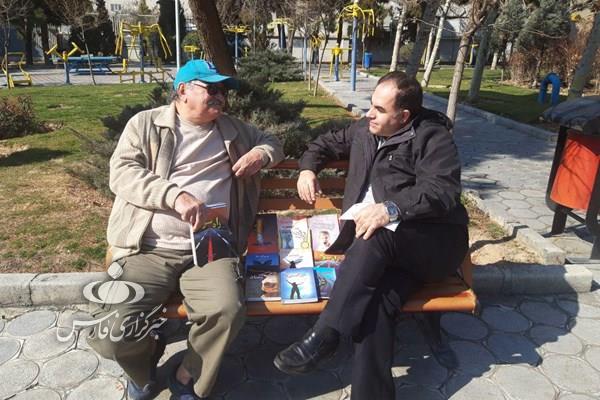
Shapour A.; From a Homeless Junkie to a High-Profile WriterAfter three months, he resumed his job as a facility worker. It is now 20 years that Shapour has quitted all types of drugs including alcohol, psychedelic pills. Today, he even doesn’t smoke cigarette.

After two years, he resumed his sport career. Today, Shapour exercises the addicts every morning in a park in Tehran. He also began to write his autobiography. The three notebooks he wrote his memoires in make up his autobiography named “sheets of an addict’s memoires”. Meanwhile, he got involved in professional writing.

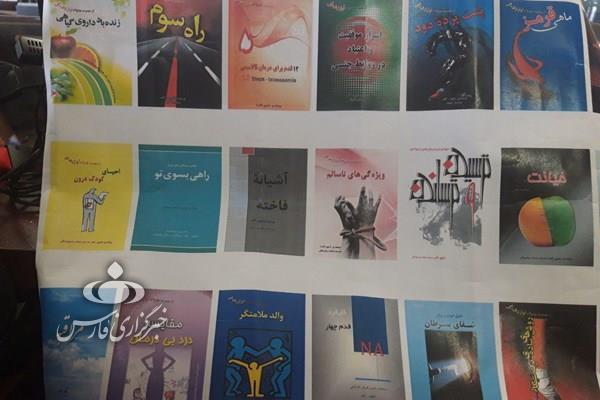
Now, he has turned into a professional writer with lots of books in various areas like addiction and treating the addicts, cancer and attention deficit hyperactivity disorder (ADHD) without prescribing drugs for them.

He allocates the revenues of each published book to releasing his next books.  Over the past 20 years, he has written and published over 200 books and hundreds of articles. He has also majored in social work, writing on and offering social advisories.

Today, Shapour gives consultation to hundreds of addicts in various parts of Iran. He is specialized in changing bad individual habits. Meanwhile, he is involved in activities connected to raising children and teenagers. He teaches them some pre-emptive techniques against addiction and undesirable habits.

Shapour A.; From a Homeless Junkie to a High-Profile Writer

UN Chief Sympathizes with Iran over Deadly Floods

In a phone conversation with Iran’s Deputy Permanent Representative to the United Nations, Es’hagh Al Habib on Tuesday, Maria Luiza Viotti, the Chef de Cabinet to the UN chief, offered Guterres’ deep regret over the devastation and expressed his readiness to establish any cooperation and offer any contribution to aid efforts to the flood-hit people.

Viotti also underlined that any humanitarian aid should be exempted from any sanctions on Iran and said it goes without saying that humanitarian aid must be excluded from any restrictions imposed by the sanctions, a report by Fars news agency said.  

For his part, the Iranian official expressed the Islamic Republic’s gratitude for the UN chief’s message and said through unity and synergy, the government and nation of Iran have used whatever in their power to cope with the natural disaster.

“It goes without saying that the Islamic Republic will welcome any help and support from the international community. But, the illegal and unilateral sanctions imposed by the US on Iran have impeded humanitarian aid flow from related international bodies,” he said.

Therefore, he added, the UN should step in and put an end to the impediment through appropriate measures.

The message of Guterres comes as he is now on an official visit to the Middle East.

Earlier, the Iranian foreign minister warned against the impacts of the US sanctions on relief operations in flood-hit areas and said Washington’s anti-Iran sanctions are hampering delivery of much-needed relief equipment to flood-hit areas in Iran.

In a tweet, Mohammad Javad Zarif accused the United States of flouting the UN Security Council Resolution 2231. Zarif condemned the US blocking of the Iranian Red Crescent Society’s aid efforts as “financial terrorism”. The United Nations Office for the Coordination of Humanitarian Affairs has also said that challenges caused by Washington’s unilateral sanctions will affect its relief support to Iran.

Relief operations are underway in flood-hit areas in Iran. So far, over 60 people have lost their lives since the floods hit Iran since March 17.

IRGC Says Its Relief Operations to Gain Momentum in Flood-Hit Areas

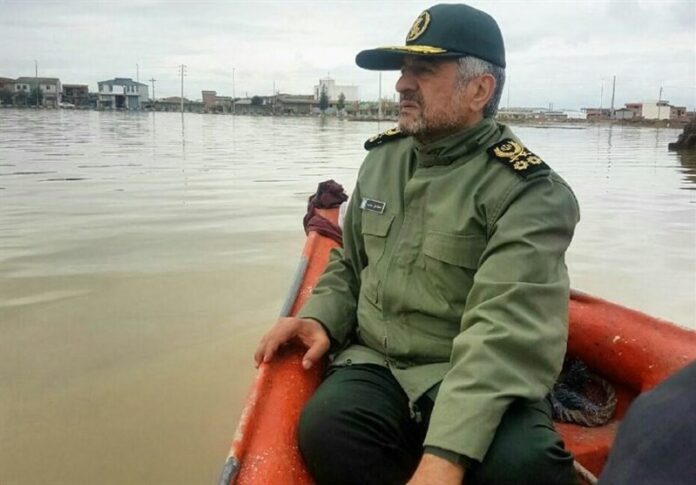
Speaking to reporters upon arrival in the western city of Khorramabad, the top general said he has travelled to the city after a meeting with Leader of the Islamic Revolution who called on all Armed Forces to rush to the flood-hit areas for offering services.

“Lorestan province is the main focus of our operation. Some damages were due to shortcomings which should be compensated,” he said.

The top commander called on the flood-hit people to remain patient and said the IRGC will adopt appropriate measures to cope with the devastation and keep the casualties at a minimum level.

He also expressed hope that the situation gets back to normal in some areas like Pol-e Dokhtar which have been hit severely by the floods.

“We hope that by increasing our relief operations, we can cover more flood-hit people soon.”

Aid operations are underway in Pol-e Dokhtar, where thousands of people were stranded by the latest round of floods.

Army choppers and boats as well as the IRGC’s drones and helicopters were deployed in the flood-hit areas for help.

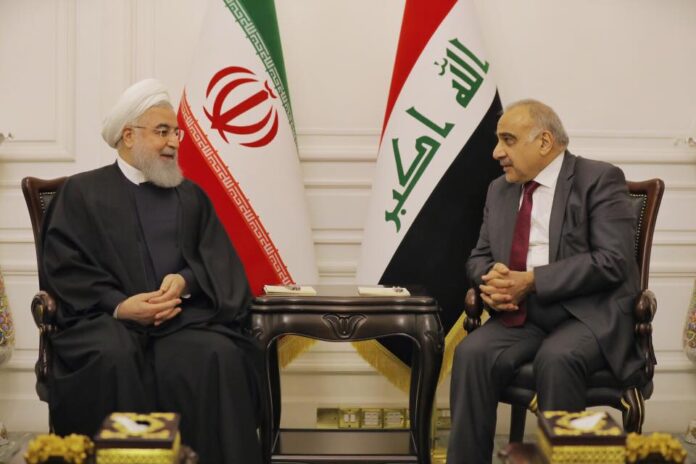
Iraqi PM to Visit Iran Saturday

The first official visit of Abdel Mahdi to Iran will come on Saturday at an official invitation by Iranian President Hassan Rouhani.

During the two-day visit to Iran, the Iraqi prime minister is expected to discuss the issue of trade outside the framework of the US sanctions on Iran and the rapprochement and the convergence of views between Iran and Arab countries, an Iraqi official was quoted as saying by AFP.

Iran is the second-largest supplier of imported goods to Iraq. Iran played a key role in Iraq’s victory in fight against ISIS.

Back in March, Iranian President Hassan Rouhani made a historic visit to Iraq, which was described by experts as Iran’s response to US President Donald Trump’s snap trip to Iraq in December.

Trump slipped into Iraq on Christmas. He spent most of his short visit outlining how he wanted to keep US troops in Iraq to “watch” Iran with which the Arab country shares a 1,400-kilometer-long border.

Earlier, Abdel Mahdi said he was planning trips to Saudi Arabia, Turkey and the US. He made his first foreign visit in late March to Egypt.

Diplomatic trips between Iran and Iraq have been expanding as of late. This, experts say reveals a strong resolve to expand the existing ties by the two sides.

Iran is currently Iraq’s top trade partner, with an annual turnover of about $13 billion. The two sides hope the figure increases to $20 billion. Some 5 million religious tourists generate nearly $5 billion a year as Iraqis and Iranians visit Shiite holy sites in both countries.

Heavy Rainfall Revives 40 Iranian Wetlands in Two Weeks

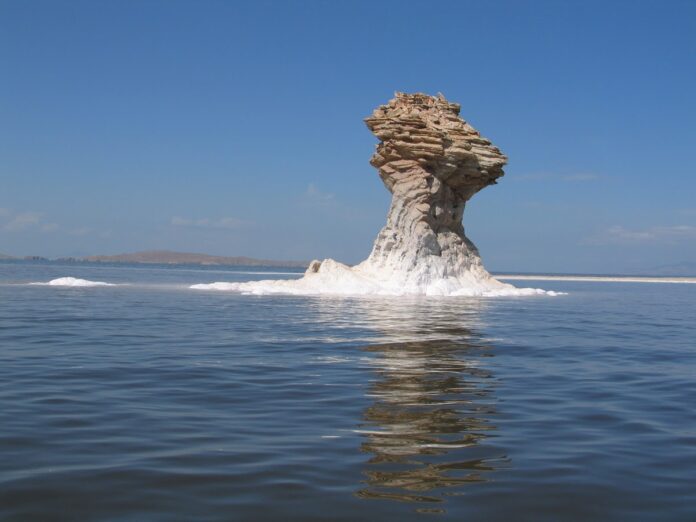
urmia

Ardakanian says with the recent heavy rain across the country, today, Iran has enough water for various uses now.

Thanks to the rainfall which started on March 18 in Iran, “we have already an additional five billion cubic metres of fresh water in 172 storage dams across the country,” he noted.

To provide five billion cubic metres of fresh water, the government needed to desalinate sea water in a process costing $2.5 billion in days before the floods hit the country, he added.

“At least 40 wetlands have been refilled and the level of Lake Urmia, in particular, has experienced a significant increase.”

Ardakanian said evacuation of homes exposed to floods is one of the main ways to decrease possible damages as much as possible.

“We won’t receive any casualty reports if people take seriously the warnings and keep distant from the rivers. I hope the situation gets back to normal in the coming days,” he noted.

He then referred to the latest relief operations in the southern province of Khuzestan and said due to the latest deluges in Lorestan province, a floodwater with over 8,000 cubic meter in volume entered Karkheh River which is now subsiding gradually.

The Iranian minister also underlined that accurate calculations are made on a daily basis to prevent dams from bursting in the coming days.