Friday, April 10, 2026
Home Blog Page 3304

Iran Welcomes Egypt’s ‘Withdrawal’ from Arab NATO

Qassemi said on Thursday the reports regarding Egypt’s withdrawal from being part of the Arab NATO, which were released by some news agencies, have yet to be confirmed by official sources, and there is no detailed information on their authenticity.

He said Iran is verifying the authenticity of the reports, and if true, it welcomes the move by Cairo.

“Egypt is one of the most important and powerful countries in the Arab and Muslim world, which can play an important role in establishing peace, stability and security in the West Asia region. Egypt can play an increasingly important role in the convergence and unity of the Muslim world if it realises the current critical situation,” Qassemi noted.

“We hope that Egypt, as an undeniable power of the Arab world, will be able to fulfil its historic mission under the current circumstances of the region and the world,” he added in an interview with IRNA.

Qassemi emphasised that in such a situation, better relations will be established between Iran, Egypt and other regional states to confront terrorism, to provide security and stability, and to advance mutual understanding and multilateral cooperation.

The spokesman also pointed to the establishment of the so-called Arab NATO, and said, “As I mentioned in the past, one cannot basically be much optimistic about an issue called ‘Arab NATO’ because in the West, NATO was established under certain historical and geographical circumstances based on a set of values, necessities, and even some clear-cut commonalities.”

Today, it is not believed that it could be copied in the Arab world, even by localising the NATO, which itself was the result of certain historical events, he added.

Reuters on Thursday cited an unidentified source as saying that Egypt conveyed its decision to the US and other participants in the proposed Middle East Security Alliance (MESA).

The Arab NATO initiative first was proposed by Saudi Arabia in 2017 to allegedly limit the growing regional influence of Russia and China, but it seems to be mainly aimed at countering Iran.

Iran Says Won’t Interfere in Sudan’s Internal Affairs

“Iran’s principled policy is not to interfere in the internal affairs of other countries,” Qassemi said on Thursday.

According to the spokesman, Iran has always called for, and will continue to call for the stability and security of the Muslim countries.

“We hope that all Sudanese parties would show restraint, keep calm, use the policy of interaction and dialogue, and adopt peaceful means when pursuing their demands,” he added.

Qassemi also expressed hope that calm and stability will be restored to the country as soon as possible.

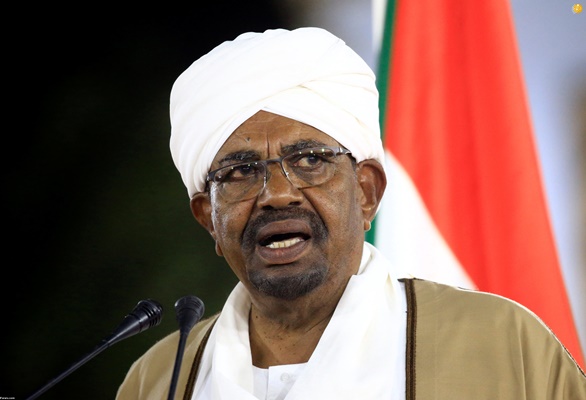
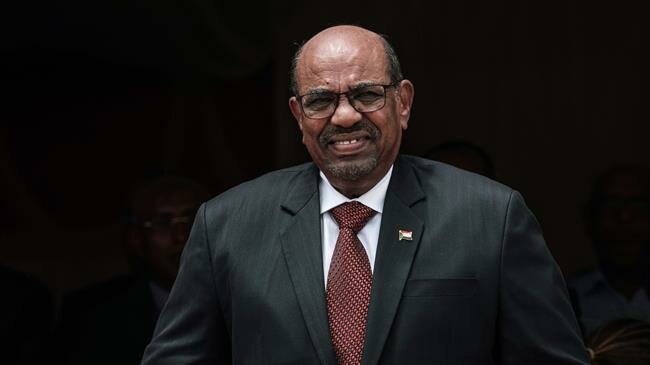
After nearly thirty years in power, Sudan’s President Omar al-Bashir has been removed from power and detained by the army.

The African country’s Defence Minister Awad Mohamed Ahmed Ibn Auf says the army has declared a three-month state of emergency and imposed a one-month curfew from 10 pm to 4 am.

The military council has also declared a nationwide ceasefire.

Sudan has been struggling with protests since mid-December when an anti-government campaign erupted over price hikes and shortages of food and fuel. That initial public display of anger quickly turned into calls for the Bashir to step down.

Sudanese Protesters Force Long-Time Leader to Resign

Adel Mahjoub Hussein, the Sudanese minister of production and economic resources in North Darfur, told the Dubai-based al-Hadath TV on Thursday that, “There are consultations to form a military council to take over power after President Bashir stepped down.”

The announcement brought thousands of Sudanese to the center of the capital, Khartoum, cheering in jubilation and chanting anti-Bashir slogans.

Organizers had also arranged for protesters to gather outside the Defense Ministry, where people chanted, “It has fallen, we won,” in an apparent reference to Bashir’s government.

Reports said that Bashir was at the presidential residence and under “heavy guard.”

Military to make ‘important’ statement soon

Sudan’s military has said it will make an “important” statement soon. Troops are deployed to key roads and bridges in Khartoum, amid speculation that a coup attempt could be underway against the embattled president after months of anti-government protests across the Northeast African country.

“The armed forces will present an important statement shortly. Be ready for it,” a short notice on state television read, without giving further details.

Soldiers raid offices of Bashir-linked group

In a separate development on Thursday, a team of Sudanese soldiers purportedly raided the offices of a group linked to Bashir’s ruling National Congress Party (NCP) in Khartoum. The soldiers raided the offices of the Islamic Movement, the ideological wing of the NCP, on Thursday morning, according to witnesses speaking to AFP.

Sudan has been struggling with protests since December 17 last year, when an anti-government campaign erupted over price hikes and shortages of food and fuel. That initial public display of anger quickly spiraled into calls for the 75-year-old Bashir to resign.

The embattled president declared a state of emergency, dissolved the central government, and replaced state governors with security officials. But the protests did not stop.

Opposition figures have urged the military to help negotiate an end to Bashir’s nearly 30-year rule and a transition to democracy.

Bashir is wanted by the International Criminal Court (ICC) over his alleged role in genocide in the Darfur region. He denies having had a role.

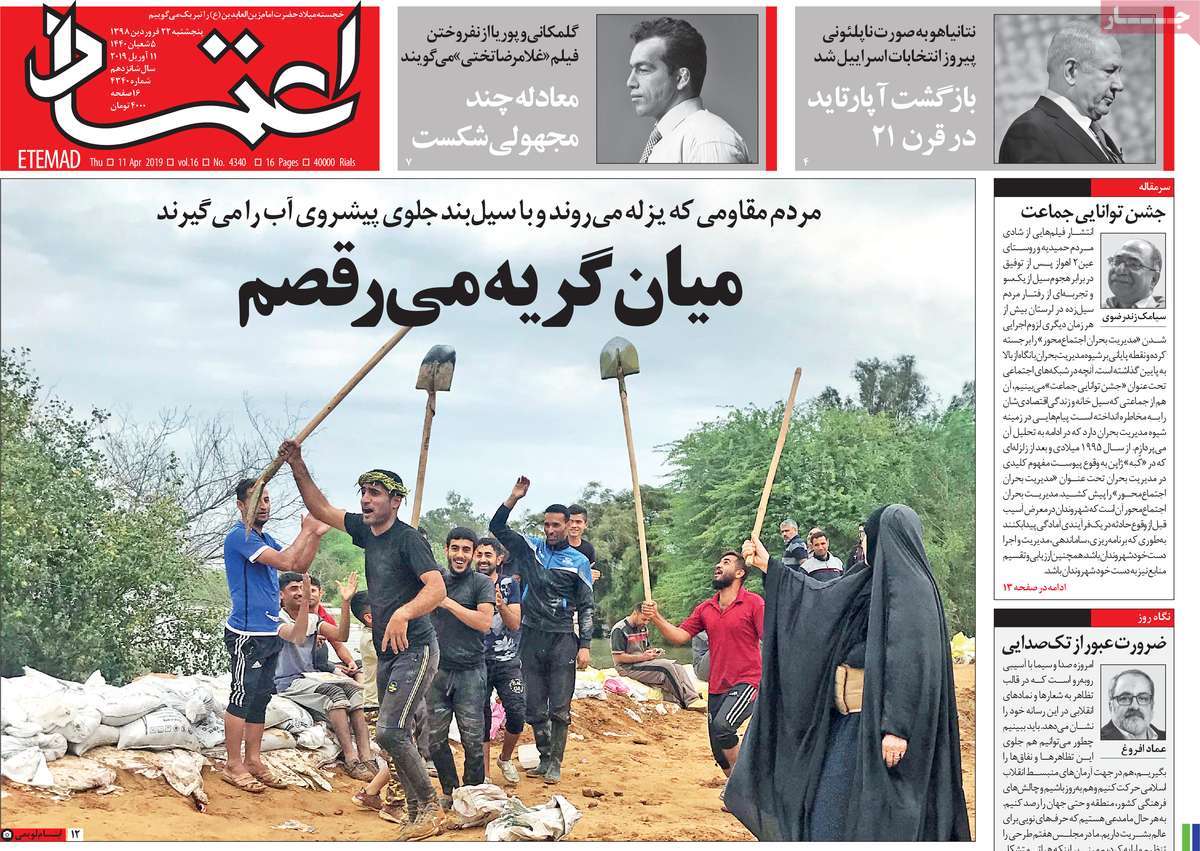
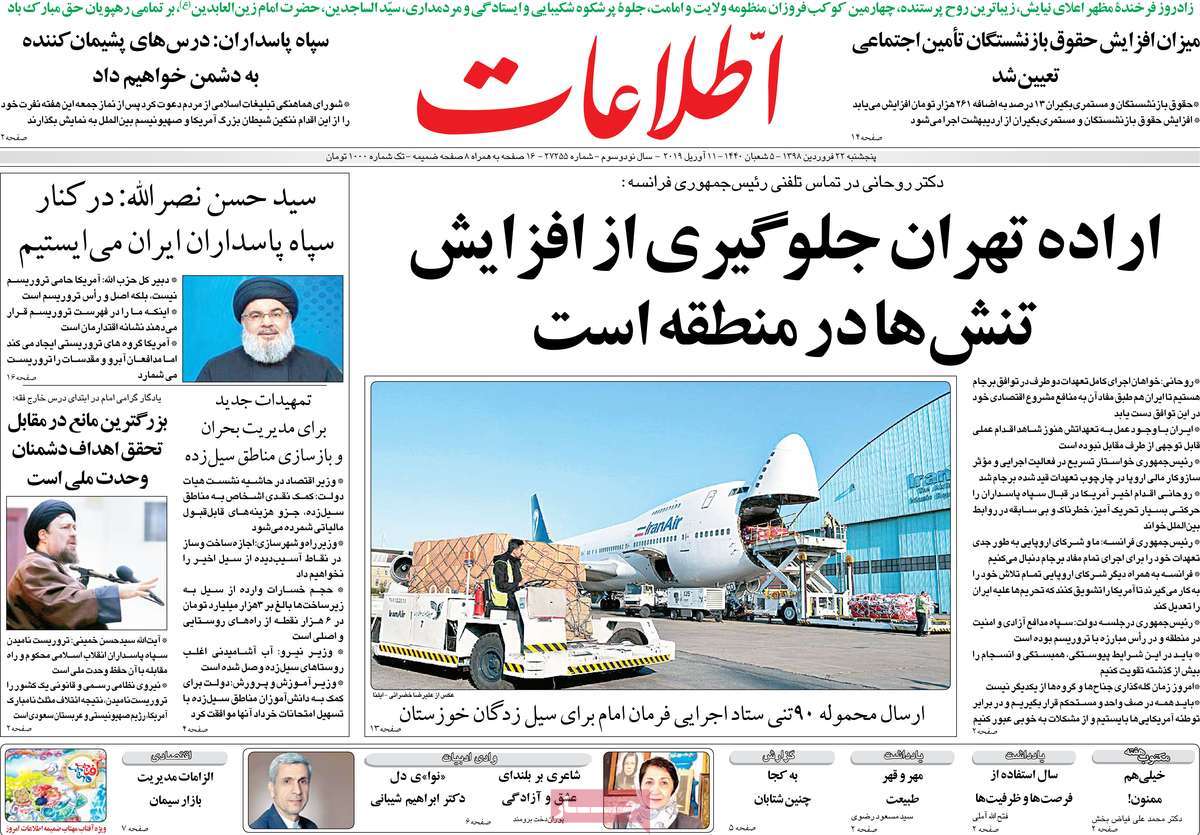
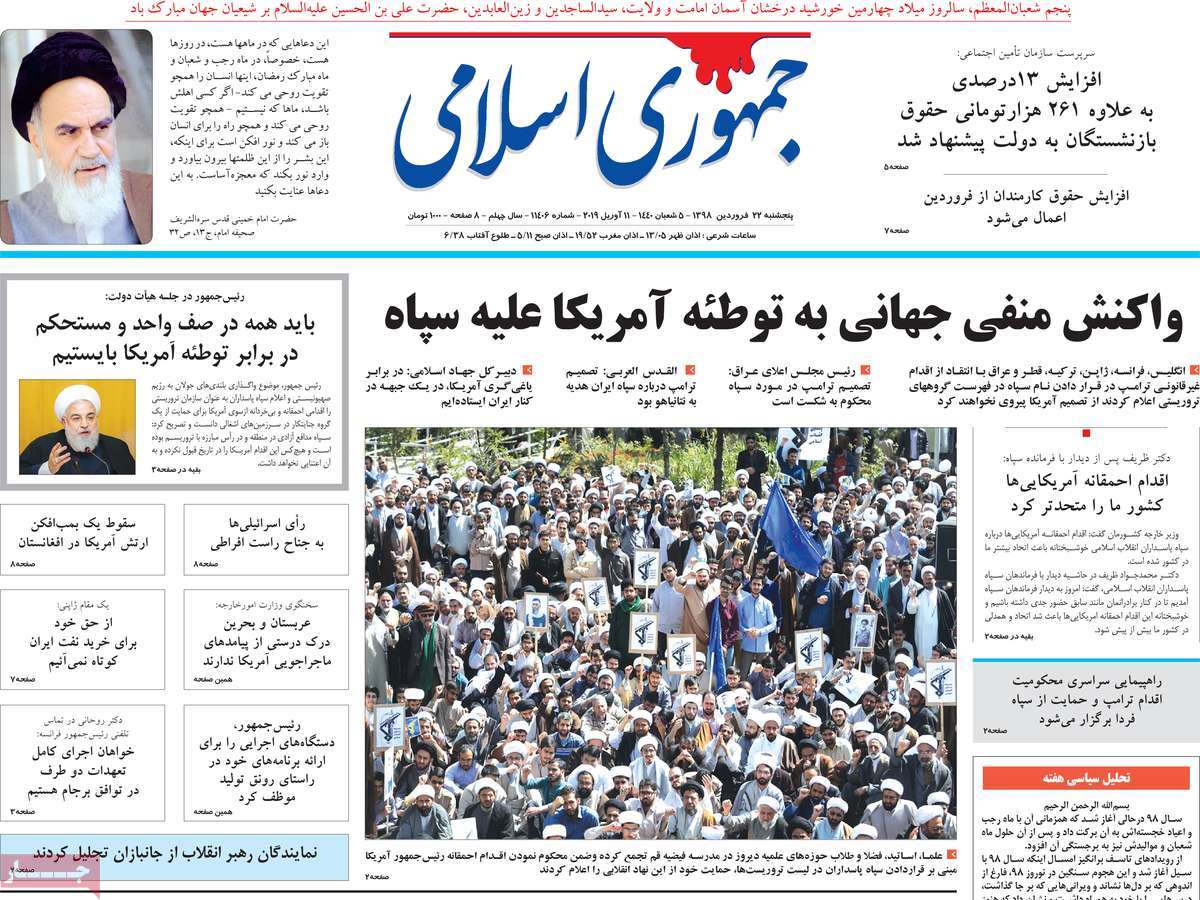
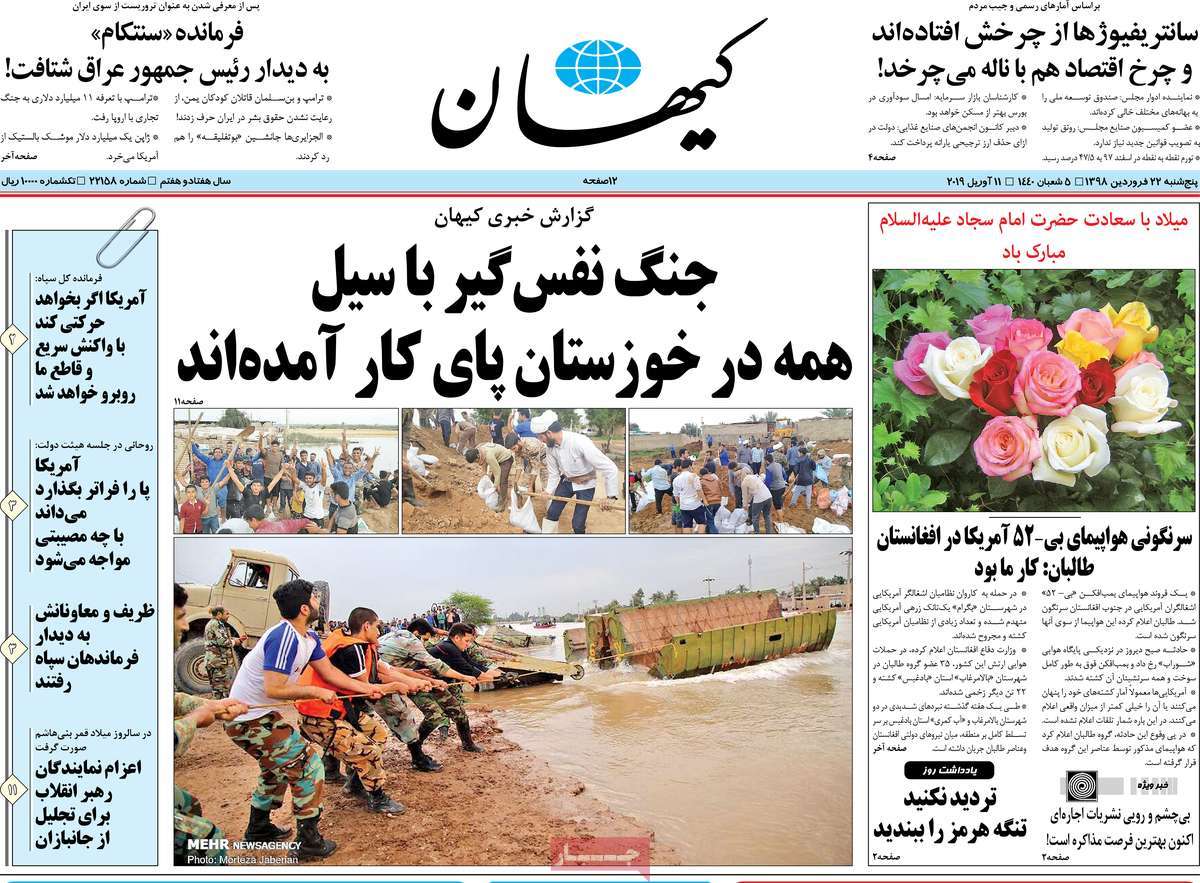
A Look at Iranian Newspaper Front Pages on April 11

A Look at Iranian Newspaper Front Pages on November 19

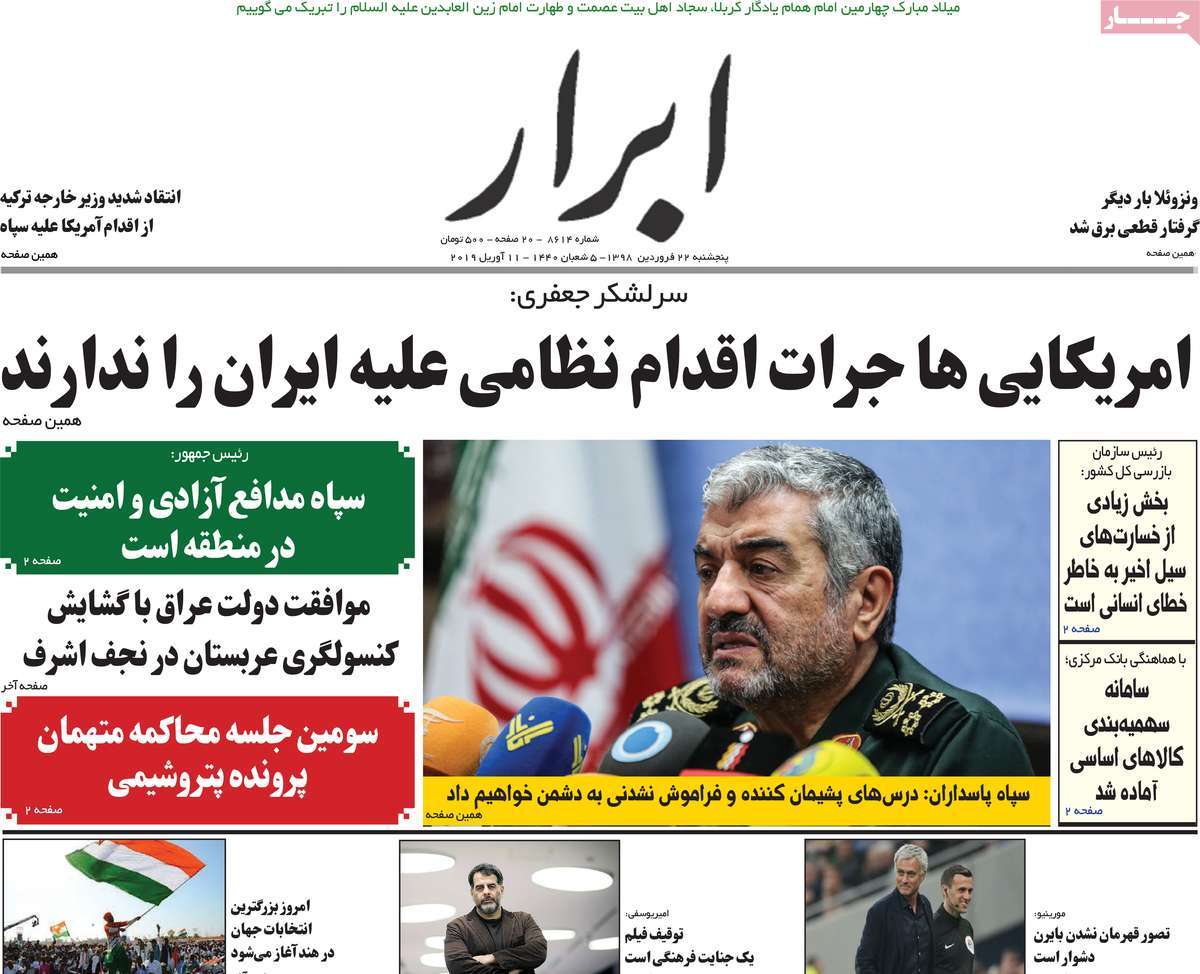
Abrar:

1- Turkey FM Strongly Raps US’ Move against IRGC

2- IRGC Chief: Americans Don’t Dare to Take Military Action against Iran

3- Iraqi Gov’t Allows Saudis to Open Consulate in Najaf

4- World’s Biggest Elections to Be Held in India Today

A Look at Iranian Newspaper Front Pages on April 11


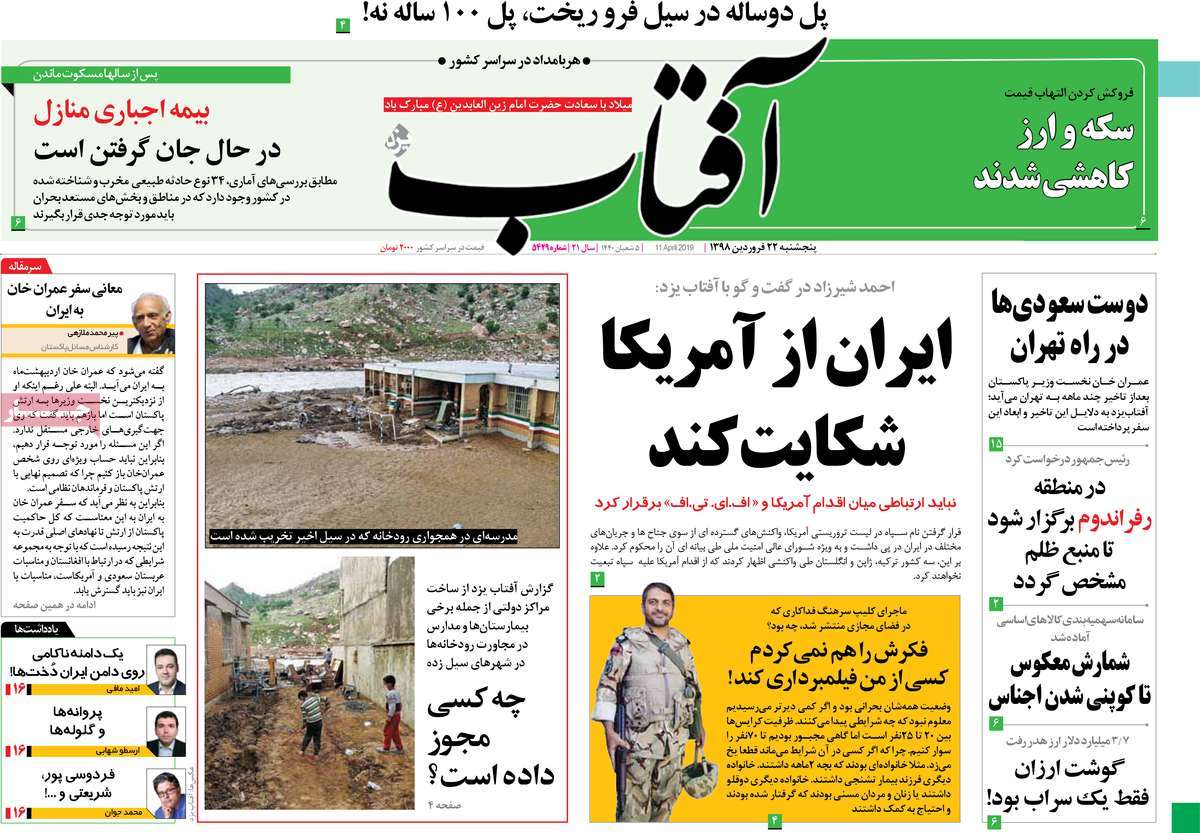
Aftab-e Yazd:

1- Saudis’ Friend to Visit Iran: Imran Khan Due in Tehran after Months-Long Delay

2- Rouhani Calls for Regional Referendum to Identify Source of Cruelty

3- Iran Must Sue US: Lawyer

A Look at Iranian Newspaper Front Pages on April 11


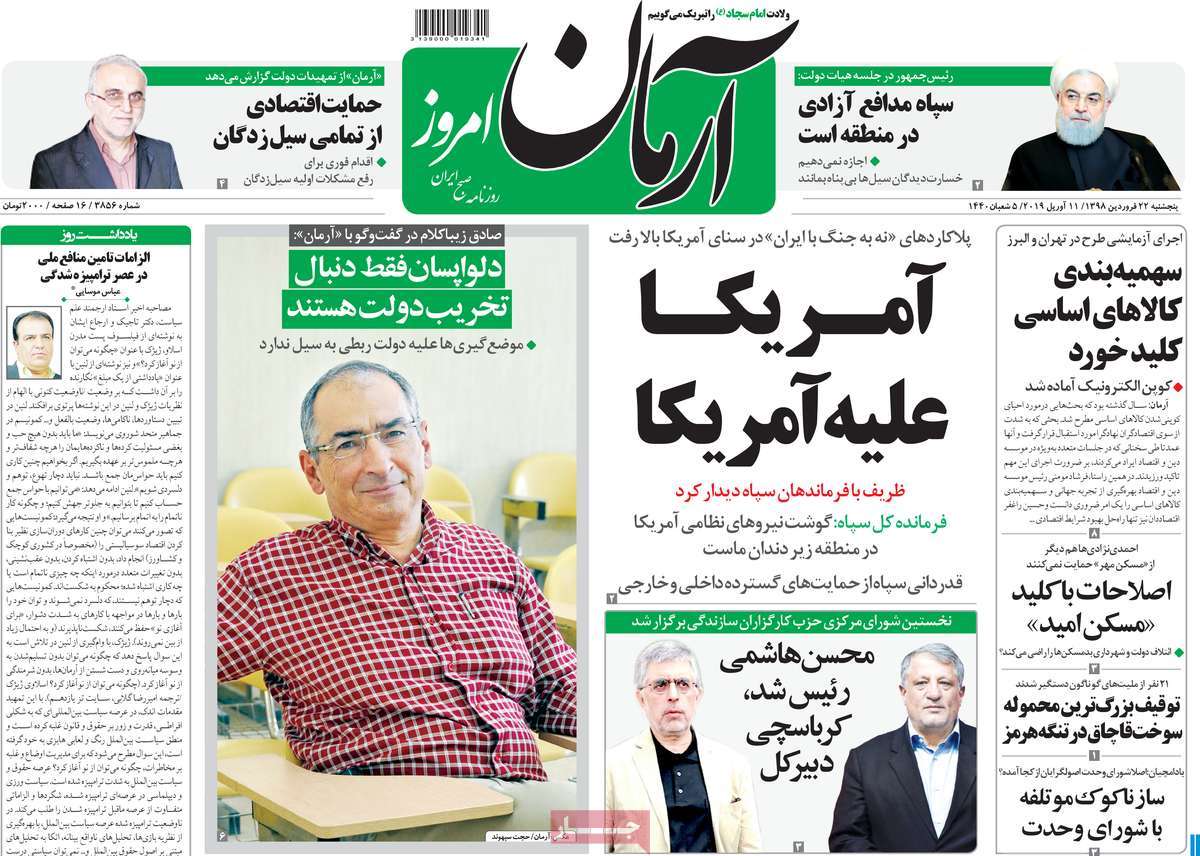
Arman-e Emrooz:

1- US against US: Placards at US Senate Say No to War with Iran

2- IRGC Chief: Flesh of US Military Forces under Our Teeth

3- IRGC Defending Freedom in Region: President

A Look at Iranian Newspaper Front Pages on April 11


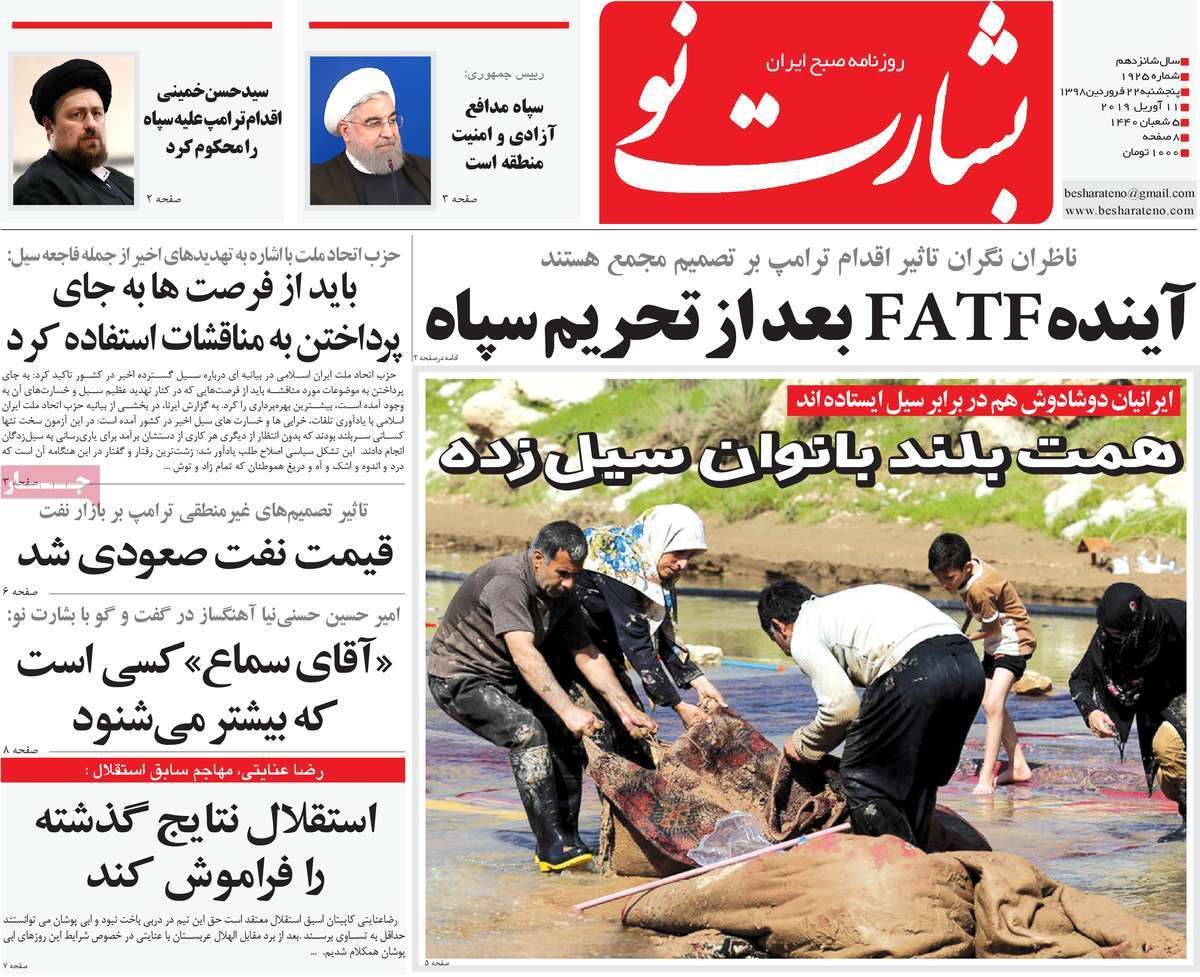
Besharat-e Now:

1- Rouhani: IRGC Defending Regional Freedom, Security

2- Imam Khomeini’s Grandson Condemns Trump’s Move against IRGC

3- Future of FATF after IRGC Blacklisting: Observers Worried

4- Rising Oil Prices Result of Trump’s Illogical Decisions on Oil Market

A Look at Iranian Newspaper Front Pages on April 11


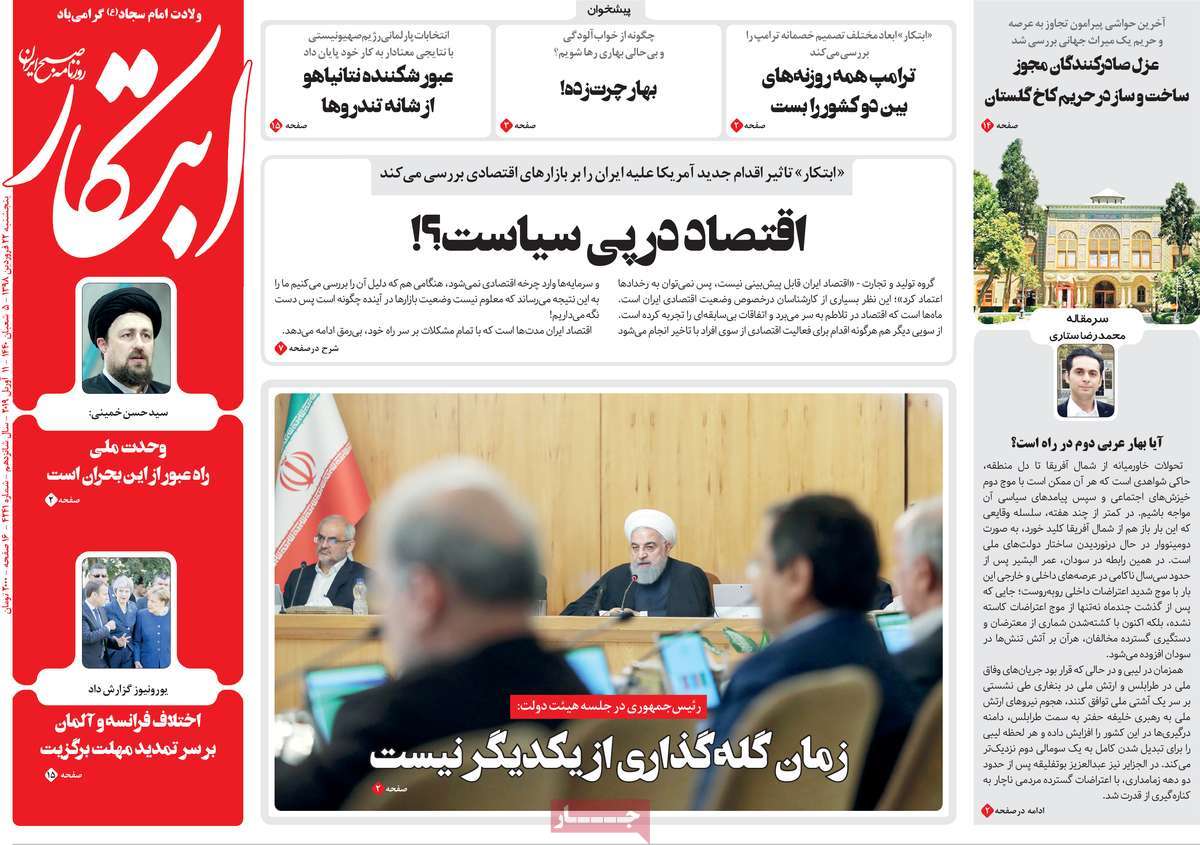
Ebtekar:

1- Trump Closes All Openings between Iran, US

2- Netanyahu Wins Elections with Close Margin: Meaningful Results of Polls

3- Disagreement in Germany, France over Extending Brexit Deadline

4- A Report on Impact of US’ Move on Economic Markets

A Look at Iranian Newspaper Front Pages on April 11


Etemad:

1- Return of Apartheid in 21st Century: Netanyahu Wins Elections

A Look at Iranian Newspaper Front Pages on April 11


Ettela’at:

1- Tehran Resolved to Prevent Rise of Tensions in Region: Rouhani to Macron

2- IRGC: We’ll Give Unforgettable Lessons to Enemy

3- Nasrallah: We’ll Stand by Iran’s IRGC

A Look at Iranian Newspaper Front Pages on April 11


Jomhouri Eslami:

1- World’s Negative Reaction to US’ Plot against IRGC

2- Americans’ Stupid Move Made Iranians More United: Zarif

3- Saudi Arabia, Bahrain Have No Proper Understanding of US’ Adventurism

4- Japanese Official: We Will Exercise Our Right to Buy Iran’s Oil

A Look at Iranian Newspaper Front Pages on April 11


Kayhan:

1- Don’t Hesitate, Close Strait of Hormuz! [Editorial]

2- CENTCOM Chief Rushes to Visit Iraq President after Iran Blacklisting

3- IRGC Chief: Iran to Show Immediate, Decisive Reaction to US If They DO Any Damn Thing

A Look at Iranian Newspaper Front Pages on April 11


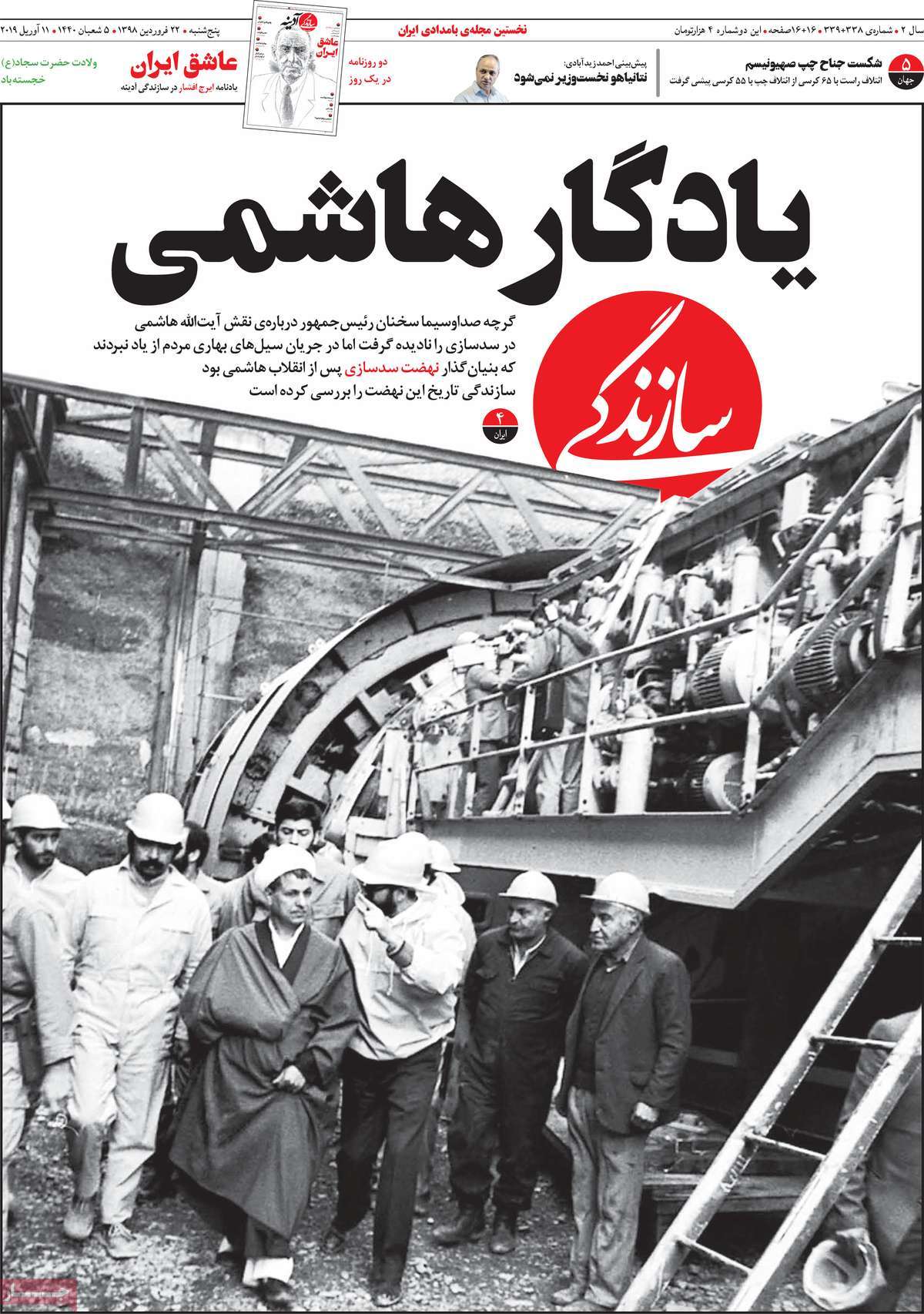
Sazandegi:

1- Netanyahu Not to Be Re-Elected as Premier: Analyst

2- Left-Wingers in Israel Defeated: Right-Wingers Win 65 seats

A Look at Iranian Newspaper Front Pages on April 11


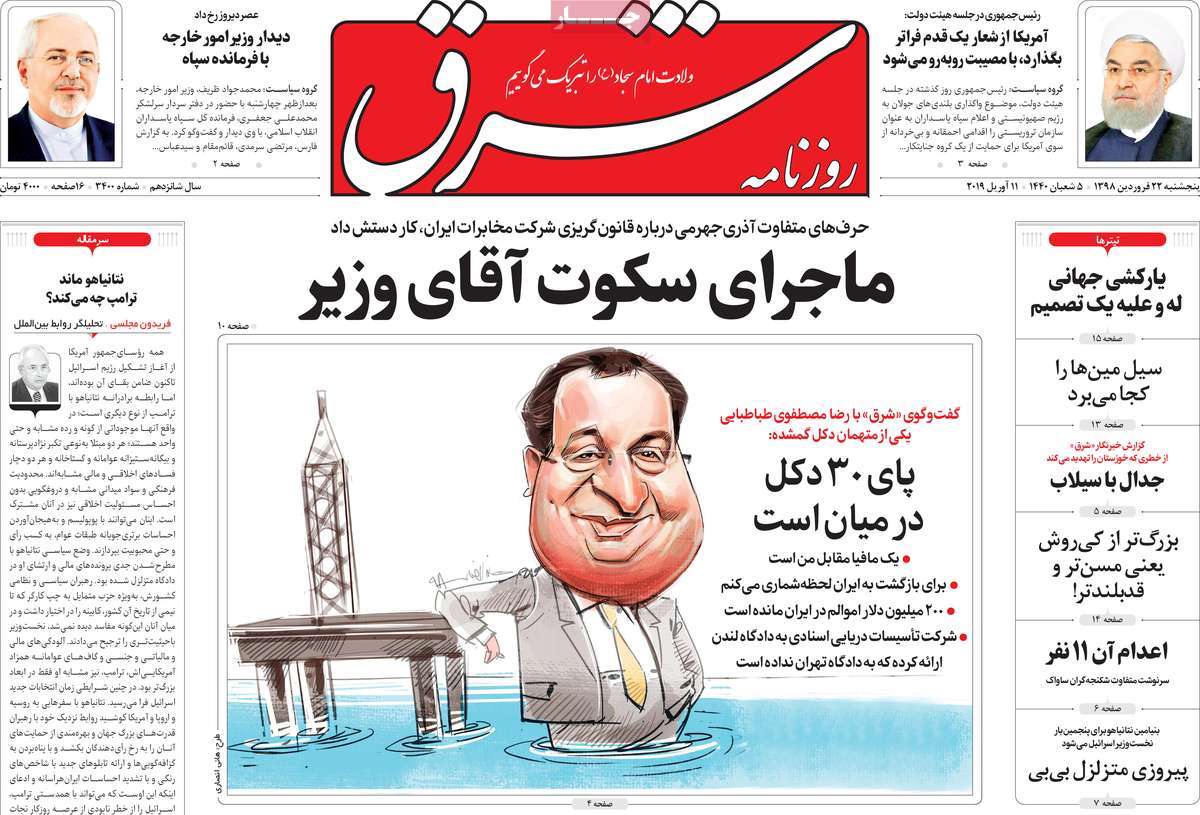
Shargh:

1- US to Face Disaster If It Goes beyond Verbal Threat: Rouhani

2- FM Zarif Meets IRGC Chief

3- Netanyahu Remained in Power; What Will Trump Do? [Editorial]

A Look at Iranian Newspaper Front Pages on April 11


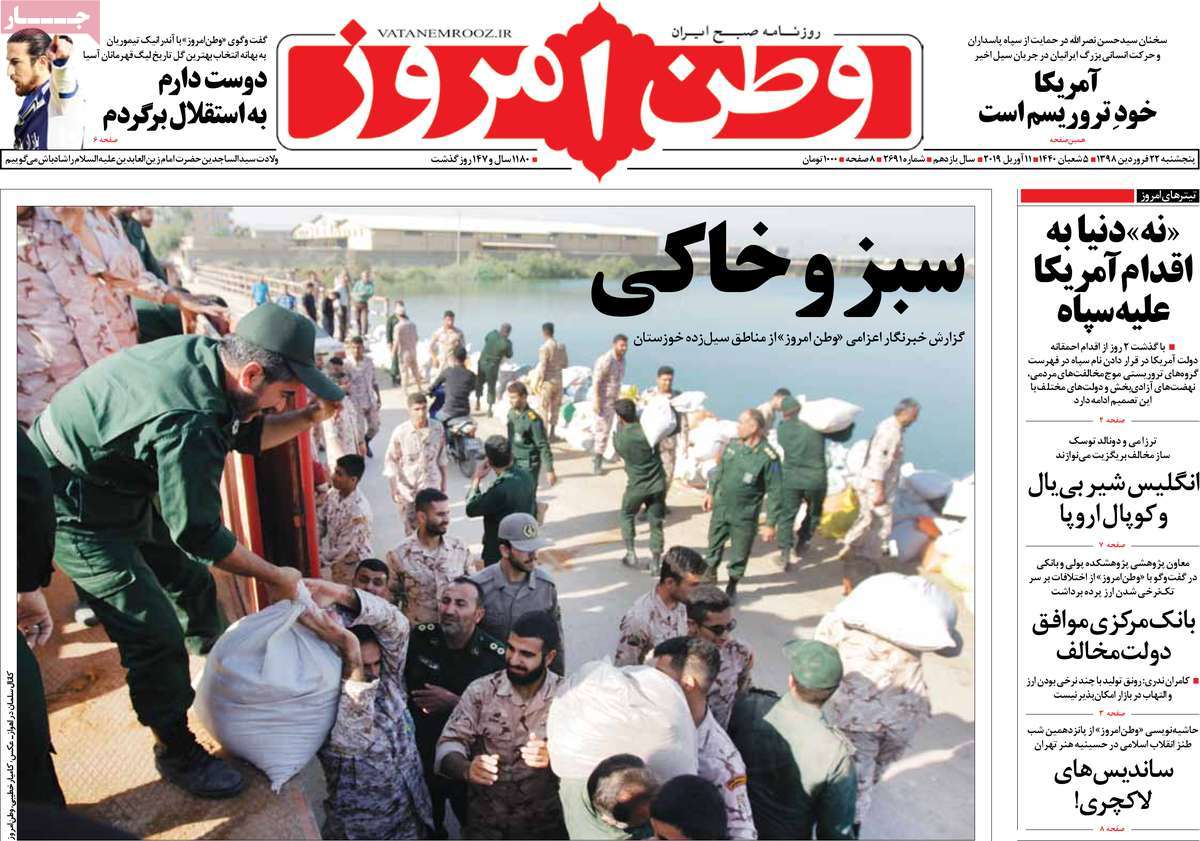
Vatan-e Emrooz:

1- World Says No to US’ Move against IRGC

2- UK Turns into Weak Lion of Europe

3- US Is Terrorism Itself: Nasrallah Supports IRGC

A Look at Iranian Newspaper Front Pages on April 11

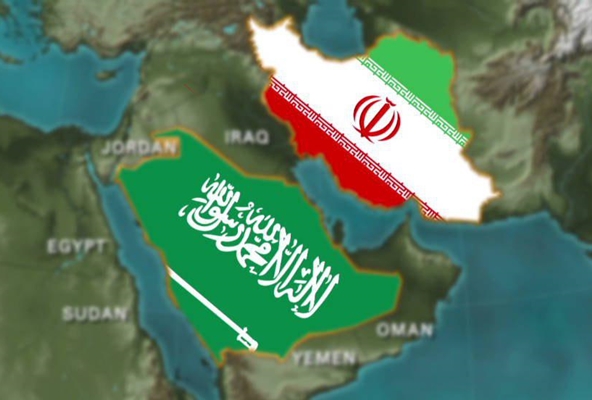
‘Iraq Never Wants to Be Bone of Contention between Iran, Saudi’

Riyadh Left Alone by Arab Allies in Anti-Iran Campaign: Analyst  

Fereydoun Majlesi made the comments in an interview with Aftab-e Yazd daily. Here is the full text of his comment:

Following Iranian President Hassan Rouhani’s recent trip to Baghdad and the signing of an agreement between Iran and Iraq, a high-level delegation from Saudi Arabia went to Baghdad to sign Memoranda of Understanding, in particular on Iraqi electricity exports.

However, this rivalry between Riyadh and Tehran to keep Iraq for themselves is basically wrong, since, unfortunately, Saudi Arabia is not a nation that behaves on the basis of norms and international relations.

The desire to keep Iraq by the two countries comes in a situation that it should not be forgotten that Iraq is an independent state, and the Iraqi government [for sure] plays a role [in this game]. The fundamental role of the Iraqi government is to tell the other states in the region that it is independent and establishes a balance in its relations with all countries. This means that it will have high-level relations with its two neighbours, and will also be more involved with a country with less trouble in relations.

These days, the international community does not have very good ties with Tehran because of US sanctions against the Islamic Republic, and it is believed that relations with Iran will upset the United States!

Moreover, it should not be forgotten that Iraq is an Arab state and normally gives priority to ties with Arab countries rather than Iran. However, it has a kind of rivalry with Saudi Arabia as Iraq is a Shiite-majority country and Saudi Arabia is an authoritarian Sunni state.

Iraq knows that Riyadh is trying to establish a foothold in Baghdad. All in all, the Iraqi government has to think of its own security and not annoying Iran, Saudi Arabia and the United States. In the meantime, not upsetting the US is more important than others. Iraq is still occupied by Washington and part of the federal government of Iraq is under the influence of the United States.

The tensions between Iran and the United States in recent days, which could be the beginning of a war in the US, will make it important for Iraq to keep itself away from this war because Baghdad does not want to be destroyed once again.

Anyway, Iraq is trying to be independent because it is vast and rich and it is more inclined to the Arab world. Iraq is going to be the strongest Arab country and will go back the same way again. Considering its geopolitical conditions, wealth and position, it is necessary for Iraq to stand again on its own feet. Therefore, it must be acknowledged that Iraq will not allow Iran and Saudi Arabia to turn Baghdad into their scene of rivalry at all. For this reason, Iran must try to establish close relations with Iraq under equal circumstances, not as a supporter.

Why Iran Floods Inflicted Such Heavy Casualties, Damages

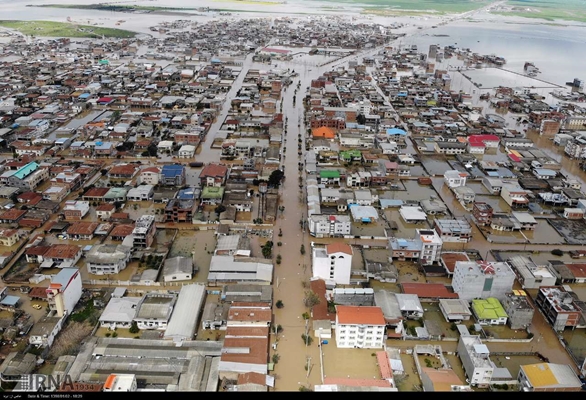
Evacuation orders have been issued to residents in many towns and cities in southern Iranian Khuzestan and Lorestan provinces, and there is the possibility of every eventuality. Considerable damage has been inflicted to flood-stricken areas, and over 70 of our compatriots have lost their lives in the natural disaster.

Still, the most obvious point with regards to the management of flood affairs was the confusion and bewilderment of authorities and a lack of coordination among different institutions. Indubitably, if the necessary measures to tackle possible floods had been adopted before the disaster hit, the extent of the damage and casualties would have decreased greatly.

To discuss and analyze the reasons and consequences of the recent floods which hit much of Iran, the Arman daily has had an interview with Professor Parviz Kordavani, a prominent Iranian geographer and environmental expert.

Experts from the interview summarized by the IFP follow.

There is much speculation that Iran has slipped into the rainfall period with the recent floods. Do you confirm this?

No. Such a thing has not happened and Iran has not entered the rainfall period. We are facing global warming nowadays, and this phenomenon has had several consequences. Global warming has increased rainfall in areas which receive rain. On the other hand, the amount of rainfall has dropped in areas with little rain. That is why there has not been much rainfall in Iran over the past 15 years, and there will not be much rain in the future, either.

Global warming has resulted in erratic rainfall in different parts of the earth. This erratic rainfall has, for example, resulted in locations like Iran getting as much rain in one day as other locations would get in a year. Moreover, there is no snow left as it has all melted as a result of global warming.

Some media had quoted me as saying that Iran has entered the rainy period. I don’t believe in such a thing at all. The recent rains in Iran have been temporary, and it is not a permanent phenomenon.

Why did the recent rain in Iran immediately become so destructive?

The precipitation could have been more of a blessing to us. However, they became destructive because there was no good management in that regard. Officials should have taken into account the fact that with the earth growing warmer, rainfalls would become erratic and might do more harm than good. The rainfall could have replenished subterranean water resources, whose levels have dropped by up to 400 metres in some parts of the country like Jahrom, and could have boosted farming.

Before the recent rainfall, farming was improving in different parts of the country, and provinces such as Khuzestan were in a good state with regards to agricultural activities. Still, because there was no good management, the recent rain and releasing water from dams have negatively affected agriculture in the province. The most important consequence of the recent rainfall was that it decreased the lifetime of dams in the country and put dams in serious danger.

Why has the lifetime of dams decreased?

The situation unfolded in such a way that if such rainfall occur in the future again, authorities will have to open dam discharge gates, which will both reduce the lifetime of dams and endanger areas near rivers. More importantly, the recent flash floods have carried with them mud and soil into dams. Undoubtedly, the existence of soil in dams will considerably reduce the lifetime of dams.

Unfortunately, authorities did not have an acceptable performance with regards to the management and construction of dams.
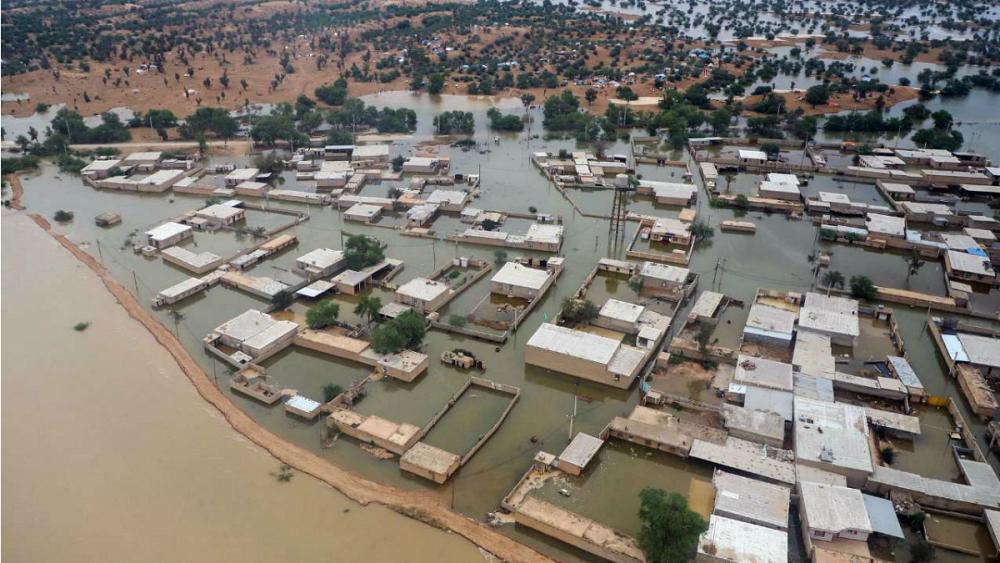
Why Iran Floods Inflicted Such Heavy Casualties, DamagesWhat consequences will the existence of mud in dams have?

The existence of mud in dams will not allow water to keep flowing easily in the reservoir behind the dam. Hence, when flooding occurs, officials say that dams are on the verge of collapse. Under such circumstances, they decide to open the upper discharge gates of dams, which would harm areas down the rivers. Some individuals, without giving any scientific evidence, regard dam building as harmful. Nevertheless, if dams are constructed on the path of floods, it will considerably decrease the extent of destruction.

Many pools and wells should be dug on the potential paths of floods, so that water will be absorbed into the ground at times of rain and the intensity of floods will decrease. Rain is a God-given blessing and should be used properly. Today when they open the discharge gates, all the water flows into the sea. The proper method is to manage the water just before it is going to flow onto agricultural fields by spreading it evenly all over the fields, so that it will both improve farming in the area and replenish underground water resources. The move will help rejuvenate nature in the future as well. However, the situation has forced officials to put all these things aside and only care for people’s lives.

Under the current circumstances when many people in flood-hit areas have lost their homes, what should be done to prevent this from happening again?

The Aq-Qala region in northern Golestan province is located at the far end of a plain and, hence, is the lowest point of the plain. So, even a small amount of rain could trigger floods there. The mistake made by authorities is that they dredge that area, not knowing that rain would bring mud into the area again. What people did was more appropriate. They set up fences on both sides of the river using bricks and rocks, managing to harness water to a great extent.

The dangerous thing is that officials say they are going to rebuild people’s homes. This is a big mistake and should not happen.

In the current situation, people should not enter their homes which have become wet all through as a result of flooding as roofs are apt to collapse any moment. The presence of mud also increases the odds of the ground caving in in flood-hit areas. So, construction of homes on such land is a mistake.
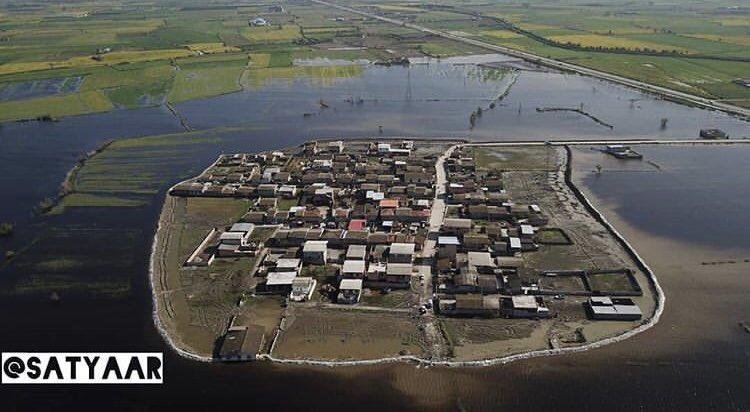
Why Iran Floods Inflicted Such Heavy Casualties, DamagesIn this situation, what should be done instead if flood-stricken people’s homes are not reconstructed?

The houses should be built in the air. In many foreign countries, multi-floor buildings are built on a structure similar to a large stool, so that floods would run from under the buildings and homes would sustain no damage. This action should be taken in areas in Iran where there is a chance of floods striking again. Another way is to make the foundation of buildings with cobblestone rather than cement and stone. If this happens, water would no longer make the walls of homes wet.

Orders have been issued for the evacuation of many towns, cities and village exposed to possible flooding. Can such evacuations be a logical solution to settle the current flooding crisis?

Those who are issuing evacuation orders today should not have allowed people to build homes in such areas in the first place. They should have taken all possibilities into consideration.

I, for one, am warning against the condition of dams in the country. If the current situation remains the same, and if every rainfall puts dams in danger of collapse forcing authorities to open discharge gates, most dams in the country will be destroyed over the next forty or fifty years. So, I’m raising the alarms. The recent flooding in the country does not mean Iran has entered the rainy period. Many a region that has increased its crops in spring, but suffered water shortage for irrigation in summer.

‘Trump Needs to Order Coffins, Diapers for US Forces in Western Asia’

In an op-ed published by Kayhan newspaper, Mohammad Sarrafi writes that the US decision about the IRGC is more like a hasty move deeply rooted in the US outrage and desperateness in the region.

American officials believe that every armed entity that resists the US’ bullying policies in the region, instead of kneeling down and bowing to them, is a terrorist entity, the article said, referring to Lebanon’s Hezbollah Movement, Palestinian resistance group of Hamas, Yemen’s Ansarullah, Iraq’s Popular Mobilization Units and Iran’s IRGC as examples of such entities.

“They have already received lots of slaps in the face by the IRGC. The American officials had lots of bizarre dreams for the Middle East. They had a special plan to create a new Middle East. The new region was born but not in the shape they wanted. The new Middle East has been created in a new format with a new nature completely against the plan they had in mind: The new region is based on a main pillar: Resistance,” it added.

US Secretary of State Mike Pompeo said Washington has a direct message for the Commander of the IRGC Quds Force, Major General Qassem Soleimani, adding, “America is determined each time we find an organization, institution or an individual that has taken the lives of individuals, it is our responsibility to reduce that risk.”

The main question, the op-ed said, is that which measure the US is determined to adopt and why the US top diplomat singled out the Iranian top commander, Major General Soleimani in his speech?

According to Sarrafi, the answer to the mentioned questions should be found in the remarks by the retired US General Stanley A. McChrystal, who led the US special operations in Iraq from 2003 to 2008, about Major General Soleimani.

In an article in Foreign Policy last year, the general put his focus on Soleimani saying, “His brilliance, effectiveness, and commitment to his country have been revered by his allies and denounced by his critics in equal measure. What all seem to agree on, however, is that the humble leader’s steady hand has helped guide Iranian foreign policy for decades—and there is no denying his successes on the battlefield.”

“Soleimani is arguably the most powerful and unconstrained actor in the Middle East today. US defence officials have reported that Soleimani is running the Syrian civil war (via Iran’s local proxies) all on his own…. His brilliance, effectiveness, and commitment to his country have been revered by his allies and denounced by his critics in equal measure. What all seem to agree on, however, is that the humble leader’s steady hand has helped guide Iranian foreign policy for decades – and there is no denying his successes on the battlefield. Soleimani is arguably the most powerful and unconstrained actor in the Middle East today. U.S. defense officials have reported that Soleimani is running the Syrian civil war (via Iran’s local proxies) all on his own,” McChrystal said.

Now, Kayhan says: where is the man who has disturbed the American officials’ dreams?

The answer is that he along with tens of other top commanders of Iran’s army and the IRGC have rushed to the flood-hit areas of Iran to contribute to collective efforts to cope with the floods which have hit the country over the past weeks.

According to the newspaper, the White House’s stupid decision has another side: The costs which will be inflicted on the US and particularly on its military forces in the region.

“As Iranian officials have rightly declared, designating American forces deployed in the Middle East as terrorist forces is the logical response of the Islamic Republic of Iran to the US’ nasty decision.”

In response to Washington’s decision to put Iran’s Islamic Revolution Guards Corps on the terrorist list, the Supreme National Security Council (SNSC) of Iran declared the US a “state sponsor of terrorism” while calling the US CENTCOM a terrorist group as well.

But, the move by the SNSC doesn’t relieve the burden of the parliament’s responsibility to immediately enlist the US army and its affiliated groups and firms like Blackwater as terrorist entities, the op-ed said.

According to Sarrafi, the parliament’s move will have severe repercussions for the US army. “Trump has practically endangered the lives of American forces in the region,” he added.

Sarrafi said it seems Trump has apparently forgotten that just some months ago, in what a humiliating situation he visited Iraq.

“The American officials sit idly in the White House, signing stupid documents which endanger the lives of thousands of poor forces in the region. Within the next week, the US Congress is set to declare its stance towards Trump’s decision. If the Congress approves the stupid decision, Trump needs to order thousands of diapers and coffins for American forces stationed in Western Asia,” the op-ed concluded.

Iran, Kazakhstan Resolved to Expand Bilateral Ties

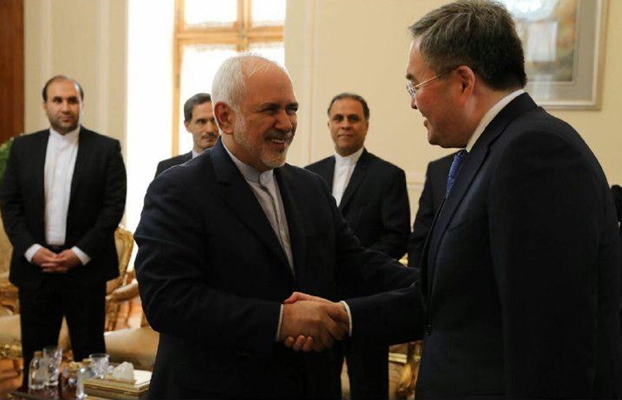
During the meeting, Iran’s top diplomat described Kazakhstan as a good friend of the Islamic Republic and said Iran attaches significance to its ties with Kazakhstan.

For his part, the Kazakh official expressed delight in his visit to Iran and said he held good talks with Iranian officials.

“In Kazakhstan’s multilateral politics, Iran has always been deemed as an important country and we are after expansion of our ties with the country,” he said.

During the meeting, the two sides also discussed mutual, regional, international issues, the legal regime of the Caspian Sea, creation of a joint economic and transit commission and expansion of consular cooperation.

They also exchanged views on the US’ illegal sanctions on Iran, dangerous aspects of the US’ recent move to designate Iran’s Islamic Revolution Guards Corps (IRGC) as a terrorist organization, building joint transportation corridors, the upcoming Conference on Interaction and Confidence-Building Measures in Asia (CICA) in Tajikistan, and Kazakhstan’s support for the Iran nuclear deal.

Tileuberdi is on an official visit to Iran to take part in the 16th round of political consolation between Iran and Kazakhstan.

World Condemns US for Designating IRGC as Terror Group

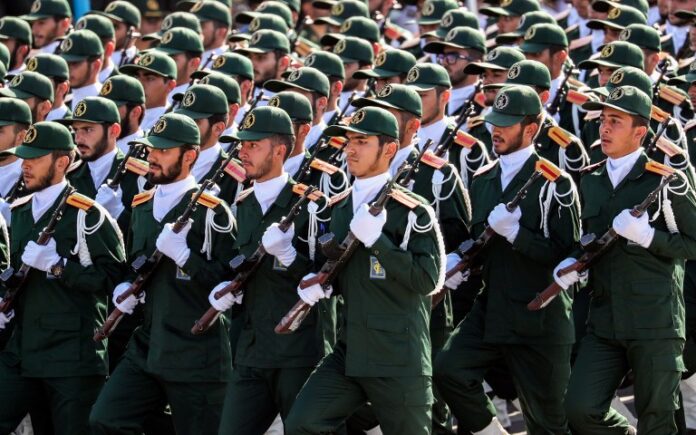
Islamic Revolution Guards Corps (IRGC)/ AFP PHOTO

Turkish Foreign Minister said the move will pave the way for instability in the region. Mevlut Cavusoglu, speaking alongside his Qatari counterpart in a joint press conference, added the measure was a step outside international law.

Doha’s top diplomat Mohammed al-Thani also denounced the US blacklisting of the Iranian military force, saying that disagreement with another country’s army should not be settled through sanctions.

Meanwhile, Chinese Foreign Ministry spokesman said Beijing is opposed to power politics and bullying.

Baghdad warned the US that its actions will have negative repercussions for Iraq and the region. Iraqi Prime Minister Abdul-Mahdi said that his country will maintain friendly ties with both parties to prevent tensions in the region.

The Iraqi Premier said that Baghdad has already told the American commander in the country that Iraq would not accept being used for any acts of aggression against other states.

The US move has also been condemned by Iraq’s Popular Mobilization Forces and political factions.

Jafar al-Hosseini, a spokesman for the Iraqi Hezbollah, said hours after the blacklisting of the Islamic Revolution Guards Corps that the Iraqi resistance will be next to the IRGC. He stated that “the Iraqi resistance will be next to the Revolution Guards to counteract any destructive developments in the region.”

The Iraqi Hezbollah military spokesman emphasised that “the IRGC is next to the nations of the region in their struggle against US scenarios.”

Following the recent US hostile act, the Popular Front for the Liberation of Palestine stressed that the US move would put the occupiers under fire and this action cannot save the mercenary regimes from the collapse.

The Palestinian Islamic Jihad condemned the blacklisting of the IRGC saying in a statement that the US is one of the main sponsors of terrorism, and its policies threaten peace in the world. The movement insisted that the US support for the Zionist terrorist crimes against the Palestinian people is an evidence of its crimes against humanity.

China’s Xinhua News Agency said in a statement that Trump’s decision to place a military on the terror list will worsen the situation in the region. “Many believe that the move by the US government will complicate the situation in the Middle East,” reads the statement.

Furthermore, Damascus strongly condemned the hostile decision of the US government against the Islamic Revolution Guards Corps and described it as an obvious violation of the sovereignty of the Islamic Republic of Iran.

An official source at the Syrian Foreign Ministry stated that the US government’s irresponsible act is in line with Washington’s covert anti-Iran war to serve Israelis.

The US action proves that it has admitted the important role of the IRGC in defending the sovereignty of the Islamic Republic of Iran and its important role in the resistance, the source added.

The UK and Japan also announced that they will not follow the United States in labeling Iran’s Islamic Revolution Guards Corps a terrorist organization.

Japanese Foreign Minister Taro Kono says Tokyo has maintained a close relationship with Iran, and that, it will continue working to solve problems through dialogue. Japan is the latest country joining a chorus of condemnation against the US move.

However, Bahraini Foreign Ministry welcomed the US decision to blacklist the IRGC.

Israeli Prime Minister Benjamin Netanyahu also welcomed the decision of the President of the United States and took it as a gift to get more votes from settlers. The Israeli prime minister, in a tweet, thanked Donald Trump and described him as a “dear friend.”

“Thank you, my dear friend, President Donald Trump,” Netanyahu tweeted in Hebrew, “for answering another one of my important requests.”

Experts say Netanyahu’s choice of words seemed to imply that Trump’s earlier decision to recognise Israeli sovereignty over the Golan Heights was also a gift given at the request of the embattled Israeli prime minister.

Senior Pentagon and CIA officials opposed Trump’s decision to impose sanctions on the military unit and affiliated companies and individuals, arguing that it would allow Iranian officials to justify deadly operations against Americans overseas.

Trita Parsi, founder of the National Iranian American Council, offered this as proof that Netanyahu now seems to have more sway over the president’s decisions than his own military and intelligence officials.

IRGC Vows to Give Unforgettable Lessons to Enemy

In a statement on Wednesday, the IRGC said it will utilize powerful tit-for-tat approaches against the enemy and defend Iran’s Islamic Revolution under the supervision of the Leader Ayatollah Seyyed Ali Khamenei. The IRGC said Washington’s move shows the foolish policies of the US and its allies in the region.

The statement also said that the United States designated the IRGC as a terrorist group following Washington’s defeat in the Middle East.

It reiterated that the decision will accelerate the country’s defensive and offensive capabilities and also its increasing regional power.

The statement added that the US move indicates the depth of their grudge and anger toward this revolutionary and popular organisation.

The IRGC also expressed gratitude to the Iranian nation, officials and armed forces for giving their all-out support to the military forces following the Trump administration’s decision.