Thursday, January 8, 2026
Home Blog Page 323

Yemen’s Houthis warn US, Israel of ‘war’ if Iran attacked

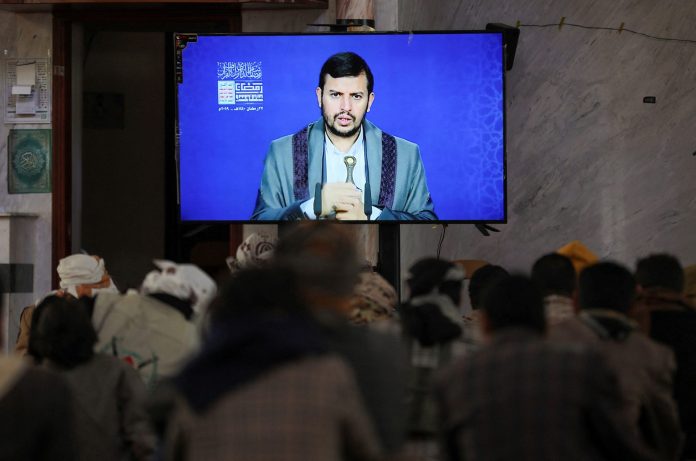
Houthi Leader

The source has cautioned the United States and Israel against any act of aggression against Iran, saying such a move will spark a regional war.

The source, whose name was not mentioned, issued the warning on Wednesday amid reports that the US is evacuating nonessential personnel and their family members from West Asian countries in anticipation of an Israeli strike against Iran.

He told Newsweek that Yemeni forces had adopted a heightened state of readiness as they were already “essentially in a state of war with the Zionist enemy entity due to its aggression and siege on Gaza, followed by its aggression against Yemen.”

Yemeni forces, the source noted, are in a state of constant readiness while working to escalate their anti-Israel operations.

“We are also at the highest level of preparedness for any possible American escalation against us,” he added.

“Any escalation against the Islamic Republic of Iran is also dangerous and will drag the entire region into the abyss of war.”

The Ansarullah source also emphasized that the US has no right to attack regional countries in the service of the Zionist regime.

“It is certainly not in the interest of the American people to become involved in a new war in service of the Zionist entity,” he further warned.

The remarks came after US President Donald Trump acknowledged that American citizens were being moved out of West Asia, as “it could be a dangerous place.”

Meanwhile, Iranian Defense Minister Brigadier General Aziz Nasirzadeh responded to Washington’s threats of military action in case of the failure of the indirect nuclear talks with Tehran.

He said the US side will suffer more losses in that case, as Tehran would target all American bases in the region.

Tehran and Washington have held five rounds of indirect talks, mediated by Oman, over Iran’s nuclear program and the removal of US sanctions on the Islamic Republic. A sixth round of the negotiations is planned for Sunday in Muscat.

US warns countries not to join French, Saudi UN conference on Palestine: Reuters

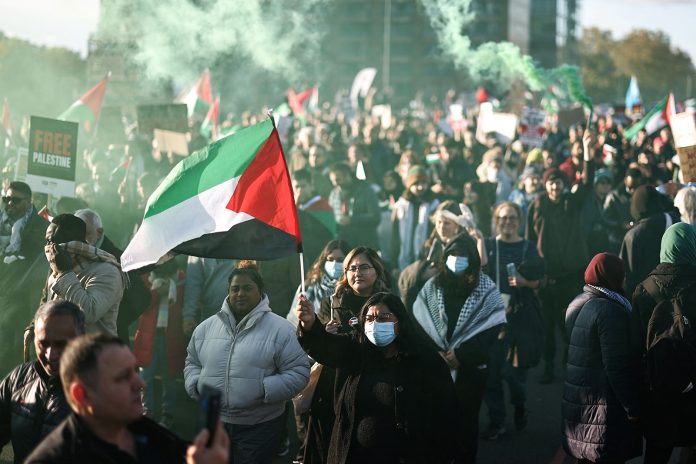
Pro-Palestine Rally
Protesters holding placards and flags take part in the 'National March For Palestine' in central London on November 11, 2023.

The cable, sent to countries on Tuesday, warns them against taking “anti-Israel actions” and says attending the conference would be viewed by Washington as acting against US foreign policy interests.

France, a permanent member of the UN Security Council, is a US ally in Nato. Saudi Arabia is one of the US’s closest Middle East partners.

US President Donald Trump was feted during a May visit to Riyadh, where Saudi Arabia signed billions of dollars of investment deals with the US.

France and Saudi Arabia are co-hosting the gathering between 17 and 20 June in New York.

“We are urging governments not to participate in the conference, which we view as counterproductive to ongoing, life-saving efforts to end the war in Gaza and free hostages,” the cable says, according to Reuters.

“The United States opposes any steps that would unilaterally recognise a conjectural Palestinian state, which adds significant legal and political obstacles to the eventual resolution of the conflict and could coerce Israel during a war, thereby supporting its enemies,” it added.

France had been lobbying the UK and other European allies to recognise a Palestinian state at the conference.

However, Middle East Eye reported in June that the US has warned Britain and France against recognising a Palestinian state at the conference. At the same time, Arab states have been urging them to proceed with the move, sources told MEE.

In late May, United Nations member states held consultations in preparation for the conference, during which the Arab Group urged states to recognise Palestinian statehood.

The Arab Group said they would measure the success of the conference by whether significant states recognise Palestine, sources in the UK Foreign Office told MEE.

Since the 1950s, successive American administrations have stated that their ultimate goal in ending the Palestinian-Israeli conflict is a two-state solution. Many experts and diplomats have earmarked occupied East Jerusalem, the occupied West Bank and Gaza, which Israel seized from Egypt and Jordan in the 1967 war, as the heartland of a future Palestinian state.

But US ambassador to Israel Mike Huckabee told Bloomberg News on Tuesday that a Palestinian state in the occupied West Bank was no longer a US policy goal. He said Israel’s “Muslim neighbours” could give up their land to create one.

According to the cable, the US said that “unilaterally recognizing a Palestinian state would effectively render Oct. 7 Palestinian Independence Day”.

Hamas led an attack on southern Israel on 7 October 2023, killing around 1,200 people. Israel responded by launching a devastating assault on Gaza that has killed more than 54,000 Palestinians, mainly women and children, and reduced the enclave to rubble.

The US cable also said Washington was working with Egypt and Qatar to reach a ceasefire in Gaza and free the captives there.

“This conference undermines these delicate negotiations and emboldens Hamas at a time when the terrorist group has rejected proposals by the negotiators that Israel has accepted,” it said.

The Trump administration pushed Israel to agree to a three-phase ceasefire with Hamas in January. Israel broke that agreement by refusing to begin talks on ending the war permanently and unilaterally resumed attacking Gaza.

Trump tells Netanyahu to end Gaza war, stop Iran threats: CNN

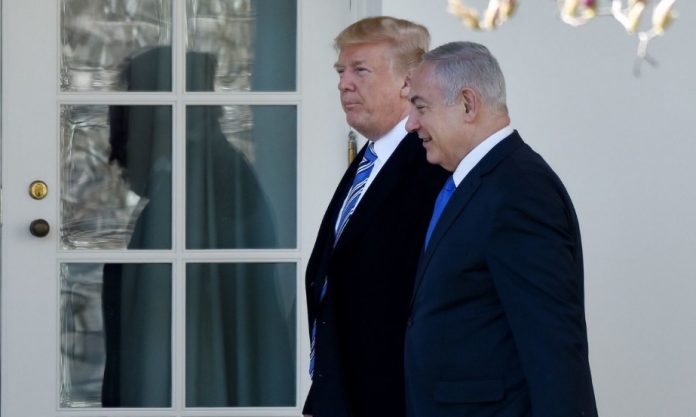
Trump Netanyahu

The two leaders spoke on the phone on Monday. Trump later said the call went “very well, very smooth.”

The call for Israel to change course comes as Washington pushes for a nuclear deal with Iran and engages in indirect talks with Hamas over a ceasefire in Gaza.

Netanyahu convened his top ministers Tuesday night after there was “some progress” in negotiations toward a ceasefire deal, according to his office. The purpose of the meeting was to give updates on the negotiations and discuss next steps.

Earlier in the day, Israeli Foreign Minister Gideon Sa’ar stated there had been recent progress in ceasefire talks that also aim to bring back hostages held in Gaza.

“Israel is serious in its will to secure a hostage deal. There has recently been certain progress,” Sa’ar told a news conference in Jerusalem, adding that “in light of past experience, I don’t want to overstate it at this point.”

Hamas has announced it remains open to the ceasefire deal proposed by US envoy Steve Witkoff, but said it requires stronger guarantees against Israeli attacks.

In a televised speech on Thursday, Khalil Al-Hayya, a high-ranking official in the group, said Hamas has not rejected Witkoff’s proposal but has submitted amendments with stronger security guarantees.

Hamas wants any deal to include a permanent end to the war in Gaza and a withdrawal of Israeli forces.

Trump and Netanyahu appear increasingly at odds over the war in Gaza as the conflict passes the 20-month mark. Netanyahu has made clear that his war goals include the complete disarmament and removal of Hamas, while Trump has pushed for an end to the war.

It’s one of several major issues in the region where a growing rift is emerging between the US and Israel. In recent weeks, the Trump administration bypassed Israel on a trip to the Middle East, reached a ceasefire deal with the Iran-backed Houthis in Yemen that failed to halt their ballistic missile attacks at Israel, and lifted sanctions on Syria.

Meanwhile, Trump stated his administration is “trying to make a deal so that there’s no destruction and death” in Iran. The sixth round of talks between the US and Iran is slated to start in the coming days.

During their call, Trump asked Netanyahu to stop talking about an attack on Iran, the source familiar with the conversation said, and halt the leaks and reports about plans and preparations for an Israeli attack on Iran’s nuclear facilities.

Netanyahu has repeatedly pushed for a military option to stop Iran’s nuclear program. In the conversation with Trump, Netanyahu told Trump that Iran is just trying to buy time and isn’t serious about negotiations, the source said. CNN reported last month that Israel was preparing for a possible strike on Iran’s nuclear facilities.

The Trump administration has also been trying to expand the Abraham Accords, the landmark series of agreements from Trump’s first term that saw Israel normalize relations with the United Arab Emirates, Bahrain and Morocco.

But Saudi Arabia – whose agreement to such a deal would be the ultimate prize – has repeatedly made clear that it will not normalize relations with Israel without concrete steps towards recognition of a Palestinian state and a plan to implement the two-state solution.

US Ambassador to Israel Mike Huckabee stated this week that a two-state solution is no longer a goal of US policy, as it had been for decades of both Republican and Democrat administrations.

“Unless there are some significant things that happen that change the culture, there’s no room for it,” Huckabee told Bloomberg News in an interview in Jerusalem. He said it won’t happen “in our lifetime.” Huckabee has previously advocated for Israeli settlements in the occupied West Bank and once noted that “there’s really no such thing as a Palestinian.”

Earlier in the war, Trump laid out vague plans for a “Gaza Riviera” that envisioned US control of the coastal enclave and the displacement of large parts of the Palestinian population living there.

Iran to launch third high-security uranium enrichment site in response to IAEA resolution

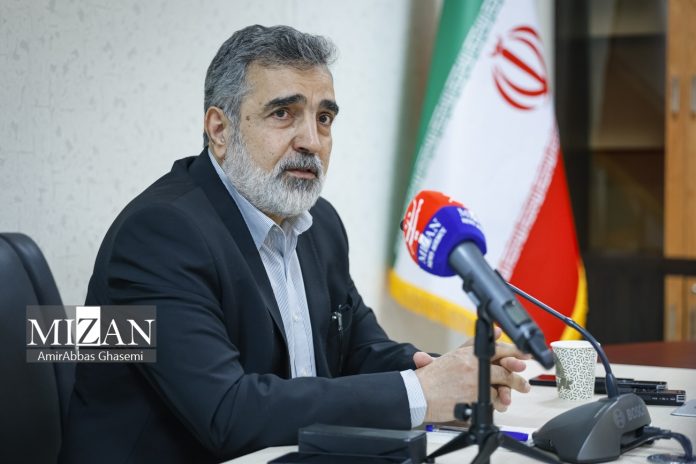
Behrouz Kamalvandi

Behrouz Kamalvandi, the spokesperson for the AEOI, made the announcement during a visit to the Tehran Research Reactor.

He condemned the resolution as a politically motivated and repetitive move by the US and European powers. “This path is not new. We’ve experienced such measures before and have issued the necessary warnings,” he said.

Kamalvandi outlined two major steps, including the launch of a new high-security enrichment facility, which will become Iran’s third such complex, and the full replacement of first-generation centrifuges at the Fordow facility with advanced IR-6 machines, substantially boosting Iran’s enriched uranium production capacity.

He emphasized that Iran’s nuclear infrastructure is now significantly more secure, and the new site will enhance those protections further.

Kamalvandi reiterated that while Iran seeks constructive engagement, the West’s confrontational tactics will only provoke reciprocal action.

“Our 60% enrichment capacity has increased sevenfold,” he stated. “We stand firm and will see this through.”

IAEA’s board of governors finds Iran isn’t complying with its nuclear obligations

IAEA

Nineteen countries on the International Atomic Energy Agency’s board, which represents the agency’s member nations, voted for the resolution, according to diplomats who spoke on condition of anonymity to describe the outcome of the closed-doors vote.

Russia, China and Burkina Faso opposed it, 11 abstained and two did not vote.

In the draft resolution seen by The Associated Press, the board of governors renews a call on Iran to provide answers “without delay” in a long-running investigation into uranium traces found at several locations that Tehran has failed to declare as nuclear sites.

Western officials suspect that the uranium traces could provide evidence that Iran had a secret nuclear weapons program until 2003.

The resolution was put forward by France, the U.K., Germany and the United States.

“Iran’s many failures to uphold its obligations since 2019 to provide the Agency with full and timely cooperation regarding undeclared nuclear material and activities at multiple undeclared locations in Iran … constitutes non-compliance with its obligations under its Safeguards Agreement,” the draft resolution adds.

Under the so-called safeguards obligations, which are part of the Nuclear Non-Proliferation Treaty, Iran is legally bound to declare all nuclear material and activities and allow IAEA inspectors to verify that none of it is being diverted from peaceful uses.

The draft resolution also finds that the IAEA’s “inability … to provide assurance that Iran’s nuclear program is exclusively peaceful gives rise to questions that are within the competence of the United Nations Security Council, as the organ bearing the main responsibility for the maintenance of international peace and security.”

Leader of the Islamic Revolution Ayatollah Seyyed Ali Khamenei has issued an official fatwa (religious decree) clearly establishing that any form of acquisition, development, and use of nuclear weapons violate Islamic principles and are therefore forbidden.

Iranian president: We rely on our people, not US

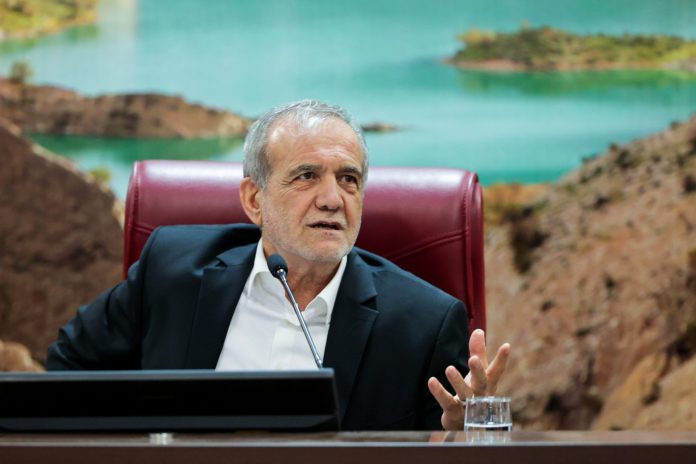
“We have not pinned our hopes on America. We will never bow to force,” Pezeshkian declared during the second day of his provincial visit.

He stressed that Iran’s future will be built on the strength and capabilities of its own people.

The president met with various groups, including business leaders and citizens, asserting that cooperation between intellectuals, scholars, managers, and the public would help overcome current challenges.

“There are problems, but with God’s help, we will solve them one by one,” he said.

Pezeshkian criticized US President’s remarks and accused the West of misrepresenting Iran’s intentions while ignoring their own record in the region.

He also condemned Israel’s actions in Gaza, calling them war crimes, and highlighted “Western hypocrisy regarding human rights.”

“Iran is resilient,” he concluded. “Despite sanctions and pressure for nearly five decades, we have not surrendered, and we never will.”

Iran’s envoy warns Tehran may withdraw from NPT if UN sanctions are reinstated

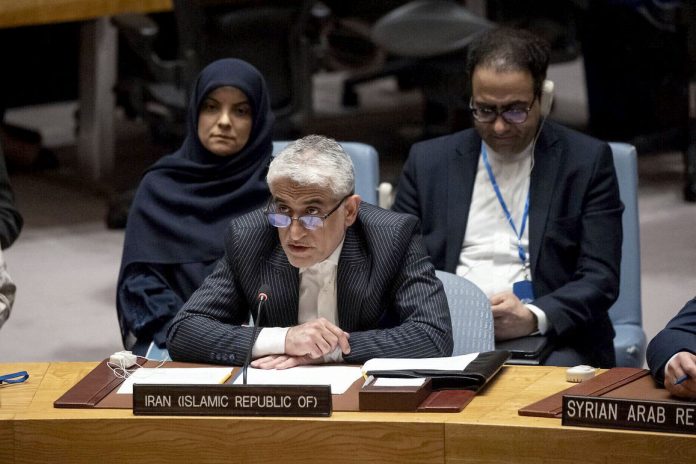
The country’s UN ambassador, Amir Saeid Iravani made the remarks in a letter dated Wednesday to the UN Security Council.

The letter came in response to an underway drive by the UK, France, and Germany, known as E3, that is aimed at restoring the sanctions. The campaign has seen the trio forward an anti-Iran resolution to the UN nuclear watchdog alongside the United States to prompt re-imposition of the bans.

The push aligns with the Western allies’ accusations that Iran is seeking to acquire nuclear weapons — a claim the watchdog has never verified, despite conducting the most rigorous inspections in its history.

Iravani, therefore, denounced the Western campaign as a “legally baseless and politically reckless act, with profoundly destabilizing consequences for regional and international peace and security.”

He reiterated the Islamic Republic’s previous warnings that it would consider “proportionate response,” including by “starting the process of withdrawal from the NPT in accordance with the Article X of the Treaty.”

The article outlines the right for a state party to withdraw from the treaty if “extraordinary events” jeopardizes its supreme interests.

The envoy further denounced as “utterly baseless,” the European trio’s wrongfully accusing Iran of “altering” its defensive doctrine so it could include development of nuclear weapons.

Such drive, he added, reflected “a deliberate attempt to manufacture a crisis.”

“Iran’s nuclear policy is unequivocally peaceful, rooted in both legal commitments under the NPT and a deeply held religious and strategic defensive doctrine prohibiting weapons of mass destruction,” the official asserted.

The Islamic Republic is, meanwhile, committed to finding a negotiated solution that provided enough assurances regarding the peaceful nature of its nuclear program, he asserted.

Pezeshkian says Iran determined to foster synergy among Islamic countries in support of Palestine

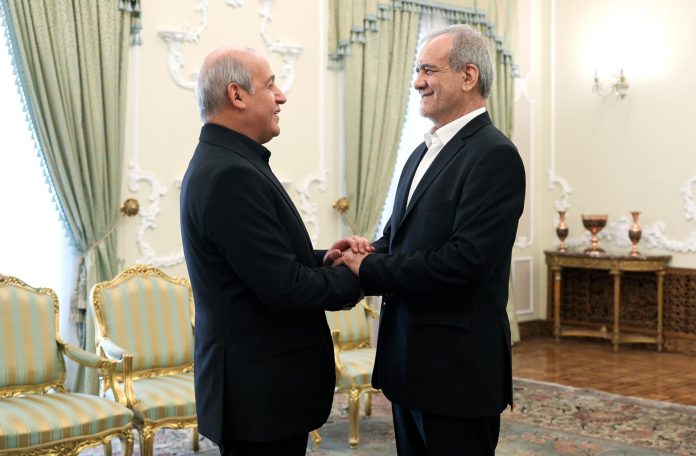
Speaking at a meeting with Jamil Mezher, Deputy Secretary-General of the Popular Front for the Liberation of Palestine (PFLP), on Wednesday, President Pezeshkian stated that Iran will utilize all its diplomatic and political capacities to help halt the crimes of the Zionist regime in Gaza.

He added that supporting the oppressed nation of Palestine is a priority for Iranian authorities in their discussions with officials from other nations and during international conferences.

Support for the Palestinian people is a principled policy of the Islamic Republic, rooted in the genuine guidelines of late Imam Khomeini and Supreme Leader of the Islamic Revolution, Ayatollah Seyyed Ali Khamenei.

Highlighting the lack of unity and coordination among Islamic countries in the face of the Zionist regime, which emboldens it to continue its atrocities in Palestine, the president stated that Iran seeks to strengthen synergy, brotherhood, and good neighborliness in the Islamic world to achieve a common stance on regional and international issues, including Palestine.

He emphasized that discord and divisions within the Islamic world stem from the sophisticated plots devised by adversaries of the Islamic Ummah, who use various tactics to set Muslim nations against each other in an effort to exploit their resources, sell weapons to these nations, and create a safe haven for the Zionist regime to continue its crimes in Gaza, Lebanon, and other Islamic countries.

The president expressed his wishes for the health of PFLP leaders and their release from the prisons of the Zionist regime.

In response, Mezher expressed gratitude to Iranian officials for their support of the Palestinian cause, thanking President Pezeshkian for his supportive and unifying stance on the issue of Palestine.

Highlighting the 20 months of resistance by Gaza residents against genocide, ethnic cleansing, infrastructure destruction, and the blockade of food and medicine delivery into the besieged area, the Palestinian official stated that despite these atrocities, the Palestinian nation continues to resist and will not allow the Zionist regime to implement its agenda of forced displacement of Gaza residents.

He also emphasized the importance of unity and synergy among different resistance groups in countering the Zionist regime’s plots, urging the Islamic world to mobilize all its resources at both regional and international levels to stop the massacre of the people of the Gaza Strip.

FM warns Iran will react ‘strongly’ to potential ‘strategic mistake’ by European troika

Abbas Araghchi

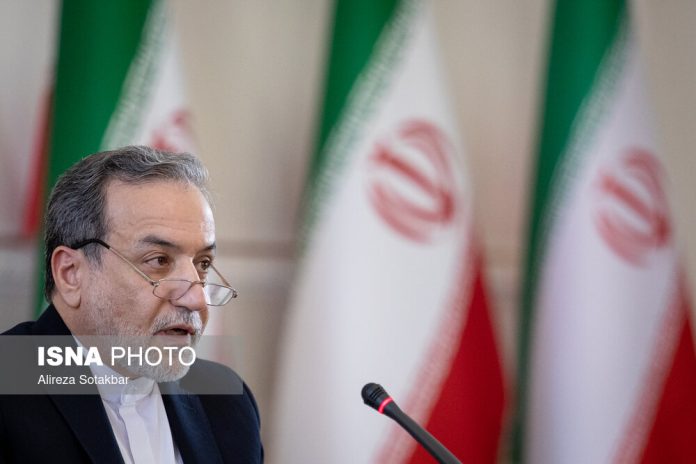
In an X statement, Araghchi criticized the E3’s track record in implementing the 2015 nuclear agreement, the Joint Comprehensive Plan of Action (JCPOA).

“The E3 have had SEVEN YEARS to implement their JCPOA commitments. They have utterly failed, either by design or ineptitude.”

The minister condemned recent moves by the European trio, namely Britain, France, and Germany, which he characterized as provocative and counterproductive to diplomacy.

“Instead of displaying remorse or a desire to facilitate diplomacy, the E3 is today promoting confrontation through the absurd demand that Iran must be punished for exercising its right under the JCPOA to respond to non-performance by counterparts,” he added.

The minister was referring to an anti-Iran resolution tabled by the E3 and the US at the IAEA’s Board of Governors this week, as well as their recent threat to invoke the JCPOA’s dispute resolution mechanism that would lead to the reimposition of the UN sanctions suspended under the 2015 accord.

Tehran has long complained about European inaction and duplicity since the US unilaterally withdrew from the JCPOA in 2018.

Araghchi, reiterating Tehran’s long-standing position, warned that any new pressure or punitive measures from the European side would be met with a firm response.

“As I have warned, another major strategic mistake by the E3 will compel Iran to react STRONGLY. Blame will lie solely and FULLY with malign actors who shatter their own relevance,” he wrote.

US says reduced presence of staffers not deemed essential in Middle East as tensions rise

US Forces

The State Department said it has ordered the departure of all nonessential personnel from the U.S. Embassy in Baghdad based on its latest review and a commitment “to keeping Americans safe, both at home and abroad.” The embassy already had been on limited staffing, and the order will not affect a large number of personnel.

The department, however, also is authorizing the departure of nonessential personnel and family members from Bahrain and Kuwait. That gives them the option of leaving those countries at government expense and with government assistance.

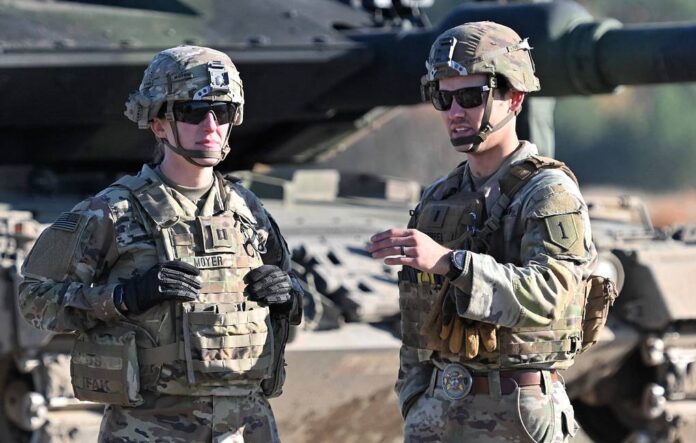
Defense Secretary Pete Hegseth “has authorized the voluntary departure of military dependents from locations” across the region, U.S. Central Command said in a statement. The command “is monitoring the developing tension in the Middle East.”

Speaking at the Kennedy Center in Washington on Wednesday evening, President Donald Trump stated, “They are being moved out, because it could be a dangerous place, and we’ll see what happens. We’ve given notice to move out, and we’ll see what happens.”

Tensions in the region have been rising in recent days as talks between the U.S. and Iran over its rapidly advancing nuclear program appear to have hit an impasse.

Trump, who has previously said Israel or the U.S. could carry out airstrikes targeting Iranian nuclear facilities if negotiations failed, gave a less-than-optimistic view about reaching a deal with Iran, telling the New York Post’s “Pod Force One” podcast that he was “getting more and more less confident about” a deal.

“They seem to be delaying, and I think that’s a shame. I’m less confident now than I would have been a couple of months ago. Something happened to them,” he said in the interview recorded Monday and released Wednesday.

Iran’s mission to the U.N. posted on social media that “threats of overwhelming force won’t change the facts.”

“Iran is not seeking a nuclear weapon, and U.S. militarism only fuels instability,” the Iranian mission wrote.

Iranian Defense Minister Gen. Aziz Nasirzadeh separately told journalists Wednesday that he hoped talks with the U.S. would yield results, though Tehran stood ready to respond.

“If conflict is imposed on us, the opponent’s casualties will certainly be more than ours, and in that case, America must leave the region, because all its bases are within our reach,” he stressed, adding, “We have access to them, and we will target all of them in the host countries without hesitation.”