Friday, January 2, 2026
Home Blog Page 3203

Iran Lifts Visa Requirement for Chinese Tourists

Based on a decision adopted in a Sunday cabinet session, the Iranian Foreign Ministry has been permitted to let Chinese nationals in without a visa.

The plan had been jointly proposed to the cabinet by Iran’s Cultural Heritage, Handicrafts, and Tourism Organization (ICHTO) and the Iranian Foreign Ministry back on June 23, 2019.

Earlier this month, the spokesman of Iran’s government said that the visit of foreign tourists to the country is to be eased based on an order by President Hassan Rouhani.

Ali Rabiei said on June 19 that based on the decree, the passports of foreign tourists will not be stamped upon their arrival in any of the country’s airports.

Rabiei underlined that “as the United States may put pressure and impose sanctions on these people according to the economic terrorist plans it pursues, the president ordered that the tourists’ visits are not registered in their passports.”

The government spokesman said this could bring more tourists to Iran, and people can travel to Iran without any fear. Rabiei underlined that the arrangements would soon be made at all airports.

In recent months, Iranian officials have increased efforts to boost the tourism sector to increase foreign currency revenues and create jobs.

The decline in the national currency’s value last year has meant that travelling to and shopping in Iran has become even cheaper for foreign nationals.

Iran has managed to establish itself as “safe as much of Western Europe or travelers”, a recent report on global security said.

Meanwhile, Iran is among the world’s top potential tourist destinations with a variety of ancient sites, including 17 places listed by the UNESCO.

Official figures released earlier showed that over six million tourists had traveled to Iran over a period of six months starting March 2018. This was higher than the same period in 2017 by above 50 percent.

Trump Becomes First US President to Enter North Korea

He met North Korean leader Kim Jong Un at the border between the two Koreas on Sunday, before stepping over and walking 20 steps into North Korea.

First, the two leaders strode toward the border line dividing the two Koreas. They then shook hands, before walking together back across the line into South Korea.

I’m “proud to step over the line” into North Korea, Trump said sitting next to North Korean leader Kim Jong Un.

Trump’s move came after Kim said, “If you step over this line you will be the first US president to step on North Korean soil.”

Trump then stepped over, to which Kim said, “President Trump has just walked across the demarcation line. That has made him the first US President to visit our country. Actually just looking at this action, this is an expression of his willingness to eliminate all the unfortunate past and open a new future.”

Trump thanked Kim once again for meeting and added, “When I put out the social media notification, if he didn’t show up, the press was going to make me look very bad.”

Trump said because Kim showed up, they both looked good.

“This could be a very historic moment and I guess that’s what it is,” Trump said. “I think the relationship that we’ve developed has meant so much to so many people.”

In remarks to press before closing the doors, Kim said he was “very surprised” by Trump’s open invitation on Twitter, adding, “I had wanted to meet him again.”

Trump responded, thanking Kim for the meeting and calling it “a special moment.”

The meeting was an historical moment and a huge step forward in a relationship which appeared to be unravelling after a failed second summit between Trump and Kim in Hanoi, Vietnam earlier this year.

That relationship now seems to be firmly back on track, with Trump and Kim greeting each other warmly and appearing to enjoy each other’s company. Trump even suggested they could follow the meeting at the DMZ with a visit by Kim to the White House, the first ever time a North Korean leader would visit the US if it took place.

Huge Water Bill Leads to Discovery of Cave in Central Iran

Two years ago, a water bill received by a villager in Barzak, 50km south-west of Kashan, was so hefty that it prompted him to follow up on the issue and see why he was running such an extraordinarily huge bill despite the fact that he had not been using much water.

The villager found out that water was leaking from somewhere in his home. He followed up the issue and found a hole where a pipe had burst. The eight-metre-deep hole seemed to be leading to another path, which led to a natural cave as the man found out. The cave had several huge entrances and had icicles as well. He kept his finding secret for so long, but finally revealed it a few days ago.

Since then, the Barzak village has turned into a tourist attraction.

“This cave lies completely underground and was created naturally,” said researcher Mohammad Noushabadi, who has recently visited the cave.

Cultural Heritage experts believe it is not a man-made cave and there are no signs that suggest man used to live there in the distant past. Even no traces of stone tools have been found there.

The cave has four paths some of which crisscross one another. Each path is 100-150 metres long.

According to the researcher, a 500-to-600-metre stretch of the cave has been explored so far.

“Some cavers have visited the cave, but we would like expert studies to be conducted on it, so that we will be able to explore other paths as well,” said Noushabadi.

Iran Calls INSTEX ‘Nice Car without Gasoline’

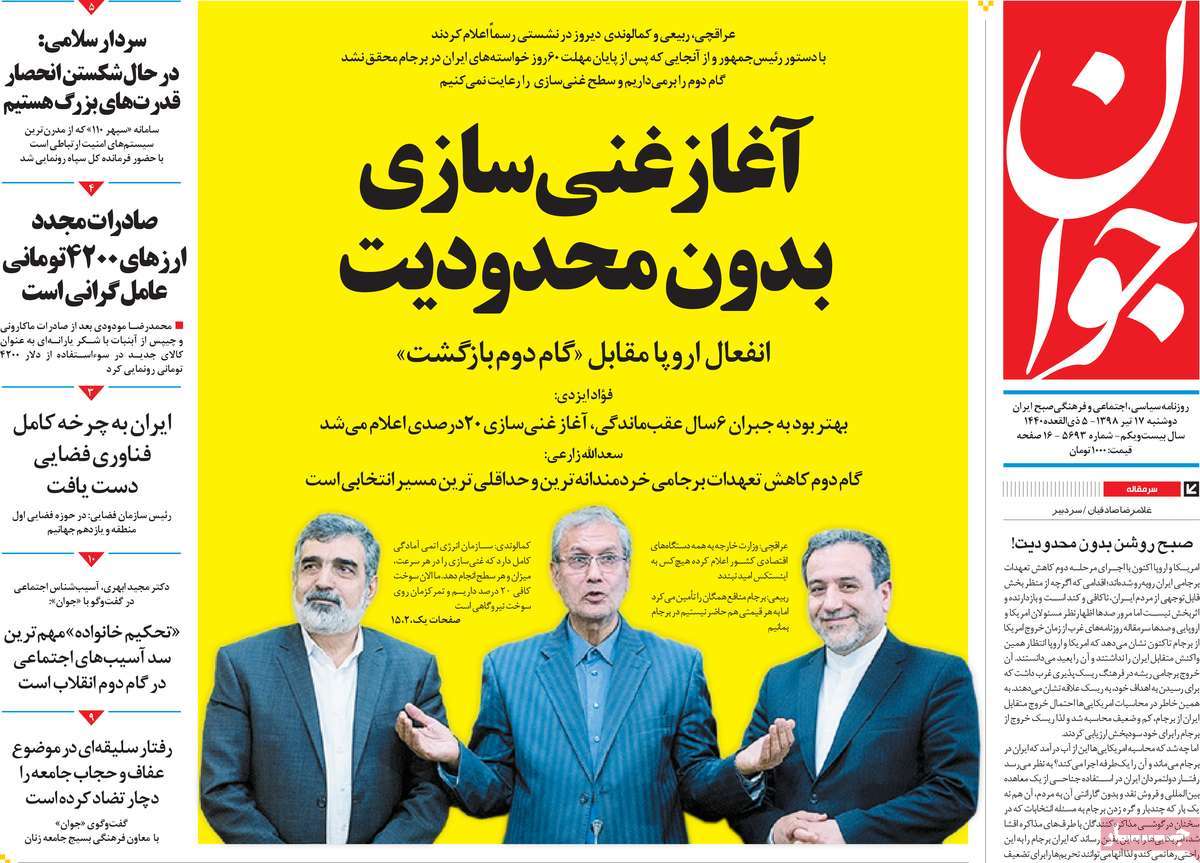
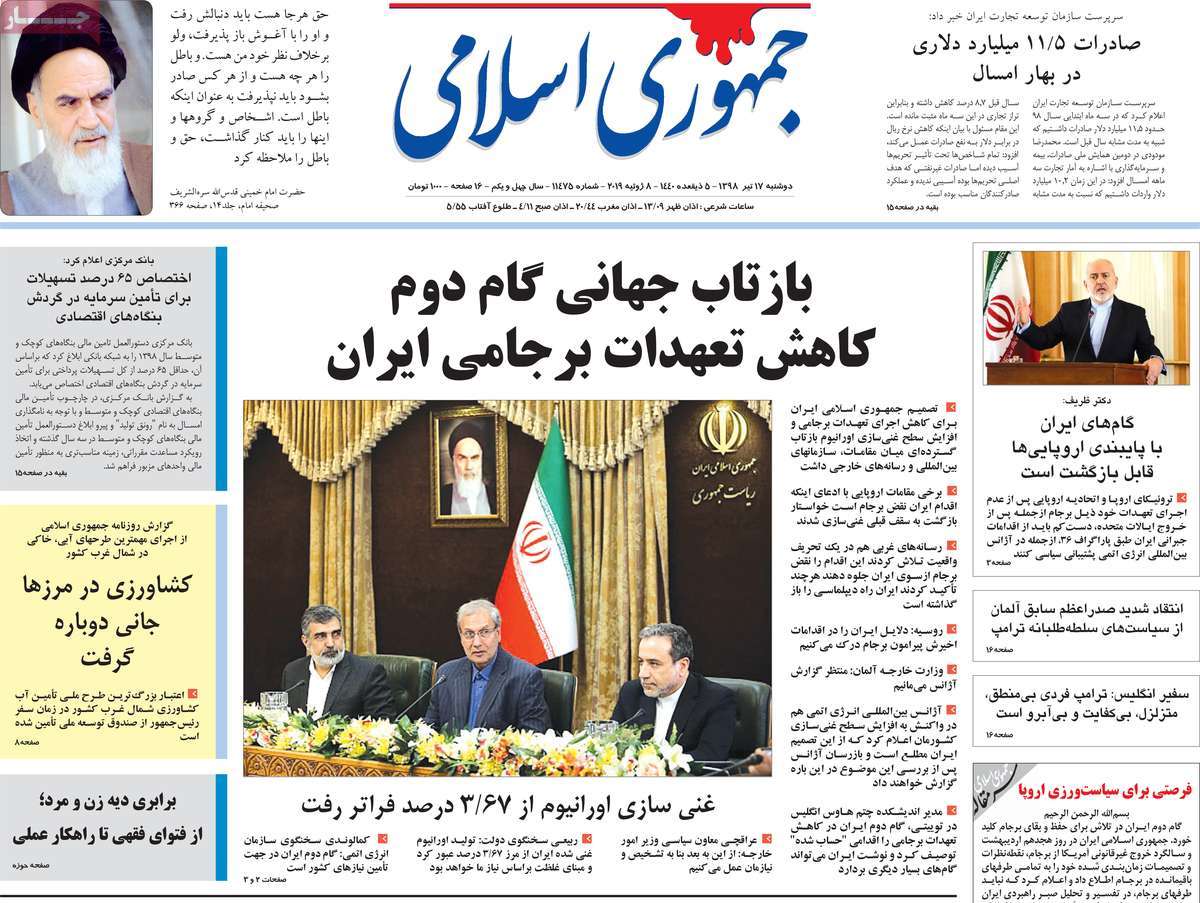
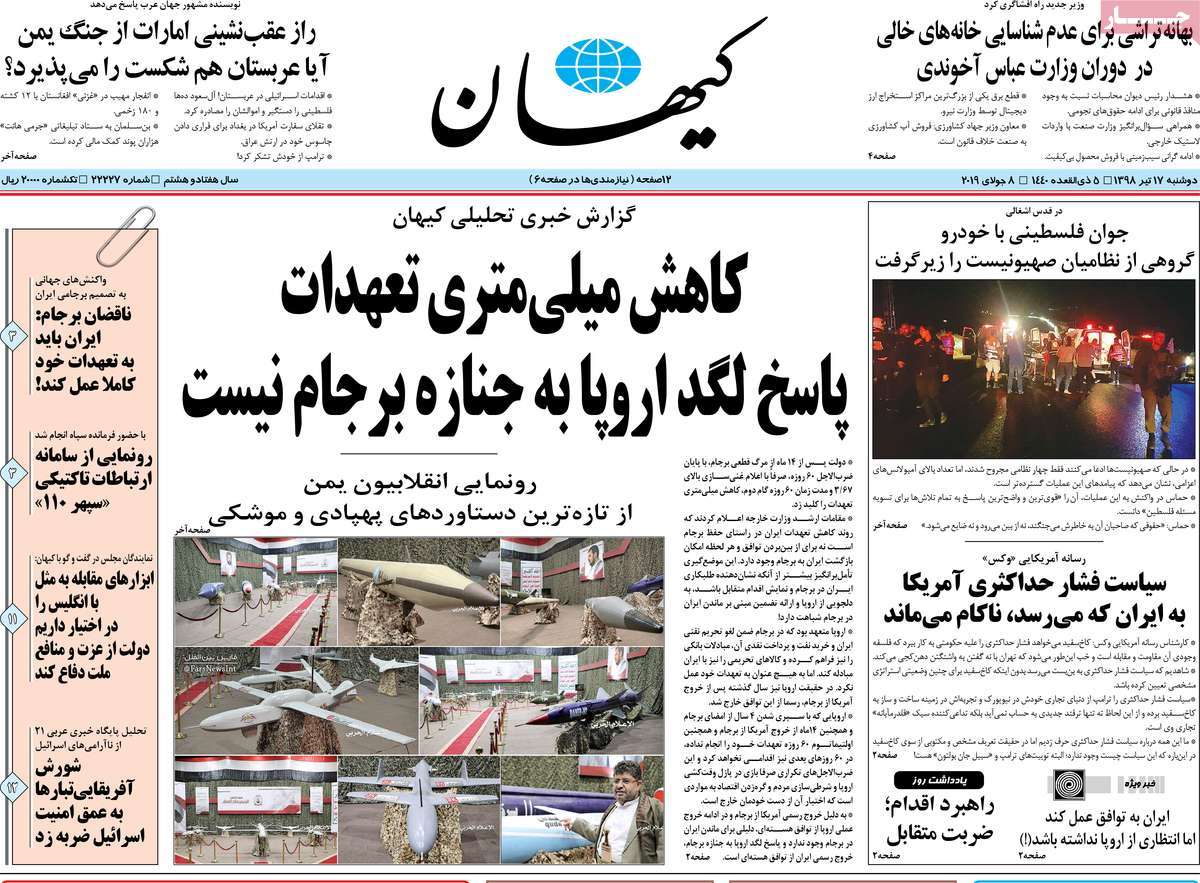
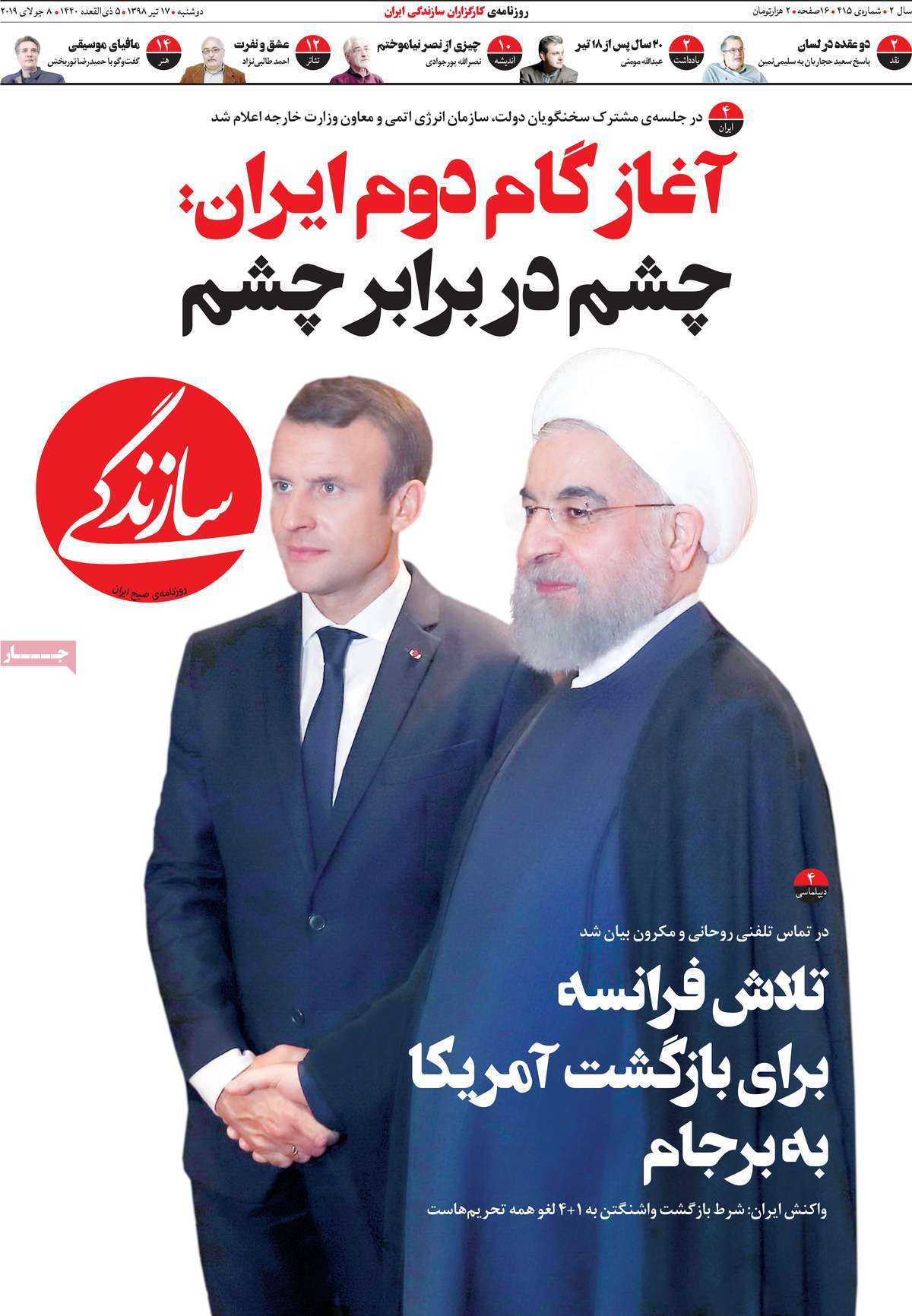
The United States’ withdrawal from the Iran nuclear deal known as the Joint Comprehensive Plan of Action (JCPOA) and the Europeans’ failure to ensure Tehran’s economic interests under the deal prompted the Islamic Republic of Iran to decide to scale back its commitments under the JCPOA back on May 8. Iran’s decision was based on the provisions stipulated in this very agreement.

On the other hand, Washington’s provocative moves in the Persian Gulf region, which resulted in the downing of a US drone in Iran’s airspace, fueled concerns over the outbreak of another conflict in the Middle East.

These issues prompted journalists who always received biased accounts from the Americans to sit down with Majid Takht-Ravanchi, Iran’s ambassador and permanent representative to the United Nations and a key negotiator to the talks over the JCPOA, to listen to a different account that they had rarely heard.

In the hour-long meeting held at the Iranian mission, numerous questions were raised about the JCPOA, the downing of the American spy drone, Russia and China’s relations with Iran, the security of the Persian Gulf and the Strait of Hormuz, and US presidential elections.

“Iran is committed to rendering the necessary cooperation in order to keep the JCPOA alive, but the other parties to the agreement, too, should allow Iran to benefit from the interests of the deal and should make efforts to make it survive,” Iran’s UN ambassador noted.

“In our opinion, the United States’ anti-Iran policies are to blame for the chaos in the Persian Gulf ,” he said.

“The US pulled out of the JCPOA and, after that, imposed sanctions and took actions against Iran,” he said.

“Sanctions, failure to renew wavers on Iran’s oil sales, the dispatch of a flotilla [ to the Persian Gulf] and other recent moves by the US in the region are among the actions aimed at provoking Iran, but we have exercised restraint, so far,” said Takht-Ravanchi.

“The American drone approached Iranian borders. We warned it four times not to enter our airspace. However, when the aircraft ignored our warnings and violated the country’s airspace, we had to shoot it down for self-defense in accordance with Note 51 of the UN Charter,” he said.

He also touched upon Iran’s proposal to hold a regional dialogue as well as the letter he has written to the UN secretary general in that regard.

“In the meeting I had with the [UN] secretary general, I talked about his mission with regards to Resolution 598. I asked the secretary general to use his authority in the resolution to establish a structure in order to safeguard peace and security in the region, so that regional talks will get underway under the aegis of the UN,” He said.

Iran’s UN ambassador said the Middle East is a wealthy region, and that Iran as well as its neighbours can benefit from those riches if peace exists in regional countries.

“If we get to realize this point, it will be better for all,” he said.

He then referred to the anti-Iran policies adopted by the White House.

“The Americans have orchestrated a policy called the ‘maximum pressure’ policy on Iran, but it should be noted that the US cannot achieve its objectives in the region through the maximum pressure policy on Iran,” he said.

“Some American authorities are seeking a regime change in Iran and their maximum pressure policy aims to achieve this very end, but this policy has only fueled tensions both in Iran-US ties and in the whole region,” the top diplomat said.

Takht-Ravanchi was asked by a reporter on Iran’s recent decision to increase its stockpiles of enriched uranium. In response, the official said Tehran’s decision was in conformity with the nuclear deal.

“Iran’s decision to increase its stockpiles of enriched uranium to more than 300kg was within the framework of the JCPOA. A mechanism is envisaged in the JCPOA for the export of enriched uranium,” the Iranian UN ambassador said.

“What kept us from exceeding the designated ceiling was that it was possible to export it and receive yellow cake in return, but the US government banned that mechanism,” he said.

“Now the US should be asked why it has imposed such a ban. From our viewpoint, Iran’s move to increase its stockpiles is not a violation of the JCPOA; rather, it is in conformity with Article 26 and 36 of the nuclear deal. Based on these very provisions, Iran has the right to breach some of the commitments under the JCPOA,” he said.

Iran: American Diplomacy Means Sanction

Iran Says What IAEA Wants to Access “Not A Site”

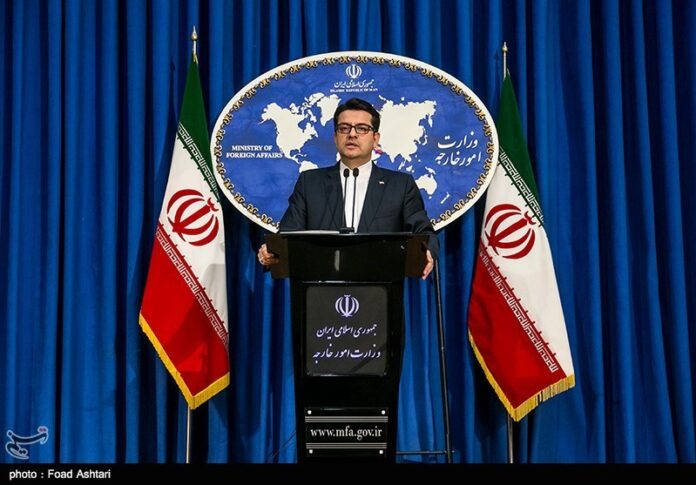
In a statement on Saturday, Seyyed Abbas Mousavi dismissed the recent fuss made by the US officials, specifically by the US National Security Council’s spokesperson, who has called on Iran to meet diplomacy with diplomacy.

“Iran responds to diplomacy with diplomacy and to pressure with resistance; but it appears that in the lexicon of American authorities, diplomacy means sanctions and economic terrorism. Thus far we have not seen anything other than illegal sanctions and economic war and terrorism from the US government to respond,” he added.

In comments a few days ago, Mousavi denounced the US decision to impose new sanctions on senior Iranian political and military officials, saying, “Imposing useless sanctions on Iran’s Supreme Leader (Ayatollah Seyyed Ali Khamenei) and the commander of Iran’s diplomacy (Foreign Minister Mohammad Javad Zarif) is the permanent closure of the path of diplomacy.”

“Trump’s desperate administration is destroying the established international mechanisms for maintaining world peace and security,” he had deplored.

Iran to Press Ahead with Reduced Commitment to JCPOA: Source

nuclear

An informed source has told Iran’s Khorassan daily that the results of the Friday meeting of the JCPOA joint commission in Austria’s capital were far distant from Iran’s legitimate rights under the nuclear deal and have failed to fulfill its demands.

“The Islamic Republic of Iran’s definite decision is to continue with its measures to reduce its JCPOA commitments, and in this approach, it will soon bypass the 300-kilogram limit on enriched uranium stockpile for the first step,” the source added.

The informed source also made it clear that Iran will be ready to reverse its decision about a reduction in the JCPOA commitments, which are enshrined in the deal’s Articles 26 and 36, as soon as the European parties ensure Tehran’s oil and banking interests under the agreement.

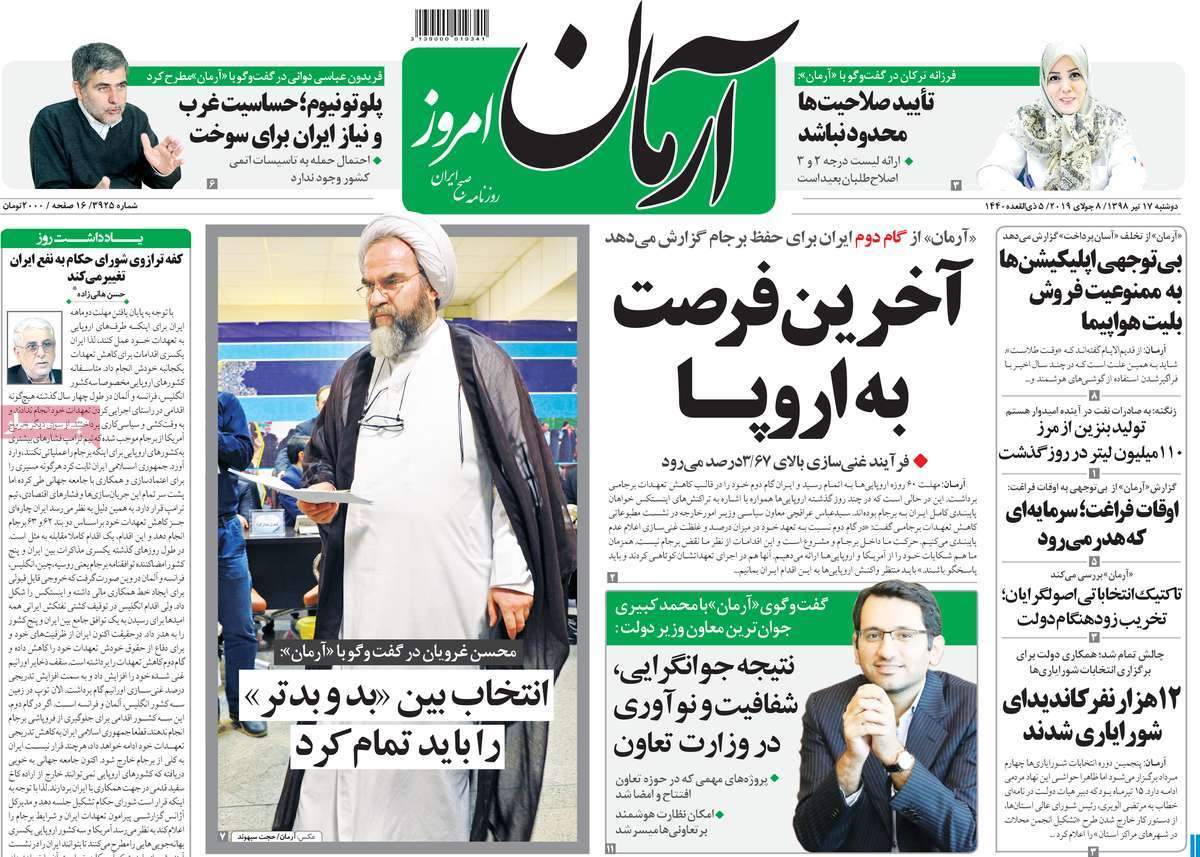
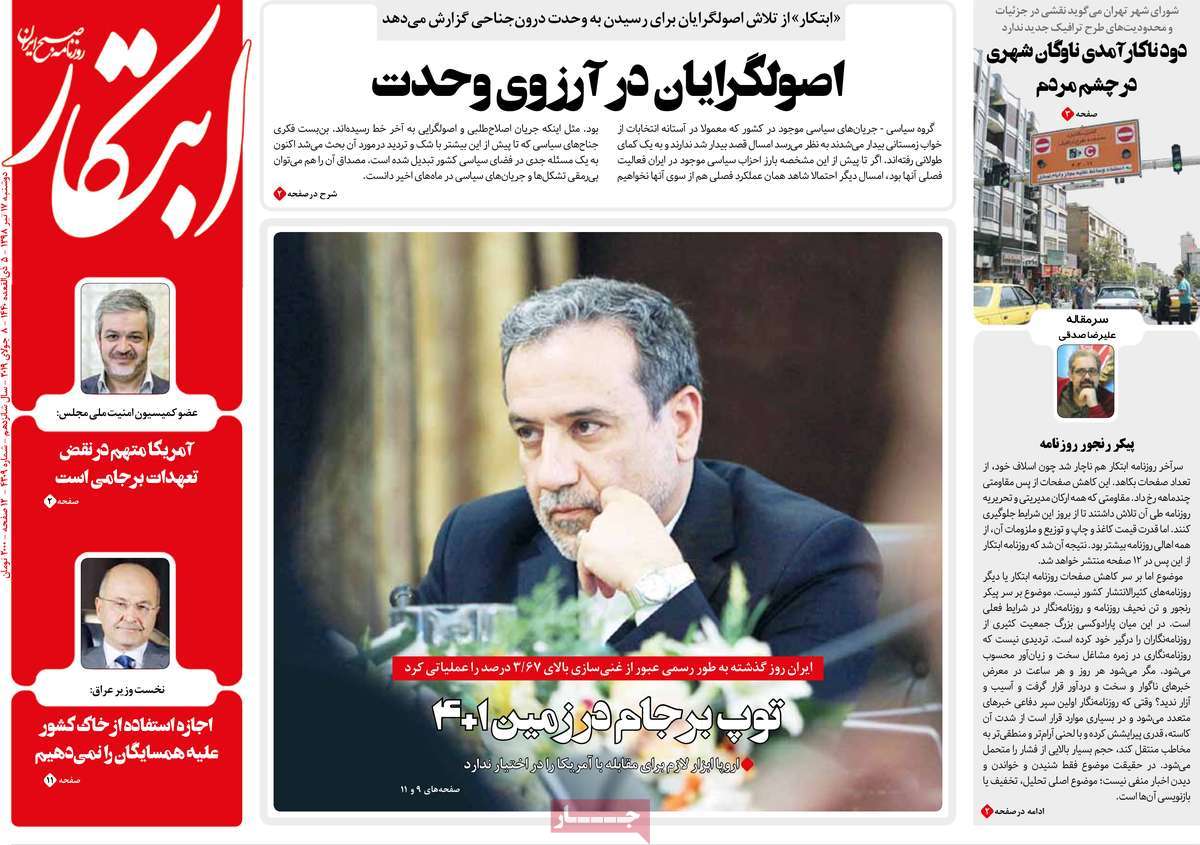
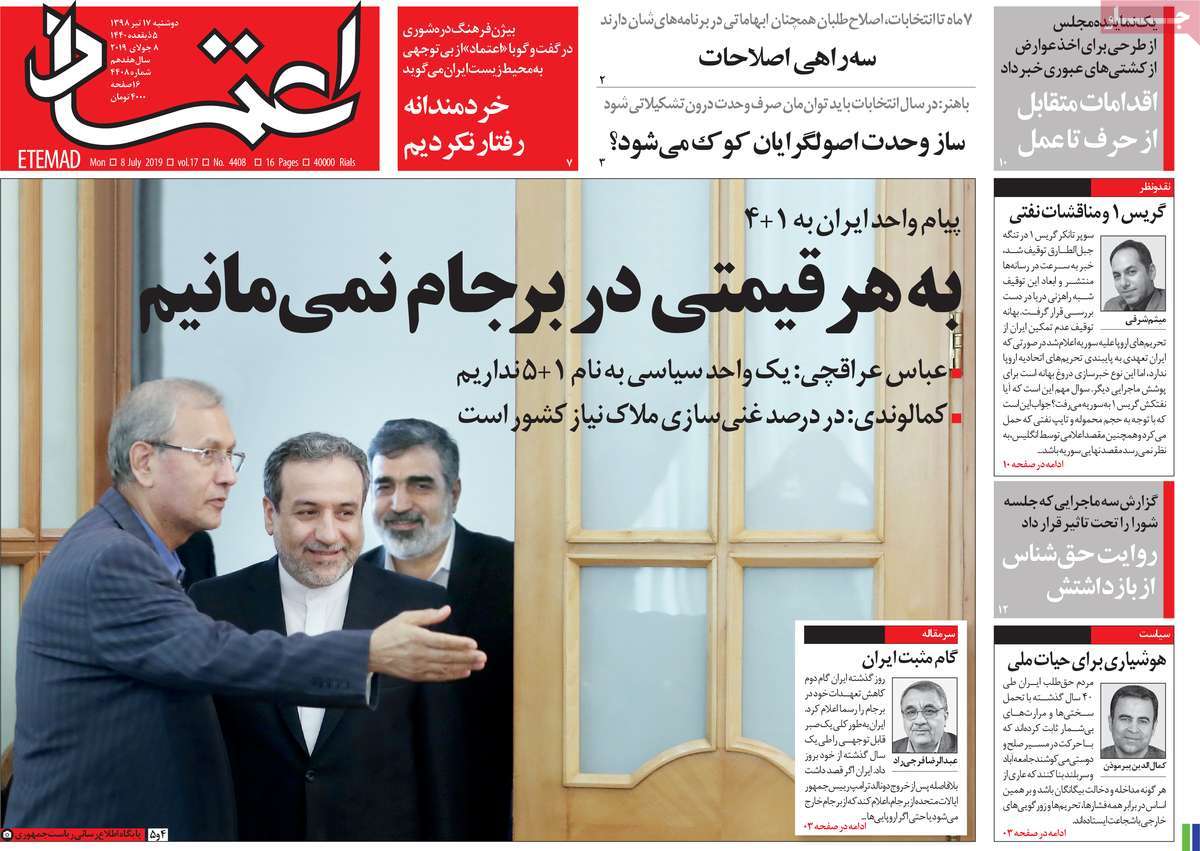
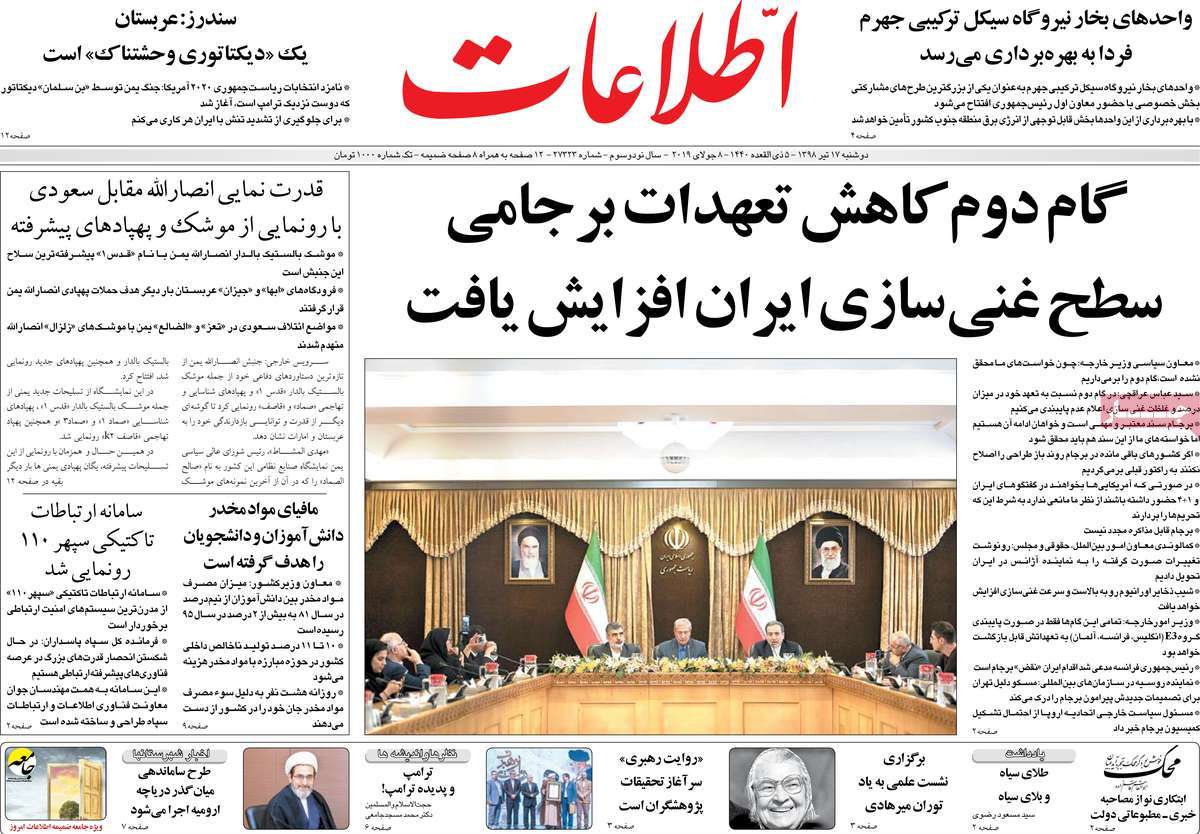
The comments came after negotiators from Iran and the Group 4+1 (Russia, China, Britain, France and Germany) convened in Vienna on Friday to discuss the ways to save the Joint Comprehensive Plan of Action.

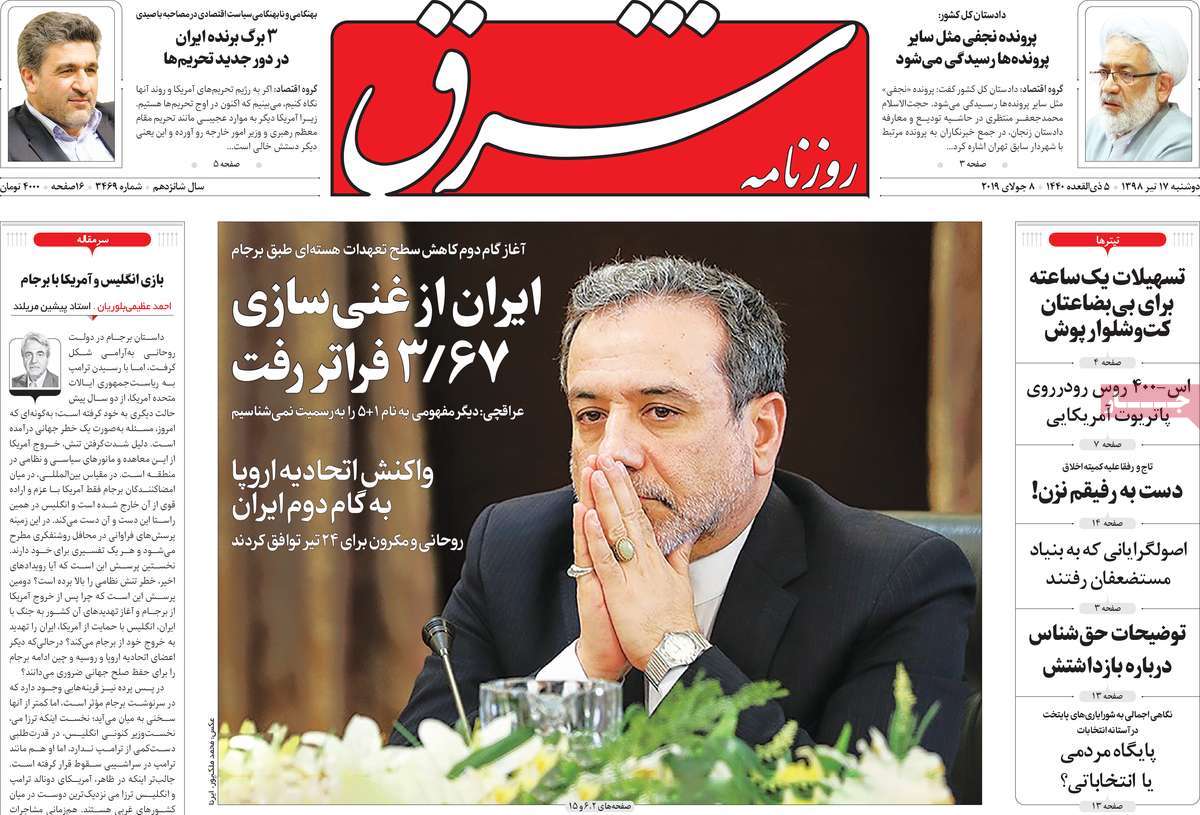
Iranian Deputy Foreign Minister for Political Affairs Seyyed Abbas Araghchi has said some progress was made at the meeting, but it was “still not enough” to keep the nuclear deal alive.

In early May, Iran suspended limits on its production of enriched uranium and heavy water, moves that did not technically violate the deal but signaled that its patience was wearing thin. Iran also gave Europe a 60-day deadline, which will be over on July 8, threatening that it will take further measures if Europe fails to compensate for the US’ 2018 withdrawal from JCPOA.

Army Chief Says No Sign of War Despite Iran’s Vigilance

General Abdul-Rahim Mousavi

In comments on Saturday, Major General Abdolrahim Mousavi said Iran’s intelligence activities suggest that there is no possibility of a war.

“We are on the alert like the night of attack and the enemy is being closely monitored, but our intelligence monitoring does not show a war,” he added.

The commander also noted that Iran’s great “deterrence power” has frustrated the enemies.

Major General Mousavi finally rejected US President Donald Trump’s anti-Iran rhetoric, saying, “Let’s leave Trump doing his own usual maneuvers.”

In comments in May, Foreign Minister of Iran Mohammad Javad Zarif expressed confidence that no war would break out in the Middle East amid rising tensions between Iran and the United States.

“As Leader of the Islamic Revolution has also announced, we are certain that no war will break out because neither we want a war, nor has anyone the idea or illusion that it can confront Iran in the region,” Zarif had announced.

“However, it is necessary for the people of the United States to realize the dangerous moves inside the country,” he added.

Iran Is Safe, Beautiful: Marc Wilmots

Marc Wilmots in Iran

In an interview with a Belgian TV channel, Wilmots underlined that during his stay in Iran over the past weeks, he has not faced any instance of insecurity.

He described Iran’s conditions as good and added when the Football Federation of the Islamic Republic offered him the leadership of Iran’s Team Melli, he found out that the Iranians have a long-term plan.

“My journey to Asia after years of coaching in Europe was a new experience. I made a tour of Iran’s sports facilities which gave me an extraordinary experience,” he said.

The Belgian coach described Iran as a safe and beautiful country and said unlike what is rumoured worldwide, there is no war or insecurity in Iran. “I’ve never ever experienced a slight trace of insecurity in Iran.”

Based on a contract, Wilmots is set to lead the Iranian team for the next three years. The 50-year-old coach has so far led several national football teams across the world. He is going to lead the Iranian team during the Qatar 2022 World Cup.

Reports say his deal is signed for a fee of $1.2 million a year.

‘INSTEX Implemented Too Late, Can’t Secure Iran’s Interests’

Mohammad Ebrahim Rezaee, a member of the Iranian Parliament’s National Security and Foreign Policy Commission, says unfortunately the Instrument in Support of Trade Exchanges (INSTEX) has become operational too late after months of delays by the European sides.

“At present, the INSTEX can’t serve as a mechanism to bypass the US sanctions by the Europeans and the mechanism can’t meet Iran’s interests under the Iran nuclear deal,” he said in an interview with Tasnim.

He also called on the government not to pin all its hopes and goals on the Iran nuclear deal and added the INSTEX fails to provide Iran with an opportunity to access its oil revenues and facilitate the Europeans’ participation in projects inside Iran.

The lawmaker underlined that the Europeans can’t be trusted when it comes to the implementation of the INSTEX. “The mechanism doesn’t meet Iran’s interests in all areas and the Europeans have been seeking to kill time by making hollow promises.”

“The Europeans have not yet given a full guarantee to Iran on bypassing the US sanctions. Establishing a special financial mechanism between Iran and Europe is not hard at all but the main problem is that the US hampers efforts in this area,” he said.

Rezaee expressed doubt about the future of the INSTEX and said Iran’s diplomatic apparatus should receive enough guarantees from the Europeans before implementation of the financial mechanism.

“We should not pin our hopes on the Europeans.

They always make hollow promises and there is no will on their side to implement the financial mechanism,” he concluded.

Earlier, the European Union announced that its INSTEX mechanism to facilitate trade with Iran has become operational.

“France, Germany, and the UK informed participants that INSTEX had been made operational and available to all EU member states, and that the first transactions are being processed,” said an EU statement.

INSTEX is a payment system that will allow companies to trade with Iran despite harsh US sanctions. It is meant to function as a diplomatic shield allowing the exchange of goods without requiring direct transfers of money between Iran and EU companies.

Gwadar Bay; Unique Attraction on Iran-Pakistan Border

Gwadar Bay is one of the most beautiful regions of Iran’s southeast and attracts every tourist interested in the wildlife.

The unique dance of dolphins among the ocean’s waves creates eye-catching scenic views with lasting memories for the tourists and those interested in the wild nature of the seas.

Trade in Gwadar dates back to a very long time ago. In the past, tradesmen passed through the bay to go to India and Africa. Gwadar used to be among the main hubs for shrimp farming and exporting. Today the business has slowed down but it is still alive in the region.

Gwadar village near the bay has a population of 160,000, most of whom living on fishing and mat weaving.

In autumn, Gwadar houses a large number of migrant birds from about 40 various species. They arrive in the bay in various 100-member groups.

In addition to its wildlife, Gwadar enjoys a more attractive part: Avicenna Marina Forests. Upon arriving in Gwadar, some boats are waiting to take you to the forests to closely see the dolphins dancing between the waves.

The Martian or Miniature mountains are among the unique tourist attractions of Chabahar stretching from Kacho to Gwadar along the sea. The mountains are not beautiful for the snowy peaks or green nature but because of their special shapes and figures. They resemble the mountains on the Mars or the Moon. The sediment of the mountains as well as their erosion over time have led to creation of specific beautiful grooves.