Thursday, January 1, 2026
Home Blog Page 3188

Iran FM, Macron’s Top Aide Meet in Tehran

During the Wednesday meeting in Tehran, the two sides conferred on international issues and the latest developments in bilateral ties between Tehran and Paris.

Bonne, who arrived in Tehran on Tuesday, earlier held talks with Ali Shamkhani, the Secretary of Iran’s Supreme National Security Council.

In that meeting, the French diplomat said President Emmanuel Macron is looking for joint initiatives to secure a ceasefire in Washington’s economic war against the Islamic Republic.

According to Bonne, Macron believes such a ceasefire will lead to a de-escalation of growing tensions in the region.

Bonne underlined that he is visiting Iran neither as a mediator nor as a carrier of a message from the US.

Iran Nuclear Chief Tells ‘How to Avoid Conspicuous Catastrophe’

The main reason for this animosity stems from their respective divergent political mindsets; each looking at the world from a different angle. Iran declaring itself as an egalitarian modern, independent nation state with ethical and religious values and the US depicting itself as a savior of liberalism. Both have global aspirations but with different goals and aims. Iran aspiring for generalization of justice, fairness and equality among world nations while the US striving for expanding hegemonism. Beside the difference in the worldviews, Iran is a status quo and an influential regional power but the US is an expansionist big power trying to become the sole one.

Ever since the revolution, Iran has been insistent and steadfast on safeguarding its sovereignty and rights, including the development of peaceful nuclear technology as its inalienable right.

However, the US exercising its influence internationally began to use the fabricated nuclear issue as a pretext against Iran and imposed inhumane sanctions against our nation. Utilizing their formidable mass media, they began a futile attempt to turn this pretext into a widespread public belief and subsequently use it as an instrument of political pressure.

The sanctions were everything but effective and it was Iran’s resilience which left no option to the previous US administration other than coming  to terms with Iran. Within this environment the then secret track two negotiation based on request by the US administration through the Omani interlocutor began in 2011 and after two rounds of negotiations the U.S through the intermediary (Sultan of Oman) informed Iran of its intention and readiness to recognize Iran’s enrichment right.

These negotiations culminated in a nuclear deal called the JCPOA (Joint Comprehensive Plan of Action). After about two years since its implementation the new US administration withdrew from the deal with the excuse that the deal has been the worst in its kind in all American history. This being the case, Iran’s response had been one of strategic endurance. However, the US kept on increasing the sanction pressure which eventually lead Tehran to begin exercising its right as envisioned in paragraphs 26 and 36 of the deal and thereby suspending parts of nuclear limitations set in the deal so as to remedy the lost balance between its rights and commitments until Europeans rectify the imbalance.

The US after many acerbic comments against Iran and the declaration of twelve irrational and submissive demands, eventually came to its senses and yielded to the facts on the ground and reduced its demands to only a  specific one. President Trump iterated a number of times that their only demand is for Iran to denounce the possession of Nuclear Weapon. On the other hand, Iran traditionally never trusting the US administration’s promises and commitments has so far categorically refused any direct negotiation, because there is absolutely no guarantee that such second round of negations wouldn’t face the same fate as the first one. As the supreme leader has reiterated, “no direct negotiation under pressure and that such negotiation is poisonous.”

The main question now is “is there a way out of this impasse?”.  Certainty, the continuation of the current dire situation—without any exaggeration—would lead into undetermined and appalling consequences. Surely, such an unpleasant circumstance is not welcome by us.

Yet, there may be a solution taking into consideration the aforementioned constraints, namely, “no direct negotiation under pressure” on the one hand and “denouncement of Nuclear Weapon possession” on the other hand. The solution may lie in simultaneous revocation of all US sanctions and Iran’s denouncement of production, accumulation and use of Nuclear Weapons—as previously declared in a decree (Fatwa) by the supreme leader Ayatollah Khamenei in 2009 and having been registered in the United Nations in 2013—through a joint statement by the head of states of 4+1 plus the US and the Islamic Republic of Iran. This mechanism that does not entail direct negotiations could possibly pave the way for future to hopefully make up for the confidence and trust lost all during the past decades.


* Article by Ali Akbar Salehi, the head of the Atomic Energy Organization of Iran (AEOI), originally published on Le Figaro on July 9, 2019, in French

Iranian Carmaker Resumes Auto Production in Syria

The joint venture to produce the Sham – a mid-range family saloon based on Iran Khodro’s Samand car – started before the outbreak of the war in Syria in 2011.

The war seriously damaged many car plants in Syria, putting a temporary damper on the two allies’ plans to bring their economies closer together.

Other than the Sham, Iran Khodro used to assemble Peugeot cars in Syria, while Saipa – the second largest Iranian car manufacturer – produced its own models.

“Although car factories in Syria suffered damage, we tried to return them to the production line after the war,” Iran’s Labor, Cooperatives and Social Affairs Minister Mohammad Shariatmadari said on Tuesday.

“Our efforts are to help the car industry continue (its life) in Syria. Currently, the production line of the Sham is back up and running,” he added.

Shariatmadari made the remarks after signing a memorandum of understanding with his Syria counterpart Rima al-Qadiri in Tehran.
Under the five-year agreement, Syria will be able to use Iranian experts in the country’s reconstruction and provided with technical and professional education help.

“Cooperation between Iran and Syria in the field of labor force and economy will maximize in the future,” Shariatmadari said, hailing the document as “valuable”.

Tehran has played a crucial role in helping President Bashar al-Assad overcome eight years of foreign-backed terrorism, providing military expertise and logistics.

It has given Damascus direct financial aid and help restoring its infrastructure despite sanctions which affect many Iranian businesses operating in Syria.

An Iranian supertanker currently being held off the coast of Gibraltar was seized by Britain’s Royal Marines last week on the pretext that it was shipping oil to Syria, which Tehran has denied.

Syria has enthusiastically encouraged business ties with Iran, helping set up a joint chamber of commerce and a joint bank to facilitate money transfers in the face of US sanctions on both countries.

Iranian companies have signed several major projects, including a mobile network license, phosphate mine and oil refinery announced in January 2017.

Since the war began, there have been more Iranian goods for sale and Iranian dates, saffron, raisins and cosmetic products are becoming a ubiquitous sight in Damascus shops.

Early this year, the two countries signed 11 agreements, including a “long-term strategic economic cooperation” deal, in a sign of changing winds in the Middle East which is shaping up to new realities.

Al-Qadiri on Tuesday thanked the Iranian government and nation for standing with Syria in its “resistance” against terrorists and their foreign supporters.

“We expect you will also be helping our nation in Syria’s reconstruction and development phase,” she said, speaking to reporters along with Shariatmadari.

President Bashar al-Assad has estimated that Syria’s reconstruction will cost between $250 billion and $400 billion. He has made it clear that the West won’t be part of it.

‘Macron Trying to Secure Ceasefire in US’ Economic War on Iran’

The remarks were made by Macron’s senior diplomatic advisor Emmanuel Bonne during his Wednesday meeting with Ali Shamkhani, the Secretary of Iran’s Supreme National Security Council, in Tehran.
According to Bonne, Macron believes such a ceasefire will lead to a de-escalation of growing tensions in the region.

Bonne underlined that he is visiting Iran neither as a mediator nor as a carrier of a message from the US.

France is fully aware how resilient Iran has been against various pressures and sanctions over the past 40 years, he said, adding that despite the US willingness and interest, Iran’s influence and power in the region has increased significantly over the past 20 years.

Macron’s senior diplomatic advisor then added given the undeniable regional influence of Iran, Paris is interested in holding talks and expanding cooperation with the country to settle the current crises in Syria, Yemen, Iraq and Lebanon.

For his part, the Iranian official slammed the Europeans’ passive approach towards the Iran nuclear deal and their lack of willingness to counter the US destructive policies and said the Europeans failed to take advantage of a one-year time given by Iran to adopt a resolute measure in this regard.

'Macron Trying to Secure Ceasefire in US' Economic War on Iran'“We seriously demand a resolute move by the Europeans regarding the JCPOA and their time has come to an end,” he said.

He then referred to Iran’s decision to scale down its commitments under the nuclear deal and said this is an unchangeable strategy by the Islamic Republic.

“We will continue reducing our commitments within articles 26 and 36 of the Iran nuclear deal,” he said.

Shamkhani referred to the US maximum pressure policy and said it has already ended up in failure.

Iran has shown in practice that it enjoys various economic, political and military capabilities to cope with various tensions and challenges, he added. “This means that no country can coerce the Islamic Republic of Iran into doing anything.”

He also said the US has already taken hostage the Europeans’ sovereignty and this is up to the European states to stand for their identities and independence against the US unilateralism.

During the meeting, the two sides also discussed mutual and regional ties and mechanisms to fulfil Europeans’ pledges under the JCPOA.

Zarif Calls Trigger Mechanism ‘Nonstarter’ in Dealing with Iran

Mohammad Javad Zarif made the comment in response to remarks by some Western officials who have said they could use the trigger mechanism in response to Iran’s actions.

“The trigger mechanism cannot become operational,” said Zarif on the sidelines of a Cabinet meeting.

“The JCPOA has a mechanism which is supposed to stop violations of the deal,” said the top diplomat.

“Now, the JCPOA has been breached, and Iran has enforced that mechanism,” Zarif underlined.

“In the five letters I wrote to Ms [Federica] Mogherini [the EU foreign policy chief,], both before and after the US pullout from the JCPOA, the mechanism stipulated in Article 36 of the JCPOA officially came into force,” he said.

He further said Iran will not agree to attending talks with other parties under pressure.

“The Islamic Republic of Iran’s stance is straightforward, and that is, negotiations are never possible under pressure. They should stop pressure and economic war against Iranian people, and then there will be a chance to talks about the JCPOA,” he said.

Zarif also touched upon a meeting of the Board of Governors of the International Atomic Energy Agency (IAEA) about Iran’s nuclear activities slated for July 10, 2019.

He said the meeting is being held at the request of the US which, itself, has breached the JCPOA by withdrawing from it.

Lagoon’s Revival Brings Back Smile to Faces of Local Fishermen

Choghakhor Lagoon located in the south of Chaharmahal and Bakhtiari Province has been revived to the rainfall, bringing joy to local fishermen. In fact, residents are earning a living again through fishing after several drought spells.

The body of water is an international lagoon and one of the most beautiful ones in Iran. It lies 65 kilometres from the provincial city of Shahr-e Kord.
A whole variety of fishes are found in this lagoon.

A specific feature of the lagoon is that a species of fish belonging to the gambusia genus lives there.

The pleasant weather and picturesque scenery in the area draws large numbers of local and foreign tourists. The best time to visit the lagoon is spring and summer.

What follows are photos of the lagoon retrieved from ANA news agency:

5 Tip-Top Travel Health Tips

In a new environment, that your body is unfamiliar with, you’re at a greater risk of getting ill. And depending on the types of activities you’ll be participating in, your chances of getting injured might be increased too.

This doesn’t mean that you should avoid going on holiday altogether – quite the opposite. As long as you’re careful and take some precautions, there’s nothing to stop you from having a vacation that’s safe but also spectacular.

With that in mind, here are five fantastic travel health tips. Sit back and take note of them.

  1. Research

The first thing you should do when heading abroad is research the health risks associated with your destination. Consider factors like the weather – is there a high risk of hypothermia or dehydration? Whether there are poisonous insects and animals lurking about, as well as common contagious diseases. By familiarizing yourself with the dangers, you’ll be better placed to take the necessary precautions.

  1. Vaccinate

If you’re travelling to a location where infectious diseases such as hepatitis, malaria and typhoid are prevalent, you should check what vaccinations are available and which ones are required. A good place to look is the Centers for Disease Control and Prevention website. Some vaccines require more than one dose and need to be administered weeks or even months in advance of travel, so be organized.

  1. First aid kit

Whether you’re going to be taking part in extreme outdoor activities or simply plan on strolling about from one tourist spot to another, you should pack a small first aid kit. This way you’ll be prepped for dealing with any pedobearpics.com, such as cuts and grazes. You can buy travel health kits, however if you’d prefer to customize your own,  this NHS travel health article lists the contents of a basic kit.

  1. Eat healthy

When you’re busy travelling from place to place, healthy eating is unlikely to be high on your radar. Instead, you grab food wherever you can and indulge yourself by sampling local cuisine at restaurants, food stalls and fast food outlets. This is okay on occasion, but for the most part you need to ensure that you’re eating fresh, healthy and nutritious foods, that help keep your immune system nicely boosted – so your body can quickly adapt to your new environment.

  1. Drive

Don’t start your travels, sat on an uncomfortable train or bus seat – drive to the airport instead. In your car, with your seat perfectly adjusted for your body, you’ll be able to avoid the nasty musculoskeletal conditions that come about from using poor quality seating. Remember to book some parking too – for great deals for hubs across the globe like LA and London, check out airport parking site Looking4.com.

Follow these tips and you’ll be well prepared to deal with any health hazards that might try and trip you up on you next holiday.

That’s our list. Share your travel health tips in the comments section.

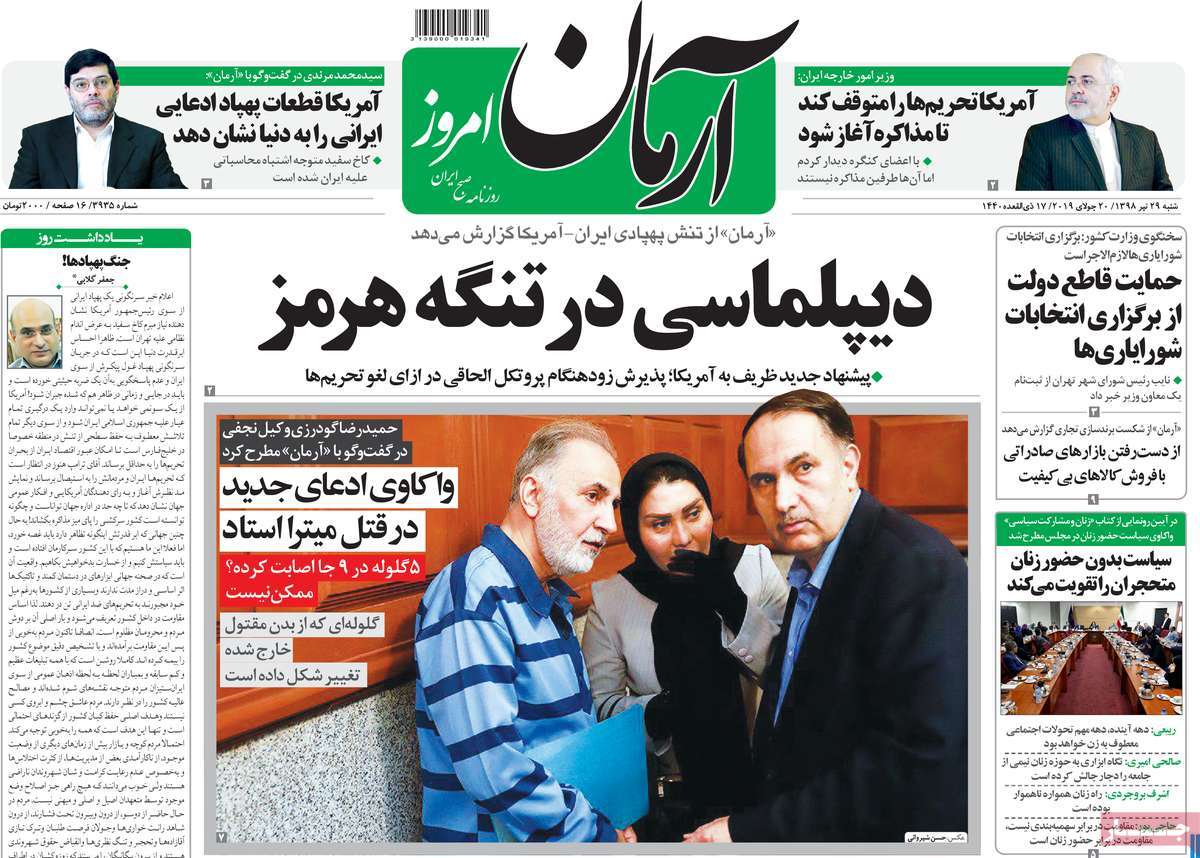
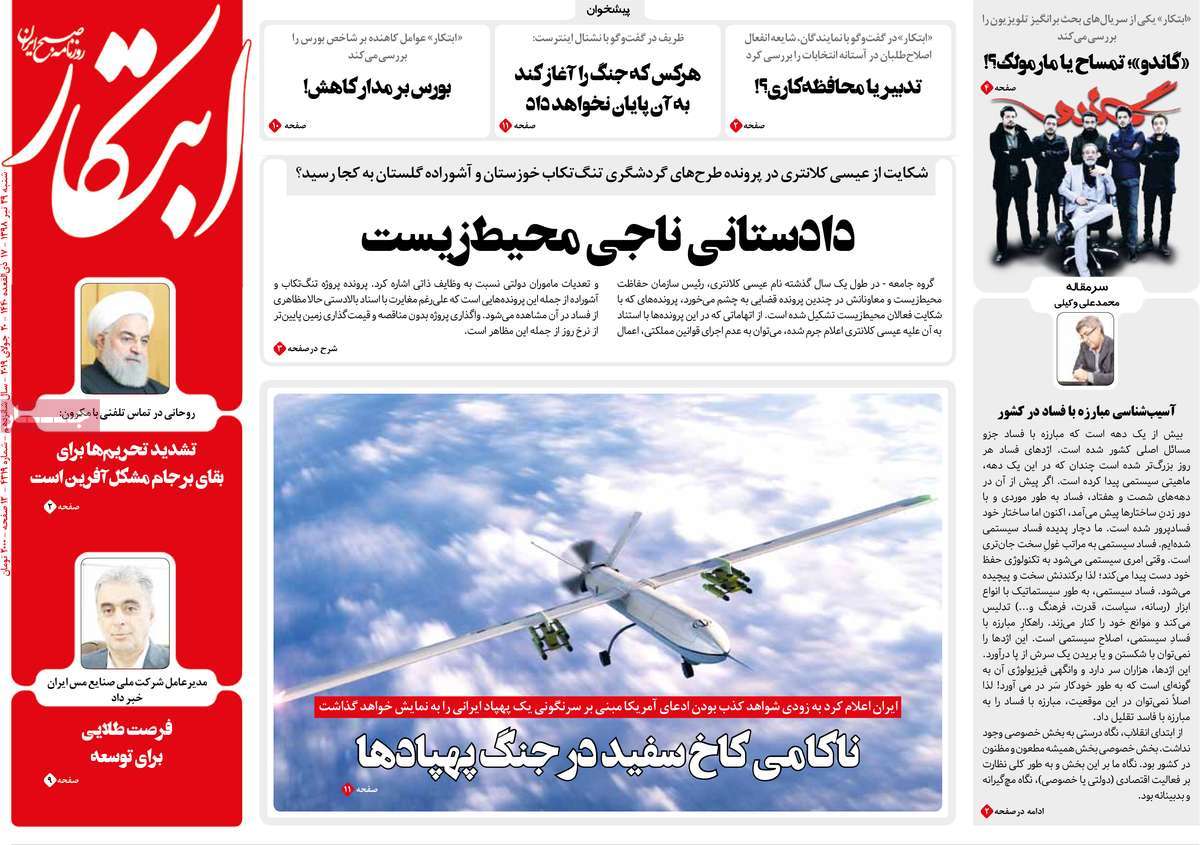
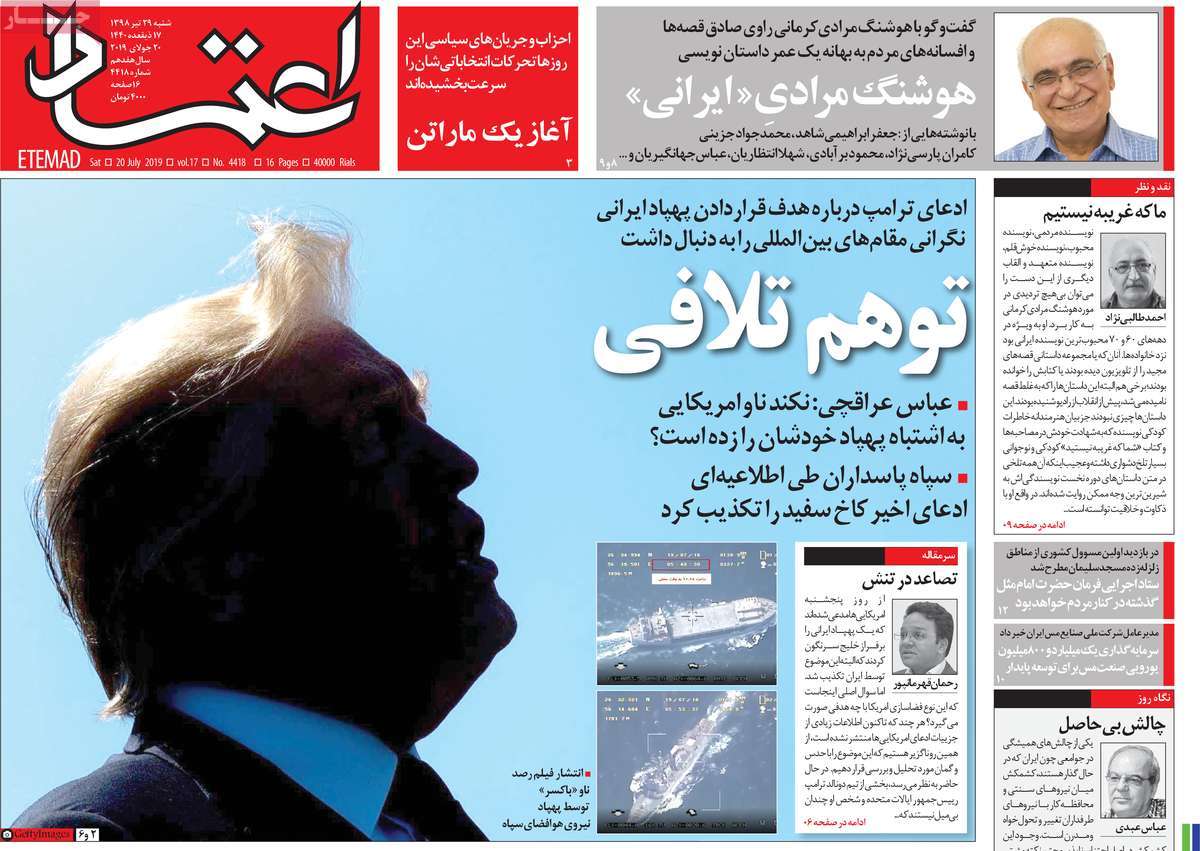
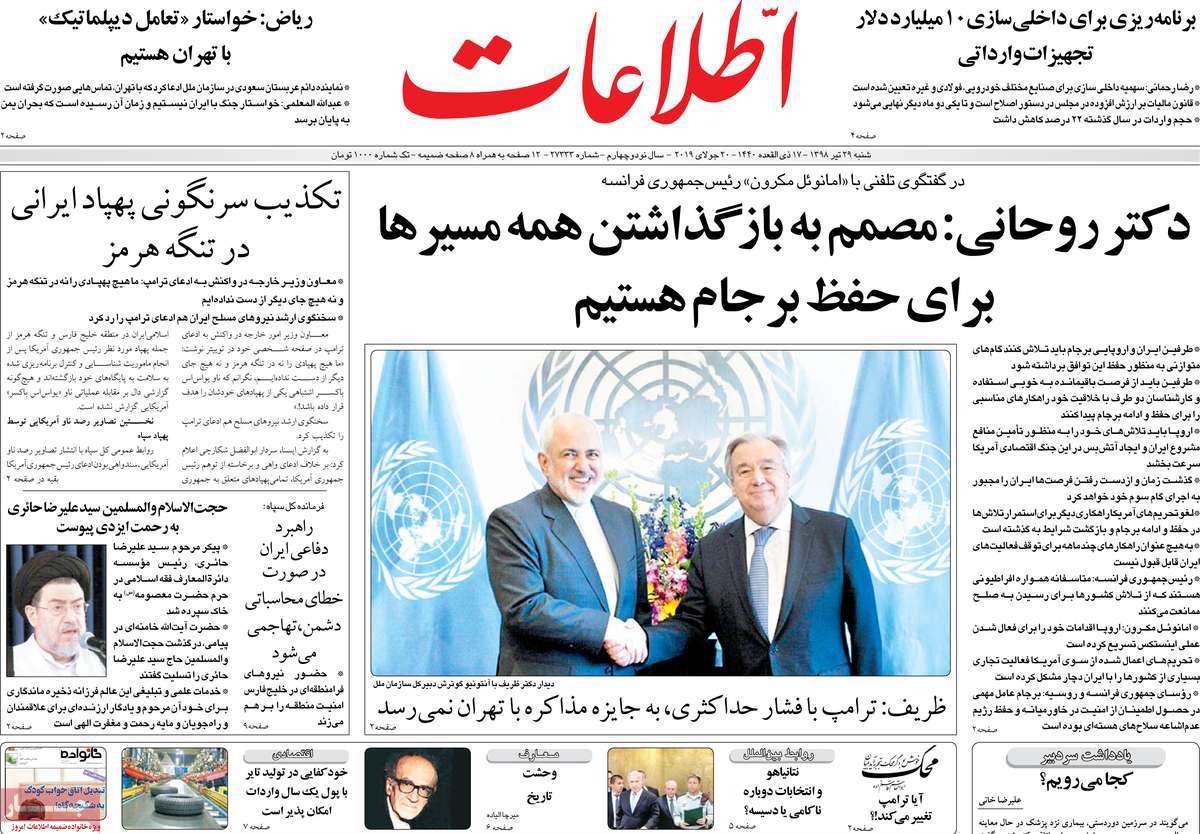
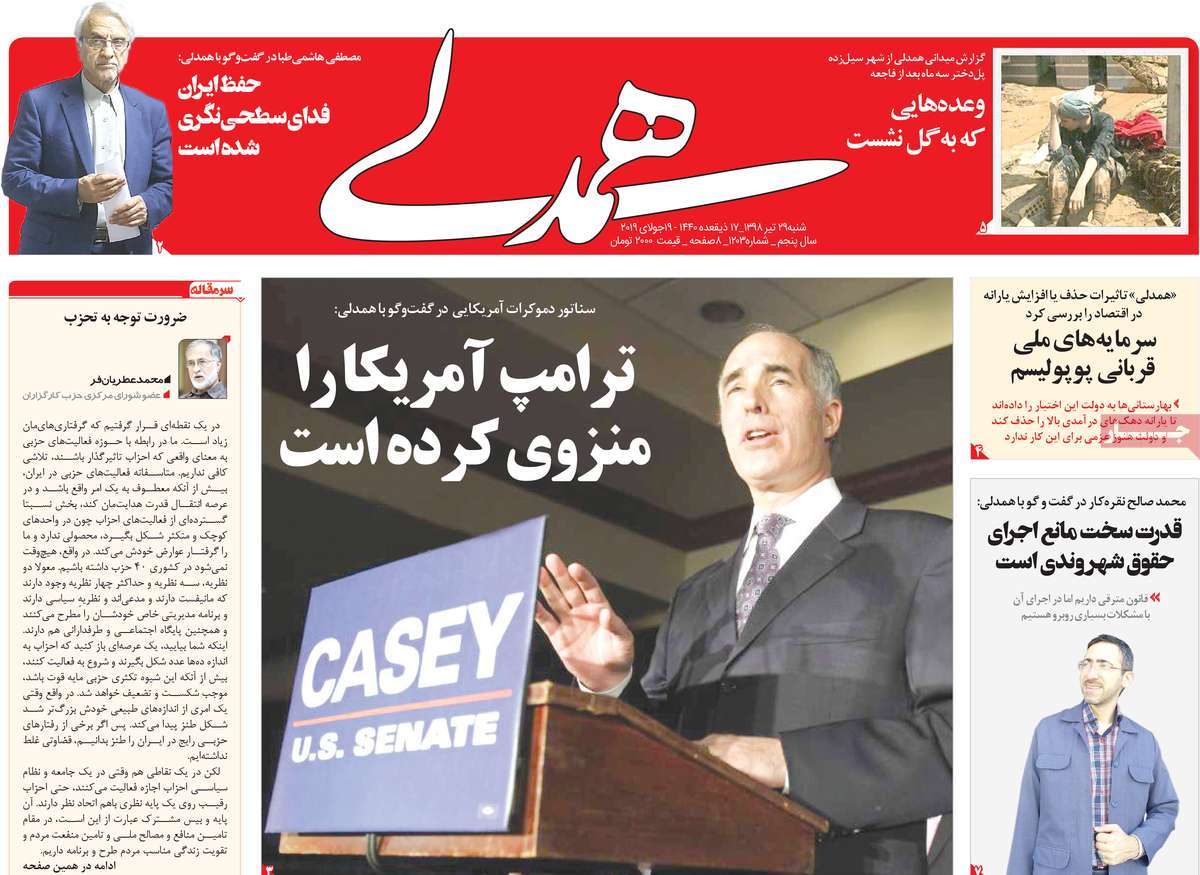
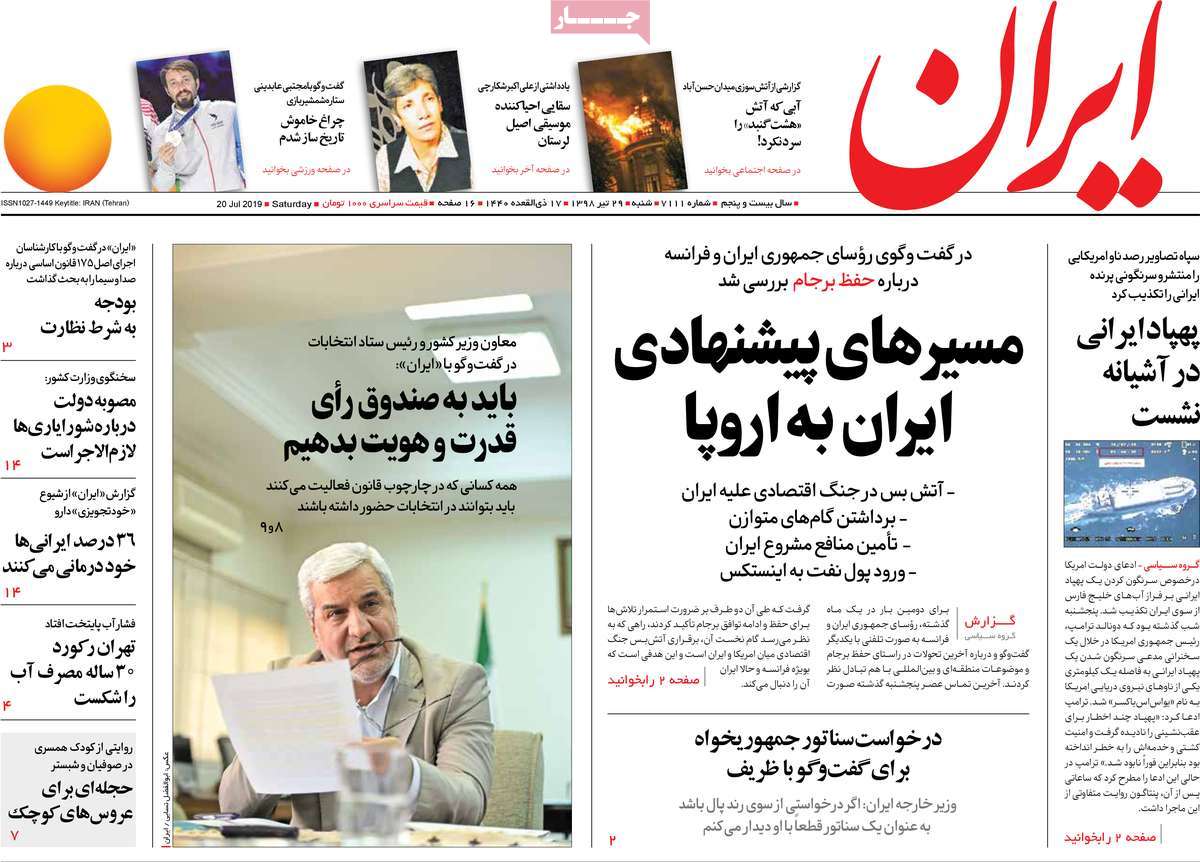
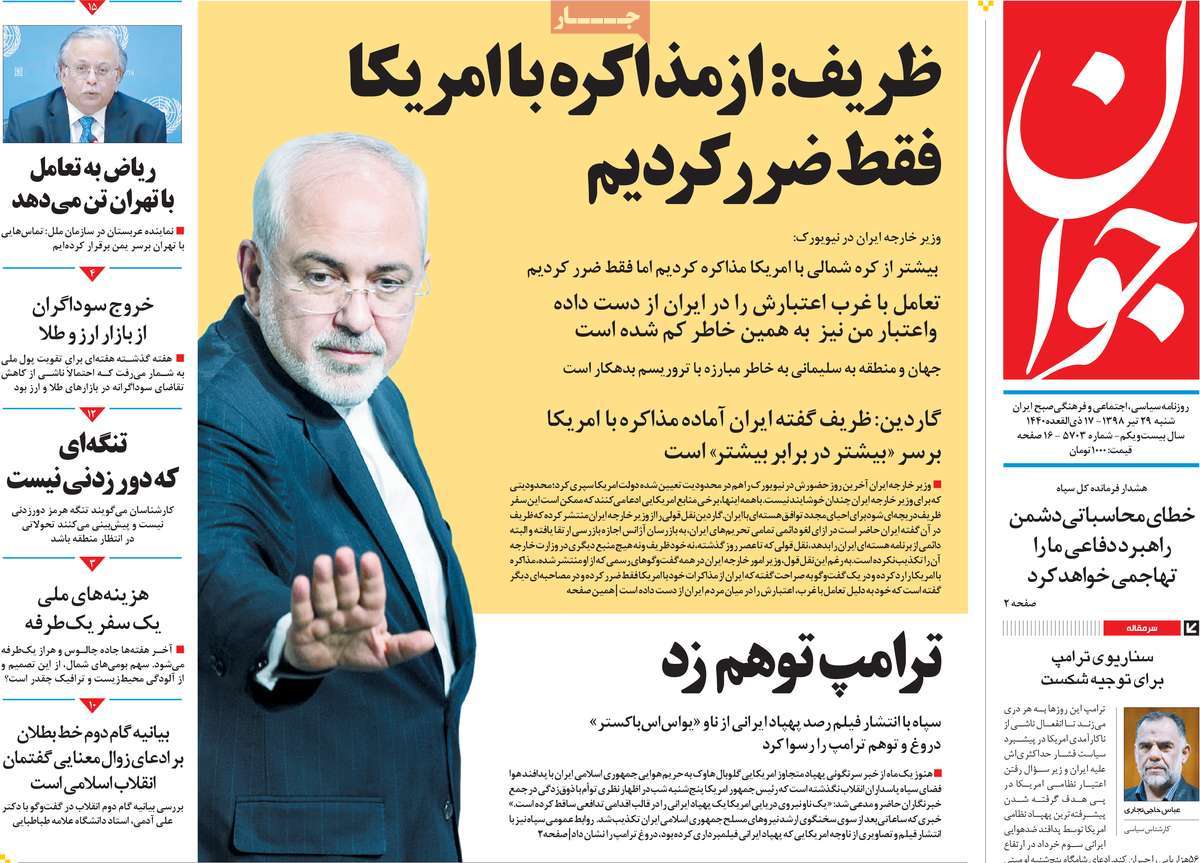
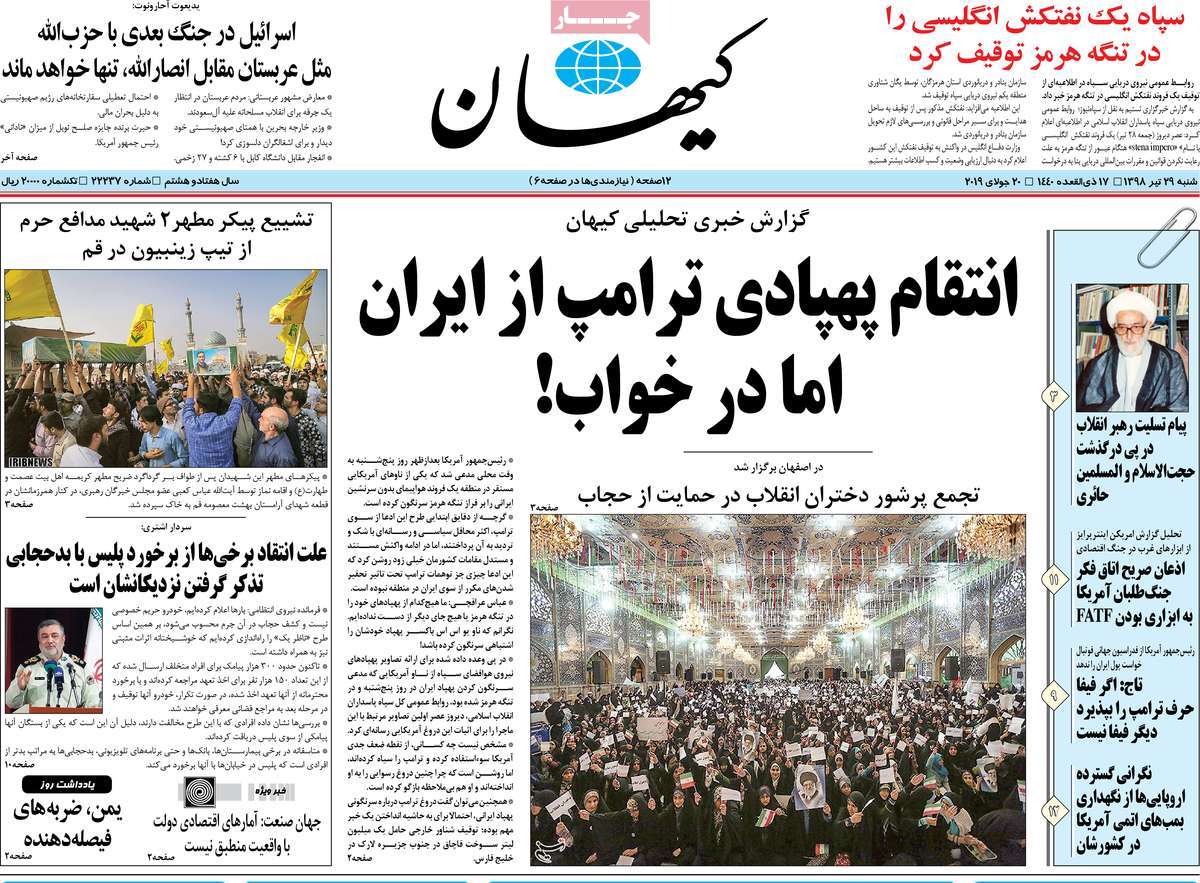
A Look at Iranian Newspaper Front Pages on July 10

A Look at Iranian Newspaper Front Pages on November 19

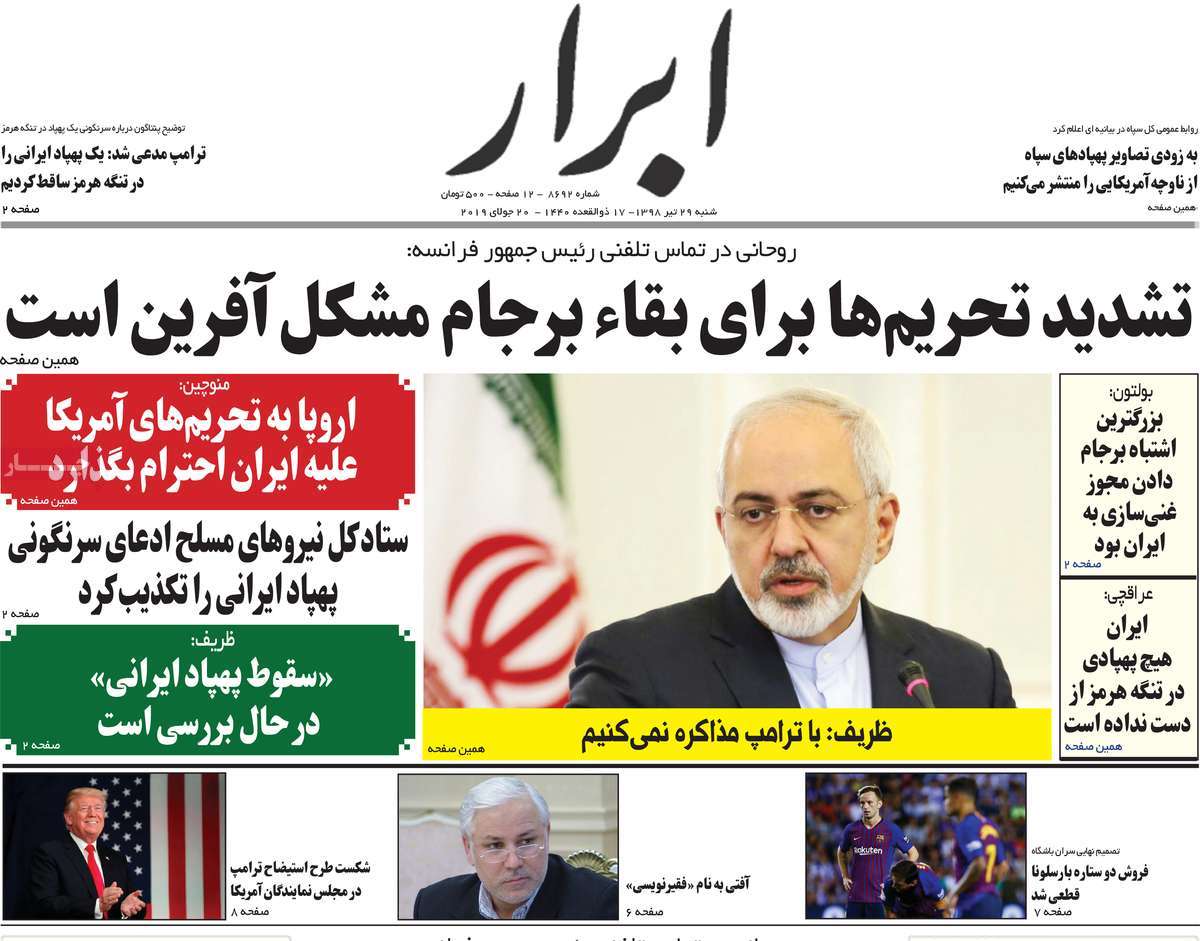
Abrar:

  • EU Reiterates Calls on Iran to Remain in JCPOA
  • More Details of Zarif’s Letter to Mogherini
  • John Bolton: US to Keep Maximum Pressure on Iran

A Look at Iranian Newspaper Front Pages on July 10


Abrar-e Eqtesadi:

  • Retrieval of $5bn Export Currency over Past 4 Months: CBI’s Deputy Governor
  • Finland Seeking to Join Iran-EU Trade Mechanism
  • OPEC Calls for Immediate Resolution of Iran-US Tension
  • Iran Presells Oil to Strong Countries

A Look at Iranian Newspaper Front Pages on July 10


Afkar:

  • IRGC Commander: Iran Involved in All-Out, Multilateral War with Enemy
  • Top General: Seizure of Iranian Oil Tanker Won’t Go Unanswered

A Look at Iranian Newspaper Front Pages on July 10


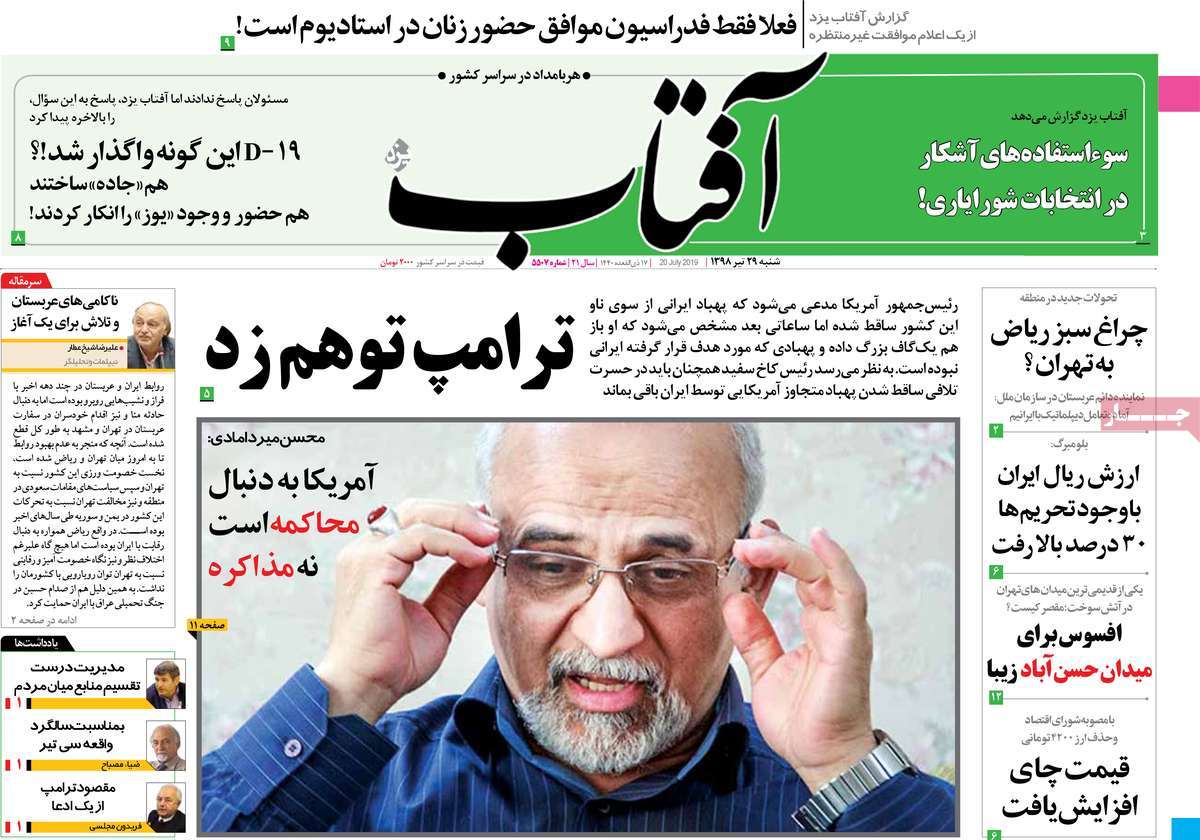
Aftab-e Yazd:

  • Why Is France More Concerned than Other Europeans about JCPOA Fate?

A Look at Iranian Newspaper Front Pages on July 10


Ebtekar:

  • Europe’s Struggle to Leave Passivity
  • Macron Advisor to Visit Tehran as IAEA’s Board of Governor Convenes
  • Russian FM: Iran’s Increasing Enrichment Not in Violation of NPT

A Look at Iranian Newspaper Front Pages on July 10


Etemad:

  • Illusion of Preserving JCPOA Through Playing at Half-Court
  • EU Must Pay Price for Survival of Nuclear Deal
  • Afghans’ Meeting in Doha Ends with Joint Statement

A Look at Iranian Newspaper Front Pages on July 10


Ettela’at:

  • Saudi Arabia’s Tahamah Power Plant Ruined in Ansarullah’s Drone Attacks
  • Macron’s Advisor in Tehran
  • Iran’s Preemptive Power at Climax: Top General

A Look at Iranian Newspaper Front Pages on July 10


Iran:

  • Macron’s Special Envoy in Tehran
  • French President Holds Talks with Trump Before Dispatching Envoy to Tehran

A Look at Iranian Newspaper Front Pages on July 10


Jomhouri Eslami:

  • UAE Raises Flag of Defeat in Yemen
  • Washington Post: Trump Baffled by Iran’s JCPOA Measures

A Look at Iranian Newspaper Front Pages on July 10


Keyhan:

  • Saudi Family after Honest Withdrawal from Yemen War
  • Ultimatum Means Determination, New Round of Talks Means Regression

A Look at Iranian Newspaper Front Pages on July 10


Mardom Salari:

  • European Troika Statement on Iran’s JCPOA Commitments Reduction
  • Iran Warns Europe about Consequences of Promise Breaches by Brussels

A Look at Iranian Newspaper Front Pages on July 10


Sazandegi:

  • The French Mission
  • In Line with His Goal to Get Back US to JCPOA Negotiating Table, Macron Once Again Sends His Advisor to Iran

A Look at Iranian Newspaper Front Pages on July 10


Shargh:

  • Trump Throws Away Everything
  • Interview with Advisor to FM: Win or Lose for All

A Look at Iranian Newspaper Front Pages on July 10


Vatan-e Emrooz:

  • Top General: Seizure of Iranian Oil Tanker Won’t Go Unanswered
  • Yemen Army Deputy Spokesman: UAE to Collapse If Remains in War

A Look at Iranian Newspaper Front Pages on July 10

Chinese Bitcoin Miners Officially Ask for Permission to Work in Iran

Countries with cheap electricity have emerged as major hosts of cryptocurrency mining. China is a major player in the bitcoin market, hosting a substantial share of miners.

According to the managing director of Iran Blockchain Association, a nonprofit community which promotes blockchain technologies, initial discussions have been held with the Chinese about their plans in Iran.
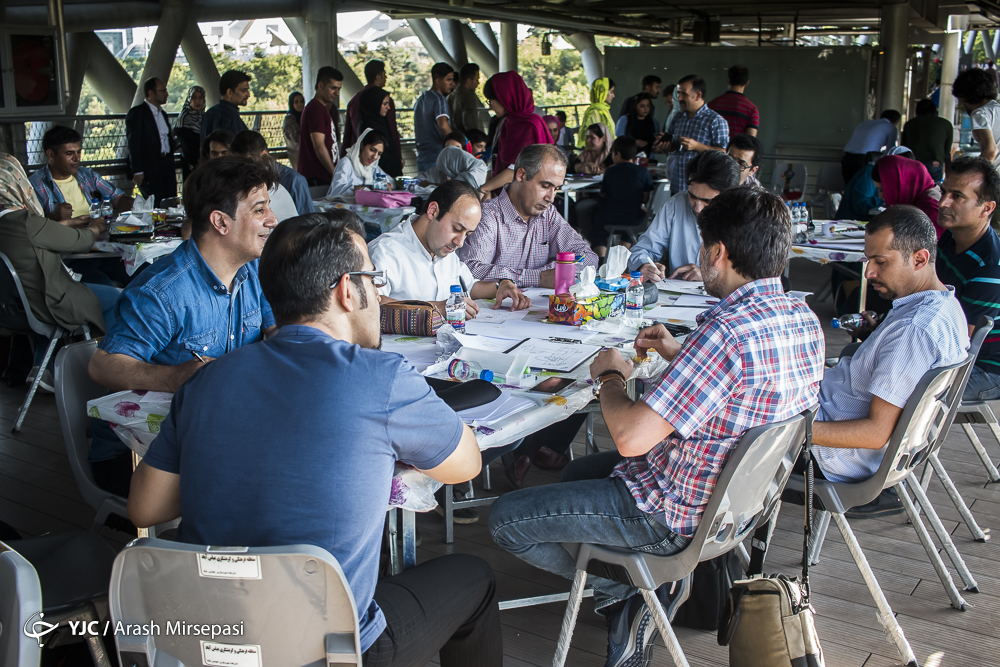
“The Chinese have made requests through official channels for cryptocurrency mining in free zones,” Mohammad Sharqi said.

At home, the Chinese government has begun limiting cryptocurrency mining, forcing many prospectors to find bases elsewhere.

Chinese companies are among the biggest manufacturers of bitcoin mining gear. They sold about $1.30 billion of blockchain hardware in 2017, 45 percent of global sales by value.

In Iran, domestic cryptocurrency mining has officially been recognized as an industry but different state organs remain uncoordinated when it comes to the overall policy.

Nasser Hakimi, deputy governor for new technologies at the Central Bank of Iran, said on Monday bitcoin trading is illegal, citing a ban by the local anti-money laundering authority.

Last year, when the central bank officially banned lenders from servicing crypto businesses, officials said they would consider launching their own digital token.
A 7% spike in power consumption in June, however, has generated a chorus of recrimination which has touched off peremtory crackdown on bitcoin miners.

Digital miners in Iran are said to be basing their operations in locations with access to subsidized electricity, such as factories, agricultural sites, government offices and mosques.

Sharqi believes much of the clamor about an extremely deleterious effect of the practice is overblown.

While there is no precise tabulation on cryptocurrency mining in Iran, one electrical industry spokesman has put the number of bitcoin mining machines north of 148,000.

On the flip side, the government is facing a serious dilemma as it is taking to the virtual, decentralized currency concept.

Despite being an alternative currency alternative, governments across the world are wary of bitcoin’s disruptive nature due to a lack of state control and regulation.

In the United States, lawmakers have called for a bill outlawing cryptocurrencies, because they can help governments skirt sanctions.

That is because an awful lot of the US power comes from the dollar being used as the standard unit of international finance and transactions. The use of bitcoin is eating at that advantage and effectively disempowering the United States.

For countries like Iran, however, virtual and digital currencies provide a back-channel to bypass US sanctions.

Sharqi says the energy ministry had better regulate digital mining by giving out licenses for industrial and commercial utilization of electricity.

“Our argument is there is a danger that these activities might go underground and to the homes of ordinary people, which is dangerous,” he said.

On Saturday, Iran’s Minister for Communications and Information Technology Mohammad Javad Azari Jahromi admitted that the Chinese were interested in tapping Iranian cryptocurrency market.

“If there is a demand by foreign investors in this regard, the Ministry of Energy could take advantage of it and welcome them in order to develop infrastructure and produce electricity,” Sharqi said.

‘Britons Initiated Insecurity’, Iran President Warns UK

Addressing a weekly cabinet session on Wednesday, Rouhani described the UK’s seizure of the Iranian vessel as a “very cheap and wrong” move which is detrimental for London.

“I tell the Britons that you are the initiators of insecurity and will learn and understand the consequences later,” he warned, saying that the UK will be responsible for all that ensues.

He also stressed that shipping routes in the world must enjoy full security.

“We all should strive to make shipping safe across the world. We should help ensure the safety of energy transport routes across the world,” he said.

“You’re now so pathetic that when your oil tanker wants to move in the region (Persian Gulf) you have to escort it with your warships, out of fear. Are you sick? Let shipping remain safe; let the world be safe,” he added.

Rouhani also referred to Gibraltar as a Spanish territory occupied by British forces.

“A usurper has seized our oil tanker. It [Gibraltar] is a Spanish territory. If Spain had seized the tanker, we’d say they’ve made such a move in their own territory. But the UK has occupied Gibraltar – which belongs to Spain,” Rouhani noted.

“he occupying country is illegally present there. It’s wrong, and all the people of Spain are angry with the UK’s occupation,” he added.

Iranian supertanker Grace 1 was boarded and impounded by Gibraltar police and customs agencies, aided by a detachment of British Royal Marines, on Thursday at the US request in the Strait of Gibraltar.

While the UK claims it has seized the tanker on the pretext that it was carrying oil to Syria in breach of the EU sanctions against the Arab country, Iran says it was not bound for Syria, and the UK was not allowed to seize it.

“The oil tanker (seized in Gibraltar) was not bound for Syria. The Syrian port they mention basically is not suitable for such type of tanker to dock,” Iranian Deputy Foreign Minister Seyyed Abbas Araqchi said Sunday.

“The oil tanker carrying Iran’s oil was a supertanker with 2 million barrels of oil, and with such a huge capacity it could not cross the Suez Canal,” Araqchi added, speaking to reporters in a press conference.