Tuesday, December 23, 2025
Home Blog Page 3181

Iran Expresses Regret over Russia Submarine Fire

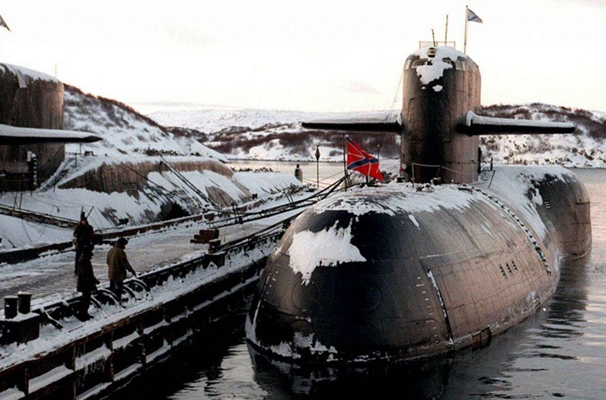
In this file photo taken on Thursday, Jan. 1, 1998, Decommissioned Russian nuclear submarines are shown in their Arctic base of Severomorsk, the Kola Peninsula, Russia.‌ / Photo by AP

In his Wednesday statement, Mousavi offered condolences and sympathy to the Russian nation and government, particularly the families of the victims, over the tragic incident.

At least 14 sailors died Monday after a Russian navy deep-sea submersible caught fire under water during a research mission, officials said.

The vessel caught fire unexpectedly while the submersible was measuring sea depths in Russia’s territorial waters, the Defence Ministry announced.

The fire was put out thanks to the self-sacrifice of crew members although officials did not say how many sailors were aboard the vessel at the time of the blaze or how many, if any, survived.

Russian President Vladimir Putin cancelled a scheduled appearance Tuesday and summoned his defence minister to get briefed on the situation.

The vessel, which has only been identified by the ministry as one intended for studying the seabed, has since been docked at the Arctic port of Severomorsk, the main base of Russia’s Northern Fleet.

Russia’s RBC online news outlet reported the fire took place on the nuclear-powered AS-12 Losharik.

The Losharik, a relatively new ship which entered service in 2010, is the most advanced and most obscure Russian submarine. It’s named after a Soviet-era cartoon character, a toy horse made of small spheres.

In 2012, the vessel was involved in research intended to prove Russia’s claim on the vast Arctic seabed. It collected samples from the depth of 8,202 feet, according to official statements at the time. Regular submarines can typically dive to depths of up to 2,000 feet.

Some Russian officials have speculated that the sub can travel as deep as 19,685 feet, although this has yet to be independently verified, Fox News reported.

The fire marks one of the more serious Russian naval incidents since 2000, when 118 men died after the Kursk nuclear submarine exploded and sank on August 12 during naval manoeuvres in the Barents Sea.

The tragedy, which took place soon after Putin assumed office, drew attention to the state of the Russian military which had been subject to underfunding and neglect following the collapse of the Soviet Union.

It subsequently led to a massive increase in military funding.

Iran Leader Says Hajj Pilgrimage ‘Political-Religious’ Move

The Leader made the comment while addressing a host of local officials in charge of the Hajj pilgrimage on Wednesday.

“The creation of unity is a political move. Defending and supporting the Palestinian nation and the oppressed in the Muslim world like in Yemen is a political move. Defending the oppressed fully conforms to Islamic teachings and is a [religious] duty. Disavowal of pagans is a duty, too. All of these are stipulated in religion,” said Ayatollah Khamenei.

He then drew a comparison between “religious” political moves and “non-religious, diabolical” ones.

The Leader said an example of non-religious political moves is when some say pilgrims should not express their protest at the US and should not express their disavowal of pagans during Hajj rituals.

The Leader underlined that Hajj is a social factor which contributes to unity and brotherhood, and at the same time, is a show of morality.

The Leader further noted that the Saudi government is duty-bound to respect and ensure the safety and dignity of Hajj pilgrims.

“Those who are in charge of the Hajj pilgrimage, shoulder heavy responsibilities,” said the Leader.

“Among their (officials) duties is to ensure the security of pilgrims, but they shouldn’t create a police state. They should preserve pilgrims’ respect and dignity,” Ayatollah Khamenei said.

In September 2015, a deadly human crush occurred during Hajj rituals in Mina, near Mecca.

Days into the incident, Saudi Arabia published a death toll of 770 but refused to update it despite gradually surging fatality figures from individual countries whose nationals had been among the victims of the crush.

Unofficial sources put the death toll at almost 7,000 people. Iran said about 465 of its nationals lost their lives in the incident.

Earlier that same month, a massive construction crane had collapsed into Mecca’s Grand Mosque, killing more than 100 pilgrims, including 11 Iranians, and injuring over 200 others, including 32 nationals from Iran.

Serious questions were raised about the competence of Saudi authorities to manage the Hajj rituals in the wake of the incidents, and, facing Saudi intransigence to cooperate and refusal to guarantee the safety of Iranian pilgrims, officials in the Islamic Republic subsequently decided to halt pilgrimages over security concerns.

Saudi Arabia also unilaterally severed its diplomatic ties with Iran in January 2016 after protests in front of its diplomatic premises in Tehran and Mashhad against the execution by Riyadh of eminent Saudi Shiite cleric Sheikh Nimr al-Nimr.

Iran to Surpass 3.67% Uranium Enrichment Level Sunday: Rouhani

Addressing a cabinet session on Tuesday, Rouhani said as of Sunday, Iran will no longer remain committed to the 3.67% uranium enrichment level set by the Joint Comprehensive Plan of Action (JCPOA).

“On July 7, our enrichment level will no longer be 3.67 percent. We will put aside this commitment. We will increase (the enrichment level) beyond 3.67 percent to as much as we want, as much as is necessary, as much as we need,” he noted.

“We will adopt our next measures as of July 7. If you want to express regret, please express it right now. If you are going to issue a statement, issue it today,” the Iranian president added.

Rouhani also warned that “after July 7, if you don’t live up to the commitments you have made within an agreed timetable, we will restore Arak reactor to its earlier status, the very status which you once referred to as dangerous and capable of producing Plutonium.”

“We recommend the Europeans and the US get back to logic, to sit behind the negotiating table, return to understanding and rule of law and respect the United Nations Security Council’s approvals and let’s live up to our commitments under the JCPOA,” he noted.

Rouhani said Iran “will remain committed to the nuclear deal as long as the other sides remain committed.”

“We observe JCPOA’s commitments one hundred percent but only if the other sides respect it one hundred percent,” he said.

Iran Not after Killing JCPOA

Rouhani further noted that if Iran wants to get back to its previous status, it can do it immediately.

“We can do this simply through selling the [surplus] heavy water to another country and get back to lower percentage of enrichment. All the move we have made so far can get back to their previous status just within one hour. Why are you concerned? We had told you that we will get back to the square one but only if you remain committed to your pledges. We don’t want to make a tit-for-tat. We are not after destroying the deal.”

Rouhani said the Europeans failed to do their commitments even though they had a lot of time.

After two and half months, “they called me again and begged to give them another one month. What happened after the one month? You didn’t even remain committed to what you yourselves had advised us to do and the very commitments you had vowed to make and even the commitments you had explicitly told me on the phone to do.”

He also lashed out at the Europeans for their silence towards the US’ brutal sanctions, which have hit ordinary people in Iran, blocking their access to basic humanitarian goods.

“The Europeans remained silent amid the suffering of the 82-mn-population nation of Iran who are struggling to have access to basic goods. These countries are self-proclaimed defenders of human rights.”

“Why do such countries which proclaim themselves supporter of innocent people including men and women, the elderly and the youths, teenagers and children, have remained silent for one year? Why don’t they openly condemn the US and why don’t they make up for the losses that the US has inflicted on Iran. We decided to do something against their silence,” he said.

Painting Depicting Crucifixion of Jesus to Be Auctioned in Iran

The work of art will be displayed at the 11th edition of Tehran Auction, which is dedicated to Modern and Classic Iranian Art.

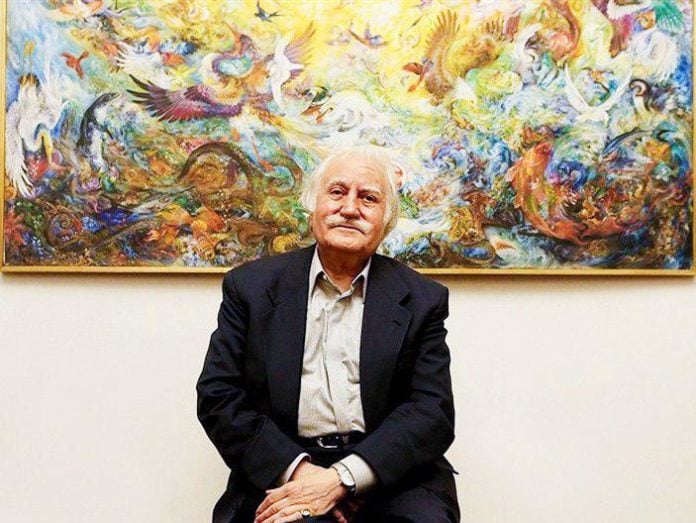
Farshchian is indubitably Iran’s most prominent contemporary miniaturist. His works are very popular not only among connoisseurs, but among ordinary people as well. His famous painting called “The Ashura Evening” is highly praised by all those who love Imam Hossein, the third Shia Imam, and are touched by the struggles of Imam Hossein and his faithful followers against the tyranny of the time. Farshchian has donated “The Ashura Evening” painting along with 16 other precious works with religious concepts to the museum of the Imam Reza Holy Shrine in northeastern Khorasan Razavi province.

Painting Depicting Crucifixion of Jesus to Be Auctioned in Iran
Farshchian University Opened to Protect, Globalize Islamic-Iranian Arts

Moreover, he has designed the metal lattice frames installed on the tombs of Imam Reza, Imam Hossein and Hazrat Abdulazim without expecting any material gain.

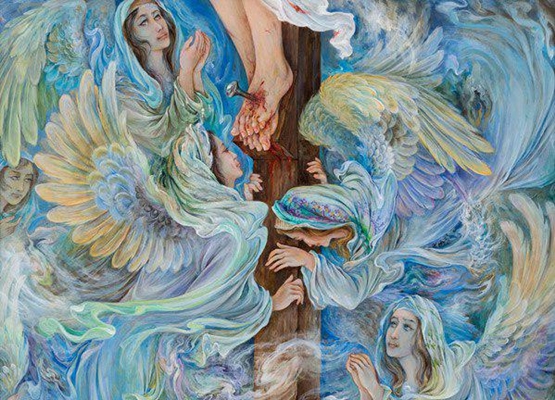
Now, one of his most invaluable paintings illustrating the crucifixion of Jesus has entered the Tehran auction and will be put up for sale along with other works of modern and classic Iranian art.

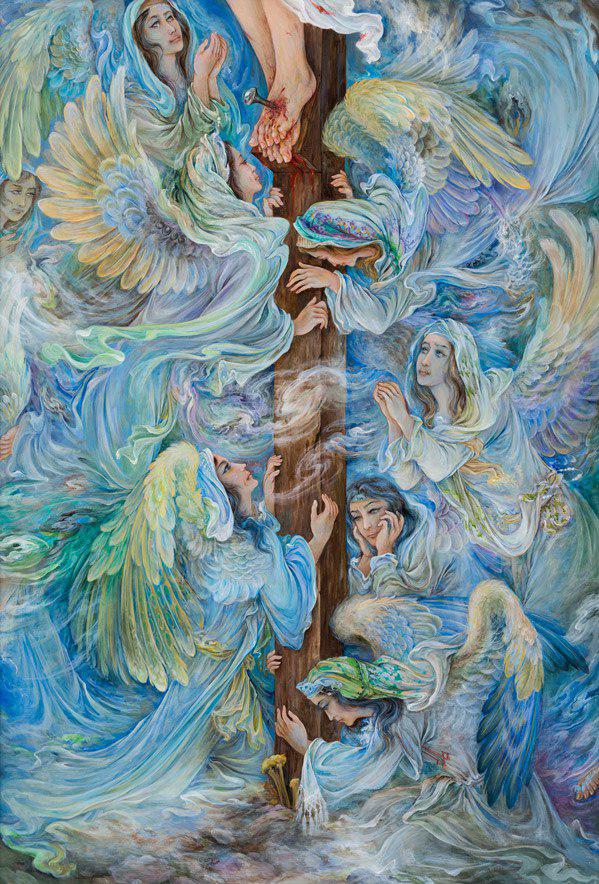
The starting bid for the painting is estimated at between 15 and 20 billion rials. The painting, which has not been given any name, was created with watercolour and gouache in 2006.

The painting depicts the crucifixion and ascension of Jesus. In most Western works of art, the crucified body of Jesus on the cross is illustrated. However, Farshchian says the way he has depicted Christ is different from how his crucifixion is normally illustrated. In Farshchian’s work, the only members of Jesus’ body which can be seen are his legs drawn at the top of the painting. The cross is seen at the centre of the painting like a vertical column stretching from bottom to top. Here, the vertical dimension is accentuated.

Painting Depicting Crucifixion of Jesus to Be Auctioned in IranIn his painting, Farshchian depicts ascension from the earth to the heavens. The torso of Jesus is not illustrated in the painting, which highlights two spiritual points: First, it refers to what God Almighty says in the Holy Quran: “They said they had killed Jesus Christ, but they had neither killed nor hanged him. They only erroneously believe it happened. They are those who are divided on how Jesus was murdered, and they are in doubt, and they are not aware of what happened, and they only rely on guessing, and they definitely did not kill Jesus; rather, God made Jesus ascend toward Him, and God is omnipotent and wise.” And the second point is that the painting underscores the status of Jesus Christ, who has a status higher than that of angels. Reaching such a high position is one of key mystic issues. Renowned Iranian poet Rumi also elaborates on this point in his poems.

Farshchian’s painting depicts angels spiraling around Jesus’ feet, and nothing else can be seen. The reason is that the artist has focused on Christ’s ascension to the heavens and the experience of Jesus’ presence before God. The painter illustrates a scene where the audience see angels on the ground and Jesus in the skies.

Farshchian has established his own school in the domain of miniature painting. His style conforms to the principles of basic traditional Iranian painting while drawing on new techniques. He has combined all of those techniques with the Western 3-D techniques, contributing heavily to the progress of painting in Iran.

Farshchian’s works have been showcased in hundreds of individual and collective exhibitions both in Iran and abroad, bringing him worldwide fame. Museums, libraries, personal collectors and art lovers take pride in being in possession of his works.

Fear of War Evident in US’ Behaviours: IRGC Chief

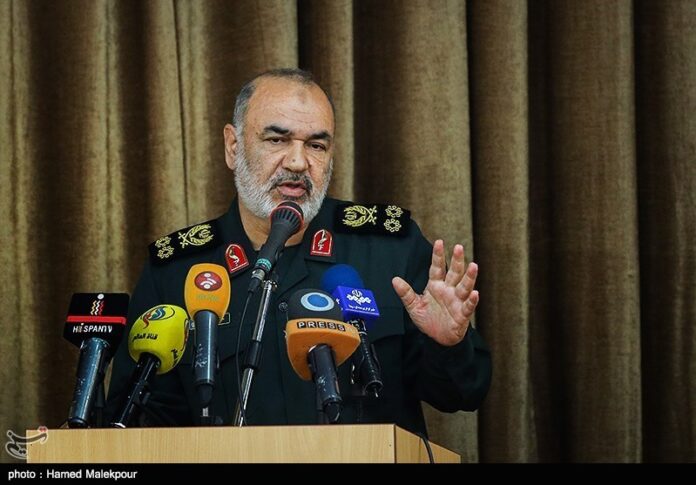
General Hossein Salami

Major General Hossein Salami, the chief commander of Iran’s Islamic Revolution Guards Corps (IRGC), noted that Iran has completely blocked the enemy’s path in the military domain and “reversed the balance.”

“Maybe until some time ago, some individuals believed that if we do not succumb to the enemy’s demand for talks, the option of war will be inevitable. However, the situation played out in such a way that the enemy was even afraid of the thought of the outbreak of a war,” he said.

“At this juncture, it is the enemy that is worried about the outbreak of war, and this worry is evident in their physical and tactical behaviour,” he said.

The IRGC commander underlined that Iran should formulate mechanisms to tackle the enemy’s machinations.

“We have a duty to work out formulas to tackle all of the enemy’s formulas,” he said.

“Today, out global power is well-known and enjoys an extraordinary deterrence capability, and in reality, we managed to shatter the United States’ fabricated and artificial power created through psychological warfare,” he said.

General Salami the enemy has now got engaged in an economic ear against Iran.

Iran in Possession of Unique Secret Weapons: General

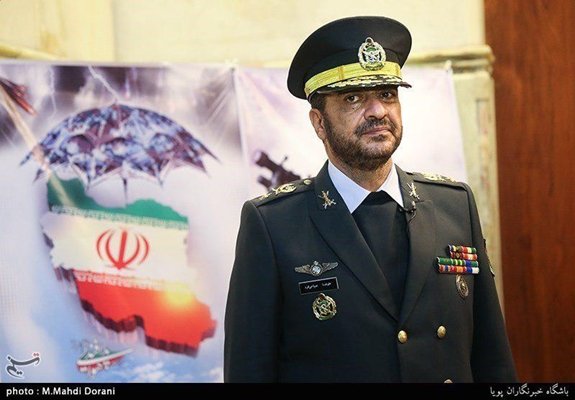
Brigadier General Alireza Sabahifard further said Iran’s deterrence power holds the enemy back.

“If the enemy has stopped at a distance 200 miles from the Strait of Hormuz, it is due to our deterrence capability. Iran’s combat preparedness should not be put to the test, and their first mistake will be their last one,” said General Sahabifard, who is the commander of the Air Defence Force of the Iranian Army.

“The enemy is rattling sabres through its military presence in the Persian Gulf and exerting maximum pressure, and wants to impose its sinister intentions on the steely resolve of the Iranian nation,” he noted.

“On the one hand, the enemy bangs the drum of war, and on the other, it ratchets up sanctions. Still, the enemy offers to hold talks. This shows the enemy is not reliable,” he said.

He said the US and its cronies in the region should know that they are no able to confront Iran as the Islamic Republic is in possession of “unique secret weapons.”

Kilim-Weaving Girl Representing Iran at CSIT World Sports Games

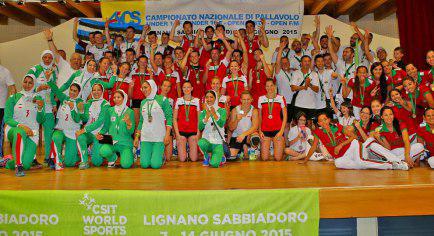
Hadiseh Ahmadi is a 23-year-old runner. She has been weaving Kilim along with her mother since childhood, and she has been practicing sports at high school. Since five years ago, she has been known as the best female athlete in the field of triple jump and long jump in Iran.

She says she was selected by her trainees at high school for athletics. “After seeing my progress, I decided to practice athletics in a more professional way. As I did not have any support, I turned to worker sports. Of course, I should say my mother, as a working woman, was my only supporter. She has been weaving Kilim for many years. I also learned the skill when I was a teenager.”

Hadiseh is so confident that she speaks of a title in the International Workers and Amateurs Games in Spain.

Kilim-Weaving Girl Representing Iran at CSIT World Sports Games“My specialty is in triple jump. The record in the games is 12 metres and six centimeters and my record is 11 meters and 76 centimetres. If I can beat the same record, I will be among the first three,” says Hadiseh.

This Iranian athlete hopes to join Iran’s national team after returning from Spain games. She says this field is for the people who are deprived of facilities.

“I want to receive my degree in training soon and help my friends to become more interested in sports.”

The 6th World Sport Games organised by the International Workers and Amateurs in Sports Confederation (CSIT) is being held in Tortosa, Spain, from July 2 to 7.

The World Sports Games (WSG) are an international major event (up to 8000 participants) every two years full of competitive and non-competitive sports, cultural exchange and fun.

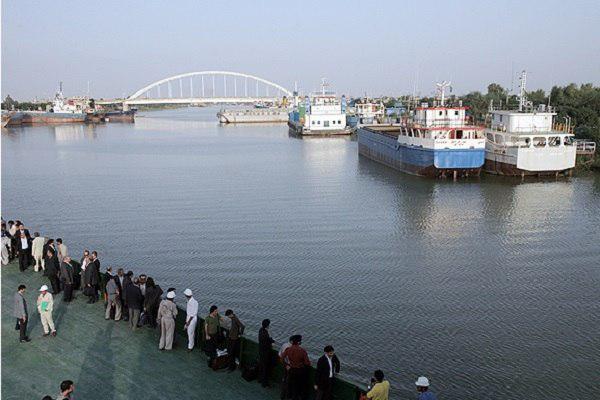
Iran, Iraq Move Closer to Dredging Arvand Rud

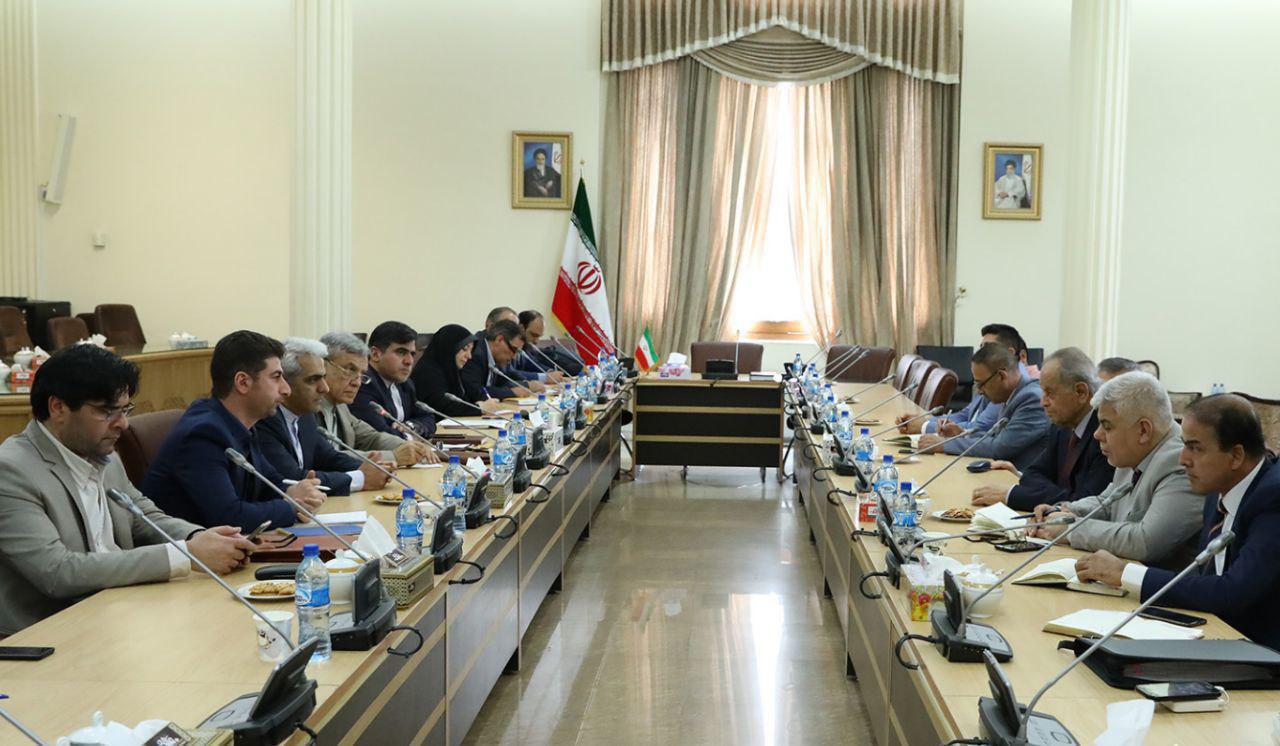
Official delegations from Iran and Iraq held the second meeting of a joint commission for coordination on Arvand Rud in Tehran on Tuesday.

The meeting, held within the framework of an agreement signed by the leaders of the two neighbours, was co-chaired by the Iranian Foreign Ministry’s director general for legal and international affairs and the Iraqi foreign minister’s advisor.

In the meeting, also attended by representatives from different Iranian and Iraqi ministries and organizations, the two sides discussed the general framework of the arrangements for dredging and clean-up of Arvand Rud.

Iran, Iraq Move Closer to Dredging Arvand RudThey also agreed that the joint operational ideas would be submitted to the high-ranking officials of the two countries to be agreed upon and implemented.

Before the meeting, technical experts from Iran and Iraq convened a session of the interim technical task force on dredging Arvand Rud to discuss a timetable for the clean-up operation at the border river.

On May 19, Iranian and Iraqi authorities signed the proceedings of a meeting that had been held to study the technical issues of dredging Arvand Rud.

Tehran and Baghdad have already signed an agreement to resolve disagreements over Arvand Rud based on the 1975 Algiers Accord, which deals with border issues and norms of good neighbourliness.

How to Create Playground Design that is Both Safe and Challenging

Children will want a play area that is intriguing and adventurous. Parents want a play area that will be safe for their children. This can make for a conflict of interest which may not be easy to resolve in a playground design.

So how do you come up with a happy medium? Read on to find out.

Creating a Challenging Playground Design

A playground is more than just a place where a child can burn off excess energy. It is a place where they can develop skills including self-regulation and the handling of stressful situations while increasing self-confidence and self-esteem. When they come to a park, they need to feel challenged by the apparatus and atmosphere the play area provides.

If the play area does not catch their interest, they won’t be as likely to play there. Research shows that limiting challenging elements and enforcing too many restrictions on children can also hamper their development.

If children are exposed to too many circumstances where challenge and risk are restricted it can lead to obesity, mental health issues, a lack of independence and a hampering of learning and perception.

It can also make them more prone to fear. For instance, apparatus that allows them to climb will acquaint them with a healthy sense of heights. Without this sort of stimulation, they may develop a phobia that can continue to be a factor as they age.

So, we can see how important it is to create a design that will pose a challenge to children. But we need to create this design while keeping safety in mind. This is a task that is difficult, but it is not impossible.

Creating a Safe Playground Design

One important step to take in creating a playground that is safe and challenging is to make sure the equipment you use complies with safety codes.

There are several organizations like the International Equipment Manufacturers Association, the Consumer Product Safety Commission and the American Society for Testing and Materials, whose job it is to make sure playground equipment is safe for children. Any equipment used should be thoroughly tested before it is installed in the space.

And while equipment must be up to safety codes, it must still be challenging to children. Apparatus like a sturdy playground net, rock style facades and zip lines that are placed at a safe height can provide the appropriate challenges and still follow safety guidelines.

Another consideration you should take into account in keeping your park safe is to make sure there are areas nearby where adults can supervise. Be sure to provide shady benches around the play area where adults can sit and watch children while they are at play.

Finally, make sure the apparatus you install can accommodate plenty of children. This will reduce overcrowding which can be dangerous, particularly when children are climbing or playing at elevated heights.

Playground Safety Factors

In addition to making sure that the apparatus you use in your play area is safe, there are certain rules and regulations a designer must take note of to ensure that children are protected. These include the following:

Age Appropriateness: The Consumer Products Safety Commission recommends separate play areas for children that are 6 to 23 months, 2-5 years old and 6-12 years old.

Proper Installation: Installation of equipment must be performed by a trained professional. You can also recruit volunteers from a community build project.

Environmental Conditions: The play area must be designed so that it is protected from sun exposure, is well drained, is visible from nearby paths, is far from automobile and bicycle traffic and is separated from water and other natural hazards.

Equipment Design: All equipment used should be structurally sound and up to code.

Layout: The way children play can affect the use of the play environment. It is best to consult a Landscape Structures Consultant like Miracle Playsystems. He or she can help you design a layout that will provide accessibility and minimize congestion while children are playing.

Protective Surface: We all know how likely it is for children to fall while they are playing. That’s why a protective surface is necessary. This can be a loose material that is filled to a depth that will provide somewhat of a cushion. Wood fiber rubber mulch, factory made resistant tiles, a unitary safety surface or a combination of the three are all acceptable.

You may want to provide even more padding near equipment children are likely to fall off of.

Safety Audits and Inspections: Audits and inspections should be conducted regularly to make sure the play area and its equipment is safe and was not compromised by any wear and tear or damaged by vandals.

Creating a playground design that is both safe and challenging can be difficult, but if you consider the safety factors involved as well as how to keep children stimulated, your design will be a successful one. Taking all circumstances into account will help you come up with a play area that will be an asset to the community and the families that live there.

 

Iran to Honour JCPOA Just Like E3, Zarif Says

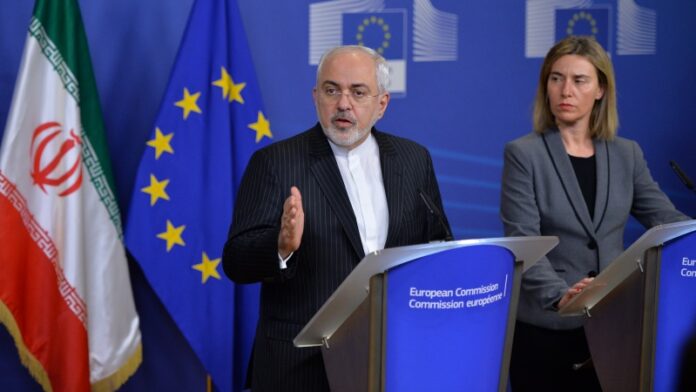
“Iran is committed to the full implementation of the JCPOA: as long as E3/EU implement THEIR economic commitments,” Mohammad Javad Zarif said in a post on his Twitter account on Tuesday, right after his British, French, and German counterparts and the EU foreign policy chief voiced concern about Tehran’s decision to scale down its commitments under the Joint Comprehensive Plan of Action.

“So moving forward, Iran will comply with its commitments under the JCPOA in exactly the same manner as the EU/E3 have –and will- comply with theirs. Fair enough?” he added.

Earlier in the day, the foreign ministers of France, Germany and the UK, as well as EU High Representative Federica Mogherini, issued a joint statement to voice extreme concern about Iran’s new decisions.

“We have been consistent and clear that our commitment to the nuclear deal depends on full compliance by Iran. We regret this decision by Iran, which calls into question an essential instrument of nuclear nonproliferation,” said the statement from Europeans, who have failed to ensure Iran’s economic interests after the US withdrawal from the JCPOA.

Last week, Zarif wrote a harsh letter to Mogherini to underline Iran’s right to reduce its JCPOA commitments.

The top Iranian diplomat announced on July 1 that Tehran has increased the level of its low-enriched uranium production to over 300 kilograms.

The move came as part of a decision by the Islamic Republic of Iran to reduce some of its JCPOA commitments in reaction to the US violation of the deal and the Europeans’ failure to live up to their obligations.