Friday, December 26, 2025
Home Blog Page 3140

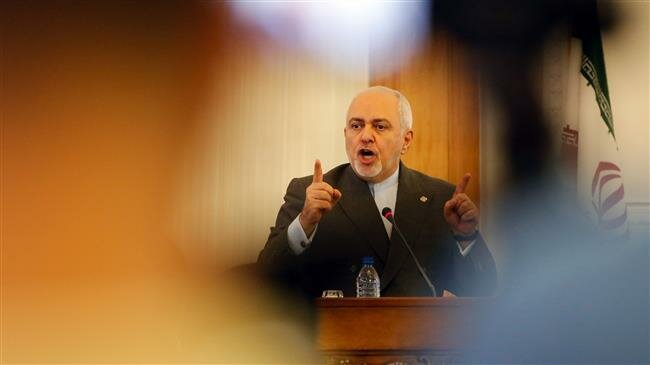
Regional States, Not Outsiders, Responsible for PG Security: Zarif

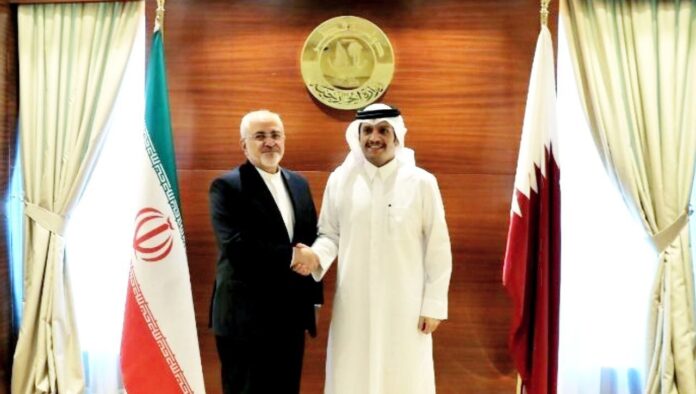
He made the remarks in a meeting with his Qatari counterpart Mohammed bin Abdulrahman in the Arab country’s capital of Doha.

During the Monday talks, Zarif underlined the need for constant consultations on regional developments between the two countries, describing it as a regional necessity.

“Military coalitions are a nonstarter, and foreign forces will cause insecurity in the region,” Zarif said.

The responsibility for ensuring the security of Persian Gulf lies with the countries of the region, not foreign forces, Zarif said, highlighting Iran’s responsibility in maintaining peace and stability in the region.

He also said bilateral relations between Iran and Qatar are growing in all fields, particularly in political and economic areas.

The Qatari foreign minister, for his part, expressed pleasure with Tehran-Doha relations, and underlined the two countries’ role in establishing peace and stability in the region.

He also stressed the need for joint cooperation to reinforce the element of dialogue in order to resolve regional crises.

Foreign Minister Zarif earlier attended a dinner ceremony hosted by his Qatari counterpart in Doha on Sunday night.

Iran, Yemen Discuss Implementation of Stockholm Deals

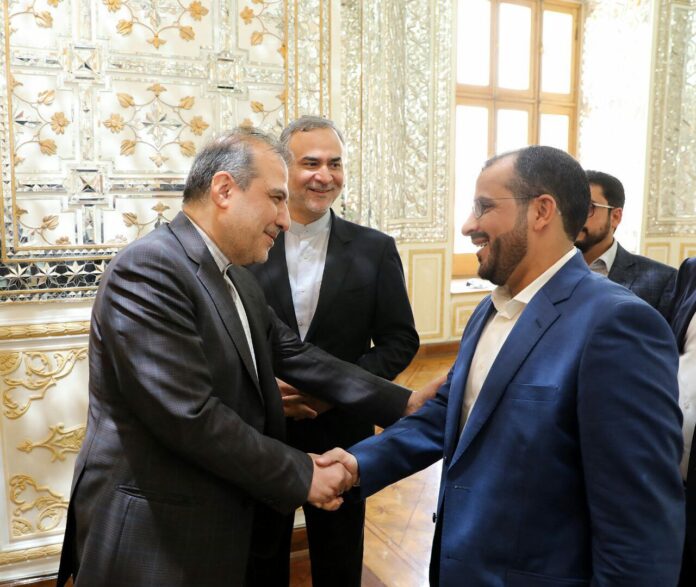
During the Sunday meeting in Tehran, the two sides conferred on the latest developments of Yemen.

Khaji underlined the Islamic Republic’s principled policy of finding political solutions to regional crises, saying that Tehran believes in the political settlement of the Yemen crisis through Yemeni-Yemeni talks.

The Iranian diplomat once again expressed Iran’s support for the Stockholm agreements, praised Ansarullah for unilateral implementation of the agreements, and urged the international community to increase their pressures on the Saudi coalition, forcing it to fully comply with its commitments.

Referring to the disastrous humanitarian situation in Yemen, Khaji said, “The Islamic Republic of Iran will continue its efforts to end the siege on Yemen, and dispatch humanitarian aid to the country.”

Adbul-Salam, in turn, thanked the Islamic Republic’s political and humanitarian support for the country and people of Yemen, and presented a report on the process of implementing Stockholm agreements and the future prospect of political and field developments in the Arab country.

Iranian, Turkish Presidents Discuss Promotion of Ties

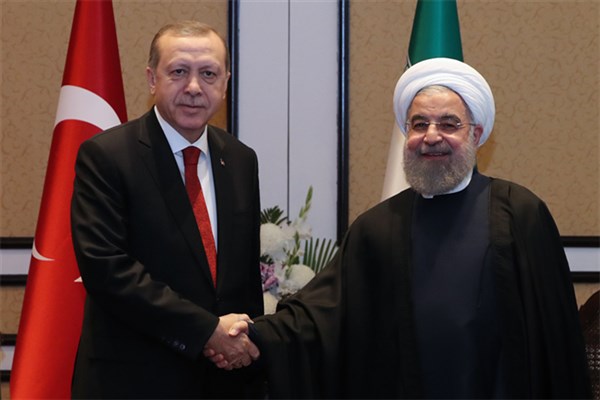
During the Sunday talks, Rouhani said Iran is fully prepared for development of relations with Turkey as a friendly and brotherly country.

He also underlined the necessity for accelerated implementation of earlier agreements between the two states.

The Iranian president also offered congratulations to the Turkish nation and government and all Muslim people around the world on the Eid al-Adha.

Erdogan, in turn, said Ankara is ready for further promotion of its relations with Tehran in all spheres.

He also congratulated the Iranian president, government, and nation on the Eid al-Adha, and expressed hope that the day would awaken and unite the Muslim world and boost unity and brotherhood among Islamic states.

Iran and Turkey, as major trade partners, plan to increase their annual trade to 30 billion dollar in defiance of the US pressure, which is aimed at isolating Iran’s economy.

In the three-month period beginning in late March 2019, Turkey imported around $2.2 billion worth of goods and services from Iran, a five-fold jump compared to the similar quarterly period in 2018, according to data released by Tehran chamber of commerce on Monday.

Political Solution Only Way Out of Yemen Crisis: Iran

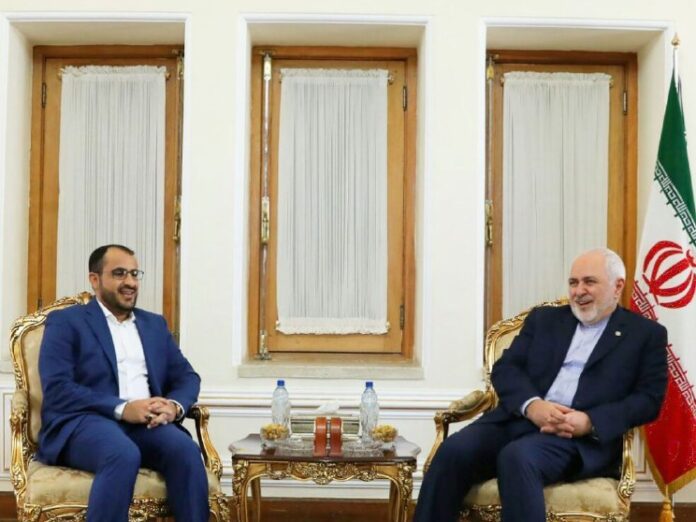
Zarif made the comments in a Sunday meeting with the spokesman for Yemen’s Houthi Ansarullah movement Mohammed Abdul-Salam in Tehran.

Zarif expressed regret over the killing of Yemeni oppressed people and five years of siege on the impoverished country and called for an immediate end to the war and the blockade of the Arab state.

Referring to political solution as the only way out of the Yemen crisis, Zarif stressed that the Islamic Republic of Iran has always supported Yemeni-Yemeni talks and the full implementation of the Stockholm Agreements.

Zarif also expressed regret over Yemen’s dire humanitarian situation, emphsising that Iran is ready to send humanitarian aid to the country.

For his part, Abdul-Salam conveyed the thanks of the leader of Houthi Ansarullah movement Abdul-Malik Badreddin al-Houthi for Zarif’s message of condolence on the martyrdom of Ibrahim Badreddin al-Houthi, a brother of Ansarullah leader, and the support of the Islamic Republic of Iran for the people of Yemen.

He also gave a report on the latest field and political developments in Yemen and the prospect of a political solution as well as the latest humanitarian situation in the Arab country.

Estimates show that the Saudi-led war has claimed the lives of over 60,000 Yemenis since January 2016.

The years-long military aggression has also taken a heavy toll on Yemen’s infrastructure, destroying hospitals, schools, and factories. The United Nations has warned that more than 24 million Yemenis are in dire need of humanitarian aid, including 10 million suffering from extreme levels of hunger.

Iran Congratulates Muslim States on Eid al-Adha

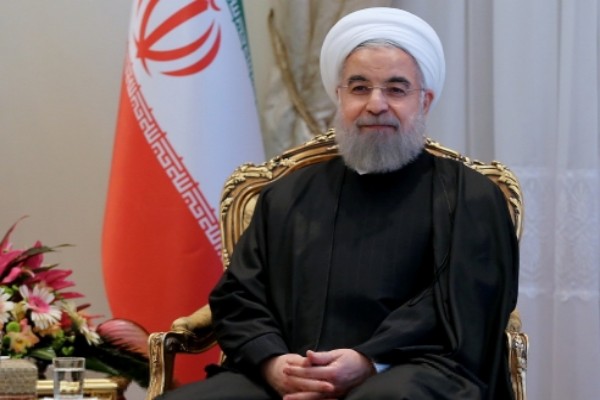
Hassan Rouhani - President of the Islamic Republic of Iran

Rouhani offered his congratulations to the leaders and people of Muslim states in separate messages on Sunday, August 11, 2019.

In the messages, Rouhani expressed the hope that the leaders of Muslim countries and Islamic thinkers will use the blessings of the day to boost their unity in order to counter the unilateralist moves of the hegemonic powers as well as terrorism in the world.

According to the Iranian president, such unity can further promote peace and stability in the region and the world and strengthen justice and brotherhood among Muslim nations.

Earlier in the day, Iranian Foreign Minister Mohammad Javad Zarif also offered congratulations to all Muslims on the happy occasion of Eid al-Adha.

“Eid is a time for unity. We again call on Muslims to prioritize self-respect in pursuit of our rights,” he said.

“If we don’t, outcome will be further attacks on our dignity—such as the proposed Humiliation of the Century,” Zarif noted, referring to the so-called US peace plan for the Middle East, called by the US administration “the Deal of the Century”.

Eid al-Adha or the Feast of the Sacrifice is the second of two Islamic holidays celebrated worldwide each year (the other being Eid al-Fitr), and considered the holier of the two.

It honours the willingness of Prophet Abraham to sacrifice his son as an act of obedience to God’s command. Before Abraham could sacrifice his son, God provided a ram to sacrifice instead.

In commemoration of this, an animal is sacrificed and divided into three parts: one third of the share is given to the poor and needy; another third is given to relatives, friends and neighbours; and the remaining third is retained by the family.

In the Islamic lunar calendar, Eid al-Adha falls on the 10th day of Dhu al-Hijjah. In the international (Gregorian) calendar, the dates vary from year to year drifting approximately 11 days earlier each year.

US Bid to Build Maritime Coalition ‘Dangerous’: Rouhani

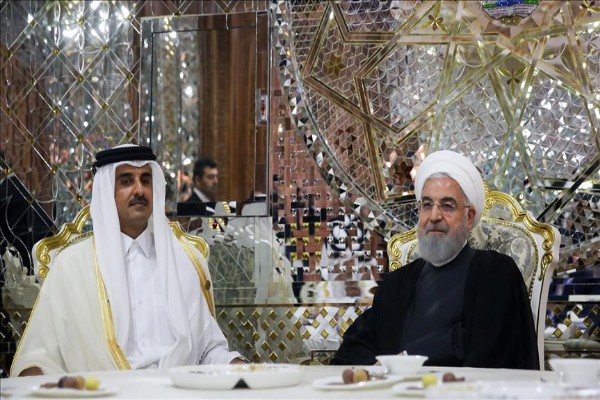
Speaking in a telephone conversation with Qatari Emir Sheikh Tamim bin Hamad Al Thani, Rouhani said Washington’s plan to create the naval coalition to patrol the Persian Gulf will make the problems in the region more complicated and dangerous.

He said Iran attaches great importance to maintaining and enhancing the security of the Persian Gulf, the Strait of Hormuz and the Sea of Oman.

Rouhani further added that Tehran has done its best to maintain the security and development of the region.

The Iranian president called Tehran-Doha relations friendly and developing, and emphasised that the ties between the two friendly countries should be further developed and strengthened in all fields, including political, economic and cultural ones.

During the phone call, Rouhani also congratulated the Qatari government and nation on the occasion of Eid al-Adha.

For his part, Qatar’s emir congratulated yjr Iranian government and nation on Eid al-Adha and said de-escalating tensions is in favour of everyone. He said the security of the Persian Gulf should be ensured by regional countries.

He also stressed that Doha welcomes the expansion of relations with the Islamic Republic of Iran in all fields.

‘Zarif’s Voice to Be Heard Louder If Banned from Social Media’

Speaking to reporters on Sunday, Abbas Mousavi pointed to the possibility of blocking the Iranian foreign minister’s social media accounts, especially on Twitter, where he has been a vociferous proclaimer and defender of Iran’s policies and positions on various international developments, noting that such a move “would cause his voice to be heard more loudly at international organizations.”

The Iranian Foreign Ministry spokesman said, “Zarif has verily been targeted with fury and rancor of those who are afraid of Iran’s voice being heard … and this is the reason why they have decided to block his access to US-based social media platforms.”

The Iranian Foreign Ministry spokesman’s remarks came after Mark Dubowitz, the CEO of the hawkish think-tank Foundation for Defense of Democracies whose ideas are believed to underlie many of Trump’s policies, took to his Twitter page on August 8, claiming that “Zarif should be immediately expelled for legal reasons … for using a platform like Twitter.”

Alluding to fallacious allegations by American authorities to be advocates of the freedom of speech and information, Mousavi said, “It will not surprise us if they take such a measure. However, Zarif’s voice in his capacity as the head of the Iranian diplomatic apparatus will definitely be heard by the entire world.”

‘No US talks until economic terrorism stopped’

Elsewhere in his remarks, Mousavi referred to his American counterpart’s recent remarks that US President Donald Trump is still waiting for a call from Iranian officials, noting, “They have been expecting the Islamic Republic to do this for a long time, but this is a futile expectation.”

“As long as America has not stopped its economic terrorism and exerting pressure [on the Iranian nation], the Islamic Republic will enter into no talks [with the United States],” the Iranian diplomat said.

Pointing to the fact that no one with common sense would ever engage in talks under such circumstances, Mousavi said, “The Islamic Republic has a powerful government and nation and will try to give powerful voice to its positions, while Americans have proved time and again that they lack honesty.”

The spokesman said confusion in the US foreign policy is indicative of the fact that they are not honest when declaring their positions and this is why the Islamic Republic does not care much about what they say.

In a report back in May, the CNN said the White House had contacted Swiss authorities to share a telephone number with Iran in hopes that Tehran would contact Trump.

Citing an unknown source, the broadcaster said, however, that Iran was “highly unlikely” to demand the number from Swiss authorities.

The development came a year after Trump pulled the US out of the 2015 Iran nuclear deal, known as the Joint Comprehensive Plan of Action (JCPOA), claiming that it was a bad deal.

Trump unilaterally withdrew the US from the international deal and unleashed the “toughest ever” sanctions against Tehran in defiance of global criticism, notably targeting the Iranian energy sector.

In April, the White House terminated sanctions waivers for major buyers of crude from the Islamic Republic in an attempt to bring Iran’s oil exports to “zero.”

Washington has also been building up its military presence in the Middle East under the pretext of ‘Iranian threats.’

In May, Washington announced a highly provocative plan to dispatch military reinforcements to the Middle East, citing an unspecified Iranian threat.

Later, however, Trump toned down his highly belligerent rhetoric against Iran and repeated, on several occasions, an offer of talks to Tehran.

Iran VP Vows to Support Pioneering Knowledge-Based Companies

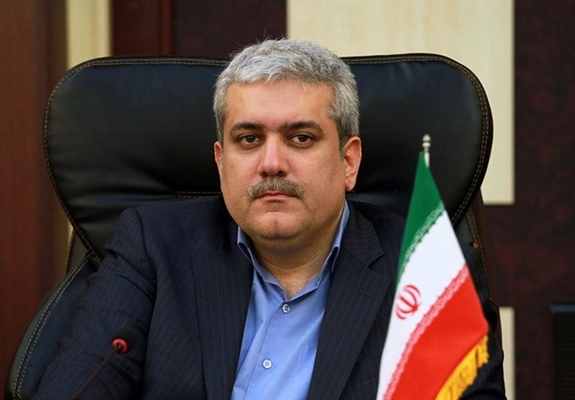
Over 5,300 Iranian Knowledge-Based Firms Opened in 6 Years: VP

He made the comments in a meeting in which most knowledge-based companies in the health sector gathered to pave the way for exchange of ideas and policymaking while discussing their needs and concerns.

Sattari said the knowledge-based companies are the strong arm of the economy that contribute to the sustainable development of the country, stressing that “these companies are the driving force behind the economy and can create a significant part of the jobs for university graduates.”

According to him, pioneering knowledge-based companies, with their high capability, can build hundreds of startups on the path to knowledge production. These companies are important as they boost marketing and sales in domestic and foreign markets.

He also stressed that the government needs to have a special support program for these companies and boost the production of these companies by relying on the export market. “The Health and Innovation Fund is cooperating with the vice presidency in this regard and I hope it will produce good results,” said Iranian VP.

“Because of Iran’s oil-based economy, the country’s general culture is import-based, and oil revenues have promoted and supported imports without efforts to localise the production. This culture needs to be reformed. Hopefully, with the transformation that knowledge-based businesses are introducing, all sectors of the country are distancing from imports.”

Despite all the burdensome rules and the laws, which are not mainly for supporting domestic producers, major developments in the field of health have been established with the help of knowledge-based companies, underlined Sattari.

For a brief review of Iran’s achievements in various fields of science and technology, check the book “Science and Technology in Iran: A Brief Review – 2019

In another part of the meeting, Saeed Nemaki, Minister of Health and Medical Education said today, there is nothing in heath sector that knowledge-based companies cannot solve.

“The ground has been prepared for knowledge-based businesses with the supports of the Vice Presidency for Science and Technology to open a new horizon to the country’s health system. Before the revolution, we had multinational companies that ran the country’s pharmaceutical industry, but today, with the help of Iranian knowledge-based companies, the country’s health care system provides 97% of the country’s pharmaceutical needs,” reiterated Namaki.

Iranian health minister also touched upon the priority of using domestic production in the health system of the country saying that the production of medicines and health items, and new approaches to service delivery require new approaches such as electronic health system that improves our interaction.

Muslim Unity Key to Ending Israeli Tyranny against Palestine: Zarif

In a tweet on Sunday, Zarif posted a photo of the Israeli forces’ latest assault on Palestinian worshippers in the al-Aqsa Mosque on Sunday morning, which coincides with the Muslims’ holiest day of Eid al-Adha (Feast of Sacrifice).

“The same terrorists are hoping to impose Humiliation of the Century on Palestinians,” Zarif said, referring to the US’ so-called peace plan for the Middle East, which Donald Trump’s administration calls “Deal of the Century”.

“We Muslims have power to end this tyranny, but only if we united,” the Iranian top diplomat added.

His comments came after the Israeli police clashed with Palestinian Muslim worshippers in the al-Aqsa Mosque compound on the start of Eid al-Adha festivities.

Violence erupted on Sunday morning after Israeli policemen fired stun grenades and tear gas at the Palestinians who had finished their Eid prayers.

The Palestinian Red Crescent said that at least 14 worshipers had been injured in the clashes inside the al-Aqsa Mosque compound, which lies in the Old City of Jerusalem al-Quds.

Lebanese TV channel al-Manar reported that Grand Mufti of Jerusalem al-Quds Sheikh Muhammad Hussein was among those injured.

Earlier, Leader of Iran’s Islamic Revolution Ayatollah Seyyed Ali Khamenei had noted that the “deal of the century” is a crime against humanity, urging “everyone” to help defeat it.

“The ploy of the ‘deal of the century’ which is being plotted by the oppressive America and its treasonous cohorts is a crime against human society, and not just the Palestinian nation,” the Leader said Saturday in his annual Hajj message.

“We are inviting everyone to actively participate in defeating the enemy’s ploy and deception and believe that with the power and strength from God, this and all other ploys of the imperialist front is doomed to failure vis-a-vis the efforts and faith of the resistance front,” he added.

The “deal of the century”, a backchannel plan to allegedly reach a peace settlement between Israel and the Palestinians, is reported to recognize Israeli occupation of Palestine in exchange for economic incentives. The plan has widely been rejected by the Palestinians.

Saudi Arabia Seriously after Negotiating with Iran: Report

Riyadh Left Alone by Arab Allies in Anti-Iran Campaign: Analyst  

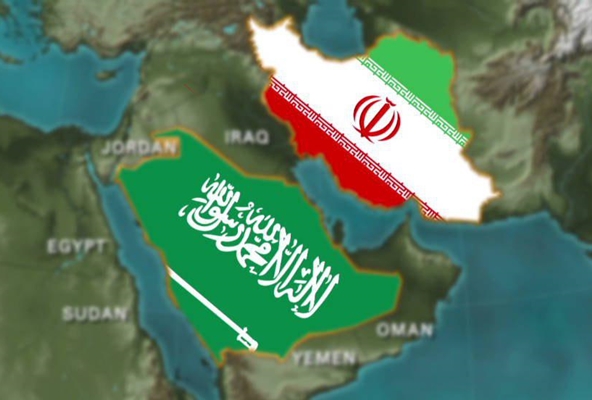
The newspaper, in an op-ed by senior expert Kamal Khalaf, says this is not the only gateway to look at other cases that are no less important than water safety and maritime security. The Yemen case is at the forefront of issues that will be raised during the Iran-Saudi negotiations.

“It is clear that Saudi Arabia is preparing proper grounds for stopping the war on Yemen and seems to have been able to convey a message to Tehran via a secret channel that the end of the war should be in a way that Riyadh would not be shown as a failed party. This is the main request of Riyadh, and considers it a crucial issue for negotiating with Tehran. Apparently, the changes the UAE has made to its role in Yemen are also affecting the Saudi position, and it is reported that the discrepancy these days between Saudi Arabia and the UAE is due to the UAE’s new stance on Iran and the war in Yemen,” he is quoted as saying by Rai al-Youm.

Khalaf goes on to say what reinforces this view is the devastating battles in Aden between the UAE-backed transitional council and the Saudi-backed Mansur Hadi forces.

“While the Emirati officials are questioning the legitimacy and competence of Mansour Hadi, the Dubai police chief, Dhahi Khalfan, in his Twitter account, has directed harsh criticism at Hadi, stating that a real commander cannot, from inside the hotel room, won the victory. But in the meantime, we need to consider the depth of the relationship between Riyadh and Abu Dhabi, as well as the close personal relationship between Bin Zayed and Bin Salman, to say with certainty that Abu Dhabi is, above all, an indirect communication channel between Riyadh and Tehran and its entire move are coordinated with Riyadh.”

However, one can play a better role in this regard, and there is no one better than Russian President Vladimir Putin, who has a close relationship with Bin Salman and Iranian politicians. For this reason, if the right channel is chosen to convey the message between Riyadh and Tehran, Russia is the best option, underlines Khalaf.

Riyadh has always been one step behind Abu Dhabi in changing policies and dealing with crises and different cases, and this was clearly seen in the UAE’s move to resume diplomatic relations with Damascus, while Saudi Arabia initially hesitated. According to our assessments, Riyadh’s hesitation will end soon, and the Saudis will take a major step toward establishing ties with Damascus and negotiating with Iran, concludes Khalaf.