Saturday, December 27, 2025
Home Blog Page 3133

Finland Eyes Closer Trade Ties with Iran

In a Monday meeting with Iranian Foreign Minister Mohammad Javad Zarif in Helsinki, Finland’s Minister for Development Cooperation and Foreign Trade Ville Skinnari described his country’s rotating presidency of the European Union as an opportunity for the expansion of business and economic cooperation between Iran and Finland.

“Finland hopes that economic cooperation between the two countries would increase, and we deeply regret that the US has withdrawn from the JCPOA and that it has had consequences for the Iranian people’s lives, and are worried about the escalation of tensions; however, Finland’s role as the president of the European Union will be constructive in the reduction of tensions,” Skinnari added.

“There are opportunities and grounds for mutual cooperation between the two countries, as in the ICT sector and academic cooperation, and the prospect of growing bilateral ties through poly-technical cooperation between Iran and Finland is bright,” the Finnish minister noted.

For his part, Zarif said Finland’s rotating presidency of the EU could help implement the 2015 nuclear deal and normalize Iran’s foreign trade relations.

“Also within the framework of the JCPOA, the business people and economic activists have had higher expectations from Europe,” he added.

“The US’ unilateral measures will not be limited to Iran, and have also targeted the other European partners. In order to counter the unilateral measures and mitigate the effects of US economic war against Iran, which affect people directly, there are approaches such as boosting bilateral trade and exercising multilateral interaction in the form of initiatives like the INSTEX,” Zarif stated.

The top Iranian diplomat is in Finland for a tour of Scandinavia that will take him later to Norway and Sweden.

Zarif has already held separate meetings with Finland’s president and foreign minister.

Finland Says EU Defies US Sanctions on Iran through INSTEX

The remarks were made in a Monday meeting with Iranian Foreign Minister Mohammad Javad Zarif in Helsinki.

In the Monday meeting, the two sides conferred on bilateral relations between Iran and Finland as well as the latest regional and international developments.
Zarif and Haavisto particularly discussed the issue of Iranian oil tanker Adrian Darya 1 (formerly Grace 1) and the latest developments related to the Iran nuclear deal (JCPOA), particularly the necessity for the full operation of the Instrument in Support of Trade Exchanges (INSTEX).

They also discussed the security of the Persian Gulf region and Iran’s ideas and initiatives for regional dialogues.

Stressing the necessity for a cognitive transformation in the region, Zarif said Iran has the longest coastline of the Persian Gulf and is highly prepared and has a great capacity for ensuring the region’s security.

The Finnish foreign minister, in turn, said Helsinki and the European Union support the INSTEX financial mechanism despite the US pressures on European companies.

Iran Leader Pardons, Commutes Sentences of Over 1,000 Inmates

Iran Leader Grants Clemency to Large Group of Iranian Inmates

The pardon was granted on Monday upon the proposal of Judiciary Chief Ebrahim Raisi, on the occasion of two Muslim festivals, namely Eid al-Adha and Eid al-Ghadeer.

Eid al-Ghadeer, which will be celebrated in Iran on Tuesday, marks the appointment of the first Shiite Imam, Ali ibn Abi Talib (AS), by Prophet Muhammad (PBUH) as his successor.

Article 110 of the Constitution grants the Leader the right to pardon or reduce the sentences of convicts upon a recommendation from the head of the Judiciary.

The clemency, however, does not apply to several types of convicts, including those who have been sentenced for their role in armed struggle against the country, armed or organized drug trafficking, rape, armed robbery, arms smuggling, abduction, bribery, and embezzlement.

Syrian Troops Enter Militant-Held Khan Shaukhun after 5 Years

The Syrian troops “entered the town of Khan Shaykhun for the first since they lost control of it in 2014,” said Rami Abdel Rahman of the anti-government Syrian Observatory for Human Rights.

The town serves as a major bastion for Takfiri terrorists in northwestern Idlib province.

Reports say clashes are underway between the Syrian forces and Nusra Front terrorists. The army operations have focused on Nusra fortifications in Khan Shaykhun, leaving many terrorists dead or injured.

Idlib remains the only large area in the hands of foreign-backed terrorists after the Syrian army, backed by Iran and Russia, managed to wrest back control of almost all of the country’s land, undoing militants’ gains.

The government forces have gained more ground against Takfiri militants in the southern edge of Idlib in their latest offensive that was launched last week.

On Sunday, Syrian army troops and their allies established full control over Kfaridoun and Sabbaghiyah farms, which lie in an area between the towns of Madaya and Kafrsajna.

Earlier in the day, Syrian soldiers managed to regain control over Tal Kfar Idoun area, which is located west of a key highway that connects the capital Damascus with the strategic northern city of Aleppo.

They also managed to retake the village of Tel al-Nar and nearby farmland northwest of Khan Shaykhun on Sunday, the Syrian Observatory for Human Rights said.

On August 5, the Syrian army declared in a statement the start of an offensive against foreign-sponsored militants in Idlib after those positioned in the de-escalation zone failed to honor a ceasefire brokered by Russia and Turkey and continued to target civilian neighborhoods.

Iran Chooses Documentary Film as Its Academy Awards Submission

Members of a council responsible for choosing the country’s official submission made the decision in a session behind closed doors before announcing the results on August 17 night.

The council is composed of Fereshteh Taerpour (movie producer), Fatemeh Motamedaria (actress), Abolhassan Davoodi (director), Touraj Mansouri (cinematographer), Rasoul Sadr-Ameli (director), Amir Esbati (set designer), Morteza Razzaq-Karimi (movie producer), Mehrzad Danesh (film critic), and Raed Faridzadeh (vice-president of Farabi Cinema Foundation for international affairs).

Iran Chooses Documentary Film as Its Academy Awards Submission“During the session, the council first presented a preliminary list of 10 films, chosen from 70 eligible films released in the Iranian cinema,” announced the Farabi Foundation’s public relations.

“The members undertook a specialized review of the films after double-checking the regulations. First a shortlist of ten and then three films was prepared after voting and aggregating the comments. The three finalists ‘The Castle of Dreams’ by Reza Mirkarimi, “Finding Farideh” by Azadeh Mousavi and Kourosh Atayi, and “6.5 Tomans per Meter” by Saeed Roustayi.”

It’s the first time the council is selecting a documentary to represent Iran at the Academy Awards in the Best Foreign Language Film category.

Finding Farideh tells the story of a woman who was lost in Imam Reza (AS) Shrine in Iran 40 years ago. She was transferred to a nursery at the time, then adopted by a Dutch couple and taken to the Netherlands.

She didn’t return home for years due to the fear of travelling to Iran, as well as her new family’s unwillingness. A few years ago, however, she started a long-distance search for her real family. Now she travels to Iran for the first time to visit her homeland and meet three families who claim to be her parents.

Iran Chooses Documentary Film as Its Academy Awards Submission

Fate of UK Tanker Not Linked to Gibraltar’s Release of Iranian Tanker: Tehran

Mousavi told a Monday press briefing that the British oil tanker must await a court ruling, and its possible release depends on the court’s decision.

He also expressed hope that the legal proceedings would be over as soon as possible.

Last month, Tehran impounded a British-flagged ship in the Strait of Hormuz for failing to stop after hitting an Iranian fishing boat in violation of international maritime rules.

The move came after the UK Royal Marine forces’ seizure of an Iranian oil tanker, Grace-1, in Gibraltar on the false pretext of violating the EU sanctions against Syria by trying to deliver oil to the Arab country.

There were speculations regarding a swap of tankers, but Iran categorically denied the rumours, arguing that the UK’s seizure of the Iranian tanker has been unlawful. Finally Gibraltar released the Iranian tanker on Thursday, but the UK tanker is still impounded in Iran.

Iran Warns US against Any Fresh Attempt to Seize Iranian Tanker

Iran Says What IAEA Wants to Access “Not A Site”

Speaking to reporters on Monday, Mousavi said if the US makes any other request for the seizure of the Iranian tanker in international waters would be a threat to maritime safety.

He also announced that Iran has, through the Swiss embassy in Tehran which represents the US interests, warned the Americans against making such a big mistake.

The comments came after the Adrian Darya 1 supertanker finally left the Strait of Gibraltar, and moved towards its new destination in Greece.

Britain’s naval forces unlawfully seized the vessel, then known as Grace 1, and its cargo of 2.1 million barrels of oil in the Strait of Gibraltar on July 4 under the pretext that the supertanker had been suspected of carrying crude to Syria in violation of the European Union’s unilateral sanctions against the Arab country.

Tehran, however, rejected London’s claim that the tanker was heading to Syria and slammed the seizure as “piracy.”

On Thursday, Gibraltar’s government announced it was releasing Grace 1 supertanker despite pressure from the US for the vessel’s continued detainment.

The announcement came just before the US Department of Justice (DOJ) unveiled a warrant for the seizure of the Iran-operated ship.

Gibraltar’s government said on Sunday it has knocked back a request by Washington to detain the supertanker, arguing that ““the EU sanctions regime on Iran is fundamentally different to that of the US.”

Iran’s Navy Says Ready to Escort ‘Adrian Darya’ Tanker

Iran Says Geared Up for 3rd Reduction in Its Nuclear Commitments

AEOI Chief Ali Akbar Salehi has briefed a committee of the Iranian Parliament on the latest measures that his organization has taken in preparation for the third step in halting certain commitments of Iran under the JCPOA.

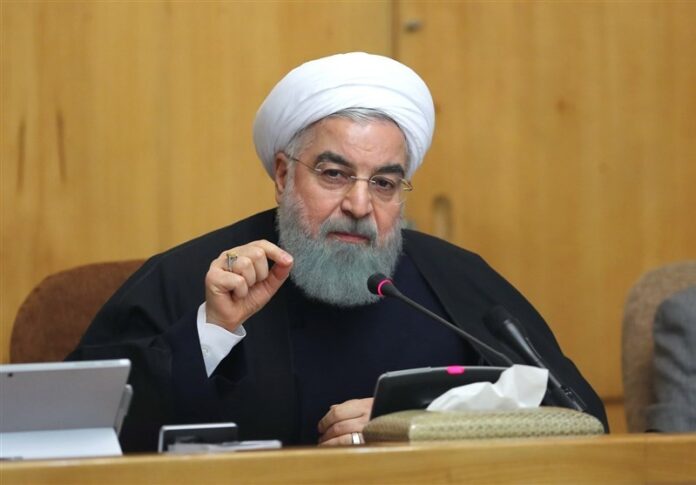
In a Sunday interview with Tasnim, MP Hossein Naqavi Hosseini quoted Salehi as saying that an Iranian delegation monitoring the implementation of the JCPOA has convened two week ago to make decisions about the third step and has presented President Hassan Rouhani with a series of ideas.

Salehi says the AEOI has manufactured around twenty IR-6 centrifuge machines in a new and modern assembly line, the lawmaker noted.

The Iranian nuclear chief has also made it clear that Tehran could return to the pre-JCPOA conditions and has promised that Iranians will hear good news about the Arak nuclear site within the next few months, the MP added.

Iran has made good progress in developing nuclear propulsion systems, has increased the stockpile of enriched uranium from 300 to 370 kilograms, and has been working on the 6th, 7th and 8th generation of homegrown centrifuge machines, Naqavi Hosseini quoted Salehi as saying.

The EU’s failure of ensure Iran’s economic interests under the JCPOA has forced Tehran to stop honoring certain commitments, including an unlimited rise in the stockpile of enriched uranium.

Iran announced earlier this month that its stockpile of 4.5-percent enriched uranium has exceeded 370 kg.

Iran’s Navy Says Ready to Escort ‘Adrian Darya’ Tanker

In comments at a conference in Tehran on Sunday, Rear Admiral Hossein Khanzadi said the Navy is prepared to dispatch a naval fleet to escort Adrian Darya-1, formerly known as Grace-1.

The Iranian supertanker has been released by the government of Gibraltar more than a month after it had been captured by the British Royal Navy on suspicion of attempting to breach global sanctions against Syria.

“Whenever the Islamic Republic of Iran intends, we would be ready to dispatch a naval fleet to escort the Adrian Darya,” the Navy chief stated.

Gibraltar on Sunday rejected a US request to continue holding the Iranian supertanker. The ship, containing more than 2 million gallons of Iranian light crude oil, was seized on July 4 in a British Royal Navy operation off the coast of Gibraltar.

Elsewhere in his speech, the Iranian Navy commander warned the destabilizing foreign forces to leave the region, saying, “The era of hit and run has ended, and the outsiders cannot infiltrate into the region.”

Deriding the US “dream” of creating a coalition for maritime security in the Persian Gulf, Rear Admiral Khanzadi said it is the US intention to foment insecurity in the region. “But with the presence of Iran’s Navy, the time has come for them (the foreign forces) to pack up their scrap iron and leave the region.”

The general said Iran has gained such great power that the “true pirates, namely the US and the UK” have stationed their aircraft carriers 300 miles away from the Islamic Republic’s waters.

According to the commander, Iran’s Navy has increased the number of its regional naval fleets from six to 13 this year.

While the enemies were trying to threaten Iran, the Navy brought the Fateh submarine and the Sahand destroyer into service and made the adversaries concerned about the capability to manufacture homegrown naval equipment, Rear Admiral Khanzadi added.

Iran Warns US against Any Fresh Attempt to Seize Iranian Tanker

Iran, China Oppose US Plans for Northeast Syria

In a Sunday meeting in Tehran, China’s special envoy for Syria Xie Xiaoyan and Ali Asghar Khaji, a senior assistant to Iran’s foreign minister in special political affairs, discussed various issues surrounding Syria.

Xiaoyan and Khaji talked about the latest political, on-the-ground, and international developments relating to Syria, with both emphasizing the need for Syria’s unity and territorial integrity and for the continued fight against terrorism as a global threat, given the recent measures taken by Americans in northeastern Syria.

The Iranian and Chinese diplomats also discussed the latest status of formation of Syria’s Constitutional Committee, the necessity for the return of the displaced persons to Syria, a prisoner swap working group, the reconstruction plans in the Arab country, and the developments in Idlib and northeast Syria.

They finally stressed the necessity for constant consultations between Tehran and Beijing.

Earlier this month, the US and Turkey agreed to establish a joint operations center in order to coordinate and manage the setting up of a safe zone in northern Syria.

Iran’s Foreign Ministry has dismissed the US plan for the so-called safe zone as a provocative measure in contravention of the UN Charter.