Monday, December 29, 2025
Home Blog Page 3104

Iranian Official: Saudis Received Advance Warning of Aramco Attack

Iran Refutes UN's Allegations about Aramco Missile Attack
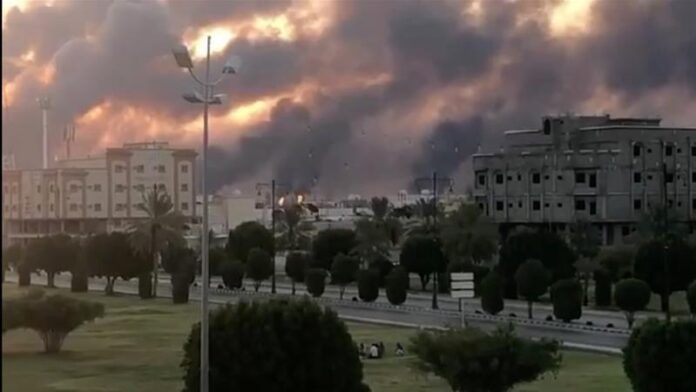
Photo of fire at Aramco facilities in Saudi Arabia, caused by Yemeni drone attacks / Photo by Reuters

In remarks on Wednesday, senior adviser to the Iranian parliament speaker for international affairs Hossein Amir Abdollahian commented on a recent drone strike the Yemeni forces launched on two oil processing plants of Saudi company Aramco.

Hailing the Houthi Ansarullah movement as a leading actor in the current conditions, he said Ansarullah had warned Saudi Arabia a couple of weeks ago that if the military aggression against Yemen did not come to an end, the Saudi oil facilities and strategic centers would be the next targets for strikes.

“Ansarullah’s drone attack on the Saudi oil facilities reveals an upheaval in the new regional order,” the former Iranian deputy foreign minister added.

Amir Abdollahian also highlighted Saudi Arabia’s inability to direct the war on Yemen, saying even the kingdom’s advanced American warplanes require help from the US drones to pinpoint the targets.

“In other words, the equipment the US has sold Saudi Arabia require complementary gear to work properly. But Americans have not provided Saudis with such equipment, like the advanced drones, which are flown by themselves,” he stated.

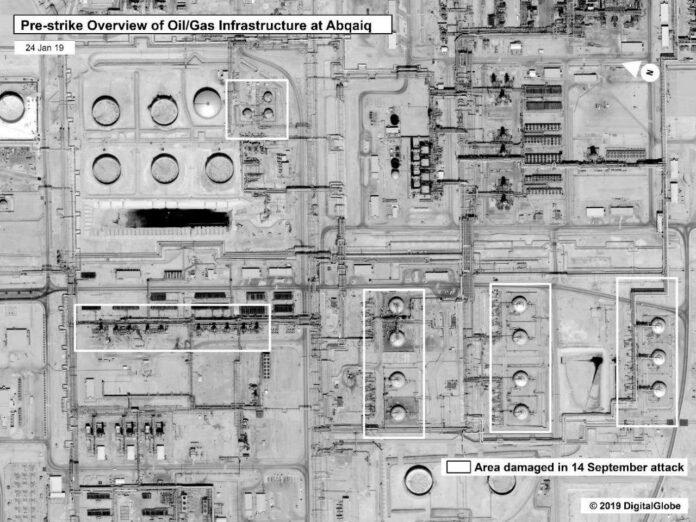
The Yemeni forces on Saturday launched drone attacks on two plants at the heart of Saudi Arabia’s oil industry, including the world’s biggest petroleum processing facility.

Ansarullah had repeatedly warned Riyadh that the continuation of aerial attacks on Yemeni people would draw a harsh response.

Since March 2015, Saudi Arabia and some of its Arab allies have been carrying out deadly airstrikes against the Houthi Ansarullah movement in an attempt to restore power to fugitive former president Abd Rabbuh Mansour Hadi, a close ally of Riyadh.

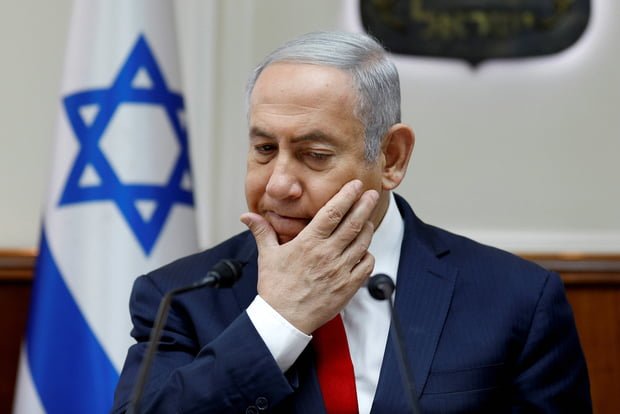
Netanyahu Is Now Israel’s Biggest Trouble

Netanyahu

Netanyahu imposed a new election on Israelis in the hope that the right-wing and the religious parties will win the parliamentary majority, but has now failed to meet his objective, as his entire bloc has won no more than 56 seats out of a total of 120.

As a result, he will have no choice but to form a coalition government with “Yisrael Beiteinu” led by Avigdor Lieberman, or with the center-left alliance, including the “Blue and White”, the “Labor”, and the “Democratic Union”. But Lieberman is vigorously pushing for a national unity government comprised of the Likud and the Blue and White parties. However, the Blue and White, the Labour, and the Democratic Union will approve of a national unity government provided that Netanyahu would step down as leader of Likud and be taken to court for his financial corruption case.

Therefore, Netanyahu has been put in a new impasse, the way out of which may be dissolution of the new parliament and a pledge to hold new elections. A third election in this year, nevertheless, will be unpalatable to the public opinion. Moreover, Israel’s ceremonial president Reuven Rivlin would not easily approve of another election and the Knesset would not ratify it this time, either.

After all, Netanyahu cares about his own position more than anything else, and would not easily back off from the efforts to hold the post of prime minister. He is a cunning person, familiar with the complicated political games. Netanyahu might even plan to encourage the Labor party to join his coalition. Led by Amir Peretz, the Labor has formed an alliance with a branch of Yisrael Beiteinu party.

On the one hand, the formation of such coalition would require the Labor party to vote for Netanyahu’s immunity from prosecution during his political tenure, which would be naturally a big scandal for the Labor; on the other hand, Netanyahu will have to agree with the Labor party’s more moderate policies on the issue of Palestine, which will certainly enrage and irritate Ayelet Shaked’s far-right “Yamina” party, an ally of the Likud and a fervent proponent of expansion of West Bank settlements.

In fact, as long as Netanyahu is leader of the Likud party, it would be impossible for him or for his main rival –leader of Blue and White Benny Gantz—to form a new government.

As a result, in order for the government to be formed, Netanyahu will have to step down from the post of prime minister voluntarily, or the Likud party should remove him from the post. The Likud may even break apart amid the debates over Netanyahu’s fate, and the broken party might form the national unity government with Gantz, Lieberman, and the left-wing parties.

In any case, Netanyahu will be no more regarded as a solution to Israel’s problems. Indeed, he himself has turned into the biggest problem of the Israeli political society.

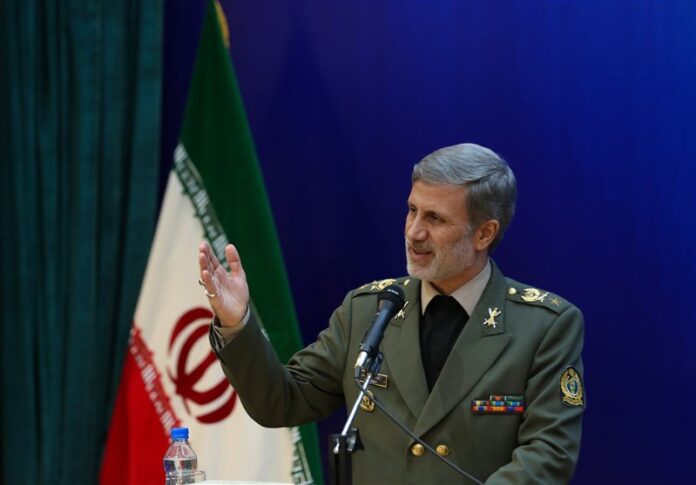
DM Says Iran Not Involved in Saudi Refinery Attacks

Speaking to reporters on the sidelines of a cabinet meeting in Tehran on Wednesday, Hatami rejected reports that Iran may have been behind Saturday’s attacks on Saudi company Aramco’s oil processing facilities.

“It is crystal clear. A clash has occurred between two countries. One side of the clash are the Yemenis, who have announced explicitly that they have done the job,” the minister said.

He added that the logic behind the Yemeni drone strike is quite clear, because the Yemenis have been suffering from harsh military attacks by the Saudi-led coalition for years and have been in critical condition under a blockade imposed by the Saudis.

“In military terms, the Yemenis had carried out a similar operation around two years ago, and had attacked an airport in the United Arab Emirates and fired a missile with a range of 1,200 kilometers,” the Iranian general said.

The Yemeni forces on Saturday launched drone attacks on two plants at the heart of Saudi Arabia’s oil industry, including the world’s biggest petroleum processing facility.

The US has accused Iran of involvement in the attack, alleging that a number of cruise missiles have been fired from Iran at the Saudi targets. Iran vehemently denies the claim.

Since March 2015, Saudi Arabia and some of its Arab allies have been carrying out deadly airstrikes against the Houthi Ansarullah movement in an attempt to restore power to fugitive former president Abd Rabbuh Mansour Hadi, a close ally of Riyadh.

Official UN figures say that more than 15,000 people have been killed in Yemen since the Saudi-led bombing campaign began.

The Saudi war has impacted over seven million children in Yemen who now face a serious threat of famine, according to UNICEF figures. Over 6,000 children have either been killed or sustained serious injuries since 2015, UN children’s agency said. The humanitarian situation in the country has also been exacerbated by outbreaks of cholera, polio, and measles.

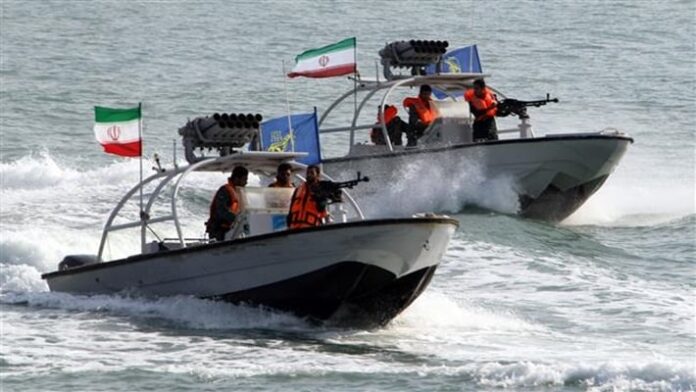
Iran to Stage Maneuver in Persian Gulf with 200 Frigates, Speedboats

According to Iranian military sources, two national parades are going to be held across the country on this day.

Iran’s Parliament Speaker Ali Larijani and a group of senior army and IRGC commanders will attend the ceremony in Bandar Abbas in Hormozgan province.

Another parade will be held in Tehran.

The armed forces, while providing security for the country, will convey a message of peace and friendship to the countries of the region, saying that the security of the region depends on the unity of the neighbours and no foreign troops are required in the region.

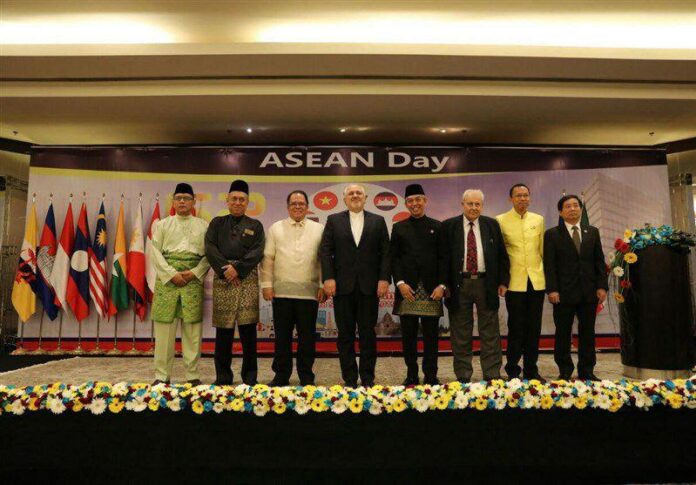
Zarif Hails ASEAN as Exemplar of Collective Action

Foreign Minister Zarif delivered a speech at a ceremony on the 52nd anniversary of foundation of the Association of Southeast Asian Nations, held in Tehran on Wednesday.

“I want to tell the friends and the neighbors that there is nothing to prevent our cooperation and partnership. Nothing could hinder our bonds for cooperation,” Foreign Minister Zarif said.

“We must know that the others would never protect us, and could never ensure our security either,” he added.

“ASEAN is a good and successful example for us and for our neighbors to learn a lesson that we can shape a better future for the people and the region with cooperation and commitment,” the top Iranian diplomat noted.

ASEAN is a political and economic organization of ten countries located in Southeast Asia. It was formed on August 8, 1967 by Indonesia, Malaysia, the Philippines, Singapore and Thailand. Since then, membership has expanded to include Brunei, Burma (Myanmar), Cambodia, Laos and Vietnam.

What follows are excepts of Zarif’s speech:

FM Zarif’s Speech at ASEAN Founding Anniversary

Minister of Foreign Affairs of the Islamic Republic of Iran Mohammad Javad Zarif delivered a speech at a ceremony marking the 52nd anniversary of the foundation of the Association of Southeast Asian Nations (ASEAN), held in Tehran on Wednesday.

Following are excerpts of Foreign Minister Zarif’s remarks at the event:


In the Name of God;

In an era that multilateralism is at stake, and while unilateralism is destroying our achievements of the past seven decades, observing the success of ASEAN, which has brought together major Asian countries, is a sign of hope.

ASEAN is composed of people who can think of a better future, not only for their own citizens, but also for the citizens of the global community.

ASEAN is celebrating its 52nd birthday today, providing a valuable lesson about gathering around and synergy for progress together with each other.

ASEAN is a good example that we can act better, either collectively or individually, particularly for us in this region where some have tried to purchase security from abroad and rely on the foreign countries.

I paid a visit to Singapore to sign the document on Iran’s membership in the Treaty of Amity and Cooperation, which is a good sign and testimony of our willingness to cooperate with the Asian friends.

We are interested in expanding the grounds for cooperation with the ASEAN members. We are also willing to promote cooperation between the regional organizations, such as the ASEAN and the ECO.

I want to tell the friends and the neighbours that there is nothing to prevent our cooperation and partnership. Nothing could hinder our bonds for cooperation. We must know that the others would never protect us, and could never ensure our security either. ASEAN is a good and successful example for us and for the neighbours to learn a lesson that we can shape a better future for the people and the region with cooperation and commitment.

It is important to show that self-esteem and working with own people has always proved more successful.

We in Iran have great respect for the ASEAN countries. We respect your successes. If you want to be respected, you must respect yourself, and the ASEAN is a good example of respect for self. We seek to promote cooperation with the ASEAN in all fields.

We are keen to become the ASEAN’s partner for dialogue. We want to announce that the Islamic Republic of Iran looks for cooperation and reaching the dialogue partnership stage.

We believe that we can forge a real partnership with the ASEAN.


The Strange Case of the Burning Saudi Refineries

That Yemen did it, destroyed the world’s largest oil refinery that has the world’s best air defenses, almost, is a surprise.  It is also quite possible that some other “player” is responsible.  Let’s postulate about that a bit, perhaps even delving into the kind of conspiracy theories that, of late, have turned out to be correct over and over.

First of all, Saudi Arabia had recently asked Russia for the S400 air defense system.  Saudi Arabia has spent endless billions on air defenses and, periodically, drones and missiles from Yemen get through.

The same thing happens to Israel as well, which has led that nation to make “under the table” deals with Hamas over and over while the Likudists play out their “goosestepping” militarist roles for Israel’s misled population, one subject to military censorship over everything they read and see.

You see, the S400 is for defense against lots of things, but for Saudi Arabia with highly robust defenses already, the S400 would be used to stave off attacks from stealth aircraft, its specialty.  Of regional players, only Israel has such aircraft.

But then, aren’t Saudi Arabia and Israel good friends, after all, each secretly aided ISIS and al Qaeda for years.  But are they really friends or was this a “marriage of convenience?  For those who read MSM, even those questions will be unfamiliar as the terror pact between those nations has been censored widely.

What might drive things to get to the point where Israel might bomb Saudi Arabia? Well, Israel is facing an election and a key part of that election is the meltdown Israel is having over its “first couple,” the Netanyahus.

Money dictates politics there as everywhere else and the Adelson family, richest Israelis, have been picking up the political bills for the Netanyahus for years.  That’s over.  The Adelsons now say the Netanyahus are crazy and Miriam Adelson is a psychologist.  This is no small problem as the Adelsons are the biggest political contributors in the US as well.

To get past this, Netanyahu promised to declare most if not all the West Bank as part of Israel, a deal-breaker for nations that had, temporarily at least, begun looking at rebuilding relations with Israel, that being Turkey, Saudi Arabia and maybe even Iraq.  That’s all done now.

Then the issue of random and continual bombing of Syria by Israel, bombing attacks supposedly on Iranian troops but too often killing civilians or clearly intended to aid operations of terror groups.

Let us add, by terror groups, we mean groups officially banned in Russia as terror groups, a list you don’t casually get on as in the US.  Russia really hunts down terrorists.

According to reports from the Jerusalem Post, Russia has expressed extreme “concern” of not only Israel’s attacks on Syria but their move to seize the ad hoc Palestinian State on the West Bank and “ethnically cleanse” its Palestinian population, causing an unprecedented humanitarian disaster.

Netanyahu returned from his September 2019 visit to Mosco, with all reports indicating that he was deeply chastised by Putin.

Then there’s the loss of John Bolton, former presidential advisor who, for the past few decades, has been on the payroll of one Israeli run special interest group or the other, a man many if not most Americans consider the worst presidential advisor ever, one that keeps coming back to life like a zombie.

The answer was simple.  Israel is at the end of the road with Saudi Arabia.  ISIS is defeated and their cooperation in backing ISIS against Syria and Iraq is now an embarrassment.  Saudi Arabia is now seeking peace with Yemen, a disaster for Israel’s regional policy of “keep all wars going.”

Worst still, the UAE and Iran are now openly cooperating in Persian Gulf security. Thus, when a huge Saudi oil complex was hit over and over in a 9/11 style attack, figuring out who might well have done this is relatively easy.

It doesn’t benefit Iran.  This would be a direct attack on Saudi Arabia and Iran has been winning the political war, not just with the UAE but Russia and the EU as well along with continued support from China. Iran had no reason to attack.

Yemen is at war with Saudi Arabia and has some capabilities but not these capabilities, not to obliterate the biggest cash producer Saudi Arabia has.  Only one nation in the region has the F35, a plane designed to take out oil facilities.

You see, along with stealth, the F35 has limitations.  If it operates without other aircraft along, like the F15E bomber, the limited bomb load of the F35 is only useful against targets that are vulnerable to smaller weapons, targets like oil refineries.

This proves capability.  I think we have more than proven Israel’s motivation and timing. We can still claim Yemen did it and Yemen would be happy to take credit except for no military expert remotely accepts that Yemen did this.

We do know that, for Iran, there would have been no reason.  Iran was already winning. We could also look for recent analogs.  Why did Syria turn to poison gas whenever they were in the last stages of crushing areas controlled by terrorists closely tied to Israel?

What are we saying or perhaps not saying here?

Thus, when Russia took 40 members of the White Helmets organization to The Hague to testify to their complicity in staging fake gas attacks on behalf of unnamed Western powers and Israel, when dozens of witnesses, parents of children kidnapped by the White Helmets or doctors threatened by them testified, the press blacked it out.

In the long run, the now two-decade war that involves fake terror events, staged color revolutions and endless political misdeeds, at the center of it all we find Israel and their political allies who hold power in the US, Britain and France due to financial support from sectors tied to Israel, not just lobbyists but criminal groups as well.

Keeping the lid on this is the army of fake think tanks, bribed and blackmailed politicians, press operatives, wholly-owned media groups, and politicized social media monoliths.

Still, in the end, Israel seems to be circling the drain, more hated than ever, more Isolated and, oddly enough, less and less of a “Jewish state” and more of a “criminal state.”

Proving this point, we need only refer to the statements by Donald Trump of the betrayal of Israel by American Jews, people who put ethics above politics, who put America before a brutal Israeli regime.

Trump calls American Jews “traitors.”  Some simply call them Americans like others.  At one time, Israel was defended by its ability to draw on the holocaust and smears of anti-Semitism when their brutality against their own people was exposed.

Time is now closing in.  Did Israel bomb Saudi Arabia?  Will Israel’s remaining “man in Washington,” Mike Pompeo get the war Israel is asking for, a war where Israel will be destroyed as well?

Wait, who would want Israel destroyed to save himself?  Are the Netanyahus as “crazy” as Shelly and Miriam Adelson claim?

Would they “burn Israel to the ground” to save themselves from prison for corruption charges?  Who benefits if even Israel is destroyed in a war seemingly begun to advance Israel’s interests?

Do understand this, it is necessary to think of the world as being in a “post-nation-state” phase. When one does that, conspiracies are easier to understand and accept.


Disclaimer: Quoting and publishing the viewpoints of experts on this website and republishing articles originally published on other websites do not necessarily mean the Iran Front Page endorses and agrees with all those points of view.


* The above article has been written by Gordon Duff and published at veteranstoday.com. Gordon Duff is a Marine combat veteran of the Vietnam War that has worked on veterans and POW issues for decades and consulted with governments challenged by security issues. He’s a senior editor and chairman of the board of Veterans Today, especially for the online magazine “New Eastern Outlook.”

 

Iran Unveils Several New Homegrown Drones

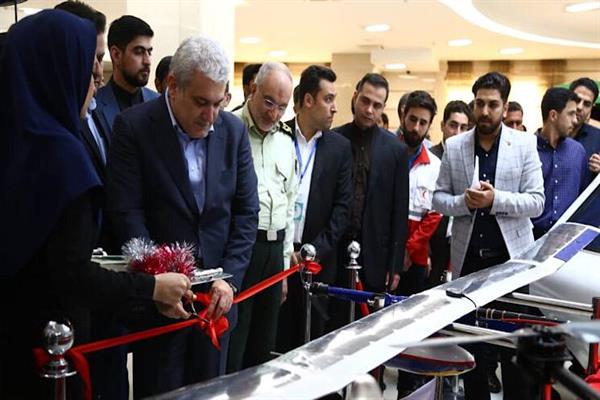
The four drones were unveiled in a ceremony attended by Vice president for science and technology Sorena Sattari who visited the exhibition and also unveiled a new drone application. 

Sattari said products manufactured and marketed by technology activists in the field are advanced, competitive, and efficient, and sometimes better than other examples available in international markets.

He added that the priority of the Vice Presidency is the introduction of UAV experiences and achievements to the defence sector in order to further strengthen the country’s defence industry.

“Iranian-made drones are used in various fields of agriculture and surveying, and they have been welcomed by various industries and organisations as many of the time-consuming and costly tasks are facilitated by these drones,” underlined Sattari. 

A light surveillance drone equipped with a thermal camera was one of these unveiled achievements. This UAV is equipped with day and night camera and triaxial image recorder. It can fly for 60 minutes nonstop. 

Another product was an specialised mapping drone that does not need ground control points. This drone can fly for 90 minutes and is equipped with a PPK-RTK positioning system to accurately capture image centres. Its maximum speed is 120 kph which can be used for offline and on-the-fly missions. This UAV can automatically return to its starting point. 

Specialised Mapping Drone that does not need ground control points (GEN-X2) is another unveiled product that can fly for 60 minutes. It is equipped with a 2-megapixel mirrorless camera.

Another UAV was the solar one that features a 4-hour flight continuity. It weighs 1.2 kg and has a flight limit of 10,000 feet.

An application for commercialisation of drones and three other achievements in this field were also introduced at this exhibition.

50 knowledge-based companies and start-ups active in drone-related areas have participated in this event.

A Look at Iranian Newspaper Front Pages on September 18

A Look at Iranian Newspaper Front Pages on November 19

Abrar:

1- Trump: We’re Ready for Military Action against Those Behind Saudi Attacks

2- Kremlin: We Haven’t Received Official Call for Mediation between Iran, Saudi

3- Trump: I Wish to Avoid Conflict with Iran

4- Saudi Arabia: Iranian Weapons Used in Recent Attacks

A Look at Iranian Newspaper Front Pages on September 18


Abrar-e Eqtesadi:

1- New INSTEX Chief: European Banks Ready to Enter INSTEX Mechanism

2- Oil Price Decreases amid New Concerns in Market

3- Iran-Russia Banking Ties Established with New Service

A Look at Iranian Newspaper Front Pages on September 18


Aftab-e Yazd:

1- Iran Leader: All Officials Believe There’ll Be No Talks with US at Any Level

2- What Iran’s Sneeze Did to Saudis: Reactions to Attacks on Saudi Oil Refinery

3- Fifth Step of Cooperation in Syria: A Report on Iran-Russia-Turkey Summit

A Look at Iranian Newspaper Front Pages on September 18


Besharat-e Now:

1- Negotiation at Equal Conditions: Iran’s Message to Americans Clear

2- Rouhani: Iran, Russia Interact to Serve Both Nations, Region’s Interests

A Look at Iranian Newspaper Front Pages on September 18


Ebtekar:

1- Iran Leader: Talks with US Possible Only If It Repents

2- Rouhani’s Chief of Staff: No Limit to Development of Cooperation with Turkey

3- War in Kabul, Negotiation in Tehran: Taliban Delegation Visits Iran for Talks

A Look at Iranian Newspaper Front Pages on September 18


Etemad:

1- Conflict in Mideast Getting Serious

2- Saudi Arabia Not Capable of Retaliating: Academic

3- Iran Leader: I Don’t Want You to Close Doors of Dialogue, but Don’t Postpone Everything until End of Talks

A Look at Iranian Newspaper Front Pages on September 18


Ettela’at:

1- Merkel: Return to JCPOA Can Ease Tensions in Mideast

2- Trump: Saudis, Not US, Responsible for Ensuring Their Country’s Security

3- Iran Leader: There’ll Be No Talks with US at Any Level

A Look at Iranian Newspaper Front Pages on September 18


Jomhouri Eslami:

1- Iran-Russia Banking Ties Established with New Platform

2- Trump: It’s Saudis’ Responsibility to Defend Themselves

3- Putin: JCPOA Still Alive, Has No Alternative

4- Le Drian: France Has No Evidence on Drones in Favour of Saudis

5- UK Court Rejects US’ Request against Iran after 7 Years

A Look at Iranian Newspaper Front Pages on September 18


Kayhan:

1- Trump: I’m Not after Military Confrontation with Iran; Saudis Must Pay More If They Want Security

2- We Won’t Negotiate with US Neither Bilaterally nor Multilaterally: Leader

A Look at Iranian Newspaper Front Pages on September 18


Mardom Salari:

1- How Did Iran Outpace Its Rival after 30 Years?

* Iran Outperforms Qatar in South Pars Gas Extraction

2- Trump Back Off in Tactical Way: US Not Interested in Getting Military Revenge for Aramco

A Look at Iranian Newspaper Front Pages on September 18


Shargh:

1- Russia Committed to Continued Cooperation in Military, Nuclear Fields: Putin

2- Iranian, British Top Diplomats Hold Phone Conversation, Discuss JCPOA

3- Shaky Step to Impeach Trump: First Hearing on US President’s Violations

A Look at Iranian Newspaper Front Pages on September 18

Iran Unveils Bio-Printer Capable of Making Artificial Bones

The technology of 3D printing has been localised in Iran since many years ago and now a more advanced version of this tool known as bio-printer is being developed to be used in medicine.

Iranian company Sizan Pardazash Kavir has recently managed to 3D print an artificial bone for the first time in Iran using a combination of polymer and ceramics, its CEO said.

In this method, a 3D bio-printer made by the company formed a part of a complete human bone that can be transplanted to the patient.

Javad Nikoukar Noushabadi says this bio-printer is designed using the existing knowledge, but due to the sensitivity of the technology owners, their experience could not be used.

In fact, the companies working in the field of advanced medical engineering are very careful to keep this technology confidential, he added.

“So it took a long time in the research and development unit of the company to build a printer with this capability. We have asked several medical centres of the country to use this product, and the capacity has been created for export to the regional countries. Fortunately, as the technology is high-tech, markets for this are expanding quickly,” he underlined.

3D printers are widely used in medical science and the field of stem cells. In some patients, wounds can sometimes occur for a variety of reasons, such as injuries, which the body cannot repair or needs help to repair that injured organ. Using materials such as stem cells or other things, 3D printers can print the injured parts.

As the name suggests, 3D printers, inspired by paper printing, perform the same process in a variety of three-dimensional forms.

3D printers comprise a set of processes in which materials are bonded in a controlled manner to form a 3D object.

The industry evolved at the Massachusetts Institute of Technology (MIT) in 2004 and found a lot of use in the aerospace, automotive, industrial, architectural, etc. industries. In 3D printing, the system is capable of reproducing a complete molecular structure or a large building using a variety of materials, including liquids and powders.

Three-dimensional printing can provide a precise prototype of any design. It can also design a car body with micro-millimetre accuracy.

DM Says Iran Not Involved in Saudi Refinery Attacks

Speaking to reporters on the sidelines of a cabinet meeting in Tehran on Wednesday, Hatami rejected reports that Iran may have been behind Saturday’s attacks on Saudi company Aramco’s oil processing facilities.

“It is crystal clear. A clash has occurred between two countries. One side of the clash are the Yemenis, who have announced explicitly that they have done the job,” the minister said.

He added that the logic behind the Yemeni drone strike is quite clear, because the Yemenis have been suffering from harsh military attacks by the Saudi-led coalition for years and have been in critical condition under a blockade imposed by the Saudis.

“In military terms, the Yemenis had carried out a similar operation around two years ago, and had attacked an airport in the United Arab Emirates and fired a missile with a range of 1,200 kilometers,” the Iranian general said.

The Yemeni forces on Saturday launched drone attacks on two plants at the heart of Saudi Arabia’s oil industry, including the world’s biggest petroleum processing facility.

The US has accused Iran of involvement in the attack, alleging that a number of cruise missiles have been fired from Iran at the Saudi targets. Iran vehemently denies the claim.

Since March 2015, Saudi Arabia and some of its Arab allies have been carrying out deadly airstrikes against the Houthi Ansarullah movement in an attempt to restore power to fugitive former president Abd Rabbuh Mansour Hadi, a close ally of Riyadh.

Official UN figures say that more than 15,000 people have been killed in Yemen since the Saudi-led bombing campaign began.

The Saudi war has impacted over seven million children in Yemen who now face a serious threat of famine, according to UNICEF figures. Over 6,000 children have either been killed or sustained serious injuries since 2015, UN children’s agency said. The humanitarian situation in the country has also been exacerbated by outbreaks of cholera, polio, and measles.