Thursday, December 25, 2025
Home Blog Page 3096

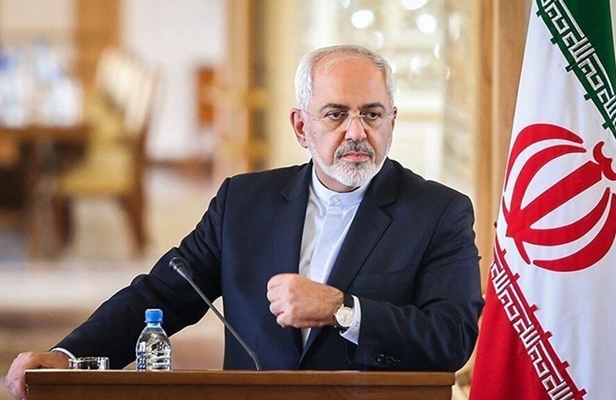
Even Saudis Didn’t Believe Iran Was Behind Aramco Attacks: Zarif

Saudi Arabia said Friday it had launched a military operation against Hudaydah because the port city was being used by Yemeni fighters to launch ballistic missiles and drones.

In a post on his Twitter account, Zarif said it was “curious” that the Saudis, who had blamed Iran for last Saturday’s air raids on two major Saudi oil facilities, had retaliated against Hudaydah in violation of a UN-brokered ceasefire agreement signed in Stockholm in December 2018.

US Secretary of State Mike Pompeo, without evidence, was also quick to blame Iran for the brazen attack. The claim drew ridicule from many social media users who compared Pompeo’s rushed conclusion to Washington’s indecision about the murder of prominent journalist Jamal Khashoggi at the Saudi consulate in Istanbul in October 2018.

On Saturday, Pompeo said Washington and its allies were seeking a “peaceful resolution” with Iran, marking a significant cooling of rhetoric after Donald Trump had warned the US was “locked and loaded”.

Tehran has vehemently rejected accusations of involvement in the raids as “lies” and warned of “an all-out war” in the event of military strikes against the country.

Houthi spokesman Mohammed Abdul-Salam on Thursday warned that Saudi Arabia’s offensive in Hudaydah was “a serious escalation that could torpedo the Sweden agreement.”

“The coalition will be responsible for the consequences of this escalation and we’ll be watching the UN stance on this situation closely,” he said.

On Friday, Ansarullah’s president of the Supreme Political Council Mahdi al-Mashat said Yemeni fighters were calling a halt on drone and missile attacks, hoping “the gesture would be answered” by the Saudis.

Al-Mashat said the peace plan was aimed at ending the conflict “through serious negotiations to achieve a comprehensive national reconciliation which does not exclude anyone”.

The official, however, warned that the Yemenis “would not hesitate to launch a period of great pain” if their call for peace was ignored.

Saudi Arabia and its allies launched the war on Yemen in March 2015 in an attempt to reinstall a Riyadh-backed former regime and eliminate the Houthi movement, which has been defending the country along with the armed forces.

The Western-backed offensive, coupled with a naval blockade, has destroyed the country’s infrastructure, and led to a massive humanitarian crisis.

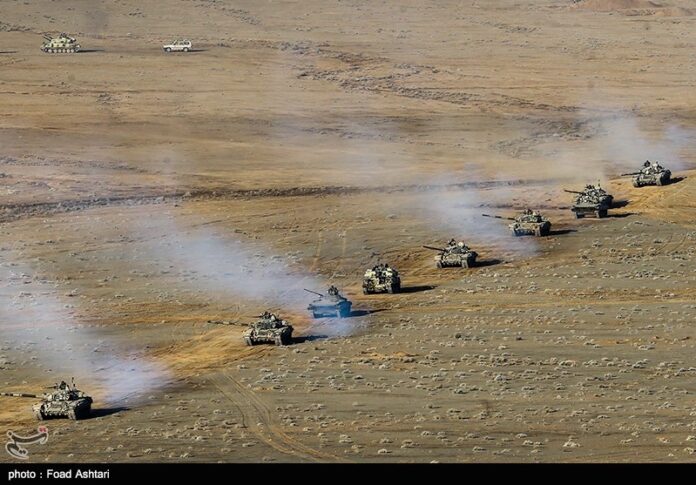
Iran to Hold Joint War Games with Russia, China Soon

Iran's Armed Forces with the national flag attend the opening ceremony of the airborne platoon competition, part of the International Army Games 2017, in Guangshui, Hubei province, China, July 30, 2017. / Photo by Reuters

Brigadier General Qadir Nezami said Iran has begun to stage joint maneuvers with other countries.

“For the first time after the Islamic Revolution, we will hold a trilateral joint naval war game with Russia and China as two major powers in the north of the Indian Ocean and the Sea of Oman,” said General Nezami, the director for international affairs and defence diplomacy of the General Staff of the Iranian Armed Forces.

“Many political and military estimates and analyses will give much weight to these events and will take them into account in strategic developments,” he said.

He said the area where the maneuvers are to be held lies in international waters.

“We are not planning to stage the war game in the Persian Gulf,” he noted.

“Military exercises have different objectives, which, on many occasions, include an exchange of tactical and military experiences,” he said.

“Sometimes, these war games have political objectives and show a kind of convergence among participants,” he said.

The top general said Iran has given fresh impetus to its defence diplomacy over the past couple of years, including the establishment of joint defense commissions with 12 countries.

Any Aggression Will Receive Decisive Response: IRGC Chief

Major General Hossein Salami (1)

General Salami said Iran will never allow any aggression to be driven onto its soil. The IRGC chief said the response to any limited attack will not be limited and those behind any aggression will be punished severely.

Speaking at the opening ceremony of an exhibition of captured drones in Tehran, he stressed that the Islamic Republic’s capacities are hidden and Tehran has revealed only a small part of its power.

General Salami urged the enemies of Iran to study the history of their failure in dealing with the Iranian nation so they can avoid further miscalculations.

“We hit. Anyone who encroaches on our borders will receive a harsh response. This is obvious, and we are saying it openly. They must know we will do what we are saying. We can take responsibility for what we do,” underlined Salami.

The top commander added that Iran’s defence capabilities are not like in the past and they can crush any enemies.

Earlier, Iranian Army Chief Abdolrahim Mousavi told a televised interview that Iran has recently received a message from Americans, in which they asked Iran to let them carry out a limited attack to save face.

The Americans asked Iran not to retaliate so that the clash would get over, Mousavi said.

However, he added, Iran told the US if they attack one target in Iran, the Islamic Republic will hit ten in response.

US Sanctions on Iran Central Bank Sign of Desperation: Governor

Abdolnasser Hemmati said on Friday the US sanctions have failed to produce the results desired by Washington.

“The US government’s back-to-back failures over the past more than one year show these sanctions are more futile than ever, and Iran’s economy has proven to everybody its tolerance to sanctions,” he noted.

“The recent achievements of the Central Bank of Iran and the market stability show that the country’s trade and financial transactions are being conducted through channels which cannot be sanctioned by the United States,” he said.

“If such moves were able to fulfil the unfair desires of that government (the US), the country (Iran)’s economic situation would be very much different from now,” he added.

He said Iran has passed the era when it would circumvent sanctions and now has reached a point where its foreign trade is immune to sanctions.

“It is time the US government learned a lesson from realities,” he noted.

His comments came after US President Donald Trump said his administration has imposed further sanctions on Iran’s central bank following last weekend’s attacks on Saudi oil facilities.

Speaking in the Oval Office on Friday during a meeting with Australian Prime Minister Scott Morrison, Trump said, “We have just sanctioned the Iranian national bank.”

He did not give any other details about the sanctions.

US Treasury Secretary Steven Mnuchin told reporters that the bank was Tehran’s last source of funds, saying, “We have now cut off all funds to Iran”.

US Must End Economic War If Wants to Join JCPOA Commission: Zarif

Speaking to IRNA upon his arrival in New York, Zarif said it is crystal clear that Americans had left the negotiation table.

Stressing the fact that conditions for returning to negotiation table are clear, he said the negotiation table belongs to those members of the JCPOA who honor their commitments.

US cannot continue with “Economic Terrorism” or what President Trump says economic war against Iran and at the same time request for sitting at negotiations table, Zarif noted.

Reacting to US recent choice to sanction Central Bank of Iran (CBI) and Sovereign Fund for Development of Iran, he said it indicates the US desperation.

Americans imposed any sanctions that they could do against Iran, Zarif said adding that they sanctioned CBI which had earlier been blacklisted now under a new topic.

Describing the US act as dangerous and unacceptable, Iranian top diplomat said their act is an indication of trying to block international purchases and the supply of food and medicine to Iranian people.

It is not only the violation of the JCPOA commitments but also all international principles requiring immunity of the central banks of the sovereign states, Zarif reiterated.

On other hand sanctioning an institution under various topics shows that the maximum pressure policy is nearing its end.

Elsewhere in his remarks, Iranian foreign minister urged the US to confess to reality and put an end to this policy in a respectable manner.

Elaborating on whether French President Emanuel Macron’s mediation will bring specific results, Zarif said, “Our view is clear. We are not seeking conflict. We want to save the nuclear deal.”

Iran gave 15 months moratorium to West for preserving the JCPOA, he said noting that the first step was implemented 12 months after US withdrawal from the nuclear deal.

Referring to his talks with French President Emanuel Macron and also the negotiations between Iranian president and P4+1 with the French president, Zarif said that Macron wants to reach a solution.

Zarif underlined the fact that reaching a solution will not be possible if you want to get permission from Office of Foreign Assets Control (OFAC) of the US Department of Treasury.

US Sanctions on Central Bank Repeat of Same Old Bans: Iran

Iran Says What IAEA Wants to Access “Not A Site”

“Since the imposition of the very first sanctions, which were some of the toughest of their kind, Iran has found its way and will continue its development and progress with reliance on domestic potential and the cooperation of friendly countries,” said the spokesman on Saturday.

He said the United States’ foreign policy is a confused and desperate one which is only based on bullying, unilateralism and committing acts of economic terrorism against others.

“It (the US foreign policy) lacks the required potential for any logical and dynamic diplomatic initiative for the peaceful settlement of differences with other countries,” he noted.

“I hope US statesmen will come to realize that they are no longer the only economic heavyweight in the world and that there are many other countries that would like to utilize the Iranian market and economic opportunities associated with good relations with Iran,” he added.

“The Americans should accept that the policy of sanctions is a failed one, and that overusing this ploy and the dollar having turned into a tool have seriously questioned the credibility of the US and its economy in the eyes of the international community,” he said.

“Gone are the days when the US would be accepted as a credible economic partner,” Mousavi said.

The spokesman called on all members of the international community to care about a new trade and economic system which is hardly affected by the United States’ hostile acts against international free trade and development.

He also reiterated that Iran favours peace and interaction. “The Iranian nation is a freedom-loving and peace-loving nation and stands ready to engage with all nations and governments which deal with it with respect and on an equal footing.”

“By stopping the fulfilment of its obligations under the 2015 nuclear deal and continuing to violate the JCPOA, the US has not only breached its international commitments, but also acted to its own detriment and violated billions of dollars’ worth of contracts signed between its companies and Iranian firms, especially in the aerospace industry,” he said.

“We have kept the doors to engagement open,” Mousavi noted.

“Now the ball is in the Americans’ court and they should bravely accept that their breach of the nuclear deal was a mistake and should make good on their commitments. It is only then when they will be able to interact with us like other signatories to the JCPOA within the framework of solutions envisaged in the nuclear deal,” he said.

Iranian President Due in New York Monday

Hassan Rouhani - President of the Islamic Republic of Iran

During the visit, Rouhani will deliver a speech at the UN General Assembly, hold talks with the presidents and leaders of some countries, and hold a press conference.

The president will join his foreign minister, Mohammad Javad Zarif, who is already in New York ahead of Rouhani’s arrival.

The visit comes after a long delay in the US administration’s issuance of visa to the Iranian politicians.

The visas were finally issued a couple of days ago, Foreign Ministry Spokesman Seyyed Abbas Mousavi confirmed on Thursday.

Zarif said earlier on Thursday that US Secretary of State Mike Pompeo was trying to delay issuing visas for the Iranian delegation to the upcoming United Nations General Assembly.

“Pompeo tries to dodge US obligation to issue visas for UN delegates by resorting to self-arrogated designation,” Zarif tweeted.

Pompeo had declined to comment specifically on the case on Wednesday, saying “We don’t talk about granting or absence of granting of visas.”

As the host government, the US generally is obliged to issue visas to diplomats who serve at UN headquarters.

Iran Rejects US Claims in Letter to UN Chief, UNSC

Iran Urges Saudi Arabia, Israel to Come Clean on Nuclear Activities

In the letter, Iran’s Ambassador to the UN Majid Takht-Ravanchi has highlighted that Washington routinely points the finger at Iran for any incident.

“Some US officials’ modus operandi is to blame Iran immediately, without exception and without any evidence, for any incident, regardless of where it happened and who was behind it,” read part of the letter.

“This is a ‘maximum deception’ campaign in line with the United States’ so-called ‘maximum pressure’ policy against Iran,” read the letter.

“It goes without saying that no degree of nominal, intelligence and deception campaign against Iran can change or deflect attention from the realities associated with the illegal acts and irresponsible policies of the US,” read the letter.

He further rejected baseless allegations made by the US’ representative to the UN regarding Iran’s ballistic missiles and space activities, saying Iran has not conducted any activity inconsistent with paragraph 3 of annex B to resolution 2231 (2015).

“Iranian missiles have not been designed to carry nuclear warheads. US claims are hypocritical. The launching of missiles does not violate Resolution 2231,” read part of the letter.

“Instead of [showing] malicious behaviour and [committing] destabilizing acts and [making] futile efforts and baseless claims, the US should stop exporting unprecedented amounts of modern weapons to its allies, which has caused death and destruction in Yemen,” read the letter.

What follows is the full text of the letter:

The full text of Iranian envoy’s letter is as follows:

Excellency,
I am writing to you regarding the identical letters dated 29 August 2019 from the Chargé d’affaires a.i. of the United States Mission to the United Nations addressed to the Secretary-General and the President of the Security Council wherein certain baseless accusations were repeated against my country S/2019/705.

As we have stated time and again, none of Iran’s ballistic missiles are “designed to be capable of delivering nuclear weapons” and accordingly, paragraph 3 of annex B to resolution 2231 (2015) does not limit, in any way, Iran’s activities regarding the conventional ballistic missiles.

Consequently, Iran’s related activities are not inconsistent with that paragraph. Rather, they fall outside of the purview or competence of the Security Council resolution and its annexes (S/2015/550).

We continue to firmly reject the desperate attempts by the United States for the arbitrary reinterpretation of paragraph 3 of annex B to resolution 2231 (2015), including through invoking the definition of the Missile Technology Control Regime.

There is no implicit or explicit reference in that paragraph either to the Missile Technology Control Regime itself or to its definitions and, thus, any reference thereto is totally misleading. Moreover, while the Missile Technology Control Regime criteria are not legally binding, even for its 35 members, any attempt to portray them as the universally agreed definition is definitively premature.

As stated in the report of the Secretary-General (A/57/229), “there is no universally accepted norm or instrument specifically governing the development, testing, production, acquisition, transfer, deployment or use of missiles.”

Moreover, when the previous missile launches by Iran were discussed, “there was no consensus in the Security Council on how this particular launch related to resolution 2231 (2015)” (S/2017/515).

Additionally, while the United States, by its unlawful withdrawal from the Joint Comprehensive Plan of Action and its subsequent policies and practices, has materially breached resolution 2231 (2015), its call for reimposing the restrictions contained in Security Council resolution 1929 (2010) — which is a terminated and, in fact, dead resolution — is ironic. Likewise, it is hypocritical that the United States, which arrogantly continues to threaten other States either to violate resolution 2231 (2015) or face punishment, is calling for the full implementation of that resolution. If the implementation of resolution 2231 (2015) matters for the United States, it should end violating it itself and also stop forcing other States to violate that resolution.

Additionally, the reference by the United States to “existing sanctions on Iran” is misleading and legally void as there are only certain restrictions, not “sanctions” within the context of resolution 2231 (2015).

In fact, when the United States, a permanent member of the Security Council, chooses to defy the Council’s resolutions repeatedly without consequence, it seriously undermines the fundamental credibility of the Council.

If unchecked, such policies and practices of the United States would further erode the credibility of the Security Council, which already faces a severe trust and confidence deficit due to such irresponsible policies of that country. Therefore, we once again call upon the international community to hold the United States accountable for its actions. In this context, we ask that the Secretary-General take actions of the United States as described in the present letter into account in his upcoming report on the implementation of resolution 2231 (2015).

I would also like to reiterate that Iran has not conducted any activity inconsistent with paragraph 3 of annex B to resolution 2231 (2015), and accordingly, it is determined to resolutely continue its activities related to ballistic missiles and space launch vehicles, both of which are its inherent rights under international law and are necessary for securing its security as well as socioeconomic interests, respectively.

At the same time, since Iran’s activities related to space launch vehicles and ballistic missiles fall outside the purview or competence of resolution 2231 (2015) and its annexes, the Secretary-General is therefore expected to seriously avoid reporting on Iran’s such activities in his next reports on the implementation of that resolution.

Seizing this opportunity, I would also like to categorically reject the allegations against Iran made by the Permanent Representative of the United States at the 8619th meeting of the Security Council on 16 September 2019 (S/PV.8619).

It has become a standard practice of certain officials of the United States who, following any incident — no matter where and by whom – without exception, immediately and without any investigation and evidence, declare Iran as the culprit. This “maximum deception” campaign is in line with and a living example of the so-called “maximum pressure” policy of the United States against Iran.

It is evident that no amount of smear campaign, disinformation and deception against Iran can change the realities about the illegal practices and irresponsible policies of the United States or distract attention away from its destructive policies, malign behavior and destabilizing measures, in particular in the Middle East. Instead of such futile attempts and baseless allegations, the United States must stop exporting an unprecedented amount of sophisticated weaponry to the Middle East, which are used including for death and destruction in Yemen by the closest regional allies of the United States.

I should be grateful if you would have the present letter circulated as a document of the Security Council.

Please accept, Excellency, the assurances of my highest consideration.

No New Deal with US Given Trump’s Mixed Policy: Iran

Iran Vows to Take Action If UN Arms Embargo Not Lifted

“We are witnessing a state of confusion in America’s foreign policy toward the Islamic Republic of Iran. A new deal with them under the current circumstances seems unlikely,” said Iran’s Foreign Ministry Spokesman Abbas Mousavi in remarks to Iran’s al-Alam TV published on Thursday.

Mousavi said that Iran was still confident of its diplomatic capabilities to achieve solutions to current problems.

“We negotiated with the Americans for two years and it was the Americans who left the negotiating table,” he said, referring to Washington’s withdrawal last year from a 2015 multilateral nuclear deal reached between Iran and major world powers.

Mousavi’s remarks came a day after Iranian Foreign Minister Mohammad Javad Zarif said America’s campaign of pressure against Tehran has failed, advising US President Donald Trump to return to the 2015 Iran nuclear deal if it wants a seat at the negotiating table.

Speaking to reporters on the sidelines of a cabinet meeting on Wednesday, Zarif said Tehran has always remained committed to its international commitments but Washington should first show that it is trustworthy before it can be allowed back to negotiations with Iran over the future of the deal — known as the Joint Comprehensive Plan of Action (JCPOA).

Elsewhere in his remarks, Mousavi touched on recent attacks on Saudi Arabia’s oil facilities, calling on those accusing Iran to provide “real not fake evidence” of Tehran’s involvement in the attacks. He said the US and Saudi Arabia should believe that Yemen’s Houthi Ansarullah movement, which has resisted a four-year war by the Saudis and allies, took credit for the attacks and has offered evidence to substantiate it.

“The Yemenis have themselves declared that they were responsible for the attack, providing [related] evidence,” said Mousavi.

“But they (the US, allies) accuse Iran because they don’t believe that the oppressed Yemeni nation has achieved such capabilities with empty hands [as] they are under the most severe attacks and bombardments,” he added.

Mousavi noted, “When they suffer a blow, it seems the first and easiest move for both the Americans and other counties is to lay blame on Iran, which is totally unfounded.”

Pointing to Iran’s efforts to help end the Yemeni crisis, the official also said Iran has asked Yemen’s Ansarullah to attend various political meetings meant to solve the crisis in Yemen.

Yemeni armed forces conducted a large-scale operation against Saudi Arabia’s Aramco oil installations on Saturday, in response to the Saudi-led war on their country.

The Yemeni Houthi Ansarullah movement immediately took credit for the attacks, but US Secretary of State Mike Pompeo swiftly accused Iran of being behind the assault, without providing any evidence. Tehran categorically rejected the allegations.

Meanwhile, Saudi Arabia claimed on Wednesday that the strikes on its oil infrastructure came from the “north” and were “unquestionably” sponsored by Iran, adding that the Houthis were not responsible for the assault despite claiming it.

Shortly after the Saudi announcement, the spokesman for Yemeni Armed Forces, however, reiterated it was behind the weekend attack, stressing that the Houthis have new drones, powered by “normal and jet engines” that can reach targets deep in Saudi Arabia.

“Our forces have reached a high level of efficiency and ability. They can manufacture various types of unmanned aerial vehicles in record time. The Second Deterrent Balance Operation, which targeted Saudi oil installations, is a perfect example of the capabilities of our forces in terms of planning and implementation,” Brigadier General Yahya Saree said during a press conference in the capital Sana’a.

Iran Condemns Suicide Attack in Afghanistan’s Zabul

The site of a bomb attack in Zabul, Afghanistan, on September 19, 2019. / Photo by AFP

In a Friday statement, Mousavi condemned any operation that would endanger the lives of civilians, especially women and children.
Mousavi expressed the hope that all forces interested in the future of Afghanistan would be able to to overcome the current difficult situation without foreign interference and by adopting peaceful solutions.

At least 39 people were killed and 90 wounded in a suicide attack near a hospital carried out by the Taliban in the southern city of Qalat in Zabul province.

At least 95 others have been wounded in the car bomb explosion that the armed group said targeted a nearby government intelligence department building in Qalat, the capital of Zabul province.

A senior defence ministry official in Kabul said the fighters wanted to target a training base for the country’s powerful security agency the National Directorate of Security (NDS), but parked the explosives-laden vehicle outside a hospital gate nearby.

Residents, many of whom had come to see their sick family members, used shawls and blankets to carry the wounded inside the destroyed hospital building, while authorities scrambled to take the worst of the wounded to hospitals in nearby Kandahar.

The Taliban has warned in recent days that its fighters will intensify their campaign against the Afghan government and foreign forces to dissuade people from voting in the September 28 poll. President Ghani is running for a second five-year term.

After months of peace talks in the Qatari capital, Doha, US President Donald Trump last week abruptly called off the talks with the Taliban following the killing of an American marine in a suicide attack.