
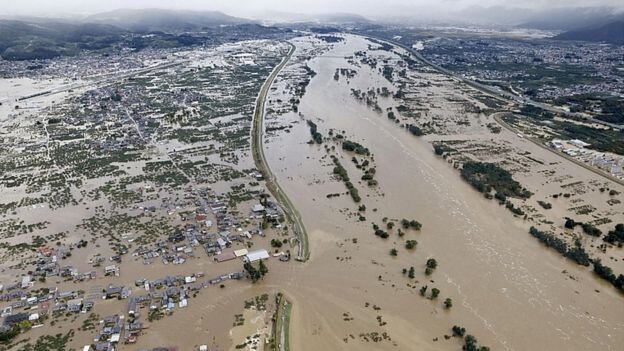
Spokesperson for the Ministry of Foreign Affairs of the Islamic Republic of Iran Seyyed Abbas Mousavi on Sunday offered deepest sympathy to the Japanese government, nation, and the affected people over a fierce storm and floods in which tens of people have been killed, several others have been injured or gone missing, and which has brought widespread destruction.
Leader: Iran Has No Motive for Being Hostile to Saudi Arabia
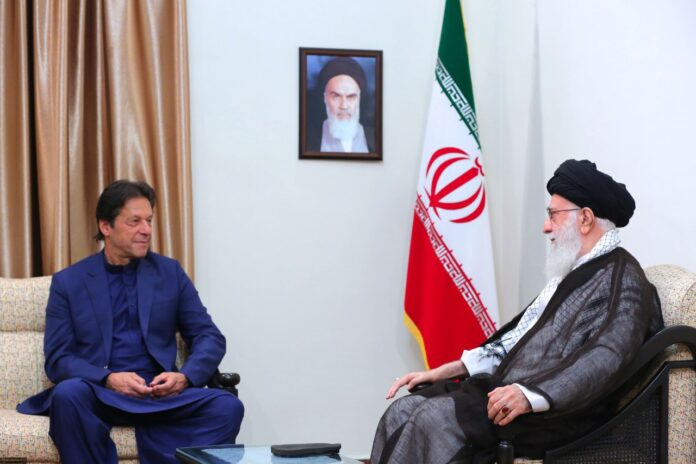
Speaking in a Sunday meeting with Pakistani Prime Minister Imran Khan, Ayatollah Khamenei expressed regret over the destructive role of certain countries in the region and their war on Yemen.
“We have no motive for being hostile to these countries, but they are under the will of the United States …in acting against Iran,” the Leader said.
“Ending the war in Yemen will have a positive impact on the region,” he added.
He further noted that “Iran has never initiated any war” against other countries, but “if any one starts a war on Iran, it will definitely regret it.”
The comments come as the Pakistani prime minister is in Tehran to mediate between Iran and Saudi Arabia.
Earlier in the day, Imran Khan said in a press conference with Iranian President Hassan Rouhani that “no new conflict must begin in the region” between Tehran and Riyadh.
Any kind of new conflict in the region will be to the detriment of regional nations and to the benefit of foreigners, he said, adding, “The peoples of the region, including those of Afghanistan and Syria, are still suffering from the consequences of terrorism.”
Stating that any kind of conflict between Iran and Saudi Arabia will affect the entire region, Imran Khan said, “We believe that disputes can be settled through dialogue.”
Referring to his upcoming visit to Saudi Arabia, the Pakistani PM said, “In the visit, I will offer Pakistan’s initiatives for peace and stability and ending disputes and tensions.”
Iran to Give Appropriate Response to Any Goodwill Gesture: Rouhani
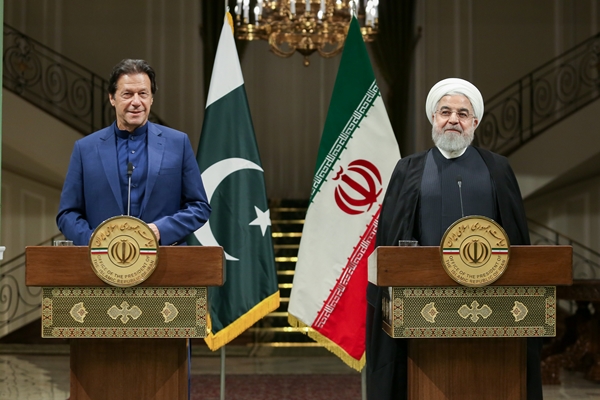
“Any kind of goodwill and good speech will be responded with good, suitable speech,” Rouhani said in a joint press conference with Pakistani Prime Minister Imran Khan, who has travelled to Tehran to mediate between Iran and Saudi Arabia.
President Rouhani stressed that Tehran and Islamabad both share the view that regional issues must be resolved through political ways and dialogue.
“In our meeting, we expressed our concerns about the safety and security of oil tankers, especially what happened to the Iranian tanker on Friday in the Red Sea.”
“We also presented the leads that we have acquired on the issue and stressed that we will continue our investigations until we reach the final conclusion,” said Rouhani.
He said “if a country thinks that it can create insecurity in the region and not receive any response, it is gravely mistaken.”
“Mr Imran Khan made some points about the critical region of Persian Gulf, which we approve. The Prime Minister of Pakistan also stressed that the key to regional issues is ending the war in Yemen, immediate cease-fire and helping the Yemenis, which can be a very good start,” he said.
“Today, we also talked about bilateral relations and deepening economic cooperation between the two countries. We also discussed issues related to security in the two countries’ borders and activating border markets,” said Rouhani.
He said Iran and Pakistan enjoy profound strategic relations and both parties believe that these ties need to continue.
In this meeting, the Zionist Regime’s threats to regional security were explained to the Pakistani officials, said Rouhani.
The President went on to state that the United States’ unjust sanctions against the Iranian nation was another issue that was discussed in the meeting.
“The unjust US sanctions against the Iranian nation is economic terrorism. In this meeting, we discussed how the Joint Comprehensive Plan of Action (JCPOA), as an important agreement, can be returned to its previous states and be implemented.”
“We also highlighted the basic key fact that for the settlement of the issue, the United States has to return to the JCPOA and abandon sanctions,” he continued.
Appreciating Imran Khan for his visit to Tehran, the president said, “We welcome the Pakistani Prime Minister’s goodwill and effort for resolving regional issues so that full peace and security returns to our critical region.”
At the same press conference, Imran Khan referred to the friendly relations between the two countries and said, “The Islamic Republic of Iran has always been a friendly neighbour to Pakistan and supported us in hard times.”
He also appreciated Tehran’s stances in supporting the people of Kashmir.
Any kind of new conflict in the region will be to the detriment of regional nations and to the benefit of foreigners, he said, adding, “The peoples of the region, including those of Afghanistan and Syria, are still suffering from the consequences of terrorism, therefore, no new conflict must begin in the region.”
Stating that any kind of conflict between Iran and Saudi Arabia will affect the entire region, Imran Khan said, “We believe that disputes can be settled through dialogue.”
Referring to his upcoming visit to Saudi Arabia, the Pakistani PM said, “In the visit, I will offer Pakistan’s initiatives for peace and stability and ending disputes and tensions.”
Iran Prefers Using National Currency in Trade with Neighbours: Minister
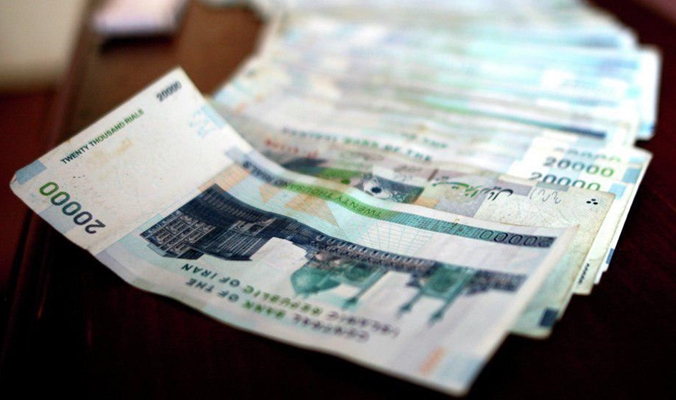
Speaking on Saturday during his visit to Kermanshah province, Reza Rahmani said that some countries, such as Turkey and Russia, have signed agreements in this regard as using national currency will surely benefit both sides.
Rahmani added that one of the priorities this year is to export to neighbouring countries, and fortunately Iran has recently joined the Eurasian Economic Union which is a significant success under new circumstances.
Reza Rahmani mentioned enemies thought the Islamic Republic would be isolated by sanctions; however, joining the Eurasian Economic Union showed the enemy’s plan has failed.
“We trade over 500 items of commodities, mostly agricultural products and manufactured goods, with Eurasian countries. These goods are generally the ones in which we have domestic consumption surpluses,” pointed out the minister.
Rahmani said these products cover many commodities, from petrochemicals to ceramic tiles and steel products underlining that this move will certainly be to the interest of national and domestic production.
The EAEU summit was held in Yerevan, Armenia, on October 1 and the Islamic Republic attended the conference.
The union includes Armenia, Belarus, Kazakhstan, Kyrgyzstan, and Russia.
The Eurasian Economic Union has sought to expand into the ASEAN sphere to diversify against China’s growing Belt and Road Initiative.
An example of EUEA’s efforts to create a common market with ASEAN states is the Transit Potential of the Eurasian Continent initiative. The initiative will implement large-scale infrastructure projects and transportation networks that connect Central Asia, Southeast Asia and the Middle East.
New Gas Field Discovered in Southern Iran
A senior official says the filed contains more than 540 billion cubic metres of in-situ gas and 382 billion cubic metres of recoverable natural gas.
“The new gas field lies 200 kilometres south of [the city of] Shiraz [in southern Fars province], 60 kilometres north of Asalouyeh (a southern city home to numerous oil and gas facilities), and 25 kilometres southwest of the town of Khanj,” says the deputy CEO of the National Iranian Oil Company for development and engineering affairs.
The available amount is roughly equal to the gas reserves of one phase of the South Pars Oil and Gas Field, says the official.
The amount of gas available at Eram gas field is enough to meet five years of gas consumption in Tehran province, or one year of gas consumption in Austria, Hungary, and Romania.
A Look at Iranian Newspaper Front Pages on October 13
Abrar:
1- Iran Ready to Hold Talks with Saudi with or without Mediator
2- Erdogan: Northern Syria Operation Won’t Stop
3- Saudi Arabia’s First Reaction to Iran Oil Tanker Incident: We Wanted to Help
4- Zarif: Iran Religiously, Strategically Opposed to Nuke
5- US Legislators Trying to Impose Sanctions on Turkey over Offensive against Kurds

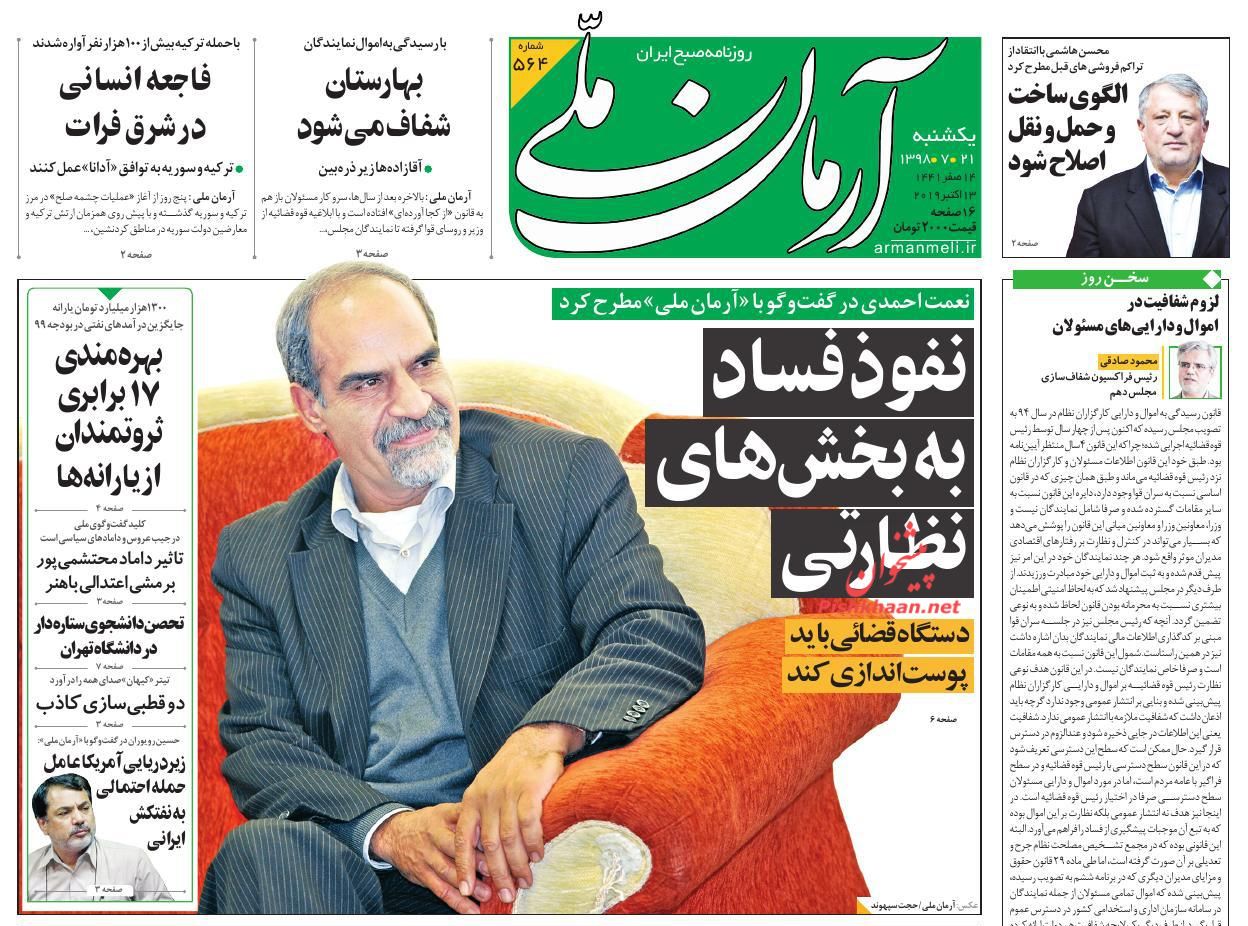
Arman-e Melli:
1- Humanitarian Disaster in Eastern Euphrates: Turkish Attack Leaves 100,000 People Displaced
2- US Submarine Possibly behind Attack on Iranian Oil Tanker
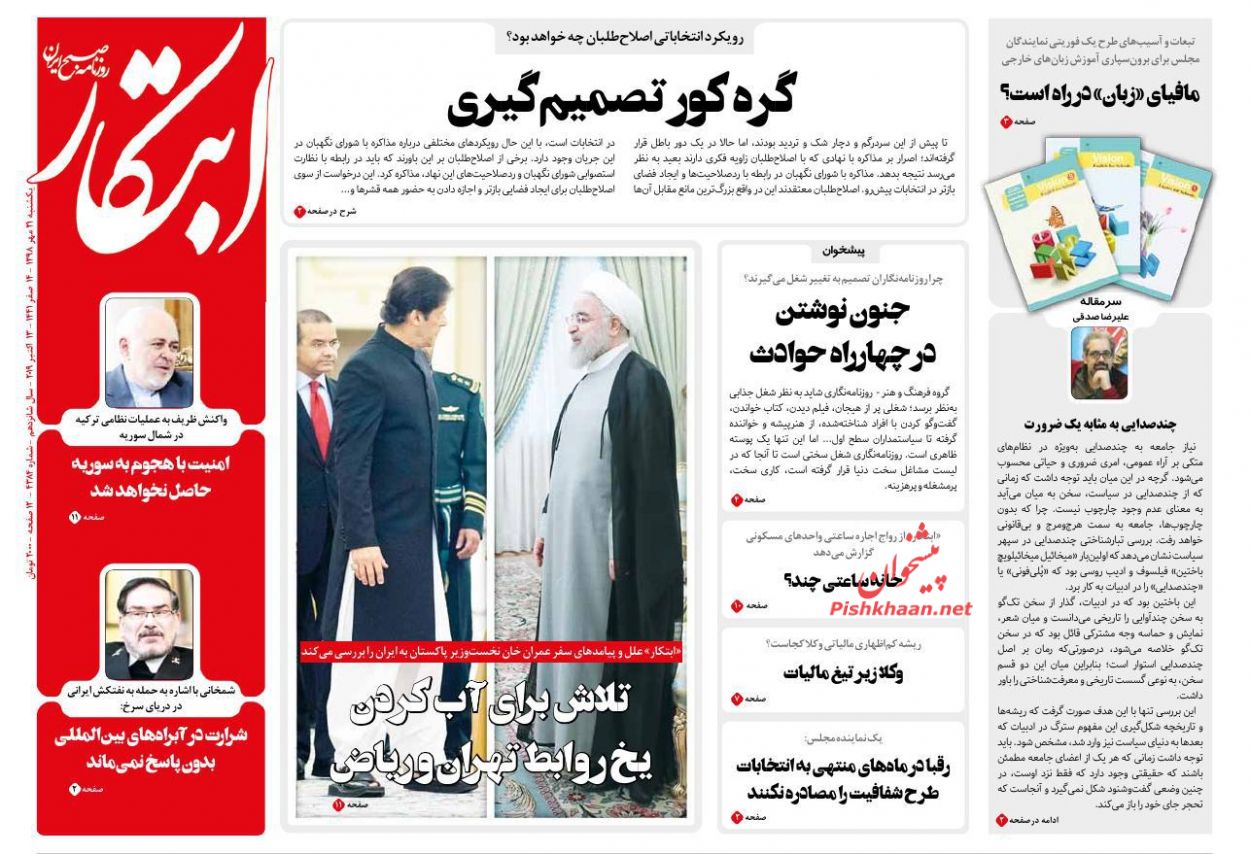
Ebtekar:
1- Efforts for Thaw in Iran-Saudi Relations: A Review of Imran Khan’s Trip to Iran
2- Banditry in Int’l Waters Not to Remain Unanswered: Shamkhani
3- Security Won’t Be Achieved by Attacking Syria: Zarif
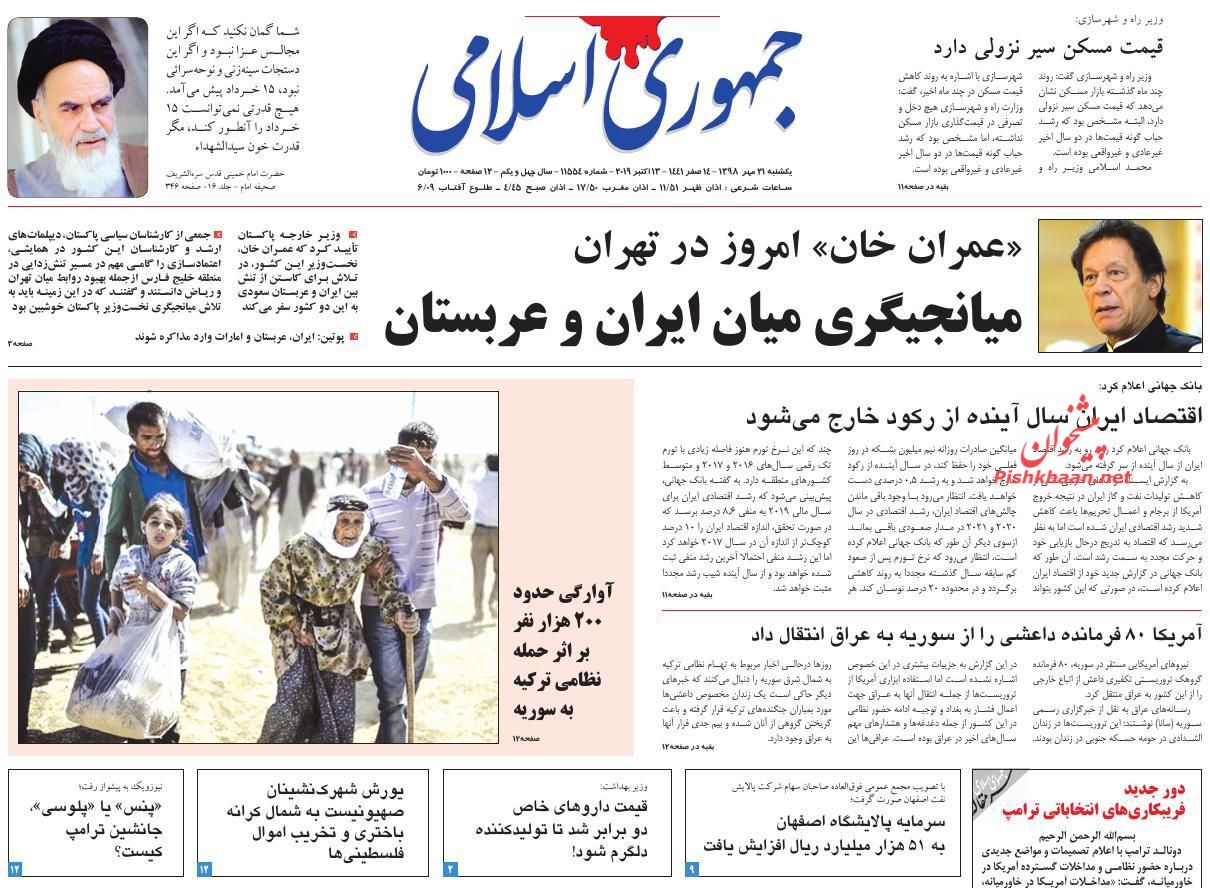
Jomhouri Eslami:
1- Mediation between Iran, Saudi Arabia: Imran Khan in Tehran
2- US Transfers 80 ISIS Commanders from Syria to Iraq
3- Turkish Invasion Displaces 200,000 People in Syria
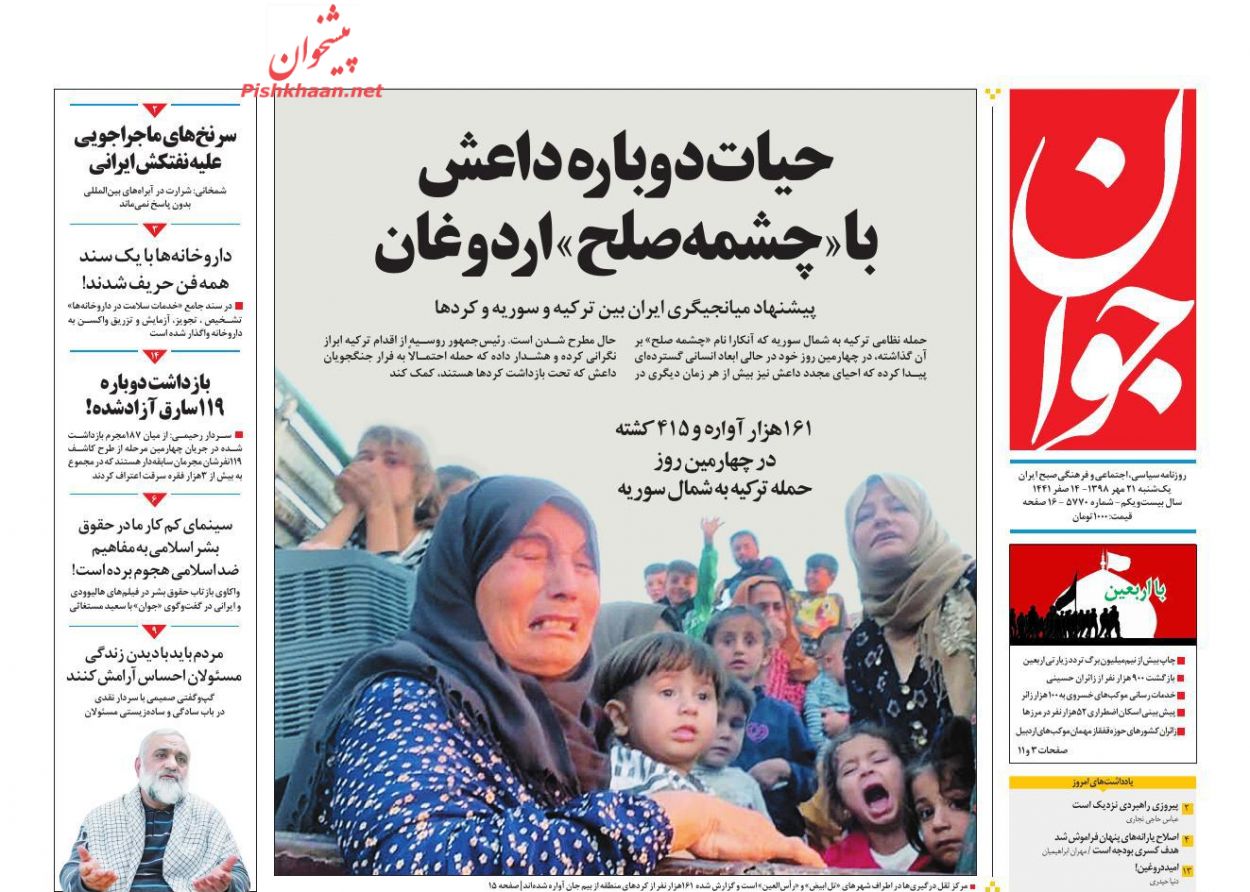
Javan:
1- Erdogan’s Peace Spring Gives New Life to ISIS
2- Iran Ready to Mediate between Turkey, Syria, Kurds
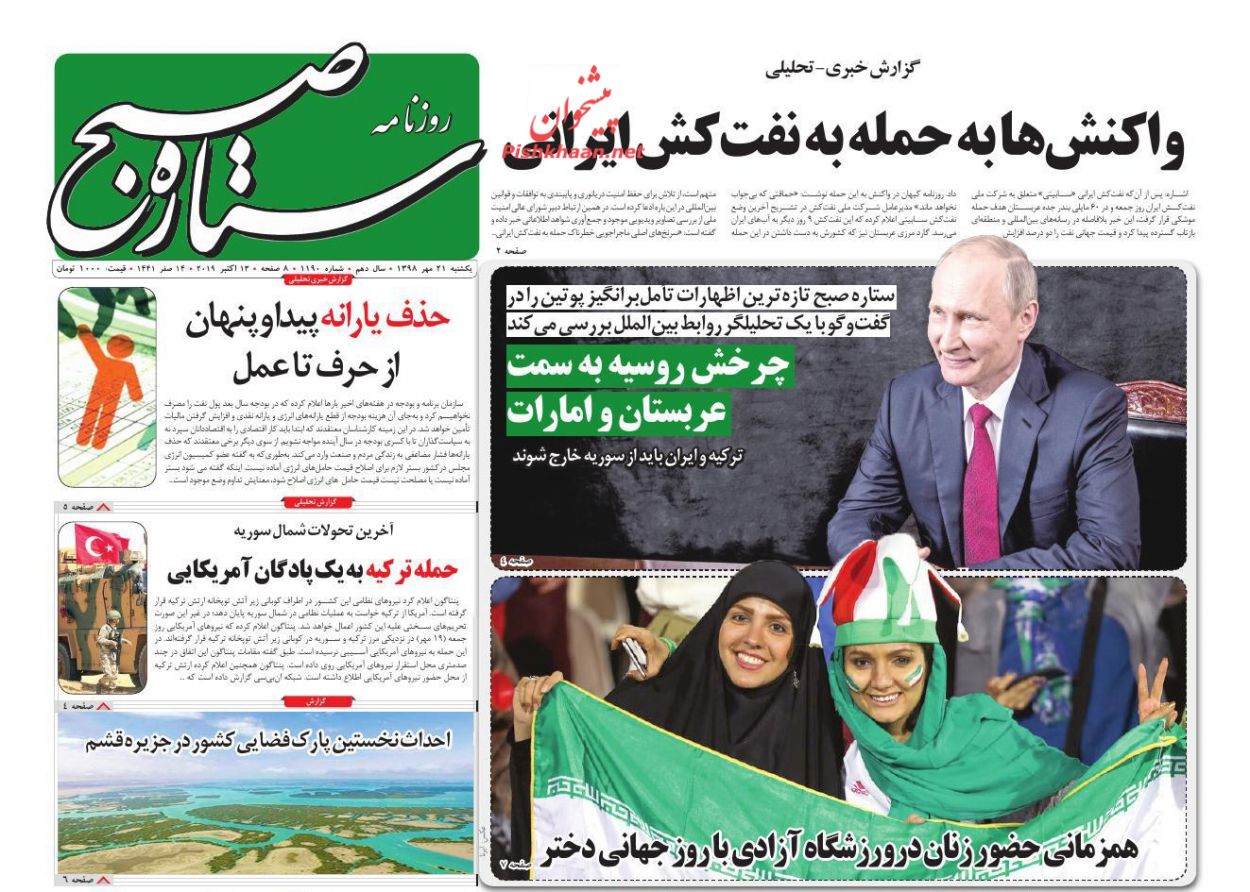
Setareh Sobh:
1- Russia Turns to Saudi Arabia, UAE: Turkey and Iran Must Leave Syria
2- Turkish Attack on US Barracks: Latest Syria Development
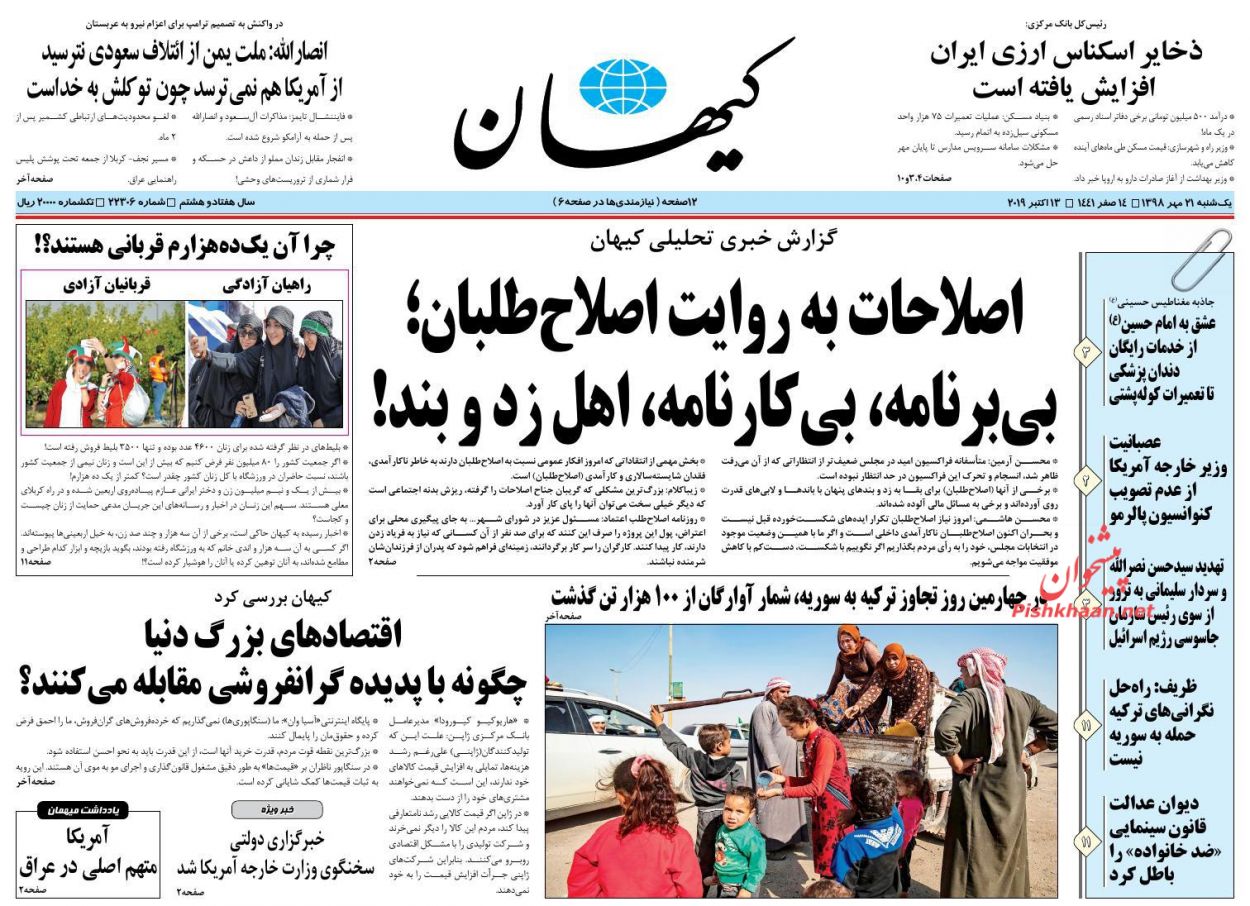
Kayhan:
1- Attacking Syria No Solution to Turkey’s Concerns
2- Iran’s Forex Reserves Increased: CBI
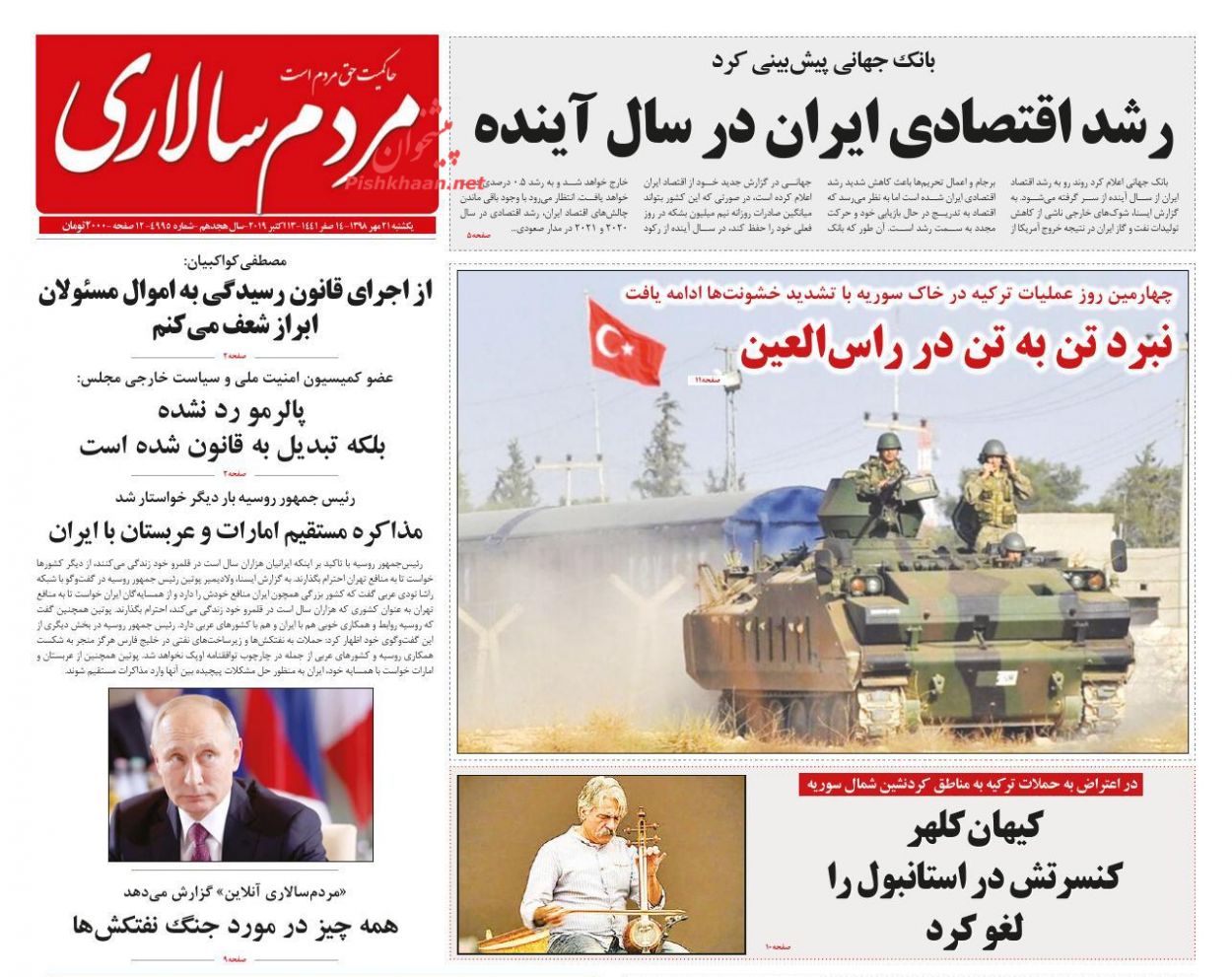
Mardom Salari:
1- Russia President Urges Iran’s Direct Talks with UAE, Saudi
2- One on One Clashes in Ras al-Ain: Increased Violence on Fourth Day of Turkish Invasion
Iran Leader Urges IRGC to Develop More Advanced Weapons
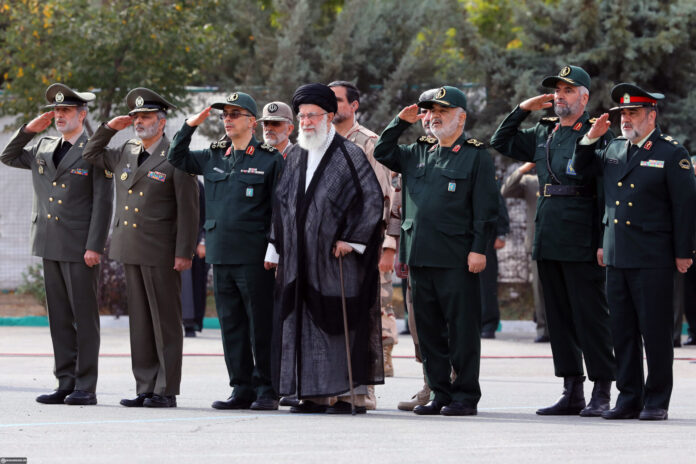
“The IRGC should have advanced and modern weapons… Your weapons should be modern and updated. It should be developed at home. You need to develop and produce your weapons,” Ayatollah Khamenei said in a Sunday cadet ceremony.
“Investigate to find out what you need in all military and intelligence arenas. During the tyrannical Pahlavi regime [before 1979], we were dependent, backward and unknowledgeable in terms of military equipment. The military equipment of the IRGC must be advanced and up to date; you should invent and manufacture them yourselves,” he said.
“Today, the IRGC is dignified both inside and outside the country, thanks be to God. The enemies have contributed to creating this dignity. With violent, aggressive and hostile behaviour, the Americans increased the dignity of the IRGC. The enemies of God show hostility to God’s servants, and this hostility makes God’s servants more reputable and estimable,” the Leader said.
“We have made great strides since the beginning of the Revolution; there are many shortcomings and difficulties, but the movement which has taken place to this date is amazing,” he added.
Iranian military technicians have in recent years made great headways in manufacturing a broad range of indigenous equipment, making the armed forces self-sufficient in the arms sphere.
Tehran has always assured other nations that its military might poses no threat to regional countries, saying that the Islamic Republic’s defense doctrine is entirely based on deterrence.
Pakistani PM Imran Khan in Tehran for High-Level Talks
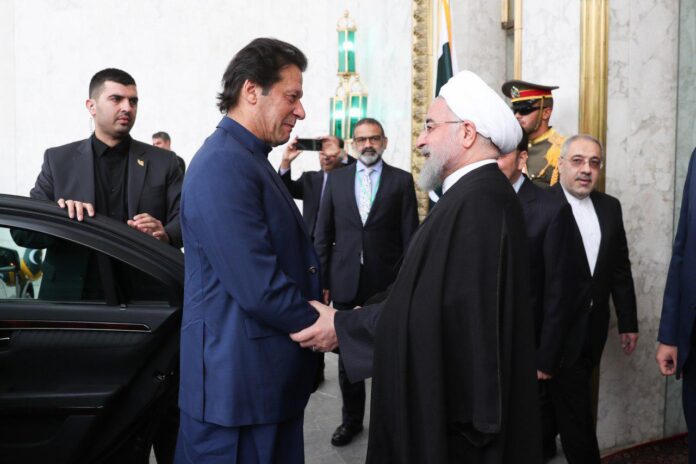
Upon arrival at Mehrabad Airport, Imran Khan and his high-ranking entourage were welcomed by Iranian Foreign Minister Mohammad Javad Zarif.
Later, Iranian President Hassan Rouhani officially received the Pakistani prime minister at Saadabad Historical Complex.
Rouhani and Imran Khan will discuss the most important issues in bilateral ties and the latest regional and international developments.
The Pakistani official will later meet with Leader of Iran’s Islamic Revolution Ayatollah Seyyed Ali Khamenei, according to Iranian Foreign Ministry Spokesman Seyyed Abbas Mousavi.
The focus of Imran Khan’s talks with Iranian officials is said to be mediation between Tehran and Riyadh, where the Pakistani official is set to visit after Iran.
Iran Planning to Use Nanotechnology in Petroleum Industry

The MoU on market development and application of nanotechnology products and services in the Oil and Gas Industry was signed between Vice-President Sorena Sattari and Petroleum Minister Bijan Zanganeh on Saturday.
The two sides sealed the agreement during the opening ceremony of 12th Nanotechnology Exhibition – Iran Nano 2019 – in Tehran.
At the ceremony, Sattari appreciated the Ministry of Oil’s support for knowledge-based companies and start-ups, and said a Petroleum Innovation Zone is to be launched as the next step.
“By taking these measures, an ecosystem where young creative youths are active will be launched within the next six years in an indigenous atmosphere where petroleum products are supplied domestically.”
For his part, Zanganeh said this measure is also aimed at contributing to the boom in technology and innovation.
“The start-ups and knowledge-based companies present at this fair have good activities supported by the ministry of oil,” underlined Zanganeh.
“In general, we continue this strategy as we have supported the technological work of researchers so far, but we keep this move organised in order to achieve our goals in the framework of standard rules.”
The agreement signed between the vice presidency and oil ministry was in line with the Iranian Leader’s policies and guidelines aimed at flourishing the knowledge-based economy, countering cruel sanctions and increasing the employment of expert staff.
The goals of this MoU are to use nanotechnology-based products and services in the petroleum industry, to develop and promote nanotechnology to meet the needs of the petroleum industry, and to help develop the market for nanotech companies.
Iran Global Forerunner in Nanotechnology: VP
Sorena Sattari made the comments at the opening ceremony of the 12th edition of Nanotechnology Exhibition – Iran Nano 2019 – in Tehran.
“As we can see, new sciences, like nanotechnology, make a lot of changes in life, reduce our costs and create a shortcut in the field of technology.”
He said making a product is the result of private investment in research, and if a good platform is provided in this field many products will be made.
He referred to Niroo Research Institute (NRI) as a successful model for development of technology by investing in the private sector.
“The government has acted as a research mentor and has helped private companies develop start-ups and knowledge-based products,” stated Sattari.
“We can’t do well in patent and paper production until the commercialisation cycle is properly formed. Investing in research will also increase the patents and produce papers. There is a tremendous amount of human resources in the country, and the public sector should pave the way for the use of this capacity in the country by providing a platform for the private sector.”
The Iran Nano 2019 is being held at Tehran International Permanent Fairground with the participation of 139 active institutions.
For a brief review of Iran’s achievements in various fields of science and technology, check the book “Science and Technology in Iran: A Brief Review – 2019”
The products displayed at the exhibit include achievements in fields like water and environment, energy, healthcare, automotive, construction, textile, oil and agriculture.
The exhibition embraces various sections, including science and technology parks, growth centres, laboratories, universities, research and student clubs.
One of the most important sections of the event is the Nano-match booth with about 30 ready-to-invest projects aimed at meeting industrial needs, relying on domestic technologies.
There are participants from Turkey, Ethiopia, Iraq, Afghanistan, South Africa, Azerbaijan, Indonesia and CIS countries.
In this edition, 30 new products are featured in the Innovative Design section.
Industrial and networking companies, technology development departments, specialised B2B programs, student tours, workshops, and universities and research centres’ booths are the other sections of the exhibition.
The Islamic Republic ranks 4th in the world in the field of nanoscience production. The activity of 239 knowledge-based and industrial companies has resulted in production of more than 610 products and export of nano-products to more than 40 countries, according to official data.
