Monday, December 22, 2025
Home Blog Page 3060

Tourists Drive All Way from France to Iran with Dyane (Video)

A video circulated on Iranian social media shows these tourists showing off their Citroen Dyane cars during a visit to the central Iranian city of Kashan.

Earlier this month, a French 55-member motorcyclist group arrived in Iran via Bazargan border crossing, northwestern Iran.

The French tourists were going to proceed to Orumiyeh, Saqqez, Hamadan, Arak, Isfahan, Yasuj and Shiraz after Maku.

Their visit to the Iranian cities was to last ten days and then they were to leave Iran via Bazargan border.

FM Zarif Reiterates Call on Turkey to Stop Syria Incursion

“The imperative now is to end the incursion into #Syria & address all concerns through #ADANA,” Zarif said in a post on his Twitter account on Tuesday night.

“Meanwhile, it is essential that the core principles of JUS IN BELLO are fully observed: distinction between civilians and combatant, & prohibition on inflicting unnecessary suffering,” he added in his tweet.

Turkey moved into northern Syria last Wednesday after US President Donald Trump pulled American troops out of the area.

According to media reports, casualties are increasing as Turkey presses on with its cross-border offensive on Kurdish-held areas of Syria.

Tens of thousands of people have fled their homes, amid growing international criticism of the offensive.

Iranian authorities, including President Hassan Rouhani, had urged the Ankara government to avoid taking military action in Syrian territories.

Iran President’s Brother Jailed to Serve 5-Year Term

Fereydoun, a former diplomat, has been found guilty of bribery and sentenced to five years in prison.
According to Iranian Judiciary’s Deputy Chief and Spokesman Gholam Hossein Mohseni Ejei, Fereydoun had initially been sentenced to 7 years in prison, but his sentence was commuted to five years.

He has also been ordered to pay a hefty fine as well as over 310 billion rials in bribery settlement.

Rouhani Blames Saudi, Israel for Trump’s Exit from Iran Deal

Hassan Rouhani - President of the Islamic Republic of Iran
Iranian President Hassan Rouhani addresses a meeting with a group of academics and university elites in Tehran on Oct. 16, 2019 / Photo by president.ir

“The Zionist regime, Saudi Arabia, and the US’ hawks pressured the new US administration and forced it into leaving the JCPOA,” Rouhani said in a Wednesday ceremony in Tehran.
Rouhani regretted that Donald Trump left the multilateral deal, as the Islamic Republic had managed to achieve the world’s highest economic growth rate in the year after the implementation of JCPOA.

“Those who are doubtful about the efficiency of JCPOA can compare the time when the deal was signed with today when it is undermined,” he said.

“When the JCPOA was signed, a world leader was amazed to see the world’s big corporations queuing up to sign contracts with Iran,” Rouhani noted.

“One year after the deal was signed in 2015, Iran’s economic growth rate topped the world ranking,” he said, boasting that the deal helped his government keep the inflation rate at a one-digit rate for three consecutive years, and make the country self-sufficient in many fields including petrol, gasoline, and wheat production.

He complained that some critics inside the country slam his government for “wasting time” by holding talks with the International Atomic Energy Agency (IAEA) as the body is under the control of the US and superpowers.

“They believed it is useless to hold talks with the IAEA … but we managed to settle the issue of Possible Military Dimension (PMD) through talks with the IAEA, which finally announced the case is closed,” Rouhani said.

He said in the course of talks with the six world powers, “some said the talks were futile and useless, and Iran needs to resist.”

However, he added, the government managed to hold talks with six superpowers and convince them to take back and annul six UN Security Council resolutions, which is not at all an easy job.

“Nuclear activity has not been endorsed for any country in a UNSC Resolution, but that is included in the UNSC Resolution 2231 only for Iran,” he added.

Iran has been on track to abandon commitments under the nuclear deal in response to a move by Trump to withdraw from the pact and re-impose the “toughest ever” sanctions against the Islamic Republic.

Tehran has so far rowed back on its commitments three times in compliance with Articles 26 and 36 of the JCPOA. It has stressed that its retaliatory measures will be reversible as soon as Europe finds practical ways to shield the mutual trade from the US sanctions.

Iran, Germany Urge Turkey, Saudi to End Wars on Syria, Yemen

Iran’s Parliament Speaker Ali Larijani held talks with Vice President of the German Parliament (Bundestag) Claudia Roth on the sidelines of the 141st assembly of the Inter-Parliamentary Union (IPU) in Belgrade on Tuesday.

During the meeting, Larijani reaffirmed Tehran’s opposition to a Turkish military offensive underway against Kurdish militants in northern Syria, saying the incursion would lead to “massacre and displacement and only make Syria’s problems more complex,” he said.

Larijani further censured the European Union’s failure to take meaningful action against the Turkish offensive.

“The EU’s role can’t be limited to giving mere advice,” said the Iranian speaker, calling on European Union member states, especially Germany, to play a more active role in efforts to resolve the crisis.

In turn, Roth voiced Germany’s “deep concerns” over Turkey’s military operation in northern Syria, warning that the incursion has already given rise to an influx of refugees into neighboring Iraq’s semi-autonomous Kurdistan region.

Reacting to Larijani’s remarks on the EU’s role, Claudia said that the 28-nation bloc has urged Russia to put pressure on Turkish President Recep Tayyip Erdogan over the incursion and sought an end to arms sales to Ankara.

She criticized Erdogan for threatening to “flood” Europe with refugees if the continent insists on constraining Ankara’s military action, adding that Iran could help resolve the refugee issue.

Claudia further highlighted the importance of political efforts to settle the crisis in Syria, saying the country’s newly formed constitutional committee needs to be empowered in order to help find a peaceful solution out of the conflict.

‘Iran ready for mediation in Yemen’

Elsewhere, the two sides exchanged views on a bloody Saudi-led war underway against Yemen as well as heightened tensions in the Persian Gulf region.

Larijani renewed the call for an end the military campaign against Yemen and said if Saudi Arabia embraces a political solution, “Iran will mediate in the Yemen issue.”

The parliament head also said that Iran was committed to ensuring Persian Gulf security.

Regarding the tensions in the Persian Gulf, he said “the problem lies with other regional states,” Larijani said.

He said Iran has proposed the Hormuz Peace Endeavor (HOPE) to facilitate regional dialog and cooperation free from any foreign military presence in the Persian Gulf region.

Also during Tuesday’s meeting, Claudia expressed concern regarding the tragic humanitarian situation in Yemen.

The German Bundestag vice president also welcomed Pakistan’s recent initiative to mediate between Riyadh and Tehran aimed at decreasing regional tensions.

Iran Says Focused on Producing Goods Sanctioned by US

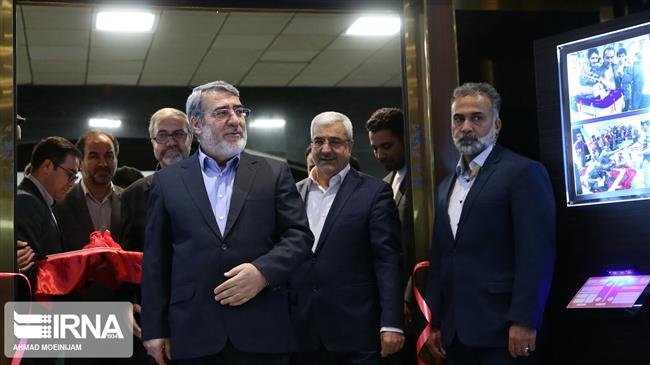
File photo of Iranian Vice-President Sorena Sattari (fourth from right) accompanying Ayatollah Seyyed Ali Khamenei in a visit to an exhibition of Iranian knowledge-based products in Tehran on on Oct. 8, 2019 / Photo by the Leader's website

Speaking to reporters during a visit to several knowledge-based manufacturing units in the Caspian industrial town of Qazvin, Sattari noted that the sanctions have provided a good market for knowledge-based companies.

He referred to the activities of 4,000 knowledge-based companies in the country underlining that these companies export $1 billion worth of products annually and the Islamic Republic is doing its best to increase this figure.

Last year, thousands of jobs were created in knowledge-based companies in the country, he added.

Iran Leader Orders Removal of Barriers Facing Young Inventors

Satiari said the boycott of knowledge-based companies has increased their sales, adding that the significant growth of knowledge-based companies over the past five years is a proof to this claim.

“We are witnessing the growth and development of these companies with the effective support of the Leader of the Islamic Revolution, the President, and the support of government agencies,” he concluded.

‘Arrest of Rouhollah Zam Shows Iran’s Intelligence Power to World’

Mahmoud Vaezi said the arrest is certainly a blessing as Amad News was after creating division among the nation and the government of Iran by any means.

“This achievement has been gained at a time when, as the president says, the country has passed through a great storm.”

Vaezi emphasised what should not be forgotten is the great job the IRGC did to maintain national unity.

“After the downing of the US drone, this operation showed the power of the Islamic Republic to the world both in military and intelligence-related confrontations. They must know that their nasty dreams for dear Iran will never come true,” he wrote in a post on his page.

“Congratulations to our brothers in the IRGC for the missions they are expected to do. Such missions along with the political power and diplomacy of the government show the nation’s authority to the world,” he concluded.

Exiled opposition figure Rouhollah Zam is finally behind bars after being arrested through a sophisticated intelligence operation by the IRGC.

Zam who lived in Paris, operated the opposition Telegram channel and news site dubbed “Amad News” with over one million followers.

Observers say his arrest is not an issue of free speech since there are several other anti-Iran news outlets that are operating freely.

Zam’s arrest is considered a blow to foreign intelligence services that directed and supported him, especially the French intelligence service as well as the US and Israeli intelligence services, according to a statement released by the IRGC.

On Sunday night, Zam appeared on Iran’s national TV and expressed remorse for his wrongdoings. He said “I am sorry for the way I have behaved and misused mass media. I am sorry for trusting foreign governments. Trusting the French government in particular, was wrong. I never thought I would get caught.”

Photos of plane tickets released by anti-Iran news website IranWire on Wednesday indicate that Zam was apparently en route to Baghdad through Amman on October 11 before being arrested. He has even sent his wife a photo of himself in the Amman airport.

There are reports that he had been lured into visiting Iraq and meet with Grand Ayatollah Ali al-Sistani in Najaf, but the top Shiite cleric’s office has denied the allegations.

Zam is expected to stand trial but no date has yet been confirmed.

US Preventing Iran, Saudi from Settling Their Disputes: Larijani

He said the Americans are benefiting from these tensions, and the United States is a major cause of the Iran-Saudi tension.

He made the statements in a Tuesday meeting with his Austrian counterpart Ingo Ape on the sidelines of 141st session of the Inter-Parliamentary Union (IPU) Assembly which is underway in the Serbian capital Belgrade.

The top lawmaker said the situation in the region is in disarray and we need to know who created this situation.

“In fact, there are some concerns in the region and the problem exists in Libya too. Of course, regarding the Yemen and Syria issue, I said there should be political negotiations, but some countries did not accept. They wanted to use the ISIS as tool for themselves, but they did not know they pay the price as well,” he said, quoting Hillary Clinton as saying that the US created ISIS.

Elsewhere in his remarks, Larijani touched upon the importance of bilateral relations and cultural relations and tourism. He said these partnerships can be expanded and there should be political will only.

Larijani stressed that Austria had always had a balanced role on issues, especially after the nuclear deal, and the trade relations between the two countries should be improved.

In addition to the amicable political and cultural relations between the two countries, Tehran and Vienna should focus on scientific issues as well.

“Fewer politicians get deeper into cultural issues, so I thank you for getting deep into cultural issues,” he told the President of the Federal Parliament of Austria.

For his part, Ape stated that the Austria-Iran Friendship Grouphas recently visited the country and fortunately the parliamentary relations between the two countries are expanding.

He stressed the importance of expanding economic and tourism relations with Iran, adding that Iran plays a pivotal role in the region and the Middle East, and that the role of dialogue is preferable to any other solution.

The Austrian official expressed concern over the situation in the region and said “Turkey’s military action in northern Syria, as well as the situation in Yemen and Libya is worrying, so I welcome any opportunity to build trust between Iran and Saudi Arabia.”

“In our view, the only solution to global security is the nuclear deal,” he said, expressing regret over Washington’s withdrawal from the JCPOA. He finally expressed hope that the United States would pursue more logical policies.”

Larijani on Tuesday had also praised establishment of serious trust between the Islamic Republic of Iran and Russia. Speaking in a meeting with Valentina Matviyenko, Chairwoman of the Russian Federation Council he called on world leaders to trust one another in order to properly deal with Trump’s misbehaviour.

Matviyenko, for her part, said Russia has stable and principled stance toward Iran, and it is against violating the JCPOA since it will lead to serious damages.

The 141st Assembly of the IPU is underway in Belgrade, Serbia, until October 17. All IPU statutory bodies, including the Governing Council, Standing Committees, Committees on the Human Rights of Parliamentarians and on Middle East Questions, as well as the Forum of Women Parliamentarians and the Forum of Young MPs, have attended the event.

Turkey Fighting Terror with Help of Terrorist Groups

The war against Syria, which began in 2011, caused widespread devastation and left all Syrian minorities, including the Kurds living there, in an unwanted battle. Provoked by the US and Israel, the Kurds created their own autonomous regional area called Rojava in northern Syria after successfully fighting the ISIS.  However, they ignored the fact that Washington has never been a reliable strategic ally for the Kurds, not just for them, but neither for figures like Shah of Iran, Saddam Hussein, Hosni Mubarak, Gaddafi, etc. Their policies of accompanying Kurds and turning their back on them have been in line with tactical policies, and have been a function of America’s vital national interests in the region.

Meanwhile, more than 11,000 Kurdish men and women from Syrian Democratic Forces were killed in the fight against ISIS. Nevertheless, the United States seized all the gains in its own name, and oppressed the Kurdish people and sent them to the war under imprudent leaders and sacrificed them as the cost of its compromise.

At least for two times Turkey has carried out relatively large-scale military operations (Operation Olive Branch and Operation Euphrates shield) against the Kurdish armed parties in Syria. In recent years, Syrian Kurds have been looking at the US as a key ally. The recent experience showed that this reliance has faded away and, ultimately, US President Donald Trump with a phone call refrained from fulfiling all of Washington’s obligations and stabbed the Kurds in the back. The US’s decision has brought the region into a new cycle of instability that has increased the potential for the resurgence of terrorist movements.

Turkey’s Goals of Invading Syria

The Turkish army’s operation known as “Peace Spring” is being carried out by some 40,000 Turkish troops and approximately 15,000 Syrian National Army forces in the eastern Euphrates region including Ayn Isa, Tal Abiad, Ras al-Ayn, and Qamishli. Turkey’s goals can be categorised into proclaimed and covert ones.

Turkish political and security officials have stated that the operation is not only aimed at the PKK and the YPG which threaten the security of the nation and the integrity of the Turkish government. They claim one of the most important objectives of the operation is to fight ISIS! Turkey plans to establish a safe zone for 500,000 Syrian refugees and resettle them there. However, there are many speculations about Turkey’s long-term and hidden goals.

One of the most possible reasons for this is the problems President Erdogan is facing inside Turkey. In addition to inflation and economic recession, Turkey’s ruling party lost control of four major cities, including Istanbul, Turkey’s economic hub, and Ankara, in major local elections this year. Therefore, much of the effort to attack Rojava is to arouse Turk’s sense of nationalism and to seek the support of the people and to force them to adopt a nationalistic ideal.

Changing Demographic Context of Region

The issue of peace for Turks is just an excuse, as Erdogan’s government wants to deploy several million Syrian refugees to the northern Syria’s safe zone, generally Arabs and opponents of Bashar al-Assad’s government in the Kurdish parts of northern Syria. Turkey hopes to resettle Syrian refugees, mainly Arabs, by deporting Kurdish forces from some areas of the eastern Euphrates. This policy is to change the demographic structure of the region from Kurdish to Arabic, and also is aimed at establishing a formal Syrian opposition in the border region. This strategy is to revive Syrian opposition groups, especially the escaped Syrian army commanders, to destabilise the central government, and to expand Turkey’s influence and political and security presence inside Syria with the greater purpose of creating a safe zone and legalising this dangerous idea with the help of opposition figures.

By doing so, the Turkish government will remain the strategic supporter of Syrian anti-government groups, and on the other hand, anti-government Syrian groups in addition to controlling Kurdish movements, will be a reliable factor in maintaining and consolidating Turkey’s strategic depth.

Unfortunately, Erdogan and his government do not have a good understanding of the changes of the time and do not realise that a government can no longer simply ignore the territorial integrity of an independent state. What Ankara is concerned about is the disintegration of Turkey’s territory while it seeks the same for neighbours and helps break up a neighbouring country. The second point is that it is not possible to go to war with terrorism by use of force and terrorist forces because it is not possible to change the history, culture and demographics of a region.

Another point to note is that the number of Kurds in Syria is not high enough to worry Turkey; unless we come to the conclusion that Turkey sees itself weak in confrontation with the Kurds and their abilities, so it is trying to suppress the Kurds militarily. Instead of spending their capital on these wars, it is better for the countries of the region to spend it on welfare, democracy, peace and reconstruction of their own. They would better leave the issue of the Syrian Kurds to the Syrian government and army.

Turkey, if sincere, should help the Syrian government maintain its territorial integrity by cutting off support for the Syrian government’s opposition and pave the way for the deployment of Syrian army to its border. Ankara must not help reorganise terrorist groups under the pretext of repressing the Kurds and bring the region back into a period of long-term instability. Erdogan and the Turkish military must understand that their attack is an opportunity for the ISIS. Obviously, chaos can provide an opportunity for the ISIS to revive. Currently, more than 5,000 ISIS militants of different nationalities are being held by Kurdish forces.

Turkey’s presence in Syria could have consequences for the Arab country. As Ankara can upkeep unrest in Syria and continue civil war there with support of the opposition. While Turkey’s targeted territory is currently beyond the control of the Syrian central government, Ankara’s invasion could mean changing the region’s situation to the benefit of insurgents who wanted to topple Bashar al-Assad’s government.

However, the experience of the last century and the recent history of Syrian developments have shown that powers such as the US and European countries and their allies are not a reliable friend for the Syrians. They should watch out for the leaders and agents of the US and Israel, who always take the innocent Kurdish people to the political slaughterhouse of Western actors to maintain their own position among the Kurdish currents.

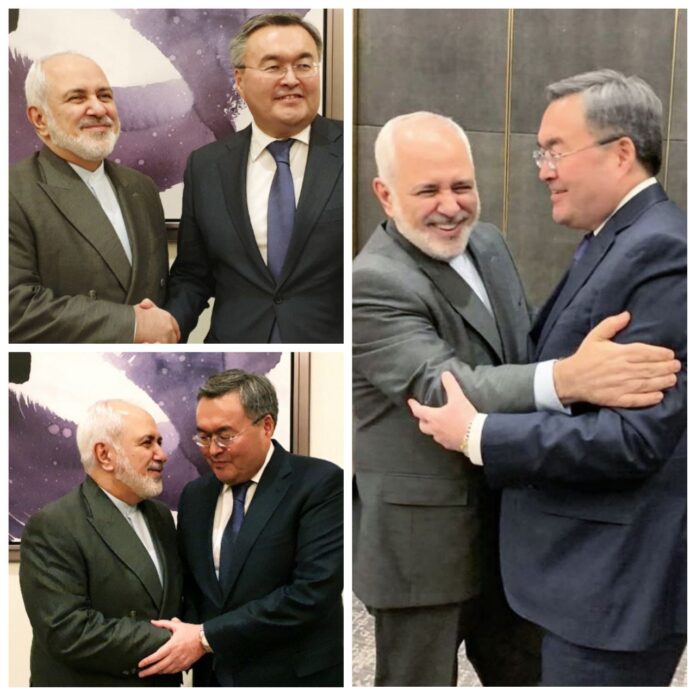
Zarif Says Representing Iran Led to His Omission from Nobel Prize List

US Known It Can’t Trigger Snapback Mechanism: Zarif

In a meeting with a group of Iranian social media and virtual space activists, held in Tehran on Tuesday, Foreign Minister Zarif said he had offered his resignation in February because he felt he was not being considered as a “brand of Iran”.

“If I had intended to make the brand of Zarif, I would have easily gotten the Nobel Peace Prize,” the minister explained, saying he had the highest points on the shortlist for the prize for two consecutive years.

Zarif said he could have won the Nobel Prize by pursuing his own brand and representing himself as an individual with a viewpoint that could be eliminated.

“We in the Foreign Ministry are duty bound to preserve the brand of Iran, not an individual, and ideology or an organization,” he explained.

Zarif further highlighted the great efforts put into hammering out the 2015 nuclear deal, saying, “I’m not an advocate of the JCPOA. I am an advocate of the Islamic Republic of Iran. If I defend the interests of the JCPOA, I’ll have to give concessions, but when I defend the interests of the Islamic Republic, we can obtain concessions from the foreign powers.”

Zarif said more than $80 billion in foreign investment had been attracted after achievement of the JCPOA, but less than only $5 billion came into Iran, noting that it was not the Foreign Ministry’s fault.

He also noted that the Foreign Ministry has done its best to enhance Iran’s trade with the foreign countries.

“I take 70 merchants to (foreign) trips with me and arrange meetings for them in there. The friends accompanying me in the trips have seen that we take the merchants and business people, and they make contracts and sign memoranda of understanding. But I cannot change the fact that in order for a memorandum of understanding to become operational in Iran, they (businessmen) will have to try for three years,” he added.