Tuesday, December 23, 2025
Home Blog Page 3061

Iran Ready to Share Drug War Experiences with Austria

Iranian Police general, Eskandar Mo’meni, had a meeting with officials from Austria’s Federal Ministry of Labour, Social Affairs and Consumer Protection in Vienna.

In the gathering, the Iranian official said the Islamic Republic’s plans for combatting narcotics is based upon a balanced policy, stressing that the Police’s war on drug trafficking is coupled with strategies to prevent drug abuse, promote rehabilitation programs, and reduce the social harms.

Iran’s biggest difference with Austria is that the Islamic Republic is a neighbor of the world’s largest producer of opiates, he added.

“That is why the measures of the two countries (Iran and Austria) in the fight against drugs are different, but on the issue of prevention and treatment, they have much in common,” Mo’meni added.

He also noted that Iran has confiscated 800 tonnes of drugs last year, which were mainly destined for Europe.

“Iran makes no difference between the Iranian and European youth, and our country is combatting narcotics as a human rights duty,” Mo’meni underlined.

Highlighting Iran and Austria’s considerable experience in reducing the drug-related harms, the Iranian official said Tehran was ready to prepare the ground for sharing the experiences and information with Vienna.

The Austrian side, in turn, provided a description of the European country’s plans to rehabilitate drug addicts, saying around 45,000 addicts have been identified and undergone treatment in Austria.

The Austrian officials also noted that drug addiction would be brought under control when the governments succeed in helping a person undergoing treatment to return to and enjoy a normal life.

Yemeni Envoy Meets Latin American Counterparts in Tehran

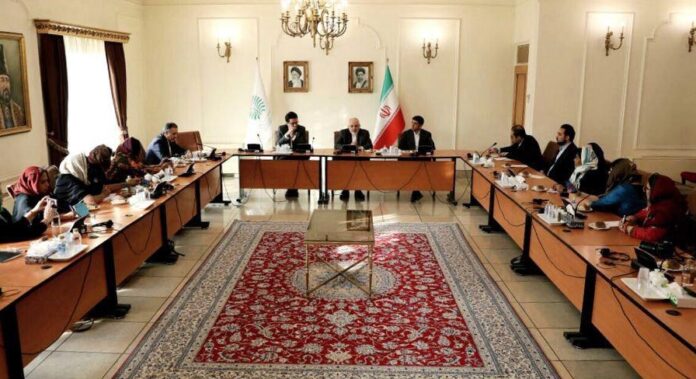
At the meeting, Iranian Foreign Minister’s Senior Assistant for Special Political Affairs Ali-Asghar Khaji touched upon the Islamic Republic of Iran’s stance in support of a political solution to preserve Yemen’s territorial integrity, independence and unity, and a four-point plan for the political resolution of the crisis.

Khaji also described Stockholm agreements as an important step in Yemen’s political process and regretted the other party’s disruptions in its implementation.

The Iranian official said the Saudi-Emirati coalition’s air, maritime and land siege of Yemen has blocked the fair access of all Yemenis to humanitarian aid and emphasised the need to halt military operations against the country.

The Yemeni ambassador also outlined the latest political and military developments in Yemen. Referring to the Government of National Salvation’s initiative to halt drone and missile strikes on Saudi Arabia on the condition that the other party would do the same, he expressed readiness to stop the war as soon as possible.

He called the humanitarian situation in his country very regrettable and called on Latin American countries to step up their pressure to lift the blockade and send humanitarian aid to Yemen.

Latin American ambassadors, in turn, praised the Iranian Foreign Ministry for providing such an opportunity, admiring the Yemeni people’s resistance against the invaders and insisted on political solution to end the Yemen war and send humanitarian aid to the country.

At the end of the meeting the participants put stress on the following issues:

– Respecting Yemen’s sovereignty, and territorial integrity

– Stopping military operations and establishing a ceasefire

– Resolving the Yemen crisis politically

– Holding Yemeni-Yemeni talks with the participation of all Yemeni groups without outsiders’ interference

– The need for serious consideration of the humanitarian situation in Yemen and the speeding up of sending humanitarian aid to Yemen
Saudi Arabia and a number of its regional allies launched a devastating war against Yemen in 2015, with the goal of bringing the government of Hadi back to power and crushing the Ansarullah movement.

Estimates show that the war has claimed over 90,000 lives so far.
The war has also taken a heavy toll on the country’s infrastructure, destroying hospitals, schools, and factories. The United Nations says more than 24 million Yemenis are in dire need of humanitarian aid.

A Look at Iranian Newspaper Front Pages on October 15

A Look at Iranian Newspaper Front Pages on November 19

Abrar:
1- US Defence Secretary: Turkey Seems to Be Committing War Crime in Syria
2- Iran among Topics of Discussion between Putin, Saudi Officials
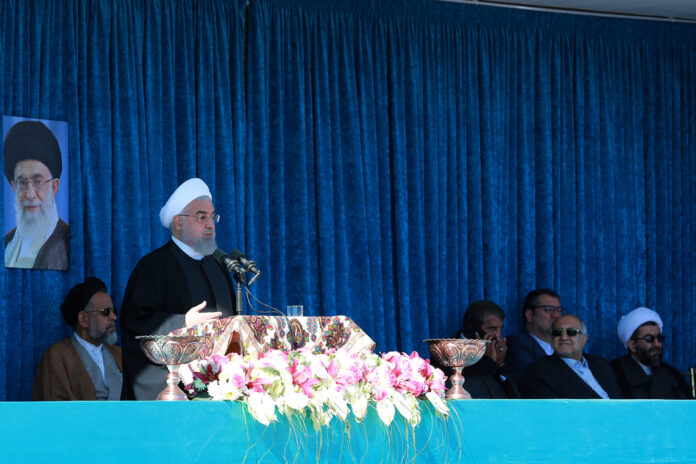
3- Rouhani: We Crossed Storm of Sanctions
4- UK Envoy to Tehran Welcomes Technical Talks on Arak Reactor

A Look at Iranian Newspaper Front Pages on October 15


Ebtekar:
1- Rouhani Says Ready to Sacrifice Himself for Iran’s Interests
2- Saudis’ Red Carpet under Putin’s Feet
3- Trump: Big Sanctions Coming against Turkey

A Look at Iranian Newspaper Front Pages on October 15


Etemad:
1- Saudis’ Tactic of Approaching Russia
2- Kurds Turning to Assad Government: Syrian Army Stationed in North after Years

A Look at Iranian Newspaper Front Pages on October 15


Ettela’at:
1- Thousands of Iraqi Military Deployed in Syria Borders to Counter Possible ISIS Infiltration
2- Rouhani: We’ve Overcome Very Difficult Situation
3- Assad Army Comes to Defence of Kurdish-Majority Areas
4- Intelligence Minister: Members of Two Terrorist Cells Arrested in Arba’een March

A Look at Iranian Newspaper Front Pages on October 15


Jomhouri Eslami:
1- Turkey Border Under Syria’s Control after Major Deal between Kurds, Assad
2- End of Yemen War to Untie Knot of Iran-Saudi Ties: Rouhani
3- Relative Stability in Iran’s Economy

A Look at Iranian Newspaper Front Pages on October 15


Kayhan:
1- IRGC Intelligence Deals Heavy Blow to French, Israeli Spy Services
2- Kurds Ally with Damascus: Syrian Army Advancing to Turkey Border
3- Kurds Welcome Syrian Army

A Look at Iranian Newspaper Front Pages on October 15


Mardom Salari:
1- Turkey Must End Process It Has Begun: Rouhani
2- Damascus, Ankara May Clash with Each other: Syrian Army Deployed in Kurdish Areas
3- Message of Modernizing Khondab Research Reactor

A Look at Iranian Newspaper Front Pages on October 15

How Hard is the CISA Exam?

This question could have multiple subjective answers. However, in this article, we shall try to understand the composition of the CISA examination and try to measure its difficulty based on various elements.
CISA (Certified Information Systems Auditor) Exam Content Difficulty:

The majority of the former exam takers agree on the fact that the syllabus of the CISA course is not that tough. The preparation doe not requires a detailed study of any specified niches but requires basic knowledge of a variety of topics.

Moreover, to get oneself certified through the CISA examination, one needs to have at least a working experience of 5 years. Therefore a person who has been working in IT auditing for 5 years must have acquired at least the basic knowledge of every aspect of his/her job. Therefore, one does not needs to put in endless hours of study hours to prepare for the examination. Some of the more doubts that might appear in one’s mid also include:
How hard is the question paper?

No one could give a straight-up answer for one of these most asked questions. What may appear to be the most difficult thing to one might be another person’s daily chore. However, as compared to one of the toughest examinations, the BAR exam, CISA certification is considered to be much easier. However, to maintain the standards and the quality of applicants going through the examination, CISA has been increasing the difficulty level of the examination each year. So better be prepared to face anything that comes up your way.

How many questions are there to be attempted?

There are a total of 150 questions that one has to attempt during the examination. The time provided to attempt these 150 questions is 4 hours, which seems quite enough to go through and give time to each of them properly.

What are the topics that one needs to cover to appear for the examination?

To get yourself all prepared to face the CISA examination, below mentioned are the topics that you should know about:

  1. Governance and Management of IT:

This part is devoted to the processes as well as the structuring of the objectives. Most of the people eligible for taking the CISA exam might not find it difficult due to their indulgence with the same matters for at least the past 5 years.

  1. Information System & Auditing Process:

This part involves the knowledge of the importance of auditing for the firms to secure their information systems. This part would also not seem to be tough for IT auditing personnel.

  1. Information Systems Acquisition, Development, and Implementation:

This domain of the CISA exam might be a bit complex for some. However, people working in the same sector need not worry about it.

  1. Information Systems Operations and Business Resilience:

Here is when the CISA exam starts showering its difficulty level over its applicants. You may be asked a lot of questions about database structuring, management of processes, and many others under this domain.

  1. Protection of Information Assets:

IT is considered to be the toughest part of the CISA exam. As we know that the cases of cybercrime are becoming more and more common each day, you might face some complex as well as interesting questions in your examination under this topic.

Weight Distribution for each of the topics:

When it comes to start preparing for any of the examinations, this must be the very first thing to know. If you are facing a shortage of time to prepare for the exam, try to focus on the topics that would attract the most number of questions in the examination. The marks percentage distribution for the above mentioned 5 topics is as below:

  1. Governance and Management of IT: 21 %
  2. Information System & Auditing Process: 17 %
  3. Information Systems Acquisition, Development, and Implementation: 12 %
  4. Information Systems Operations and Business Resilience: 23 %
  5. Protection of Information Assets: 27 %

What is the difficulty level of the exam format?

Sometimes, the topics to be covered for the examination might not seem to be difficult enough. However, the style in which the question might be asked might get you confused to solve them, even if you know. The same is the case with the CISA course. The question format and the terminologies used in the questions might get even the most experienced of the people fighting to understand the question, leave apart, answering.

One needs to be particularly familiar with all the terminologies and standards of ISACA to be able to understand the questions and pass the exam easily. Moreover, the options offered in the question paper might get you confused between the exact right answer. It lets CISA determine the details of your knowledge about the topics. Moreover, while preparing, you need to think a bit differently from the condition of your workspace, and more familiarly with the concepts and the working method of ISACA.


Self Assess Yourself for the Examination:

Before you decide to take the examination, it is very important to know your self-worth and your preparation level to take up the exam properly. For the same, you can take up the assessment tests provided by ISACA and take up CISA course mock-up tests to be able to know the format of the examination, being able to maintain the time more efficiently and moreover, to assess your capabilities for appearing in the exam and clearing it in your very first attempt.

If you are prepared enough and passionate enough about your work to put in the required effort, nothing can be difficult enough to act as a barer in your success to become a certified information systems auditor. All you need to do is make up your mind and start working towards achieving it from this very moment.

Iran’s Roads Minister in Turkmenistan for High-Level Talks

Holding talks with Turkmen President and several bilateral meetings with the Ministers of Industry and Transport, and a speech at a joint trade conference are high on the agenda of the minister.

The delegation includes representatives of Oil, Energy and Foreign ministries as well as the Governor of North Khorasan Province and two members of the parliament.

Representatives from the Iranian Chamber of Commerce and the private sector are also accompanying Eslami during this visit.

The two sides had earlier agreed to expand the volume of their economic ties alongside bilateral political ties at a joint session of the Joint Economic Commission in Turkmenistan’s capital.

Pakistani Minister Calls for Expansion of Ties with Iran Health Sector

Pakistani Minister of Health Zafar Mirza and his Iranian counterpart Saeid Namaki signing joint declaration on health cooperation in Tehran

Zafar Mirza, Pakistan’s Minister of National Health Services, Regulation and Coordination, said expansion of Iran-Pakistan health and medicinal partnerships can help reduce infectious and non-contagious diseases in the region.

He made the comments at a meeting with his Iranian counterpart Saeed Namaki at Tehran’s Azadi Hotel on Monday evening. Zafar Mirza welcomed Iran’s hospitality at the 66th meeting of the World Health Organisation’s Regional Committee for the Eastern Mediterranean (EMRO).

“With the expansion of cooperation between the two countries, we can use Iran’s apt capacities in various fields of education and health care,” he noted, stressing it is very important that Iran has taken very positive steps in the areas of health and public health services, but the current problem in Iran and many other countries is non-contagious diseases, and we are seeking a disease-free region in collaboration with Iran.

In the end, he raised hope that Iranian health officials would travel to Pakistan in the near future to see improvements in the country’s health sector, and called for continuation of good relations between the two countries.

Health ministers and high-level representatives of the 22 countries and territories of the WHO Eastern Mediterranean Region, partner organisations and civil society, have taken part in the Sixty-sixth Session of the WHO Regional Committee for the Eastern Mediterranean, in Tehran that runs through 17 October.

The 4-day programme will also include progress reports on: eradication of poliomyelitis; health, environment and climate change; civil registration and vital statistics systems; implementation of the Eastern Mediterranean vaccine action plan and regional malaria action plan; mental health care; implementation of the regional framework on cancer prevention and control; and implementation of the global action plan on antimicrobial resistance.

‘One or More Governments’ behind Attack on Iran Oil Tanker: Zarif

“According to the information received, the attack on the Iranian tanker has been carried out by one or more governments. Of course, investigations are underway, and as long as we have not reached definitive conclusions, we will not accuse any government,” Zarif said on Tuesday.

The attack on the Iranian oil tanker was a complex, government-sponsored action, the foreign minister added.

An Iranian lawmaker also said that security measures to investigate the attack on the Iranian tanker have been carried out by experts at the Supreme National Security Council and the details are submitted to the foreign ministry to be delivered to the United Nations.

Abolfazl Hassanbeigi, a member of the Iranian parliament’s national security and foreign policy commission, added the footage that the cameras mounted on the oil tanker have taken show the attack has been carried out by the US, the Zionist regime and Al Saud.

“Saudi Arabia and the US are trying to blame it on ISIS or Taliban, but evidence from the Iranian tanker indicates that it was not possible for the ISIS and terrorist groups to organise the attack because they are not present in the Red Sea.”

“There are abundant documents and evidence of interference of certain governments in the attack against the Iranian oil tanker and they will be presented to the UN and UN Security Council and the countries which played a role in the terrorist attack should pay the price for their deeds,” he said.

“If possibly the ISIS and Taliban terrorist groups would be involved in the operation, everybody knows they were created by Saudi Arabia, the United States and the Zionist regime, and they are the slaves of these countries,” he underlined.

“The whole world knows that Saudi Arabia’s money and planning of Mossad and the CIA created terrorist groups in the West Asian region.”

On Wednesday, Ali Shamkhani, the secretary of Iran’s National Security Council, also warned there would be a “harsh response” to whoever was behind the attacks.

The tanker Sabiti owned by the National Iranian Oil Company (NIOC) was hit in Red Sea waters off Saudi Arabia by two missiles on Friday, leading to a leak which was quickly contained.

Mohammad Rastad, head of Iran’s Ports and Maritime Organization, says the vessel is carrying 140,000 tonnes of crude oil which is undamaged, thanks to timely measures to contain the leak.

According to the official, the tanker is currently sailing in Bab al-Mandeb strait and will soon reach the Gulf of Aden. It is bound for Bandar Abbas and estimated to reach the Iranian port in the next nine days, where necessary repair on the ship will begin, he said.

Ancient Cave with Human Skeletons Discovered Near Tehran

“The archeological examination project run in Lar Desert led to the discovery of 38 areas, including an ancient cave with historical human skeletons,” said Mohammad-Sepehr Sepehri, the head of the archaeological team, describing the discovery as a very important one.

He added six roofed caravanserais as well as traces of ancient roads were also discovered, bearing witness to the fact that those areas were frequented by people.

Sepehri said the cave lies 3,100 metres from the sea level.

“There is a pile of human skeletons inside the cave. Initial examinations of the clay pots [unearthed in the area] show the skeletons date back to historical eras,” he added.

H said the discovered area was one of the most significant linking routes that connected the central Iranian plateau to Tabarestan.

Assad, Not US, Must Protect Kurds against Turkey: Trump

“Let Syria and Assad protect the Kurds and fight Turkey for their own land. I said to my Generals, why should we be fighting for Syria and Assad to protect the land of our enemy?” Trump tweeted on Monday.

“Anyone who wants to assist Syria in protecting the Kurds is good with me, whether it is Russia, China, or Napoleon Bonaparte. I hope they all do great, we are 7,000 miles away!” he went on to say.

Trump’s comments come as has been battered with criticism from Republicans and Democrats alike since the White House announced eight days ago that US forces would leave northern Syria, in a move that many call a “betrayal” to the US-allied Kurds in that region.

Following Trump’s decision to withdraw the US forces from northern Syria, Turkish forces last week moved into the Syrian territory, attacking the Kurdish forces that fought alongside the US against Daesh.

As a result, the Kurds struck a deal to join the Syrian army – President Assad’s forces – in attempting to push back the Turks.

In another tweet on Monday, Trump also released a statement to announce new sanctions against “current and former officials of the Government of Turkey and any persons contributing to Turkey’s destabilizing actions in northeast Syria.”

He said he will be soon issuing an “Executive Order” which authorizes the imposition of these sanctions.

He also vowed to increase steel tariffs back up to 50 percent, and immediately stop negotiations with respect to a $100 billion trade deal with Turkey.

The US treasury secretary later announced that it has slapped sanctions on Turkey’s defense, interior and energy ministers upon Trump’s request.

‘Turkish incursion displaces 160,000 civilians’

The UN secretary general said on Monday in a statement that the Turkish military offensive in Syria has displaced at least 160,000 civilians.

Antonio Guterres “is gravely concerned over the military developments in northeast Syria,” the statement said.

It said Guterres was urging “all parties to resolve their concerns through peaceful means,” adding that “civilians not taking part in hostilities must be protected at all times.”

He also expressed “serious concern” that the Turkish onslaught could lead to the “unintended release of individuals” associated with Daesh.

Some of the Kurdish forces guarding Daesh prisoners or their families have been pulled away to fight the Turks, raising fears that many Daesh terrorists might be able to escape.

Guterres also demanded “sustained, unimpeded and safe humanitarian access to civilians in need” to allow the United Nations and its humanitarian partners to carry out aid work.

The UNICEF said that nearly 70,000 children have been displaced since hostilities in northeast Syria escalated nearly a week ago.

French, Turkish presidents hold talks

Turkish President Recep Tayyip Erdogan explained to his French counterpart Emmanuel Macron the aims of Turkey’s operation in northeastern Syria in a phone call, the Turkish presidency said on Monday.

Erdogan said the operation would contribute to regional and global peace and stability, the presidency said.

The talks came after the European Union countries agreed on Monday to limit arms exports to Turkey over its offensive, prompting condemnation from Ankara, even as they stopped short of a bloc-wide embargo against the NATO ally.

Flight Captained by Two Women for First Time in Iran

Pilot Neshat Jahandari and co-pilot Forooz Firoozi were the captains of the flight to Mashhad with 160 passengers on board and back to Tehran with 171 passengers aboard on Monday.

A photo of the cockpit with the two women was released by Jahandari on her Instagram page.

Neshat Jahandari recently received her four stripes after her first independent flight, turning into the second woman airline pilot in Iran.

Jahandari is 29 years old. For the past four years, she has been working as a co-pilot for the Zagros Airlines. She has flown for 3,000 hours till now.

Flight Captained by Two Women for First Time in Iran
Neshat Jahandari Becomes Second Woman Airline Pilot of Iran

She began to work with the Zagros Airlines in the field of flight safety and the review of Flight Data Monitoring. About three and a half years later, the company needed a pilot; she passed the test and was accepted with merit.

At the age of 17, she began her pilot training classes, and at the same time studied at the University. She received her degree in Aviation Flight Engineering Technology.

Due to her interest in this field, after receiving her licence, she received all the flight-related documents for the airliners, such as the Commercial Pilot License and the Instrument Rating. Finally, her dream came true and she became a pilot.