Sunday, December 21, 2025
Home Blog Page 3045

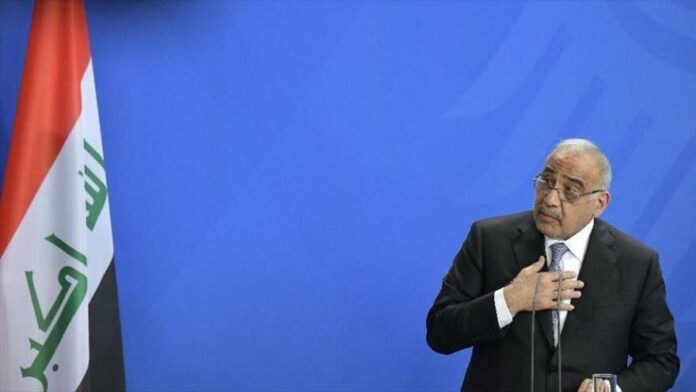
Foreign Ministry Urges Iranians to Delay Trips to Iraq amid Violence

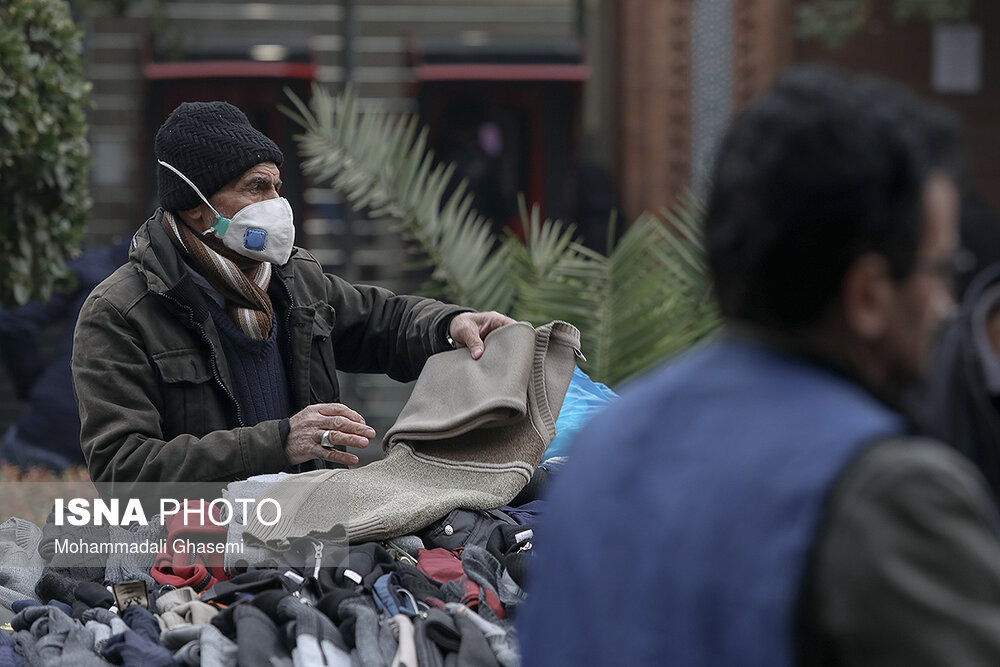
In a statement, the ministry touched upon the recent outbreak of violence in Iraq, and urged Iranian nationals, especially pilgrims heading to visit holy shrines, to delay their trips until further notice.
The announcement comes as Iraq has been the scene of violence in recent days.

Thousands of people have staged anti-government protests to vent their anger over corruption and less-than-optimal living conditions.

The protests turned deadly as armed elements opened fire on both protesters and security guards. Iraqi security agents have so far arrested a few gunmen and the country’s elite Counter-Terrorism Force has been deployed to the streets to prevent damage to sensitive centres.

So far, dozens of Iraqis have been killed and hundreds more wounded in the second bout of unrest targeting PM Adel Abdul-Mahdi’s government.

More than 150 people, including security forces, were killed when the protests first erupted earlier this month.

Iraq’s most prominent Shia cleric Grand Ayatollah Ali al-Sistani has also called on Baghdad to probe the deaths in the previous round of unrest and address people’s demands.

Riyadh Afraid to Start Talks with Tehran: Analyst

Morteza Mousavi Khalkhali, an expert on Arab world issues, has weighed in on the reasons why Tehran and Riyadh have not started talks yet. In an interview with the Iranian Labour News Agency (ILNA), the analyst elaborated on the role of regional challenges in that regard.

“Unfortunately, the period of crisis in our relations with Saudi Arabia has become too long, and if this tension and a lack of relationship between the two key regional countries continues, it will definitely be detrimental to Riyadh because Saudi Arabia is a dependent country which has no democracy, parties, free newspapers and a parliament,” said the analyst.

“Moreover, Saudi Arabia has not taken a lesson from history and has got involved in a war which even Gamal Abdel Nasser, the then leader of one of the most powerful countries in the Middle East, could not win some 20 years ago,” he added.

“Egypt, which had stepped into this arena in a bid to bring about reforms in Yemen, pulled out of it after a year after 30 thousand Egyptian soldiers were killed,” added the commentator.

He said Saudi Arabia has not taken a lesson from the past and has inflicted a lot of damage on impoverished Yemen during this conflict which has taken almost 5 years.

“Riyadh has killed many innocent people and destroyed vital centres,” he said.

Still, he added, Saudi Arabia has not officially announced its readiness to help establish peace and official declare an end to the war.

“Saudi Arabia is facing problems in Yemen; still, it created the ISIS in Iraq in order to topple the Baghdad government, but Iran came to Iraq’s help,” the commentator noted.

“If Iran hadn’t helped Iraq, the Iraqi government would have been ousted. However, both the ISIS was destroyed in this country and Saudi Arabia pulled out of Iraq,” said the analyst.

He said Riyadh even failed in Syria.

“And now, it is Lebanon’s turn as Saudi Arabia seeks to secure its interests there,” he added.

“Also, Saudi Arabia and the United Arab Emirates made every effort to get Iran involved in a war with the United States, but to no avail,” said the commentator.

“We see that Saudi Arabia has involved itself in proxy wars at the regional and international levels and has taken many countries on board, but failed to achieve any results,” he said.

“Saudi Arabia was under pressure on all sides, and is afraid to enter into talks with Iran lest it will be put in position of weakness,” the analyst noted.

“Iran has, over the past years, announced its readiness, time and again, for talks with Saudi Arabia to ease tensions with Riyadh, but Riyadh is in a position of weakness and is not prepared to ease tensions,” he said.

“Saudi Arabia is looking for a ray of hope in or der to score a point and victory in the region, so that it will not be seen as a weak country when talking to Iran,” the analyst noted.

“On the other hand, Saudi Arabia is proud of being supported by the United States and is not in a hurry to establish friendship with Iran and restore cordial ties,” he added.

“The Al-Saud dynasty has ruled this vast territory for 80 years; the current group is the most incompetent of all,” he said.

“Today, the Saudi crown prince has lost enough credibility for being notorious, committing a crime and ordering the murder of Khashoggi,” he said.

“Meantime, Pakistan is one of the regional countries that have gone into action after the mediation of Oman, Iraq, Japan and other countries because it is harmed by Iranian-Saudi divisions,” he said.

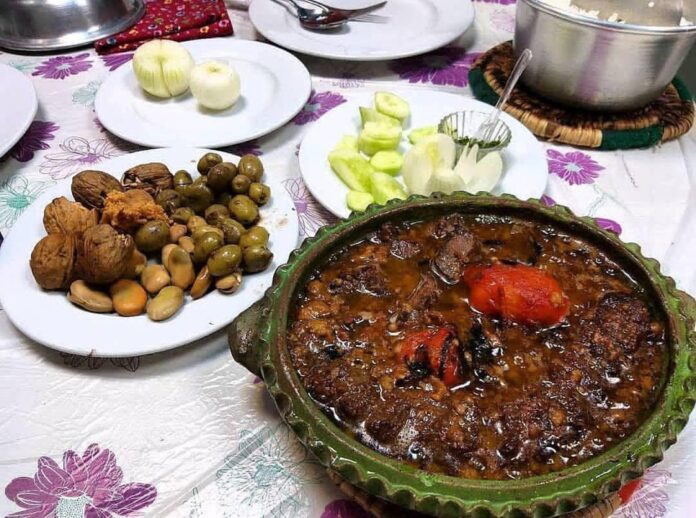
Opiozi; A Traditional Dish from Southern Iran

This food is prepared very quickly and is the best option if you have little time to cook.

After a few minutes a hot, delicious meal is ready. Walnut, sugar, turmeric, pomegranate paste, onions, eggs, salt, pepper, and dried bread are used to make this dish.

Ingredients:

Oil: 3-4 tbsp

Onions: 2 medium-sized

Pomegranate paste: 1 cup

Pepper, salt, turmeric: As much as needed

Water: 2 cups

Directions:

Chop onions and fry. Add the pepper, turmeric, spices and salt and sauté more. Pour the water and after a few minutes of boiling, add the pomegranate paste. After some minutes the food is ready, pour the stew on the dried bread and eat it after mixing.

Opiozi; A Traditional Dish from Southern Iran

Iran, KRG Discuss Iraq Developments

Iranian Foreign Minister Mohammad Javad Zarif and KRG President Nechirvan Barzani held a meeting on the sidelines of the Munich Security Conference Core Group Meeting in Qatar’s capital of Doha on Monday evening.

In the get-together, the two officials discussed the latest developments in the region, particularly the current conditions in Iraq and northern Syria, among other issues of mutual interest.

Iraq has been gripped by anti-government protests since early October.

More than 230 Iraqis have been killed in the protests this month.

At least 74 people were killed in Iraq on Friday and Saturday and hundreds wounded as demonstrators clashed with security forces in the second wave of this month’s protests against Prime Minister Adel Abdul Mahdi’s government.

Iranian Researchers Produce Artificial Hip Joint

Iranian Researchers Produce Artificial Hip Joint

Medical professionals say that after the age of 70, people are more likely to need knee or hip joints replacement. There are between 40 and 50 thousand patients in need of knee joint replacement in Iran each year.

The hip joint is a widely used product that was previously only supplied through imports. However, the technology of its production has now been localised in Iran.

The artificial hip joint is generally made of metal, polyethylene or ceramic, and is replaced by the normal hip joint that has been damaged for some reason.

The artificial hip joint relieves the pain caused by joint damage and can significantly improve the patient’s ability to perform physical activities. This artificial joint can improve patient’s range of motion and compensate for shortness of the patient’s body.

Patients usually require joint replacement due to arthritis and slow fracture healing or infection. Currently, 17 to 20% of the market uses artificial hip joints manufactured by an Iranian knowledge-based company, and many orthopedic hospitals in the country purchase the product directly from the firm.

For a brief review of Iran’s achievements in various fields of science and technology, check the book “Science and Technology in Iran: A Brief Review – 2019

The dealers who import an artificial hip joints usually deliver it to medical centres at a rate of 500 to 600 dollars, while the domestic product could be purchased at a rate of 250 to 350 dollars and this price difference is very important.

Although the surgery to replace this joint is very simple and the patient can be relieved of chronic pain and the quality of her/his life significantly improves, the technology of its manufacturing is not simple because its production requires high technology.

This product should be very similar to bone, and once it is embedded in the patient’s body, it should not cause any problems for the recipient’s movement and immune system. Therefore, its production requires specialised and relatively sophisticated raw materials and machinery.

Iranian Maestro Kalhor Wins Prestigious Music Award

Iranian Maestro Kalhor Wins Prestigous Music Award

Kalhor received the prestigious award on Sunday at the 25th jubilee edition of the World Music Expo (WOMEX) in Tampere, Finland.

“For the mastery and virtuosity of the kamancheh (Iranian music instrument),  for the ceaseless innovation and collaboration to create exciting new musical languages and for bringing the Persian classical music tradition to the ears of people all over the world, Piranha Arts, the organizers of WOMEX, are delighted to present the WOMEX Artist Award 2019 to Kayhan Kalhor,” WOMEX said.

Speaking at the event, Kalhor introduced himself as a representative of Iranian musicians on behalf of whom he would present the prize to legendary master of traditional Persian music, classical singer and composer Mohammad-Reza Shajarian.

“I dedicate the award to Ostad (master) Mohammad-Reza Shajarian, the great master of Persian music, who has been fighting a nasty illness for a few years,” he stated.

Earlier upon being nominated for the award, Kalhor had said, “Receiving the WOMEX Artist Award means so much to me. The award is recognition of the rich culture of my homeland Iran and an ageless Persian art that thrives and is beloved throughout the world. As forces arise across the globe and push for divisiveness, borders and intolerance, music brings us together and reminds us of our common humanity. As a citizen of the world, I am humbled by this recognition and stand with artists whose music fosters unity.”

Kalhor, born in Tehran in 1963 to a Kurdish family, began studying music at the age of seven.

In addition to classical Persian music, he also learnt Kurdish and Turkish musical influences in Iran.

He then studied European classical music and eventually graduated from the music program at Carleton University in Ottawa, Canada.

Kalhor’s instrument of choice is the Kamancheh, a bowed string instrument used in classical Persian music.

A Look at Iranian Newspaper Front Pages on October 28

A Look at Iranian Newspaper Front Pages on November 19

Asr-e Iranian:

1- Expiration Date of Abu Bakr al-American Arrives

2- MP Urges Revision of Election Law to Prevent Use of Dirty Money in Campaigns

A Look at Iranian Newspaper Front Pages on October 28


Haft-e Sobh:

1- No Corpse Available

* Americans Say Al-Baghdadi Killed, but No Body Just Like Bin Laden Case

A Look at Iranian Newspaper Front Pages on October 28


Resalat:

1- Show by ISIS Creator: Trump Claims US Has Killed al-Baghdadi

2- Criminal Returns to Crime Scene [Editorial]

* Whether It’s Al-Qaeda or ISIS, Big Satan’s Inauspicious Creature Is Punished

A Look at Iranian Newspaper Front Pages on October 28


Rooyesh-e Mellat:

1- IRGC Navy Chief: Enemy’s Threats to Continue Forever

2- Government’s Insistence on FATF Ratification to Open Way for Enemy: MP

A Look at Iranian Newspaper Front Pages on October 28


Shargh:

1- Hunting the Caliph: Abu Bakr al-Baghdadi Killed in Syrian Soil

2- Zarif: Political Solution Only Way Out of Yemen Crisis

A Look at Iranian Newspaper Front Pages on October 28


Tejarat:

1- End of Abu Bakr al-Baghdadi in Death Tunnel

2- Zarif: US’ Economic Terrorism against Iran Exacerbated by New Regulations

3- Trump’s New Trick for Iran Economy

A Look at Iranian Newspaper Front Pages on October 28

Iranian, Russian, Turkish FMs to Meet in Geneva on Syria

Iranian, Russian, Turkish FMs to Meet in Geneva on Syria

“We [Astana guarantors] will be supporting the committee’s launching event at the level of our foreign ministers in Geneva,” Turkey’s Permanent Representative to the United Nations Office at Geneva Sadik Arslan told Sputnik.

“This is a plan: they will arrive … in Geneva, and they will make their long-declared commitment and reaffirm it again to the rest of the international community,” he noted.

“We will be supporting the overall work of the committee in the time ahead of us,” Arslan said.

The first session of the 150-member SCC, which includes representatives of Syria’s government, opposition and civil society, will be held in Geneva on Wednesday.

The diplomat recalled that the SCC launch had failed in December 2018.

“Unfortunately, then it failed, I mean, that initiative. This time, of course, they are planning to come to Geneva to show their support for the Constitutional Committee, and maybe they will call for the support of the international community and all other stakeholders to do the same thing,” Arslan added.

In December 2018, the foreign ministers of Russia, Iran and Turkey held in Geneva a meeting with then-UN Special Envoy for Syria Staffan de Mistura.

The formation of the SCC was expected to be announced as a result of the meeting. However, neither the SCC composition, nor its launch were announced back then.

Iran Says Killing Al-Baghdadi No Big Deal, Won’t End ISIS

Iran Says Killing Al-Baghdadi No Big Deal, Won’t End ISIS

Mousavi said on Monday the ISIS lives on as an extremist ideology and is a tool in the hands of such countries as the US, which claims to have killed al-Baghdadi in an operation on Saturday night.

The spokesman noted that it was Iran and the regional countries that defeated ISIS. “In our view, the US act was not a big one, because ISIS had already been defeated by us and the countries of the region,” he added.

“Unfortunately, terrorism and sectarianism are still alive and countries such as the US are using them for their own purposes, so we do not see al-Baghdadi’s death as the end of ISIS,” he noted.

“As confessed by the US officials, terrorist groups like ISIS and figures like Abu Bakr al-Baghdadi and the likes of those who are at the forefront of terrorist groups have been created by the Americans themselves,” underlined Mousavi.

He said these groups and individuals have expiration dates for Americans and Washington eliminates them when their expiration date reaches.

Mousavi noted that remnants of ISIS could be re-organised by Americans and engage in acts of sabotage in the region.

He said the US is blowing the killing of Baghdadi out of proportion, stressing that’s an election stunt by the US president.

In the weekend, the US announced it killed the terrorists’ chief in an operation in northwestern Syria. Abu Bakr al-Baghdadi had fled to Syria following the defeat of ISIS in Iraq in 2017.