Sunday, December 21, 2025
Home Blog Page 3038

Lebanon Crisis May Get Worse after Hariri’s Resignation: Expert

Lebanon

Abdolreza Faraji Rad, a geopolitical analyst and former Iranian ambassador to Norway, said in an interview with Fararu news website that after the resignation of the Sunni prime minister, people have imagined it is an introduction to future changes and therefore they are happy with the current situation.

“Hariri is a symbol of opposition to the Resistance Front in Lebanon and the people who are happy about Hariri’s resignation, once were supporting him. Now, after Hariri’s resignation, President Michel Aoun may be pressured to resign, then there may be pressures to change Lebanon’s constitution, in which case sectarian power division will be abolished,” he noted.

This Iranian university professor went on to say that the next scenario for the Lebanese political leaders is to come to an agreement and then each of these leaders will talk to their supporters in the streets, to gradually reduce the number of demonstrators. Moreover, some guilds in Lebanon have recently been unhappy with the continuation of protests because of disruptions in their business and livelihoods.

“In this scenario, the protests may slightly fade away, but will not completely stop, exactly like the yellow vest protests in France that took months. It should also be noted that Lebanon is taking over France in many issues, and they may be treading the same path like the French.”

About Sa’ad Hariri’s condition and his political future, Faraji Rad said it depends which scenario will work, but with his resignation, Hariri wanted to show he is standing with the people.

Given Hariri’s ties with France and Saudi Arabia, he seems to have taken the green light to leave the government, noted Faraji.

“Previously, the Saudis and Westerners have tried not to form this government because Hezbollah has so many representatives in the government, and they had trouble with Hariri’s government despite his being selected as prime minister.”

“It seems that the Saudis and the West believe by ousting Michel Aoun they can weaken Hezbollah. Aoun is a Christian ally of Hezbollah and critics of Hezbollah think they can weaken the movement by removing Aoun,” this Iranian international affairs analyst added.

The constitutional change is definitely in compliance with what the West, especially France, wants, Faraji Rad underlined, saying that once it was for the benefit of Shiite groups such as Hezbollah and the Amal movement that the constitution was based on sectarian divisions, but now with the influence of Hezbollah in Lebanon, the West is seeking to remove that influence.

“Westerners believe that the previous trend in this country is not working and should change. However, in the current situation, this is not easily possible to change the constitution,” he said, adding that with the intensification of pressures, it is unlikely that Hezbollah will oppose the constitutional change.

Each sect will definitely insist on the contents of the new constitution, however, changing the law is not an easy task, but it can be done if all people want it, maintained Faraji Rad.

“He will probably make changes and give people concessions, and the whole process of Aoun’s resignation will not be like Hariri’s, and it will certainly take a long time if there is an effort. It should also be noted that the demonstrations in Lebanon are at the peak, and the protests may calm down from now on.”

However, there seems to be a need for change in Lebanon because the new generation does not accept the current system, he concluded.

Nationwide protests in Lebanon began over new taxes being examined as part of the country’s 2020 budget.

Protesters demand that politicians provide serious solutions to solve the country’s faltering economy and corruption in government.

A Look at Iranian Newspaper Front Pages on November 3

A Look at Iranian Newspaper Front Pages on November 18

Abrar:

1- Ayatollah Sistani: No Party, Foreign Country Allowed to Exploit Iraqi Nation’s Protests

2- Protecting Security of Hormuz Strait among Iran’s Sovereignty Rights: VP

3- US GOP Senators Trying to Stop Extension of Iran Sanction Waivers

A Look at Iranian Newspaper Front Pages on November 3


Aftab-e Yazd:

1- Reformists May Choose Woman as Their Leading Candidate for Parliamentary Votes

2- Closure of Iranians’ Bank Accounts in Malaysia under Pressure of Zionist Stakeholders of Bank: Source

A Look at Iranian Newspaper Front Pages on November 3


Ebtekar:

1- Iran’s Neighbours Buying Vast Areas in North of the Country

2- Trump: ISIS Created by Obama

3- IRGC Chief: We’ve Stockpiled Missiles More than We Need

A Look at Iranian Newspaper Front Pages on November 3


Etemad:

1- Even Our Friends Warn Us about Necessity of FATF: Deputy FM

2- JCPOA Survival Hinges on Iran’s Enjoyment of Its Economic Dividends: First VP

A Look at Iranian Newspaper Front Pages on November 3


Ettela’at:

1- 100,000 Killed after 4 Years of Saudi Aggression against Yemen

2- World Order Has to Use Multilateralism against Emerging Issues: Iran VP

A Look at Iranian Newspaper Front Pages on November 3


Javan:

1- IRGC Chief: US Has Taken 8.5 Millions of Lives in World

2- Zionist Christians Praying for Trump’s Favours

3- IRGC Chief: Those Who Stormed US Embassy in 1980 Did It at Their Own Will

A Look at Iranian Newspaper Front Pages on November 3


Jomhouri Eslami:

1- CNN: Most US Citizens Want Trump Out of White House

2- Increased Protests in Iraq

A Look at Iranian Newspaper Front Pages on November 3


Kayhan:

1- Rouhani Administration, Trump Both Want FATF Ratification

2- Christians Pray for Trump’s Impeachment Survival

3- 40 Years after US Embassy Takeover: Iran Still Revolutionary, US Still Villain

4- IRGC Chief: Americans in Downward Spiral

5- Italian Government Decides to Ban Iranian Airline

A Look at Iranian Newspaper Front Pages on November 3


Khorasan:

1- No Withdrawal: IR6 Centrifuge on Verge of Uranium Gas Injection

A Look at Iranian Newspaper Front Pages on November 3


Rooyesh-e Mellat:

1- US Pressure Neutralized with Our Maximum Resilience

2- IRGC Chief: World Not Witnessing US Victory

A Look at Iranian Newspaper Front Pages on November 3


Shargh:

1- Kuwaiti Media Claims Rouhani Has Sent Letters to Saudi, Bahraini King

2- Clash of Kurds, Turkey in History [Editorial]

A Look at Iranian Newspaper Front Pages on November 3

Historical Mansion; Popular Tourist Site in Western Iran

Historical Mansion; Popular Tourist Site in Western Iran

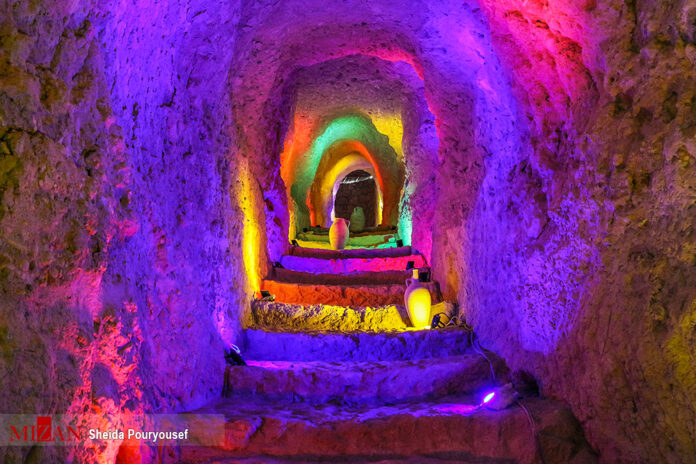
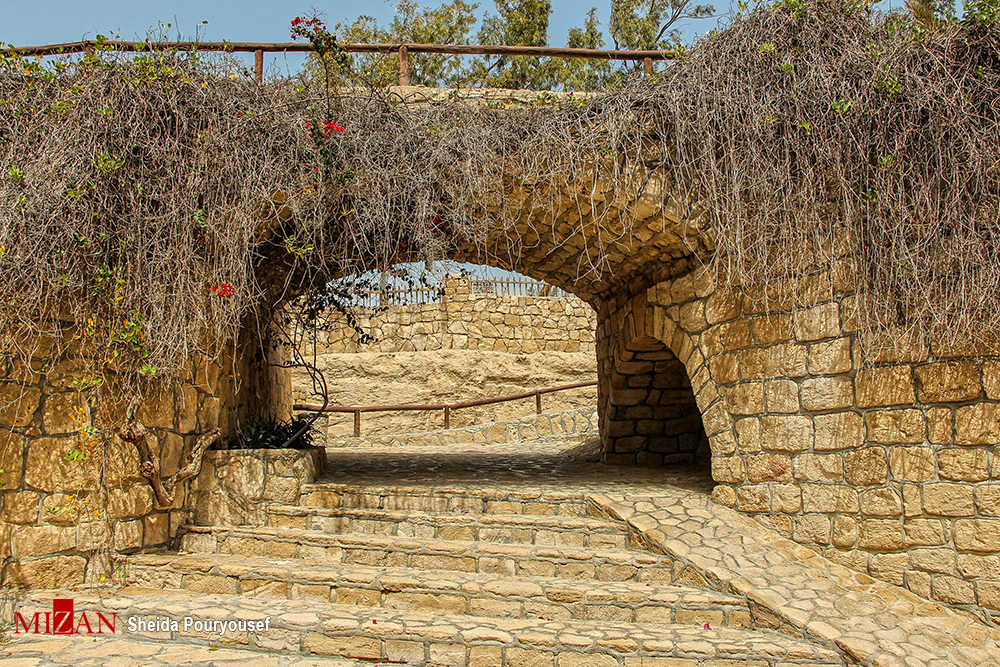
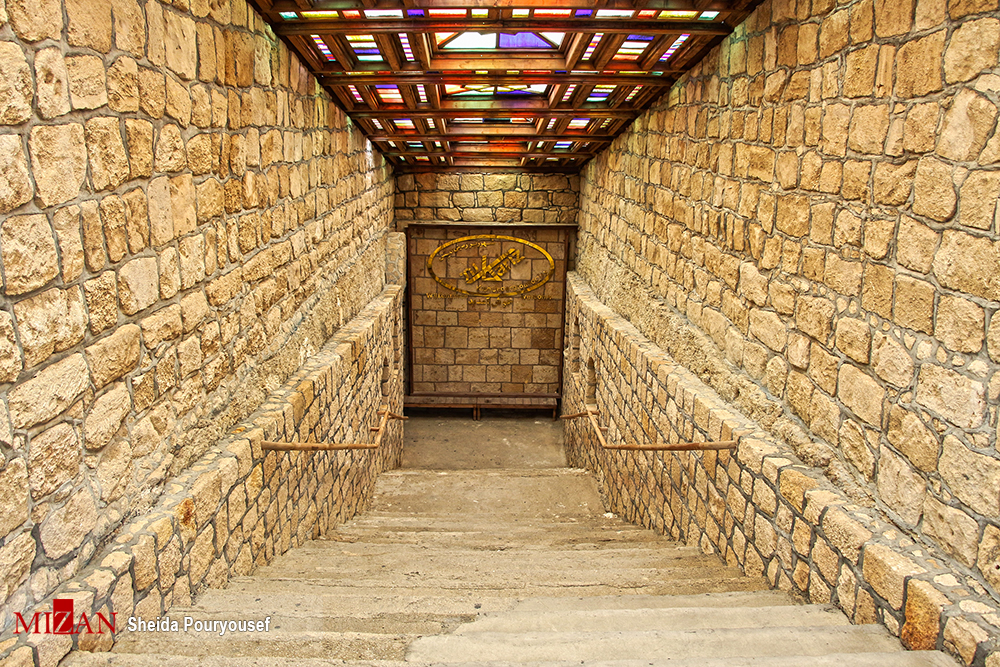
Khosroabad Mansion is located in the city of Sanandaj in Kurdistan province and dates back to the Zand-Qajar era. The building boasts exquisite and fantastic Persian architecture.

The historical mansion is called Khosroabad as it was the hub of the Ardalan rule, especially ruler Khosrokhan Ardalan.

This impressive mansion measures around 6,000 square metres. The main building is constructed in the middle of a beautiful and unique garden. It draws the attention of any viewer with its fabulous Iranian architecture.

Historical Mansion; Popular Tourist Site in Western Iran
First Festival of Kurdish Fashion, Costumes Held in Iran

Khosroabad Mansion was built in 1905 by the ruler of Sanandaj, Amanollah Khan; and is very beautiful and one of a kind.

In addition to the main part, i.e., the monarchial palace with its pillars at the entrance, the garden of the mansion is of special significance, too. The garden was surrounded by four moats and streets as well as different kinds of trees on all sides of the mansion, giving the building special beauty. The garden was practically divided into four gardens. At the moment, only the trees and parts of the surrounding streets have remained.

Today, the historical mansion is host to large numbers of domestic and foreign tourists as well as different ceremonies and concerts.

Washington’s Talks with Cuba, N Korea Prove Iran-US Negotiation Futile: Leader

leader

In an address to a gathering of Iranian students in Tehran on Sunday, Ayatollah Khamenei underscored that entering negotiations with the US government will not settle any problem.

The Leader then highlighted the experience of Cuba and North Korea in the talks with the US, saying the American and North Korean authorities took photos together and gave each other the highest compliment, but the White House did not ease the sanctions against Pyongyang a bit afterwards.

“They (Americans) are like this (in the negotiations). They say we would bring you (Iran) to your knees, and they do not make any concessions ultimately,” Ayatollah Khamenei warned.

Iran decided to give the US another chance by urging Washington to correct its mistakes, to lift the sanctions, to return to the Joint Comprehensive Plan of Action (JCPOA), and to attend talks within the framework of the JCPOA, but the US declined the offer, Ayatollah Khamenei added, saying it was a strategy to test the US and prove the US’ intentions to the world.

The US government’s demands have no limits, the Leader noted, stressing that Iran will never agree on them.

The US wants Iran to stay out of the region, to stop supporting the axis of resistance, and to scrap its missiles, and will gradually urge the Islamic Republic to become lax in enforcing the laws on hijab, Ayatollah Khamenei warned.

The Leader then touched on France’s efforts to mediate between Iran and the US, saying French President Emmanuel Macron who claims that a single meeting with the US president would solve all of Iran’s problems is either “very naïve or an accomplice of the US.”

Ayatollah Khamenei then asked the Iranian official not to wait for the French president to address the problems, saying such limbo would plunge the country into depression.

“The key to resolving the country’s economic problems is production. This is what the economists say. There is no other option. It is not possible to wait for the foreigners to settle the country’s problems. Such a wait harms the country’s progress,” the Leader underlined.

Ayatollah Khamenei emphasized that it would be meaningless to keep waiting for the plans of the US or French presidents on the JCPOA.

The Leader then asked the Iranian administration to stop pinning hopes on the foreigners, but not to sever contacts with them, and to rely on the internal capacities instead of waiting for the foreigners.

Ayatollah Khamenei noted that Tehran’s main response to Washington’s hostile plots has been to prevent the US government from making inroads into the Islamic Republic.

The Islamic Revolution has been based upon countering the US, as the slogans that demonstrators chanted during the Revolution were anti-American ones, he added.

Since the 1979 Revolution in Iran, the US has resorted to every measure to harm the Iranian nation, such as plotting coups, provoking anti-Iranian moves and separatist movement, and blockades, the Leader deplored.

Ayatollah Khamenei emphasized that Iran has not stood idle in the face of the US and has sent the enemy to the “corner of the ring” in the fight.

“But the Islamic Republic’s most important response to the US plots has been that it has blocked the US’ way for renewed arrival and infiltration into the country,” the Leader underlined.

Ayatollah Khamenei also decried the attempts at distorting history, saying while some claim that the takeover of the den of espionage (US embassy) in Tehran triggered the conflicts between Iran and the US, such struggle dates back to before the 1953 coup, orchestrated by the US government.

The US government has not changed over the past decades and has maintained the same “wolfish characteristics”, evil attitudes, and tendency to be a global dictator as of today, the Leader added.

Ayatollah Khamenei concluded that the US has become weaker, but at the same time wilder and ruder, compared to the past.

Every year in early November, the Iranian students mark the anniversary of the takeover of the American embassy.

Iran’s Need for High Processing Boards Mostly Met Domestically

High Processing Board

Yasin Researchers group uses field-programmable gate array (FPGA) technology, which is considered to be the most optimised parallel processing platform capable of delivering 10x average power over conventional GPUs and 10 to 1000 times higher-end CPUs.

High-processing boards are used in all industries across Iran, from defence to weather, as well as oil, and medical equipment. On the other hand, high-tech products top the list of international sanctions against the Islamic Republic. So production of them inside the country is very important. This move can meet domestic needs, and keep moving across the boundaries of knowledge and ultimately protect the country against political and economic changes in the international arena.

The CEO of the company says the production of these processors reduces the impact of sanctions, and plays an effective role in boosting national production. He says it also increases employment, and helps in reducing the economy’s dependence on oil.

“What makes this company’s knowledge-based products unique compared to domestic and foreign samples is their type of design that is better than any other existing sample. We have used native technical expertise and manpower. At present, 30% of our country’s domestic industry needs for high processing boards are met through foreign products and the rest is met by domestic products,” added the CEO.

“In general, the import of high-processing boards is either difficult due to sanctions or their sophisticated technology. It is very tough to import them and their after-sales service is very weak. Therefore, we face challenges when using foreign samples.”

Trump Disclosing US Secret Policies: Iran’s Top Lawmaker

Iran Threatens to Reconsider Nuclear Cooperation with IAEA

Addressing a Sunday session of the Parliament, Larijani said the US administration has come under the control of a president who is displaying the true face of the White House’s policies to the world.

“The explicit announcement of the most secret policies of the White House is one of his (Trump’s) characteristics,” Larijani noted, saying Trump has made it clear recently that the US is after Syria’s oil and is keeping a number of troops in Syria’s oil-rich regions.

What matters to the US is Syria’s oil, not the conflict between the Kurdish and Turkish forces, Larijani added.

“Such shameful remarks (by Trump) have been made by the president of a regime which is always concerned about human rights in the countries thinking independently. It seems that Trump does not understand that Syria’s soil and oil belong to the Syrian government and people, and that the US has no right to intend to plunder that country by violating its territories,” the Iranian speaker noted.

Pointing to the US government and army’s brazen plot to take control of Iraq’s oil resources, Larijani said the honorable Iraqi leaders and religious authorities and the grown Iraqi people thwarted Washington’s plans.

Taking control of the oil resources in the Middle East and the oil-rich countries has been a secret policy of the US, the Iranian speaker noted, stressing that the US has no humanitarian feelings for people of Syria, Iraq, Iran or the other regional states.

The meaning of Trump’s remarks at this juncture is that the US government does not care about the Iranian nation and is only after the Iranian oil in the same way that it disregards the Kurds, Turks, and Arabs and only seeks to control their oil, he added.

“Such remarks by the US president lay bare the anti-human image of that regime,” the speaker added, advising the American officials to do something about disclosure of their plans by Trump instead of sympathizing with the Iranian nation.

The US government’s anti-human and colonialist policies are being uncovered by Trump, Larijani added.

“The US presidents have resorted to acts of adventurism since the beginning, supported the separatists, and encouraged Saddam to attack Iran. They (Americans) supported the terrorists and forced them to commit crimes against the (Iranian) nation. They (Americans) harbored them (terrorists) and imposed various sanctions against people (of Iran), and rudely described such crimes as friendship with the Iranian nation,” he deplored.

The Iranian people have stood against the US since they saw no sincerity in the words and deeds of the American leaders, Larijani added.

Speaker of the Iranian Parliament also said the US administration has resorted to foolish behavior in order to plunge the Middle East into chaos and take control of the region’s oil resources.

Regional disorder would allow the US to try new acts of adventurism and attain its evil objectives in case of a failure to control the region’s oil, he warned.

The Iranian speaker also expressed confidence that the new US plot for stealing the region’s oil will receive a harsh response from the vigilant people of the region in the same way that they crushed the US government’s protégé, namely the ISIS terrorist group.

In remarks on Thursday, Syrian President Bashar al-Assad hailed Donald Trump as the “best American president” for his “transparency” regarding his stated desire to maintain US control of Syria’s lucrative oil fields.

Trump announced in October that “a small number of US troops will remain” in Syria to safeguard the oil-rich Deir ez-Zor province, despite his directive to evacuate the last American forces from the northern parts of Syria.


Hezbollah Blasts Twitter’s ‘Politicized’ Closure of Its Accounts

Hezbollah- Twitter
Hezbollah says the Twitter has given in to political pressure by suspending its TV channel accounts.

Hezbollah’s TV channel Al Manar said on Saturday that most of its Twitter accounts had been made unavailable.

It accused the Twitter of giving in to “political pressures”, an apparent suggestion that the decision by the US-based social media platform had been influenced by the policies of the government in Washington.

The US government has blacklisted Hezbollah, a popular group in Lebanon with huge political influence, while government officials and lawmakers in Washington have consistently pressured others to cut or restrict their relations with the group despite the fact that it is represented in the Lebanese government and parliament.

Twitter’s decision to suspend accounts run by Al Manar came after a series of protests across Lebanon which led to the resignation of the cabinet led by Prime Minister Sa’ad Hariri.

PressTV-‘US intervention root cause of crisis in Lebanon’

It also comes amid a rise in the popularity of Hezbollah in Lebanon and in other countries in the Middle East, especially after the group managed to successfully help the government in neighboring Syria to win a years-long battle against terrorists.

A Twitter spokesman told the AFP news agency that the social media platform could not allow illegal groups to operate on its website.

However, the same news agency said specific television shows with Twitter names of Al Manar were still available on the platform on Saturday.

The suspension of Al Manar’s accounts on Twitter comes as the website and other US-based social media organizations with vast global audience have repeatedly claimed that they are not influenced by the policies and decisions of the US government.

Iran Says Ready to Link Kyrgyzstan, Uzbekistan to Global Markets

First Vice President -jahangiri

Speaking in a Saturday meeting with Uzbek Prime Minister Abdulla Aripov, Jahangiri described transit and transportation as one of the areas of mutual interest, noting that the transportation has a great impact on the cost of goods.

He also announced the readiness of the Islamic Republic of Iran to cooperate with Uzbekistan in the field of transport and transit.

The talks were held on the sidelines of the meeting of the Council of Heads of Government of the Shanghai Cooperation Organisation in the Uzbek capital of Tashkent.

“Iran is interested in importing some of the goods it needs from Uzbekistan. We can also use our national currency for bilateral trade to increase the current trade volume of $300 million,” added Jahangiri.

He referred to the joint commission on cooperation between the two countries, which will hold a meeting in Tashkent in December, expressing hope that all the issues of mutual interest and areas of cooperation will be discussed to remove the barriers of expanding trade and economic ties.

“If visa issuance is facilitated for nationals of the two countries, the cross-border trade between the two states will be boosted, and tourists from Iran can visit Uzbekistan’s historic and ancient sites.”

The first vice president also added that the expansion of banking cooperation is another prerequisite for increasing the volume of trade saying “by removing obstacles and moves such as establishing direct flights between the two countries, the level of economic ties can be increased.”

For his part, the Uzbek PM expressed interest in using Iran’s transit routes saying that Uzbekistan is interested in Iran’s transit corridors to export goods to different parts of the world.

Abdulla Aripov stated that more than 1,000 Iranian companies from state and private sectors are working in Uzbekistan underlining that Tashkent welcomes the presence and activity of Iranian companies.

First Vice President -jahangiri-KyrgyzstanIn a separate meeting with Kyrgyz Prime Minister Mukhammedkalyi Abylgaziev, Jahangiri underlined Iran acts as a transit route to connect Kyrgyzstan to world markets.

He noted the Iran-Kyrgyzstan Joint Commission should try to remove hurdles in the way.

“I want the Iranian minister of roads and urban development, who is in charge of the joint commission of the two countries, to tap into all potential to improve relations,” he said.

Jahangiri noted that the economies of the two countries can complement one another.

“The conclusion of the recent agreement between Iran and the Eurasian Economic Union is a good basis for the expansion of relations with this union,” he noted.

The vice president urged both sides to work together further expand banking and tourism relations as well as bonds between people.

“Iran is ready to help boost relations between the two countries by easing the process of issuing visas,” he said.

He further Tehran is currently working to settle problems pertaining to direct flights between Iran and Kyrgyzstan.

The Kyrgyz premier, in turn, touched upon the importance of Iran in his country’s foreign policy.

He said mutual trade currently hovers around $20 million, which is not satisfactory, adding it should rise, especially in the oil and gas sector.

Iran’ Beauties in Photos: Autumn in Gavkhouni Wetland

Gavkhouni Wetland (9)

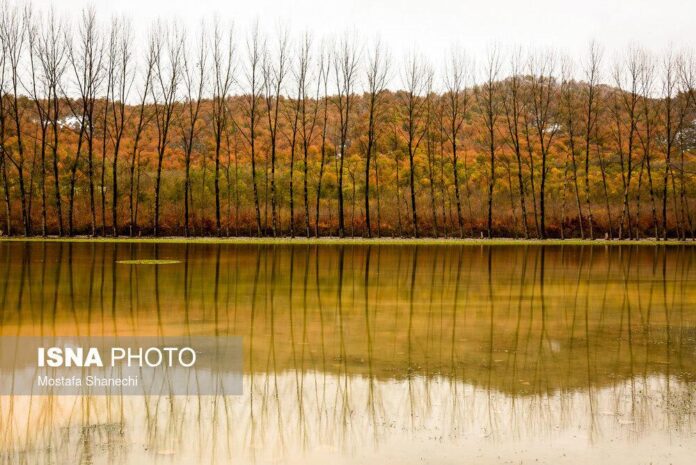
Gavkhouni wetland, which was registered in Wetlands of International Importance’ list during Ramsar Convention in 1974, hosts many tourists these days.

Life has just returned into this unique ecosystem after plenty of water entered the wetland as a result of the past spring’s abundant rainfalls.

What follows are IRNA’s photos of joyful tourists in a beautiful autumn sunset beside Gavkhouni wetland:

Iranian President Felicitates Algeria on National Day 

Hassan Rouhani - President of the Islamic Republic of Iran

In a message on Saturday, the President expressed hope that Iran and Algeria further boost cooperation based on the historical background and the various capacities available in various fields.

The Anniversary of the Revolution Day is the national day of Algeria. It is celebrated on November 1 and marks the start of the war of independence against France.