Sunday, December 21, 2025
Home Blog Page 3023

Rouhani Under Great Pressure to Leave Nuclear Deal: MP

Rouhani Under Great Pressure to Leave Nuclear Deal MP
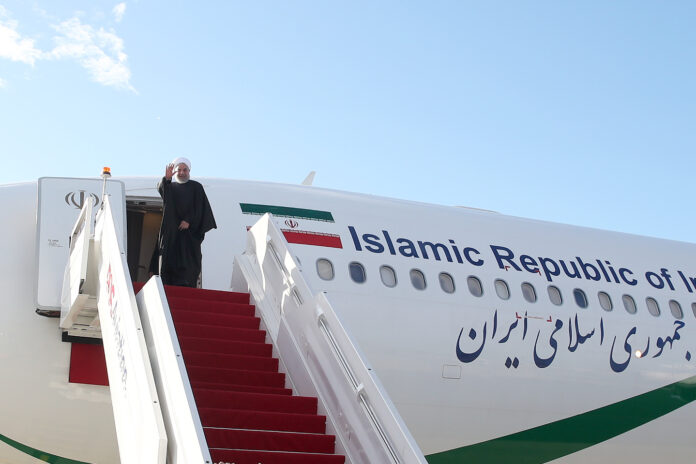
Iranian President Hassan Rouhani arrives to address the United Nations General Assembly / Photo by AFP

Alireza Rahimi said both Iran and the other signatories to the Iran nuclear deal officially known as the Joint Comprehensive Plan of Action (JCPOA) would like to keep the agreement in place.

“But whether or not they can practically preserve the JCPOA depends on the Europeans’ behaviour as they have made us doubtful,” said Rahimi, a member of the Parliament’s Presiding Board.

“In other words, the Europeans’ performance caused Iran to doubt about their ability and seriousness to preserve the JCPOA despite the fact that all parties [to deal] except the United States agree on the necessity [to preserve the JCPOA],” the MP added.

He said the Support of Trade Exchanges (INSTEX) mechanism and the three steps Iran took to reduce its commitments under the JCPOA were a good opportunity for the Europeans to live up to their obligations under the nuclear deal.

“But they failed to put their will into practice, and naturally, we should envisage an ambiguous future for the JCPOA despite the necessity for this agreement [to remain in place],” he noted.

He said there is much pressure inside Iran to withdraw from the JCPOA.

“In the meantime, the Americans’ animosity and their undermining the JCPOA and making the deal ineffective is something which prompted Iran to take the four steps because Iran has not been able to reap the benefits of the JCPOA in practice,” he said.

The member of parliament said Iran has no plans to pull out of the JCPOA for now, “but we are facing serious doubts with regards to the efficiency of the JCPOA.”

As for how long Iran will remain in the nuclear deal, Rahimi said it depends on the Europeans.

“The time will be determined by the Supreme Board to Supervise the JCPOA; i.e., it depends on the variables and elements that the Europeans show in practice, but it is foreseeable that Iran’s fifth step will determine the destiny of this international agreement,” he said.

Demonstrators Take to Streets to Protest Fuel Price Hike in Iran

Viral videos show protesters holding rallies and stopping their cars to block the roads and streets.

The cities of Tabriz, Mashhad, Tehran, Shiraz, Gorgan, Khorramabad, Qom, Ilam, and Karaj are among major cities where protesters have taken to the streets to protest the shock fuel price hike.

The state TV reported that the police has used tear gas to “keep the demonstrators from damaging public properties.”

In some cities demonstrators have found creative ways to express their protest. In Chalus, a university professors rode a donkey to work in protest at the fuel price hike.

Others have also started playing cards and football while smoking hookah in the middle of the blocked streets.

However, in a number of cities like Tabriz, clashes have erupted between security forces and the protesters. A video of Tabriz protests shows a car trying to ram into the anti-riot police.

Rioters have set fire on several banks across the country in such cities as Behbahan, Karaj, Isfahan, and Tehran, according to videos shared online. Several gas stations were also set on fire in Shiraz and other cities.

The Governor of Sirjan, a city of Iran’s Kerman province, has confirmed that a person was killed and several were injured on Friday night.

The official said the victim was an ordinary person who was killed during clashes between security forces and a group of vandals trying to make inroads into the city’s main oil reserves.

Several other people have also reportedly lost their lives in the Friday clashes.

The rallies are held as the country is also gripped by a heavy snowfall that per se has left many people stranded in roads and streets.

The protests erupted after Iran started rationing on the purchase of gasoline and substantially increased the price of fuel in what the government calls a move to assist the needy.

The National Iranian Oil Products Distribution Company (NIOPDC) said in a statement late Thursday that the price of a liter of regular gasoline had gone up to 15,000 rials (12.7 US cents) from 10,000 rials and the monthly ration for each private automobile was set at 60 litres per month. Additional purchases would cost 30,000 rials per litre.

It added that taxis and ambulances will have a 400-liter and 500-liter monthly quota, respectively. The price of CNG and gas oil will remain unchanged.

It noted that rations will be charged to consumers’ personal fuel card on Friday and can accumulate up to six months.

Iran to Host Int’l Rural Tourism Conference Next Year

Iran to Host Int’l Rural Tourism Conference Next Year

Deputy Head of the Ministry of Cultural Heritage, Tourism and Handicrafts Vali Teymouri says rural tourism is of significance around the globe.

“Given that rural tourism and nature touring is the slogan of the whole world, Iran announced its readiness to host the rural tourism conference in the country,” he noted.

The deputy minister underlined that a strategic document for the development of rural tourism is being drawn up.

“This document will be announced at the international rural tourism conference,” he noted.

“Iranian people are into travelling and spending while on a trip, and serious attention should be paid to domestic tourism potential,” he said.

The official added a top priority of the country’s tourism sector is to organize local trips.

“In the world, tourism is seen as a tool for fair distribution of wealth,” he said.

He noted the development of the tourism industry is possible only through the contribution of local communities.

FM Zarif Warns of Loss for All if Nuclear Deal Collapses

FM Zarif Warns of Loss for All if Nuclear Deal Collapses

Earlier this week, Iranian Foreign Minister Mohammad Javad Zarif left for Kazakhstan to attend the annual Astana Club summit and meet with Kazakh officials. He lectured there as the keynote speaker at the opening ceremony. Zarif made some important remarks regarding Iran nuclear deal in one of the Astana club panels. However, his remarks received little media coverage.

Zarif’s statements indicated that he has serious concerns about the future of the Joint Comprehensive Plan of Action.

“We do not want to build nuclear weapons, but we strongly oppose the violation of our rights,” Zarif told the Astana Club Disarmament and Non-Proliferation Panel. “Even if what is promised to Iran in the area of economic normalisation (in the JCPOA) is partially fulfilled, we are ready to show good will and return to full implementation of the nuclear deal.”

“(But) if it is not carried out, we will unfortunately continue this path, which is again the same zero-sum path,” he added. “This is the path that will lead to the loss of all, but this is a path we have no choice but to move on. “

Zarif’s warning came as Iran had just taken its fourth step in reducing its nuclear commitments. In this stage, Iran resumed enrichment at Fordow nuclear facility in a move that was of great concern to the Europeans. On Monday, November 11, at the time of Zarif’s visit to Kazakhstan, the International Atomic Energy Agency (IAEA) in a report confirmed Iran’s uranium enrichment at Fordow. Moments later, the foreign ministers of the three European nations that have joined the nuclear deal, along with the EU foreign policy chief, issued a joint statement, implicitly threatening Iran with the return of international sanctions.

“We reiterate our readiness to review all of the mechanisms set forth in the brokerage, including the dispute settlement mechanism, to resolve issues related to Iran’s implementation of its nuclear deal obligations. We are in touch with other members of the JCPOA in this regard,” reads the statement. Although this statement is written in diplomatic literature, it has a significant threat within it. Europeans threatened Iran with activating dispute settlement mechanism. Although launching this mechanism does not necessarily mean rapid return of the UN sanctions) against Iran, but under the current circumstances that the Europeans accuse Iran of violating the nuclear agreement and at the same time they are not able to protect Iran’s economic interests, it is quite possible that activating the dispute settlement mechanism will lead to the return of the Iranian nuclear dossier to the Security Council.

Three Sides of Nuclear Triangle

To understand the significance of Zarif’s warning, one should take a look at three sides of Iran’s nuclear triangle:

Iran: Since May, Iran began the process of reducing its nuclear commitments on the first anniversary of the White House’s unilateral withdrawal from the nuclear deal and the return of Washington’s sanctions. As part of this process, four steps have already been taken to reduce commitments. The rationale behind this is to force or persuade Europeans to safeguard at least some of the economic benefits, particularly Iran’s oil and banking interests. While stressing on the reversibility of its commitment reduction steps, Iran says it will continue to reduce its commitments until its demands are met.

Europe: During the first three steps of the commitments rollback, the Europeans, while expressing concern that Iran would halt some of its commitments, said they would adhere to the deal as long as Tehran adheres to its obligations. However, after resuming uranium enrichment at Fordow, the Europeans changed their tune and threaten Iran with international sanctions. In the meantime, one thing must be paid attention to. In the recent Europeans’ statement, it was emphasised that Europe had fully adhered to its obligations. Iran, meanwhile, accuses Europe of failing to comply with the sections of the deal that are related to the normalisation of its economic relations. Europeans have been trying in the past few months to persuade the United States to decrease Iran’s oil sanctions to preserve both the JCPOA and pave the ground for direct Iran-US negotiations.

The United States: However, with Washington’s opposition to the European, the Europeans’ efforts failed. The US insistence on increasing sanctions on Iran has led Europeans to abandon the idea of securing Iran’s economic interests. When the Europeans say they have fully adhered to their commitments, it means that they are not responsible for the damages caused by US sanctions. On the other hand, the US, which is responsible for the current status quo of the nuclear deal, claims that the ball is now in Iran’s field. The US Assistant Secretary of State for Energy Frank Fannon told CNBC that the [Trump] administration has been very clear about the situation (talks with Iran). They support negotiations, but there are certain conditions that must be met. Launching proxy wars and creating instability in the region is not a (proper) way to come to the negotiation table.” The US insists on imposing sanctions and has tough conditions to negotiate with Iran. Therefore, the possibility of negotiations between Iran and the US is unlikely at present.

Taken together, these three sides show that Iran continues to reduce its commitments, Europe has no intention of securing Iran’s economic interests, and the United States is pursuing a “maximum pressure campaign” policy. What will this situation lead to? Will Europe carry out its threats if Iran suspends further nuclear commitments in the next two months? Will Iran change its “nuclear doctrine” if Europe’s threats come true and Iran’s nuclear case is returned to the Security Council? What would happen then? These are the questions that seem to have worried Zarif and prompted him to warn of the possibility of loss for all sides. In September 2014, Zarif said, “In the current world, zero-sum games that one country benefits from harming others is not considerable,” but with Donald Trump’s taking office in the US, things changed.

More Chinese Tourists in Iran after Lifting Visa Regime

More Chinese Tourists in Iran after Lifting Visa Regime

He made the remarks in a meeting with the governor-general of Iran’s Golestan province during his visit to the province to attend the International Festival of Ethnicities.

Chang Hua, China’s ambassador to Iran, met with the governor of Golestan province, Hadi Haqshenas, and discussed the large-scale agricultural production and high tourism capacities of the province.

“Iran and China are two ancient civilisations and have been trading on the Silk Road for many years, and we are pleased that these exchanges are increasing day by day,” underlined the Chinese official.

Referring to US unilateral and illegal sanctions against the Islamic Republic of Iran, he added, “We have always been opposed to unilateral sanctions and expressed our support for Iran in the JCPOA and economic ties.”

Referring to the global registration of Hyrcanian Forests, he said, “As I told Iran’s Minister of Cultural Heritage, Tourism and Handicraft, Dr Moonesan, I would like to introduce Iran to the world as an honourary tourism ambassador of the country.”

Iran Ready to Jointly Invest with China in Incheboron

For his part, the governor of Golestan province said “railroad is a good way to carry goods and passengers, and we are ready to jointly invest with China on the Incheboron border in north-east of Iran.”

Haqshenas also noted that Golestan province has high cultural diversity of ethnicities and capacities, and is also ranked among the top provinces in terms of economic indicators.

“China has a joint venture in the Pakistani port of Gwadar, and we are ready to invest jointly, as more than 100 kilometres of the coast of the Caspian Sea is located in Golestan province. Chinese companies are currently working in the Anzali Free Zone, and their presence will be approved in the near future in Incheboron Free Zone as well,” stated Haqshenas.

“In the coming days, the Gorgan-Aktau flights will be launched between Iran and Kazakhstan, and we are ready for the presence of Chinese tourists in the Golestan province,” the governor of Golestan added.

During the visit, the Governor of Golestan invited the Chinese ambassador to attend ceremony to mark the global registration of Hyrcanian Forests.

Golestan Province is one of the 31 provinces of Iran, located in the north-east of the country south of the Caspian Sea. Its capital is Gorgan. It has a population of over two million and an area of 20,380 km².

The province enjoys mild weather and a temperate climate most of the year. Geographically, it is divided into two sections: The plains, and the mountains of the Alborz range.

Golestan National Park is Iran’s biggest national park which spans three provinces, Golestan, Mazandaran and North Khorasan.

Tehran Citizens Surprised by First Autumn Snowfall

Autumn Leave under Snow

Despite earlier weather forecasts, the snow has left many people stranded in the streets.

Many highways and roads are currently blocked due to the autumn snowfall; and a heavy traffic jam has kept people in the streets, particularly in northern Tehran.

The heavy autumn snowfall comes shortly after the rise in gasoline prices, which has outraged many people across the country, causing sporadic protests in the streets.

What follows are photos of the autumn snowfall in Tehran retrieved from various sources:


Iran Friend of Saudi, Bahraini, Emirati People: Rouhani

“Over the past weeks, I wrote letters to the heads of all the regional states, and invited them to set aside animosities and divisions,” Rouhani said in a speech on Nov. 14.

“Israel is no friend of anybody, neither is the United States. But we are friends of the people of Saudi Arabia. We are friends of Kuwaiti people. We are friends of the people of the United Arab Emirates. We are friends of Bahraini people. We are friends of people in the regional countries,” he noted.

“We love the Palestinian nation. We love combatant and freedom-seeking groups. Let’s have no doubts about this,” Rouhani stressed.

He also called for “reigniting” the belief in today’s world and in the region.

“What belief? The belief in our power, belief in that we will win if we unite, belief in that our enemies are still enemies and have not become our friends,” he went on to say.

Iraq Blames ‘Third Parties’ for Killing Protesters in ‘Gruesome’ Way

Shammari said on Thursday the range of smoke canisters used by the Iraqi security forces is between 75 and 100 meters, and they are of the conventional type used by all countries in the world to disperse demonstrators.

However, he said, the strange thing is that some protesters have been killed by smoke canisters fired from a distance of 300 meters directly at the people.

“Each one of them weighs three times heavier than the smoke canisters conventionally used,” he added.

“The canisters found by forensic experts in the dead bodies and heads of the protesters have been imported to the country without the knowledge of Iraqi officials,” he said.

These weapons have never been imported by the government and officials of Iraq, he emphasized, adding that it is vague and unclear how they have been imported to the Arab country.

His comments came after the Amnesty International expressed deep concern over the use of such deadly canisters against civil demonstrators.

Brian Castner, Amnesty International’s senior crisis adviser on arms and military operations, says “the [casualty] photos are almost unshareable. These are truly gruesome deaths.”

“We have never seen these grenades being used in this volume, in this way, or in any sort of civilian protest,” he said.

The Washington Post has also quoted doctors in a Baghdad hospital as saying that these grenades are fired directly at the heads and chests of protesters, smashing skulls and killing at least 31 people on impact.

At the start of October, street protests erupted in several Iraqi cities over unemployment and a lack of basic services. Protests have often turned violent, with security forces opening fire and protesters torching government buildings.

So far, over 300 people including civilians and security forces have been killed in the protests, according to the Iraqi Parliamentary Human Rights Committee.

Iraqi protesters set fire on US, Israeli flags in Karbala

Meanwhile, a group of angry demonstrators in the Iraqi holy city of Karbala have chanted slogans against the US and Israel and set their flags on fire, a viral video cited by a media report suggests.

The video released by UNews shows the protesters setting fire on the two flags, and holding placards that read “We don’t want Ba’athists to return, our leader is Ali Sistani,” and “5,000 suicide attackers, the gift of Saudi Arabia to Iraq.”

Iraqi people and officials have in recent weeks lashed out at the United States for its interference in the Arab country’s internal affairs.

Influential Iraqi Shia cleric Muqtada al-Sadr recently threatened to take millions of demonstrators to streets if Washington keeps meddling in the Arab country.

He said that the Iraqi people want an early election free from the US intervention, as the country does not need arrogant countries and the help of others.

Sadr’s statement came after the United States called on Iraqi officials to hold early polls as more people fall victim to ongoing anti-government protests that Baghdad says are being hijacked by foreign-backed elements.

President: Iran Not after Rebuilding Its Empire

Hassan Rouhani

In an address to a gathering of Iranian authorities and participants in an international conference on Islamic unity in Tehran on Friday, President Rouhani prayed that the Muslim world might strengthen unity and fraternity in order to win victories against the oppression and aggression.

Paying tribute to Prophet Muhammad (PBUH) for impressing the world and establishing a new civilization with the miracle of Quran, prudence, ethics and policies, the Iranian president said the Islamic Republic also follows the teachings of Prophet Muhammad (PBUH) and his model of governance and is not seeking to create an empire either.

Iran’s regional clout does not stem from its military and scientific power or from its strategic geographical position, Rouhani added, stressing that Iran’s influence is a result of the Islamic Revolution’s impact on the hearts of people.

Iran’s faith in a revolution in favor of Islam and the restoration of prophetical values has made the people in Iraq, Syria, Lebanon, Bahrain, Yemen and elsewhere to develop close bonds with Iran, the president noted.

He further stressed that the Iranian forces went to Iraq and Syria as military advisors and devoted their lives to combatting terrorism, saying Iran only cares about the freedom of humans in Iraq, Syria, Lebanon or anywhere else, no matter whether the people are Muslims, Christians, Jews, Turks, Arabs or Kurds.

Being a Persian or an Arab is not a privilege, Rouhani underscored, noting, “We do not seek to conquer lands and bloods or an empire. What we want in the region is fraternity, unity, following the God’s prophet (Muhammad) and his leadership.”

Tehran is hosting the 33rd Islamic Unity Conference which marks the birth anniversary of Prophet Muhammad (PBUH). Themed “Ummah unity in defending the al-Aqsa Mosque,” the event will run until November 16, with 350 personalities from 93 countries in attendance.

Iran Not Anti-Semitic, Wants Zionist Regime’s Elimination: Leader

“The issue of ‘the elimination of the State of Israel’ … doesn’t mean the elimination of the Jewish people; we don’t want them harmed. This means the elimination of the imposed regime and state,” the Leader said on Friday.

He made the remarks in a Friday meeting with the heads of government branches, a group of government officials, ambassadors of Islamic countries and participants in the 33rd edition of the International Conference on Islamic Unity in Tehran.

“The elimination of the Zionist regime means that the Palestinian people, be they Muslim, Christian or Jewish who are the true owners of that land, choose their own government and oust people like Netanyahu,” the Leader said.

“This is going to happen, as in the Balkans, which became independent after 60 years, and the nation returned to their country,” he noted.

“We are with the people and for the independence of Palestine; we are not anti-Semitic. The Jews live in full security in our own country, Iran,” the Leader noted.

“Our position on the case of Palestine is definitive. Early after the victory of the Revolution, the Islamic Republic gave the Zionists’ center in Tehran to the Palestinians. We helped the Palestinians, and we will continue to do so without any reservation. The entire Muslim world should follow suit.”

Ayatollah Khamenei further referred to the enemies of the Islamic unity, especially the US government and the Zionist regime, and stressed that the US is not just Iran’s enemy. 

“They are hostile to the Muslim world, to Palestine, and to the nations of West Asia and North Africa. The nature and logic of Islam is why they are hostile,” he noted, saying the nature of Islam is based on rejection of tyranny, arrogance and hegemony.

“The US and Israel are more opposed to Iran, but they’re also opposed to the Saudis. They openly say the Saudis only have money, and they should take it,” he said, referring to the approach as clear hostility.

“The Saudis must understand the duty of a dignified man facing this enemy. What’s required by the Islamic and Arab dignity and honour against such insults?”

He further referred to the US presence in the West Asia region as a source of trouble, corruption, insecurity, and a root cause of the formation of such groups as ISIS.

Ayatollah Khamenei said Muslim nations need to get familiar with Washington’s true and hypocrite face.

He also warned that the United States’ main weapon today is infiltrating into sensitive centres, causing rift among nations, creating mistrust among governments and people, and implying that surrendering to Washington is the only way to resolve the problems.

“This weapon is even more dangerous than the military and hard weapons,” he warned.

He said Islamic unity has a number of degrees: The lowest level is non-aggression between religions. The second is unity against a common enemy. And the third is solidarity in Islamic goals.

The highest level, according to the Leader, is unity in making a modern Islamic civilization, which Iran has put on top of its agenda as its ultimate goal.

“If Muslims had observed the lowest level, this suffering wouldn’t exist in the Islamic World and Palestine wouldn’t be like this,” he regretted.