Monday, December 22, 2025
Home Blog Page 2998

Russia’s Work at Fordow Halted for Technical Problem: Iran

Russia’s Work at Fordow Halted for Technical Problem Iran

TVEL, a company that is part of Russia’s atomic agency Rosatom, recently decided to stop work at Iran’s Fordow nuclear site, raising allegations that Moscow is complying with the US sanctions on Iran.

Speaking in a press conference in Tehran, Mousavi denied such allegations and said Russia has not withdrawn cooperation with the Islamic Republic.

“We do not infer that Russia has withdrawn cooperation with Iran,” he said.

He then referred to Moscow’s explanation about the decision, and said, “We acknowledge the technical problem as the reason for the halt.”

“Iranian and Russian technical experts are examining the problem,” the spokesman went on to say.

TVEL announced earlier this month the suspension of its work to upgrade the Fordow Fuel Enrichment Plant because Iran fed uranium hexafluoride (UF6) into two gas centrifuge cascades located in the same room as the cascades meant to be reengineered for stable medical isotope production.

TVEL said it was “technologically impossible” to implement the Fordow project at this time.

Uranium enrichment and stable medical isotope production cannot be sustained in the same room because air and equipment are exposed to UF6 “leftovers”, making the produced stable medical isotopes unsuitable for medical purposes, TVEL said on December 5.

“To resume this work, it will be necessary to stop and dismantle the cascades in which uranium enrichment takes place and to thoroughly clean the premises and equipment. Until these conditions are met, work on the project from the Russian side has been suspended,” it said.

Since 2017, TVEL has been engaged in modifying two gas centrifuge cascades at the Fordow facility, intended for producing stable isotopes (xenon and tellurium) for medical purposes. The works were carried out in compliance with the JCPOA dated 14 July 2015. The International Atomic Energy Agency and the JCPOA Joint Commission were regularly updated on project progress, TVEL said.

TVEL’s suspension follows a US announcement last month that the waiver allowing foreign companies to work at Fordow will end on 15 December.

Russian Deputy Foreign Minister Sergei Ryabkov said earlier this month that this pressure had “created a difficult environment” for Russia and other participants in the JCPOA.

Russian news agency RIA Novosti quoted Ryabkov as saying that Russia is suspending its participation in the project to “analyse the possibilities and potential negative consequences of the American measures” but was not stopping it altogether.

Iran President’s Japan Visit Unrelated to US Talks: Spokesman

Iranian, Japanese Diplomats Discuss Syria Developments

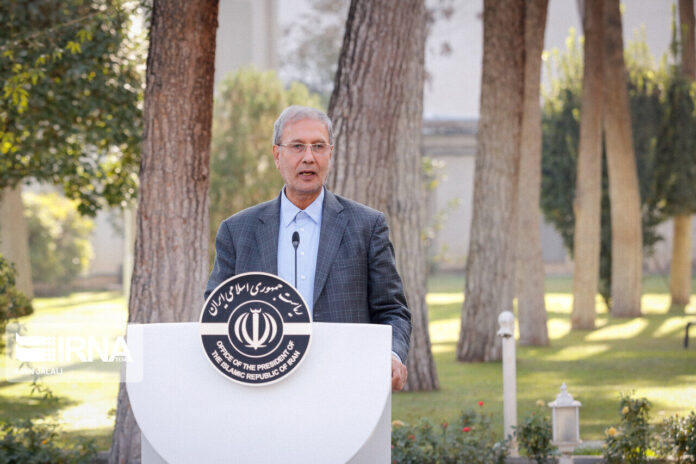
Speaking at a press conference on Monday, Ali Rabiee said President Rouhani’s upcoming trip to Japan will include bilateral talks and “focus on the promotion of economic ties.”

“The president’s trip to Japan will have nothing to do with the issues like the talks with the US”, he underlined.

However, Rabiee added, the Japanese friends usually have messages or initiatives, which Iran will hear and consider seriously.

“We will listen to them (Japan’s messages) according to humanitarian customs… But there is no pre-arranged plan on this issue,” he stressed.

Hailing Japan as one of the “friendly countries and a major economic partner” for Iran, the spokesperson said the “achievements of regional negotiations” could help organize more talks during the presidential visit to Tokyo.

According to Rabiee, President Rouhani will be accompanied by the Iranian minsters in charge of the economic and banking sectors, as well as by people from the trade and industrial sectors.

“President Rouhani’s participation in a summit of heads of the Islamic countries in Malaysia will be a good opportunity to hold a lot of bilateral talks in there,” the spokesperson added.

The Iranian president is going to visit Malaysia for Kuala Lumpur Summit 2019 -an international platform for Muslim leaders- before traveling to Tokyo at the invitation of Japanese Prime Minister Abe Shinzo.

Abe visited Tehran in June to become the first Japanese leader to travel to Iran in more than four decades.

A Look at Iranian Newspaper Front Pages on December 16

Newspaper Headlines

Abrar:

1- Zionist Media: Ankara Ready for Talks with Israel on Gas Transfer to Europe

2- US Sanctions against Fordow Begin

3- Army Chief: Enemies Can Test Our Equipment If They Doubt They’re Up-to-Date

A Look at Iranian Newspaper Front Pages on December 16


Ebtekar:

1- Iran and North Korea! Has FATF Blacklisted Iran?

2- Trade Ceasefire between China, US

3- Zarif at Doha Summit: Is Security in Region Purchasable?

A Look at Iranian Newspaper Front Pages on December 16


Etemad:

1- Labyrinth of Impeachment: Purposes of Impeaching Interior, Oil Ministers

2- Tehran’s Peace Plan Versus Washington’s War Plan

* Zarif: Region Needs Revision of Current Approach

A Look at Iranian Newspaper Front Pages on December 16


Ettela’at:

1- Iranian Scientist Freed from US Jail: US Upset about Iran’s Scientific Development

2- Zarif: Security Not a Commodity to Be Bought from Outside

A Look at Iranian Newspaper Front Pages on December 16


Hamshahri:

1- Farewell to Petrol-Based Transport

A Look at Iranian Newspaper Front Pages on December 16


Iran:

1- Zarif at Doha Forum Calls for Comprehensive Non-Aggression Treaty among Hormuz States

A Look at Iranian Newspaper Front Pages on December 16


Javan:

1- Polluted Cities

* Tehran and Most Industrial Cities Engulfed by Awful Air Pollution, Trash Smell

2- Bitter Experience of JCPOA Shouldn’t Be Repeated in Japan [Editorial]

A Look at Iranian Newspaper Front Pages on December 16


Jomhouri Eslami:

1- Trump’s Impeachment to Be Put to Vote at Congress Wednesday

2- Iran Chief Banker: Inflation Rate to Keep Going Down

A Look at Iranian Newspaper Front Pages on December 16


Kayhan:

1- Stigma of Myanmar Genocide Remains on Suu Kyi

2- Al-Sudani and Hariri Possible Candidates for Iraq, Lebanon Prime Minister

A Look at Iranian Newspaper Front Pages on December 16


Mardom Salari:

1- Protests in Baghdad against US Sanctions

A Look at Iranian Newspaper Front Pages on December 16


Rooyesh-e Mellat:

1- Parliament Speaker: Asian States Believe Regional Sustainable Security Hinges on Working with Iran

2- DM: Enemy Has Accepted Reality of Our Power in Maintaining National Security

A Look at Iranian Newspaper Front Pages on December 16


Setareh Sobh:

1- Tehran Engulfed by Smoke

2- Iranian Film Shines at French Festival

* Iranian Actress Wins Award in Competition with Penelope Cruz and Keira Knightley

A Look at Iranian Newspaper Front Pages on December 16


Shargh:

1- FATF Was Supposed to Be Approved Easily during Ahmadinejad’s Term

A Look at Iranian Newspaper Front Pages on December 16

Iran Develops Stem Cell Therapy for Urinary Incontinence

Iran Develop Stem Cell Therapy for Urinary Incontinence

Dr. Reza Moqadasali, manager of a research project on treatment of urinary incontinence with stem cells, says the studies on the new therapy have been carried out and the research results are going to be tested in clinical trials.

He also noted that clinical trials have been already conducted in two phases involving 10 and 20 patients, saying a group of 80 patients will be enrolled in the next stage of the clinical trial.

According to Moqadasali, the new therapy uses mesenchymal stem cells (MSCs) at the urethral sphincters -two muscles controlling the exit of urine- in order to improve bladder contraction and help the patient gain control over these muscles.

He also noted that a number of similar therapeutic trials have been conducted in the other countries, while their effectiveness and safety has been verified in some cases.

“We hope to offer an appropriate therapy for this problem by carrying out this stage of the plan,” the Iranian researcher added.

Moqadasali also noted that the homegrown therapy employs stem cells for the treatment of stress incontinence, which is more common in women.

Multiple and difficult labors, obesity and stress are the major risk factors for urinary incontinence in women, he concluded.

Iran FM Meets Members of Western, Arab Think Tanks

During the meetings, which were held separately or collectively on the sidelines of the Doha Forum 2019, the Iranian foreign minister elaborated on the Islamic Republic’s stances on important regional and international issues.

Iran FM Meets Members of Western, Arab Think TanksEarlier in the day, he also held talks with his Nicaraguan counterpart.
In the meeting, the two sides discussed bilateral relations as well as the developments of Latin America.

Autumn in Hamadan


Book on Iranian ISIS Sympathizer to Come Out in Coming Days

Book on Iranian ISIS Sympathizer to Come Out in Coming Days

“Snakes and Ladders” is the title of the latest book by Iranian publisher, Shahid Kazemi.

The book narrates the story of an Iranian woman who used to be the administrator of a channel advocating the ISIS terrorist group.

The untold story of the woman, a mother of three children in her twenties, could be interesting for readers, some of whom might not imagine that a diminutive lady living in an eastern, western or southeastern province of Iran was running a social media channel in support of ISIS.

“Snakes and Ladders” tells how “Ms. Admin” joined ISIS, found pleasure in watching the gruesome images of people being killed by the ISIS fighters, and supported the enforcement of the law introduced by the self-proclaimed caliphate.

The book also contains shocking confessions from the woman after arrest.

Iran’s New Envoy to Russia Meets President Rouhani

Hassan Rouhani - President of the Islamic Republic of Iran

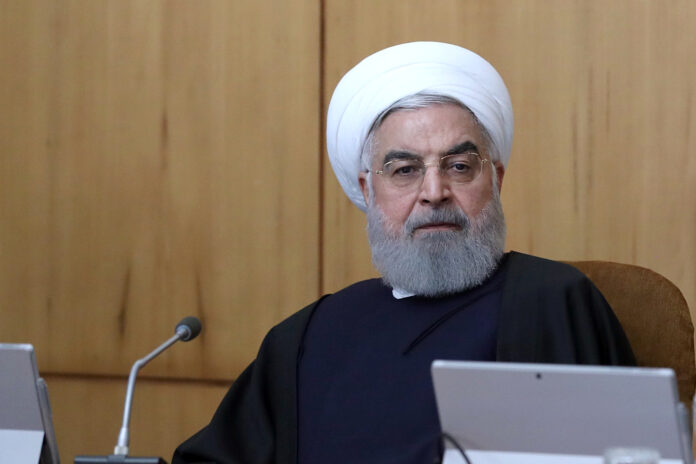
Kazem Jalali, Iran’s incoming ambassador to the Russian Federation, held a meeting with President Rouhani in Tehran on Sunday.

In the meeting, President Rouhani highlighted the good bilateral relations and the close regional and international cooperation between Iran and Russia, and wished the new ambassador success in his mission.

The president also stressed the need for efforts to present Iran’s capabilities and potential to the Russian investors as well as private and state-run sectors, and urged the new ambassador to try to expedite the implementation of the agreements between Tehran and Moscow and to enhance relations with the “friendly and neighboring” state of Russia in all fields.

For his part, Jalali gave a brief report on the latest status of relations between Iran and Russia in various areas, and reaffirmed his resolve to fulfill the duty to broaden the economic ties and promote inclusive cooperation between Tehran and Moscow.

Iran Confectionery Contamination A Security Issue: Health Minister

Speaking to reporters on Sunday, Health Minister Saeed Namaki said the conspiracy to contaminate the factory-made confectionery with pills is a security issue, committed for the purpose of galvanizing public opinion and damaging the image of the domestic food industry.

He explained that the bad cakes have been contaminated in a process outside the official production and delivery network, adding that the security and intelligence forces were following up the case.

Namaki also gave an assurance that there has been no report of toxemia caused by the contaminated cakes, saying more details about the perpetrators will be soon publicized.

In remarks on Saturday, the Iranian Food and Drug Organization spokesperson described as an act of “sabotage” drugs intentionally inserted in the confectionery products, saying its food industry was targeted in a bid to spread “terror.”

More than a month has passed since initial media reports emerged alleging that drugs have been placed in confectionery products such as cakes, biscuits and wafers.

The bad products have so far been confirmed to have been found in Iran’s eastern provinces of Kerman, Hormozgan, Sistan and Baluchistan near the Pakistani border and the western Ilam province, which borders Iraq, according to officials.

Iran Urges Regional States to Change Course for Better Future

“We have an opportunity before us to finally and decisively change course, for the betterment of not just our own lives but also those of future generations. We must seize it,” Zarif said on Sunday.

He made the remarks in an address to the Doha Forum 2019 in the Qatari capital.
What follows is the full text of Zarif’s speech:

In the name of God, the Compassionate, the Merciful

It is a great pleasure to participate in the Doha Forum. I congratulate our Qatari friends for organizing this remarkable gathering and thank them for their gracious hospitality.

While we enjoy tranquility and security here in the heart of West Asia, our region is in severe turmoil.

I believe the root cause of the multiple and chronic crises we face lies in a cognitive disorder: a disorder that is not just afflicting countries in the region but also global powers. And that is why I believe fora such as this prestigious gathering provide unique opportunities to try to uncover our presumptions, deconstruct our assumptions and think together on a way out of the current regional predicament.

The first and most persistent cognitive disorder is the zero-sum approach to global issues. Far too many continue to believe that even in our interconnected world—where everything from trade and the environment to information and even emotions are globalized—one can gain at the expense of others. That one can have security through depriving one’s own neighbors of the same. That has never worked. It will never work.

Security—just like climate change—does not know borders and is thus indivisible.

But that is not all.

The disparities in power, geographic size, natural and human resources and the like among countries in our region have led to disastrous conclusions.

Some global actors look at these disparities and the unending rivalries in the region as an opportunity: indeed, as providing a fertile ground to expand their military presence and to sell more weapons to nearly all sides in the region. But this outside presence has neither enhanced the security of outside actors, nor that of the region.

Indeed, it has only led to disasters, from the downing of an Iranian civil airliner by USS Vincennes in 1988 to the rise in extremism as a natural consequence of the US presence in Iraq and Afghanistan—an outcome we had predicted as early as 2001.

As for weapons trade, the Persian Gulf states accounted for nearly ONE QUARTER of GLOBAL ARMS IMPORTS during 2014-18, almost DOUBLING on average compared to the preceding five years. Unsurprisingly, the United States sold most of these lethal arms. But the real question is: have these vast U.S. arms sales to this region recovered anything even remotely close to the 7 trillion dollars that President Trump himself has acknowledged as having been wasted in our region since 2001?

To be fair, global powers do not have a monopoly over this cognitive disorder. Unfortunately, nobody does.

Some regional actors consider disparities as an opportunity to achieve regional hegemony.

Saddam Hussein’s invasions of Iran and Kuwait, the Saudi blockade against Qatar and the war in Yemen are but examples of catastrophic miscalculations to use misperceived opportunities to achieve regional hegemony.

And most in this region, enjoying the abundance of wealth brought by petrodollars, believe that everything can be bought. Certainly, arms – including the most sophisticated ones—can be purchased in abundance. Sadly, even some foreign policies can be bought by the highest bidder too.

But can security be purchased? Can regional stability be bought?

Distinguished Friends,
None of us—nor the global community at large—have benefitted from this prevailing paradigm. We in Iran—very much like our friends in Qatar—believe that we need a fundamental paradigm shift in our region, based on a cognitive readjustment and recognition of the imperative of a regional security and cooperation arrangement under the UN umbrella. This is not new: indeed, we have been proposing this since 1985.

The recent proposal of President Rouhani to launch the Hormuz Peace Endeavor—or HOPE—is a continuation of our longstanding commitment to an inclusive and comprehensive regional framework for constructive engagement.

HOPE is based on the recognition of the responsibility of every state in the region to ensure peace, stability and prosperity in our neighborhood and benefit from it. It is based on the assumption that the region and the world have a common and vital interest in maintaining freedom of navigation and energy security FOR ALL.

Through HOPE, our aspiration is to promote solidarity, mutual understanding and peaceful and friendly relations and cooperation among all States of the region;
To ensure the territorial integrity, political independence and international boundaries of all regional States;
To cooperate in eradicating terrorism, extremism and sectarian tensions; and
To promote peaceful resolution of all regional tensions and conflicts through enhanced communication and early warning.

To achieve these objectives, we propose adherence to common principles such as dialogue and mutual respect; equal footing; respect for each other’s sovereignty; rejection of the threat or use of force; and non-aggression and non-intervention in internal or external affairs of each other.

We in Iran believe that a new regional approach should be the outcome of collective deliberations.

President Rouhani has shared our initial thoughts with all leaders of littoral states of the Persian Gulf, inviting them to enrich these ideas and participate in their implementation.

We should use fora like this to collectively elaborate the principles and the roadmap. We can envisage a broad spectrum of cooperation areas, from energy security to arms control, early warning systems and the establishment of a WMD-Free Zone. We can propose and agree upon confidence-building measures from water management to nuclear safety or even military contacts and visits.

We can begin the process or culminate our endeavors with the conclusion of an inclusive non-aggression and non-intervention pact among the Hormuz community.

We can agree to establish joint task forces regarding practical measures to gradually expand cooperation.

We should involve our private sectors and academia in formulating and implementing these ideas.

Distinguished Friends,
While many can argue that a paradigm shift based on regional cooperation and confidence-building may not be realistic, they do not have much to show for the realpolitik paradigm that has repeatedly been tried and failed over the past 4 decades.

There is a caveat. Like the nuclear accord, no good idea can be pursued by only one party and no agreement can be implemented solely by one side.

Short-sighted behavior is contagious. While everyone could have benefited from the paradigm shift that the JCPOA promised—as a foundation and not a ceiling—it cannot be expected from a single party to be forthcoming while others are pursuing an opposite path.

We have an opportunity before us to finally and decisively change course, for the betterment of not just our own lives but also those of future generations. We must seize it, and with vigor.
Thank you for your attention.