In separate phone conversations on Monday, Zarif exchanged views with Qatari Deputy PM and Foreign Minister Mohammed bin Abdulrahman bin Jassim Al Thani and Turkish Foreign Minister Mevlut Cavusoglu on the political crisis in Afghanistan, especially the peace process in the country.
The latest situation of COVID-19 outbreak in the region and the world as well as the collective ways to cope with it were among the other issues discussed in the phone calls.
1- Rouhani: Low-Risk Businesses Can Resume Work as of Saturday
2- Spokesman: IRGC Commanders Donate 20% of Salaries to Corona-Hit People
Aftab-e Yazd Newspaper:
1- Pope Urges Removal of Iran Sanctions
2- Rouhani: We Won’t Have Gatherings in Ramadan If Situation Remains Same
Ebtekar Newspaper:
1- Nursing Homes Gripped by Coronavirus
2- Difficult Test of Corona for Politicians
Etemad Newspaper:
1- Trump Gambling with American People’s Lives
Ettela’at Newspaper:
1- National Disaster Announced in All US States
2- Iran Envoy: We Support Iraq’s Elected Prime Minister
3- Rouhani: Travel Bans to Be Lifted as of April 20
Jame Jam Newspaper:
1- Monetary Fund of US and Associates
* Iran Has Paid Its Share to IMF for 75 Years, but Now US Blocks Iran’s Loan Request
Javan Newspapers:
1- Trump: US Economy Shut Down
2- US, Israel Plotting to Occupy 40% of West Bank under Shadow of COVID-19
Jomhouri Eslami Newspaper:
1- Popular Resolve in Fight against Coronavirus
Kayhan Newspaper:
1- Big Disaster Announced in 50 US States
2- Iranian Judges Issues His Own Arrest Warrant after Giving Wrong Verdict
3- Heritage Foundation: US Missile Defence Systems Not Capable of Resisting Iran’s Missile Attacks
Sazandegi Newspaper:
1- Trump in Limbo
* US Breaks Records of COVID-19 Fatality
Shahrvand Newspaper:
1- Over 20,000 Killed in US by COVID-19
* Number of Corona Fatalities in US Three Times More than Italy’s in Past 3 Weeks
Shargh Newspaper:
1- Rouhani: People Show There’s No Need for Strict Measures
2- Behind Scenes of Hungary’s Expulsion of 17 Iranian Students
Speaking in a daily briefing on Monday, Jahanpour said 1,617 new cases of infection were confirmed during the past 24 hours, raising the total number to 73,303.
Jahanpour also noted that 111 patients died in 24 hours, increasing the death toll to 4,585.
He said 3,877 patients are also in the severe conditions of the disease.
So far, he added, 275,427 COVID-19 tests have been taken in the country.
Rouhani called the continuation of sanctions, which actually include food and medicine embargo, a violation of the most obvious basic human rights and a clear example of health and food terrorism.
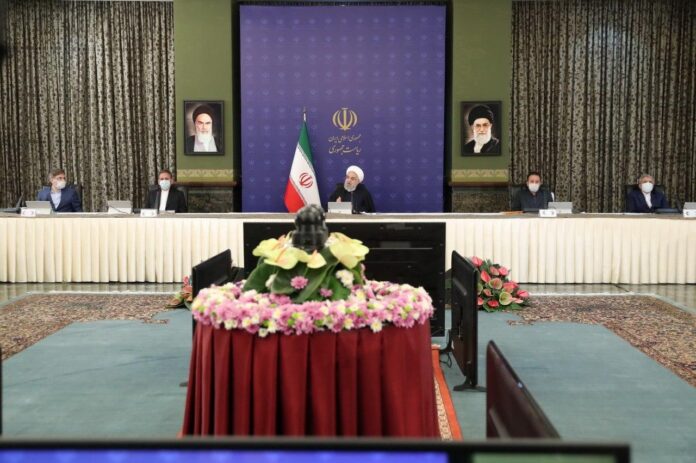
He made the remarks during a cabinet meeting on Sunday evening during which he also issued necessary instructions to the health ministry to further develop laboratory tests and monitoring of patients.
Rouhani also called on universities and knowledge-based companies to further assist the health ministry and the government in preventing and combating the coronavirus.
Most people attribute the high number of cases of gun violence to these extended freedoms. The debate about gun violence attributable to relaxed gun laws is always contentious. In other countries around the globe, gun laws are properly regulated.
The measure for success for gun laws is all about effectiveness and not the number of regulations. A country can have many laws that are not effective. Weak structures of enforcement mean that countries that have a low number of guns end up with many victims of gun violence. When looking at the regulation, we look at the intention of the law. For example, restricting gun acquisition among private citizens is unnecessary, yet it can lead to less gun violence.
In this list, we look at countries that are achieving the coveted milestones of hunting and weaponry regulations. We look at access to weapons for hunting purposes and access to firearms in the private sphere. According to https://huntingmark.com/6-5-creedmoor-scopes/, some restrictive laws on guns can stifle the growth of hunting as a sport. Without access to hunting-range weapons, the sport will be dead. Here are three chosen countries that have well-regulated hunting and weapons regulations.
Germany’s progressive approach
Although there are many guns in the population in Germany, every incidence of mass shootings leads to tightened gun laws. The government may issue firearm licenses to private citizens for hunting purposes. However, the number of firearms and the type differ significantly. The law prohibits private ownership of automatic firearms. The government also reserves the right to deny anyone from accessing guns. Background checks are extensive and exhaustive.
The law allows the authorities to conduct an extensive background check for all applicants. Applicants below 25 years must undergo a psychiatric evaluation. Those above 25 years also have to pass a comprehensive background check and can be recalled for a psychiatric examination at any time. If a firearm holder is involved in drunk-driving or road rage, the authorities can subject the person to further psychological testing to determine fit.
The country has one of the lowest gun violence cases in the world despite over 5 million legal firearms active in the private domain.
Japan’s no gun policy
Private guns are restricted but can be allowed in exceptional circumstances. You cannot own a firearm for personal protection in Japan. Carrying a gun is only allowed for security personnel. Carrying weapons in public openly or in concealed form is vehemently restricted. The fines for violations are stiff with a maximum jail term, now standing at 15 years if you are found in possession of an illegal firearm.
If you apply for private ownership of a gun, the police will likely conduct extensive background checks on your and immediate families before extending the checks to relatives. All swords and arms must be kept in a safe place where only the licensed owner can access. Crime syndicates still manage to smuggle weapons into the country, but gun violence is extremely low in the country.
The country often records zero deaths related to gun violence annually, a figure that would make Americans uncomfortable considering that almost 40,000 people died of fatal gunshot wounds.
Australia responsive approach
Carrying a gun was a cultural heritage, and pride issue in Australia before the Port Arthur shooting. The incident, which claimed the lives of 35 people, rallied the country into a new dispensation. The government can issue gun licenses to private citizens. However, just like Germany and Japan, you cannot carry a weapon in a public place. You cannot carry a concealed or open gun.
Automatic firearms, often used by mass murderers, are prohibited from the private domain. Hunting firearms permits are awarded only after vigorous and robust background checks. The authorities reserve the right to deny anyone access to a firearm, even for hunting. Individuals can only carry guns when they are heading to hunting or target shooting. The regulations are effective in reducing the number of cases attributed to gun violence.
The success of any regulation is all about how well it solves the intended problem. Weapons should only be used for the intended purpose. Carrying or owning multiple guns will not be a problem if the owner is capable of handling the weapons for the intended purpose. Unfortunately, the only way you can know the suitability of the person is to subject them to thorough testing and checking.
The new ambassadors of the Czech Republic, the Republic of Bulgaria, the People’s Republic of Korea, and the Republic of Nicaragua have met with Foreign Minister Zarif at the beginning of their diplomatic missions.
In separate meetings on Monday, the foreign diplomats handed over copies of their credentials to the Iranian foreign minister.
The outgoing ambassador of Iraq, Saad Jawad Qandil, also held talks with and bade farewell to the Iranian foreign minister at the end of his diplomatic mission.
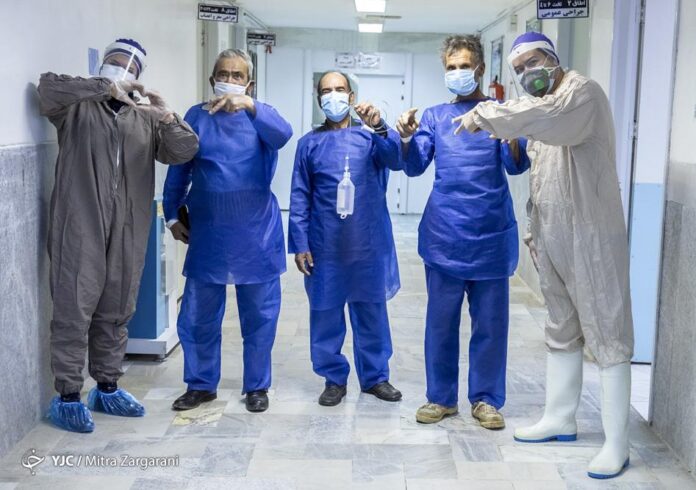
Doctors, nurses and hospital staff have been forced to stay away from their families and loved ones for a long time due to their services to the coronavirus patients in Iran. It’s difficult, but they have to risk their lives to heal the sick.
However, amid these difficulties, every now and then the videos of the self-sacrifice of health workers are published in social media which soften the bitterness of the virus news.
On Saturday, a picture of an old woman with corona, who was hospitalised in Imam Khomeini Hospital of Bonab in East Azarbaijan province, went viral.
Mamma Kobra is an elderly woman who suffers from the Alzheimer’s disease. She does not know those around her and thinks that nurses are her children and the hospital is her home. She insists on sleeping on the ground and the nurses of the ward put her head on their lap to help her relax.
Javad Naseh is a nursing assistant whose image has gone viral these days. He was born in 1986 in Maragheh and works at Imam Khomeini Hospital in Bonab.
He says when the coronavirus was first reported in Bonab, a front was formed to fight against the disease. Young nurses, including him were the main members of this front.
“It was decided that the front be formed both at the isolation ward and the emergency department. Thank God, I could be a part of this front line,” he added.
Mamma Kobra is an 86-year-old woman from Bonab, who is infected with corona, and unfortunately suffers from Alzheimer’s disease as well, he went on to say.
“She is a lovely old woman who is now in good health and hospitalised in the isolation ward. Of course, she gets bad tempered and rude sometimes. But she feels relaxed talking to me and even calls me by my first name.”
Regarding his viral photo with Mamma Kobra, he says “She is not used to sleeping on the bed and because of this she could not sleep for a long time. This caused her to be restless. Her doctor repeatedly instructed the nurses to inject drugs, but none of them worked. Once at midnight the nurses came to inject her a shot, but she got restless and her loud voice angered other patients. My colleagues asked me to come and see what she wanted.”
“She said she has to sleep on the floor. So, I immediately disinfected the floor and put a blanket on the floor for her to sleep on, but I didn’t want her to put her head on the small pillows. I told her she can rest her head on my lap to feel comfortable. At that time, I wasn’t thinking about myself or anything else. I was just trying to calm a patient down because we are health advocates. We don’t know if we may get sick today or tomorrow. The health and well-being of people is more important to nurses than anything else,” continued Mr Naseh.
In the end, this Iranian nurse called on all people to pay attention to health recommendations for their own sake and stay home as much as possible so that the country can get through this critical situation soon.
Iranian medical staff have been looking after coronavirus patients for almost two months now. They have outfits which are hard to wear; still, some wear suits with poems and catchphrases written on them.
“Although this city is gripped by illness, I am a nurse and my heart has been taking risks my whole life”
“Although this city is gripped by illness, I am a nurse and my heart has been taking risks my whole life,” read one of the poems. The poem was written by poet-cum-nurse Sajjad Alaei.
“Don’t let the crisis to get to a point when Iran turns into a cemetery one day,” he warns in one of his poems.
Another suit bears a poem by a Lebanese poet.
“Oh, sorrow! Didn’t your knees begin to hurt for kneeling on our chests?”
“Oh, sorrow! Didn’t your knees begin to hurt for kneeling on our chests?” it reads.
Gholam-Reza Tarighi is another poet one of whose poems is written on one of the suits of the medical staff.
“There is no story which does not end with love”
“There is no story which does not end with love,” it reads.
A line of poem written on another suit reads, “I’m not afraid to see the spetcre of death looming large over the city, I’m a nurse and have put my life on the line for you.”
The medical personnel silently express their voices through the poems on their suits, voices which cannot be heard because of the masks on their faces.
“I’m not afraid to see the spetcre of death looming large over the city, I’m a nurse and have put my life on the line for you.”
Brigadier General Hassan Araqizadeh said no one can say it for sure the virus is human-made. However, considering the evidence, it is a matter of doubt, and all countries are investigating.
This issue is also being studied at Iranian scientific centres, but it is not easy to confirm this scientifically and with certainty, he added.
Araqizadeh pointed to the efforts of the armed forces to fight the coronavirus in the country saying that the Armed Forces have announced their readiness to cooperate with the health sector from the very first days of the spread of this virus.
“70% of the beds in the armed forces hospitals, including the army, the IRGC, the police and the ministry of defence, are available to the corona patients.”
“We currently have 4,200 beds ready for patient admission. In addition, we have pledged to provide 10,000 recovery beds for patients discharged from the hospital. With the addition of 2,200 beds by the army in Tehran, this capacity has reached more than 11,000 beds. In this sector, the demand has not been high and perhaps about 10% of the beds are occupied by patients, and the rest can be used if needed,” he added.
About seven field hospitals have also been set up temporarily by the IRGC and the army in various cities, and will stand as long as needed, he stated.
The Armed Forces are ready to launch a total of 20 makeshift hospitals in places with high numbers of patients, underlined Araqizadeh.
He further said another service provided by the armed forces to combat the spread of the virus was to disinfect places and streets.
“The armed forces are disinfecting various areas using their new warfare equipment and units.”
The intelligence and security services of the armed forces are also involved in detecting and identifying neighbourhoods where hoarded health items are reported, continued this Iranian official.
He also referred to the actions of the armed forces to produce the necessary health supplies to deal with COVID-19.
The Ministry of Defence as well as other sections of the armed forces are responsible for the production of medical equipment and supplies. After changing their production lines, they are producing personal protective equipment, masks, disinfectants, and special clothing.
The services provided by the armed forces during this period are unparalleled in the world and similar measures have not been taken anywhere across the globe, highlighted Araqizadeh.
“For example, the army’s 2,000-bed hospital and recovery facility, created by the ground forces, is unparalleled anywhere in the world. These are just some of the large-scale services provided by the armed forces to combat the spread of the coronavirus and to help the country’s healthcare sector.”
The head of the Health Department of the General Staff of the Armed Forces also talked about the situation of the barracks saying the barracks are one of the cleanest places compared to other gathering centres in the country. There are strict regulations at the entrance to the barracks, and inspections are performed for the personnel.
“All necessary health standards are fully enforced in the barracks, and special rules have been defined to control the entry and exit of soldiers and military personnel, and the people who enter or leave are fully controlled. The inspections are carried out on a regular basis and the necessary medical supplies are provided to the soldiers and staff of the Armed Forces. Thanks God, we have not had any cases of epidemics in any of the barracks,” concluded Araqizadeh.
Art Dubai is one of the leading international art fairs held at the Madinat Jumeirah in the UAE. In recent years, the annual event has turned into a major platform for major art galleries from around the world.
Consisting of four gallery sections (Contemporary, Modern, Bawwaba and Residents), the fair displays a selection of works of art from different countries.
The 14th edition of Art Dubai was scheduled to be held from March 25-28 March, but the outbreak of the novel coronavirus forced the organizers to delay the event. The international fair is going to take place from March 17-20, 2021.
Considering a change in the fair plans, Art Dubai has begun to hold virtual forums and programs in recent days. The exhibition has also released an online catalogue, including the works of art that were planned to go on display in Dubai.
The online catalogue includes more than 500 works of art presented by the art galleries participating in the fair.
The catalogue also involves the works from a number of Iranian artists. Dastan’s Basement, Khak Gallery, Mohsen Gallery, and Saradipour Art Gallery from Iran have taken part in the virtual exhibition and their works have gone on display in the online catalogue.