Wednesday, April 8, 2026
Home Blog Page 28

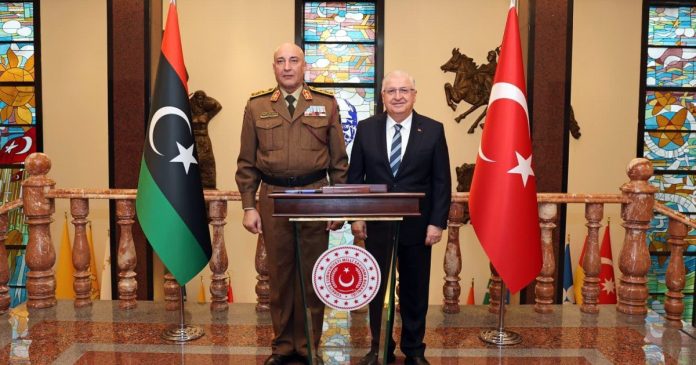
Libyan army chief killed in plane crash near Ankara

The crash on Tuesday killed everyone on board.

The other victims were four high-ranking Libyan military officials as well as three crew members.

Turkish officials told Al Jazeera that initial investigations have ruled out sabotage and instead point to a technical failure as the cause of the crash.

Libyan Prime Minister Abdul Hamid Dbeibah confirmed al-Haddad’s death in a statement on Facebook, saying the “tragic accident” took place as he and his delegation were returning home.

“This great tragedy is a great loss for the nation, the military establishment, and all the people,” he stated, adding, “We have lost men who served their country with sincerity and dedication and were an example of discipline, responsibility, and national commitment.”

Al-Haddad was the top military commander in western Libya and played a crucial role in the ongoing United Nations-brokered efforts to unify the country, which has been divided since 2014 following the NATO-backed revolt that toppled and killed longtime ruler, Muammar Gaddafi.

The four other officers who died in the crash were General Al-Fitouri Gharibil, the head of Libya’s ground forces; Brigadier General Mahmoud Al-Qatawi, who led the Military Manufacturing Authority; Muhammad Al-Asawi Diab, an adviser to the chief of staff; and Muhammad Omar Ahmed Mahjoub, a military photographer with the chief of staff’s office.

The Libyan delegation was in Ankara for high-level defence talks aimed at boosting military cooperation between the two countries, according to Turkish officials.

Dbeibah’s UN-recognised Government of National Unity (GNU) in Tripoli announced official mourning across the country for three days. The GNU statement said that all state institutions would fly flags at half-mast, while official ceremonies and celebrations would be suspended.

Turkiye’s Minister of Interior Ali Yerlikaya said on X that al-Haddad’s plane took off from Ankara’s Esenboga airport at 8:10pm local time (17:10 GMT) en route to Tripoli, and that radio contact was lost about 40 minutes later.

He added that authorities found the plane’s wreckage near the Kesikkavak village in Ankara’s Haymana district.

Yerlikaya noted that the Dassault Falcon 50-type jet had made a request for an emergency landing while over Haymana before all communication ceased.

Burhanettin Duran, the head of the Turkish presidential communications office, said the plane notified air traffic control of an electrical fault and requested an emergency landing. The aircraft was redirected back to Esenboga, where preparations for its landing began.

The plane, however, disappeared from the radar while descending for the emergency landing, Duran added.

Security camera footage aired on local television stations showed the night sky over Haymana suddenly lit up by what appeared to be an explosion.

Turkish Minister of Justice Yilmaz Tunc said that the Ankara chief prosecutor’s office has launched an investigation into the incident.

In a statement to Al Jazeera, a Turkish official stated that “initial reports from the investigation rule out any sabotage to the Libyan Army Chief plane crash”.

The initial cause is technical failure, the official added.

According to the GNU, Libya will send a team to Ankara to work with Turkish authorities on investigating the crash.

Walid Ellafi, the GNU’s state minister of political affairs and communication, told the broadcaster Libya Alahrar that it was not clear when a crash report would be ready.

He said the jet that crashed was a leased Maltese aircraft and that officials did not have “sufficient information regarding its ownership or technical history”.

Eastern Libya commander Khalifa Haftar issued a statement expressing his “deep sorrow over this tragic loss”, while the House of Representatives in Benghazi offered their condolences to the families of al-Haddad and his delegation.

Al-Haddad had been the army’s chief of general staff since August 2020, and was appointed by then-Prime Minister Fayez al-Sarraj.

Turkiye’s ‌Ministry of National Defence had announced the Libyan chief of staff’s visit ‌to Ankara earlier this week, saying ⁠he had met his Turkish counterpart, Selcuk Bayraktaroglu, Turkish Minister of National Defence Yasar Guler, and other Turkish military commanders.

The crash occurred a day ‌after Turkiye’s parliament passed a decision to extend the mandate ⁠of Turkish soldiers’ deployment in Libya by two more years.

Ankara has close ties with the UN-recognised government in Tripoli, which it provides with economic and military support.

In 2020, it sent military personnel there to train and support the government, and later reached a maritime demarcation ‌accord.

In 2022, Ankara and Tripoli also signed a preliminary accord on energy exploration.

Turkiye has recently switched course under its “One Libya” policy and ramped up contacts with Libya’s eastern faction as well.
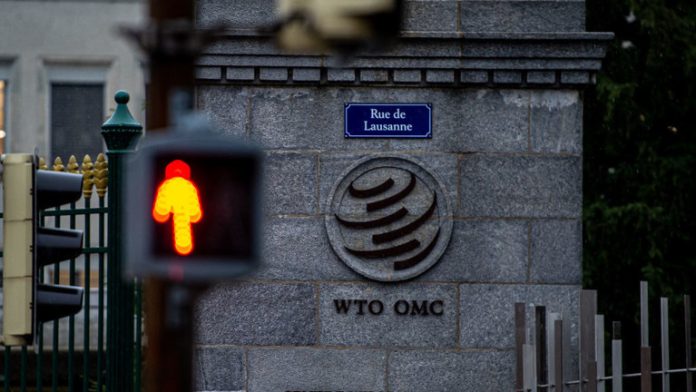
 

China launches WTO complaint against India over solar, IT trade

The WTO said that Beijing had requested that it initiate so-called dispute consultations with India, charging it was breaching international trade rules.

Beijing is challenging certain subsidies granted to India’s solar sector as well as tariffs imposed by India on products such as phones or equipment for manufacturing flat screen display devices, according to the complaint dated on December 19 and circulated to WTO members on Tuesday.

“China said the measures in question include India’s tariff treatment and certain measures that China said are contingent upon the use of domestic inputs and otherwise discriminate against Chinese imports,” the WTO explained.

In the request, China charged that the Indian measures were “inconsistent with various provisions of the WTO’s General Agreement on Tariffs and Trade (GATT) 1994, the Agreement on Subsidies and Countervailing Measures, and the Agreement on Trade-Related Investment Measures”.

WTO consultations give the parties an opportunity to discuss the matter and to find a satisfactory solution without proceeding further with litigation.

After 60 days, if consultations have failed to resolve the dispute, the complainant may request adjudication by a panel.


Israel says will never leave Gaza

The minister made the statement on Tuesday while participating in a ceremony to mark the opening of 1,200 new homes in the occupied West Bank’s Beit El settlement. In his speech, Katz pledged to rebuild the settlements in northern Gaza that Israel abandoned back in 2005.

“We are deep inside Gaza, and we will never leave Gaza, there will be no such thing,” he stated.

“When the time comes, God willing, we will establish in northern Gaza Nahal outposts in place of the communities that were uprooted,” Katz added.

The minister was referring to a type of military-agricultural outpost established by its troops in both the Israeli-occupied territories throughout the second half of the 20th century. The bulk of those outposts were ultimately converted into permanent civilian settlements.

The defense minister’s remarks are at odds with the policy voiced by Prime Minister Benjamin Netanyahu, who has repeatedly said Tel Aviv has no plans to resettle Gaza. His statements also collide with President Donald Trump’s peace plan, which has induced the warring sides to enter a fragile truce. Upcoming phases of the US plan envision Israel withdrawing from the Palestinian enclave and explicitly state that “Israel will not occupy or annex Gaza.”

The minister’s remarks have drawn criticism from various parties, who accuse Katz of making inflammatory statements at a “critical” moment for Israel’s national security and spurning international partners.

“While the government votes with one hand in favor of the Trump plan, with the other hand it sells fables about isolated settlement nuclei in the Strip,” former chief of staff Gadi Eisenkot wrote on X.

The backlash has prompted Katz to walk back his remarks somewhat, with his office stating that “the government has no intention of establishing settlements in the Gaza Strip”, asserting the comments were made “solely in a security context.”


Iran to move toward scientific approach to water management

Iran Water Crisis

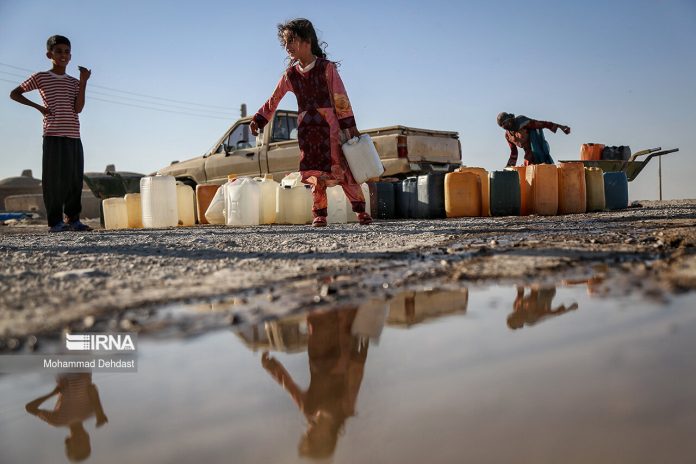
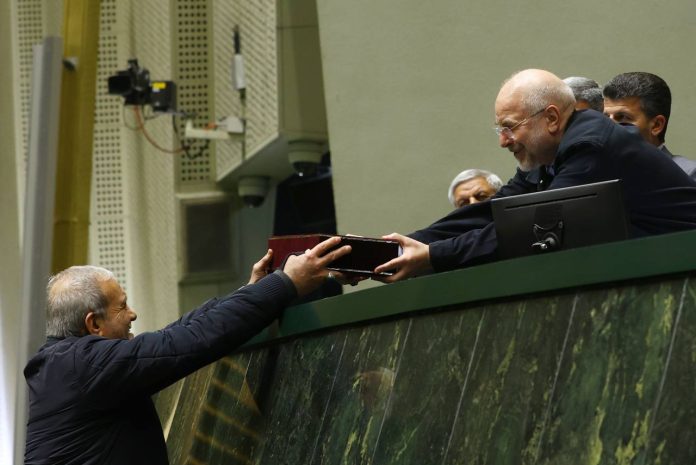
Speaking in an open session of the Islamic Consultative Assembly, Pezeshkian said all provinces, without exception, are facing water stress, citing ongoing tensions among provinces including Isfahan, Chaharmahal and Bakhtiari, Kohgiluyeh and Boyer-Ahmad, Khuzestan, and Yazd.

He said continued disputes between provinces are not a solution, noting that such conflicts would not arise if sufficient water resources existed.

The president said citizens who have made sacrifices for the country are now confronting a complex crisis that cannot be resolved through rivalry or fragmented decision-making.

He stressed that the government is committed to implementing scientific recommendations provided by universities and experts, and urged lawmakers to place trust in specialists and academic research.

Pezeshkian argued that science-based decisions, even if they encounter implementation challenges, can be corrected and improved, while non-expert decisions have historically deepened crises.

He added that ineffective laws must be revised, saying repeated legislation since the early years after the revolution has failed to reverse worsening water indicators.

Referring to studies conducted with the participation of experts in water resources, agriculture, irrigation, sociology, economics, and management, Pezeshkian said these assessments show a continuous deterioration of the country’s water situation.

He emphasized that national and international research confirms the crisis affects all provinces and cannot be solved simply by reallocating or redistributing water.

The president also compared the water crisis to air pollution in Tehran, saying both are the result of development that exceeded environmental capacity.

Two Americans killed fighting for Ukraine: Newsweek

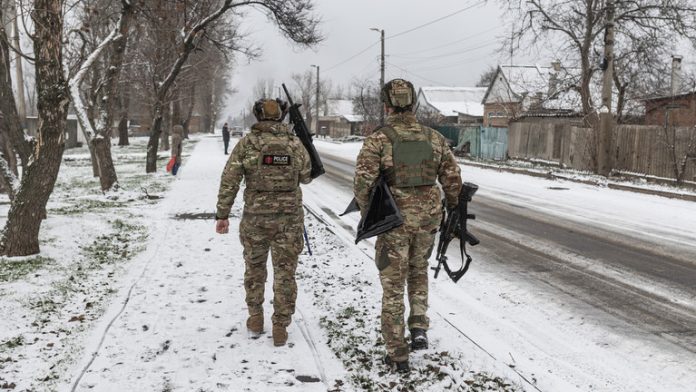
The deaths of the US citizens, identified as Brian Zacherl and Ty Wingate, has been confirmed by their relatives on social media, the outlet said in an article.

They were apparently members of the International Legion, which is subordinate to the Ukrainian military intelligence (HUR), it added.

Zacherl’s nephew wrote in a post on Facebook on December 5 that he had been “killed in battle a couple of days ago,” the article read. The mercenary’s wife and two children remained in Kiev, “waiting for conditions to allow the recovery of his body from the battlefield,” according to the nephew.

The mercenary’s father, Brian Zacherl Senior, is a former US marine who also worked for the CIA between 2013 to 2018, RIA Novosti reported after studying his accounts on social media.

Wingate died on December 3 when a Russian drone struck an armored personnel carrier he was traveling in, Newsweek reported, citing his sister. He left behind a pregnant wife, she stated.

There is no official data on the number of US citizens who have been killed since the escalation between Russia and Ukraine in February 2022. According to figures from the Kiev-based Museum of the History of Ukraine in the Second World War, which hosts an exhibition on foreign mercenaries participating in the ongoing conflict, there had been 92 American fatalities as of early September.

The exhibition’s curator, Yury Gorpinich, told the New York Times that “several thousand” US citizens have served with Ukrainian forces so far.

In April, the Kiev government simplified rules for recruiting foreigners into its military as Ukraine struggles to replenish heavy losses suffered on the front line amid mass draft avoidance and desertions.

Over 15,000 mercenaries, mostly from Poland, the US, and Georgia, have taken part in the fighting on Kiev’s side, according to estimates by Moscow. Nearly 6,500 of them have been killed in action as of December 2024, according to Russian figures.


Pres. Pezeshkian submits draft annual budget bill to Parliament

The budget bill has been drafted for the first time using the “new rial,” following the removal of four zeros from Iran’s national currency.

If fully approved, the move is expected to end years of using extremely large figures and complex calculations in official financial documents.

All revenue, expenditure, institutional allocations, and major budget tables in the draft have been prepared entirely under the new currency framework. This marks the first annual budget to be officially compiled and submitted using the new rial after the completion of the redenomination process.

At the same time, members of the government’s economic team attended Parliament to brief lawmakers on the deteriorating current economic situation. Parliamentary officials have warned that if explanations fail to satisfy legislators, ministers could face impeachment proceedings.

Lebanese army confirms a soldier among those killed in Israeli attack

Israel has kept up regular strikes on Lebanon, usually saying it is targeting Hezbollah, despite a November 2024 ceasefire that sought to end more than a year of hostilities with the group, which it accuses of rearming.

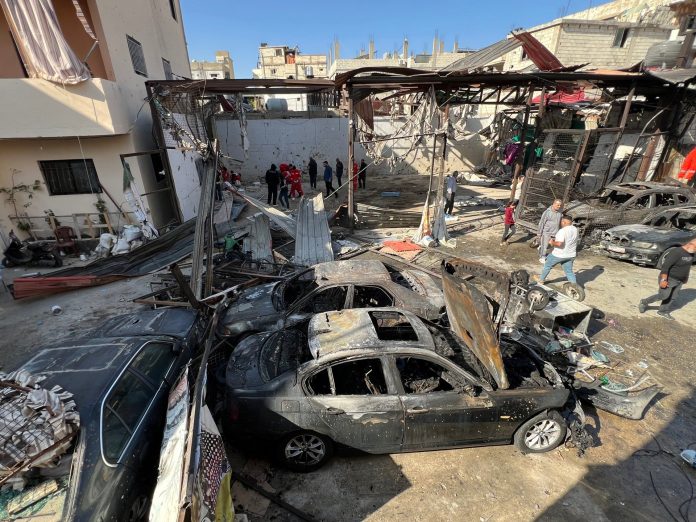
Lebanon’s state-run National News Agency reported that Monday’s strike on a vehicle was carried out by an Israeli drone around 10 kilometres (six miles) from the southern coastal city of Sidon and “killed three people who were inside”.

The Lebanese army said on Tuesday that Sergeant Major Ali Abdullah had been killed the previous day “in an Israeli airstrike that targeted a car he was in” near the city of Sidon.

The Israeli army claimed it had killed three Hezbollah operatives in the strike, adding in a statement on Tuesday that “one of the terrorists eliminated during the strike simultaneously served in the Lebanese intelligence unit”.

A Lebanese army official told AFP it was “not true” that the soldier was a Hezbollah member, calling Israel’s claim “a pretext” to justify the attack.

Under heavy US pressure and amid fears of expanded Israeli raids, Lebanon has committed to disarming Hezbollah, starting with the south.

The Lebanese army plans to complete the group’s disarmament south of the Litani River — about 30 kilometres from the border with Israel — by year’s end.

The latest strike came after Lebanese and Israeli civilian representatives on Friday took part in a meeting of the ceasefire monitoring committee for a second time, after holding their first direct talks in decades earlier this month.

The committee comprises representatives from Lebanon, Israel, the United States, France and the United Nations Interim Force in Lebanon (UNIFIL).

More than 340 people have been killed by Israeli fire in Lebanon since the ceasefire, according to an AFP tally of Lebanese health ministry reports.


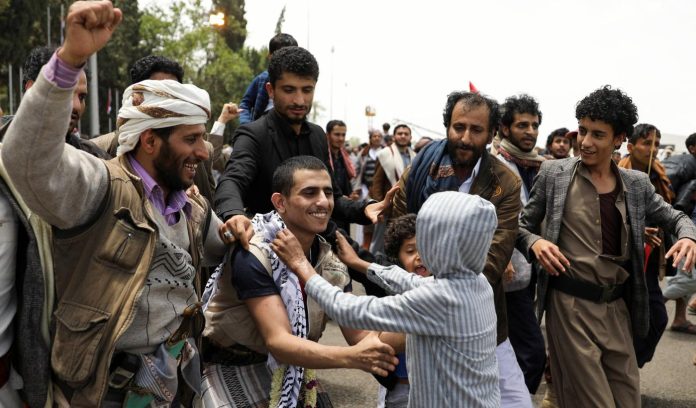
Houthis, Yemen government to exchange thousands of prisoners: Officials

Yemen Saudi Arabia prisoner swap

Majed Fadhail, a member of the government delegation for the prisoner swap talks, stated they had agreed with the Houthis on a new exchange that would see “thousands” of war prisoners released.

Abdulqader al-Mortada, an official with the Houthi delegation, announced in a statement on X that “we signed an agreement today with the other party to implement a large-scale prisoner exchange deal involving 1,700 of our prisoners in exchange for 1,200 of theirs, including seven Saudis and 23 Sudanese”.

In a statement on Tuesday, the UN envoy on Yemen Hans Grundberg said the prisoner swap deal came after nearly two weeks of talks in Muscat, the capital of Oman, a mediator in the conflict between the government and the Houthis that began in 2014.

He added that its “effective implementation will require the continued engagement and cooperation of the parties, coordinated regional support and sustained efforts to build on this progress toward further releases”.

The war in Yemen has been largely frozen since 2022, but tensions have risen in recent weeks as the separatist Southern Transitional Council made military advances in the country’s eastern governorates of Hadramout and al-Mahra.

Overall, the conflict has killed tens of thousands people and created one of the world’s worst humanitarian disasters. According to the UN, nearly 20 million people across Yemen depend on aid to survive, while close to five million remain displaced.

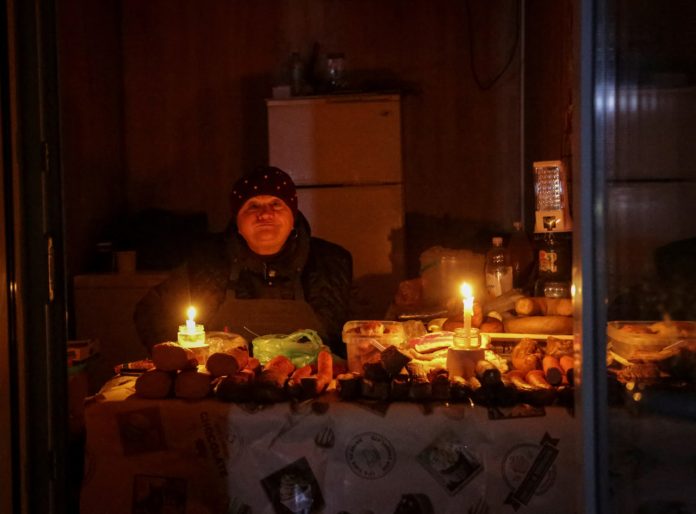
Ukraine says Russian aerial attacks cut power across the country

“Russia once again is attacking our energy infrastructure. As a result, emergency power outages have been introduced in a number of Ukrainian regions,” the country’s energy ministry said on Telegram.

Fires broke out in several regions as a result of the “massive missile and drone attack”, Ukraine’s power operator Ukrenergo said, as temperatures dipped towards freezing in most of the country.

One person was killed in the western region of Khmelnytsky and another was killed in Kyiv, local authorities said.

Several people, including children, were wounded in a number of regions, according to local authorities.

Russia has intensified its strikes on the southern Ukrainian port city of Odesa over the past several days in what Ukrainian authorities say is an attempt to completely destroy maritime logistics.

Fresh strikes sparked fires but did not result in injuries in the Black Sea city, emergency services said on Tuesday.

Russian strikes on the Black Sea regions have intensified, hitting bridges, ports and cutting electricity and heating to thousands in the middle of winter.

The latest strikes followed weekend negotiations that the United States held in Miami with Russian and Ukrainian delegations as part of its effort to end the war that began when Moscow sent troops into its neighbour in February 2022.

“Slow progress is being observed,” state media reported Russian deputy foreign minister Sergei Ryabkov as saying, after both Russia and Ukraine sent negotiators to the Florida city for separate talks with US President Donald Trump’s envoys Steve Witkoff and Jared Kushner.

Witkoff had hailed “constructive” discussions with both sides, but there were no signs of a breakthrough.

Iran focuses on nuclear cooperation with Russia, aims to build domestic power plants

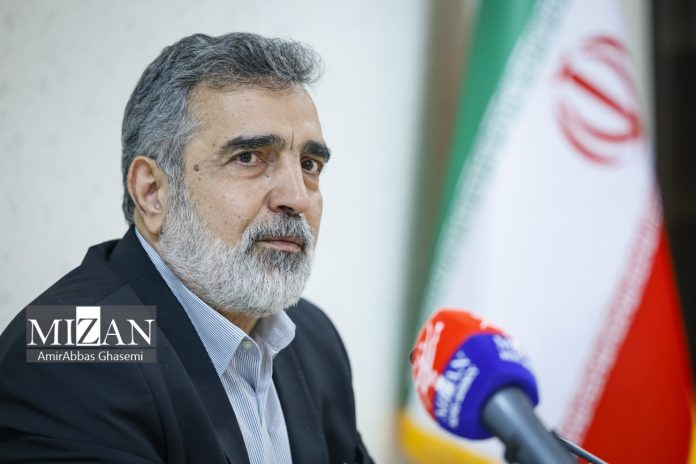
Behrouz Kamalvandi

Speaking to ILNA, Behrouz Kamalvandi emphasized Iran’s goal of developing fully domestically-built nuclear power plants.

He noted that Iran’s collaboration with Russia spans several areas, especially in nuclear power. He added that in addition to one operational plant running for 11 years, two more plants are under construction with significant progress.
Plans also include both large-scale and small modular reactors. Cooperation with Russia extends to other sectors, such as radiopharmaceuticals.

Regarding China, Kamalvandi said previous contacts existed, but currently there is no active collaboration, as Iran prioritizes its partnership with Russia and domestic capabilities.

He highlighted a 300-megawatt plant under construction in Darkhovin, emphasizing that essential components such as steam generators, boilers, vessels, and turbines can now be produced domestically.

“Our aim is to become self-sufficient in nuclear power plant construction,” Kamalvandi stated, noting that Iran manufactures its own equipment and handles maintenance in-house.

Although Iran does not currently export nuclear power, it produces radiopharmaceuticals for foreign markets.

Kamalvandi expressed optimism, saying the country is on track for a promising future in domestic nuclear energy development.