Sunday, December 28, 2025
Home Blog Page 2632

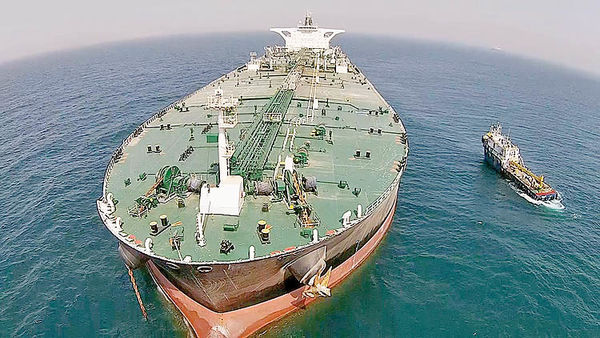
Iran Puts into Service 3 Petrochemical Projects Worth $1bn

Speaking at a ceremony where the projects were put into service, Petroleum Minister Bijan Namdar Zangeneh said the projects come with a price tag of more than $1 billion altogether.

By March 2020, the oil minister said, as many as 19 petrochemical projects worth $11.4 billion will have been put into service.

He added the country’s capacity of petrochemical production will reach 100 million tonnes annually in one year’s time, registering an 80-percent rise compared to eight years ago.

He said the petrochemical products to be produced are estimated to worth $25 billion, in total, per year.

However, the oil minister noted plans are underway to push up output capacity to 133 million tonnes per year in 2025, with products worth $37 billion.

Those Behind Economic War on Iran Left on Ash Heap of History: Rouhani

Advisor to President Rouhani says Trump Will Fail in Nov. Election
US President Donald Trump prays during a cabinet meeting in the White House / Photo by AP

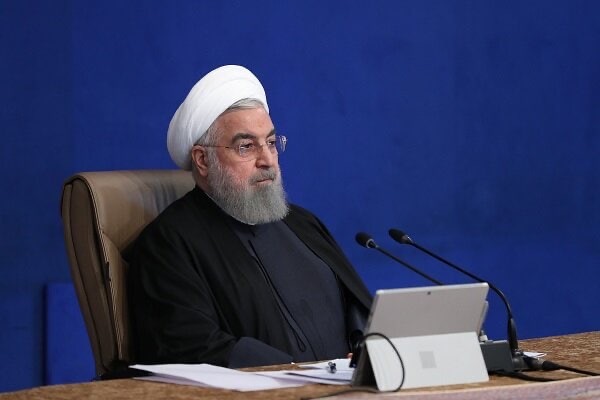
President Hassan Rouhani said Iran stood up to the US economic war and pressure over the past few years.

“With its 3-year resistance against the economic war launched by a bullying power, Iran’s economy showed that it is a great and resistant economy,” said the president.

“No country in the region has the power to resist an economic war for three years and emerge victorious, and this shows the grandeur, strength and resilience of the Iranian nation, which was brought about with people’s self-reliance … and due to Iran’s special geopolitical situation,” he said.

“No individual or power in the world can eliminate Iran, with its great geographical situation, [from playing a role] in the region or in the world,” said the president.
“Many intended to destroy Iran, but failed to, and now these were the last ones to claim they were able to do so, but failed to,” he added.

Elsewhere in his remarks, President Rouhani said Iran, with its great potential and capabilities, can meet the needs of the region and even the world “at a lower cost and more easily in certain cases.”

He said Iran draws on domestic and international technology to boost local production.
He underlined the US sought to keep Iran from importing foreign know-how, but failed to.
President Rouhani also underscored that Iran favours “constructive interaction” with the world, but noted that constructive interaction will be useful only when coupled with national might.

The president reiterated the projects inaugurated in Iran on a weekly basis shows the country will not retreat in the face of enemy plots and will keep on the path to progress until achieving final victory.

Iranian, Azerbaijani Foreign Ministers Hold Talks via Videoconference

In this conversation, the two top diplomats discussed the latest developments pertaining to mutual relations as well as the post-war situation in the region.

In the virtual meeting, which was also attended by both countries’ ambassadors, the two ministers urged further promotion of reciprocal ties.

They also exchanged views on Tehran-Baku cooperation at international circles as well as on the Caspian Sea, reconstruction projects, incomplete projects, putting the Khoda-Afarin Dam into operation, the Rasht-Astara railway, the North-South and East-West corridors, and holding a meeting of Iran-Azerbaijan joint economic commission.

They also discussed other issues of mutual interest.

The two top diplomats further called borders between the two countries “borders of peace, friendship and cooperation,” and underscored the need to ensure their security.

Zarif also invited his opposite number to visit Tehran in the near future.

Iranian Diplomat Meets Several Afghan Officials in Kabul

The Foreign Ministry Spokesman and head of the Ministry’s Centre for Public and Media Diplomacy, who is visiting Afghanistan for talks on cultural and media cooperation, held separate meetings with a number of the incumbent and former Afghan officials during his stay in Kabul.

In meetings with Head of Afghanistan’s High Council for National Reconciliation Abdullah Abdullah, the Afghan minister of Information and Culture, the Afghan foreign minister’s political deputy, former Afghan president Hamid Karzai, and with his counterpart in the Foreign Ministry of Afghanistan, Saeed Khatibzadeh discussed the ways to enhance and deepen the cultural relations and the mechanisms for the promotion of media cooperation between the two countries.

The other plans during the Iranian spokesman’s stay in Afghanistan included meetings with a number of members of the Afghan Parliament, the cultural and media elites, representatives of think tanks, president of Kabul University, and a number of faculty deans of the university.

Khatibzadeh also conducted an interview with Ariana Afghanistan International TV and held frank and friendly talks with a number of Afghan media directors and managers.

During a visit to Kabul University, the Iranian spokesman offered his condolences to the Afghan government, people, and families of the students who were martyred in a recent terrorist attack on the university, and laid flowers in remembrance of the martyrs.

The other purposes that Saeed Khatibzadeh is pursuing in the trip to Afghanistan include plans to strengthen the strategic cultural relations, arrange for the exchange of media delegations, and invite the Afghan media persons and prominent cultural and scientific figures to visit Iran.

Rouhani Warns Qatari Emir about Israeli Presence in Region

Iran-Qatar-Rouhani
Iran-Qatar-Rouhani

In a telephone conversation with Emir of Qatar Sheikh Tamim bin Hamad al-Thani on Wednesday, President Rouhani expressed Iran’s determination to maintain brotherly relations with the Persian Gulf littoral states through dialogue and understanding.

The president also hoped that the new developments in the international relations would make certain regional countries modify their hostile polices and would also lead to opportunities for dialogue and intra-regional compromise.

The regional countries must exercise wisdom, prudence, rationality and sincere dialogue to overcome the policy of bullying and reliance on the outsiders, President Rouhani underlined.

“Sadly, letting the Zionist regime into the region will be the factor behind insecurity and instability, and it is really surprising that some neighbours link their security to relationship with the criminal Zionist regime, which is the enemy of the entire region and the Islamic countries,” the president added.

“We the regional countries can resolve our problems as neighbours and brothers,” President Rouhani stated, expressing confidence that the upcoming months would mark better conditions in the regional relations.

Hailing Iran’s friendly and growing ties with Qatar, President Rouhani called for the expansion of bilateral relations in all fields of mutual interest, particularly the economic and trade cooperation.

“Rapid implementation of the agreements between Tehran and Doha would benefit the two nations and the region,” the Iranian president noted.

Pointing to the deals that the officials of the two countries have agreed on during the latest meeting of Iran-Qatar Joint Economic Cooperation Commission in Isfahan, President Rouhani hoped that all agreements would be carried out.

In response to an invitation from the Emir of Qatar to pay an official visit to Doha, President Rouhani hoped the visit would take place at the appropriate time.

For his part, Sheikh Tamim bin Hamad al-Thani lauded the “strategic and growing” relations between Qatar and Iran, saying Doha will do its utmost to carry out the agreements with Tehran, which he said would serve the interests of the two nations.

On the regional developments, the Qatari Emir said, “We believe that cooperation between Iran and the Persian Gulf countries must further grow in all fields, including for the security of regional waters.”

The Emir of Qatar also emphasized that Iran must be a party to the negotiations for any agreement on ensuring regional security.

“All of us have been harmed and suffered from a series of irresponsible moves by some countries in the region,” Sheikh Tamim bin Hamad al-Thani added, hoping that the new international developments would result in the resumption of talks between Iran and the Persian Gulf states.

The Emir also invited President Rouhani to pay an official visit to Doha.

Iran Frees British-Australian ‘Spy’ in Exchange for Three Iranians Jailed Abroad

Moore-Gilbert, a lecturer at Melbourne University who was arrested in September 2018, had already served two years of her 10-year sentence in Iran before being released on Wednesday.

According to Iranian state media, she was exchanged for an Iranian businessman and two Iranian citizens “who had been detained abroad”.

Iran has released British-Australian academic Kylie Moore-Gilbert
This photo released by Iranian state media apparently shows British-Australian citizen Kylie Moore-Gilbert being released in a prisoner swap

They have not yet been named, but unconfirmed reports say at least one of them is an Iranian jailed in Thailand for alleged involvement in the 2012 bombing of the Israeli embassy in Bangkok.

A video purporting to show the exchange was published by state broadcaster IRIB news.


A Look at Iranian Newspaper Front Pages on November 25

Iranian Newspapers

Iranian Newspapers

Abrar Newspaper:

1- Obama: It Takes Time for Biden to Restore Int’l Credibility, Return to JCPOA

2- Iran Can Increase Enrichment, Produce Advanced Machines, Design Reactors

A Look at Iranian Newspaper Front Pages on November 25


Aftab-e Yazd Newspaper:

1- Trump Backs Off

2- End of Trump and Trumpism [Editorial]

3- Efforts to Save US from Int’l Isolation

A Look at Iranian Newspaper Front Pages on November 25


Arman-e Melli Newspaper:

1- Iran Leader: Willpower and Courage Needed to Resolve Economic Woes

A Look at Iranian Newspaper Front Pages on November 25


Donya-ye Eqtesad Newspaper:

1- Leader: We Shouldn’t Expect Foreign Developments to Cause Opening in Iran

A Look at Iranian Newspaper Front Pages on November 25


Ebtekar Newspaper:

1- Leader: We Negotiated for Years to Have Bans Lifted, but It Didn’t Work

2- Zarif: US Responsible Withdrawal from Afghanistan Positive Step toward Sustainable Peace

A Look at Iranian Newspaper Front Pages on November 25


Etemad Newspaper:

1- We Tested Negotiation and It Didn’t Work

2- Coronavirus and Violence against Women in the Margins

3- General Dehqan Starts Presidential Campaign without Uniform

* Former DM Officially Declares Candidacy in 2021 Presidential Election

A Look at Iranian Newspaper Front Pages on November 25


Iran Newspaper:

1- Path of Neutralizing Sanctions Is Difficult but Leads to Good Result

2- Rouhani Praises People, Business Owners for Cooperation in Containing COVID-19

A Look at Iranian Newspaper Front Pages on November 25


Javan Newspaper:

1- Iran Leader: Negotiation for Removal of Sanctions Doesn’t Work

2- Former Mossad Chief: Our Prime Ministers Used to Wear Women’s Clothes to Meet Arabs

A Look at Iranian Newspaper Front Pages on November 25


Kayhan Newspaper:

1- Trump Finally Concedes Defeat: Power Transition Will Start

2- Ansarullah: The Missile Used to Hit Jeddah Had Been Prepared for Attacking Israel

3- Zarif: Iran Supports Intra-Afghan Peace Talks

A Look at Iranian Newspaper Front Pages on November 25


Khorasan Newspaper:

1- Iran Leader Calls for Neutralizing Sanctions Instead of Trying to Remove Them

A Look at Iranian Newspaper Front Pages on November 25


Mardom Salari Newspaper:

1- Trump Finally Accepts Results of Election

2- Leader: Serious Action Needed to Remove Livelihood Problems

3- Iran’s Foreign Trade Exceeds $44 Billion

A Look at Iranian Newspaper Front Pages on November 25


Shargh Newspaper:

1- Here’s First Candidate for 2021 Presidential Election

2- Saudi Looking for New Front against Iran?

A Look at Iranian Newspaper Front Pages on November 25

Some 900,000 Iranians Contract Coronavirus: Ministry

In a press briefing on Wednesday, Sima-Sadat Lari said the virus has also killed 469 patients since Tuesday noon, increasing the overall death toll to 46,207.

She said so far 625,606 patients have recovered from the disease or been discharged from the hospital.

Lari went on to say that 5,832 patients are also in critical conditions caused by more severe infection.

The spokeswoman noted that 5,913,229 COVID-19 tests have been taken across the country so far.

She said the high-risk “red” zones include Tehran, Qom, Mazandaran, East Azarbaijan, Isfahan, Yazd, Ardabil, Khorasan Razavi, Khuzestan, Hamadan, West Azarbaijan, Bushehr, Chaharmahal and Bakhtiari, Kohgiluyeh and Boyer-Ahmad, Alborz, Lorestan, Markazi, Ilam, South Khorasan, Kermanshah, North Khorasan, Semnan, Gilan, Zanjan, Qazvin, Kurdistan, and Kerman provinces.
The “orange” and “yellow” zones also include Golestan, Hormozgan, Fars, and Sistan and Baluchestan provinces, she added.

Iran Says Not Going to Renegotiate Every Single Provision of JCPOA

Chief of Staff of the Iranian president Mahmoud Vaezi said on Wednesday the reality is that the other parties to the Iran deal did not deliver on their commitments under the agreement.

“They failed to live up to their commitments, so we scaled down our obligations in five stages,” he said.

“Iranian President Hassan Rouhani announced today that if they return to the agreement as it was on January 20, 2017, the day when Mr. Trump took office, then we will be ready to return to that, too,” the official explained.

He also made it clear that no new talks are to be held on the JCPOA.

“We are not going to sit down for talks and discuss every provision of the JCPOA. … I believe we shouldn’t behave as if some fresh negotiations are to be held on the JCPOA,” he noted.

“Talks on the JCPOA have already been held, and they resulted in a framework, which has gone through its stages both in Iran and in other countries,” he said.

“What has happened is that countries, especially the United States, failed to make good on their commitments. Our most important demand and condition is that all signatories to the JCPOA, both Iran and other parties, must respect their obligations under the deal,” said Vaezi.