Wednesday, April 8, 2026
Home Blog Page 26

North Korea slams Washington-Seoul nuclear submarine deal as ‘offensive act’

Kim said the deal between Seoul and Washington was an “offensive act severely violating [Pyongyang’s] security and maritime sovereignty and a threat to security that must be countered”, according to state news outlet KCNA.

It was now urgent to “further accelerate the radical development of the modernisation and nuclear weaponisation of the naval force” of North Korea, Kim added, according to the report.

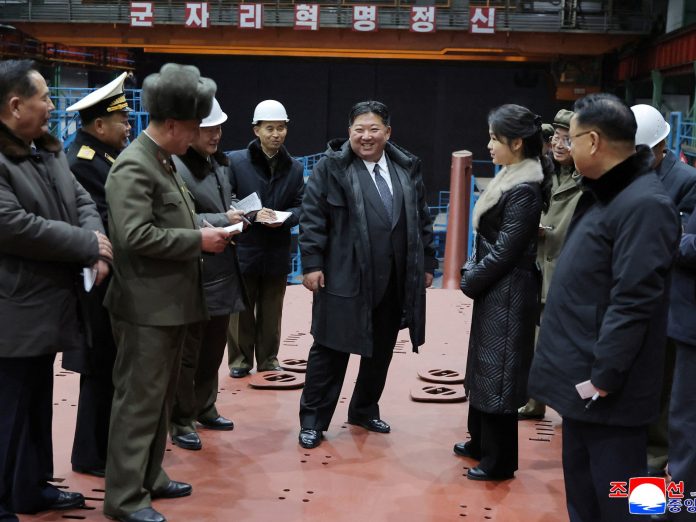
Kim made the remarks as he toured a facility on Wednesday where Pyongyang is working on an “8,700-tonnage nuclear-powered strategic guided missile submarine”.

The North Korean leader on Wednesday also oversaw the test firing of a new high-altitude long-range anti-air missile into the Sea of Japan, according to KCNA, which the news outlet referred to as the “East Sea of Korea”.

KCNA reported that the test was successful, and the missile successfully hit a mock target at an altitude of 200 kilometres (124 miles).

The developments came as Seoul said it was pursuing a “standalone deal” with the US to acquire nuclear-powered submarine technology, according to South Korea’s Yonhap news agency.

US law bans the transfer of nuclear material for military use, but South Korea could receive an exemption from US President Donald Trump, the East Asian country’s national security adviser, Wi Sung-lac, told the media following a meeting with Secretary of State Marco Rubio and Secretary of Energy Chris Wright.


Tanker carrying 4 million liters of smuggled fuel seized in Persian Gulf

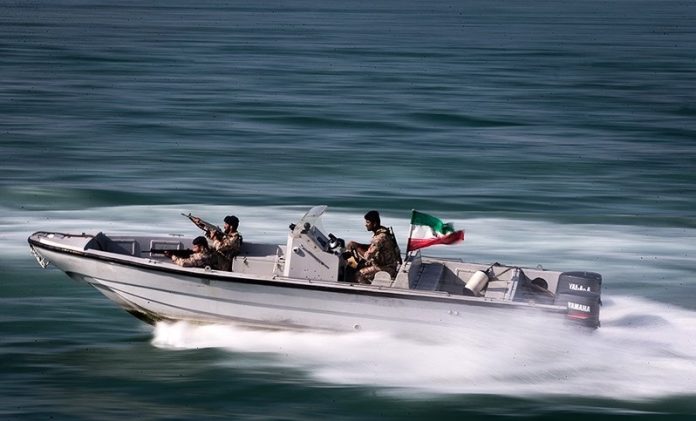
IRGC Boat

The IRGC’s news website reported on Wednesday that the ship was carrying 4 million liters of smuggled fuel when it was seized inside Iran’s territorial waters.

Commander of the IRGC’s First Naval Zone, Brigadier General Abbas Gholamshahi, said that 16 crew members aboard the ship, all non-Iranian nationals, were also detained during the operation.

Gholamshahi added that the tanker was part of an organized fuel-smuggling network operating in the region and was planning to offload its cargo onto larger vessels outside the Persian Gulf.

He said the vessel and its crew had been handed over to judicial authorities, adding that the fate of the seized fuel will be determined in accordance with Iranian laws and regulations.

“Any attempt to bypass laws and illegally transfer fuel out of territorial waters will be met with a swift and decisive response,” added the commander.

The IRGC has stepped up its crackdown on fuel smuggling in the Persian Gulf amid a rise in such cases, which experts attribute to the growing gap between Iran’s low domestic fuel prices and higher rates in neighboring countries.

In late November, the force seized an Eswatini-flagged vessel carrying 350,000 liters of smuggled fuel.

In a separate case unrelated to fuel smuggling that drew international attention in mid-November, the IRGC seized a Marshall Islands-flagged tanker outside Iran’s territorial waters after determining that it was carrying an unauthorized petrochemical cargo belonging to Iran.

The vessel, named Talara, was released a few days later after its cargo was offloaded.


Diplomacy does not entail sending bombers: Iran tells US

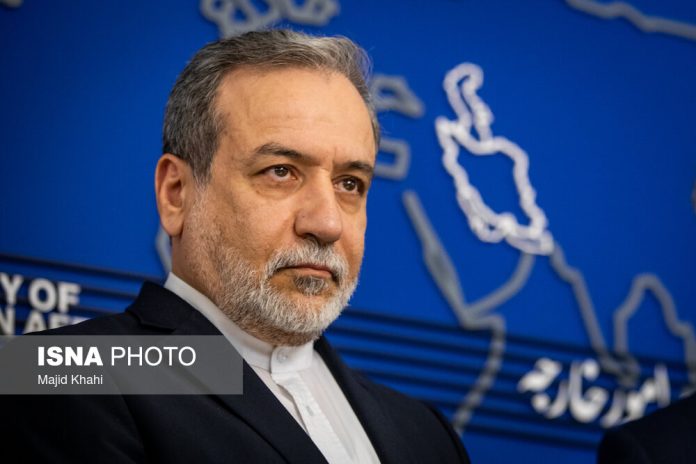
Abbas Araghchi

Morgan Ortagus, the US deputy special envoy for West Asia, told the Security Council on Tuesday that Washington remains available for “meaningful” negotiations with Iran over its nuclear program, but said the administration of President Donald Trump will not allow enrichment on Iranian soil.

Araghchi described the remarks as “a new definition of diplomacy by the US.”

Noting that Washington denies Tehran’s “internationally recognized rights” to uranium enrichment, Araghchi said, “This is dictation and not negotiation, let alone a meaningful one.”

“The world witnessed how we were negotiating when the US opted to open fire on our people and torpedoed diplomacy,” Araghchi added, in reference to the Israeli-US aggression of June.

“We did what we always do: resist and confront those who assault us, and make sure they regret it.”

Supported by the United States, Israel conducted the aggression on June 13, a few days before the sixth round of indirect nuclear talks between Tehran and Washington.

More than a week later, the United States also entered the war by bombing three Iranian nuclear sites in a grave violation of the United Nations Charter, international law, and the Non-Proliferation Treaty (NPT).

On June 24, Iran, through its successful retaliatory operations against both the Israeli regime and the US, managed to impose a halt to the illegal assault.

“‘Extending the hand of diplomacy’ does not entail sending bombers and then crow about their failure as a success,” Araghchi stated, urging Washington to “try real and honest diplomacy instead of attempting to deceive the world.”

Iran’s permanent mission to the United Nations also reacted to the remarks.

“How touching to hear lectures on ‘diplomacy’ from a party that openly acknowledges its leading role in enabling and coordinating the Israeli regime’s war against Iran,” the mission posted on X.

In November, Trump acknowledged the role of the United States in the Israeli aggression.

“Israel attacked [Iran] first. That attack was very, very powerful. I was very much in charge of that.”

“Zero enrichment, ultimatums, and coercion wrapped in diplomatic vocabulary do not constitute negotiations; they merely confirm that the objective is capitulation, not agreement,” the Iranian mission said.

The position of the Islamic Republic, it added, “is anchored in the rule of law, not the rule of power.”


Iran’s Esteghlal secure qualification after decisive away win in Manama, Bahrain

After losing the first leg 1–0 at home in Tehran, the Iranian side responded with a disciplined and effective performance on the road. Ali Gholizadeh opened the scoring in the 15th minute to level the tie on aggregate.

Esteghlal then struck twice late in the match, with substitute Nazon making an immediate impact by scoring in the 82nd minute, before Asani added the third goal in the 87th minute to seal the win.

The result confirmed Esteghlal’s qualification from Group A as the second-placed team with eight points, finishing behind Al-Wasl of the UAE, who advanced as group winners with 14 points.

Al-Muharraq finished third in the group with seven points, while Jordan’s Al-Wehdat ended the group stage in fourth place with four points.

Esteghlal now move on to the next round, where they are expected to face stronger opponents, including high-profile clubs such as Saudi Arabia’s Al-Nassr, a team boasting global stars like Cristiano Ronaldo.

Zelensky discloses US-Ukraine plan to end Russian war, key questions remain

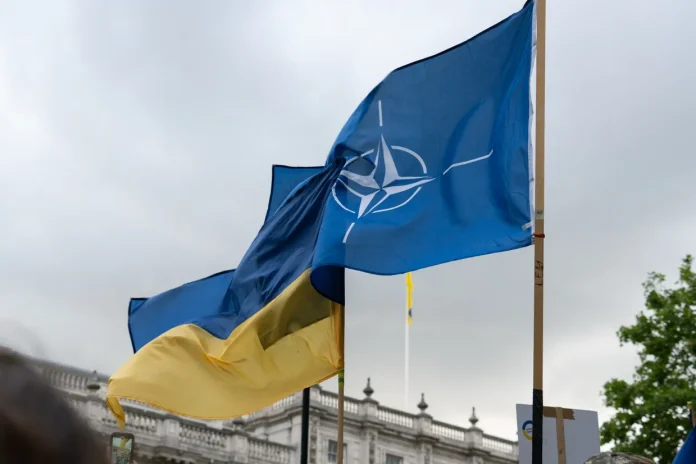
Ukraine NATO

The 20-point plan, agreed on by US and Ukrainian negotiators, was being reviewed by Moscow, but the Kremlin is unlikely to abandon its hardline territorial demands for full Ukrainian withdrawal from the east.

Zelensky also conceded there are some points in the document that he does not like.

But Kyiv has succeeded in removing immediate requirements for Ukraine to withdraw from the Donetsk region or that land seized by Moscow’s army would be recognised as Russian.

It also got rid of demands that Kyiv must legally renounce its bid for NATO membership.

And though it is not prescribed in the document, the proposal still paves the way for Ukraine to pull some troops back, including from the 20 percent of the Donetsk region that it controls, where demilitarised zones would be established.

Zelensky presented the plan during a two-hour briefing with journalists, reading from a highlighted and annotated version.

“In the Donetsk, Lugansk, Zaporizhzhia, and Kherson regions, the line of troop deployment as of the date of this agreement is de facto recognised as the line of contact,” Zelensky said of the latest version.

“A working group will convene to determine the redeployment of forces necessary to end the conflict, as well as to define the parameters of potential future special economic zones,” he added.

This appears to suggest the plan opens the way for, but delays, options that Ukraine was previously reluctant to consider — a withdrawal of troops and the creation of demilitarised zones.

“We are in a situation where the Russians want us to withdraw from the Donetsk region, while the Americans are trying to find a way,” Zelensky stated.

“They are looking for a demilitarised zone or a free economic zone, meaning a format that could satisfy both sides,” he continued.

US President Trump is pushing Moscow and Kyiv to agree to end the four-year war, triggered by Russia’s 2022 invasion.

Tens of thousands have been killed, eastern Ukraine decimated and millions forced to flee their homes.

Russian troops are advancing on the front and hammering cities and Ukraine’s energy grid with nightly missile and drone barrages.

Moscow in 2022 claimed to have annexed four Ukrainian regions — Donetsk, Kherson, Lugansk and Zaporizhzhia — in addition to the Crimean peninsula which it seized in 2014.

In Moscow, President Vladimir Putin has shown no willingness to compromise, doubling down on his hardline demands for a sweeping Ukrainian withdrawal and a string of political concessions that Kyiv and its European backers have previously cast as capitulation.

But Zelensky has admitted that it could be forced to give in to some demands, particularly on territory, or it could face losing Washington’s vital military support.

Any plan that involves Ukraine pulling back its troops would need to pass a referendum in Ukraine, Zelensky said.

“A free economic zone. If we are discussing this, then we need to go to a referendum,” the president added.

On NATO, Zelensky stated: “It is the choice of NATO members whether to have Ukraine or not. Our choice has been made. We moved away from the proposed changes to the Constitution of Ukraine that would have prohibited Ukraine from joining NATO.”

Nevertheless, the prospects of Ukraine being admitted to the bloc appear slim-to-none, as it has been ruled out by Washington.

Moscow has repeatedly announced that NATO membership for Ukraine is unacceptable, presenting it as one of the reasons it invaded in the first place.

The plan also sees joint US-Ukrainian-Russian management of the Zaporizhzhia nuclear power plant, occupied by Russian troops. Zelensky said he does not want any Russian oversight of the facility.

He also added Ukraine would hold presidential elections only after an agreement is signed — something both Putin and Trump have been pushing for.

Russia was yet to comment on the latest version of the deal, but officials have repeatedly criticised European and Ukrainian efforts to amend an original US plan that enshrined many of its demands.

Direct talks between Russian and Ukrainian negotiators earlier this year in Istanbul failed to break the deadlock and despite the flurry of diplomacy, the positions of the two countries appear to still be far apart.

 

Ex-senior army officers call on UK to ‘cut all military collaboration with Israel’

The Times reported on Tuesday that the signatories told Prime Minister Keir Starmer that despite the ceasefire in Gaza, “now is not the time to return to business as usual with the Israeli government”.

They called on sanctions on the Israeli government to go further.

Among the letter’s signatories was John Deverell, who served in the British army for more than three decades. He was also defence attache in Saudi Arabia and Yemen, including at the time of the 11 September terror attacks.

The other signatories were Andrew Graham, the former director general of the UK defence academy; Peter Currie, a retired major general, and Charlie Herbert, a former senior army commander in Afghanistan.

The letter strongly rejected a claim that Israel’s military followed similar protocols to the British military.

A senior defence ministry official said that “Israel appears to have thorough and rigorous processes for the conduct of hostilities and targeting, that in many respects resemble our own” – an assertion that was cited by the UK government in a legal case on arms exports to Israel last July.

The former senior officers rebutted the claim, stating that there were clear differences. They cited Israel’s use of indiscriminate munitions that had led to “exceptionally disproportionate and avoidable civilian fatalities and widespread destruction of civilian infrastructure”.

They added that evidence of Israeli war crimes was “so well documented and compelling that the British government should cut all military collaboration with Israel forthwith, to avoid the charge of complicity”.

The sanctions that should be imposed, the signatories said, include RAF and British contracted aircraft not being used for any purpose connected with the Israeli military, and a suspension of all military technology transfer.

In September, the UK announced that it was banning Israelis from enrolling at the Royal College of Defence Studies, a prestigious military academy.

The UK was accused of complicity after carrying out near daily reconnaissance flights over Gaza during the war. The flights stopped after the ceasefire.

In addition, despite a partial suspension of arms sales to Israel over the war on Gaza, approved UK arms exports to Israel have skyrocketed under the Labour government.

Export data released in May showed that 20 different licences in categories such as military aircraft, radars, targeting equipment and explosive devices, were approved between October and December 2024.

Arms campaigners said the three-month total was more than what was approved altogether under the Conservative government between 2020 and 2023.

Next year, the British army will decide which consortium of defence firms will carry out a £2bn army training contract to prepare soldiers for a potential future war. A subsidiary of the Israeli defence company Elbit Systems is part of one of the consortiums bidding for the 15-year contract.

Israel has repeatedly violated the ceasefire agreed in early October, with more than 400 Palestinians killed in Gaza since then, according to the Palestinian health ministry.

The number of Palestinians killed in Gaza since the genocide began in October 2023 has exceeded 70,000 – the majority of whom are women and children.

At least 171,195 others have been wounded by Israeli forces during that time.


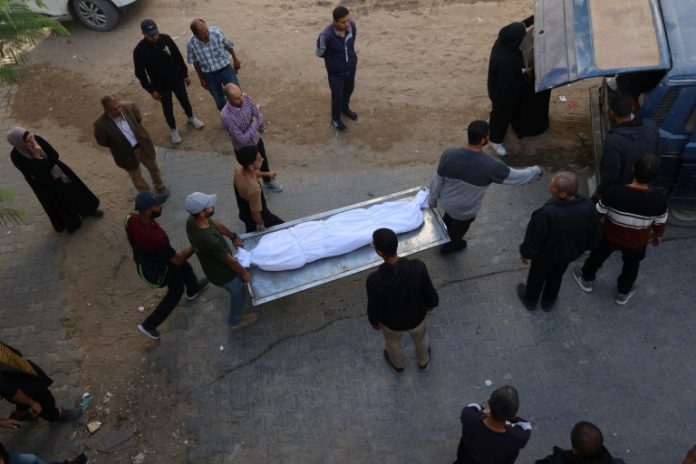
Dozens of US lawmakers call on Trump to address Israeli Gaza ceasefire violations

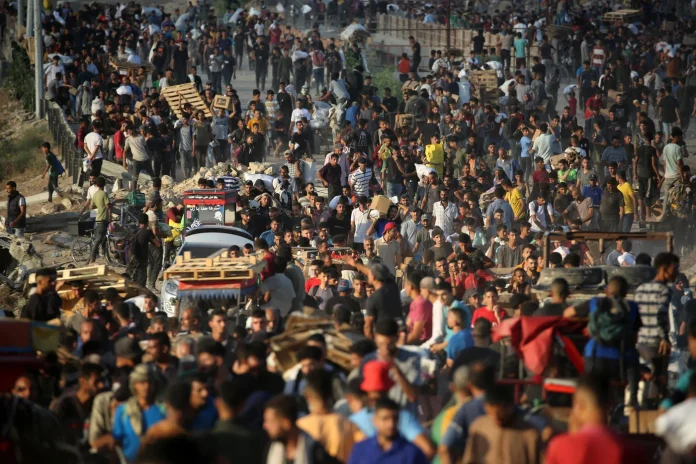
Gaza War

The letter said Israel’s “bombardment against civilians, destruction of property and insufficient delivery of humanitarian aid” were jeopardising the ceasefire that the US, Egypt and Qatar brokered in October.

“It’s imperative that we hold the Israeli government accountable for its actions,” 49 Democratic members of the House of Representatives stated.

“We strongly urge your administration to exert maximum diplomatic pressure on the Israeli government, including by leveraging US assistance, to ensure full compliance with the terms of the framework and an end to the continued acts of violence and destruction that undermine this fragile agreement and threaten the prospect of lasting peace in the region,” the latter added.

The lawmakers accused Hamas of also violating the ceasefire, but noted that Israel’s response “has been severe and disproportionate, resulting in massive loss of life”.

The letter was spearheaded by Representatives Mark Pocan and Madeleine Dean. It was also endorsed by the Jewish advocacy groups J Street, the New Jewish Narrative and Win Without War.

Israel has escalated its attacks on Gaza in recent weeks. Seventy-five days into the truce deal, Israel has killed over 411 Palestinians and left more than 1,112 wounded.

The Government Media Office in Gaza has estimated at least 875 violations commited by its army since the start of the ceasefire in October.

In addition to repeated attacks, Israel has also continued to evade obligations to allow the entry of humanitarian aid into the Gaza Strip.

Only 17,819 trucks entered the blockaded territory out of the 43,800 that were stripulated to be delivered and distributed to its population of two million.

A severe shortage in adequate shelter, medicine, food, fuel and other necessities has compounded the already dire situation in the strip.

The media office warned on Tuesday of a “deepening and unprecedented humanitarian crisis” with regards to the lack of shelter amid freezing temperatures and heavy rainfall.

Israeli Prime Minister Benjamin Netanyahu is scheduled to meet with Trump next week in Florida.


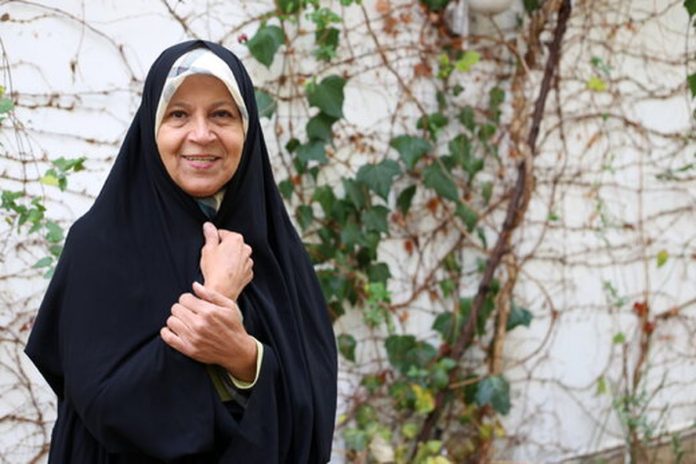
Video showing Faezeh Hashemi Rafsanjani wearing American jacket goes viral in Iran

Faezeh Hashemi

Photos and footage of  Faezeh Hashemi Rafsanjani circulating online have sparked discussions among social media users about her style.

In a brief street interview, a reporter asks Faezeh whether her jacket was American-made, and she confirms that it is.

During the conversation, she also spoke about her experiences in Evin Prison, saying she is accustomed to prison life and even described Evin as being “like a hotel”.

The short interview has once again brought Faezeh Hashemi’s name into media discussions and social networks.

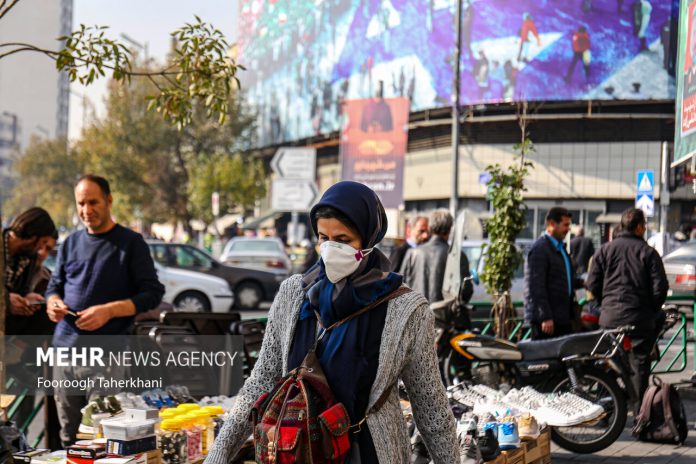
Iran reports decline in respiratory infections as influenza peak persists in 12 provinces

Iran Air Pollution

According to Gholamreza Moradi, head of the Center for Communicable Disease Management at the Ministry of Health, data from the national respiratory infection surveillance system show a downward trend in the proportion of patients with respiratory symptoms during the past ten days, compared with previous weeks.

He said the share of respiratory infection cases among outpatient visits has dropped to 13.4 percent, while the figure among hospitalized patients has fallen to 11.5 percent, down from peaks above 16 percent in recent weeks.

Moradi added that among patients showing respiratory symptoms, 22.8 percent tested positive for influenza and 0.4 percent for COVID-19 in the latest reporting period.

He noted that the dominant influenza strain currently circulating in Iran is influenza A, subtype H3N2.

Despite the overall decline, Moradi said the influenza peak is still ongoing in 12 provinces, where infection rates remain above the national average.

He also cautioned that gatherings in enclosed spaces could influence transmission trends, stressing the importance of observing respiratory hygiene to prevent further spread.

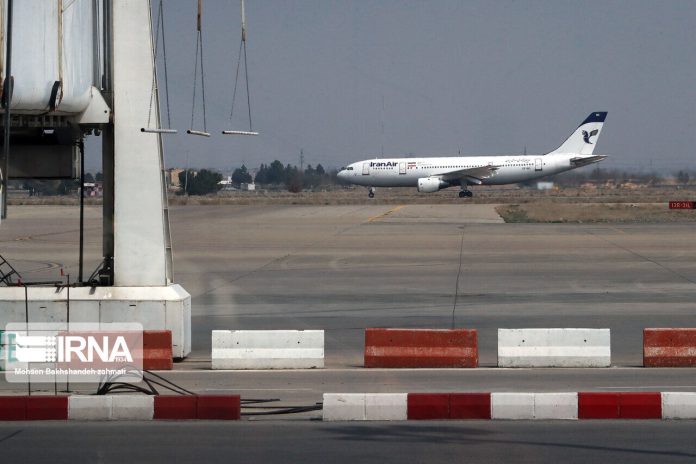
Iran thwarts multiple aviation security threats, commander says

Iran Airport

Referring to one of the most notable incidents, he said that in mid-November last year, during a Tehran–Mashhad flight, an individual with significant physical strength attempted to disarm the head of the onboard flight security guard and even expressed intentions related to hostage-taking.

The attempt was swiftly foiled by security forces during the flight, allowing the aircraft to land safely at Mashhad International Airport without incident.

Brigadier General Mollanouri added that other threats, including bomb threats and similar acts, had also been reported in recent days and months. However, none escalated into a serious crisis due to special preventive measures and timely actions taken by aviation protection forces.

He noted that the cumulative efforts of the Aviation Protection Corps over the years have played a key role in deterrence and prevention against hostile actors.
Despite sanctions and potential restrictions, he emphasized that Iran’s aviation security capabilities remain fully operational.

Mollanouri stressed that thanks to continuous training, specialized aviation expertise, physical readiness, and appropriate equipment, no successful unlawful interference has occurred in Iran’s civil aviation sector over the past 41 years.

He also underlined that Iran’s aviation security operations comply with international conventions, including the Tokyo, Chicago, Hague, and Montreal Conventions.