Saturday, April 18, 2026
Home Blog Page 2589

”Pointless to Say Iran Should Return to JCPOA as It Never Left”

Iran Says New US Sanctions Show Trump’s Desperation

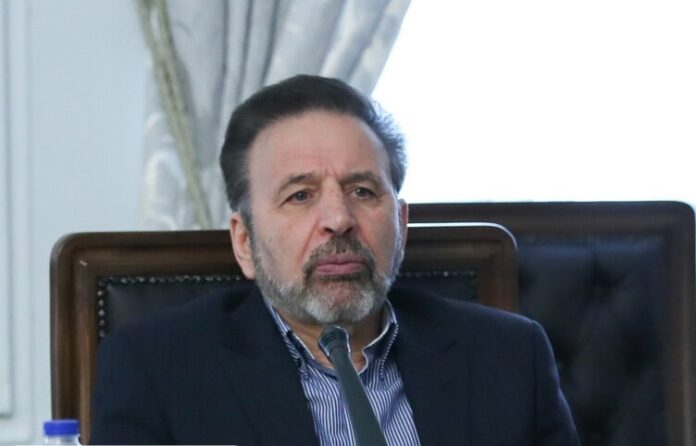
Chief of Staff of the President’s Office Mahmoud Vaezi made the comment in response to remarks by US Secretary of State Antony Blinken, who had called on Iran to return to the JCPOA first before Washington does so.

“We haven’t pulled out of the JCPOA, so there is no point saying we should return to it, and we will live up to our commitments under the JCPOA only when we make sure that Europe and the US keep their side of the bargain under the deal,” said Vaezi.
“We held negotiations once and the case was closed on talks about the JCPOA,” he added.

“Our stance on the JCPOA has been clear from the very beginning, and today we have the same stance,” said the official.

“One of the demands of [former US President Donald] Trump was to reopen the case on the JCPOA. It makes no difference to us whether the Trump administration is in power or that of Biden. As we have insisted on our position in the past, our stance will not change this time, either,” he said.

“As the president [of Iran Hassan Rouhani] has said time and again, we will deliver on our commitments when they (the US and Europe) fulfill their obligations,” he said.

Siren Heard in Western Tehran Not Related to Any Security Issue: Official

The deputy governor general of Tehran province for security affairs told Tasnim News Agency that the siren was caused by a malfunction in the alarm system of an “organization” in Azmayesh neighbourhood, west of Tehran.

Hamid Reza Goudarzi said a “leak caused by heavy rainfall” triggered the security alarm.

His comments came after several residents posted videos of a long and nonstop siren ringing out in west of the capital.

Minutes later, data by Flightradar24 indicated that a Turkish Airlines’ Istanbul-Tehran flight was flying around Tehran, raising speculations about a security problem.

The public relations of Imam Khomeini International Airport said the Turkish flight noticed dangerous Cumulonimbus clouds when he wanted to land in Tehran, and decided to divert the plane northward. He has told Imam Khomeini Airport he will get back once the weather improves.

Flightradar24 data shows the flight has flown toward Baku, the capital of Azerbaijan, and apparently landed there.

The Iranian airport officials said the weather condition in Tehran is back to normal now, as two Iran Air and Mahan Air flights just landed.

Iran’s Zarif, Turkey’s Erdogan Discuss Bilateral Ties, Regional Issues

In this meeting, which was also attended by the Turkish foreign minister, issues of mutual interest including the 3+3 format for Caucasus were discussed.

Agreement on pursuing issues in bilateral ties and expression of interest in restoring bilateral trade to the previous track, agreement on increasing railway lines between the two countries, agreement on cooperation in Iraq and Syria and trilateral cooperation with Afghanistan as well as agreement on supporting the rights of Palestinian people were among other issues discussed by Foreign Minister Zarif and the high-ranking Turkish officials.

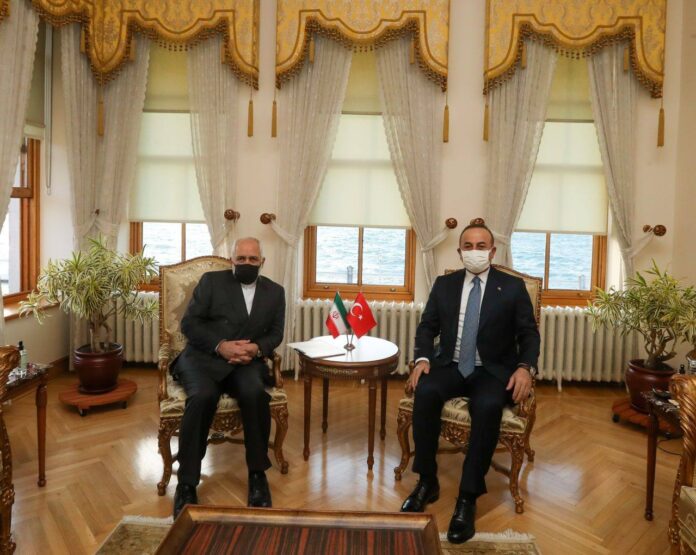
Iranian, Turkish Foreign Ministers Hold Talks in Istanbul

In this meeting, the two sides conferred on bilateral relations, regional developments, and international issues.

On bilateral issues, Zarif said relations between the two countries and their benefits are very important for the people of Iran and Turkey.

He also discussed Iran-Turkey cooperation in the fields of transit, business, energy and mutual efforts to resolve the problems of the companies and economic player of both countries.

On regional issues, Foreign Minister Zarif referred to the discussions he had during his visits to four regional capitals, and elaborated on the Islamic Republic’s view in the wake of cessation of clashes in Karabakh and the need for tapping into the existing opportunity for continued calm and stability in the region while developing collaborations especially in the economic fields.

Cavusoglu, in turn, highlighted the importance of relations between Tehran and Ankara, and underlined the significance of implementing the two countries’ earlier agreements in the fields of transport, business and energy.

He also referred to the eighth meeting of Iran-Turkey Joint Economic Commission, which is to be held in Tehran in the near future, and said the two countries will expand their collaborations in the time ahead.

The strategic bilateral meetings, the leaders’ summit of Astana Process, the trilateral meeting of Iran, Turkey and Azerbaijan Republic, the issues related to Syria and the recent meeting in Geneva on the country’s Constitution, the trilateral collaborations between Iran, Turkey and Afghanistan, and the two countries’ cooperation on Coronavirus and its vaccine were among other issues dicussed by the Iranian and Turkish foreign ministers in this meeting.

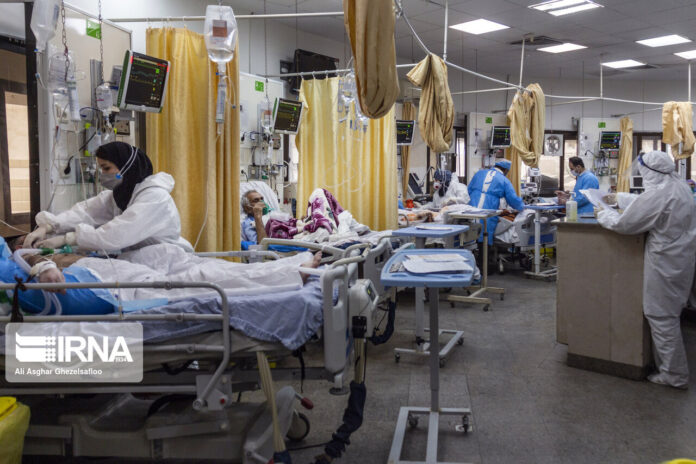
Total Cases of COVID-19 Infection in Iran Hit 1.4 Million: Ministry

In a press briefing on Friday, Sima-Sadat Lari said the virus has killed 71 patients since Thursday noon, raising the overall death toll to 57,807.

So far, Lari added, 1,196,374 patients have recovered from the disease or been discharged from the hospital.

Lari said 3,990 patients are also in critical conditions caused by more severe infection.
The spokeswoman noted that 9,176,899 COVID-19 tests have been taken across the country so far.

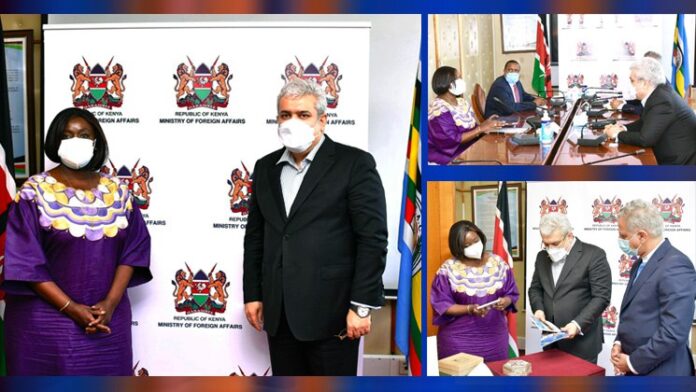
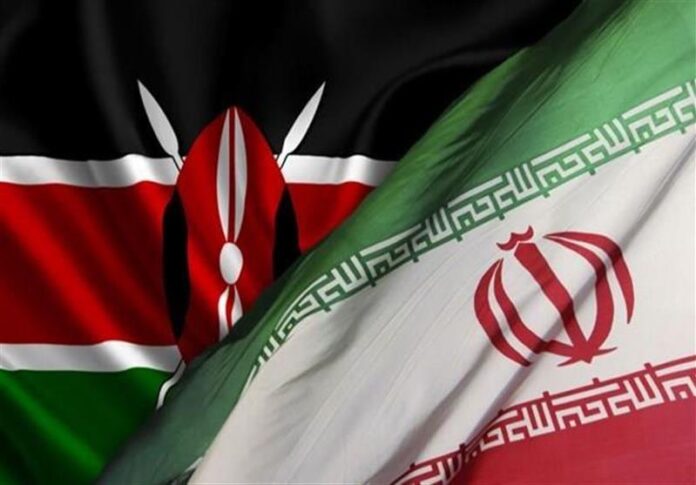
Iran’s Vice-President, Kenyan Foreign Minister Meet in Nairobi

In the Thursday meeting, the top Iranian official presented a report on the trend of Iran’s scientific and technological development over the past 40 decades.

“A long time has passed since the [1979 Iran’s Islamic] Revolution and we are on the threshold of the anniversary of the victory of the Revolution. During these 40 years, Iran has been under cruel sanctions by global superpowers,” he explained.

“These sanctions were a good omen for Iran and helped us reach self-sufficiency in meeting our needs. That means we domestically developed all the technologies possessed by developed countries,” said Sattari.

He said a clear example of that achievement was the production of necessary medical equipment by Iranian firms to counter the coronavirus pandemic.

He said Iran has fulfilled its pledges, including the establishment of the Iran House of Innovation and Technology (IHIT) in Kenya and cooperation between Iranian and Kenyan knowledge-based companies.

He said Tehran is keen to enhance its technological relations with Nairobi and run joint projects on technology transfer.

The top Kenyan diplomat, in turn, thanked Iran’s activities in Kenya and added Nairobi would like to draw on Iran’s experience in establishing start-ups and knowledge-based companies and linking universities to the industry.

Regional Cooperation Key to Mideast Peace, Zarif Tells Arab Neighbours

Iran's Zarif Hails Fruitful Talks in China Trip

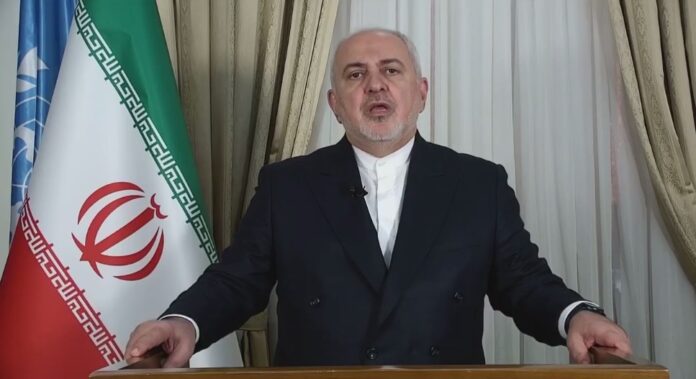
In a tweet on Thursday, Mohammad Javad Zarif called on the countries in the region to seize the opportunity which has been created.

“Dear neighbours, ahead of us lies an opportunity to once again think about regional security,” he said.

“We know that security cannot be bought, nor can it be established by stockpiling weapons,” he noted.

He said Iran has always announced its readiness to help trigger regional cooperation to establish peace and security in the region.

Iran Innovation Fund, Nairobi Technology Park Discuss Joint Projects

Kenya Calls for Joint Ventures with Iran in Housing Sector

On the sidelines of a business meeting between 50 Iranian high-tech firms and more than 160 Kenyan counterparts in Nairobi, representatives of the INIF met with members and head of Nairobi Industrial and Technology Park (NITP).

In a meeting with the NITP’s Dr. Kibet Langat in the Kenyan capital, Dr. Siavash Malekifar, the INIF’s Chief Development Officer and Sohrab Assa, the INIF’s deputy director for international affairs, emphasized deepening bilateral relations and cooperation, and getting to know each other while benefiting from each other’s capacities.

In this meeting, Dr. Malekifar discussed the possibility of cooperation in three areas of exchange of technology, supporting development of startups, as well as a joint financial fund in mutual projects.

Sohrab Assa, in turn, introduced the INIF and its structure, and elaborated on priority projects especially in NBICS on each side.

Assa said international cooperation among Small and Medium-Sized Enterprises (SMEs) on specific projects is a suitable solution for the development of international cooperation.

The two sides finally decided to share the list of projects and technological needs of each other, and agreed to design and develop a suitable mechanism for the implementation of these projects.

The Nairobi Industrial and Technology Park project is being implemented in partnership with the Kenyan Ministry of Industrialization. The aim of the project is to enhance uptake of research results by industry players.

Industrial and Technology parks are key elements of the infrastructure supporting the growth of today’s global knowledge economy. By providing a location in which state and private sectors as well as universities cooperate with each other, parks create environments that foster collaboration and innovation. They enhance the transfer of development and commercialization of technology.

Iranian VP, Kenyan Minister Discuss Mutual Technological Cooperation

During the meeting, which was held on Thursday during VP Sattari’s three-day visit to the African country, the two sides stressed the importance of enhancing mutual relations.

“Iran’s technological moves have gained momentum since the beginning of the tenure of the 12th administration, so that we are able to boost the country’s scientific progress,” said Sattari.

“We pulled it off using domestic knowhow and the expertise of our youth,” he added.

“Over the past years and within the context of technological and innovative ecosystems, more than 6,000 knowledge-based and innovative companies took shape, and their sales amounted to around $12 billion,” the Iranian vice president said.

“Major start-ups have been set up in our country and they export their products to other countries as well,” he noted.

“[Teams from] 40 knowledge-based firms are accompanying the Iranian delegation in this trip. These companies can be a good link for the transfer of Iran’s technology to Kenya,” he said.

“Representatives of Iranian companies had discussions with 130 Kenyan companies and had face-to-face meetings. These meetings will result in bilateral cooperation,” said Sattari.

He added Iran can share with Kenya its experience in the field of technology and sci-tech parks.

“Iran enjoys a special status in the domain of emerging technologies in the world. For example, Iran ranks fourth in the world in terms of nanotechology,” said Sattari.

He invited Kenyan officials and technology experts to visit Iran’s achievements and technological infrastructure.

He urged Iran and Kenya to run joint projects in the domain of technology and know-how transfer.

He also noted that Iran kept moving on the path to progress despite cruel sanctions.

Iran Authorizes Emergency Use of Russian-Made COVID-19 Vaccine

Spokesperson for the Food and Drug Administration of Iran, Kianoosh Jahanpoor, announced on Thursday that the authorization to use the Russian-made vaccine in Iran has been granted in the 24th meeting of a legal commission that evaluates the qualification of medicine and biologics before production and imports.

He said the committee has given emergency use authorization (EUA) for the Sputnik V vaccine made by the Gamaleya Centre of Russia in the form of freeze-dried solution as well as single-dose and five-dose vials.

Jahanpoor noted that the Food and Drug Administration is carrying out an evaluation of other vaccines made in India, China and Russia.

Sputnik V is the world’s first registered vaccine based on a human adenoviral vector-based platform, according to the Gamaleya National Center of Epidemiology and Microbiology’s website.

The Russian vaccine currently ranks among top 10 candidate vaccines approaching the end of clinical trials and the start of mass production on the World Health Organization’s (WHO) list.

Clinical trials of Sputnik V have been announced in the UAE, India, Venezuela and Belarus. The vaccine’s efficacy is reportedly confirmed at 91.4% based on data analysis of the final control point of clinical trials.