Tuesday, December 30, 2025
Home Blog Page 2578

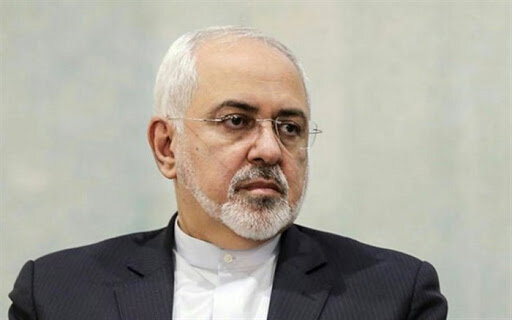
Zarif to Visit Baku, Moscow, Yerevan, Tbilisi, Ankara in Regional Tour

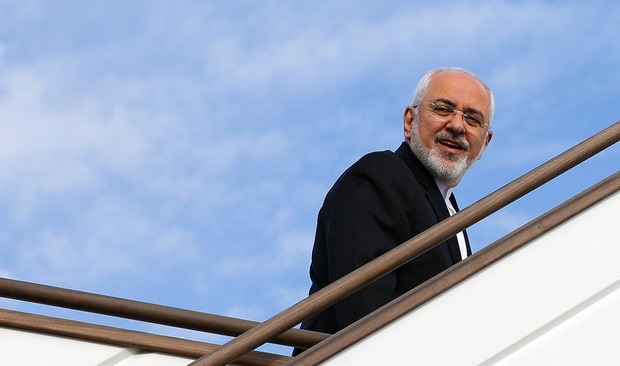
Iran’s Foreign Minister Leaves Turkey for Russia

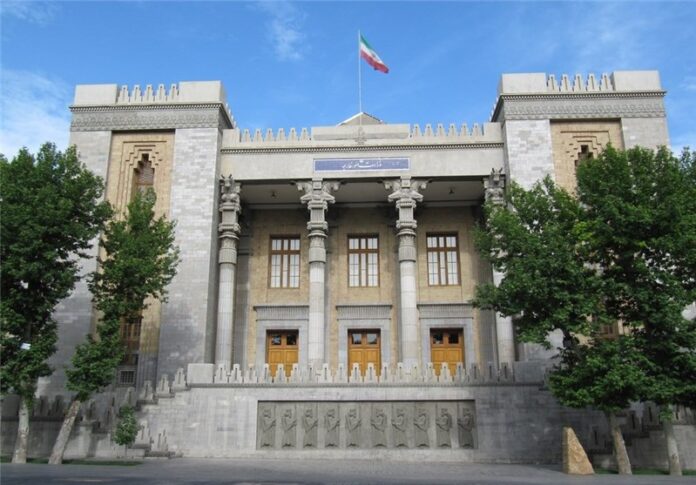
Saeed Khatibzadeh said the top Iranian diplomat, heading a delegation, is to visit the Azerbaijan Republic, the Russian Federation, the Republic of Armenia, the Republic of Georgia and the Republic of Turkey where he will sit down with his opposite numbers as well as other officials of those countries.

During his meetings, Zarif is to discuss bilateral issues, the latest developments in the Caucasus region, joints projects underway and ways of promoting peace and stability in the region, the spokesman added.

Iran to Conduct Closer Monitoring to Stem New COVID-19 Surge

President Hassan Rouhani said if a new wave of the disease hits the nation, businesses will be shut and restrictions will be imposed again.

“All of us should prevent a new wave of the disease in the country,” he said on Saturday.

Meanwhile, the president said a drop in fatalities from COVID-19 is a source of pride for the Iranian government and people.

He said the declining trend of infections came on the back of efforts by all and abidance by health instructions.

However, he expressed concern about a rise in the number of cases among the youth.

He said despite a drop in fatalities, two-digit figures for deaths are still a considerable statistic, and the declining trend should continue.

“We should keep closely observing health protocols for at least five or six months, so that the decline in the trend of the disease and the decrease in the death rate will continue,” he said.

The president said reports suggest that not only has the novel coronavirus not weakened across the world, but also its pathogenecity, transmission and danger levels have increased.

“In order to keep the new virus from entering the country from Europe and Africa, it is necessary that airports and all the country’s entrance points be carefully controlled,” he said.

President Rouhani then touched upon the national coronavirus vaccination drive and said efforts are being made to launch the inoculation process in the country in coming weeks.

Iran’s Production of Household Items Rises Considerably despite Sanctions: Minister

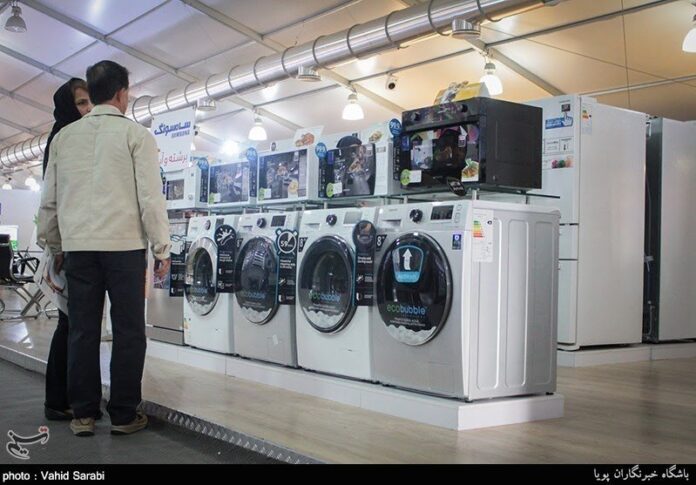
Iranian Minister of Industry, Mine and Trade Alireza Razmhosseini said domestic production of household items doubled at certain points.

“Sanctions, which created restrictions and problems, prompted the country’s home appliances sector to register a 48-percent growth over the past nine months compared to the similar period last year,” he said in a Saturday ceremony.

“The production of some home appliances has increased by up to 100% compared to the time before sanctions were imposed.”

“This is very good news. Domestic production has increased a lot. Based on a report, around 40% of spare parts are produced inside the country,” the minister explained.

Meanwhile, officials say the production of household products has increased both quantitatively and qualitatively.

“Our output capacity is 1,000 units per day. Energy-efficiency is one of the features of the product. We worked on the A+ category. It is the first time that we have domestically produced four-door fridges,” said a senior manager present at the same ceremony.

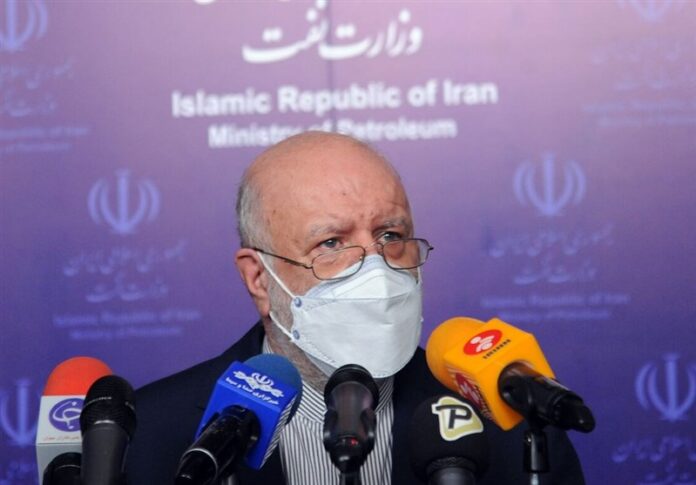
Iran’s Oil Exports Hit Record High amid Sanctions: Minister

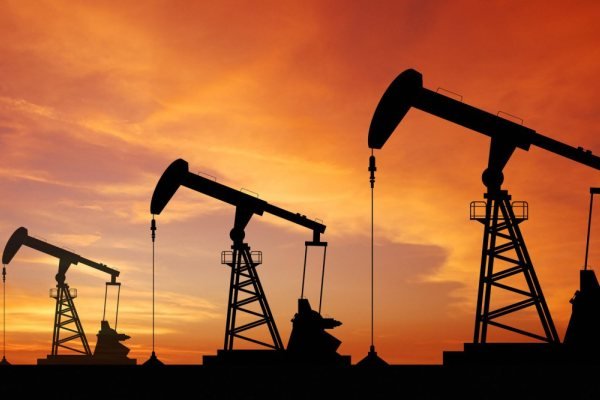
Bijan Namdar Zangeneh said the achievement was a blow to those who wished to stop Iran’s petroleum exports.

“Our exports of oil products set a record in the history of our oil industry during the time we were under sanctions,” he said.

“Our enemies as well as Trump were seeking to destroy us. They wanted to bring our exports to zero, but it didn’t happen. Neither our non-oil exports, nor our exports of oil and oil products reached zero. … So, their intention of making Iran’s oil exports reach zero boomeranged on them,” he added.

“I cannot announce the figures now, but their intention backfired, and efforts by our colleagues not only kept Iran’s oil exports from reaching zero, but resulted in considerable figures,” the minister explained.

“They, including Trump, Pompeo and their criminal thoughts, died and were thrown into the dustbin of history, but we are alive, we are here, and will help build our country with more hope,” the oil minister said.

Elsewhere in his remarks, Zangeneh said Iran, during the past three years when it has been under sanctions, made every attempt to make investments in the oil industry.

“Over the past two or three years, we had serious shortage of resources for investment. So, many of our investment programs were delayed. But we tried to keep moving through methods such as attracting resources from the capital market in order to protect the country’s resources and keep them from being wasted,” he noted.

Iran Allots $10 Billion to Support Local Producers

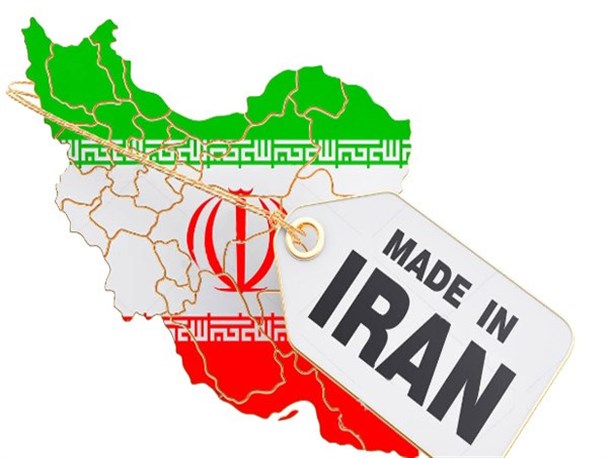
Deputy Minister of Industry, Mines and Trade Mahdi Sadeqi said the move is aimed at making the local market more accessible to domestic producers.

“A major part of the foreign currency problems of producers have been settled over the past two months,” he said.

He added the ministry has adopted policies to further encourage foreign investment in the country.

He said one of the priorities of the ministry is to boost national brands.

Sadeqi noted several domestic producers of household appliances are designing new products to be able to compete with foreign commodities on world markets.

Former Iranian Diplomats Issue Statement on Tehran’s Expectations of US

The full text of the statement follows:

In the Name of God, the Compassionate, the Merciful

Joe Biden was inaugurated as the 46th US president. One of his election pledges was to return to the Iran nuclear deal (officially known as the Joint Comprehensive Plan of Action – the JCPOA).

Despite the US violation of its commitments and Europe’s inaction with regards to their obligations under the JCPOA over the past three years, and given that there are still some individuals in Iran with different political tastes who are vocal critics of the JCPOA, and whereas the government of the Islamic Republic of Iran has always remained committed to its international obligations and has complied with its commitments under the JCPOA, we deem it necessary to emphasize the following points:

1. If the new US administration is willing to take confidence-building and positive steps with regards to the Islamic Republic of Iran, it should know that the trend of returning to the JCPOA begins at the same point where the Trump administration withdrew from it and breached the United States’ international obligations under the JCPOA.

As the Supreme Leader [of Iran’s Islamic Revolution Ayatollah Seyyed Ali Khamenei] has announced loud and clear, “If they return to their commitments, we will, too.”

2. Whereas the United States itself was one of the signatories to the JCPOA and this agreement has been endorsed by United Nations Security Council Resolution 2231, and the JCPOA is, in fact, an integral part of Resolution 2231, under Article 25 of the UN Charter, the US is obliged to fully live up to the commitments stipulated in the JCPOA. However, the previous US administration not only blatantly violated this international obligation, but encouraged other countries to breach their commitments under the agreement. Nevertheless, despite the United States’ heavy pressure, no other country followed the US government’s lead regarding the violation of obligations stipulated in UN Security Council Resolution 2231. It is noteworthy that the Islamic Republic of Iran has remained committed to its obligations under the JCPOA all along.

3. The administration of Mr. Biden is well aware that the reinstatement of sanctions by the previous US government in violation of its JCPOA commitments amounts to the enforcement of sanctions against Iranian people and depriving them of their inalienable rights. Accordingly, former US President Donald Trump should be tried and punished for numerous crimes he committed against humanity, his extensive and systematic violation of fundamental human rights, imposition of cruel sanctions, especially with regards to drugs and food, against Iranian people, as well as the promotion of, and support for state terrorism, including his straightforward confession that he ordered the assassination of Lieutenant General Qassem Soleimani.

4. It is clear that the Islamic Republic of Iran, at this juncture, being much more powerful than it was in 2016 in defence and modern technologies sectors, will not submit to issues which are unrelated to the JCPOA, and will not allow any party to open a new chapter in talks. Therefore, we expect the government of the Islamic Republic of Iran to deal with the issue of negotiations within the framework of the JCPOA patiently and prudently while observing the three principles of dignity, wisdom and expediency.

5. During the process where the US should stop violating and return to its obligations, the Islamic Republic of Iran should insist on its rightful stances, and return to its commitments under the JCPOA proportionately and reciprocally in a confidence-building process after making sure that sanctions are lifted. If cruel sanctions against resistant Iranian people remain in place, the government of the Islamic Republic of Iran should press ahead with its scientific and defence progress and keep promoting its peaceful nuclear program as far as national interests require.

6. The JCPOA is an agreement which includes multilateral commitments. So, should one or more state signatories to the deal refuse to make good on their obligations, the other side reserves the right to scale down its commitments based on the provisions of the JCPOA.

7. We believe that if the US stops its enmity with the Islamic Republic of Iran, new conditions will emerge to set the stage for reducing and finally defusing tensions in our region.

8. We strongly believe that dialogue and understanding have always been a proper diplomatic tool to achieve legitimate objectives in line with establishing and cementing peace, justice, stability and security in the region.

What follows is a list of 43 former deputy foreign ministers and ambassadors who have signed this statement:

  • Ebrahim Rahimpour, former deputy foreign minister for Asia-Pacific affairs
  • Behrouz Kamalvandi, former deputy foreign minister for financial and administrative affairs and incumbent spokesman for Atomic Energy Organization of Iran
  • Seyyed Baqer Sakhaei, former deputy foreign minister for financial and administrative affairs
  • Hamid Assefi, former deputy foreign minister for Europe and Americas affairs
  • Ali Ahani, former deputy foreign minister for Europe and Americas affairs
  • Seyyed Hossein Adeli, former deputy foreign minister for economic affairs
  • Alireza Moayyeri, former deputy foreign minister for research and education
  • Abbas Maleki, former deputy foreign minister for research and education
  • Mohammad Javad Asayesh, former ambassador to Oman and Qatar
  • Abolqassem Delfi, former ambassador to France
  • Ahmad Sobhani, former ambassador to Venezuela
  • Ahmad Dastmalchian, former ambassador to Lebanon and Jordan
  • Abdollah Norouzi, former ambassador to Sweden
  • Mohammad Moussa Hashemi Golpayegani, former ambassador to Turkmenistan
  • Mohammad Taher Rabbani, former ambassador to Vatican
  • Ali Akbar Farazi, former ambassador to Hungary
  • Mohammad Hassan Fadaeifard, former ambassador to Spain
  • Mohammad Taheri, former ambassador to Azerbaijan Republic
  • Mahmoud Mohammadi, former ambassador to Tunisia
  • Seyyed Ali Nematollahi, former ambassador to Switzerland
  • Seyyed Mahdi Navvab, former ambassador to Germany
  • Seyyed Ali Saqaeian, former ambassador to Armenia and Brazil
  • Mostafa A’laei, former ambassador to Venezuela
  • Mohammad Raisi, former ambassador to Armenia
  • Jahanbakhsh Mozaffari, former ambassador to Italy
  • Seyyed Hossein Mousavian, former ambassador to Germany
  • Mohammad Ali Qane’zadeh, former ambassador to Brazil and South Africa
  • Seyyed Hossein Rezvani, former ambassador to Norway
  • Seyyed Reza Tabatabaei Shafiei, former ambassador to Bolivia
  • Seyyed Mahmoud Sadri, former ambassador to Bosnia and Herzegovina
  • Amir Ali Shahidi, former ambassador to Mauritania
  • Javad Ansari, former ambassador to Brunei and Singapore
  • Mansour Moazzami, former ambassador to Brazil
  • Mohammad Javad Sadeq, former ambassador to Croatia
  • Abdolhamid Fekri, former ambassador to Brunei
  • Ahmad Edrisian, former ambassador to Cuba
  • Seyyed Davoud Salehi, former ambassador to Cuba and Spain
  • Abolfazl Rahnama, former ambassador to Portugal
  • Seyyed Ja’far Hashemi, former ambassador to Brazil
  • Sabah Zangeneh, former ambassador to the Organization of Islamic Cooperation (OIC)
  • Hassan Taherian, former ambassador to South Korea
  • Mohammad Zaeri Amirani, former ambassador to Sri Lanka
  • Mohsen Sharif Khodaei, former ambassador to Croatia

Biden Administration Has ‘Fundamental Choice’ to Make: Iran FM

US Claim That Iran Sanctions Reinstated 'Baseless': FM Zarif

“The new US administration has a fundamental choice to make: It can embrace the failed policies of its predecessor, and continue down the path of contempt for int’l cooperation & int’l law, or, it can reject failed assumptions & seek peace and comity,” Zarif said in a Friday tweet.

He posted the tweet with a link to his article published by Foreign Affairs, entitled “Iran Wants the Nuclear Deal It Made”.

In his article, the Iranian top diplomat argues that the new US administration should return to the same nuclear deal it signed with Iran in 2015, and avoid asking Iran to meet new demands.

What follows is the full text of his article:

As a candidate for president in 2016, Donald Trump pledged to stop wasting American blood and treasure on wars in West Asia. During his time in office, Trump instead further trapped the United States in the region and inflamed divisions to the point where a minor incident might quickly spiral out of control and lead to a major war.

The new administration in Washington has a fundamental choice to make. It can embrace the failed policies of the Trump administration and continue down the path of disdain for international cooperation and international law—a contempt powerfully evident in the United States’ decision in 2018 to unilaterally withdraw from the Joint Comprehensive Plan of Action, commonly known as the Iran nuclear deal, that had been signed by Iran, China, France, Germany, Russia, the United Kingdom, and the European Union just three years earlier. Or the new administration can shed the failed assumptions of the past and seek to promote peace and comity in the region.

US President Joe Biden can choose a better path by ending Trump’s failed policy of “maximum pressure” and returning to the deal his predecessor abandoned. If he does, Iran will likewise return to full implementation of our commitments under the nuclear deal. But if Washington instead insists on extracting concessions, then this opportunity will be lost.

Some Western policymakers and analysts continue to speak of “containing” Iran. But they would do well to remember that as a powerful player in the region, Iran has legitimate security concerns, rights, and interests—just as any other nation does. They must recognize those concerns rather than subscribe to the tired delusion that Iran should not enjoy the same rights as every other sovereign nation. We have always made it abundantly clear that we will respond positively to any initiative for regional dialogue advanced in good faith. To us, goodwill begets goodwill.

IN SEARCH OF A NEW PARADIGM

The last two decades of US military involvement in our region have caused untold damage while achieving little. According to the Watson Institute for International and Public Affairs, the wars that followed the 9/11 attacks have directly claimed at least 800,000 lives—and indirectly, many more. Since 2001, at least 37 million people in the region have been forced from their homes.

Thanks to US invasions and arms sales, Iran’s neighborhood has become the most militarized region in the world. Saudi Arabia, a country with a native population of only 27 million, is the world’s top arms importer, mainly buying from the United States. The United Arab Emirates (UAE), another leading purchaser of US weapons, has no more than 1.5 million citizens but is the eighth-largest arms buyer on the planet. These countries have used the weapons they have bought to rain death and destruction on civilians in Yemen, and the White House gave them first a green light, under President Barack Obama, and then carte blanche, under Trump, to do so.

During the Trump presidency, Washington took its predilection for conflict directly to Iran’s door. Last January, the United States assassinated General Qassem Soleimani, making an already fraught situation in a region plagued by terrorist violence all the more unstable. The murder removed a leading commander in the fight to push the so-called Islamic State (or ISIS) and other militant groups back from Iraq and Syria—and it added an unforgivable crime to the already long register of US transgressions against Iran.

The United States cannot easily undo the damage its actions have caused. But a new administration can address one major blunder of its predecessor, and that is Trump’s withdrawal in 2018 from the Iran nuclear deal. The US president tried to torpedo a major multilateral diplomatic achievement and then initiated a campaign of blunt economic warfare targeting the Iranian people, in effect punishing Iran for its adherence to a UN-endorsed agreement. The sanctions that the Trump administration imposed and reimposed have made it nearly impossible for Iran to import even the items required to tackle the COVID-19 pandemic. But these hardships have not forced us to surrender, nor have they collapsed our economy or changed our strategic calculus.

Rather, pressure against Iran has time and again produced—and will always produce—the exact opposite of its intended result. In 2005, for instance, the United States and its allies demanded that Iran relinquish the right to enrich uranium and unjustly imposed sanctions through the UN Security Council. Despite that economic pressure, between 2005 and 2012, Iran increased its number of centrifuges from 200 to 20,000 and produced more than 17,000 pounds of enriched uranium of 3.67 percent concentration and more than 440 pounds of 20 percent enriched uranium. Similarly, the Trump administration’s campaign of “maximum pressure” has coincided with the expansion of our stockpile of low-enriched uranium from 660 to 8,800 pounds and the upgrading of our centrifuges from the older IR-1 models to the far more powerful IR-6.

The United States’ jettisoning of the nuclear deal did prove one thing—that the signature of Iran’s foreign minister carries more weight than that of the all-powerful US president. Even Obama failed to prevent the US Congress from passing a ten-year extension of the Iran Sanctions Act, in clear violation of the very deal his administration negotiated. Trump’s disregard for US obligations—flouting not just the nuclear deal but a UN Security Council resolution endorsing the deal—reinforced the impression that the United States is an unreliable partner.

So yes, Iran has significantly increased its nuclear capabilities since May 2019—but it has done so in full conformity with paragraph 36 of the nuclear agreement, which allows Iran to “cease performing its commitments” under the deal should another signatory stop performing its own. If the new US administration hopes to alter the current trajectory, it needs to promptly change course.

WHAT SHOULD COME NEXT

The incoming Biden administration can still salvage the nuclear agreement, but only if it can muster the genuine political will in Washington to demonstrate that the United States is ready to be a real partner in collective efforts. The administration should begin by unconditionally removing, with full effect, all sanctions imposed, reimposed, or relabelled since Trump took office. In turn, Iran would reverse all the remedial measures it has taken in the wake of Trump’s withdrawal from the nuclear deal. The remaining signatories to the deal would then decide whether the United States should be allowed to reclaim the seat at the table that it abandoned in 2018. International agreements are not revolving doors, after all, and it is not an automatic right to return to a negotiated agreement—and enjoy its privileges—after one simply leaves on a whim.

That return to the table will be jeopardized if Washington or its EU allies demand new terms for a deal that was already carefully constructed through years of negotiations. Let us be clear on this point: all the parties to the nuclear agreement (including the United States) agreed to limit its scope to nuclear issues for very pragmatic reasons. We carefully negotiated timelines for the restrictions the deal imposed, and Iran agreed to forego many economic benefits resulting from the deal because of those timelines. Iran’s defence and regional policies were not up for discussion, because the West was not prepared to abandon its interference in our region, which has caused such turmoil for decades; nor was the United States—or France or the United Kingdom, for that matter—ready to limit its lucrative arms sales, which have fuelled conflict and drained the resources of our region. As part of the nuclear negotiations, Iran accepted five- and eight-year limitations on defence and missile procurements respectively. The bargains—and indeed sacrifices—we made to secure the deal cannot be undone; not now, not ever. There cannot be any renegotiations. The United States cannot insist that “what’s mine is mine and what’s yours is negotiable” and expect to have its way with Iran.

Separate from the nuclear issue, Iran has always been willing to discuss the problems plaguing our region. But the peoples of the region, not outsiders, must resolve these issues. Neither the United States nor its European allies have the prerogative to lead or sponsor future talks. Rather, the Persian Gulf region needs an inclusive regional mechanism to encourage diplomacy and cooperation and to lower the risk of miscalculation and conflict.

Iran has long advocated creating a forum for regional dialogue—from the time of UN Security Council Resolution 598 in 1987 to the Hormuz Peace Endeavor, also known as HOPE, which Iran presented to the UN General Assembly in 2019. Within such a forum, countries can address anxieties with confidence-building measures, resolve grievances through dialogue, and engage in mutually beneficial efforts to solve shared problems and safeguard collective interests. HOPE is not a blueprint for the future—any permanent arrangement has to be arrived at collectively by all regional powers. But the proposal reflects Iran’s aspiration for a strong, stable, peaceful, and prosperous community of countries, free from the impositions of regional or global hegemony.

HOPE’s framework is built upon universally recognized principles. These include respect for sovereignty and territorial integrity. The participating states would pledge to show respect for one another’s historical, religious, and national symbols and to avoid intervening in one another’s internal or external affairs. Within what we have dubbed the “Hormuz Community,” states would commit to settling disputes peacefully and eschew participating in coalitions or alliances against one another. In October 2019, Iranian President Hassan Rouhani wrote letters to all the Hormuz Community states—Bahrain, Iraq, Kuwait, Oman, Qatar, Saudi Arabia, and the UAE—to officially invite them to join the initiative. That invitation is still on the table.

For HOPE or indeed any similar endeavour to succeed, regional states—and outside powers—must accept certain realities. These begin with the fact that the region’s future can and must be decided only by its peoples. Any other approach is bound to produce failure. To this end, the West should abandon its policy of patronage and blind support for the bad behaviour of regional clients in the name of contending with an illusory Iranian threat. All littoral states of the Persian Gulf, without exception, must be included in any regional endeavor, and both regional and outside actors must recognize and respect the legitimate national rights, interests, and security concerns of all.

Westerners, and especially Americans, need to modify their understanding of Iran and the region if they are to avoid the mistakes they have made chronically in the past. They must observe and respect the sensitivities of the peoples of the region, particularly regarding their national dignity, independence, and achievements.

We in the region are capable of addressing our own problems, provided that outsiders do not act as spoilers for short-term dividends or to abet the agendas of unscrupulous clients. During the past four years, we have, sadly, come very close to catastrophe several times. Iran has exhibited strategic restraint throughout this period. But Iranians are running out of patience, as legislation our parliament passed in December clearly indicates: the new law requires Iran to boost uranium enrichment and limit UN inspections if sanctions are not removed by February.

The window of opportunity for the new US administration will not be open forever. The initiative squarely rests with Washington. The Biden administration’s first step ought to be to seek to redress—rather than attempt to exploit—Trump’s dangerous legacy of maximum failure. It can begin by removing all sanctions imposed since Trump assumed office and seek to re-enter and abide by the 2015 nuclear deal without altering its painstakingly negotiated terms. Doing so will open new possibilities for peace and stability in our region.

 

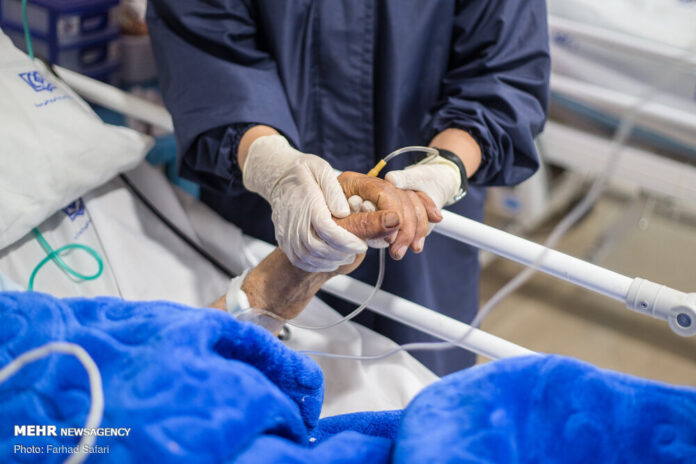
Iran Reports Lowest Single-Day COVID-19 Deaths in 10 Days

In a press briefing on Friday, the Ministry’s spokeswoman Sima-Sadat Lari reported 6,305 new cases of COVID-19 infection, raising the total number of cases to 1,360,825.

So far, Lari added, 1,151,676 patients have recovered from the disease or been discharged from the hospital.

Lari said 4,134 patients are also in critical conditions caused by more severe infection.
The spokeswoman noted that 8,796,864 COVID-19 tests have been taken across the country so far.

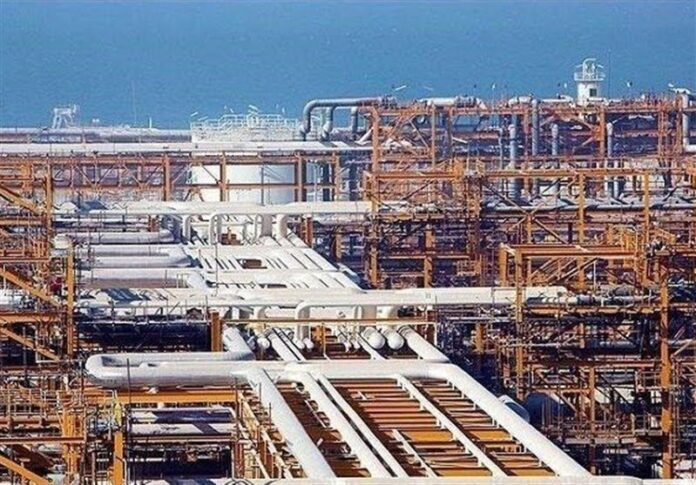
Iran to Cease Burning Associated Petroleum Gas by 2023: Minister

Speaking at a videoconference on Thursday, held on the opening of the Persian Gulf Bidboland Gas Refinery megaproject in Iran’s southwestern province of Khuzestan, Zangeneh said the administration of President Hassan Rouhani has succeeded in fulfilling plans to collect the associated petroleum gas, particularly the gas that used to be flared.

“The issue of flare gas is one of the historical issues in the oil industry. It has been discussed for years, but it (flare gas collection) has not been implemented for various reasons… Plans have been devised in such a way that we will not burn any flare gas until end of year 1401 (March 2023), as more than 95 percent of the associated petroleum gas will be collected and used,” the oil minister said.

He also noted that the administration formulated plans at the beginning of the current Iranian year (March 2020) to inaugurate 17 petrochemical projects with an investment of $11.4 billion that would increase the daily production capacity to 25 million tonnes.

The minister said the huge Persian Gulf Bidboland gas refinery will be generating around $1.5 billion in revenue per annum.

“From a macro perspective, the project pursues also a regional development goal. This is a mother plan, which has fruitful children downstream. This project would supply the input for Bandar Imam Petrochemical Complex and supply the olephyne and polyethylene input for Gachsaran (complex),” he added.

Zangeneh also noted that two other petrochemical factories, each with a capacity of 300,000 tonnes, will come on stream in Gachsaran and Dehdasht which would consume olephyne and polyethylene.

“Trump’s team thought that we would die under the sanctions, but we didn’t die and they were destroyed. We are alive and have advanced our projects. Although the volume of our investment was reduced, no project was halted because of technology or equipment. We pressed on with our job. We are alive and lively. The hope in our hearts is much greater than before,” he underlined.

Zangeneh finally noted that the new megaproject would allow Iran to save around 60 percent of the associated petroleum gas, saying more projects will drive the flare gas waste in Iran down to zero by 2023.

Bidboland Gas Refinery Symbol of Iran’s Resistance to Economic War

In a post on his Twitter account on Thursday, Alireza Moezzi said the opening of Persian Gulf Bidboland Gas Refinery marks a “historic day” for Iran’s oil and gas industry.

“The Persian Gulf Bidboland megaproject is the homeland’s huge stride in production, in seizing the opportunities, and in standing against the sanctions. The old wish to turn the flare gas into refinery input came true under the 12th administration,” he added.

Moezzi noted that 82 percent of the Persian Gulf Bidboland Gas Refinery was completed during President Hassan Rouhani’s tenure.

He said the opportunity provided by the Joint Comprehensive Plan of Action was taken to finance the environmental-friendly project and supply its basic equipment, noting that the megaproject never came to a halt under the pressure of sanctions.

Known as the symbol of resistance to the economic war, the gas refining complex was chosen as the world’s third biggest megaproject in 2020, Moezzi added.

“The installment stage and operating this megaproject, as well as the domestic supply of many of its apparatus, have been carried out in the era of sanctions. Now as Trump, the initiator of the cruelest anti-Iranian sanctions, has been removed from power, the symbols of Iranian resistance, such as Persian Gulf Bidboland, are emerging one after another,” deputy chief of staff of the President’s Office for communications and information affairs noted.

The megaproject launched in the southwestern city of Behbahan, came on stream on Thursday upon an order by President Rouhani who used a video conference call to open the facility.

Construction of the refinery began in 2015. It has cost $3.4 billion, of which $2.3 billion has come from Iran’s sovereign wealth fund. Some 15,000 people contributed to the construction process which included works for over 1,000 kilometers of pipelines to collect flares from oilfields in three southern provinces of Khuzestan, Bushehr and Kohgiluyeh and Boyer-Ahmad.