Tuesday, December 30, 2025
Home Blog Page 2577

Iran’s Energy Achievements Prove Failure of US Sanctions: VP

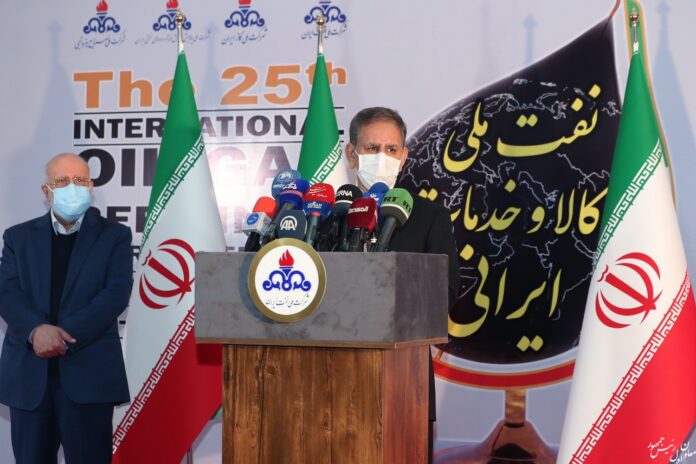
Jahangiri made the remarks on Sunday after a visit to the 25th International Oil, Gas, Refining and Petrochemical Exhibition.

“The achievements of this exhibition indicate that Iran is moving towards development and progress,” he said on the sidelines of the visit.

Jahangiri praised the country’s “great achievements” in the fields of oil, gas, refining, and petrochemical, and said the exhibition is a proof of the “long strides” the country has taken to make products that can be released both inside and outside the country.

The vice-president referred to the recent inauguration of Bidboland Gas Refinery in southwestern Iran, and said, “No one could imagine the country can implement such projects under the harshest and toughest US sanctions in the past three years.”

He said the refinery is a symbol of the projects whose construction started and finished at the time the country was under the US sanctions.

Jahangiri said even in the past few months when Donald Trump was still in office in the US, Iran set considerable records in the export of crude oil and oil condensates.

“At a time when they wished to zero out Iran’s oil sales, we achieved the biggest record in crude oil export in December 2020-January 2021,” he added, vowing that the country will see brighter days in spring.

Earlier this week, the Iranian president inaugurated Bidboland natural gas refinery in the south of the country as one of the largest projects in the Middle East.

The project has come with a price tag of $3.4 billion.

On Thursday, the deputy chief of staff of the Iranian President’s Office for communications and information affairs lauded the inauguration of Bidboland megaproject as the symbol of the Islamic Republic’s struggle with sanctions and economic war.

In a post on his Twitter account on Thursday, Alireza Moezzi said the opening of Persian Gulf Bidboland Gas Refinery marks a “historic day” for Iran’s oil and gas industry.

“The Persian Gulf Bidboland megaproject is the homeland’s huge stride in production, in seizing the opportunities, and in standing against the sanctions. The old wish to turn the flare gas into refinery input came true under the 12th administration,” he added.

Moezzi noted that 82 percent of the Persian Gulf Bidboland Gas Refinery was completed during President Hassan Rouhani’s tenure.

He said the opportunity provided by the Joint Comprehensive Plan of Action was taken to finance the environmental-friendly project and supply its basic equipment, noting that the megaproject never came to a halt under the pressure of sanctions.

Known as the symbol of resistance to the economic war, the gas refining complex was chosen as the world’s third biggest megaproject in 2020, Moezzi added.
Iran Constructing Sci-Tech Park at iLand City

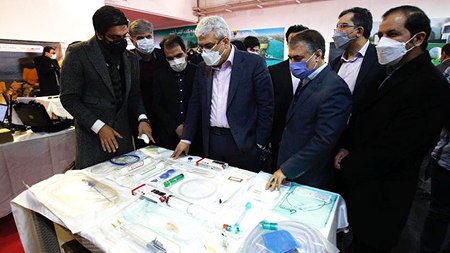
Iranian Vice President for Science and Technology Sorena Sattari visited the site of the park to see for himself the process of its construction.

“The potential created to build a sci-tech park has given fresh impetus to the trend of the formation of a smart city,” he said.

He added the Science and Technology Department of the President’s Office supports the development of knowledge-based infrastructure in the country.

“The purpose of this visit was to offer support to the development of innovation and technology ecosystem for companies and individuals who take steps towards solving problems of society through innovative services and solutions,” he noted.

He said the department is seriously making efforts to establish knowledge-based companies, technological units and creative industries at the sci-tech park.

“By supporting this complex, we try to help further develop the potential of smart cities and set the stage for the development of advanced technologies in this atmosphere,” the vice president said.

Located 35 km southwest of Tehran, the iLand commercial and entertainment township covering 1,400 hectares of land includes resort, residential and technological facilities. Part of the complex is allotted to the Iranians’ Sci-Tech Park.

Iran Says Has Lost All Its Trust in US, Europe

Mark Dubowitz’s Delight over Coronavirus in Iran ‘Shameful’: Araqchi

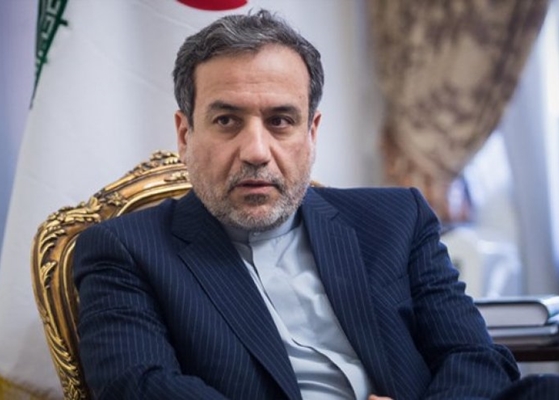
Deputy Foreign Minister for Political Affairs Seyyed Abbas Araqchi said Tehran fulfilled its commitments under the 2015 nuclear deal, but the US and the Europeans failed to keep their side of the bargain.

“The Europeans either were unable to or did not want to deliver on their commitments. Of course, the result of both will practically be the same,” he noted.

Araqchi further reiterated Tehran’s demand that Washington lift its sanctions against Iran and rejoin the Joint Comprehensive Plan of Action (JCPOA).

“Iran’s demand is a realistic one, and that is, the US should lift the sanctions and return to the JCPOA,” he said in an interview with the Italian newspaper la Repubblica.

“We held talks in good faith, and implemented the JCPOA in good faith. Now, it is the new US administration’s turn to make up for the mistakes of the previous administration,” Araqchi said.

“It was the US that withdrew from the JCPOA, so it should return to the agreement itself. And in order to rejoin the nuclear deal, the US should [first] lift all sanctions,” he added.

“We stand ready to live up to all of our commitments under the JCOPA provided that the Americans make good on their obligations and lift the sanctions,” the top diplomat said.

Araqchi added Iran has not made any contacts with the new US administration and has no intention to.

“Naturally, we are waiting for them to be installed in their posts and begin work,” he said.

As for whether or not Tehran will be ready to enter into talks with new US President Joe Biden’s envoys, Araqchi said any such negotiations should be within the framework of the JCPOA.

“I think there is still an efficient framework, which is the same framework envisaged in the JCPOA. It was they that left that framework, and can now return to it and resume talks,” he said.

“At the moment, we are not interested in making any direct contacts and we believe the JCPOA is an appropriate framework and that negotiations should take place within the same framework,” the top Iranian official said.

“Even before returning to the JCPOA, the US can return to the framework of talks under the JCPOA in order to restart negotiations,” he said.

Araqchi reiterated that Iran scaled down its commitments under the JCPOA after Europe failed to deliver on its commitments.

“We did not destroy the JCPOA. We saved it by scaling down our obligations and maintaining a balance between signatories to the deal,” the top diplomat noted.

Meanwhile, Araqchi underscored that the JCPOA will not be renegotiated.

“The JCPOA should be implemented to the letter. There is no such thing as ‘The JCPOA Plus’ or any other agreement or any new talks on the deal.,” he said.

Araqchi also noted that Iran’s missile program is not negotiable, either.

However, he explained, security in the Persian Gulf is an issue which could be a subject of talks among regional countries.

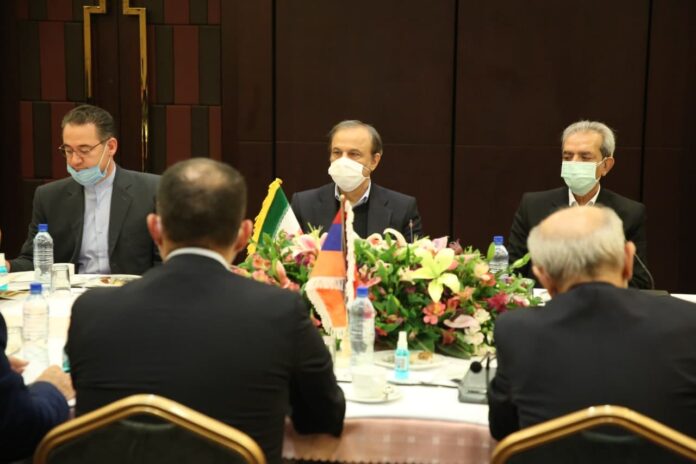
Tehran, Yerevan Set to Boost Industrial Cooperation

Iranian Minister of Industry, Mines and Trade Alireza Razmhosseini said Iran’s industry and service sectors stand ready enhance their cooperation with Armenia.

“Iran enjoys good potential for the production of steel products, household appliances, automobiles and foodstuff,” said Razmhosseini in a meeting with Armenian Economy Minister Vahan Kerobyan.

“The [Iranian] Ministry of Industry, Mines and Trade seeks to support both countries’ private sector and facilitate their moves,” the Iranian minister added.

Razmhosseini pinpointed that conditions should be eased for businessmen from both countries.

“Armenian businessmen are interested to see an increase in transactions between Iran and Armenia, and the representative of Armenians at the Iranian Parliament has emphasized this point, too,” said the Iranian minister.

Also present at the meeting was Bahman Abdollahi, the president of the Iran Cooperatives Chamber, who said Iran is ready not only to supply the market, but also to export commodities to Russia via Armenia.

He also called on the Armenian side to provide the required infrastructure and make the necessary arrangements in that regard. 

Another Iranian official present at the meeting was Mohsen Salehinia, the chairman of the Managing Board of the Industrial Development & Renovation Organization of Iran (IDRO), which is a major shareholder to two Iranian auto giants.

He said IDRO is keen on joint investment with Armenia in the auto sector.

For his part, the Armenian minister said Iran-Armenia economic cooperation is not proportionate to the potentialities and capabilities of the two countries at the moment.

With joint production of goods in Armenia, he explained, it is possible to increase mutual trade from the current $400 million to $1 billion in six months.

He made it clear that Armenia economic players stand ready to help Iran export its commodities to Russia in six months. Of course, he added, infrastructure for transport should be prepared first. 

At the end of the meeting, the Iranian minister of industry, mines and trade and the Armenian economy minister signed a memorandum of understanding (MoU) on mutual cooperation.

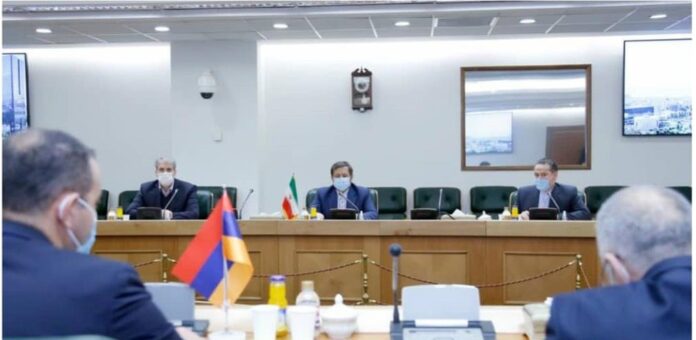
Iran, Armenia Discuss Closer Trade, Economic Ties

Abdonasser Hemmati also touched upon the age-old history of trade and cultural exchanges between the two countries.

“Currently, the volume of trade between the two countries is not reflecting the long history of mutual cooperation,” said the CBI governor in a meeting with Aremnian Economy Minister Vahan Kerobyan.

“So, by holding similar meetings, we hope we will be able to further promote reciprocal ties and see [mutual] economic cooperation expand,” said the Iranian official.

Hemmati then recalled that Iran and Armenia are both members of the Eurasian Economic Union.

“Using its geographical situation, Armenia can have a tremendous impact on the promotion of trade ties between the two countries and with the whole [Eurasian Economic] Union, especially when Iranian businesspeople have always been very interested in exporting goods to Armenia,” added Hemmati, who is also the head of Iran’s Money and Credit Council.

“Despite the heavy pressure of the US, the economic situation of Iran is improving and we have been able to secure a positive economic growth this year,” he added.

“Generally speaking, we believe the sanctions won’t last, and currently, Iran’s trade ties with certain countries are opening up, and it is a proper time for Armenia, as a friend and neighbour of Iran, to work towards boosting its relations with Iran,” said the CBI director.

“Over the 10 months to January 2021, Iran exported $260 million worth of goods to Armenia. However, Iran’s imports from Armenia amounted to less than 30% of that figure,” he said.

“These figures are not very high, and a solution should be worked out to strike a balance or to transfer excess trade resources, so that Iran will be able to increase its exports more than ever before,” he said.

The Armenian official, in turn, expressed his gratitude to the CBI for hosting him, and called for the expansion of trade and economic relations between the two countries.

He also called for major Iranian companies to run investment and production activities in Armenia.

Given the importance of banking issues between the two countries, Kerobyan invited the CBI governor to travel to Yerevan to follow up on specialized banking and financial transactions issues with his Armenian counterpart.

Iran, US Need to Sit for Talks on Selective Issues: Zarif

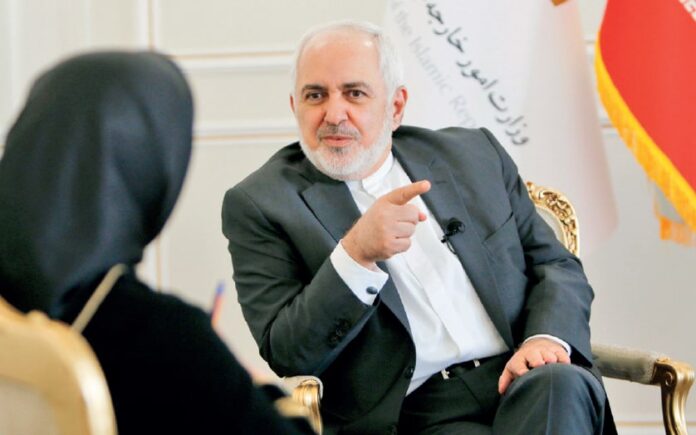
Iranian Foreign Minister Mohammad Javad Zarif (right) speaks in an interview with Etemad newspaper's Sara Massoumi (left)

Speaking in an exclusive interview with the Iranian daily newspaper Etemad, which was published on Saturday, Jan. 23, 2021, Zarif said Iran needs to draw a final shape of the future of its relations with the United States.

“In my personal view, which does not represent the country’s view, we should delineate the final shape of relations with the US. We should tell the US that we won’t cooperate with you on the issue of Israel, and we’ll continue to disagree with you on that. We won’t get along with you on the issue of hegemony, and won’t let you interfere in Iran’s domestic affairs, but we have no problem working with you on the issue of oil,” Zarif said.

“We also have no problem if the Persian Gulf security is ensured [through cooperation], even though we believe foreign presence in the Persian Gulf brings about insecurity, and you [Americans] should not be here.”

“We believe democracy needs to be established in Afghanistan, as we [Iran and the US] reached an understanding in Bonn in 2001, but we believe your presence in Afghanistan is dangerous,” he added.

“We need to have a serious picture of general [outline of relations] in the future with the US, and then hold negotiations [with the US] on issues we decide, not on all issues,” Zarif said.

He said he has never believed in tension and escalation, but he believes Iranian people have an identity to preserve.

“This is a cultural, civilizational, and national identity. National identity does not allow an American to say ‘if I stop supporting Iran for a week, they will be speaking Arabic, Russian or Chinese’,” Zarif said.

Zarif quoted former US secretary of state Henry Kissinger as saying that Iran is heir to the world’s oldest national identity. “This is why we cannot accept that someone rules over us with bullying.”

He said the Americans have been accustomed to dictating their demands to other sides, but that did not happen for them in the case of the 2015 nuclear deal between Tehran and world powers.
“The nuclear deal (JCPOA) was opposed by two groups: Iranians and Americans. Few people had any problem with the JCPOA in Europe. Why? Because Americans are used to dictating their demands whenever they have interaction with someone, but there was no dictation in the JCPOA,” the Iranian top diplomat said.

“Likewise, Iranians are accustomed to resisting, especially after the 1979 revolution. There was resistance in the JCPOA, but its final word was interaction. This was why there was opposition to the JCPOA both in Iran and the US,” he added.

“Where do you think the US’ call for a change in the JCPOA’s timetables or inclusion of regional and missiles issues in the deal comes from? This is exactly where we disagree. It’s because they have a saying which says ‘what’s mine is mine, and what’s yours is open to negotiation’. This way of thinking may work in many parts of the world, but not with Iran.”

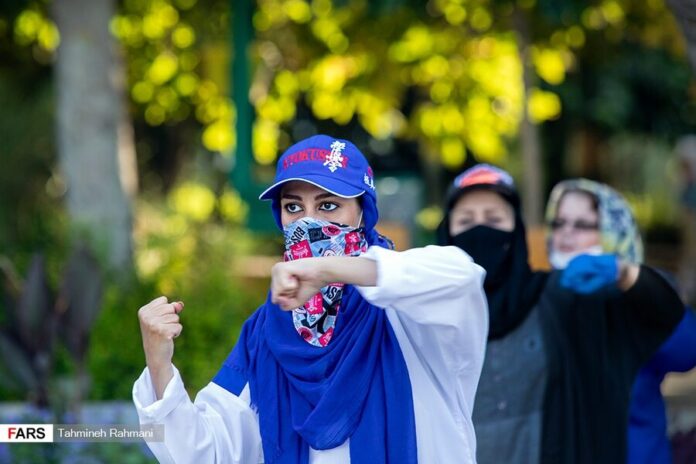
No Iranian City in ‘Red’ State: COVID-19 Official

Alireza Raisi said on Saturday the danger level throughout the country has decreased.
“I’m announcing the good news that fortunately there are no “red” towns or cities across the country,” he said.

“The cities in Mazandaran province which were in a “red” state have turned into “orange” ones today.

On the whole, we have around 19 “range” cities, around 157 “yellow” ones and 256 “blue” ones, and we can be happy about this,” the spokesman added.

“But I need to seriously remind you that there were some violations of health protocols as were there last week. There were reports from different cities of numerous cases of failure to comply with the protocols,” he added.

“One of the cities where health protocols were breached was Kashan where the necessary warnings were given. I hope they will begin to strictly abide by the protocols again,” he said.

Daily Rise in Iran’s COVID-19 Fatalities Down to Lowest Since June 7

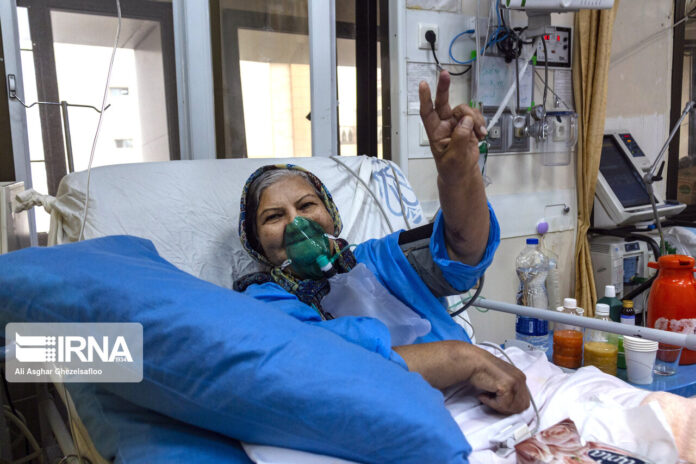
In a press briefing on Saturday, Health Ministry spokeswoman Sima-Sadat Lari reported 6,207 new cases of COVID-19 infection, raising the total number of cases to 1,367,032.

So far, Lari added, 1,158,475 patients have recovered from the disease or been discharged from the hospital.

Lari said 4,106 patients are also in critical conditions caused by more severe infection.

The spokeswoman noted that 8,850,281 COVID-19 tests have been taken across the country so far.

She said currently 18 cities are in the “orange” zone, 154 are in the “yellow” zone, and 276 are in the “blue” zone in terms of coronavirus outbreak.

Iran’s Air Industry Made Considerable Progress despite Sanctions: DM

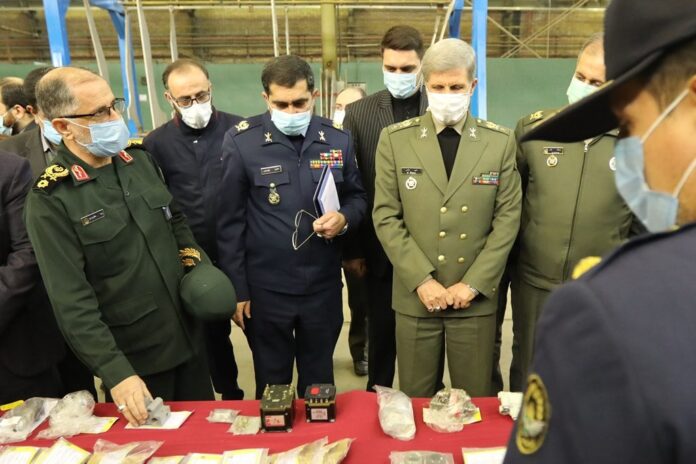
Brigadier General Amir Hatami made the comment while inspecting the process of building the second one of an advanced training jet plane named Yasin.

“During this visit, we are witnessing progress, innovation and new activities, and this forward-moving drive is based on the solid foundation laid in the past,” he noted.

“Any time the enemies sought to impose more restrictions, our industries moved toward more self-sufficiency and progress,” said the top general.

“It has been years that the air industry has been under tough and heavy sanctions, but has always manifested self-sufficiency with dynamism and self-confidence, and the air industry is really a clear example for the Armed Forces and the nation when it comes to countering sanctions,” he added.

He echoed remarks by Leader of Iran’s Islamic Revolution Ayatollah Seyyed Ali Khamenei that although sanctions created some problems, they led Iran to pay more attention to its domestic potential and capabilities.

“That is why today, despite what enemy wants, Iran is by far stronger that what it was in the early years following the revolution,” he said.

Iran Opens Auto Spare Parts Innovation Centre

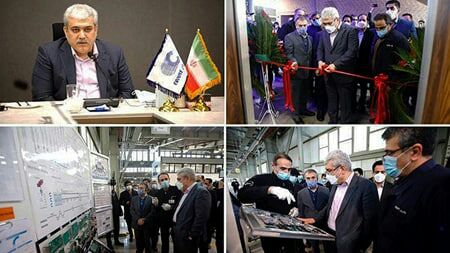
The centre was inaugurated in a ceremony attended by Vice President for Science and Technology Sorena Sattari.

During the ceremony, he highlighted the importance of innovative moves by knowledge-based companies in the auto industry.
He said the fine line between owning a factory and an industry is the ability to design, manufacture, optimize and develop.

“These capabilities materialize only by opening the doors to innovation and welcoming innovative knowledge-based companies and start-ups,” he said.

The top official noted local knowledge-based companies are capable of producing auto software and parts.

The newly inaugurated spare parts industry innovation centre employs nearly 13,000 people.