Friday, April 17, 2026
Home Blog Page 2575

Ball Is Now in US Court, Iran’s Rouhani Tells Swiss President

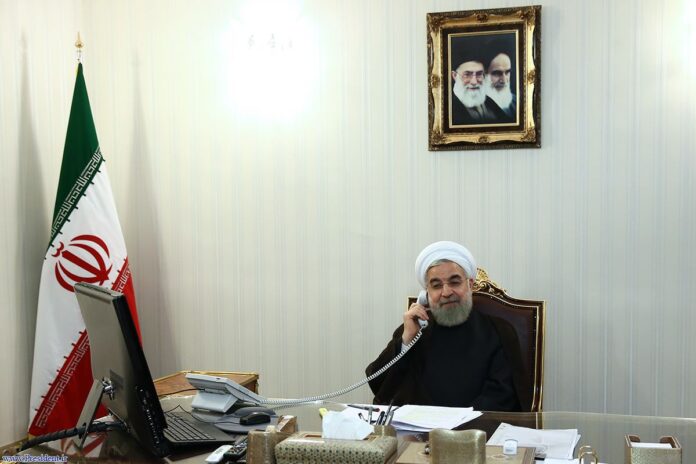
Speaking in a Tuesday phone call with President of the Swiss Confederation Guy Parmelin, President Rouhani said, “Now the ball is in America’s court, and whenever it effectively lifts illegal sanctions, everything will get back on track.”

He said resolving problems through threats, pressure and coercion against the Iranian people has certainly failed.

“The US’ policy of maximum pressure has completely failed with the resistance of the Iranian people, and it is only through methods based on rationality and mutual respect that problems can be overcome,” he added.

President Rouhani further hailed good relations between Tehran and Bern and described them as historical and deep.

“It is necessary to develop and deepen these good relations more than before and within the framework of the joint cooperation roadmap, considering the high capacities in both countries. Tehran-Bern relations can be promoted to an appropriate level,” he added.

“Fortunately, Iran-Switzerland relations are in a good state thanks to a roadmap drawn for relations in various political, cultural and economic fields, such as transportation, health, medicine, agriculture and science and technology, even during the tough US sanctions,” he said.

“We are seeking to further facilitate the activities of important Swiss companies that have continued to operate in Iran despite sanctions,” Rouhani added.

He also called for the necessary measures to be taken effectively for the Swiss financial channel and the implementation of those joint agreements that have been suspended due to the policies of the previous US administration, and a step towards the use of capacities.

Rouhani also described the Hormuz Peace Endeavour (HOPE) initiative as a step to encourage collective security in the region and welcomed any constructive and operational initiative by countries such as Switzerland.

“Undoubtedly, in an insecure environment, everyone in the region and in Europe will be harmed, and Iran is ready to take confidence-building measures if the other countries in the region show the necessary will,” he added.

Referring to the sad situation of the Yemeni people, the President called for an immediate ceasefire, the sending of aid, the prevention of arms transfers to some countries in the region, and finally the start of Yemeni-Yemeni talks as the final solution to return peace to the country.

In turn, the President of the Swiss Confederation congratulated the government and people of Iran on the anniversary of the Islamic Revolution and said, “Bern is willing to develop relations with Iran in areas of mutual interest and will make every effort in this regard.”

He expressed satisfaction with the activities of Swiss companies in Iran despite the US sanctions, and referred to the Swiss financial channel and its role, saying Switzerland is committed to transferring Iranian assets in some countries to this channel.

The Swiss president also described the current situation in the international field as another opportunity for all parties to return to fulfil their obligations, and said that Switzerland was ready to make efforts in this direction.

Parmelin also stressed the importance of returning security to Yemen and strengthening regional cooperation, saying that Iran, given its effective role in the region, could help restore peace to Yemen with the help of other parties, including the European Union.
Iran Reports Over 8,000 New Cases of COVID-19 Infection

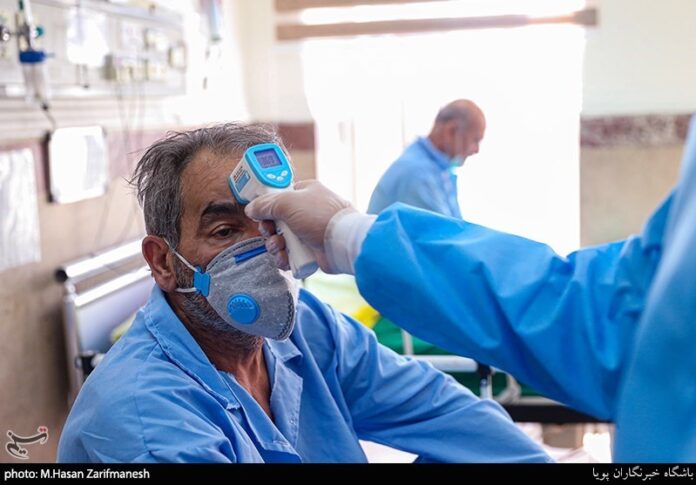
In a press briefing on Tuesday, Sima-Sadat Lari said the virus has killed 89 patients since Monday noon, raising the overall death toll to 59,117.

So far, Lari added, 1,310,821 patients have recovered from the disease or been discharged from the hospital.

Lari said 3,696 patients are also in critical conditions caused by more severe infection.

The spokeswoman noted that 10,161,499 COVID-19 She said currently nine cities are in the “red” zone, 39 cities are in the “orange” zone, 228 are in the “yellow” zone, and 172 are in the “blue” zone in terms of coronavirus outbreak.

According to Lari, the “red” cities are all in Khuzestan province in southwestern Iran, and include Abadan, Ahvaz, Mahshahr, Dezful, Dasht-e Azadegan, Shadgan, Shushtar, Karoun, and Hoveyzeh.

Iran Denies Any Involvement in Erbil Attack, Urges Prosecution of Perpetrators

“Iran not only strongly rejects these rumours, but also flatly condemns suspicious attempts to attribute the attack to Iran,” Khatibzadeh noted on Tuesday.

“Iran regards Iraq’s stability and security as a key issue for the region and neighbouring countries, and dismisses any move that would disrupt tranquility and order in this country,” he added.

He described such actions as “suspicious,” calling on the Iraqi government to issue the necessary orders to deal with those behind such moves.

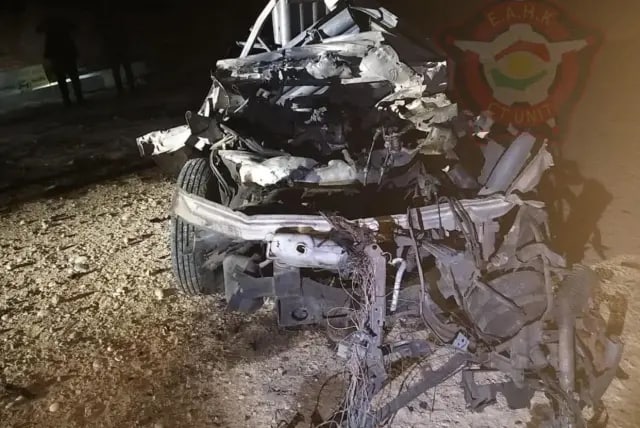
At least three rockets landed in the city of Erbil on Monday night, killing a civilian contractor and wounding several others including an American service member, according to a US-led coalition spokesman.

Col. Wayne Marotto, a spokesman for the US-led coalition in Iraq, said “there was one civilian contractor killed, five civilian contractors injured and one US service member injured” in the Monday night “indirect fire”.

Former Iraqi prime minister and senior Kurdish official Hoshyar Zebari said “five Katyusha rockets” hit the city of Erbil and some diplomatic facilities and residential areas.

The airport was reportedly shut down and flights were halted for safety issues.

A newly-established militant group which calls itself “Saraya Awliya al-Dam” has claimed responsibility for the rocket attack.

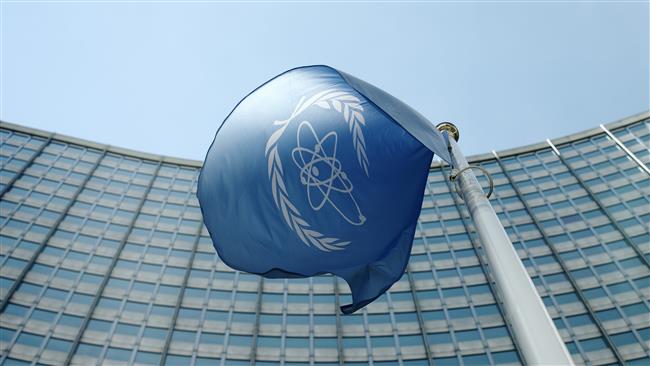
Iran Not to Halt Its Cooperation with IAEA: Spokesman

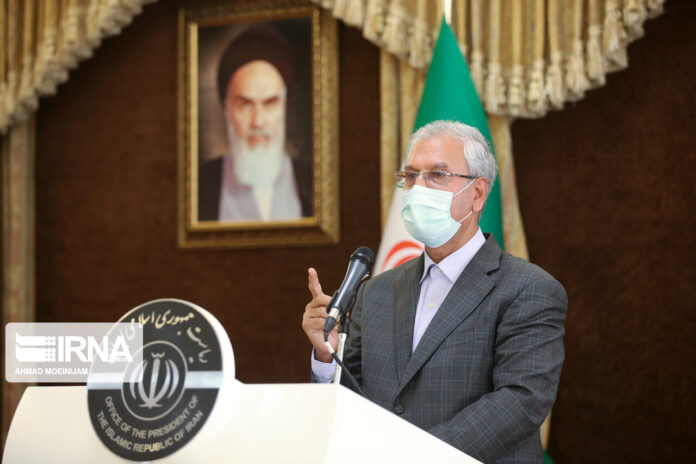
“Since the sanctions have not been lifted so far, the government and the Atomic Energy Organization of Iran (AEOI) are obliged to suspend the voluntary implementation of the Additional Protocol,” Rabiei said on Tuesday, stressing that the country will no longer allow inspections beyond the IAEA Safeguards.

Speaking in his weekly press conference, which was held via videoconference, Rabiei said Iran can immediately stop the voluntary implementation of the Additional Protocol once the deadline set by the Iranian Parliament for the removal of sanctions passes.

“Iran is a member of the Safeguards, and based on its commitments, the majority of inspections – namely the ones that do not fall within the framework of the Additional Protocol – will remain in place,” Rabiei noted.

“Therefore, halting the voluntary implementation of the Additional Protocol does not mean halting cooperation with the IAEA. This cooperation will continue, and the Islamic Republic of Iran has in a letter informed the IAEA of all these issues in advance,” he added.

He said the move is clearly not what Iran would really want to do, and is just a result of the US’ procrastination in lifting the sanctions and fulfilling its commitments under UN Security Council Resolution 2231.

Rabiei said the Islamic Republic still considers the 2015 nuclear deal as a valid accord and the best one possible, and is prepared to immediately return to its commitments once the US and other parties do the same.

“We hope the three European countries and the US would use the short remaining time, and not make it more complicated to achieve a diplomatic solution to this unnecessary disagreement,” he added.

Iran, Russia Start Joint Naval Drills North of Indian Ocean

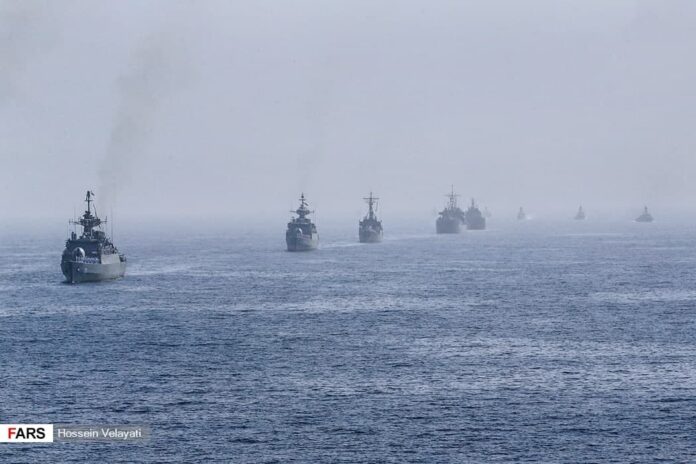
The maneuvers involve naval and air units of the Navy of the Iranian Army as well as the Navy of Iran’s Islamic Revolution Guards Corps (IRGC).

A Russian frigate, bunkering vessel and helicopter are also taking part.
The military exercises are aimed at honing the skills of both countries’ naval troops in ensuring maritime security.

The drills come to boost security for international maritime trade and increase capabilities to tackle piracy and terrorism at sea.

Among other objectives is to exchange experience on naval aid and rescue operations.
The exercises are carried out across an area spanning 17-thousand square kilometres.

Pointless to Say Iran Should Return to JCPOA as It Never Left: Envoy

Takht-Ravanchi

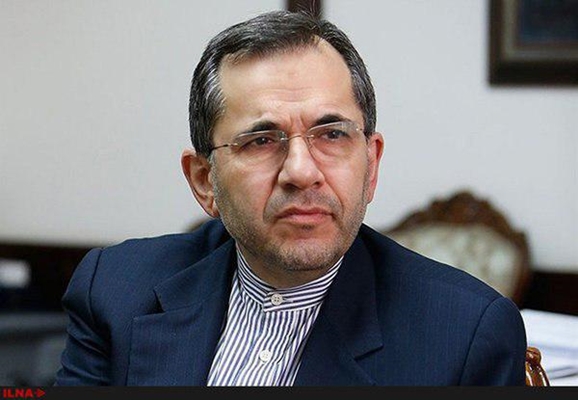
Majid Takht-Ravanchi expressed surprise over Washington asking Iran to rejoin the nuclear deal.

“How is Iran, which is already a signatory to the JCPOA, expected to take the first step?” he asked rhetorically in an interview with the Persian service of Euronews.

He reiterated that Iran scaled down its commitments under the JCPOA based on Article 36 of the very same agreement.

“In accordance with Article 36, when a signatory to the JCPOA commits a gross violation, Iran is authorized to stop fulfilling its commitments, in whole or in part, and we chose the second option,” he said.

Iran to Stop Implementation of Additional Protocol Next Week: Spokesman

Saeed Khatibzadeh said the move will be in line with legislation passed by the Iranian parliament regarding the lifting of sanctions.

Speaking in his weekly press conference, he said if the other parties to the JCPOA fail to comply with their commitments, “the government will, based on the parliament’s legislation, be obliged to stop the voluntary implementation of the Additional Protocol.”

“That means [IAEA] inspections beyond the Safeguards Agreement will stop, i.e., the inspections which Iran had allowed on a voluntary basis within the framework of the Additional Protocol, and does not mean all inspections will stop,” Khatibzadeh explained.

“Iran is a member of the Safeguards Agreement, and, in keeping with its obligations under the agreement, will keep part of the inspections in place because they are not related to the Additional Protocol,” the spokesman said.

“The implementation of the Additional Protocol will definitely stop,” he stressed.

“Iran will move forward with its cooperation with the IAEA, and Iran has, in a letter, informed the IAEA of all relevant issues, and all the measures adopted by Iran are simply reversible on the condition that the other parties make good on their commitments,” he said.

The spokesman also touched upon the IAEA’s negligence with regards to the principle of confidentiality and the letter that Iran has sent to the agency in that regards.

“Unfortunately, information has been leaked before on several occasions. The IAEA is definitely and directly responsible for preserving the confidentiality of all documents of all countries, including those of the Islamic Republic of Iran,” he added.

Iran’s Economy Thriving despite Sanctions: Vice-President

Iran Boosting Exports to Kuwait as COVID-19 Restrictions Eased

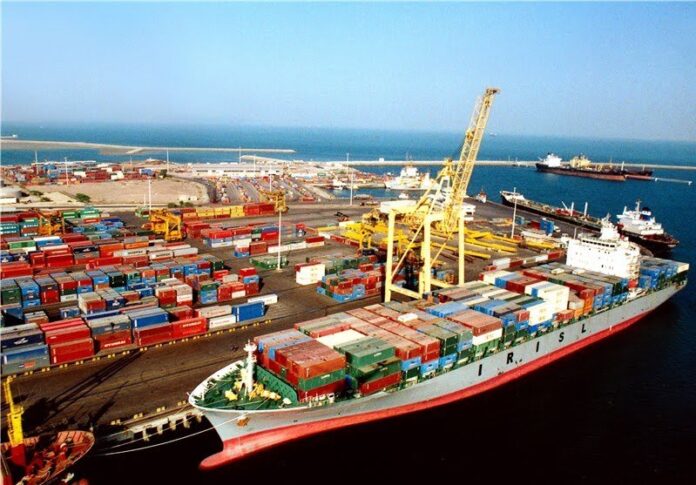
Es’haq Jahangiri said the most important program for the nation’s economy in the post-sanctions era should be to enhance exports.

“Chairpersons of joint commissions of Iran and neighbouring countries should remove problems with the infrastructure of foreign trade as soon as possible,” the vice president said.

Jahangiri also noted that small vessels should be produced to replace old launches as soon as possible.

He also stressed the need to boost the country’s transit potential and enhance transportation corridors.

Elsewhere in his remarks, Jahangiri touched upon the recent huge fire which broke out at a customs post on Iran-Afghanistan border.

“Afghanistan and Iraq are among the largest markets for Iran’s exports, and Iran sends most of its exports to these countries,” he said.

Jahangiri added all resources should be mobilized to rebuild and retrofit the Islam Qala border crossing in order to maintain the trend of foreign trade between Iran and Afghanistan.

Iran Informs IAEA of Decision to Halt Voluntary Implementation of Nuclear Protocols

IAEA to Send Two Rapid Coronavirus Testing Devices to Iran: Envoy

Iran’s Ambassador to International Organizations in Vienna Kazem Gharibabadi said Iran has submitted to the IAEA’s director general a letter announcing the country will stop implementing voluntary actions on February 23, 2021.

“The move is in line with the enforcement of legislation passed by the Iranian parliament to lift sanctions and safeguard the interests of the Iranian nation, and is also in keeping with the rights of the Islamic Republic of Iran stipulated in paragraphs 26 and 36 of the Iran nuclear deal,” said Gharibabadi.

He said Iran is stopping the implementation of certain voluntary actions because the other signatories to the nuclear agreement have failed to live up to their commitments with regards to the lifting of illegal sanctions on Iran.

“In this letter, we asked the IAEA to immediately take the necessary measures to meet Iran’s demand that it stop the implementation of different voluntary actions, including the implementation of the Additional Protocol,” the ambassador noted.

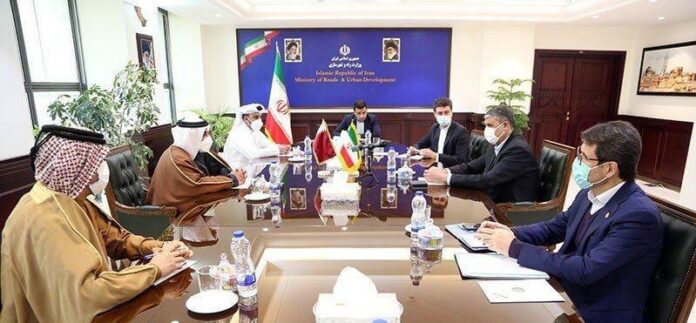
Iran, Qatar Discuss Closer Transport Cooperation in Tehran

In the Monday meeting, the two sides discussed the enhancement of mutual cooperation in the transport sector.

The Iranian minister, for his part, highlighted the cultural and border commonalities between the two countries.

“It is a reality that the two countries enjoy numerous opportunities for the promotion of bilateral cooperation,” he noted.

Eslami underscored that the hears of Iranian people and authorities are filled with kindness and friendship.

He said this common ground is of significance and cannot easily be overlooked.

“Iran belongs to all cultures and religions, so much so that Arabs, Baluchs, Turkmens, Azeris and other ethnic groups have integrity and live in harmony with one another,” he said.

The Qatari minister, in turn, described the meeting as positive, and invited his Iranian counterpart to visit Qatar and see for himself the projects underway in the country’s transport sector.