Thursday, December 25, 2025
Home Blog Page 257

Syrian, Israeli officials meet in Azerbaijan’s Baku: Diplomatic source in Damascus

The meeting marked a major step for the two sides which have been foes for decades, and comes after Israel initially cold-shouldered Sharaa’s administration as jihadist because of his past links to Al-Qaeda.

“A meeting took place between a Syrian official and an Israeli official on the sidelines of Sharaa’s visit to Baku,” the source said, requesting anonymity because of the sensitivity of the issue.

Israel is a major arms supplier to Azerbaijan and has a significant diplomatic presence in the Caucasus nation which neighbours its arch foe Iran.

Sharaa himself did not take part in the meeting, which focused on “the recent Israeli military presence in Syria”, the source added.

After the overthrow of longtime ruler Bashar al-Assad in December, Israel carried out hundreds of air strikes in Syria to prevent key military assets falling into the hands of the interim administration headed by Sharaa.

It also sent troops into the UN-patrolled buffer zone that used to separate the opposing forces in the strategic Golan Heights, from which it has conducted forays deeper into southern Syria.

Sharaa has stated repeatedly that Syria does not seek conflict with its neighbours, and has instead asked the international community to put pressure on Israel to halt its raids.

His government recently confirmed that it had held indirect contacts with Israel seeking a return to the 1974 disengagement agreement which created the buffer zone.

Late last month, Foreign Minister Gideon Saar said Israel was interested in striking a peace and normalisation agreement with Syria.

A Syria government source quoted by state media responded that such talk was “premature”.

But during a visit to Lebanon this week, US special envoy to Syria Tom Barrack stated: “The dialogue has started between Syria and Israel”.

After meeting Sharaa in Riyadh in May, US President Donald Trump told reporters he had expressed hope that Syria would join other Arab states which normalised their relations with Israel.

“(Sharaa) said yes. But they have a lot of work to do,” Trump added.

During his visit to Baku, Sharaa held talks with his counterpart Ilham Aliyev, the two governments announced.

Azerbaijan announced it would begin exporting gas to Syria via Turkey, a key ally of both governments, a statement from the Azerbaijani presidency said.

Thousands of Israelis protest in Tel Aviv to demand prisoner swap agreement

Israel Protest

“No victory without return of hostages,” and “There are 50 kidnapped families in Gaza,” read banners waved by protesters, Israeli Channel 13 reported.

The protest came amid reports of a deadlock in indirect negotiations between Israel and Hamas delegations in Qatar.

“The negotiations have not collapsed, and the Israeli delegation continues talks in Doha despite Hamas intransigence,” the channel said, citing an unnamed political official.

A forum representing families of Israeli captives in Gaza called on the government to end the ongoing war on the Palestinian enclave.

“Missing the current momentum would be a serious failure; every day the war continues is an achievement for Hamas and a serious risk for our hostages and soldiers,” the Hostages and Missing Families Forum announced in a statement.

“All the polls and data show that an absolute majority of the nation of Israel wants an end to the war in Gaza and the return of hostages, and agrees that it is in Israel’s interest, including a decisive majority among coalition voters,” added the statement.

The families addressed a message to Israeli Prime Minister Benjamin Netanyahu, saying, “History will remember what you chose: the hostages and fighters, or cheap political maneuvers.”

Hamas stressed Wednesday it has agreed to release 10 live Israeli captives as a sign of “flexibility” to reach a Gaza ceasefire and prisoner swap agreement, while Israel remains rigid on key points, including withdrawal from Gaza.

In contrast, Israel insists on a buffer zone 2 to 3 kilometers wide in the Rafah area, and 1 to 2 kilometers in other border areas.

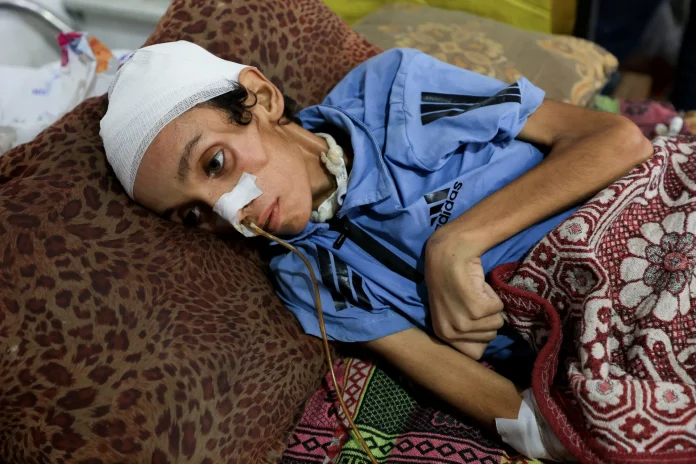
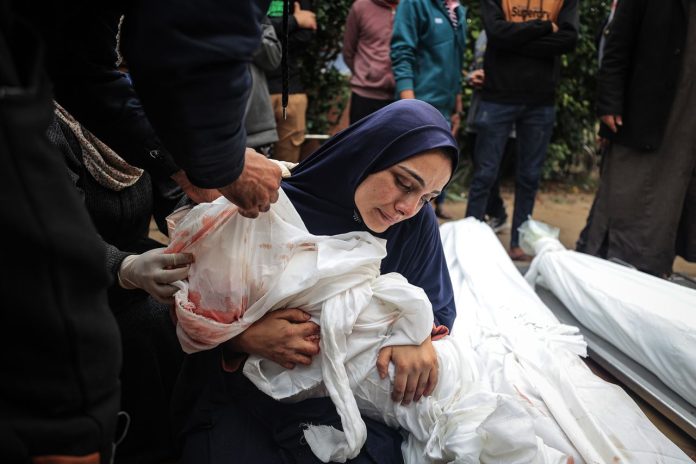
Rejecting international calls for a ceasefire, Israel has pursued a brutal offensive on Gaza since late October 2023, killing nearly 58,000 Palestinians, most of them women and children. The relentless bombardment has destroyed the enclave and led to food shortages and a spread of disease.

Last November, the International Criminal Court issued arrest warrants for Netanyahu and his former Defense Minister Yoav Gallant for war crimes and crimes against humanity in Gaza.

Israel also faces a genocide case at the International Court of Justice for its war on the enclave.

North Korea voices ‘unconditional’ support for Russia in Ukraine

Lavrov is on a three-day visit to North Korea, which has provided troops and arms for Russia’s war on Ukraine and pledged more military support as Moscow tries to make advances in the conflict.

Kim met Lavrov in the eastern coastal city of Wonsan, where Lavrov and his North Korean counterpart, Choe Son Hui, held their second strategic dialogue, pledging further cooperation under a partnership treaty signed last year that includes a mutual defence pact.

Kim told Lavrov the steps taken by the allies in response to radically evolving global geopolitics would contribute greatly to securing peace and security around the world, North Korea’s state news agency KCNA reported.

“Kim Jong Un reaffirmed the DPRK is ready to unconditionally support and encourage all the measures taken by the Russian leadership as regards the tackling of the root cause of the Ukrainian crisis,” KCNA said, using the acronym for the country’s official name, the Democratic People’s Republic of Korea.

Russia’s Ministry of Foreign Affairs posted a video on Telegram of the two men shaking hands and greeting each other with a hug.

The North Korean leader also expressed a “firm belief that the Russian army and people would surely win victory in accomplishing the sacred cause of defending the dignity and basic interests of the country”.

The two men otherwise discussed “important matters for faithfully implementing the agreements made at the historic DPRK-Russia summit talks in June 2024”, KCNA added.

Relations between Russia and North Korea have deepened dramatically during the last two years of the war in Ukraine, which started with Russia’s full-scale invasion of its neighbour in February 2022, with Pyongyang deploying more than 10,000 troops and arms to back Moscow.

The two heavily sanctioned nations signed a military deal last year, including a mutual defence clause, during a rare visit by Russian President Vladimir Putin to North Korea.

Lavrov told Kim that Putin “hopes for continued direct contacts in the very near future”, according to the Russian state news agency TASS.

Ahead of the visit, Russia announced that it would begin twice-a-week flights between Moscow and Pyongyang.

Lavrov lauded Wonsan as “a good tourist attraction”, adding: “We hope it will be popular not only with local citizens, but also with Russians.”

Iran says in no rush to enter talks with US

The top diplomat made the remarks during a press conference that followed a Saturday meeting with ambassadors, chargés d’affaires, and heads of foreign and international missions residing in Tehran.

“We are meticulously assessing the situation and weighing all aspects, and at any moment and place where the interests of the Iranian people are secured, we will do what needs to be done,” he noted.

Araghchi considered the United States attacks against several Iranian nuclear installations last month to be a key factor dissuading Tehran from making haste towards fresh talks.

The official reminded how the aggression targeted the Islamic Republic while it was in the process of an indirect diplomatic exchange with the US.

“This was a betrayal not of us, but of diplomacy itself, by the Americans,” he stated.

If the United States insists on returning to the negotiation table, which it does and has conveyed this insistence to Iran on multiple occasions, it has to convince the Islamic Republic that “such conduct will not be repeated,” the foreign minister added.

Washington, Araghchi stressed, must persuade Tehran that it would not seek to achieve through aggression, what it has not been able to achieve at the negotiation table.

He clarified that, although, the nature of international relations did not permit any absolute guarantees, Iran was still entitled to be convinced about the US’s resolve not to go back to such hostile approach.

“When we are confident that the rights of the Iranian people and the paramount interests of the Islamic Republic of Iran will be safeguarded through negotiations, we will have neither fear nor reluctance to engage in talks.”

The official noted how the Islamic Republic dealt with the aggression victoriously, stating that a nation that has emerged triumphant from warfare is not afraid of entering negations.

“We fought this war heroically and exhibited very excellent resistance. There is no doubt that the Islamic Republic and the Iranian people were the victors in this war, and naturally, whoever is victorious has no fear of negotiation.”

Araghchi was referring to the Iranian Armed Forces’ targeting al-Udeid, the US’s most critical airbase in the West Asia region that is located in Qatar, with ballistic missiles in retaliation for the attacks.

The counterstrike achieved direct hits that were corroborated by locals, who reported hearing many explosions at the outpost throughout the reprisal.

Separately, the official addressed efforts that were underway by some European countries to restore the United Nations sanctions against Iran.

He said the European parties’ recourse to such approach, namely their invoking the so-called “snapback” mechanism, would be a great mistake, which would be as grave as the US’s staging military attacks against the Iranian soil.

Syrian president arrives in Baku for official visit to Republic of Azerbaijan

During his visit, Jolani is scheduled to hold meetings with senior Azerbaijani officials to discuss bilateral relations and regional developments.

Azerbaijan’s APA news agency also said a formal welcoming ceremony was held at Heydar Aliyev International Airport, where a military honor guard was present.
National flags of both Syria and Azerbaijan were raised as well.

Jolani was received by Yaqub Eyyubov, First Deputy Prime Minister of Azerbaijan, along with Fariz Rzayev, Deputy Minister of Foreign Affairs, and other senior government officials.

Jolani introduced himself as Syria’s temporary president after the fall of the government of president Bashar al-Assad amid a foreign-backed putsch last year.

Tehran environmental official dismisses presence of cyanide, arsenic in wetland dust

Air Pollution

Hassan Abbasnejad said while the wetland, one of the main sources of dust in southeastern Tehran, has dried up in recent years due to lack of natural water flow, no scientific evidence supports the presence of dangerous contaminants in its airborne dust.

“Available data and environmental samples show no traces of cyanide or arsenic”, Abbasnejad said.

He further urged local residents not to pay attention to baseless rumors. Abbasnejad acknowledged that trace amounts of elements like chromium have been found in the wetland bed in previous years due to wastewater discharge from nearby industrial units.

He however underlined that the levels are not high enough to contaminate dust storms.

Tehran’s Mehrabad Airport denies explosion rumors

Mehrabad Airport

In an official statement, airport authorities clarified that no incident has taken place at Mehrabad Airport and that all flight operations are proceeding according to schedule.

The statement underscored that the smoke column seen by some observers is unrelated to the airport, as the location of the smoke was outside the airport’s premises.

Mehrabad authorities urged the public and media to avoid spreading unverified information that may cause unnecessary public concern or confusion.

Iranian official: No government-owned essential goods left at ports

Chabahar Port

Rad confirmed to IRNA that both the government and the private sectors have played key roles in maintaining food security, especially amid recent regional tensions. “Thanks to meticulous and early planning, the supply of wheat, flour, and other essential goods was ensured weeks and months in advance”, he noted.

“Even during times of crisis and war, the public never experienced shortages, and the markets remained calm and stable.”

Rad reaffirmed that the supply chain is functioning efficiently and that no shortages of staple goods are expected in the foreseeable future.

Over 409,000 cases of animal bites, nearly 20,000 brucellosis infections reported in 2024 in Iran

Congo fever

Dr. Ghobad Moradi, head of the Center for Communicable Diseases Control, said during a press briefing that 60% of infectious diseases are transmitted from animals to humans.
He noted that 80% of emerging and re-emerging diseases, such as MERS and avian influenza, have animal origins.

He emphasized that while industrialized nations have reduced zoonotic infections through veterinary oversight and public health measures, Iran’s ecology poses a higher risk due to favorable conditions for disease-carrying organisms.

According to Moradi, 19,972 brucellosis cases were reported in 2024, primarily linked to the consumption of unpasteurized dairy products and contact with infected livestock.
He called for stronger cooperation with veterinary services to control the disease at its source.

Animal bites also remain a major concern, with 24 deaths caused by rabies in the past year.
Moradi highlighted the high cost of rabies treatment, noting each vaccine dose costs €7 and requires three doses per patient.

He urged better public awareness and stricter hygiene regulations for pet ownership to prevent further transmission of zoonotic diseases.

FM: Iran to stay in NPT, but reshape cooperation with IAEA

Abbas Araghchi

Araqchi said on Saturday in a meeting with ambassadors, chargés d’affaires, and heads of foreign and international missions based in Tehran that, in accordance with a law passed by Parliament, all of Iran’s cooperation with the IAEA will henceforth be managed through the Supreme National Security Council. Requests from the Agency for continued monitoring in Iran and further cooperation will be reviewed and decided upon by this Council.

Araqchi continued: “We are not satisfied with the performance of the IAEA. The report prepared by the Agency led to the adoption of a completely political resolution by the Board of Governors, and that resolution and the report themselves became pretexts for military attacks on Iran’s nuclear facilities.”

Referring to the Supreme Leader’s fatwa banning the production of nuclear weapons, he said: “If Iran intended to pursue nuclear weapons, it would have done so already. The Islamic Republic adheres to principles rooted in Islamic and humanitarian beliefs.”

He also said: “We have always been ready to engage in dialogue regarding our nuclear program, and we will continue to be in the future. But naturally, there must be assurances that any future negotiations will not once again be turned into war by the US or other countries.”

Araqchi also referred to the threat by the three European countries—Britain, Germany, and France—to reimpose sanctions against Iran through the so-called snapback mechanism, saying: “Snapback would mean the end of Europe’s role in the Iranian nuclear issue.”

He stressed that: “In any negotiation-based solution, the rights of the Iranian people regarding the nuclear issue—particularly the right to enrichment—must be respected. We will not accept any agreement that excludes enrichment.”

Araqchi further emphasized the importance of preserving Iran’s military capabilities, stating: “Our defensive capabilities are for the protection of the Iranian people, and these capabilities will not be the subject of any negotiation.”