Saturday, January 17, 2026
Home Blog Page 2561

Iran Urges Europe to Be More Serious in Fighting Narcotics

Chief of Staff of the president’s office Mahmoud Vaezi said fighting drugs is a common responsibility of the global community.

“The common responsibility of the international community in fight against illicit drugs requires that all countries play their role well and seriously,” said Vaezi at a meeting on the measures adopted by Iran in fighting narcotics.

“The country’s officials have consensus on fighting drugs,” he added.

“Although Iran is a route through which narcotics pass, and is not a destination for them, the country has sustained the highest costs for fighting illicit drugs,” he added.

“Despite the problems caused by the United States’ illegal sanctions and the coronavirus pandemic, Iran has moved full steam ahead with its campaign against illicit drugs and narco-trafficking,” Vaezi explained.

He then urged Europe to work more seriously in the fight against drugs.

“As a destination for drugs smuggled from the region, Europe should be more sensitive and have more serious cooperation,” he said.

Irish FM’s Trip to Tehran Could Bridge Iran-EU Gap: Analyst

Sanctions against Iran are still in place and the outlook for the United States’ return to the 2015 nuclear deal as well as the future of the deal remains shrouded in mystery.

New US President Joe Biden has almost settled down at the White House, but still there is no word on the lifting or suspension of sanctions against Iran.

Tehran has set the condition that it will sit at the negotiating table with Washington only when all sanctions are lifted. However, it seems there is not enough determination to do so.

Meanwhile, an Irish delegation came to Tehran a few days ago to mediate between Iran and Europe over the nuclear deal, officially known as the Joint Comprehensive Plan of Action (JCPOA).

The Irish foreign minister is not the first person to be willing to act as a mediator.

French officials had earlier announced their willingness to intervene, but Iran did not welcome their offer.

But at this juncture, how can we take the two countries to a point where the US would return to the JCPOA and Iran’s problems would be settled?
In an interview with Khabar Online, seasoned expert on international issues Fereydoon Majlesi has weighed in on these developments.

Q: A senior Irish delegation has come to Tehran to mediate and has met with our country’s officials. What is your analysis of this trip and do you think such intervention would be effective?

A: I’m not confident that such moves will help, but I know that Ireland has nothing special to do with Iran. We do not have trade and industrial relations with each other, either. So the Irish team is in Iran for something else. I hope Iranian officials would realize how important Iran’s presence in the international arena is for other countries, not only for those who think they have special benefits and interests, but even for those who are sensitive about the future of the world and relations between countries. They expect things will get better after the flexibility shown by the three European countries, which refused to submit their draft anti-Iran resolution to the Board of Governors of the International Atomic Energy Agency (IAEA). Now, they have asked a country which is neutral toward Iran to mediate. Therefore, we hope this trip will help the two sides, i.e., Iran and the European Trokia to hear each other’s voice better.

Coronavirus Kills 100 More Iranians in 24 Hours: Ministry

In a press briefing on Monday, Sima-Sadat Lari reported 8,313 new cases of COVID-19 infection, raising the total number of cases to 1,449,350.

So far, Lari added, 1,449,350 patients have recovered from the disease or been discharged from the hospital.

Lari said 3,804 patients are also in critical conditions caused by more severe infection.
The spokeswoman noted that 11,337,942 COVID-19 tests have been taken across the country so far.

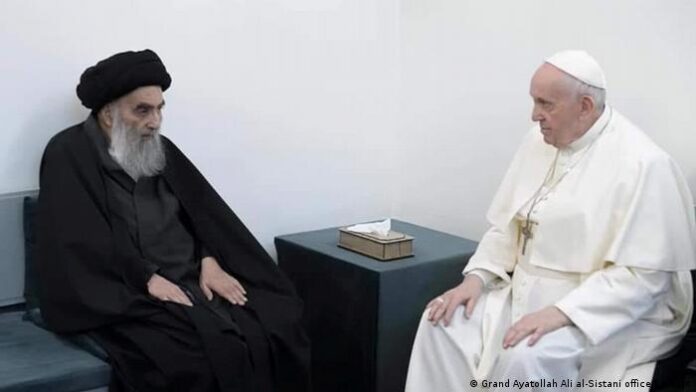
Ayatollah Sistani Urges Removal of Sanctions in Meeting with Pope: Iran

“The messages Ayatollah Sistani highlighted in his meeting [with the Pope] were very important ones, including attention to justice, the role of faith in settlement of global problems today, fair methods of treating nations including removal of sanctions,” Khatibzadeh said on Monday.

“In this meeting, the world’s religious leaders were also called on to help build a better world. The inalienable rights of Palestinian people were among the other messages highlighted by the top religious authority, all of which were considerable,” the spokesman said in his weekly press conference.

“The [Pope’s] meeting with Iraq’s top religious authority Grand Ayatollah Sistani was an indication of interfaith dialogue and proximity and sends the message of dialogue, peace, and friendship as well as cooperation between civilizations, against [the will of] those who seek violence and bloodshed,” he added.

He also described the Pope’s visit to Iraq as a good and important one.

“The visit is important per se as it indicates that, thanks to the Iraqi people’s bravery, the top religious authority’s prudence, and the lives sacrificed in the fight against extremism and external threats, Iraq is so safe now that one can make such a good and constructive trip to the Arab country.”

“The safety and peace and restoration of calm in Iraq is definitely the message of this trip and similar trips to the country,” he added.


Afghanistan No ‘Bargaining Chip’ for Iran-US Talks: Spokesman

Speaking in a weekly press conference on Monday, Khatibzadeh said Iran views its friends based on friendship.

“We have never had an instrumental view of our friends in the region,” he stressed.

“Afghanistan is per se a very important region to us, and is not our bargaining chip for talks with any other party,” he added.

He further referred to a meeting on Afghanistan which is to be held at the United Nations and within the UN framework, and said, “We haven’t received any invitation from the UN regarding Afghanistan.”

“We will wait to receive the UN invitation and then we will consider the issue,” he added.

The spokesman also made it clear that Tehran and Washington have not been engaged in any direct or indirect negotiations over any issue.

“Let me say it explicitly that we haven’t had and don’t have any direct or indirect contact with the United States regarding the JCPOA or other issues.”


Iran to Ask Google, Instagram, Whatsapp to Respect Its Regulations

Speaking in a national cyberspace conference held online, Abolhassan Firoozabadi said relevant authorities are to tell the Google company as well as the other two social networking services about Iran’s rules and regulations.

“There is no room for debate about platforms which are blocked now, but folks have been authorized to enter into talks with Google, Instagram and Whatsapp to tell them to respect our regulations. Of course, we believe not enough efforts have been made in that regard,” he added.

He noted the Iranian Ministry of Communications and Information Technology is responsible for holding the talks.

He also called on officials not be present on blocked platforms.

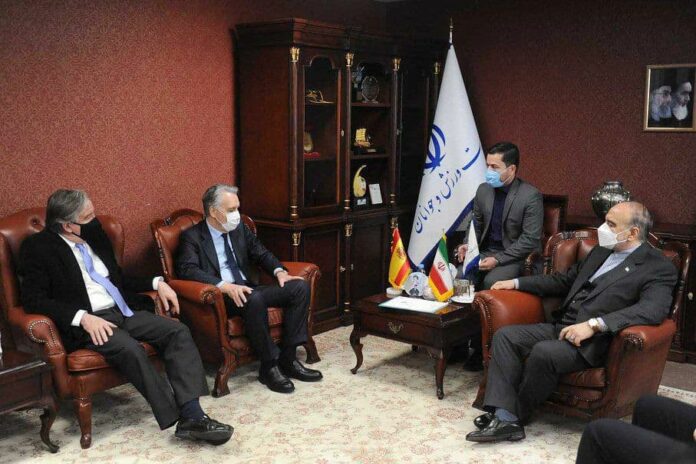
Iranian, Irish Foreign Ministers Hold Talks in Tehran

In the Sunday meeting held in Tehran, the two sides emphasized the necessity of continuing political consultations as well as economic exchanges.

The top Irish diplomat underlined that as arranged, Ireland’s embassy will gradually reopen in Tehran.
The two top diplomats also exchanged views on the JCPOA.

The Iranian foreign minister reiterated Tehran’s principled policy on the need for the removal of illegal US sanctions fully and effectively as a step that would, in turn, see Iran reverse the measures it has adopted to scale down its obligations under the JCPOA.

Coveney, for his part, said Ireland stands ready to facilitate the process as a non-permanent member of the UN Security Council and a facilitator of the implementation of the UN Security Council Resolution 2231 and as a member of the European Union.

Among other topics discussed was ways of helping ease regional tensions where the two sides discussed developments in the Persian Gulf, Yemen, Iraq, Syria, Lebanon, occupied Palestine, Afghanistan and the Caucasus.

Iranian-British Inmate’s Ankle Tag Removed as Her 5-Year Term Ends

Zaghari-Ratcliffe was pardoned by Iran’s Leader last year, but she spent the final year of her term on leave with electronic ankle tag tied to her feet.

Her lawyer says the tag has been removed now, but she still has to appear in court on March 14 for a second charge.

According to Kermani, her second change is “involvement in propaganda activity against Islamic Republic” by attending a protest gathering in front of the Iranian embassy in London in 2009 and speaking to BBC Persian.

However, the lawyer told Emtedad news website he’s hopeful her case would be closed and she wouldn’t get extra sentences.

The lawyer later said he does not know whether the Iranian-British prisoner is banned from leaving the country.

Iran Vows to Level Tel Aviv, Haifa to Ground If Israel Makes Any Mistake

In comments on Sunday, General Hatami said, “Sometimes, their heads bite off more than they can chew and make threats that are clearly out of desperation.”

“Leader of the Islamic Revolution Ayatollah Seyyed Ali Khamenei responded well to the Zionists many years ago. He said that the Zionist regime is not our main enemy and not at the level to be hostile against the Islamic Republic. The Zionist regime knows, and if it does not know, it should know that the Islamic Republic will raze Tel Aviv and Haifa to the ground if it commits a mistake,” the defence minister added.

“The order of the Commander-in-Chief of the Iranian Armed Forces has been carefully enacted and turned into a blueprint, which will be implemented with a single beckon from the Commnad-in-Chief.”

“I advise them not to make this mistake, even verbally,” he warned Israeli officials.
His comments came after the Israeli minister of military affairs said the regime was updating plans for military strikes on Iran’s nuclear sites in case Tehran continues what he characterized as “nuclear escalation”.

In an interview with Fox News, Benny Gantz was asked about Iran’s nuclear program and whether Israel was completing preparations to attack Iranian targets.

“We have them (plans) in our hands of course but we will continue constantly improving them,” he said.

“The Iranian nuclear escalation must be stalled. If the world stops them before, it’s very much good. But if not, we must stand independently and we must defend ourselves by ourselves.”