Friday, January 2, 2026
Home Blog Page 2559

Iran’s Rouhani Urges National Unity in Aftermath of US Economic War

Rouhani Says Quick Deal Possible If US Shows Honesty

President Hassan Rouhani noted all energy and actions should be mobilized to make up for the harm and damage inflicted during the economic war.

In comments on Tuesday, the president called for the creation of a proper atmosphere to expand trade.

“The Eurasian Economic Union can create the right climate for Iran’s trade and transparent economic interactions with other regional countries,” he said at a meeting of the government’s Economic Coordination Committee.

The president also stressed the importance of Iran getting connected to emerging markets in the region to further enhance economic cooperation and make joint investment at a time of sanctions.

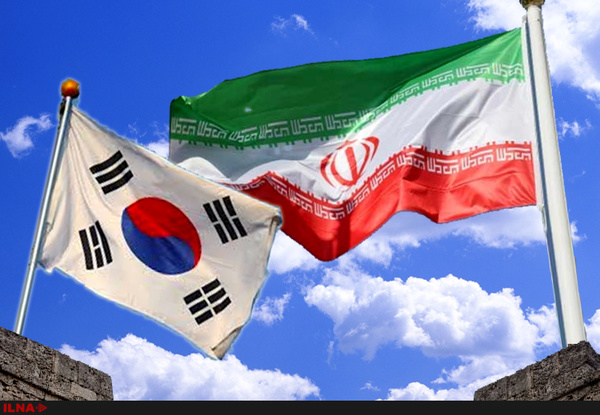
Present at the meeting was Governor of the Central Bank of Iran (CBI) Abdonaser Hemmati, who presented a report on his recent talks and his agreements with representatives of South Korea, Japan, Iraq and Oman on how to use the CBI’s asset in those countries.

US Move to Withdraw Snapback Claim Shows Failure of Maximum Pressure: Iran

UNSC
Chief of Staff of the Iranian President’s Office Mahmoud Vaezi further highlighted the need for Washington to lift its anti-Iran sanctions and return to the 2015 nuclear deal, officially known as the Joint Comprehensive Plan of Action (JCPOA).

“This path may be coupled with ups and downs, but the 1,600 sanctions that the Trump administration imposed against Iran will definitely be lifted,” he noted.

He underlined the enemy sought to achieve its goal in three months by imposing sanctions and launching a full-scale economic war against Iran.

“The enemy thought that by imposing tough sanctions and launching an all-out economic war, it would pit Iranian people against the Establishment in three months’ time and would be able to bring to power the kind of government it desires in this country,” Vaezi said.

“The enemy would have never thought that Iranian people would be able to gloriously stand up to these sanctions for more than 1,000 days,” he underlined.

He said the whole world is happy to see a world without Trump today, but underscored that Iran contributed to Trump not garnering enough votes to be reelected President.
“The world should be grateful to Iran for this,” he said.

He added Trump’s mistakes on different fronts, including his policies vis-à-vis Iran also contributed to his defeat in the US presidential election.


Iran, Bulgaria Discuss Closer Cooperation on All Fronts

Iran, Bulgaria Discuss Closer Cooperation on All Fronts

During the Monday talks, Iranian Deputy Foreign Minister Seyyed Abbas Araqchi and his Bulgarian counterpart Georg Georgiev exchanged view on issues pertaining to bilateral ties as well as regional and international issues.

The two sides also discussed developments pertinent to the 2015 nuclear deal, officially known as the Joint Comprehensive Plan of Action (JCPOA).

The Iranian official emphasized the significance of preserving the JCPOA as a diplomatic accomplishment in the contemporary era, saying Iran’s key condition for the full implementation of its nuclear commitments under the JCPOA is the United States’ unconditional return to the nuclear deal and its lifting of all sanctions against Iran.

He stressed Iran’s move to scale down its commitments under the JCPOA is in keeping with the provisions of the very same agreement and came in reaction to Washington and Europe’s failure to make good on their obligations.

Araqchi touched upon a rise in trade exchanges between Iran and Bulgaria over the past year, and underlined the need to tap into all potentialities to enhance mutual economic transactions.

The two officials also stressed the importance of promoting bilateral parliamentary ties.

The Bulgarian official, in turn, underlined the need to use diplomacy to settle differences.

Georgiev underscored his country together with the European Union had been opposed to the United States’ withdrawal from the JCPOA from the outset, and tried to save the JCPOA.

The top diplomat said he would be pleased to see Bulgaria’s relations with Iran expand on political, economic, cultural and international fronts.

The two sides also emphasized the need to boost cooperation in tourism after the coronavirus pandemic is over.

Iranian MPs File Complaint against Rouhani over Deal with IAEA

The move by legislators came despite the fact that the Supreme National Security Council and the AEOI on the one hand, and state officials on the other had elaborated on the agreement while stressing that the parliament’s legislation on countering sanctions should be implemented.

Still, legislators turned a blind eye to all those explanations while expressing their protest and making threats against the administration.

Finally, under Article 234 of the Parliament’s Bylaw, lawmakers put to the vote a report by the parliament’s National Security and Foreign Policy Commission on th‌e government’s violations regarding the implementation of the Law on Strategic Action to Lift Sanctions and Safeguard the Iranian People’s Interests.

The report was approved with 221 votes in favour, 6 against and 7 abstentions, and was finally referred to the Judiciary. The legislators’ petition demanding the enforcement of Article 234 was then read out on Parliament floor as follows:

Dear Parliament Speaker,
Hello and greetings
As you well know:

1. An agreement and joint statement by the IAEA and the AEOI is a blatant violation of the Law on Strategic Action to Lift Sanctions and Safeguard the Iranian People’s Interests. We demand the Judiciary temporarily revoke the agreement.

2. In the above-said law, Mr. President has been designated as the official charged with implementing it.

3. By virtue of Article 234 of the Parliament’s Bylaw, the president and all those violating and refusing to enforce the law should be introduced to the Judiciary urgently, so that the case will be reviewed in an urgent manner and beyond the conventional procedure.

The complaint is reportedly not addressed to Rouhani only, and applies to AEOI chief Ali-Akbar Salehi as well.

Hours after the complaint was filed, Leader of Iran’s Islamic Revolution Ayatollah Seyyed Ali Khamenei called the parliament’s criticism of the the agreement a “difference of opinion”, and urged the two sides to settle their differences.

He said today the government and the parliament should work to resolve their disagreement swiftly so that it doesn’t appear that there is dissonance in the country.

Following the Leader’s comments, the Rouhani administration expressed its empathy with the Parliament, and said the agreement is totally in line with the legislation.

Parliament Speaker Mohammad-Baqer Qalibaf also formed a parliamentary committee to settle the differences with the government.

Iran, Italy Stress Political Solution to Syria Crisis

During the Monday talks, the Iranian official touched upon his participation in the recent meeting, in Sochi, of senior experts of Turkey, Russia and Iran, the three guarantors of the Astana format.

He noted the delegates exchanged views on the different dimensions of Syria developments in the Sochi meeting where the participants also emphasized the need to settle the Syria crisis politically, help resolve humanitarian problems and keep fighting terrorism.

The three countries also issued a statement supporting a political solution and the continuation of work by the Syrian Constitutional Committee, Khaji added.

The Iranian official expressed hope a trip to Damascus by UN Special Envoy for Syria Geir O. Pedersen, which started on February 3, 2021, will give fresh impetus to intra-Syrian talks and lead to the holding of the sixth meeting of the committee in the near future.

Dionisi, in turn, highlighted Iran’s status as well as the important and constructive role of talks between the three guarantors of the Astana format in working out a political solution to the Syria crisis.

He underscored that the Italian government backs Pedersen’s international initiatives as well efforts made within the framework of the Astana format on Syria.

He said Rome is keen on contributing to the process of establishing peace in Syria through the cooperation of other international players as well as Iran.

The Italian official said confidence-building among Syrian groups on the one hand, and between the Syrian government and international parties on the other is necessary.

At the conclusion of the talks, the two sides stressed the need to move forward with regular talks and consultations.

Iran to Enrich Uranium Up to 60% If Needed: Ayatollah Khamenei

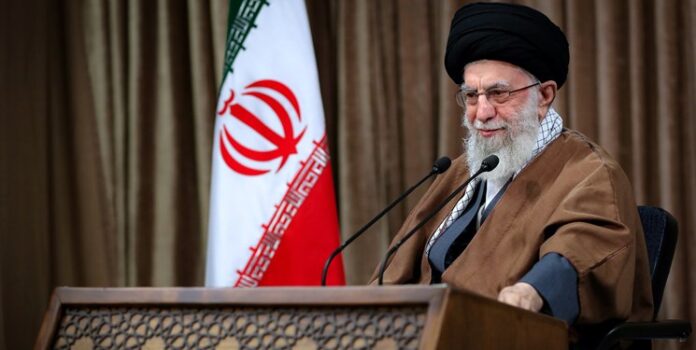
“We are determined to develop our nuclear capabilities in line with the needs of the country,” the Leader said in a Monday meeting with members of the Assembly of Experts.

“For this reason, Iran’s enrichment will not be limited to 20%, and we will take whatever action is necessary for the country. For example, for developing nuclear propulsion and other activities, we may even increase enrichment to 60%,” he added.

Referring to the bill passed by the Iranian parliament and regarding reduction of Iran’s JCPOA commitments, Ayatollah Khamenei said, “The parliament ratified a bill and the administration welcomed it. Until yesterday, the administration did what it was supposed to do regarding this bill. By God’s grace, it will put another part of it into effect tomorrow too.”

He emphasized, “The administration is committed to acting in accordance with the law. Therefore, this law, which is good, should be executed precisely.”

Ayatollah Khamenei described the way the US and the three European countries (the UK, France and Germany) talk regarding Iran’s reduction of its JCPOA commitments as being arrogant, high-handed, unjust, erroneous rhetoric.

“From the first day and for a long time, the Islamic Republic honoured its commitments based on the Islamic teachings. But the side which did not honour its commitments from the first day was these four countries. Therefore, it is they who should be reprimanded and questioned.”

He also said, “Since the US withdrew from the JCPOA and others went along with them, the Holy Quran commands under such circumstances that we too should abandon our commitments. Even so, our honourable administration did not abandon its commitments. They only gradually reduced some of them. Of course, these things can be reversed should the other side return to their commitments.”

The Leader stated that the result of their arrogant rhetoric is an increase in the Iranian people’s hatred for westerners.

“In the middle of all this, that international Zionist clown repeatedly says that they will not allow Iran to produce nuclear weapons. He should be told that if the Islamic Republic wished to build nuclear weapons, he and people much bigger than him would not be able to stop it.”

Ayatollah Khamenei stressed, “What prevents the Islamic Republic from building nuclear weapons is Islamic principles and ideology because Islam forbids the building of any weapon – be that nuclear or chemical – which is used for the mass destruction of ordinary people.”

As an example, he cited the massacre of 220,000 people due to the nuclear bombardment of Japanese cities by the US, the siege on the oppressed people of Yemen, and also the bombardment of their markets, hospitals and schools at the hands of westerners. He went on to say, “Killing civilians and innocent people is the American and western way, but the Islamic Republic does not accept this method. Therefore, the Islamic Republic is not thinking about building a nuclear weapon.”

He also added, “Of course, a certain deal with a specific timeline has been signed, and if they honour it, we will honor it as well for the time specified in the deal. But the westerners know perfectly well that we are not in pursuit of building nuclear weapons.”

“The issue of building a nuclear weapon is merely an excuse. They are even opposed to us having normal weapons because they wish to remove all elements of power from Iran.”

Ayatollah Khamenei stressed that nuclear power plants will be one of the most important sources for providing energy in the not-too-distant future because they are a source that provides healthier, cleaner, cheaper energy. “Therefore, we cannot begin enrichment on that day. Rather, we should prepare ourselves today for when we will need it in the future.”

“Westerners want Iran to be dependent on them so that on the day when Iran needs nuclear energy, they will be able to use our need as a tool to coerce, put pressure and impose their demands on us.”

The Leader of the Islamic Revolution stated, “The Islamic Republic will not back down on the nuclear issue, in the same way that it will not back down on other issues either. It will move forward with complete strength in the direction of that which benefits the country at the present time and in the future.”

Swiss Companies Willing to Make Investment in Iran Despite US Bans: Envoy

Swiss Companies Willing to Make Investment in Iran Despite US Bans: Envoy

Speaking in a Monday meeting with Iranian Vice-President Mohammad-Baqer Nobakht, the European ambassador said the Swiss companies Fuller, Syngenta, Roche, Novartis and Nestle are willing to make investment in Iran despite the US bans.

Markus Leitner also called on Iran to remove the customs barriers, among others, considering the Swiss companies’ demand for presence in Iran.

Nobakht, who is also the head of Iran’s Budget and Plan Organization, welcomed the European country’s approach, and said the recent negotiations between the two countries’ presidents were positive and indicated mutual trust.

“The reason why Iran survived the US sanctions was the institution-building in Iran, which gives Iran the possibility of making decisions under sanctions,” he noted.

Nobakht expressed pleasure that Switzerland has always endeavoured to have good and logical ties with Iran.

“The sun of sanctions is setting, and the sun of collaborations is rising. God willing, we will have wider cooperation with the Swiss side in the future,” he added.

Iran-IAEA Agreement in Line with Parliament’s Law: Foreign Ministry

Iran Calls for IAEA’s Impartial Verification of Saudi Nuclear Activities

Saeed Khatibzadeh underlined that all actions adopted by Iran are in line with the legislation passed by Iranian lawmakers.

“The outcome of the technical negotiations held between the Atomic Energy Organization of Iran (AEOI) and the International Atomic Energy Agency (IAEA) during this trip was a considerable diplomatic and technical achievement for the AEOI,” said Khatibzadeh at his weekly press briefing.

“Dr. [Ali-Akbar] Salehi (the head of the AEOI) and his colleagues made a lot of efforts to, first of all, move in line with the [Iranian] parliament’s binding legislation,” he added.

“As stipulated in the statement issued by Mr. [Rafael] Grossi (the IAEA director general), all measures adopted are in keeping with the parliament’s law and enactments. All of them have been written down. Everything which has been agreed on, has been written down clearly and straightforwardly. There is nothing beyond the parliament’s legislation,” the spokesman explained.
“Some agreement have been made on the continuation of verification work within the framework of the Safeguards Agreement, including the point that cameras running beyond what is required by the Safeguards Agreement may keep working in the next three months, but no film recorded will be handed over to the IAEA and will be kept by the AEOI until the three-month period ends and the result is out,” he said.

“So, practically, not only has the voluntary implementation of the Additional Protocol been stopped, but also the limited agreements reached now are all within the framework of the parliament’s legislation,” Khatibzadeh added.
He said the technical aspects of the agreements reached between Iran and the IAEA will be announced soon.

“Of course, this does have some technical aspects. I know that the AEOI will announce these technical aspects to media and the public today or tomorrow,” he added.

Iran Confirms Exchange of Message with US on Prisoner Swap

“The Swiss Embassy in Iran as well as some foreign ministers have given Tehran messages suggesting the American side is interested in resolving this humanitarian issue,” Saeed Khatibzadeh said, referring to the issue of prisoners.

“We have also sent them, through the same channels, our message indicating a proposal put forward by Iranian Foreign Minister Mohammad Javad Zarif during his trip to the United Nations two years ago still holds,” the spokesman noted in his weekly press briefing on Monday.

“The proposal suggests all Iranian inmates [being held in the United States] be freed in return for American prisoners behind bars in Iran,” he said.

He expressed concern over the situation of Iranian inmates kept in US jails, and said the condition of the Iranians imprisoned in the United States has always been one of the priorities of the Islamic Republic of Iran.

“Many of our prisoners are in deplorable conditions and specifically subject to unfair treatment in the United States,” he noted.

He underlined many Iranian nationals are incarcerated in the United States for no good reason.

“They put handcuffs and shackles on an Iranian professor on pointless pretexts and keep him in solitary confinement. They condemn another Iranian prisoner on pointless pretexts. That inmate serves his time, and they defiantly keep him behind bars until his jail term ends,” he explained.

“There are many other examples like this. Naturally, the government of the Islamic Republic of Iran cannot [sit idly by and] see such blatant injustice takes place, especially with regards to Iranian nationals,” he said.

Khatibzadeh said the unfair treatment of Iranian prisoners by the US government is the legacy of the administration of former US President Donald Trump.

“This is the wicked heritage left behind for the current US administration by the previous one. We still can’t see the incumbent US administration distancing itself from this wicked heritage,” he added.