Sunday, December 28, 2025
Home Blog Page 2498

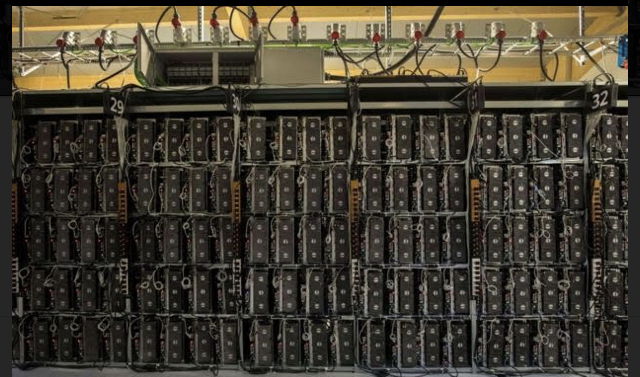
Unlicensed Cryptocurrency Mining Main Cause of Iran’s Blackouts

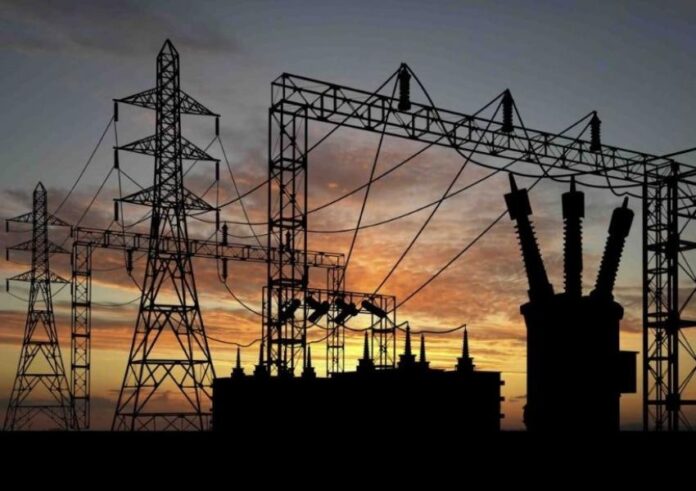
Over the past few days, repeated and sudden power cuts in Tehran and several other major cities have closed a number of commercial and manufacturing units, disrupted urban traffic especially in crowded centres as the traffic lights were turned off at the intersections, stopped online classes, and even resulted in the loss of Iranian national chess players who were playing their Asian games online.

Hundreds of thousands of students were also barred from taking their final exams, and most importantly, millions of Iranians felt frustrated and outraged under temperatures above 40 degrees Celsius.

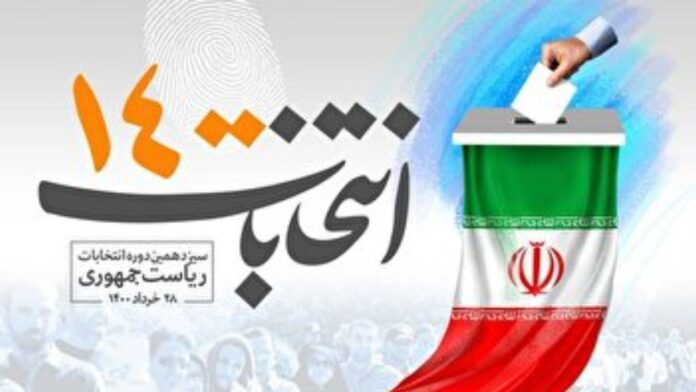
The issue of frequent blackouts in summer days, if not resolved, could turn into another important factor in reducing the turnout in the June presidential election.

A few days ago, Energy Minister Reza Ardakanian apologised to the nation for the blackouts which have complicated the last weeks of President Hassan Rouhani’s term in office.

The blackouts have been blamed for poor infrastructure and insufficient investment and also the cryptocurrency mining which has imposed a huge burden on the country’s electricity grid.

However, the Energy Ministry says the crisis mainly stems from illegal miners rather than those who have obtained license for mining.

Abouzar Salehi, the head of public relations department at Iran’s Power Generation, Distribution, and Transmission Company (known as Tavanir), says only one foreign company – namely the Iran-China Consortium – is actively mining cryptocurrency in Iran.

According to Salehi, the Consortium’s farm is located in the city of Rafsanjan in Kerman province, southern Iran.

He said only 354 megawatts of electricity is used by licensed miners, and that is sold to them with the price Iran exports its power to other countries.
“Our main problem is the illegal miners. Our estimates show 8,000 unlicensed mining machines are active in the country,” he said.

The official says these illegal mining activities have cost the country’s electricity grid a deficiency of 2,000 megawatts, leading to massive blackouts across Iran.

On Wednesday, President Rouhani announced all cryptocurrency mining activities – either licensed or unlicensed – will be banned until the end of summer.

Now we should wait and see whether the Energy Ministry will be able to compensate for the power shortage by cracking down on cryptocurrency mining activities.
Iran Bans Cryptocurrency Mining Until Late September

“The authorised mining of cryptocurrencies does not consume much electricity and needs just around 300 megawatts,” said Hassan Rouhani.

“However, it is unauthorised crypto miners that consume a lot of electricity; they consume about 2,000 megawatts,” the president explained.

“As of today, it will be forbidden even for authorised miners to mine cryptocurrencies until late September,” President Rouhani added.

Elsewhere in his remarks, the president touched upon the negotiations underway between Iran and other parties over the 2015 nuclear deal in Vienna.

He said it is the United States that should take the first step when it comes to fulfilling commitments under the 2015 Iran nuclear deal.

Rouhani praised Iranian negotiators in Vienna, saying they have made good headway with the talks with other parties.

He said the negotiators have reached agreement on key issues, adding the talks are aimed at reviving the nuclear deal.

President Rouhani underlined the nuclear agreement itself is not being negotiated; rather, he added, issues such mechanisms for Washington to return to its obligations are being discussed.

The president underlined now Iran has the upper hand in the negotiations unlike a few years ago when the reverse was true.

Disqualification of Key Presidential Hopefuls Triggers Harsh Reactions in Iran

On Tuesday, the Interior Ministry named the final candidates approved by the Guardian Council to run in the June 18 presidential elections. The list excluded several key candidates: Ali Larijani, Es’haq Jahangiri, Mahmoud Ahmadinejad, Mostafa Tajzadeh, Saeed Mohammad, Mohsen Hashemi Rafsanjani, and Ezzatollah Zarghami, among others.

The decision to bar Ali Larijani, an advisor to Iran’s Leader Ayatollah Seyyed Ali Khamenei and a parliament speaker for 12 years, from running for president has come as a shock to many, even to Sadegh Amoli Larijani, a member of the Guardian Council.

Amoli, who is Ali Larijani’s brother, strongly criticised the GC’s disqualification of candidates, and said in a series of tweets, “In the past 20 years, I have always defended the Guardian Council, even during the years when I was at the Judiciary; but I have never found the GC’s decisions more indefensible, either regarding the candidates approved or those disqualified.”

“This mess has been largely caused by the growing interferences of security bodies in the GC’s decision-making through false reports,” he added.

Amoli Larijani said his arguments at the Guardian Council’s meetings have been futile.

The decision even surprised Ebrahim Raisi, the key contender approved by the Guardian Council. He said in a video that he had already started his consultations with relevant authorities to make changes to the list of final candidates, and make the elections “more competitive”.

President Hassan Rouhani also wrote a letter to Ayatollah Khamenei, asking him to reconsider the GC’s decision if he deems appropriate.

“We have forgotten that the Islamic Republic’s legitimacy is guaranteed by people’s votes,” Rouhani said in a Wednesday meeting.

It is not unprecedented for Ayatollah Khamenei to change Guardian Council’s decisions. He overturned the Council’s decision in 2005 and allowed two disqualified reformist candidates to run for president.

Despite the calls for the revision of the list, almost all the key hopefuls disqualified by the Guardian Council have announced they accept the GC’s decision, and don’t want it overturned.

Ali Larijani said in a handwritten letter that he is pleased with the decision “now that the trend of election is unfolding this way.”
Ali Motahari, who was disqualified by the GC himself, also objected the disqualification of Larijani, and said, “Larijani has always been obedient to the Islamic Republic and had vast experiences for society.”

Motahari suggested that the reason for Larijani’s disqualification is that his daughter is living in the US.
Other reformist candidates like Masoud Pezeshkian and Es’haq Jahangiri and the conservative hopeful Ezzatollah Zarghami also said in separate statements that they accept the GC’s decision.

Meanwhile, Zahra Shojaei, the only woman who was expected to be qualified to run, expressed regret at the GC’s decision to bar all Iranian women from running.

However, she said the good thing that happened in this election was the GC’s interpretation of law on those who can run for president, which also included women.
“It was a positive step. I expected to be disqualified from running, but the important point is the progress we had regarding women’s participation in the elections,” she added.

Iran Elections 2021: Disqualified Hopefuls Cannot File Objections

“There is no such thing as ‘disqualifying the hopefuls’ when it comes to presidential elections,” Abbas-Ali Kadkhodaei said on Tuesday night.

“In fact, the Guardian Council announces to the Interior Ministry the names of applicants who are qualified. So, the law does not provide for hopefuls to file an objection to the result of [the council’s] reviewing their credentials,” he said.

He said four principles were taken into account when reviewing the credentials of hopefuls who had registered for the upcoming presidential election.

Kadkhodai said a presidential candidate must be a political figure, must be religious, must be a manager and must be prudent
He explained that the credentials of some of the hopefuls were reviewed at the council again, and that is why the legal deadline for examining the applicants’ qualifications was extended.

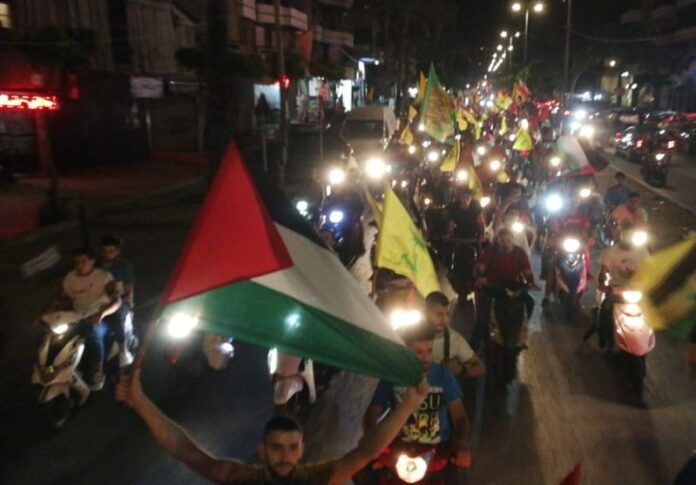
Zarif Congratulates Lebanon on Anniversary of Victory against Israel

Mohammad Javad said rapport and strategic unity among the Lebanese people, government and army hold the key to victory against Israel.

In the messages, the top Iranian diplomat wished dignity and honour for the Lebanese government and nation as well as families of resistance fighters martyred or disabled during their struggles.

Zarif added he is confident that the path which has started with the prudence of Lebanon’s wise leaders will lead the country to development, progress and stability more than ever.

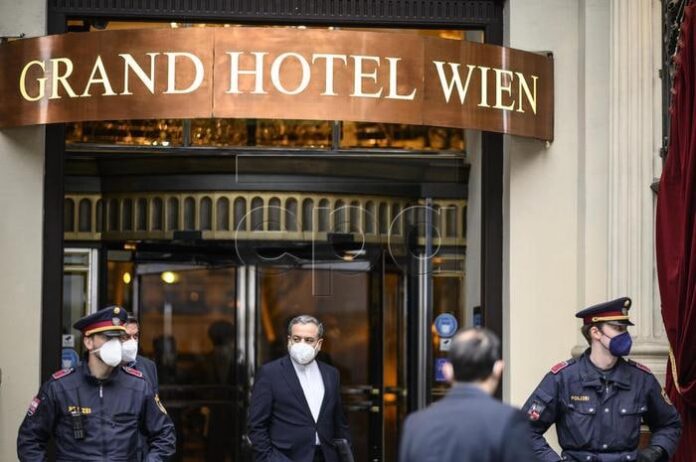
Some Key Issues Remain to Be Settled in Vienna Talks: Iran

“The issues which have remained to be finalized and decided on are important issues,” said Abbas Araqchi.

“Of course, the number of these issues has decreased,” he underlined.

He said good headway has been made with drawing up the text of an agreement.

“However, the remaining issues are key ones which should be decided on,” Araqchi explained.

“Many of the delegations hope this will be the last round of talks and we will be able to reach a conclusion,” he added.

“We can be hopeful that this will happen, but we should be a little cautious, too,” Araqchi added.

He said Iran is seeking an agreement that would address its demands

Reformists Say Won’t Be Part of Iran’s June Presidential Elections

Azar Mansouri said in a tweet that “the Reformist are denied the right to actively participate in elections.”

“What the Guardian Council did… violates people’s right to vote in free elections, and makes the election meaningless,” she added.

The Reformist Front had chosen 14 candidates for the June elections, but seven of them, including Foreign Minister Mohammad Javad Zarif, refused to sign up, and the remaining seven were all disqualified by the Guardian Council.

Now only two candidates, Mehralizadeh and Hemmati, are left from the moderate/reformist camp, none of whom are among the candidates chosen by the Reformist Front.

Iran Elections 2021: Seven Candidates Qualified to Run for President

Iran Elections 2021: Only Seven Candidates Qualified to Run for President

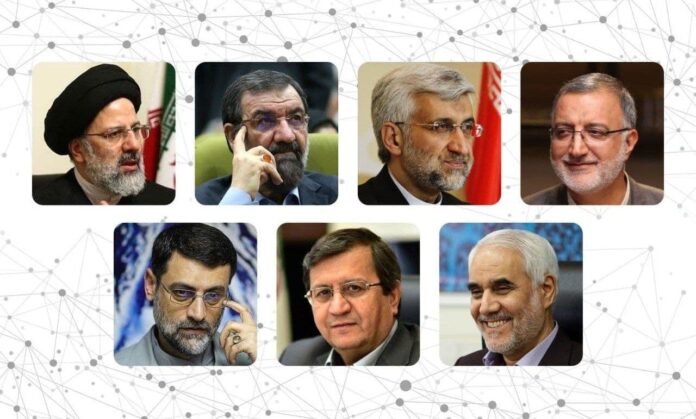
Former secretary of Iran’s Supreme National Security Council Saeed Jalili (conservative), Judiciary Chief Ebrahim Raisi (conservative), Secretary of the Expediency Council Major General Mohsen Rezaei (conservative), conservative member of Parliament Alireza Zakani, conservative member of Parliament Amir-Hossein Qazizadeh Hashemi, former Sports Minister Mohsen Mehralizadeh (reformist), and Central Bank Governor Abdolnasser Hemmati (moderate) are the seven candidates approved by the Guardian Council.

Several high-profile figures like Ali Larijani, Mahmoud Ahmadinejad, Ezzatollah Zarghami, Es’haq Jahangiri, and Mostafa Tajzadeh have been disqualified.

All the woman candidates have also been barred from running.

There are rumours that President Hassan Rouhani has written a letter to Ayatollah Seyyed Ali Khamenei to call for a revision of the list.

Iran FM, Azerbaijan President Discuss Closer Ties

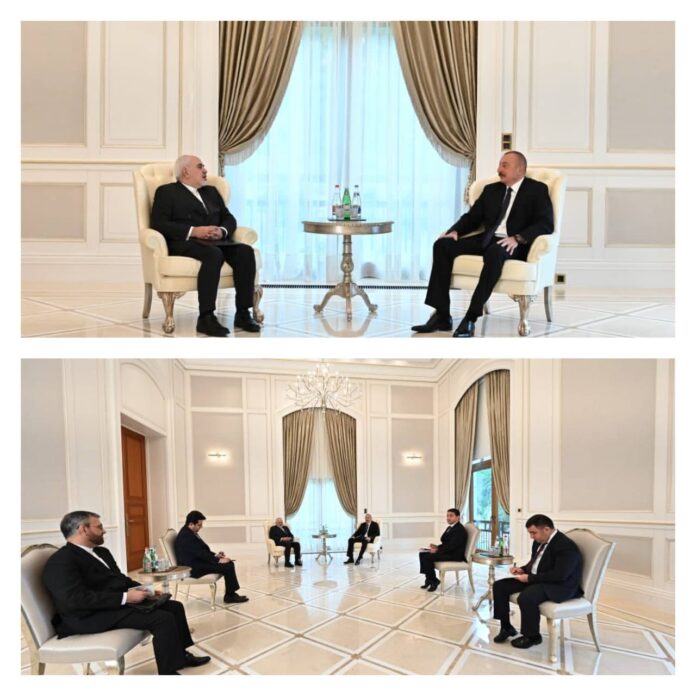
In the meeting held during Zarif’s visit to Baku, the two sides expressed content with the growing trend of the enhancement of bilateral ties in recent years, calling for further promotion of mutual relations.

Also on the agenda of the talks were the latest developments pertaining to Tehran-Baku relations, joint economic projects, Iran’s participation in operations to clear mines and reconstruct liberated areas, the latest developments related to a statement on a ceasefire between Armenia and the Azerbaijan Republic and the recent border tensions between the two countries, communication corridors, rail links between Iran, Azerbaijan and Armenia, the necessity of implementing a six-way regional cooperation initiative along with other issues of mutual interest.