Monday, December 29, 2025
Home Blog Page 2493

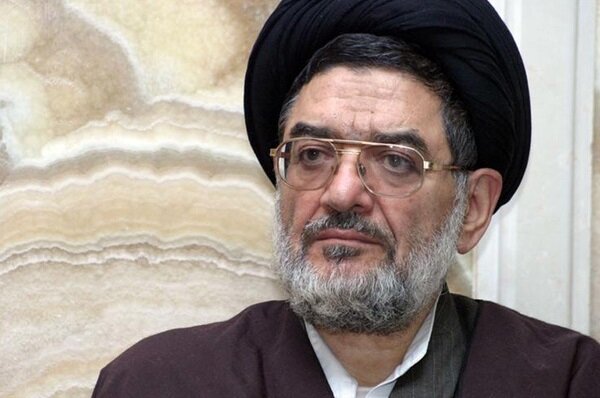
Iranian Politician Mohtashamipour Dies of Coronavirus at 75

Ali-Akbar Mohtashamipour

Mohtashamipour, 75, was one of five Iranian officials who played a key role in establishing Hezbollah in Lebanon in the 1980s.

He had been living in the Iraqi city of Najaf for the past few years. However, he moved back to Tehran after contracting the coronavirus.

Mohtashamipour served as interior minister in the 1980s and later as a lawmaker. He also served as an advisor to former reformist president Mohammad Khatami in the late 1990s.
The cleric was also a member of the Association of Combatant Clerics, the main reformist political party in Iran.

Several Iranian officials have died from the coronavirus since it was first detected in Iran in February 2020.

As of Sunday, the virus has killed more than 81,000 people and infected nearly 3 million in Iran, according to health ministry figures.

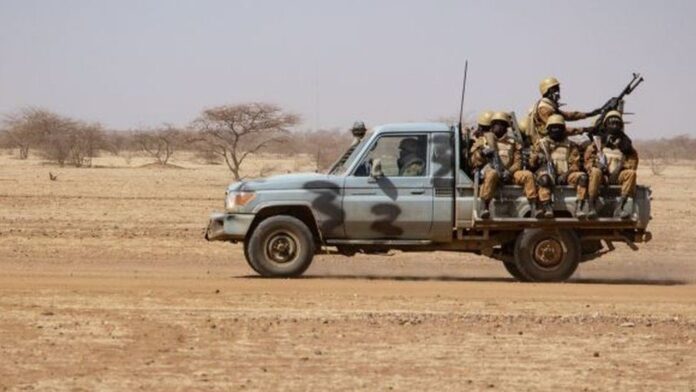
Iran Condemns Terrorist Attack in Burkina Faso

In a statement on Sunday, Khatibzadeh condemned the attack, and offered sympathy to the government and nation of Burkina Faso and the victims’ families.

He also expressed Tehran’s preparedness to share its experiences in fight against terrorism with African countries, especially Burkina Faso.

Armed men killed over 132 people in an attack on a village in northern Burkina Faso, the country’s worst attack in recent years, the government says.

Homes and the local market were burned during the overnight raid on Solhan.

No group has said it was behind the violence, but extremist attacks are increasingly common in the country, especially in border regions.

The UN chief said he was “outraged” by the incident.

António Guterres “strongly condemns the heinous attack and underscores the urgent need for the international community to redouble support to member states in the fight against violent extremism and its unacceptable human toll,” his spokesperson said.

The Burkinabe President Roch Kabore declared three days of national mourning saying, in a tweet, that “we must stand united against the forces of evil”.

The security forces are currently looking for the perpetrators, he added.

In another attack on Friday night, 14 people were reported to have been killed in the village of Tadaryat, about 150km (93 miles) to the north of Solhan.

Last month, 30 people died in an attack in the east of Burkina Faso.

The country is facing a deepening security crisis, like many of its neighbours, as armed groups carry out raids and kidnappings across much of the region.

In May, the Burkinabe army launched a large-scale operation in response to a resurgence of militant attacks. Despite this, the security forces are struggling to prevent the violence that has forced more than a million people from their homes over the past two years.

Africa’s semi-arid Sahel region has been hit by an insurgency since militants captured large parts of northern Mali in 2012 and 2013.

French forces have been supporting troops from Mali, Chad, Mauritania, Niger and Burkina Faso to fight the militants.

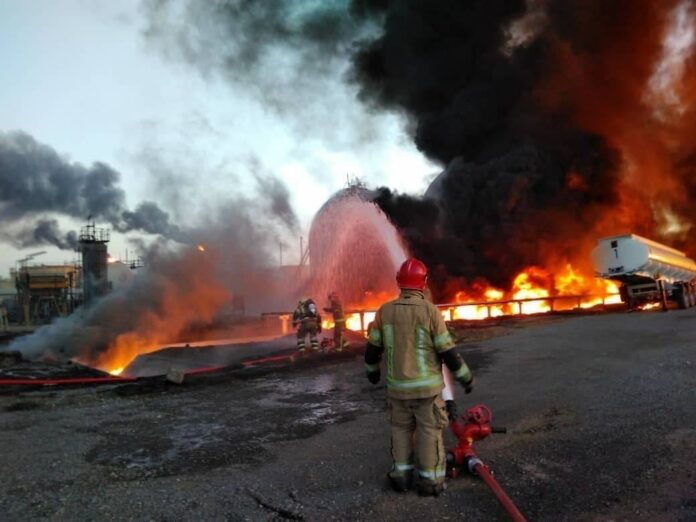
Huge Blaze at Iranian Steel Plant Contained; No Casualties

According to Ali Sadeqzadeh, the local governor in the town of Zarand, firefighters and emergency crew remained at the site of the Zarand Iranian Steel Co after the blaze was brought under control.

“A sudden overflow of molten material in the blast furnace caused a fire and smoke, and there was no explosion at the furnace site or other parts of the plant,” Sadeqzadeh said.

He denied earlier reports that an explosion caused the fire.

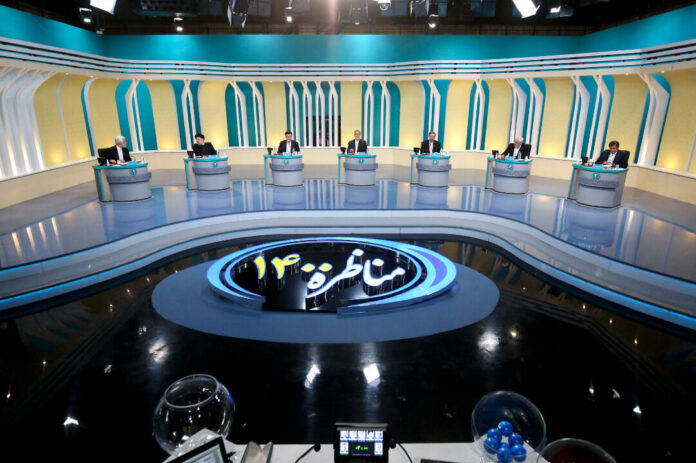
Iran Election 2021: First Presidential Debate Held on Issue of Economy

Iran Election 2021

In the heated debate, the candidates – five conservatives and two moderates/reformists – accused each other of treason or of lacking the education to run the country’s economy.

The five conservative candidates, Ebrahim Raisi, Saeed Jalili, Mohsen Rezaei, Alireza Zakani, and Amir-Hossein Qazizadeh Hashemi, attacked the leading moderate candidate, former central bank chief Abdolnaser Hemmati, considering him as a representative of the outgoing pragmatist President Hassan Rouhani and his eight-year performance.

Hemmati, and the reformist candidate Mohsen Mehralizadeh, in turn, blamed hardliners for heightened tensions with the West and its negative impact on Iran’s economic woes.

Rezaei accused Hemmati of “fully complying” with US sanctions and said he should face treason charges.

“If I become president, I will ban Hemmati and a number of other officials of the Rouhani government from leaving the country, and I will prove in court which treacherous roles they played,” Rezaei said in the televised three-hour debate.

After Rezaei’s remarks, Hemmati half-jokingly asked leading conservative candidate and judiciary chief Ebrahim Raisi: “Mr Raisi, can you give me assurances that no legal action will be taken against me after this event?”

Mehralizadeh said the economy could not be run by those with only traditional clerical studies, such as Raisi.

“You have only six years of classic education, and while respecting your seminary studies, I must say that one cannot manage the economy and draw up plans for the country with this much education,” said Mehralizadeh, who holds a doctorate in financial management.

Raisi blasted Rouhani’s government over galloping inflation and the rapid fall in the value of Iran’s currency, and rejected comments by Hemmati and other moderates who blame US sanctions for Iran’s economic troubles and say without proper management the country would have been worse off.

“This is like a goalkeeper who lets in 17 goals… and then says without me it would have been 30 goals!” Raisi said.

Video: The Moment Fire Started at Tehran’s Refinery

The fire erupted on Wednesday, and caused a storage tank with 20,000 barrels of gasoline to catch fire.

Firefighters finally managed to fully contain and extinguish the blaze one day later.

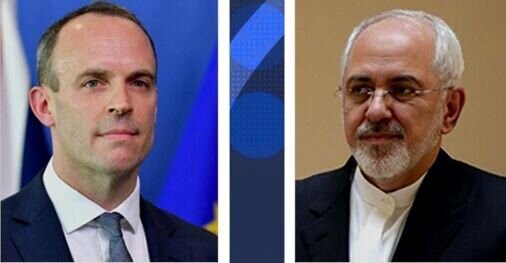
US Must Cease Using Sanctions as Leverage, Zarif Tells UK’s Raab

In a phone call on Friday, Zarif and his British counterpart Dominic Raab agreed on need to resume full compliance with the JCPOA.

Zarif also underlined that the US must return fully to its obligations and cease trying to use unlawful economic war against Iran as negotiating “leverage”.

They also discussed bilateral and consular issues.

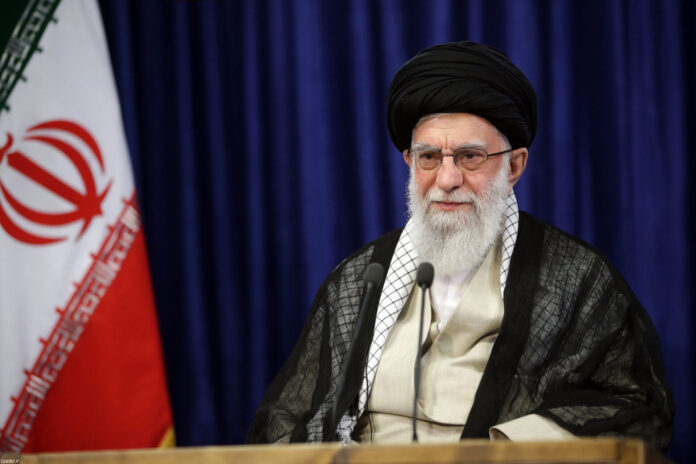
Certain Candidates Wronged in Vetting Process, Must Be Compensated: Iran Leader

Leader Calls US Sanctions ‘Crime against Iranian Nation’

“In the vetting process some candidates were wronged. They were accused of untrue things that were unfortunately spread against them or their families – who are decent and respected families – but they were later proved to be wrong,” the Leader said in a televised speech on Friday.

“Protecting people’s honour is one of the most important issues. I call on the responsible bodies to restore their honour,” he added.

Shortly after the Leader’s comments, rumours started to spread that the Guardian Council is going to reconsider its decision to disqualify prominent moderate and reformist candidates like Ali Larijani, Es’haq Jahangiri, and Masoud Pezeshkian.

The Guardian Council is reportedly going to convene at 11:30 (UTC) today to discuss Ayatollah Khamenei’s call for compensation. However, the Leader’s Instagram page later republished a post that suggested Ayatollah Khamenei’s criticism is not directed at the Guardian Council, and the comments are not going to change the final list of candidates.

Elsewhere in his remarks, Ayatollah Khamenei called Iran’s religious democracy a “divine gift”, but warned of plots by the enemies to undermine it.
“Thank God, after the departure of the Imam, the Iranian nation preserved this divine gift and this religious democracy,” he said.

“The enemies of Iran, who made all kinds of efforts to separate the people and make them lose belief in religious democracy, had their plot thwarted and every time they tried a new way they faced the steel barrier of the Iranian people,” the Leader said.

“It is the same today. The enemies are lying in ambush to drive a wedge between the people and the Islamic system, but they are facing the steel barrier of the Iranian people. They plotted both security and intellectual invasion, all of which failed.”

Ayatollah Khamenei said there are some people inside Iran, who either knowingly or unknowingly repeat the claims of the enemies.

“The idea that democracy does not go hand in hand with religion is also the claim of the enemies.

Of course, some may say this out of negligence. They should know that this is the talk of the enemy and the enemy wants to eradicate Islam… It is a great mistake if we alienate democracy from Islamic thought and spirit.”

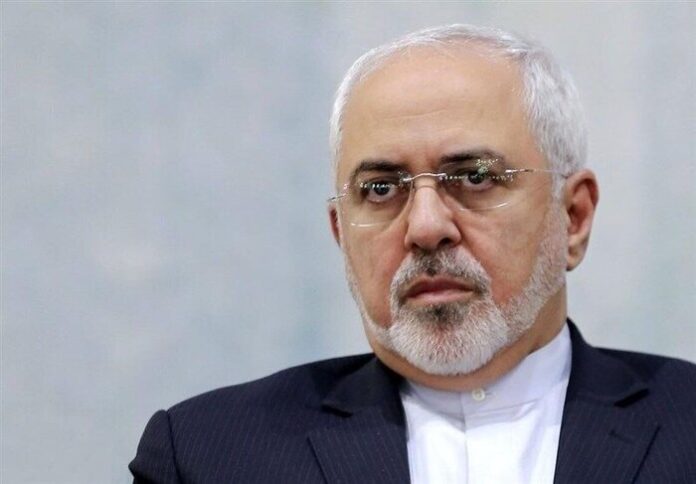
UN Must Consider US Sanctions before Depriving Iran of Its Right to Vote: Zarif

“In ‘black is white’ world, UN deprived Iran of its voting rights in the UNGA as we’re in arrears,” Zarif tweeted on Thursday evening.

His comments came one a day after UN Secretary General Antonio Guterres wrote a letter to General Assembly President Volkan Bozkir, saying Iran would need to pay at least 16.251 million dollars to have its voting rights restored.

“Not considered: US Economic Terrorism prevents Iran paying for FOOD, let alone UN dues,” the Iranian top diplomat noted.

He said the UN can also collect from the $110 million the US stole from Iran in its recent act of piracy.

Zarif also published his previous letter to the UN chief, in which he conveyed Iran’s “strong dismay” over his announcement, saying the decision is “fundamentally flawed, entirely unacceptable and completely unjustified” because of the US’ illegal sanctions on Iran.

“The Islamic Republic of Iran is fully committed to fulfill its financial obligations to the United Nations and will continue to make every effort to settle the arrears in the payment of its financial contribution to the UN and other international organizations as soon as the underlying imposed conditions, i.e. the US unlawful unilateral coercive measures, are removed,” Zarif said in a letter.

According to a statement by the UN General Assembly, as of January 13, 2021, ten member states were subject to the provisions of Article 19 of the Charter, namely Iran, Central African Republic, Comoros, Congo, Libya, Niger, Sao Tome and Principe, Somalia, South Sudan and Zimbabwe.

Under Article 19 of the Charter of the United Nations, members whose arrears equal or exceed the amount of their contributions due for two preceding full years lose their voting rights.

The Charter also gives the General Assembly the authority to decide “that the failure to pay is due to conditions beyond the control of the member,” and in that case a country can continue to vote.

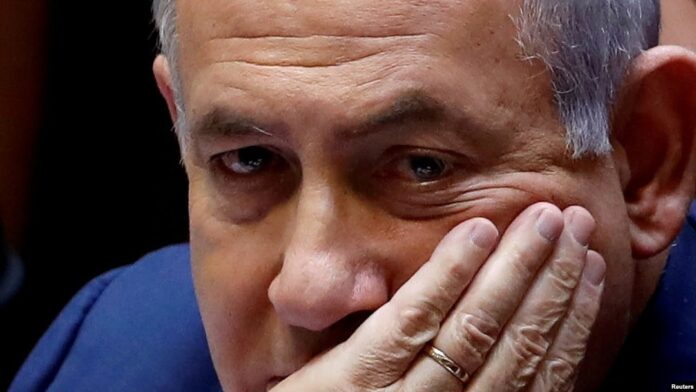
‘Lame Duck Netanyahu Unlikely to Take Action against Iran in His Last Days’

“I deem it unlikely that Netanyahu will be able to take any action against Iran in this short time,” Hadi Borhani said.

He added reports suggest that Naftali Bennett and Yair Lapid have reached an agreement to remove Netanyahu from power.

“Apparently, the ouster of Benjamin Netanyahu and the designation of a new Israeli premier is more likely now than it has ever been in the past 12 years,” said Borhani,

“Under such circumstances in which different groups are highly likely to reach agreement on designating a new prime minister, and if nothing unexpected comes up, the region will get rid of Netanyahu,” the analyst underscored.

“Based on an agreement reached between Bennett and Lapid, first Bennett will serve as Israeli prime minister for a period of two years. Then, Lapid will assume the position and remain in office from 2023 to 2025,” he noted.

“Within this framework, seven moderate and right-wing parties have reached agreement,” he said.
The analyst also touched upon Bennett and Lapid’s approach toward Iran.

“Compared to Netanyahu in the foreign policy domain, Bennett has more extreme positions. He has hostile and extremist stances vis-à-vis Iran. He is strongly opposed to the 2015 Iran nuclear deal, by Lapid has not made any special comments about Iran and seems to have more moderate positions compared to Bennett and Netanyahu,” the analyst explained.

COVID-19 Vaccination to Go Back to Square One If Iran Runs Out of 2nd Doses: Expert

Minoo Mohraz made the comment following reports that some vaccination centres in the country have run out of the second doses of COVID-19 vaccines.

Mohraz said the second dose must be injected on time as prescribed.

“If, for example, the second dose of a vaccine is supposed to be injected in four weeks’ time [after the first dose] but this does not happen due to whatever reason, the vaccination of an individual may start all over again. That means the vaccination which has taken place may be canceled and start all over again,” said Mohraz, who is also a member of Iran’s Coronavirus Headquarters and the head of the team involved in clinical studies of Iranian coronavirus vaccine CovIran Barekat.

She said research conducted in other countries show the injection of a difference vaccine for the second dose is fine, “but they have conducted these studies on their own vaccines and still have not reached a definite conclusion as to whether or not such a thing is possible.”

She said it is up to the Vaccination Commission of the Iranian Health Ministry to decide whether it would be fine to use a different vaccine for the inoculation of the second dose.