Monday, January 12, 2026
Home Blog Page 2470

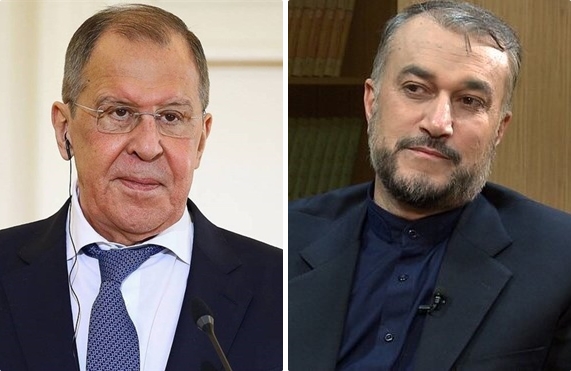
Russian FM congratulates Iranian counterpart

In his message, Lavrov expressed his pleasure at the high level of bilateral ties.

The Russian foreign minister underlined the need for maintaining close cooperation between Iran and Russia with the aim of further deepening interactions to serve the best interests of the two friendly nations and to strengthen international peace and security.

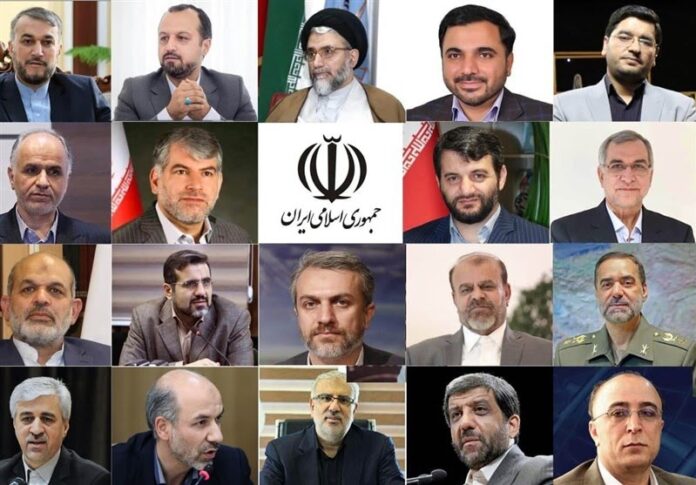
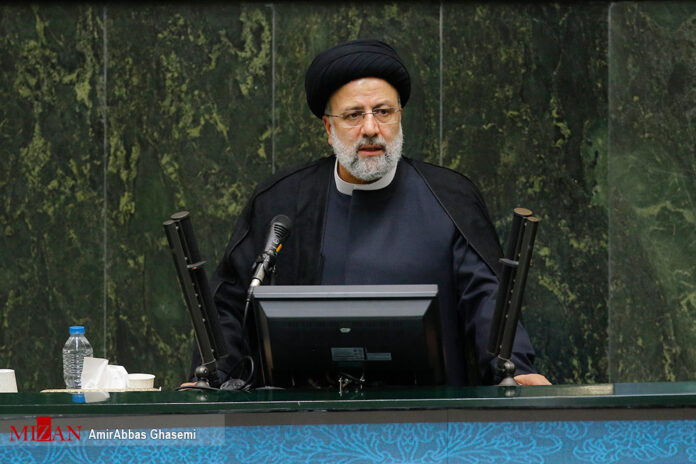
Iran MPs approve all Raisi’s cabinet picks but one

The president himself defended the proposed ministers for two and a half hours before the final voting.

The table below shows the names of all ministers along with the votes lawmakers cast for them. 

Number Name and Surname Ministry of Yes No Abstention Void and Blank
1 Hossein Baghgoli Education 76 193 18
2 Issa Zarepour Communications and IT 256 17 10
3 Seyyed Esmaeil Khatib Intelligence  222 48 17
4 Seyyed Ehsan Khandouzi Economic Affairs and Finance  254 25 8
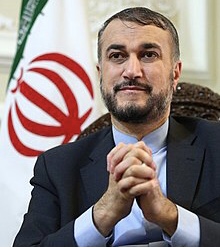
5 Hossein Amir Abdollahian  Foreign Affairs 270 10 6
6 Bahram Einollahi Health 214 55 15
7 Hojatollah Abdolmaleki Cooperatives, Labor and Social Welfare  191 77 13 5
8 Seyyed Javad Sadatinejad Agricultural Jihad 253 27 4
9 Amin Hossein Rahimi Justice 277 5 3
10 Mohammad Reza Ashtiani Defense and Armed Forces Logistics  274 4 4 2
11 Rostam Ghassemi Roads and urban Development  267 14 4
12 Seyyed Reza Fatemi Amin Industry, Mines and Trade  205 60 14 6
13 Mohammad Mehdi Esmaeili Culture and Islamic Guidance 181 77 28
14 Ahmad Vahidi Interior 266 16 3
15 Mohammad Ali Zolfi Gol Science, Research and Technology   210 56 19
16 Seyyed Ezatollah Zarghami Cultural Heritage, Handicraft and Tourism 262 13 6 5
17 Javad Owji Oil 198 70 18
18 Ali Akbar Mehrabian Energy 220 47 15 3
19 Seyyed Hamid Sajjadi Sports and Youth 165 108 13


Raisi: Expertise, fighting corruption qualifications for cabinet picks

Speaking at Parliament on Wednesday following discussions meant to confirm his picks for cabinet posts, Raisi says the only red line for tackling corruption is making unsubstantiated allegations.

The Iranian president also said a mere accusation or a claim stated in a program or written elsewhere wouldn’t suffice.

Raisi added that sound and accurate probes are needed to find damning evidence and there must be a mechanism for this purpose. He was referring to accusations leveled against the proposed ministers.

Raisi however noted that those allegations are not substantiated and “I can say this with certainty”.

The president maintained that anyone making an unfounded allegation against someone else has definitely crossed a red line regardless of who the accuser is.

He underlined that he has however raised some accusations with the Intelligence Ministry and the intelligence of the Islamic Revolution Guards Corps and that due investigations will be conducted if it is necessary.

An Iranian lawmaker has leveled accusations against Raisi’s picks for Oil Minister and Minister of Roads and Urban Development.

Iranian President Ebrahim Raeisi also thanked Parliament for dedicating two weeks to the confirmation process for his proposed ministers.
Raisi said under the law, Parliament is not obliged to examine the eligibility of proposed ministers but the lawmakers dedicated a lot of time and energy for this purpose.

He said it’s an incarnation of religious democracy that people’s representatives examine the eligibility of the proposed ministers with high sensitivity.

President Raisi also said the commitment makes people and the ministers know the nature of the lawmakers’ sensitivity regarding economic, social, cultural and political issues.

Elsewhere, the president noted that the introduction process for the ministers was in line with the qualifications he referred to while addressing people during the presidential campaign.

Raisi added that the qualifications included efficiency, expertise, respect for people, fighting corruption, and sincerity.

This means, Raeisi said, “I put an emphasis on the scientific and practical eligibility of the proposed ministers.”

Oscar-winner Farhadi’s film to be Screened in Miami Festival

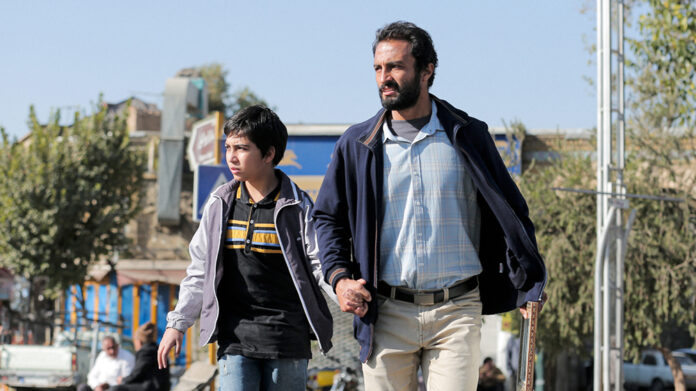
The “Gems” section of the Miami Film Festival, which specializes in showing the best international features every year, will screen Asghar Farhadi’s “A Hero” in November.

The “Gems” is the main rival of the best foreign language film category at the Oscars.

“A Hero” along with “The Worst Person in the World” by Danish-born Norwegian director Joachim Trier, both screened at this year’s Cannes Film Festival, have been selected for this section of the Miami Film Festival so far, but the rest will be introduced in early October, ISNA reported.

Oscar-winner Farhadi’s film to be Screened in Miami Festival
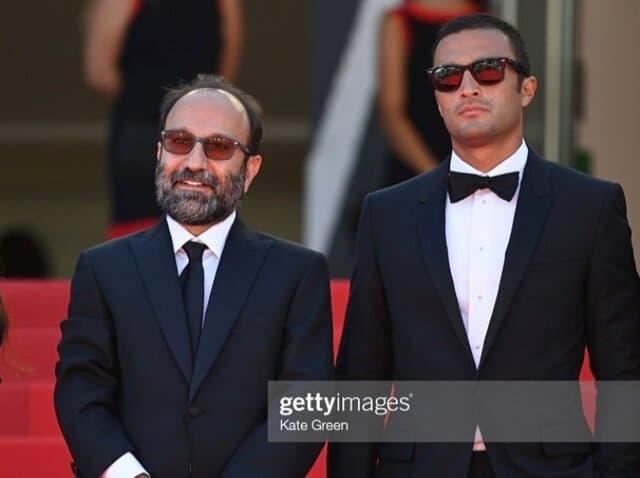
Farhadi’s new Persian-language film casting Amir Jadidi, Mohsen Tanabandeh, Fereshteh Sadr Orafaei and Sarina Farhadi and a group of local actors in Shiraz, was unveiled in its first world screening during the main competition section of the Cannes Film Festival. It won the Grand Prix of this cinematic event in 2021.

Farhadi’s feature has also been invited to festivals in Toronto, Sarajevo, Melbourne and the New Horizons festival in Poland.

Farhadi is one of few film directors worldwide who have received two Oscars for best foreign language film. He won the category for the films “A Separation” and “Salesman”.

The “Gems” section of the Miami Film Festival will be held from November 4 to 7 this year in the US.

Official: Iran-Afghan trade back to normal

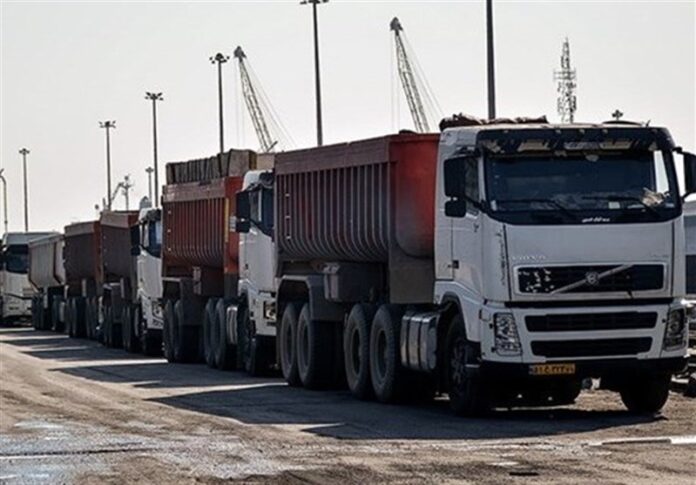
Ruhollah Latifi said despite the recent developments in Afghanistan, bilateral trade continued at all crossings but three.

He added that in the past weeks, businessmen decided to decrease trade with Afghans but now it’s business as usual on all borders with Afghanistan.

Latifi also said Iran has exported over two million tons of goods to Afghanistan in the first five months of this year. That, according to the spokesman, translates to a 1.7 percent decrease compared to last year and a 5 percent decrease compared to the Persian calendar year of 1398. Experts blamed the drop on a surge in violence across Afghanistan over the past two years. The Taliban stepped up their offensives countrywide and finally toppled the Western-backed government earlier this month in the lead-up to the US-led foreign forces’ withdrawal.

In the wake of the US withdrawal, thousands of Afghans flocked to border areas including Iran-Afghan border.

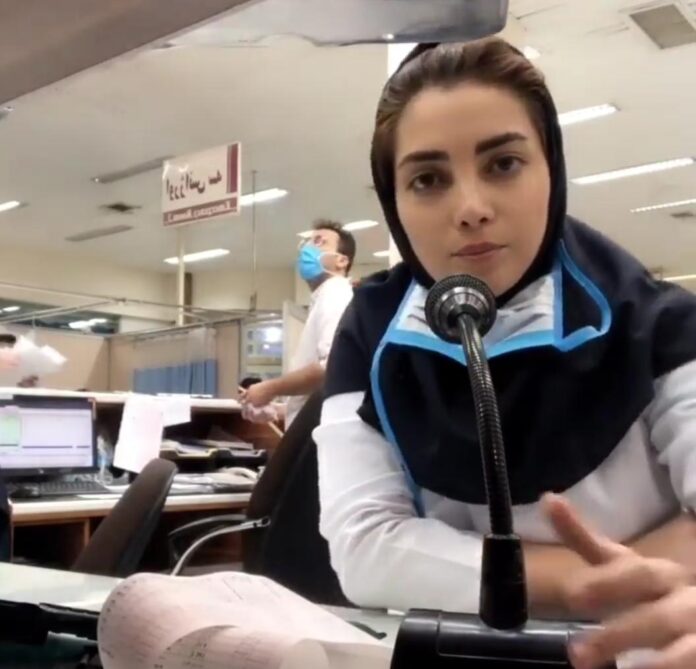
Story of Iranian Nurse Who Recites Poems to Soothe Covid Patients

According to Tasnim News Agency, she has been singing these songs long before people who know about it. She merged her interest in poetry, literature and music with her critical nursing job, to play a more beautiful role in her white nursing attire.

Below you can see the video showing her reciting poems for the patients:


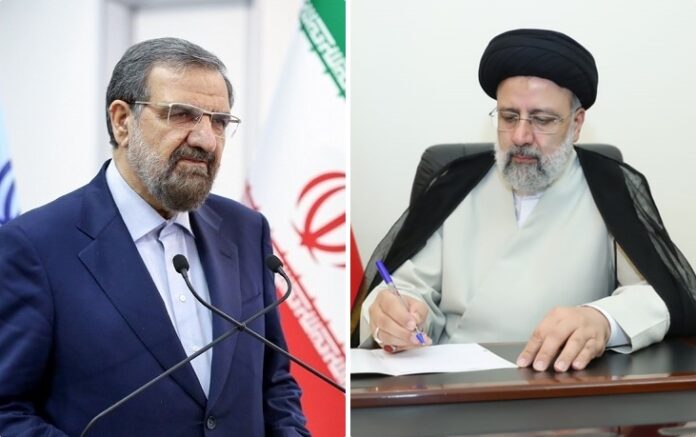
Iran’s Raisi appoints electoral rival as VP

In a decree issued by the president, Mohsen Rezaei was also appointed as the Secretary of the Supreme Council for Economic Coordination among the Heads of the Branches of Government and the Secretary of the Government’s Economic Office.

Rezaei was born in Masjed Soleiman, in the southern Khuzestan Province in 1952. He holds a PhD in Economics from the University of Tehran. Rezaei was Commander-in-Chief of the Islamic Revolution Guards Corps for 16 years from 1981 to 1997.

He’s also served as the Secretary of the Expediency Council since 1997.

Rezaei has run for president in all elections in Iran since 2005 but never won. He contested the 2021 vote as well. Rezaei came second with less than 12 percent of the votes in that election, losing to Raesi.

Rezaei has been described by some as a perpetual candidate and a man who never leaves the scene. His critics say he has no executive experience and lacks the merits required for holding an executive office like presidency. But many praise him as a resilient politician, especially with regards to his crucial role as a senior commander during the eight-year-war that began with an invasion of Iran by neighboring Iraq in 1980.

Parthian Rhyton Discovered in Iran’s Iron Age Cemetery

Ata Hassanpour, the head of the archeological team based in Mersin Chal Cemetery in Semnan’s Mahdishahr County stated that so far they have succeeded in opening five graves, adding that the discovered clay rhyton belongs to 2,200 years ago.

He also noted that to date, three trenches measuring 10 by 10 and with an area of 300 square meters have been excavated in this cemetery.

Parthian Rhyton Discovered in Iran’s Iron Age CemeteryThis Iranian scientist further added that the graves in the cemetery are hand-made but without the structure of a grave. According to him, only two stones from above and below are placed as a sign of the grave. The burials in this cemetery are of the arched type with east-west direction, stated Hassanpour.

“In these graves, there are a lot of items that are buried with the deceased, mostly magnificent objects. For example, in a tomb belonging to a lady, along with luxurious objects such as bracelets, anklets, bangles, and all kinds of pottery in various shapes, a bronze ring with the shape of a winged lion was discovered which is unique in its kind.”

Parthian Rhyton Discovered in Iran’s Iron Age CemeteryThe other things found in this cemetery include beautiful flat plates, bronze and iron ornamental objects and all kinds of decorative beads made of stone, underscored Hassanpour.

He went on to say that the objects discovered in Mersin cemetery mostly belong to the Parthian era covering the period from the Achaemenid to the Parthian period.

Iran committee and prosecution general to investigate Evin incidents

In a Wednesday speech at the parliament open session, Mohammad Bagher Ghalibaf added the commission, mandated under Article 90 of the Constitution in coordination with the prosecution general will investigate the incident.
In the recent days, videos purportedly released by hackers show prisoners being beaten and dragged by security forces inside Evin Prison.
Taking responsibility for the ‘improper behavior’ at Evin, head of Iran’s Prisons’ Organization, Mohammad Mehdi Hajmohammadi has apologized for the bitter incidents.
He also said the prisoners’ efforts will not be ignored due to these errors.

Iranians Offer Special Votive Foods during Muharram

On these occasions, people cook votive food in mosques and even in the courtyards. The cooking of the votive food is usually the responsibility of the men of the families or of the skilled and professional cooks.
In different cities of Iran, various kinds of foods are prepared as offerings, some of which we will discuss below.

Saffron Rice Cake of Garmsar:

Garmsar in central Iran is one of the cities that prepares a special food for mourners during Muharram. For this dish, the raw meat is cooked in the drained rice, and the bottom layer of the food in the rice pot, which absorbs all the meat juice, becomes the most delicious part of the dish. Raisins are also sprinkled on the rice. During the Muharram mourning days, people of Garmsar usually leave the doors of their homes open to all those who want to participate in the ceremony, so the mourners can participate in this ceremony and get votive food without being invited.

Iranians Offer Special Votive Foods during MuharramQeimeh with Sweet Pilaf of Shiraz and Boushehr:

Qeimeh is an Iranian stew consisting of mutton, tomatoes, split peas, onion and dried lime. The stew that people of Shiraz and Bushehr in the south prepare is like the other regions, but Bushehris are interested in a softer Qeimeh. The special feature of this food is that it is served with sugar pilaf. This pilaf is made of rice, sugar, saffron, tangerine slices and pistachios.

Iranians Offer Special Votive Foods during MuharramSholeh of Mashhad:

Sholeh Mashhadi is almost the most famous dish of the northeastern Khorasan province which can hardly be found in other cities. This dish is a type of stew the main ingredients of which are meat and pulses. It is very similar to the Persian Halim. Sholah cannot be easily ordered from any restaurant, even in Mashhad. On normal days, people do not cook that much Sholeh, but during Muharram, unlike the other days, Sholeh is prepared in great amount for mourners. People who are from Mashhad have a high level of admiration for this dish.

Iranians Offer Special Votive Foods during Muharram


Meat and Beans of Kashan:

In Kashan, Meat and Beans or Gousht-e Loubiab is served on religious occasions along with rice mixed with dill. This dish, as its name suggests, is made with meat and beans, but does not have much water and is served with pilaf. Mutton, beans, potatoes and spices are the main ingredients of this dish. You should first season lamb’s meat and braise it with onions and turmeric for a while. Add the white beans and let it cook until the meat and the beans are cooked. You can also add rice, dried lime and dried fenugreek leaves.

Iranians Offer Special Votive Foods during MuharramFesenjan Stew of Rasht:

Khoresh-e Fesenjan, is a stew from Iran’s north. It is believed to originate from the Guilan region near the Caspian Sea, mainly the city of Rasht. The people of this city are deeply interested in sour Fesenjan and cook it at weddings and mourning ceremonies. This stew is prepared with meat, walnuts and sour pomegranate paste and its color is dark black when ready to be served.

Iranians Offer Special Votive Foods during Muharram


Lahijan’s Qeimeh with Minced Meat:

The special votive food of this northern city is a dish called minced meat Qeimeh. The only difference from ordinary Qeimeh is the deeply fried minced meat used in it.


Iranians Offer Special Votive Foods during MuharramPlum Stew of Semnan:

This food is very similar to Qeimeh stew, with the difference that the sour plums native to Semnan in central Iran are added to it. The stew along with rice is distributed among the mourners.


Iranians Offer Special Votive Foods during Muharram

Bibi Seshanbe Potage of Arak:

Bibi Seshanbe, which literally means “The Queen of Tuesday,” refers to a Persian mystical figure, considered as a holy angel who can save and cure poor and desperate people when called upon. This dish is offered as a votive food all year round, but it is also one of the first choices of the Arakis in the month of Muharram. Some say as it is distributed on Tuesdays, the potage is known by this name. The ingredients are peas, beans, lentils and bulgur. Meanwhile, like Halim, it is offered in the morning to the mourners.

Iranians Offer Special Votive Foods during Muharram

Biryani of Isfahan:

Biryani is one of the traditional dishes of Isfahan, in central Iran. It is a fried meat served on a piece of bread with onion and greens on the side. The ingredients are mutton, sheep lungs, tail fat, onions, cinnamon, saffron, walnuts, pistachio and almonds.


Iranians Offer Special Votive Foods during Muharram


Wheat Potage of Yazd:

This dish is very similar to Halim. The ingredients are chickpeas, beans, mung bean, wheat and of course meat. It is flavoured with onions and a lot of tail fat. It is a kind of thick soup that has different names in the cities of Yazd province, such as Ash-e Halim, Jah Jah, Shab Esfandi, and Ash-e Imam Hussein. Besides, cooking this typical food has a special ceremony and there are some cooking styles for preparing it. The dish is finally garnished with fried garlic, onion, mint and Kashk or dried yogurt.

Iranians Offer Special Votive Foods during Muharram

Motajannah Broth of Kerman:

This broth has a sour and sweet taste. The ingredients are very diverse, from apricot leaves to dates, pieces of fruit and fenugreek. It is originally from Rafsanjan and very popular in Kerman province. The dish is also very popular on the days of Tasua and Ashura, therefore, many call it Imam Hossein’s broth too.

Iranians Offer Special Votive Foods during MuharramHadih Potage of Khoy:

This food is from Khoy in West Azarbaijan province, northwestern Iran. The soup is almost thick. It is made of chickpeas, wheat cooked in milk and very little water. The potage is poured into a dish, and then a layer of roasted raisins and chopped walnuts are added to it.

Iranians Offer Special Votive Foods during Muharram


Peas Qeimeh of Dezful:

In this stew served during Muharram, people of Dezful in the south use ordinary peas instead of split peas. They believe that it is much better to prepare Qeimeh with peas because they soak and peel them, so the food is not flatulent and tastes better.


Iranians Offer Special Votive Foods during Muharram

Vegetable Stew of Ahwaz:

On the day of Ashura, People in the southern city of Ahwaz in Khuzestan province prepare a stew called vegetable stew to offer. This dish is made with very fried vegetables and white beans. It is a bit like Ghormeh Sabzi, the famous Iranian dish.

Iranians Offer Special Votive Foods during Muharram